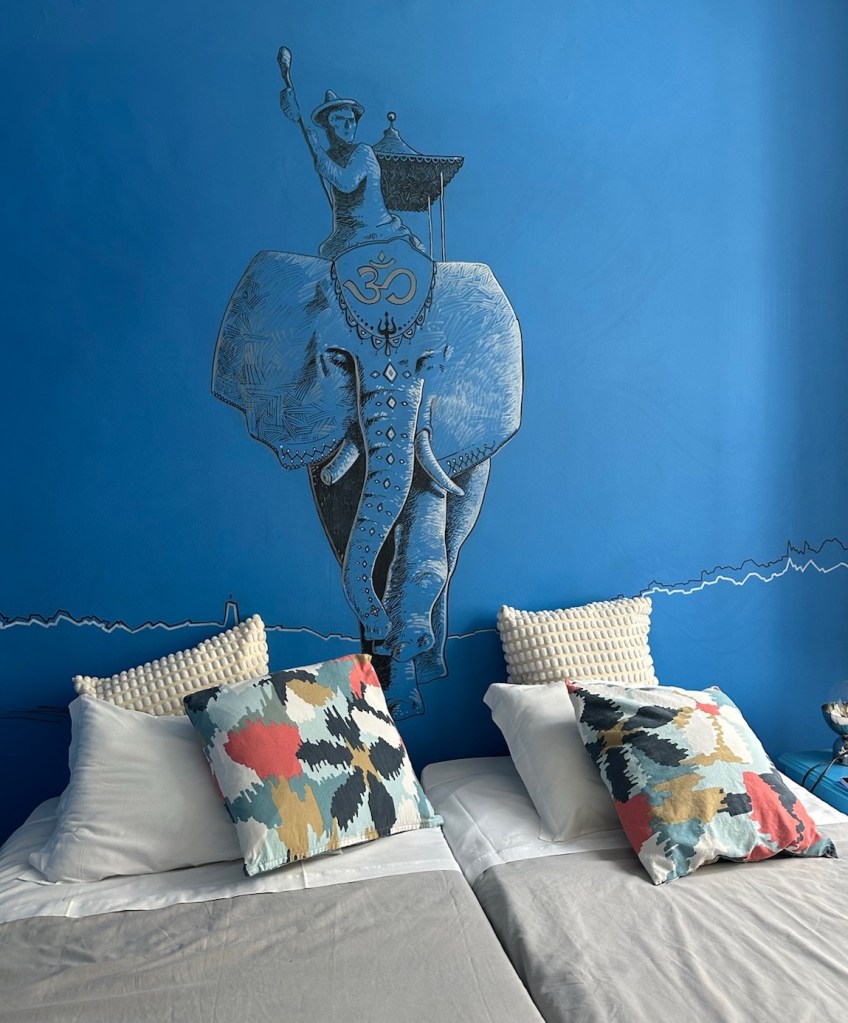
Lisbon Lounge was starting to feel like home! Our cozy private room, bathed in blue, featured a watchful pachyderm. With Solomon the elephant standing guard like a celestial sentinel, sleep came easy.
We must be adjusting to the time change — slept hard and woke up ready to explore the Shrine of Fátima. I grew up hearing about apparition shrines, unbelievable tales, miracles and the pilgrims who traveled to visit these sites. Being the curious person I am, I had to see what it was all about. But first, it was time for breakfast.

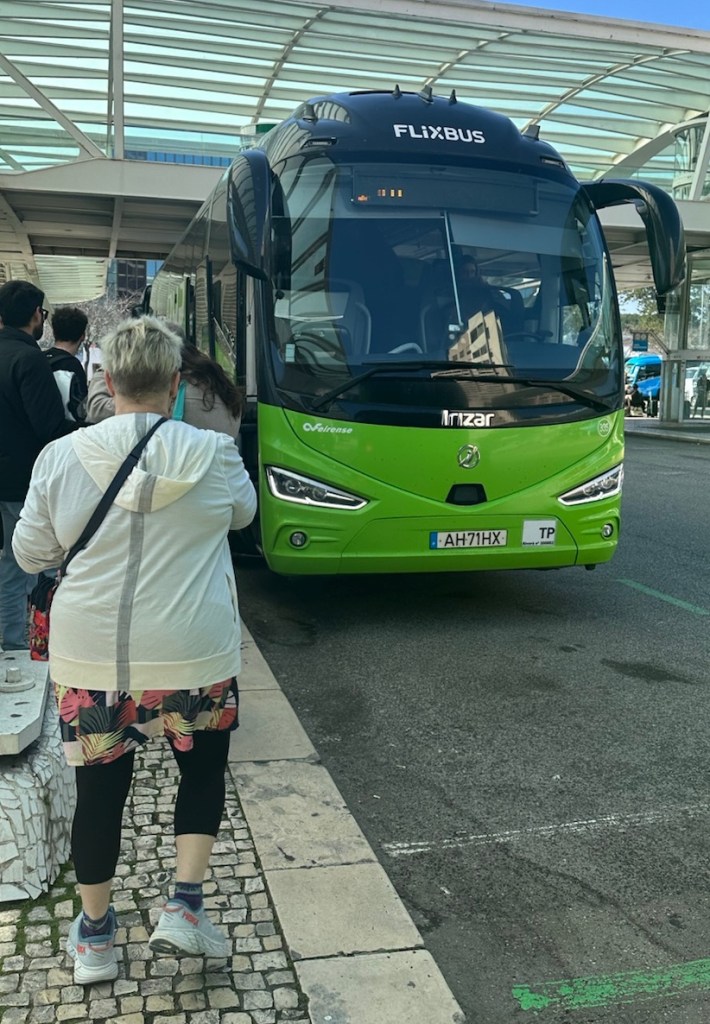
It takes about an hour on the Flix bus to reach Fátima from Lisbon. A very comfortable ride through the countryside on a blue sky sunny day.
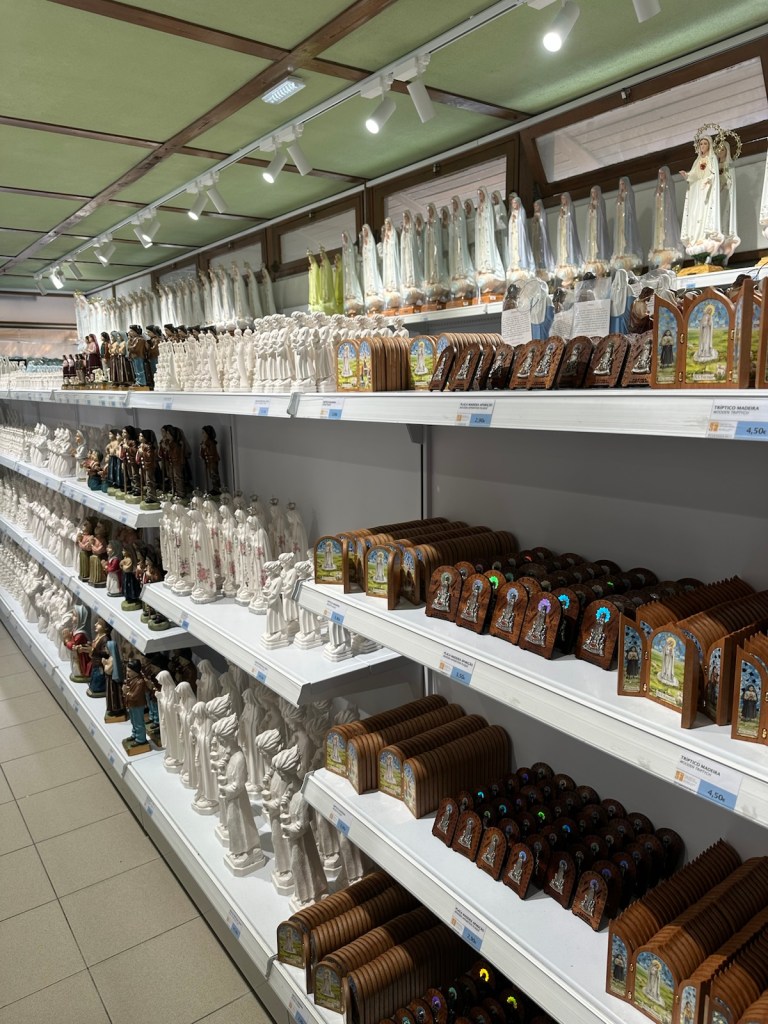
The bus terminal at Fátima had several small gift shops with an array of shiny gemstone rosaries and Mary statues — some were even glow-in-the dark phosphorescent green. Lots of trinkets and souvenirs. It was a short walk from the bus terminal to the shrine.
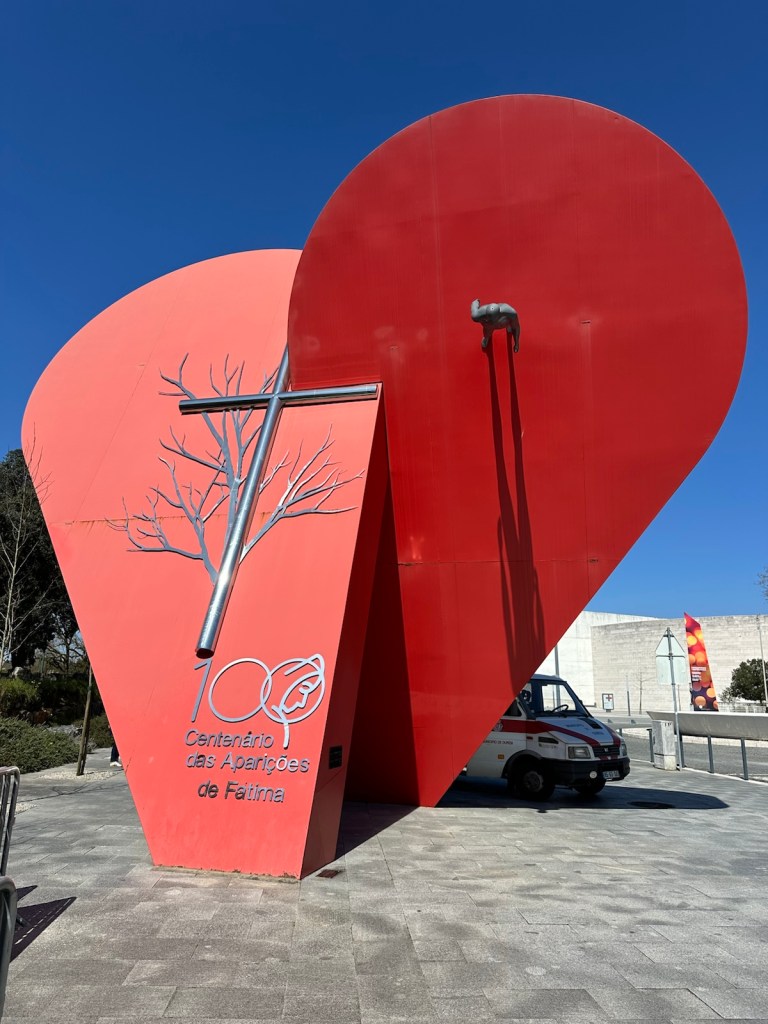
This renowned pilgrimage site typically welcomes millions of visitors annually. However, today the expansive esplanade, capable of accommodating up to 100,000 people, felt remarkably empty. Spanning about 150,000 square meters — equivalent to about 21 football fields — the vastness was particularly striking in the absence of crowds.
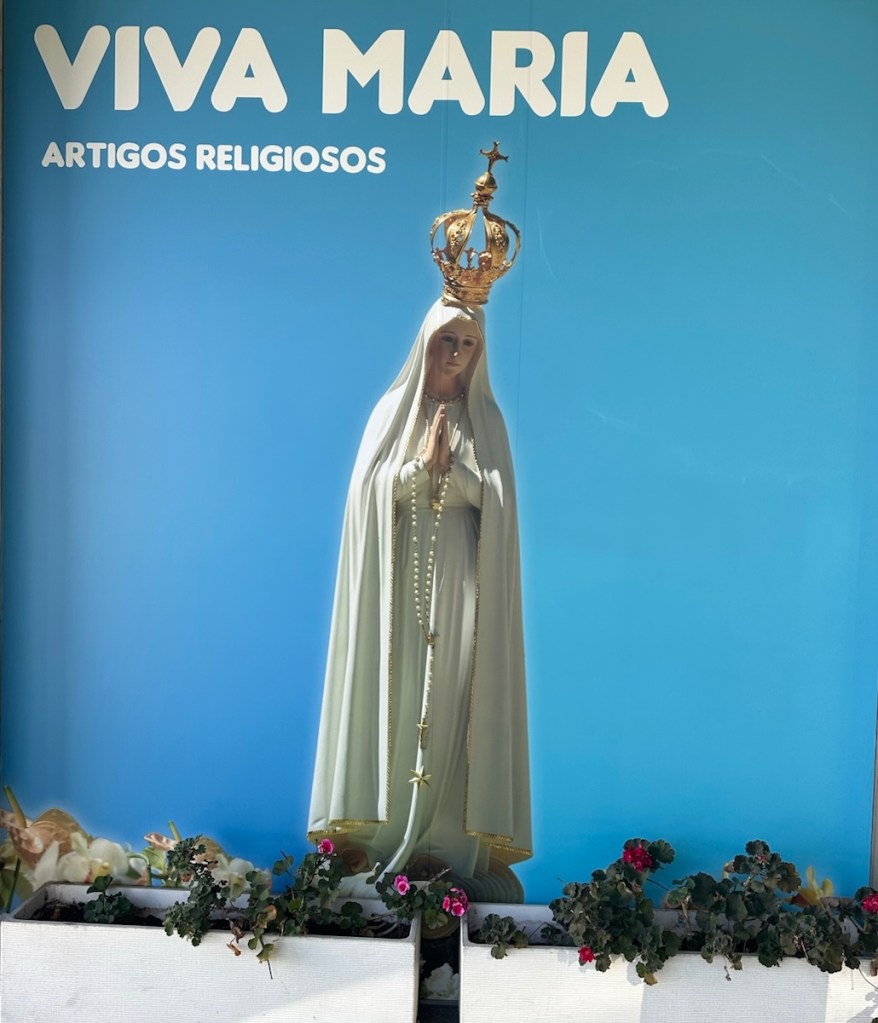
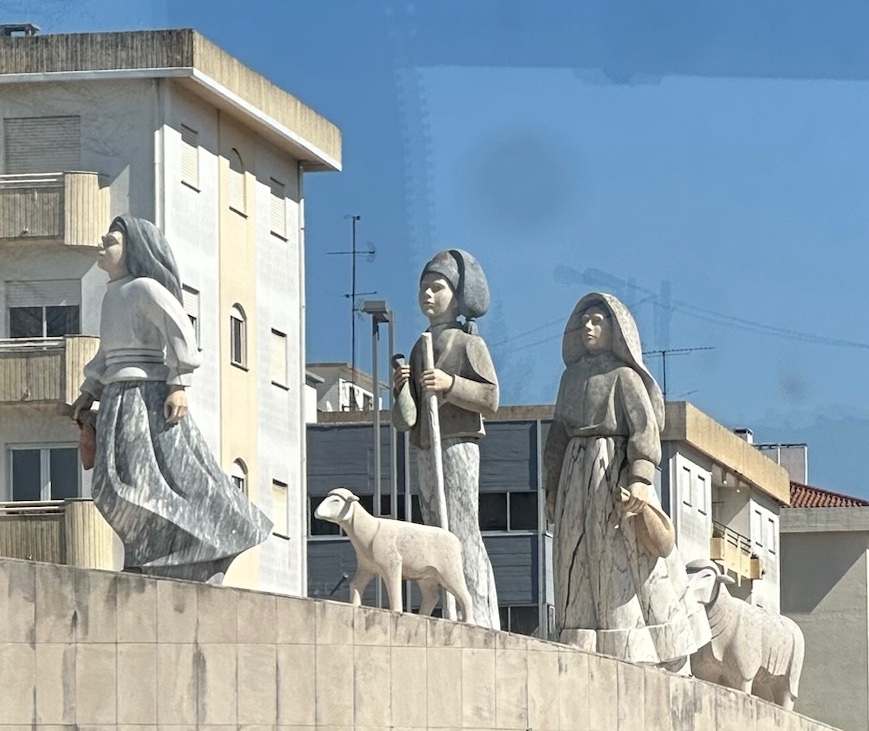
The story of Our Lady of Fátima is one of the most famous Marian apparitions in Catholic history. To make a long story short, it took place in 2017 between May and October. The Virgin Mary is said to have appeared to three shepherd children while they were tending sheep. She asked them to return on the 13th day of the month for six months. Over that time period, she shared several messages with the children. The grand finale took place on October 13 when a massive crowd of 70,000 people gathered to witness a promised miracle. After heavy rain, the sun appeared as a spinning disk, changing colors and seeming to zigzag toward the earth before returning to normal. Many witnesses, including journalists and skeptics, reported the event which is now called the Miracle of the Sun.

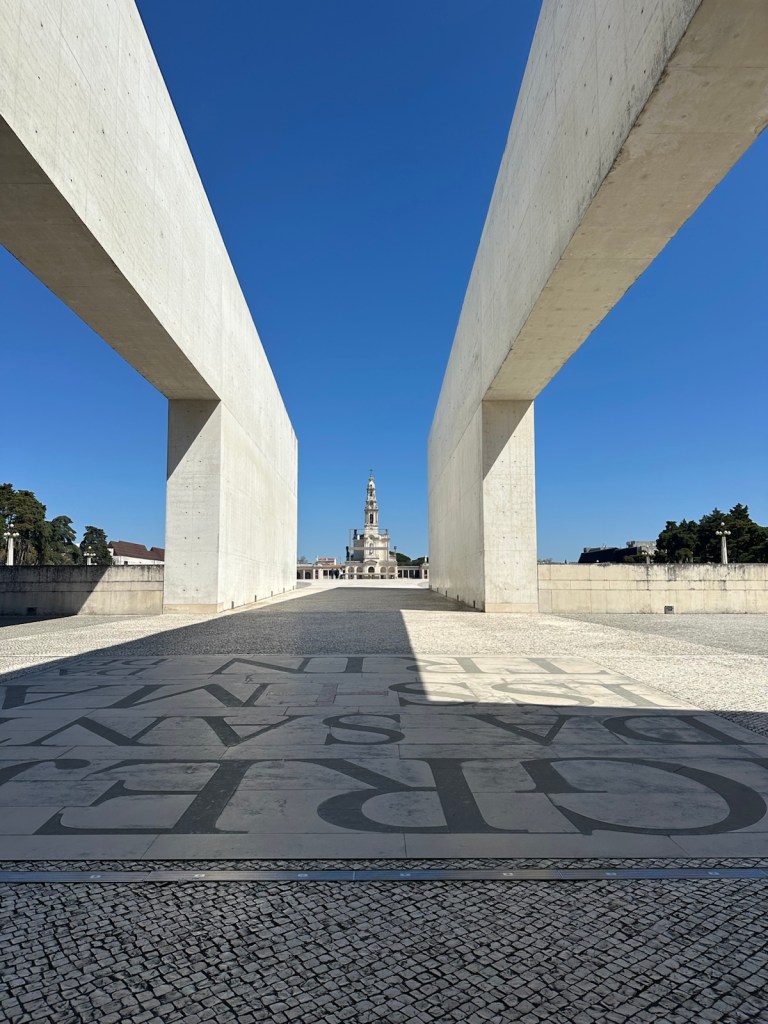
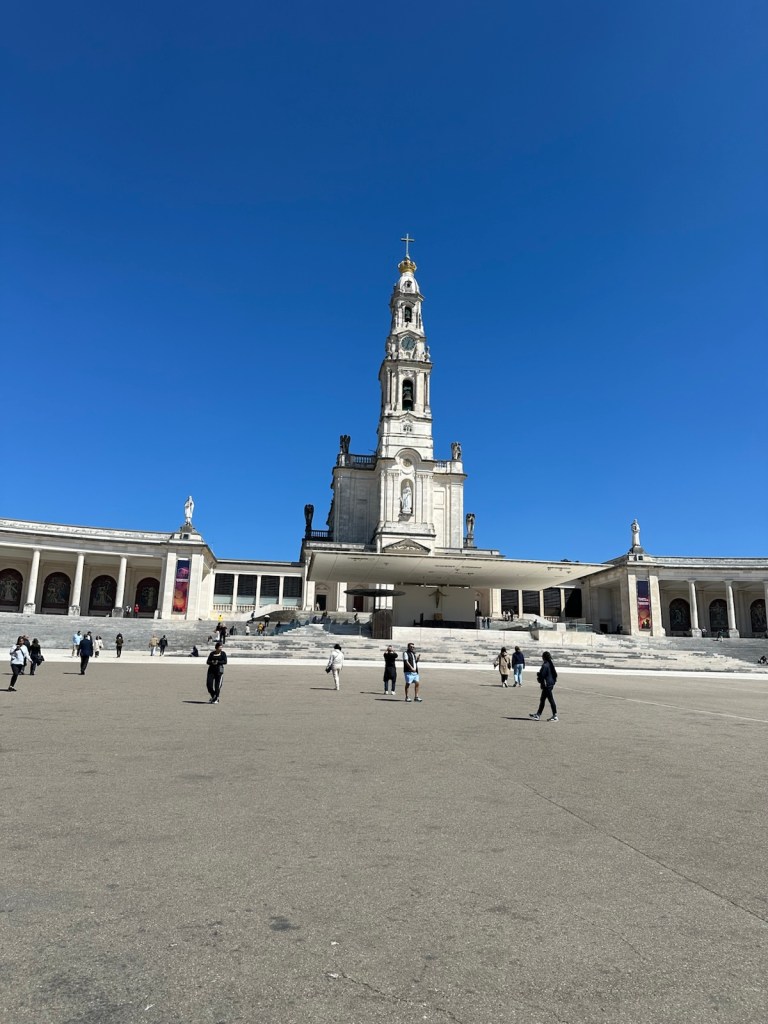
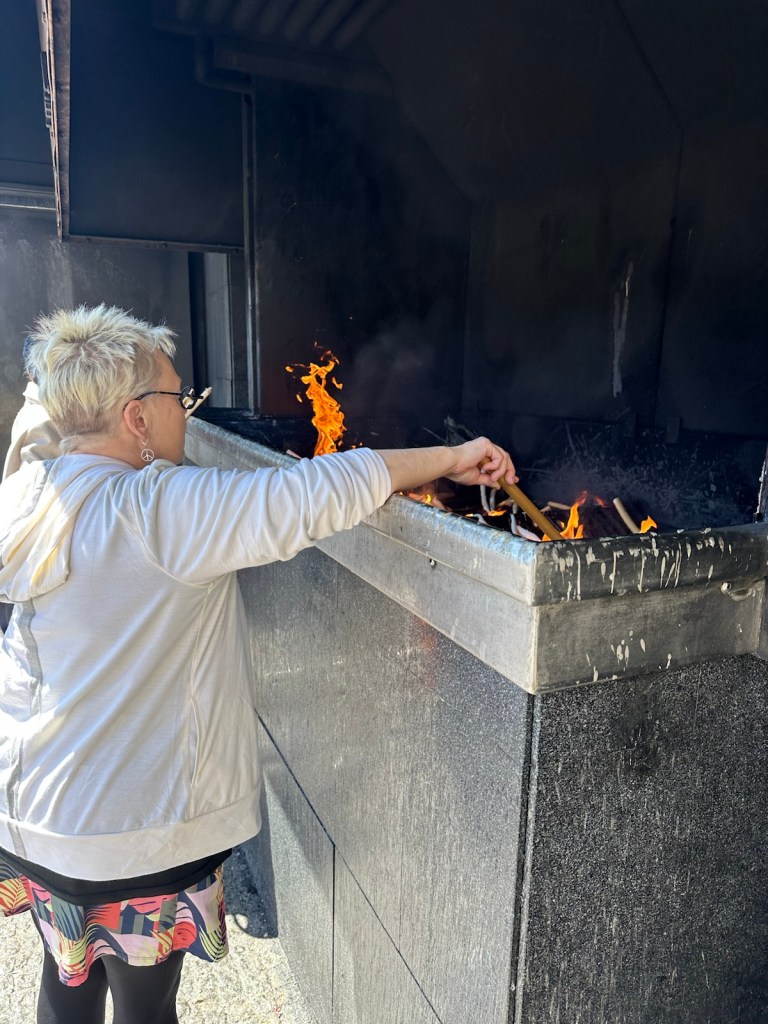
Half way across the expansive esplanade, we came across an outdoor chapel where Mass was in progress. The air was thick with the scent of melting wax, leading us to a sizable glass walled room brimming with beeswax candles of all lengths and sizes.
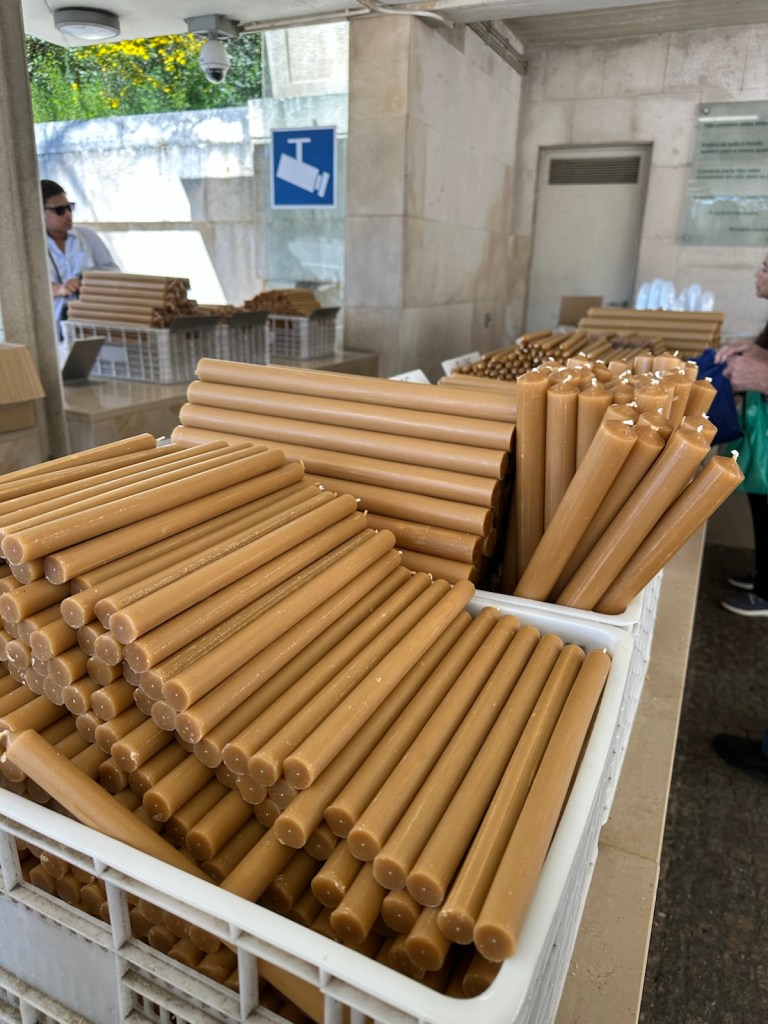
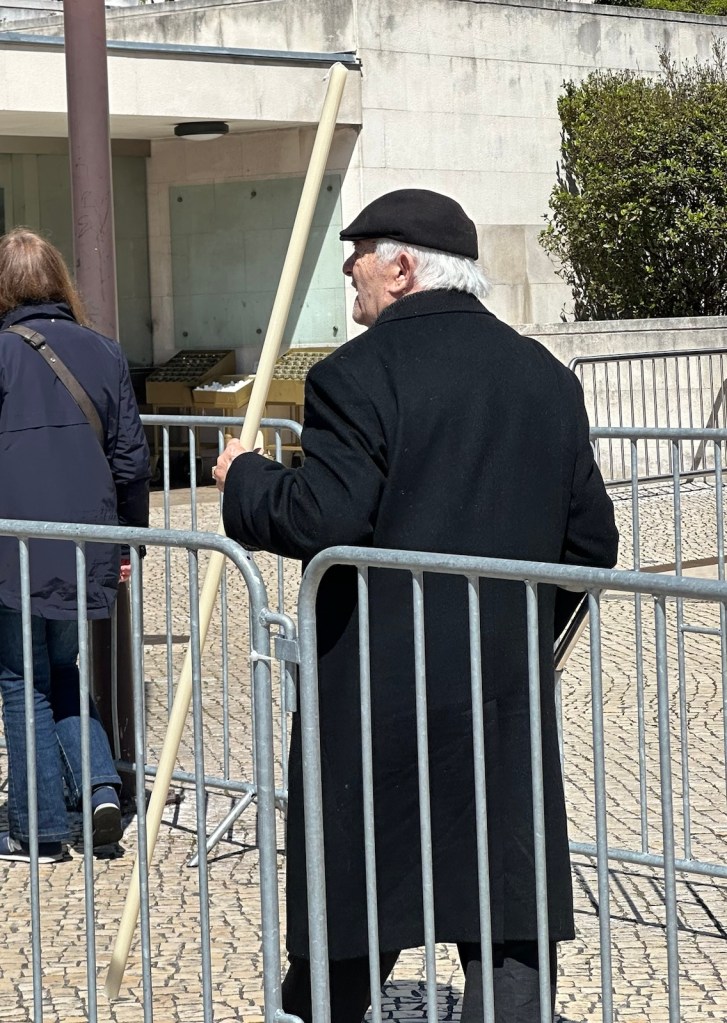
The candle burning station holds profound spiritual significance for pilgrims, symbolizing their prayers, sacrifices, and expressions of gratitude. Candles are lit often representing specific intentions or thanksgiving, and placed into the large burning pit as a tangible act of devotion.

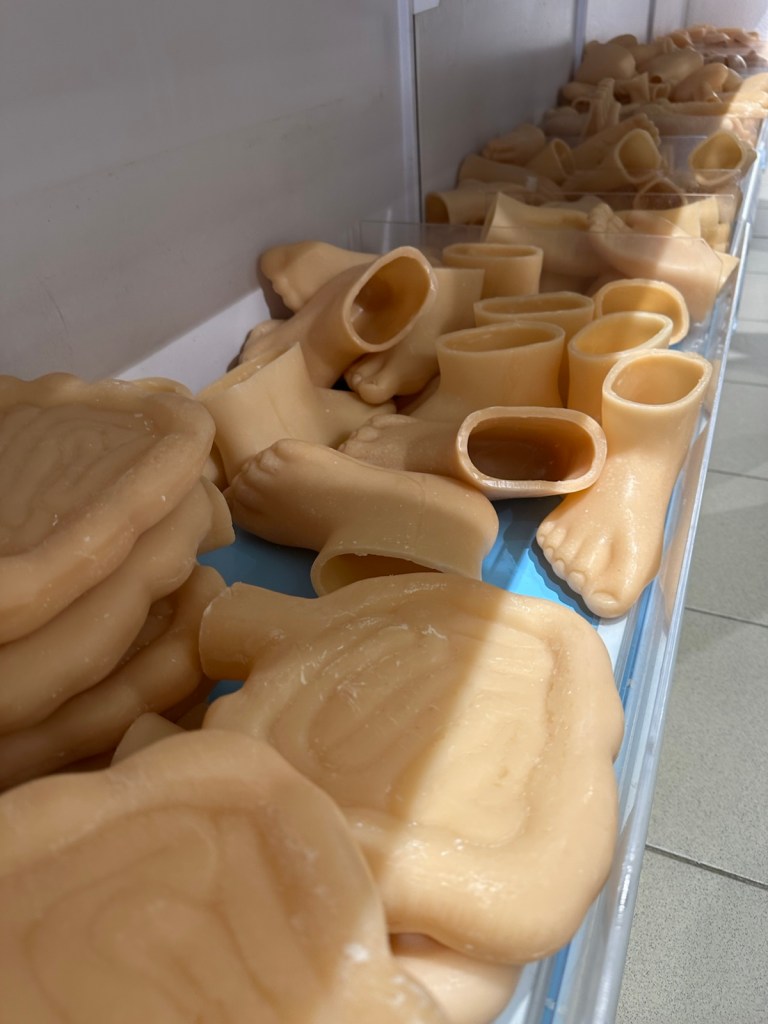
On the outskirts of the Shrine, there were countless hotels, restaurants and shops selling the same rosaries, statues and also wax body parts — hands, feet, kidneys, gallbladders, intestines and a whole lot more.
Apparently, the wax body parts are known as promessas de cera or “wax promises” which devotees burn as offerings related to specific healings or blessings.

After hours of walking and observing the Shrine at Fátima, we were ready to switch back to exploring Lisbon. Our dinner plans took us to the Bica district, one of Lisbon’s most picturesque and historically rich neighborhoods.
In addition to owning the Lisbon Lounge, our friend Paul Bell owns a Peruvian restaurant called, Choclo Ceviche which is situated along one of the city’s most iconic and steep streets. The Ascensor da Bica, is a charming funicular railway that transports passengers up and down the steep incline. It’s a delightful experience for visitors.

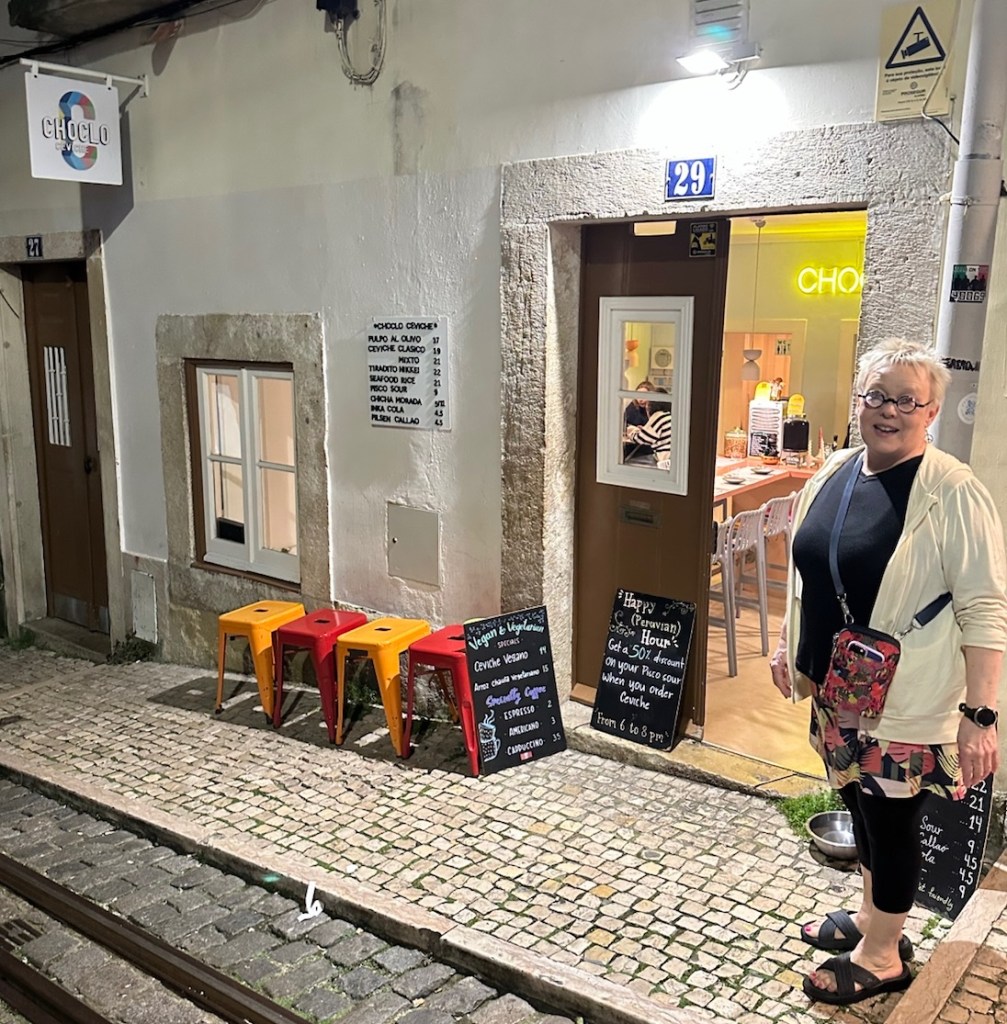
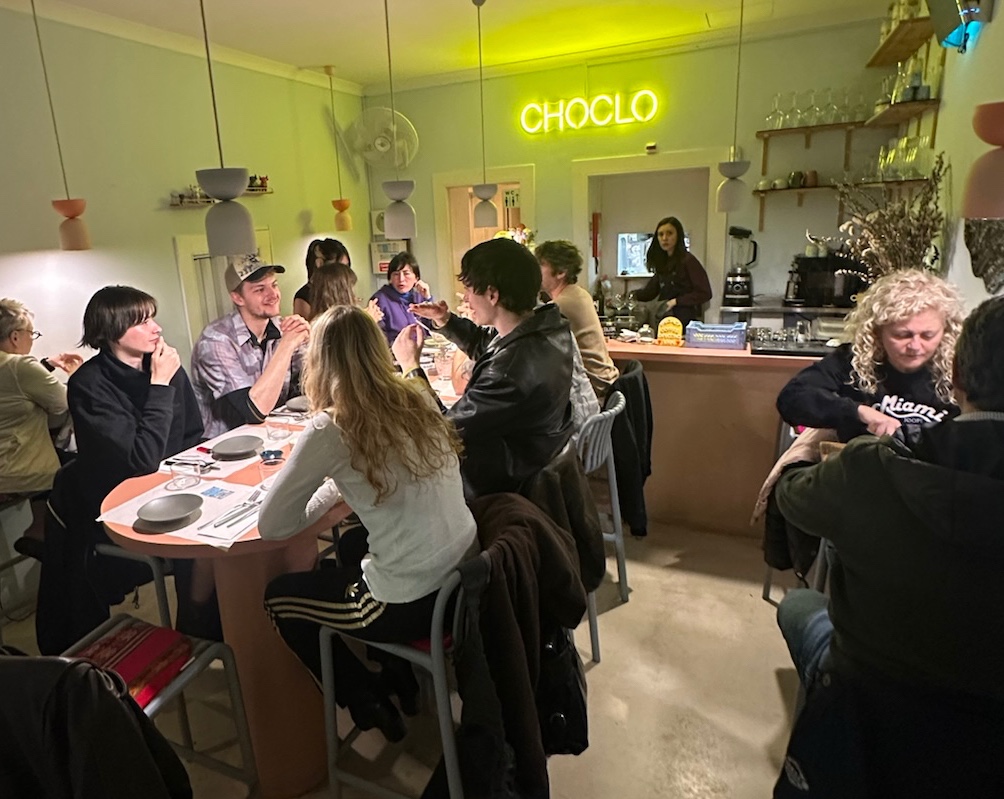

national drink of Peru. Pisco is a grape brandy originating in the port city
of Pisco in Peru.
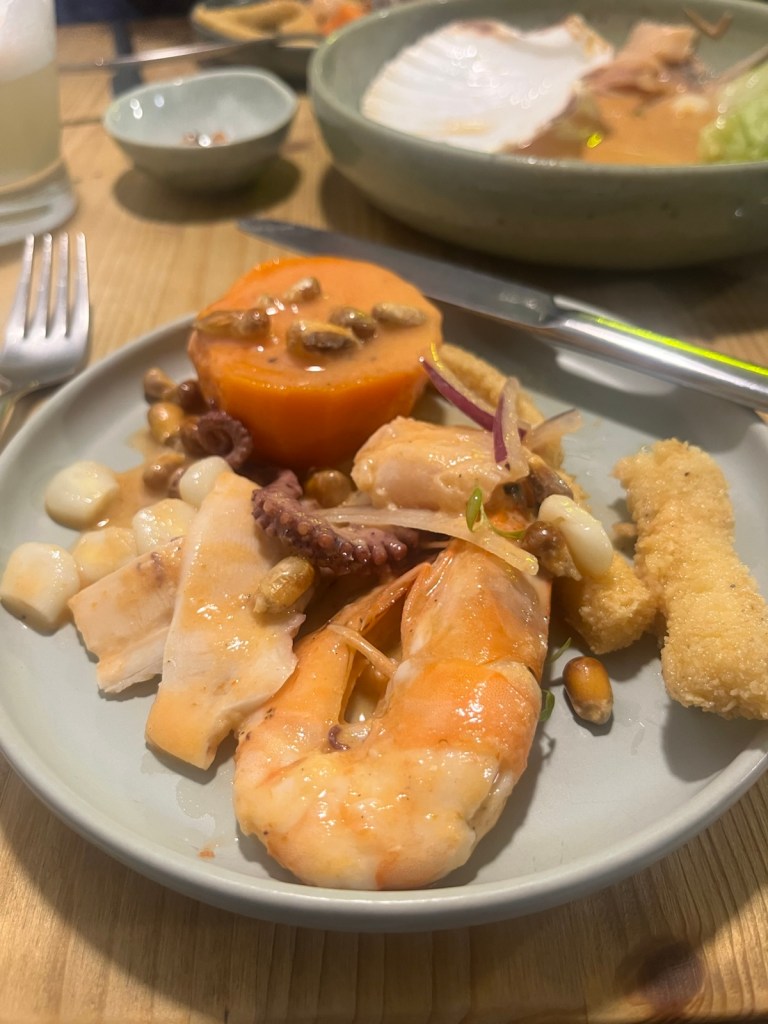
milk which is a citrus based marinade that cures the seafood.
We departed the restaurant content and satisfied, having enjoyed both our meal and the passing trams that added to the evening’s charm. The iconic tram stopped running at 9:00 pm so it was time to hike the hill.
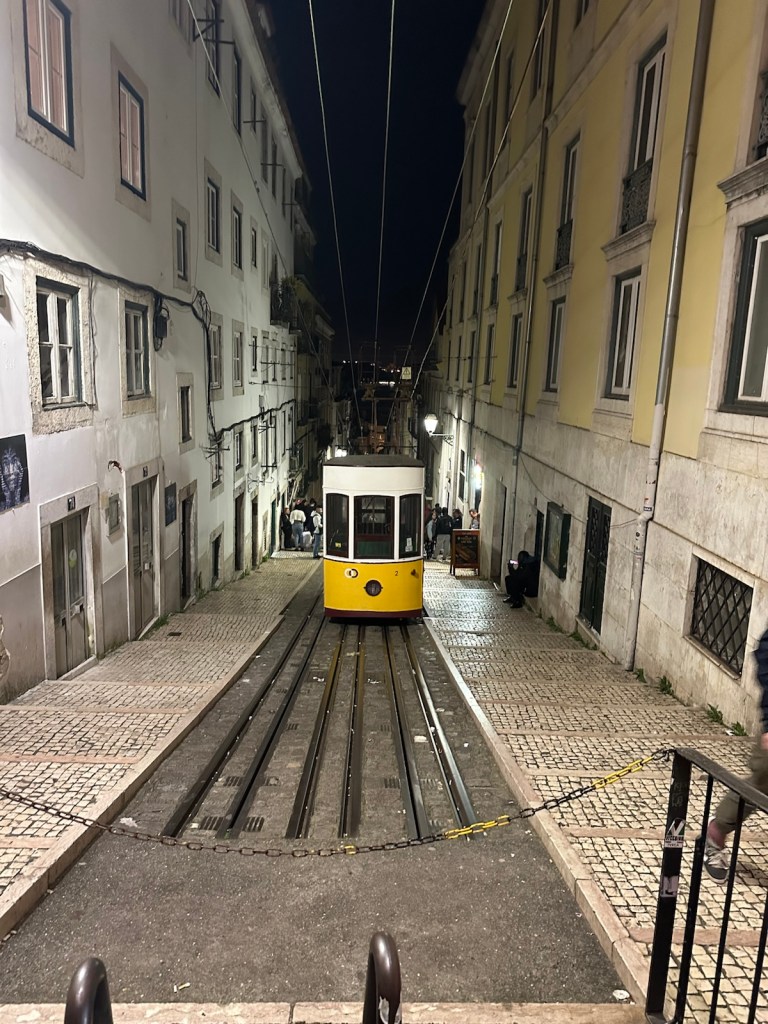
At the top of the hill, we caught an Uber and headed back to the Lisbon Lounge. As we concluded our evening, we encountered a solemn religious procession moving through the streets — a local observance of the Stations of the Cross, a traditional Catholic devotion during Lent. Participants moved reverently, pausing for prayers and hymns at various stations depicting events from Christ’s Passion.
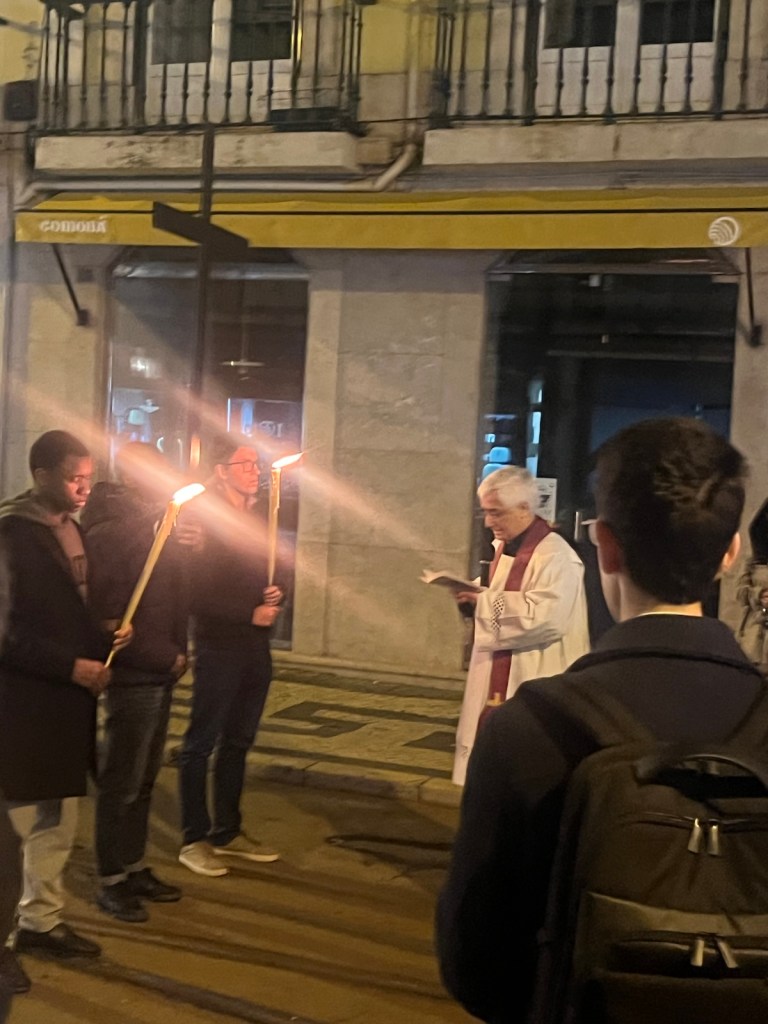
be heard by all.

on the pavement.
Experiencing such a procession firsthand offered a profound insight into the city’s rich spiritual traditions. With Holy Week approaching, one can anticipate even more elaborate and deeply moving ceremonies throughout Lisbon and beyond in the Hispanic countries.
 Jane in Spain