With time running out, the countdown to heading home has begun. We’re squeezing in the last few experiences while we can.
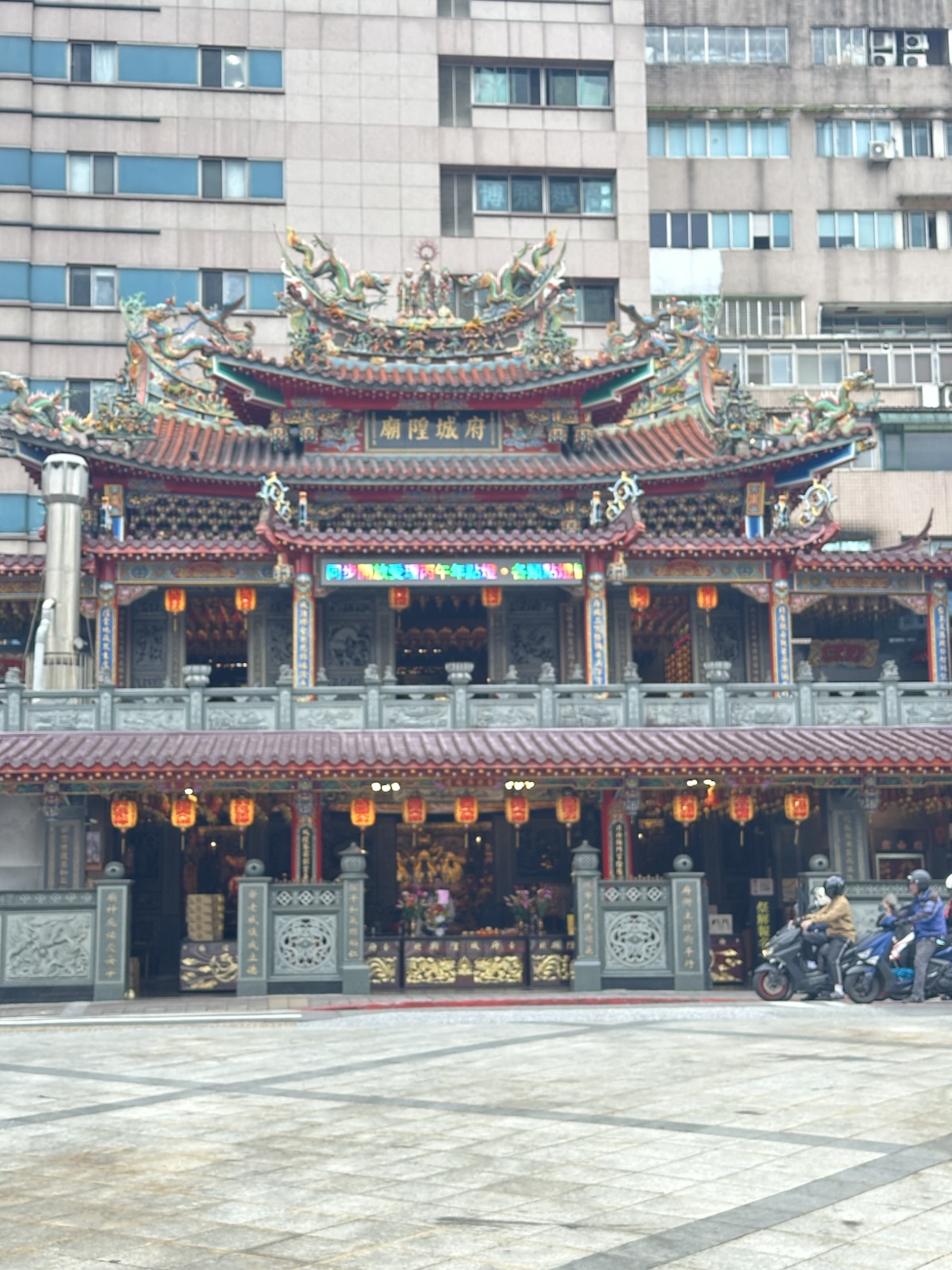
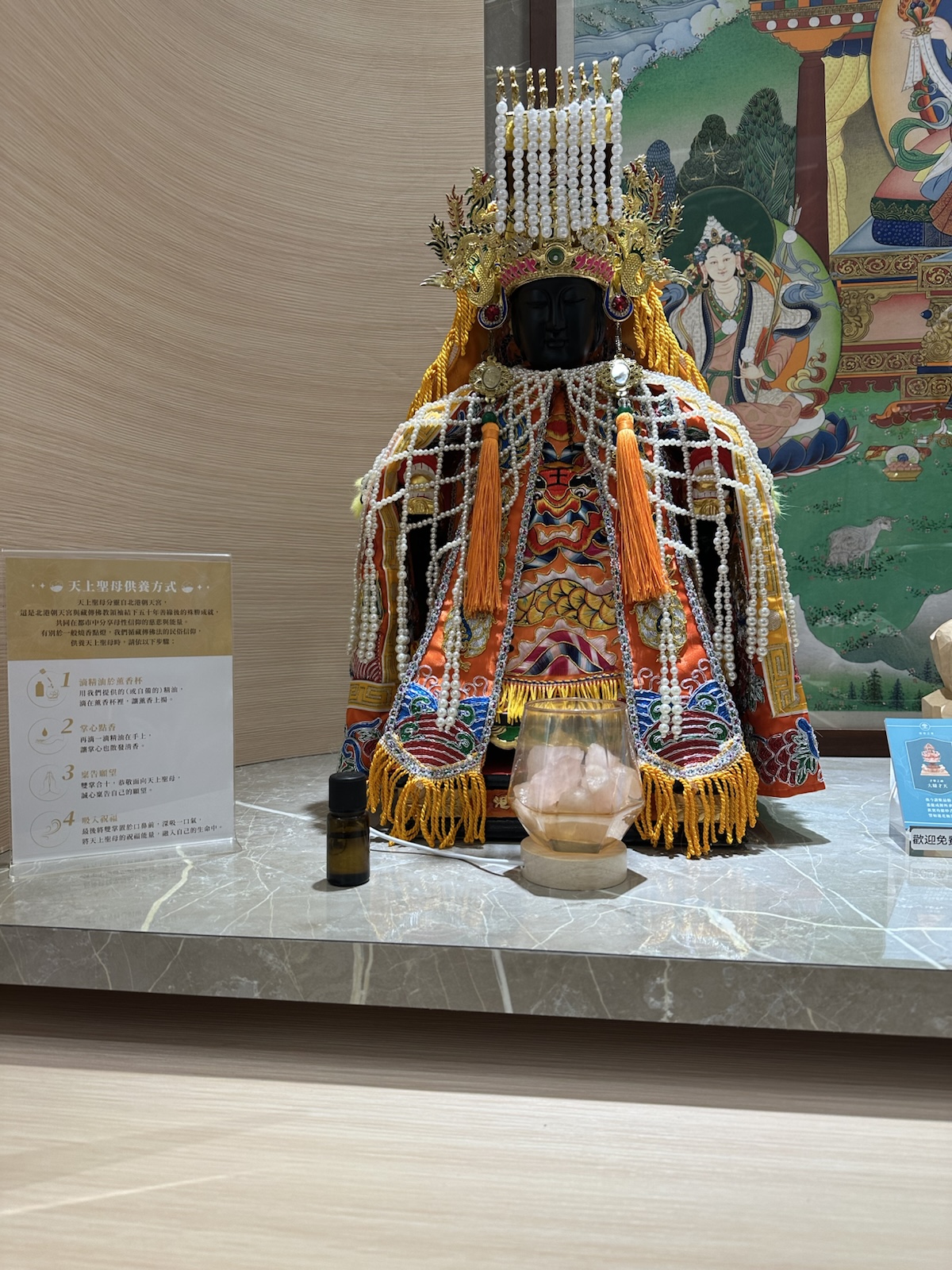
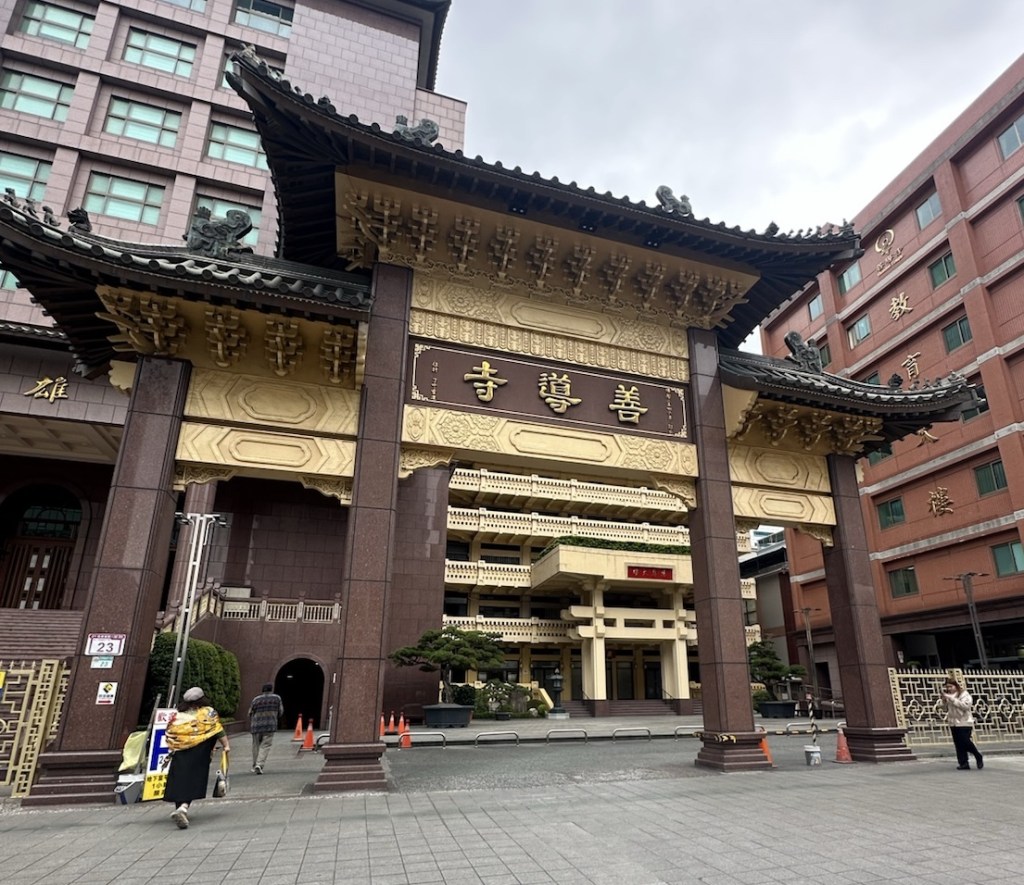
One more temple … Songshan Ciyou Temple is a traditional Taiwanese folk temple dedicated primarily to Mazu the sea goddess who is widely worshipped as a protector of travelers, fishermen and sailors.
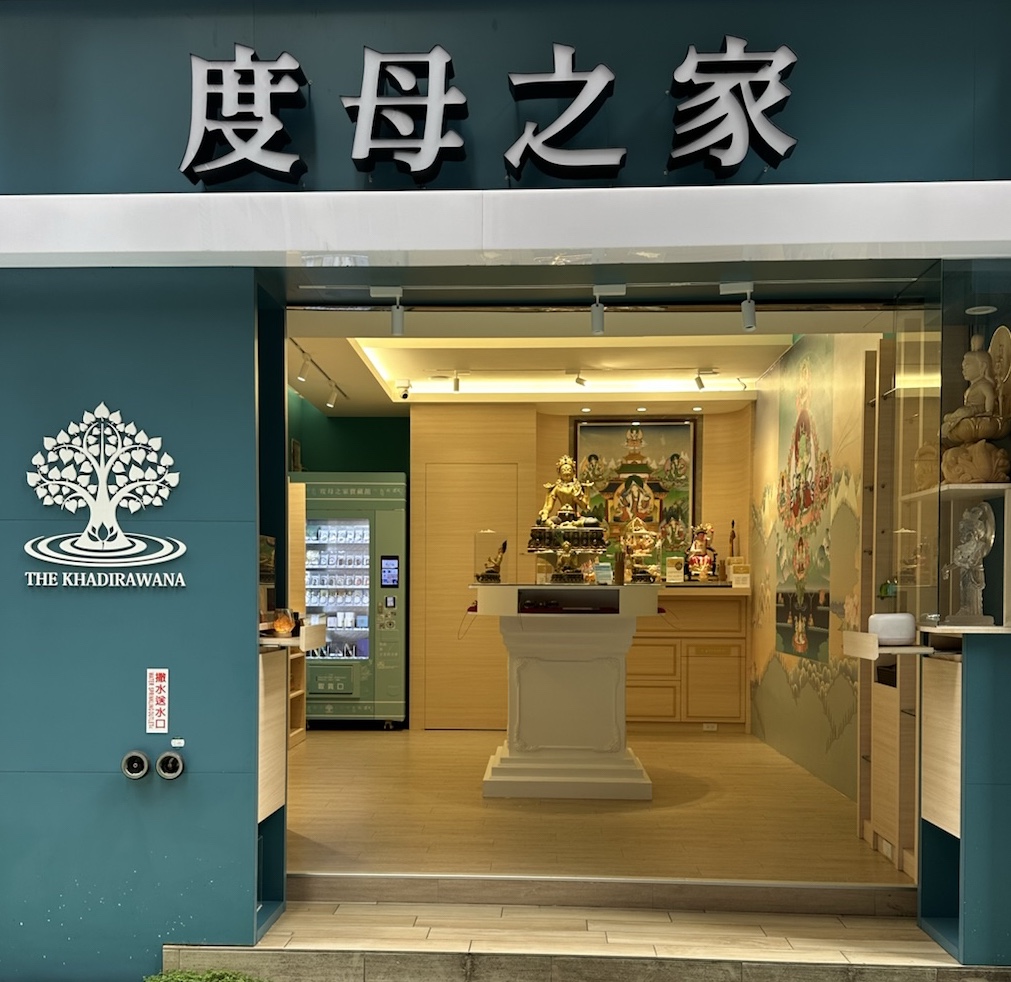
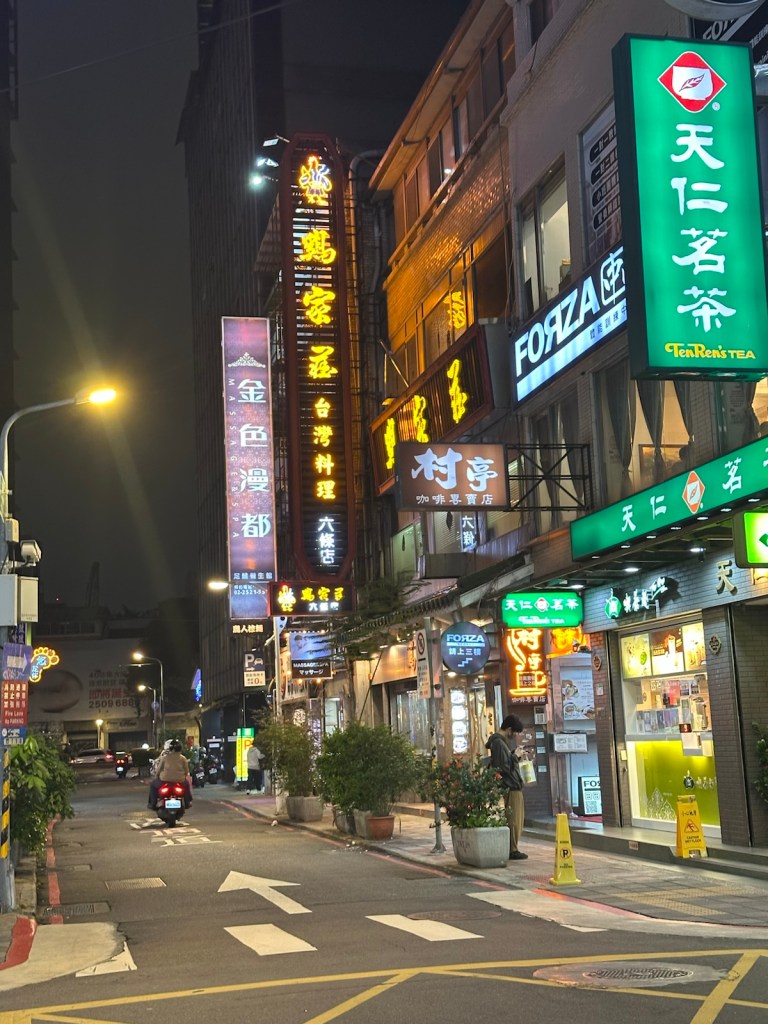
Next to our hotel was a small Hindu shrine called the Khadirawana. The Chinese letters on the top translate roughly to “Home of the Enlightened Mother” or “House of the Bodhisattva Mother.”
In the Buddhist world, a Bodhisattva is an enlightened being who has achieved great spiritual wisdom but chooses not to enter final nirvana yet, instead remaining in the world to help others awaken and be free from suffering.
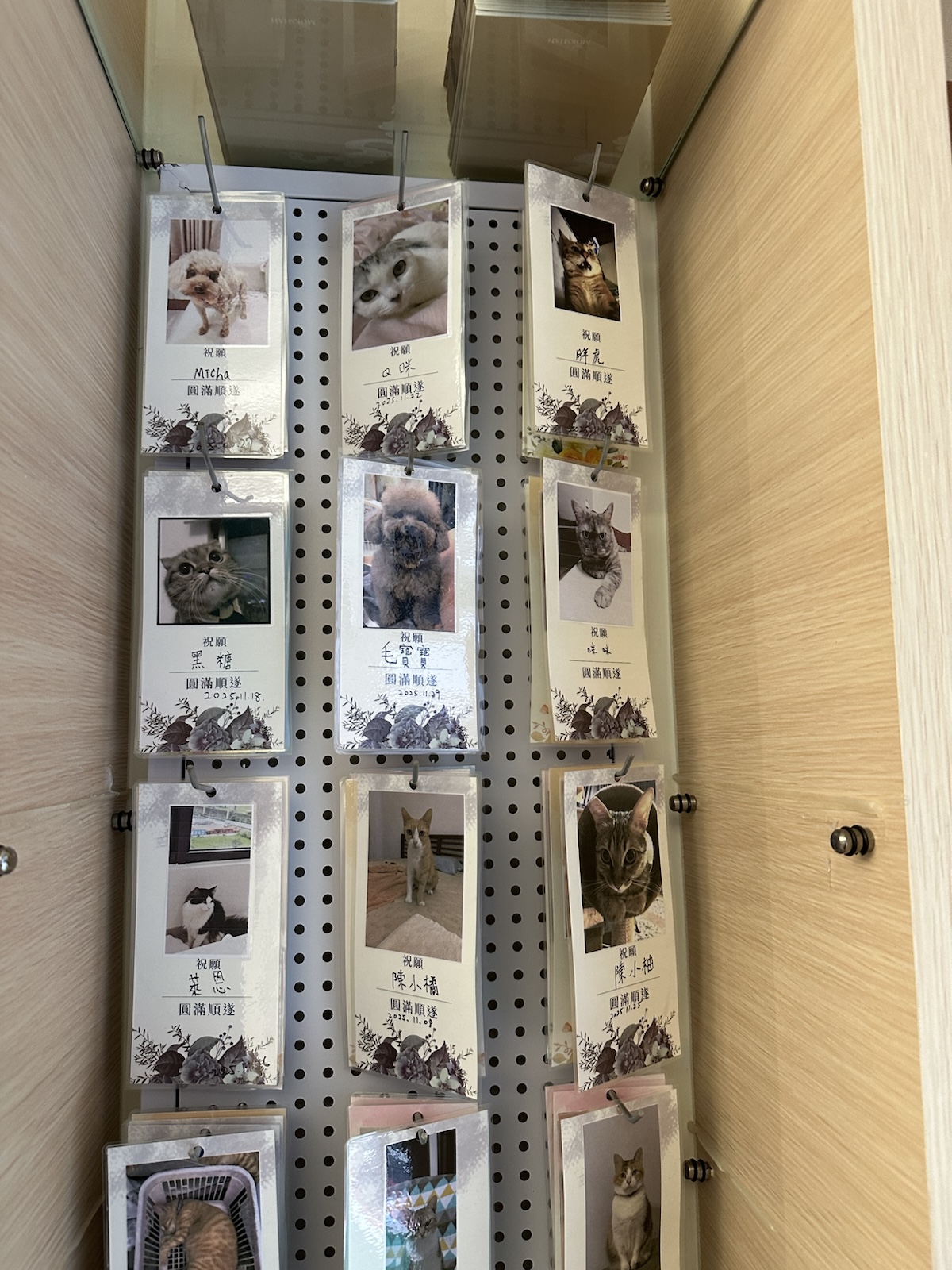
We passed the brightly lit, open-front space several times as we came and went, and at first glance it looked like a small retail shop. I often noticed women stopping there and assumed it was a jewelry store.
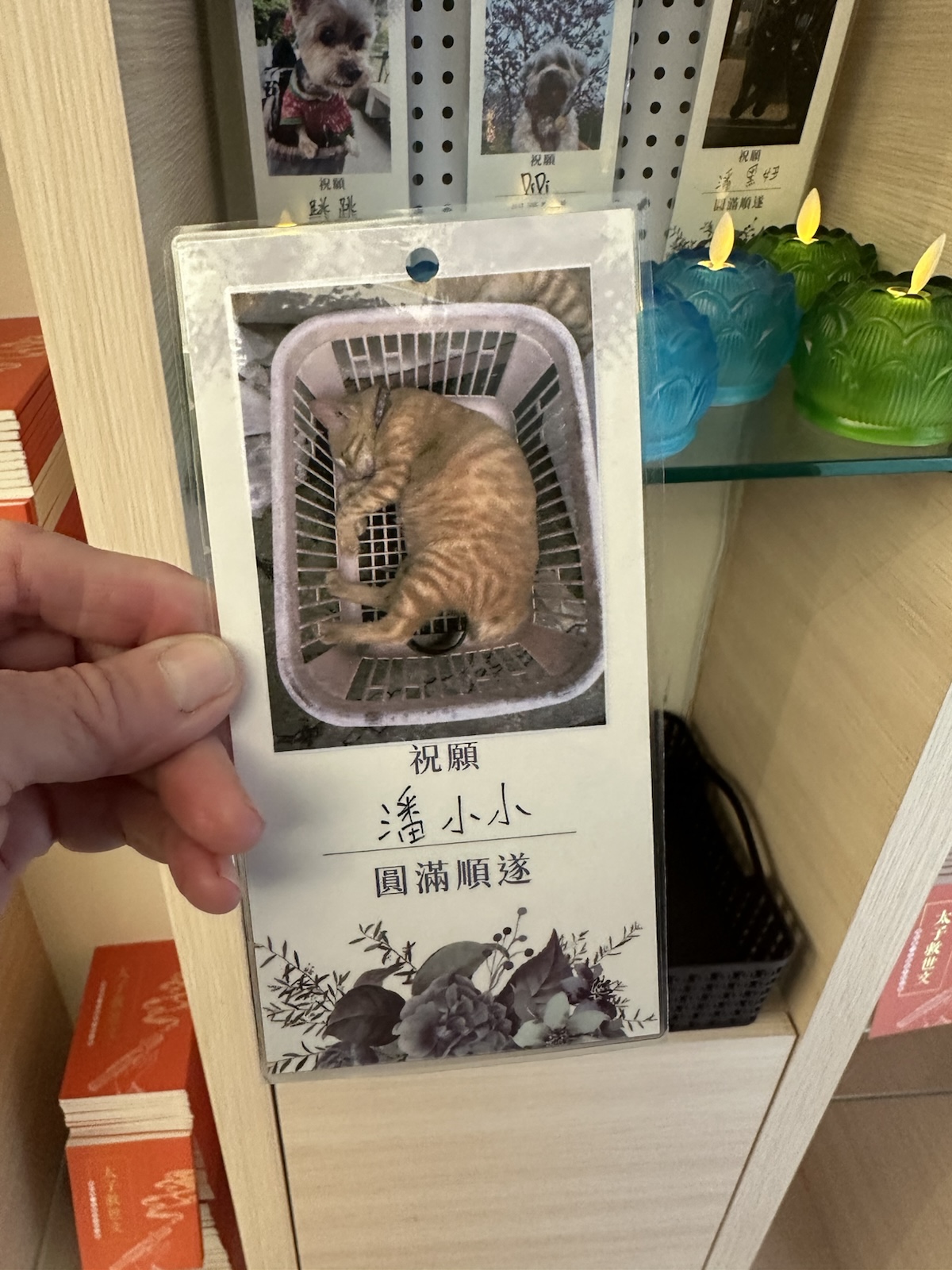
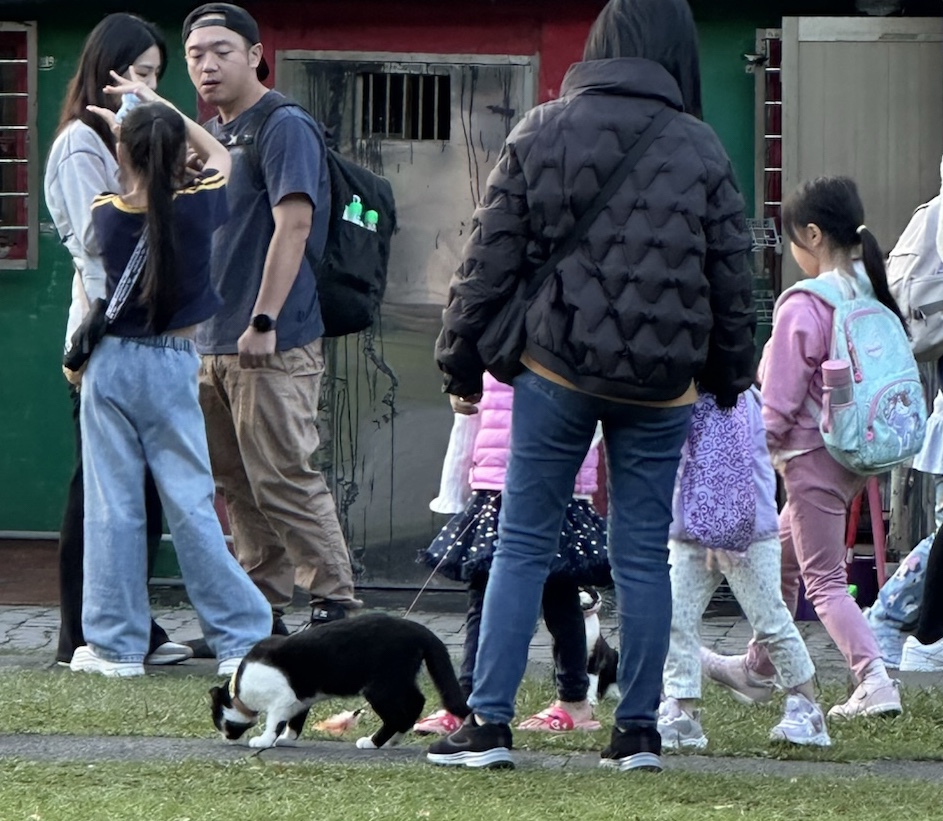
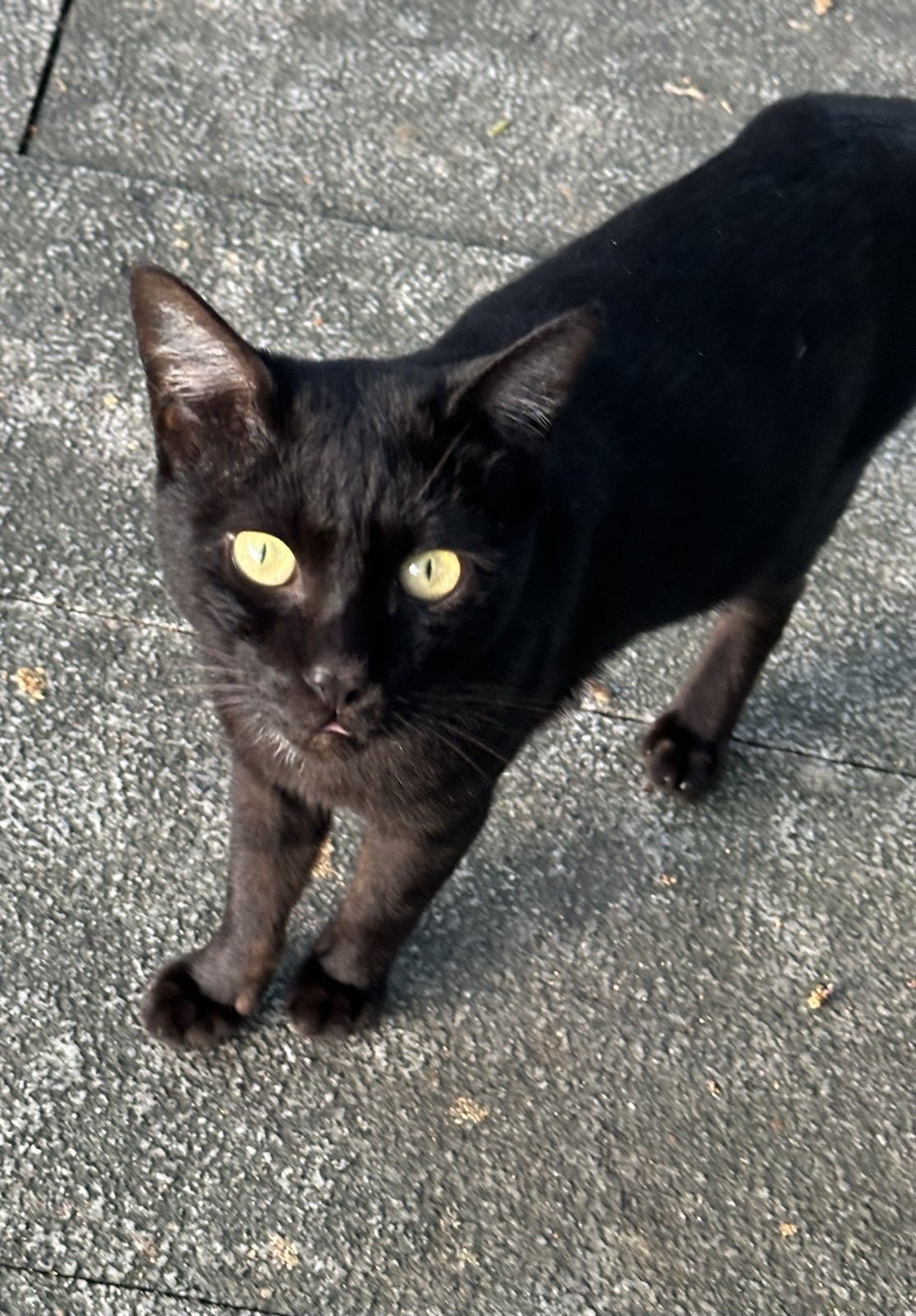
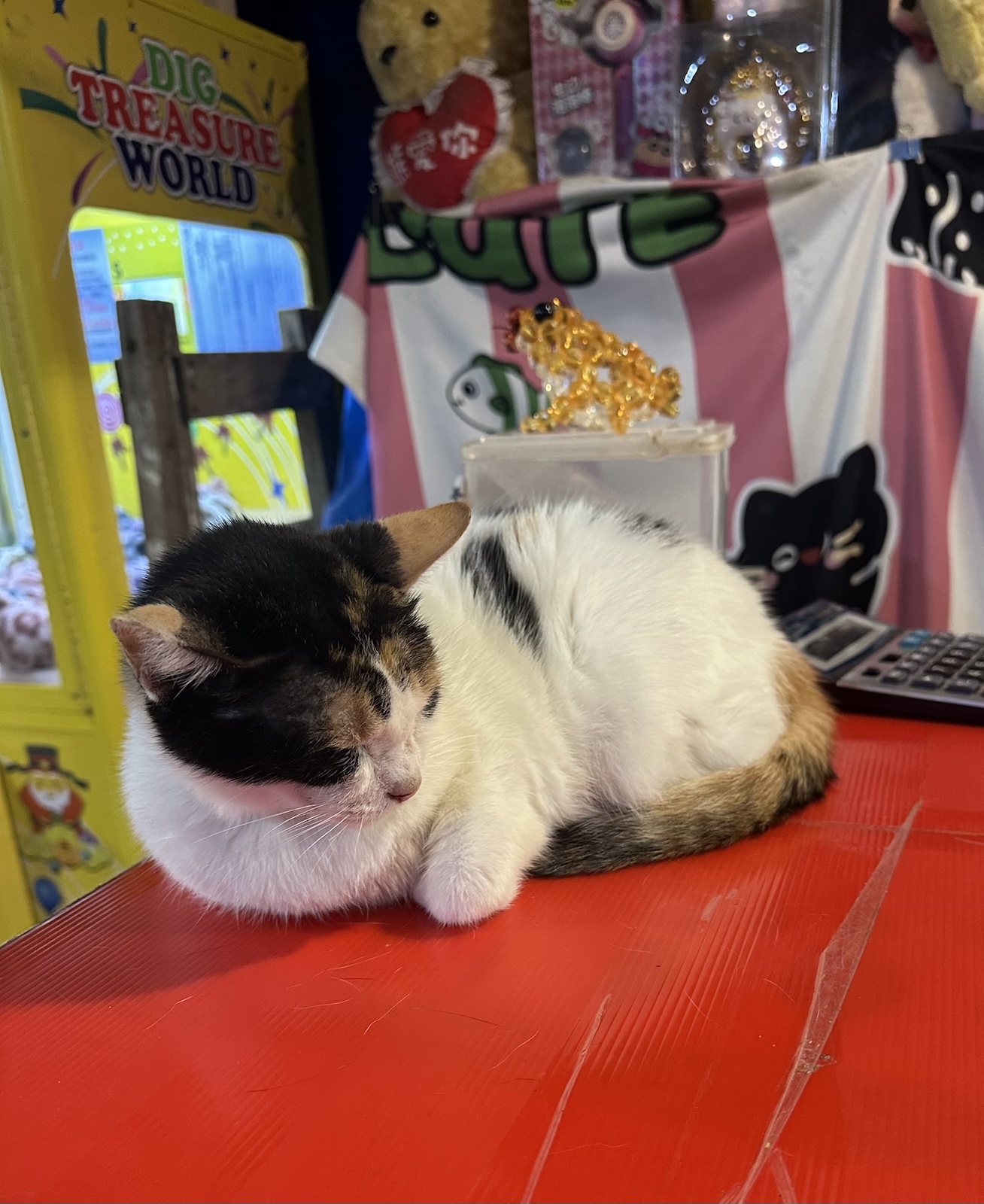
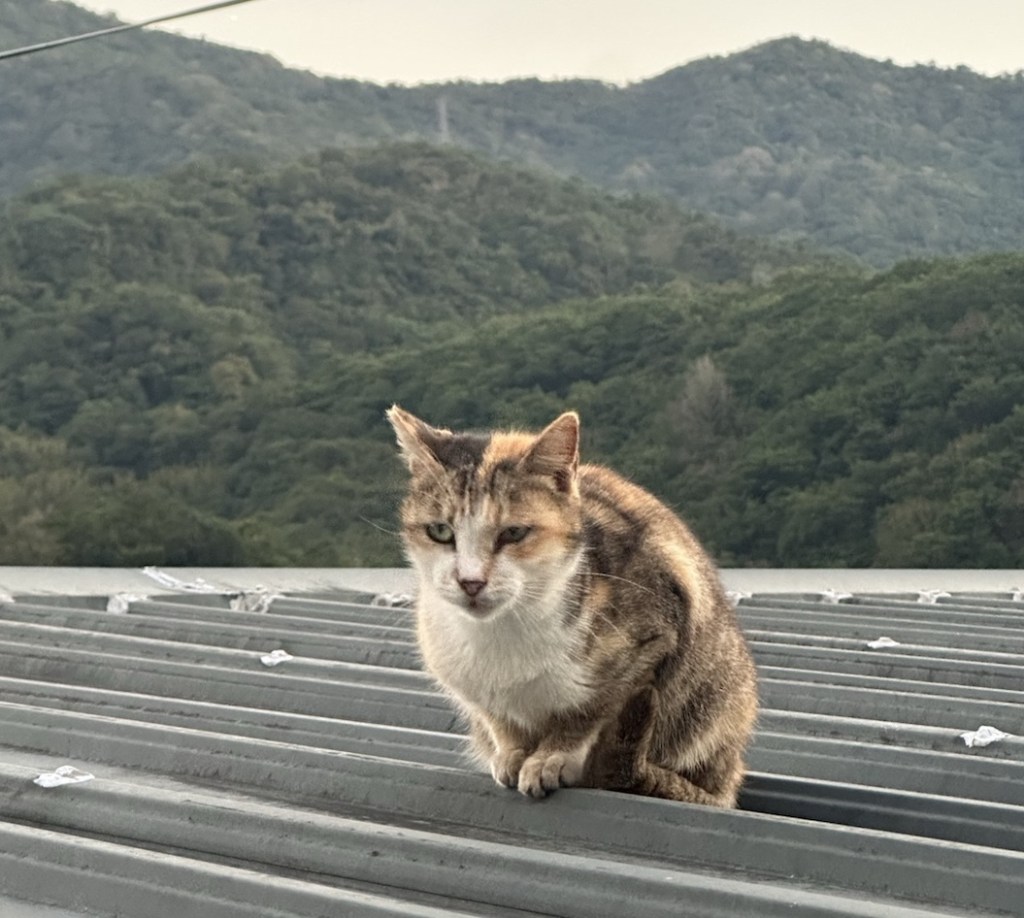
Leaving photos of pets is a common practice in compassionate or healing-oriented spiritual spaces. It’s a way of asking for protection, health and longevity.
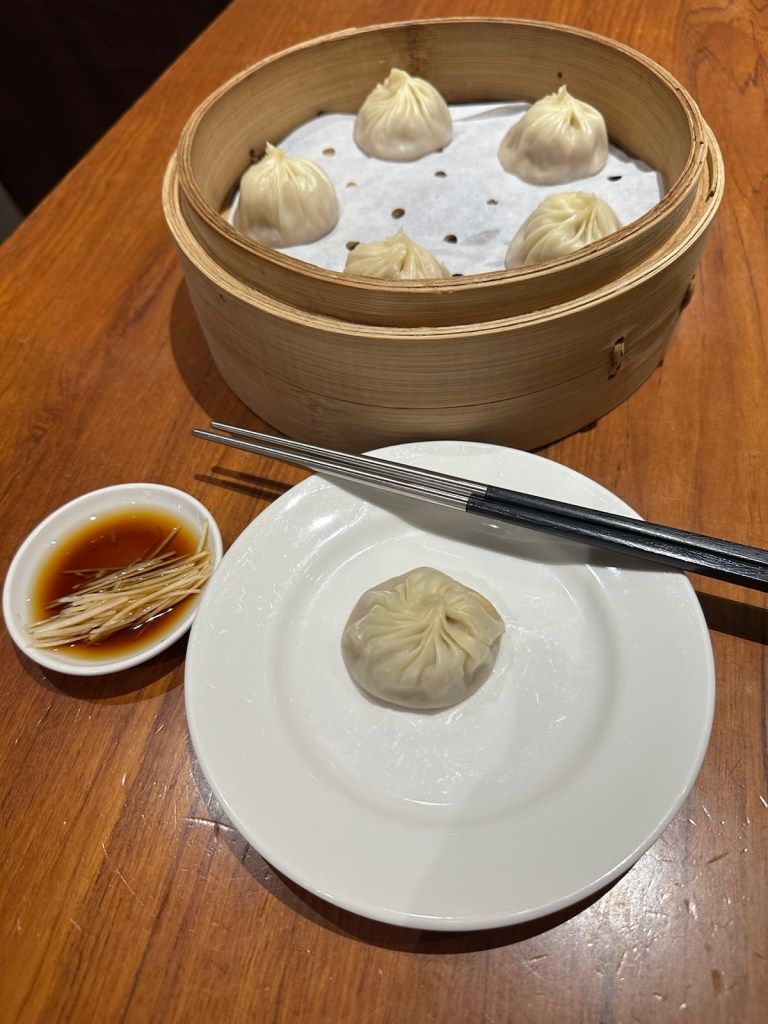
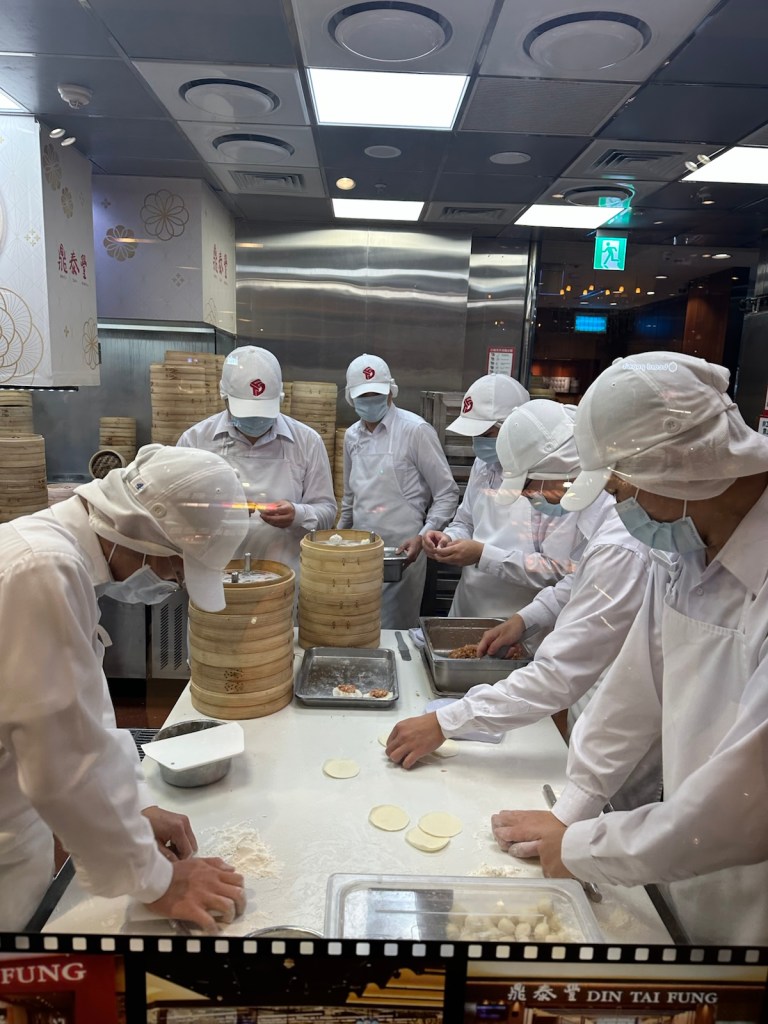
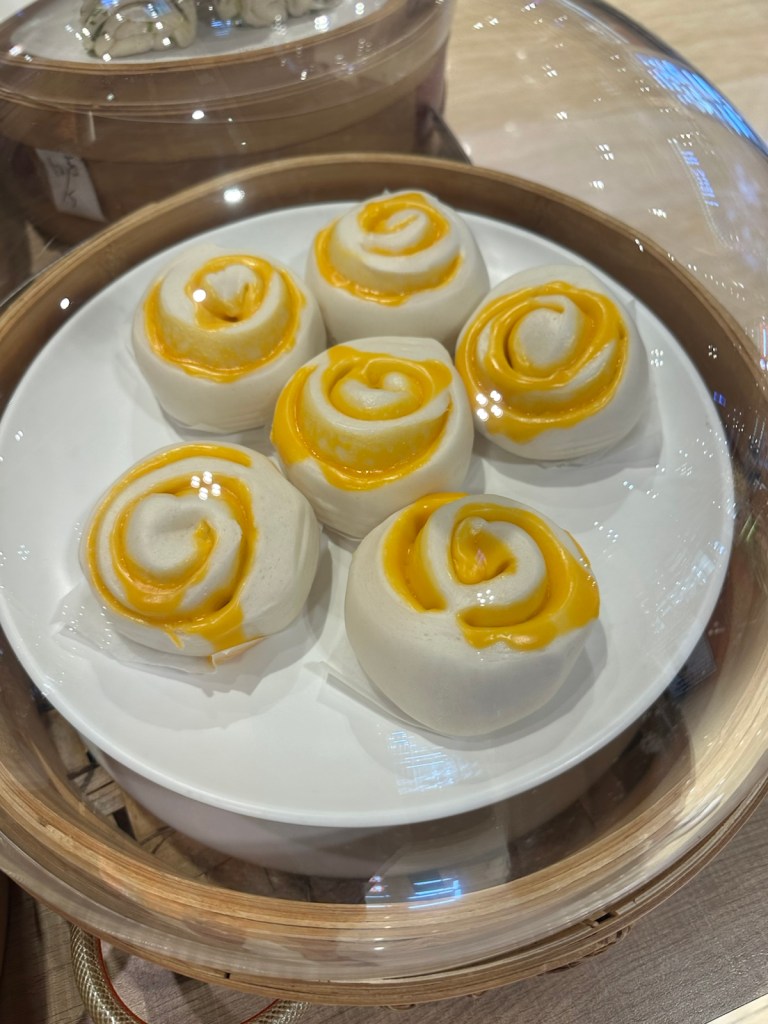
Another last-minute stop — I wanted to try authentic soup dumplings, known as xiǎolóngbāo. I’m also a big fan of cucumbers and was happy to find them featured on a few menus.
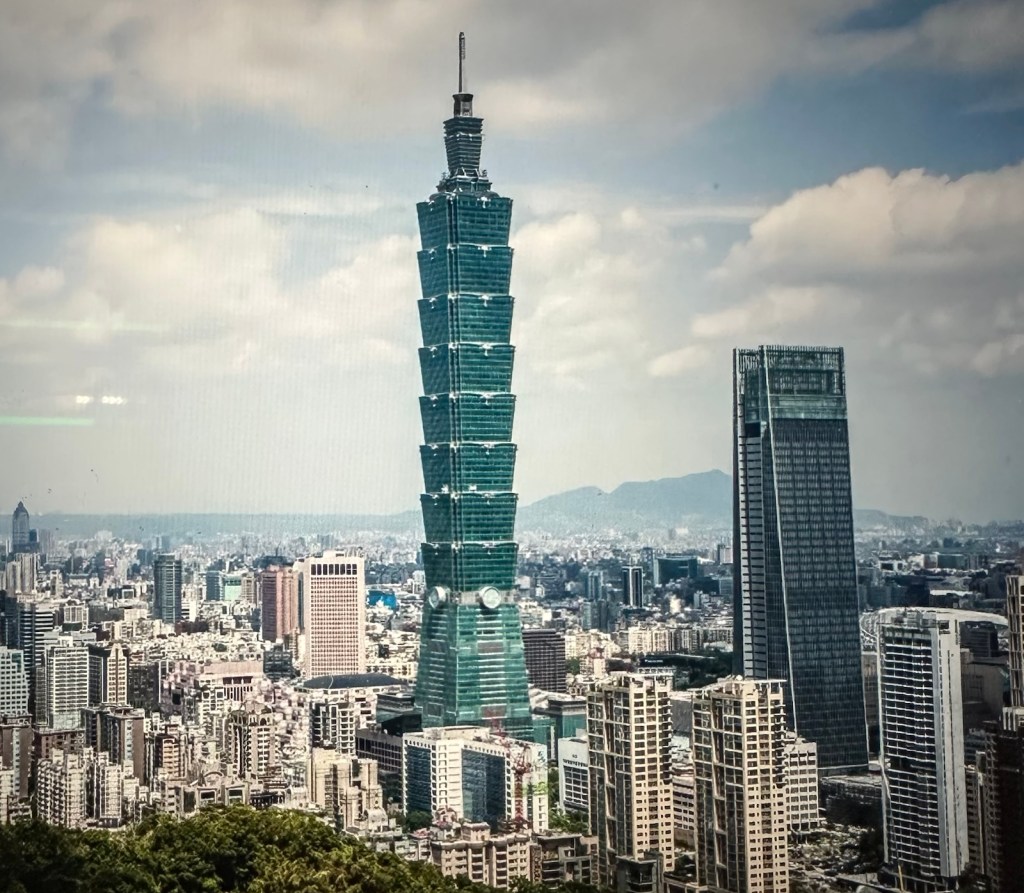
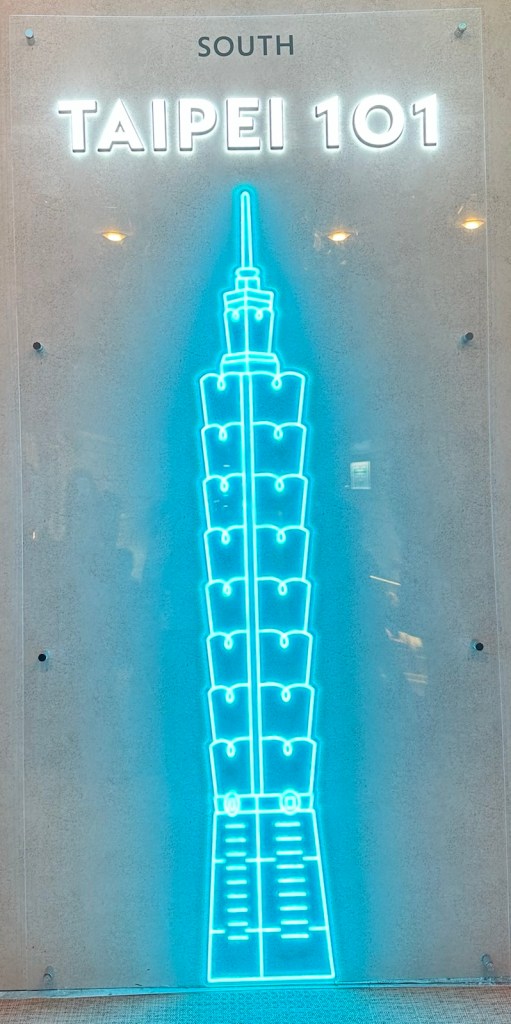
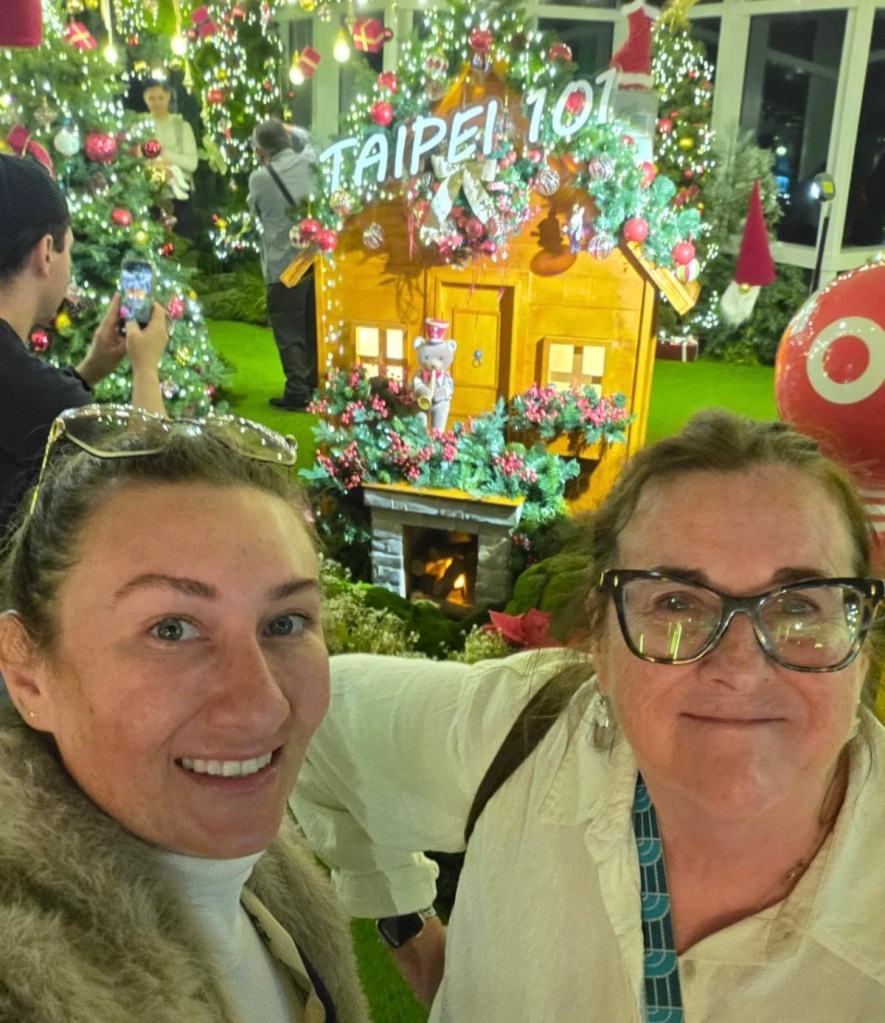
We ended our stay with a visit to Taipei 101 … it is not a course on basic Taipei, it’s Taiwan’s most iconic landmark — a supertall skyscraper that once held the title of world’s tallest building and still defines Taipei’s skyline today.
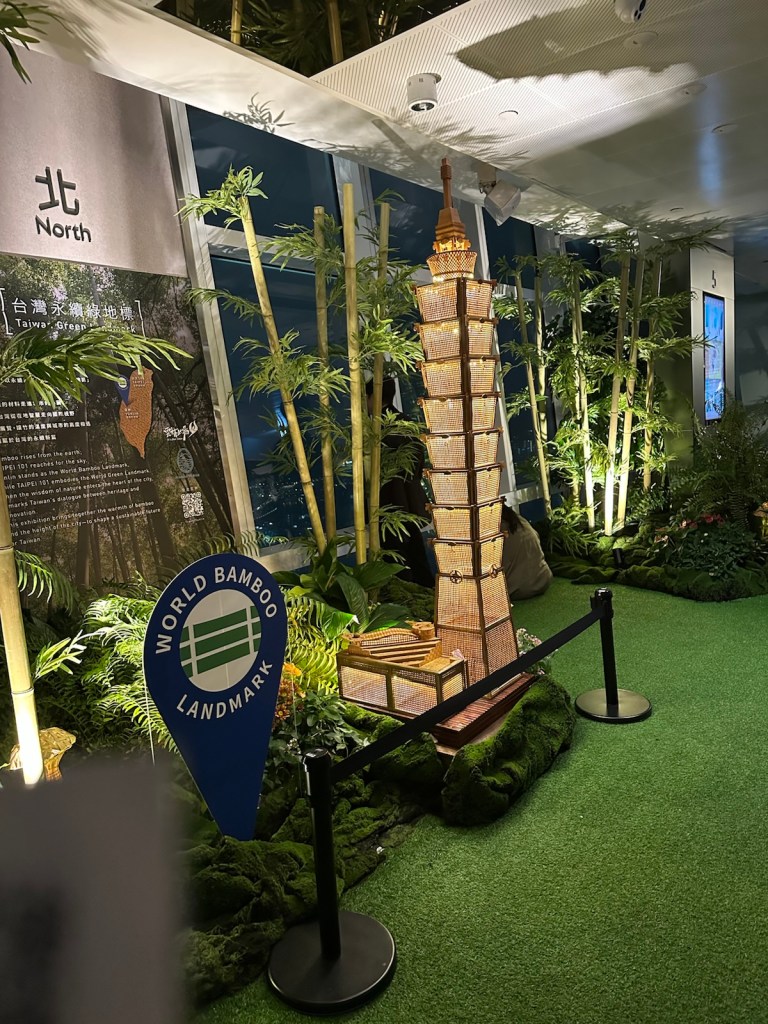
The building’s shape is inspired by bamboo stalks — symbolizing strength, flexibility, and growth. It features traditional Chinese architectural elements and has stacked segments (8 floors each) since 8 is a lucky number in Chinese culture. It blends modern engineering with deep cultural symbolism.
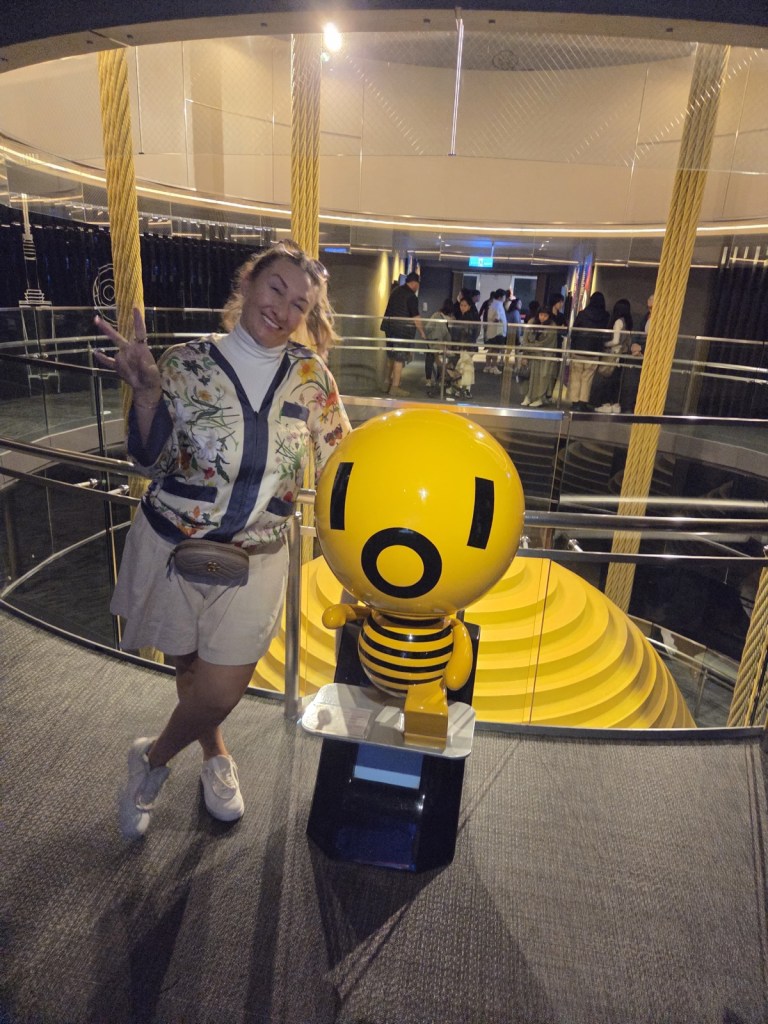
I found the most interesting aspect of Taipei 101 to be the damper … which is a giant golden steel sphere weighing 660 tons. It acts as a shock absorber and stabilizes the building during typhoons and earthquakes.
The damper is located at the top of the building and is 5 stories tall. It is one of the only skyscraper dampers in the world visible to the public. It’s both functional and mesmerizing.
The main floor of Taipei 101 is a luxury shopping mall with restaurants and cafes. The building also has office space for global companies. It’s as much a destination as it is a building.
Taipei welcomed us with warmth, curiosity, and calm. As we head home, we carry memories of temples, tea hills, night markets, bustling streets, thermal spas, massages, intriguing cuisine and quiet moments of reflection — proof that the best journeys are often the ones you never planned.
Hong Kong’s story is a fascinating blend of East and West. Once a quiet collection of fishing villages, it became a British colony in the mid-1800s and quickly grew into a major global port and financial hub. Waves of migrants, traders, and entrepreneurs shaped its fast-paced, multicultural character.
In 1997, Hong Kong returned to Chinese sovereignty under the ‘One Country, Two Systems’ framework, preserving much of its distinct identity. Today, it remains a dazzling mix of tradition and modernity — dim sum and skyscrapers, temples and neon — full of history yet always in motion.
I’ve always found Hong Kong to be a fascinating mystery. I remember reading a Time magazine article in the ’90s about Britain returning Hong Kong to China and wondering how it would all unfold. Many residents were anxious about the transition, and at that point the idea of ‘One Country, Two Systems’ had not yet taken shape.
Since we had so little time to plan or prepare, we dove into our Hong Kong day excursion with absolutely no expectations.
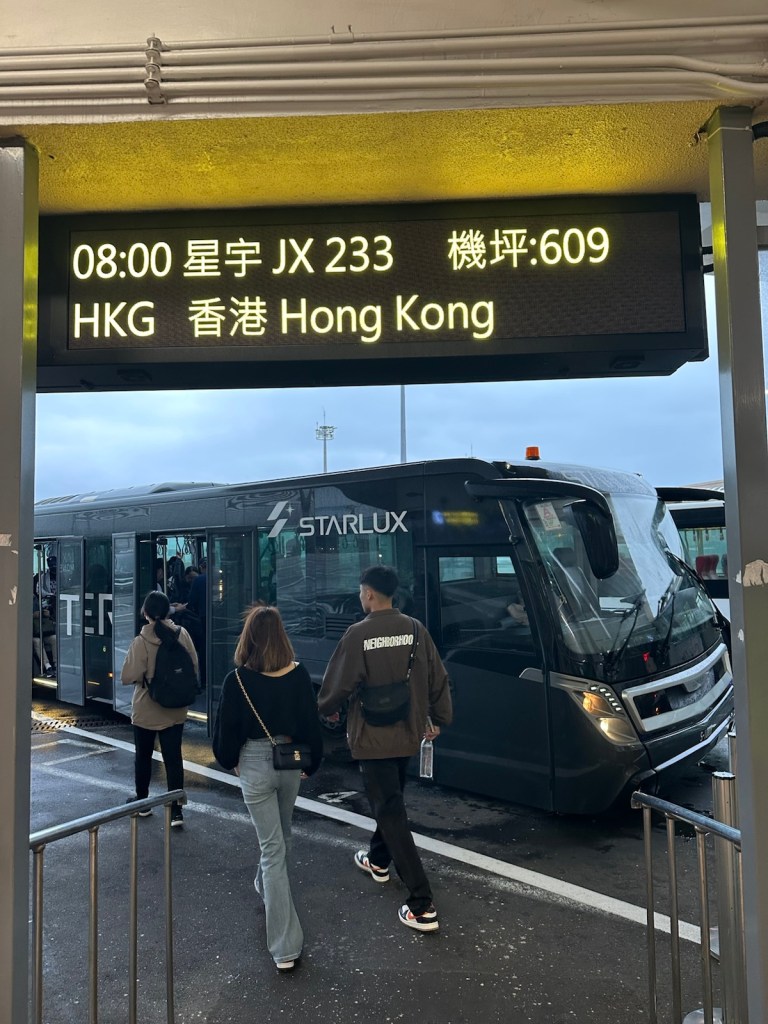
We hopped on a StarLux flight and arrived mid-morning. I had read enough to know that there was a 30-minute high-speed AirPort Express train that went to Hong Kong City and Victoria Harbor area.
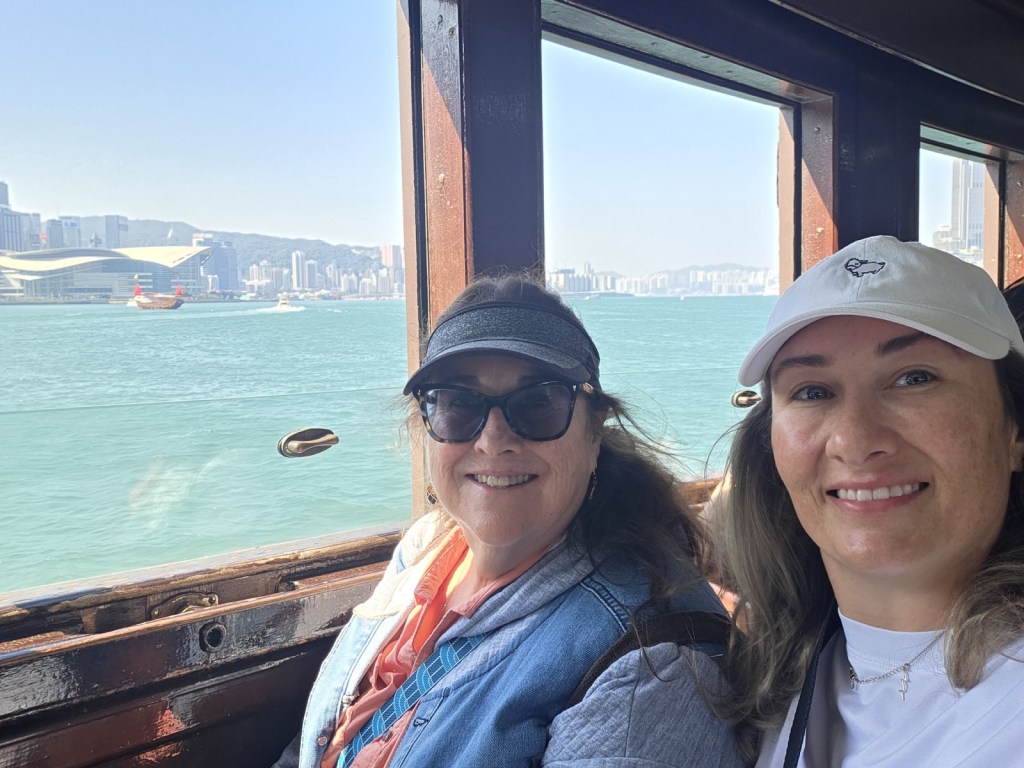
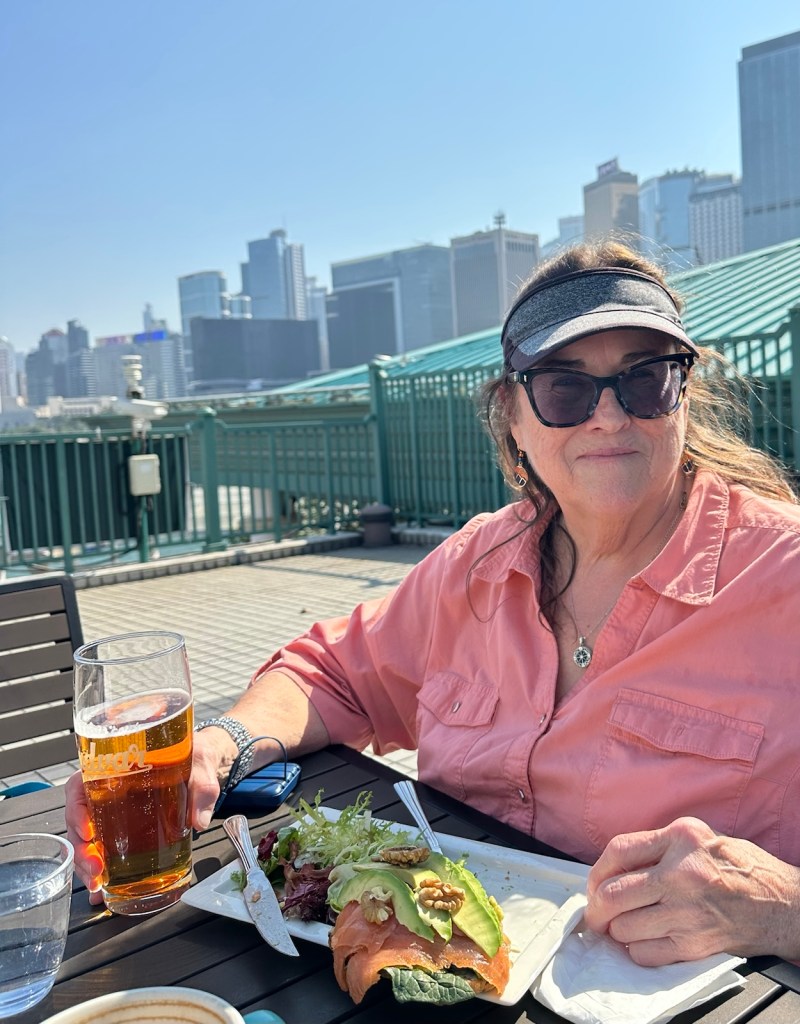
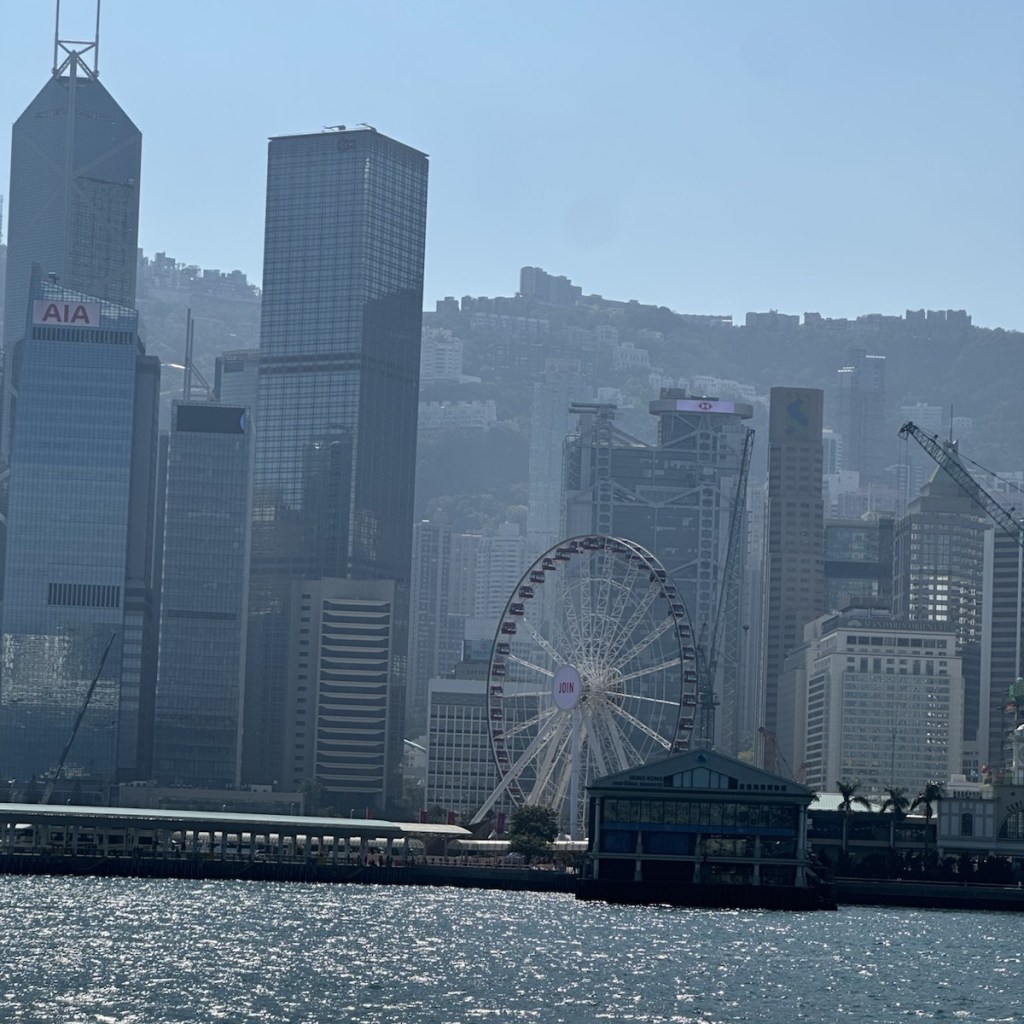
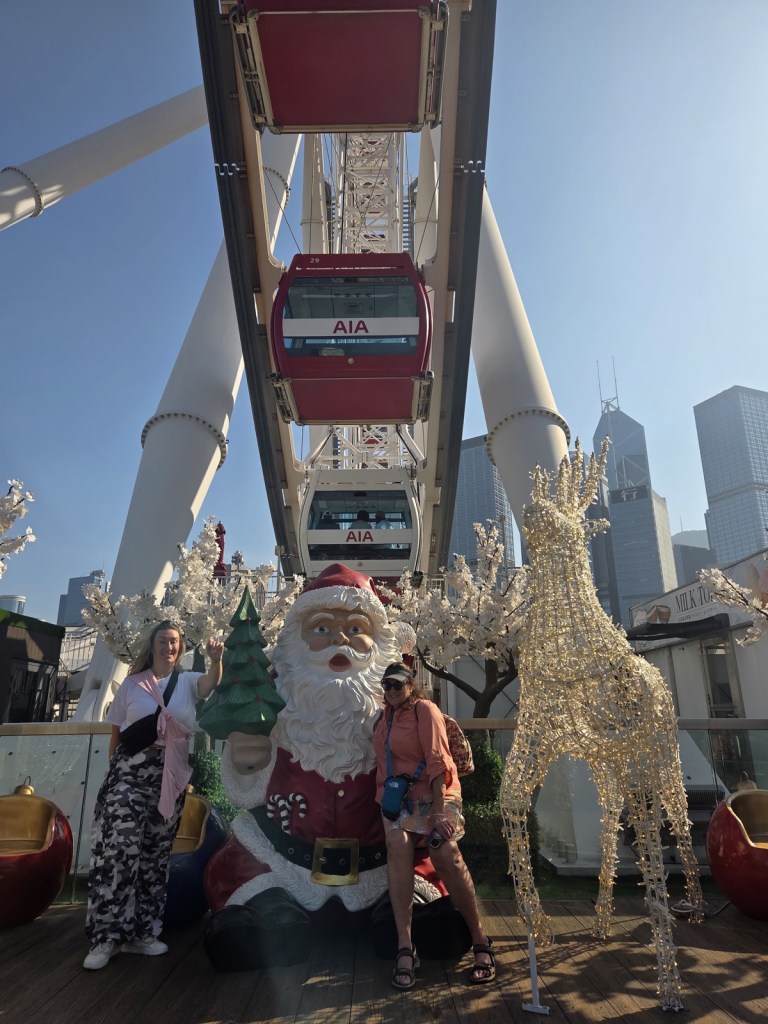
It was surprisingly easy … without luggage we just wandered onto the AirPort Express, found the promenade. We ferried across the harbor to Central Pier and were having lunch on the rooftop of the Maritime museum next to the giant Ferris wheel in a full sun 80-degree day … just a little over an hour after our flight had landed. I don’t think we could have planned it any better.
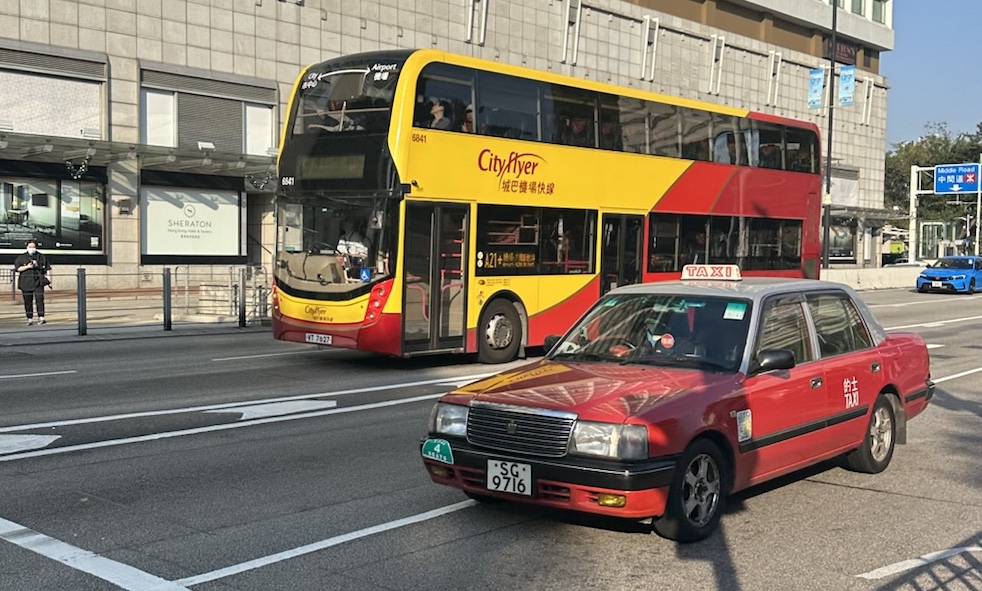
The contrast between Hong Kong and Taipei was striking. Hong Kong felt surprisingly similar to London — with double-decker buses, traffic on the opposite side of the road and plenty of English spoken. Unlike Taipei, we didn’t see a single motor scooter. Between the heavier traffic and the heat, it makes sense that people prefer air-conditioned cars and public transport over scooters.
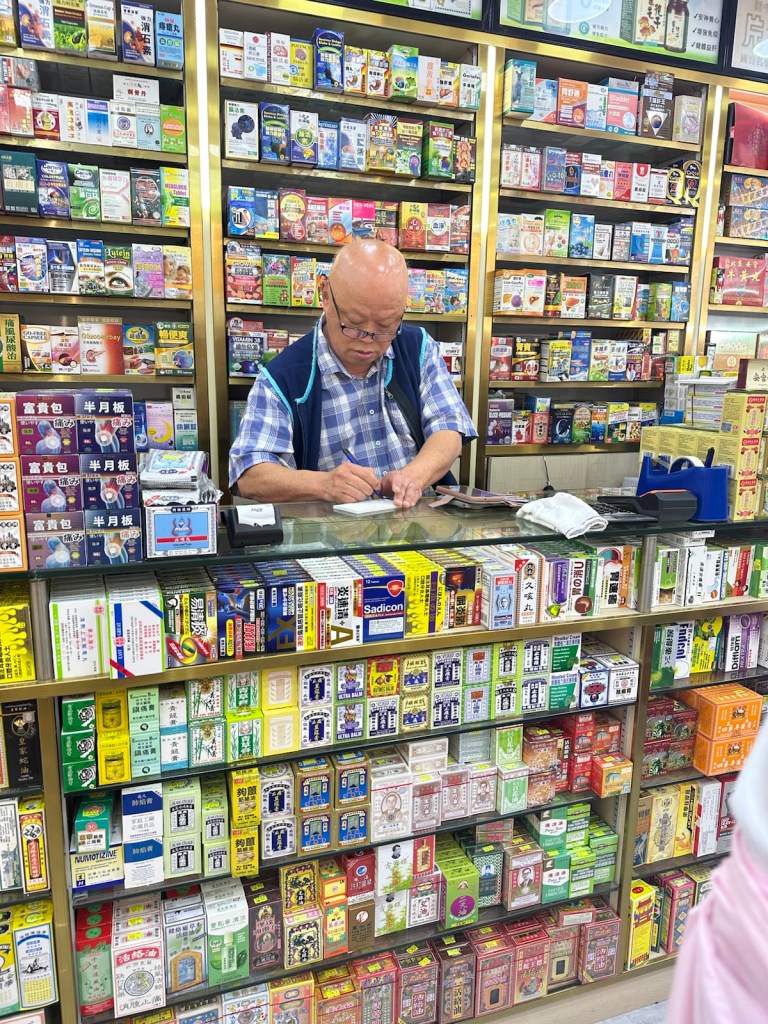
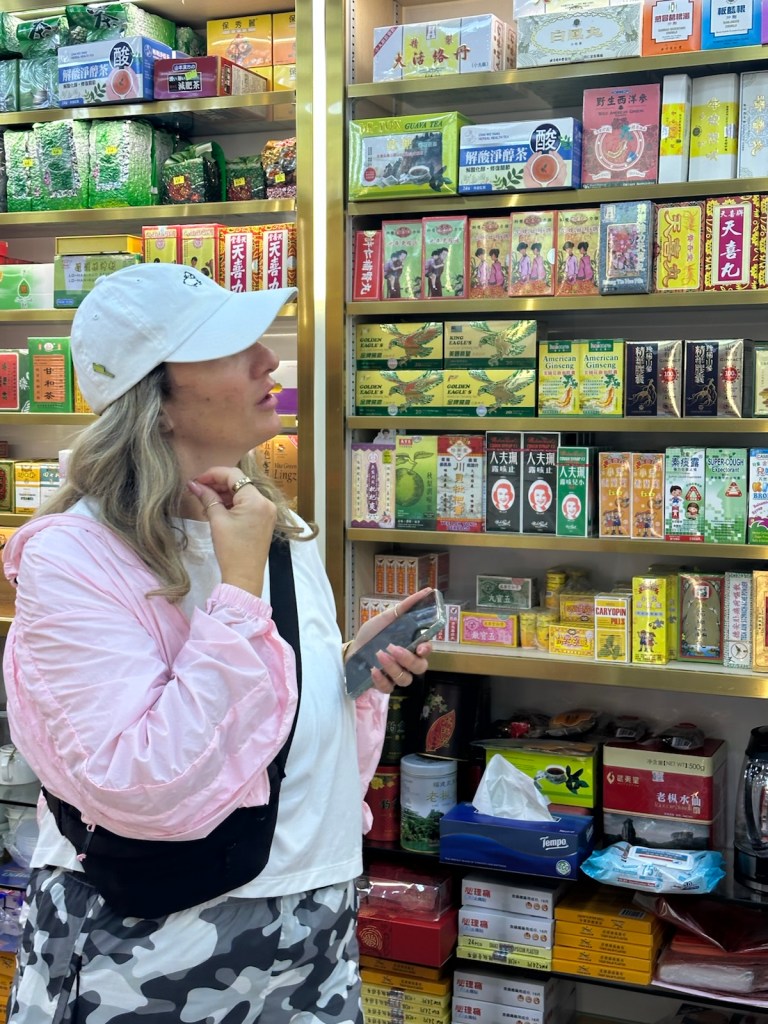
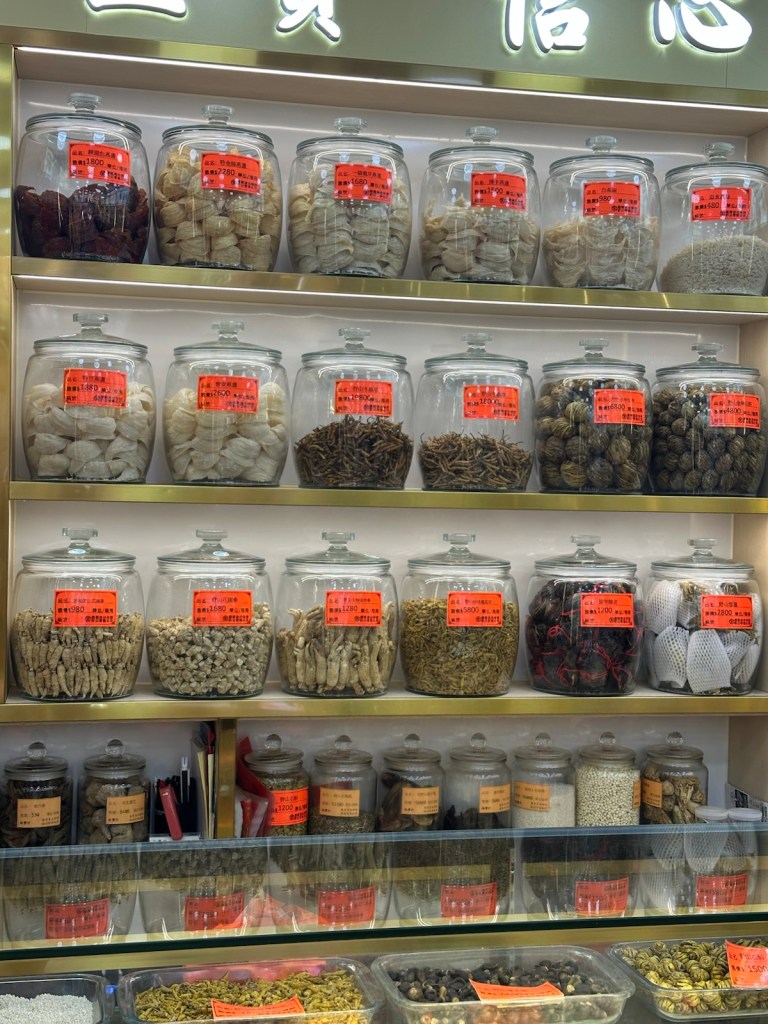
The walk from the Express Train to the promenade was a narrow gauntlet of shops, selling everything from herbal remedies to Gucci and high-end fashion.
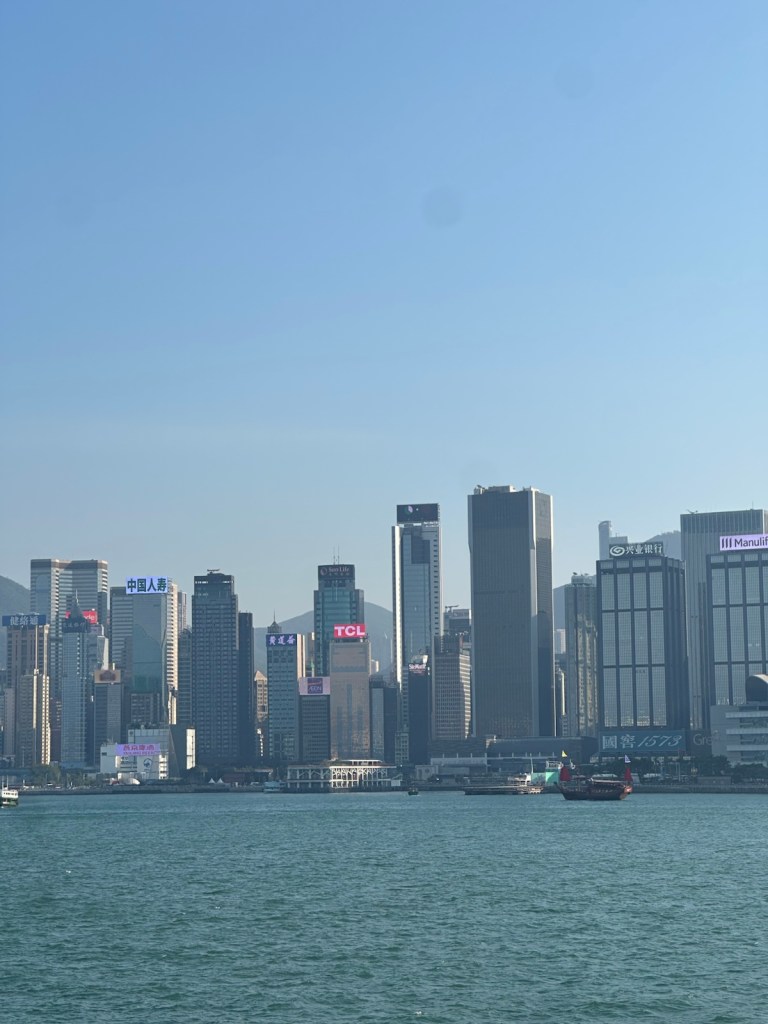
Victoria Harbour is stunning from every angle, its shoreline framed by skyscrapers from major companies all competing for a spot along the water’s edge.
On an 80-degree afternoon, the waterfront is unbeatable — sun on your skin, breezes off the harbor and sweeping views in every direction.
A tall bronze sculpture of a female film star holding a glowing pearl-like orb above her head symbolizes the glamour, artistry and global influence of Hong Kong cinema, especially during its golden age from the 1970s through the 1990s.
It stands at the entrance of the Avenue of Stars, Hong Kong’s version of the Hollywood Walk of Fame.
On our way back to the airport, we managed to fit in plenty of shopping — still a bit hard to believe we were really in Hong Kong.
We arrived back in Taipei around 9:00 pm, having pulled off a whirlwind day in Hong Kong — equal parts electric, surprising and unforgettable.
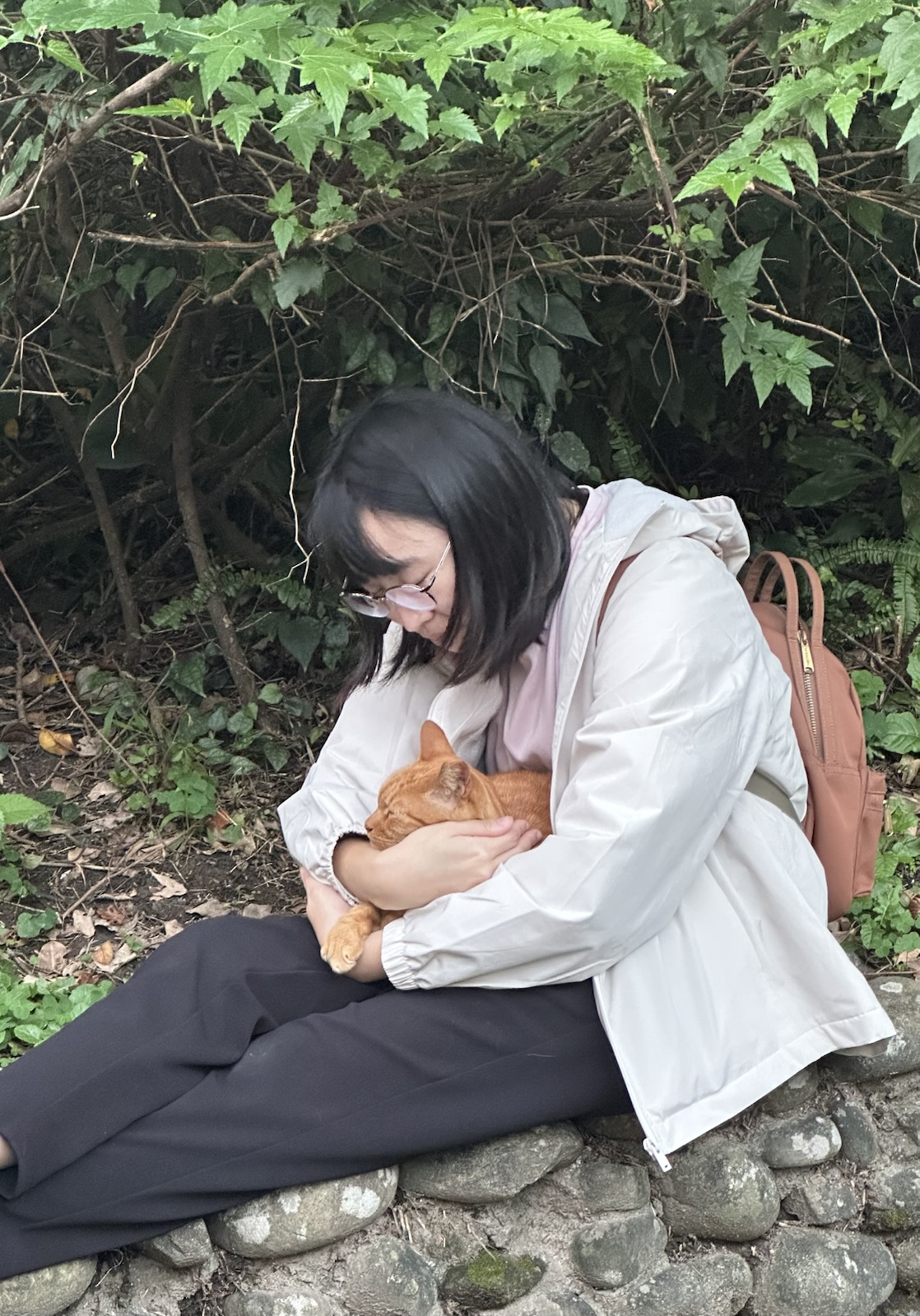
Houtong Cat Village is one of Taiwan’s most charming and quirky destinations — a tiny mountain village where hundreds of friendly cats roam freely among old mining buildings, cafés, and scenic hillside paths. It’s equal parts adorable, peaceful, and unexpectedly fascinating.
Houtong became famous when local volunteers began rescuing and caring for the many stray cats in the area. The cats multiplied, the photos went viral, and soon Houtong transformed into a beloved “cat village.
Many cats have informal territories tied to specific families.
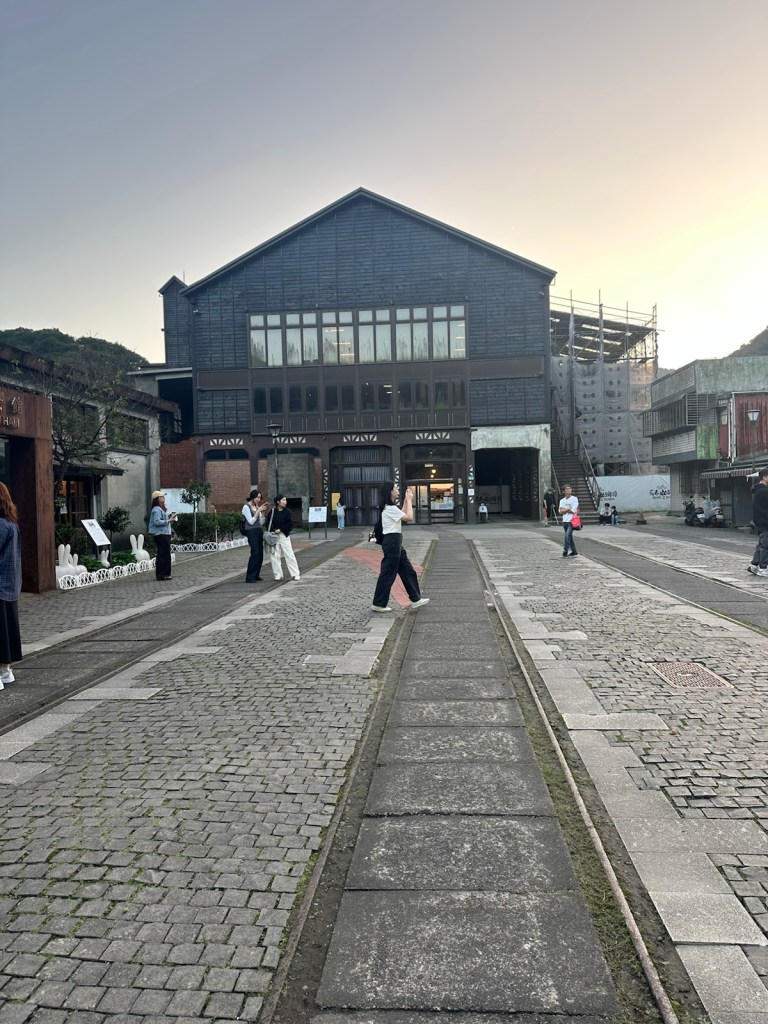
Before cats became the stars, Houtong was one of Taiwan’s major coal mining hubs. You can explore the old mining tunnel entrances, abandoned industrial structures and there is a mining museum with a historical photo display showing its boom years.
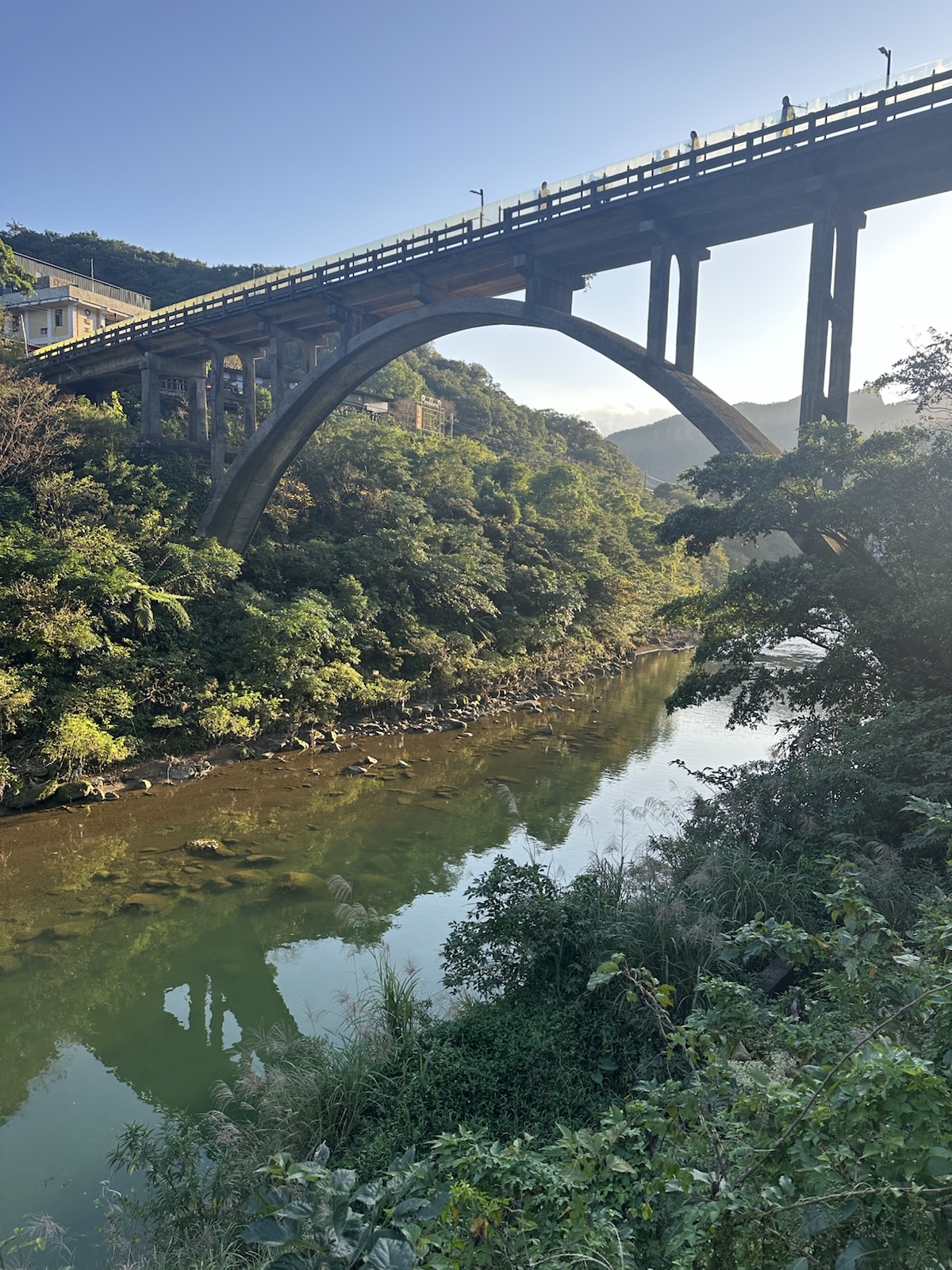
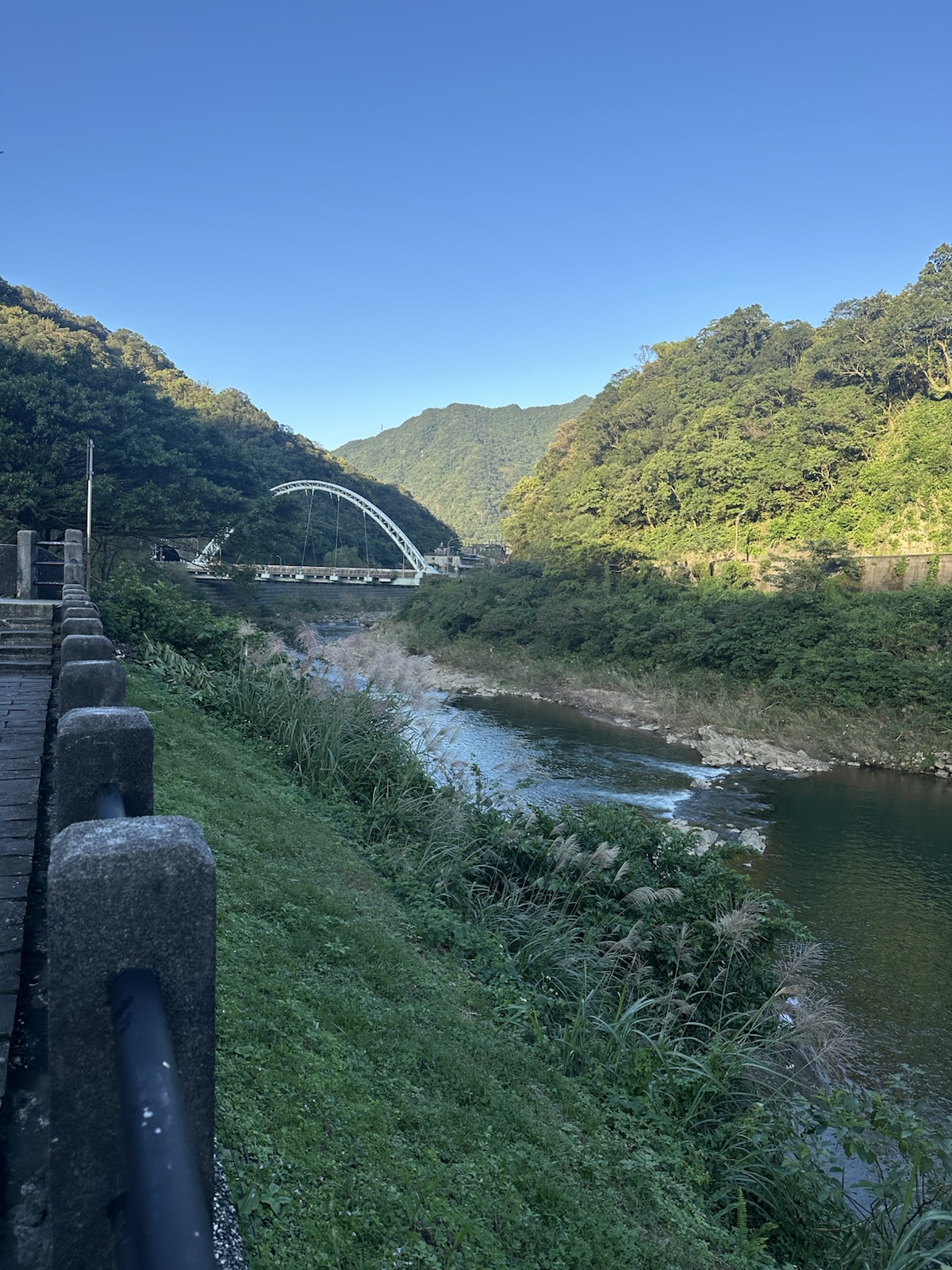
The village sits in the lush river valley of the Keelung river on the northeastern edge of Taiwan’s Central Mountain Range.
The entire village embraces the theme. There are cat cafés with mountain views. Shops selling cat cookies, cat magnets, cat everything. Colorful murals of cats doing everyday things and cat-shaped signs guiding you along the paths.
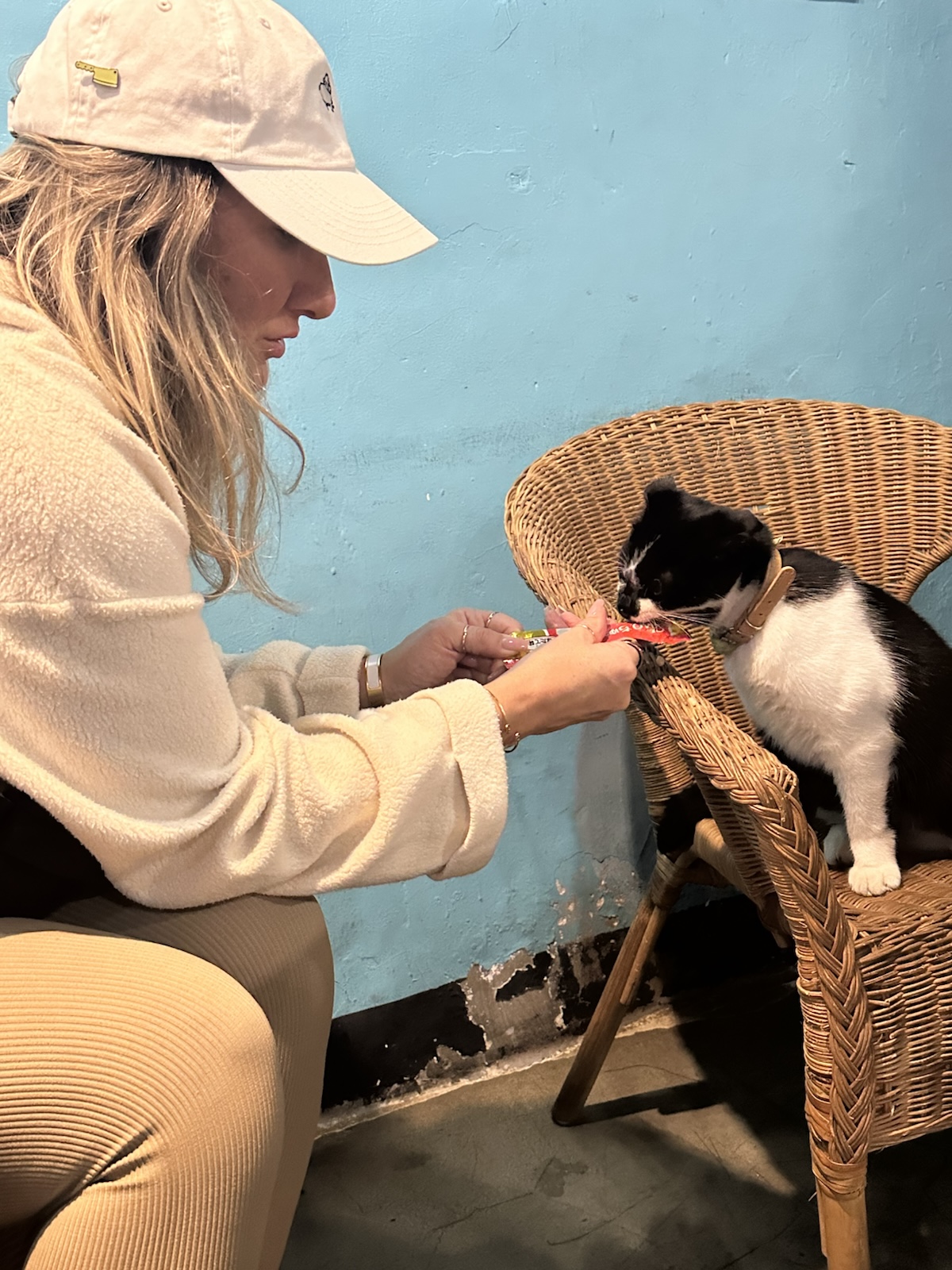
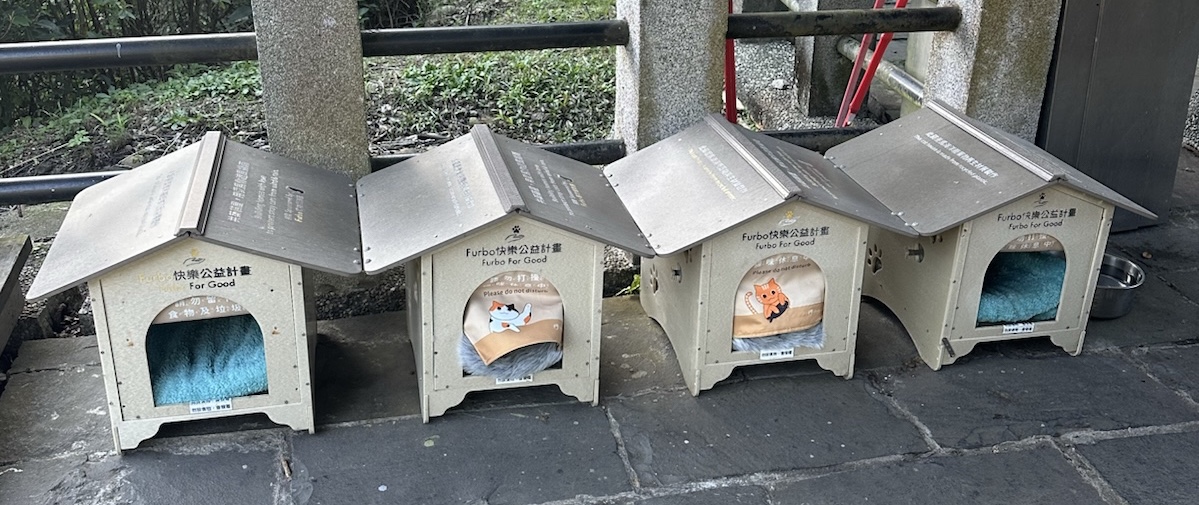
Many of the cats are fed and cared for by a combination of dedicated local volunteers, community residents and shop owners — not by the government or a single organization. Most of the shops sell cat food packets so tourists can also help feed the cats.
Cat cafés and small businesses often feed certain cats who hang around their doorways. These cats become mini mascots of the shop.
A group of longtime volunteers — many of whom live in or near Houtong — feed the cats daily.They provide fresh food and water, medicine when needed, vaccinations and vet visits, trap-neuter-return (TNR) care.
They are the heart of the operation and have helped keep the cats healthy and friendly.
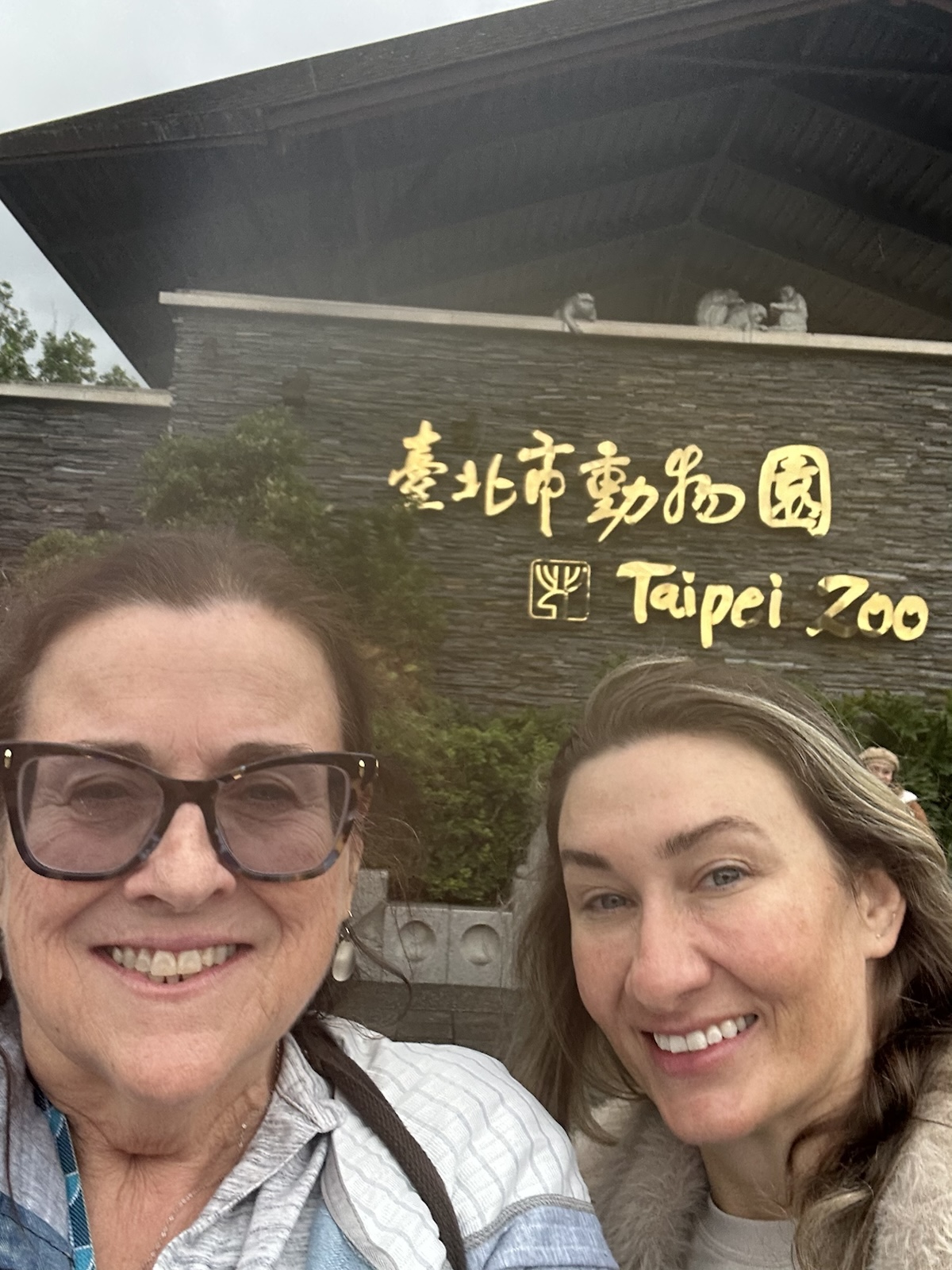
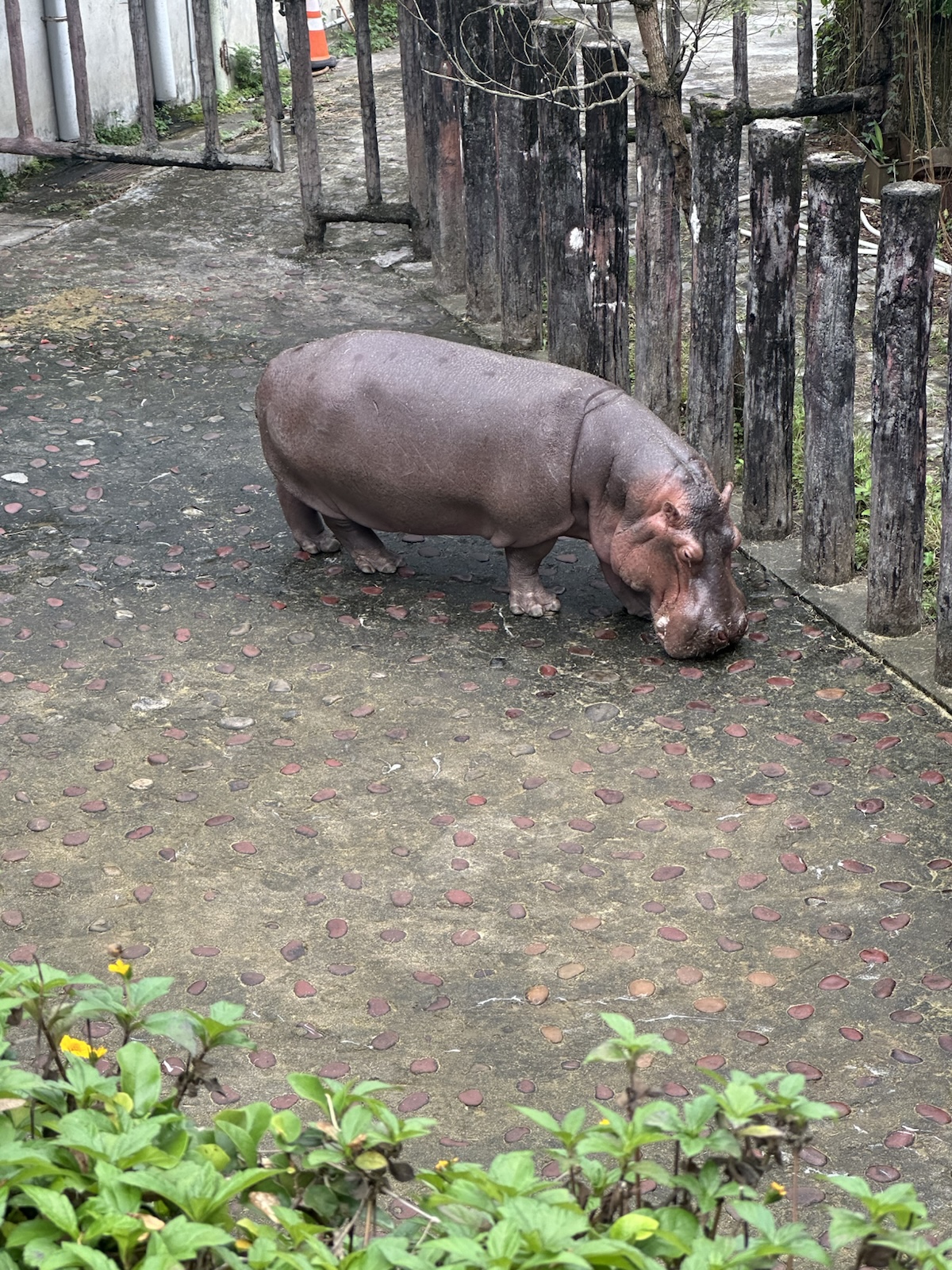
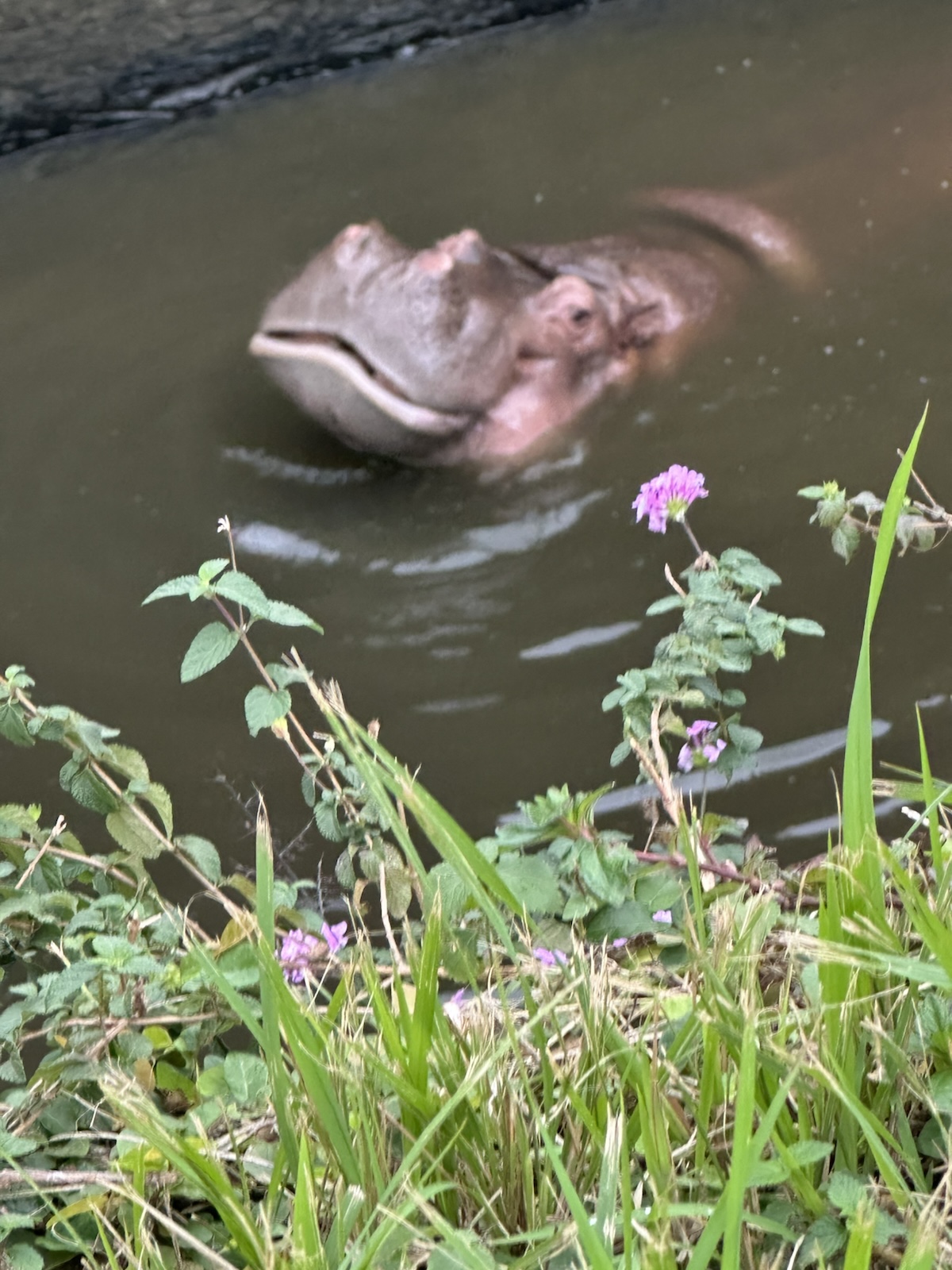
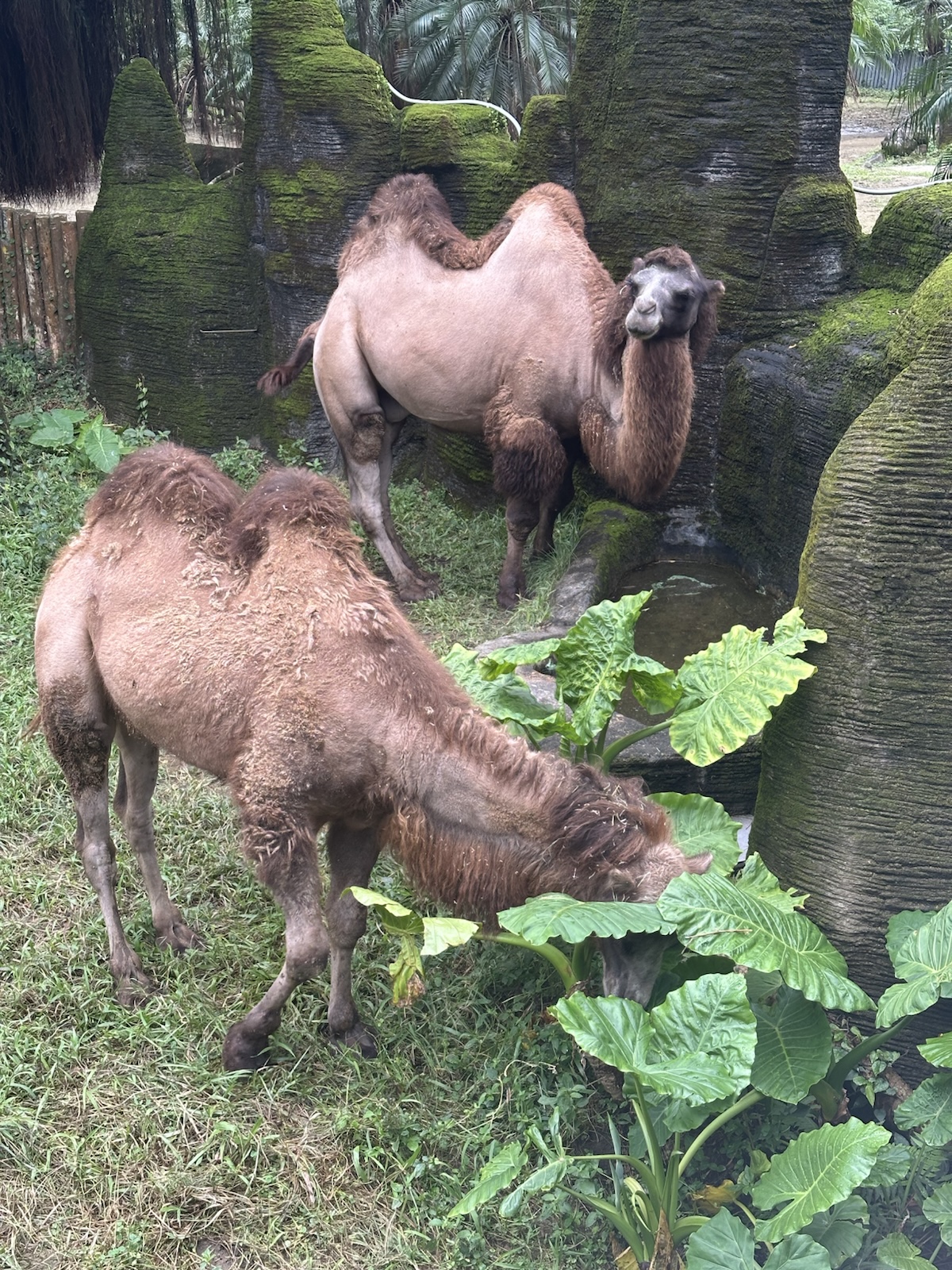
A visit to Taipei for animal lovers would not be complete without a stop at the Zoo. Founded in 1914, the zoo spans 165 hectares which is about 300 American football fields stitched together and much of it nestled in a lush, hilly valley. It’s one of the largest zoos in Asia, yet admission is only about $2.
It’s a beautiful walk through the zoo and we logged plenty of miles exploring it. Set in the green hills of Wenshan, Taipei Zoo feels worlds away from the city — even though it’s only a quick 40-minute MRT ride.
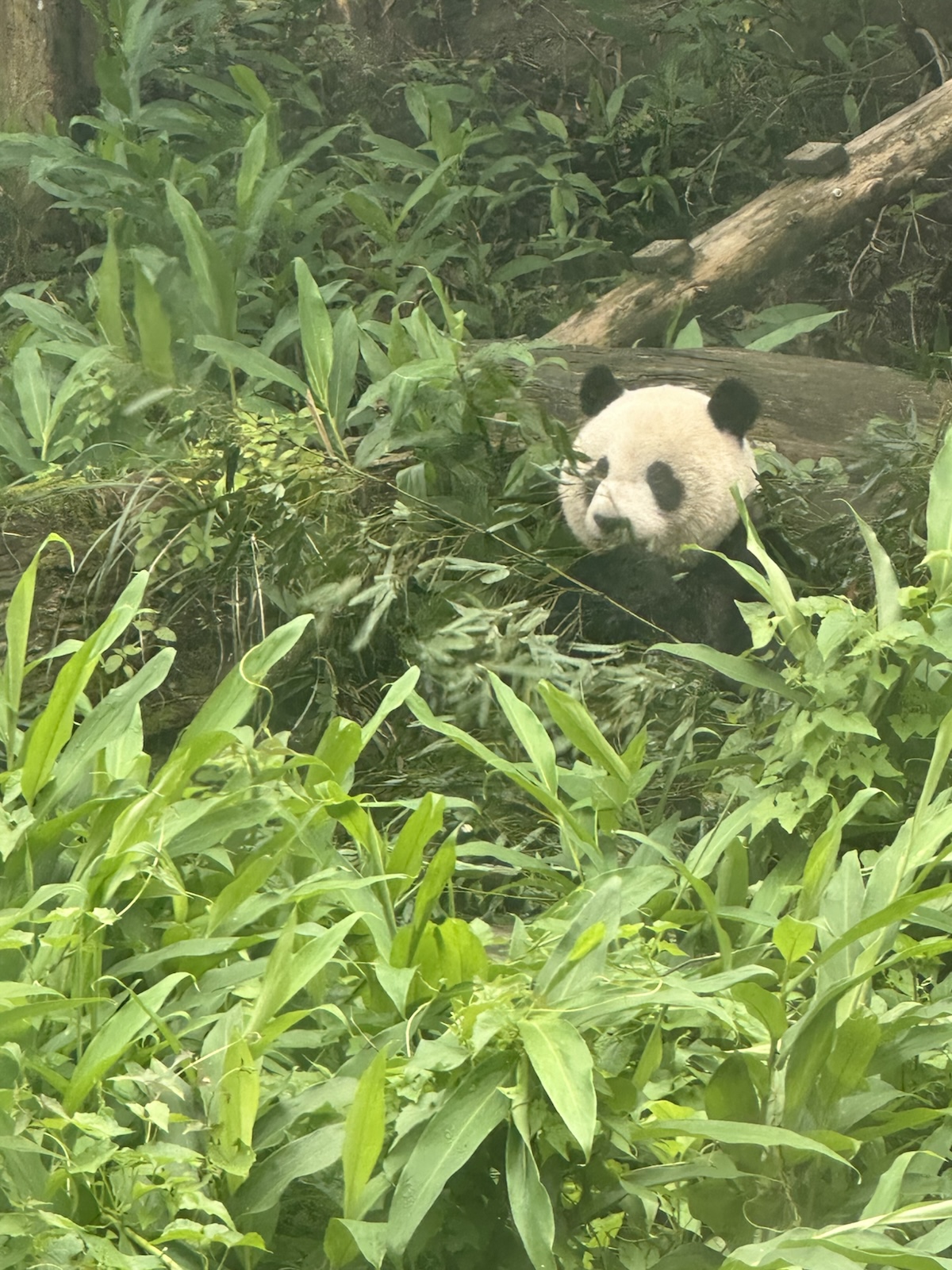
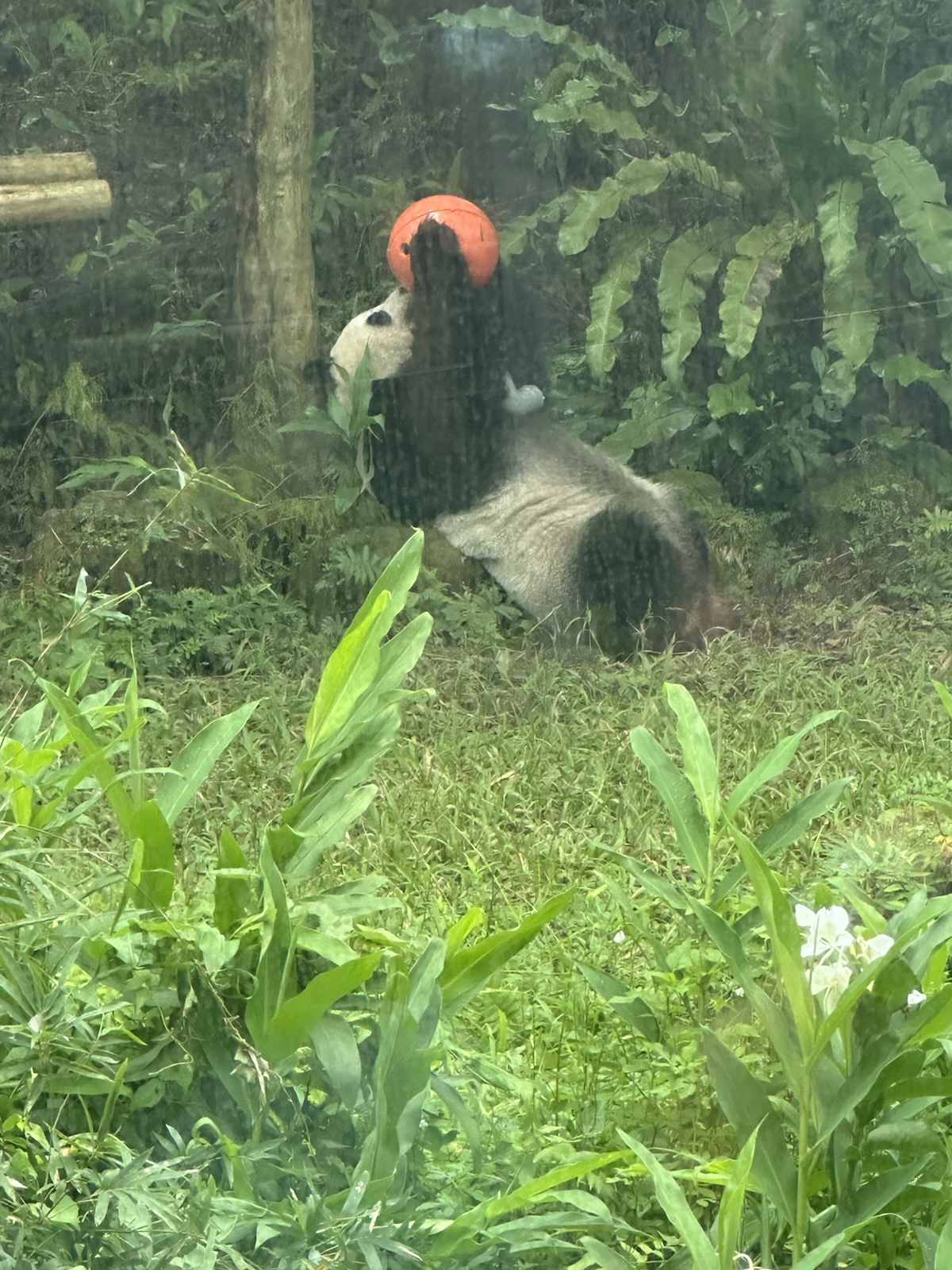
The zoo is home to many exotic and memorable animals, but of course the pandas remain the star attraction.
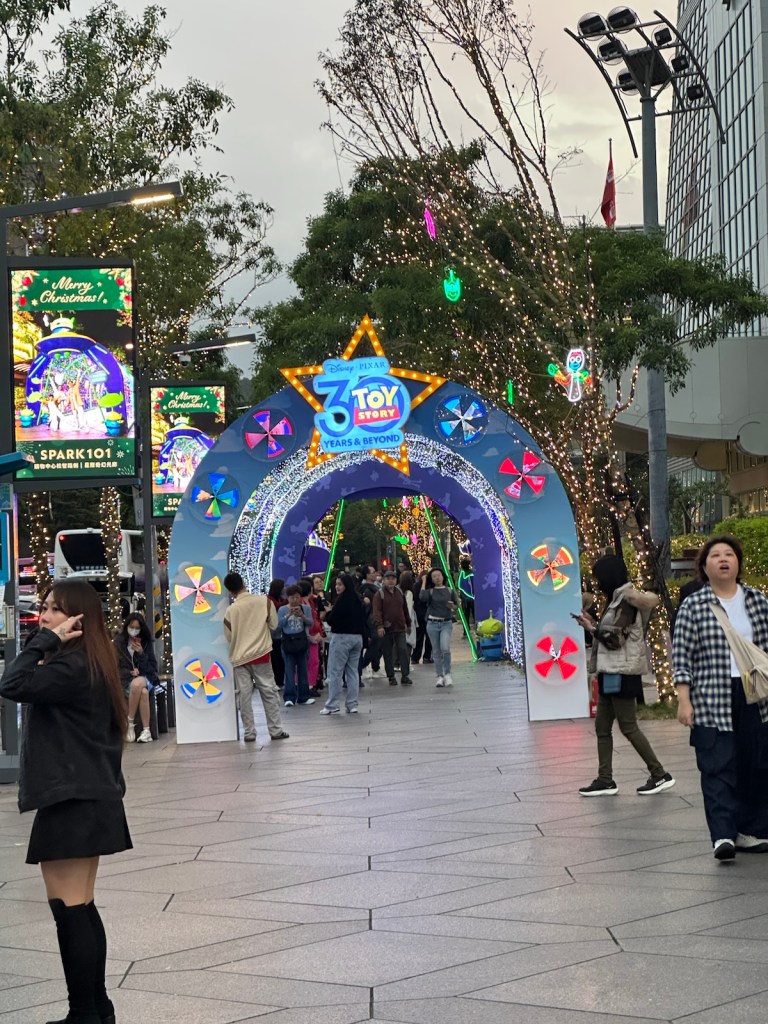
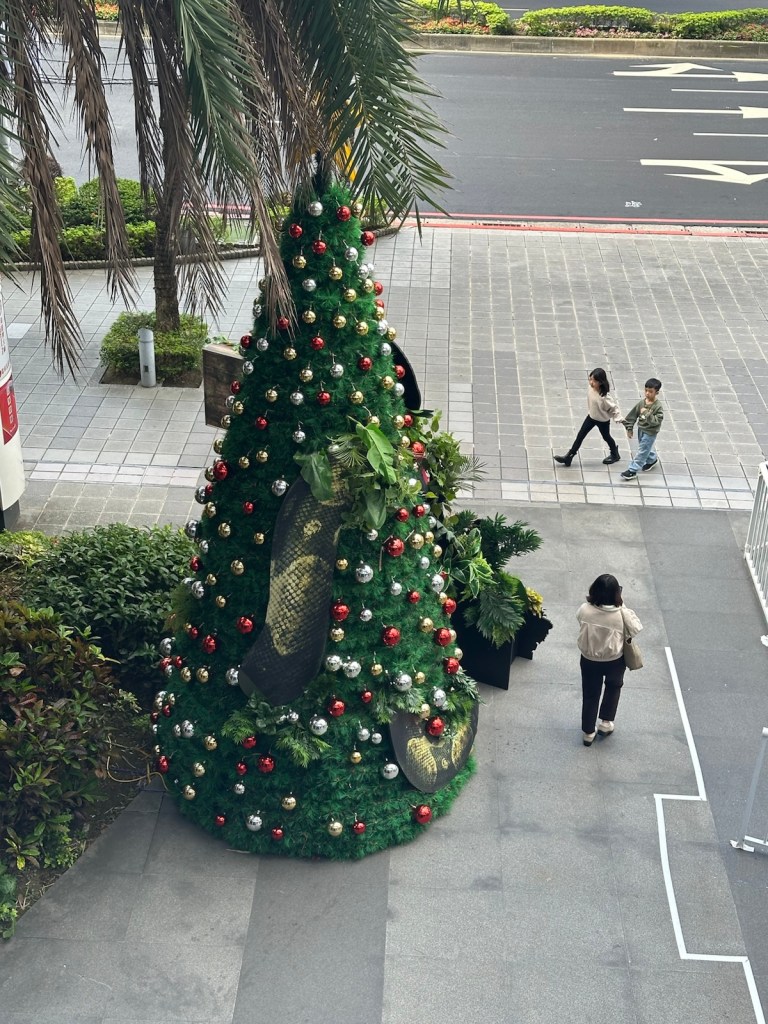
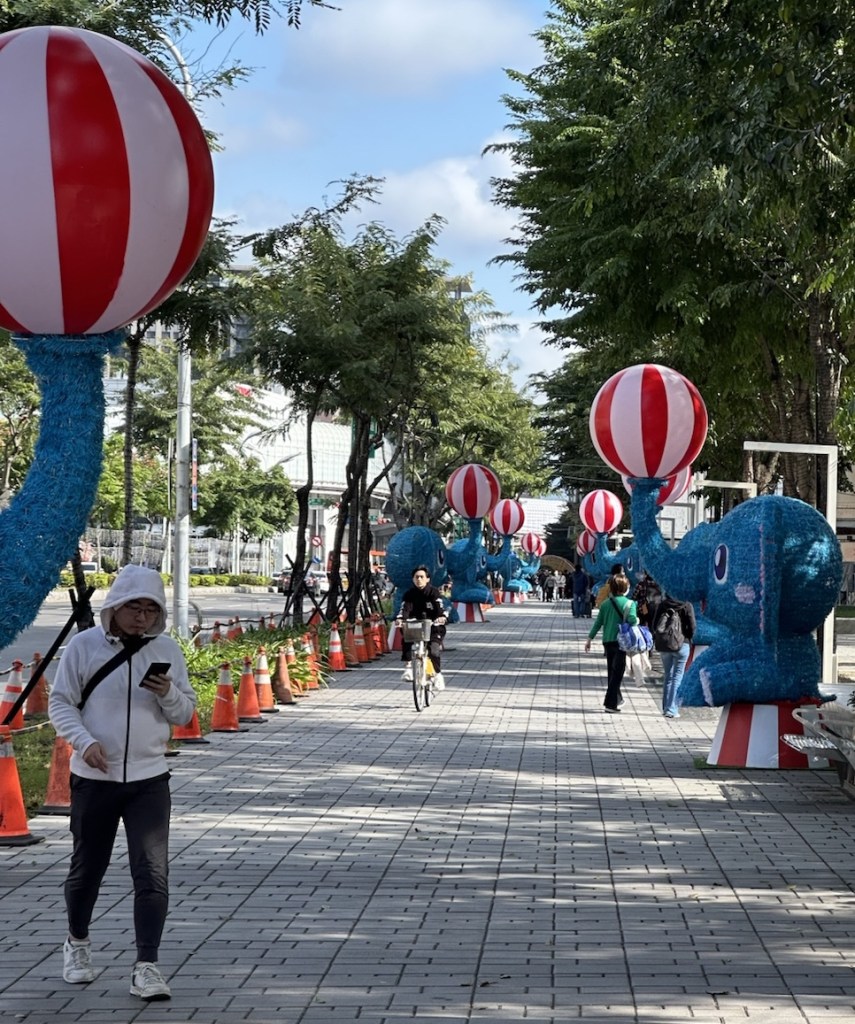
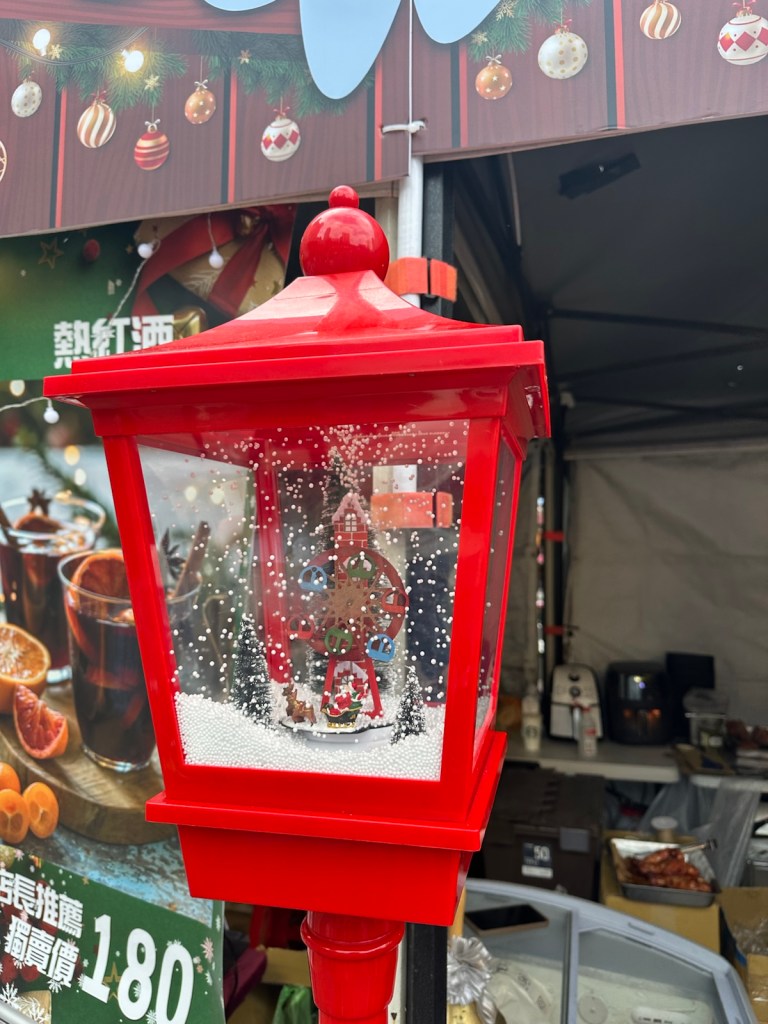
It’s unusual to see so much Christmas décor and activity in a place where only 4–6% of the population is Christian. It reinforces my sense that ‘Christmas’ has become more of a cultural celebration than a religious one. People everywhere love decorations and festivals — and the season shines brightly no matter where you are.
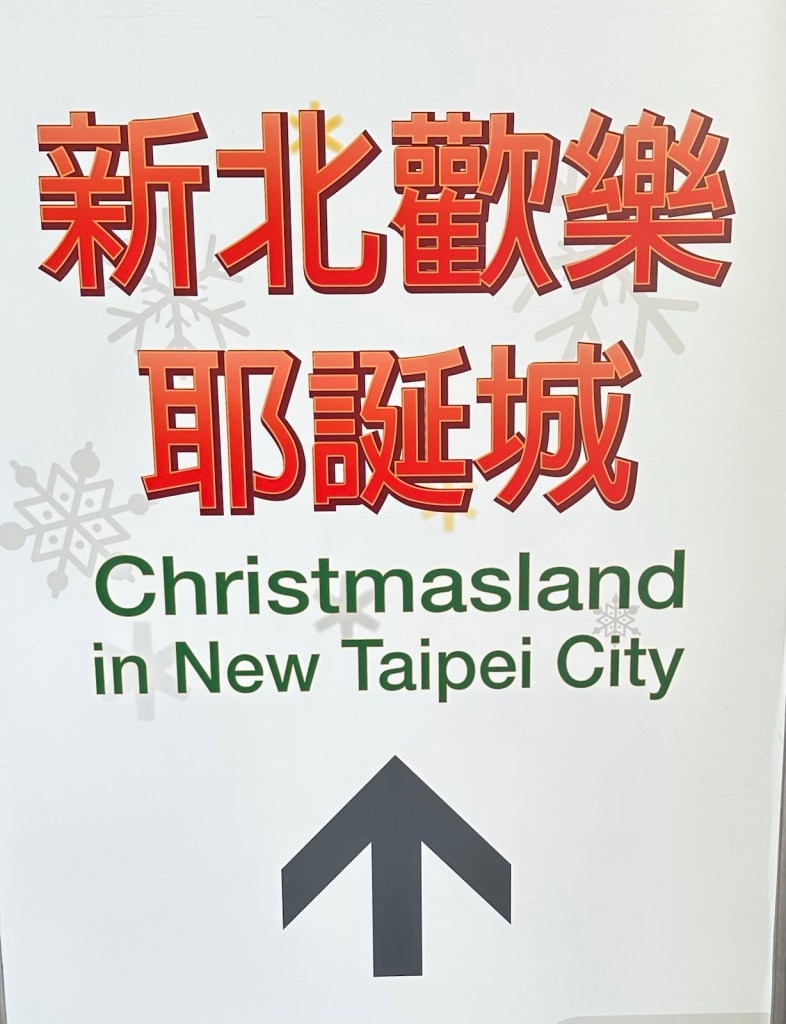
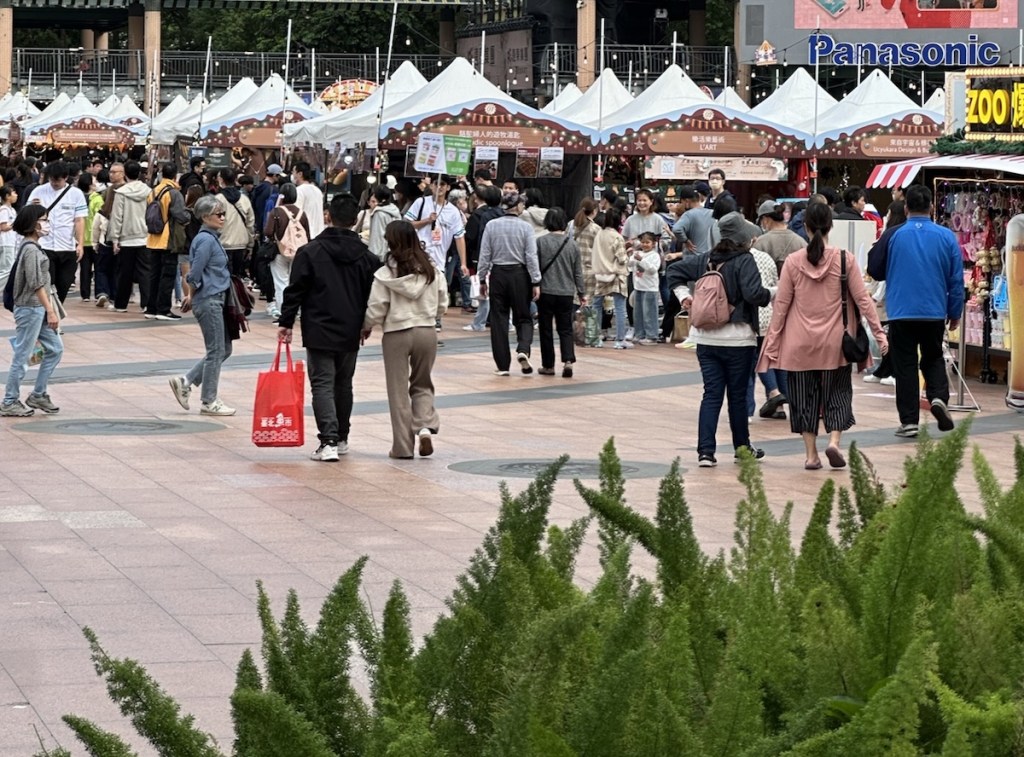
Christmasland in New Taipei City is Taiwan’s biggest, brightest, and most extravagant holiday celebration — a full-on Christmas theme park filled with lights, music, projections, markets, and family-friendly attractions. It’s not just a display; it’s an experience that draws millions every year. We visited for a couple of hours in the afternoon, so we missed the nighttime light extravaganza, but judging by the crowds, I can only imagine how packed it must get after dark.
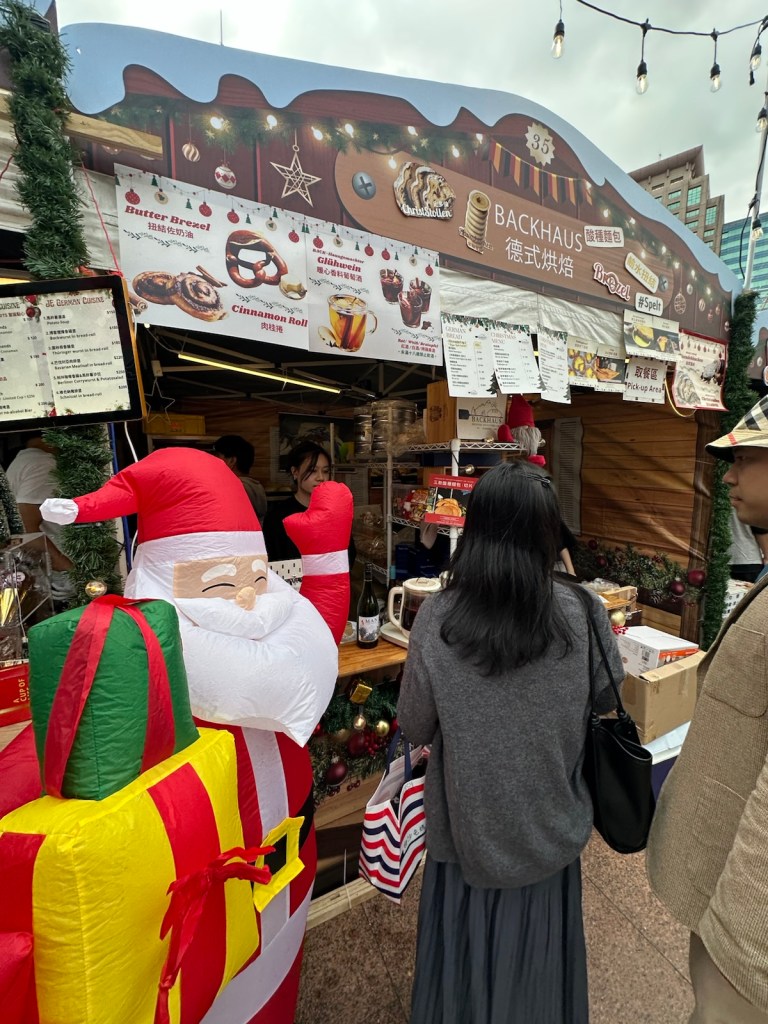
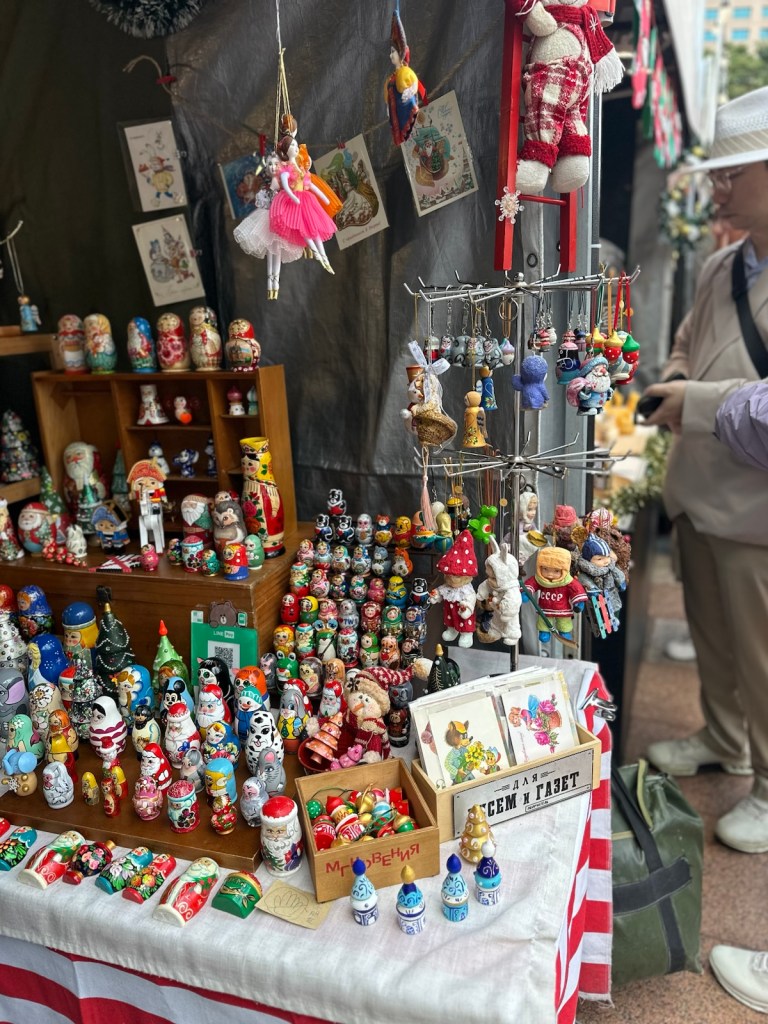
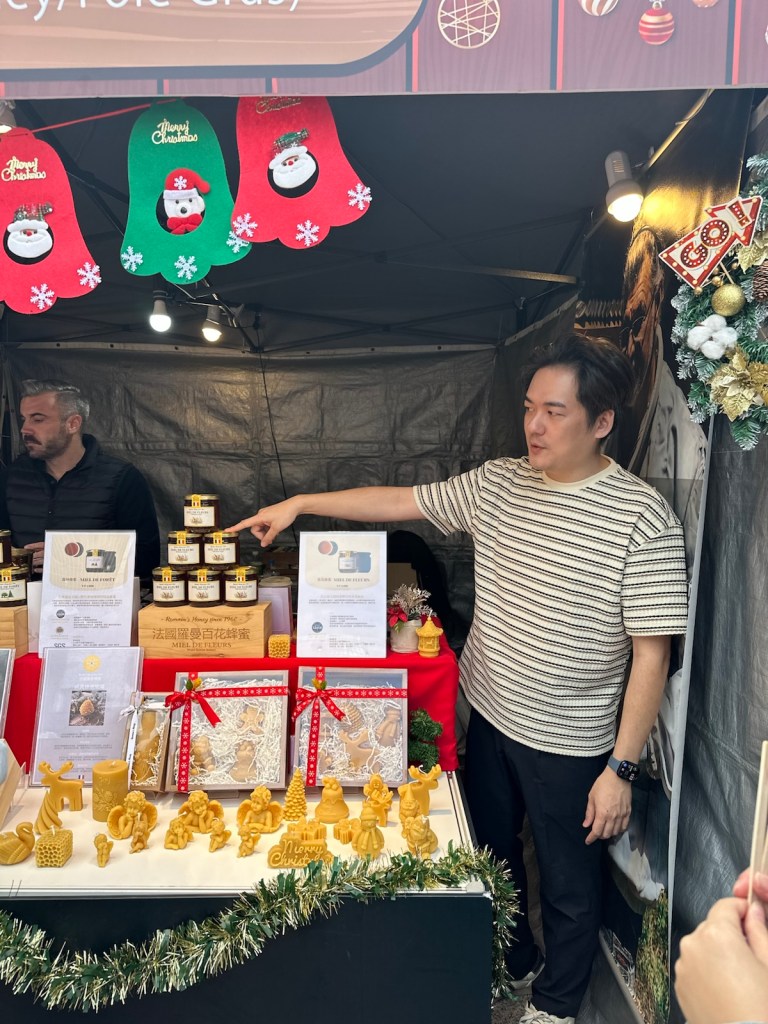
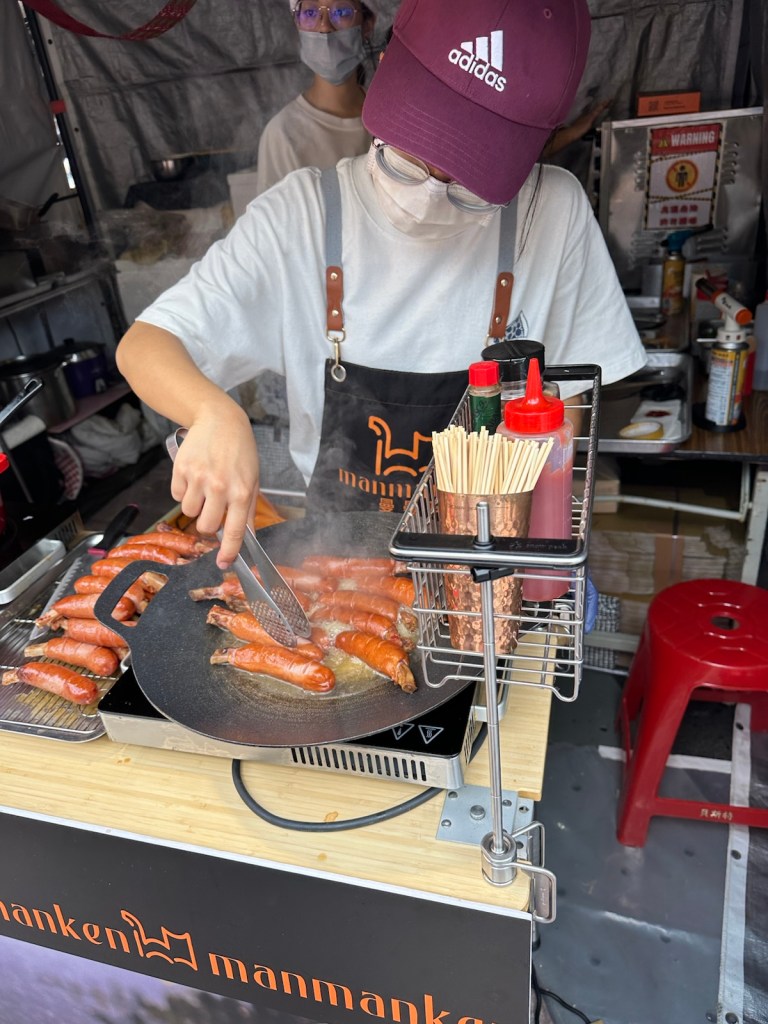
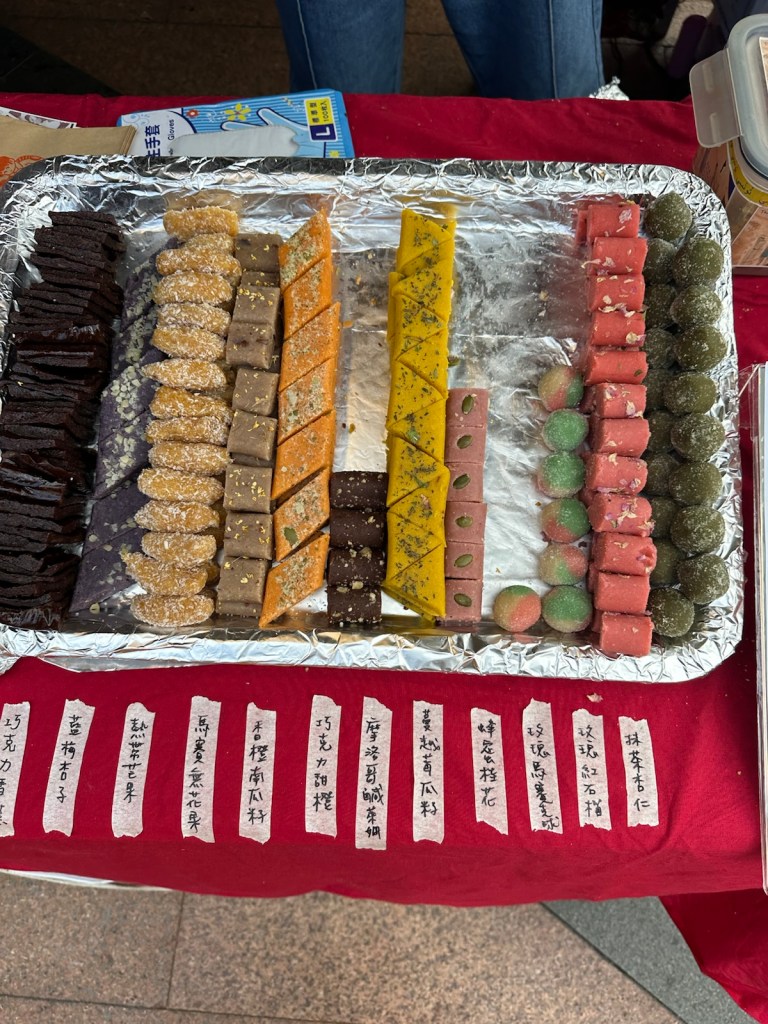
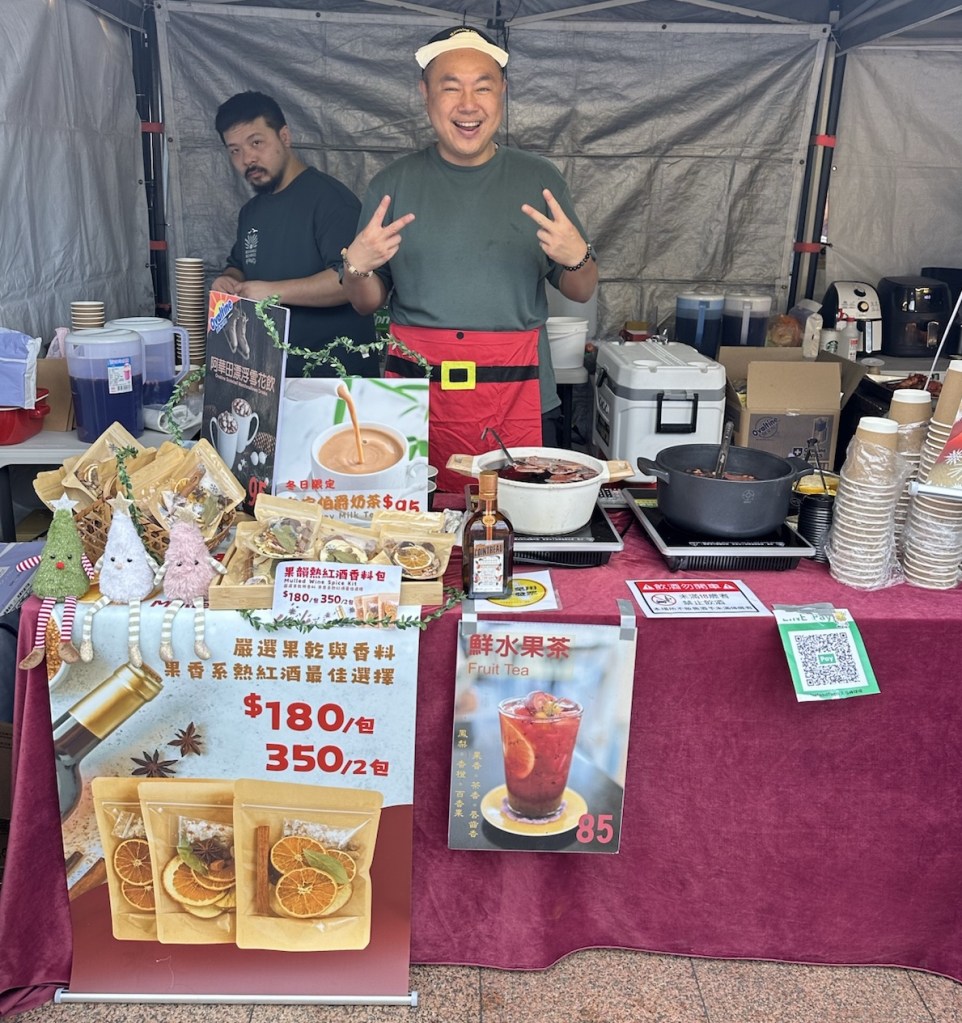
The German Christmas Market at Christmasland was a delightful surprise — wooden stalls strung with lights, the scent of sausages and mulled wine drifting through the air, and festive music echoing across the plaza. It felt like a little slice of Europe tucked into New Taipei City, complete with handcrafted ornaments, holiday treats, and plenty of cheerful bustle. A perfect way to ease into the season.
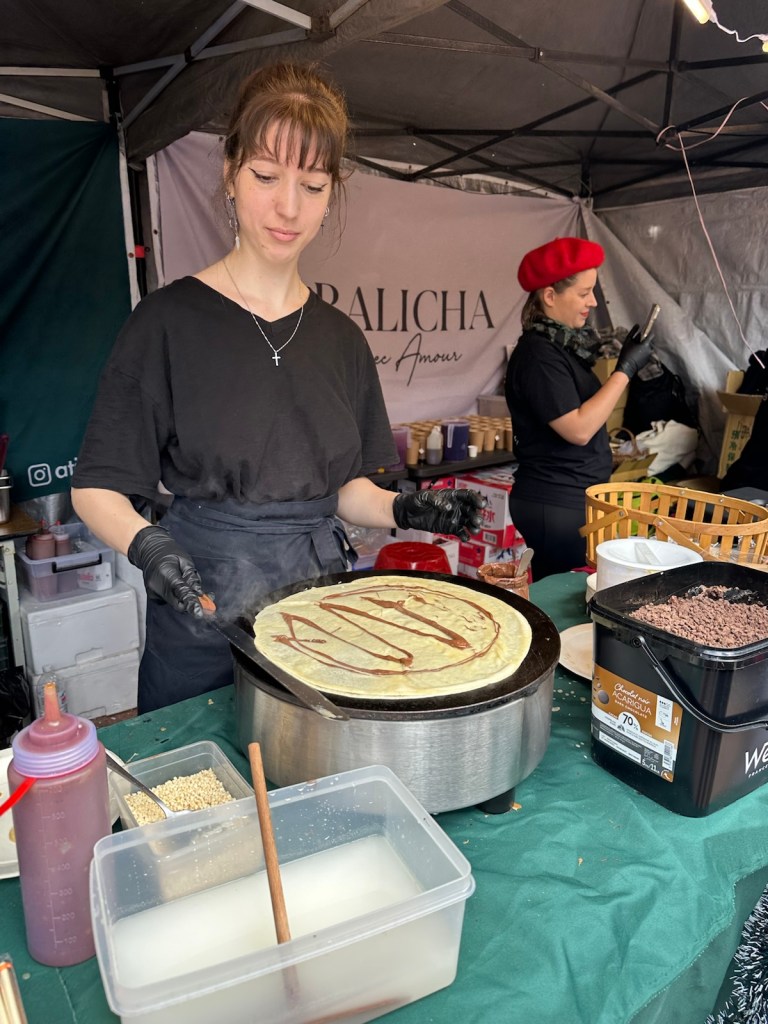
Among the market fare, there was a lot of German sausages & bratwurst, pork knuckle, fresh bread & pretzels, stollen (traditional Christmas bread), mulled wine (Glühwein), German beer, plus other European bits like crepes, mini Dutch pancakes, etc.
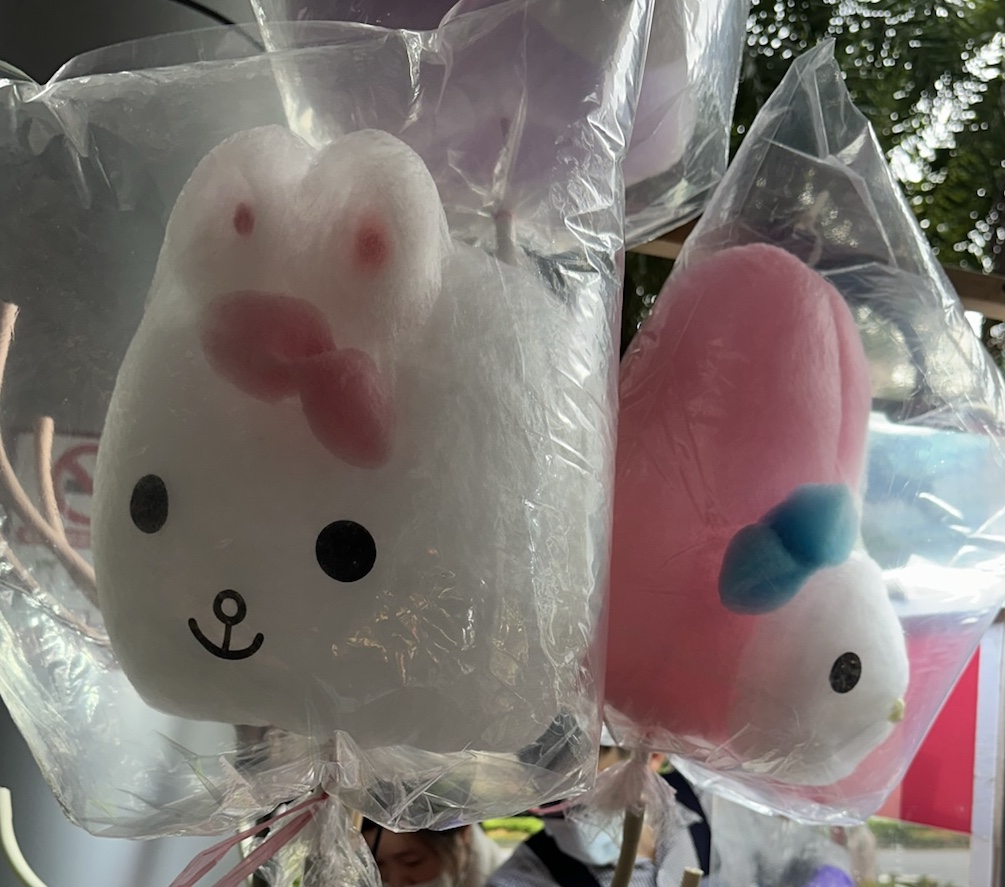
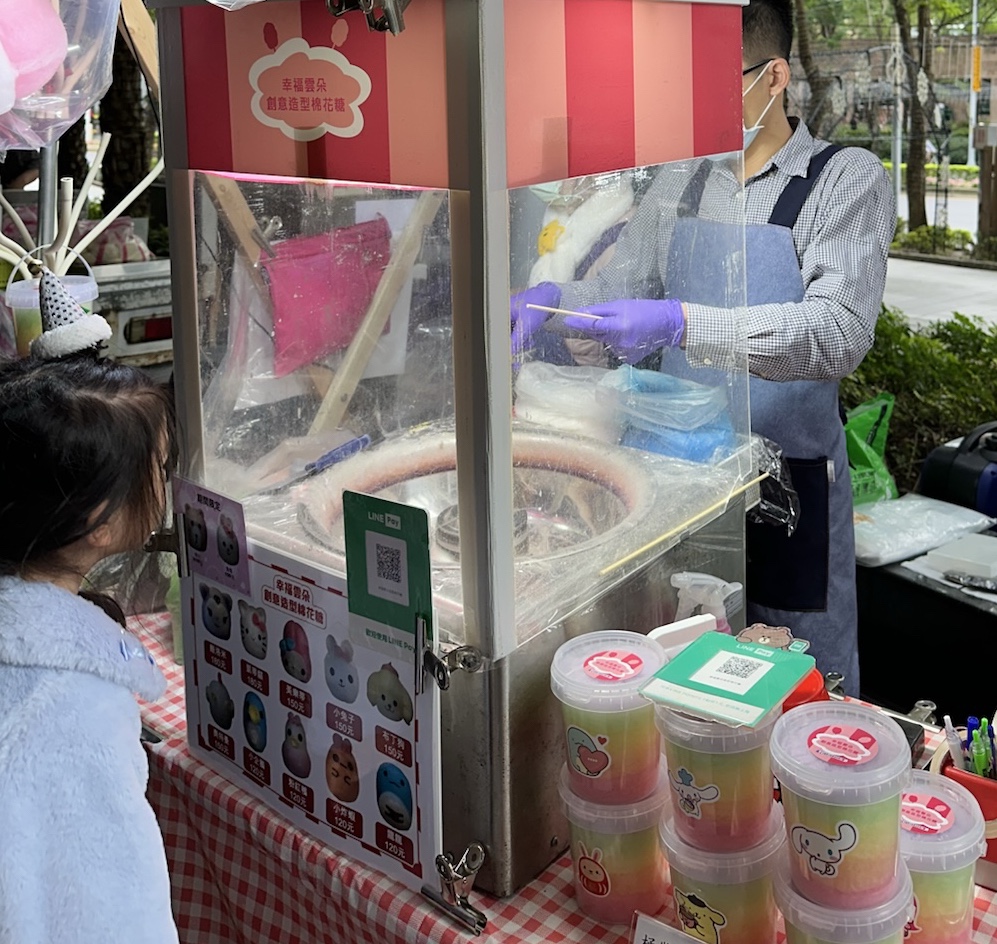
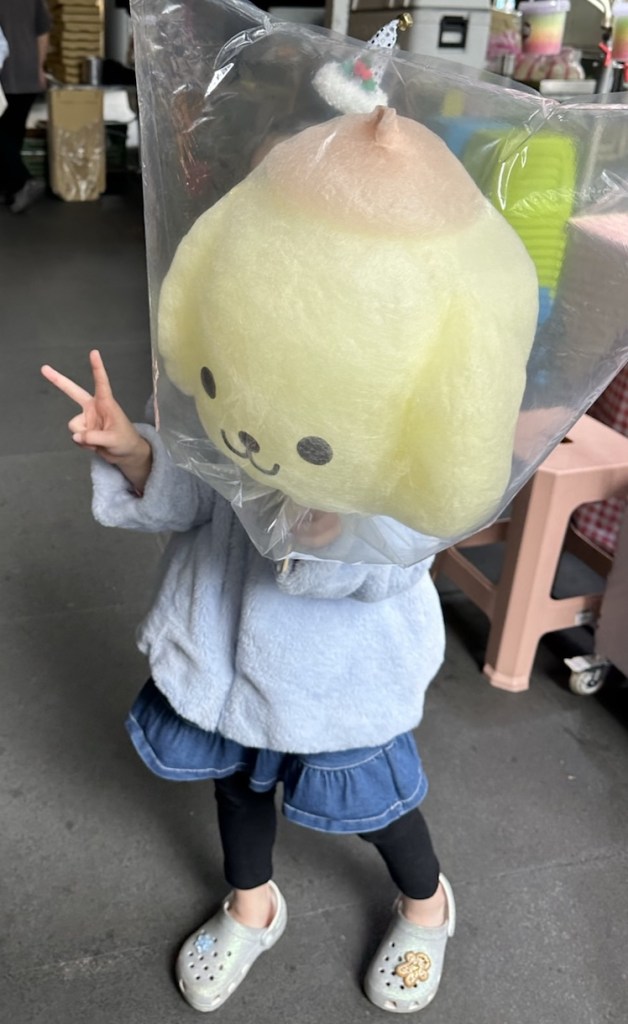
We discovered that Cotton Candy is an art form here. We watched a vendor pour in different colors of sugar and create different pieces of fluff that he assembled into various characters. It was obvious that he took his skill seriously and was very good at it.
These oversized, character-shaped cotton candy creations were a hit with kids and adults alike. We ended up standing there for a good 10–15 minutes just watching the vendor spin these whimsical masterpieces.
Enough city life … time to chill. Our next stop was to get a head spa which is 100 minutes of pure bliss from start to finish. Warm water, aromatic shampoo, and slow, rhythmic pressure melted every bit of tension from our scalp, neck, and shoulders. With steam drifting around us and a luxurious conditioning treatment to finish, it felt like a tiny oasis of calm tucked inside the city.
The concept of the modern head spa began in Japan in the early 2000s. Japan already had a strong tradition of meticulous beauty rituals, scalp health awareness and shiatsu-style massage. By the late 2000s, “head spas” had become a standard premium offering in Japanese salons.
Head spas reached the U.S. in the late 2010s, but became much more noticeable around 2020–2022, especially as Japanese salons opened branches in major cities. TikTok and Instagram popularized ASMR-style scalp treatments and Americans embraced wellness and self-care culture post-pandemic.
Big cities like Los Angeles, New York, San Francisco, and Seattle were the first to offer true Japanese-style head spas, and the trend is still growing rapidly.
Daisy and Irene were our technicians. We asked if they accepted tips. They said, no, Taiwan is not a tipping culture.
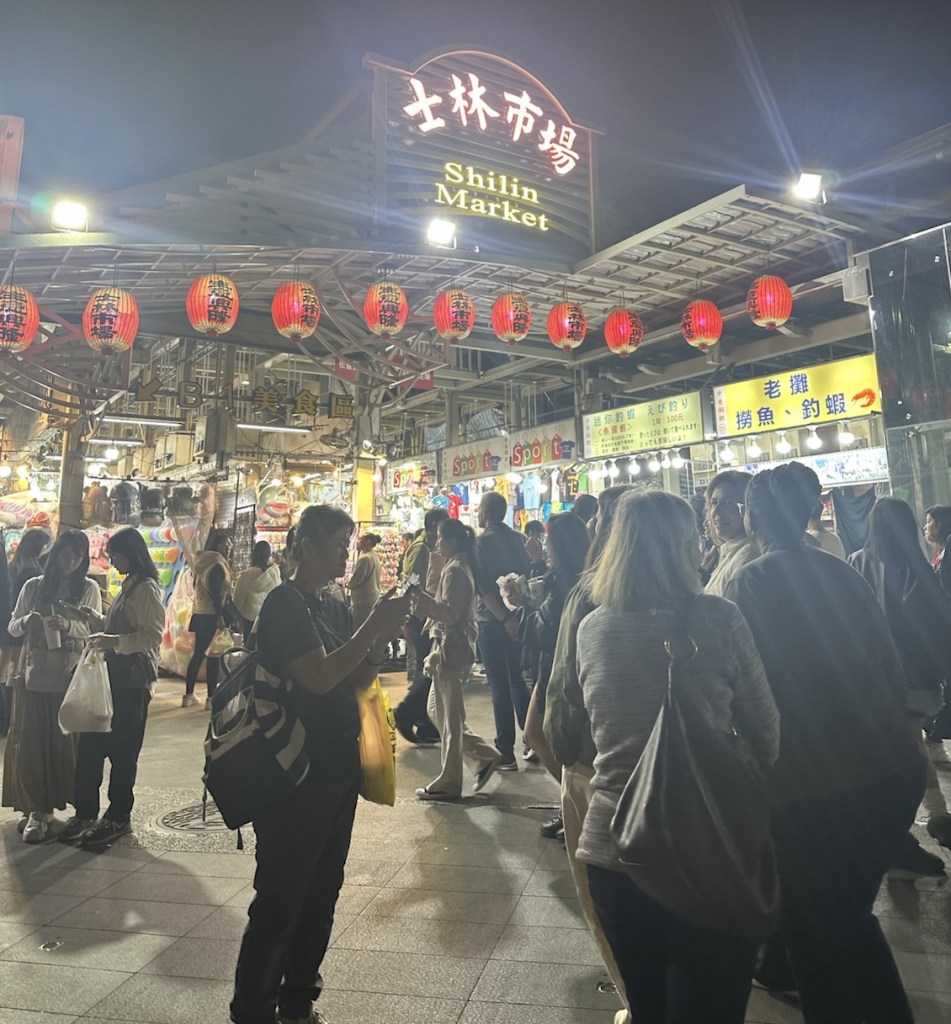
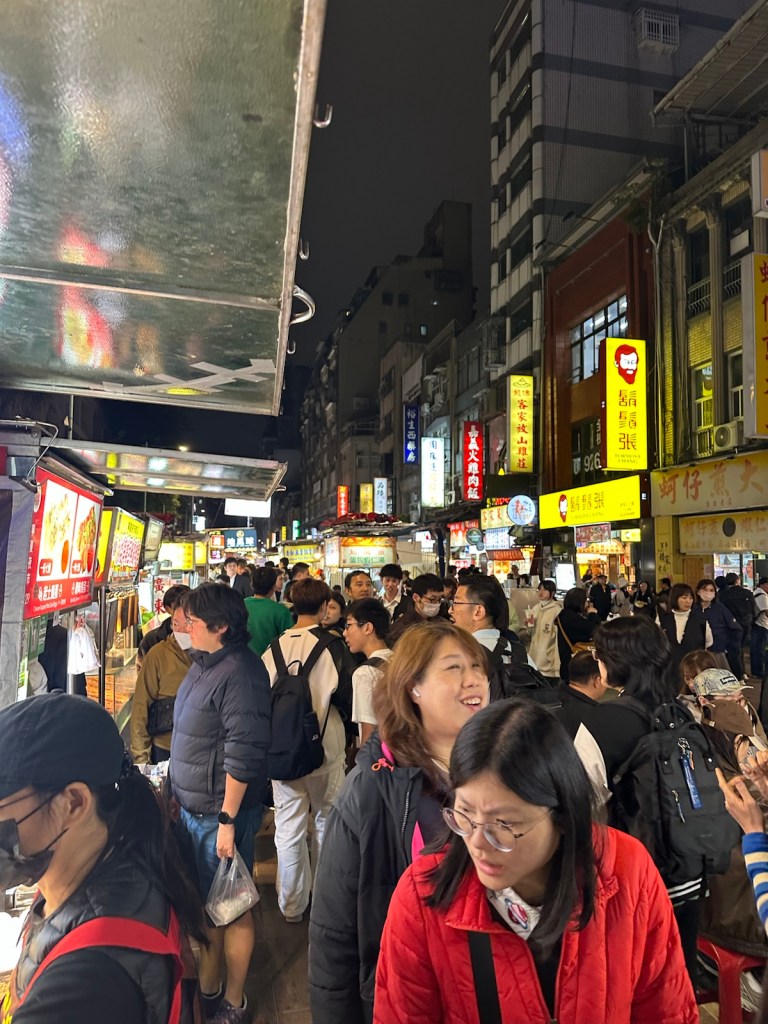
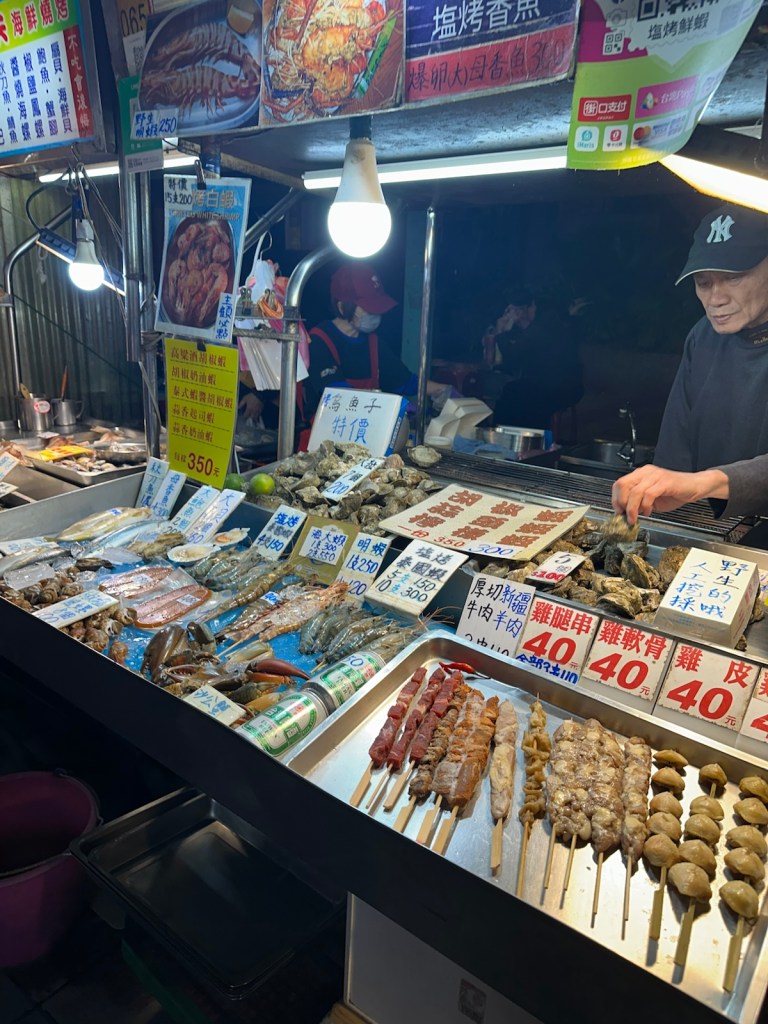
Sun was setting and we headed over to the Shilin Night Market which is Taipei’s most famous and largest night market, a lively maze of food stalls, shops, games, and nonstop energy.
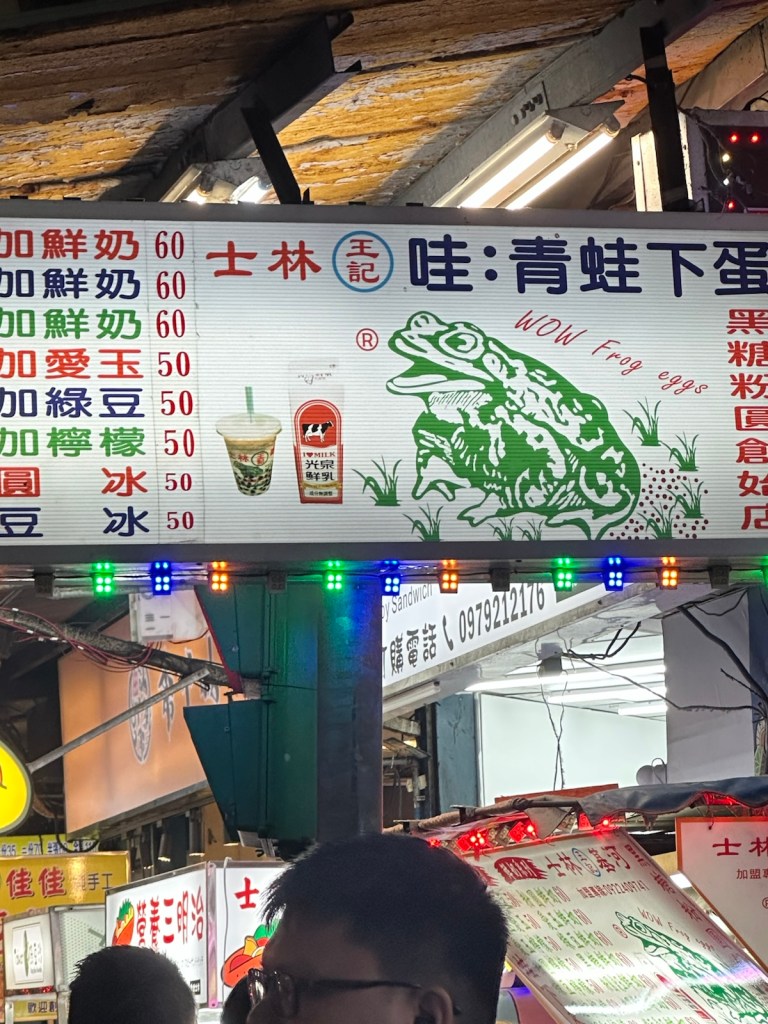
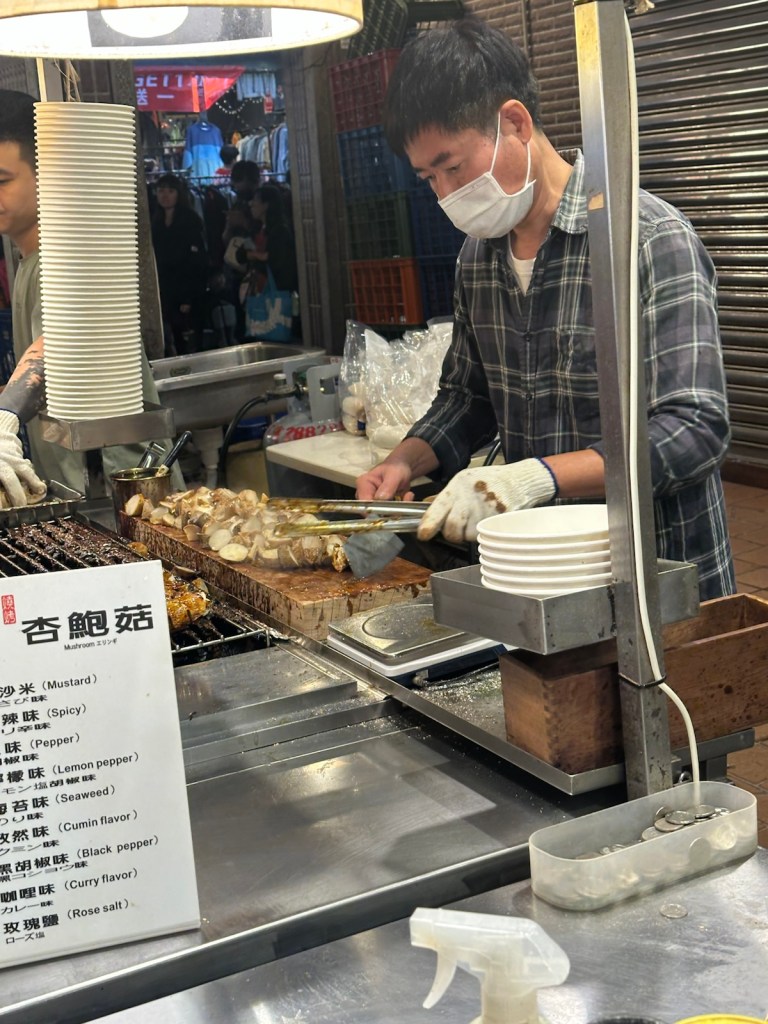
This night market was incredibly crowded and a bit overwhelming — like the State Fair on a hot record-setting day but on serious steroids. Bright lights, sizzling grills, lines of people, music, cheerful chaos and the smell of something delicious every few steps.
It’s packed on weekends, lively every night, and an absolute must if you want to feel the pulse of Taipei street life.
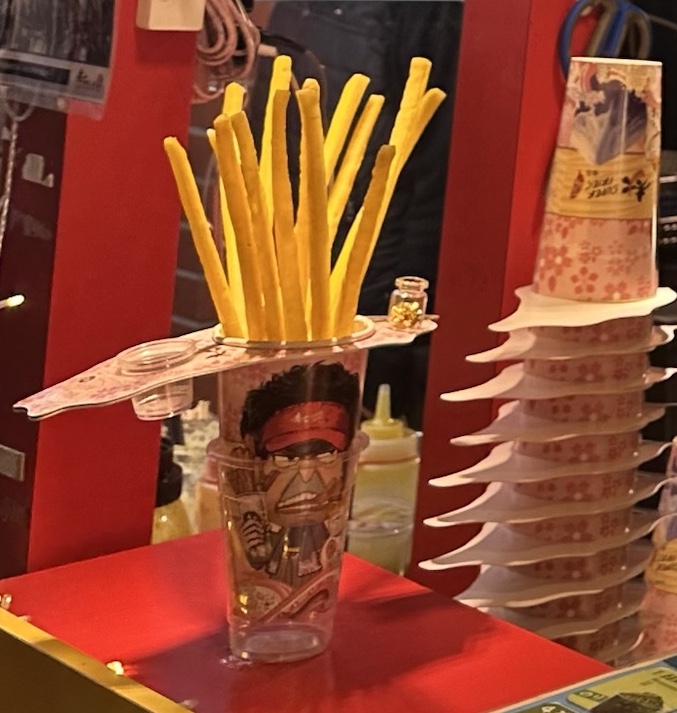
Foot long French fries!! It left me wondering what those potatoes looked like.
Another day immersed in Taipei’s culture, savoring every moment. Stay tuned… tomorrow we’re heading to a peaceful mountain village — far enough from the city to feel like an escape, yet close enough for an easy half-day adventure. Our destination: Houtong, a sleepy hillside town where history lingers and cats rule the streets.
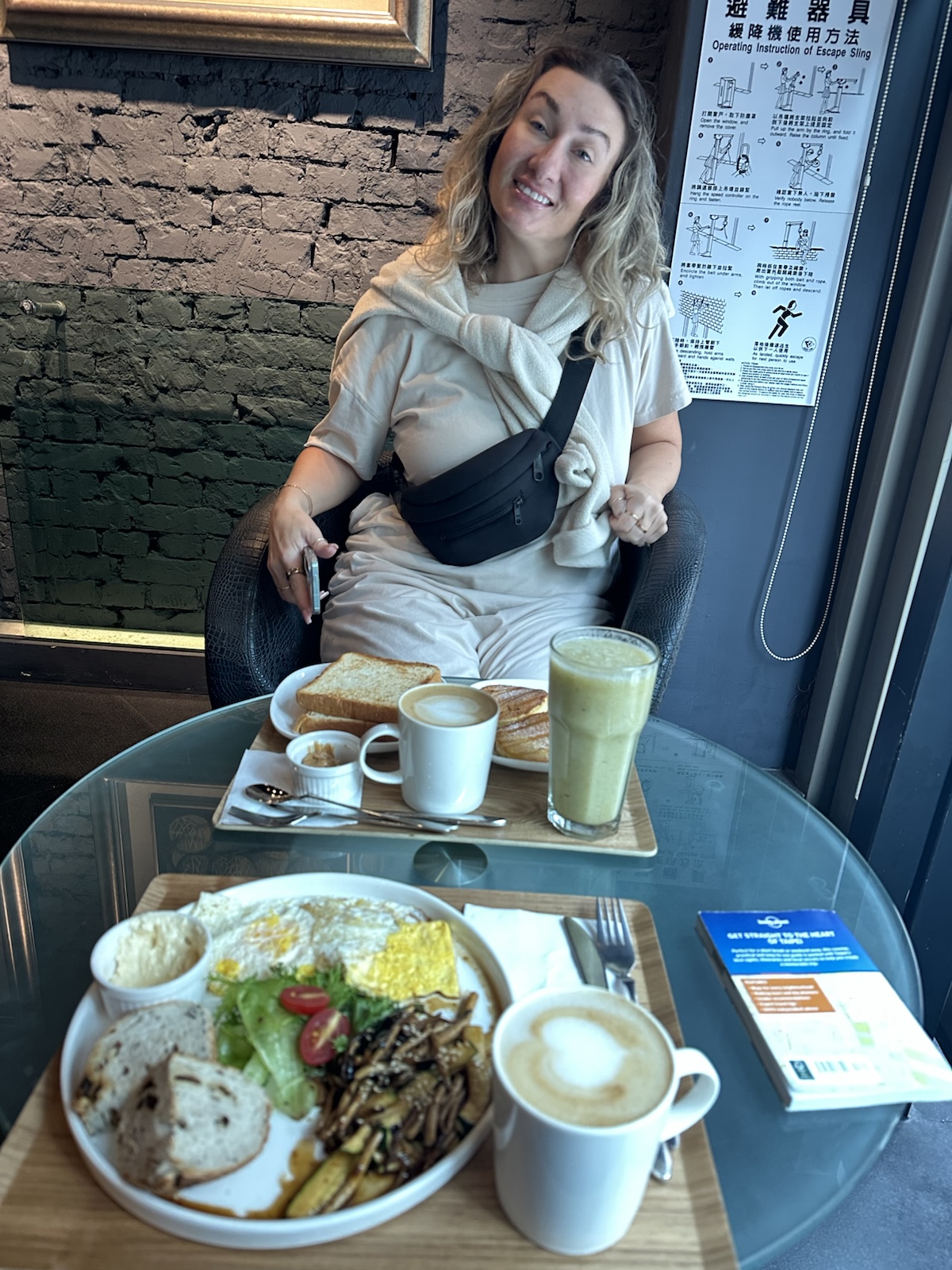
Today we are heading to the city’s southeastern edge to explore the tea plantations but not before having a long leisurely breakfast at nearby Artco restaurant which blends food with a creative, artsy ambiance.
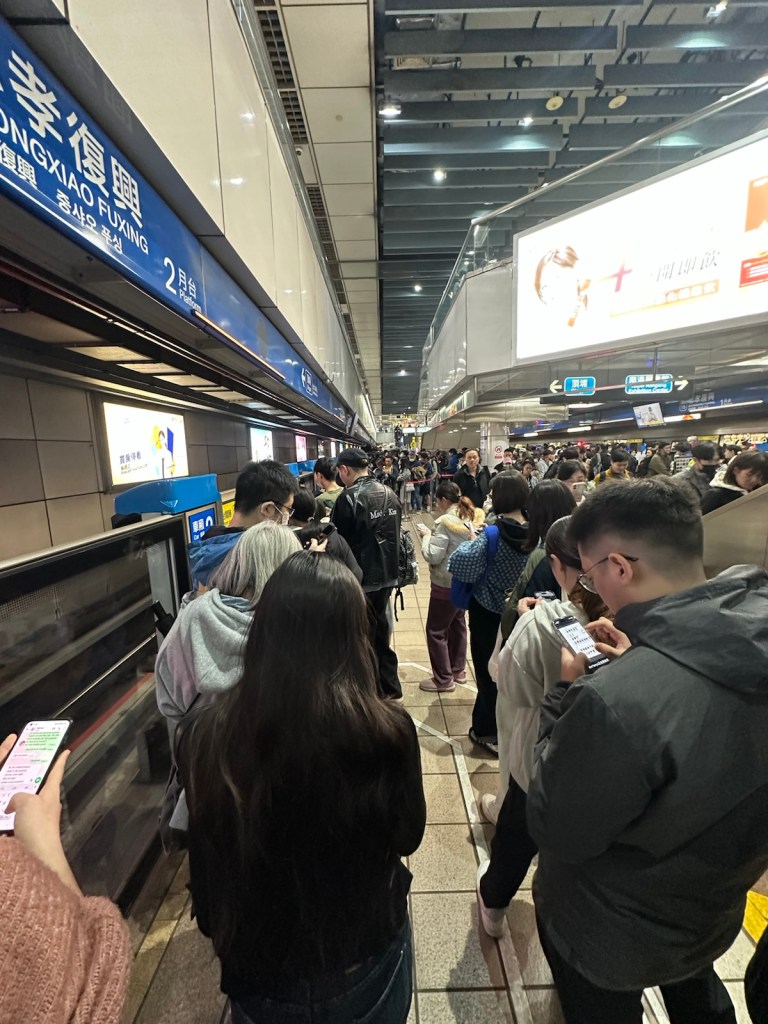
As usual, the walk to the train station is filled with local charm and always has a lot to look at and observe.
It’s tricky getting on the correct train going in the right direction. Bridget it a pro at navigating and remembering where we were and how we got there.
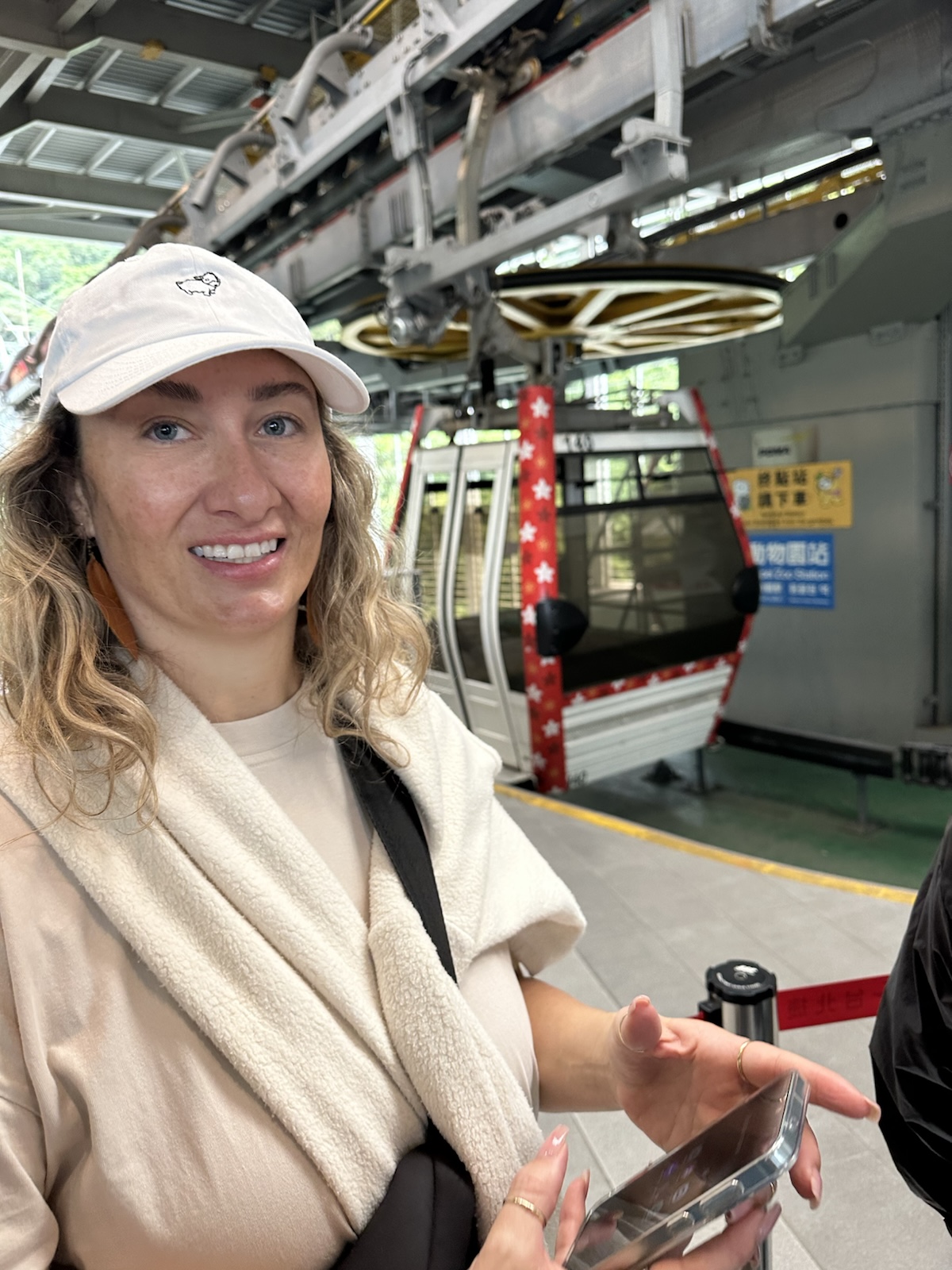
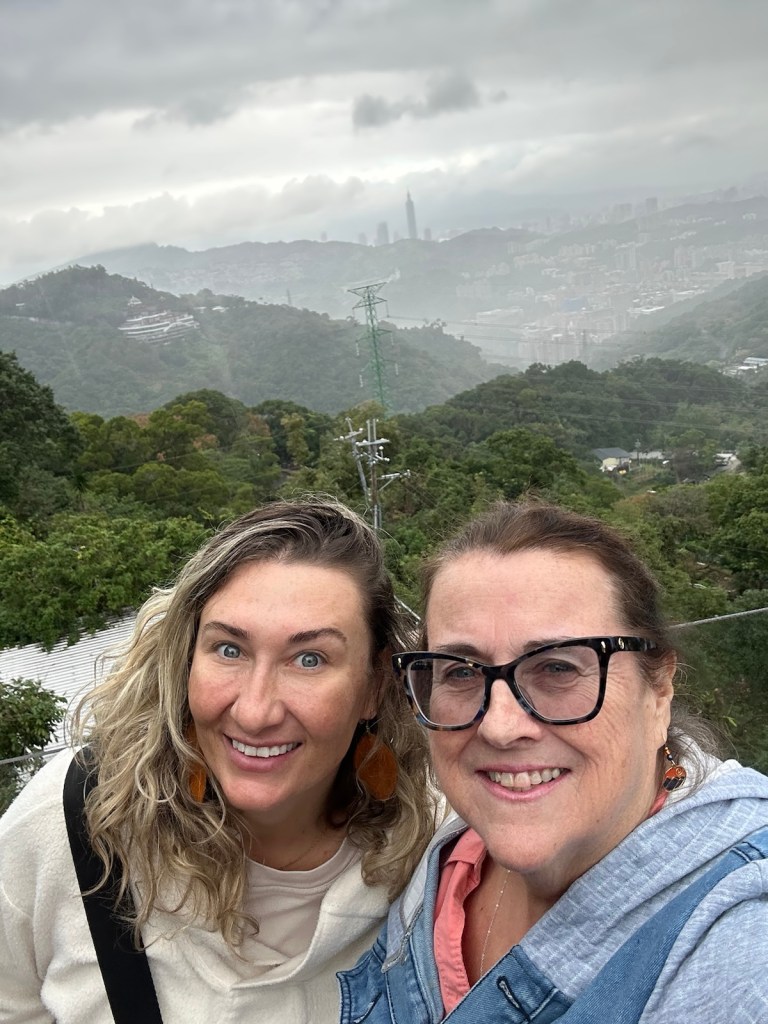
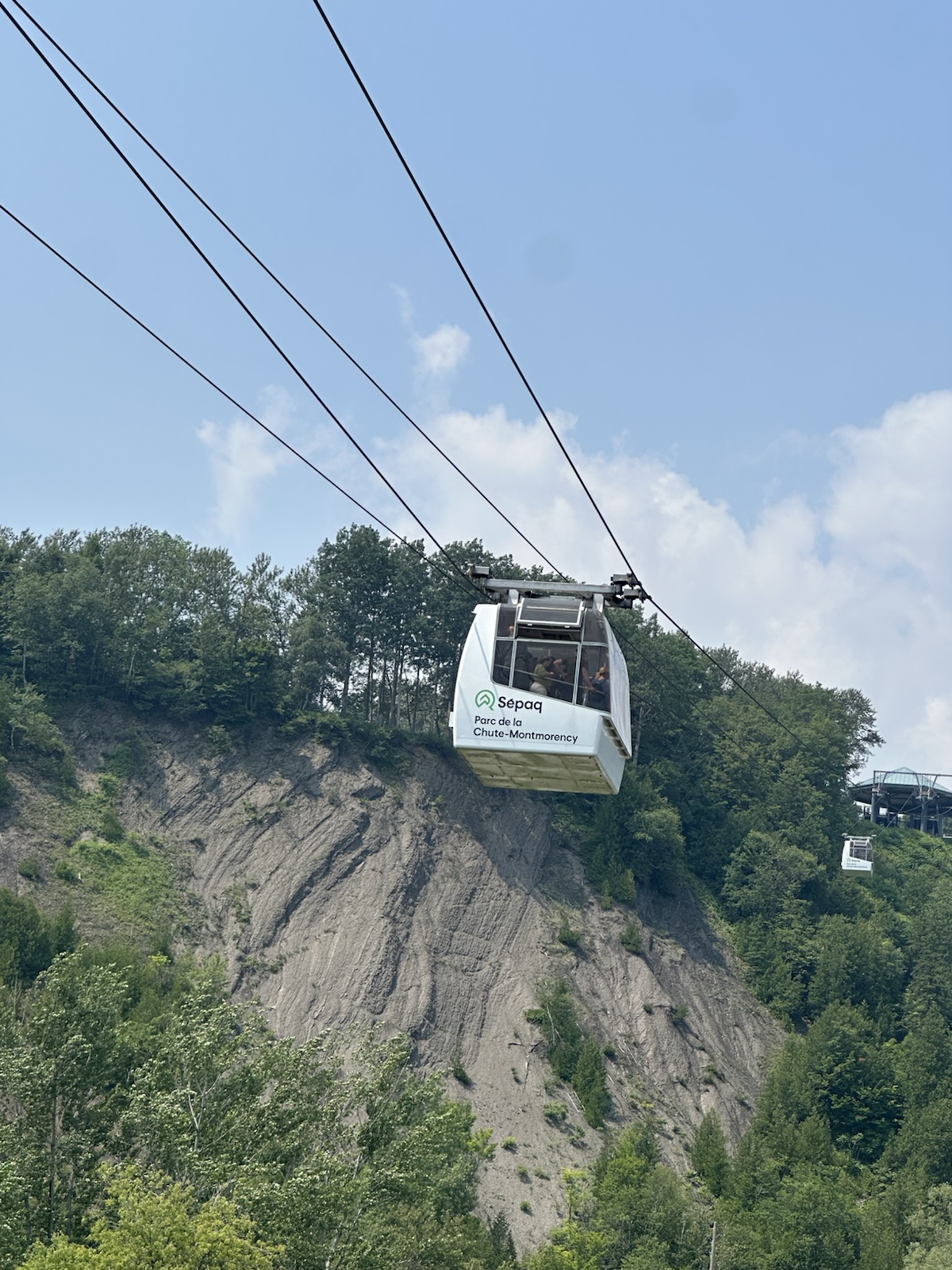
The Maokong Gondola is a 2.5-mile cable car that takes you up into the lush Maokong tea-growing hills. The view of Taipei from the cable car is stunning.
There are four stops along the Maokong Gondola, and we hopped off at the third to explore Zhinan Temple. This peaceful hillside complex offered sweeping, panoramic views of Taipei.
The last stop is at the top of the hillside and the main destination for most visitors. It’s where the city melts away and Taipei’s famous tea-growing hills open up around you.
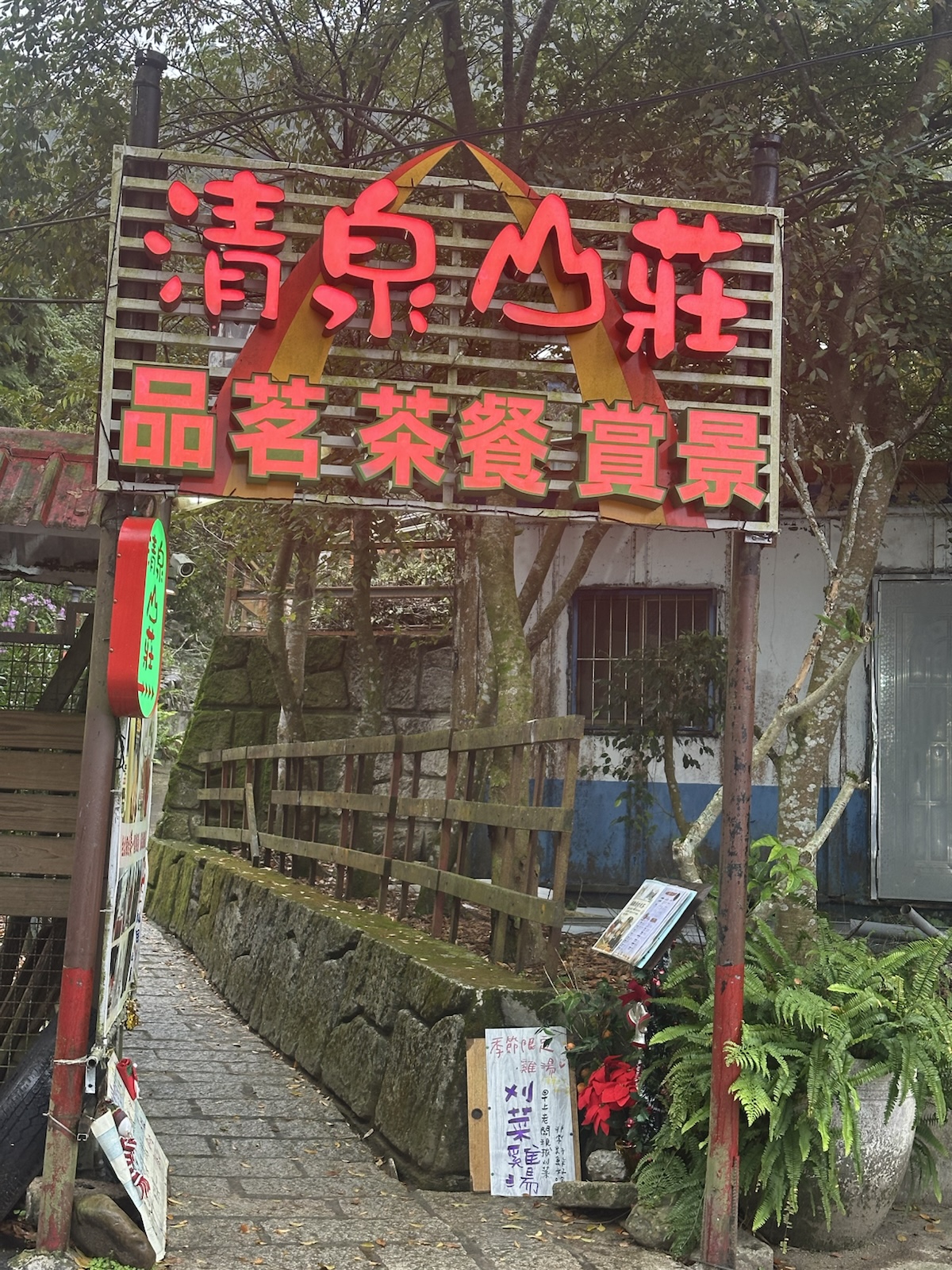
Dozens of teahouses cling to the hillsides overlooking Taipei, famous for their high-mountain oolong and Tieguanyin teas. Some offer floor seating, lanterns, and a traditional ambiance, while others lean modern — but every one of them boasts a breathtaking view.
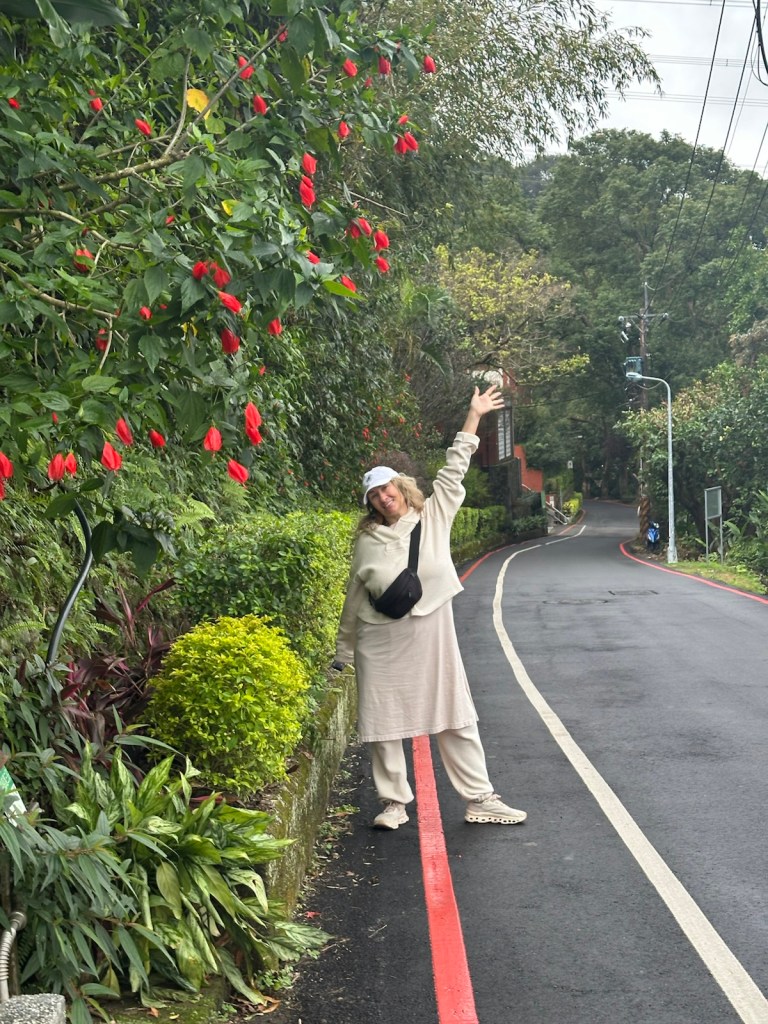
The gentle walking paths around the Maokong Station are one of the best parts of visiting the top of the gondola. They’re peaceful, scenic, and perfect if you want views without a strenuous hike.
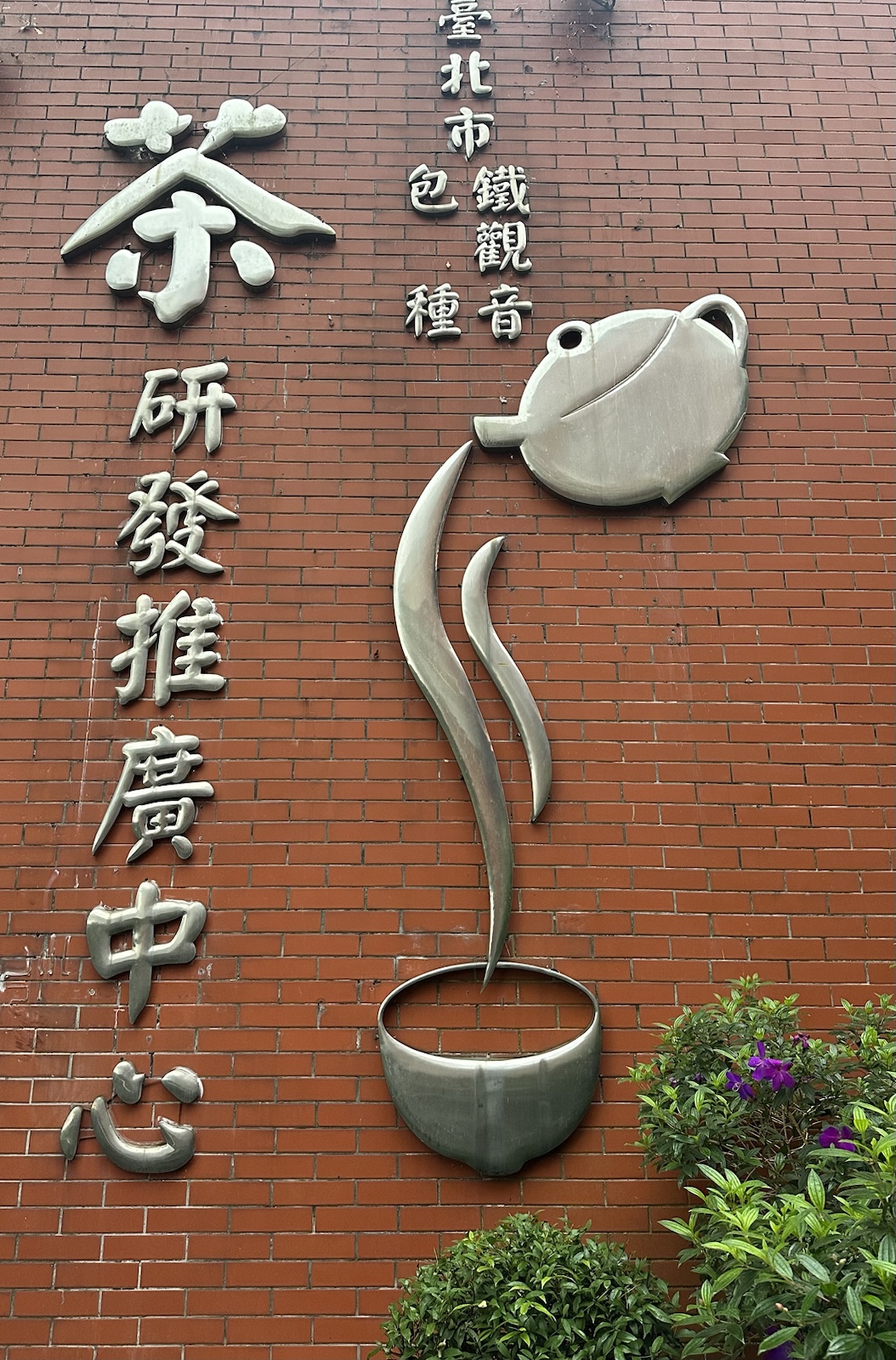
We walked a short distance to the tea-education center, officially the Taipei Tea Promotion Center for Tieguanyin and Baozhong Tea. It’s a compact but fascinating stop where history, agriculture, ecology, and tea tasting come together, giving you a deeper understanding of why Taiwanese teas are so celebrated.
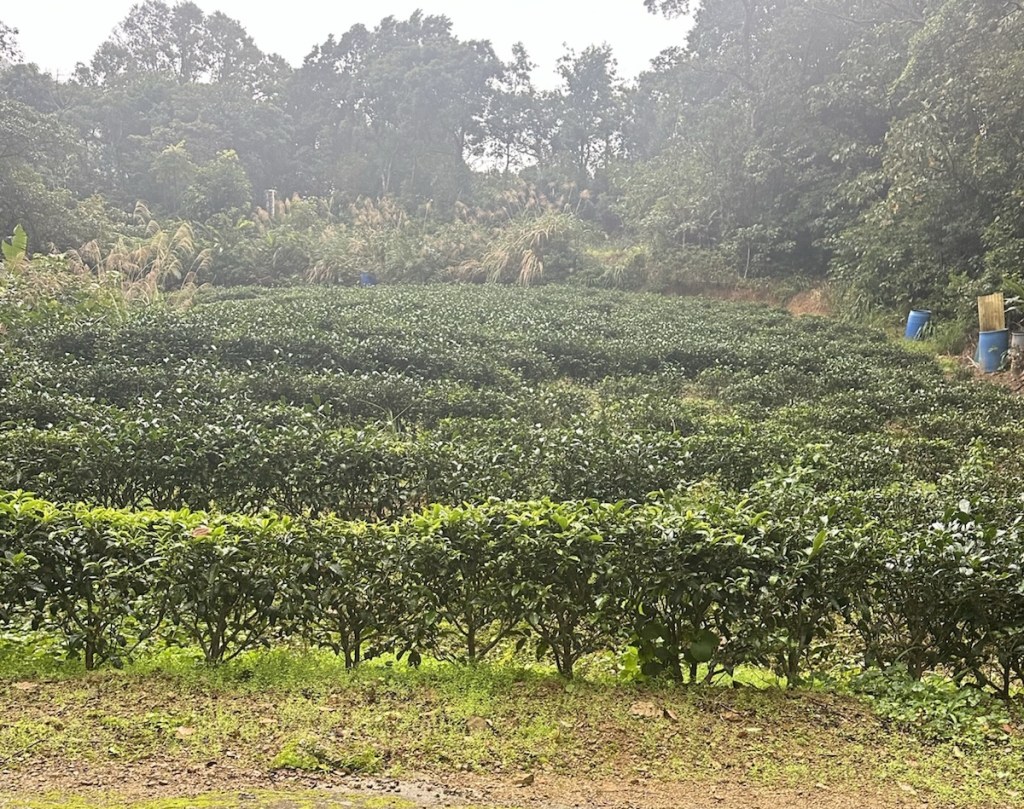
Tea fields — especially the ones around Maokong — are some of the most peaceful, photogenic parts of Taiwan. The tea plants grow in neat, rounded rows across the hillsides, creating a soft green patchwork that looks almost hand-brushed onto the landscape.
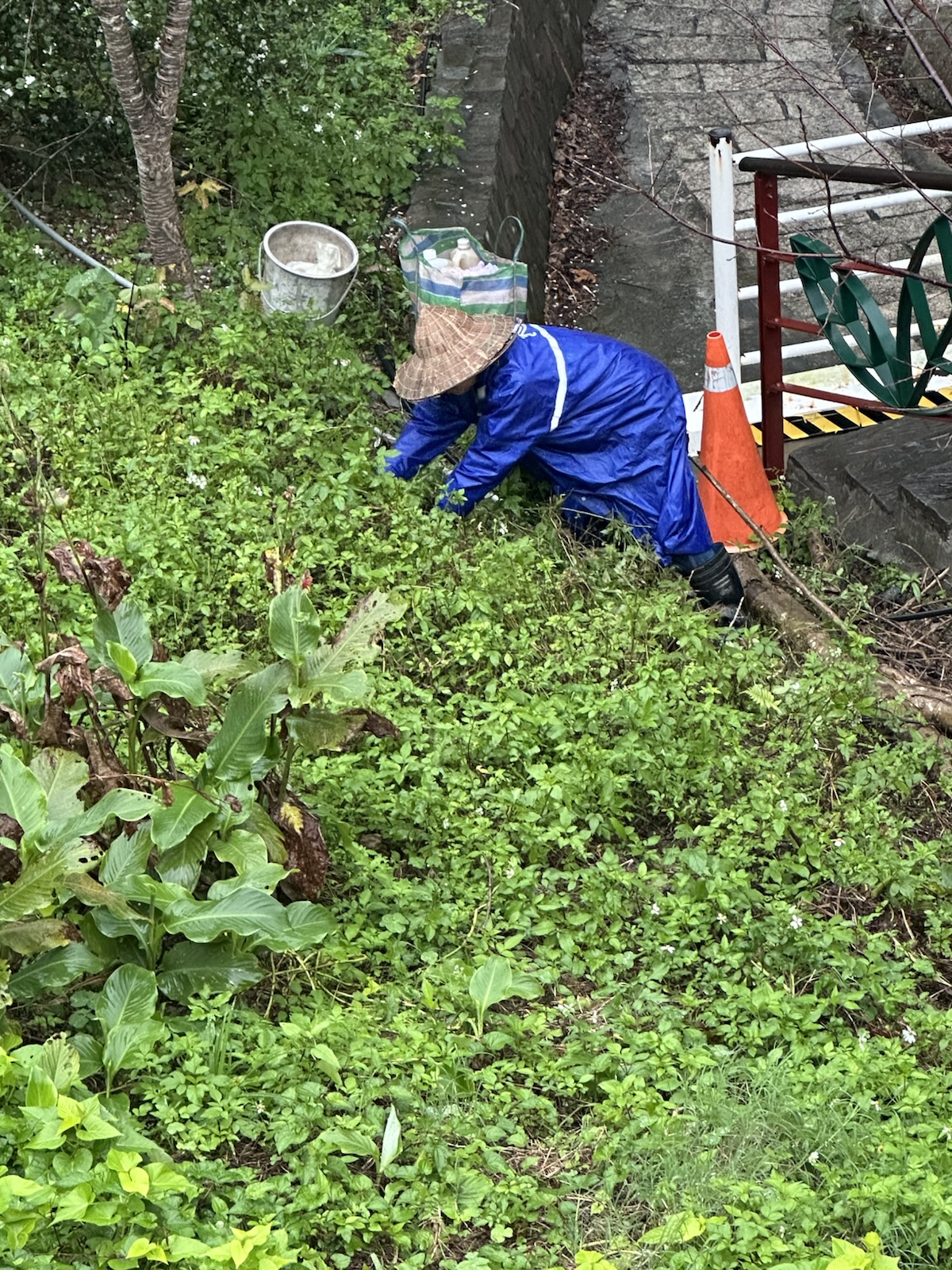
Tea harvesting in Taiwan is still largely done by hand, which preserves quality. Workers pinch the leaves at the base of the stem, twisting slightly to avoid damaging the plant. Hand-plucking protects the leaf edges, which affects aroma and flavor during processing.
After the young leaves are hand-picked, they’re spread out to wither, softening and reducing moisture. The leaves are then gently bruised to start oxidation, which develops their aroma and flavor. Heat is applied to stop oxidation at just the right moment, and the leaves are rolled into their final shape before being dried. This careful sequence is what gives Taiwanese teas — especially oolongs — their rich, layered character.
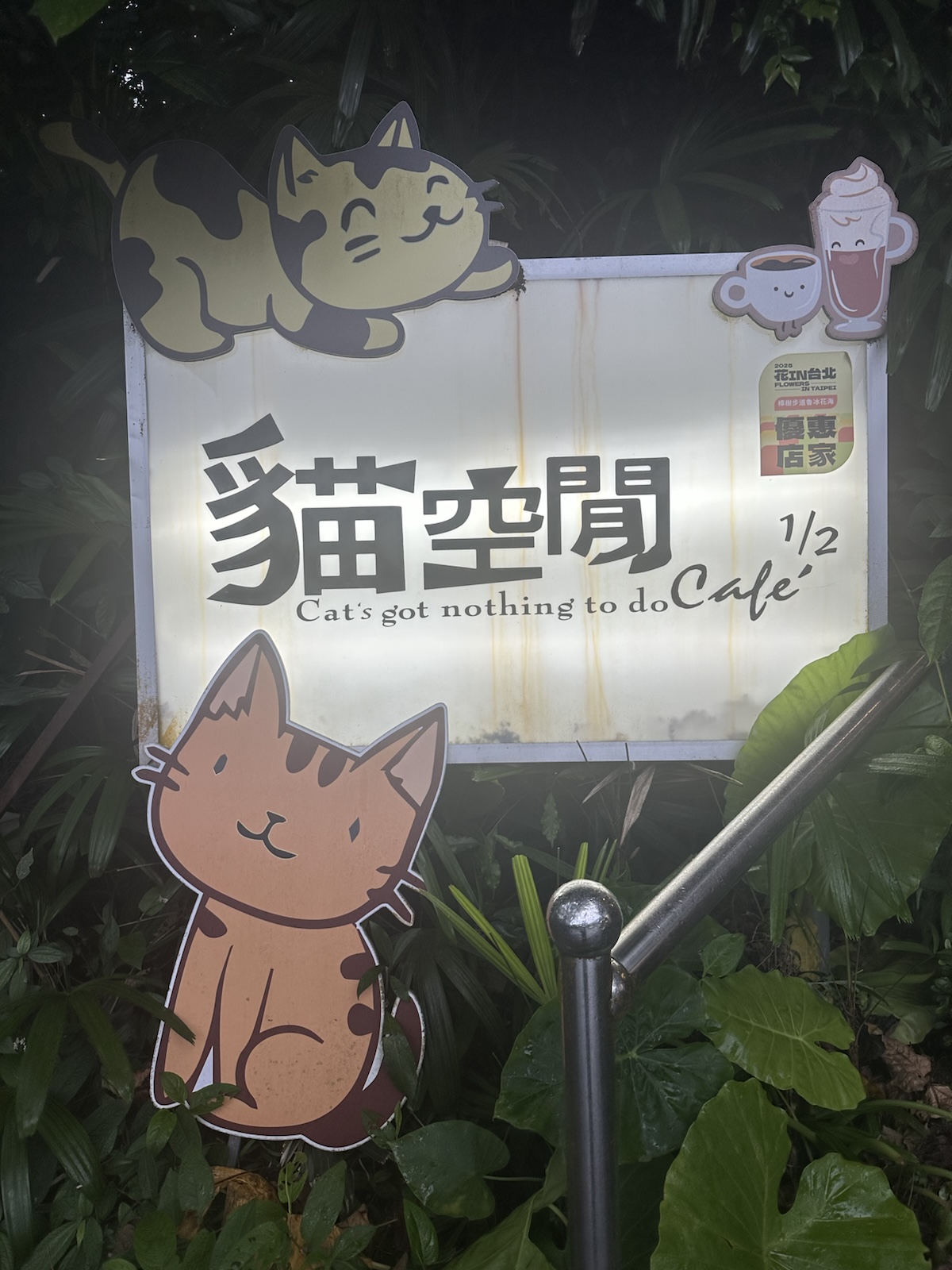
Along the paths cats seem to pop up everywhere — painted on walls, carved into stone, or perched as quirky little sculptures.
Some of the artwork comes from a playful interpretation of “Maokong”, which includes the character 貓 (māo) meaning “cat.” While the name actually refers to a geological feature (not cats), locals and artists love the coincidence — so cat-themed art pops up everywhere.
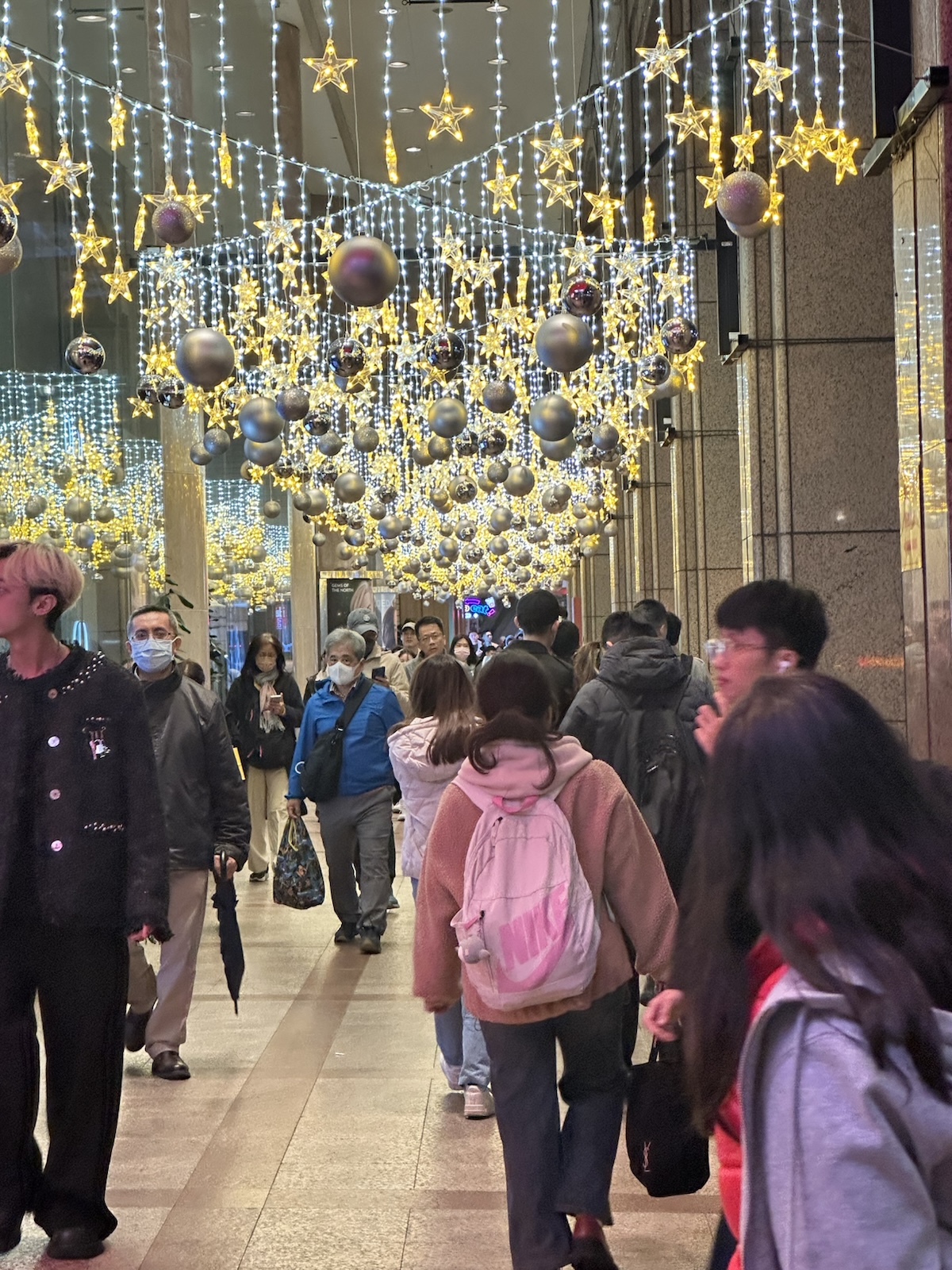
All good things come to an end and we made our way back to the bustling city — now sparkling with holiday spirit.
What a day — our visit to one of the region’s most scenic tea plantations was unforgettable, and we’ll savor the memories every time we sip a cup.
Beitou Thermal Springs are one of Taipei’s most unique, soothing, and slightly surreal experiences — a whole neighborhood built around steaming, mineral-rich hot springs fed by a volcano.
We hopped on the Red Line from our Zhongshan neighborhood and it took less than an hour to reach Beitou.
The hot springs come from geothermal activity at nearby Yangmingshan Volcano. The springs are packed with minerals — especially sulfur — which give the air that signature “eggy” smell and the water its healing properties. Fortunately, it’s a very light smell that’s not too noticeable.
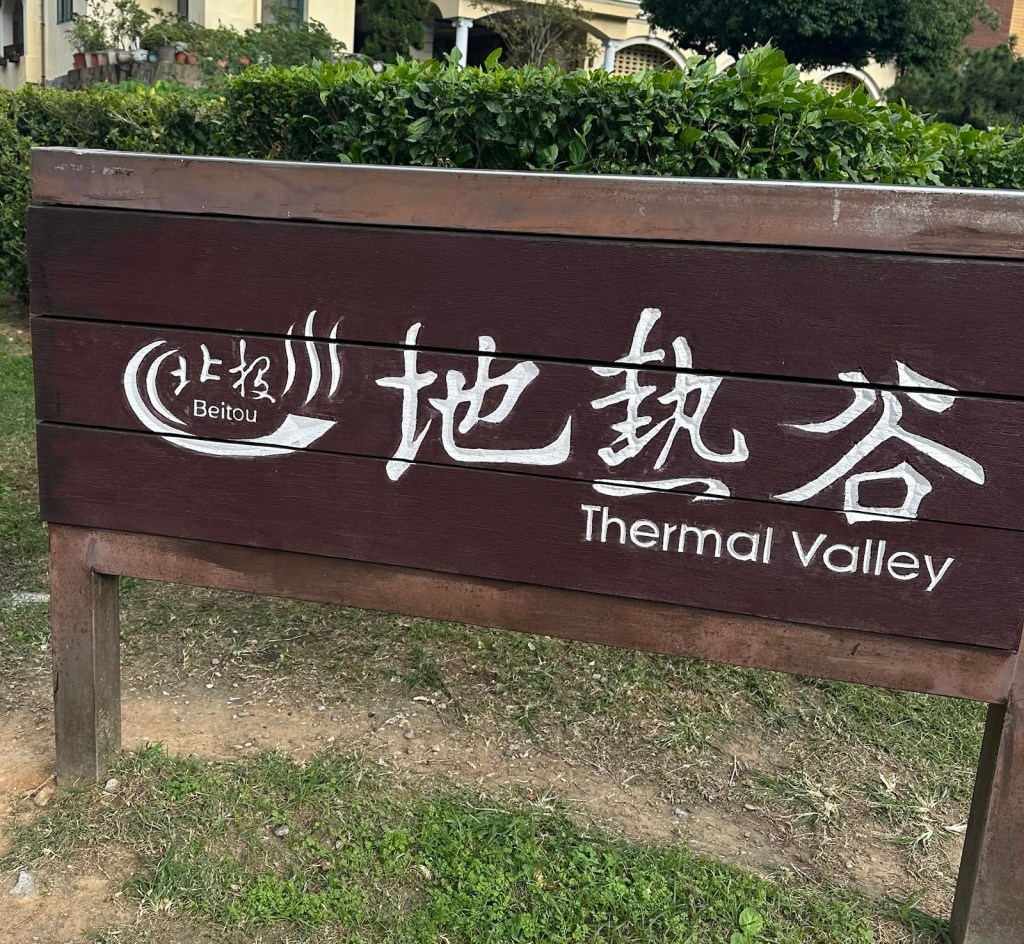
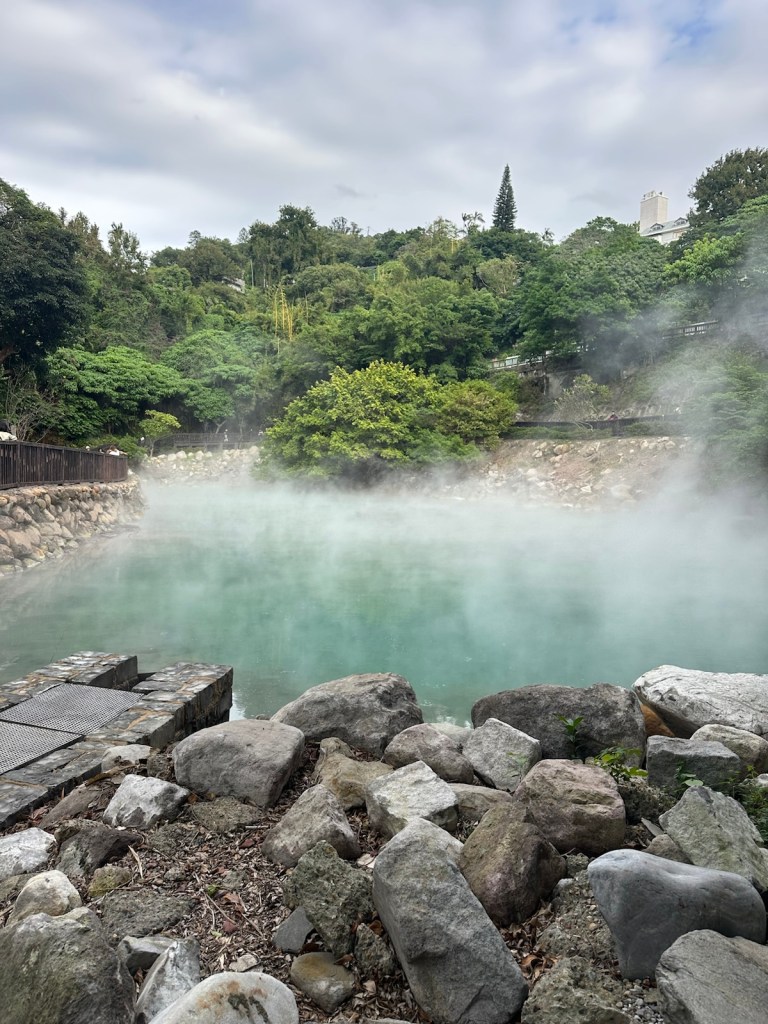
Nearby Thermal Valley also known as Hell Valley is too hot for soaking and the light sulphur smell is a little more noticeable where the steam is thickest. People do not soak in Thermal Valley because the water is literally boiling.
In Beitou, people go to hot spring baths that pipe in the geothermal water, cool it to safe temperatures and create soaking pools. The main public hot-spring pool was closed for maintenance during our visit so we looked for other soaking options.
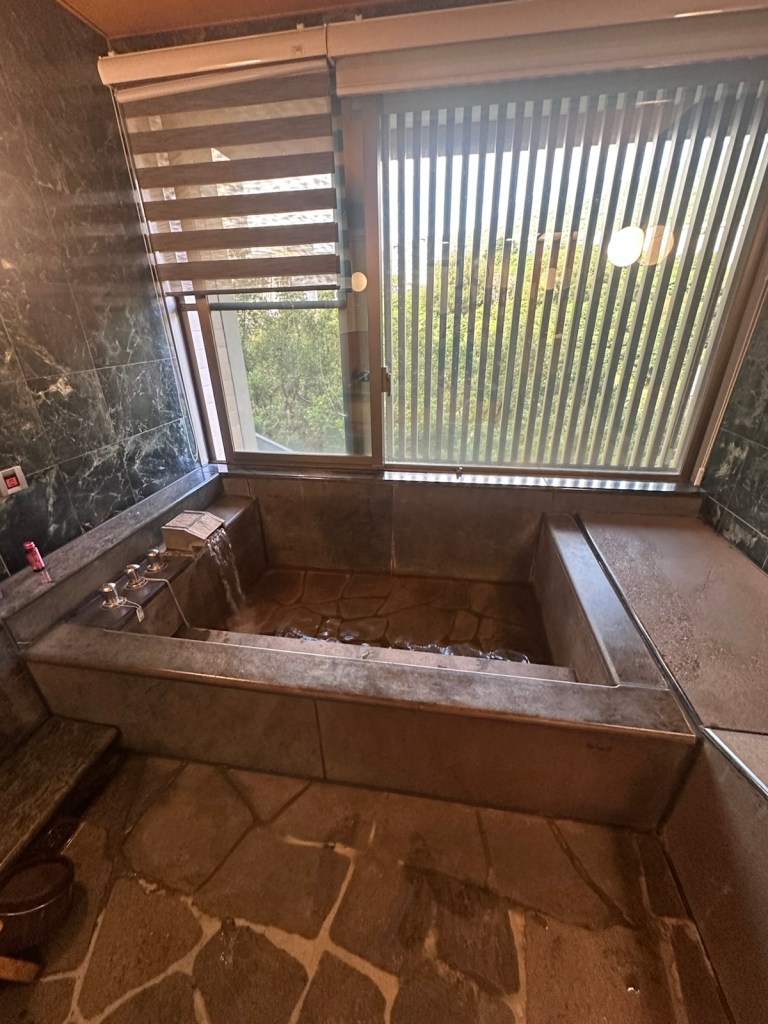
At the Kagaya Hotel, we chose a private hot-spring room complete with a shower, amenities and a screened window overlooking the lush hillside. Our 90 minutes there were peaceful, restorative and truly a highlight of the day.
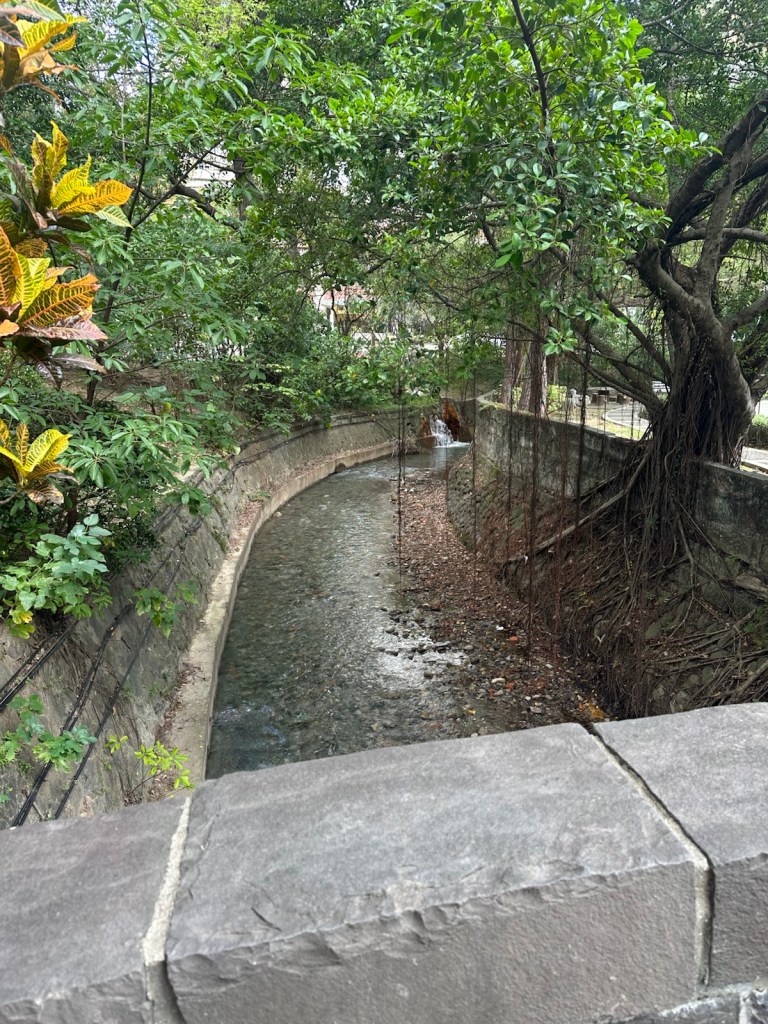
From the Kagaya hotel, there are many scenic paths and trails that follow the stream.
The Beitou Museum is one of the best places nearby to learn about its past, culture, and hot-spring heritage.
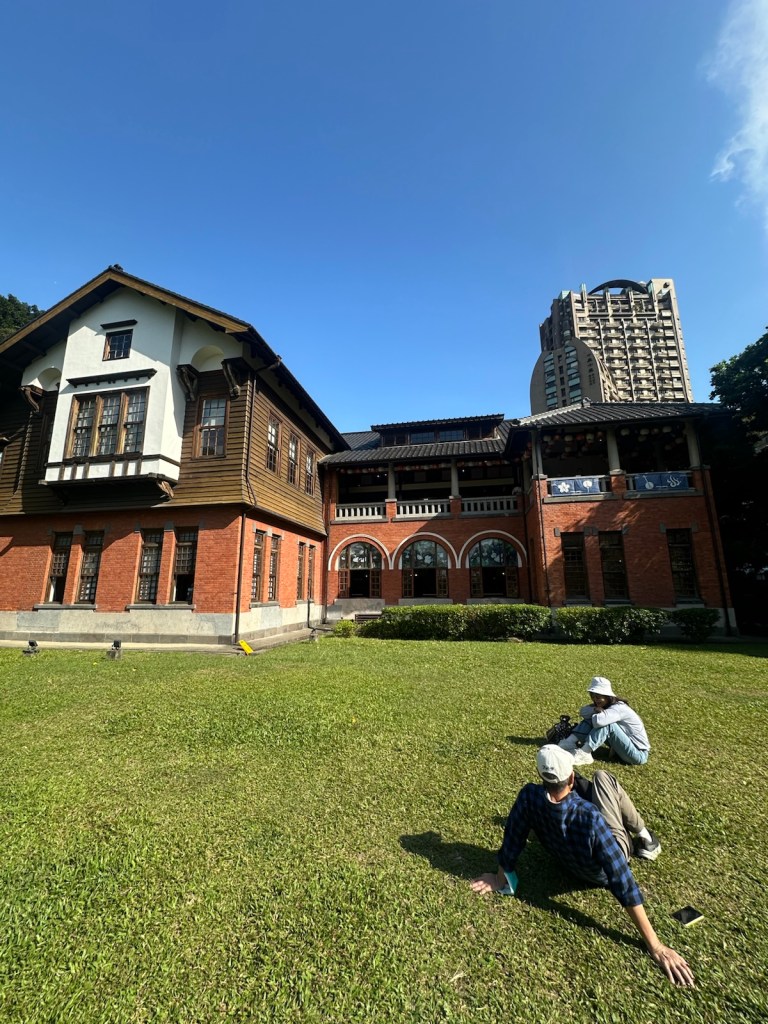
The museum is a beautiful blend of history, architecture and art. It is housed in a 1921 Japanese-era wooden building, originally built as a luxury hot-spring hotel. It’s one of the largest remaining freestanding wooden structures from the Japanese colonial period in Taiwan.
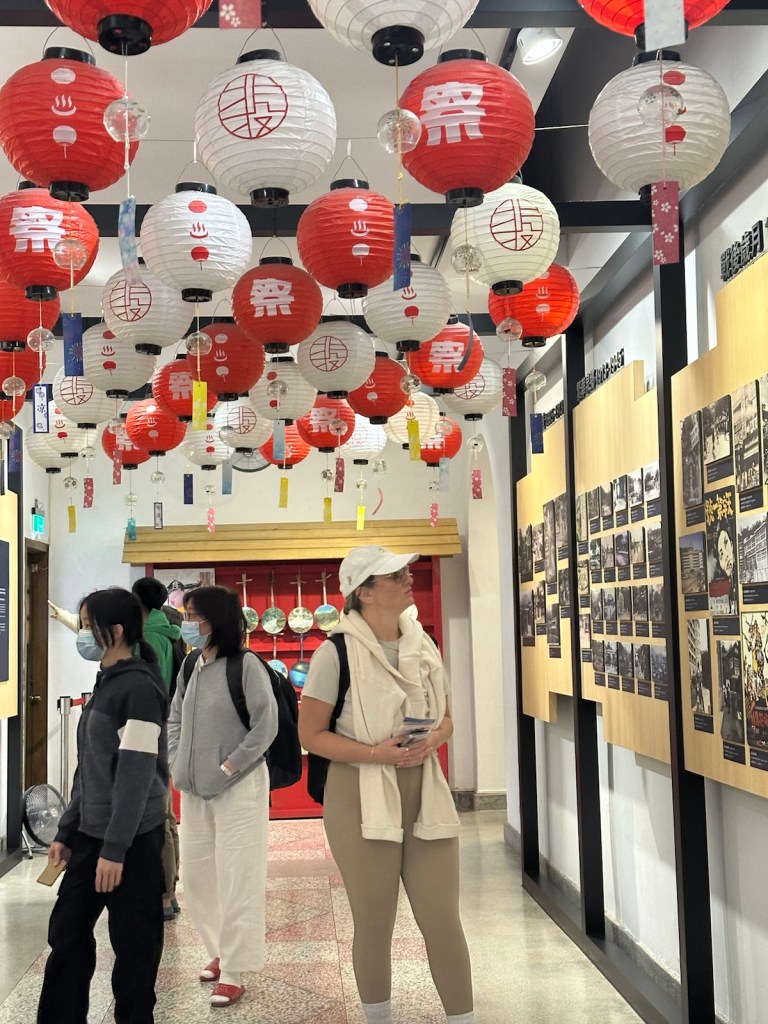
The museum showcases aboriginal artifacts, folk artwork, religious objects and exhibits on Beitou’s hot-spring history. There is a traditional tatami room with low tables and sliding doors.
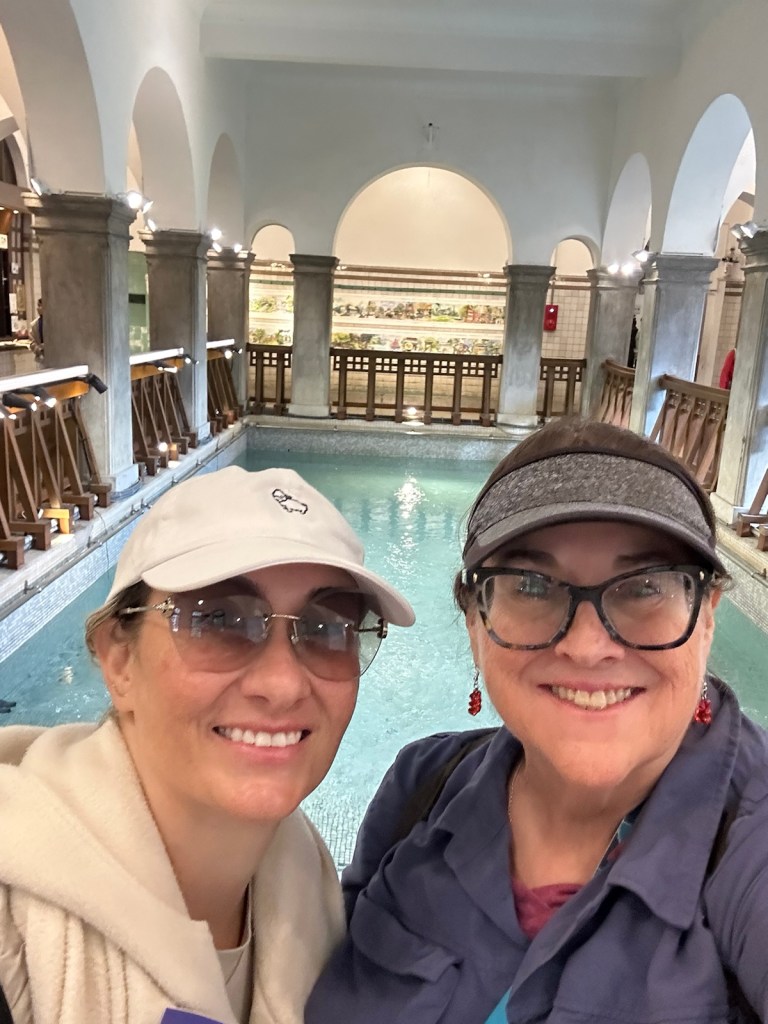
The building features original architectural elements, wooden beams and old bathhouse features including one of the original pools.
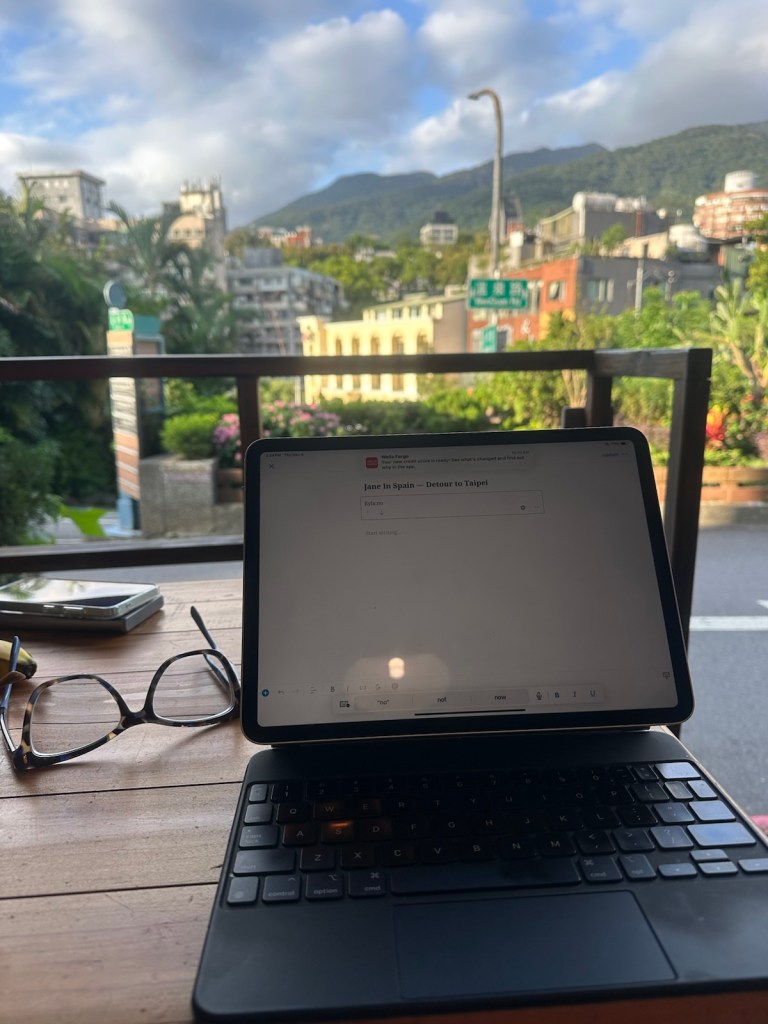
Afterward, we settled into a cozy café with a view, letting everything we’d just experienced soak in. It was thought-provoking and absolutely amazing.
After a slow, easy day wandering through Beitou, we hopped back on the Red Line to Zhongshan and slipped right back into the city’s lively rhythm.
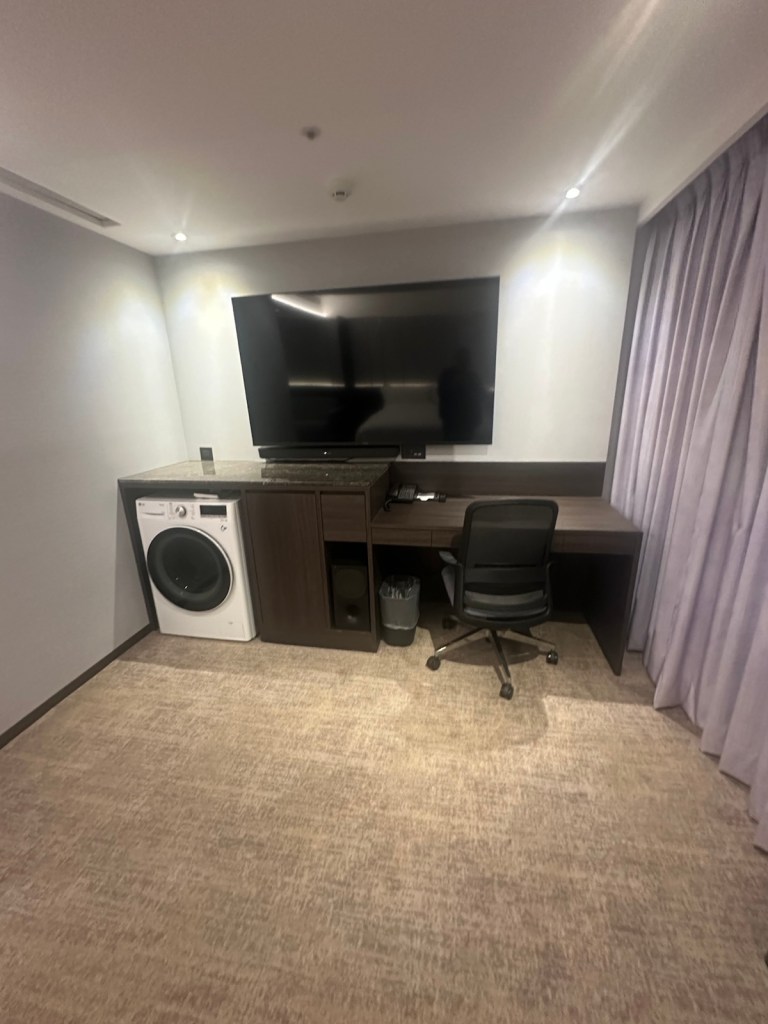
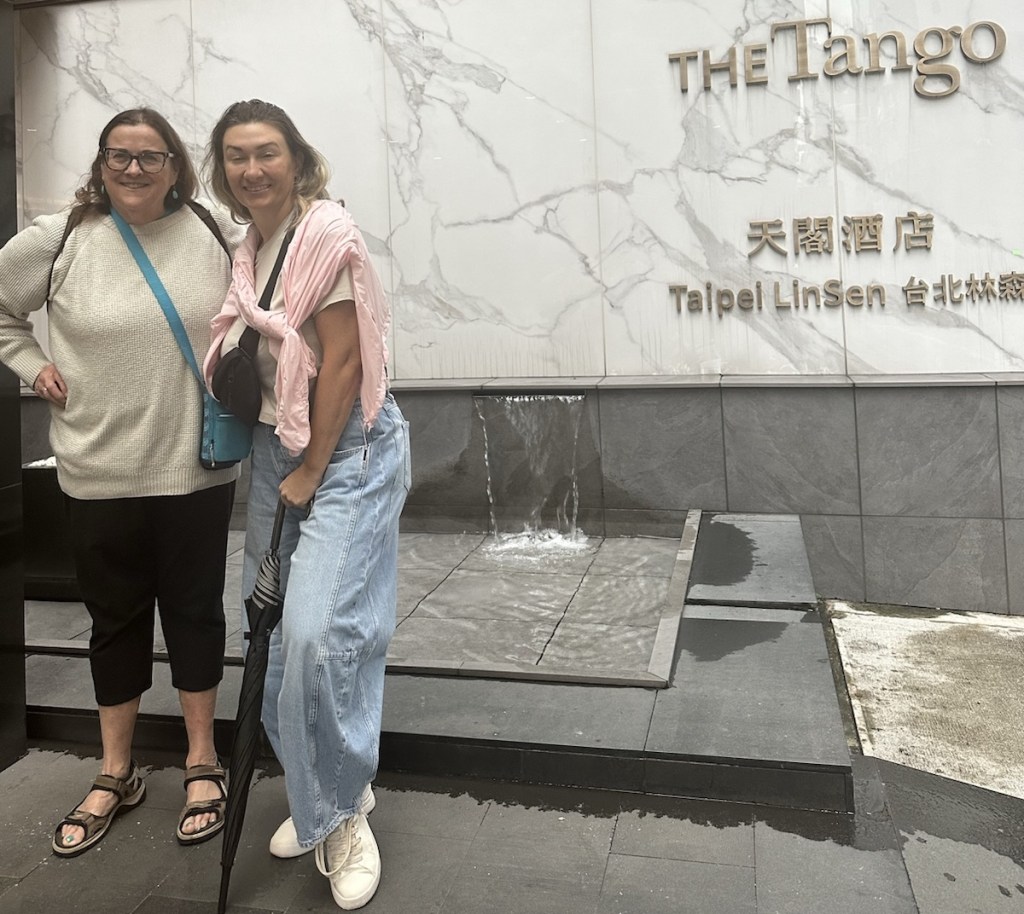
The Tango Hotel Taipei Linsen is located in the Zhongshan District of Taipei. Because of the mix of convenience, transportation, dining and nightlife, this part of Zhongshan/Linsen is often described as great for tourists.
Our accommodations came with features we instantly loved, including a convenient washer/dryer. And the bathroom? The toilet was its own little spa — complete with a remote control for the ultimate in comfort care. This high-tech marvel even sanitizes itself and glows with a built-in night light. Now this is luxury I could definitely get used to.
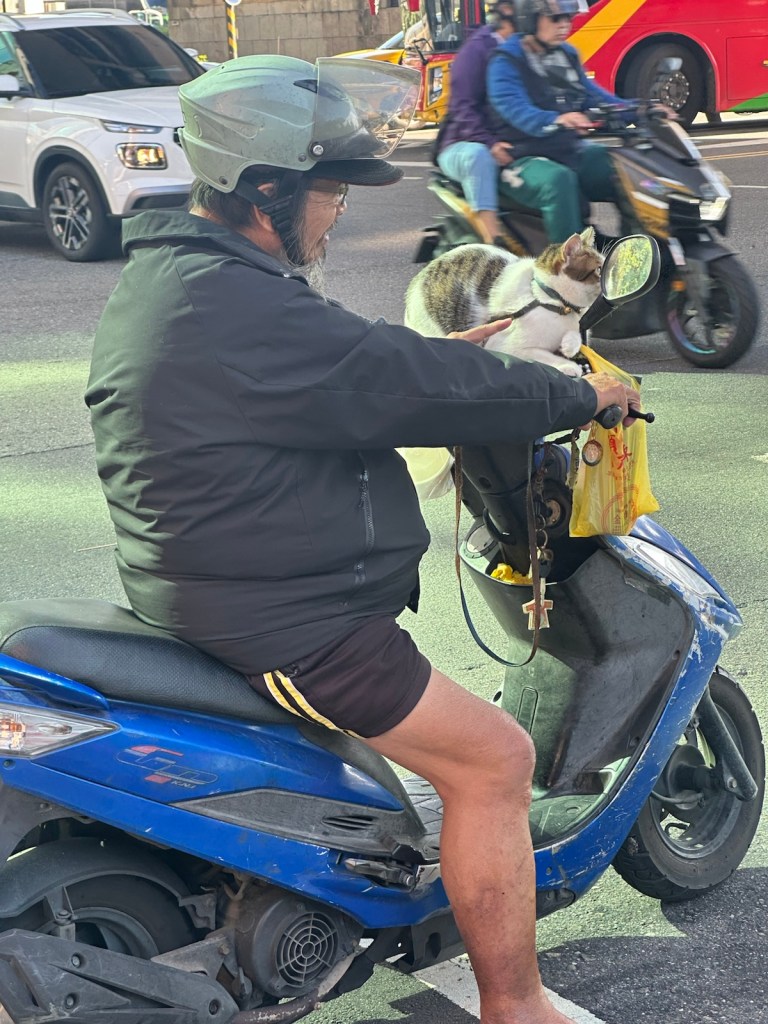
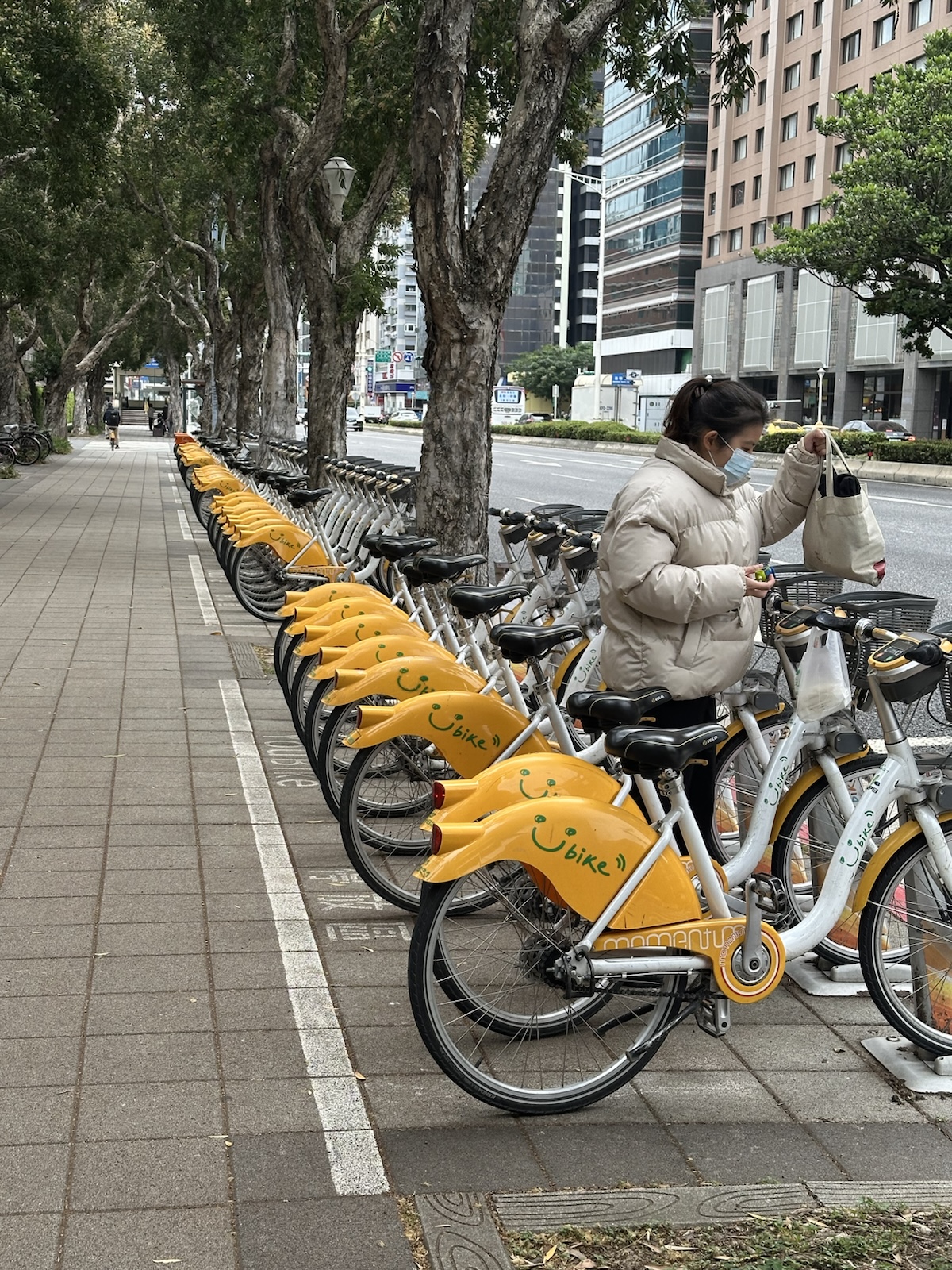
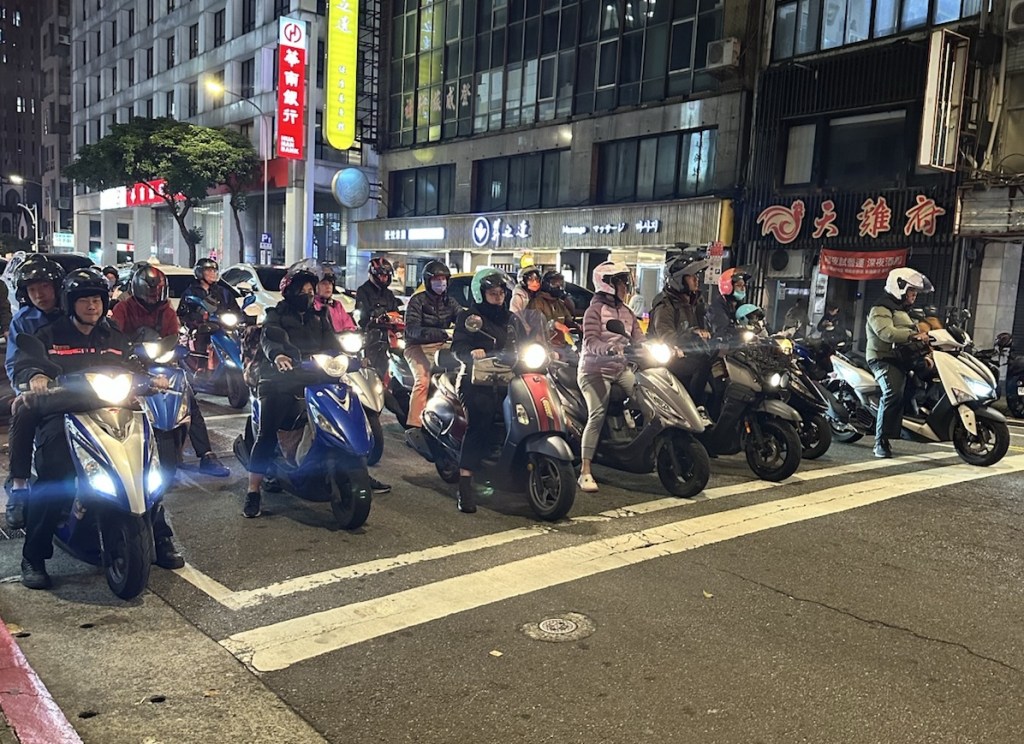
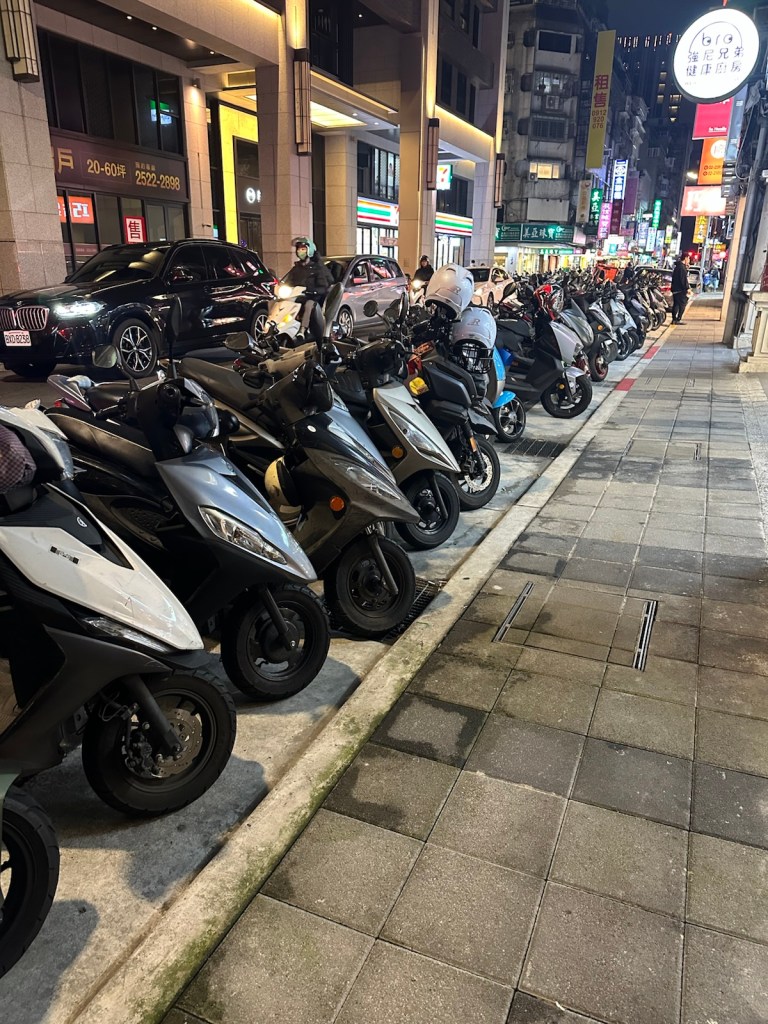
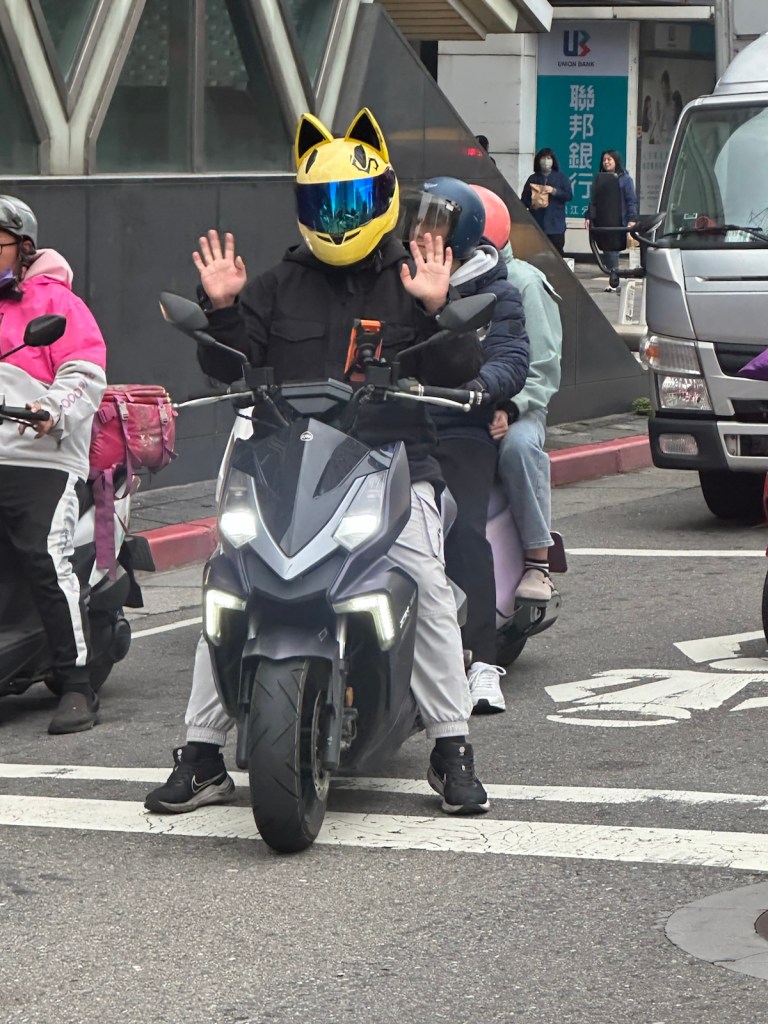
We had no real agenda other than getting a feel for the neighborhood, so we simply wandered. One of the first things that struck us about this city was the sheer number of scooters — they’re everywhere.
The streets were impressively clean, with clearly marked lanes for cars, bicycles, and pedestrians. The Zhongshan vibe is a lively blend of modern city life and charming neighborhood energy.
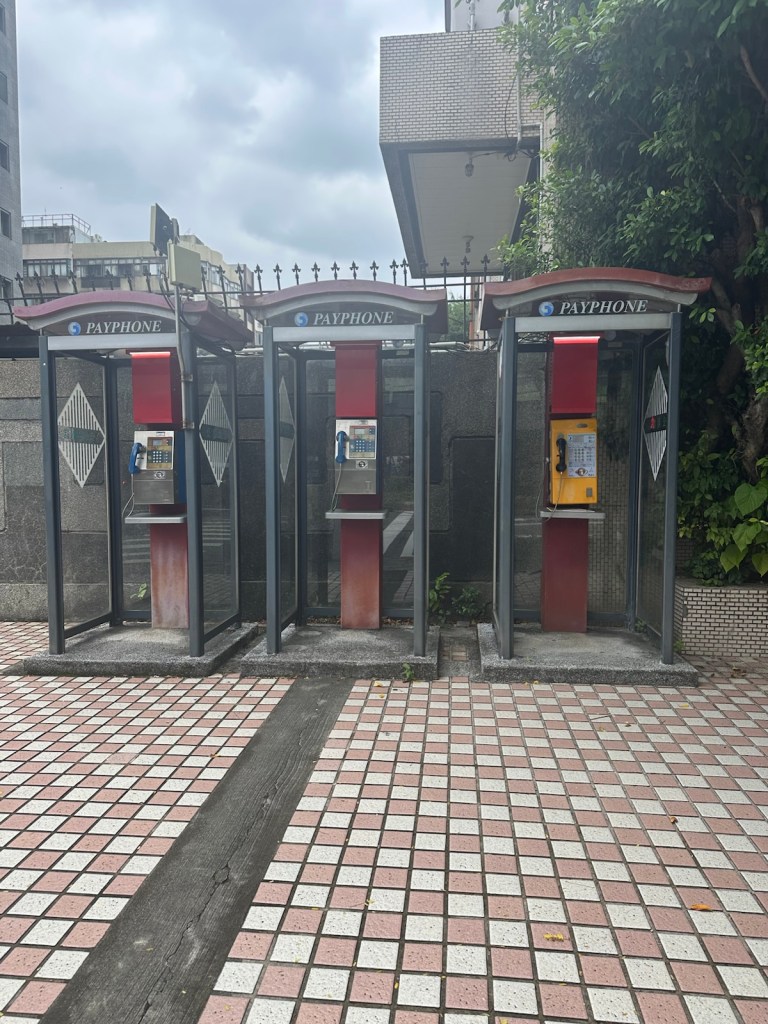
It’s also a neighborhood where pay phones still exist and where generous green spaces and parks are never far away.
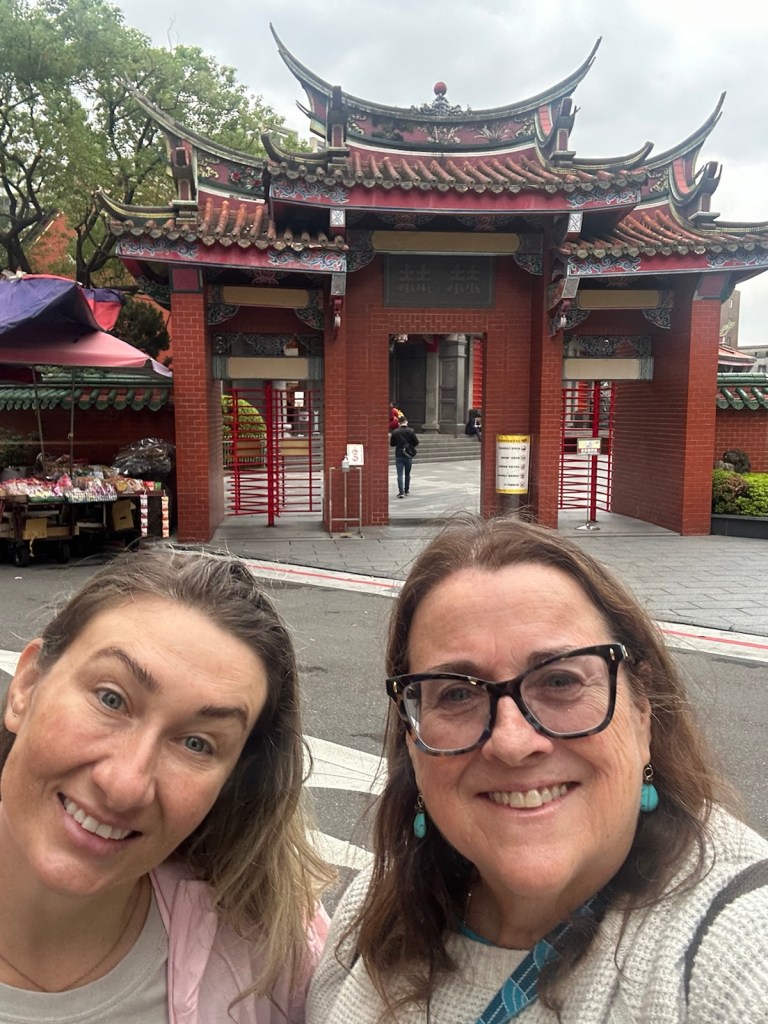
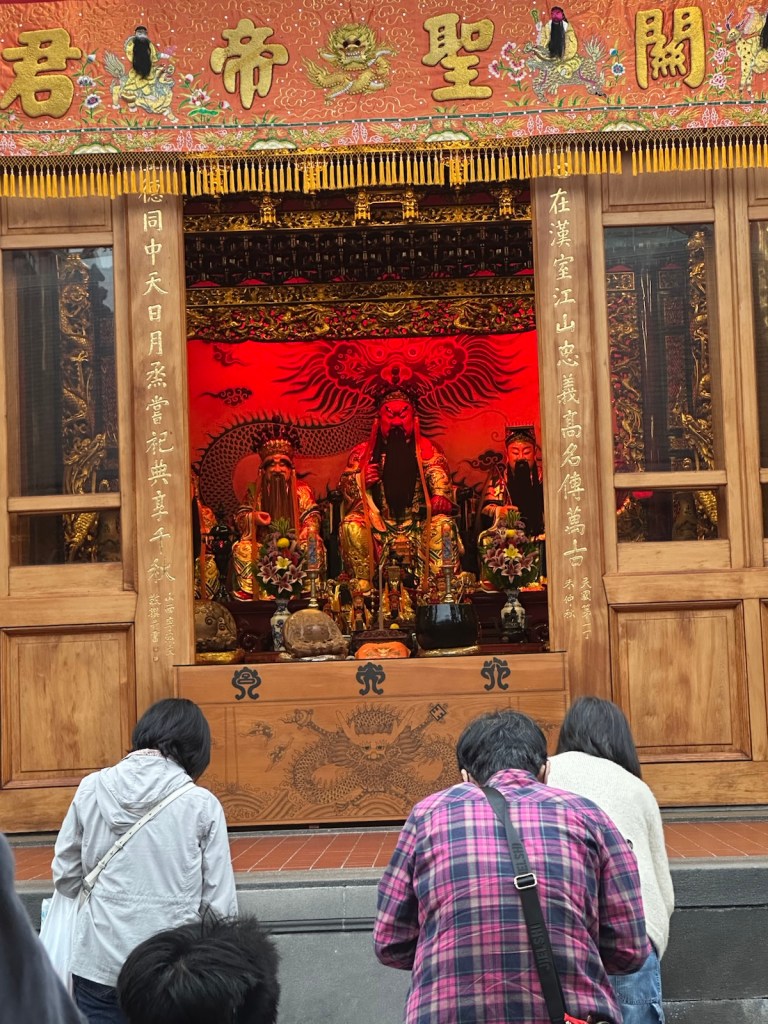
Hsing Tian Kong is one of Taipei’s most intriguing temples — a serene, modern sanctuary dedicated to Guan Gong, the revered god of justice and integrity. Built in 1967, it blends traditional Taiwanese architecture with a surprisingly clean, spacious design.
Unlike most temples, it has banned incense, candles, and food offerings, creating a peaceful atmosphere where visitors simply pray with quiet intention. The courtyards are calm, the carvings exquisite and there’s a steady flow of locals stopping in for guidance or reflection.
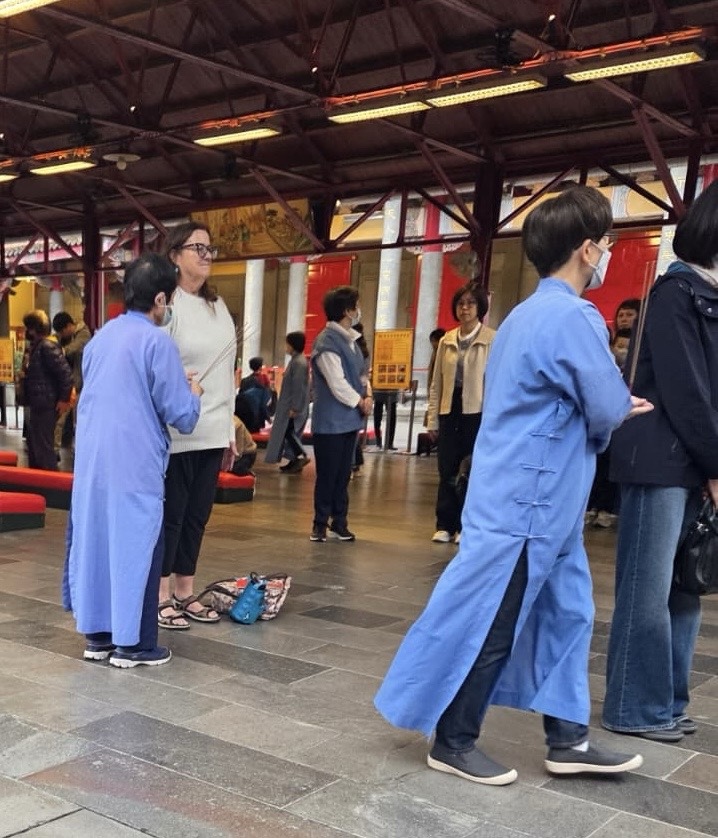
Even though Hsing Tian Kong banned incense burning by visitors, the temple still allows designated attendants to perform certain traditional rituals. These attendants use controlled amounts of incense or special ritual materials as part of a blessing that’s considered cleaner, safer, and less polluting than the old crowd-generated clouds of smoke.
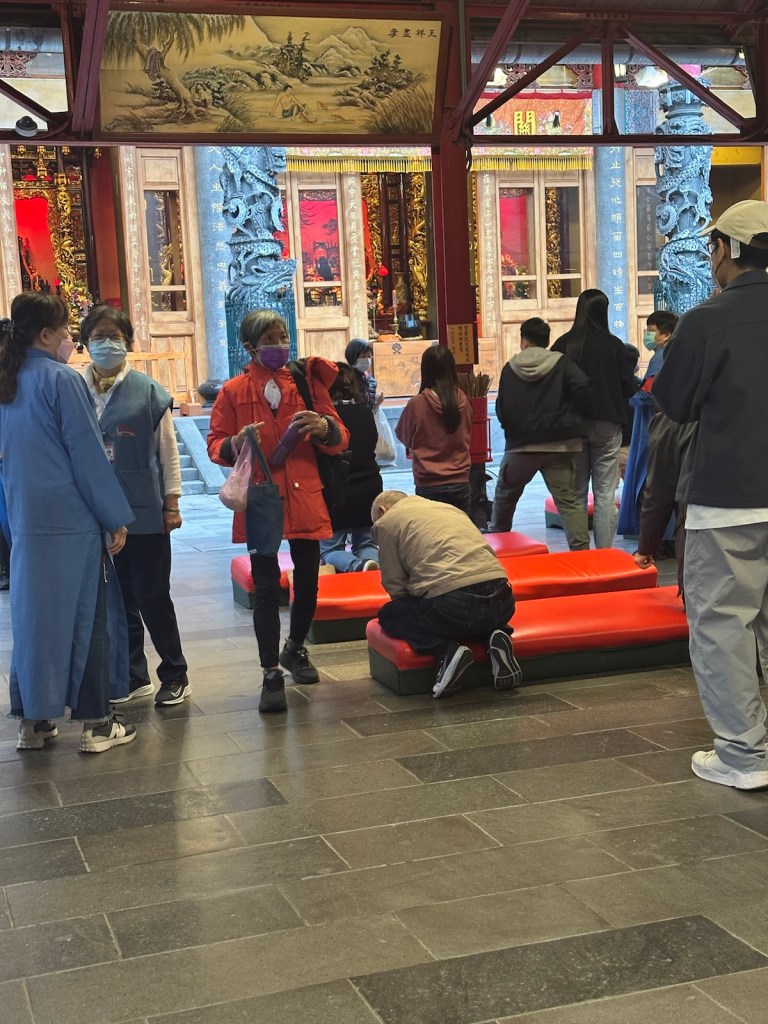
When we arrived, a friendly greeter guided us to the red cushions on the floor and walked us through the ritual. Face the back of the temple and do three kneelings followed by nine kowtows. Kowtows? I suddenly flashed back to childhood arguments with my siblings, swearing I would “never kowtow” to anyone. Now I finally know what it actually means: a simple, graceful bow of reverence.
A Taiwanese purification ritual — often called “smoke cleansing” or an incense blessing — was taking place, so we joined the line. A temple volunteer gently waved a bundle of lit incense (or sometimes a special herbal smoke) around each person, allowing the fragrant haze to drift over the head, shoulders, and back.
The belief is that the smoke helps clear away negative energy, invite protection and good fortune, and “reset” the spirit before entering the temple or after making offerings. It’s a symbolic cleansing — like washing your hands, but for your energy.
Hsing Tian Kong Temple is dedicated primarily to Guan Gong, the revered god of justice, loyalty, and protection, whose presence gives the temple its calm, upright energy.
Hsing Tian Kong is primarily a Taoist temple, though like many religious sites in Taiwan, it blends elements of Taoism, Chinese folk religion, and Buddhism. It’s a fascinating place to visit.
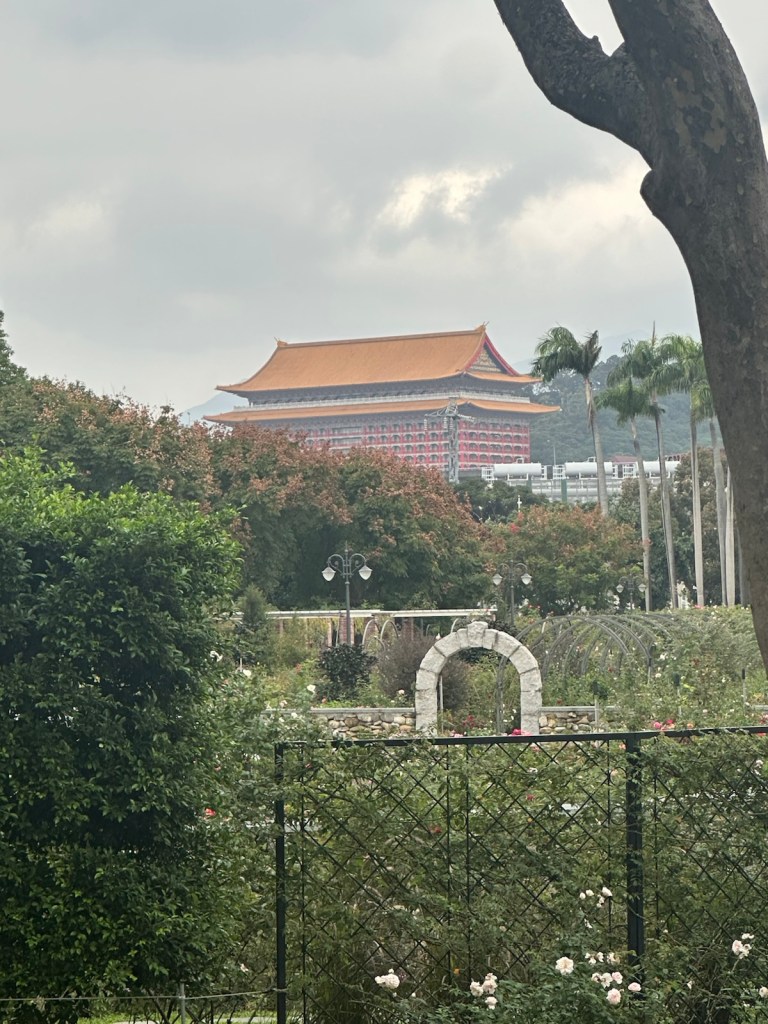
Our next stop was the Taipei Rose Garden, located near Hsing Tian Kong temple. It is a charming and unexpectedly peaceful escape right in the middle of the city.
The Rose Garden is actually a section of the larger Xinsheng Park, one of Taipei’s biggest green spaces with wide walking paths, ponds and small bridges, open green lawns and plenty of benches for resting or people-watching.
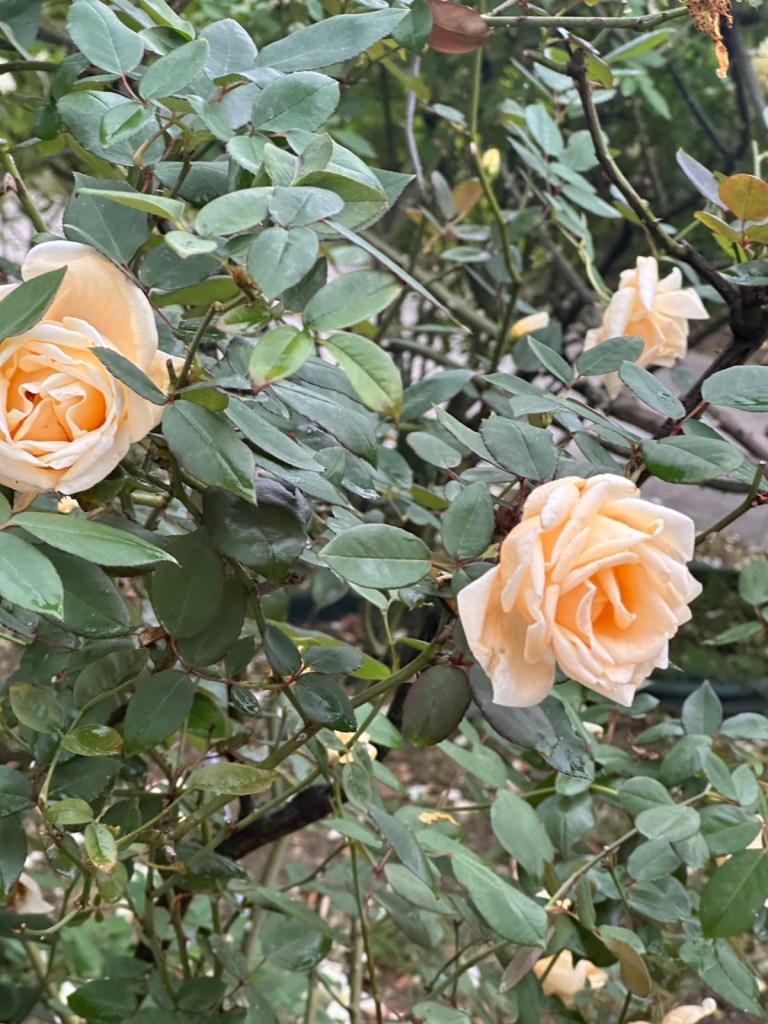
The garden showcases over 800 varieties of roses, arranged in beautifully maintained beds and winding paths. Depending on the season, it can be an explosion of color — soft pastels, bold reds, sunny yellows — all surrounded by manicured lawns and shady trees.
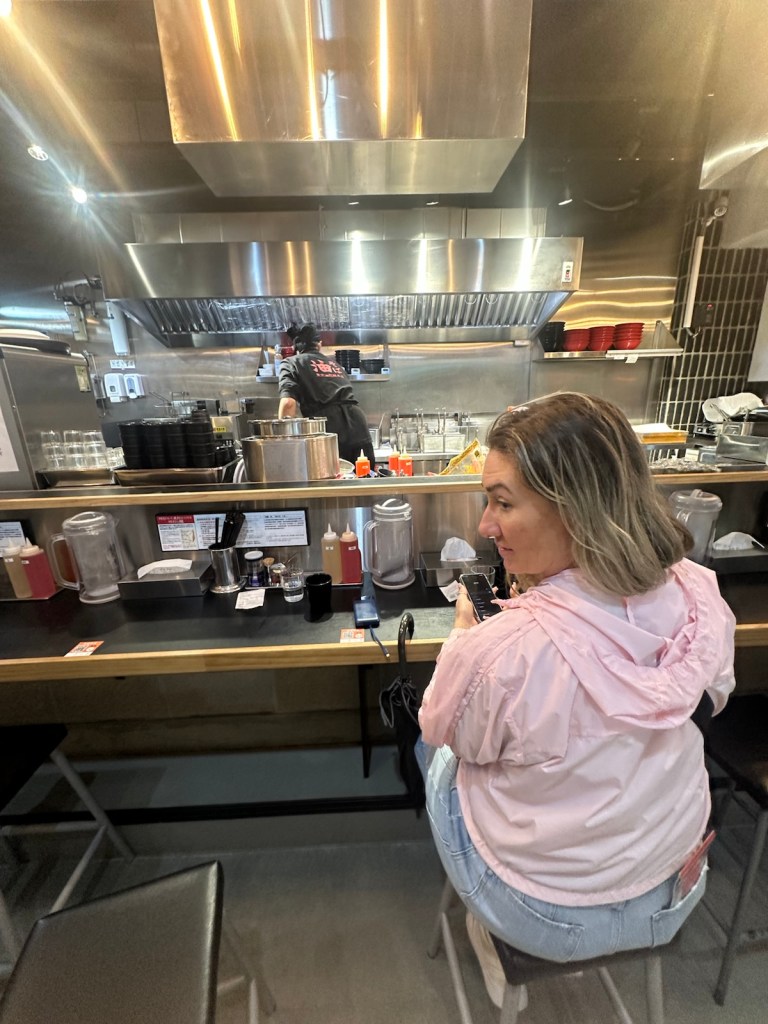
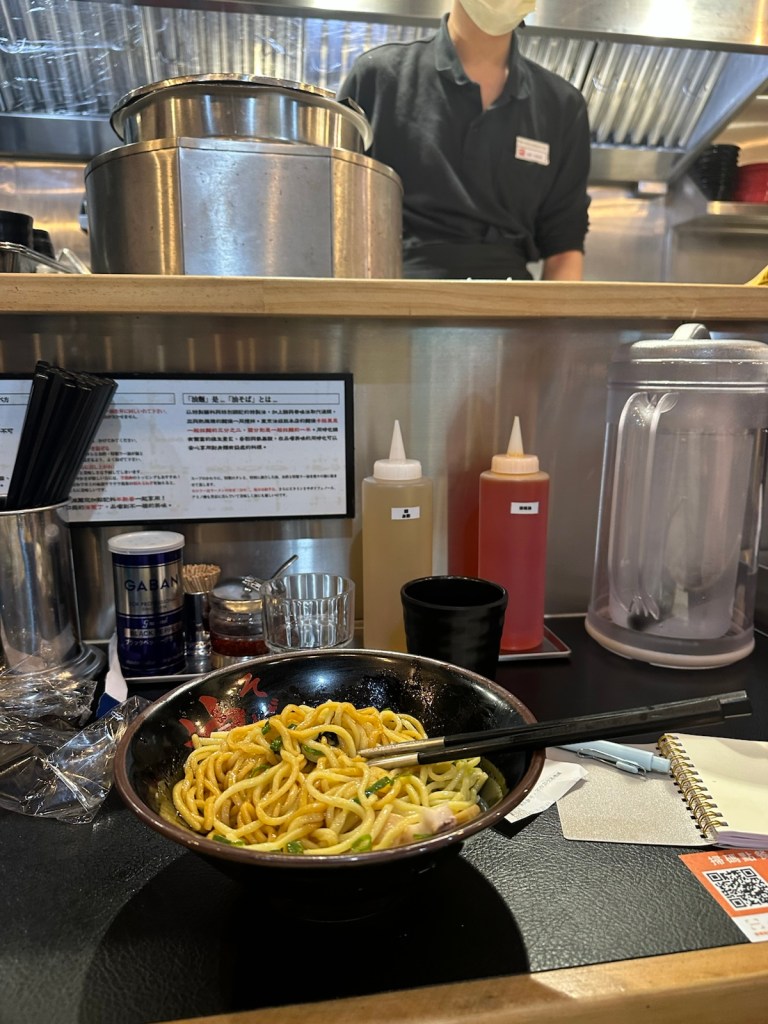
What a day — and we still weren’t ready to call it quits. We ducked into a small café for a late-afternoon bite, only to discover that, unlike Europe, very few locals here speak English, even a little. Out came the cell phone translators as we attempted to decode the menu. Thankfully the place wasn’t crowded, because the chef kept dashing over to make sure we were using the proper sauces. I ended up ordering a spicy miso dish called Aburasoba.
After so much walking and wandering, a foot massage felt essential — and in Taipei, they’re easy to find.
For about $20, we enjoyed a 40-minute mix of neck and shoulder work plus a foot and leg massage. The therapist’s pounding on my back was intense — borderline brutal — but I’m pretty sure he unraveled every knot I had. By the end, I felt amazingly refreshed.
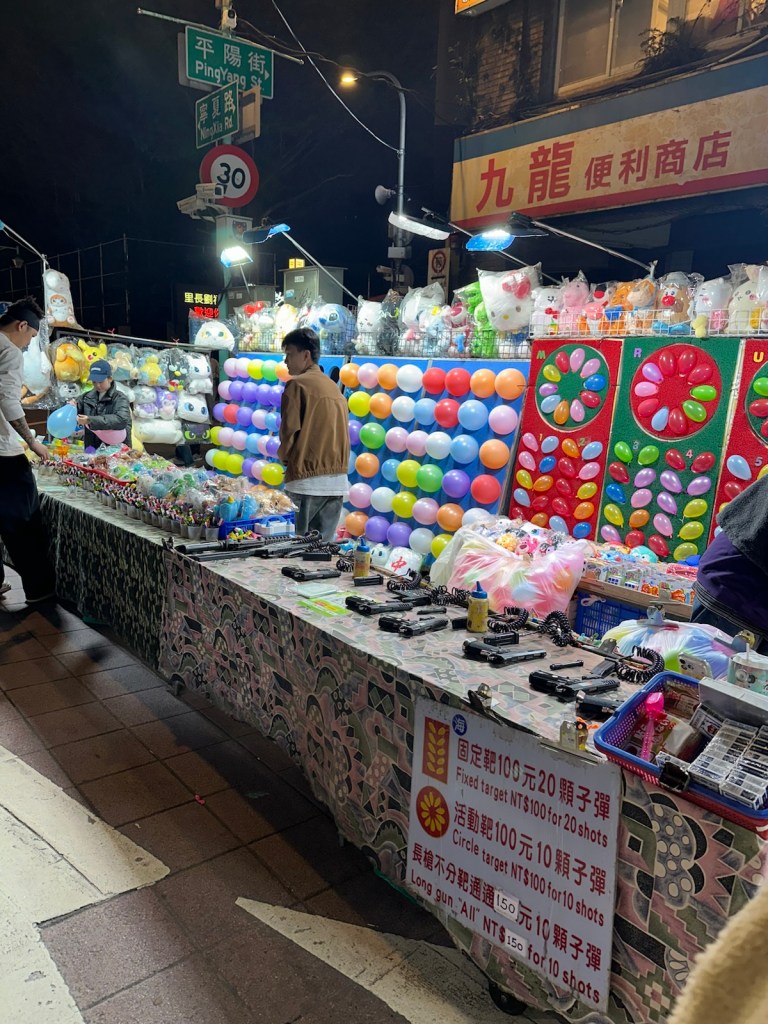
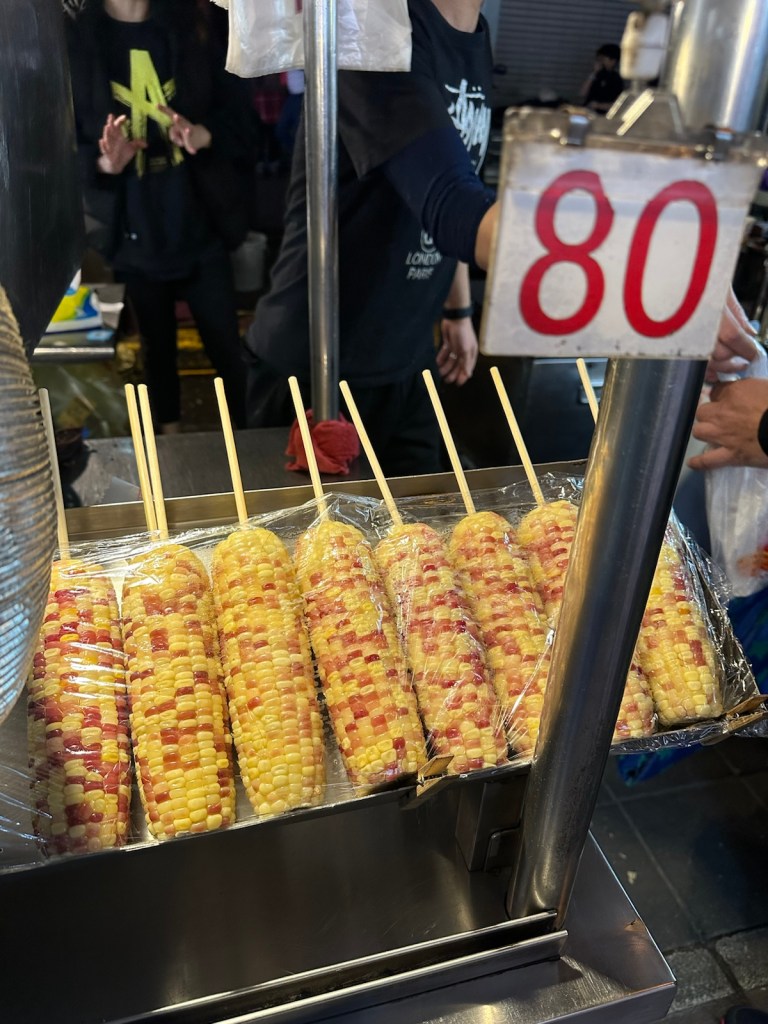
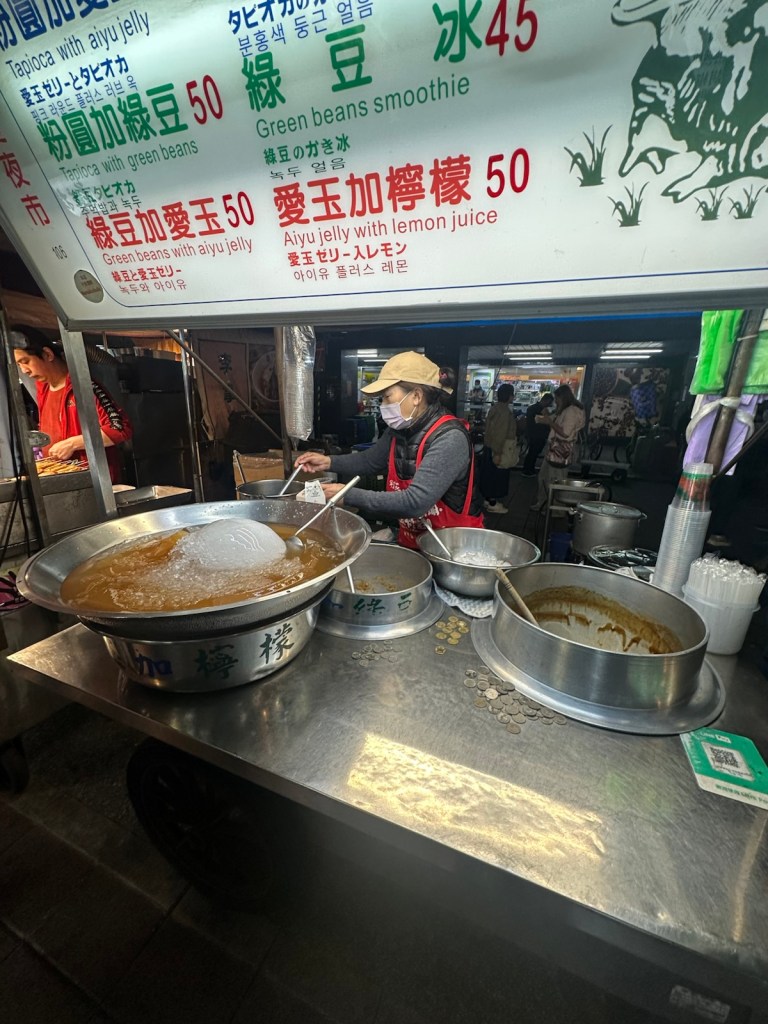
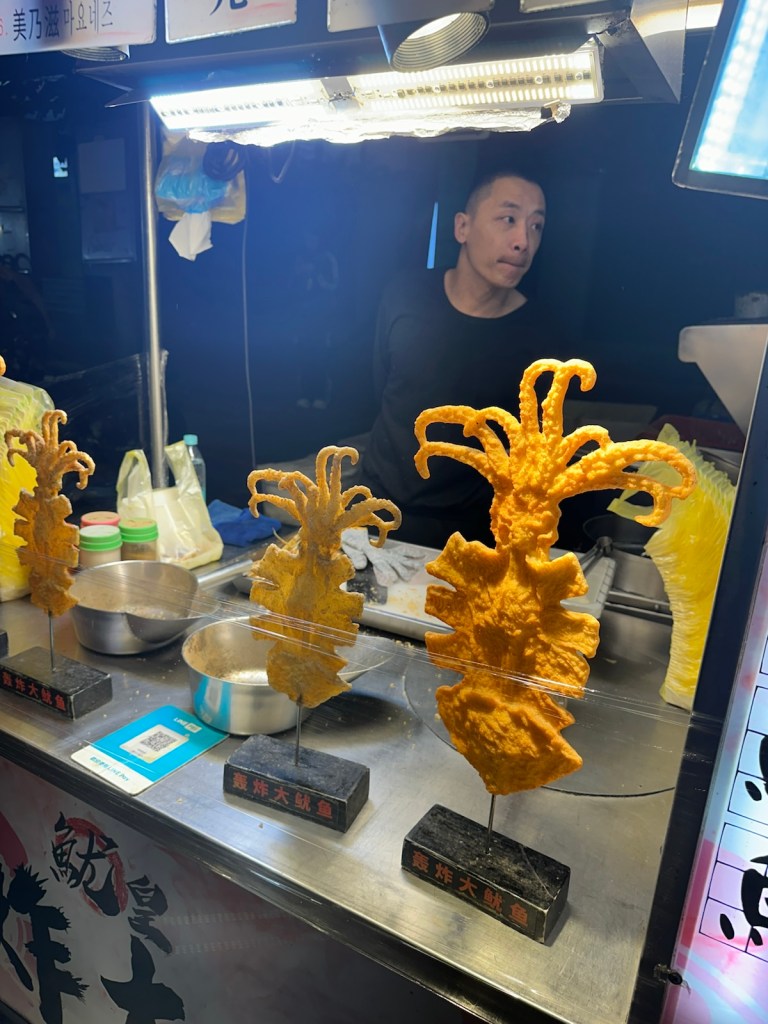
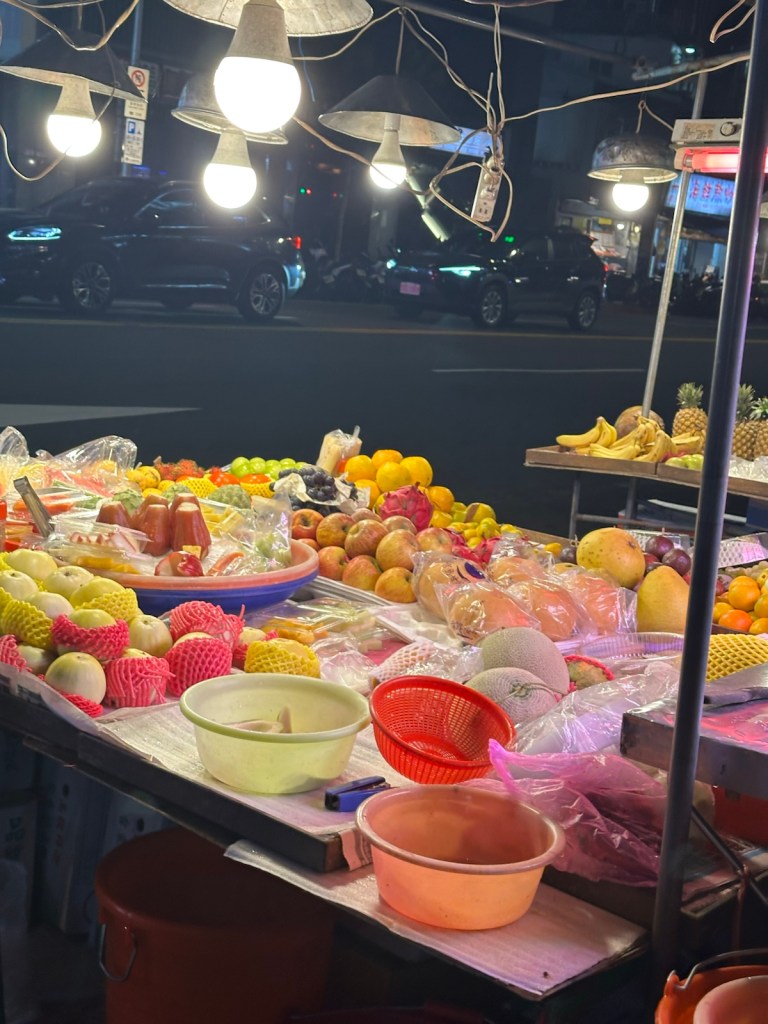
Next stop was the Ningxia Road Night Market — one of Taipei’s most beloved food-centric night markets. Unlike some of the larger markets that mix in clothes, gadgets, and carnival games, Ningxia is almost entirely about eating. Stall after stall features classic Taiwanese street foods, many of them run by the same families for generations.
A few of the side streets branched off into rows of carnival-style games, giving the market a playful, old-school fairground vibe. It was a fun contrast to the food stalls — neon lights flashing, kids laughing, and little prizes dangling from every booth — adding an extra layer of charm to the whole experience.
Most portions are small and inexpensive so you can easily snack your way down the street trying multiple dishes — which is exactly what locals do.
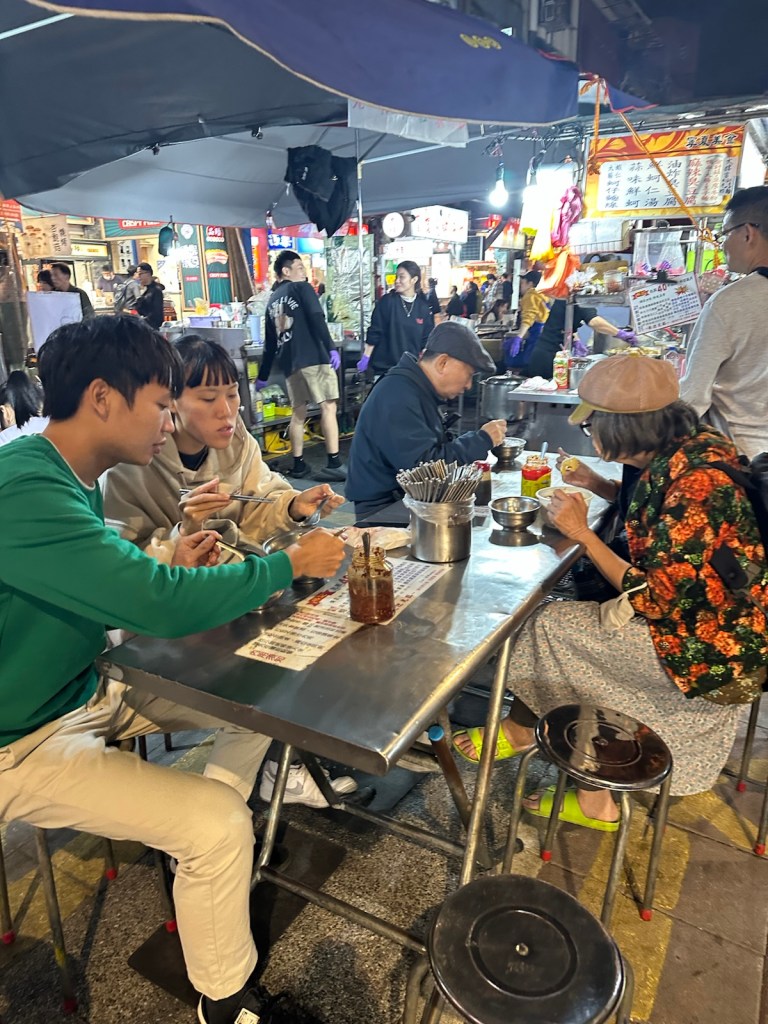
Some of the food stalls even had small tables where patrons could sit and soak in the lively, almost chaotic energy of this culinary extravaganza.
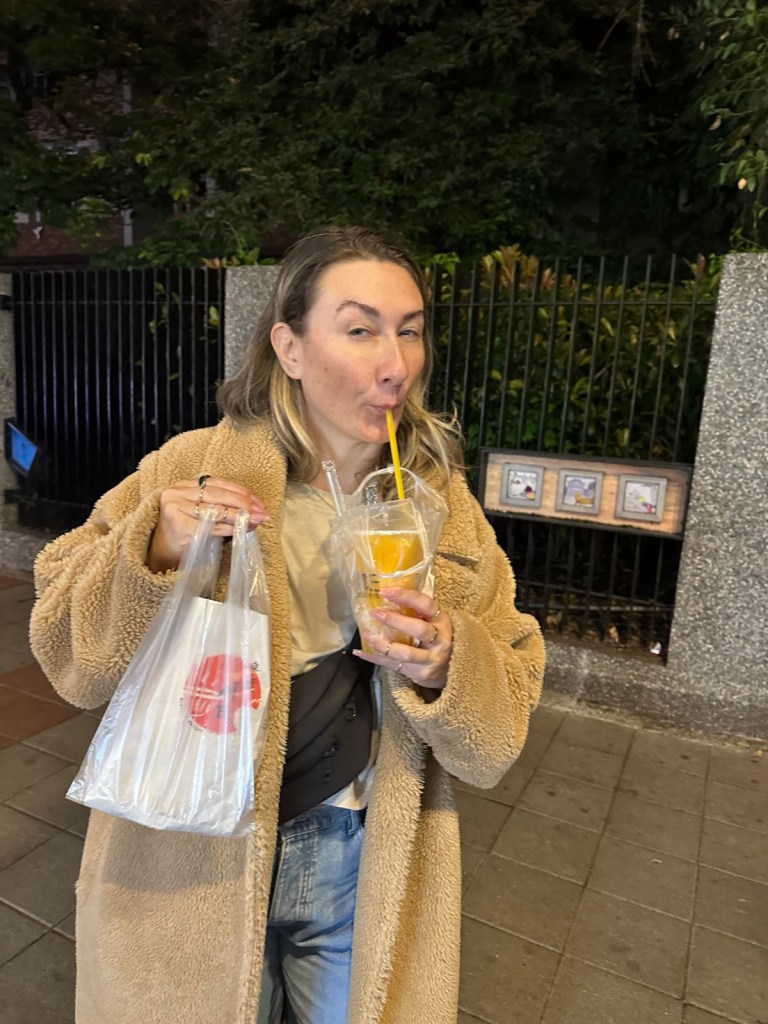
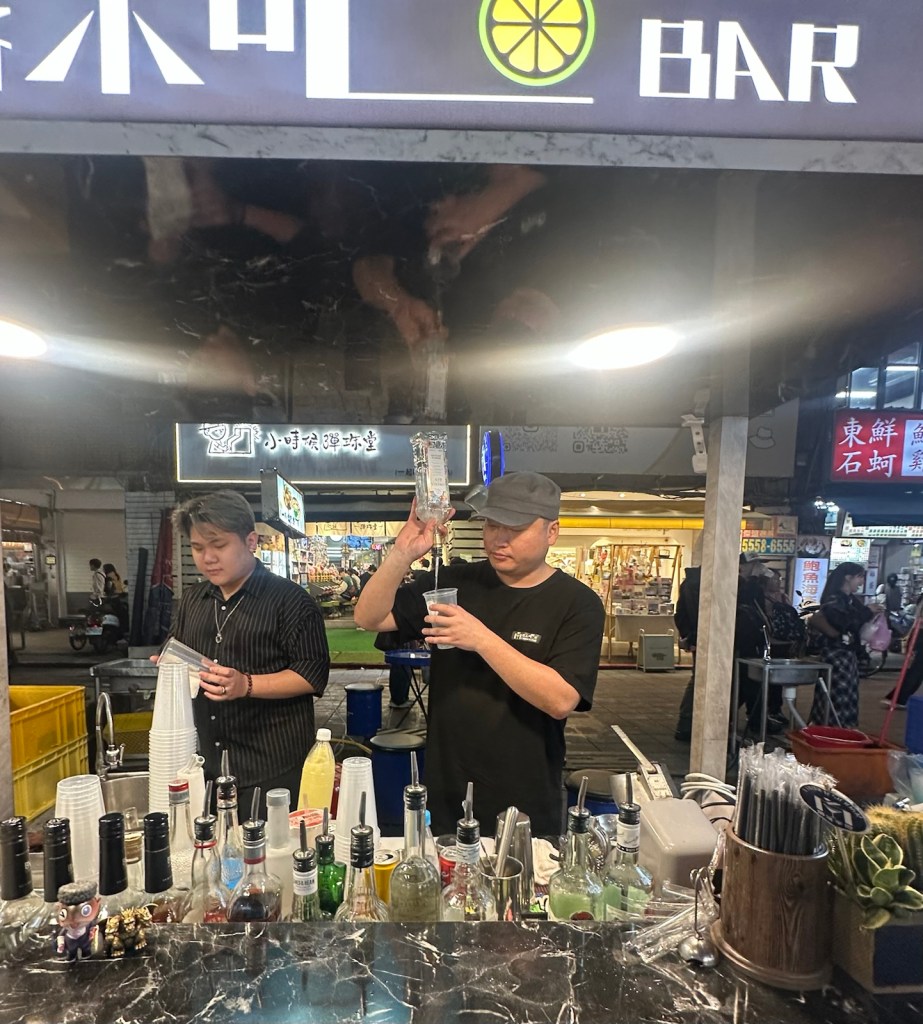
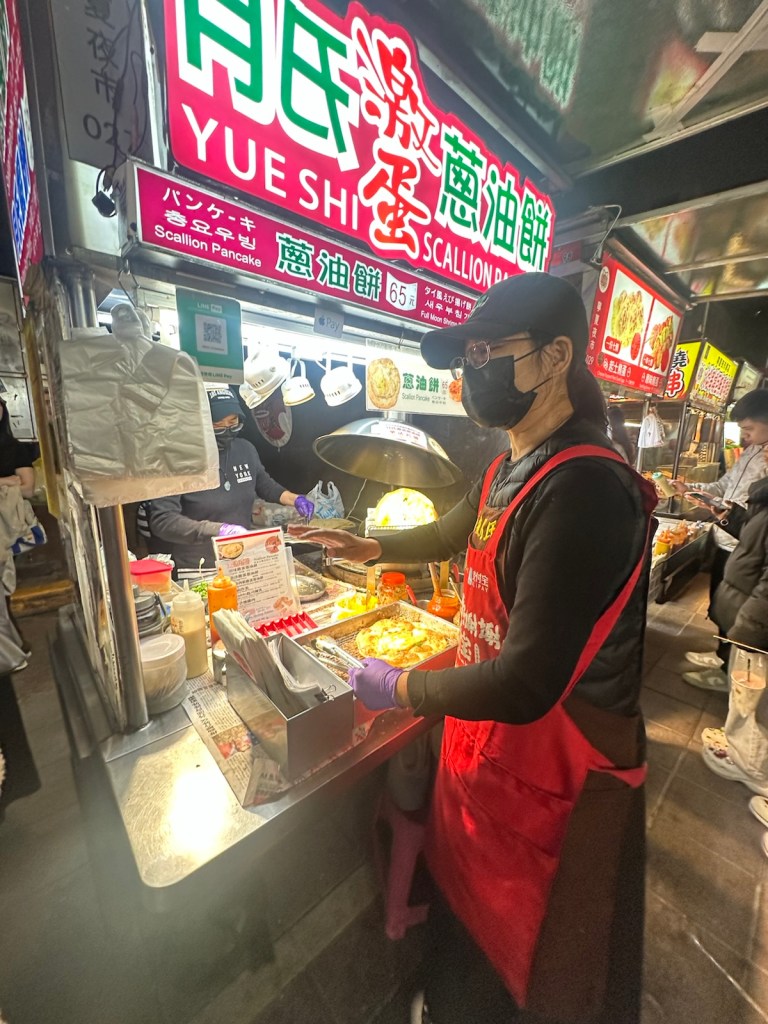
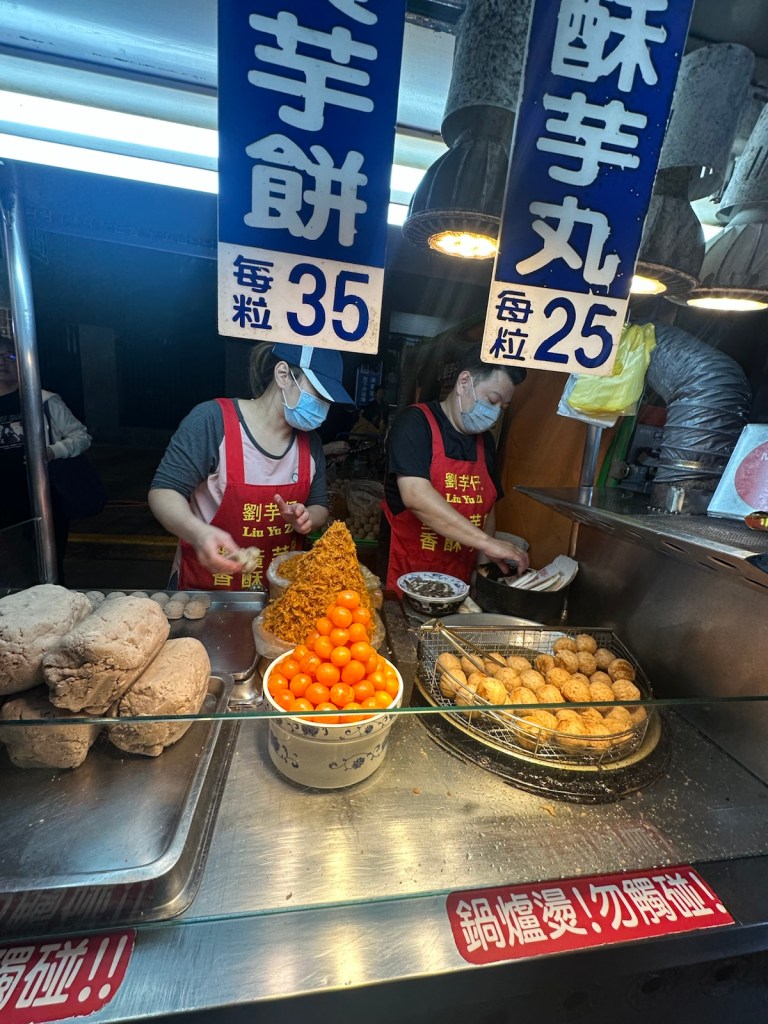
We nibbled on sweet potato balls, a flaky Yue Shi scallion pancake and grilled pork on a stick. Everywhere we turned there were drinks of every kind — fresh juices, icy smoothies, and even a quirky little bar in the mix.
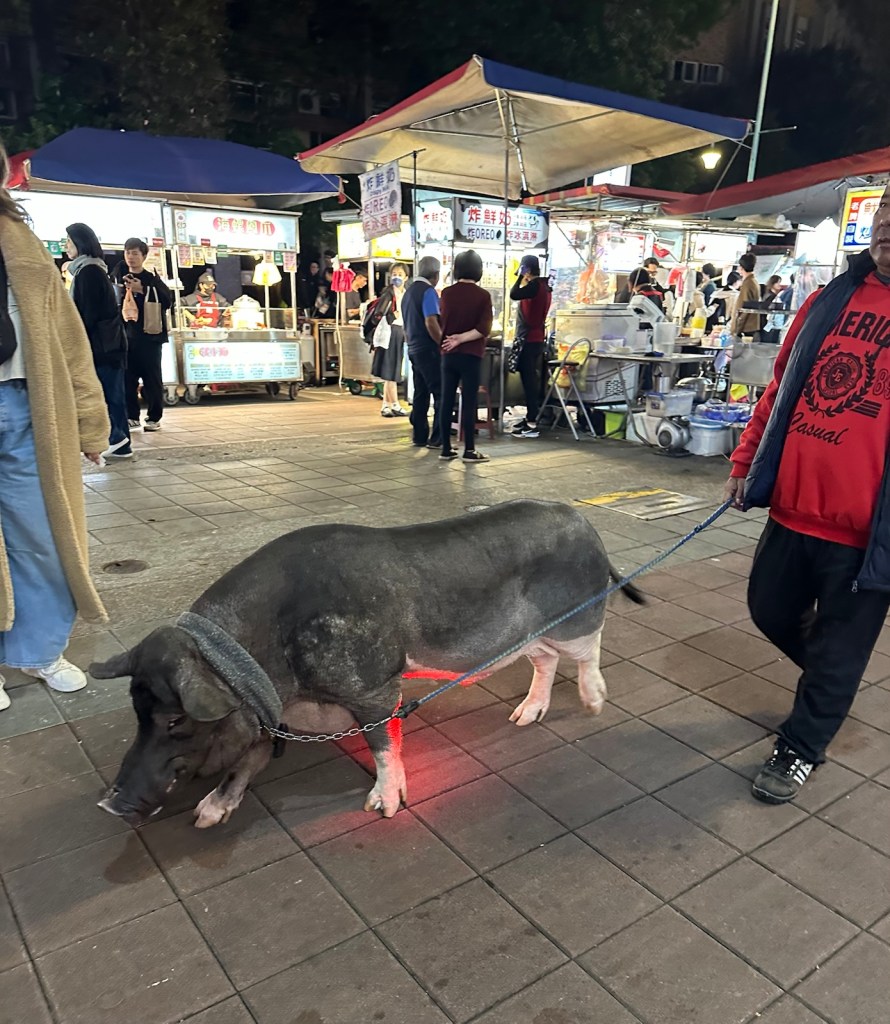
The surprising thing about this night market was the spotless street — not a piece of trash anywhere — yet there wasn’t a single garbage can to be found. How do they pull that off?
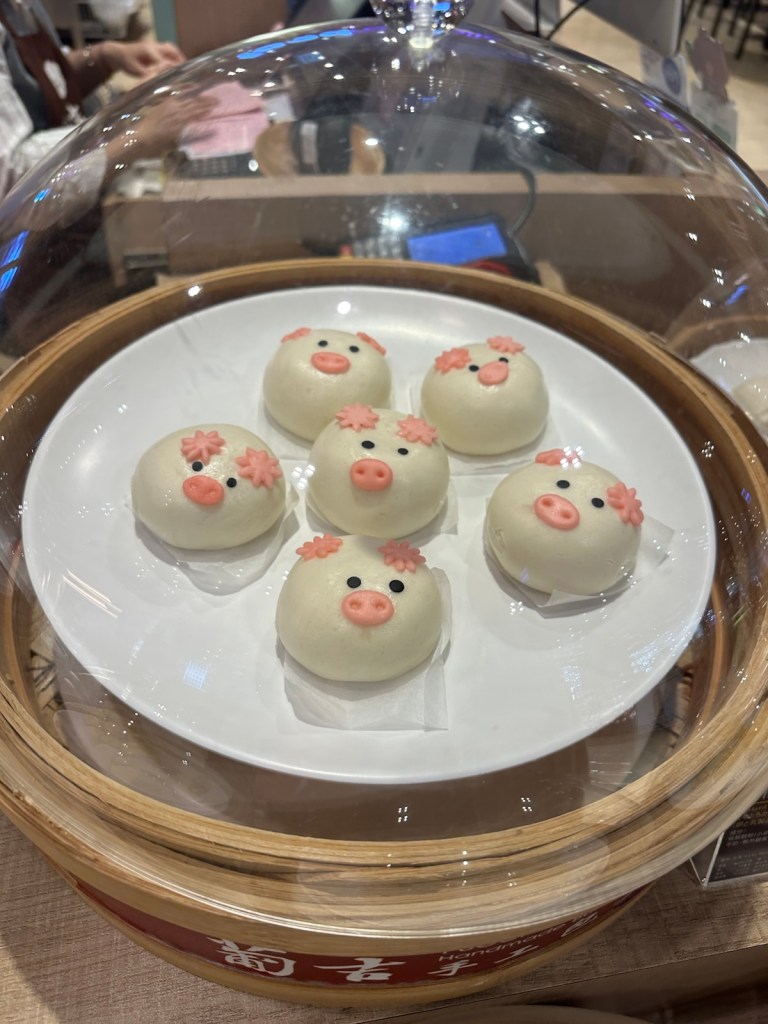
This little piggy went to market — and handled all the cleanup, apparently.
Taipei’s remarkably clean streets are one of the first things visitors notice. The city’s tidiness isn’t an accident; it’s the result of culture, policy, and community habits all working together.
In Taipei, public garbage cans are surprisingly rare. This policy came after a series of sanitation issues in the 1990s. So instead, people simply take their trash home — a habit the whole society supports.
What a wonderfully successful day of wandering. By the time 9:00 pm rolled around, we were ready to head back to the hotel and call it a night.
Stay tuned — tomorrow we’re off to Beitou Hot Spring Park to explore one of Taipei’s most relaxing and atmospheric escapes.
Taipei was never on my bucket list — but it absolutely should have been. A few weeks ago my niece Bridget, who lives in Dallas, texted to say she’d scored a United Airlines companion pass from a friend. We scrolled through the list of international options, and Taipei quickly rose to the top. Compared with the others, it promised to be inexpensive, easy, and utterly fascinating. And wow… it did not disappoint.
Pure serendipity! Bridget and I never imagined we’d end up in Taipei. It wasn’t planned, it wasn’t a dream trip — it simply happened, and we said yes.
All of this came together just 3–4 weeks ago, which didn’t leave much time to plan or prepare. The Monday after Thanksgiving, we met in San Francisco and boarded a 14-hour flight to Taipei.
MSP at 4:00 am — brutal! En route to the airport, I pulled a last-minute switch from United to Delta after seeing a 4-hour delay in Denver that would’ve tanked my Taipei connection. Crisis averted.Bridget and I managed to rendezvous in the United Lounge at SFO. Honestly, we were just impressed we both made it that far in one piece.
Miraculously, I managed about seven hours of in-flight “sleep”—not luxurious, but enough to function. We arrived in Taipei after dark and sensibly called it a night.
So now what? Stay tuned — our serendipity-powered adventure is just getting started. No plans, no agenda… just two wanderers diving into a culture rich with intrigue and fascination.
It was a long but immersive two weeks through French Canada. By the end of our whirlwind weekend in NYC, our feet had logged plenty of miles and our eyes had taken in a feast of sights. Megan had checked off most of her must-sees — and even squeezed in a few unexpected gems. After all the energy and chaos of the city, we were both ready to trade the buzz for a bit of calm and start the journey home.
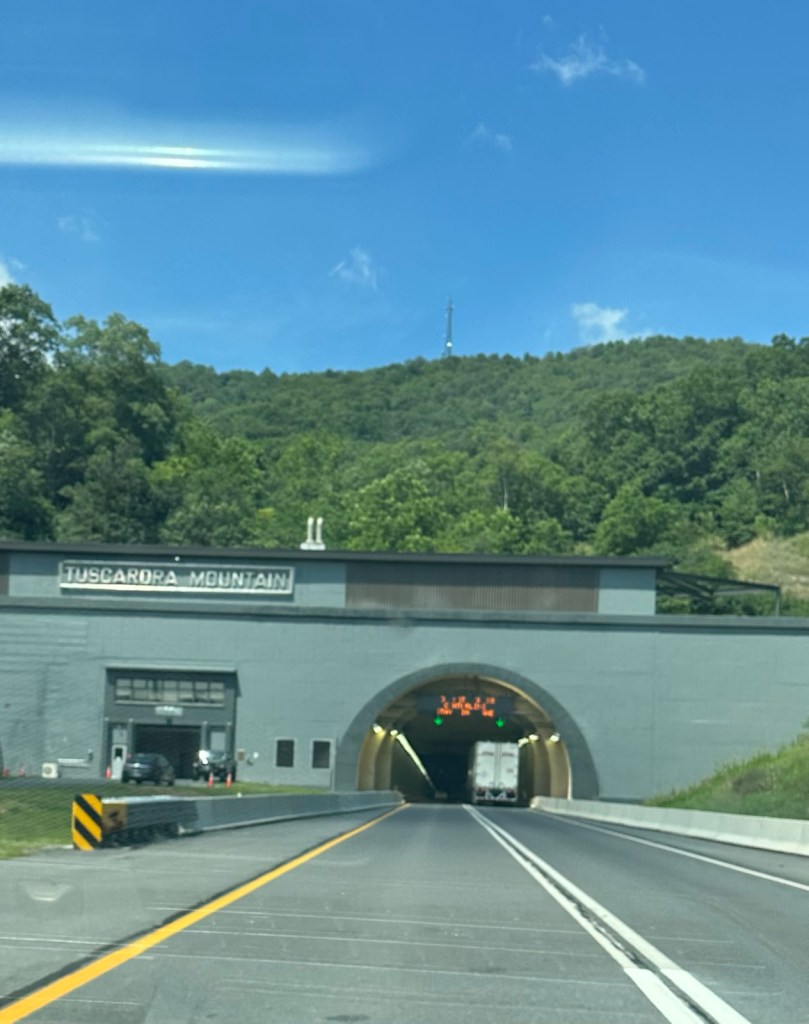
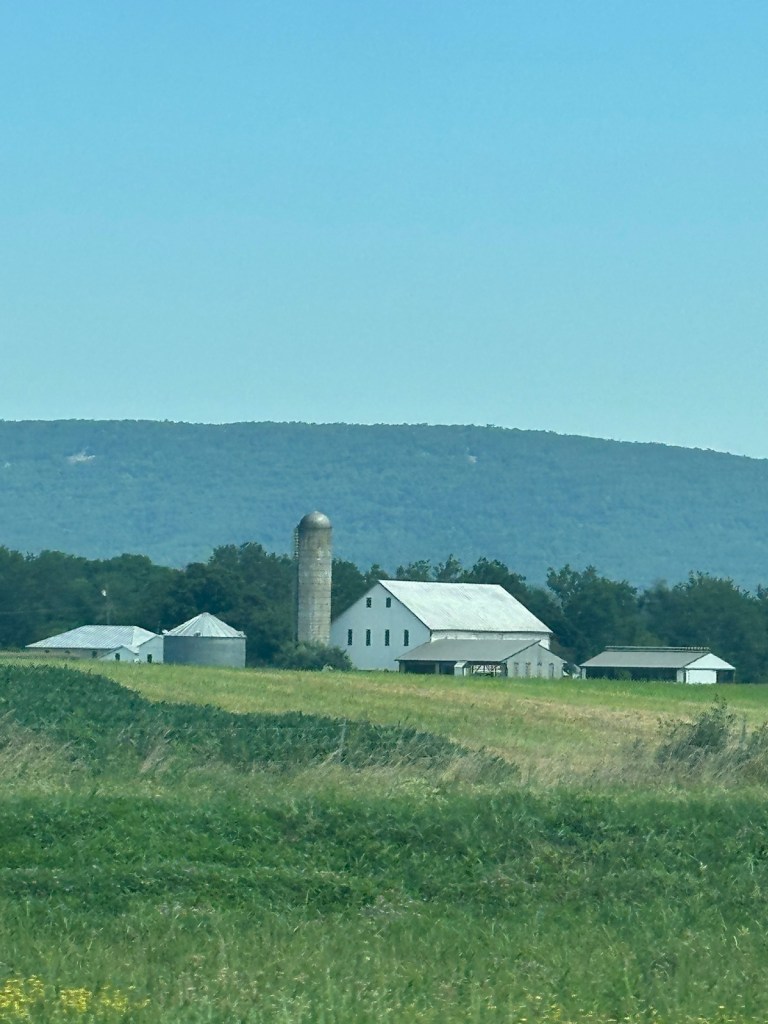
We spent hours in the car driving across Pennsylvania from New York to Ohio which offers a scenic blend of rolling hills, mountain tunnels and quiet farmland, gradually shifting from East Coast bustle to Midwest calm.
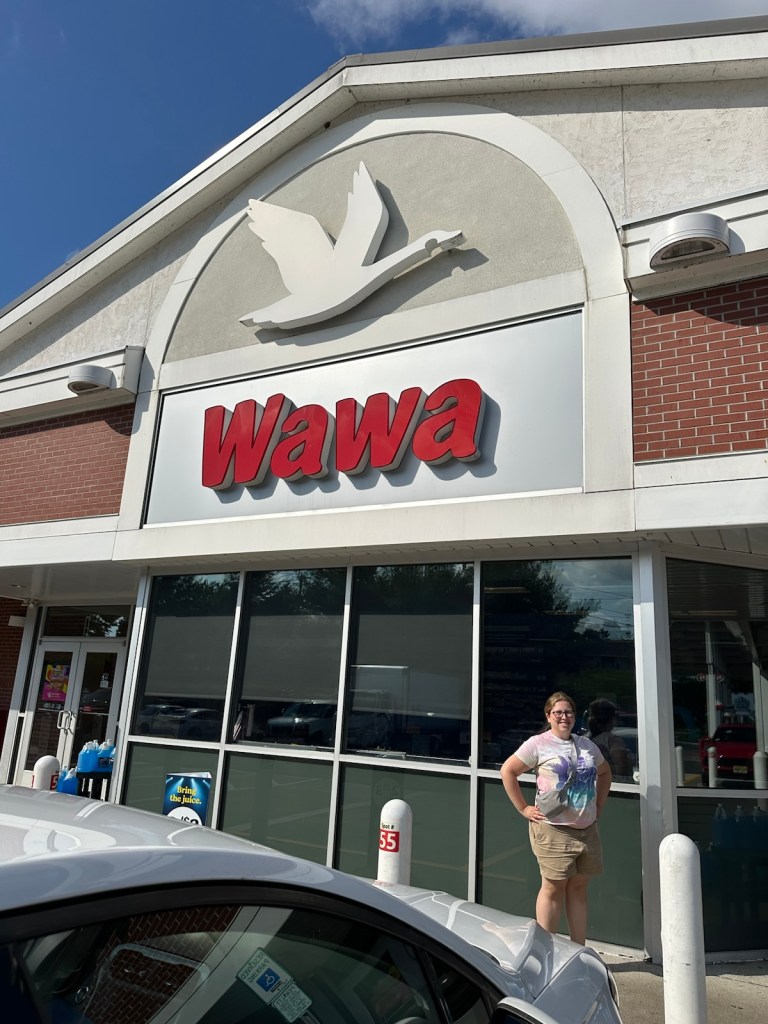
Every now and then, we pulled over to stretch our legs and take a breather. Wawa gas stations are more than just a place to fill up your tank — they’re a beloved East Coast institution, especially in Pennsylvania, New Jersey, and surrounding states.
The name Wawa comes from Lenni Lenape (Delaware Native American) word meaning “wild goose.” The company adopted the Canada goose as its logo in honor of the name and the region’s history.
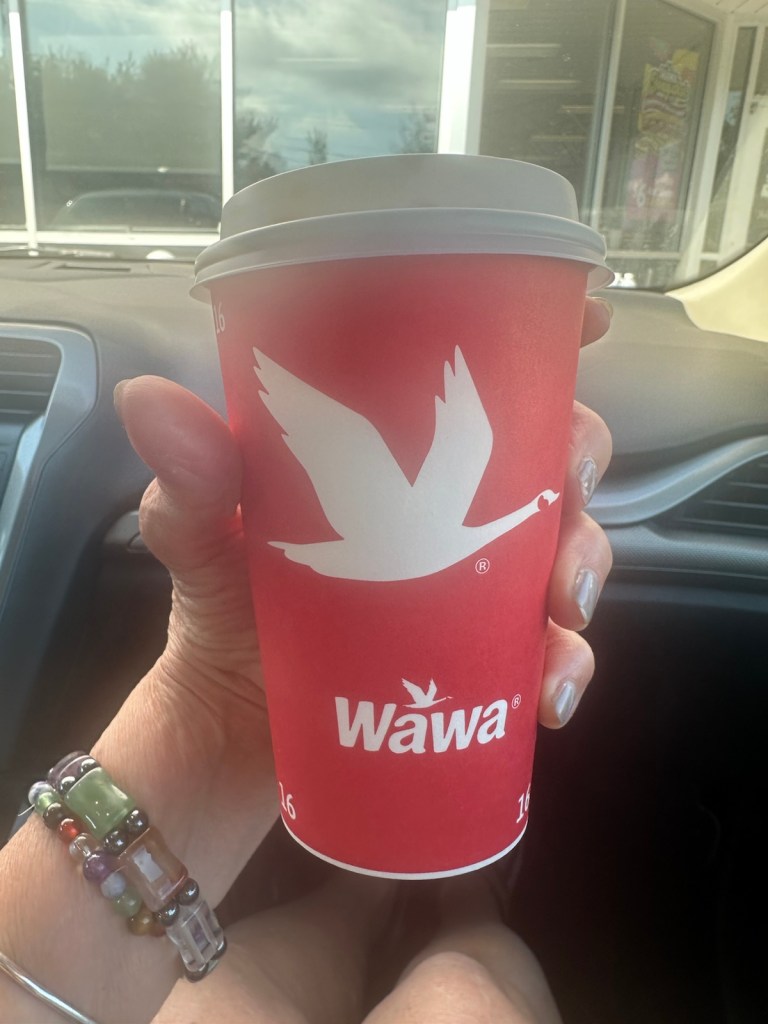
Wawa has a cult following for its coffee bar — lots of options, seasonal flavors, and self-serve ease.
Megan was a rockstar behind the wheel — she handled the driving like a pro and made great time. She also nailed the trip planning, with a well-researched list for every stop and a satisfying checkmark for each one.
One of her big goals was to speak French with the locals, and she definitely made it happen — chatting confidently and connecting with people along the way. Megan definitely passed the ‘Oh Canada! French Road Test’ with flying colors.
I’m not familiar with WaWa gas stations, but I do remember when we used to have 7-Eleven stores in Minneapolis — back in the day.
Now, they seem to be everywhere along the Ohio highways. I’ve never seen such a striking display of Bible-themed merchandise at a rest stop before — it was like a mini Christian gift shop tucked between the Slurpees and snacks.
Just a few more hours on the road before we roll into Cincinnati.
We finally made it to our Cincinnati destination — and what a relief it was to stretch our legs after the long drive. Megan was welcomed with tail wags and kisses from Scout, who clearly missed her.
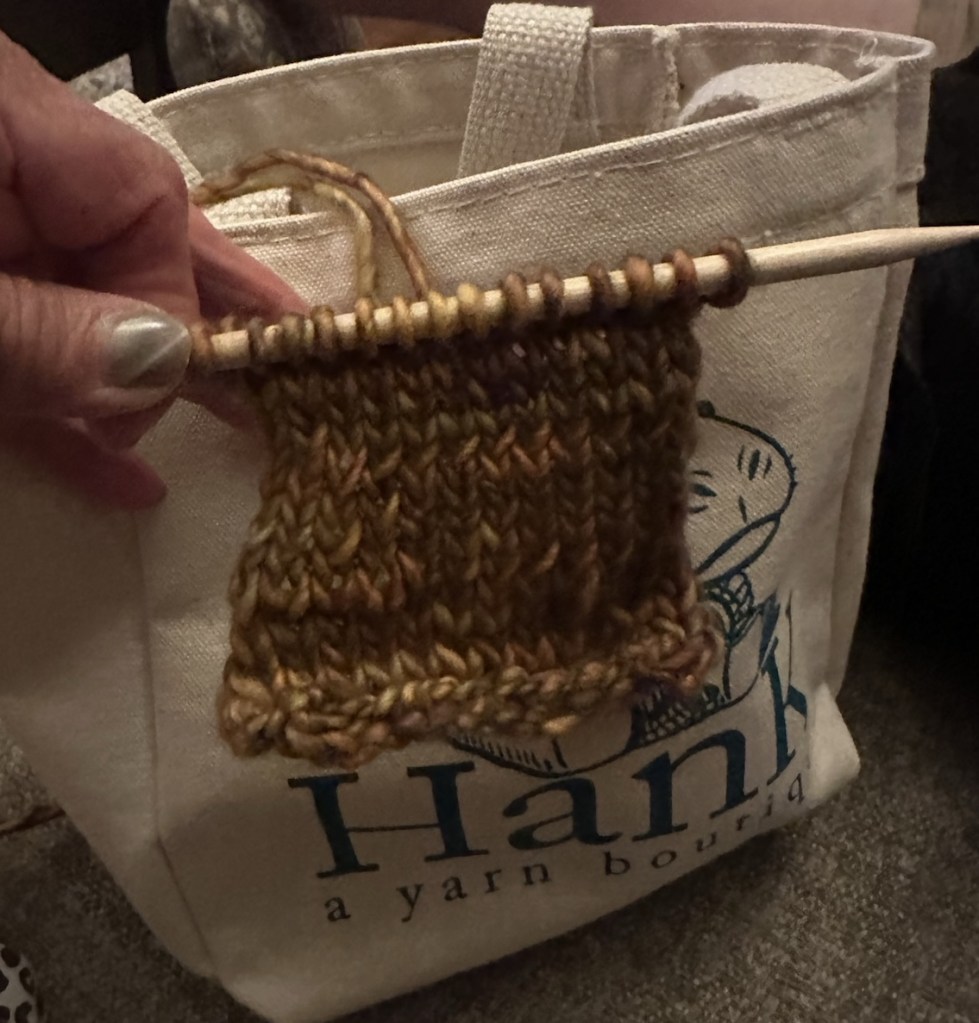
Meanwhile, I had my own breakthrough — knitting and purling finally clicked! Megan said I was at it for two solid hours in the car, but I was so focused, I barely noticed the miles go by.
We did it — two weeks side by side, around the clock, through all the twists and turns that travel throws your way. We came away wiser, more cultured, thoroughly entertained and with plenty of stories to tell. I’d say that’s a win!
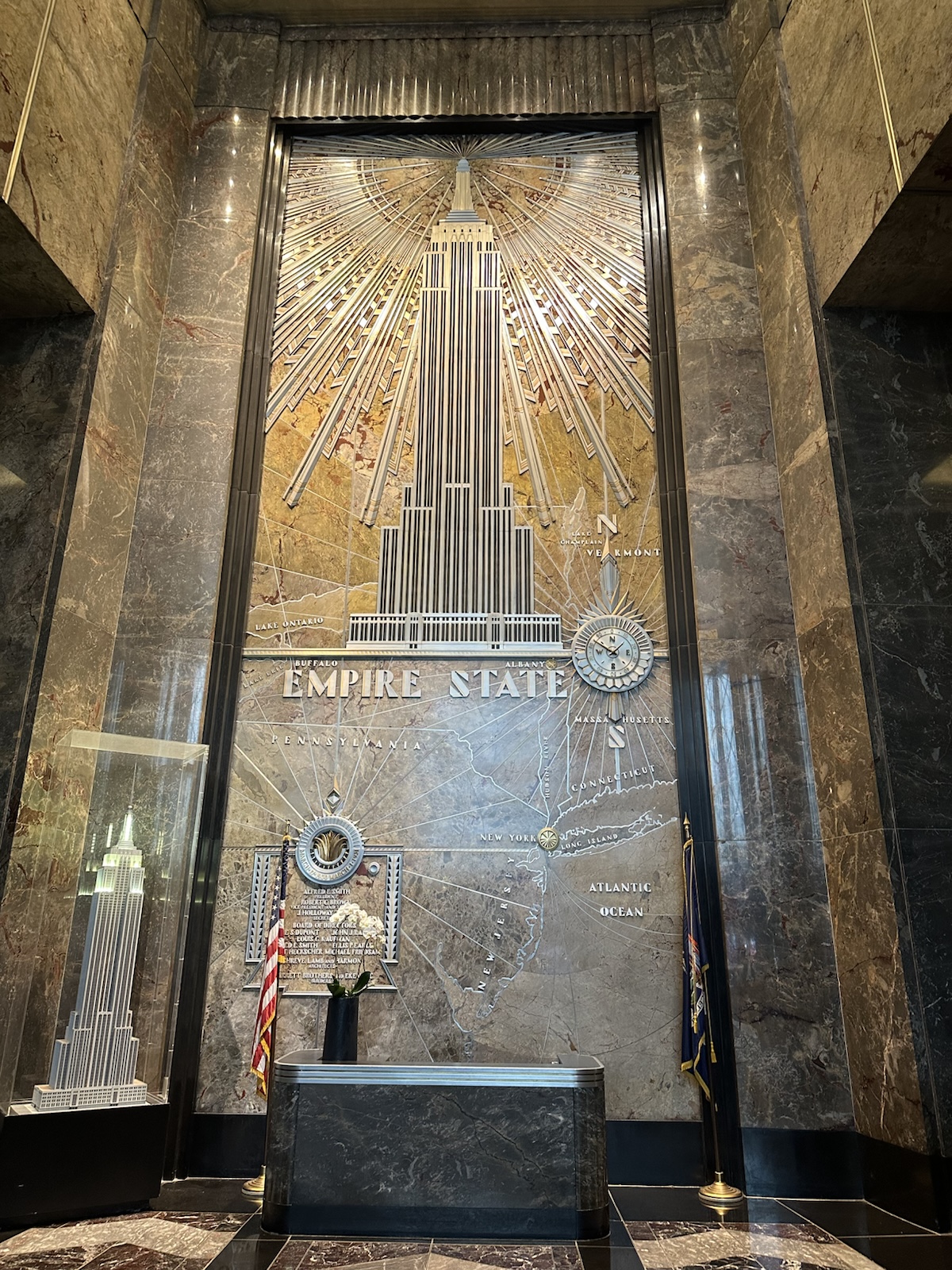
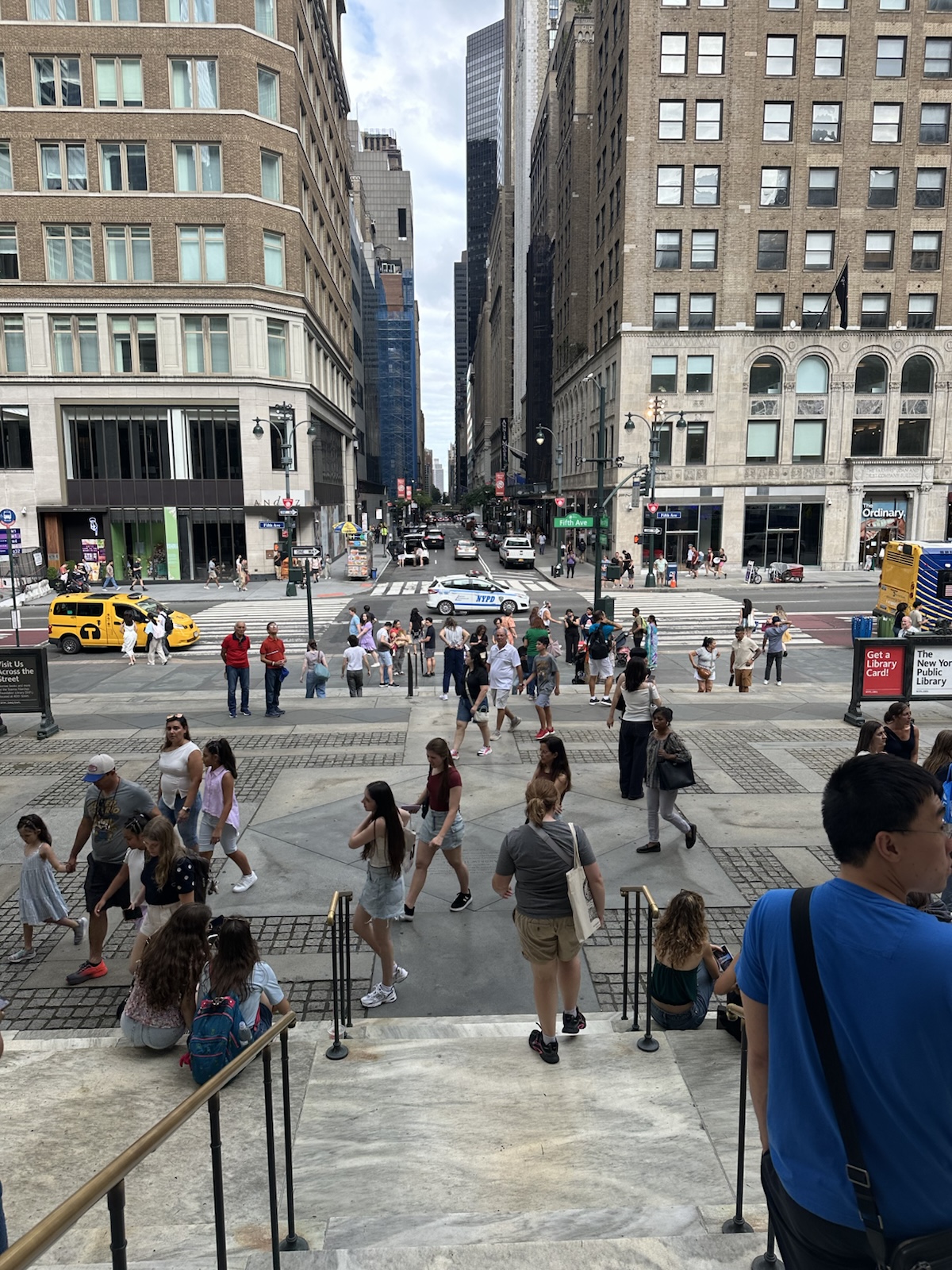
After days of adventures, we were both feeling ready to start making our way back home. There’s one more stop on the route — New York City — a vibrant mosaic of culture, ambition and resilience … the city that never sleeps.
After many hours in the car, we landed at a hotel near the Brooklyn and Manhattan bridge.
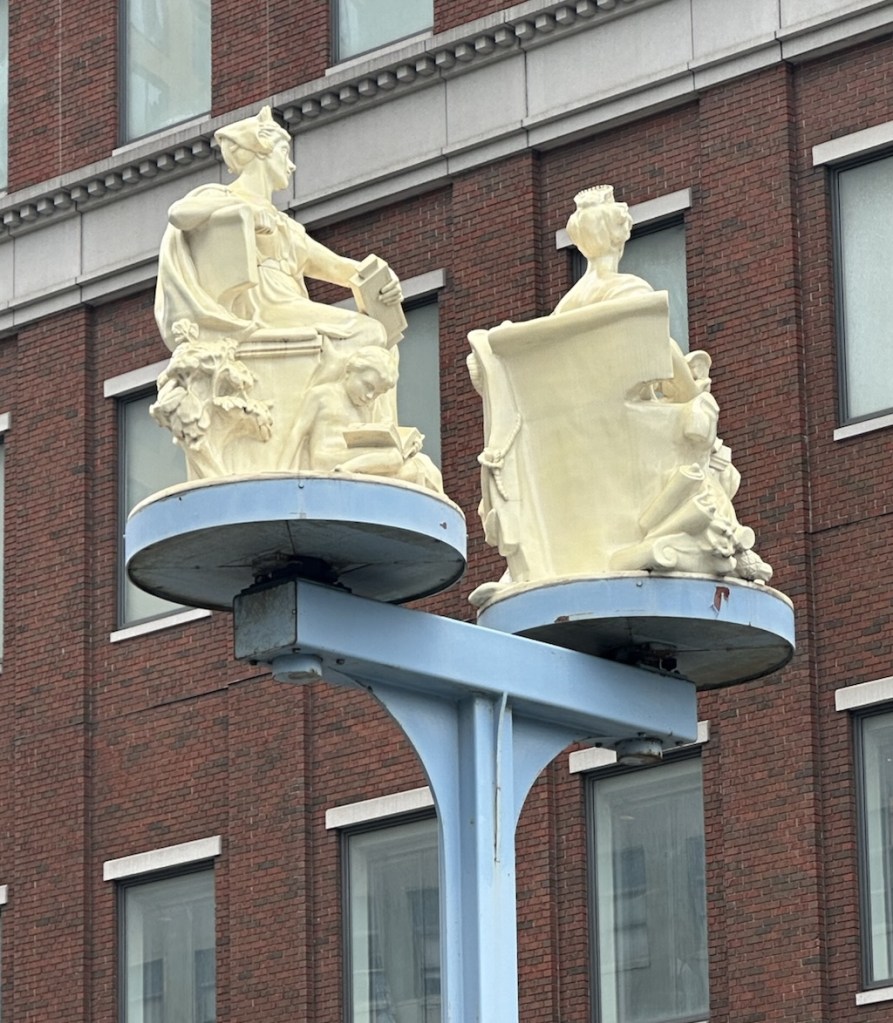
Downtown Brooklyn begins here! These two rotating statues have an interesting background. One is Miss Brooklyn and the other is Miss Manhattan — modern recreations of historic allegorical figures. To me, they resemble the butter-Queen sculptures at the state fair.
The rotating Miss Brooklyn and Miss Manhattan are not just art — they’re urban time travelers. Deemed a traffic hazard in the 1960s, the statues were removed and relocated to a museum. Now, sixty years later, they’ve made a striking return — thoughtfully positioned to remain visible from afar while safely elevated above the road.
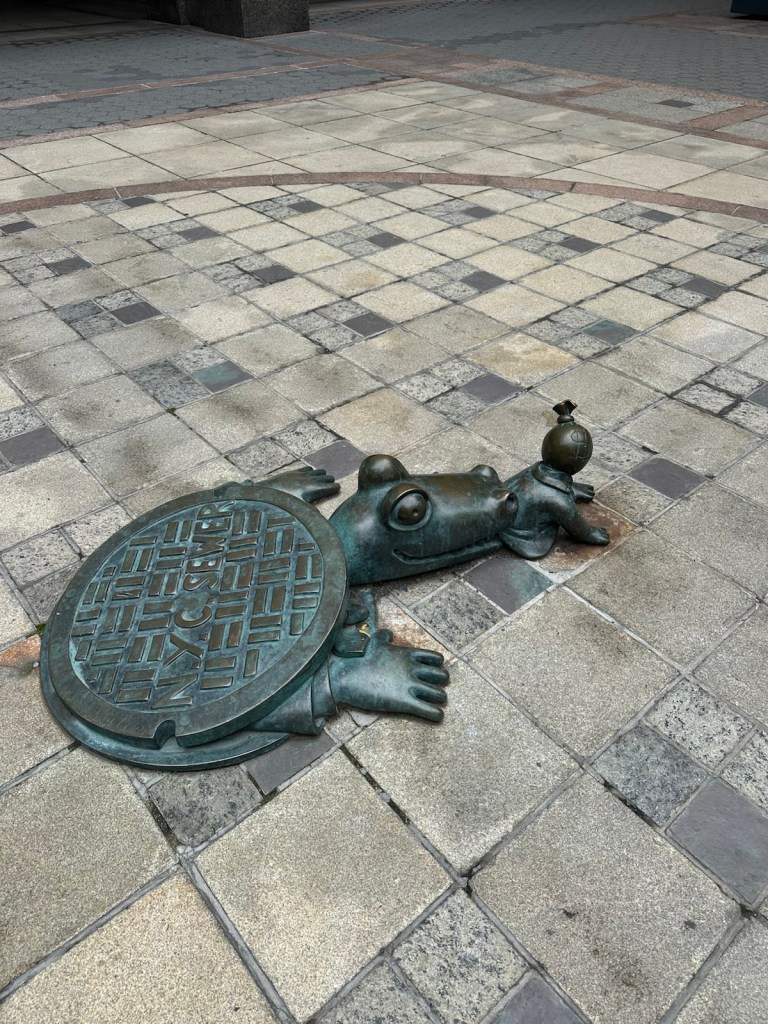
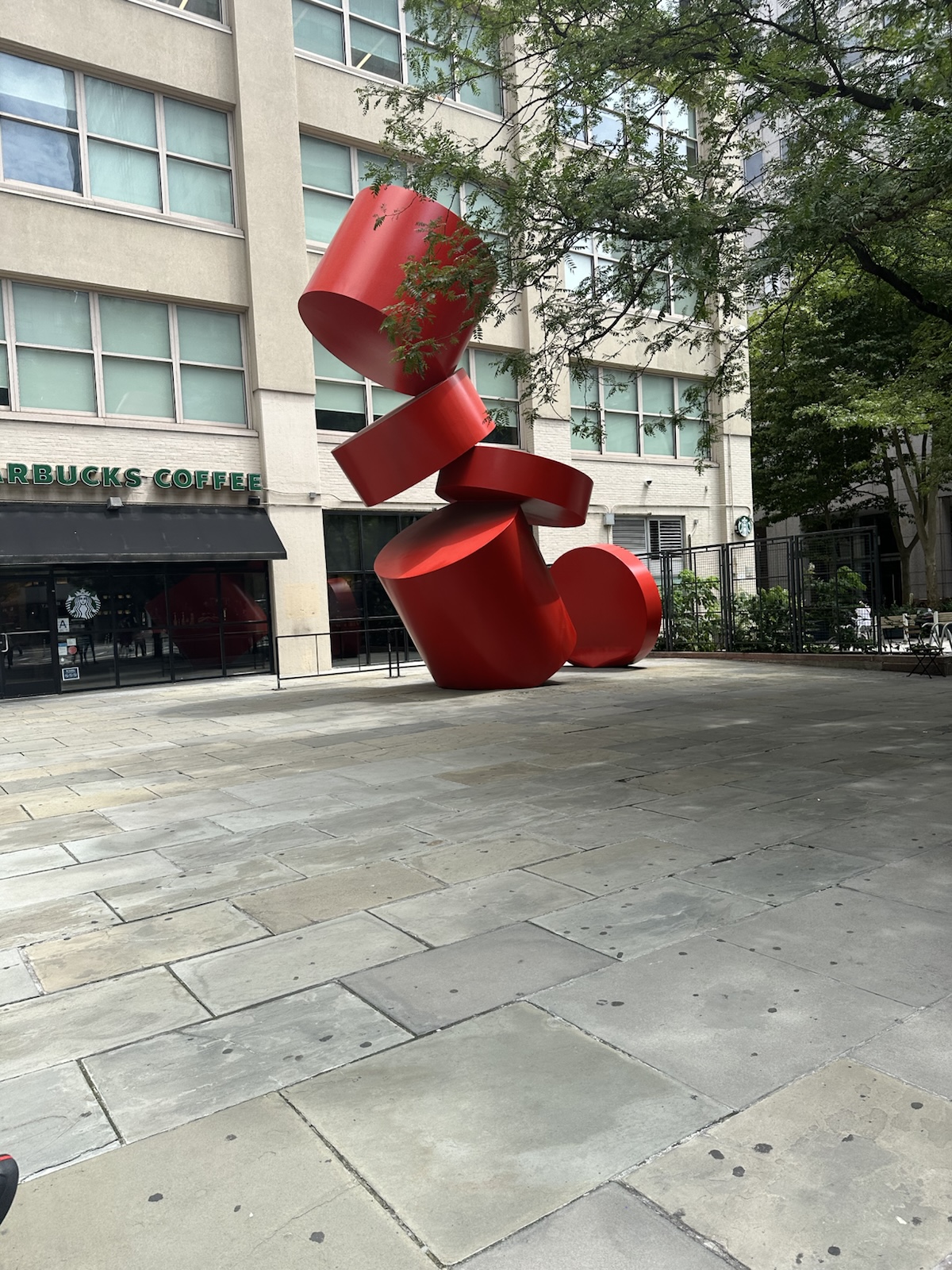
In New York, the art isn’t just in museums — it’s on the sidewalks and in the fascinating parade of people passing by.
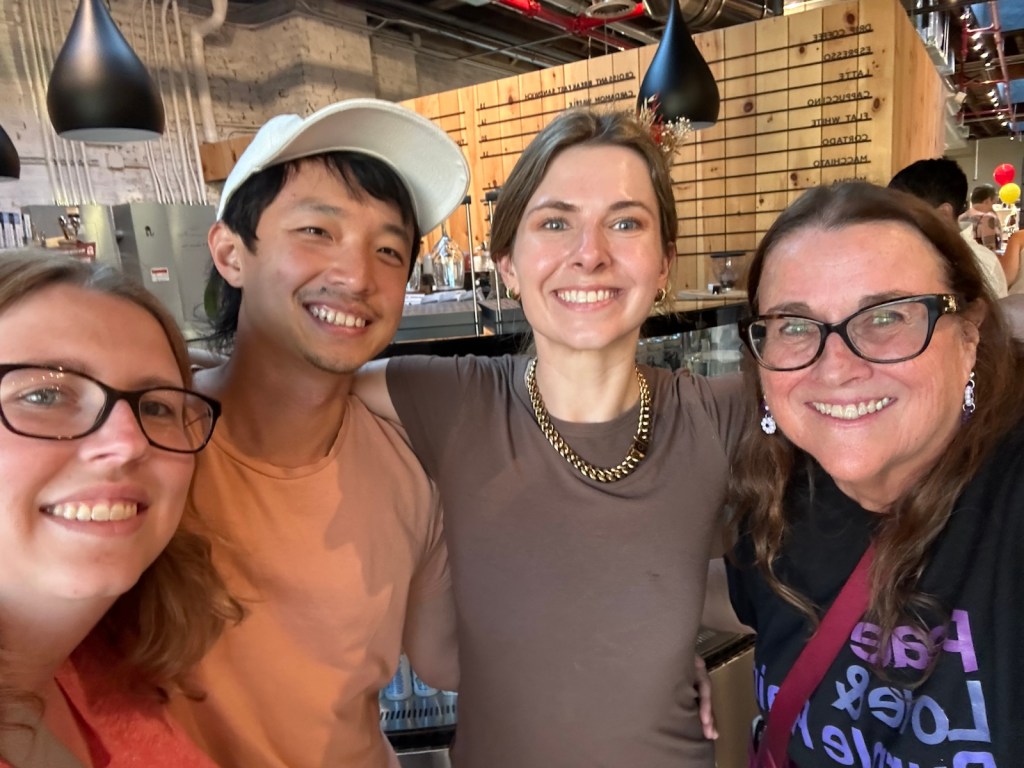
Speaking of fascinating people, in the photo below, Megan and I are the bookends with Arthur and my niece Leah in the middle. It was the one-year anniversary of the grand opening of Leah’s coffee shop called Falu House located in the Teak store found in the Greenpoint neighborhood of Brooklyn.
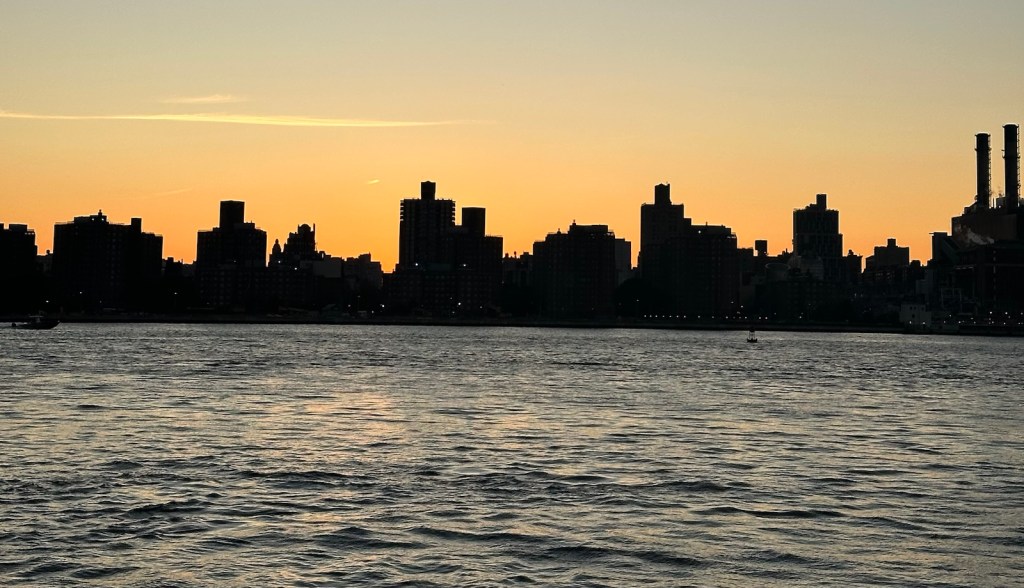
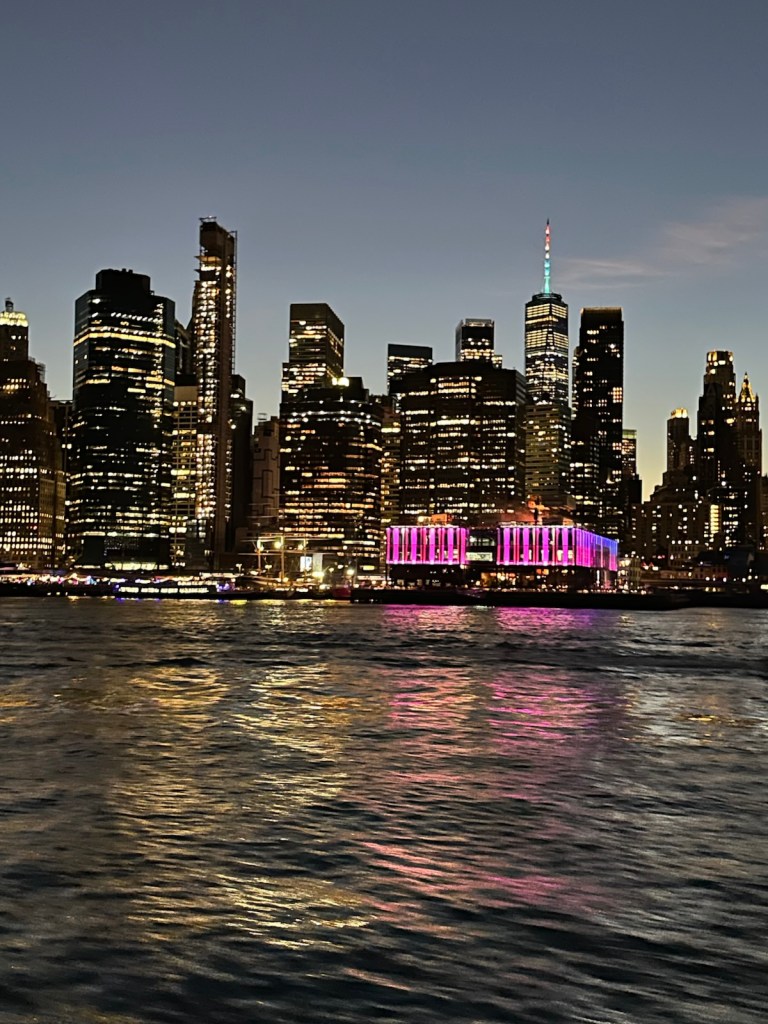
After the party at Falu House and Teak, we enjoyed a beautiful sunset on the ferry back to downtown Brooklyn.
The Ferry is one of New York City’s best-kept secrets — and one of my favorite things to do in NYC. It offers an affordable, scenic, and relaxing way to travel across the city’s waterways. It’s public transit with a view!
The ferries were launched in 2017 to provide an alternative to crowded subways and buses, connecting waterfront neighborhoods.
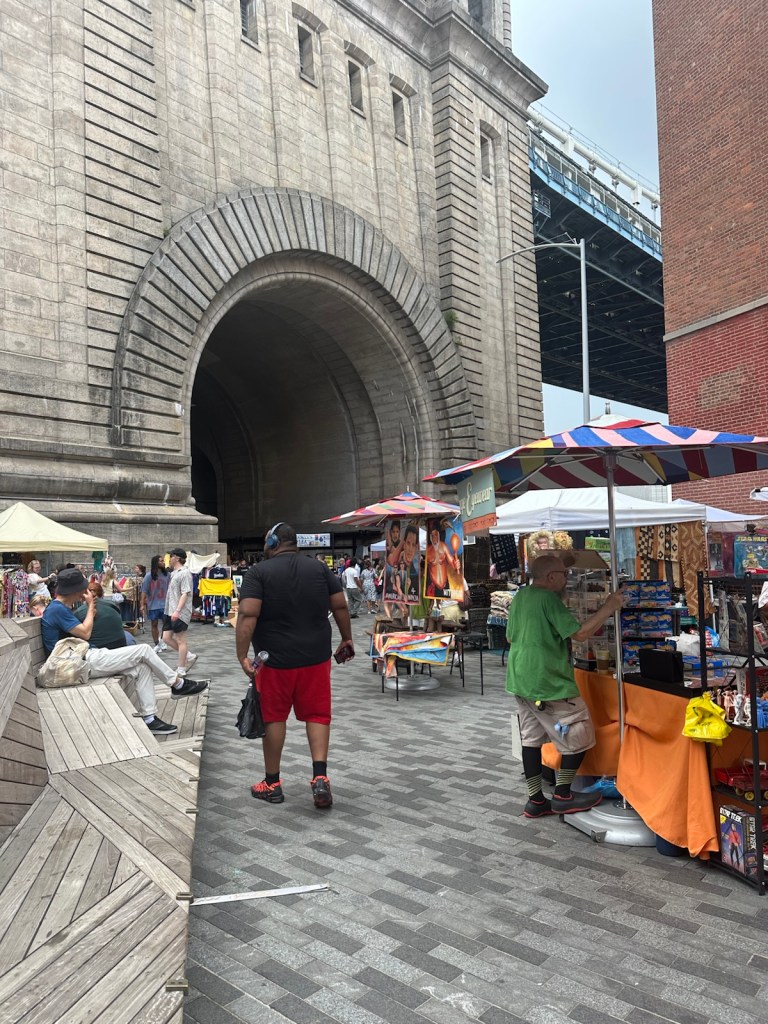
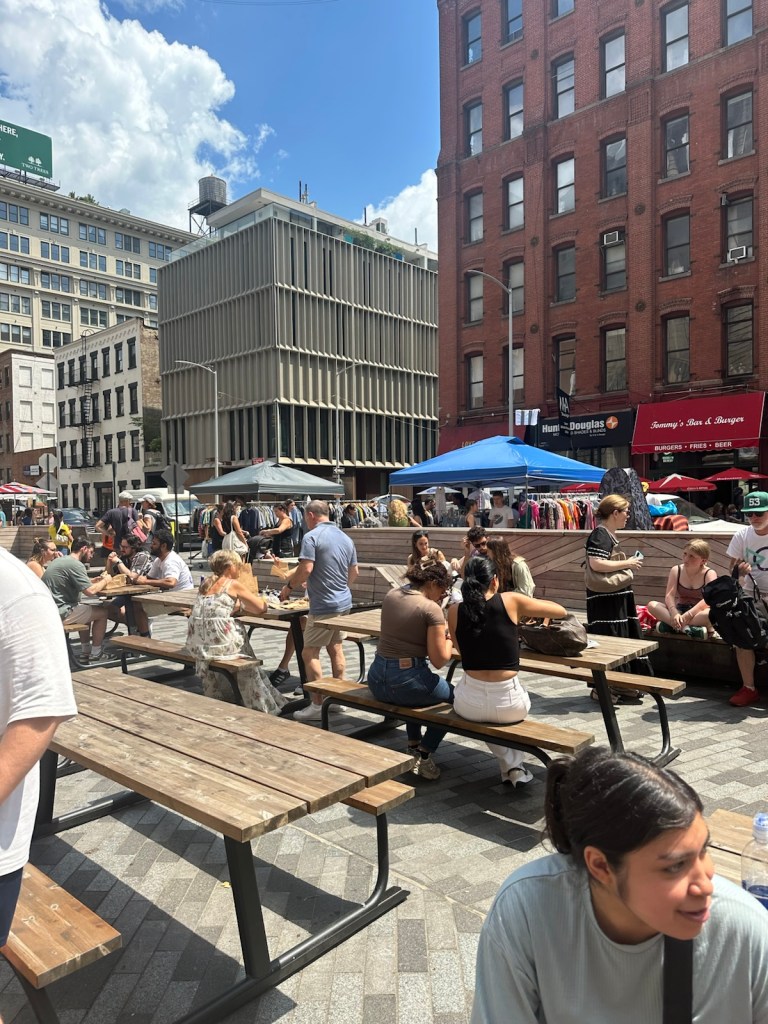
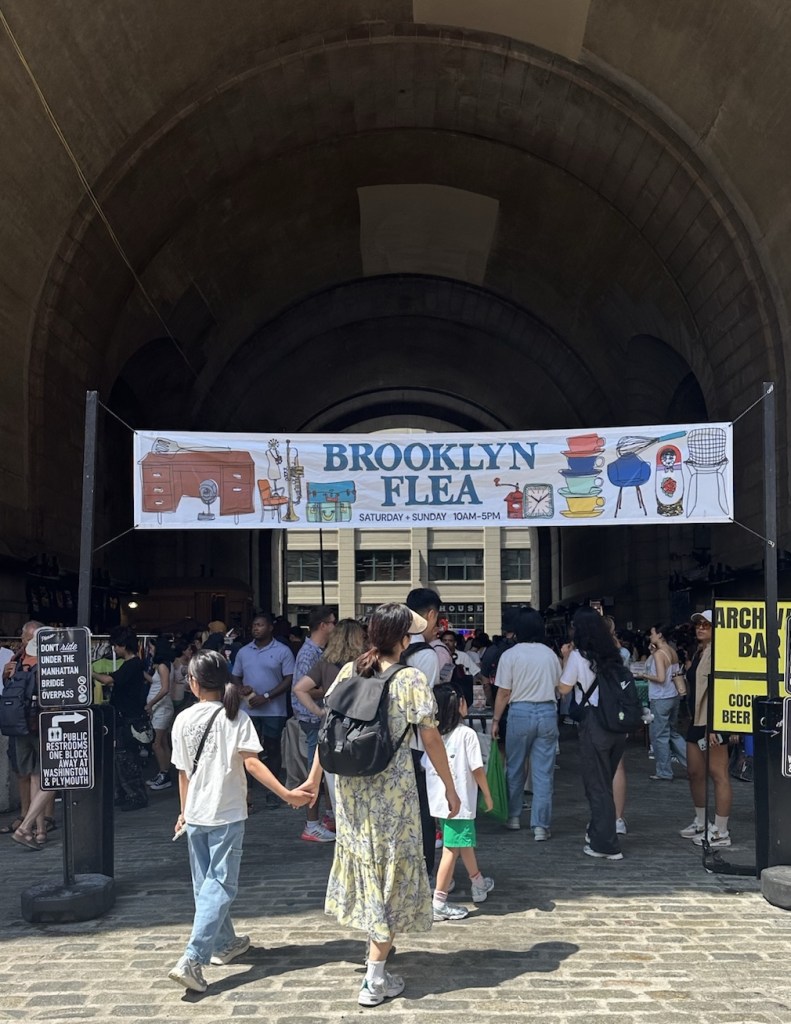
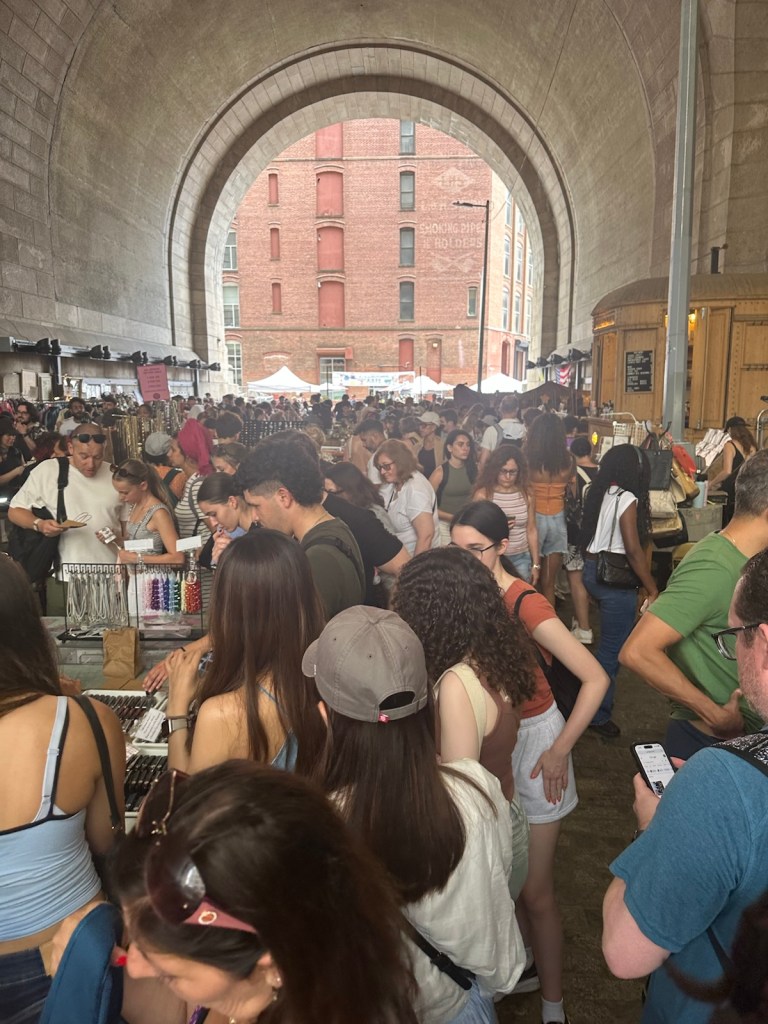
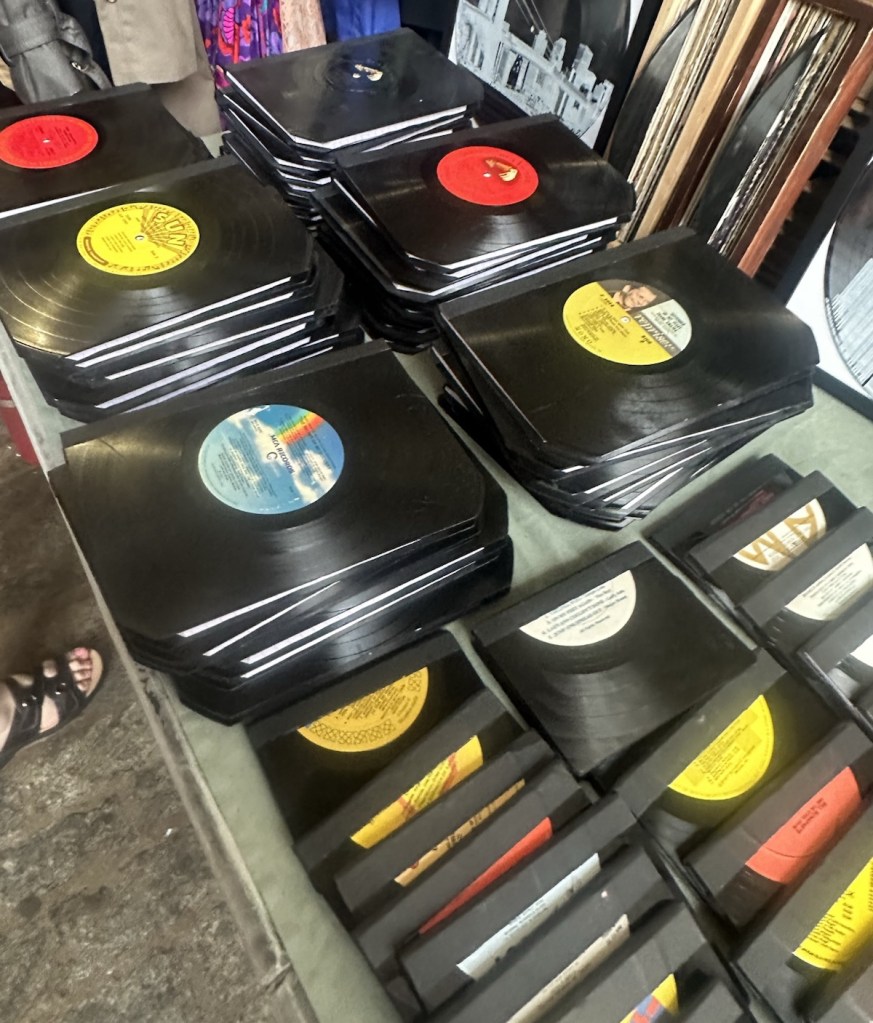
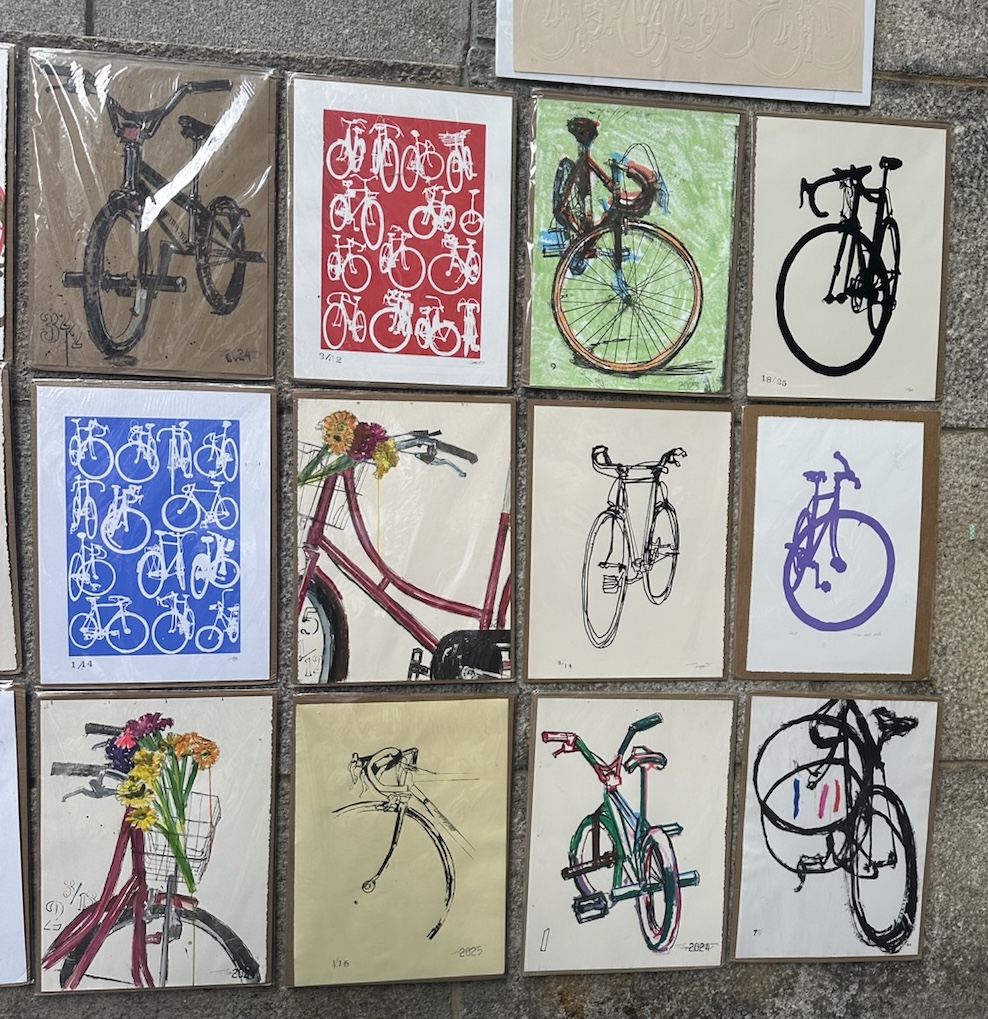
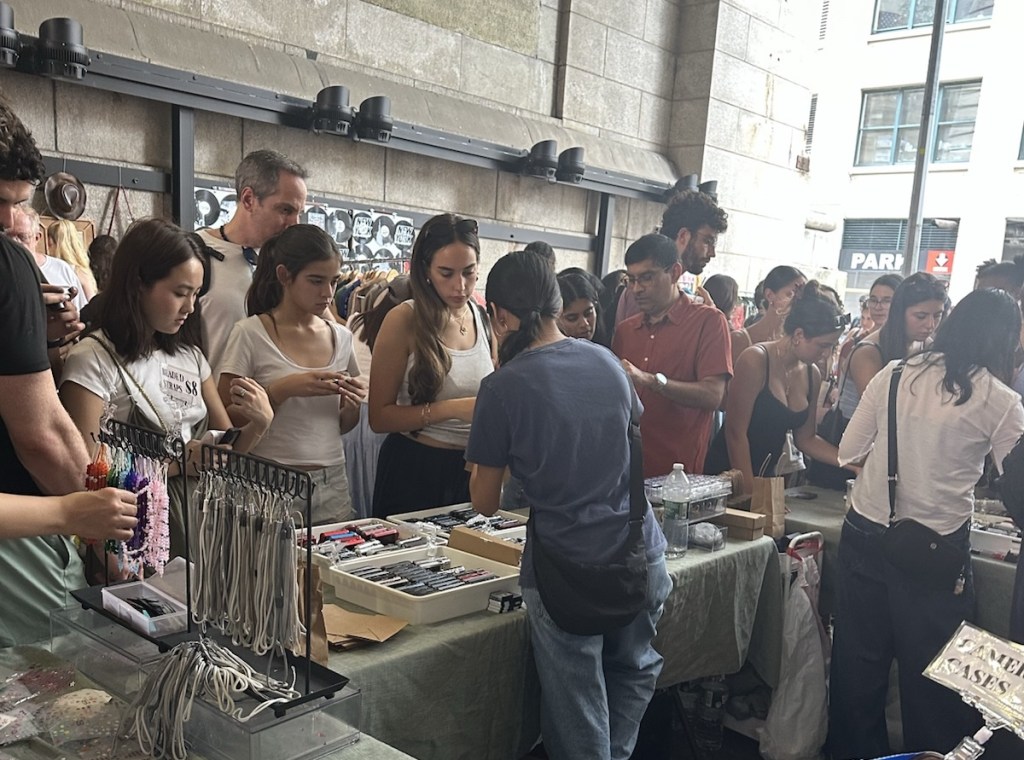
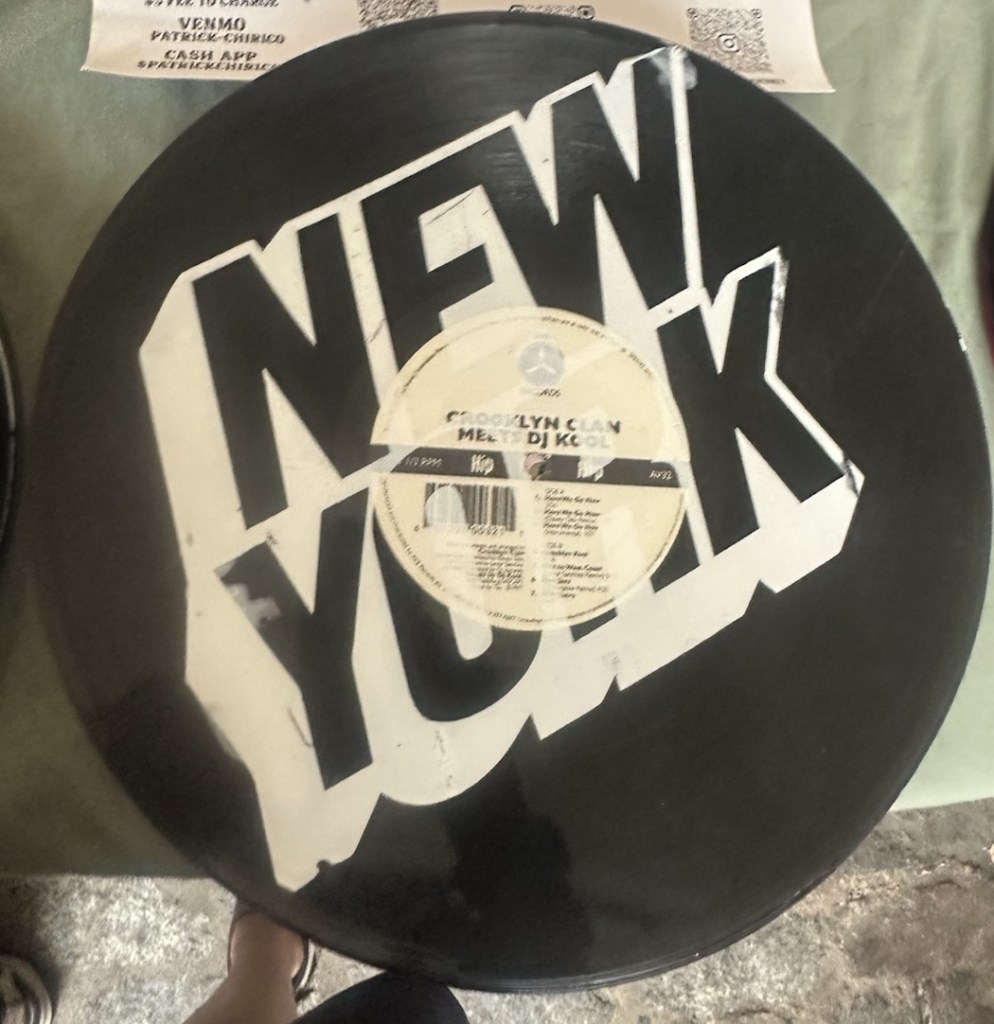
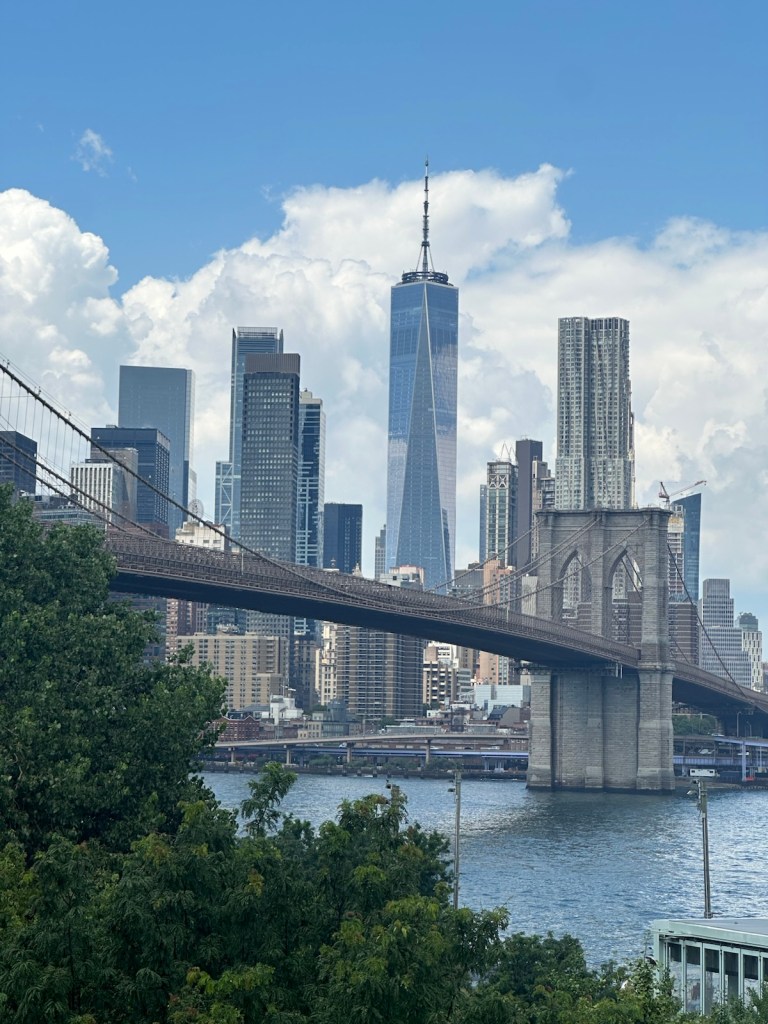
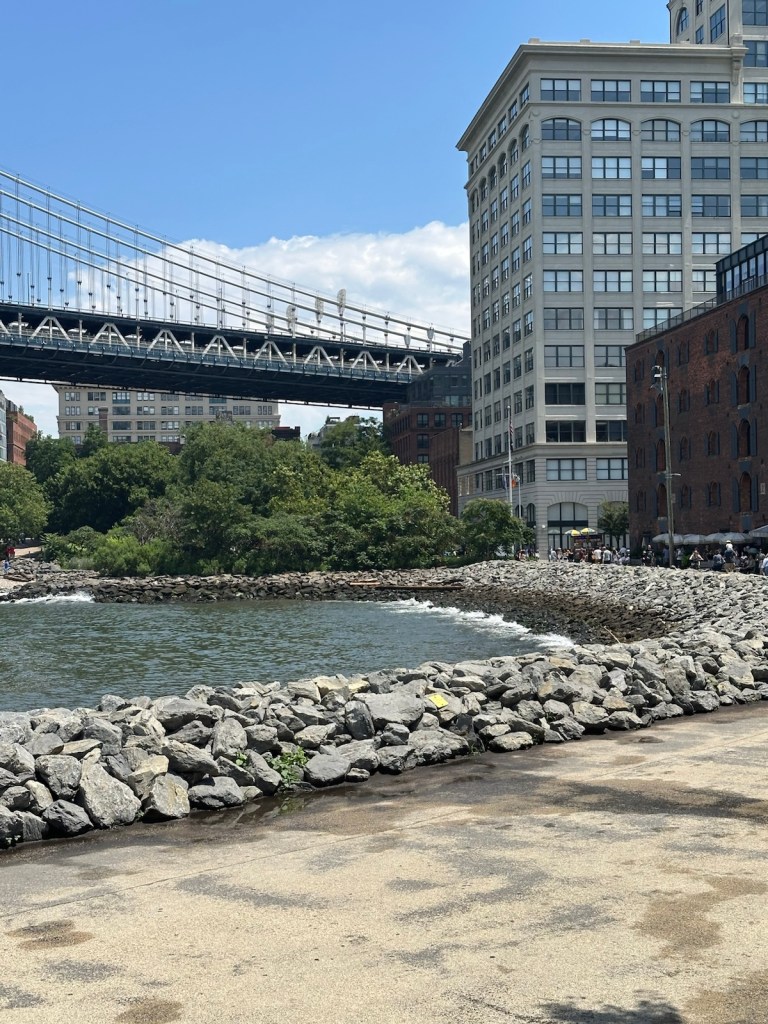
One of my exploratory outings this weekend was to the Brooklyn Flea in DUMBO (Down Under the Manhattan Bridge Overpass) which offers a vibrant mix of vintage treasures, handmade goods and tasty local bites — all set against the dramatic backdrop of the East River. True to its name, it’s tucked right beneath the towering bridge, giving the market an unmistakable urban charm.
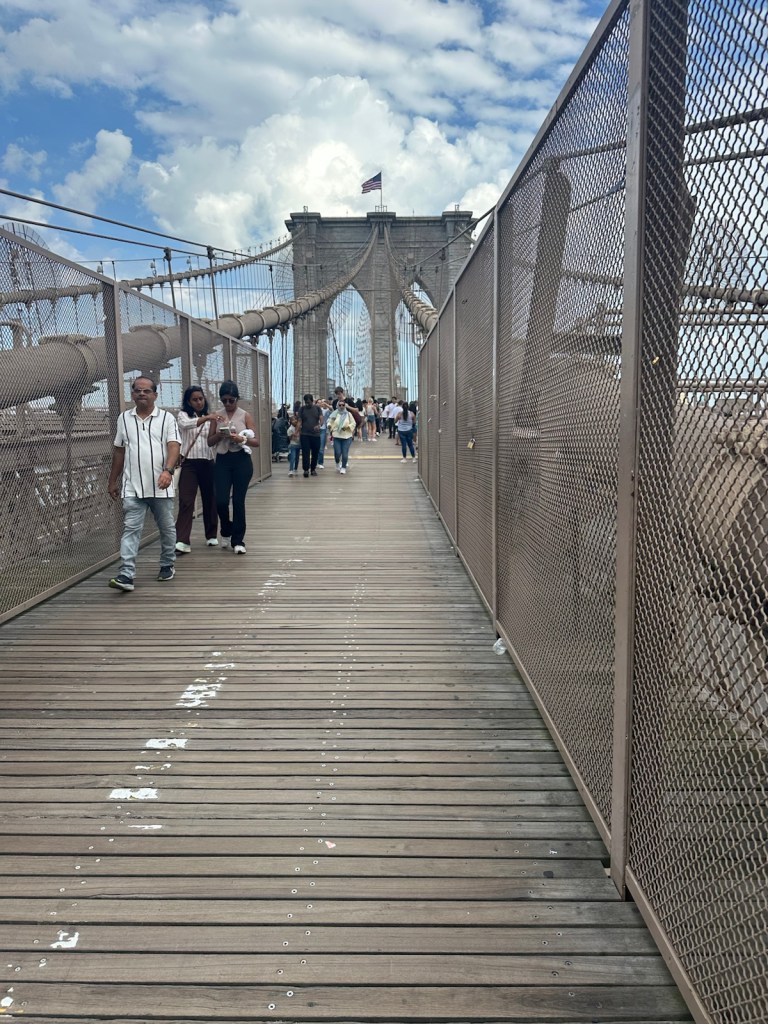
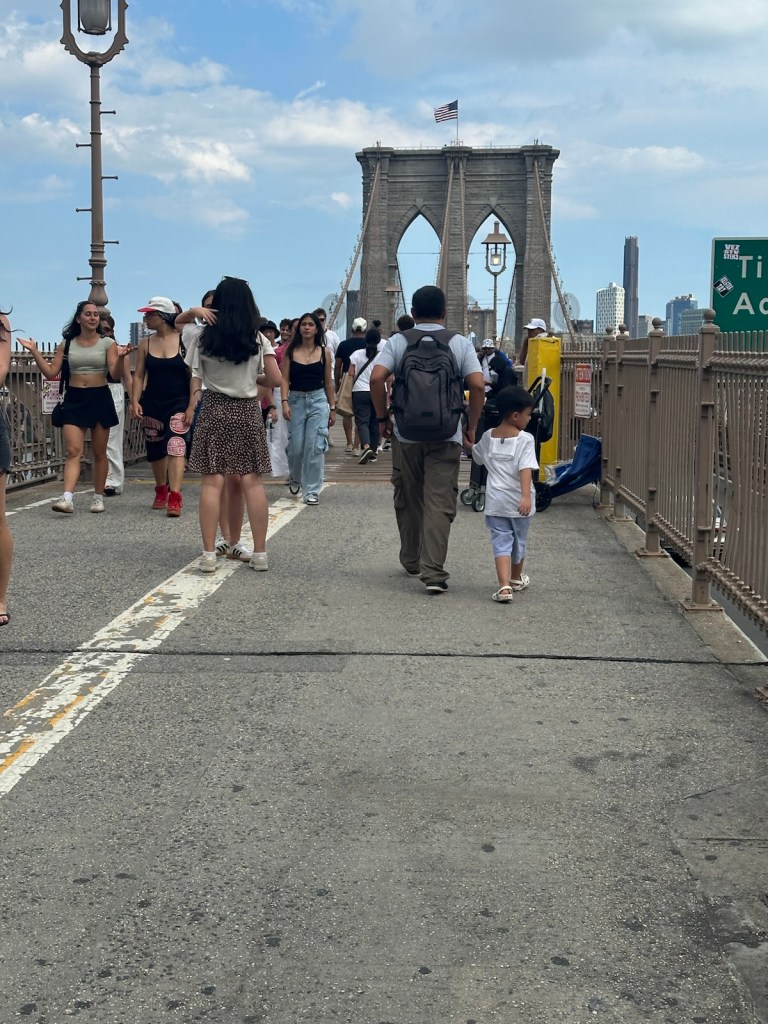
And up above … walking across the Brooklyn Bridge is a quintessential New York experience — equal parts iconic sightseeing, urban architecture and riverside serenity.
The weekend was a whirlwind of walking, touring, subways, ferries, museums, libraries, stores, parks, rivers, beaches and restaurants.
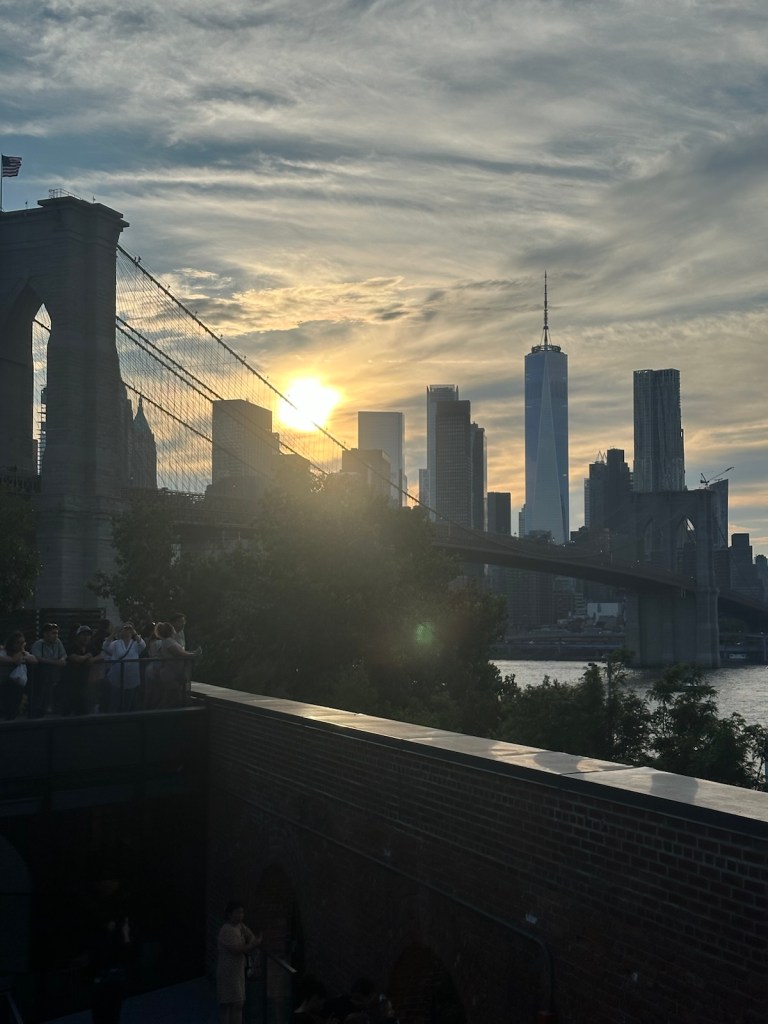
New York City is exhilarating, but after two weeks of constant exploration, it can feel almost overwhelming. As the sun dipped behind the Brooklyn Bridge, we found ourselves ready to return home — grateful for the city’s magic, but yearning for the comforts of home.
Warm summer evenings were made for exploring Old Québec’s lively nightlife and hidden gems.
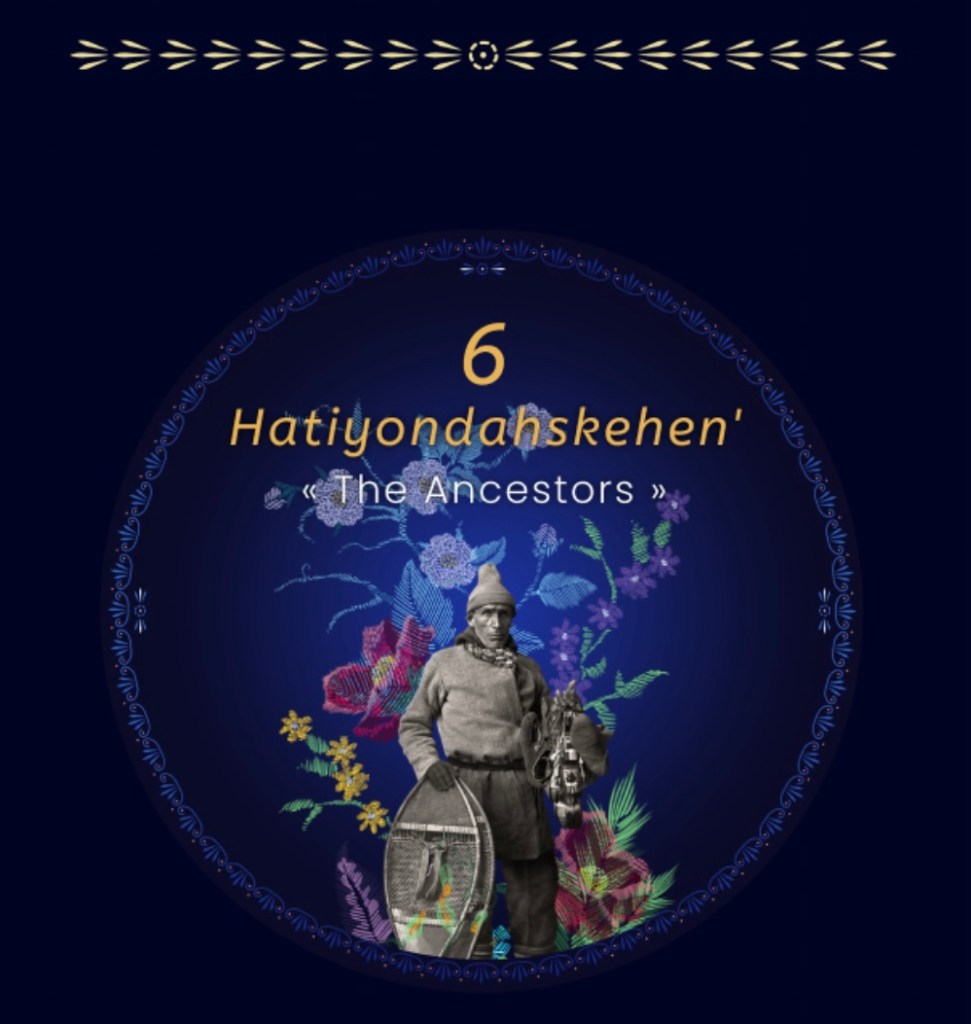
Onhwa’ Lumina is an enchanting night‑walk experience located just north of Quebec City. It’s a nighttime trail where light, sound, and storytelling celebrate Huron-Wendat culture. It blends tradition with technology, drawing you into a rhythmic, immersive journey through nature and heritage.
Ancestral wisdom and timeless expertise are gracefully interwoven into the story, paying tribute to the Huron-Wendat people and the knowledge they’ve preserved across the ages.
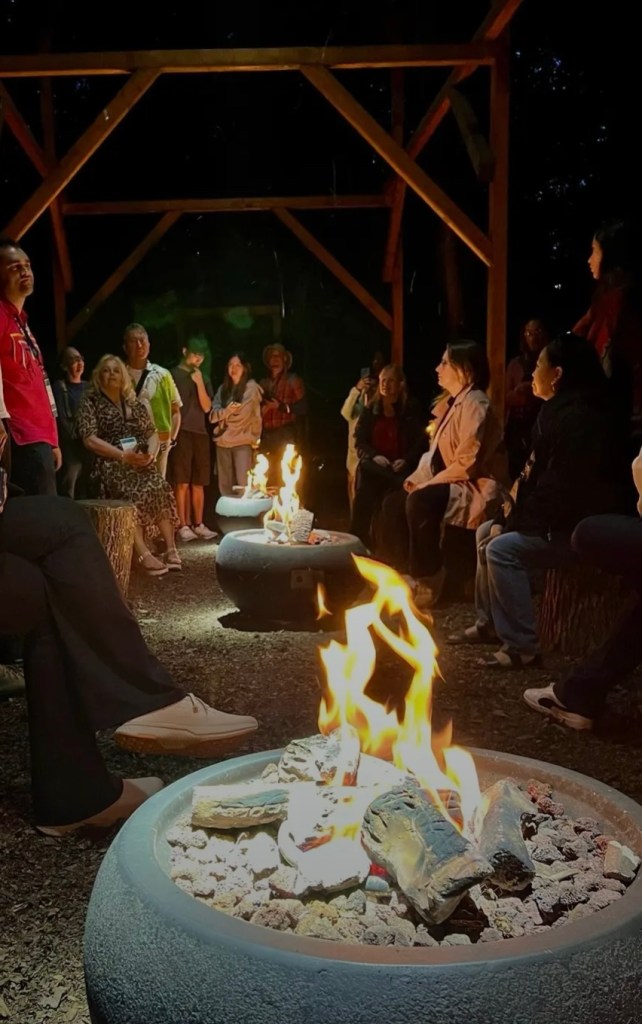
Bonfires and torches lit the path through a beautiful forest trail, casting a warm glow on the trees. It stirred a deep longing to go camping again.
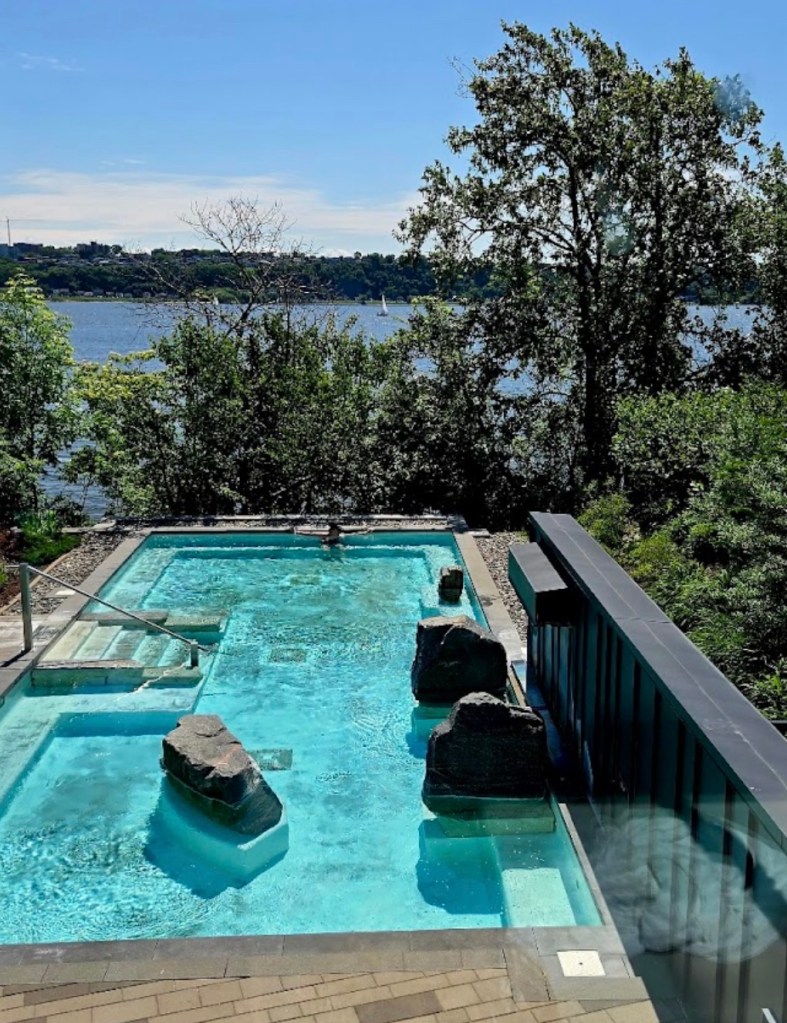
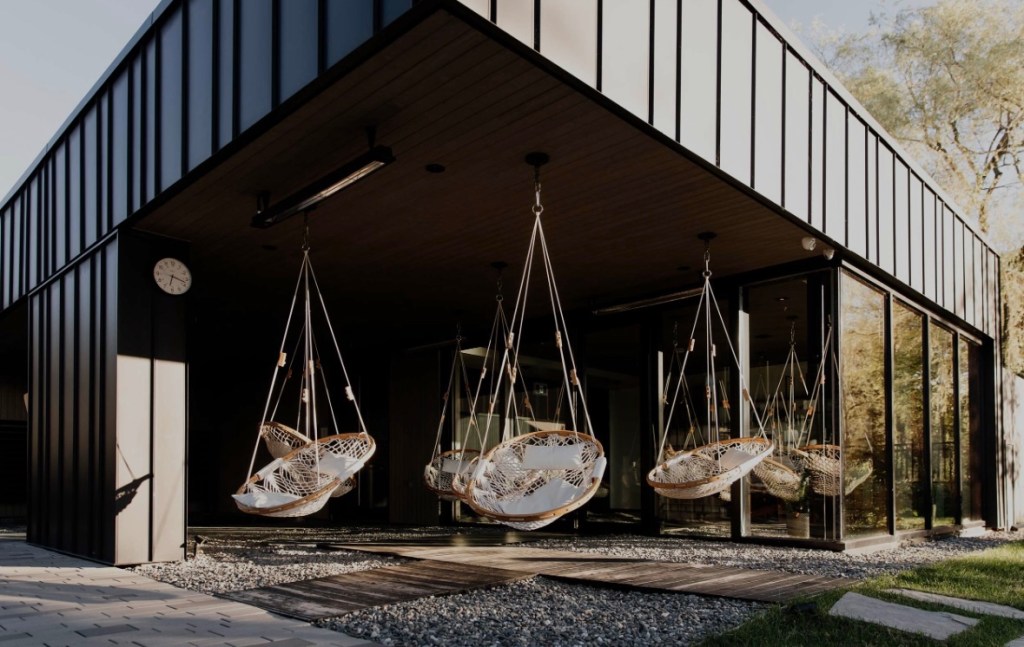
One evening after a full day of walking and sightseeing, we found the spa to be a welcome retreat. We headed to Strøm Nordic Spa, beautifully nestled along the scenic banks of the St. Lawrence River in Old Québec.
Strøm offers the full Nordic thermal ritual — alternating hot (Saunas, steam baths, thermal pools) and cold (Nordic plunge baths, waterfalls, chilly showers), followed by soothing relaxation areas. This cycle — heating, cooling, resting — supports blood circulation, stress relief, and overall well-being
We arrived at Strøm in the evening, where torchlight and glowing bonfire kettles illuminated the space — magical yet challenging to capture on film. These snapshots are from their marketing collection.
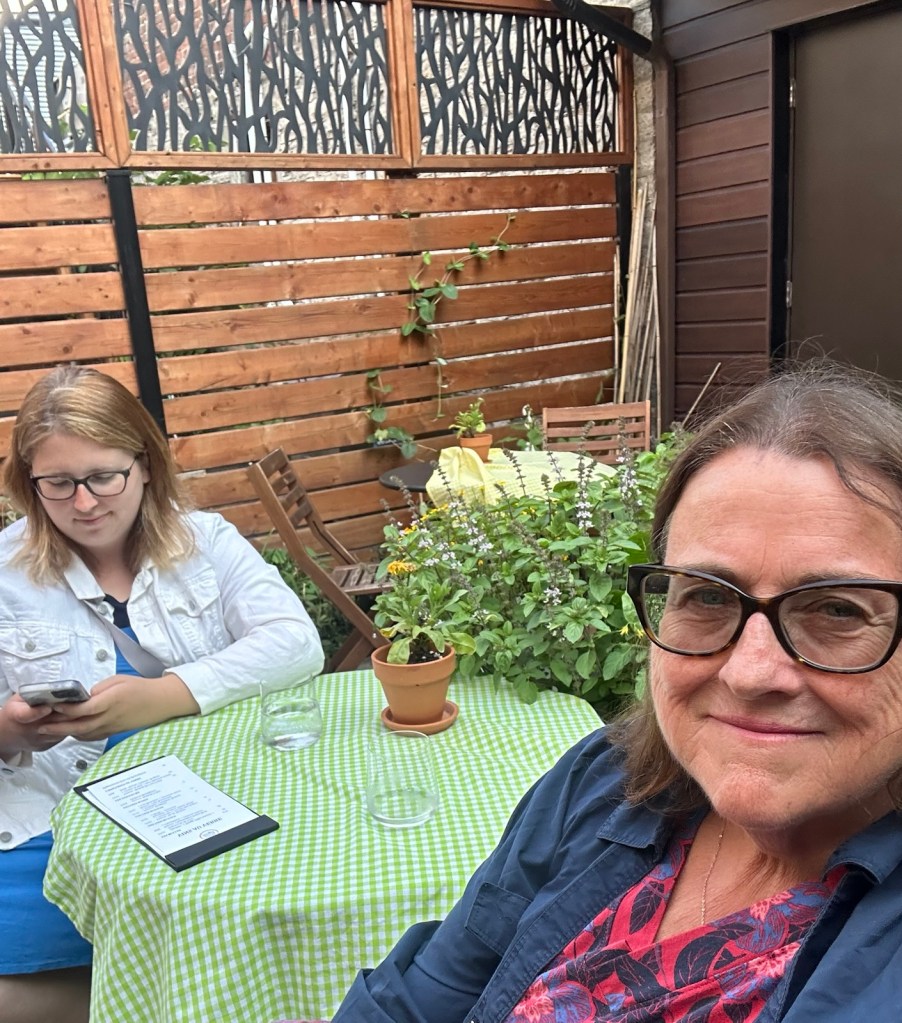
French cuisine was a must on our list, and what better place to start than the inviting little French restaurant just below our rental.
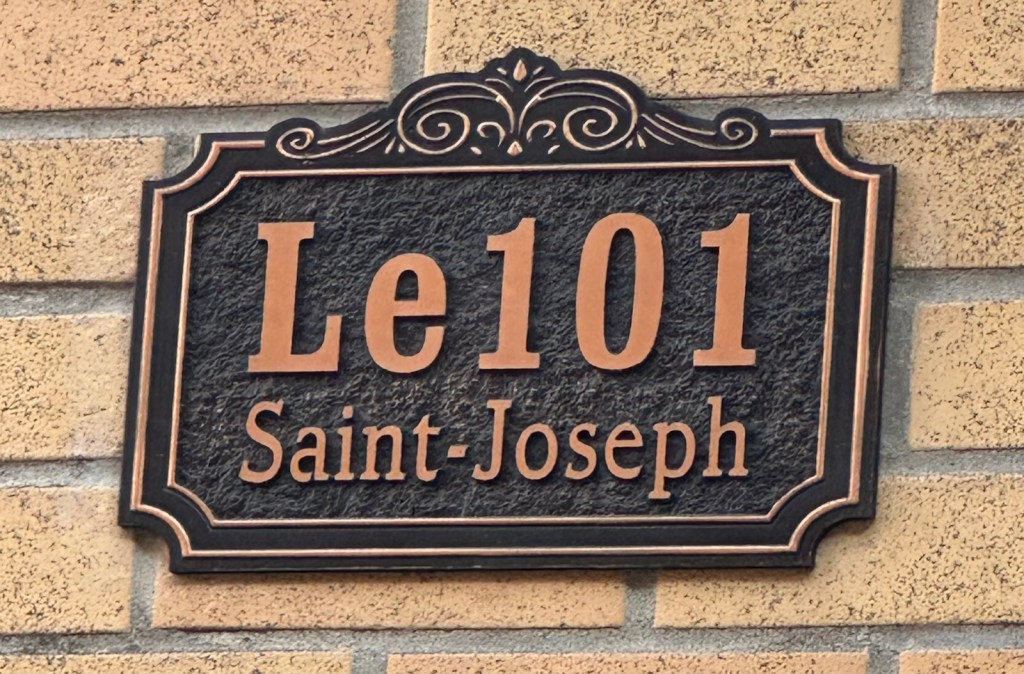
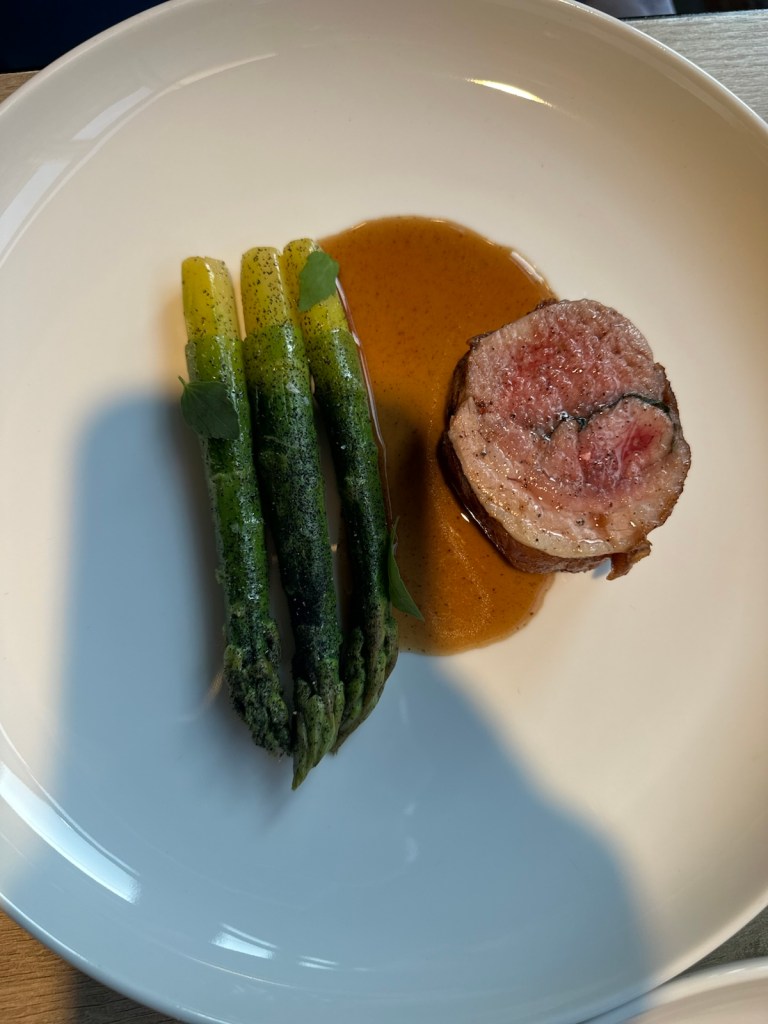
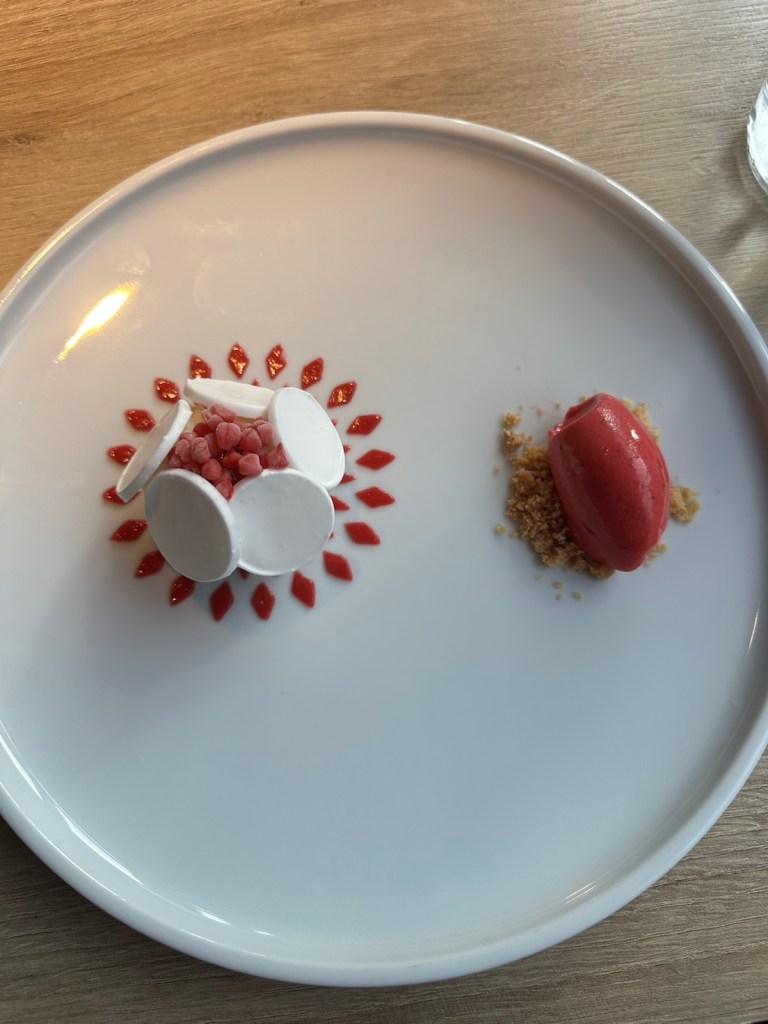
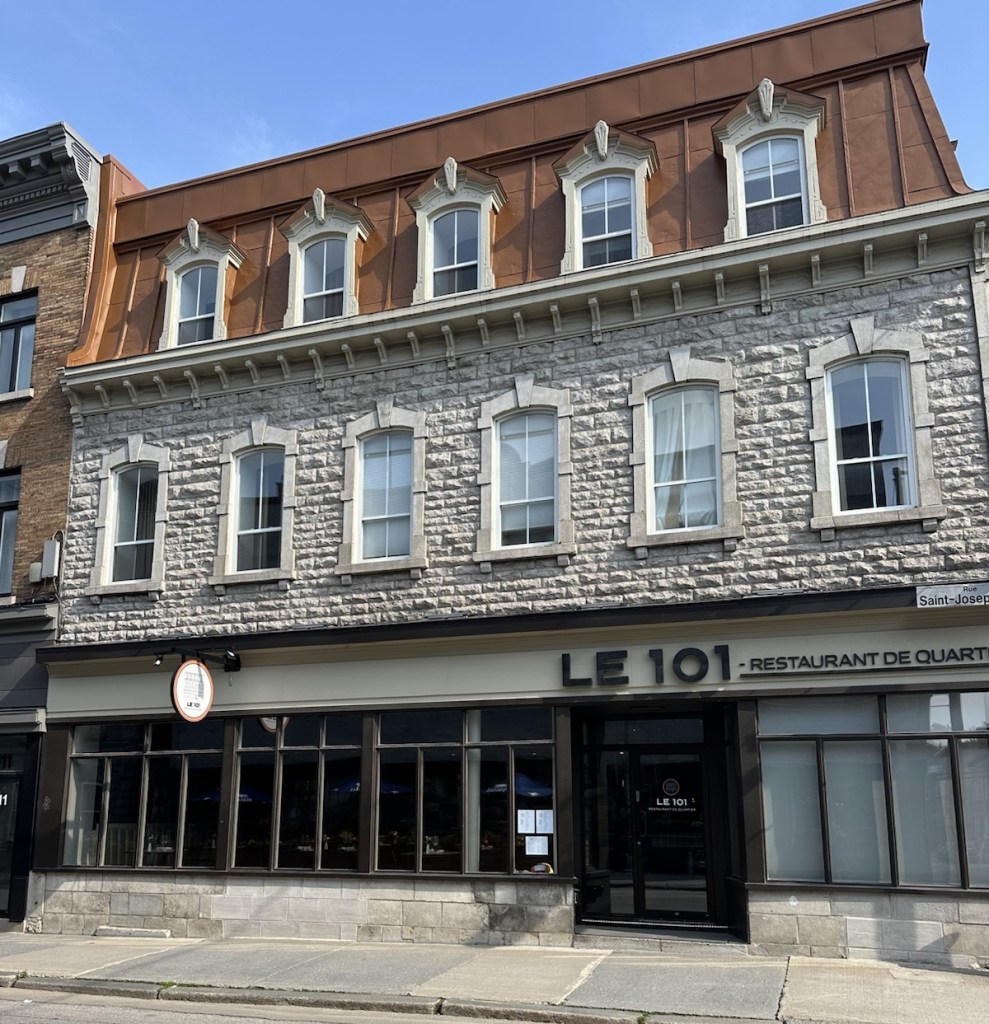
Le 101 Restaurant de Quartier offers a beautifully curated 4‑course tasting menu, which can be paired with wine selections by their in‑house sommelier. They serve contemporary French cuisine, often with creative interpretations of classics. Dishes highlight local and seasonal ingredients.
It’s considered bistronomy — where bistro comfort meets gastronomy. You get refined flavors without the stuffy atmosphere.
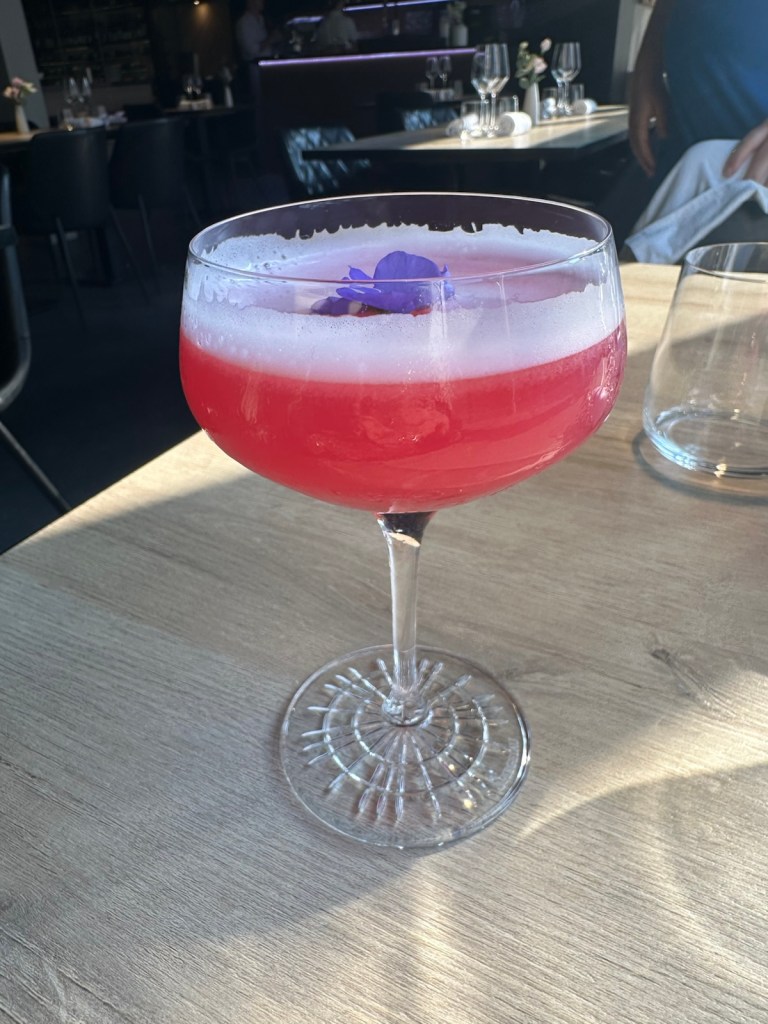
All the specialty cocktails were playfully named after staff members. I chose “The Sandra,” (shown above) which is a unique blend of gin, mango, Vitelotte potato, mint, orange bitters, and lemon.
The tasting courses were on the smaller side, but each one packed a punch — thoughtfully composed, full of flavor, and surprisingly satisfying.
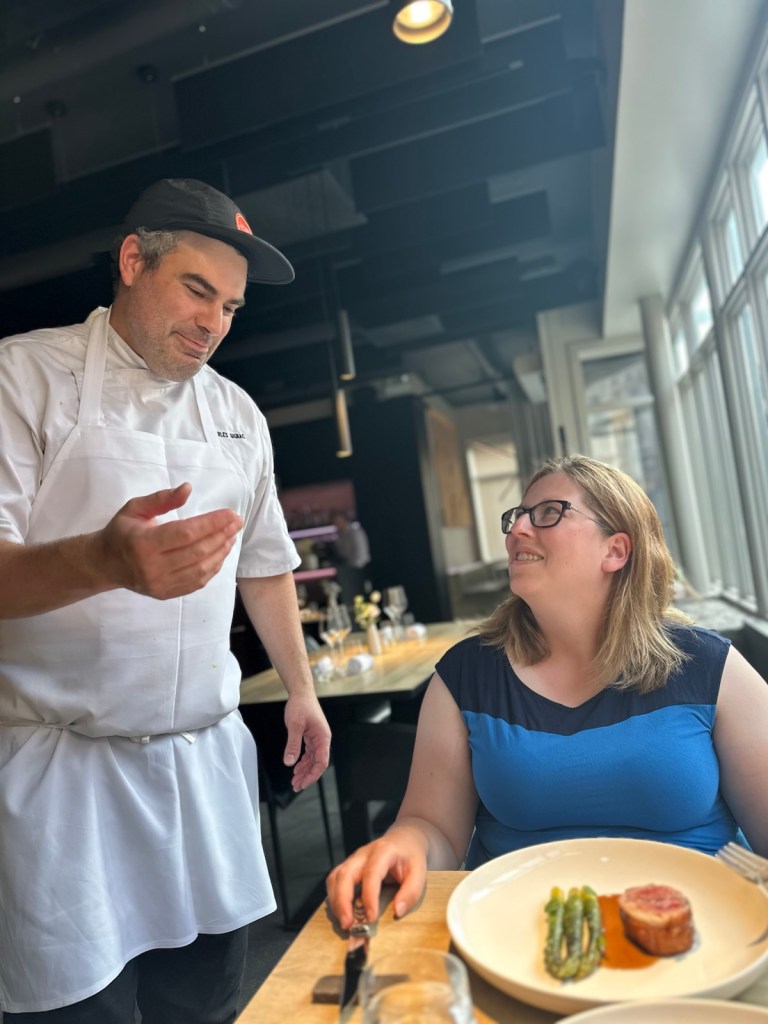
The chef stopped by our table to ask about dietary preferences and any food allergies — an attentive touch. Megan enjoyed chatting away in French with locals, seizing every chance to practice.
We found plenty of ways to enjoy Québec City’s warm summer nights — and even more reasons to return.
We loved our time in Québec City, but the surrounding region offers plenty more to discover.
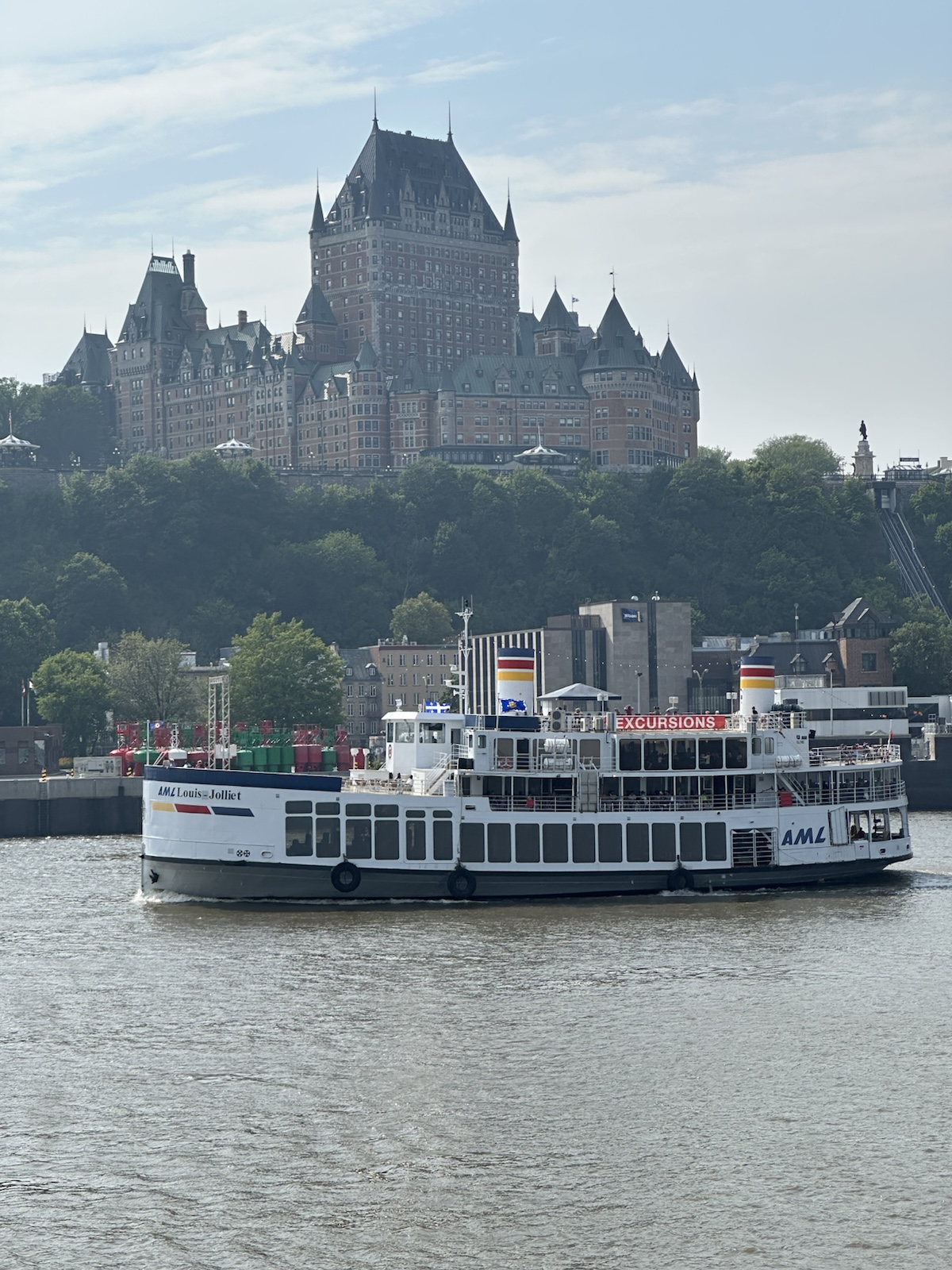
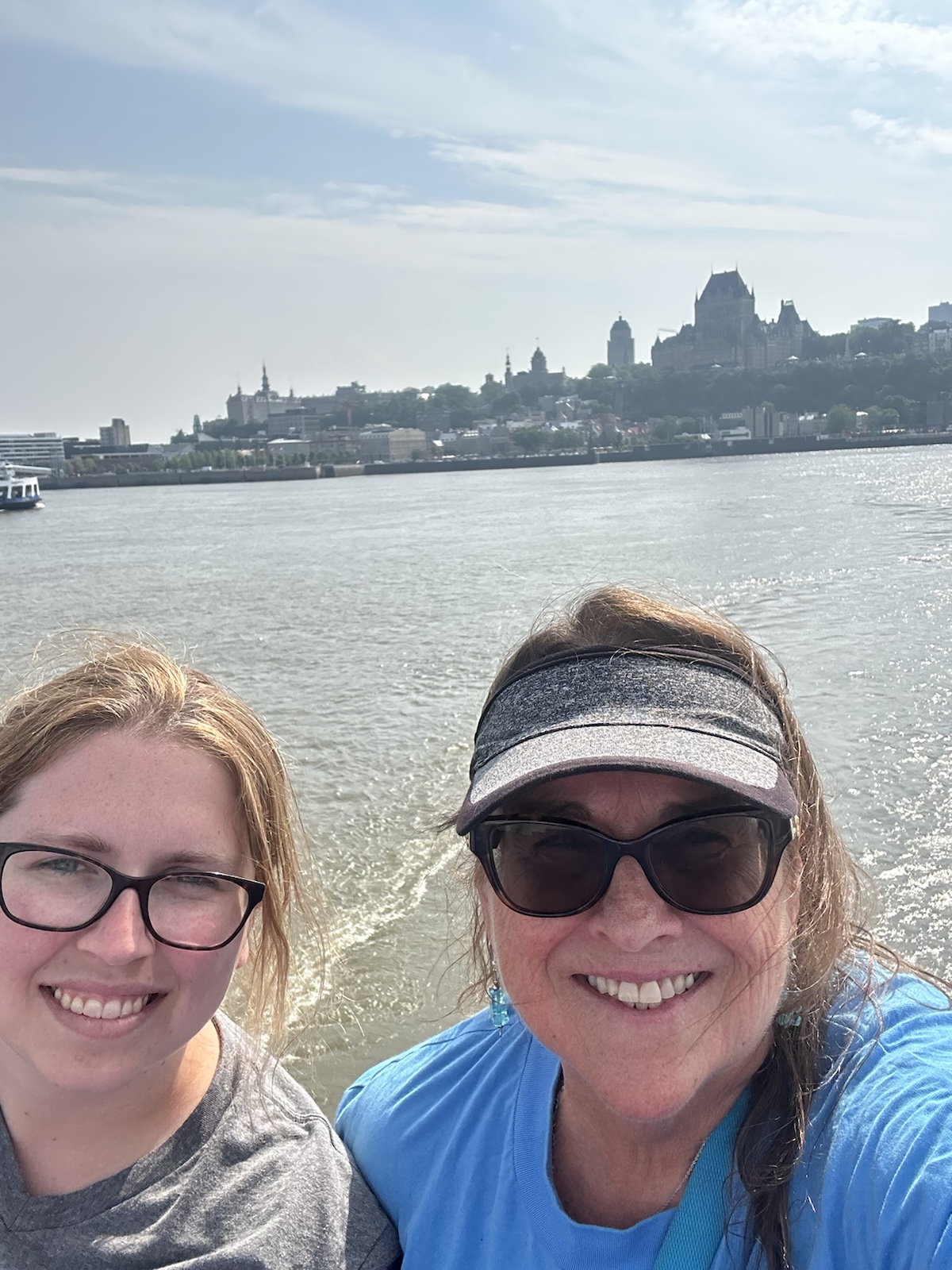
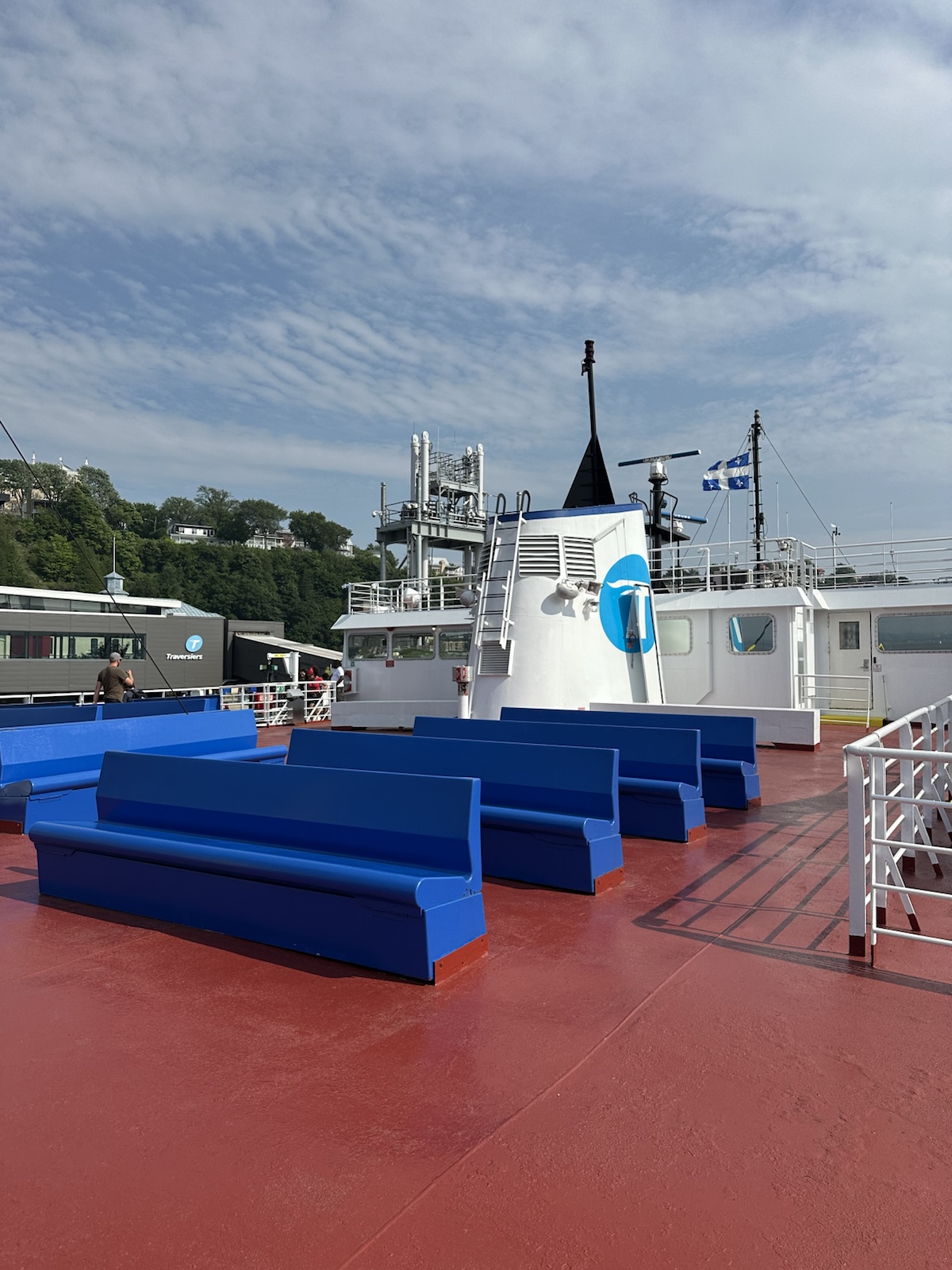
To explore both shores of the St. Lawrence, we hopped on the Québec-Lévis ferry for a quick 10-minute ride across the river. The crossing offers stunning views of Château Frontenac, Old Québec, and the waterway itself. On the Lévis side, the ferry docks in the heart of the historic district, where scenic parks, walking trails and charming cafés overlook Québec City from across the river.
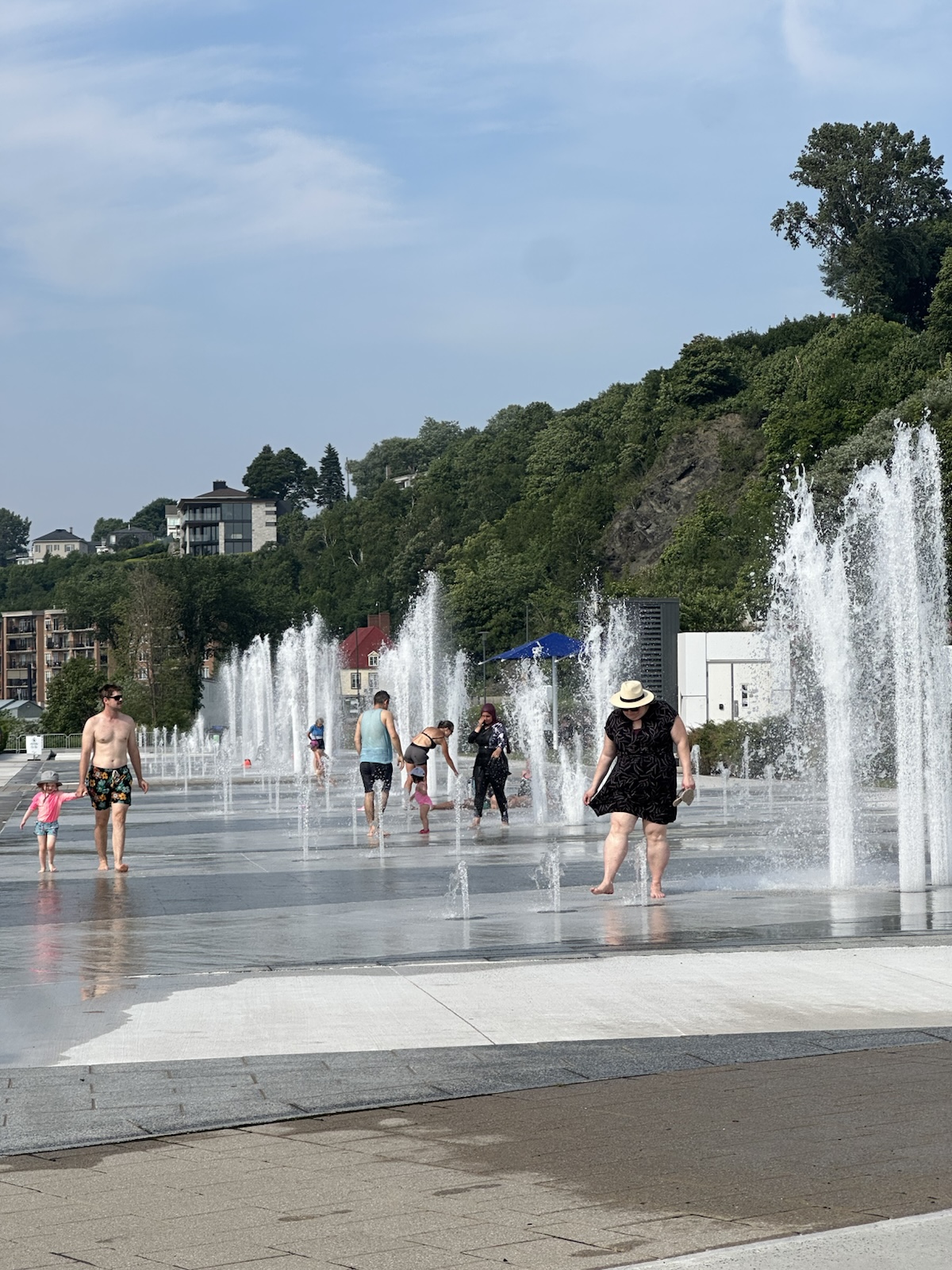
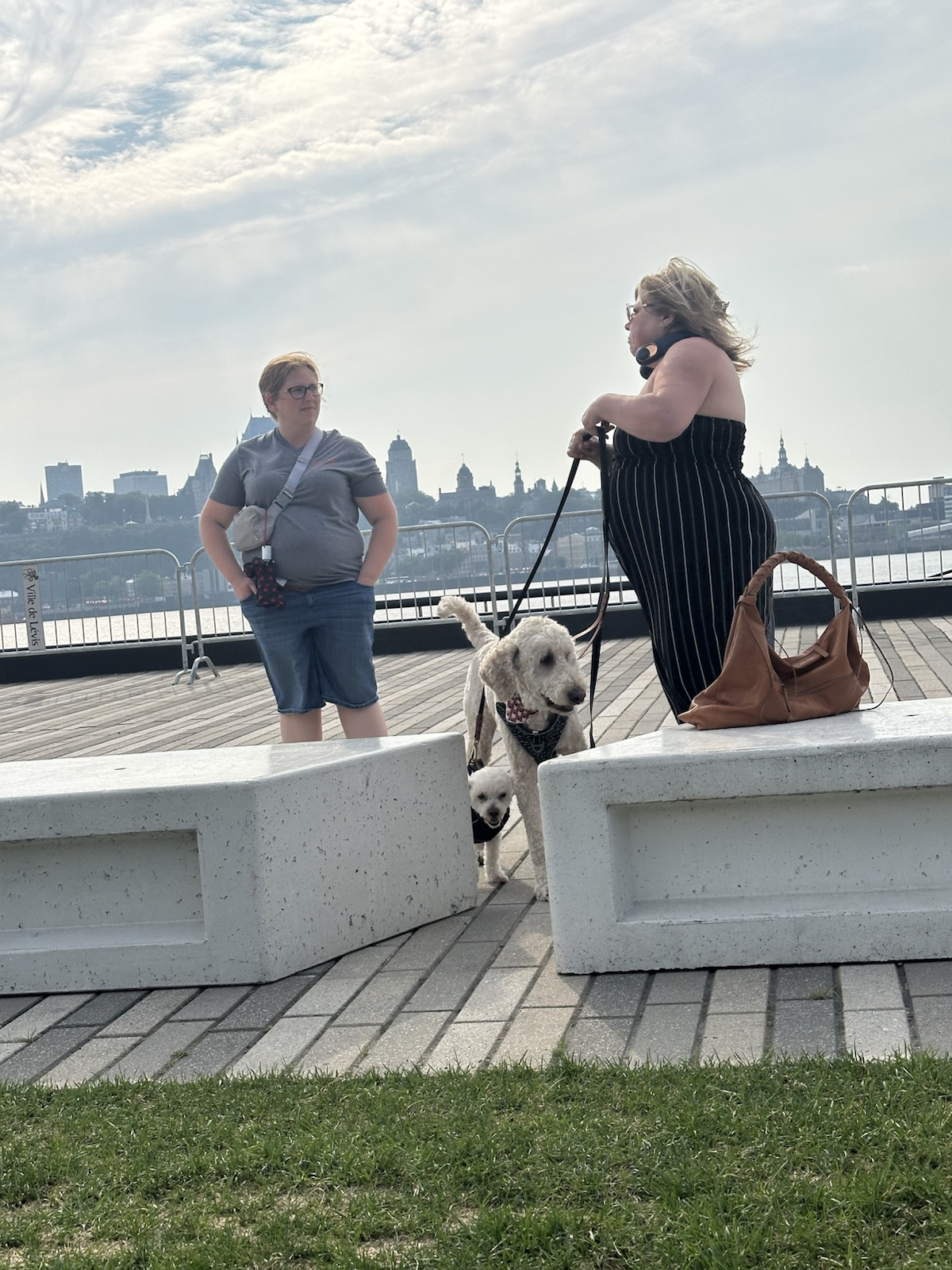
We stepped off the ferry into a lovely little park, perfect for kicking back, soaking up the view, and doing some first-rate people-watching.
Splash pad for cooling off on a hot dayTotally relaxing vibeInteresting people and dog watching
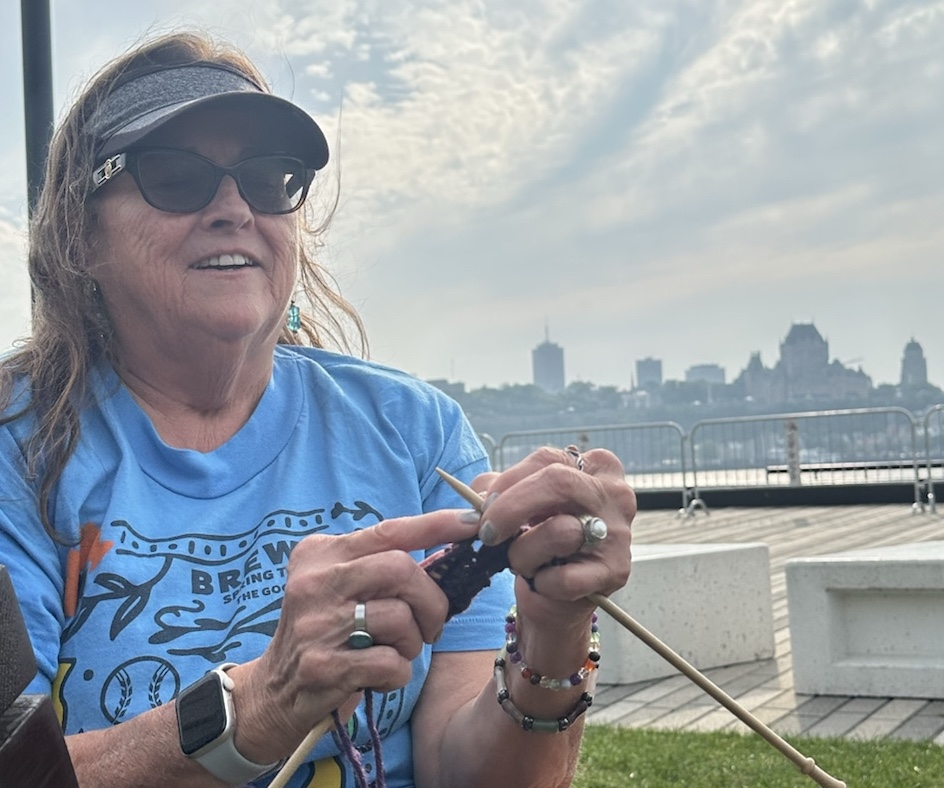
As for that knitting education — it’s coming along, slowly but surely. Getting my hands, needles, and yarn to cooperate has been a bit of a juggling act. It hasn’t quite clicked yet, but I’m getting there.
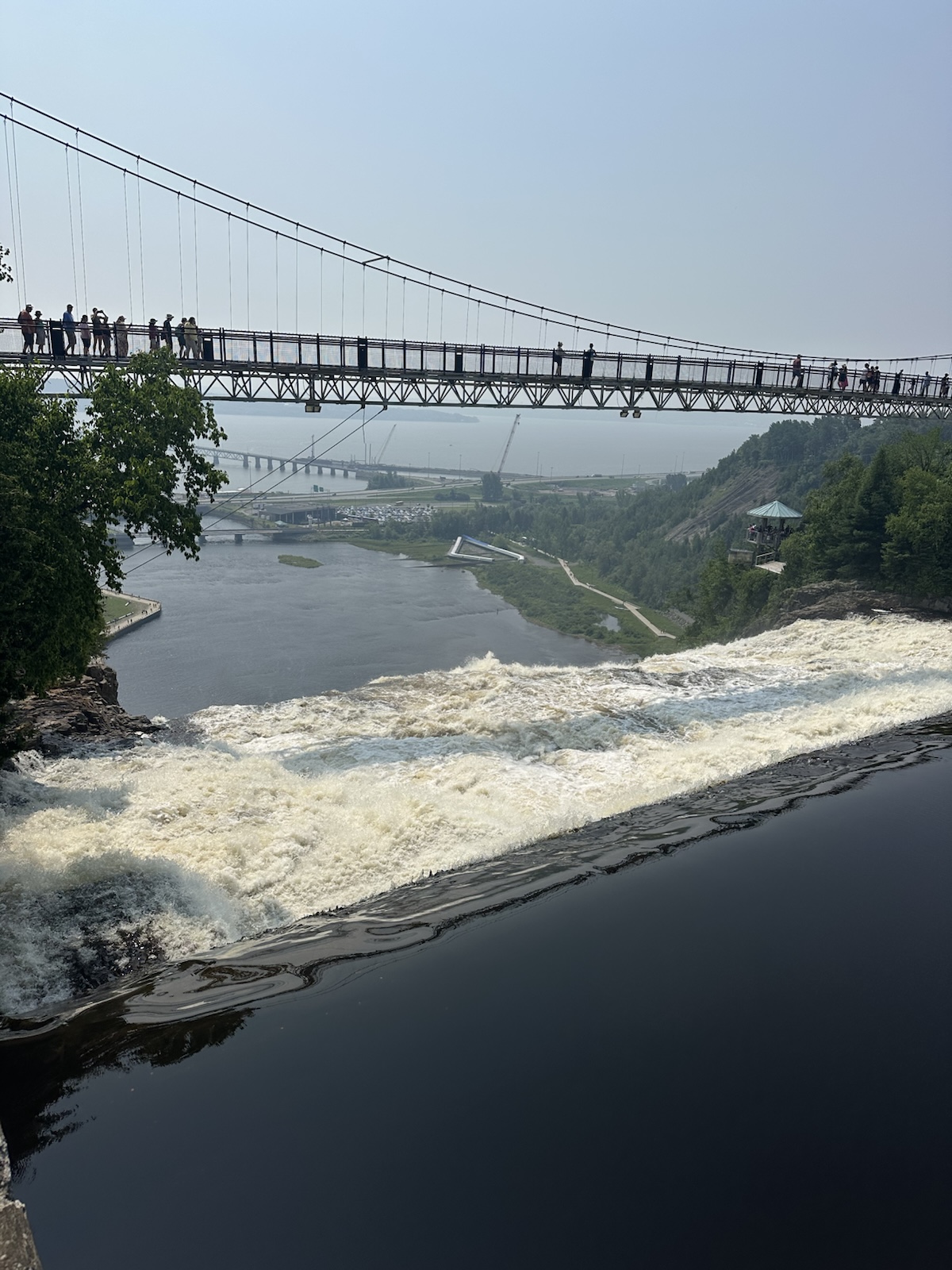
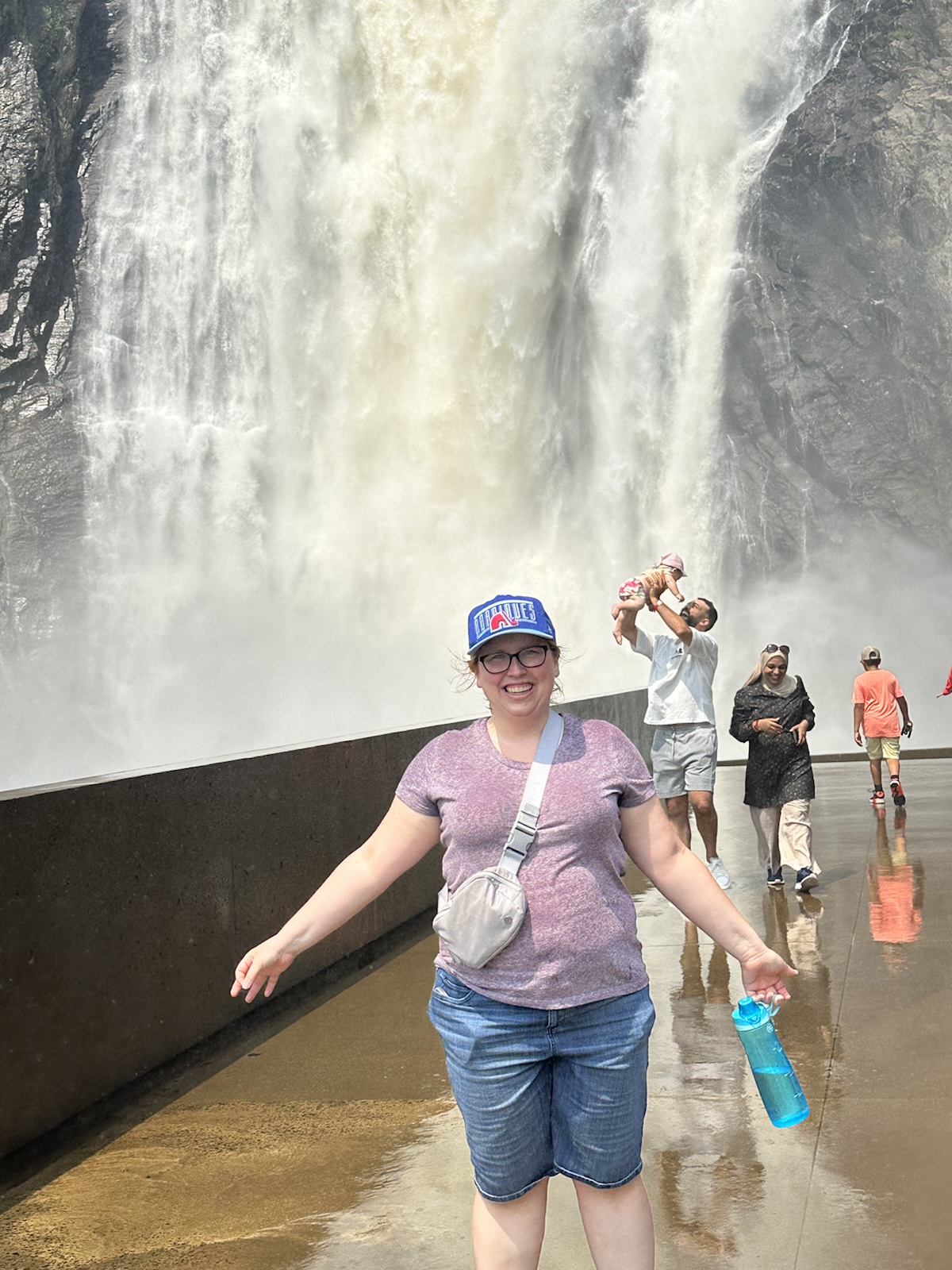
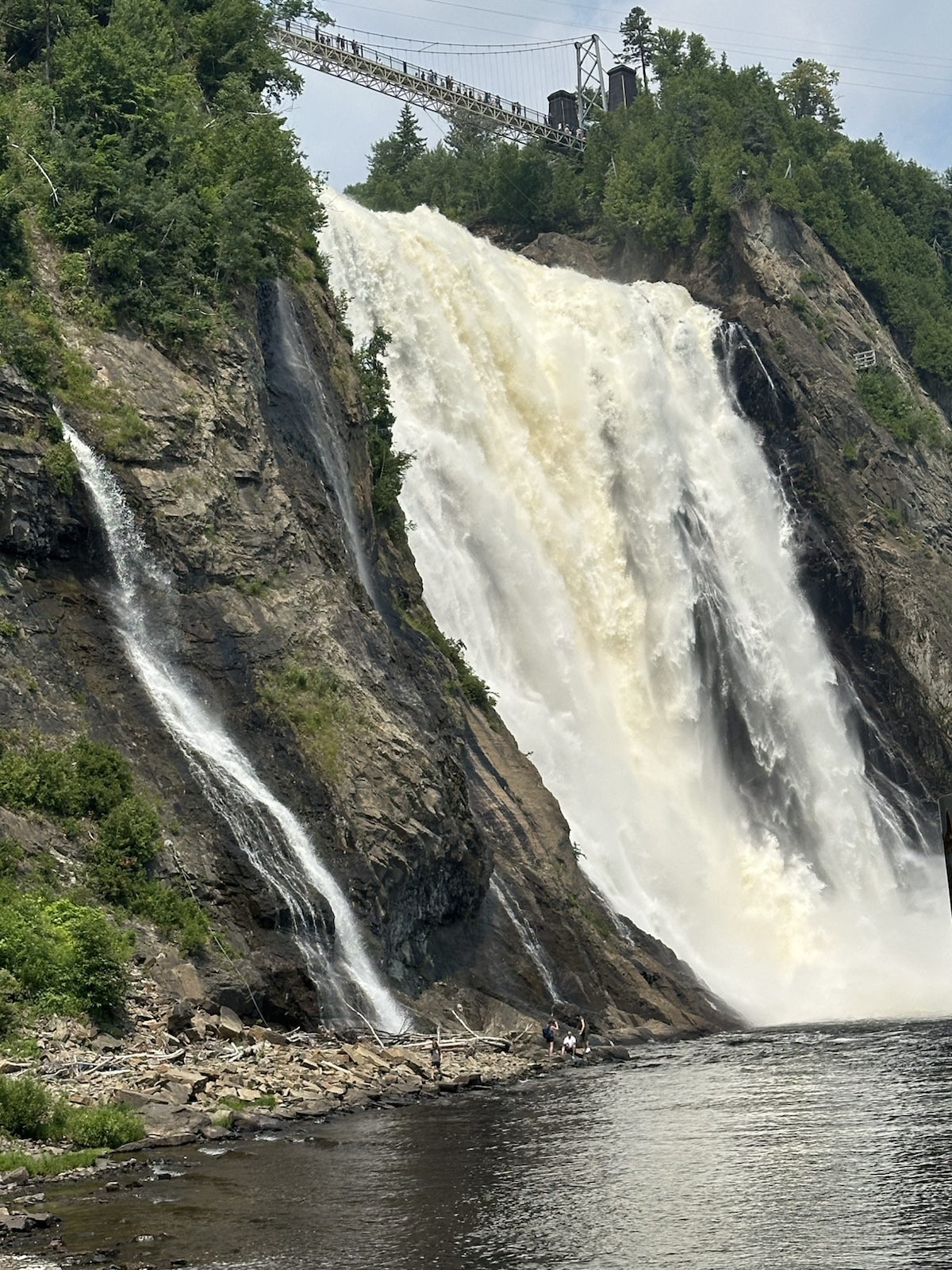
Our touring included a visit to Montmorency Falls (Chute Montmorency) which is a breathtaking natural wonder about eight miles east of Old Québec. The Montmorency River dramatically plunges into the St. Lawrence River and stands nearly 100 feet taller than Niagara Falls. It is the highest waterfall in Québec and one of the most stunning in Canada.
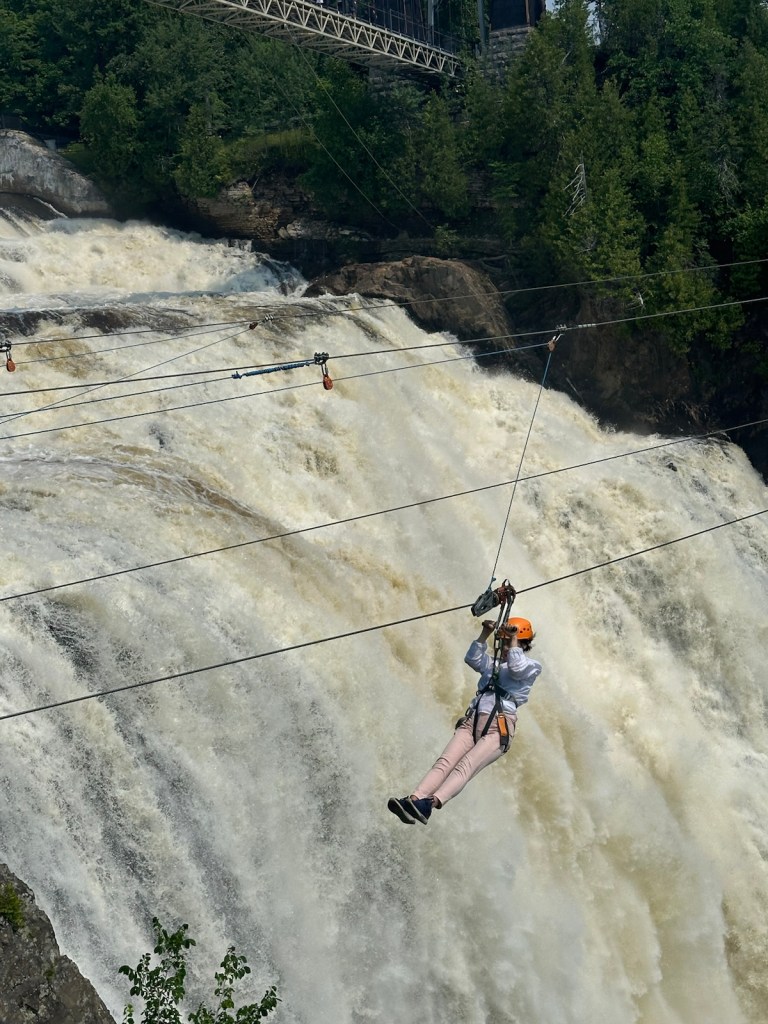
The zip line delivers a dramatic rush as you soar high above the roaring waterfall — your feet dangling in midair, mist brushing your face, and the thunder of the cascade echoing below. Sounds exhilarating but not for me … I’ll take the stairs.
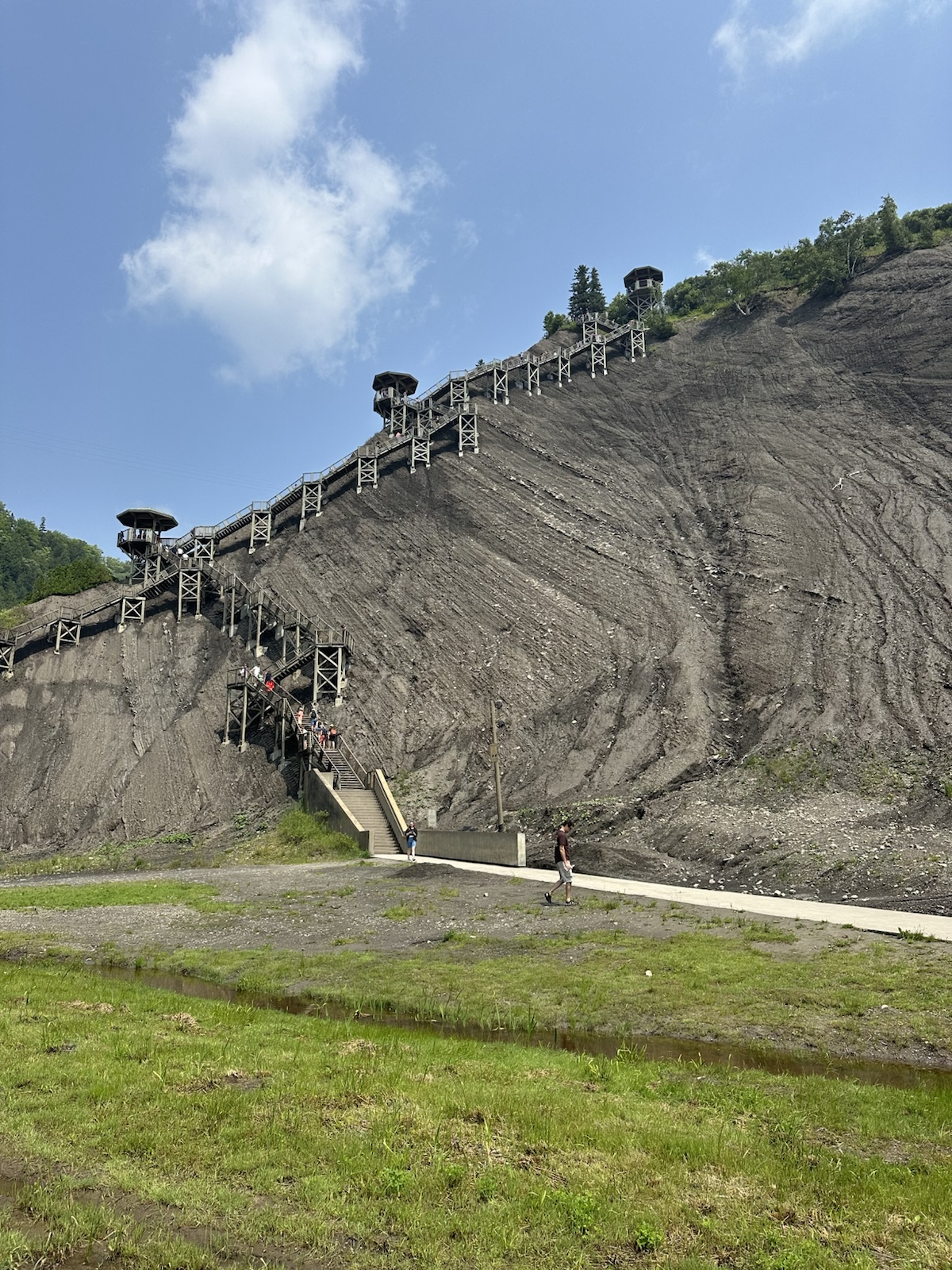
A wooden staircase winds down the side of the falls, offering incredible up-close views of the crashing water and misty spray as you descend.
The cool, misty spray at the base of the falls was a welcome relief on such a hot and humid day — like nature’s own air conditioning.
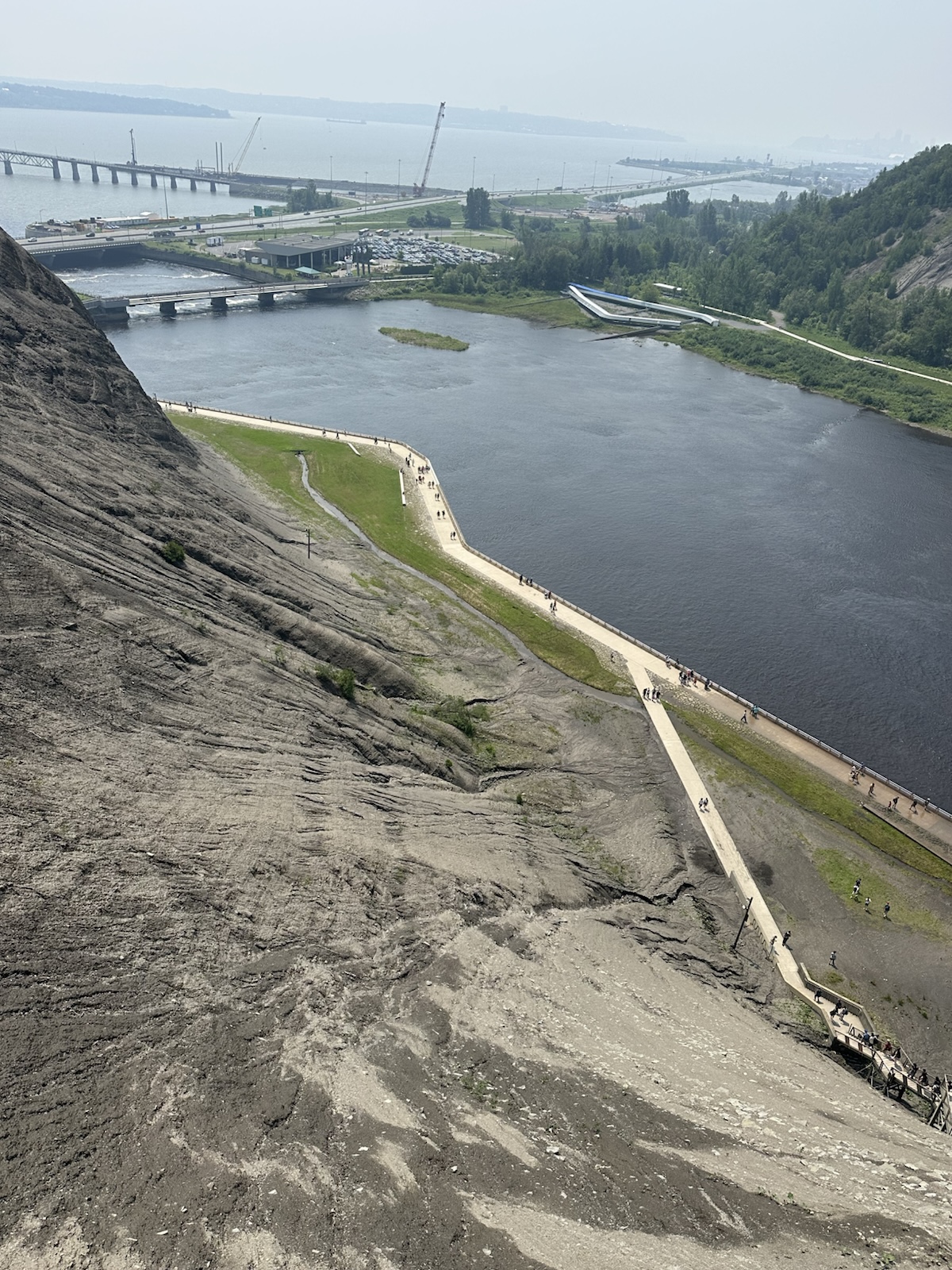
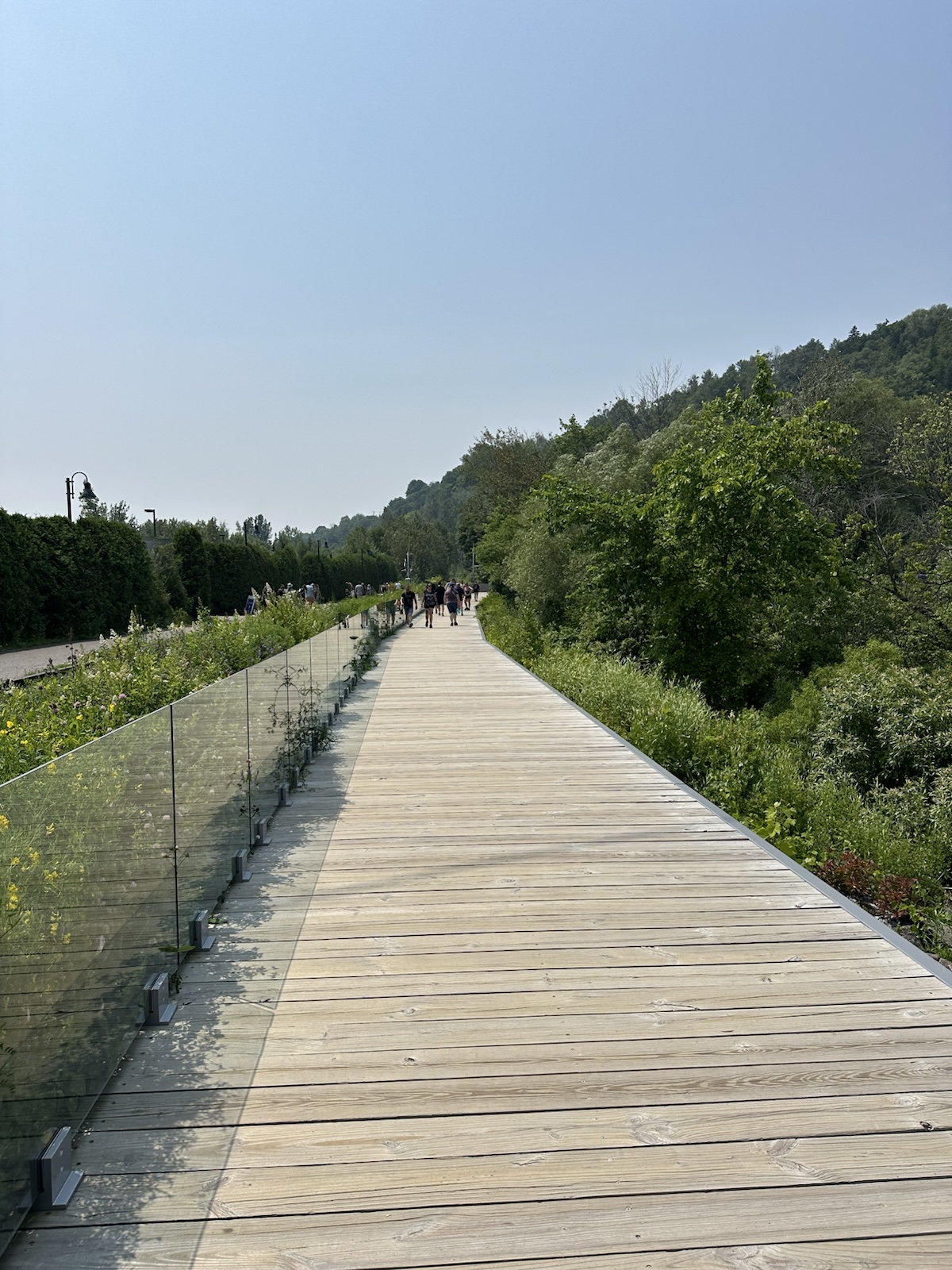
At the lower level of the park, a pleasant walkway loops around, leading back toward the base of the waterfalls.
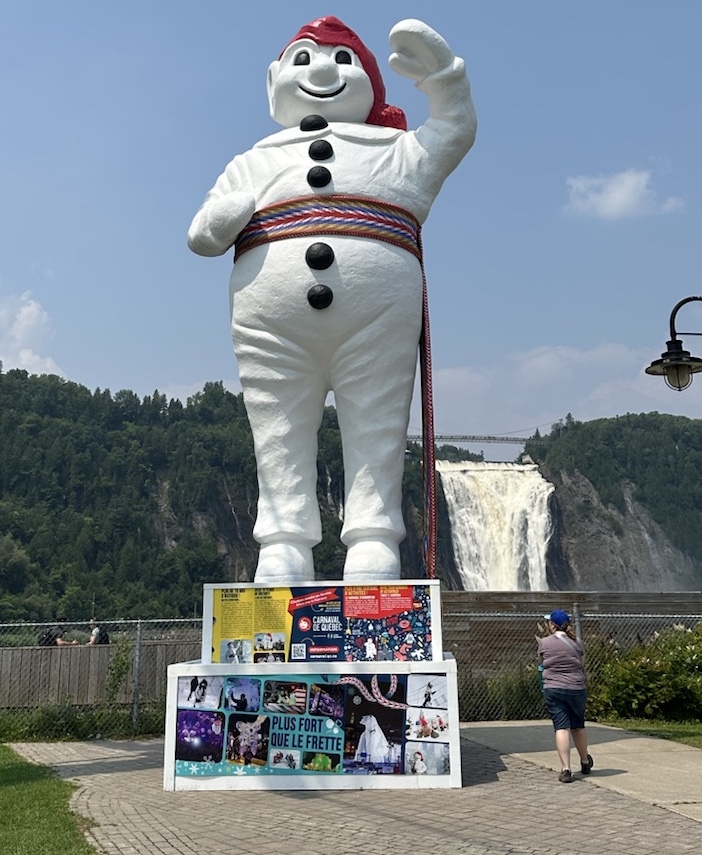
Near the cable car terminal stands a cheerful statue of Bonhomme Carnaval — the beloved, pudgy snowman serves as the mascot of Québec’s Winter Carnival. We rode the cable car back to the top, enjoying one last sweeping view of the falls followed by a little break in the shade.
Montmorency Falls was a highlight of our Canada tour — breathtaking views, fun trails, and definitely a must-see!
The drive from Montreal to Quebec City is about three hours. Halfway is a charming little town called Trois-Rivières — the perfect stopping point for stretching legs and coffee.
As the name suggests, the city sits at the mouth of the Saint‑Maurice River, which splits into three channels before joining the St. Lawrence, creating the “three rivers”. Founded in 1634, it is the second-oldest settlement in North America
Parc Portuaire in Trois‑Rivières is a charming riverside park situated in the historic Old Town along the St. Lawrence River.
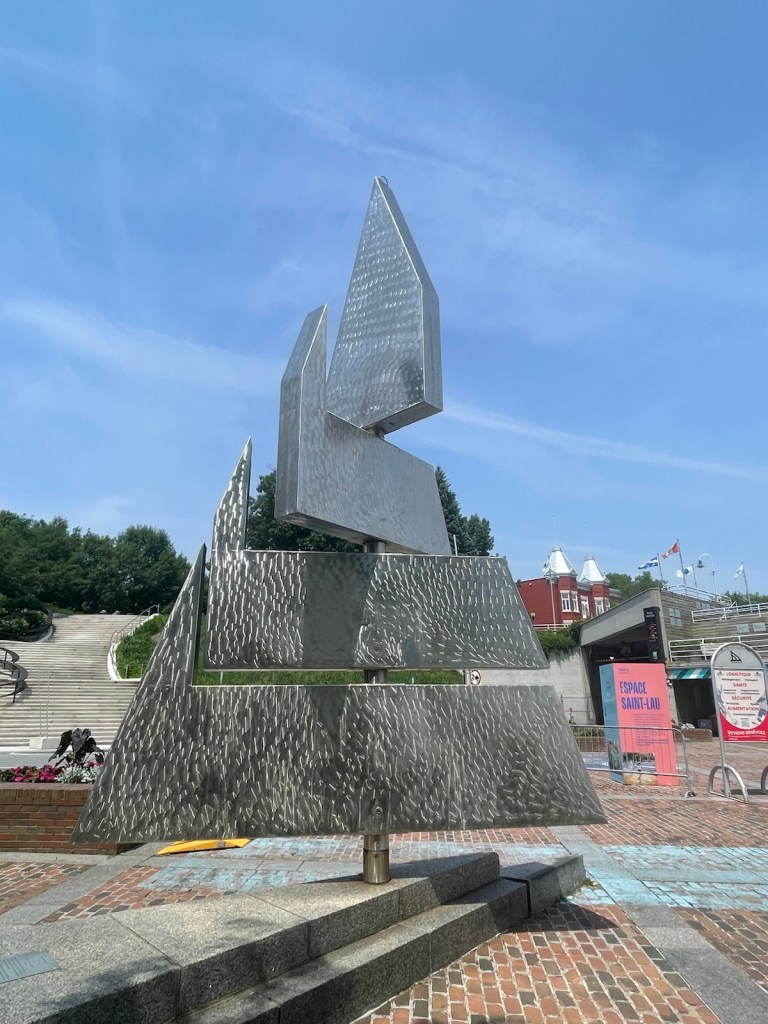
Dominating the riverside promenade, is a whimsical kinetic metal sculpture. Created in 1984 by Jean‑Jacques Besner, its rotating metal panels evoke both conifers and ship sails — reflecting the area’s forestry and maritime heritage.
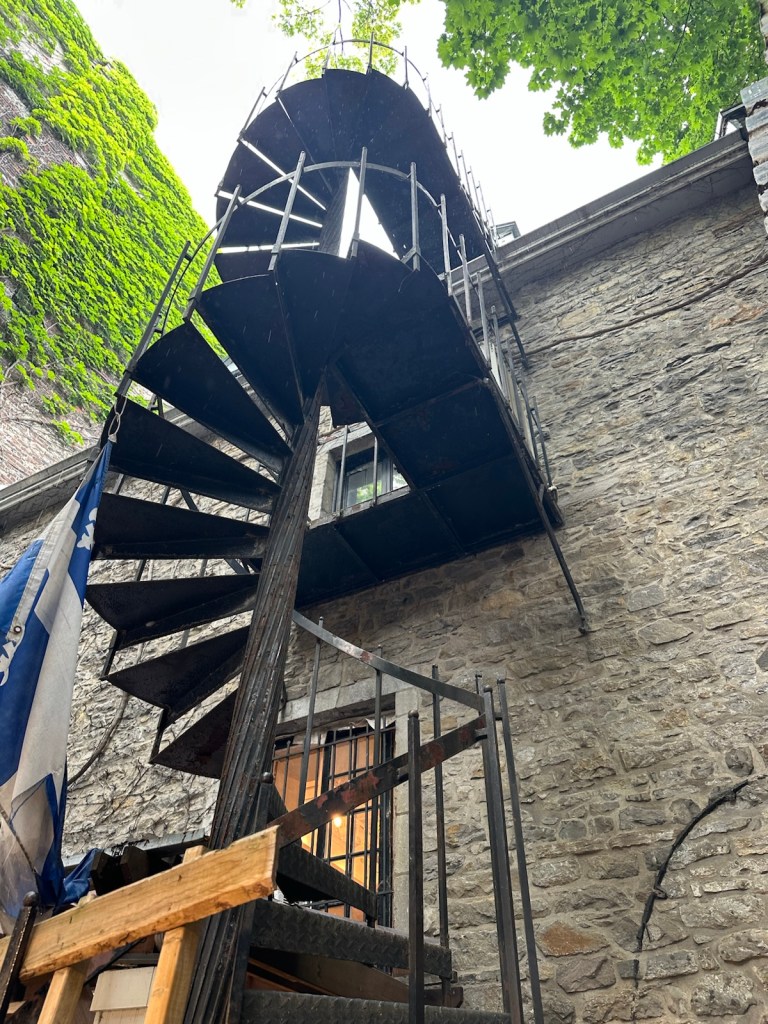
In the historic core of Trois‑Rivières, many stone and brick homes still showcase their original spiral staircases — elegant reminders of French colonial architecture adapting to Quebec’s evolving urban fabric.
These graceful spirals harken back to 19th century building trends across Québec, where exterior stairs were common. Yet when winter arrives, their elegant curves take on a more treacherous twist — locals jokingly refer to them as ‘slippery spirals,’ as ice transforms each graceful step into a cautious adventure.
Three Rivers was an absolute gem — and now we’re ready to press on toward our next destination. Back on the road, we could feel our destination drawing nearer with every mile.
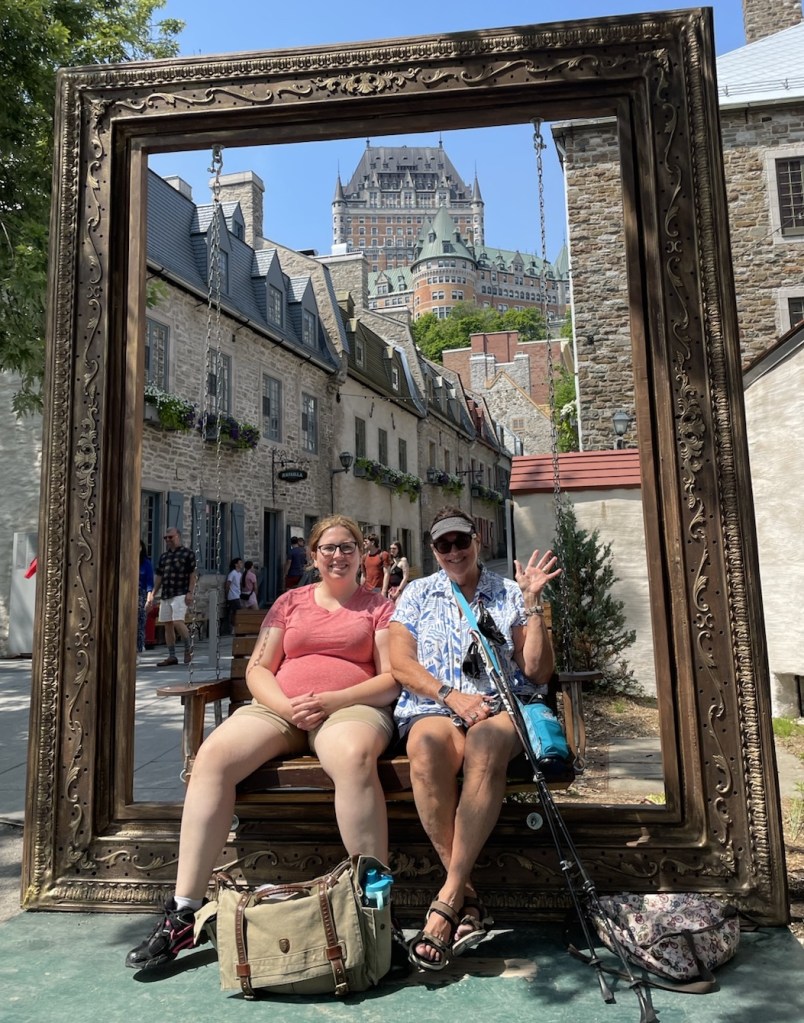
Quebec City is a very enchanting city where old-world charm, French culture, and modern Canadian life come together in a cobblestoned, castle-topped setting. As the capital of the province of Québec, it’s a cultural and historic treasure that feels like Europe.
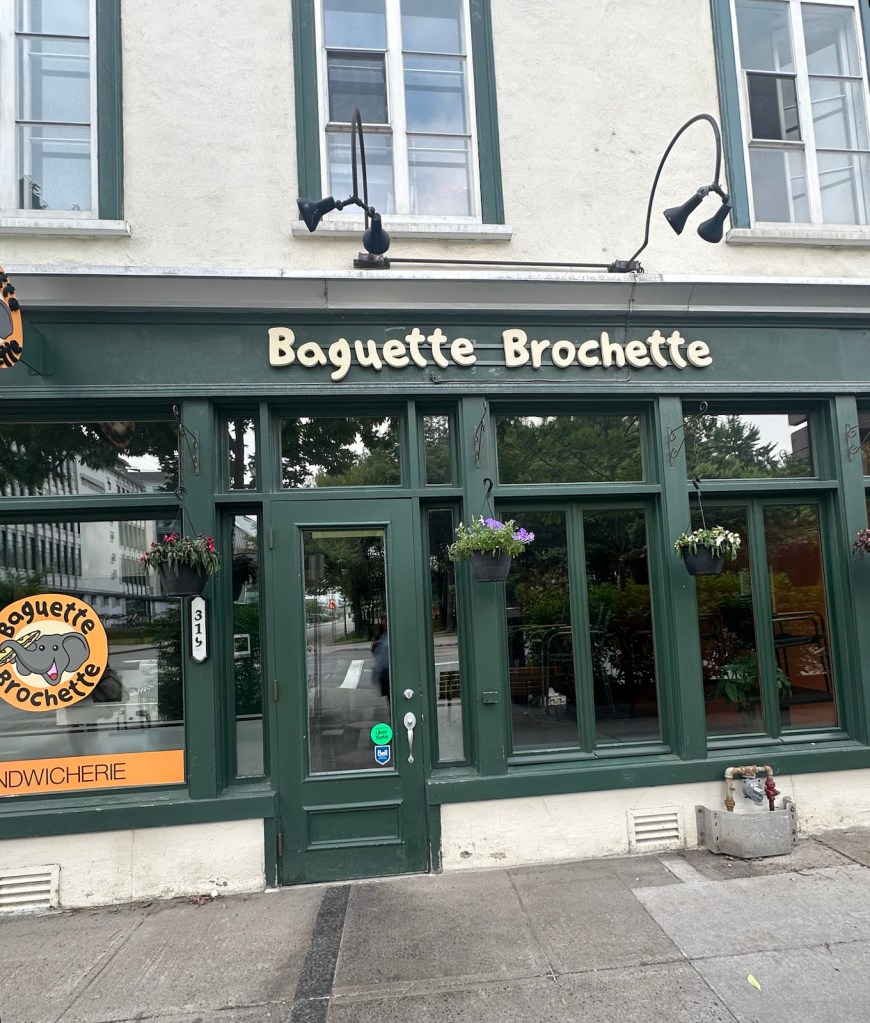
Our accommodations were about a mile from old Quebec City in an apartment above Le 101 Restaurant de Quartiere, a family-owned French-inspired bistro.
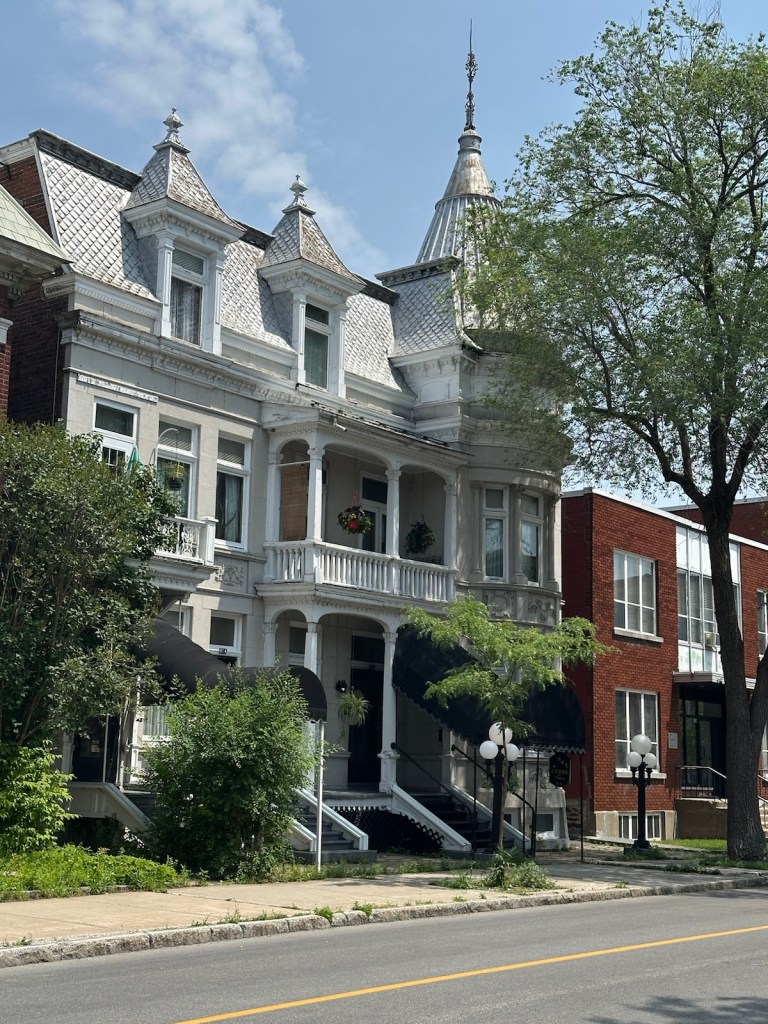
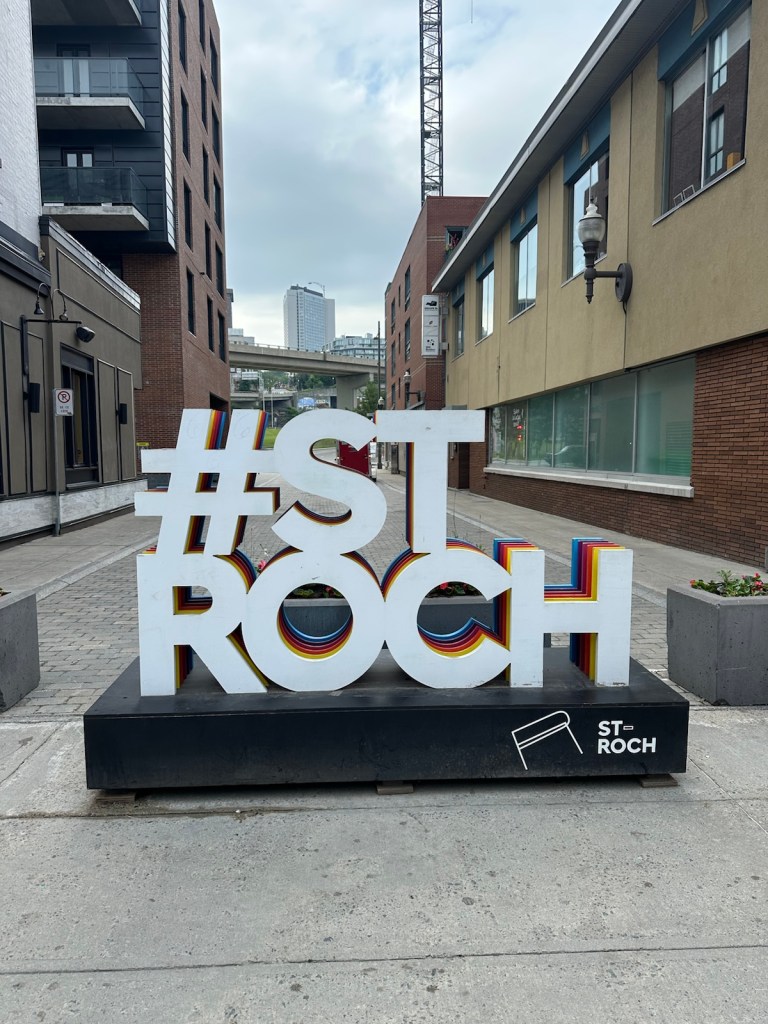
This working-class neighborhood has been reborn as the creative heart of Québec City. After years of decline the neighborhood rebounded dramatically beginning in the 1990s with adaptive reuse of old buildings that added new energy to the streetscape. Saint-Roch is now a creative crossroads where design studios, digital firms, galleries, and cafés coexist in refurbished heritage buildings.
An eclectic mix of shops and local stores contribute to the creative energy of the area. While signs of hardship linger — an occasional person sleeping rough or struggling on the sidewalk — the neighborhood has come a long way in its revitalization. Today, it buzzes with a youthful vibe featuring appealing indie boutiques, microbreweries, and even a couple of Michelin-recognized restaurants.
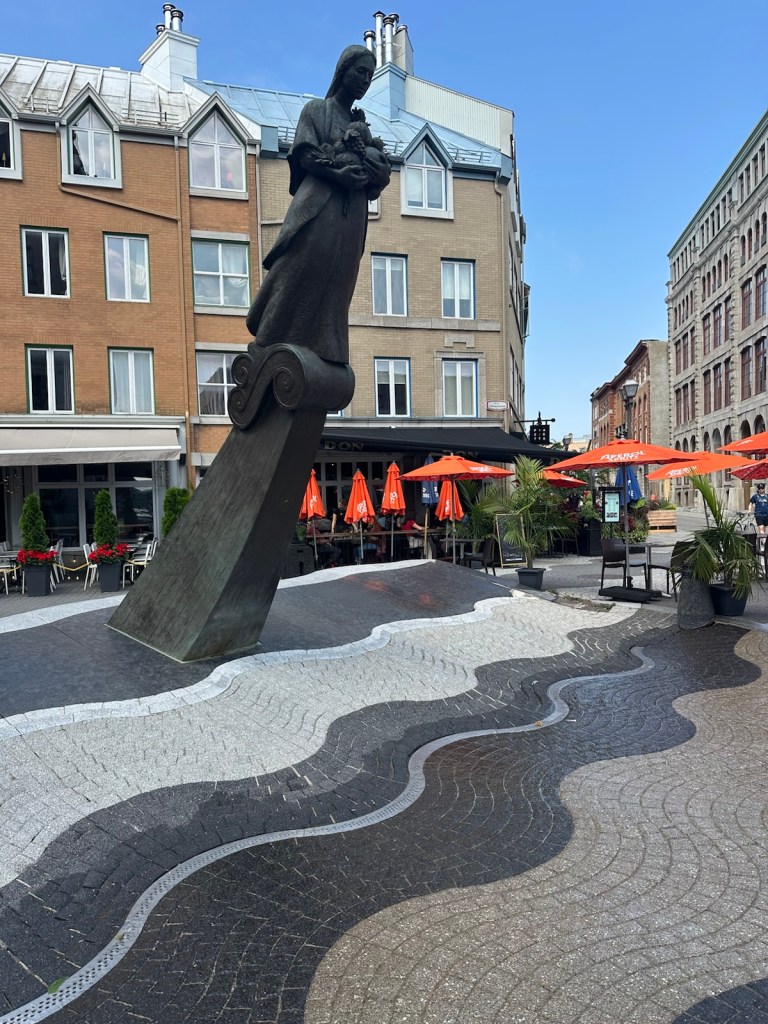
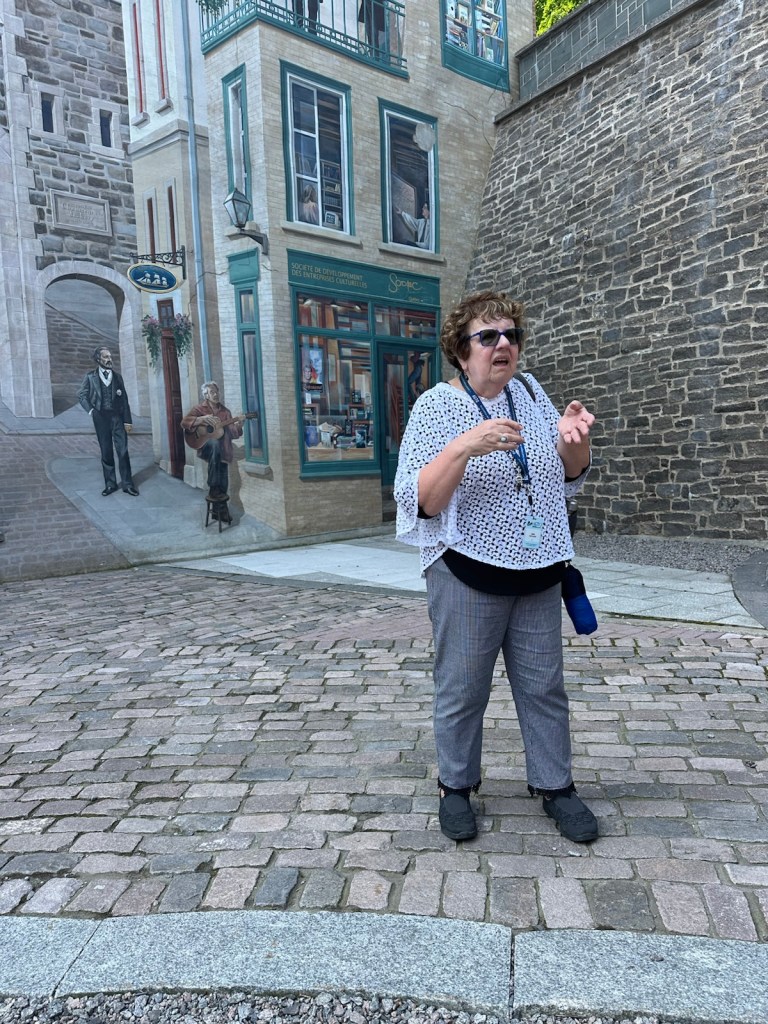
We joined a walking tour that began at the edge of the Saint-Roch district, where it meets Old Québec’s Lower Town. Nearby is a striking bronze statue called La Vivrière. Poised atop a pedestal, the woman cradles an armful of fruits and vegetables. Our guide explained that her graceful yet steadfast posture symbolizes both strength and serenity — as if she’s a guardian of nourishment. Modeled after a ship’s figurehead, the sculpture also pays tribute to Québec’s deep maritime roots.
Beneath the statue, the ground is tiled with wavy, flowing lines, giving the illusion of water. A small stream of real water flows through this feature, turning the space into a symbolic riverbank. At one time, the St. Lawrence River reached this very spot before land reclamation expanded the shoreline outward.
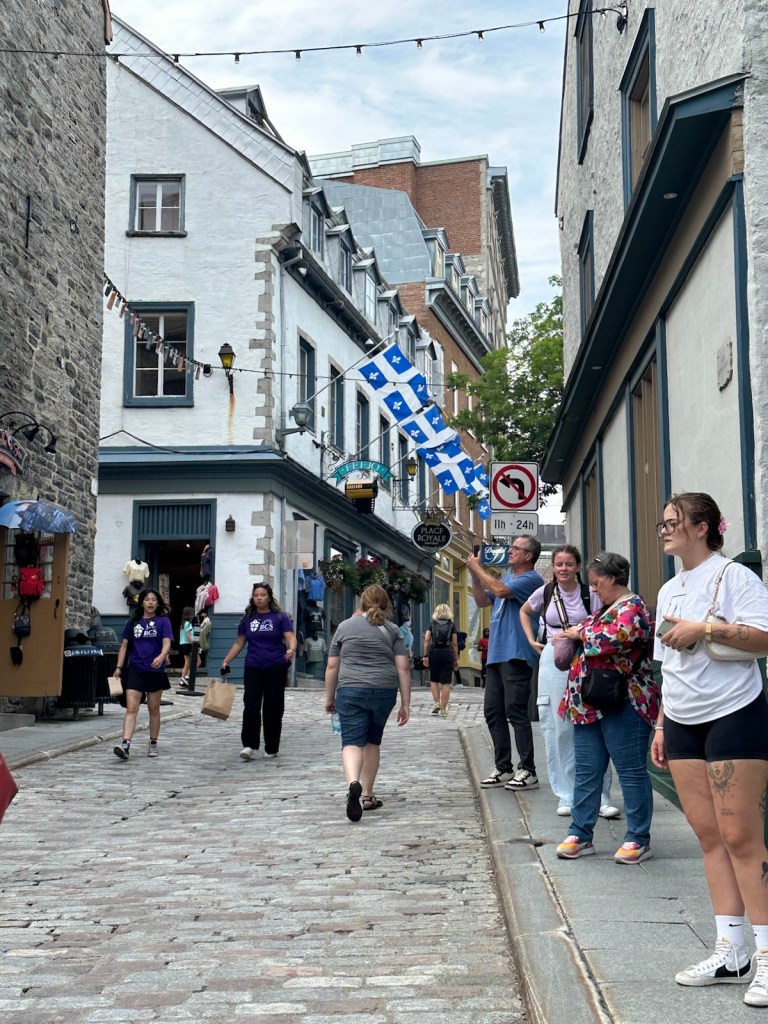
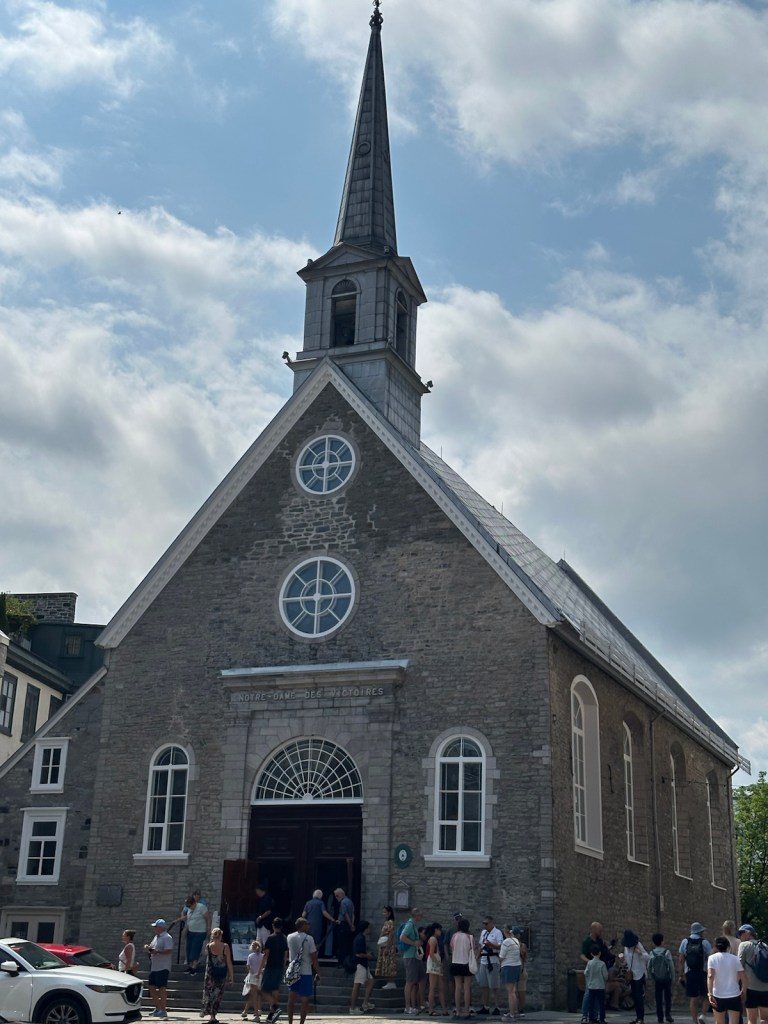
The tour wandered through the city’s historic heart. Our guide led us through a charming square called Place-Royale.
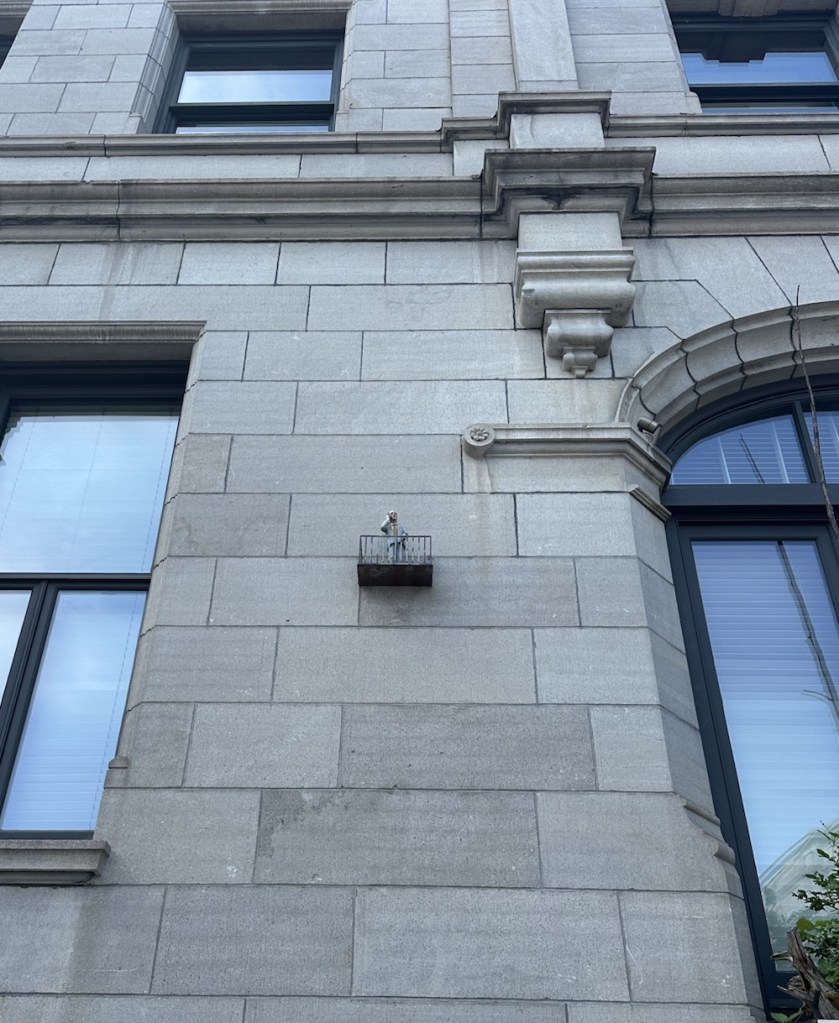
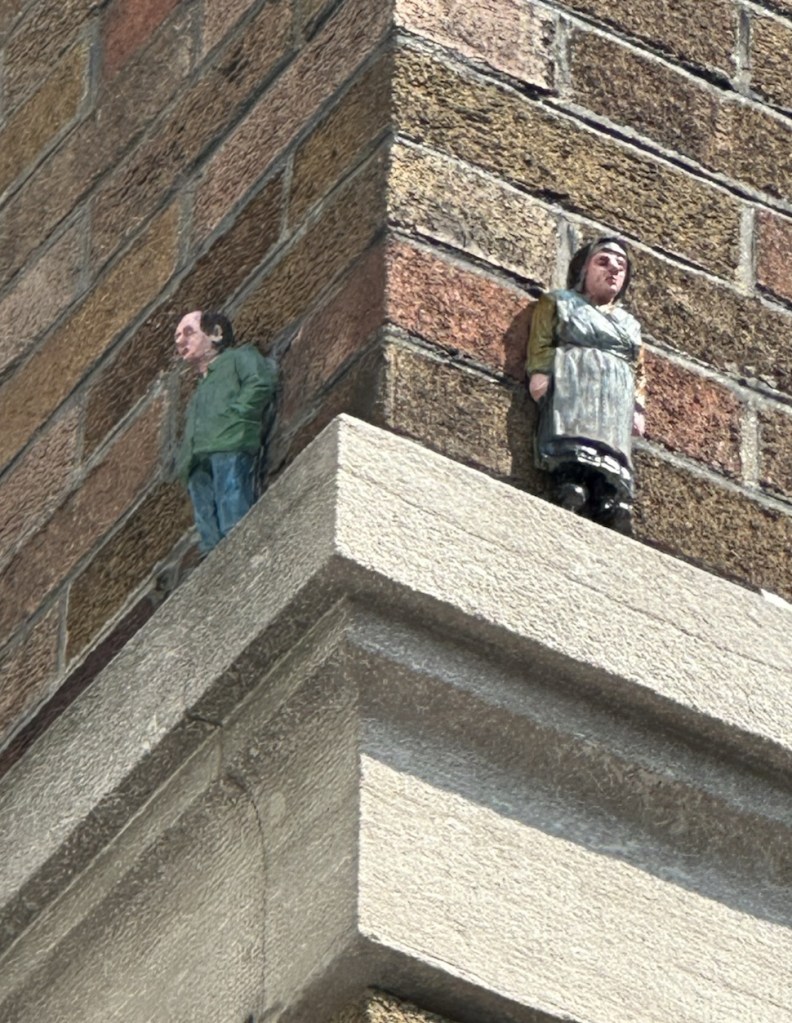
She told us about an outdoor art installation called Cement Eclipses. It features 45 miniature cement sculptures of urbanites often perched on ledges, tucked into wall corners, or along façades. These tiny figures blend so seamlessly that they’re hard to spot. It makes you want to look more closely at their surroundings.
Hunting for the Cement Eclipse figures encourages a closer look at the forgotten corners and quiet details of Old Quebec’s historic buildings.
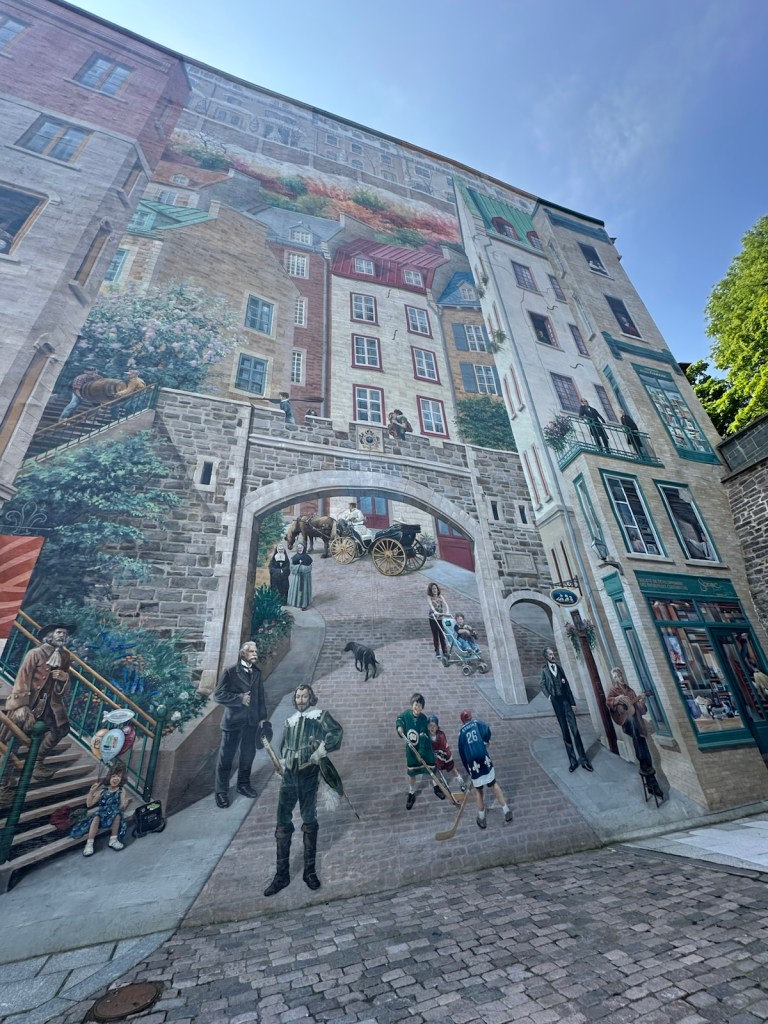
Our guide spent a bit of time telling us about La Fresque des Québécois, a stunning mural that stretches across the side of a three-story historic building. She pointed out its many intricate details — a vivid historical panorama capturing 400 years of Quebec City’s evolution, from its architecture and fortifications to scenes of daily life. It’s a captivating fusion of art, history, and illusion that draws you in the more closely you look.
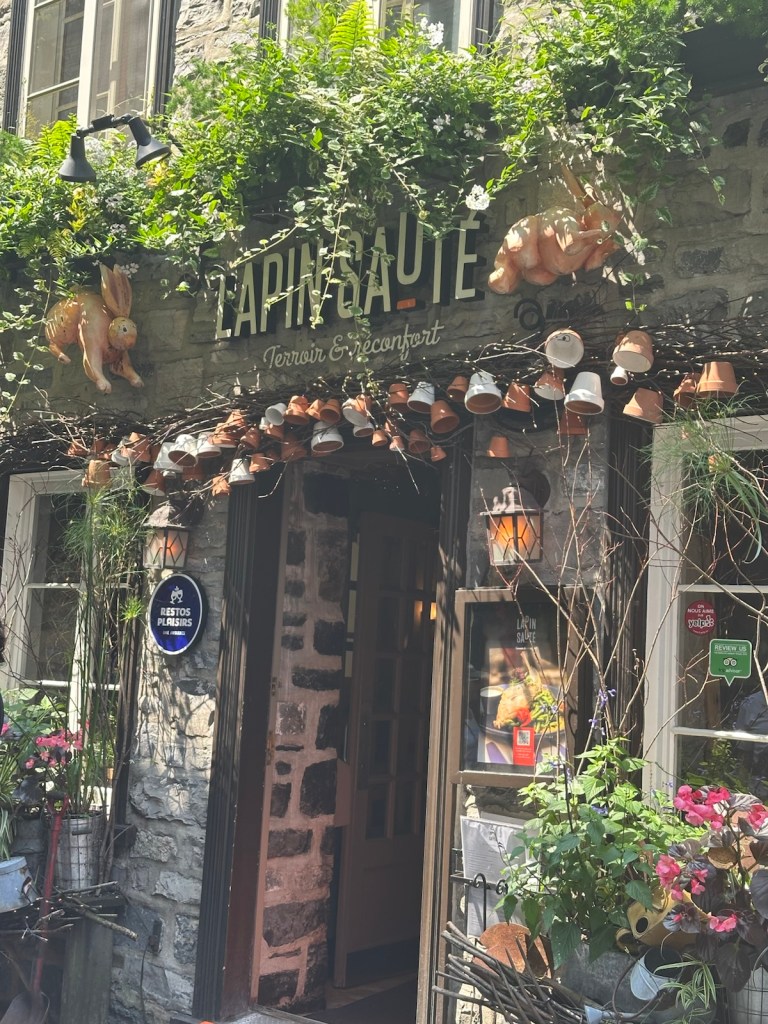
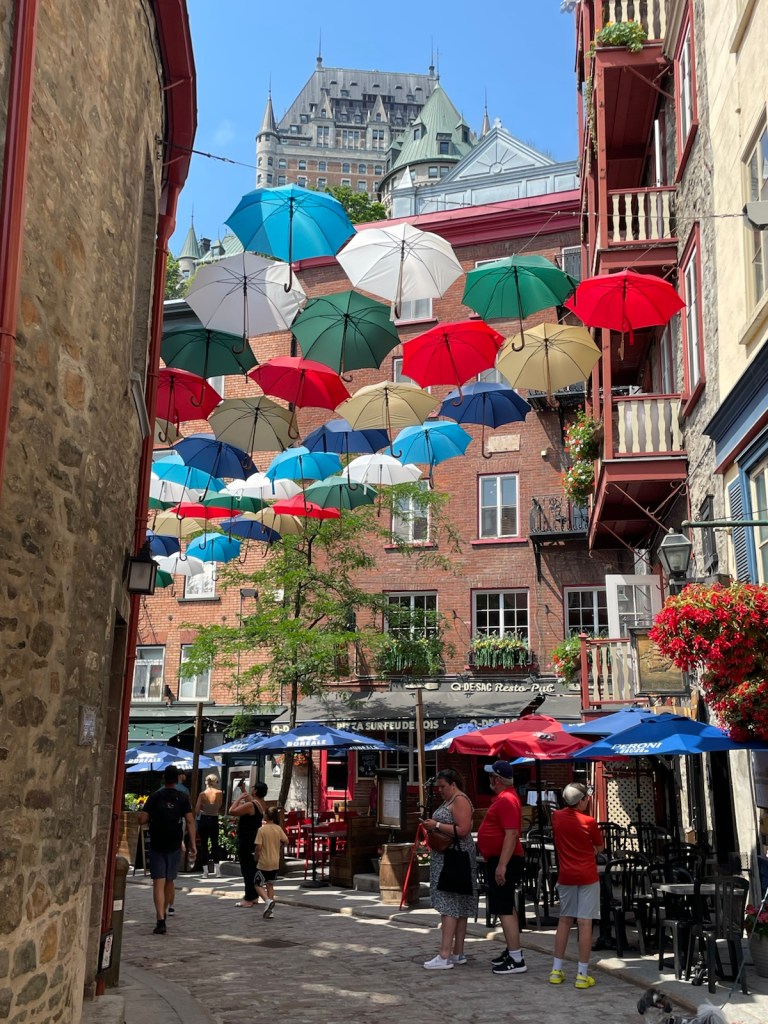
We strolled into the Lower Town area which is also called Basse-Ville which has a more intimate, storybook charm. Nestled along the riverbank, it features narrow alleys, stone warehouses, cozy cafés, and vibrant boutiques.
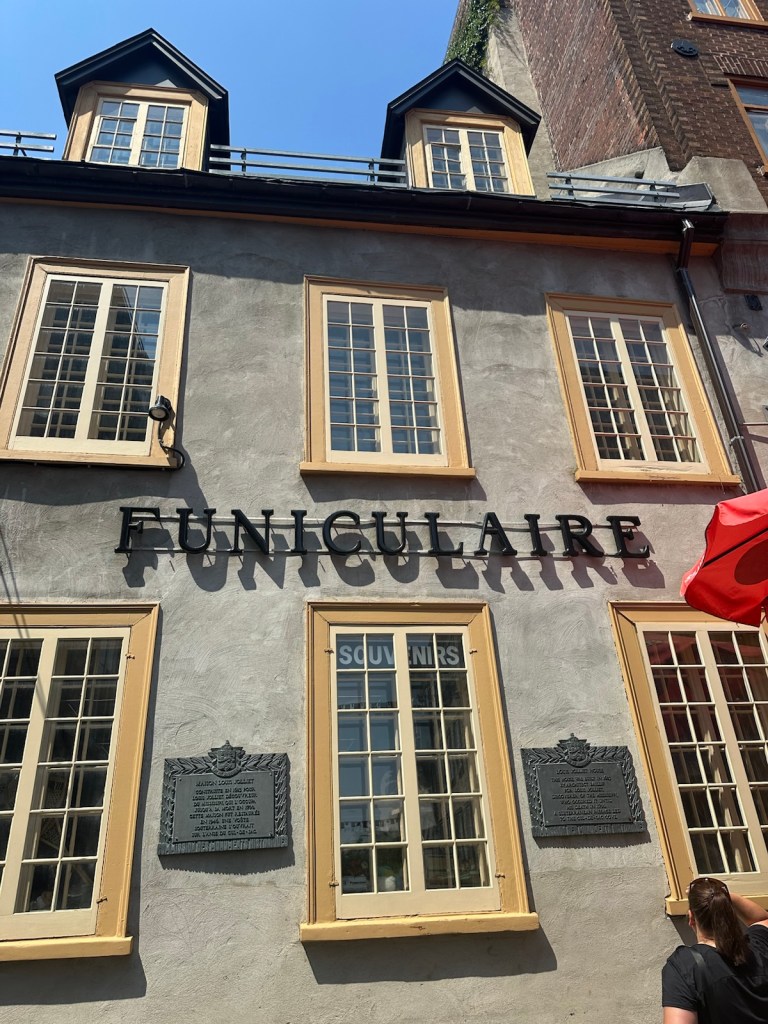
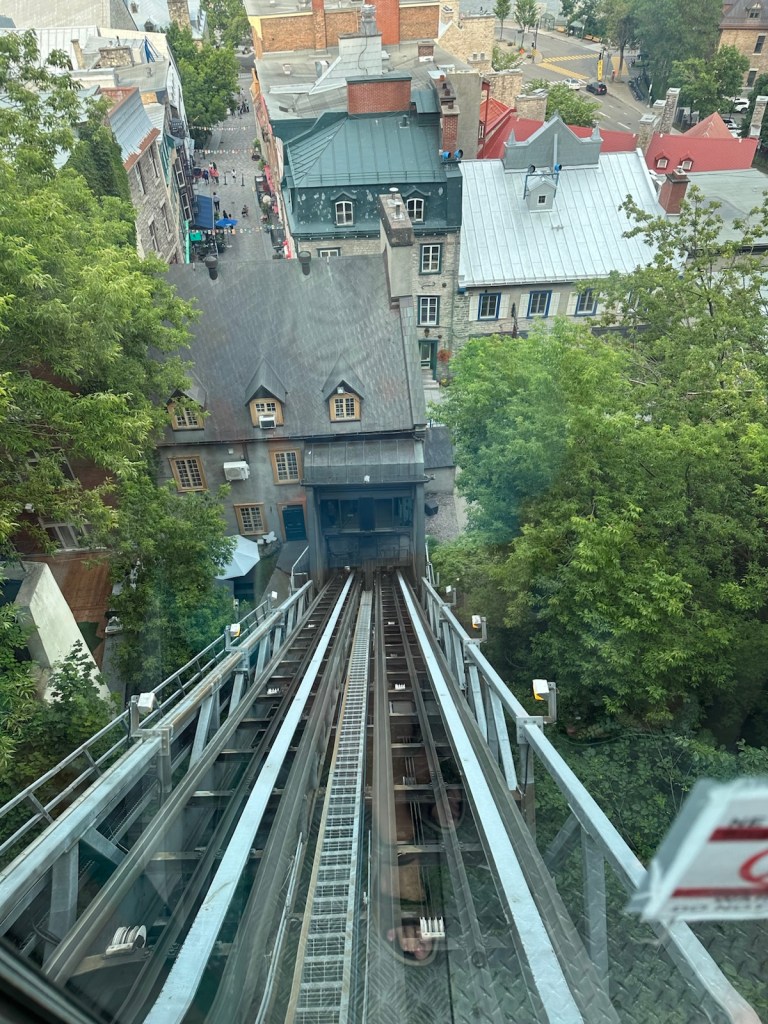
Next stop is Upper Town also known as Haute Ville. The two neighborhoods are linked by steep staircases and winding streets — they are also connected by the charming funicular — a short glass cabin ride that offers great views as it glides up the cliffside
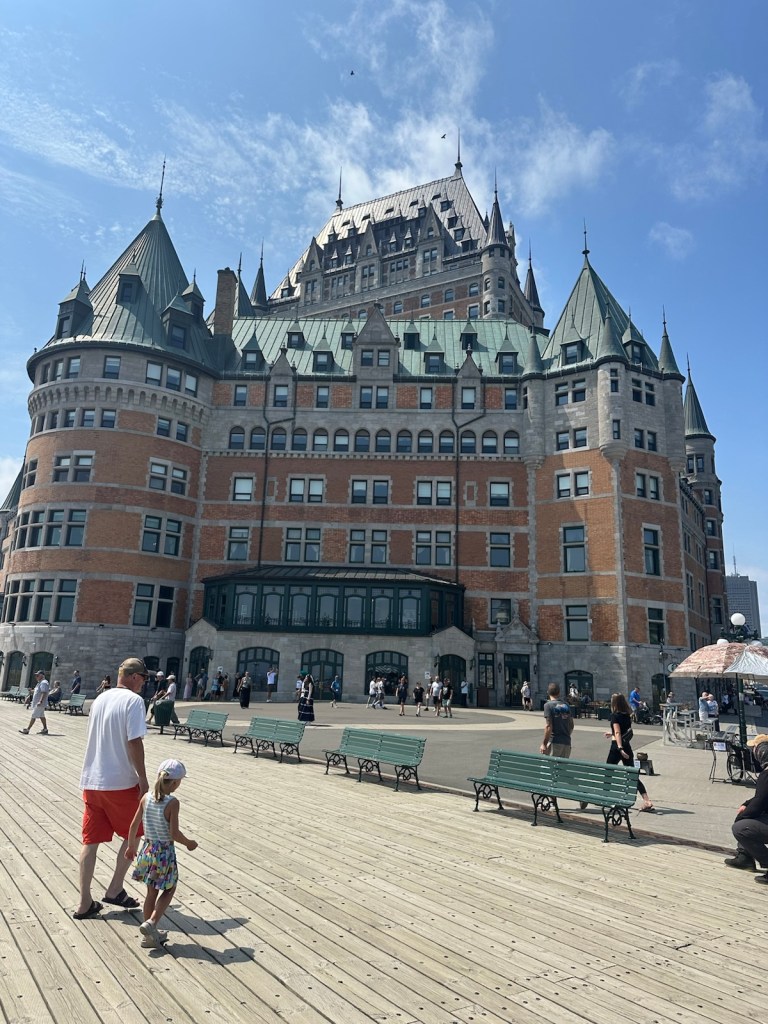
The most outstanding sight in upper town is Château Frontenac — a grand, castle-like hotel perched high above the St. Lawrence River. Opened in 1893, it’s the most photographed hotel in the world and a symbol of the city’s old-world charm.
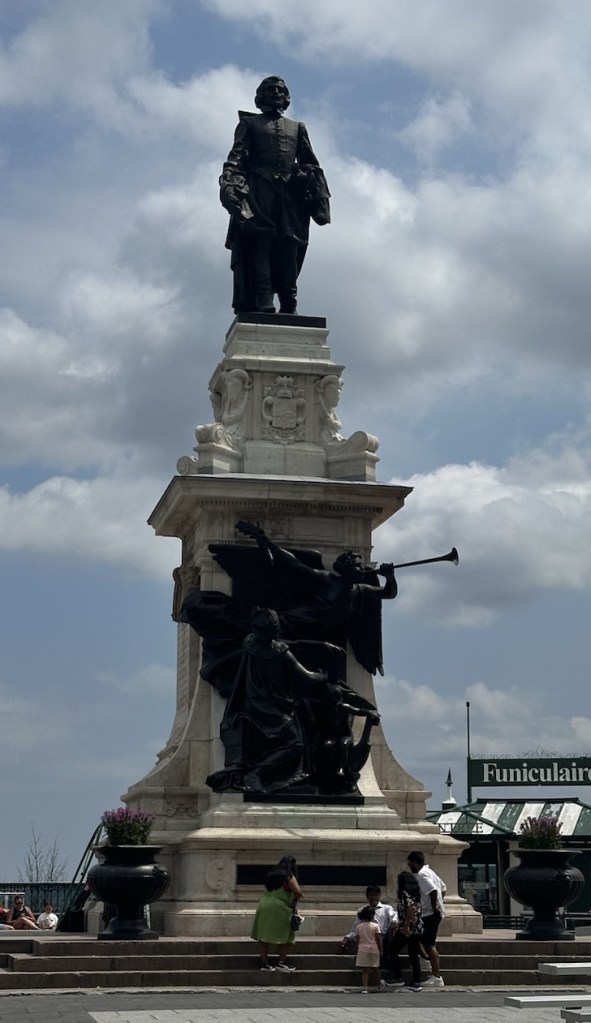
The statue of Samuel de Champlain stands proudly at the top of the funicular, offering a grand and symbolic welcome to Québec’s historic Upper Town. As the founder of the city, his presence here feels both fitting and timeless.
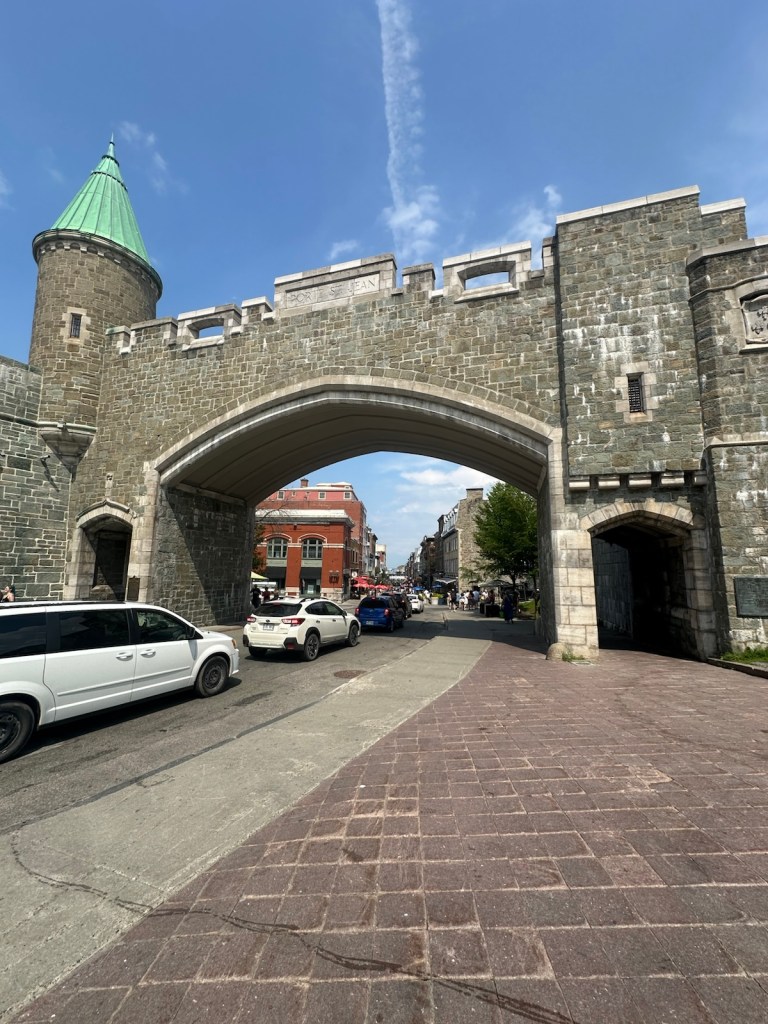
Encircling it all is the Fortified Wall, the only remaining city wall north of Mexico. Built by the French and expanded by the British, it still wraps around Old Québec — a UNESCO World Heritage treasure that makes the city feel like a European time capsule.
Chateau FrontenacChamplain StatueCity Wall
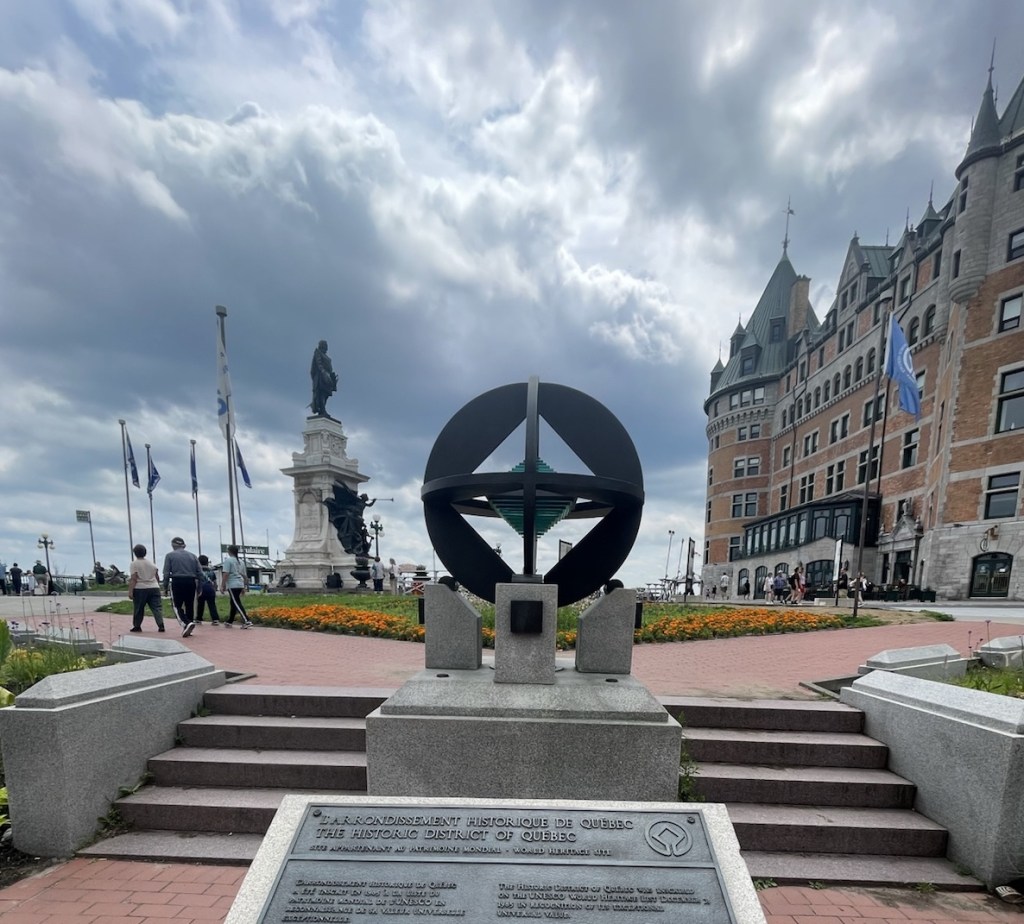
Just behind Château Frontenac atop the funicular is a striking round structure known as the UNESCO Monument, located in Parc des Gouverneurs. It is a commemorative tribute to Old Québec being designated a UNESCO World Heritage Site in 1985.
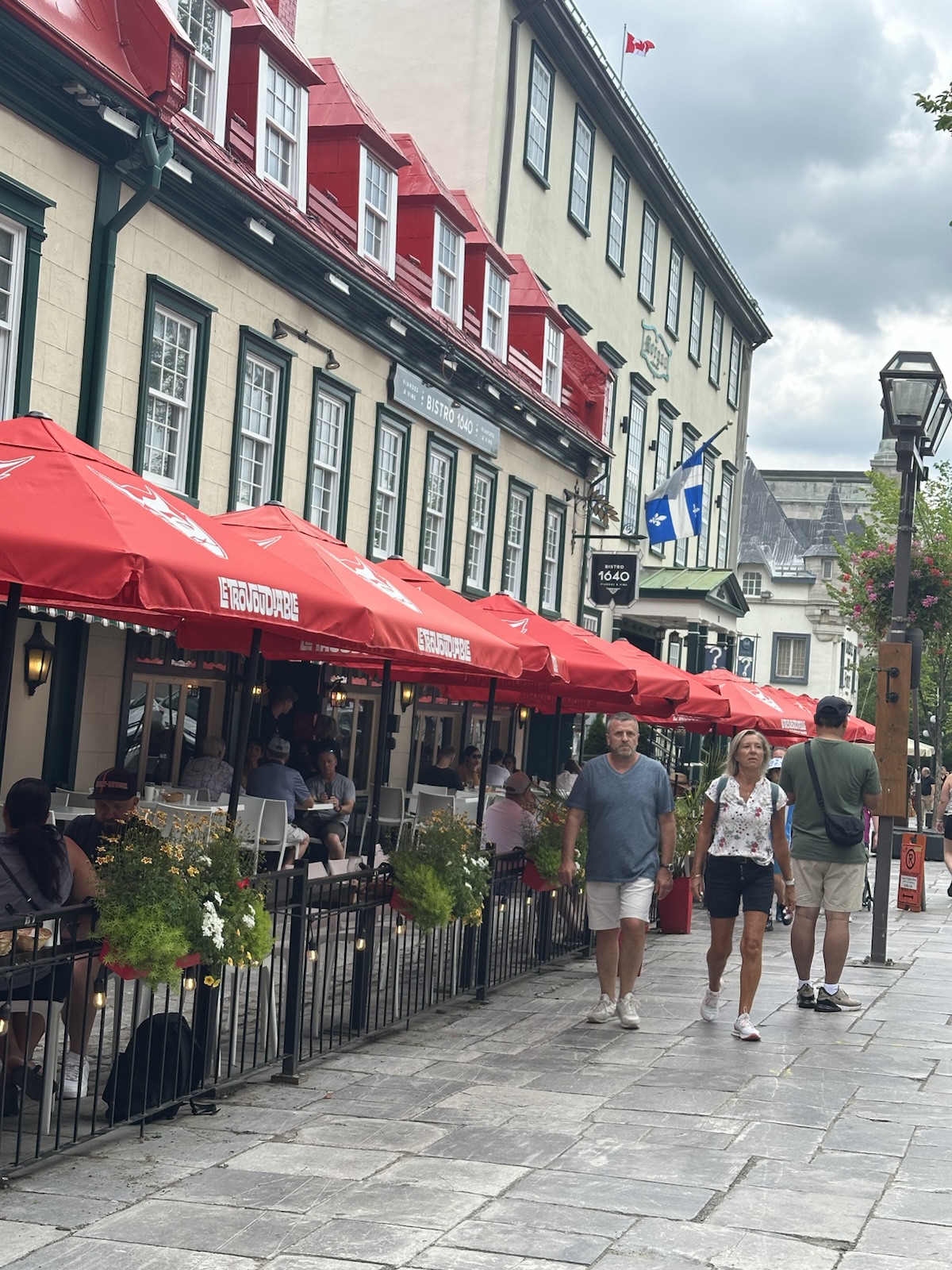
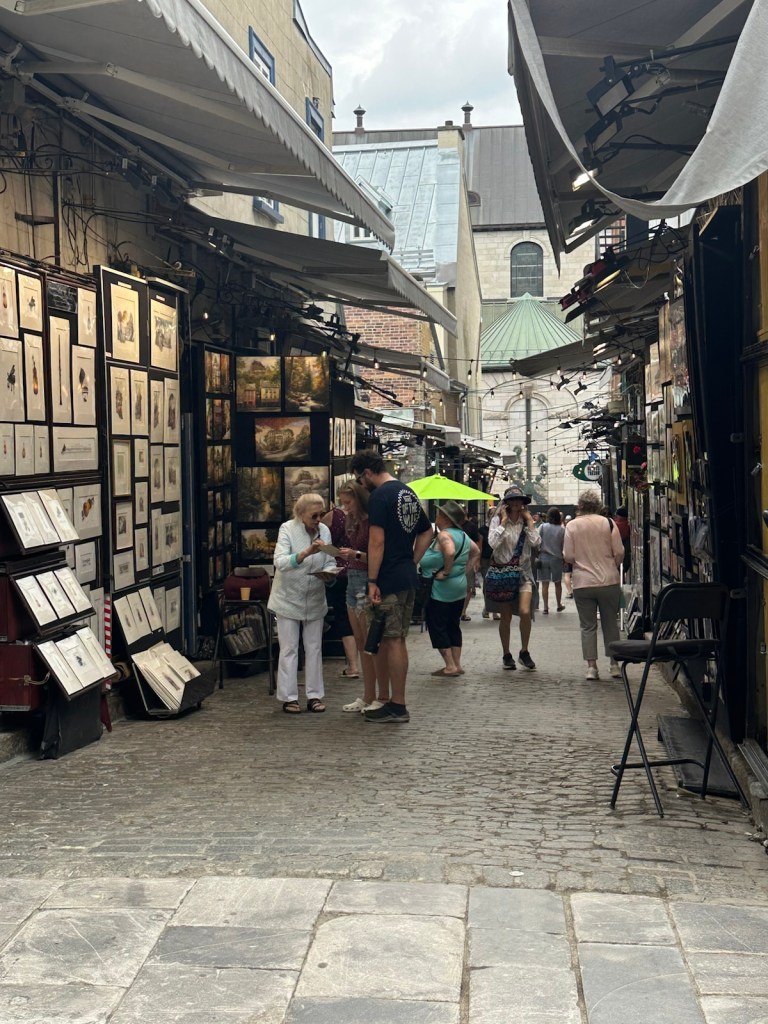
After passing the Château and the grand monuments that mark the entrance to Upper Town, you’ll find yourself surrounded by a vibrant mix of shops, cafés, and restaurants — perfect for wandering, browsing, and tasting your way through the city.
Quebec City has been full of charm, history, and surprises — and we’re just getting started! Stay tuned for more cobblestone adventures and unforgettable sites.
Montreal is a vibrant, stylish, and culturally rich city — a bilingual blend of old-world charm and modern creativity. Located in the province of Quebec, it’s the second-largest city in Canada and the cultural heart of French-speaking Canada.
Montreal’s street art scene is one of the most vibrant and respected in the world — bold, expressive, and deeply tied to the city’s culture.
The statues below are, “The French Poodle and The English Pug”
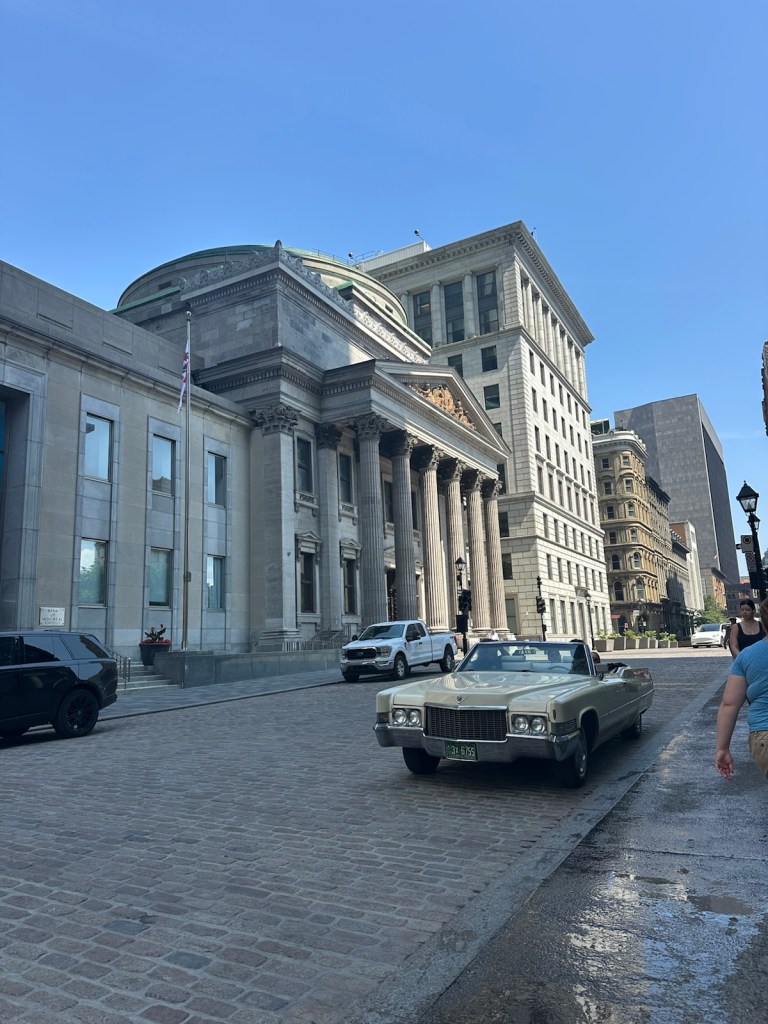
On one corner stands a refined woman dressed in a Chanel-style suit, clutching a French poodle. With her nose pointed upward, she glances — perhaps disdainfully — toward the Bank of Montreal, a symbol of English-Canadian financial dominance .
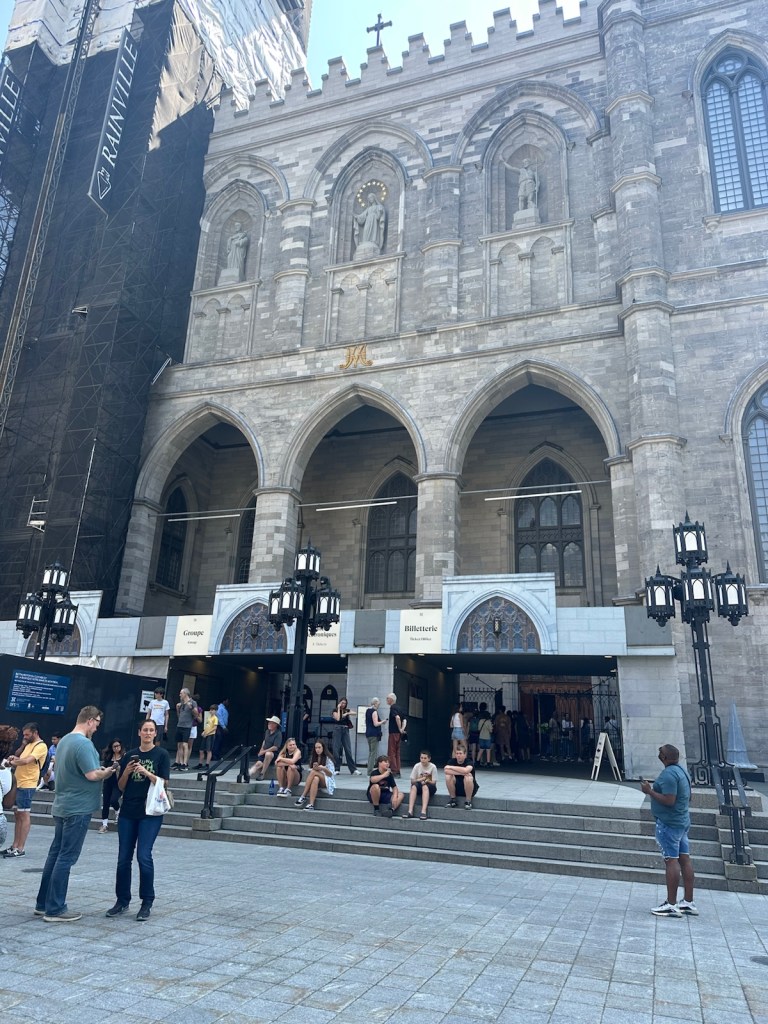
Across the square on the opposite corner, a finely dressed Englishman holds a pug and directs a superior gaze at the Notre-Dame Basilica, representing the historical religious authority of French-Canadians.
The piece invites both locals and tourists to reflect — with humor — on Montreal’s bilingual, bicultural identity
The Bank of Montreal and the Notre-Dame Basilica.
Shopping in Old Montreal (Vieux-Montréal) is like stepping into a stylish European village — with cobblestone streets, stone buildings, and a curated mix of boutiques, art galleries, and souvenir shops tucked into 17th- and 18th-century architecture.
The streets of Old Montreal were hot and humming with life, pushing our limits as we wandered on, eager to soak it all in. We had hoped to catch the fireworks, but in the end, the heat got the best of us, and we retreated gratefully to our hotel refuge.
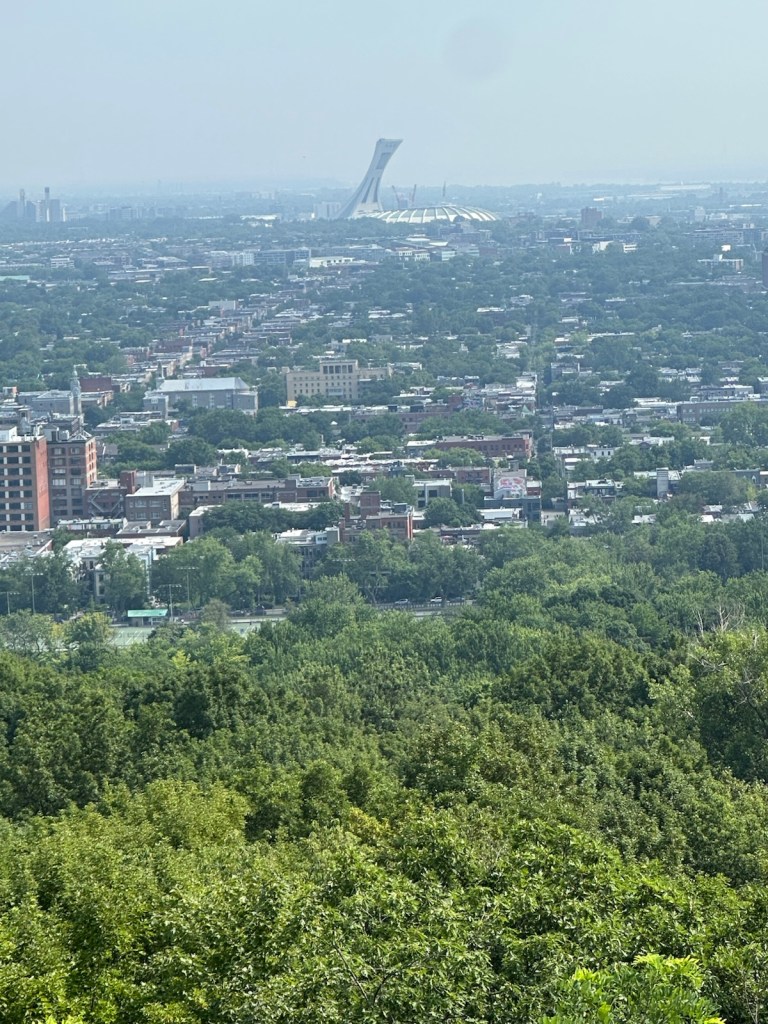
Before leaving town, we made a final stop at Mount Royal for a sweeping view of the city. In the background is Montreal’s Olympic Stadium which was built for the 1976 Summer Olympics. Though the skyline was softened by a haze of wildfire smoke, the vista still held its quiet charm.
While in Canada, it only makes sense to visit Ottawa — Canada’s capital and seat of its federal government. Ottawa is a city where stately government buildings meet vibrant neighborhoods, rich history, and natural beauty. Located in eastern Ontario on the banks of the Ottawa River, it sits right on the border with Quebec, blending English and French cultures. So off we went to explore Parliament Hill and the ByWard neighborhood.
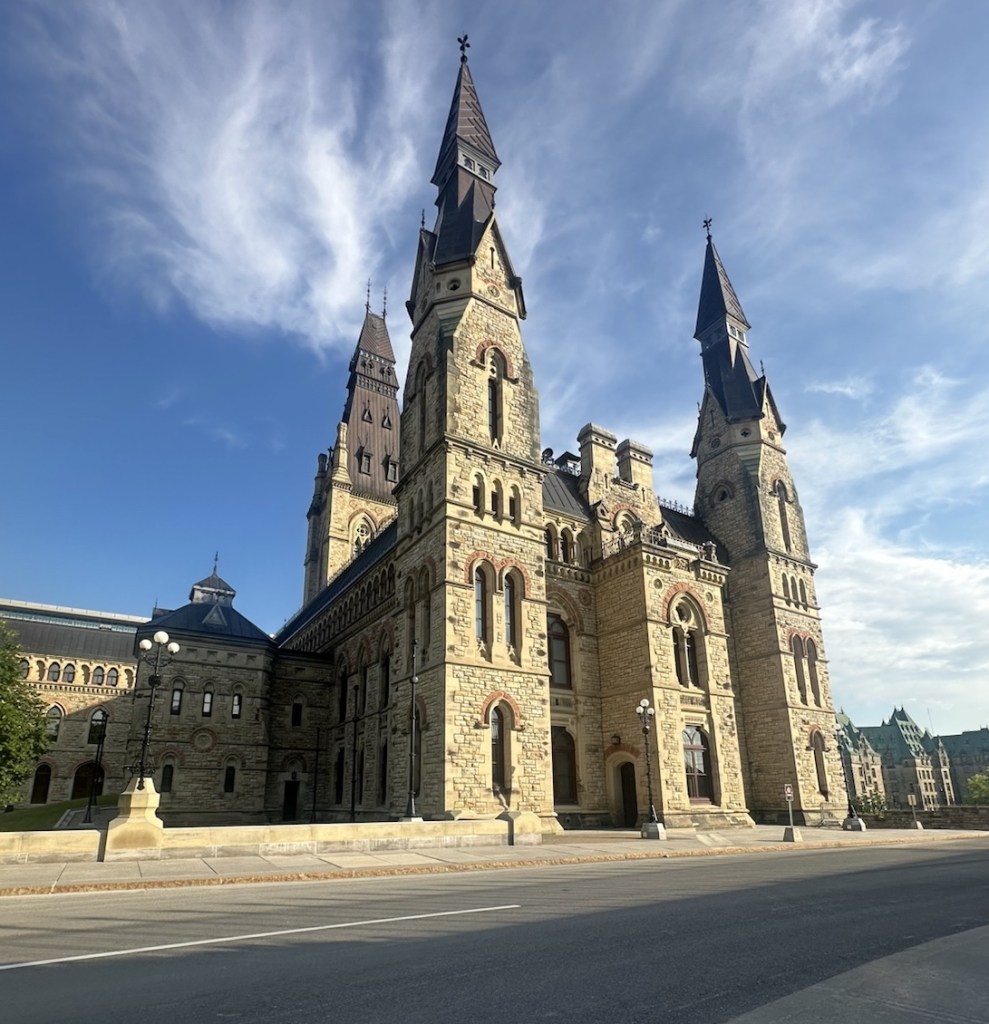
Centre Block is the main building on Parliament Hill. It is home to the House of Commons and Senate chambers, with the iconic Peace Tower rising in the center. Even while under renovation, its dramatic silhouette defines Ottawa’s skyline and it is one of the most photographed buildings in Canada.
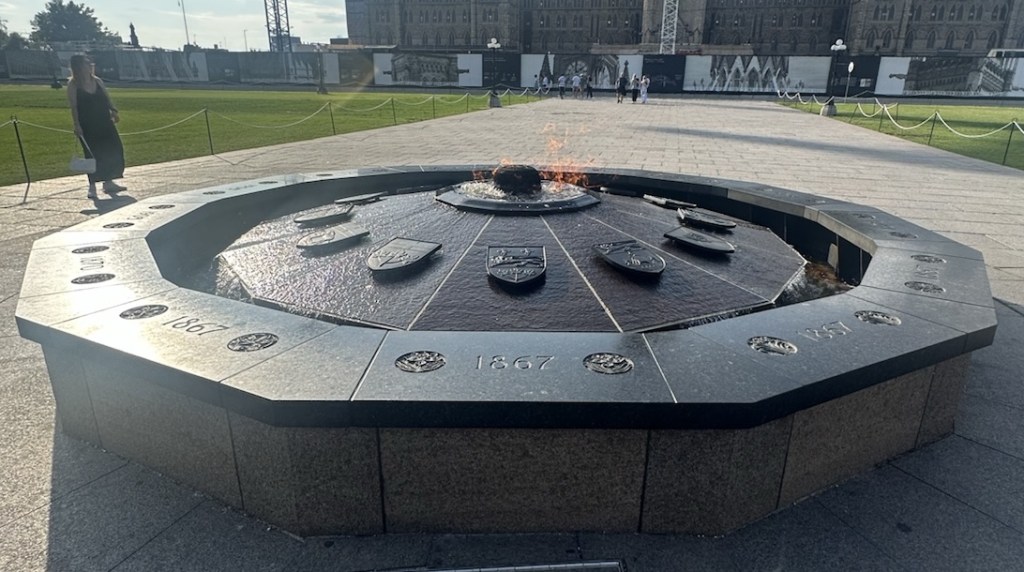
The Centennial Flame is located directly in front of the Centre Block. Its symbolic eternal flame is surrounded by bronze shields of the provinces and territories. It was first lit on January 1, 1967 to mark Canada’s 100th anniversary of Confederation.
After circling the historic buildings and taking in riverside views, we made our way down to the vibrant ByWard neighborhood.
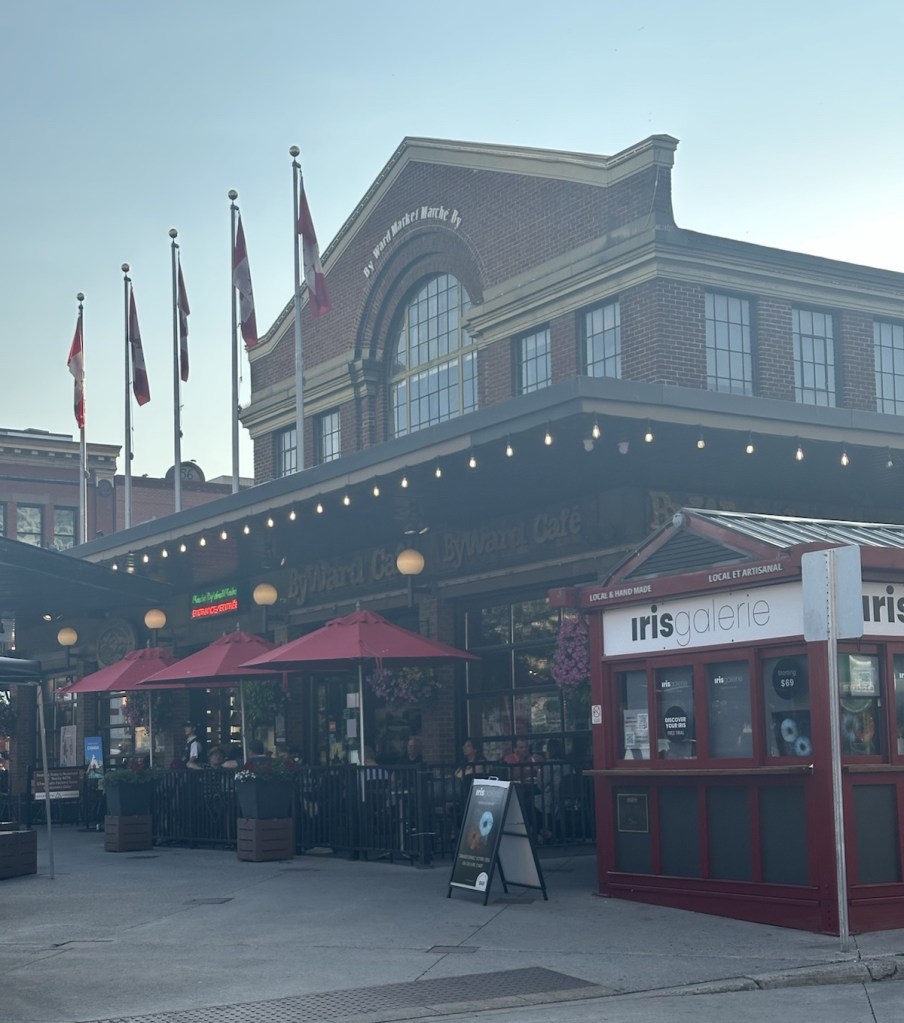
The ByWard Market isn’t just a hotspot for food and shopping — it’s one of Ottawa’s oldest neighborhoods, and it owes its name to the city’s founding father, Lieutenant-Colonel John By who was tasked with canal construction and laying out a new town to support it. He carved the area into “wards.” The section around the public marketplace became known as the By Ward— named after him.
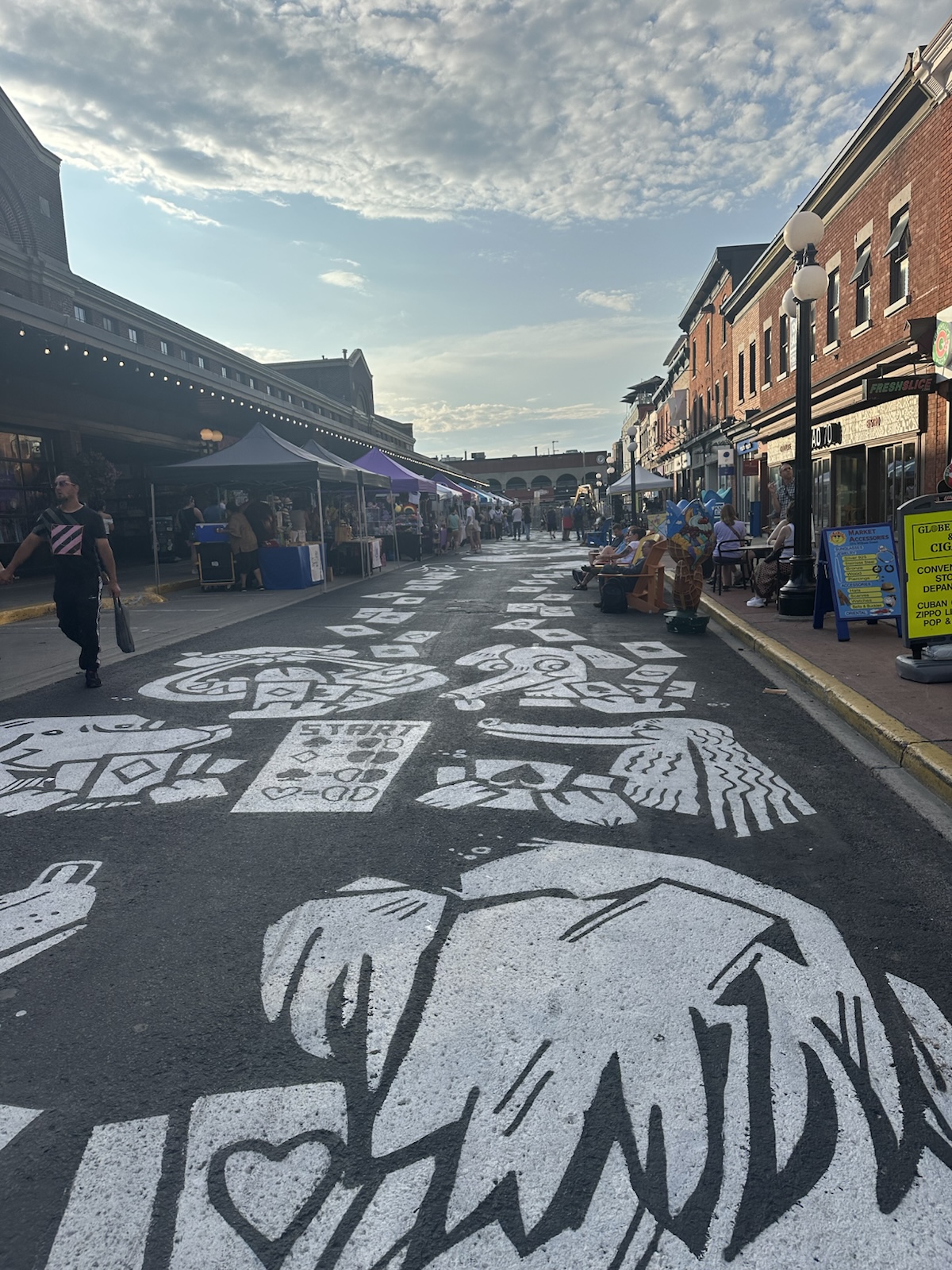
Nearly two centuries later, ByWard Market is still buzzing, with open-air stalls, cozy cafés, street performers, and history on every corner.
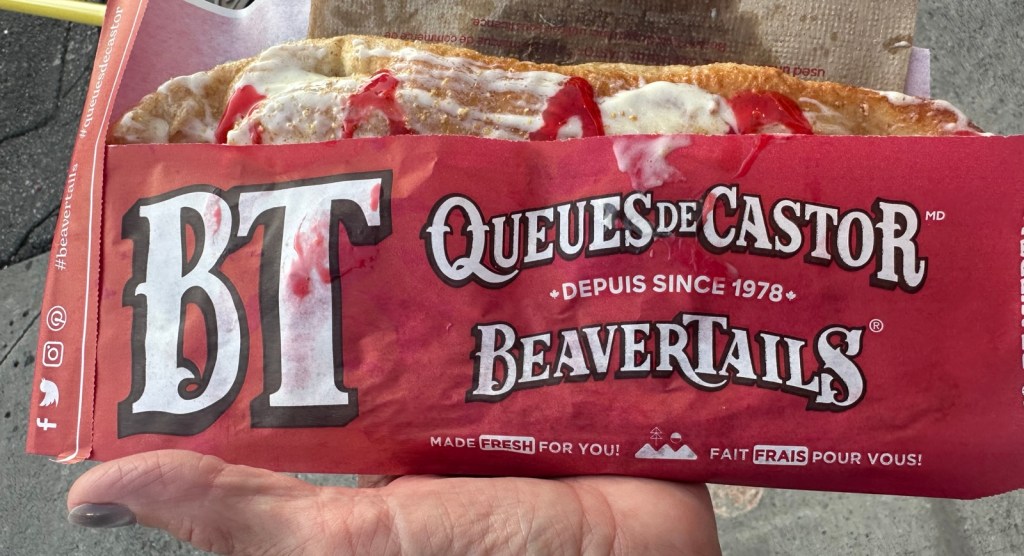
And now, it’s time to try a BeaverTail — the Canadian fried pastry, not the furry critter.
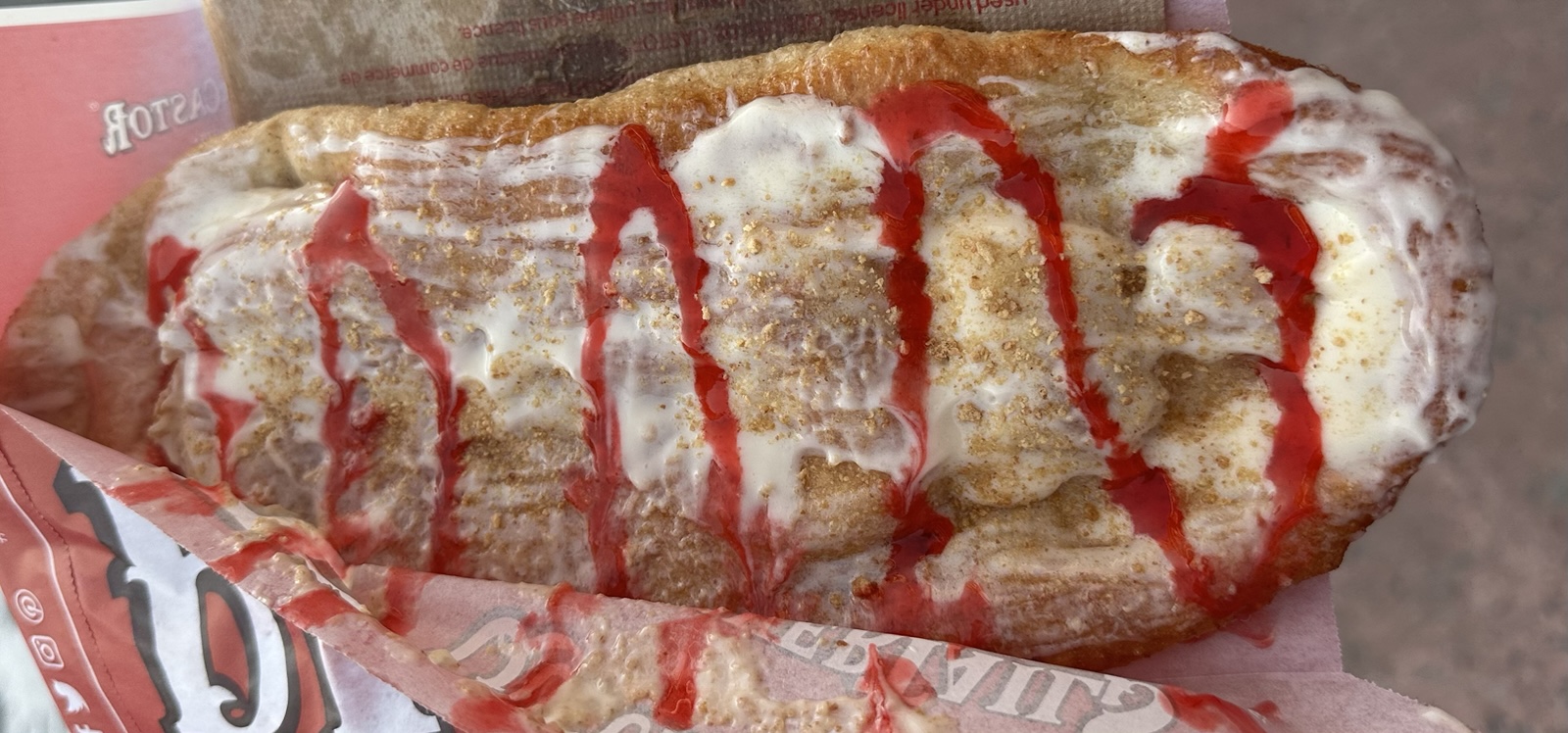
BeaverTails are hand-stretched dough that’s flattened into an oval or paddle shape, then deep-fried until crisp outside, fluffy inside. They were invented in 1978 in Ontario and became an Ottawa tradition by 1980. Traditionally finished with classic cinnamon sugar, they now come in dozens of creative variations from Nutella banana bliss to salty-sweet maple bacon mashups. There’s something to satifsy every sweet craving.
This BeaverTail is a strawberry cheesecake … it’s the best of both desserts: cheesecake meets carnival pastry, with strawberries, cream cheese, and a hint of crunch.
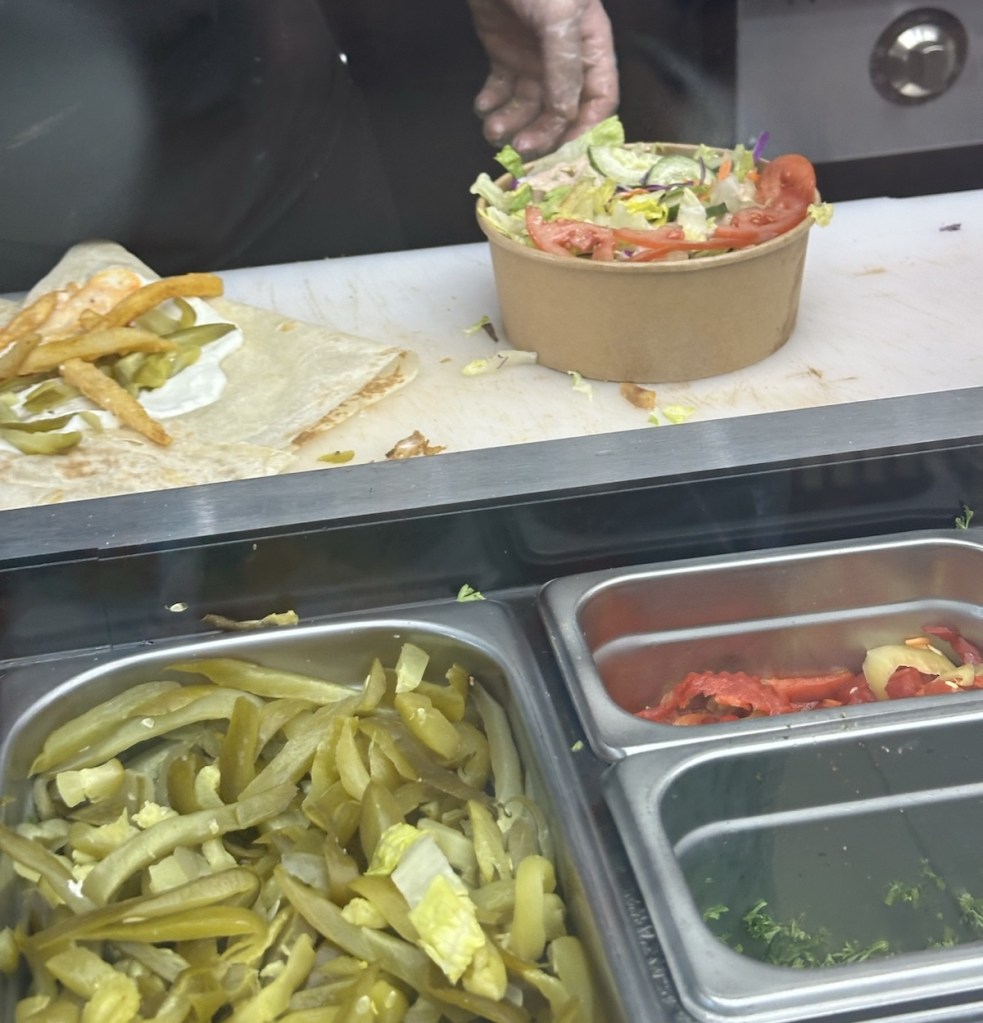
The other delicacy Ottawa is known for is shawarma. The city’s shawarma scene began booming in the late 1990s. Ottawa has become something of a shawarma hotspot in recent years, thanks to its vibrant and diverse Middle Eastern and Mediterranean communities. They have brought authentic spices, recipes and techniques
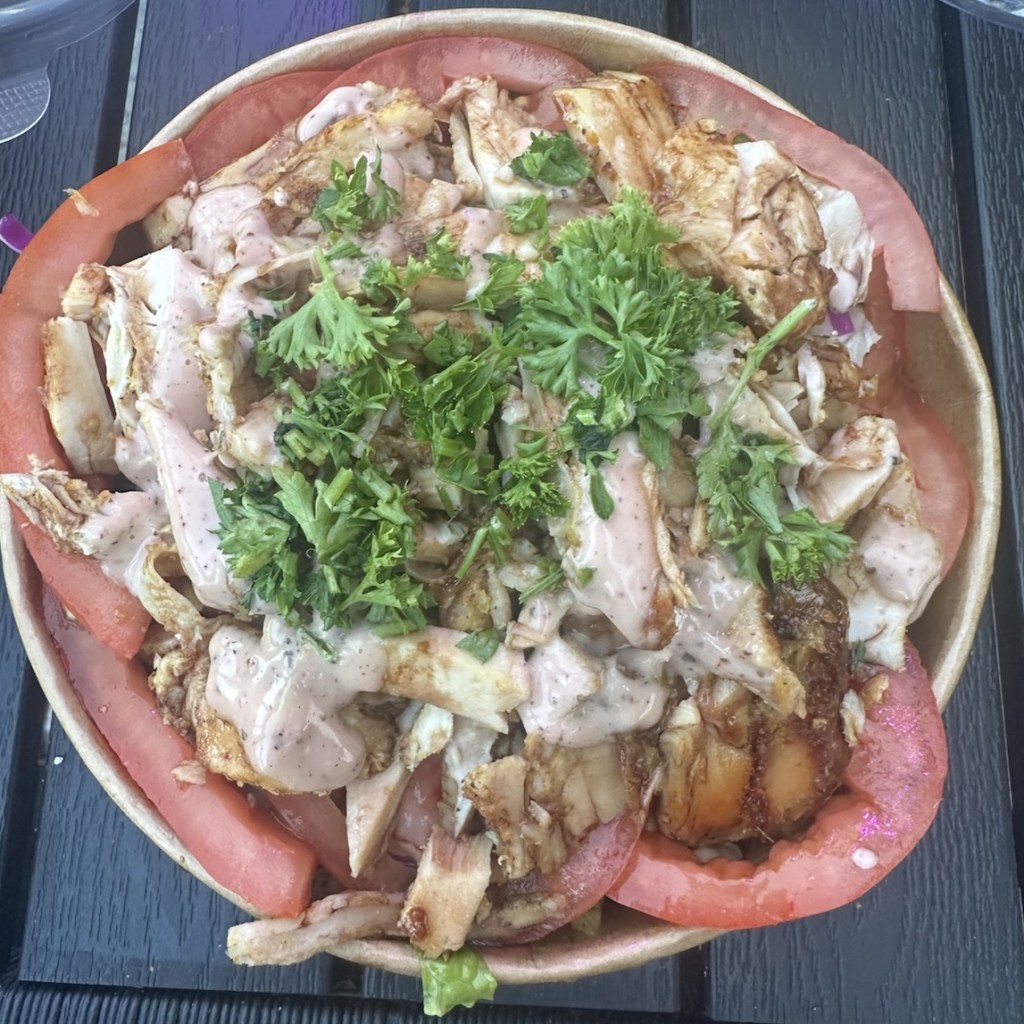
Ottawa boasts more shawarma and falafel spots than any other Canadian city, earning it the nickname “Shawarma Capital of the World” outside the Middle East .
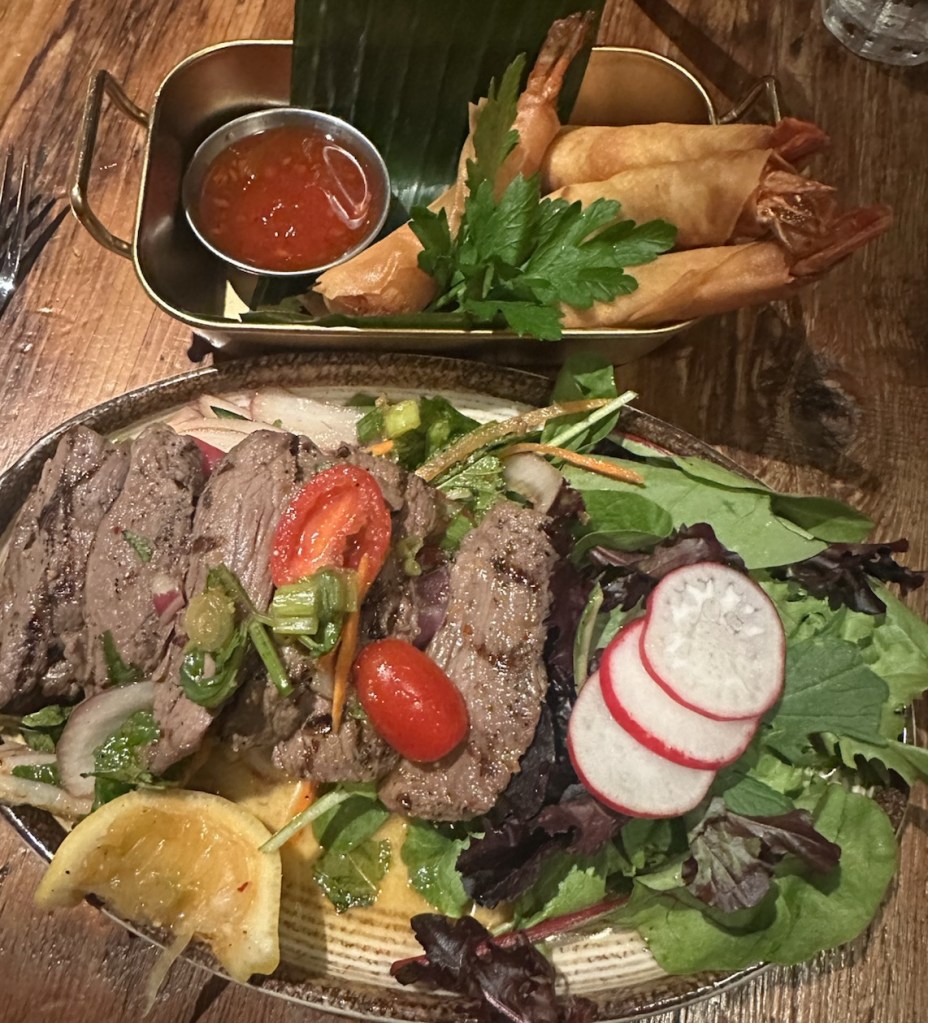
Mr. Fez offers an array of handheld shawarma wraps, but it was the shawarma salad that caught my eye.
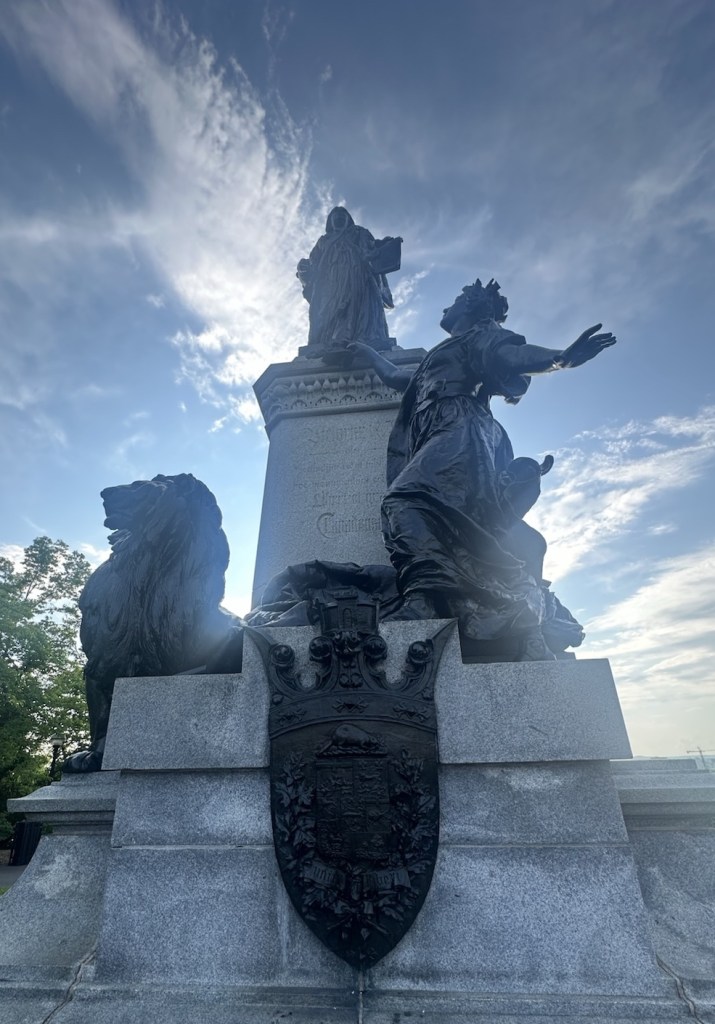
Before we high-tail it out of Ottawa and roll on to Montréal, here’s a look at the Queen Victoria Monument — a striking trio featuring the regal Queen atop, a proud lion symbolizing Canada, and a spirited young woman representing the growing nation.
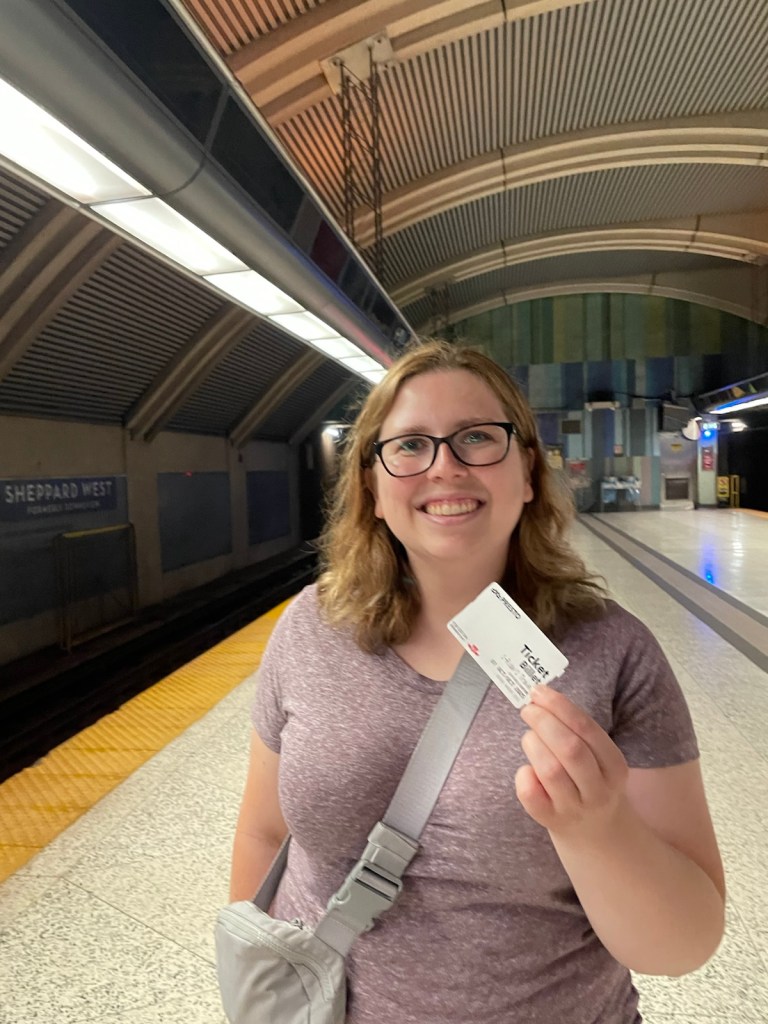
Our accommodations were tucked away in a peaceful neighborhood in North York — close enough to downtown Toronto for easy access, yet far enough to enjoy some quiet and calm.
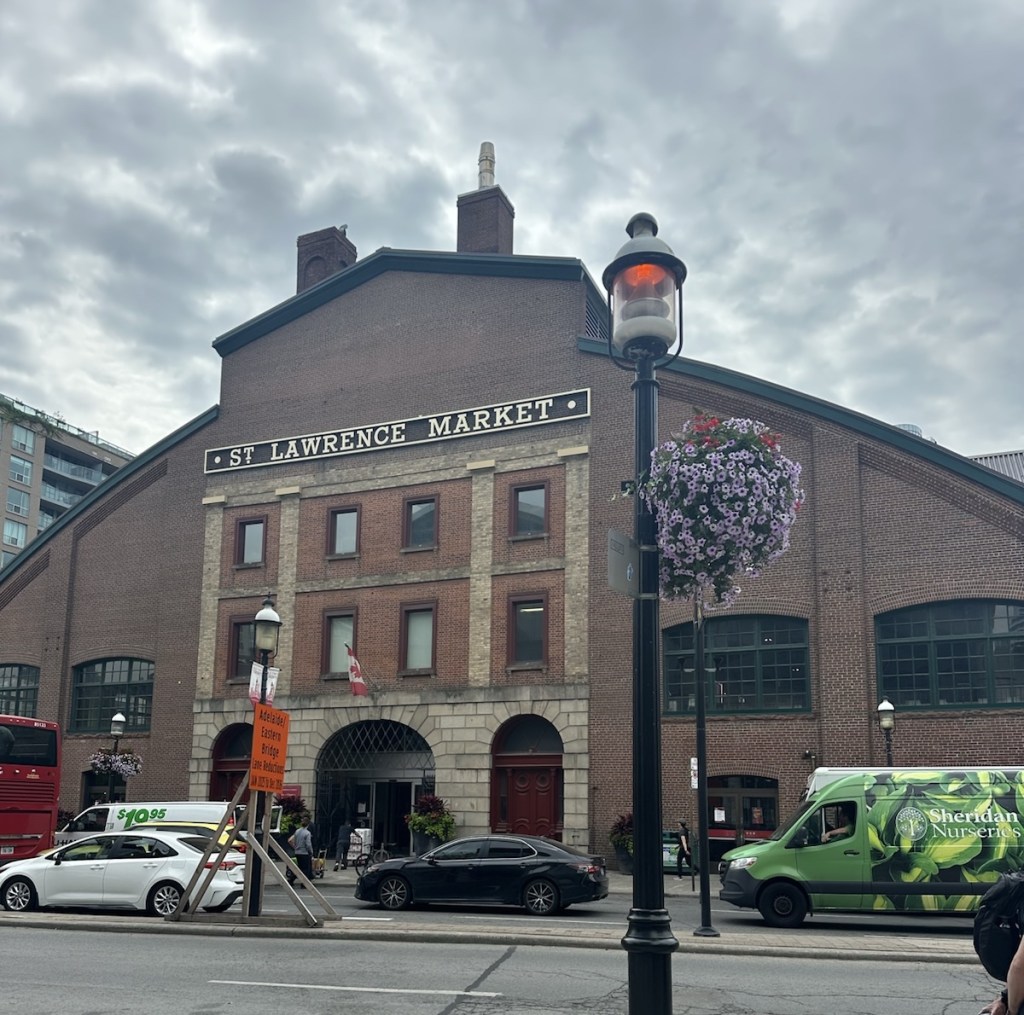
We took the subway into downtown and our first stop was the St. Lawrence Market. It is one of Toronto’s most beloved landmarks and a must-visit for food lovers, history buffs, and curious travelers alike.
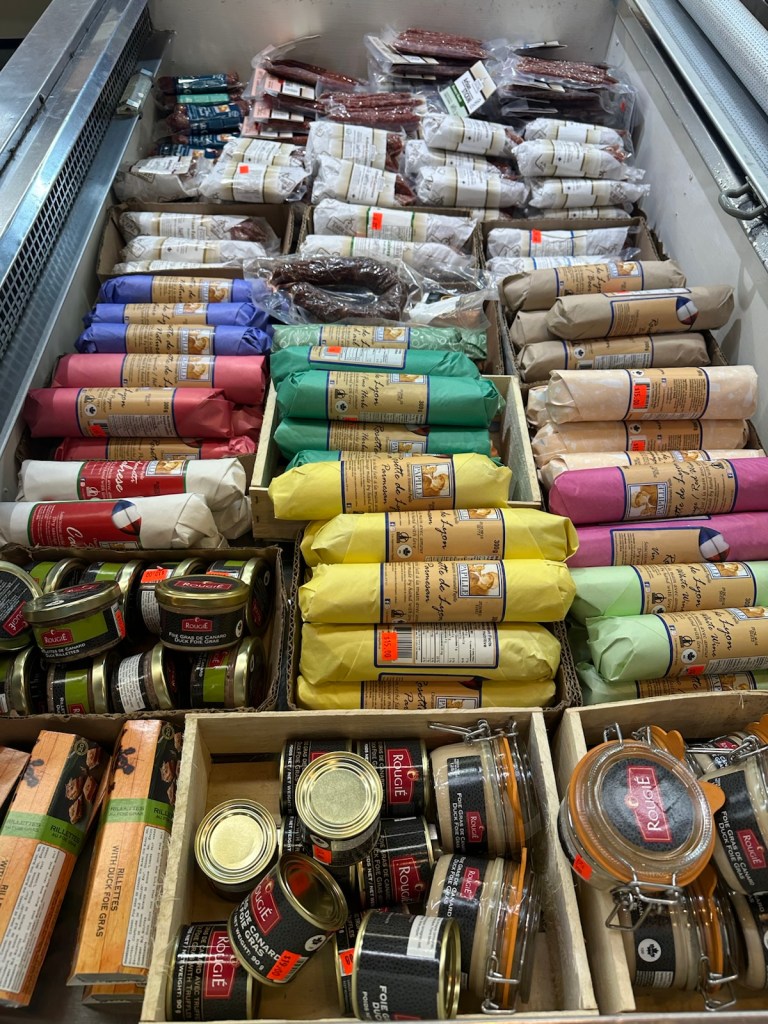
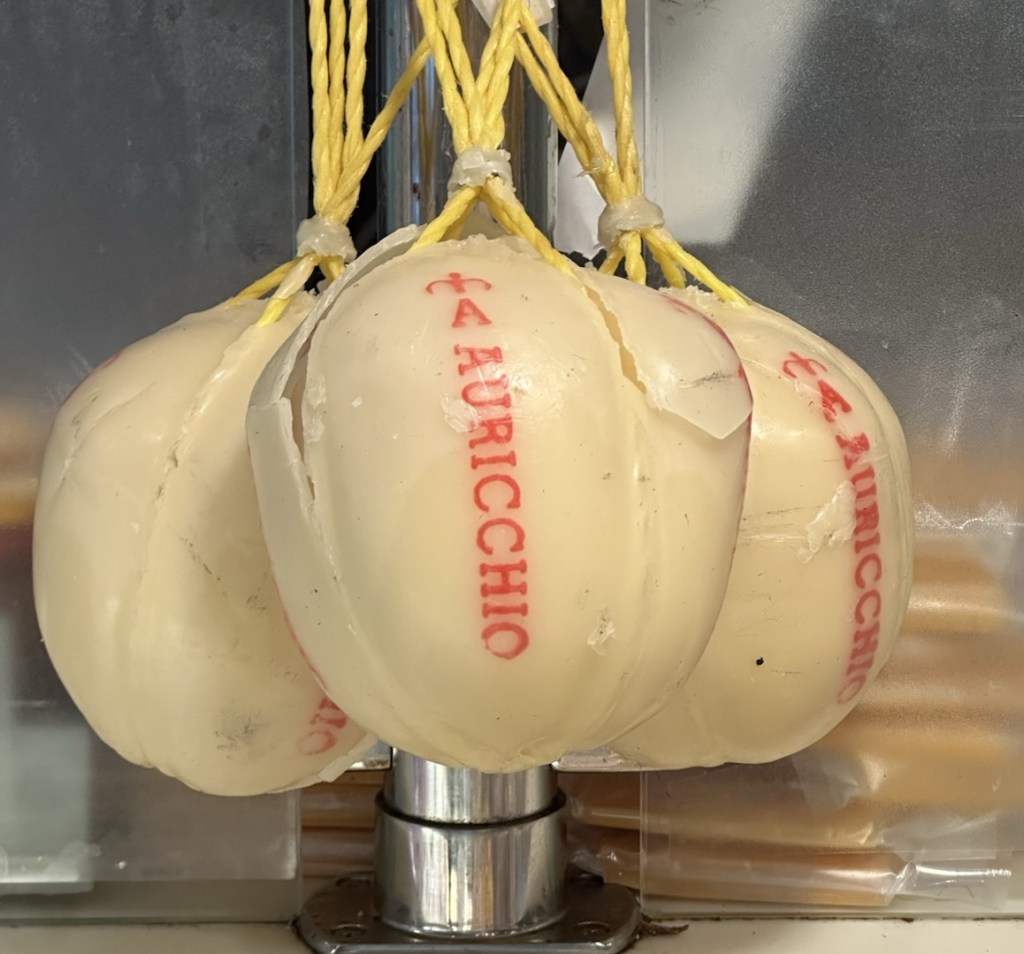
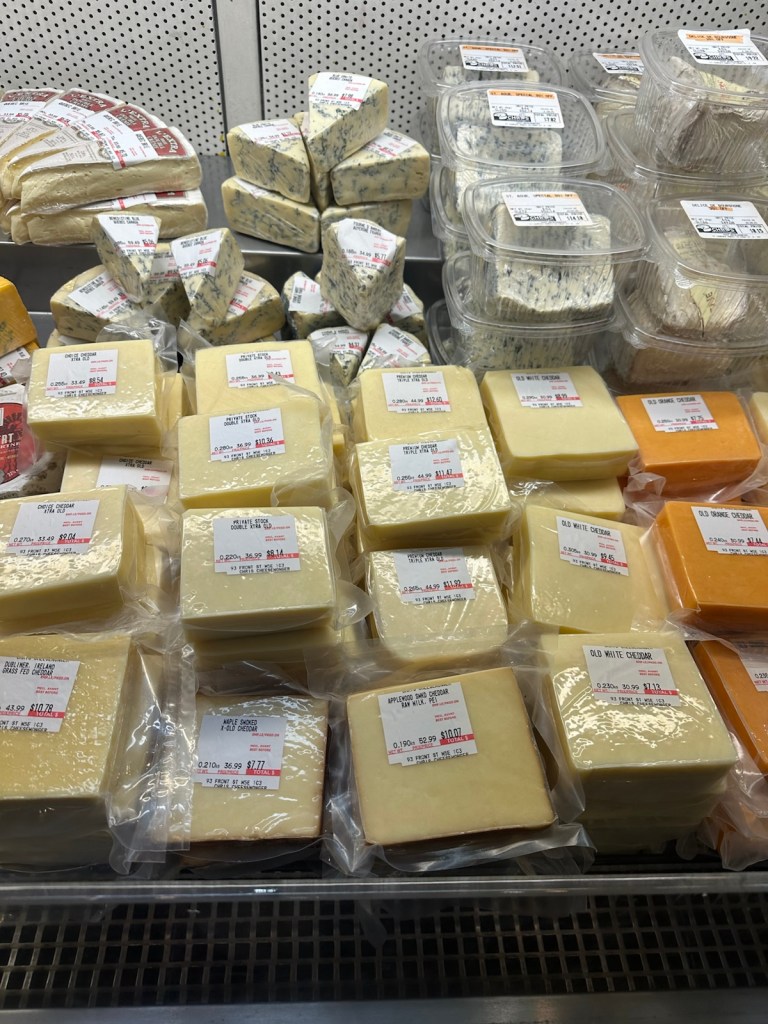
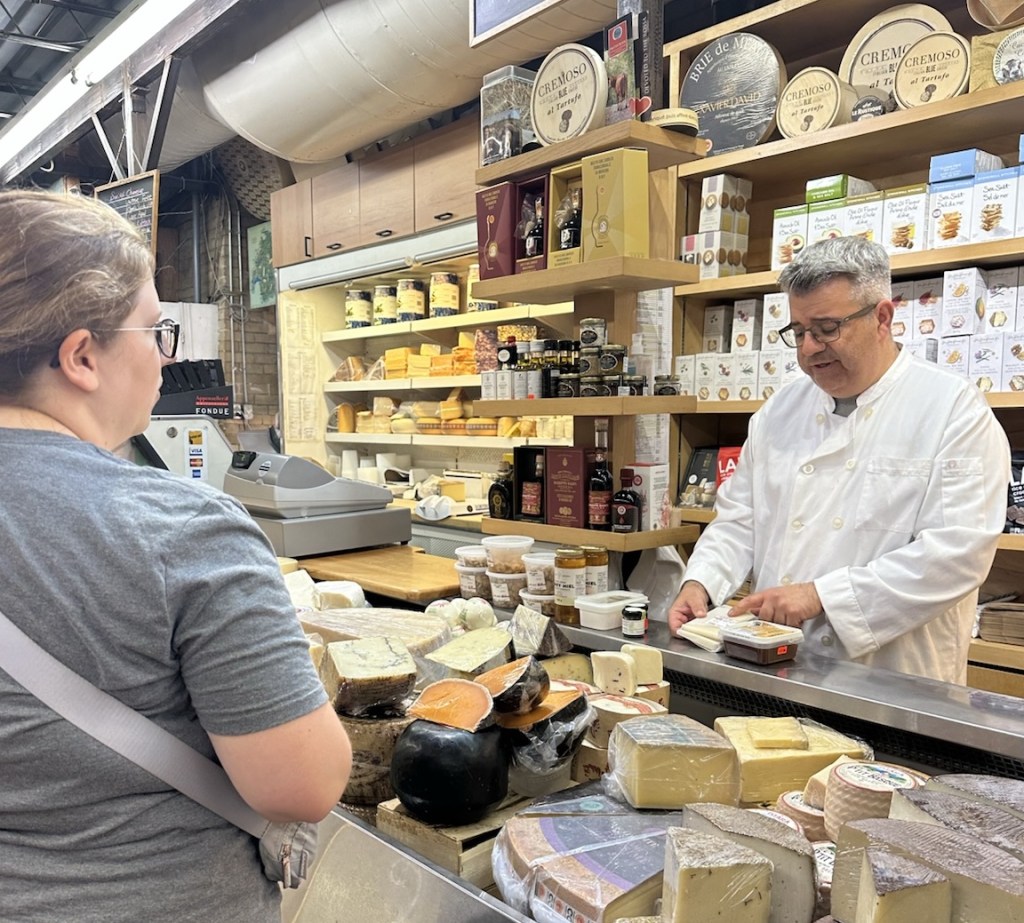
St. Lawrence Market is known for its incredible selection of fresh food and specialty items. There are over 120 vendors selling meats, seafood, cheeses, produce, baked goods, spices, and international delicacies.
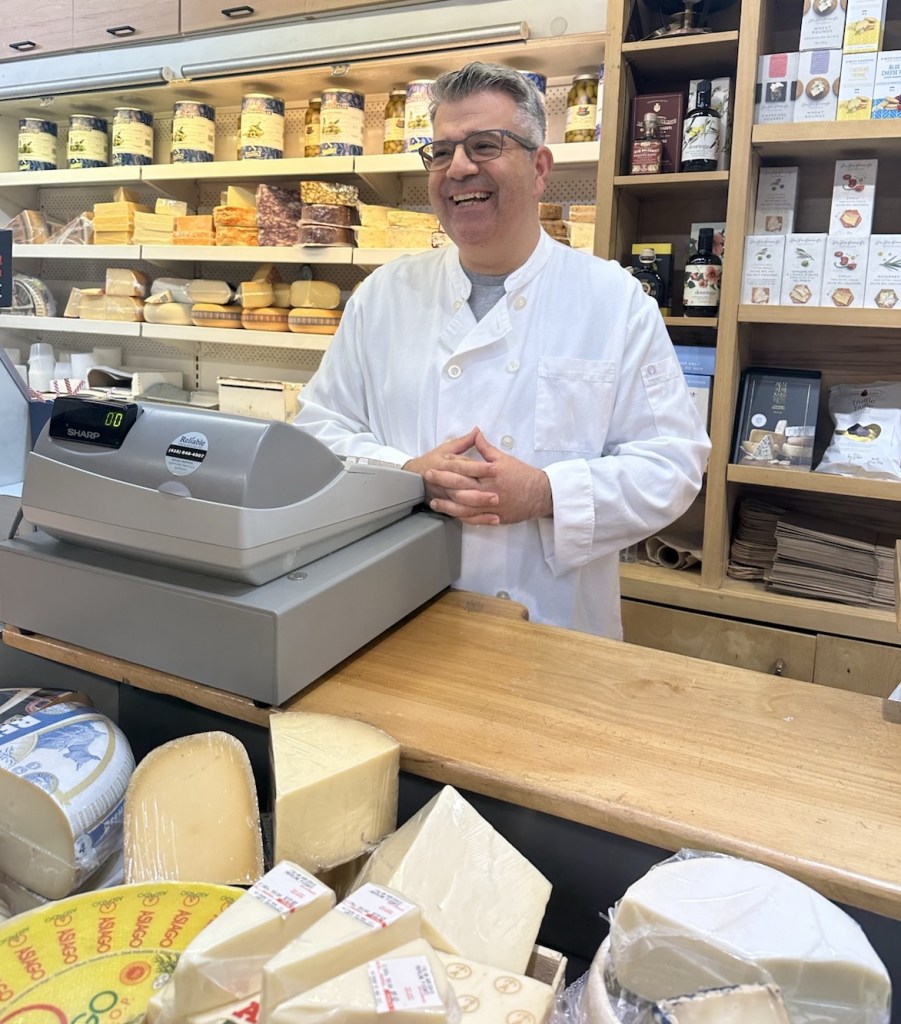
This is our cheese guy. He guided us through a delicious selection of specialty cheeses and artisanal sausages.
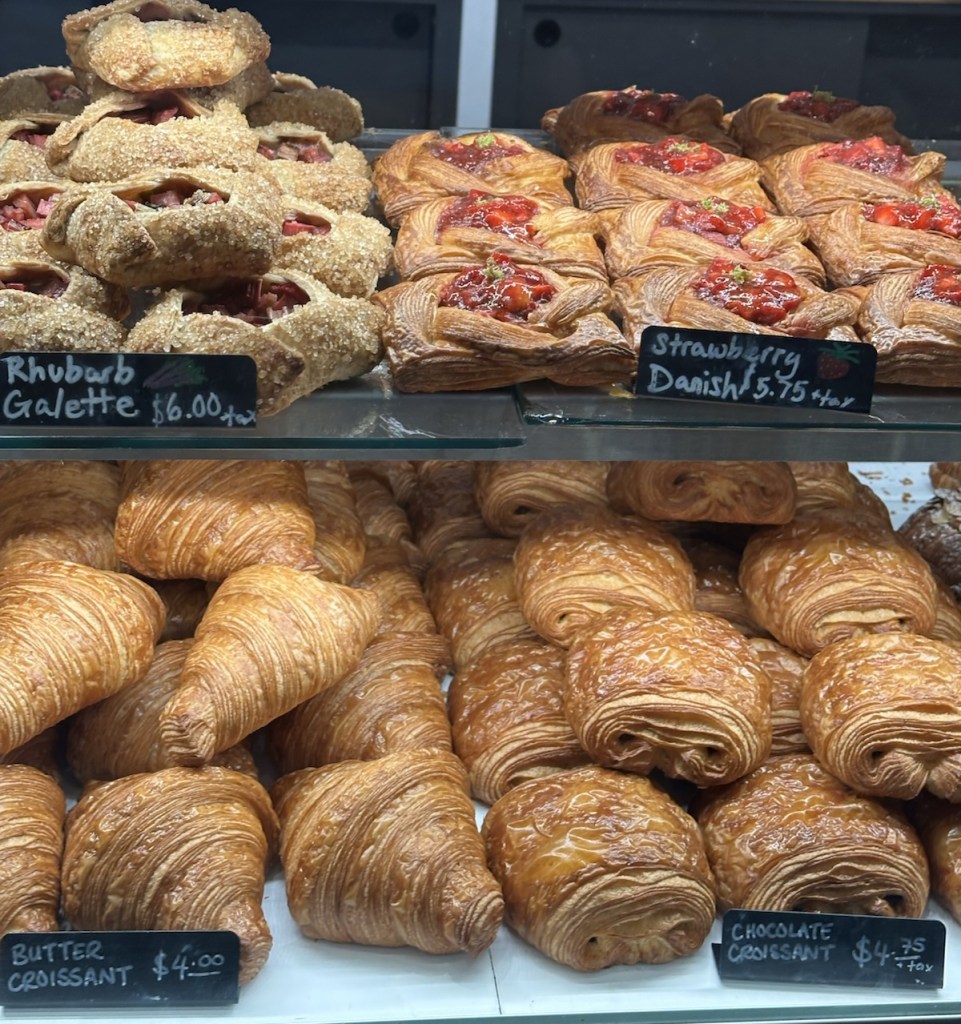
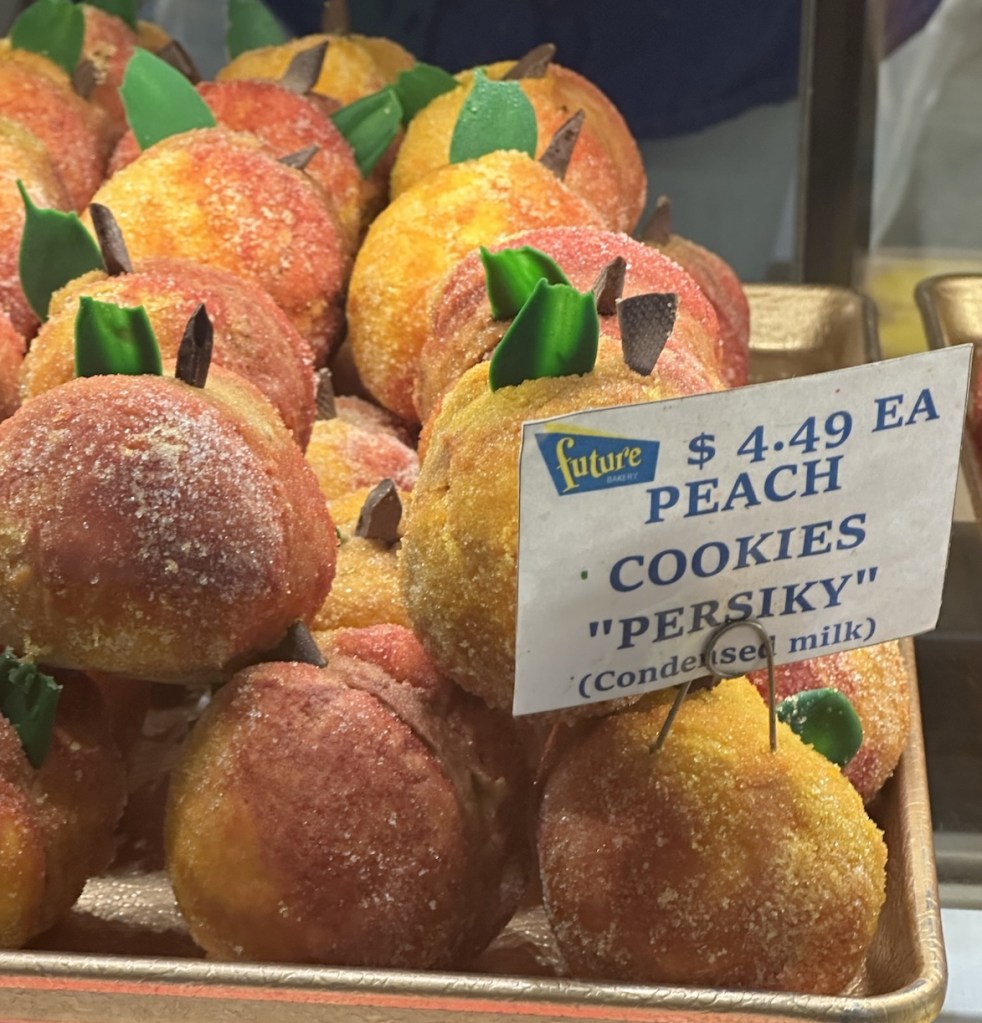
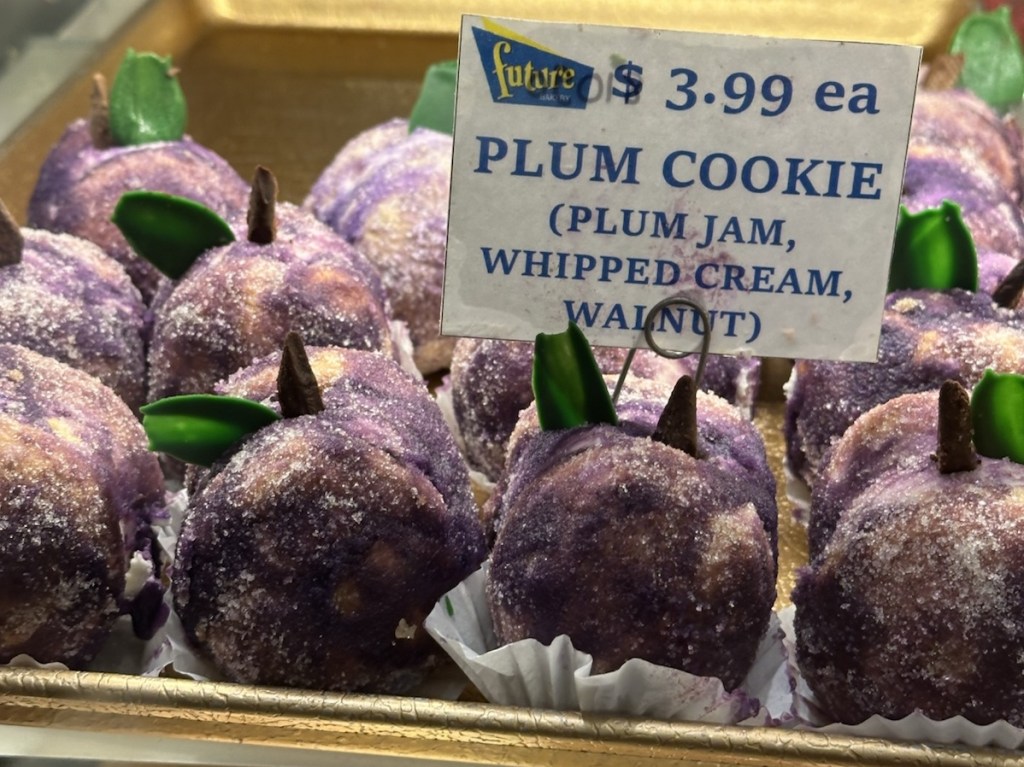
We were very tempted by classic baked goods made with old-world techniques. Buttery croissants, pain au chocolat, and fruit Danishes from several French and Italian-style bakeries.
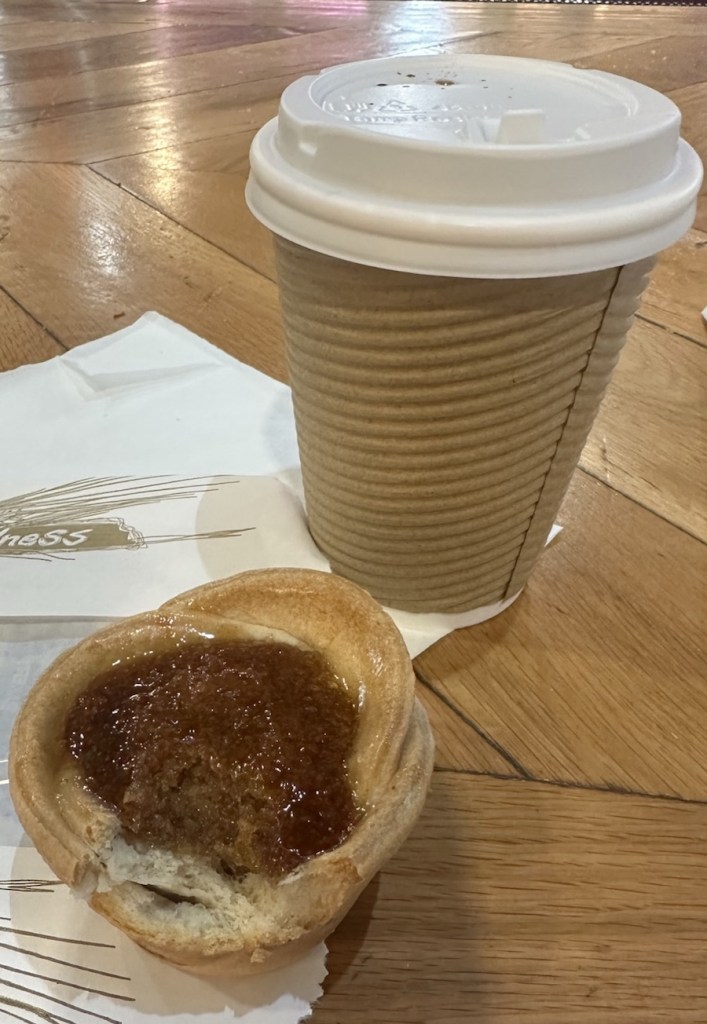
Butter tarts are one of Canada’s most iconic — and beloved — desserts. Rich, gooey, and sweet, they hold a nostalgic place in many Canadian hearts (and kitchens). A butter tart is a small pastry with a flaky crust and a rich, sweet filling made primarily of butter, brown sugar, eggs and maple syrup. Baked until it’s golden and slightly carmelized, it’s often gooey in the center with a lightly crisped top.
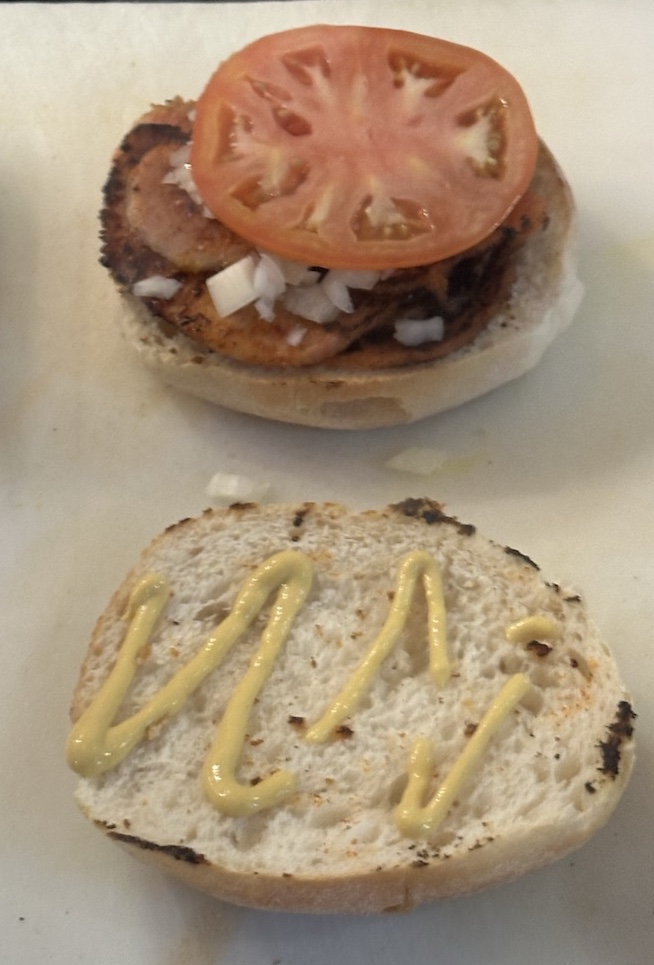
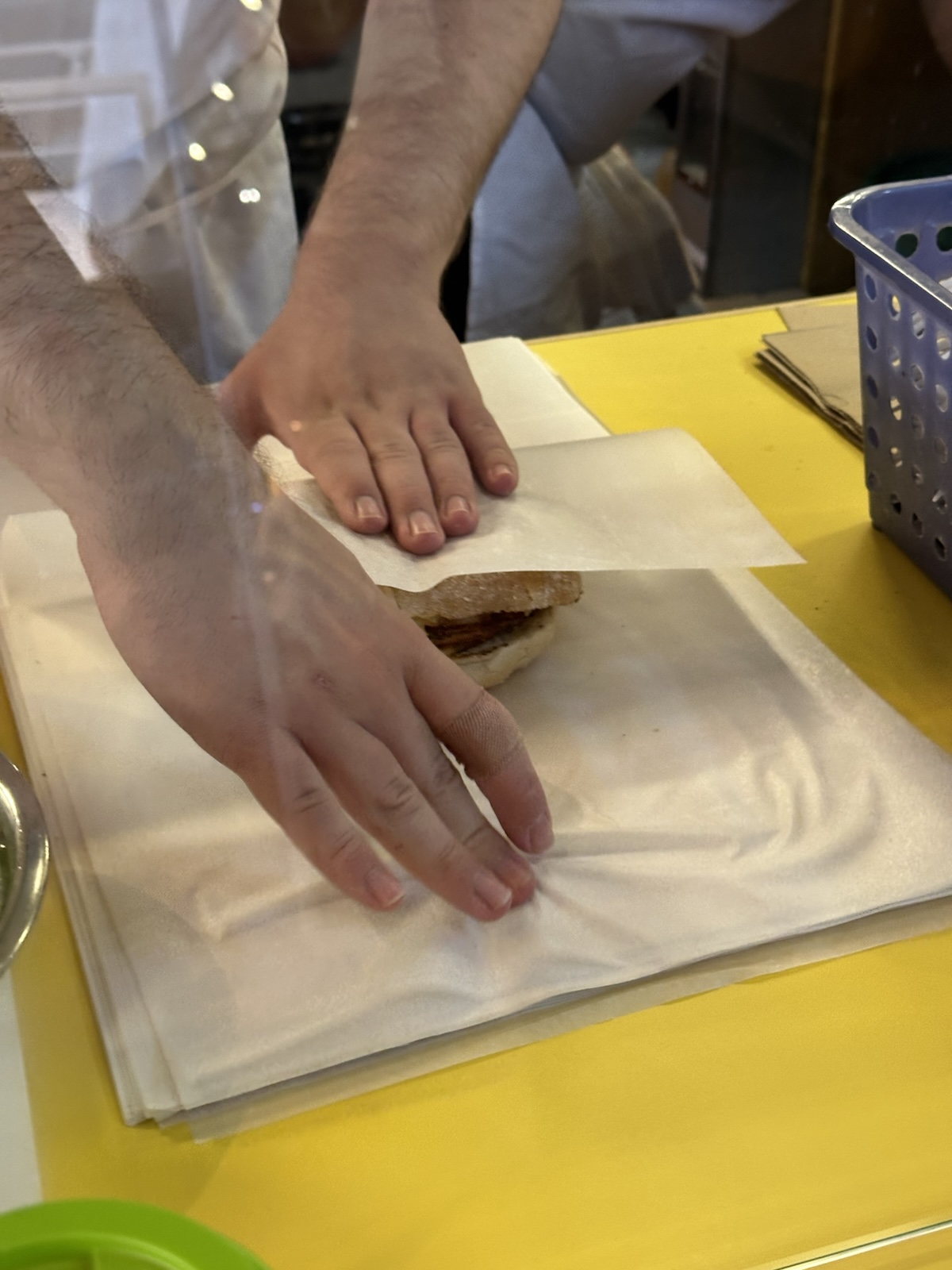
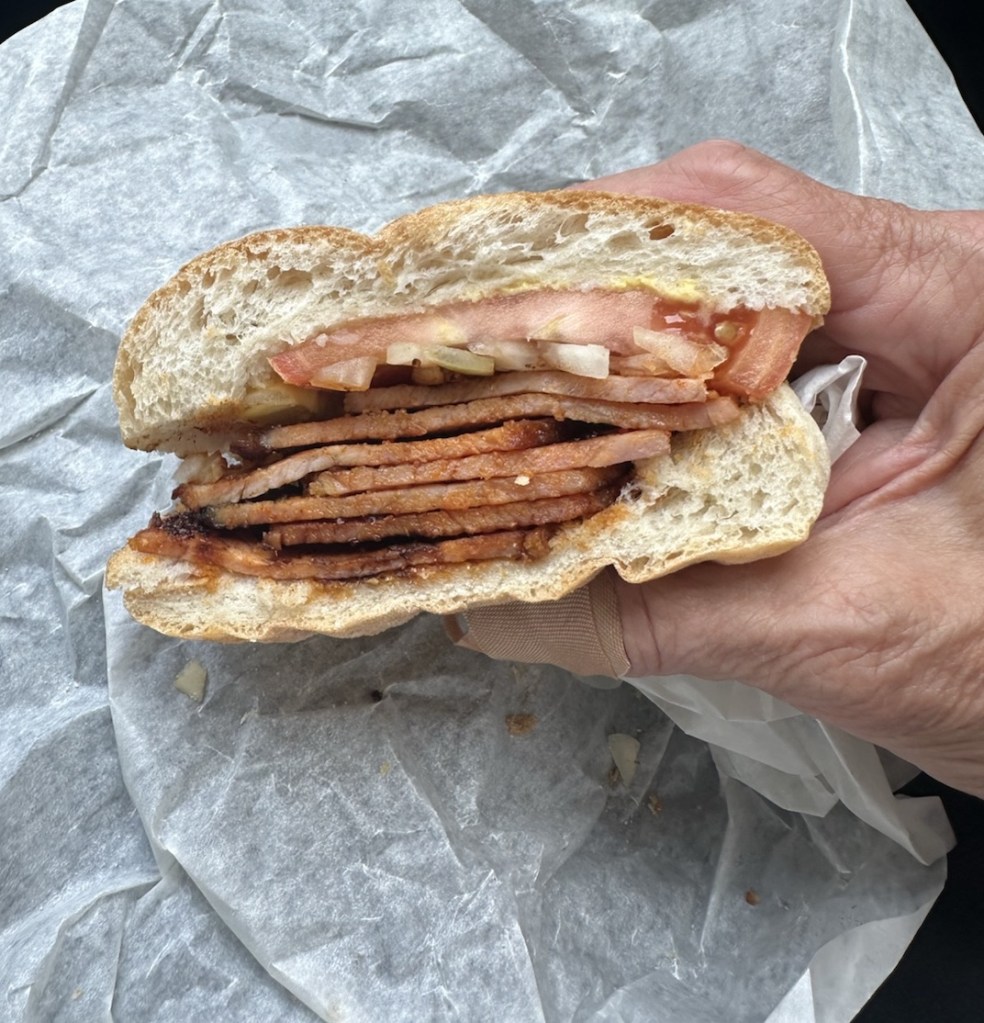
Peameal bacon sandwiches are a classic Toronto specialty and a must-try for food lovers visiting the city. Peameal bacon is a uniquely Canadian cured meat. It’s made from pork loin — the same lean cut used for pork chops—and is known for its tender texture, mild flavor, and signature yellow cornmeal crust.
The name comes from the late 1800s when Toronto pork processors began rolling cured pork loin in ground yellow peas to help preserve it. Cornmeal eventually replaced peas but the name “peameal bacon” stuck.
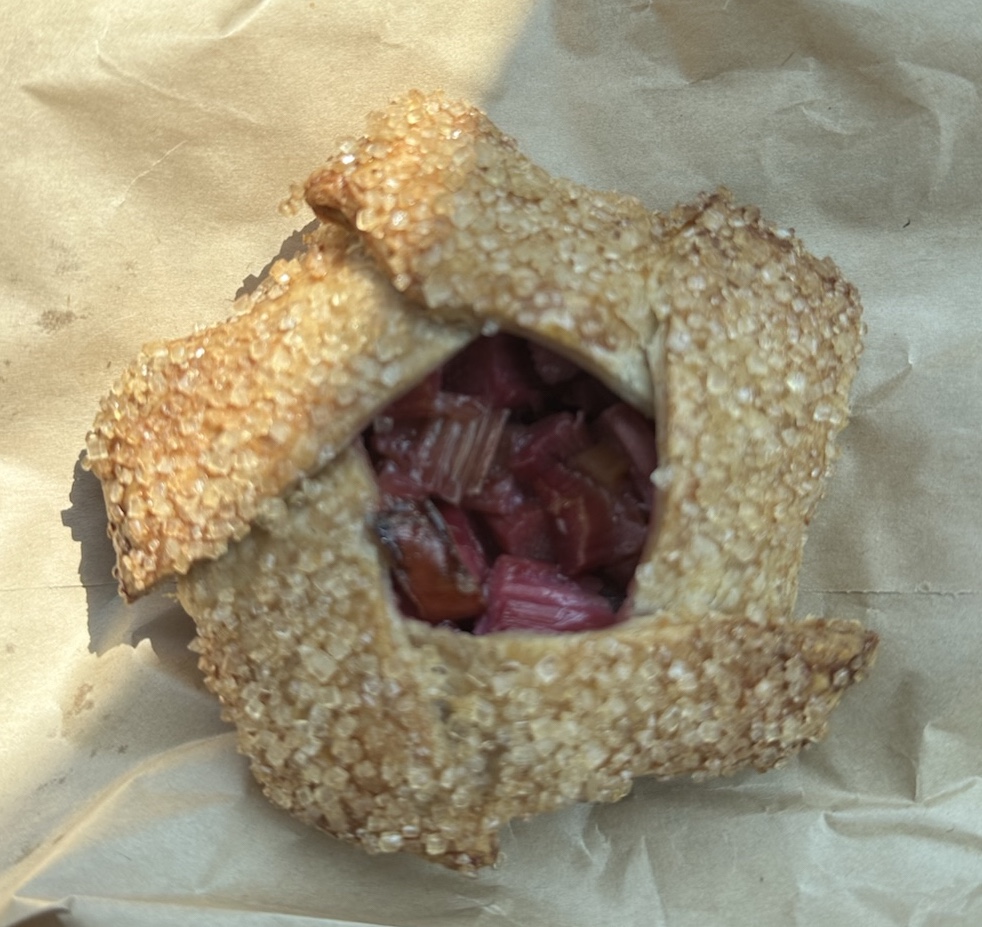
One last treat I couldn’t resist: a rhubarb galette — rustic and golden, with tart-sweet rhubarb nestled in a flaky, buttery pastry and finished with a hint of sugar. It was simple, seasonal, and utterly satisfying.
After confirming we’d consumed enough calories to fuel a proper day of sightseeing, we left the market and set off to explore the city.
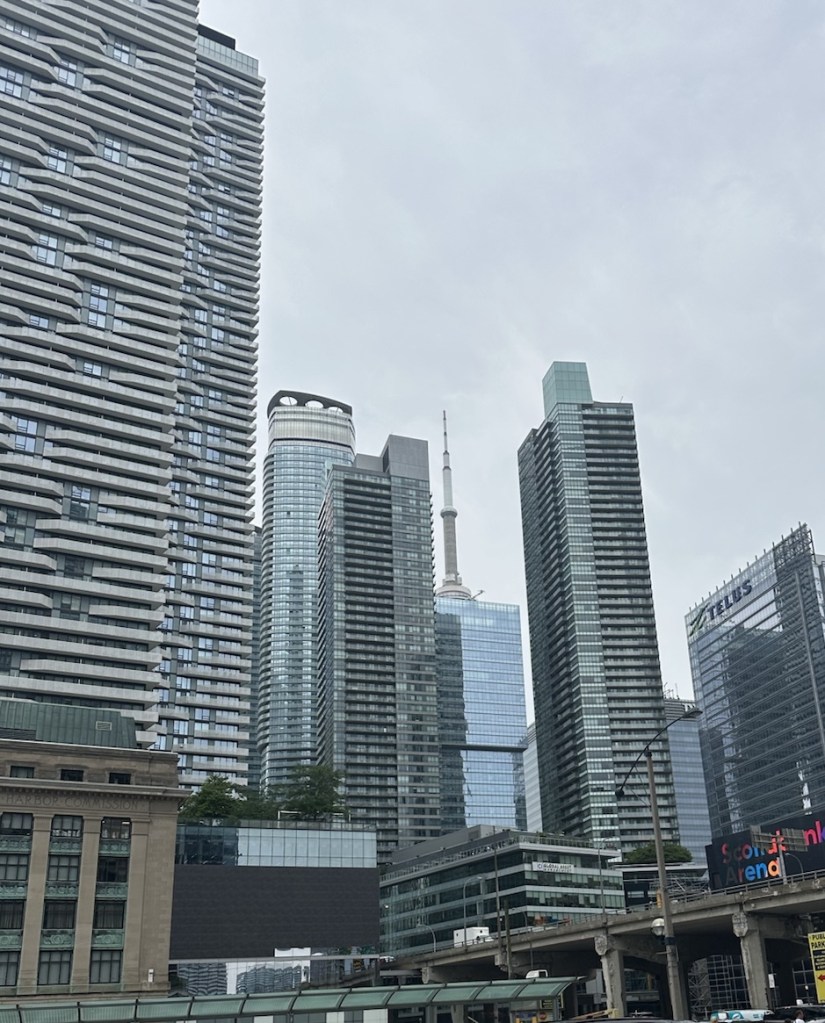
We only had a day to explore Toronto, so we barely scratched the surface of downtown. Our wandering took us through the sleek canyons of the Financial District and down toward the lakefront. Someone suggested we take in the view from the CN Tower — the city’s tallest landmark — but with observation deck tickets priced at $57, the view from below had to suffice.
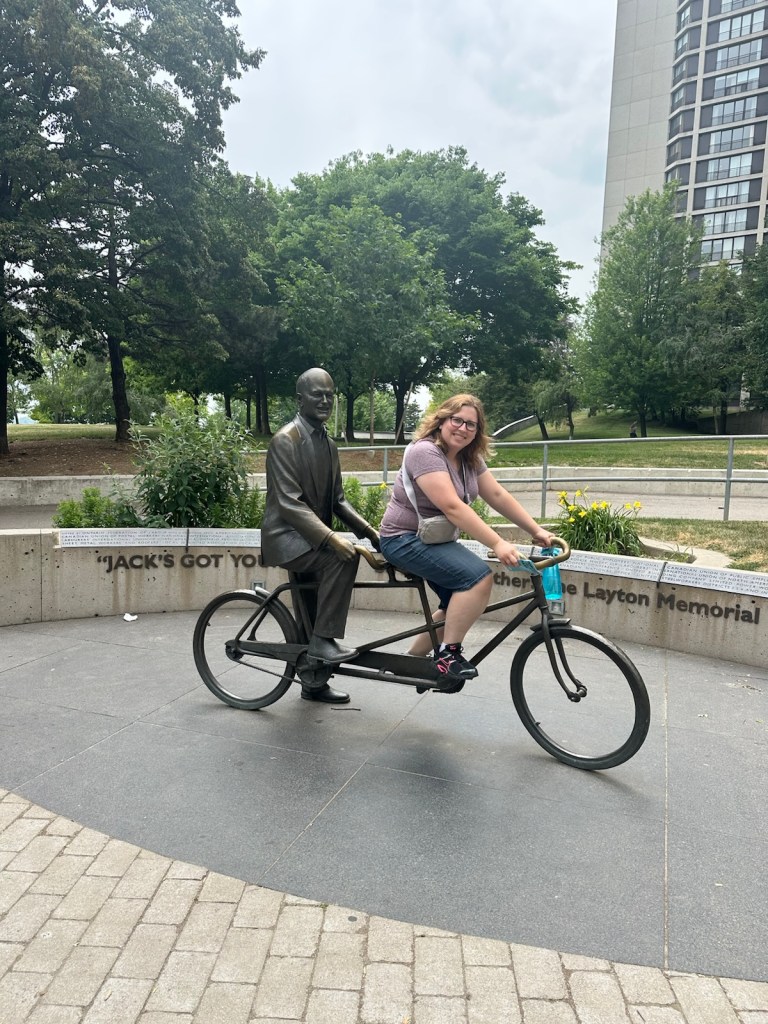
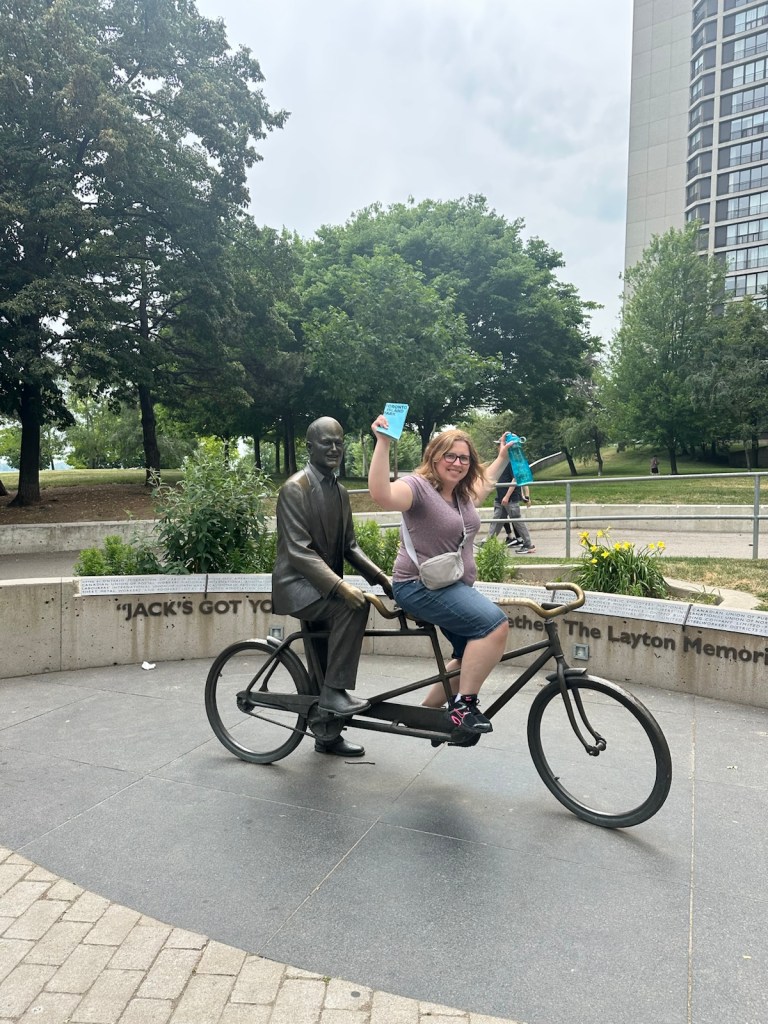
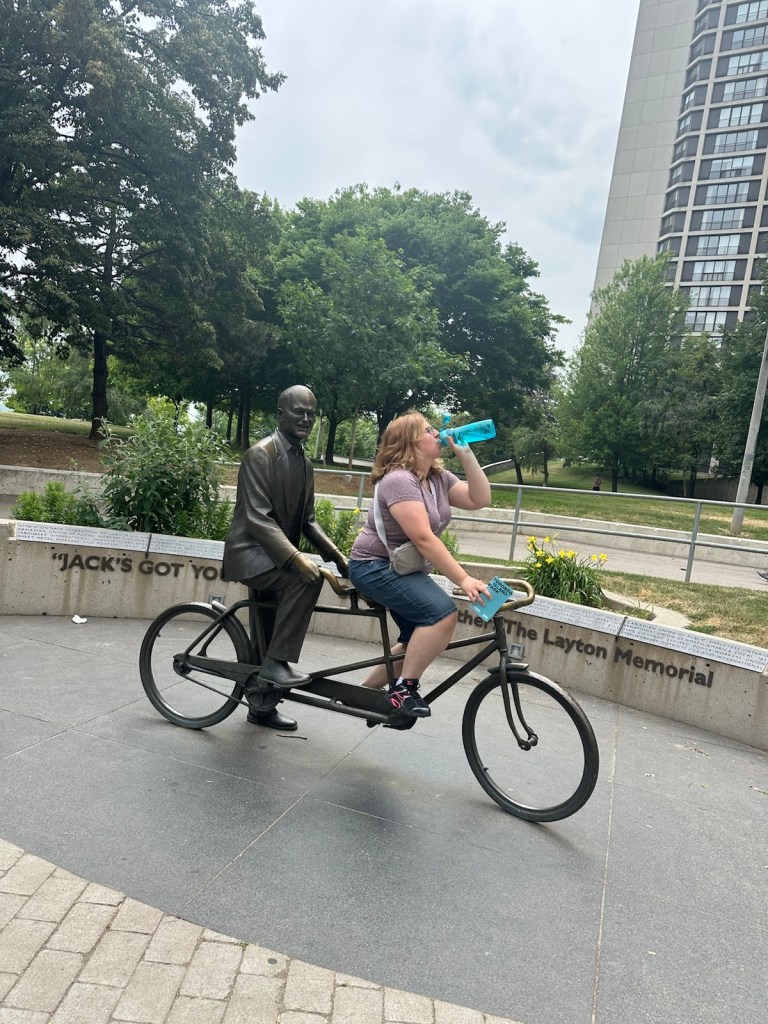
“Jack’s Got Your Back. Stronger Together: The Layton Memorial” This is a warm and interactive tribute to Jack Layton, former Toronto city councillor and leader of the federal NDP (New Democratic Party).
The sounds of the city’s, its hustle bustle and the heat were tiring so we made our escape to the ferry terminal and set off for Centre Island.
We traded the city’s buzz for lake breezes, green space, and a touch of summer nostalgia. It’s a short 10-15 minute ride to Center Island which is part of the Toronto Islands, a chain of small, car-free islands just offshore from downtown Toronto in Lake Ontario.
Centre Island offers a nice blend of peaceful nature, sandy beaches, a nostalgic amusement park, a charming petting farm, and miles of scenic walking and biking trails.
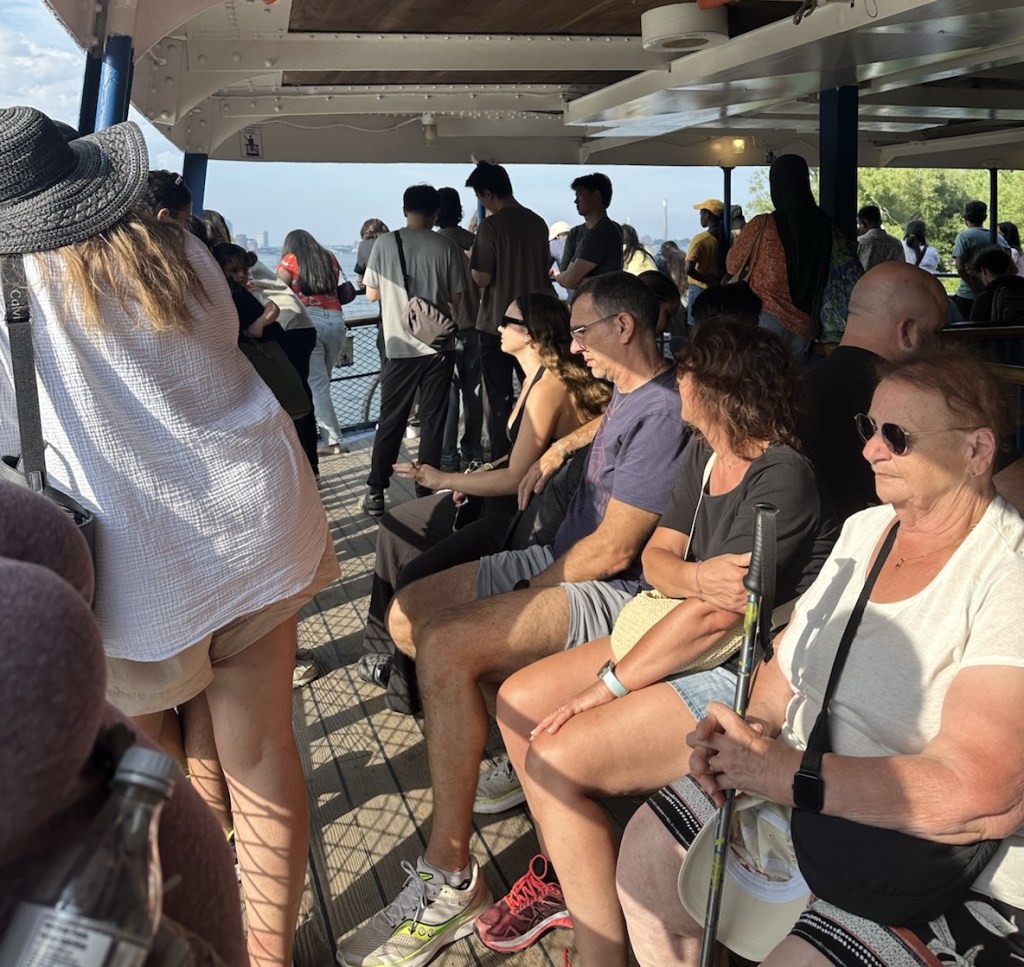
After a few hours of calm on Centre Island, we were ready to head back to the city. The ferry boat offers a spectacular view of the Toronto skyline.
Our evening plans included moonlight kayaking on Lake Ontario beneath a glowing full moon. But just as we were preparing to launch, a sudden squall swept in off the lake, bringing a torrential downpour. So much for paddling — we called an Uber and made our soggy retreat to our North York hideaway.
One thing that stood out during our day in Toronto was the number of men wearing turbans. Most are Sikh — followers of a faith that originated in Punjab, India. Toronto is one of the most diverse cities in the world, and its vibrant South Asian community, particularly Sikhs, forms a significant part of the city’s cultural fabric.
Our Uber driver was a warm and friendly young man who told us he was a Sikh from Punjab. Though he wasn’t wearing a turban himself, he welcomed our curiosity and shared that the turban is a powerful symbol of faith, equality, courage, and respect — reflecting a deep commitment to Sikh teachings and traditions. He explained that wearing a turban is a personal choice, and many Sikh men choose not to cut their hair as part of their religious practice. The turban, he said, helps them cover and care for their unshorn hair with dignity.
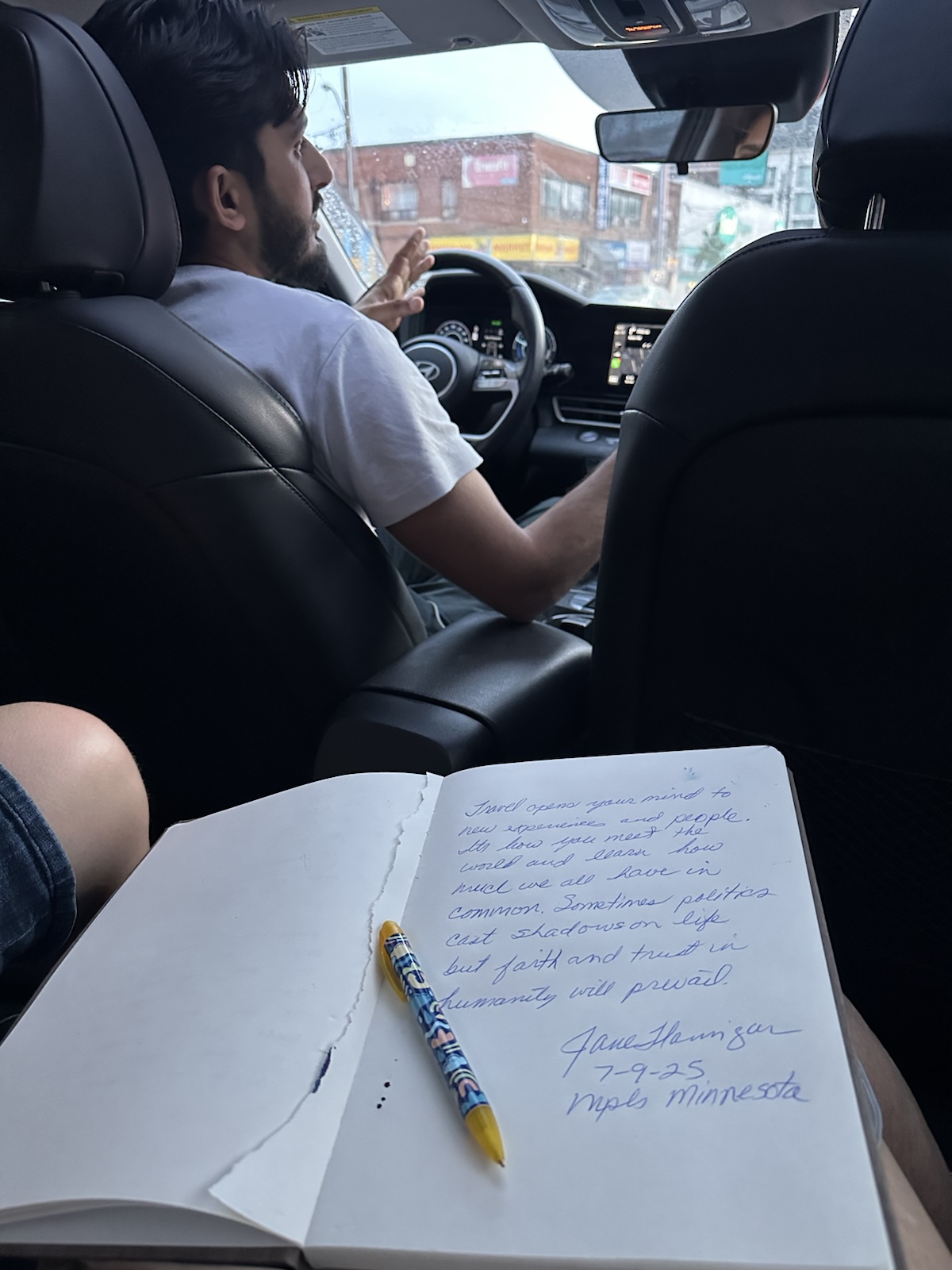
I inquired about a sketch book that he had tucked into a seat pocket thinking he might be an artist. He invited us to write something — poetry, reflections, or whatever inspired us. I couldn’t resist an opportunity to write a little travel wisdom on its pages. Our Uber ride turned into a very memorable exchange and a great way to end our day of discovery in Toronto.
I’ve never knitted a thing in my life. But I’ve seen Megan’s posts about how relaxing it can be, and I’ve always been a little curious. What better opportunity to learn than on this road trip? With plenty of time, long stretches of open road, and good company, it felt like the perfect moment.
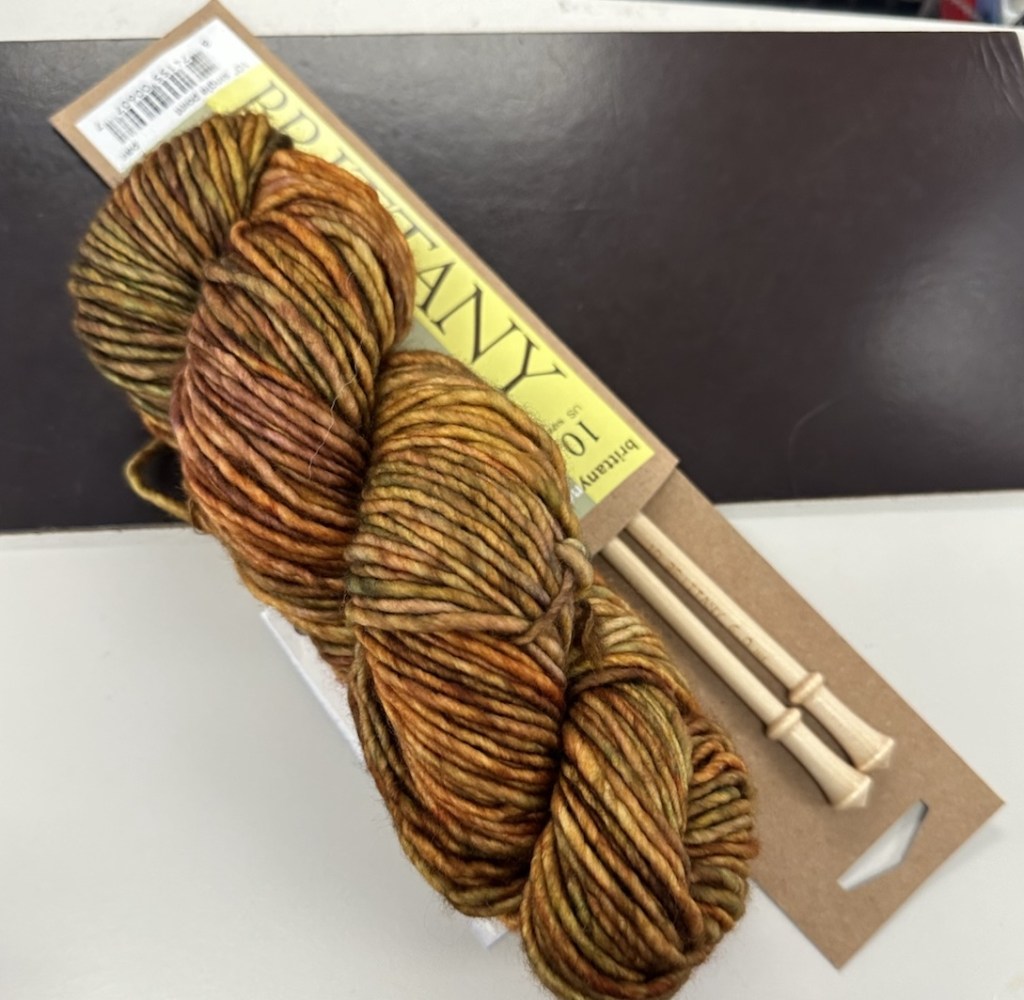
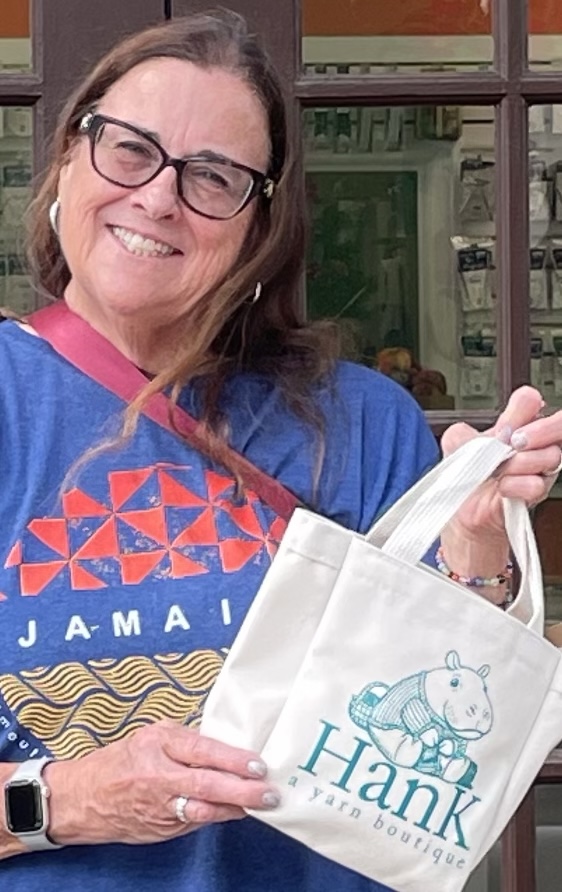
Our first stop? Hank — Megan’s favorite yarn boutique. She lit up as soon as we walked through the door. I, on the other hand, stood wide-eyed at the walls of colorful skeins, wondering how on earth I was going to turn any of it into something useful. But with Megan as my teacher, I was in good hands.
A ‘hank’ of yarn and wooden needles.The ‘swift’ winds the Hank into a ball. Ready, set, go!
With my new knitting gear in hand and a spark of beginner’s optimism, we jumped in the car and headed north. This trip is all about serendipity, so naturally, our first detour happened before we even left the state.
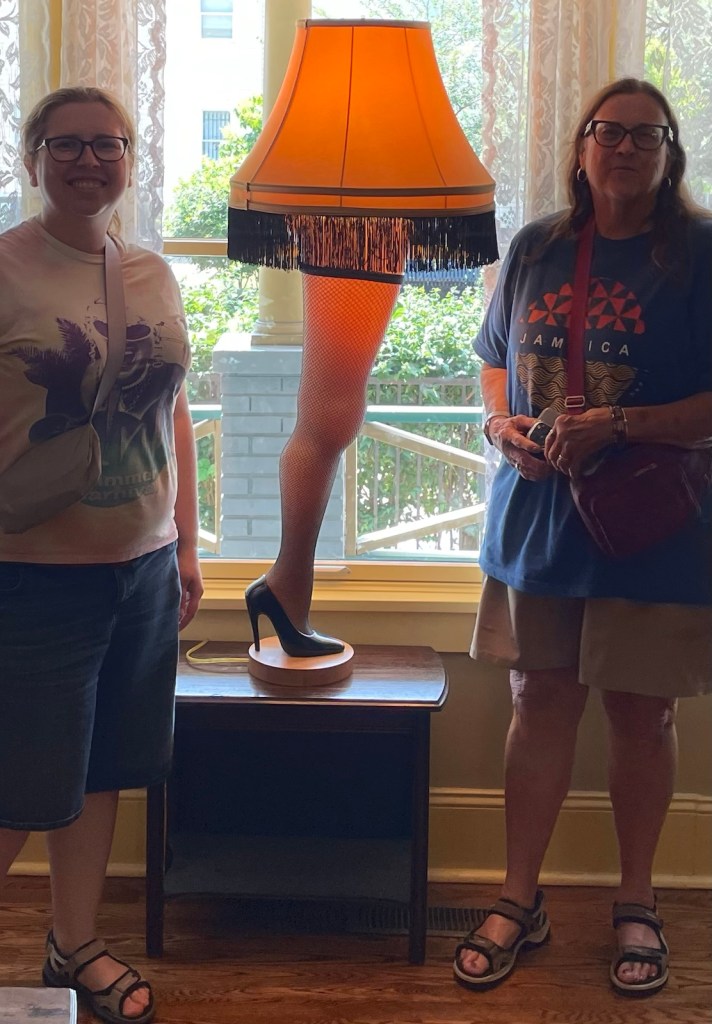
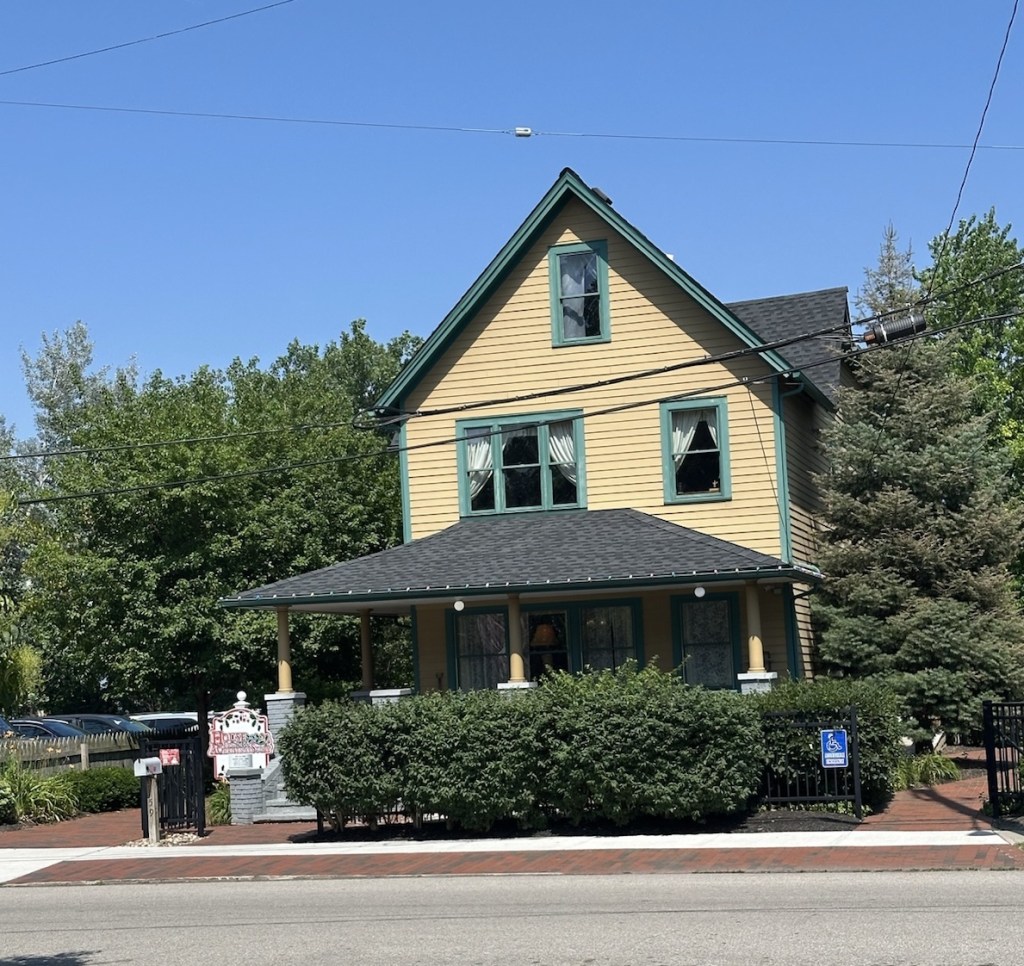
Megan has always wanted to tour the house from A Christmas Story —you know, the one with the leg lamp in the window and the Red Ryder BB gun drama. While the movie claims to be set in Hammond, Indiana, the real house is actually in Cleveland. So off we went, chasing nostalgia and roadside curiosities.
Only three scenes from the movie were actually shot in the Cleveland house. The rest were filmed on a soundstage in Toronto — but that didn’t stop Megan from grinning like a kid on Christmas morning.
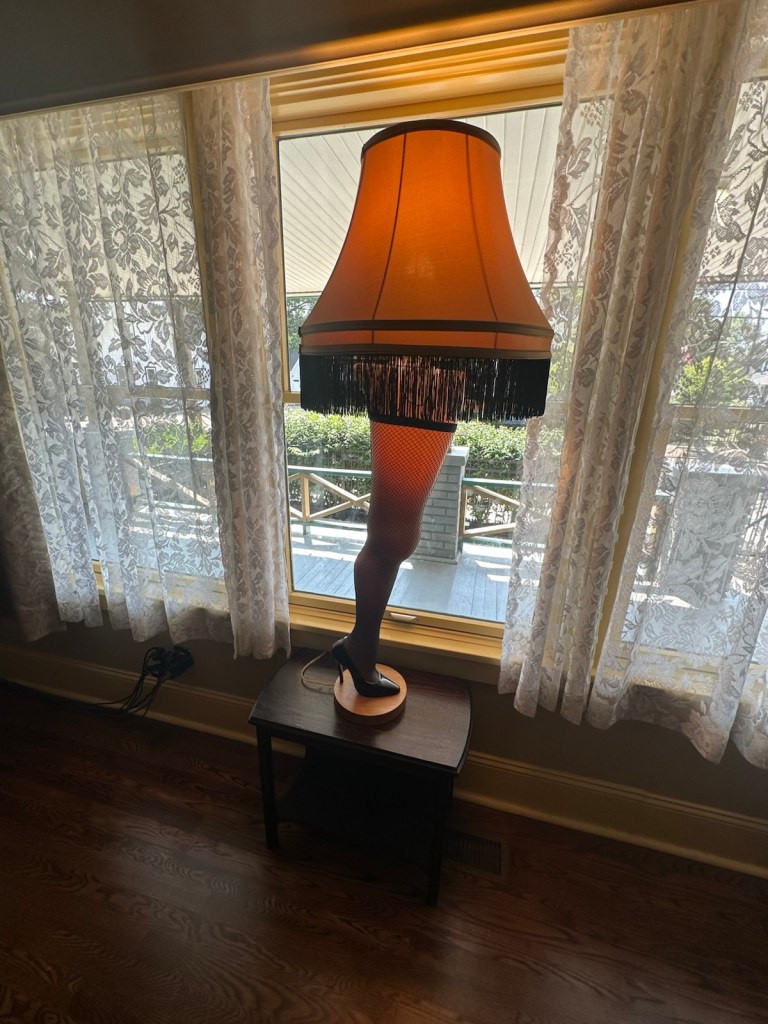
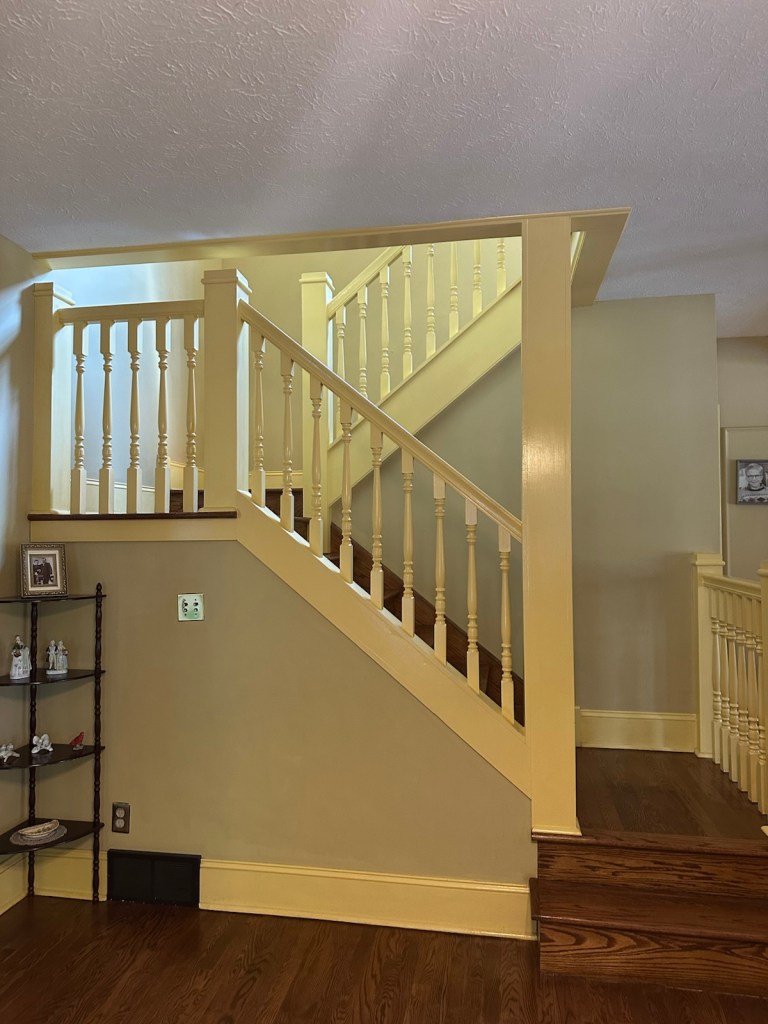
We posed with the infamous leg lamp (yes, it’s still in the window), peeked into the kitchen where the turkey met its untimely end, and climbed the stairs to see where Ralphie plotted his BB gun dreams. A little kitschy? Sure. But totally worth the stop. After all, what’s a road trip without a few unexpected turns and a touch of movie magic?
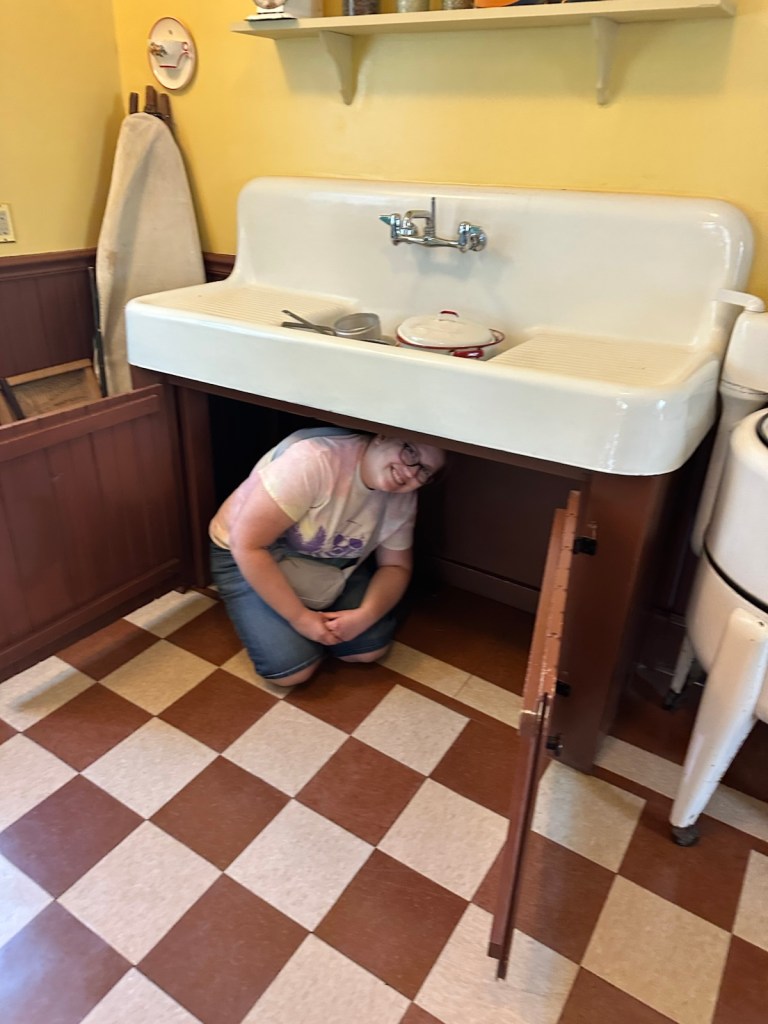
Megan stole the show with her re-enactment of Randy’s famous scene under the sink. Clearly, she missed her true calling in improv comedy.
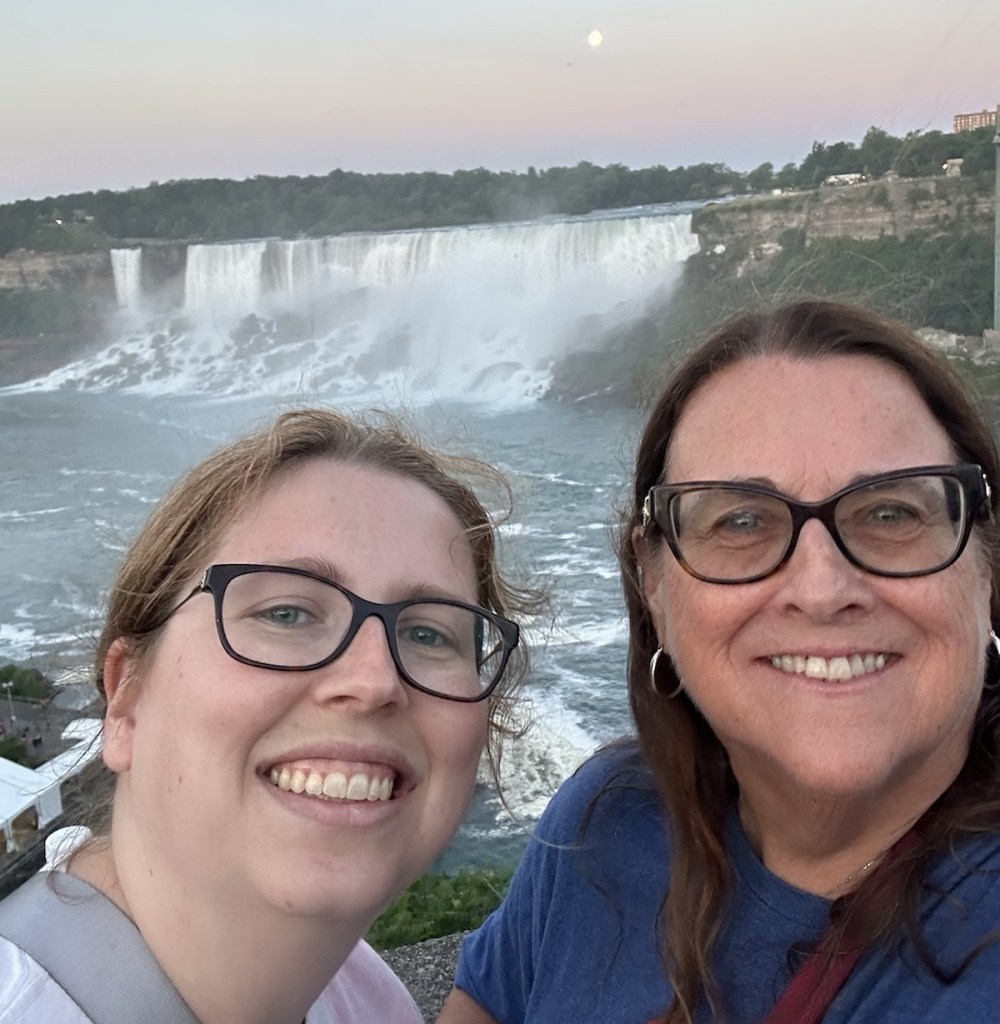
Next up: Niagara Falls. We made a quick stop on the Canadian side for a look at the roaring water — still impressive, even in a hurry. Snapped a few photos, took a spin through the duty-free store and just like that, we were back on the road headed for Toronto.
We arrived at our destination around 11:00 pm. Long day, good talk, tired now.
Heading north for a Canadian adventure! I flew into Cincinnati, am now road-tripping through Toronto, Ottawa, Montreal, and Quebec City — with a little NYC detour on the way back to Ohio.
My partner-in-crime is my niece Megan, an English teacher from Cincinnati who’s determined to unleash her French language skills on our Canadian neighbors. Along the way, she’s teaching me to knit — so expect tangled yarns in more ways than one (and yes, that’s a literal-and-figurative yarn pun).
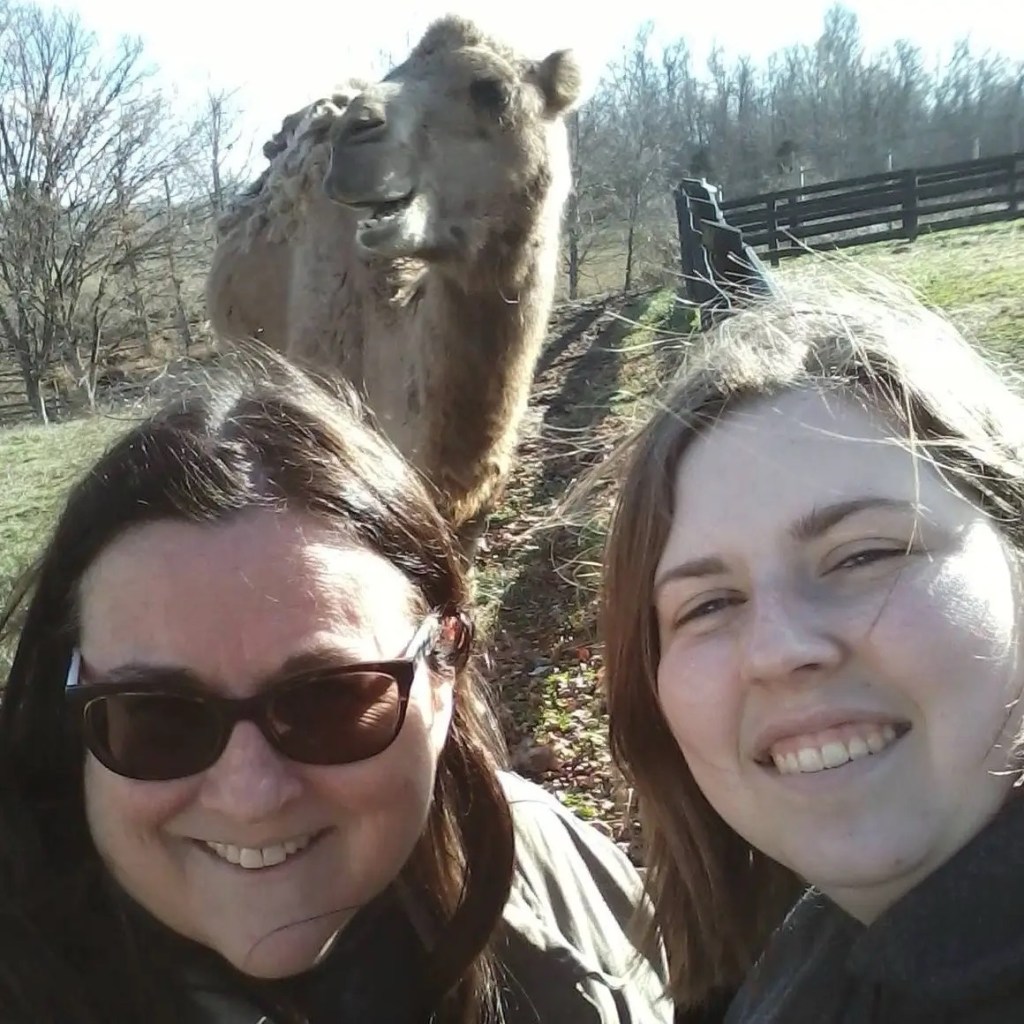
We make a great adventure team. A few years back, we were hiking in Kentucky when — believe it or not — we stumbled upon a camel. Naturally, we had to get a photo. This was before front-facing cameras were a thing, but Megan expertly flipped her phone around and somehow managed to snap a perfectly centered shot — camel included, smiling and all.
Join us as we explore Canada — savoring its cuisine, discovering its culture, and knitting a few memories along the way.
After such a full and exhilarating week, we were all ready to head home.
Theresa and I — who began our journey in Lisbon, made our way to Santiago, and then continued on to the Canary Islands — had been traveling for a month. Kyle joined us just before Santiago, while Quinn and Emily chose to spend a week with us in the Canaries.
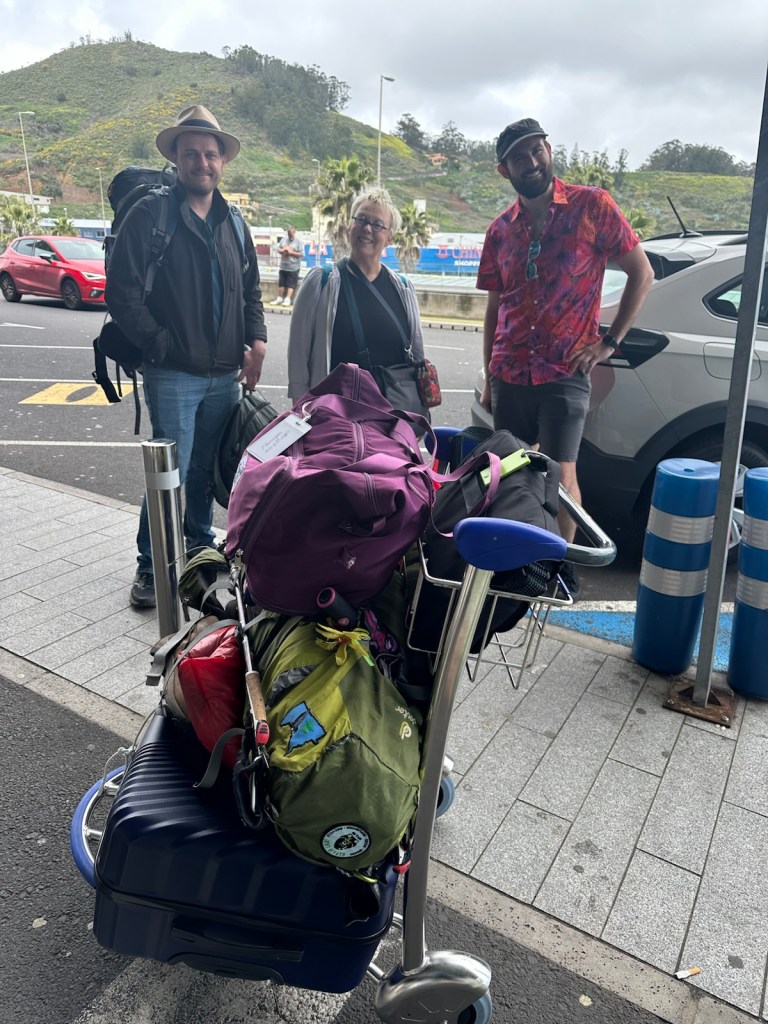
We all flew home in different directions. Kyle, Theresa, and I departed from Tenerife North Airport, which connects primarily to European cities. Our first stop was Lisbon — then Kyle continued home via Canada, while Theresa and I traveled through Amsterdam. Quinn gave us a ride to the airport and saw us off.
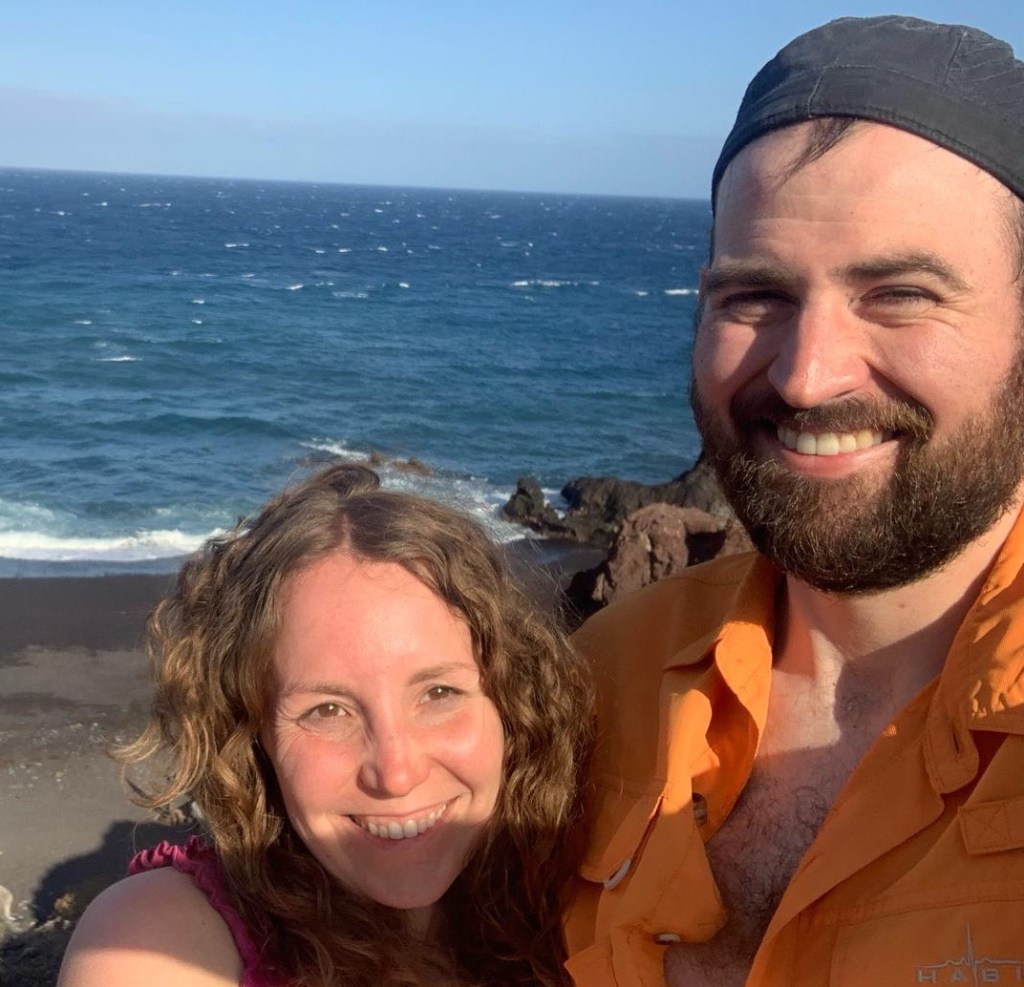
Quinn and Emily had one more night in Tenerife before flying home via New York City. Their departure was from Tenerife South Airport, which handles most international flights. After Quinn returned they packed up and made their way to the southern part of the island.
Excited to see the ocean, they were frolicking in the water and a wave made off with their sunglasses.
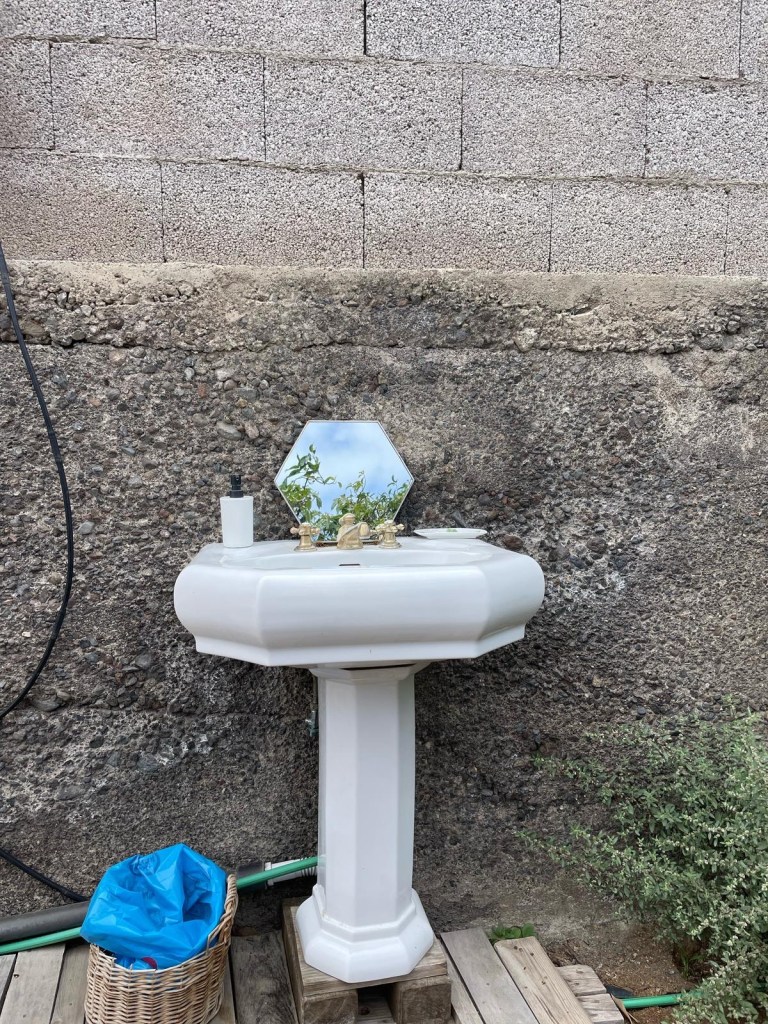
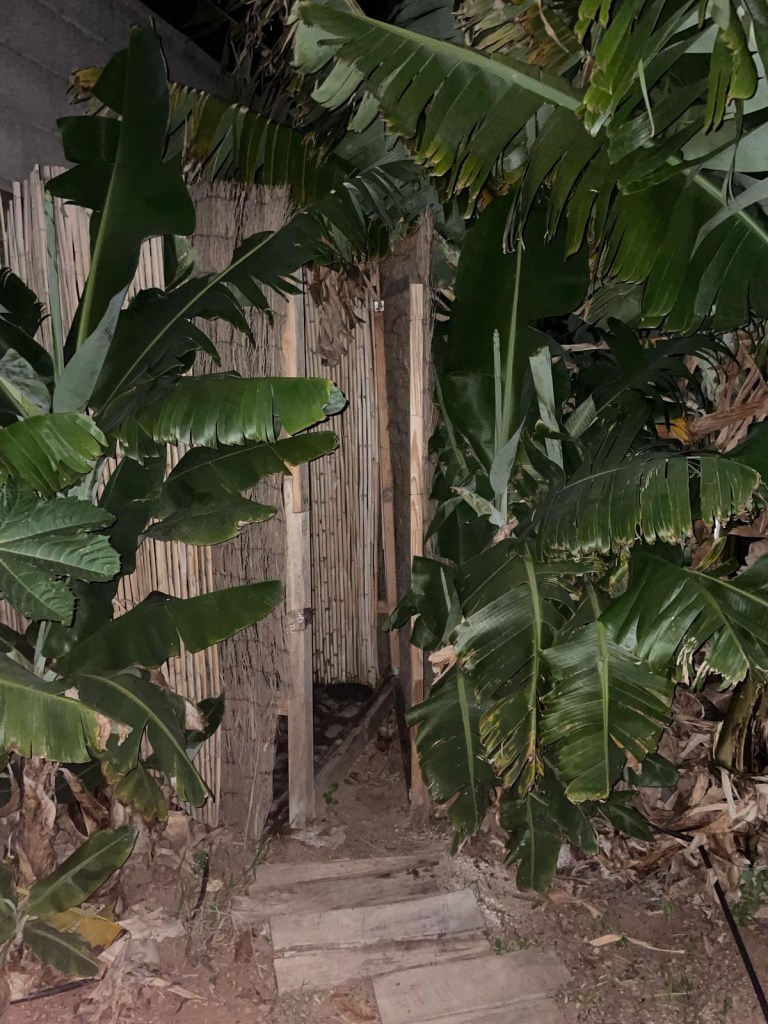
For their final night, they stayed in a yurt nestled in a garden beneath an avocado tree. The quirky setup included an outdoor sink, a rustic shower and the unexpected company of half a dozen cats.
“Epic” was the word Quinn used to sum up our week in the Canary Islands — and it truly was. The entire journey was unforgettable for all of us, made even more special by the week Theresa’s daughter Helen spent with us on the Camino. We shared countless adventures, each one adding to a tapestry of memories we’ll carry with us.
Our timing couldn’t have been better — we missed a major power outage that swept across the Iberian Peninsula by just an hour. It was a journey for the books, with the wind at our backs every step of the way.
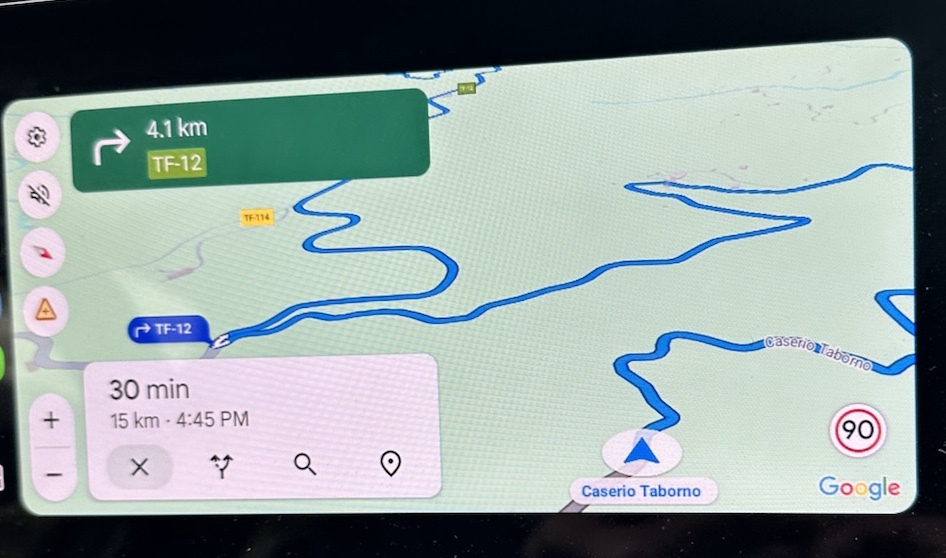
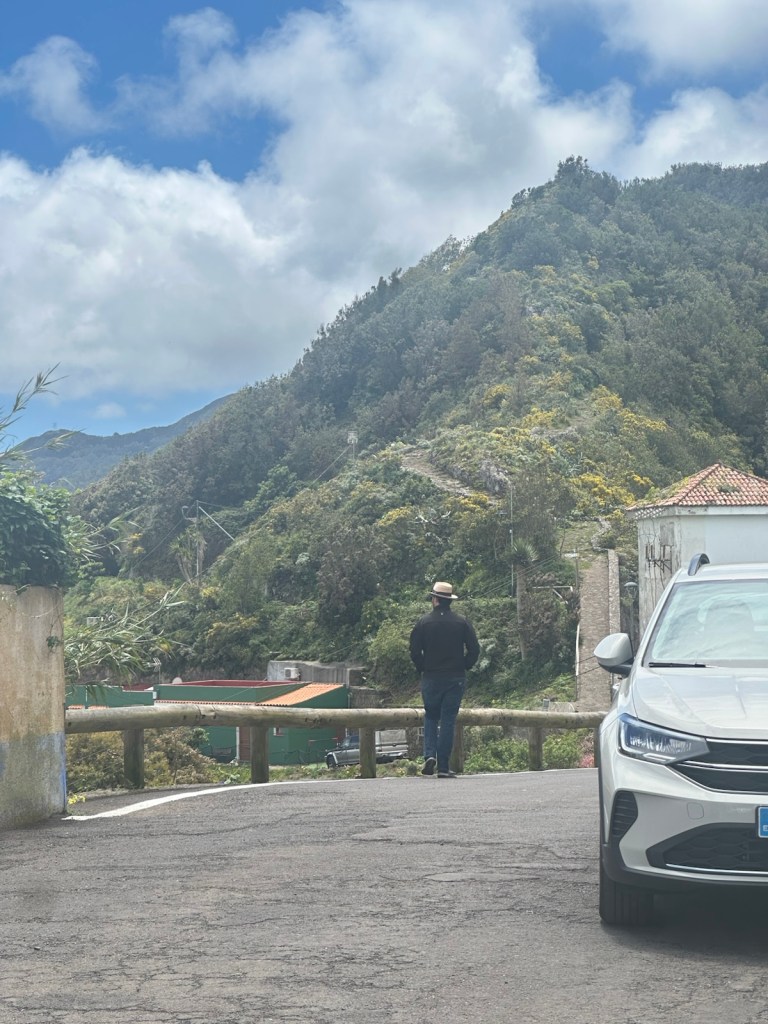
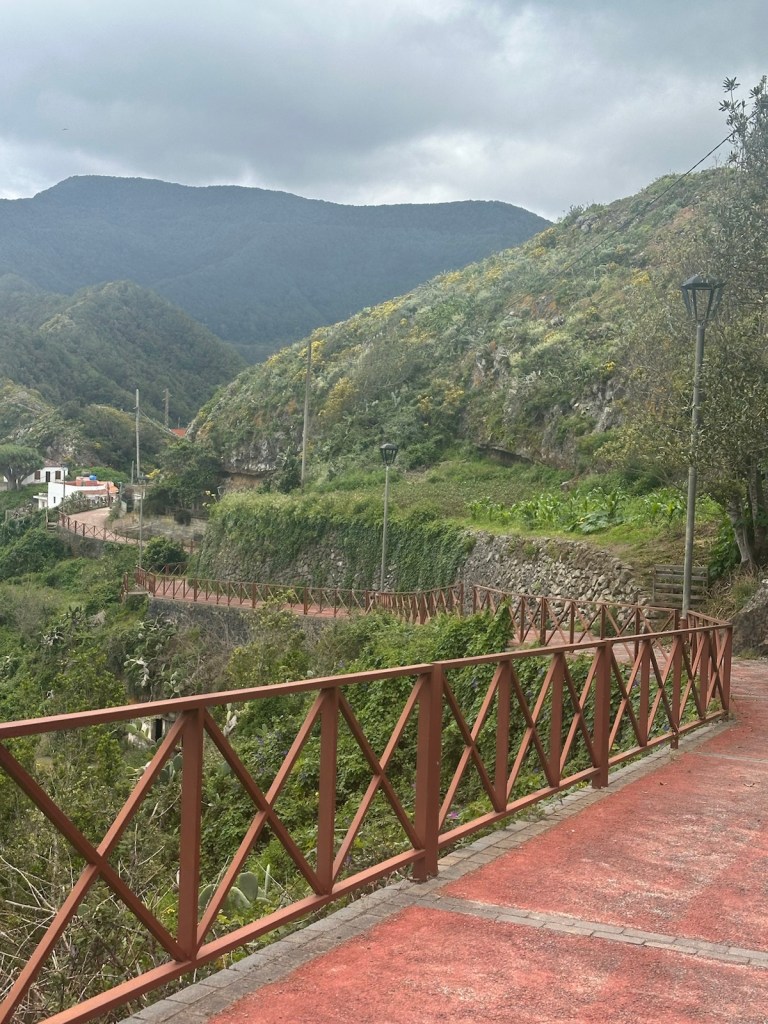
Today’s adventure led us to a hidden gem: a French restaurant tucked away in the breathtaking Anaga mountain range. We had originally planned to spend the afternoon at Mount Teide, but the scenic drive to the tiny hamlet of Taborno changed everything. The journey itself was so stunning — and the village so peaceful and inviting — that we knew it deserved our full attention. We didn’t want to dash off to Mount Teide only to rush through it. So we embraced the slower pace and let the day unfold at its own rhythm.
Watching the navigation system trace our winding route was nearly as captivating as the journey itself.
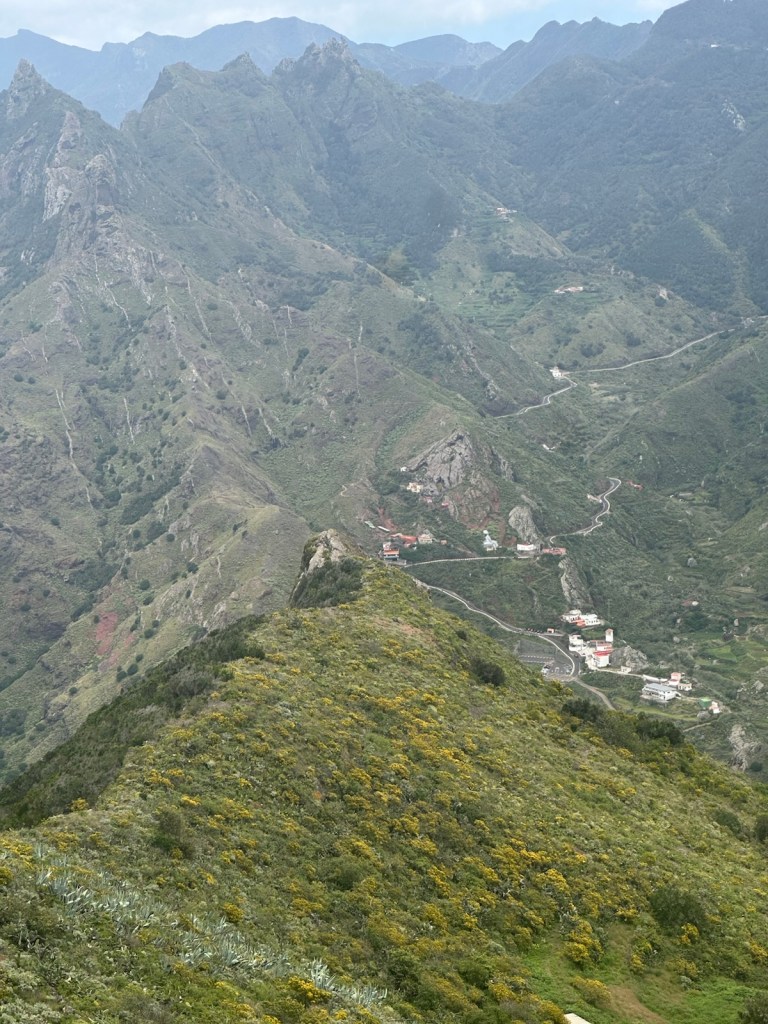
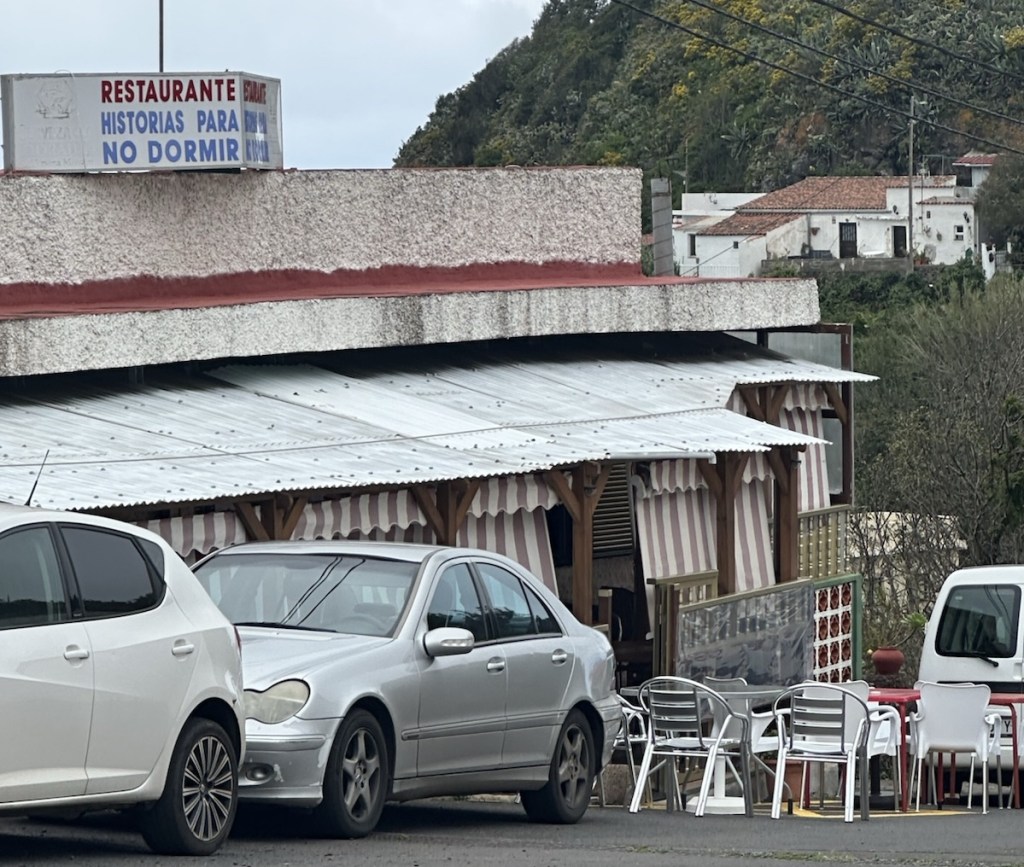
Historias Para No Dormir is a charming French restaurant nestled in the hamlet of Taborno. This remote village is part of the Anaga Rural Park, a UNESCO Biosphere Reserve celebrated for its ancient laurel forests, dramatic cliffs, and panoramic ocean views … tranquil and bursting with natural beauty.
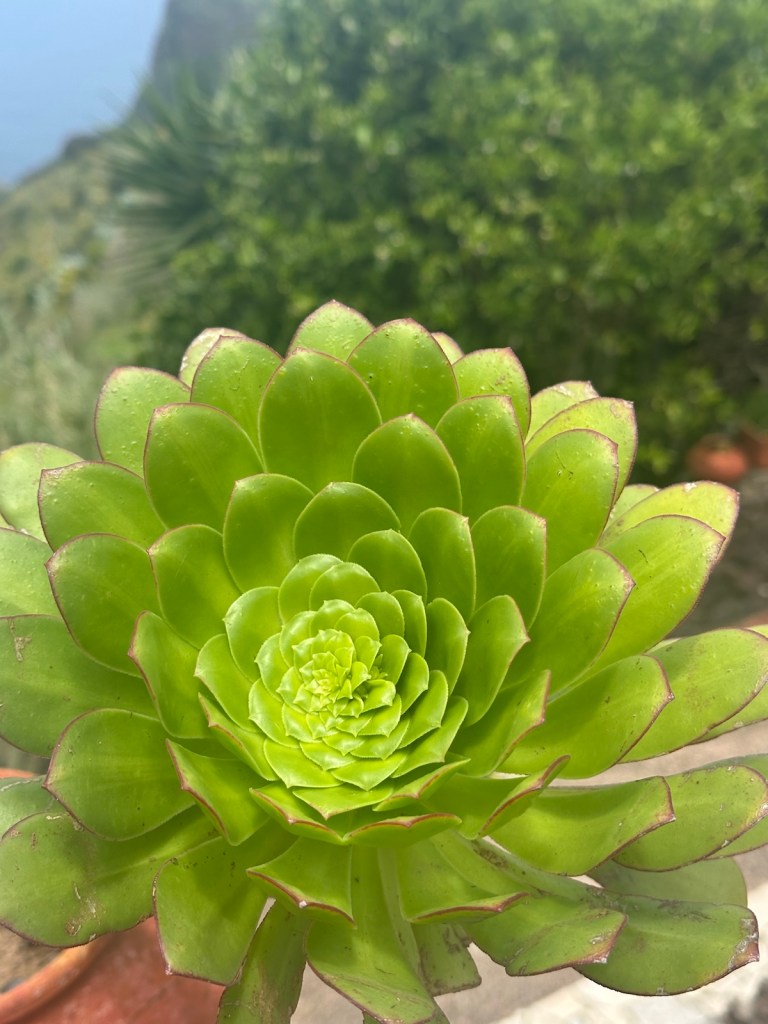
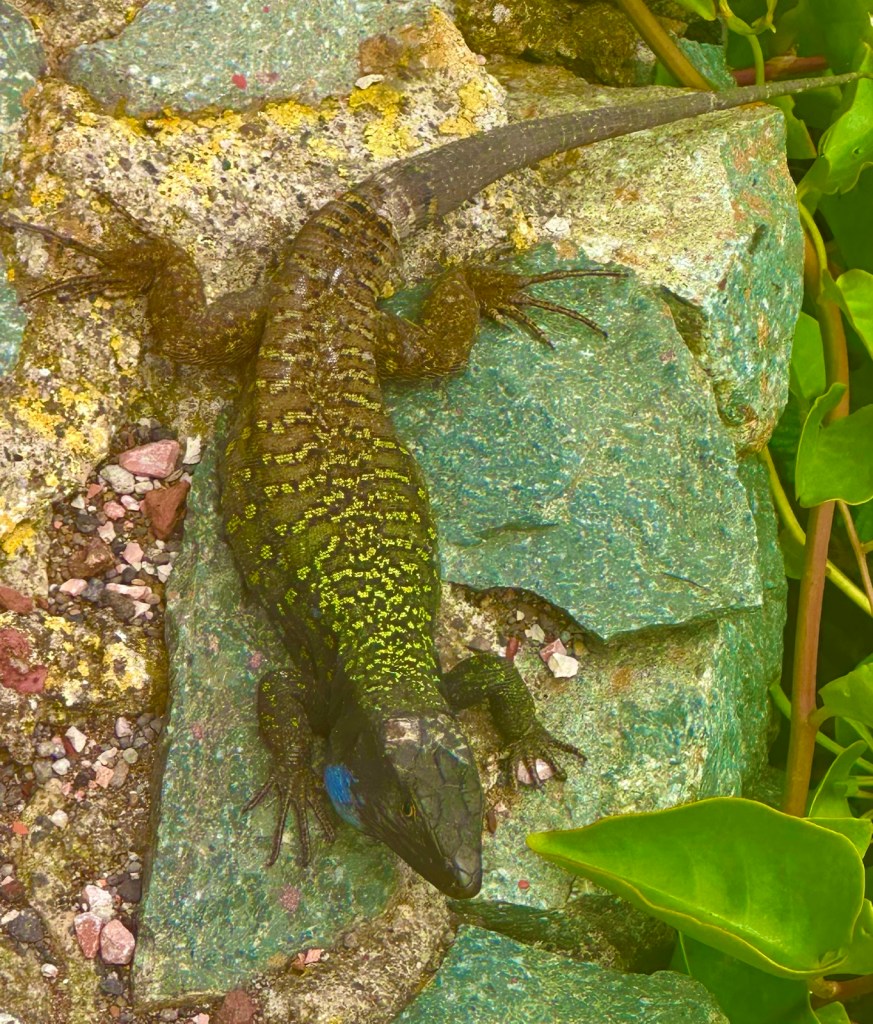
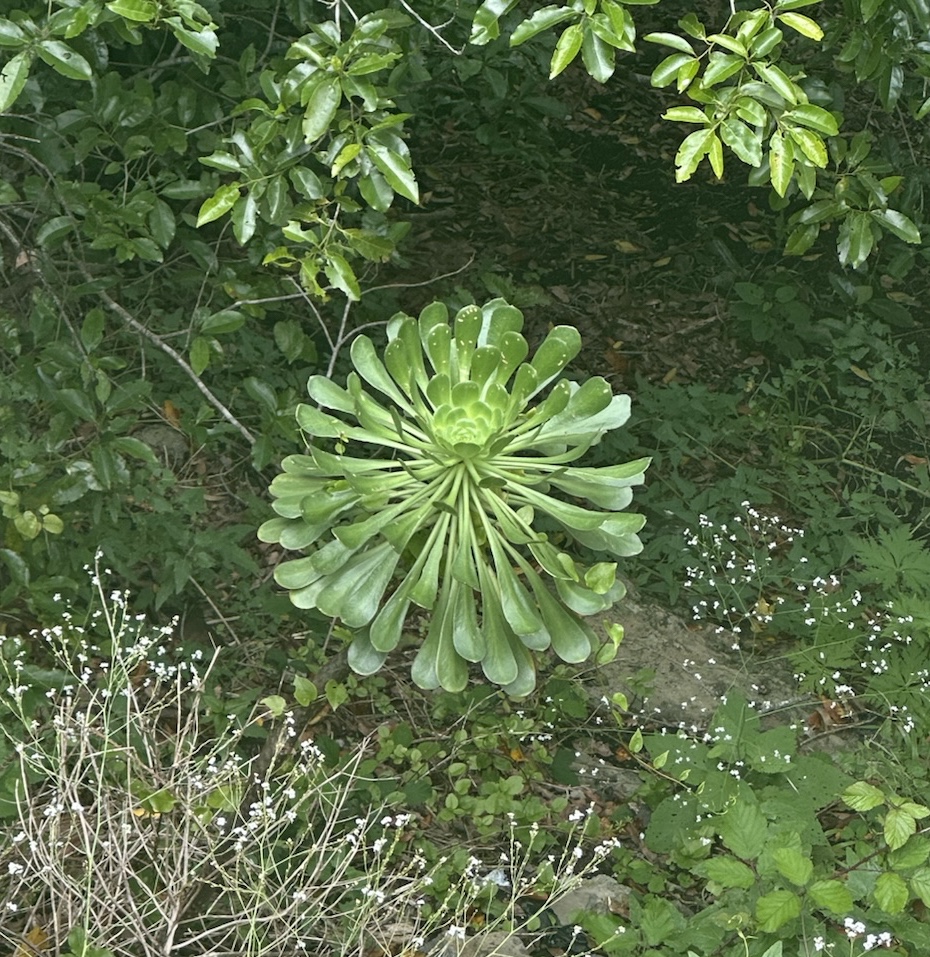
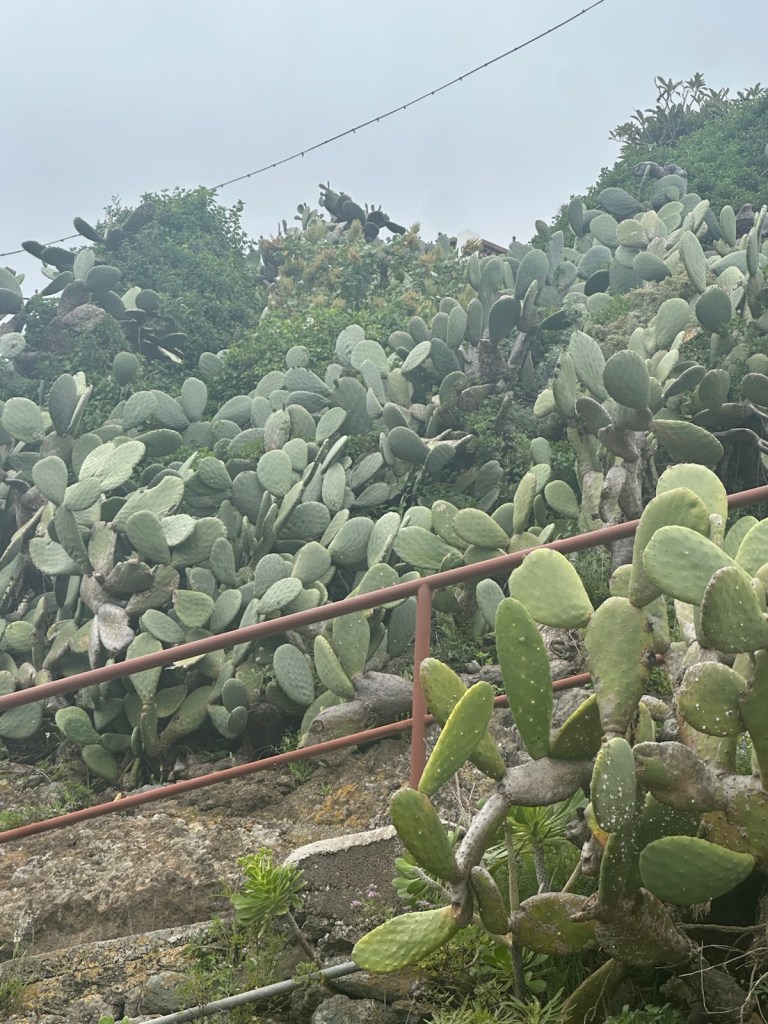
The area was blooming with unfamiliar yet stunning plant life — and we even spotted a few lizards basking in the sun.
Hjknjk;
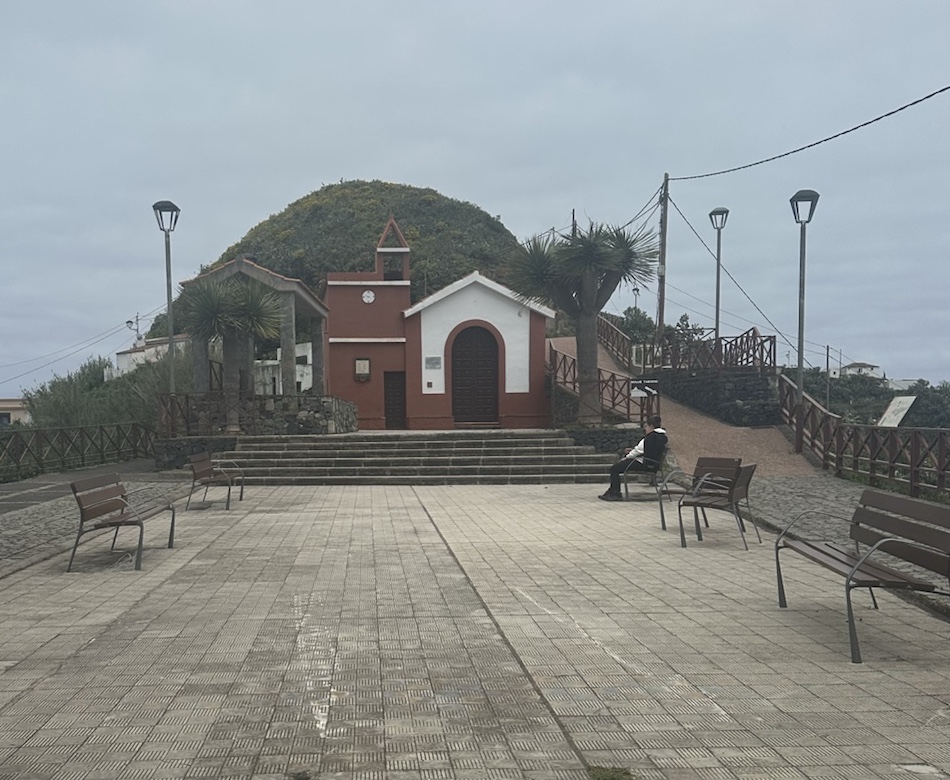
Before lunch, we wandered a little farther up the road and discovered the Church of Saint Joseph — a humble yet historically rich chapel nestled in the heart of this secluded village. Its architecture reflects the island’s rural traditions, with a simple rectangular design and a roof of weathered Arabic tiles. More than a place of worship, the church remains a cornerstone of community life.
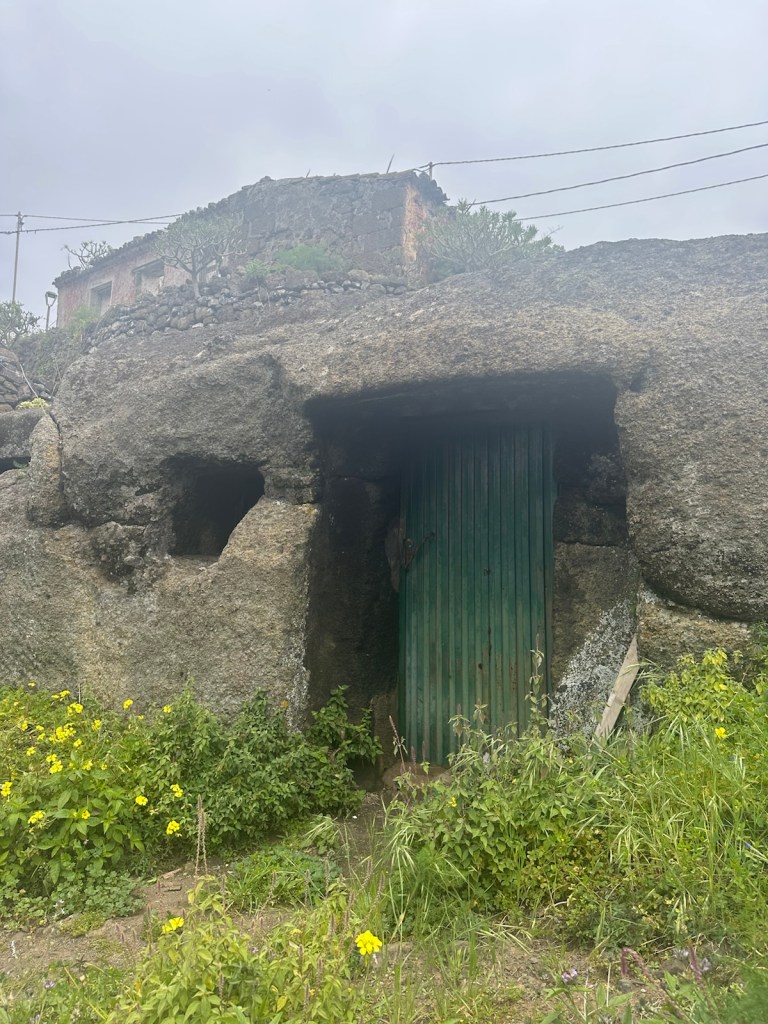
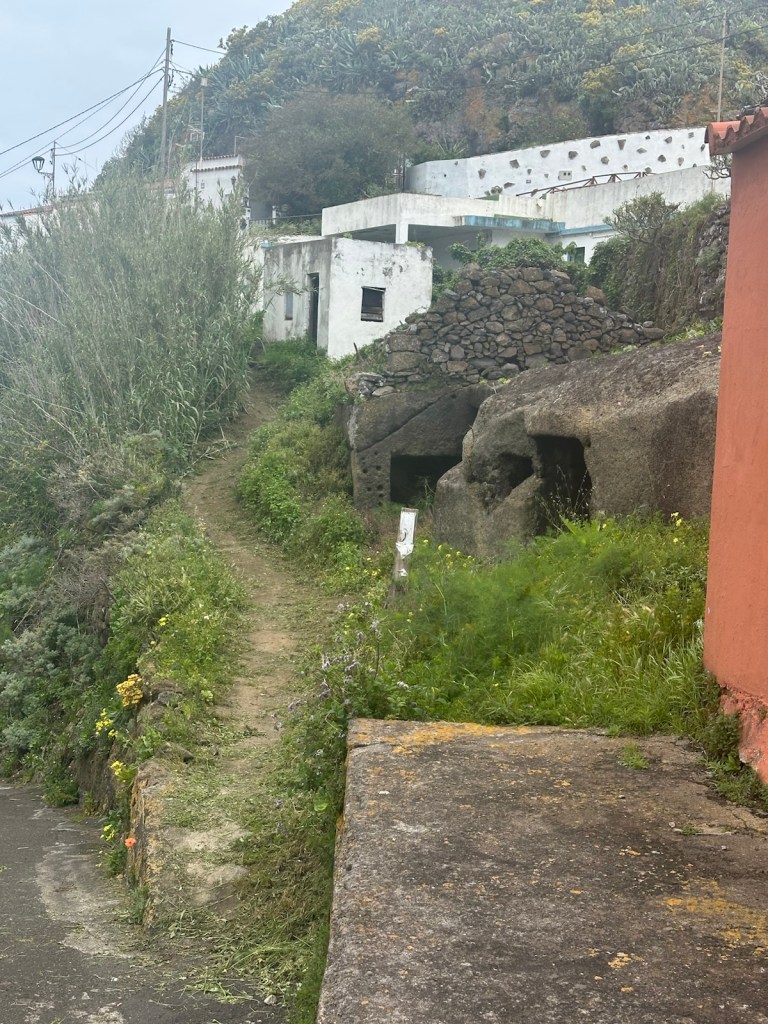
Just beyond the church, we came upon some cave dwellings with weathered entrances tucked into the hillside. It’s unclear whether it’s still inhabited, though in some parts of the Anaga Mountains, these traditional cave homes are still lived in today.
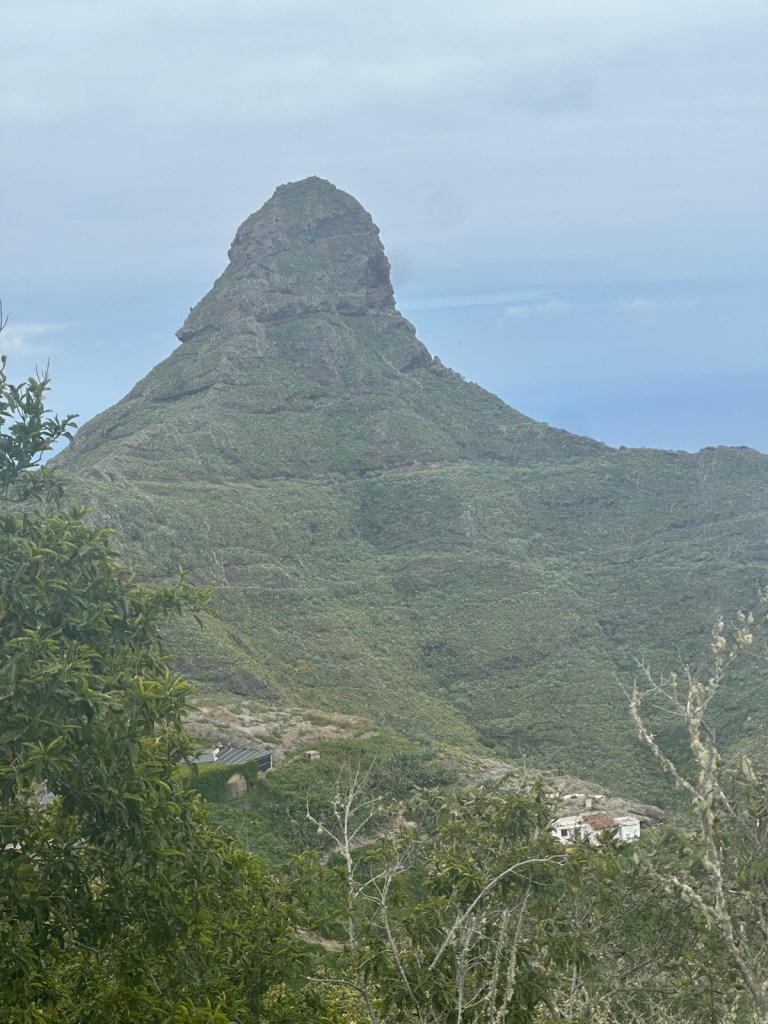
Roque de Taborno is a striking geological formation that was formed through volcanic activity and subsequent erosion over millions of years.The name Historias Para No Dormir translates from Spanish as “Stories to Stay Awake.” Perhaps the restaurant is suggesting that a meal here is more than just dining; it’s an experience woven with unforgettable stories that linger long after the last bite.
And it was a very memorable meal with stories that will linger …
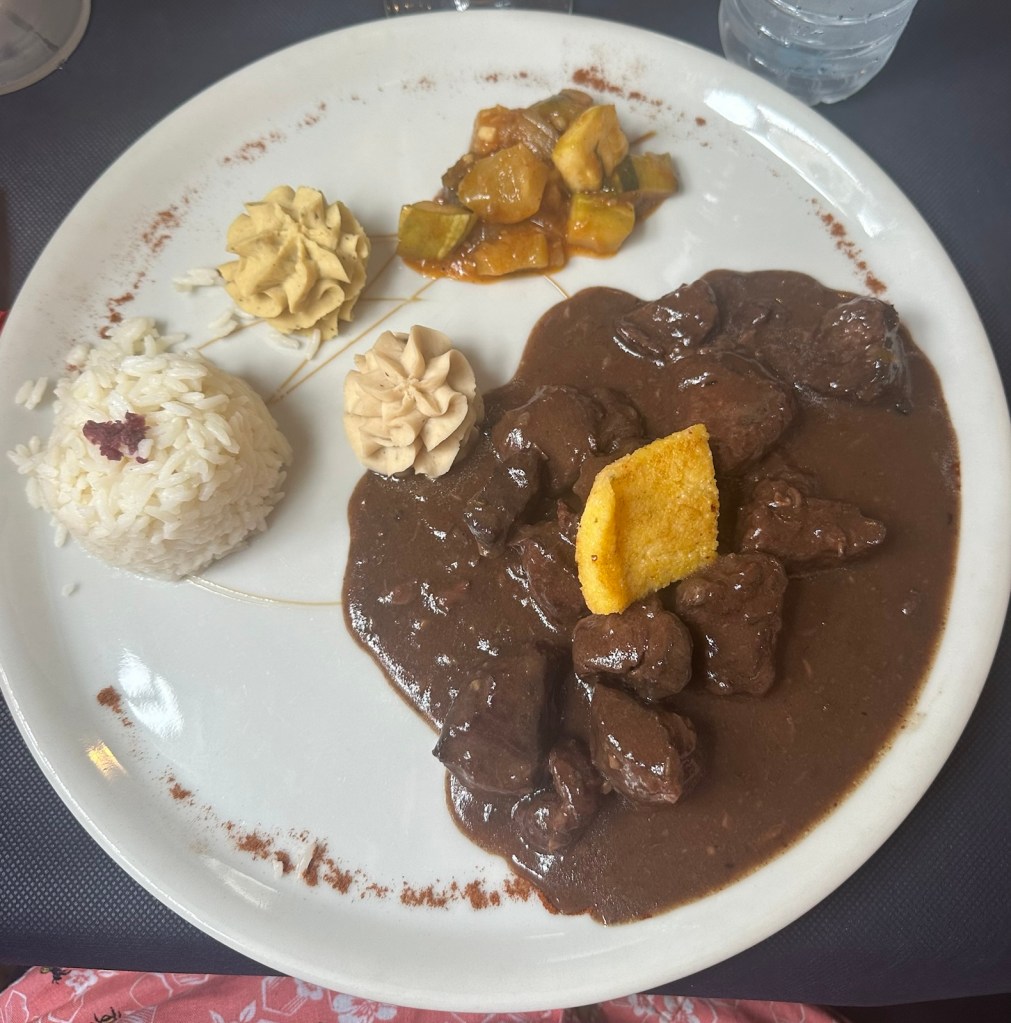
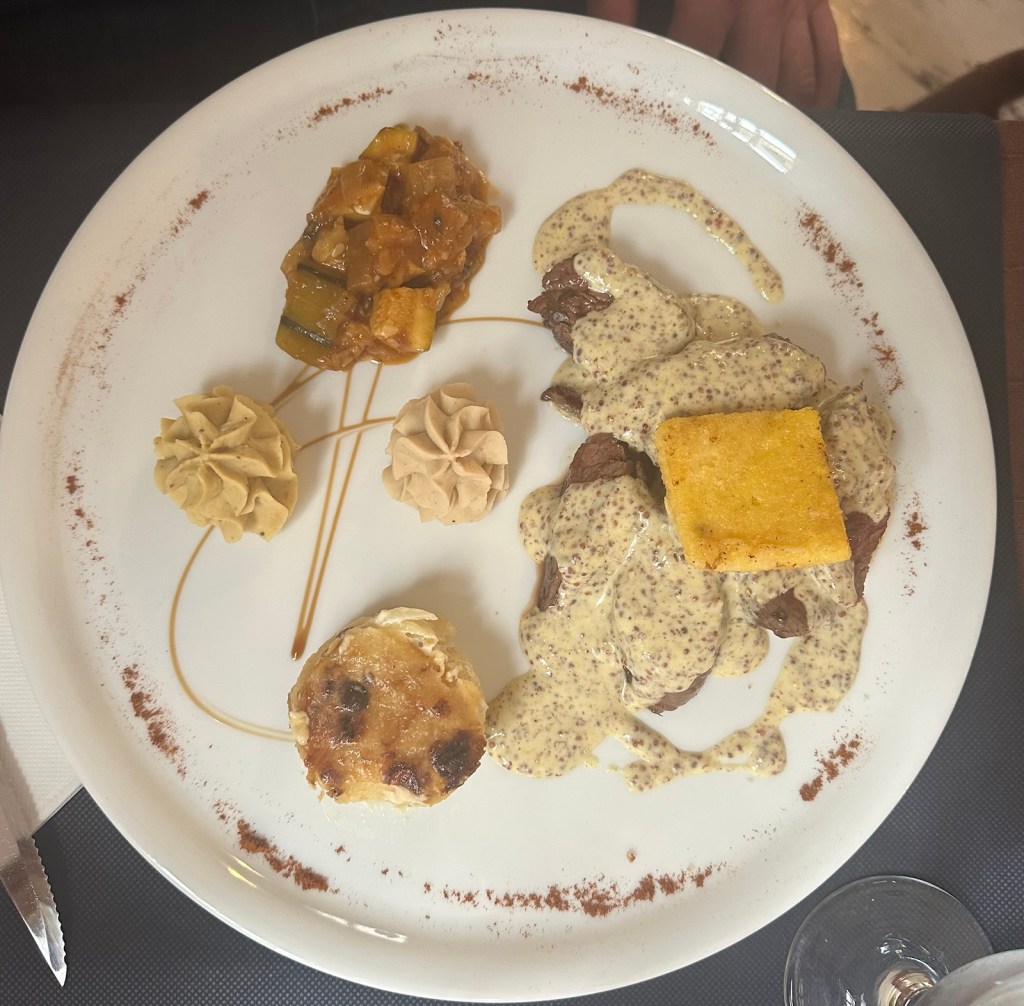
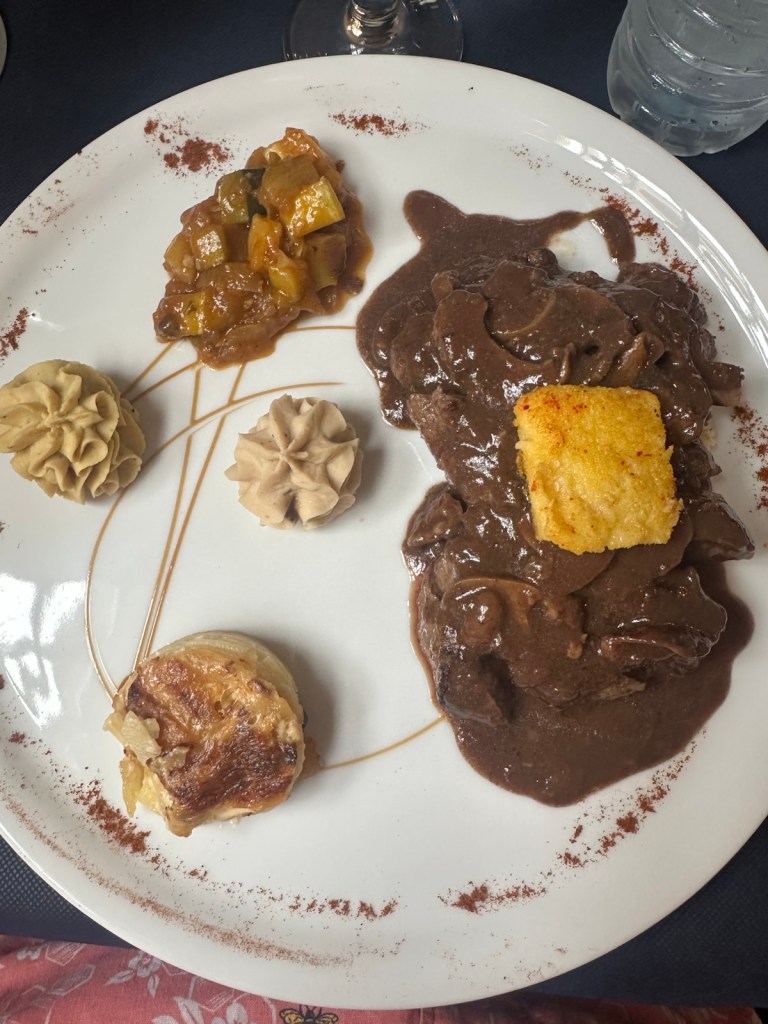
The meal exceeded all expectations. Each of us began with a beautifully composed, distinctive salad before moving on to the main event: hearty wild boar stew, succulent kangaroo sirloin draped in the chef’s signature sauce, velvety venison sirloin bathed in a wine and mushroom reduction, and a showstopping triple pork T-bone —generously stuffed with garlic and mushrooms, then crowned with a decadent Camembert sauce. Perhaps that was the story meant to linger.
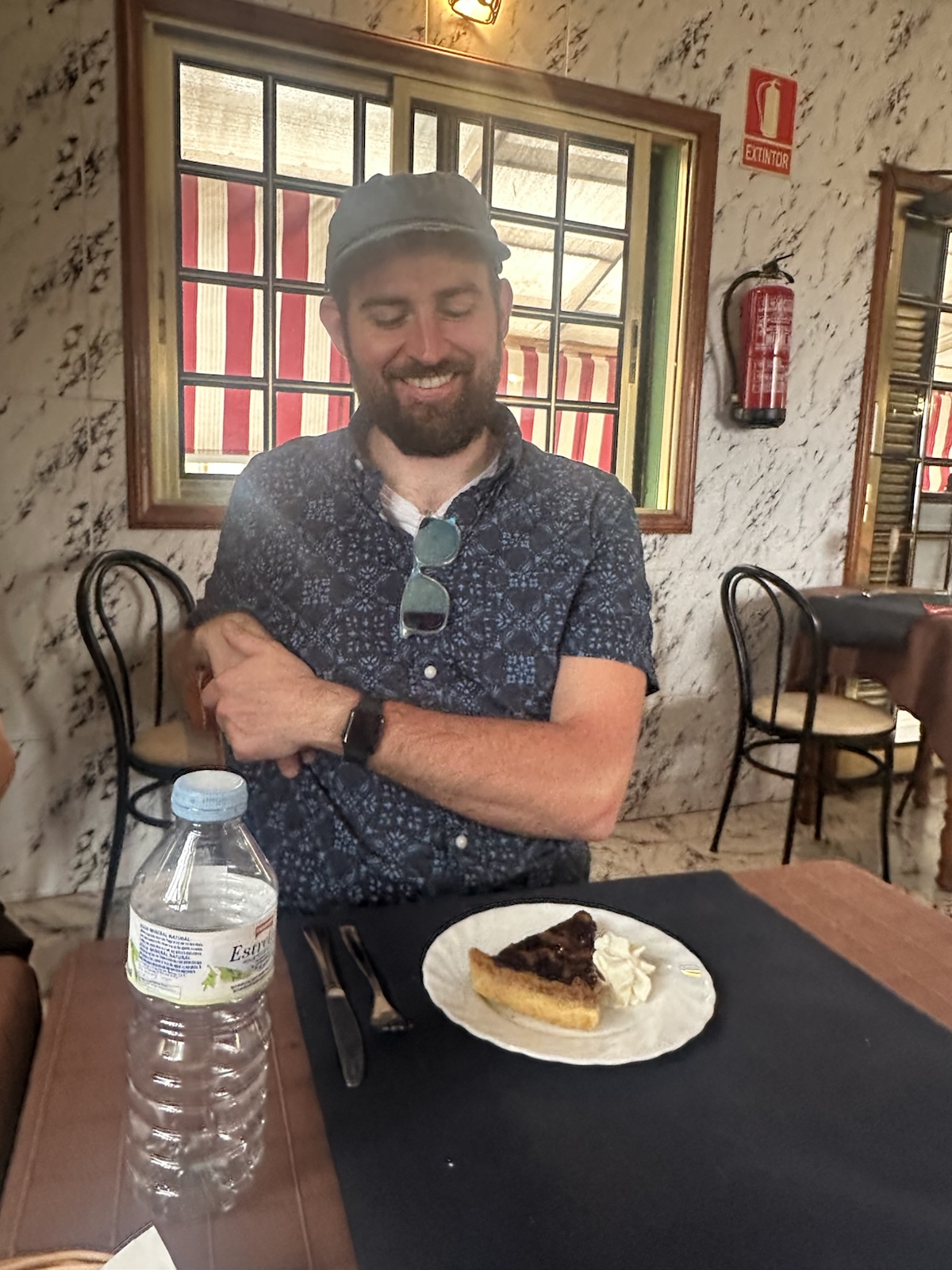
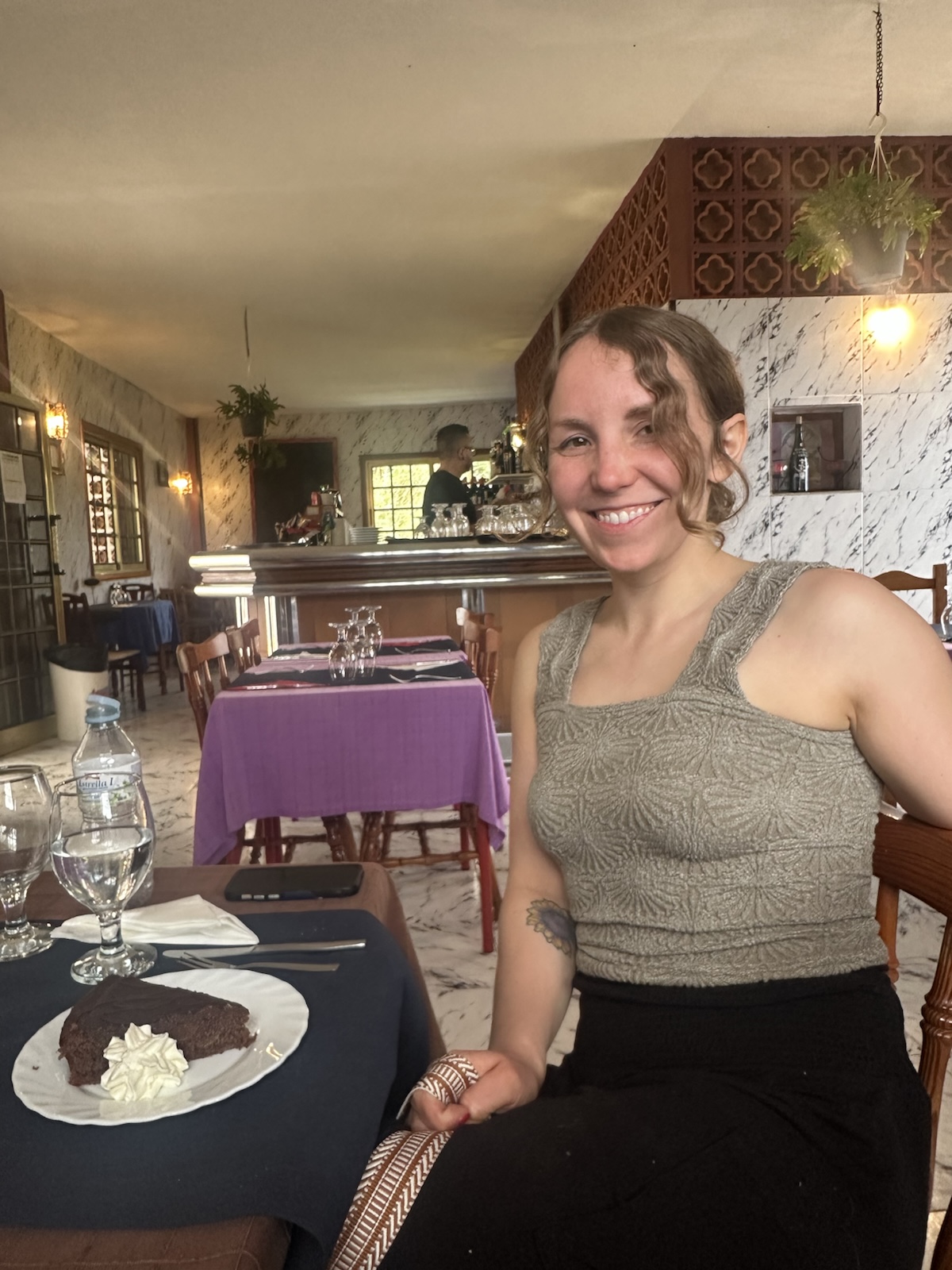
And of course, we didn’t pass up dessert — it was included, after all. We indulged in a tempting array: pie, tiramisu, chocolate cheese cake and a decadent double chocolate cake.
While dinner settled, we took one last short walk to soak in the breathtaking views that surrounded us.
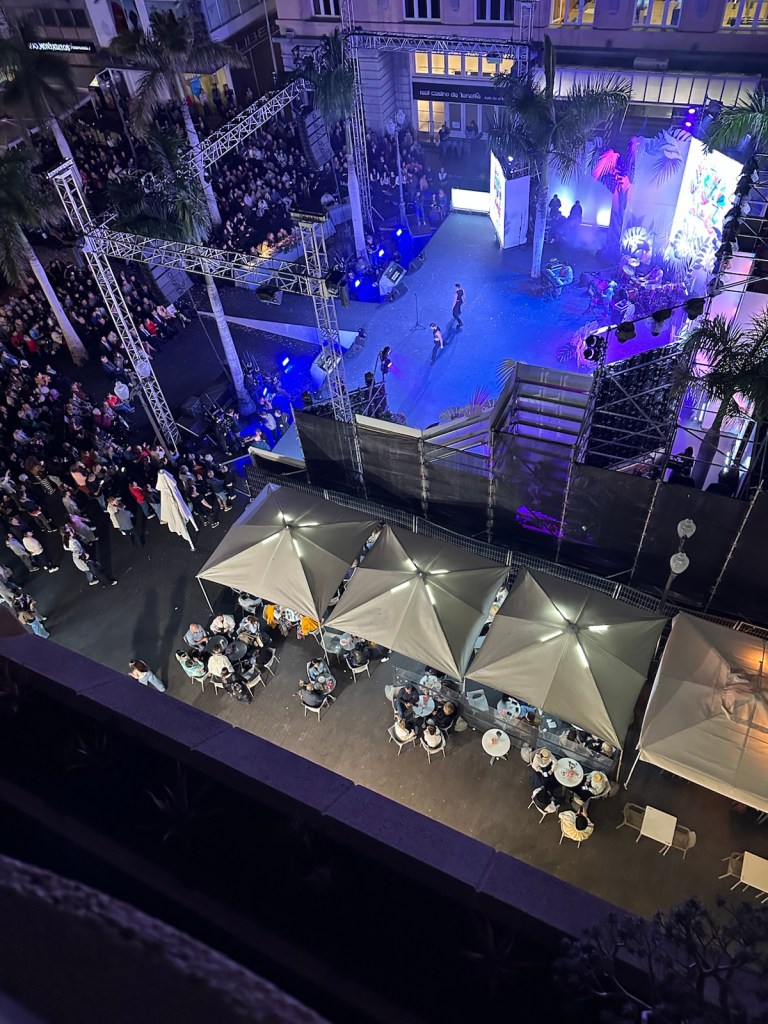
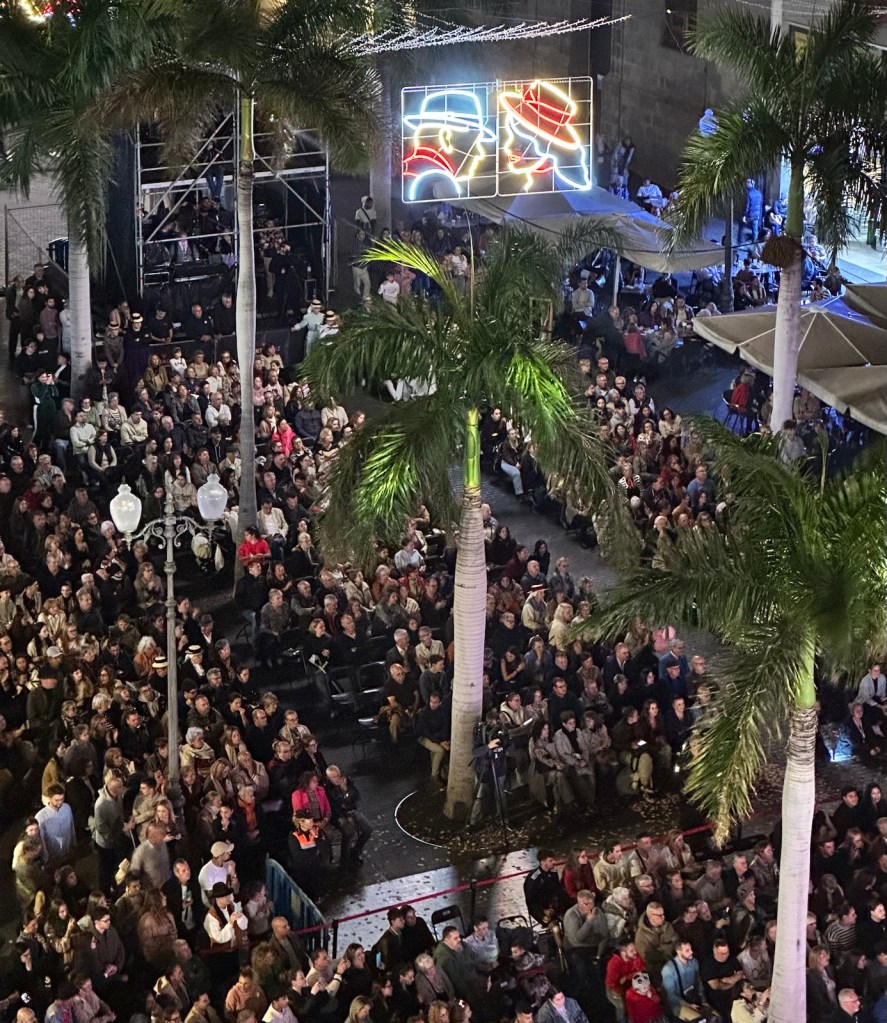
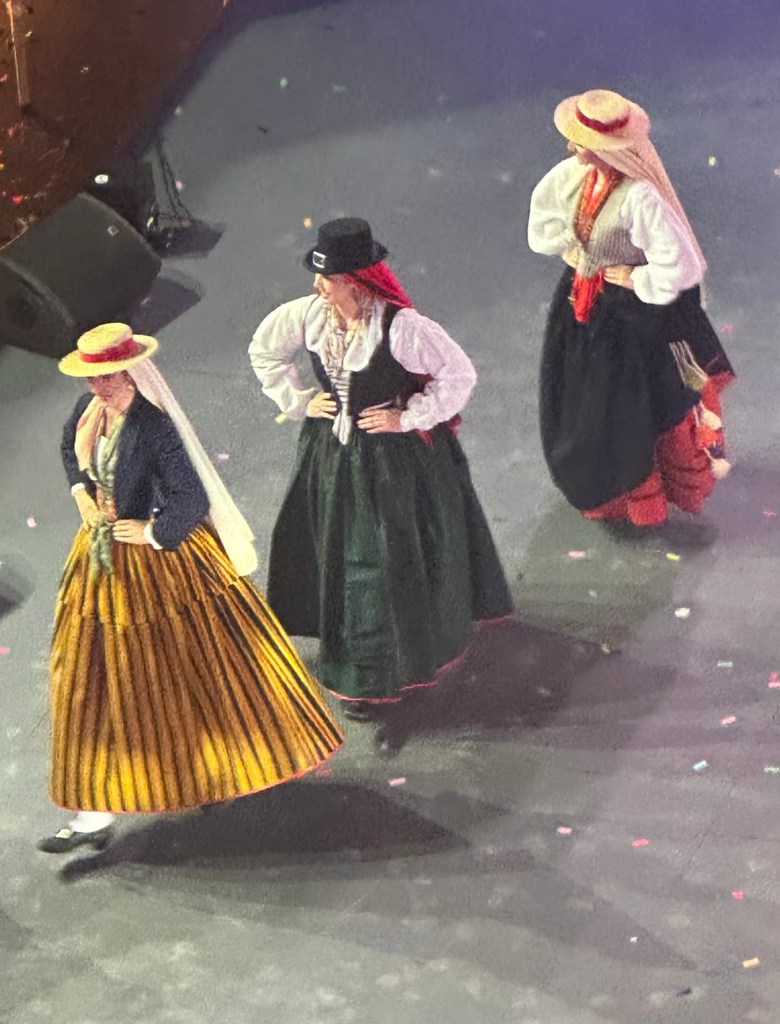
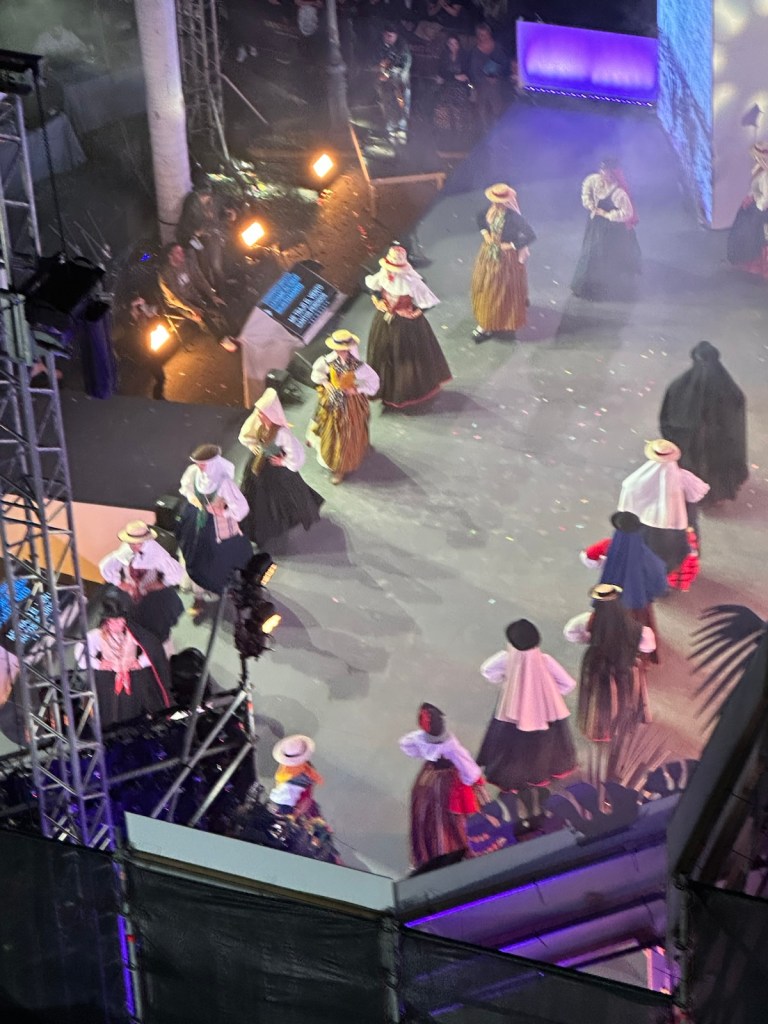
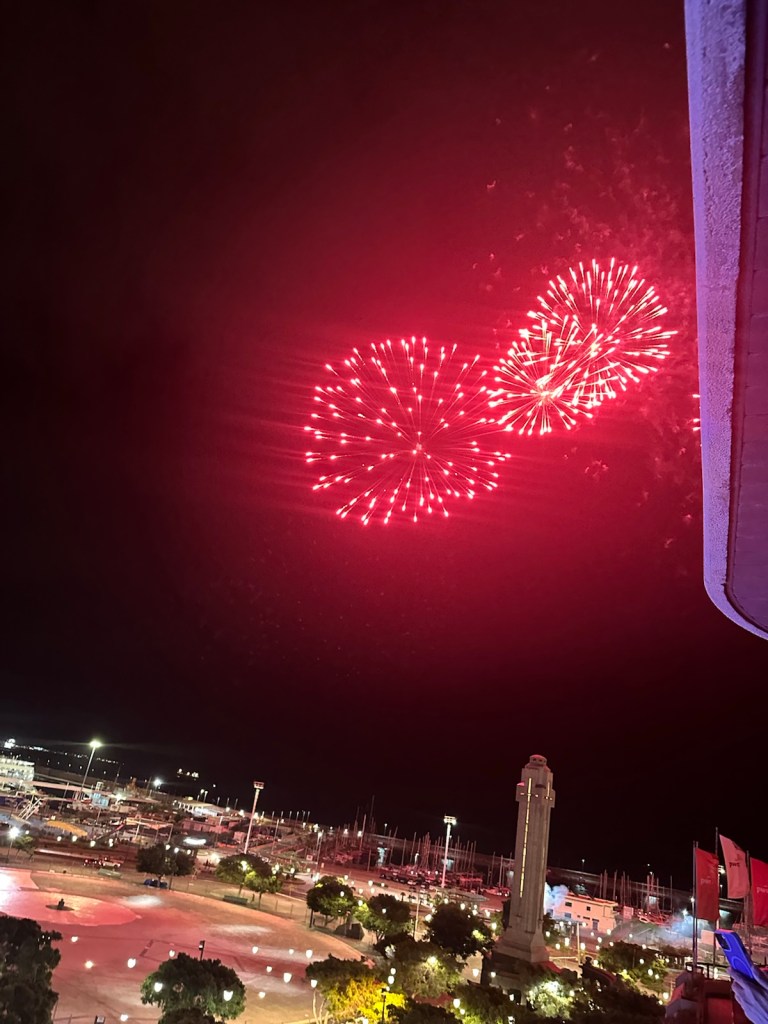
As we arrived back at the apartment, a show was just beginning in the plaza below.
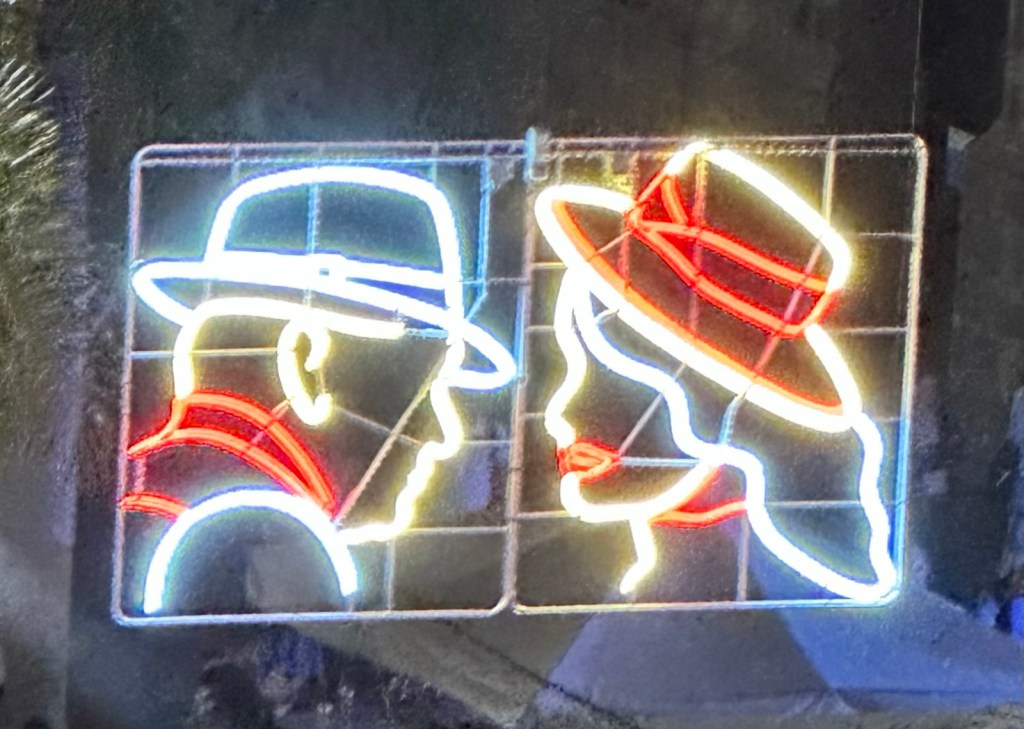
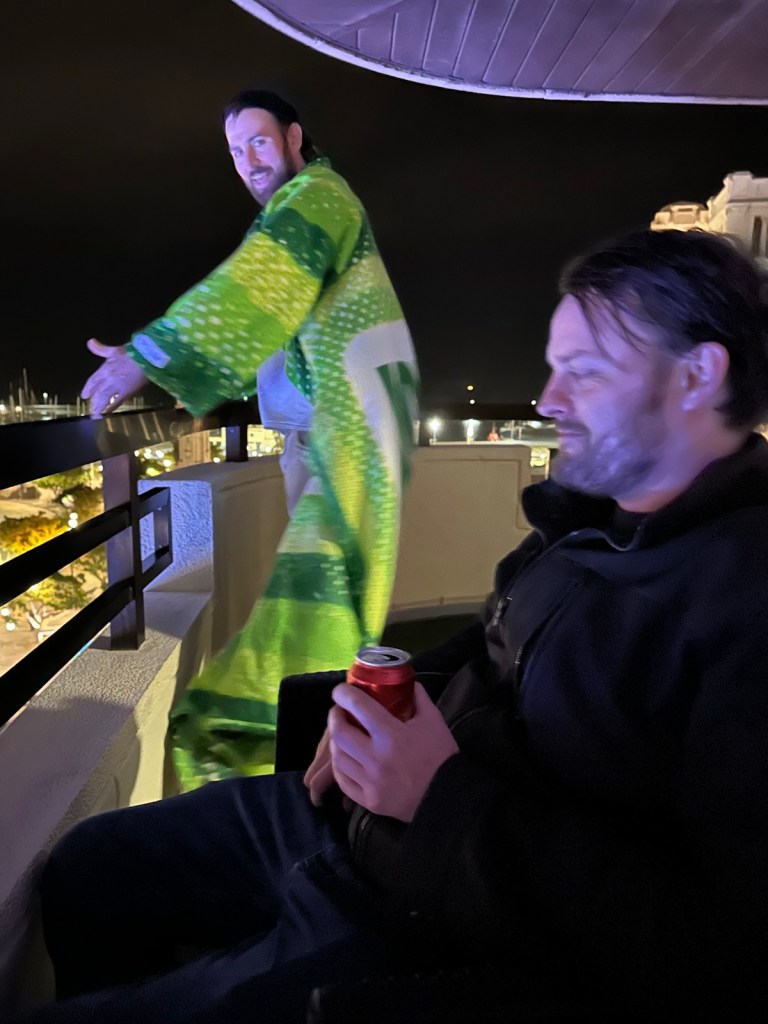
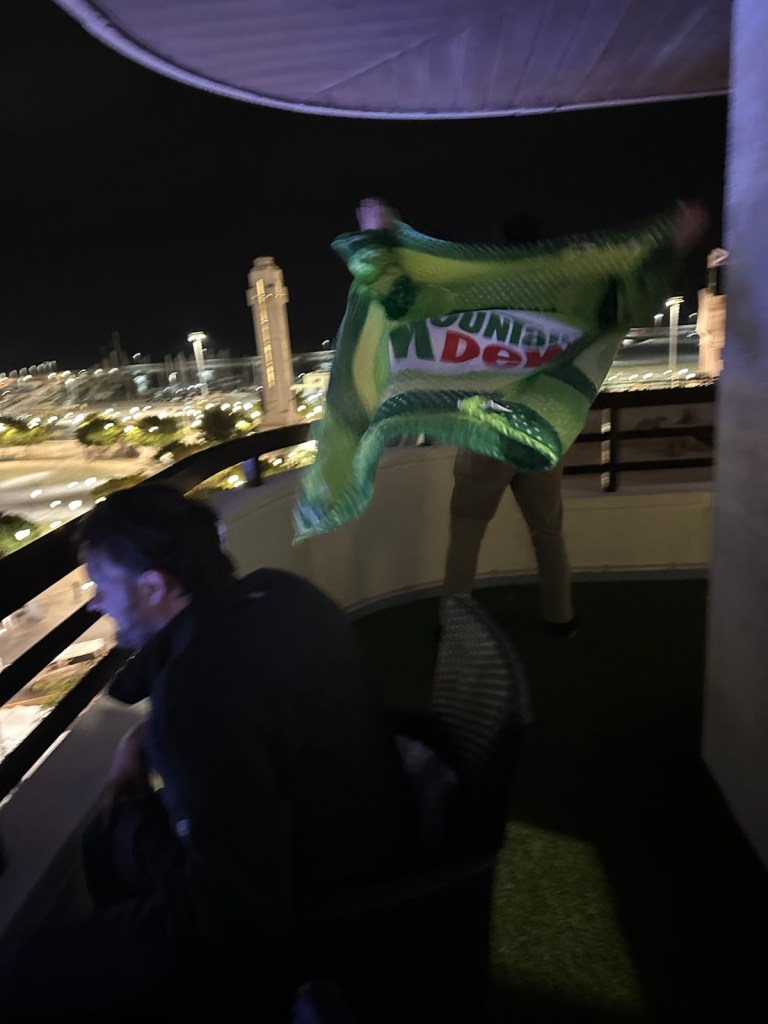
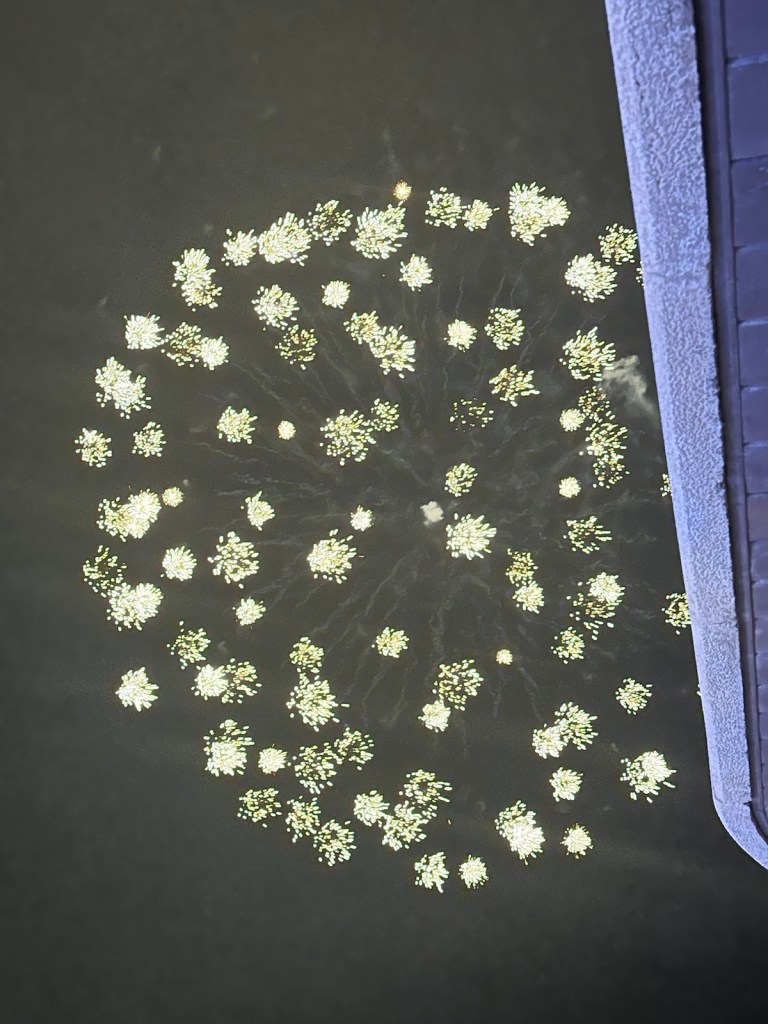
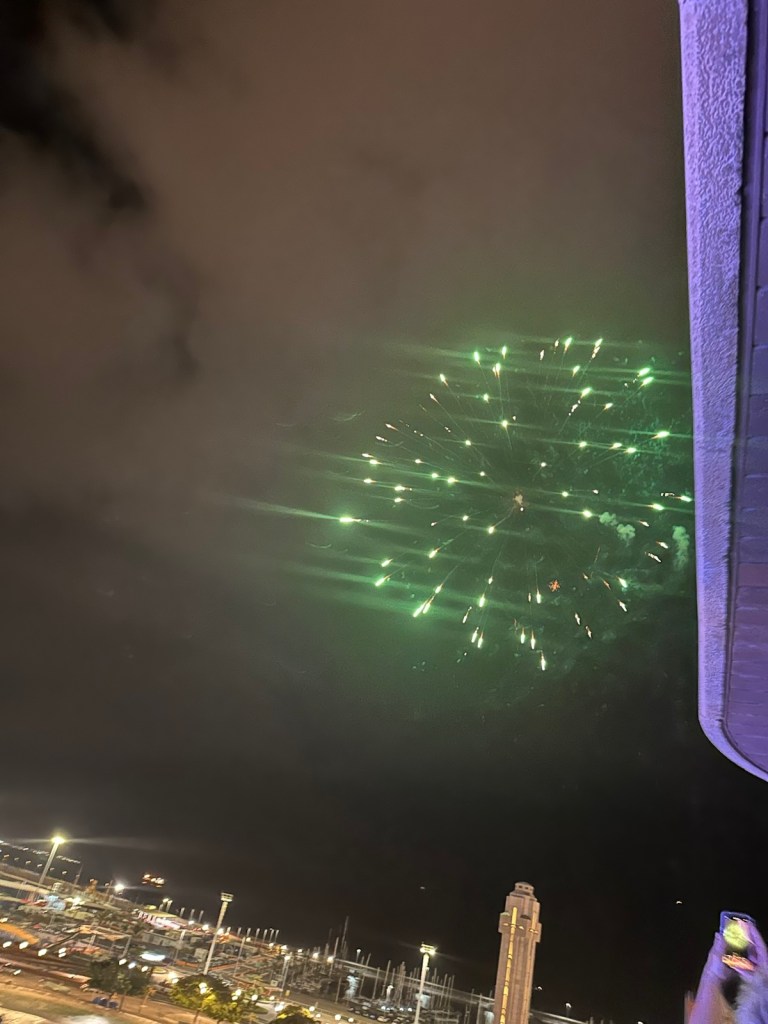
From our balcony, we had a perfect view as a vibrant cultural performance unfolded in Plaza España — women in traditional Canarian dress, music, dancing and bursts of fireworks.
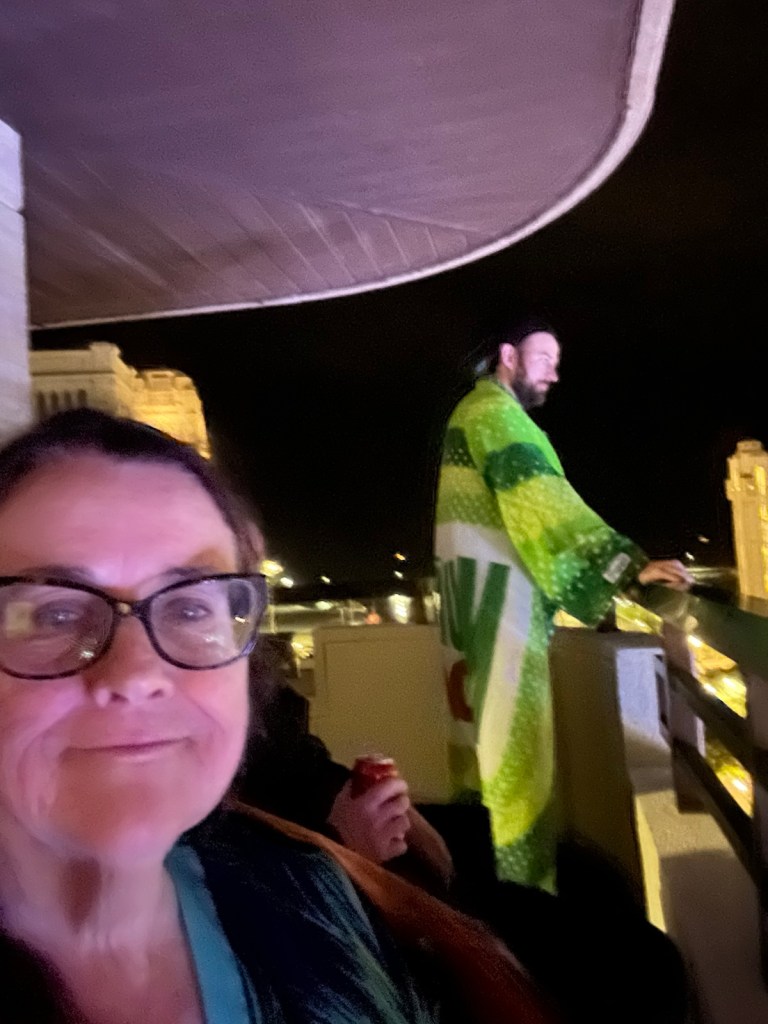
Then, our own little show unfolded right here on the balcony — Quinn and his Mountain Dew Snuggli stealing the spotlight.































































































 Jane in Spain