Tucked along Galicia’s dramatic Atlantic coast, Oia, Baiona and Vigo each offer their own rhythm and charm.
OIA: Today, we’re heading to the coastal town of Oia. The rugged coastline offers stunning views of the Atlantic Ocean with waves crashing against the cliffs.
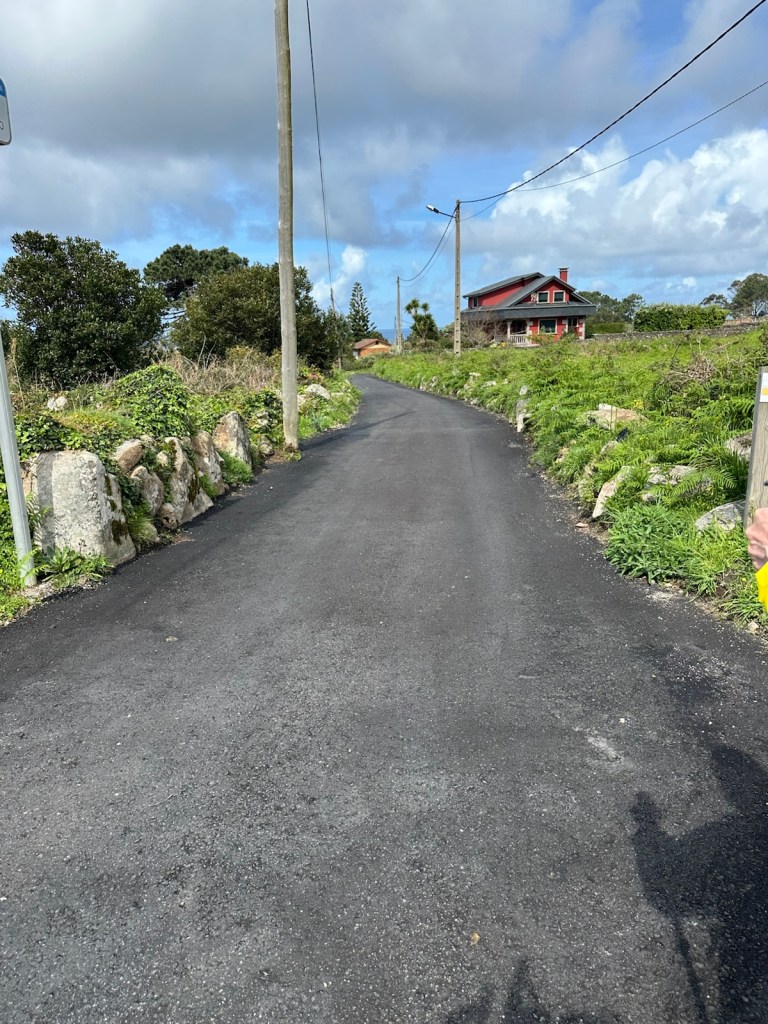
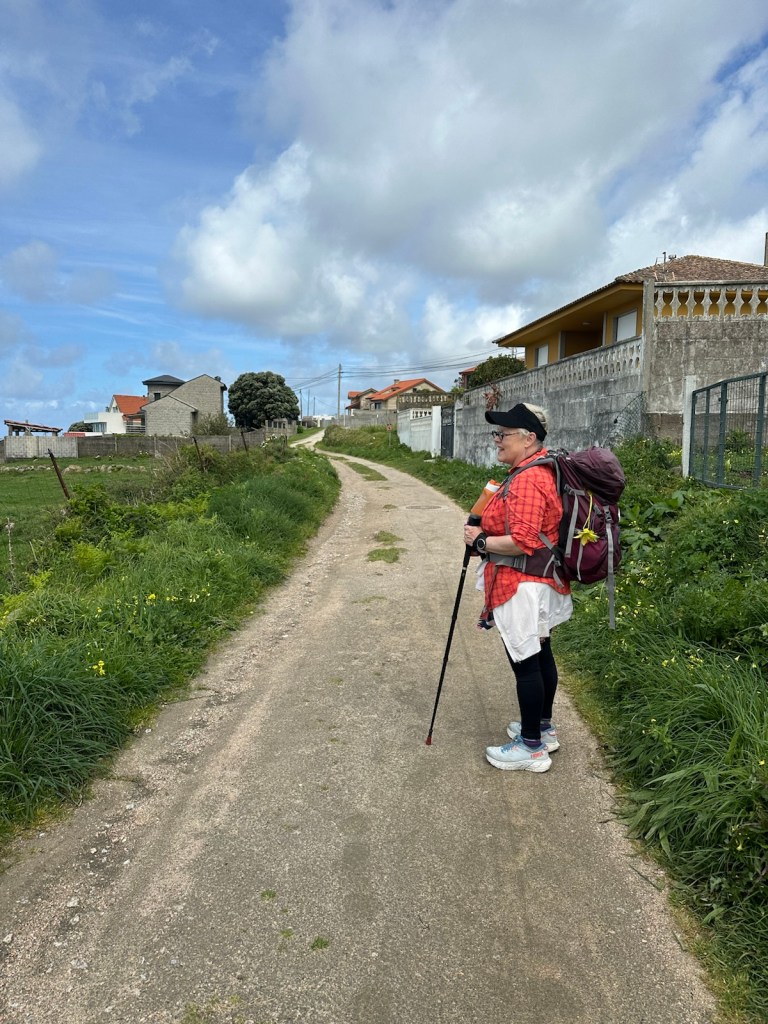
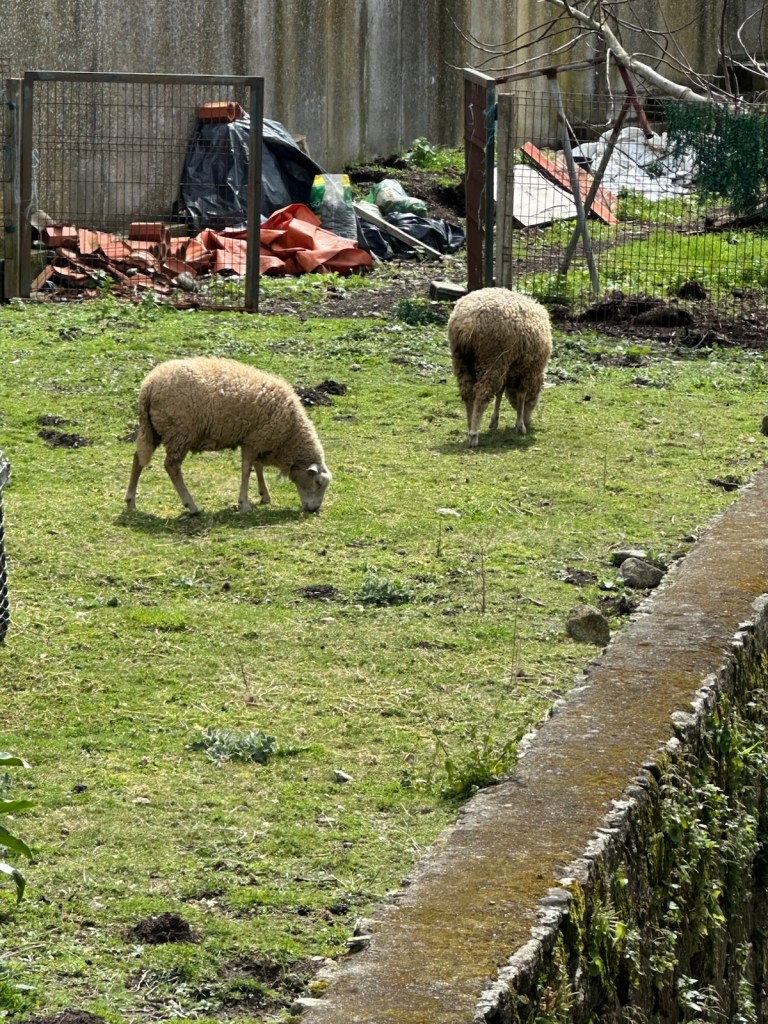
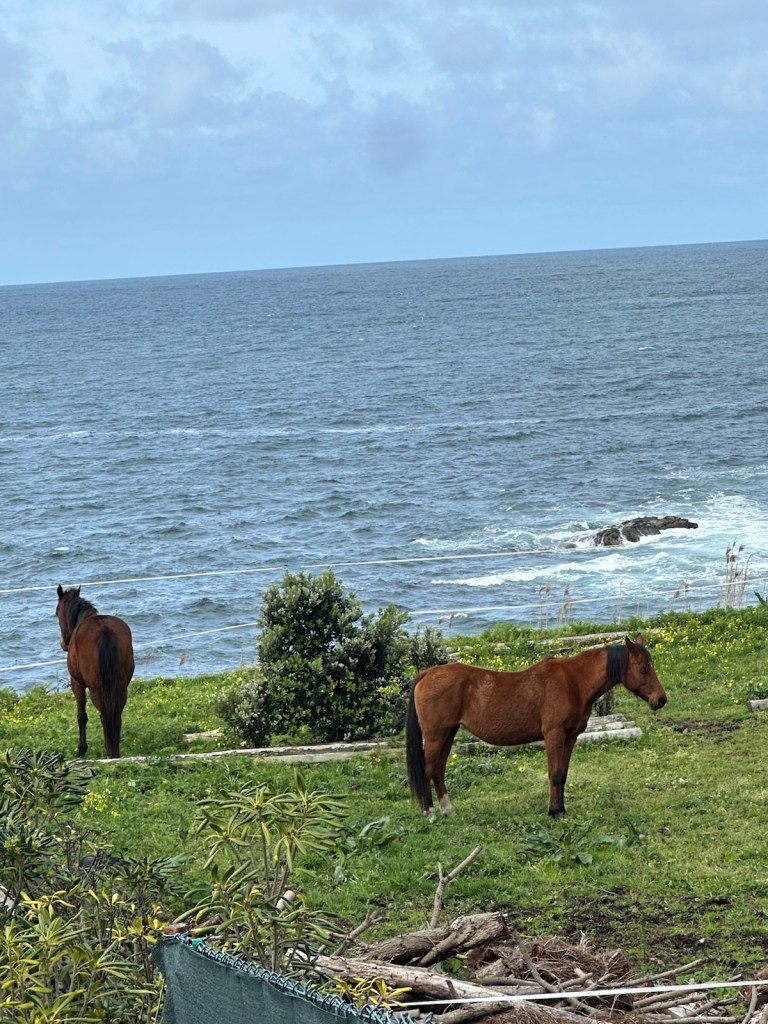
Our path wound past a variety of farm animals, peacefully grazing under the warm sun. Their tranquil pastures stretched toward the sea, overlooking a stunning coastline that made the walk feel serene and restorative.
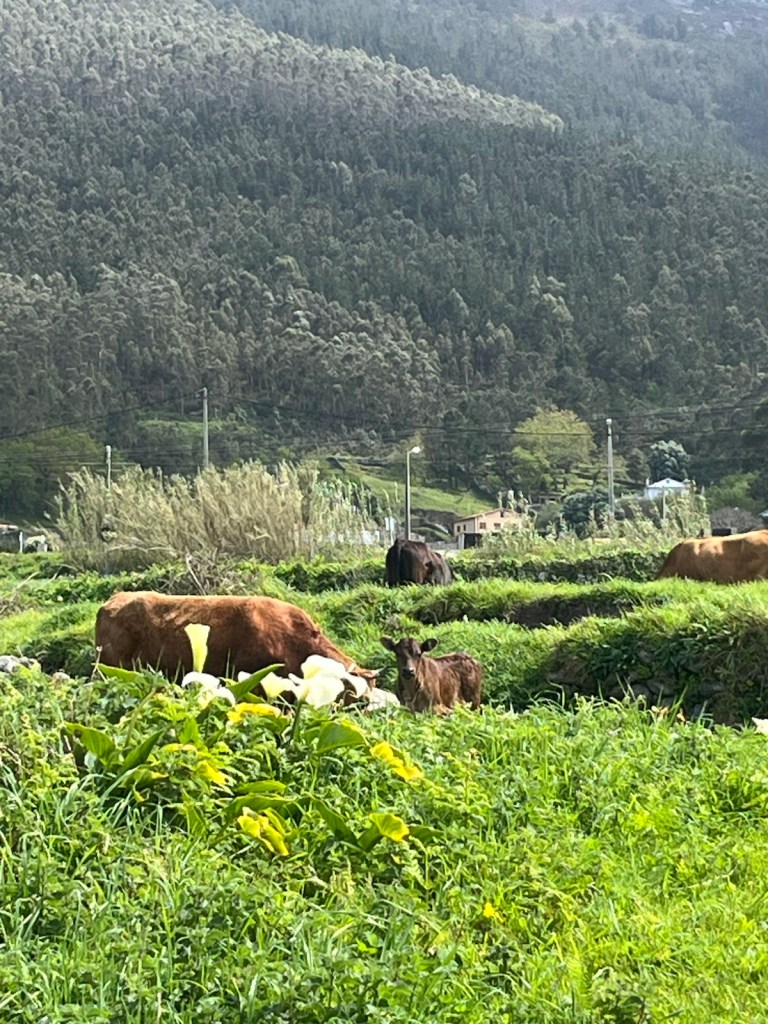

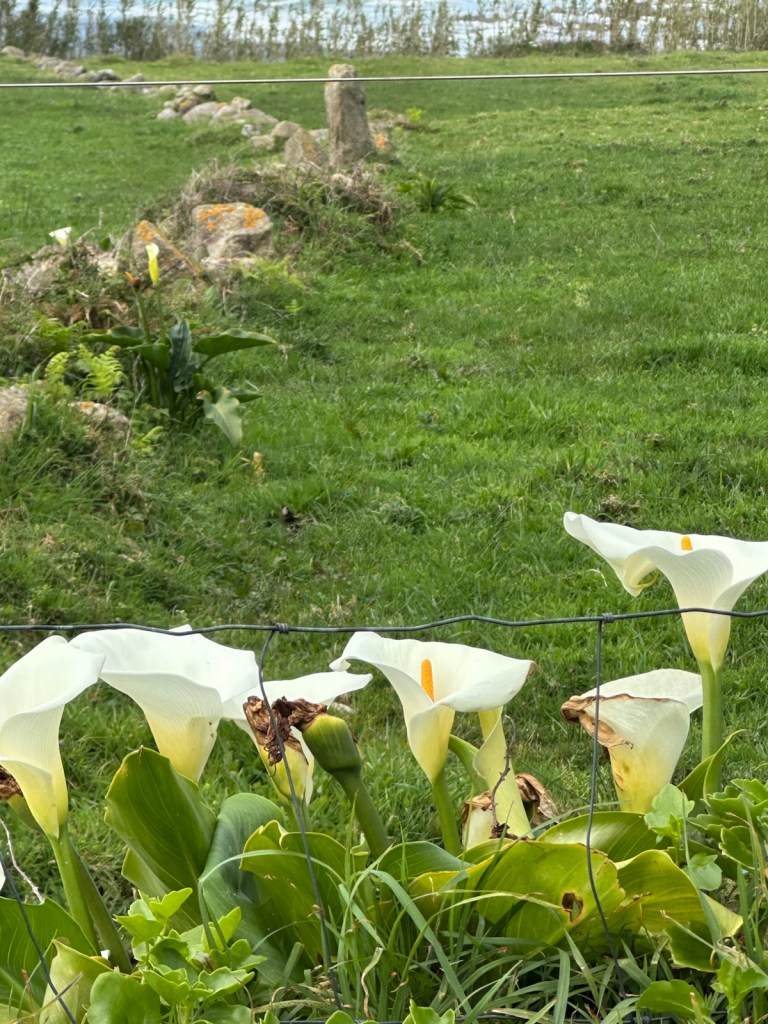
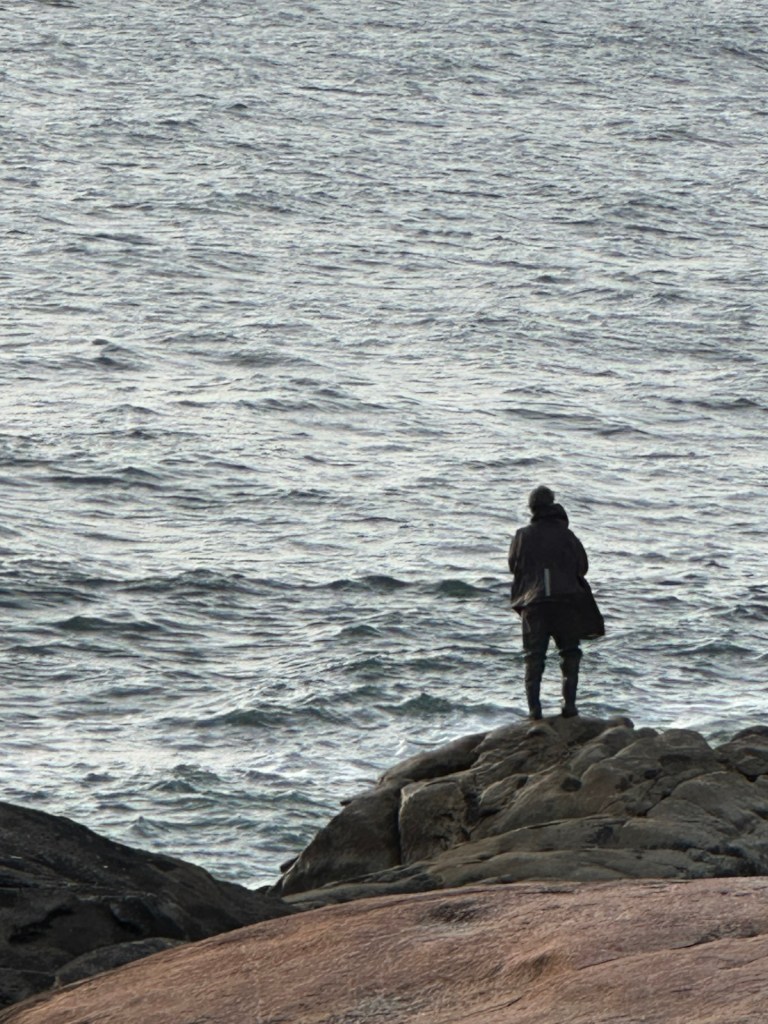
Everywhere we turn, the landscape offers quiet icons of this place: wild calla lilies blooming freely along the paths, and the lone fisherman silhouetted against the sea. Both feel as natural and enduring as the sunshine and the rolling hillsides themselves.
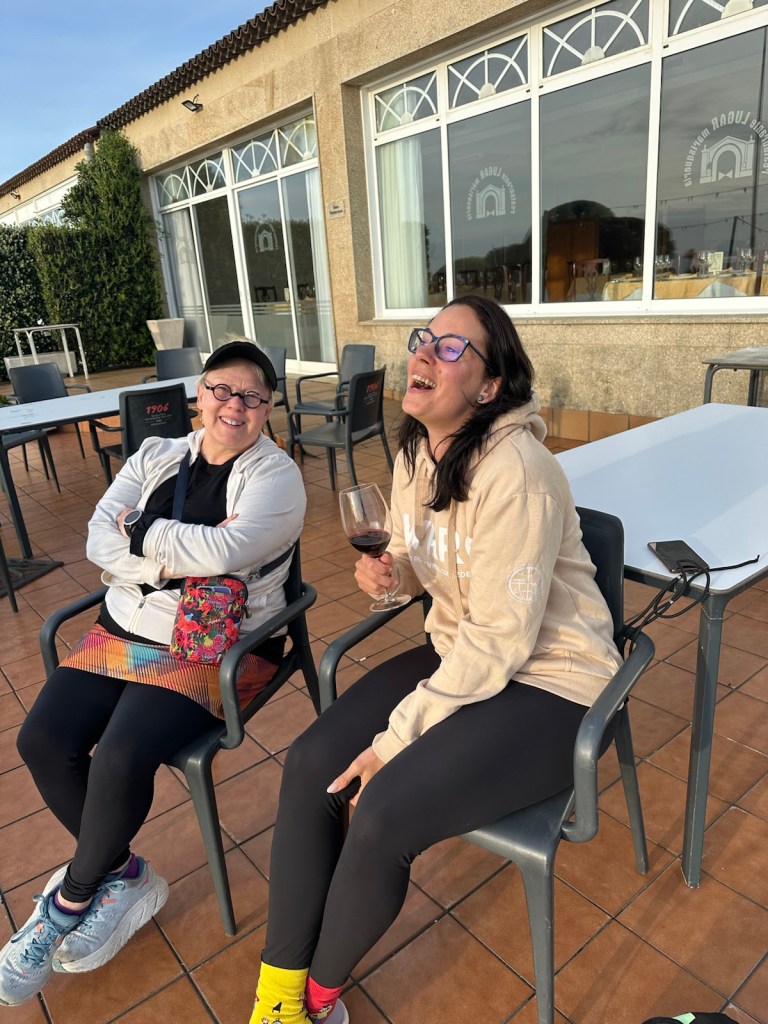
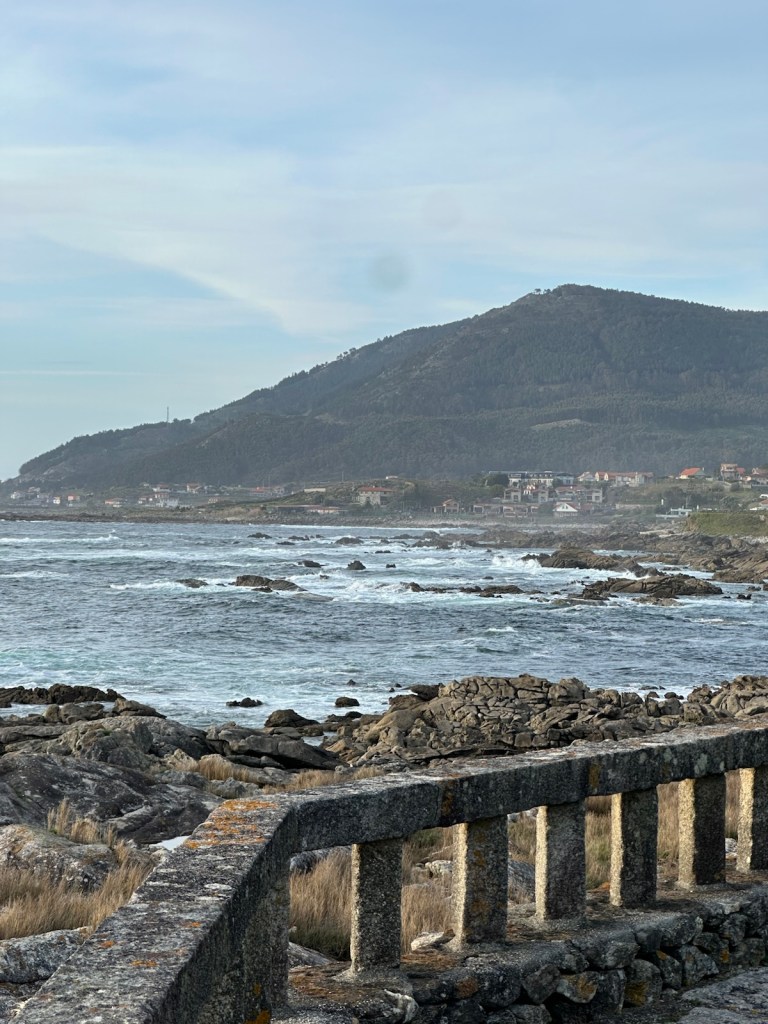
Martina from the Czech Republic joined us to watch the sunset — a shared awe as the sky melted into gold and flame.

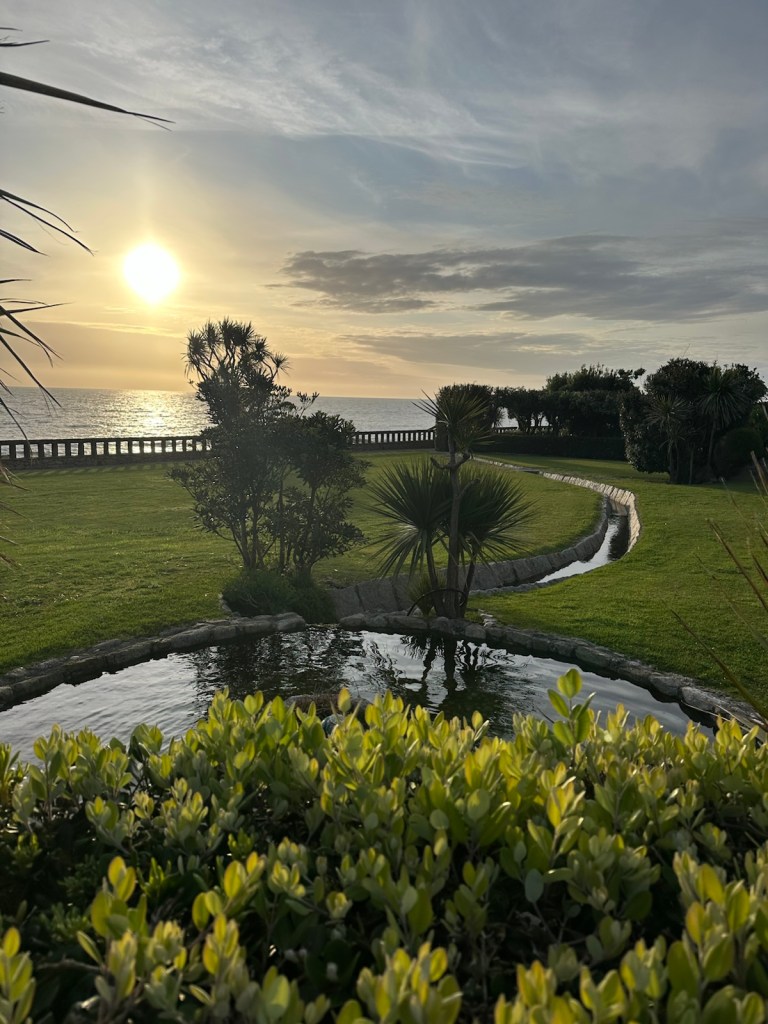

BAIONA: This beautiful coastal town is known for its charming old town, maritime history and stunning views of the Atlantic Ocean.
When we arrived in Baiona, reaching our hostel proved tricky — the Vig Bay Half Marathon was in full swing, and the finish line happened to be right outside our hostel. Streets were buzzing with energy, cordoned off and crowded with cheering spectators.
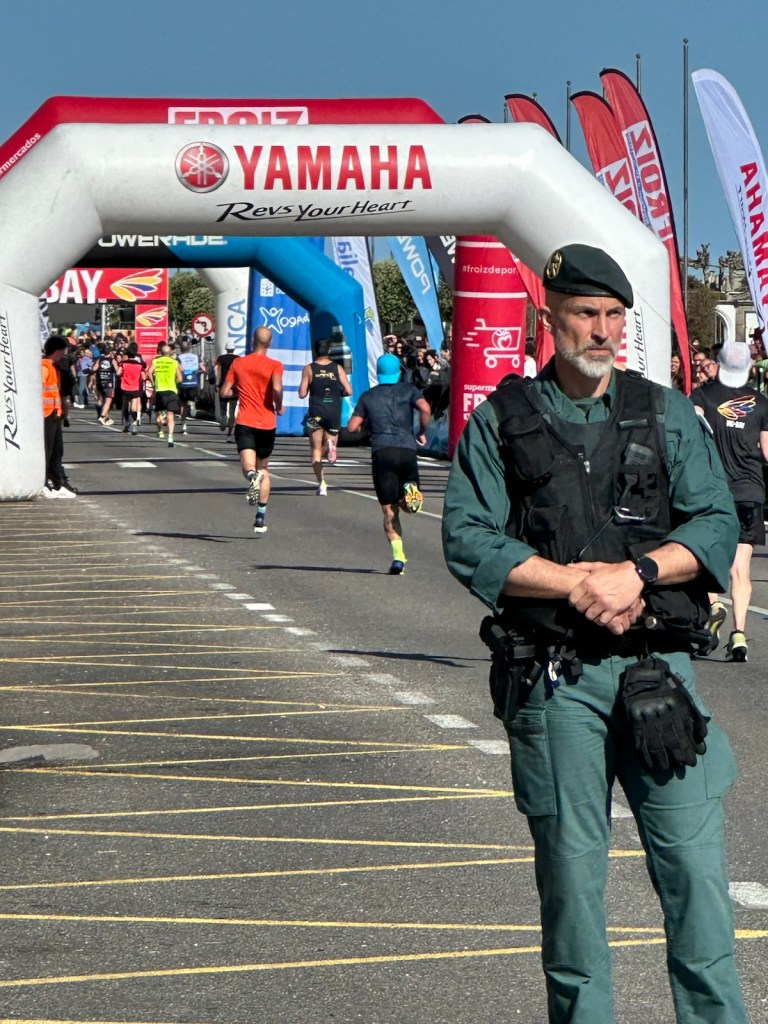
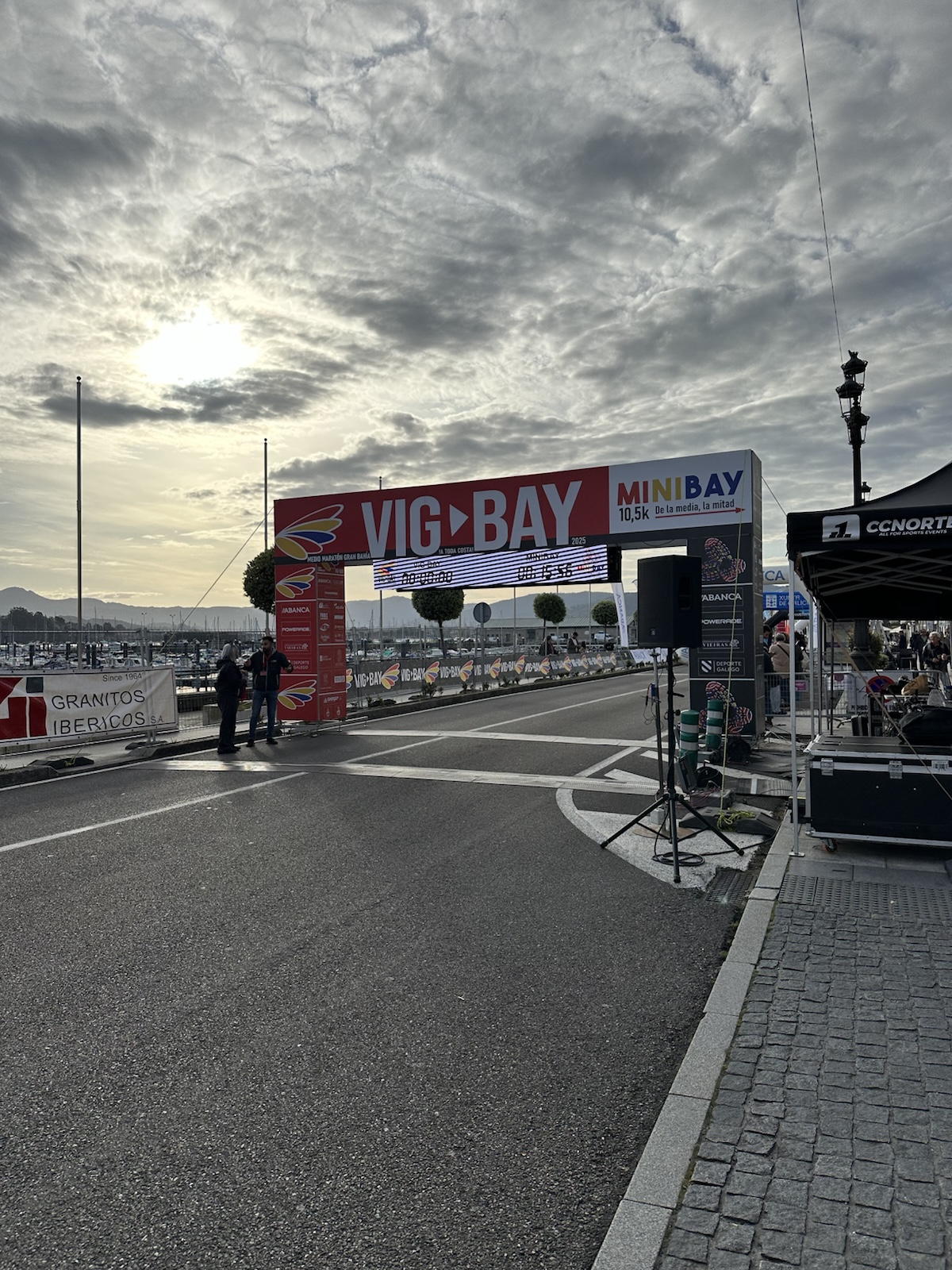

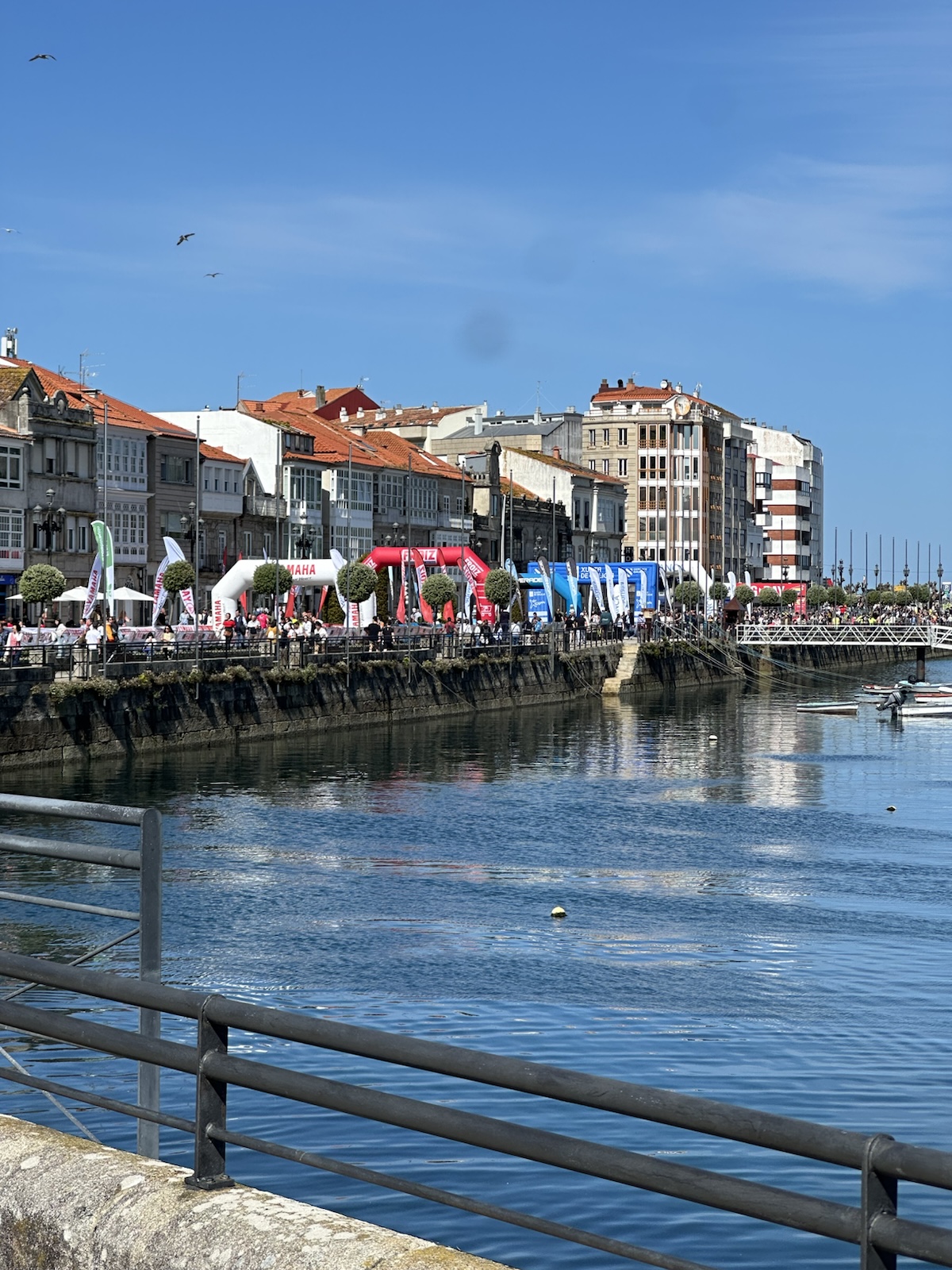
We found a table at a sidewalk cafe and settled in to watch as weary but determined runners crossed the finish line. The race began in Vigo and winds its way along the coast, ending here in Baiona.
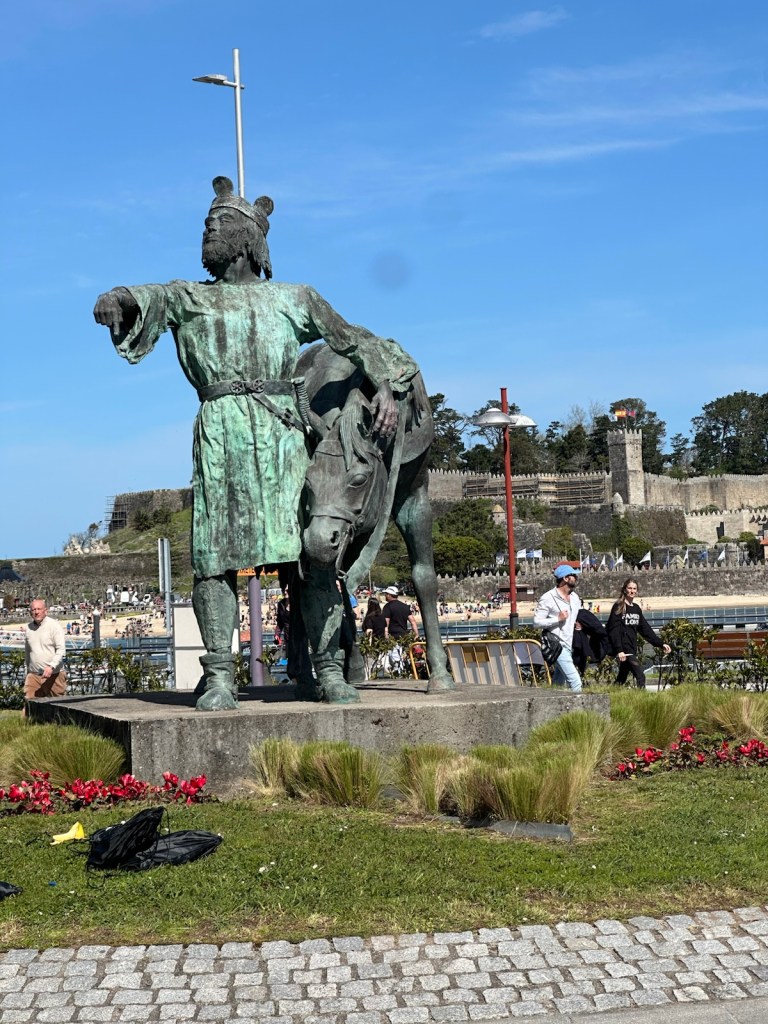
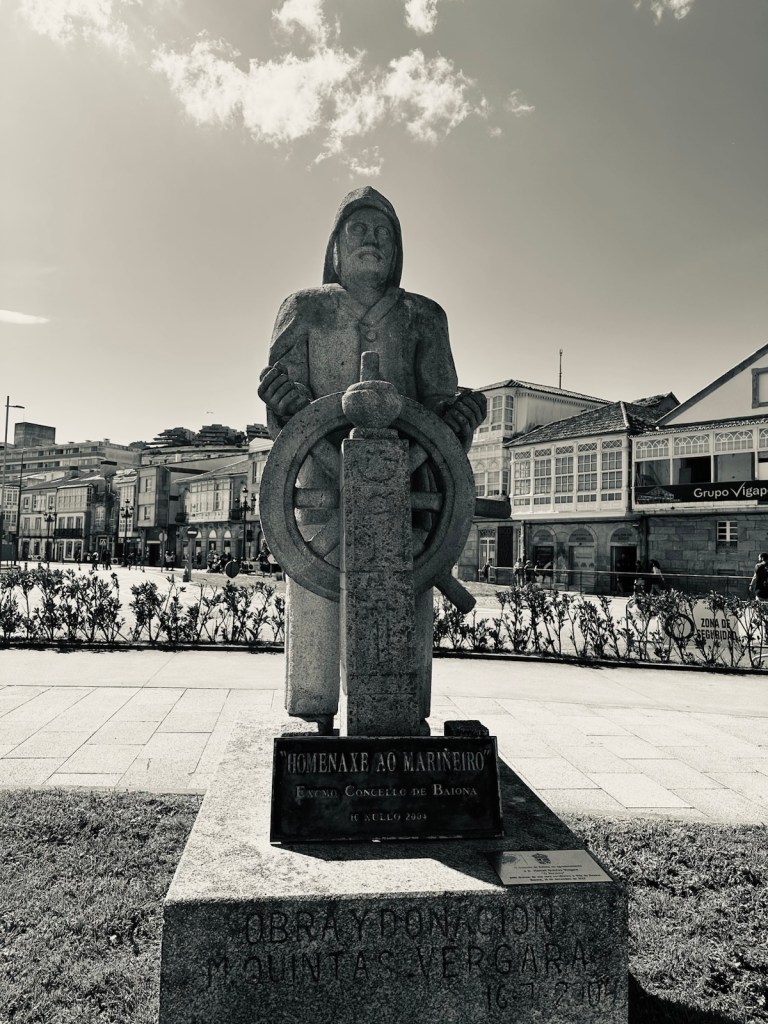
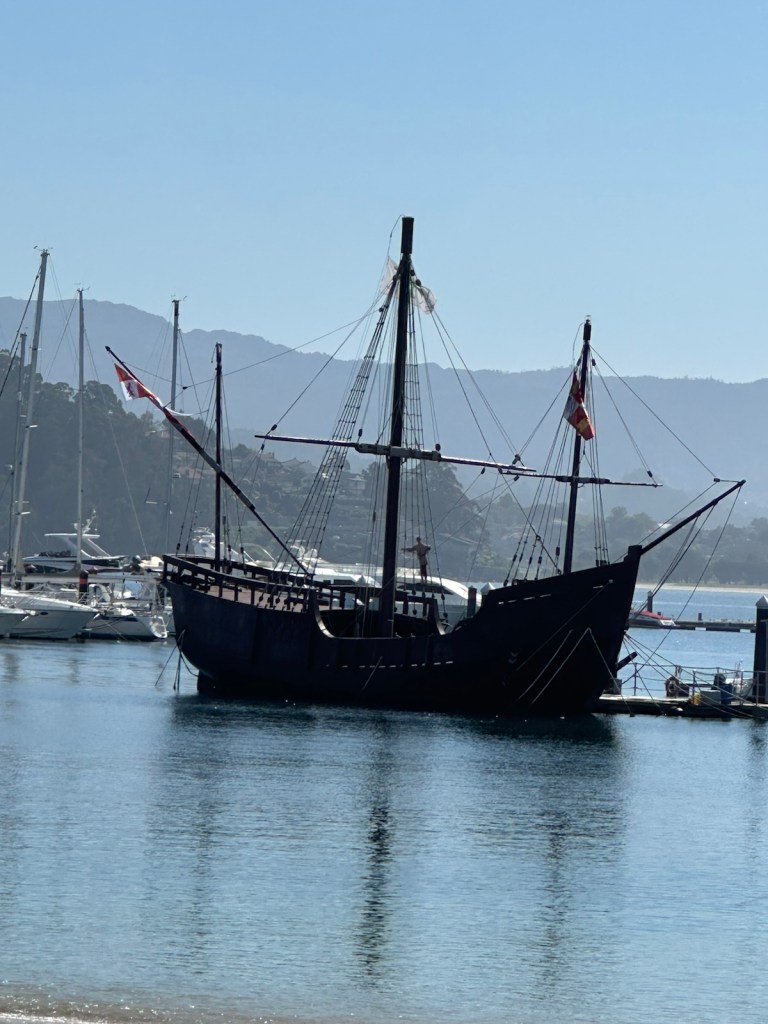
Baiona holds a unique place in history as the first European port to receive news of the discovery of the New World. In 1493, the Pinta — one of Columbus’s ships — returned to Baiona with that groundbreaking news. A replica of the Pinta is in the harbor, and is part of the Museo da Carabela Pinta. Unfortunately, it was closed on Mondays which happened to be the day we visited.
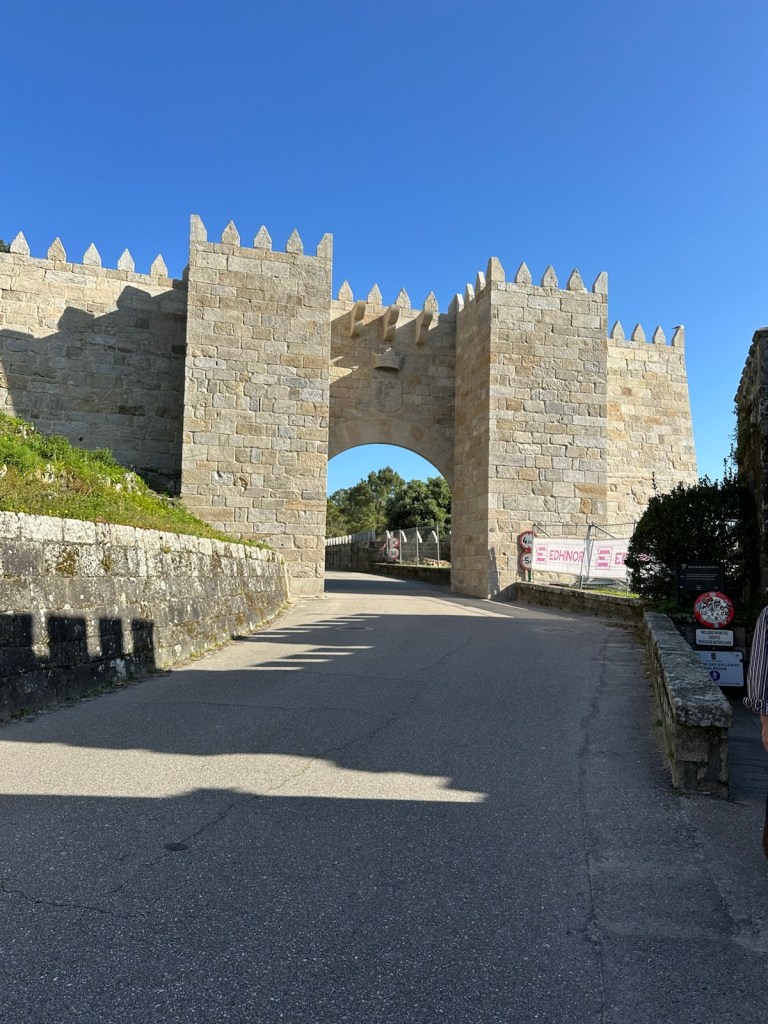
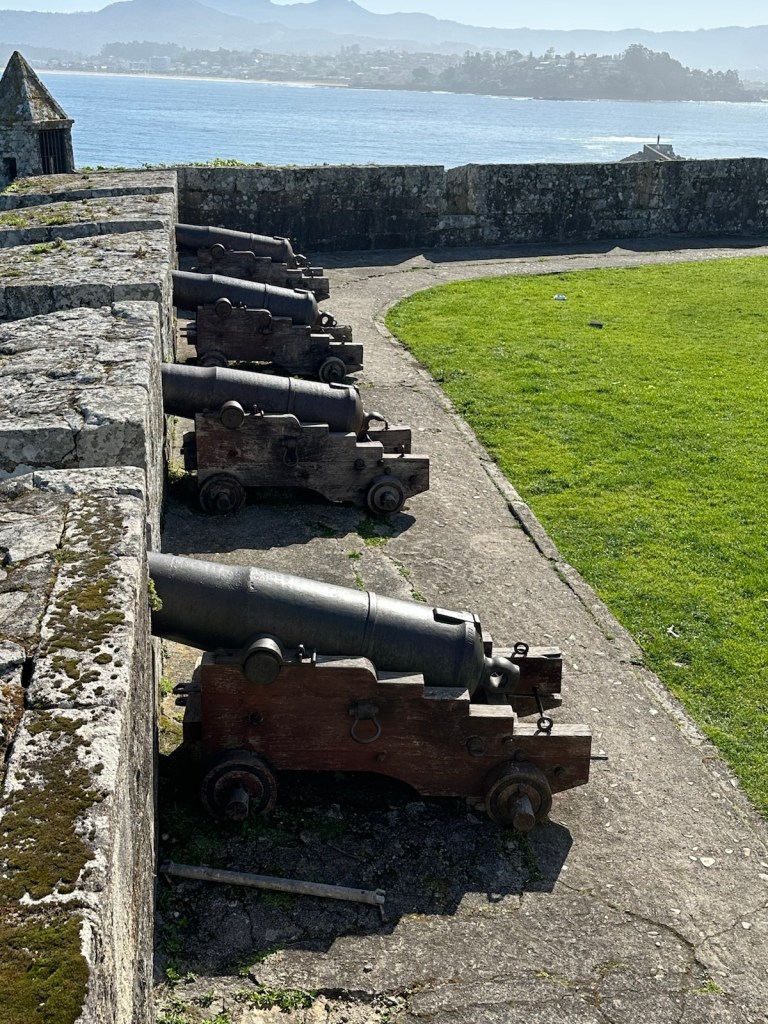
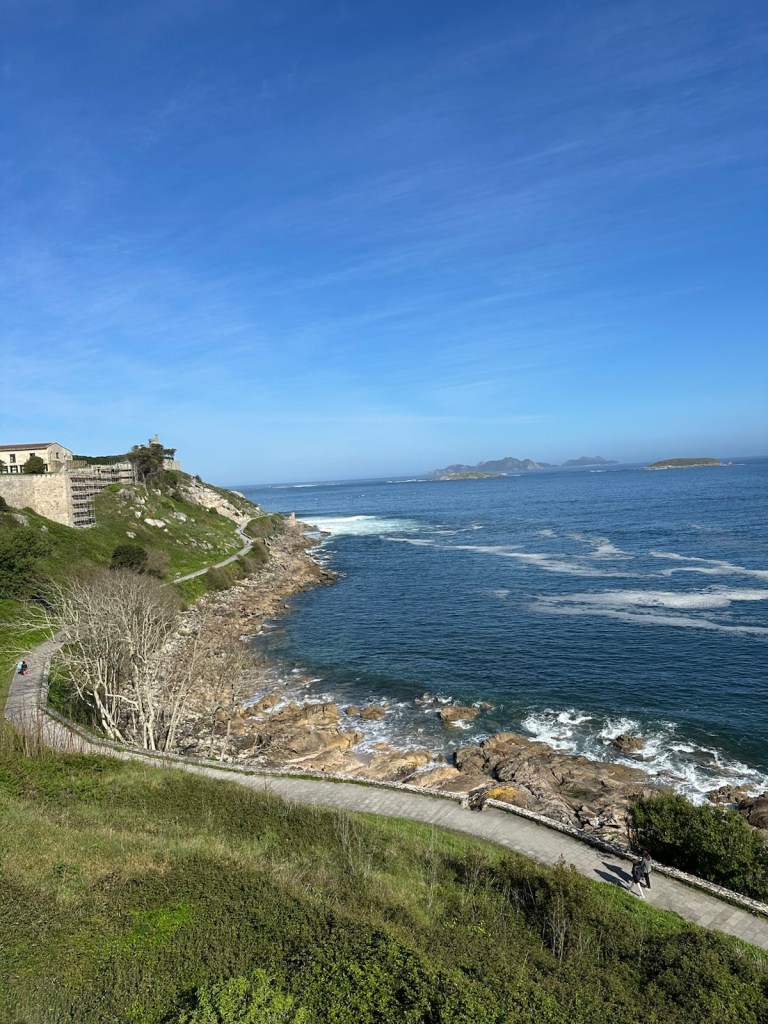
The town is dominated by the Fortaleza de Monterrey, a 12th-century fortress that now houses a luxurious Parador hotel. You can walk the stone ramparts for stunning panoramic views of the sea and Cíes Islands. Even if you’re not staying there, the grounds are open to visitors and make for a great coastal stroll.

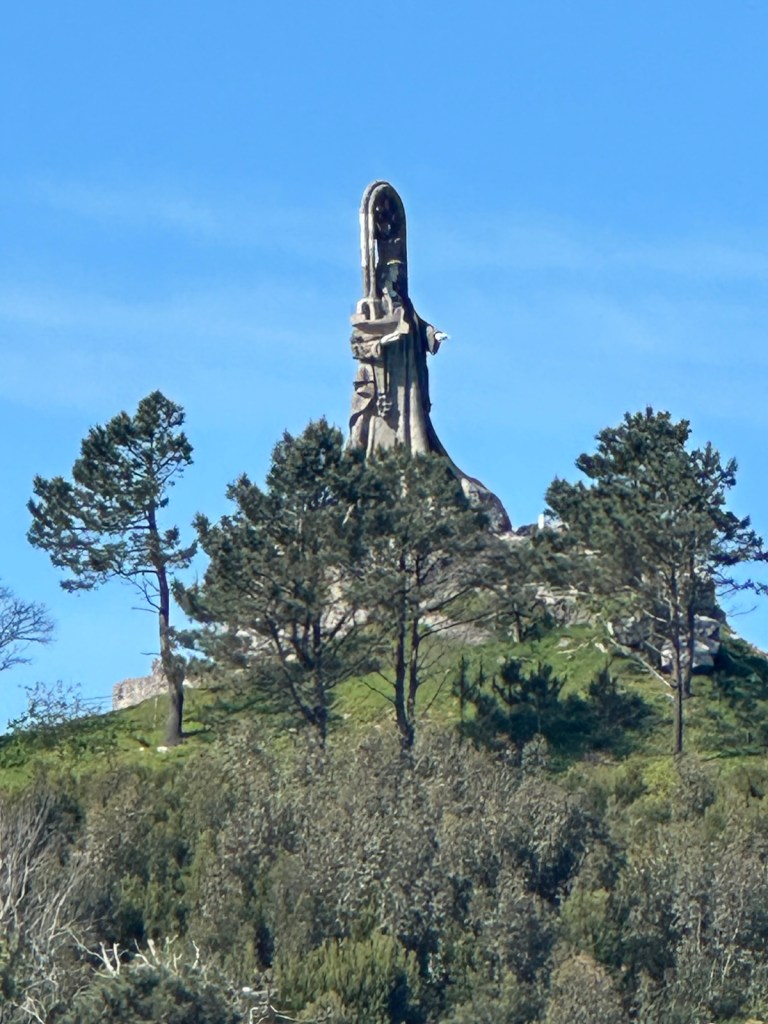
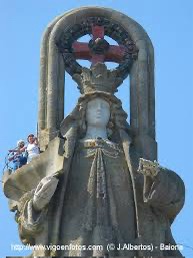
Perched atop Mount Sansón, is a tall stone statue of the Virgin Mary. It is one of Baiona’s most iconic landmarks. The statue features white marble hands and face. Visitors can ascend a spiral staircase inside the monument to reach a boat held in the Virgin’s right hand, which serves as a unique viewpoint offering panoramic vistas of Baiona and the Atlantic Ocean.
VIGO has long been defined by the sea. It’s home to one of Europe’s busiest fishing ports, and its shipyards and seafood industry shape much of the city’s identity. There are harborside markets, fresh-caught seafood and a salty breeze almost everywhere you go.
Vigo strikes a compelling balance between past and present. Its modern side boasts bustling shopping districts and vibrant cultural centers, while just steps away, the old town unfolds in a maze of narrow lanes, weathered stone buildings, and quiet, hidden squares. The dynamic contrast between its roots as a humble fishing village and its pulse as a thriving urban hub is what gives the city its distinct and lively character.


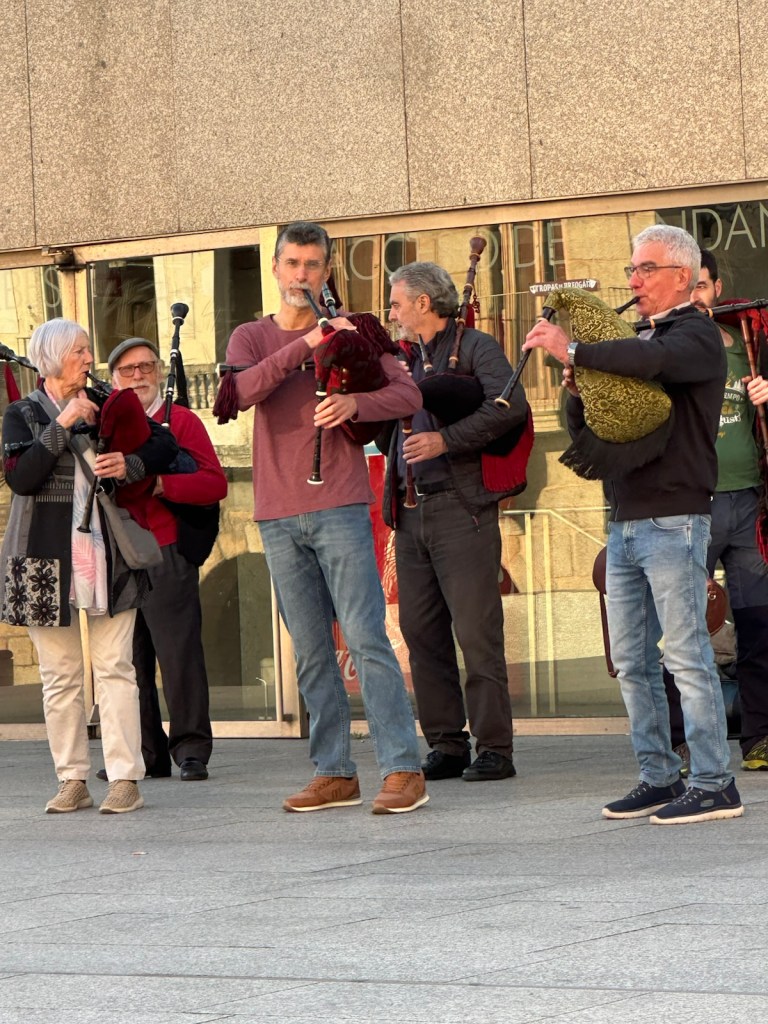
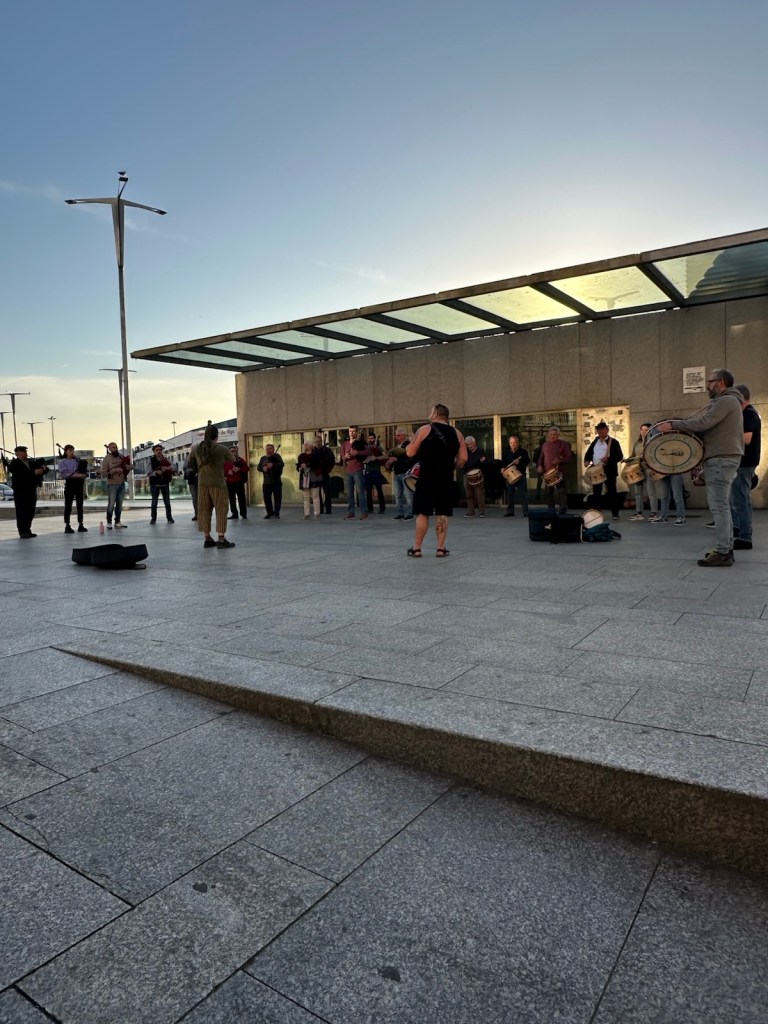
We stumbled upon a group of bagpipe players and drummers rehearsing in the street — a lively, unexpected soundtrack to our walk. What made it especially striking was how diverse the group was; multi-generational and evenly split between men and women, all united by the shared rhythm of their music.
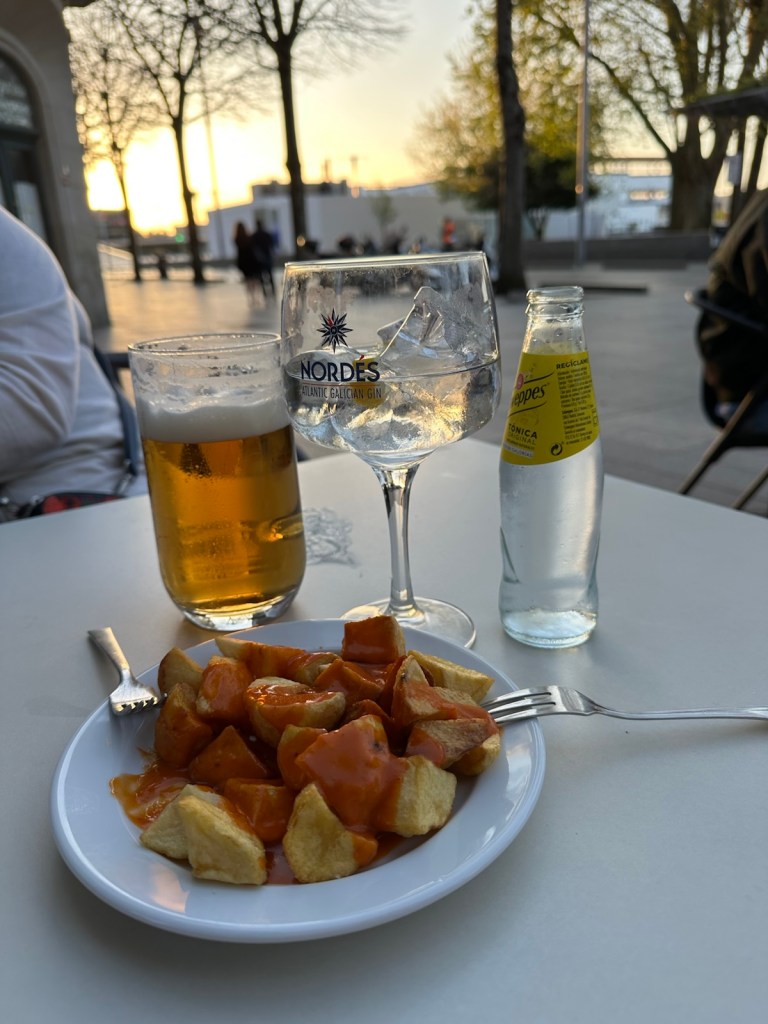
With the sun dipping low, we wrapped up the day with a drink and a tapa — just the right kind of ending. Stay tuned — something tells me Vigo still has more surprises in store.
 Jane in Spain