Padrón peppers (pementos de Padrón) are a beloved Galician tapa with a fun twist—most are mild, but now and then, you’ll get one with a surprise kick of heat. They were brought to Galicia from the Americas by Franciscan monks in the 16th century. Today, they’re grown locally and hold Protected Designation of Origin status.
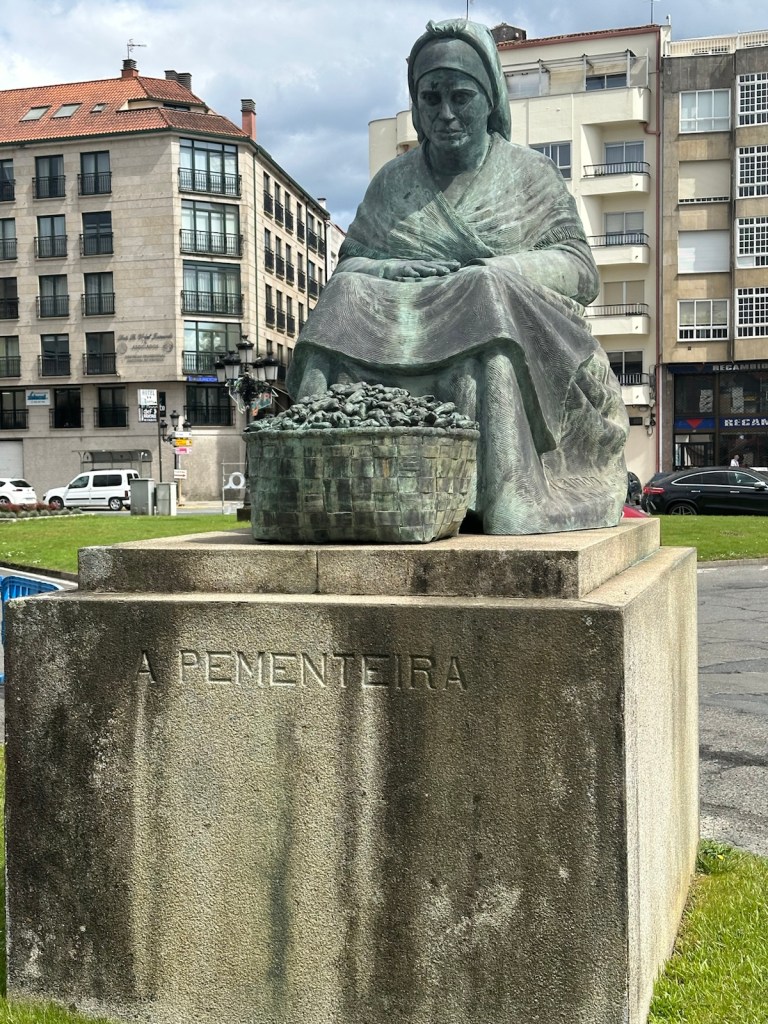
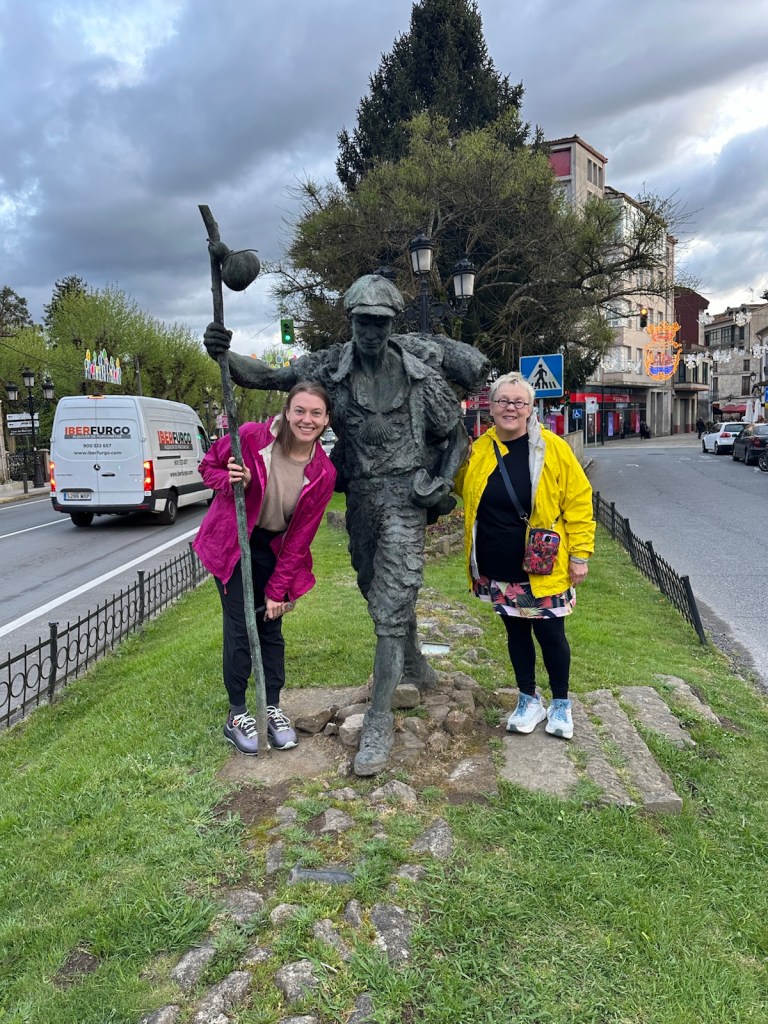
In the heart of Padrón stands the Monumento á Pementeira—a bronze sculpture honoring the local women who have cultivated and sold the region’s famed peppers for generations.
It serves as a focal point during the annual Festa do Pemento de Herbón. During this festival, a procession of decorated tractors travels from Herbón to Padrón, culminating in a floral offering at the statue.
This event celebrates the pepper’s heritage and the local women who recognized the potential of this crop, leading to the establishment of a thriving pepper industry that continues to this day.
I was so excited to be in Padrón and finally try Padrón peppers at the source—the very place they come from. Sadly, we were told they weren’t available. Whether it was the off-season or they’d already sold out, the legendary peppers were nowhere to be found. A true culinary cliffhanger!
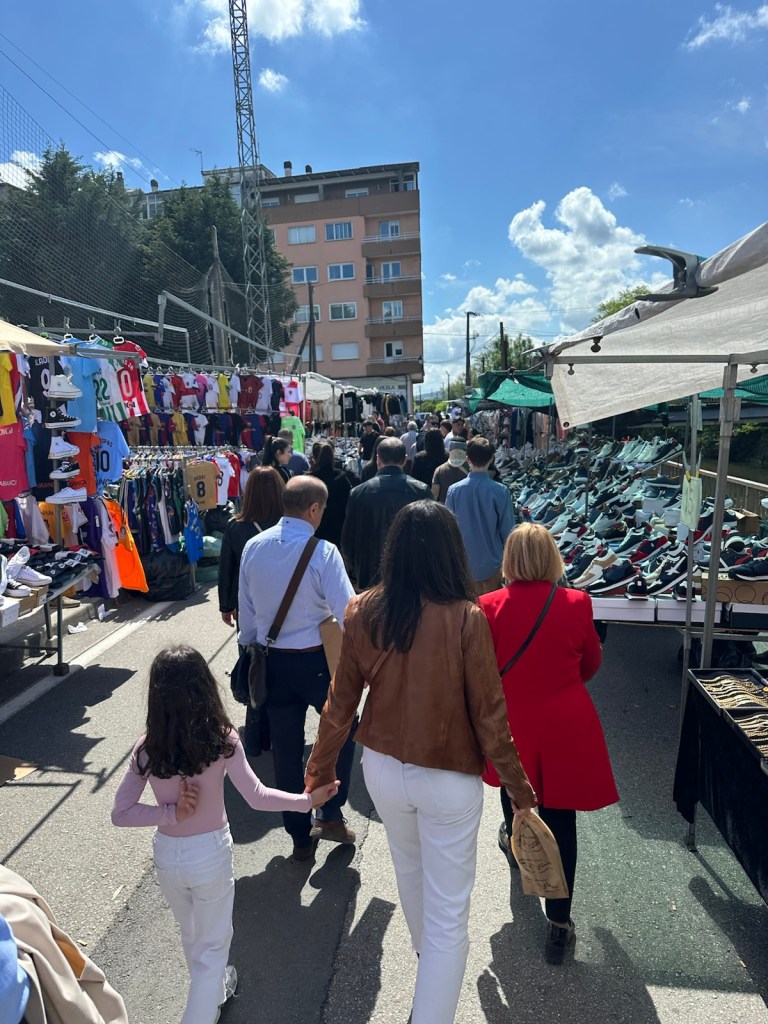
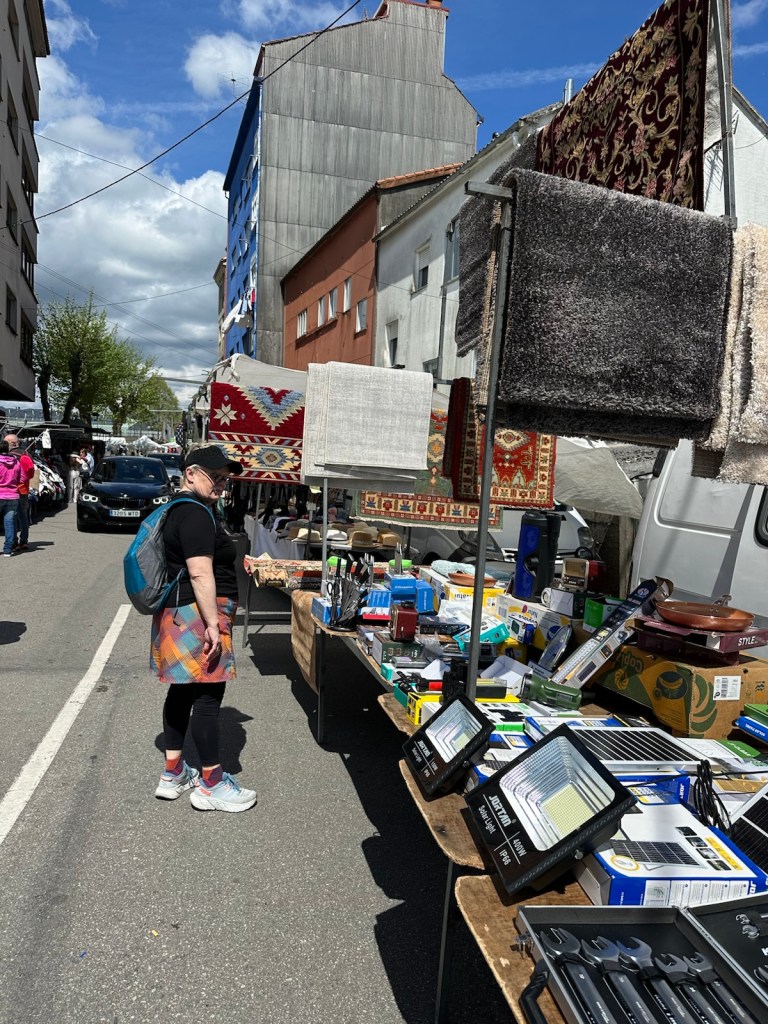
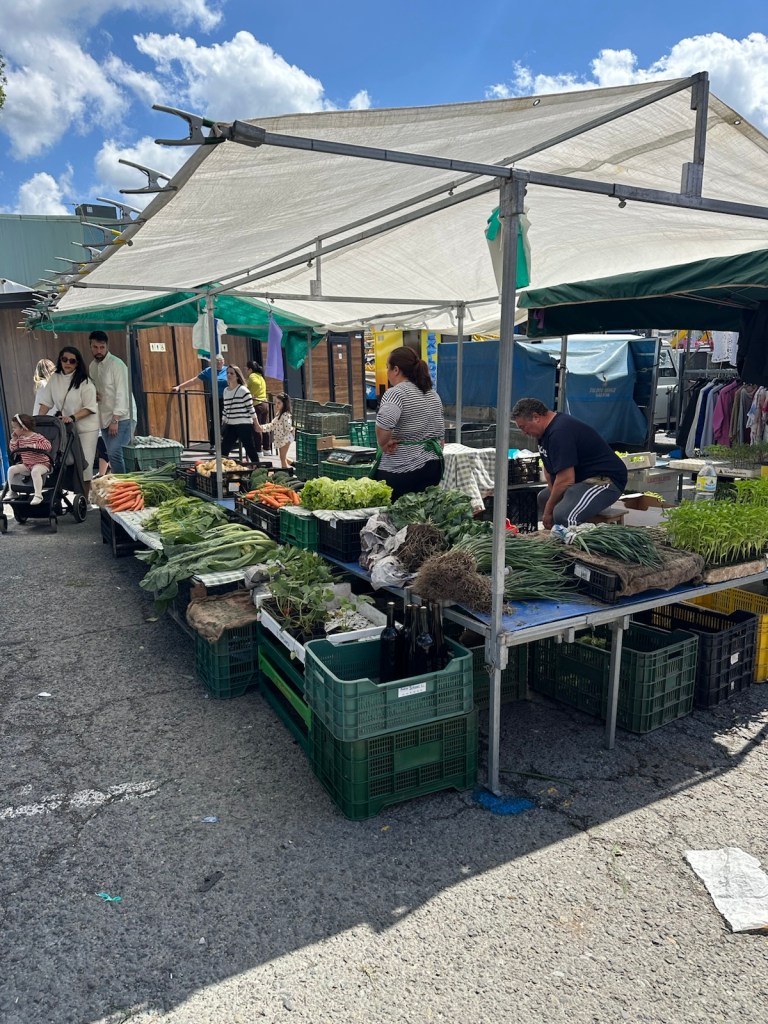
The Sunday Market in Padrón, is a vibrant and historic event that takes place every Sunday morning in the town center. It’s recognized as one of the largest and most popular markets in Galicia, attracting thousands of visitors each week.

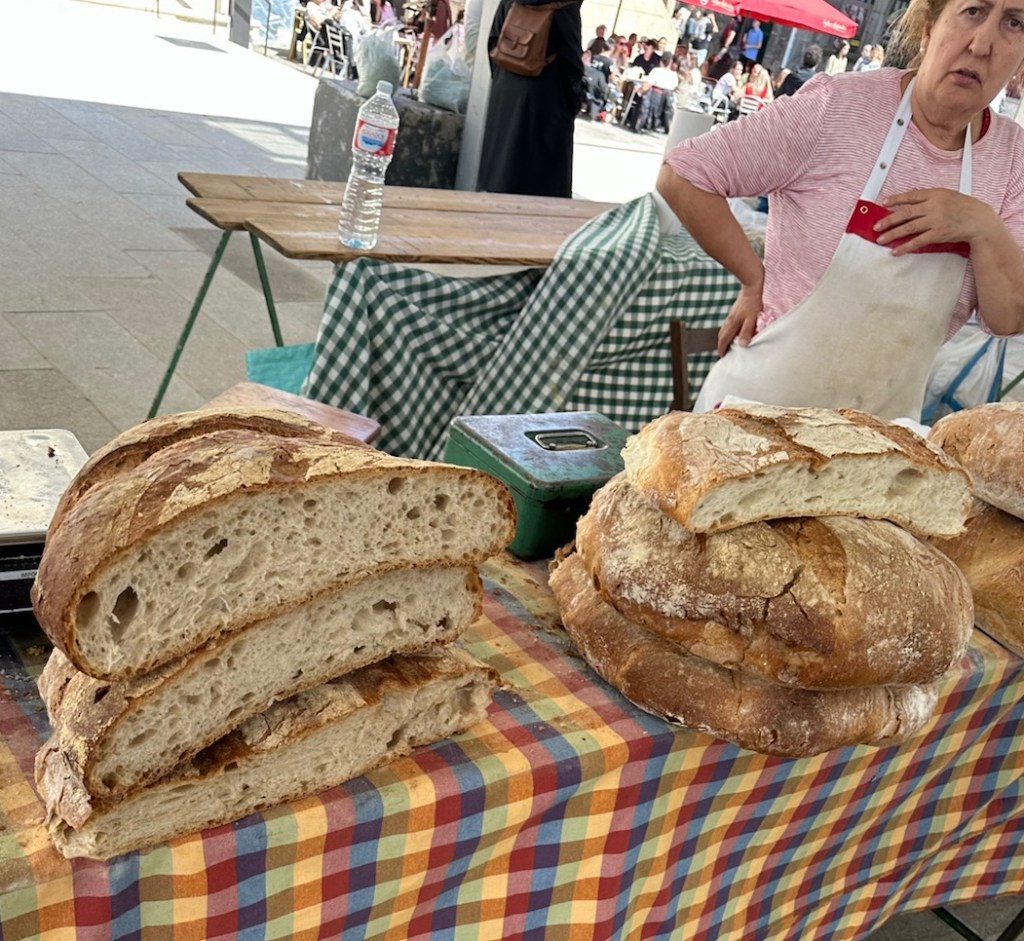

Needless to say, the bread and cheese selection is phenomenal.
A highlight of the market is the “pulpo á feira” (Galician-style octopus), prepared on-site and served alongside barbecued meats, local wines, and vermouth.
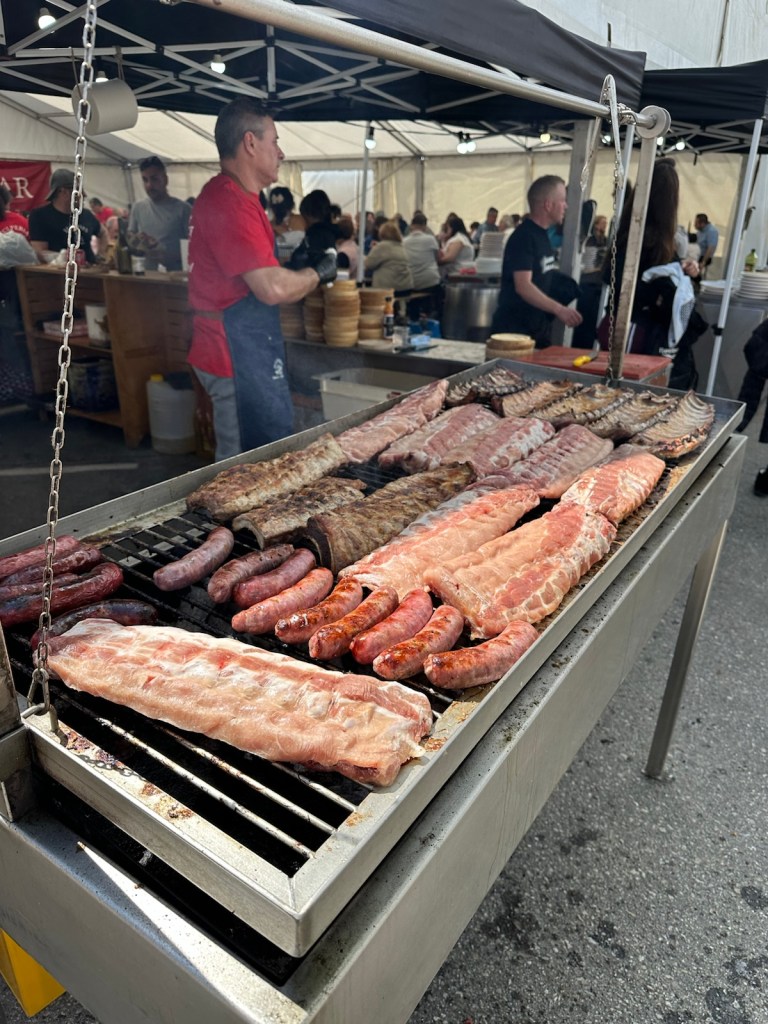

We dove into tender octopus, juicy ribs, and a splash of local wine—absolutely delicious
Beyond the Sunday market, we plunged into Holy Week’s open‑air fair—an explosion of color and energy that features bumper cars, a Ferris wheel and other children’s rides as well as ice cream, cotton candy and other food stalls.


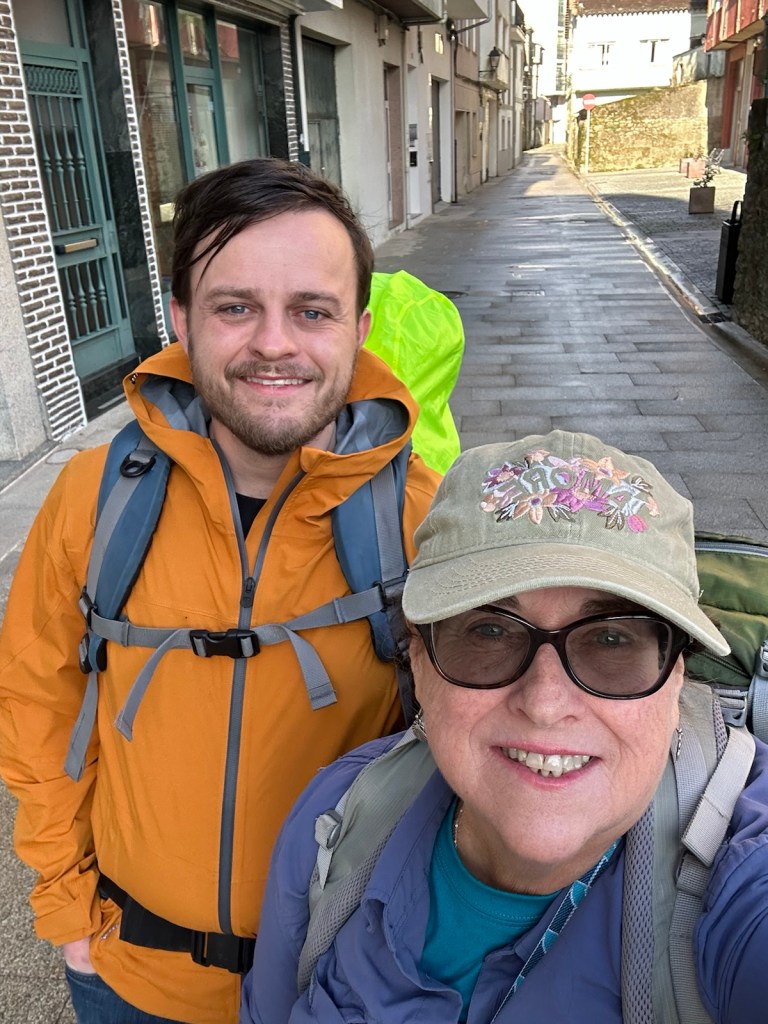
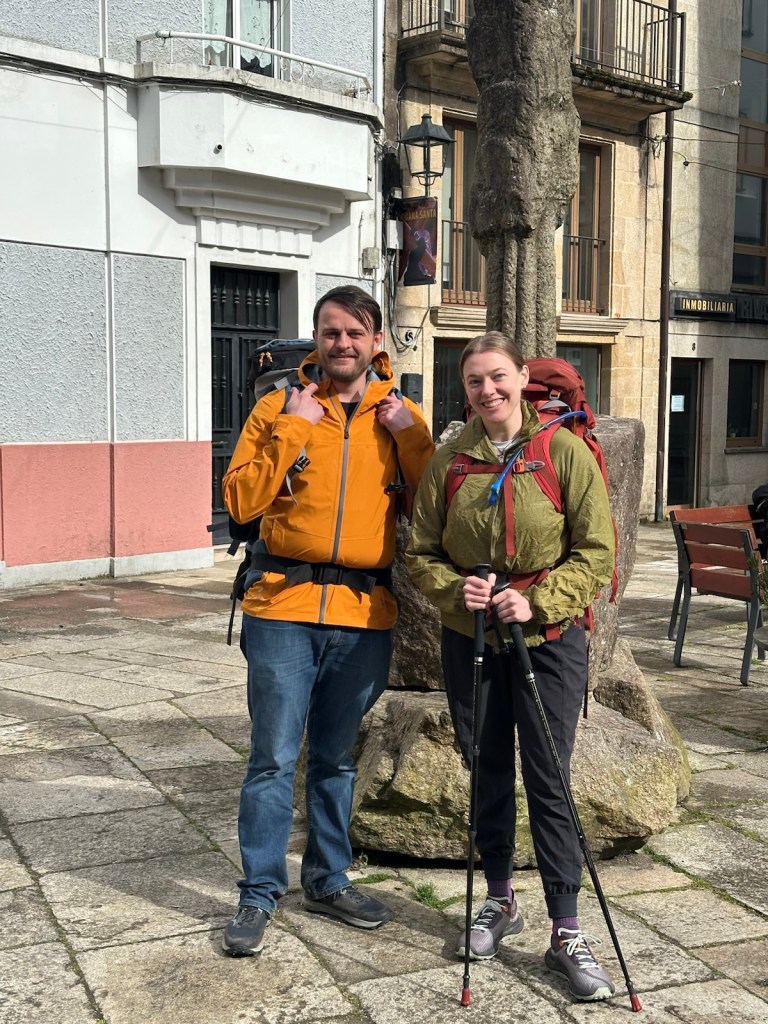
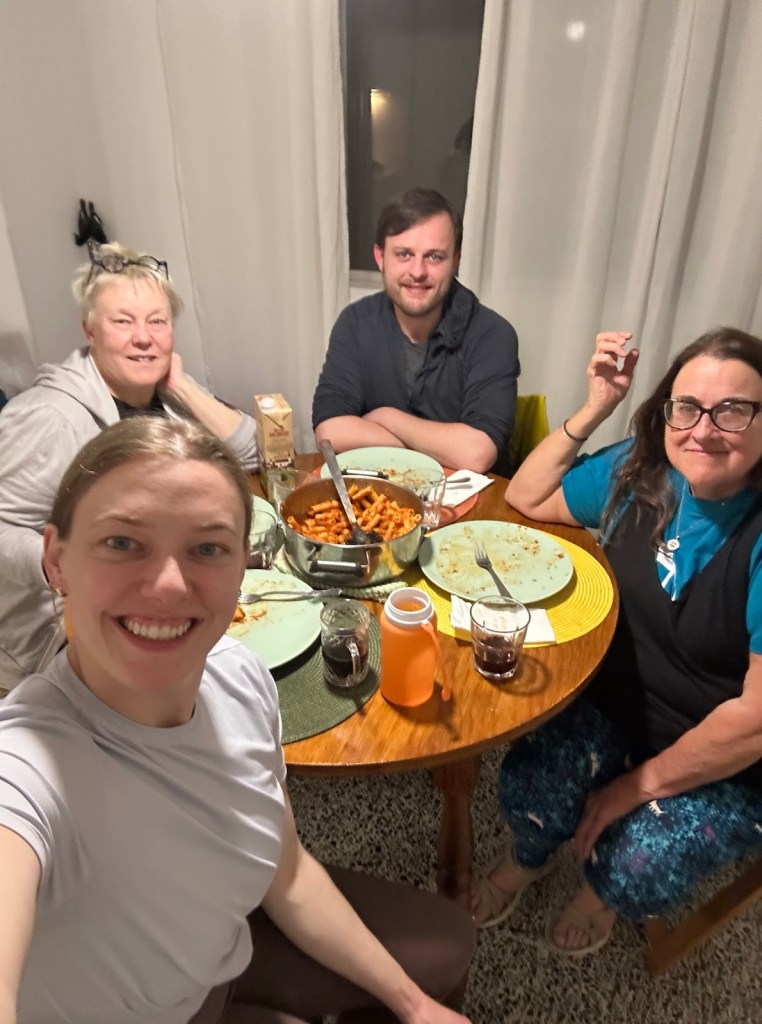
To sweeten the journey, Theresa and I were joined by my son Kyle—fresh off a train from Lisbon via Porto —and her daughter Helen—who touched down in Madrid—for the next leg.
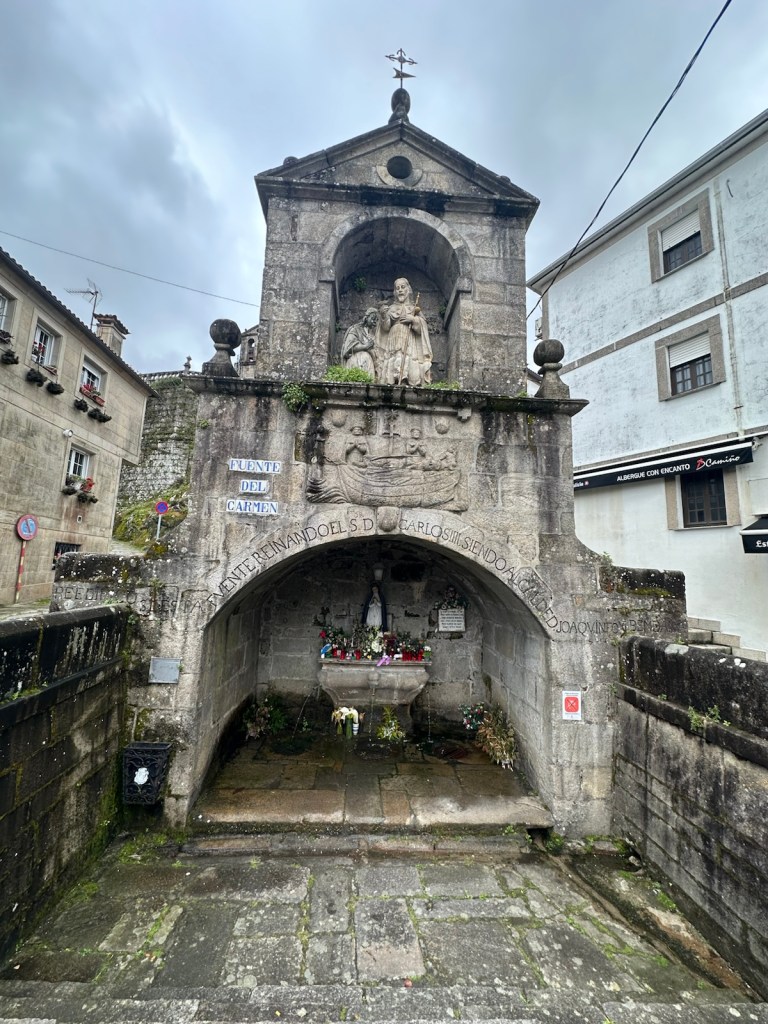
Nestled at the Pontevedra end of the old Santiago Bridge is a little Chapel of la Virgen del Carmen—a humble granite‑and‑stucco shrine that has watched over the river for centuries.
Legend has it that during a fierce flood, a local fisherman, fearing he’d drown when his boat couldn’t make shore, prayed to Our Lady of Mount Carmel. Miraculously, he washed up on the riverbank exactly where he’d vowed to build a chapel—and so this tiny sanctuary was born. Another tale says a driftwood boat carrying only the Virgin’s image floated by itself to the same spot, inspiring a grateful villager to raise this shrine in her honor .
Though simple in design — the chapel occupies a key point on the Camino Portugués. Medieval pilgrims paid a token toll documented on a nearby stone, and to this day many pause here to light a candle or leave a flower before continuing on toward Santiago .
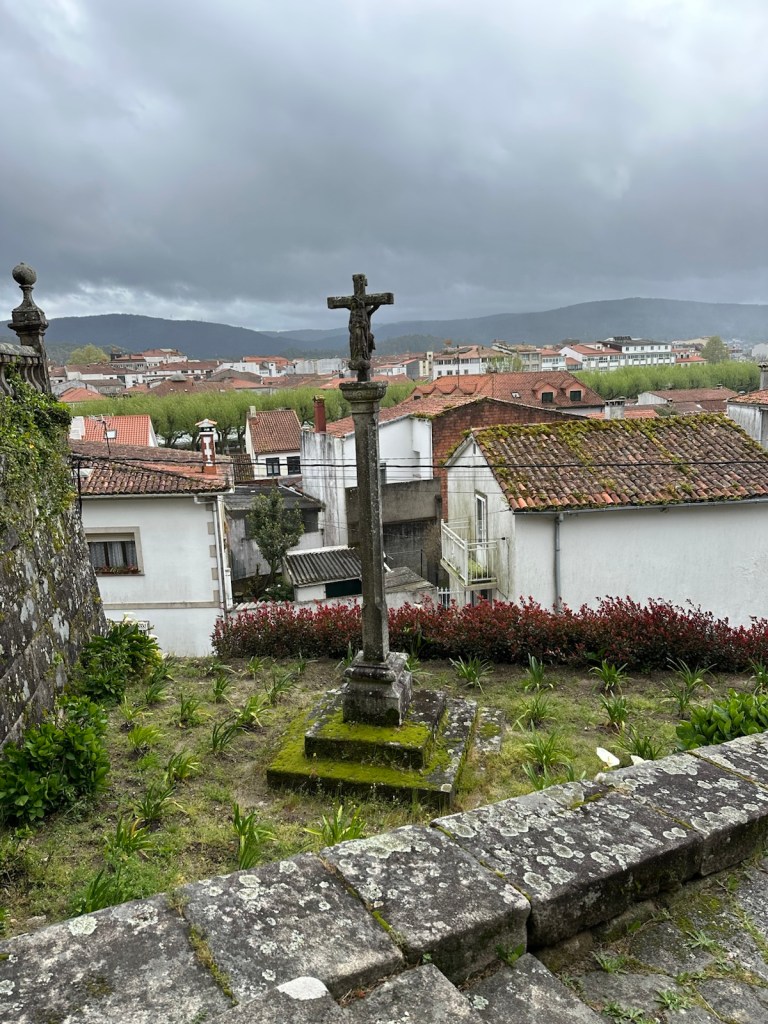
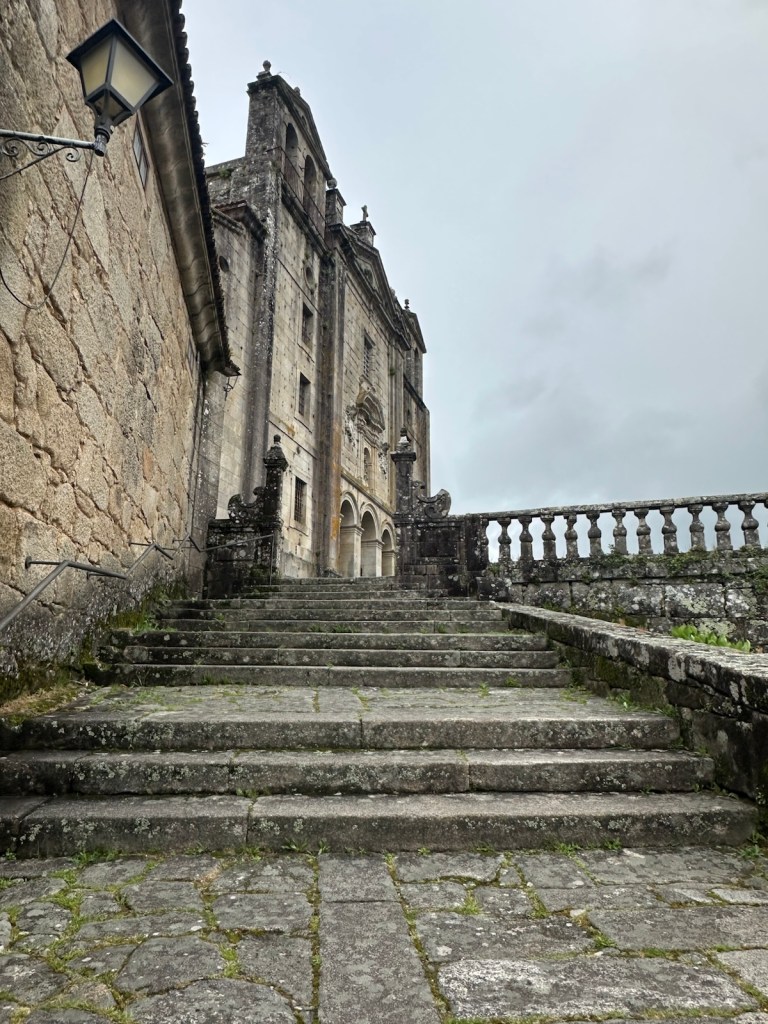
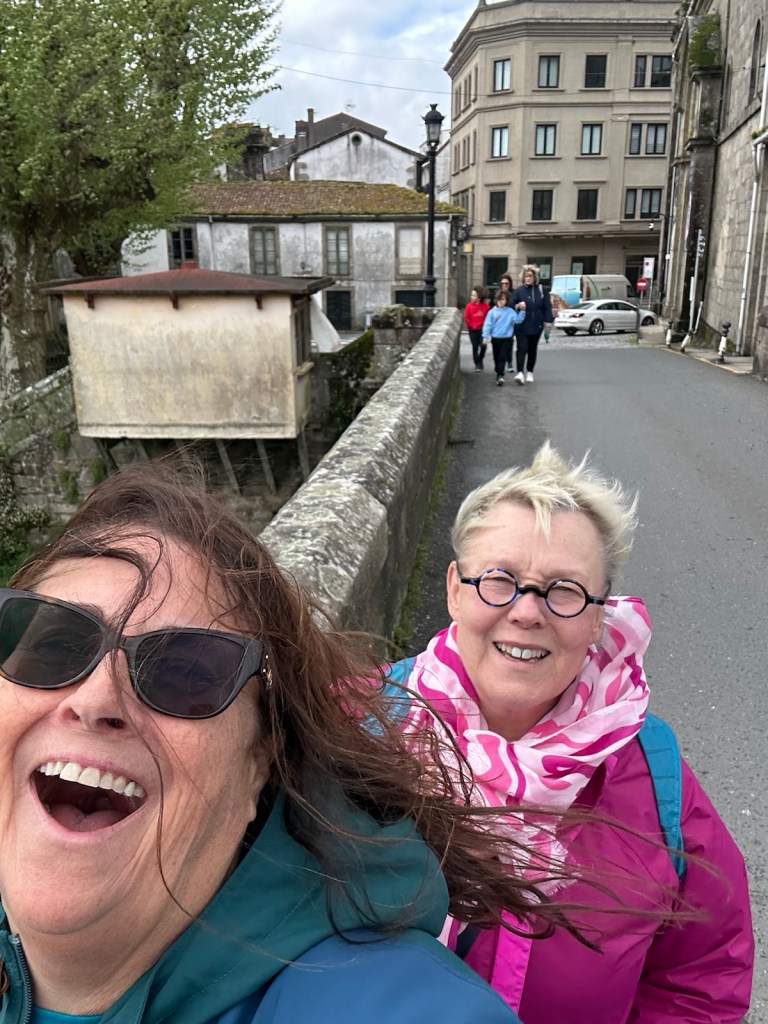
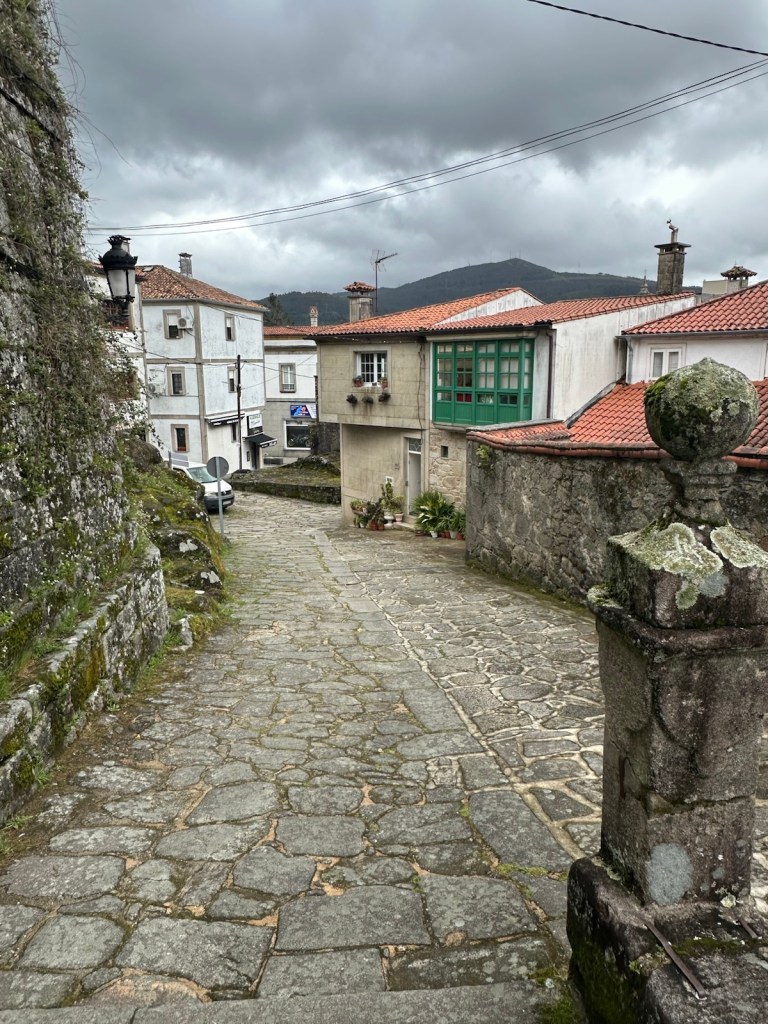
Theresa and I hit the cobblestones, intent on uncovering every hidden gem. Many treasures were found!

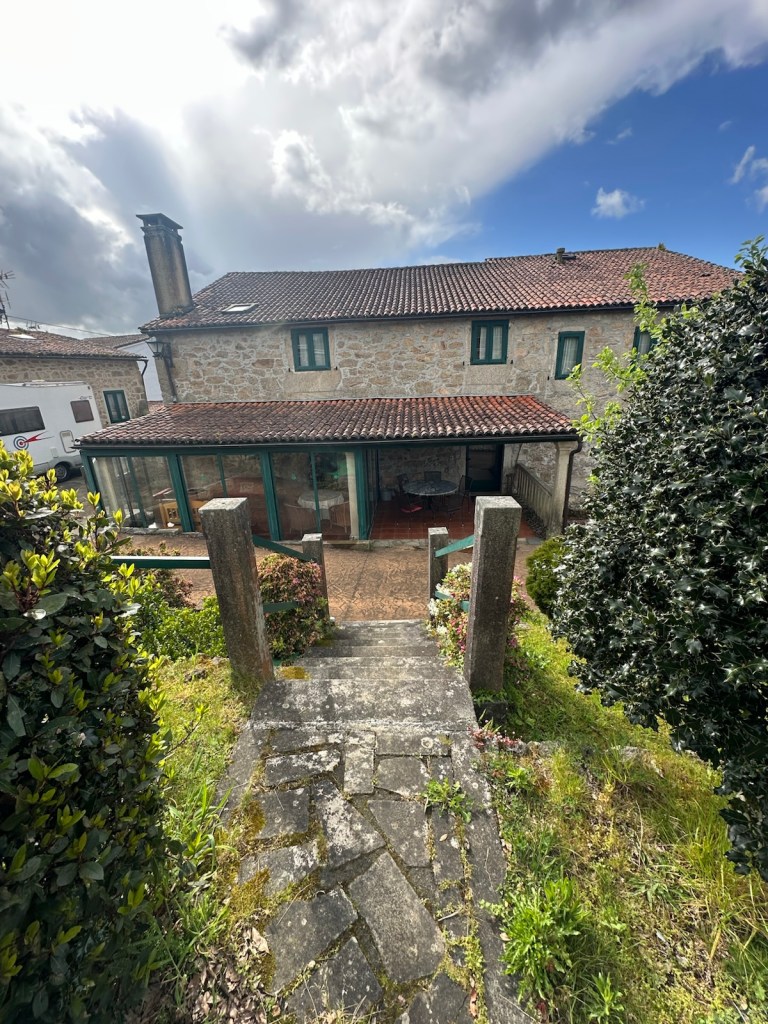
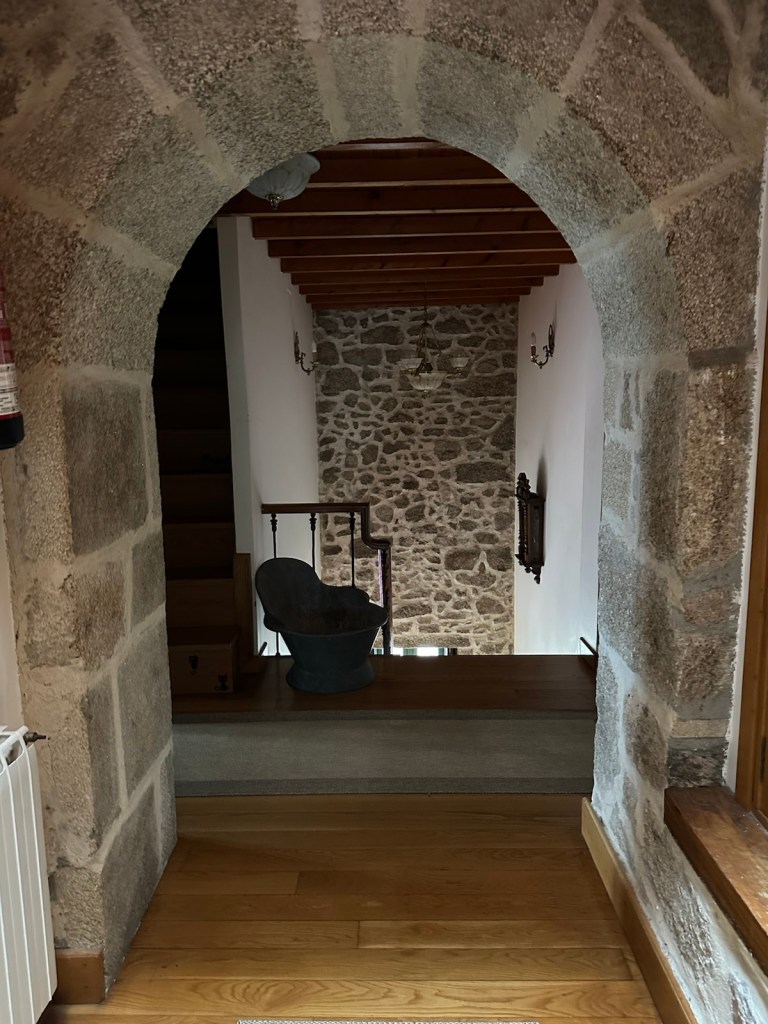
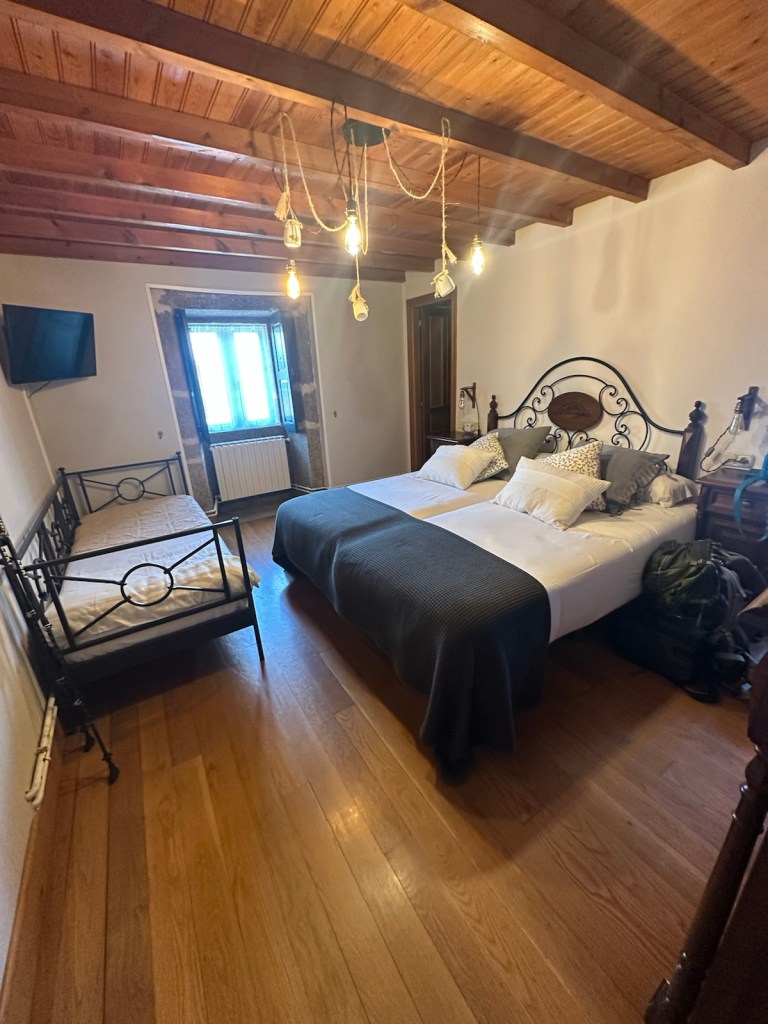
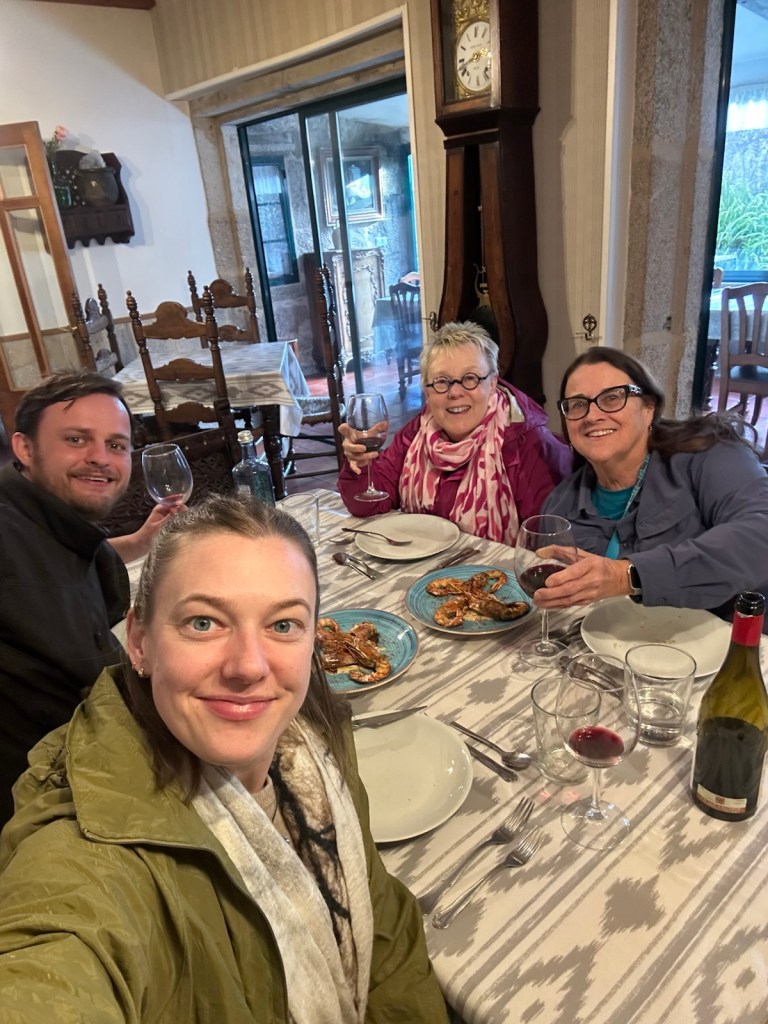
Our next stop is Casa do Cruceiro, a charming rural guesthouse nestled in Raíces less than six miles from Santiago. The rustic charm and serene vibe made for a memorable stay in Raíces.
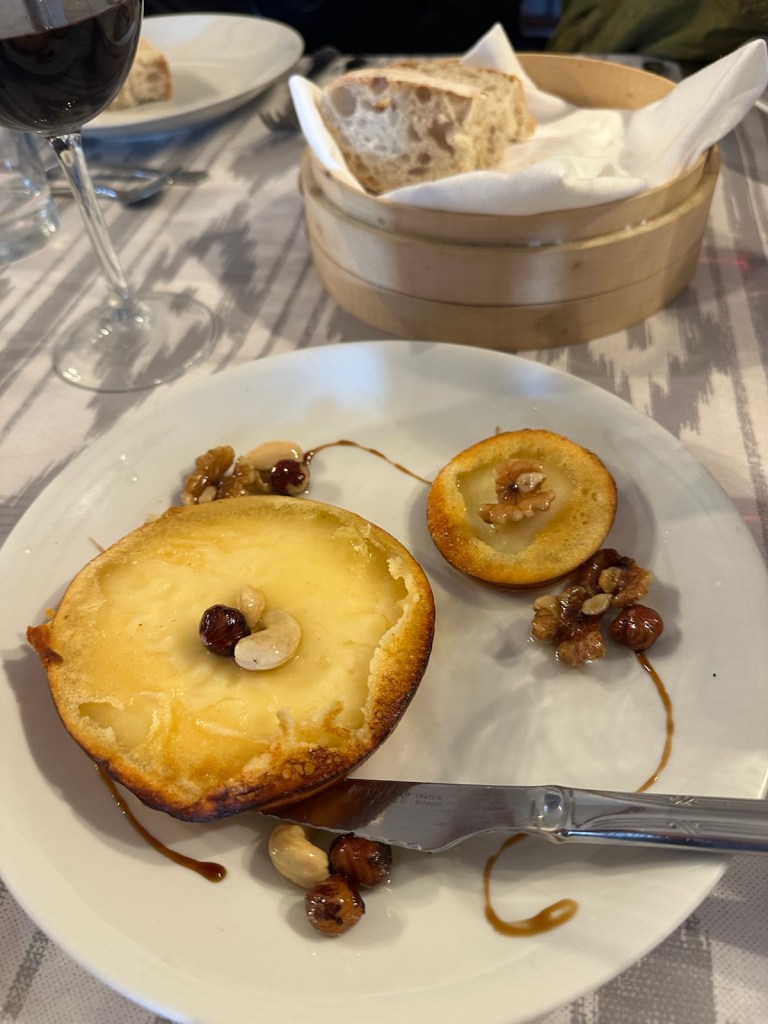
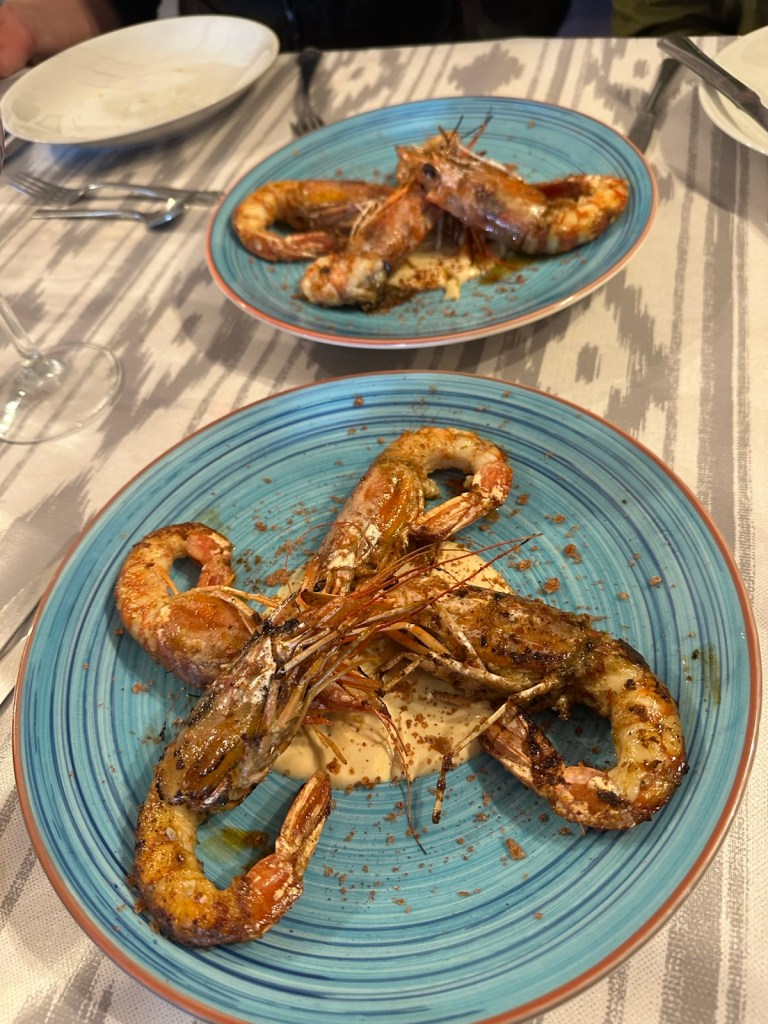
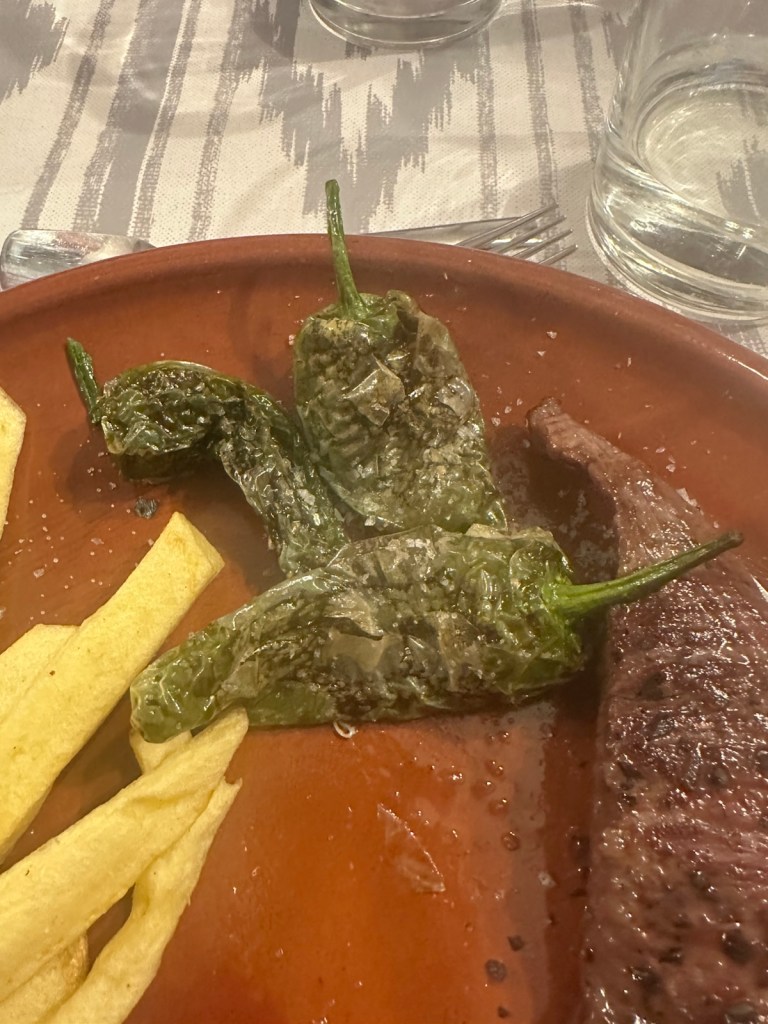
Dinner was awesome … creamy cheeses, plump prawns, my beloved Padrón peppers, golden potatoes, and a mouthwatering flank steak — total culinary nirvana.
Fueled by a hearty meal and a solid night’s sleep, we were primed for our entrance into Santiago. Stay tuned!
 Jane in Spain