24 April 2025
Today was our day to explore the island of Gran Canaria. The ferry port was just a stone’s throw from where we were staying — in fact, we had been watching the ferries coming and going from our balcony throughout the week. Despite its proximity, reaching the terminal by car proved surprisingly tricky.
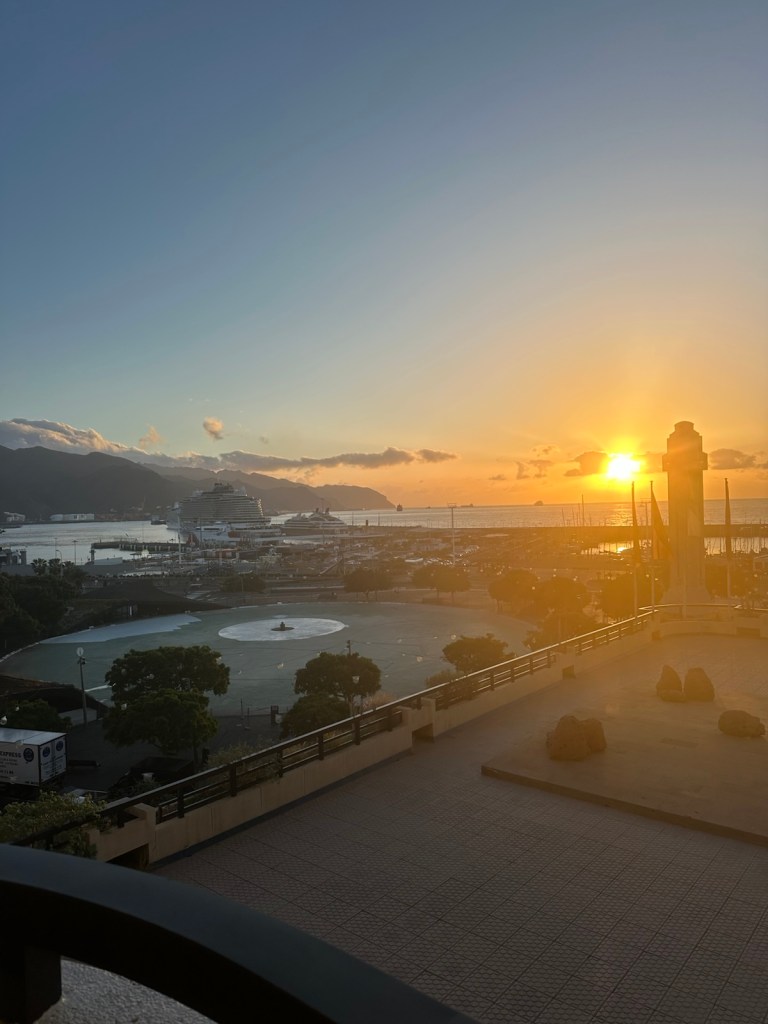

The view from the ferry was striking—a dense wall of condos and high-rise buildings stretched along the waterfront, with rugged mountains rising behind them. From the harbor, we had a sweeping panoramic view of the city, framed by sea and sky.

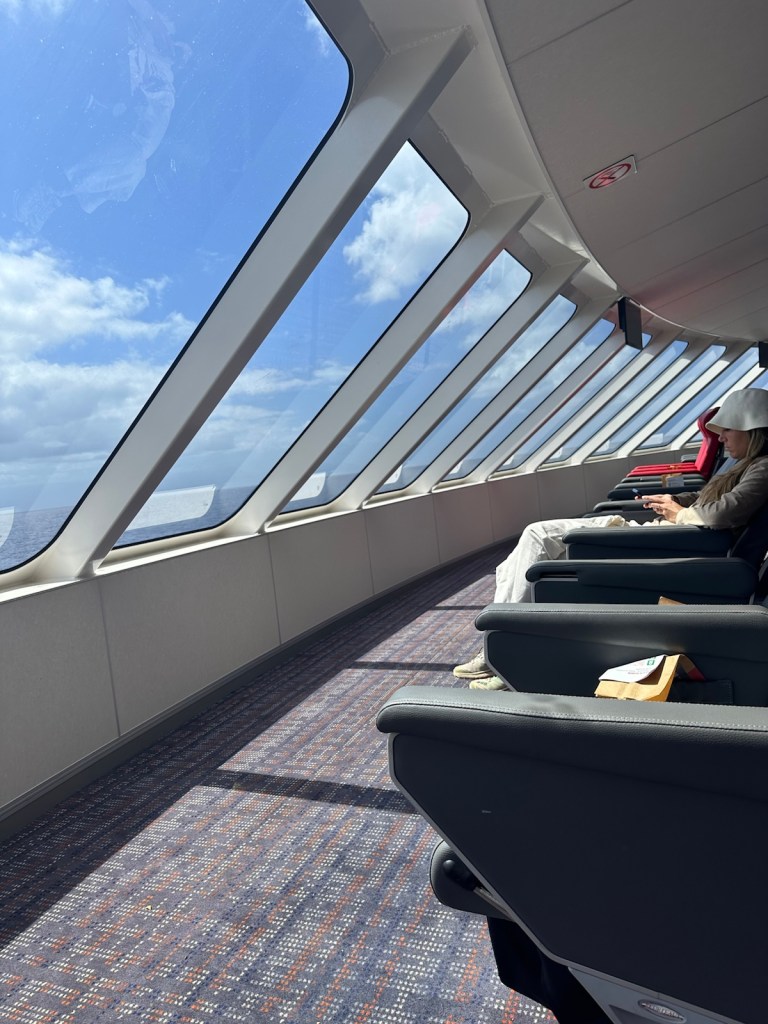
The Armas ferry was comfortable, and I especially enjoyed sitting at the front, where there was an excellent view of the sea and the approaching coastline.
One of the reasons we chose to visit Gran Canaria was the World Rally Championship, which was being held on the island for the first time. As the premier international competition in rally racing, the WRC showcases high-performance, modified production cars racing across challenging routes on a variety of surfaces — including gravel, asphalt, snow, and ice.
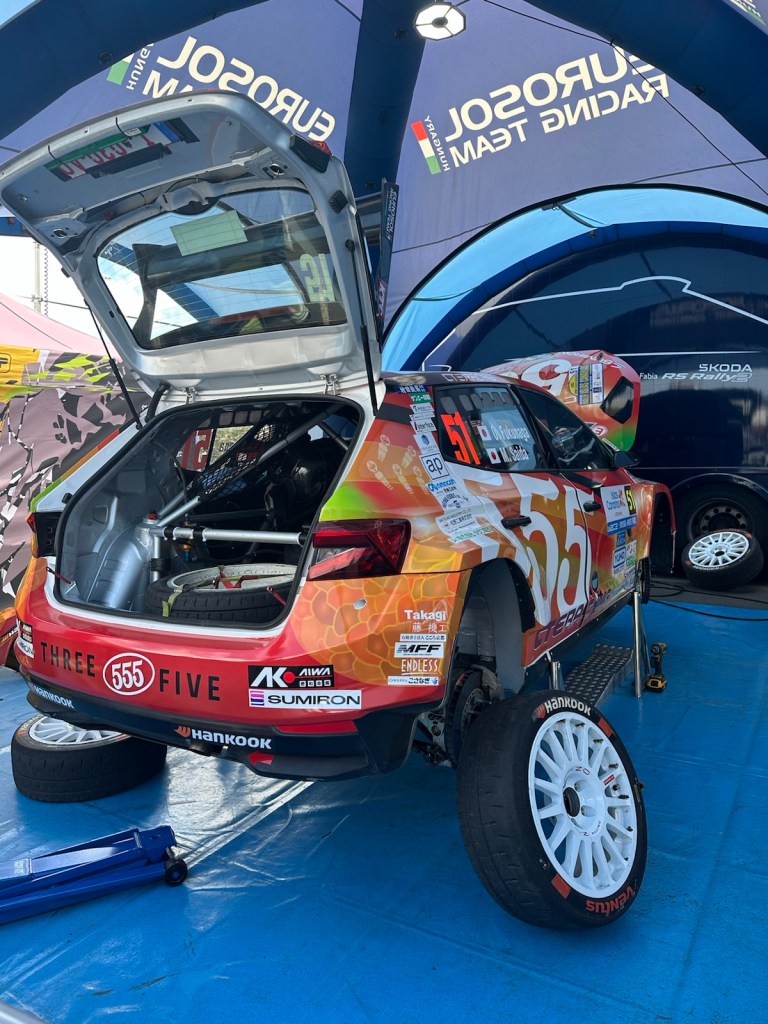
The rally cars are heavily modified versions of street-legal models — like the Toyota GR Yaris, Hyundai i20 N, and Ford Puma — engineered for speed, agility, and durability. Kyle was especially interested, since he drives a Subaru WRX, (World Rally eXperimental) a car with its own rally heritage.
The WRX is one of the sport’s most iconic cars, especially during the 1990s and early 2000s. And while I may drive an aging Toyota Sienna minivan, I still found the world of rally racing surprisingly compelling.
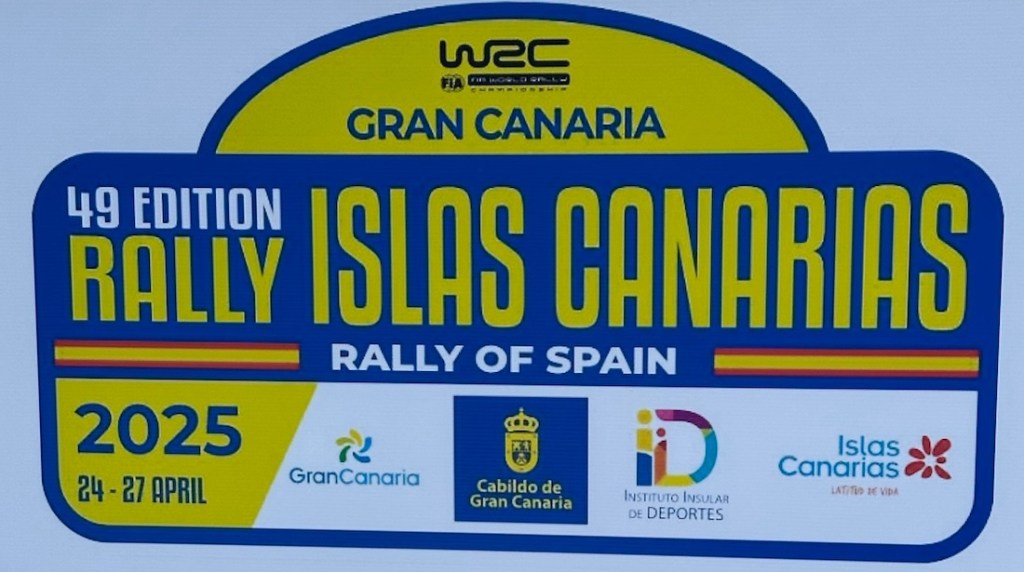
We had hoped to catch part of the rally itself, but in terms of ferry schedules, it worked out better for us to be there on the pre-event day—known as “recce and shakedown day.” It turned out to be an interesting part of the World Rally Championship experience.
Far from a day of downtime, it’s packed with final preparations, technical inspections, and strategic planning. It’s also when fans can get up close to the cars in the service park, where each team sets up its base and fine-tunes their vehicles for the stages ahead.
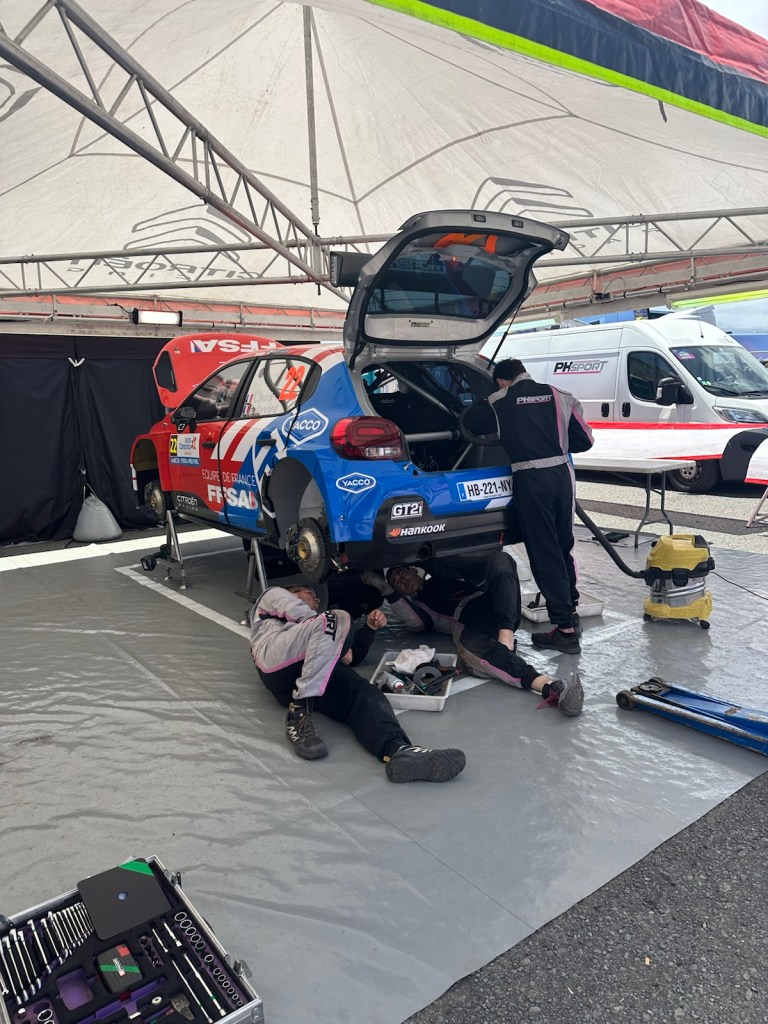
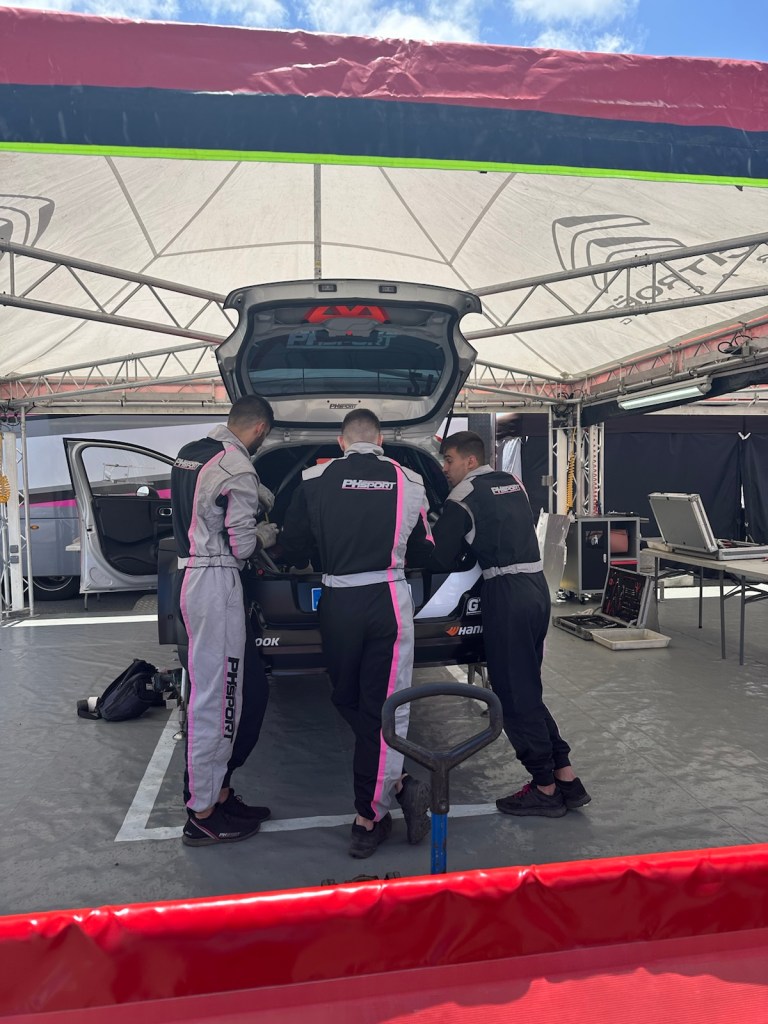
After soaking in all the pre-race excitement, it was time for us to hit the road ourselves. And naturally, Kyle was eager to take the wheel. We headed out to the Caves of Valeron.
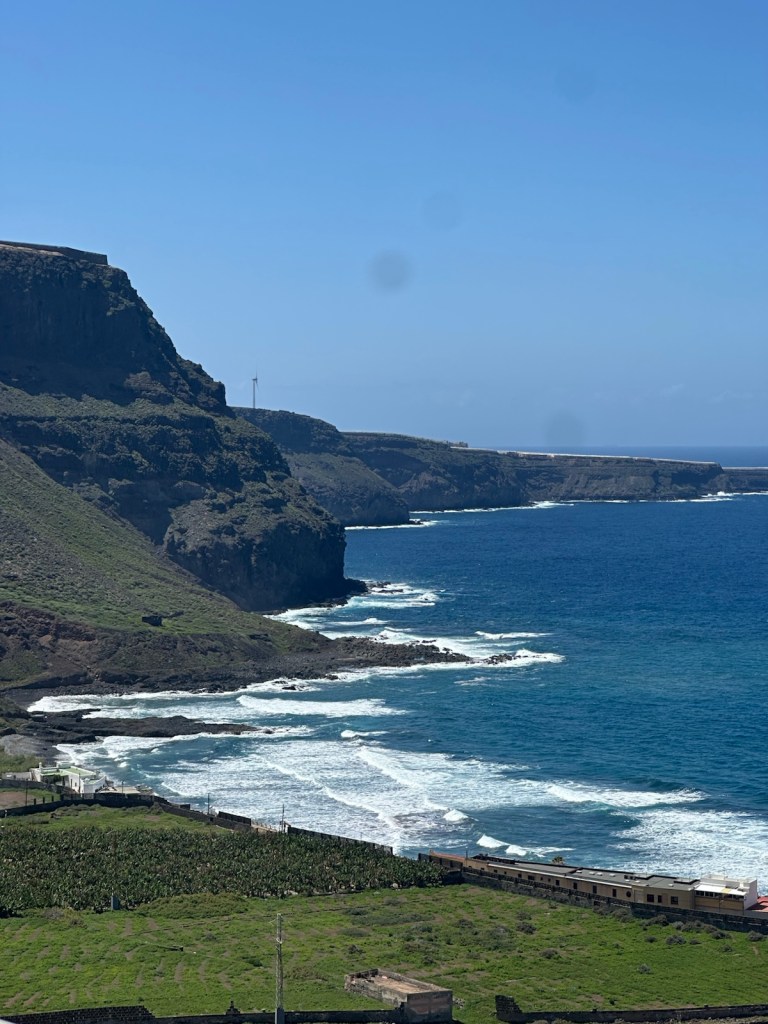
The drive from Las Palmas de Gran Canaria to the Caves of Valerón is a scenic journey that offers a glimpse into the island’s diverse landscapes.
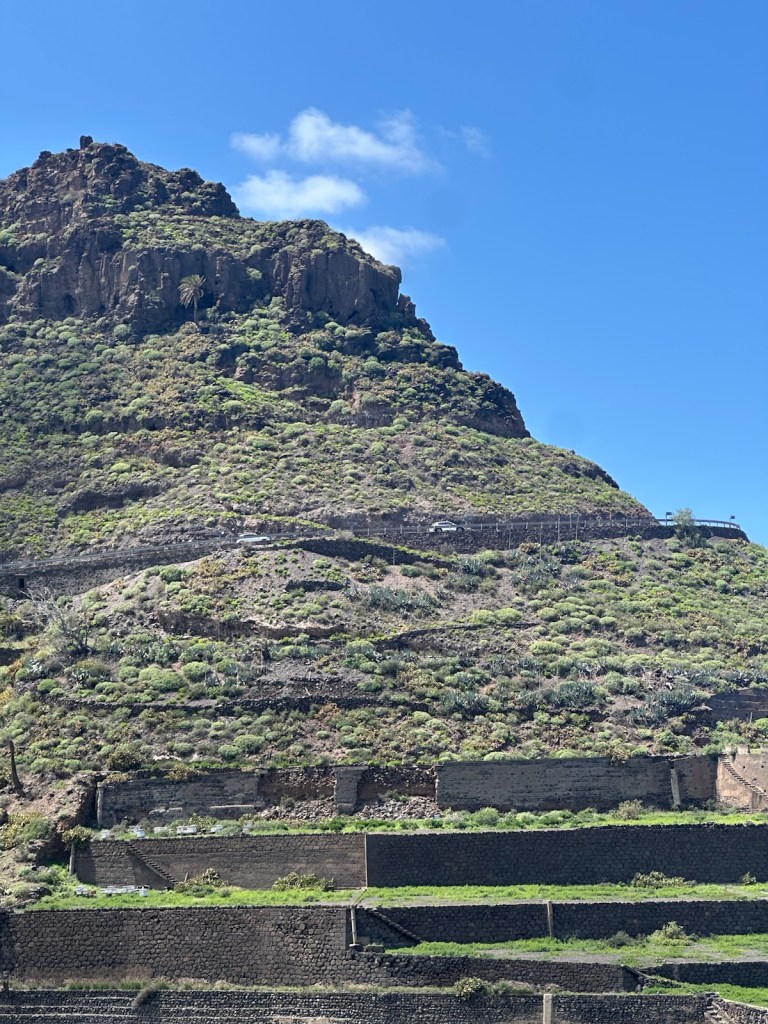
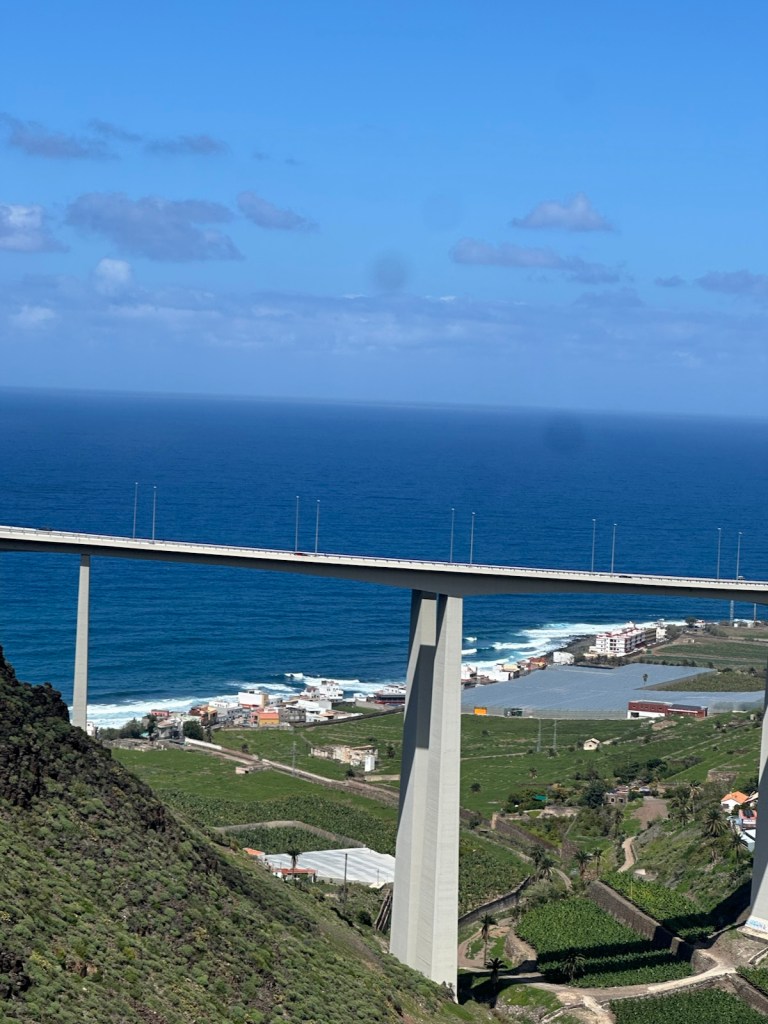
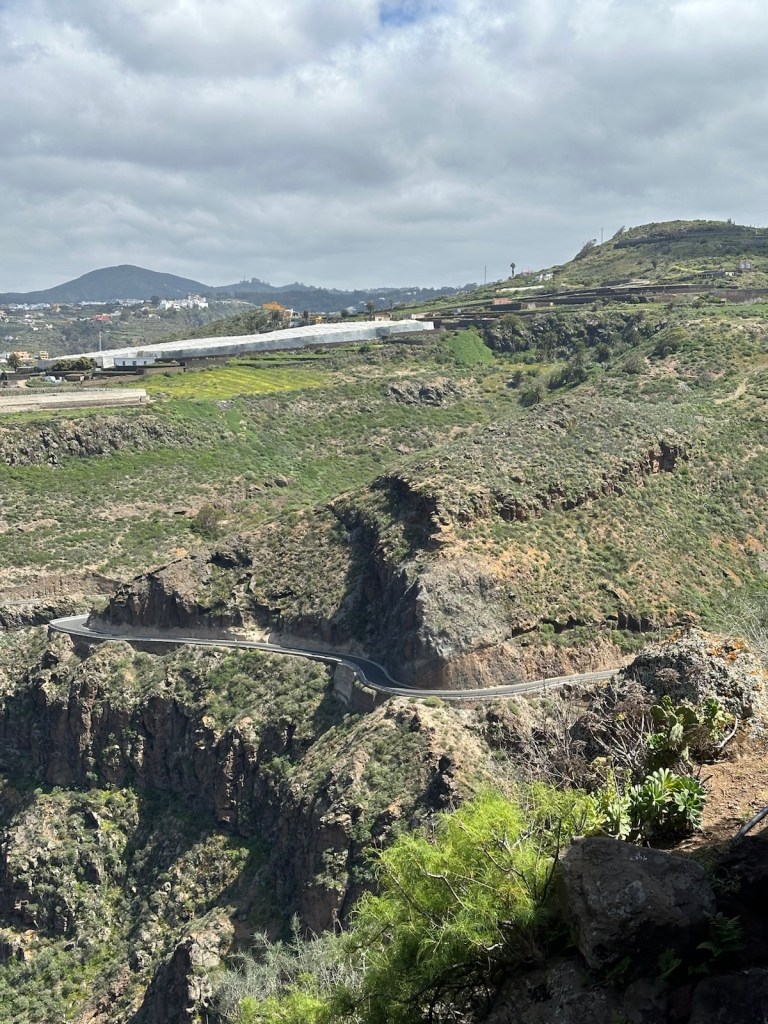
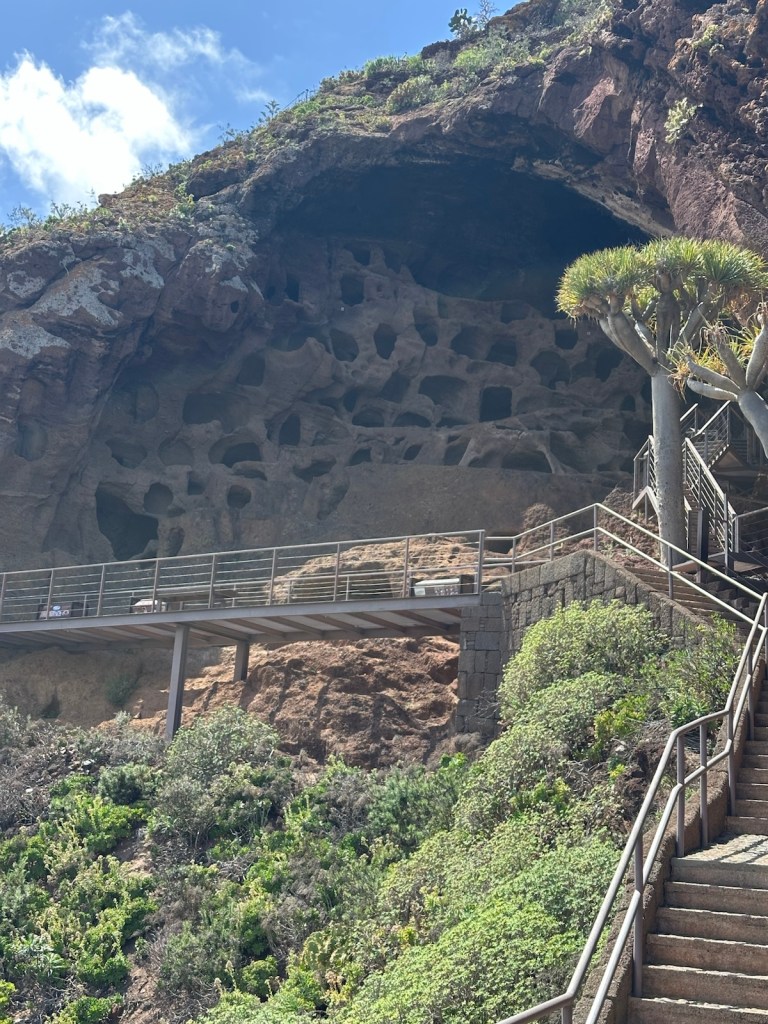
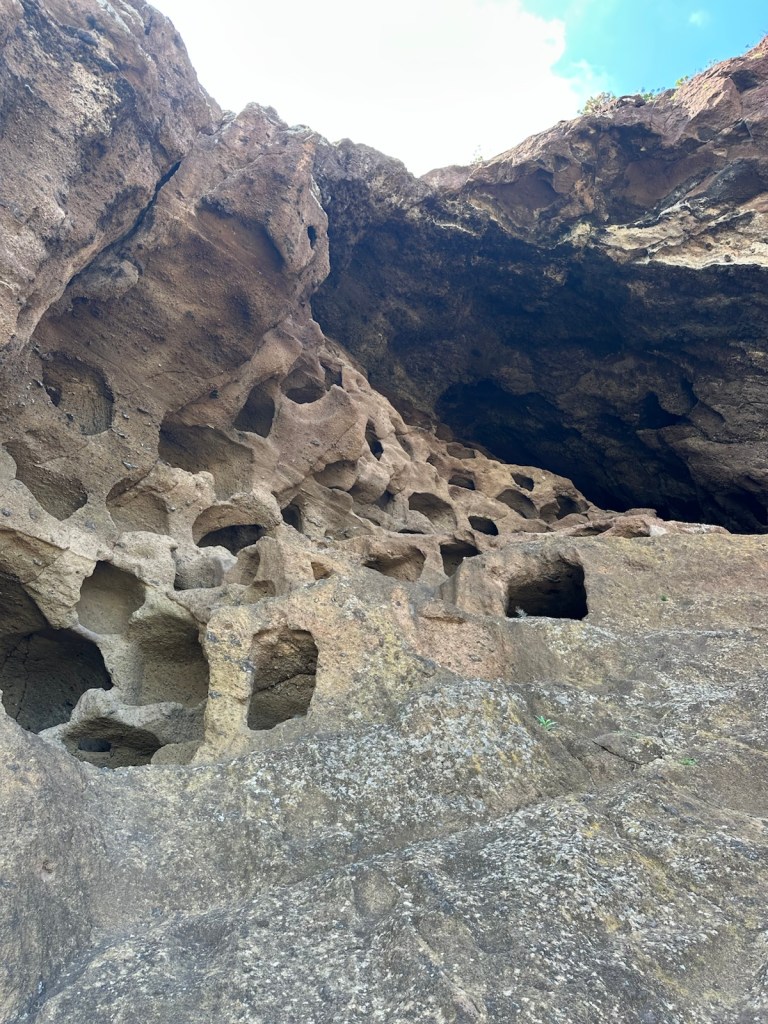
The Caves are a remarkable testament to the island’s pre-Hispanic heritage. Located near the town of Santa María de Guía in the northern part of the island, this archaeological site features over 350 man-made cavities carved into the volcanic rock of a steep cliff face.
These interconnected caves are believed to have served as a communal granary for the indigenous Canarian people, known as the Guanches, dating back approximately 800 years.
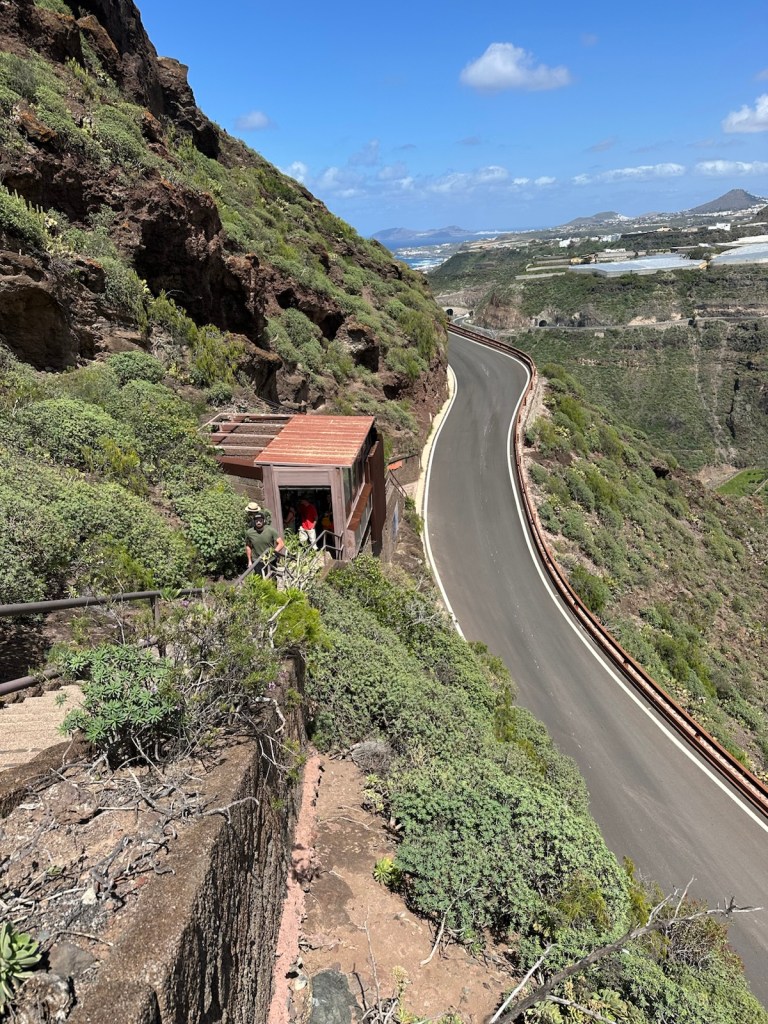
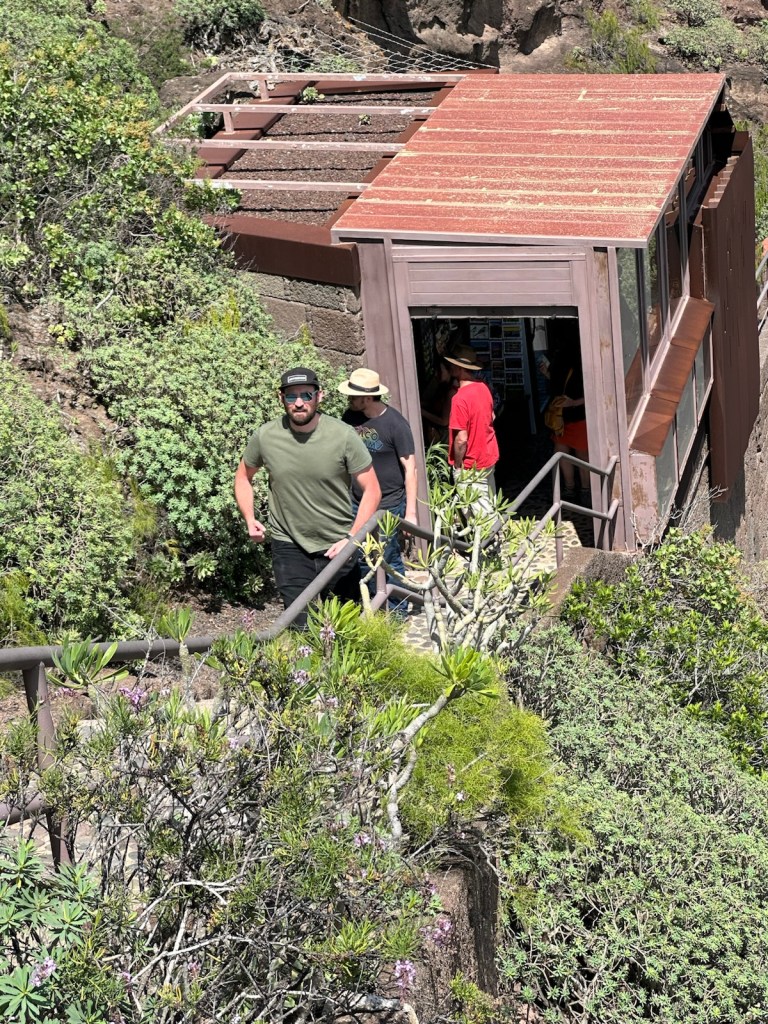
The caves are accessible via a staircase that offers panoramic views of the surrounding valley.
The site includes a small reconstructed aboriginal house, providing insight into the living conditions of the Guanches. Interpretive panels along the path offer historical context.


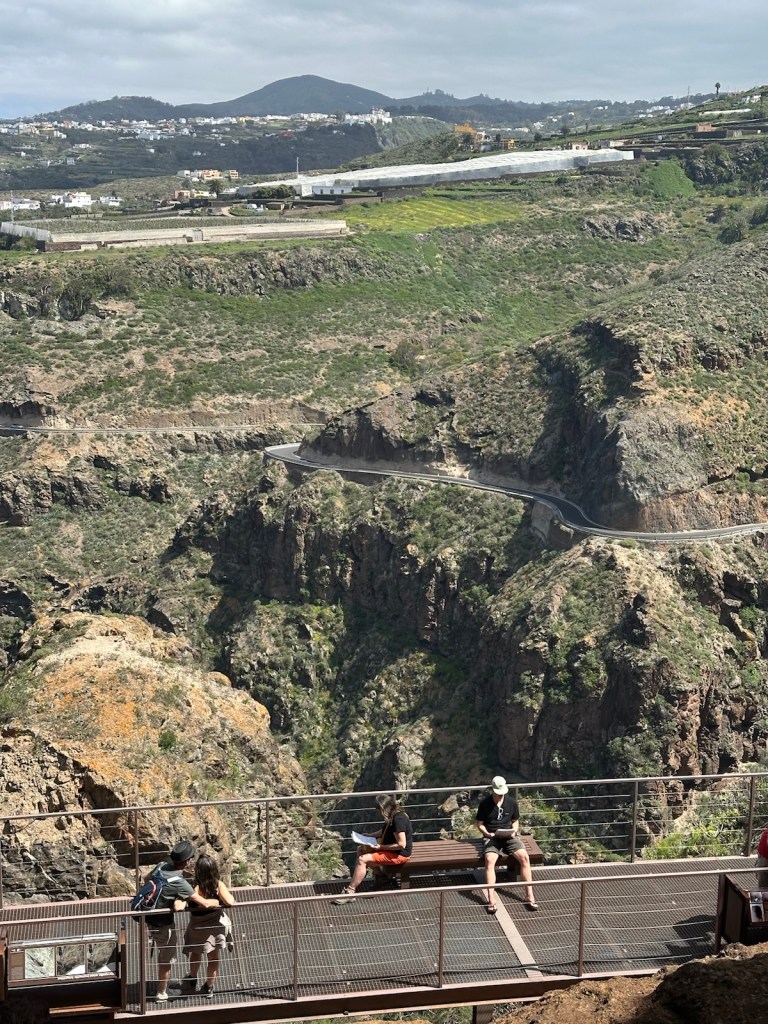
The strategic placement of the caves—high on a cliff and hidden from the sea—provided protection against potential invaders and the elements. Each chamber was likely sealed with wooden or stone doors to safeguard stored goods such as grains and other food.
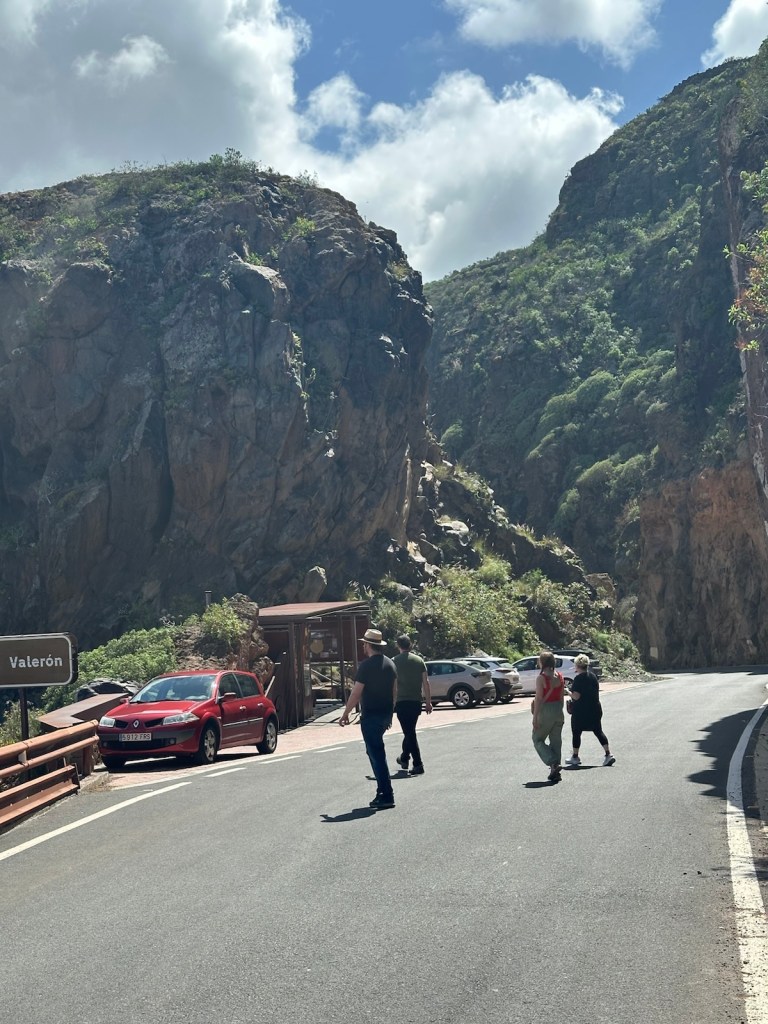
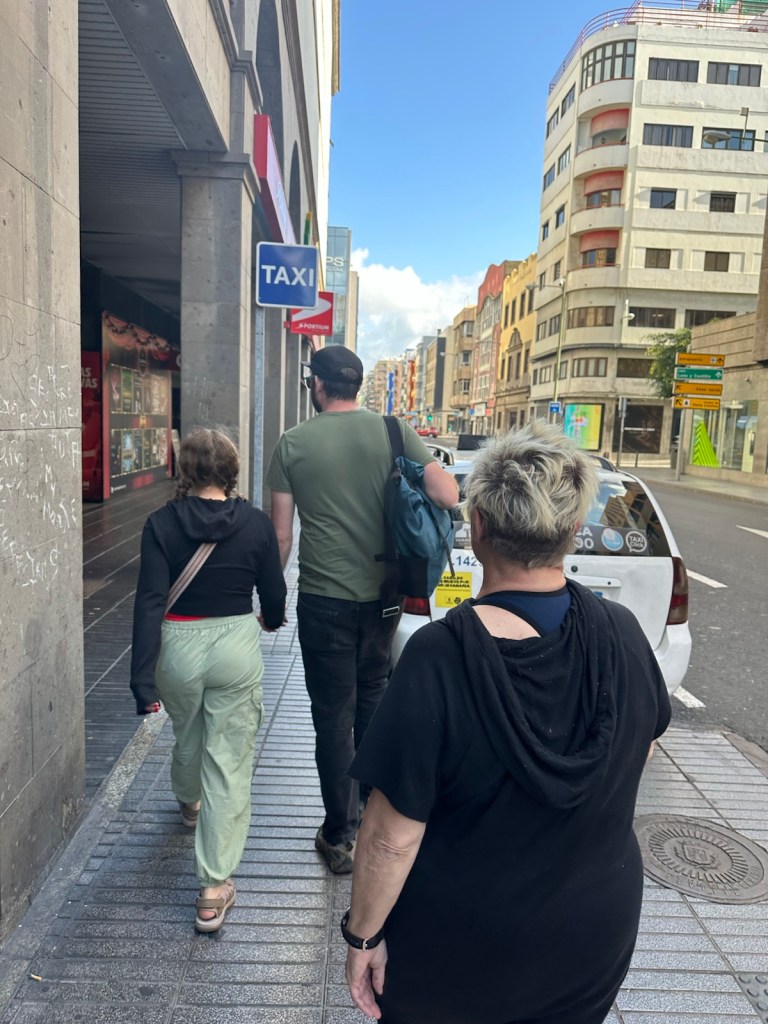
With the clock ticking and the ferry schedule looming, we had to wrap up our day a bit earlier than planned. We made our way back to Las Palmas for a late lunch before heading to the port to catch our ferry.

We ended our visit to Gran Canaria with a serene sunset ferry ride, the golden light casting a warm glow over the water as we sailed back to Tenerife.
 Jane in Spain