Montreal is a vibrant, stylish, and culturally rich city — a bilingual blend of old-world charm and modern creativity. Located in the province of Quebec, it’s the second-largest city in Canada and the cultural heart of French-speaking Canada.
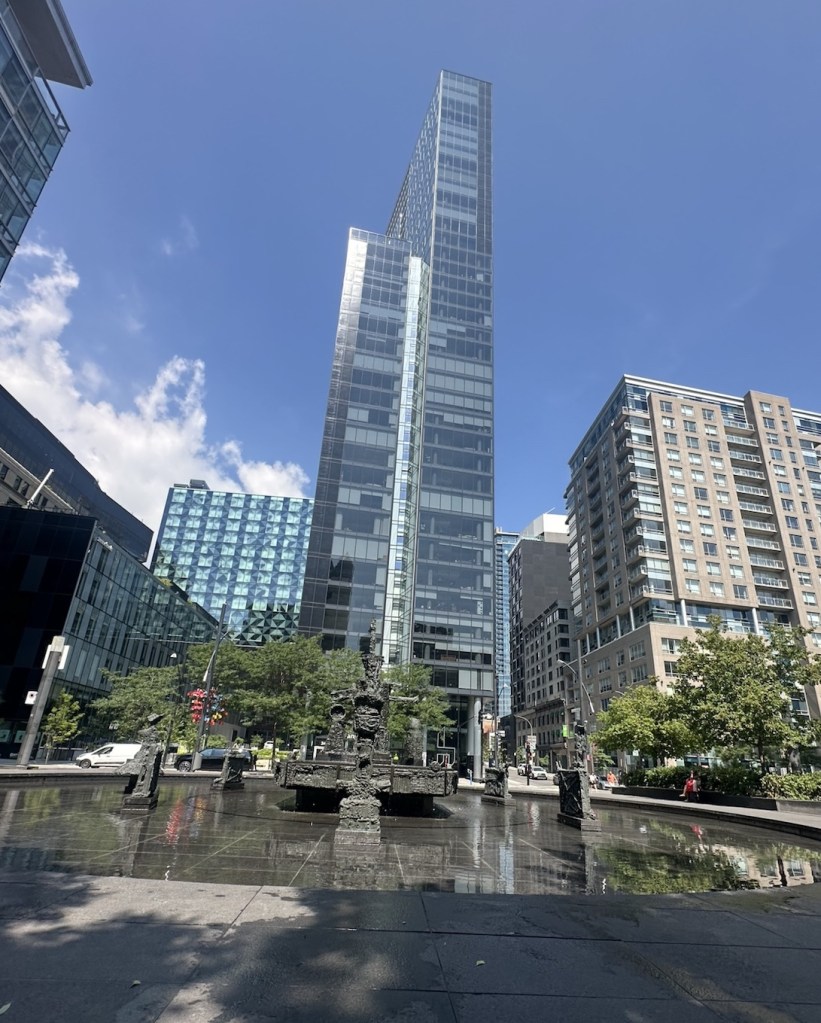
Montreal’s street art scene is one of the most vibrant and respected in the world — bold, expressive, and deeply tied to the city’s culture.
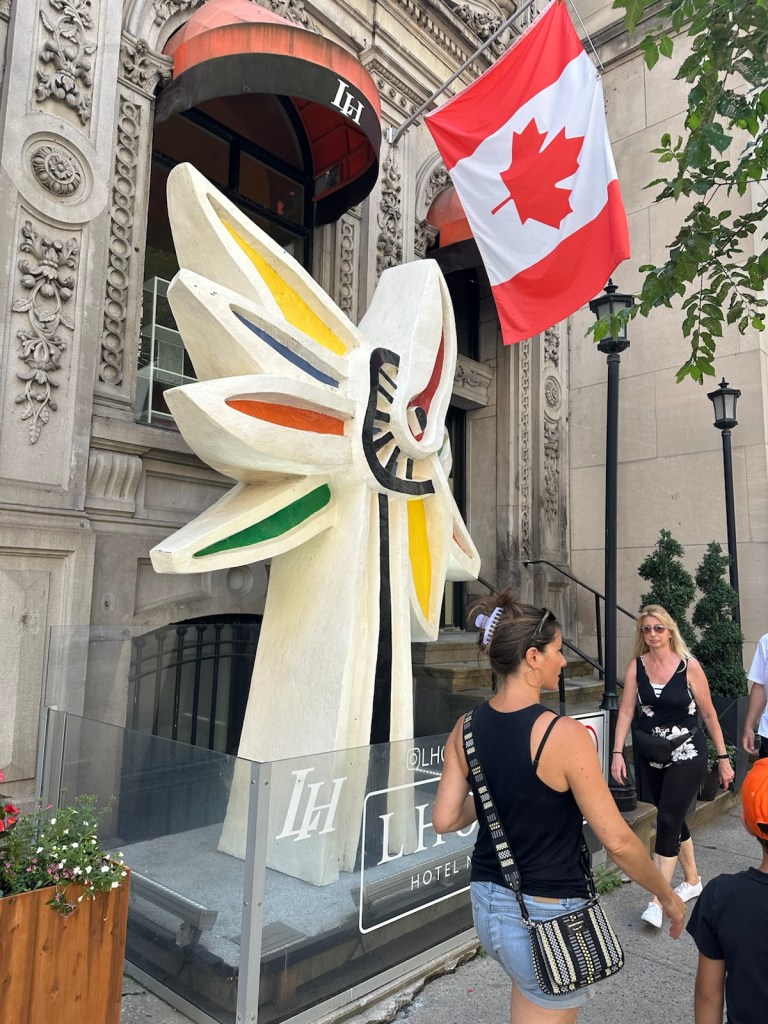
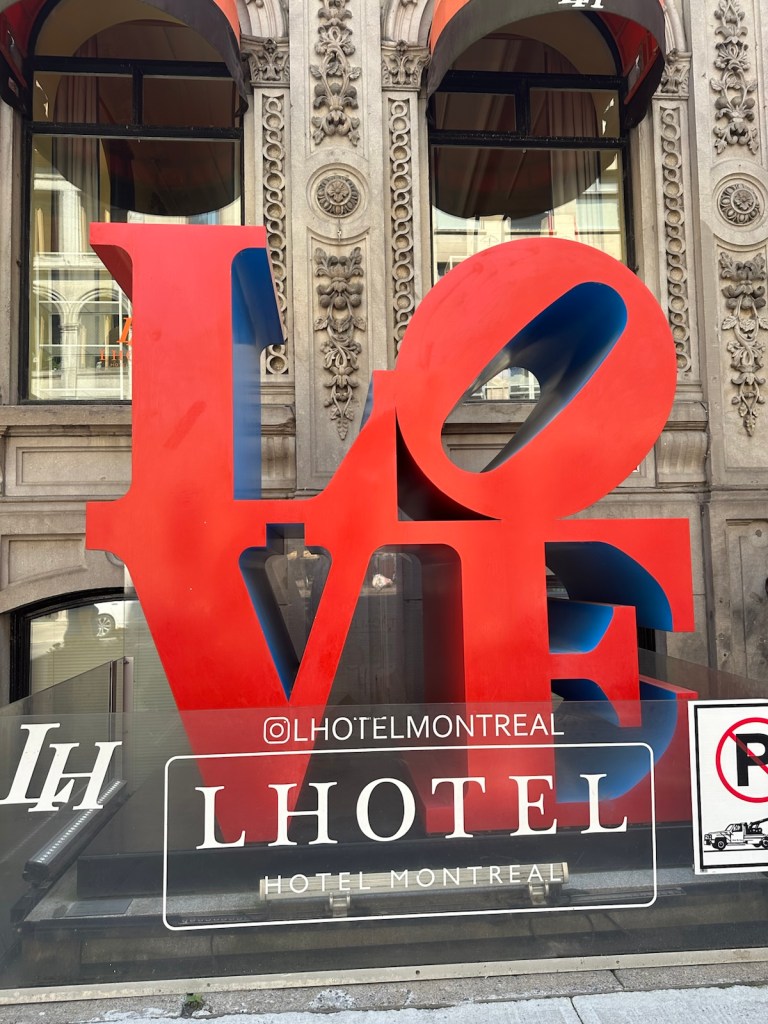
The statues below are, “The French Poodle and The English Pug”


On one corner stands a refined woman dressed in a Chanel-style suit, clutching a French poodle. With her nose pointed upward, she glances — perhaps disdainfully — toward the Bank of Montreal, a symbol of English-Canadian financial dominance .
Across the square on the opposite corner, a finely dressed Englishman holds a pug and directs a superior gaze at the Notre-Dame Basilica, representing the historical religious authority of French-Canadians.
The piece invites both locals and tourists to reflect — with humor — on Montreal’s bilingual, bicultural identity
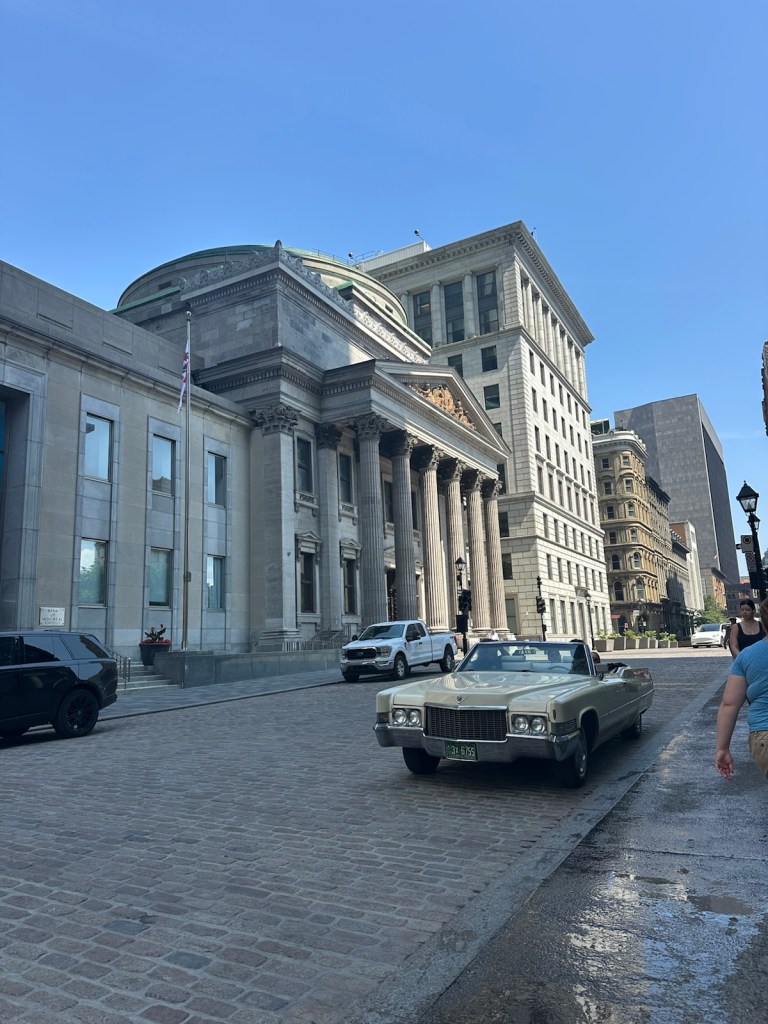
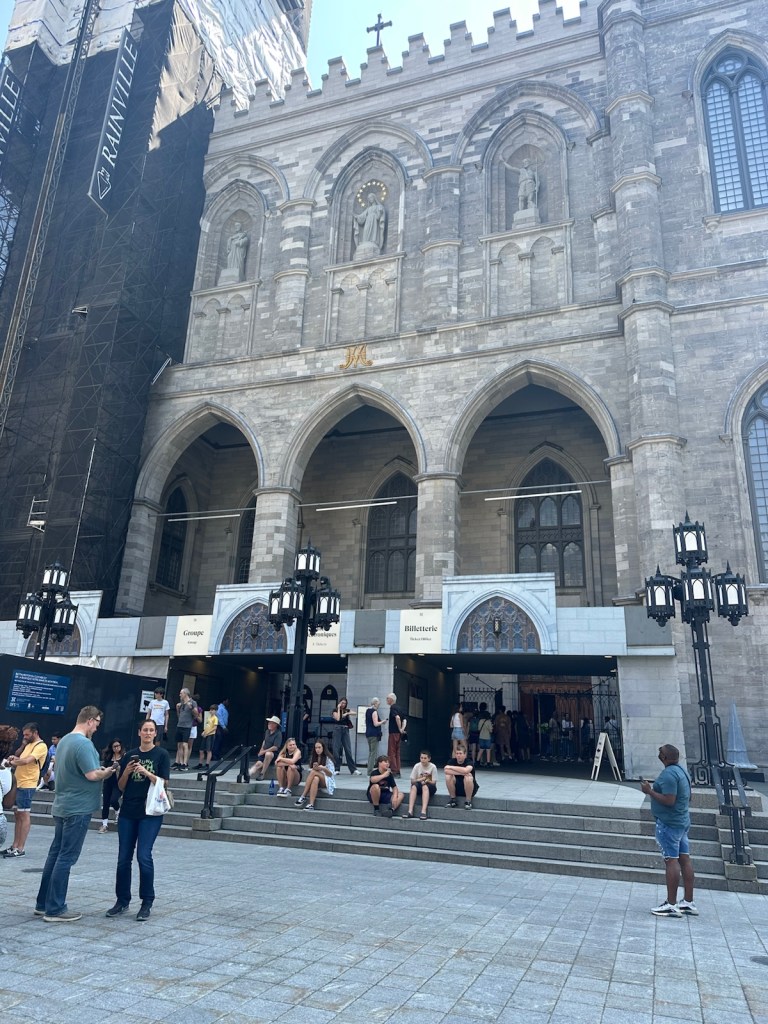
Shopping in Old Montreal (Vieux-Montréal) is like stepping into a stylish European village — with cobblestone streets, stone buildings, and a curated mix of boutiques, art galleries, and souvenir shops tucked into 17th- and 18th-century architecture.

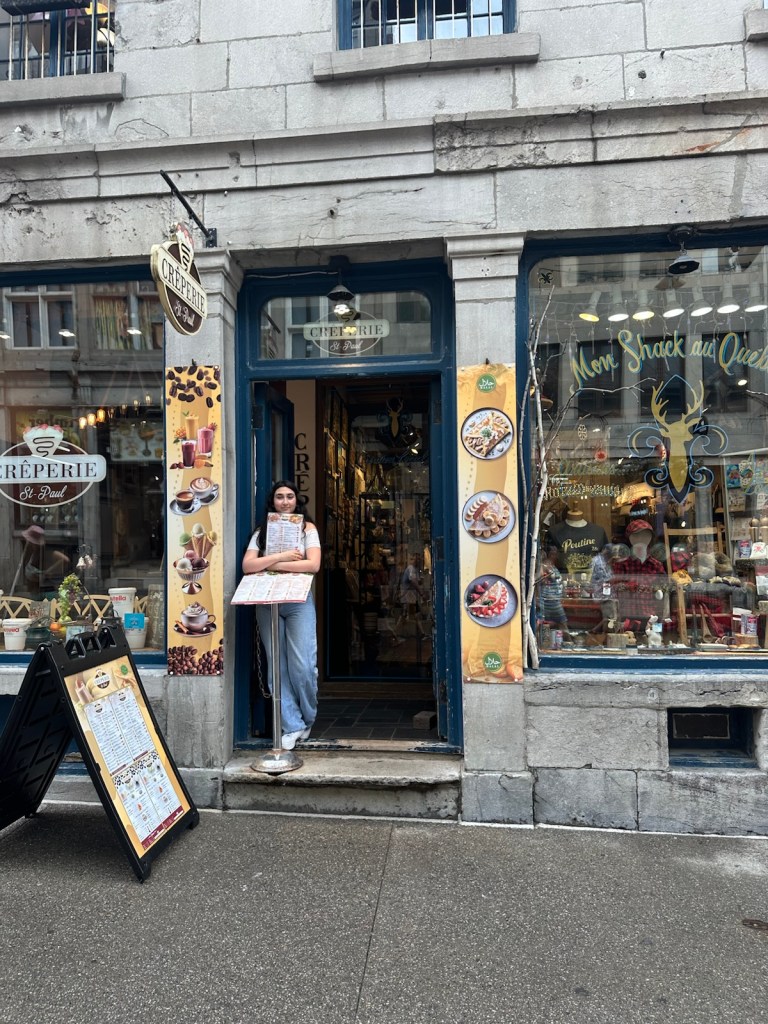
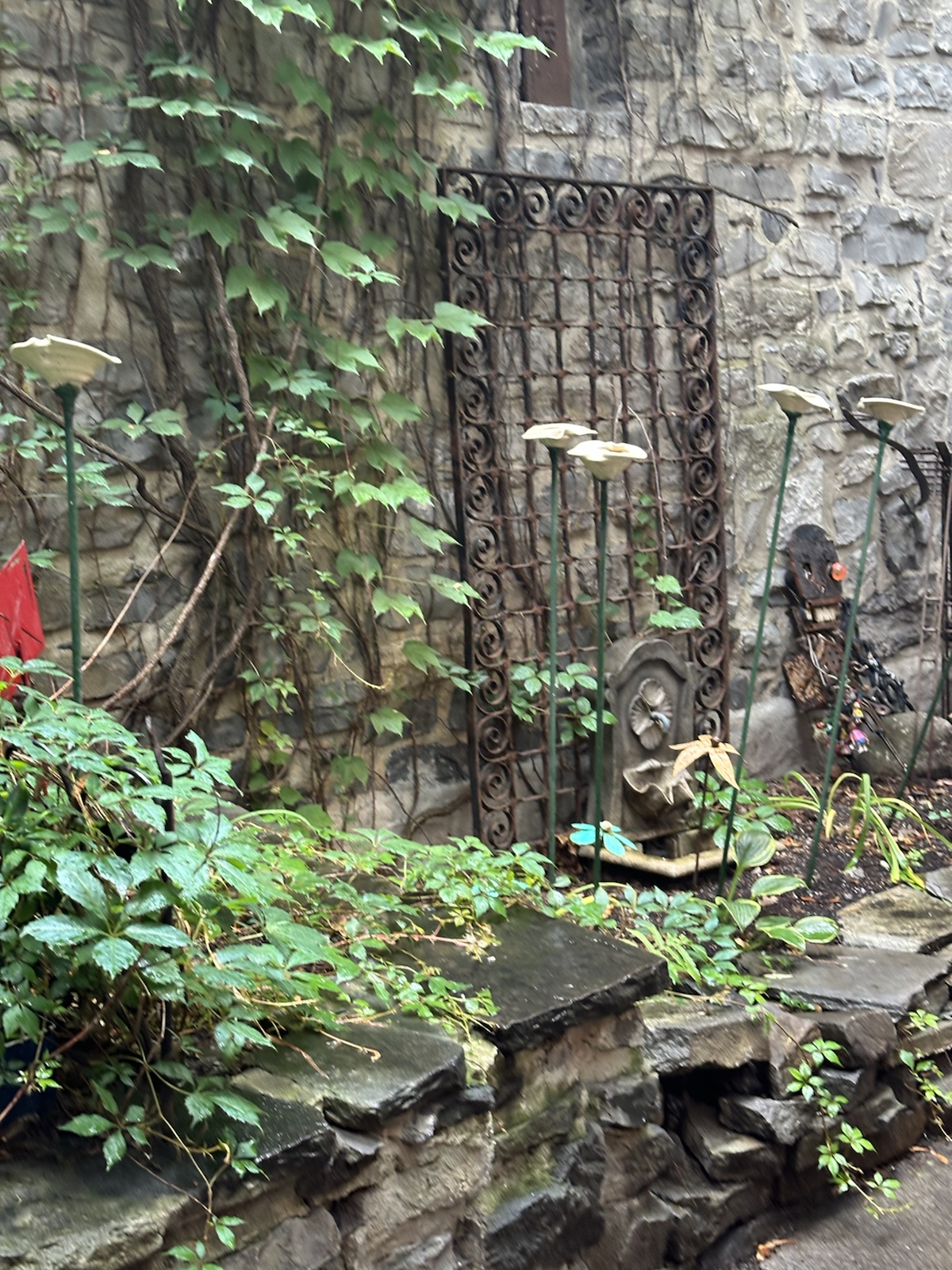
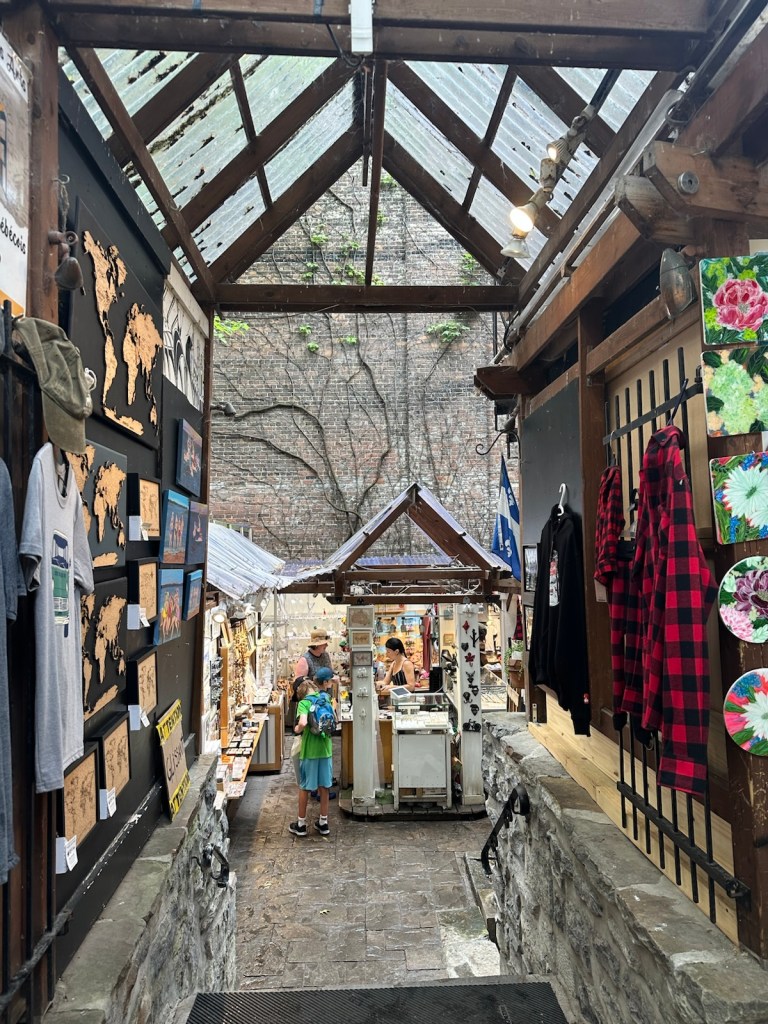
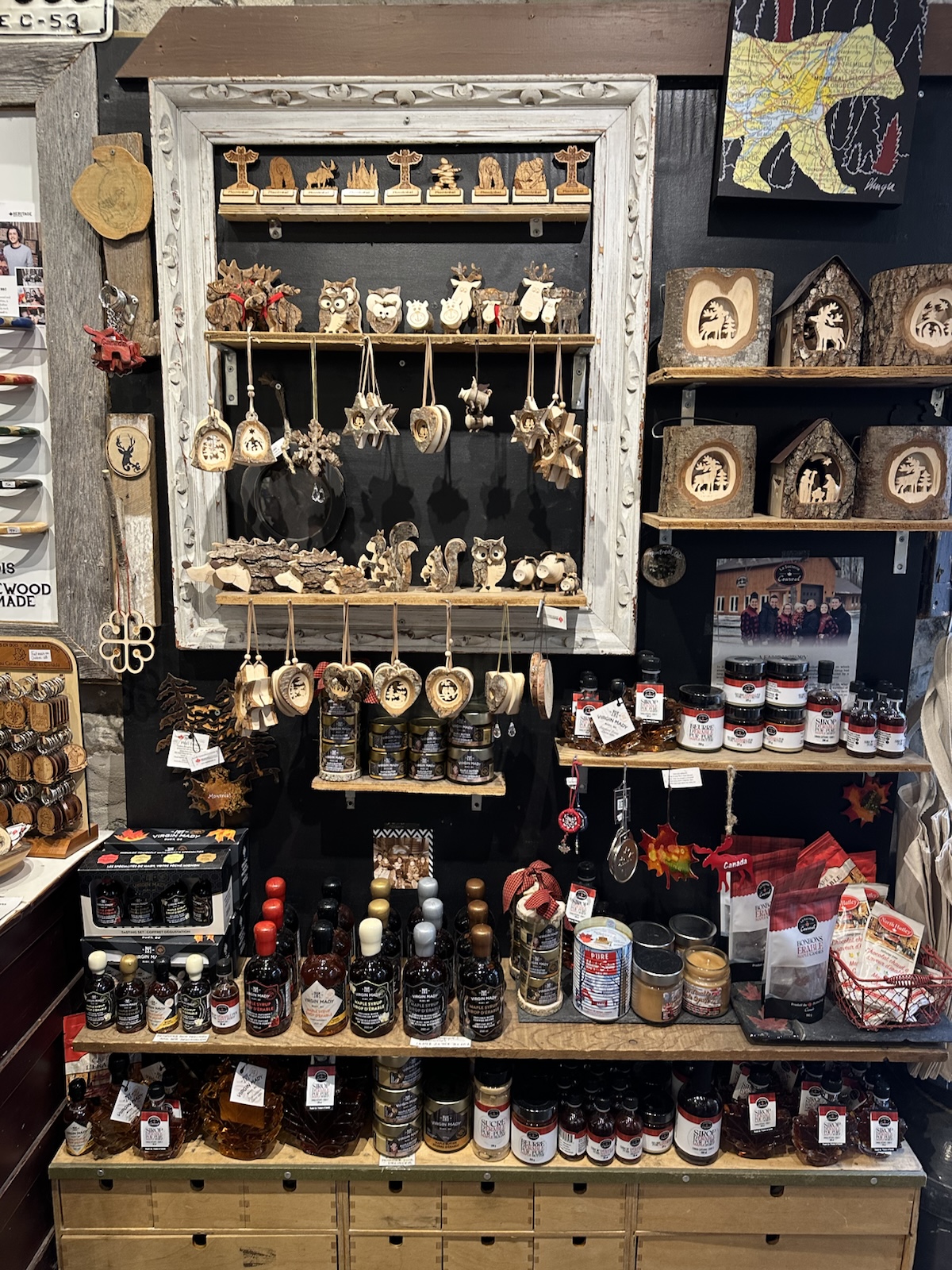
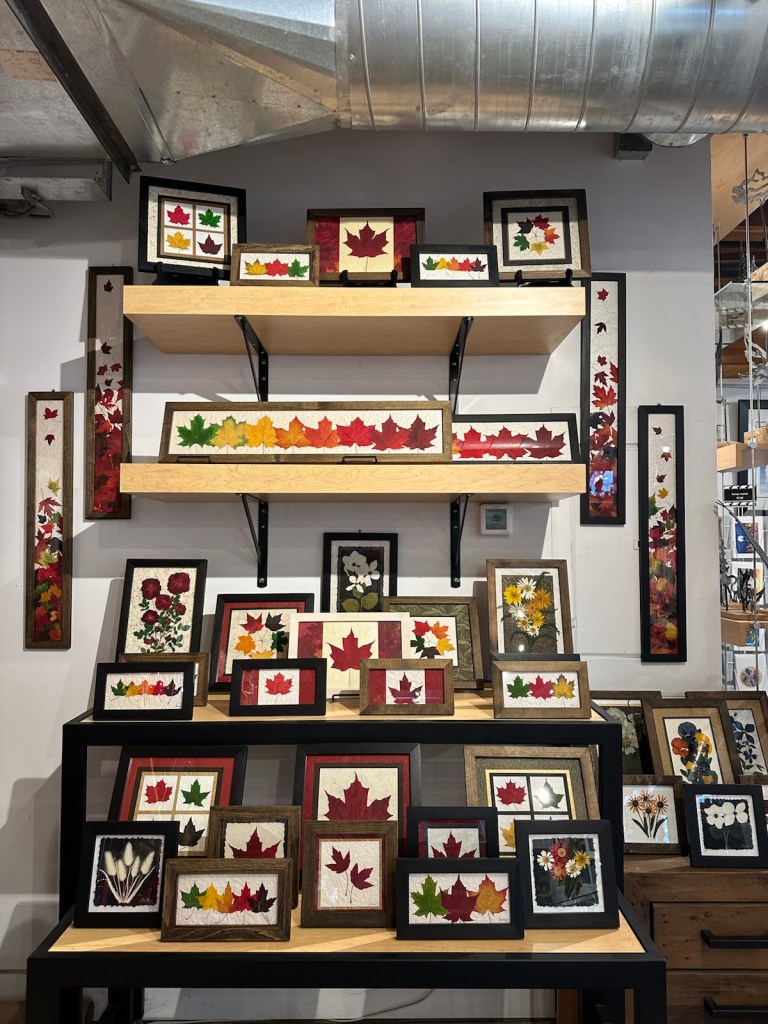
The streets of Old Montreal were hot and humming with life, pushing our limits as we wandered on, eager to soak it all in. We had hoped to catch the fireworks, but in the end, the heat got the best of us, and we retreated gratefully to our hotel refuge.


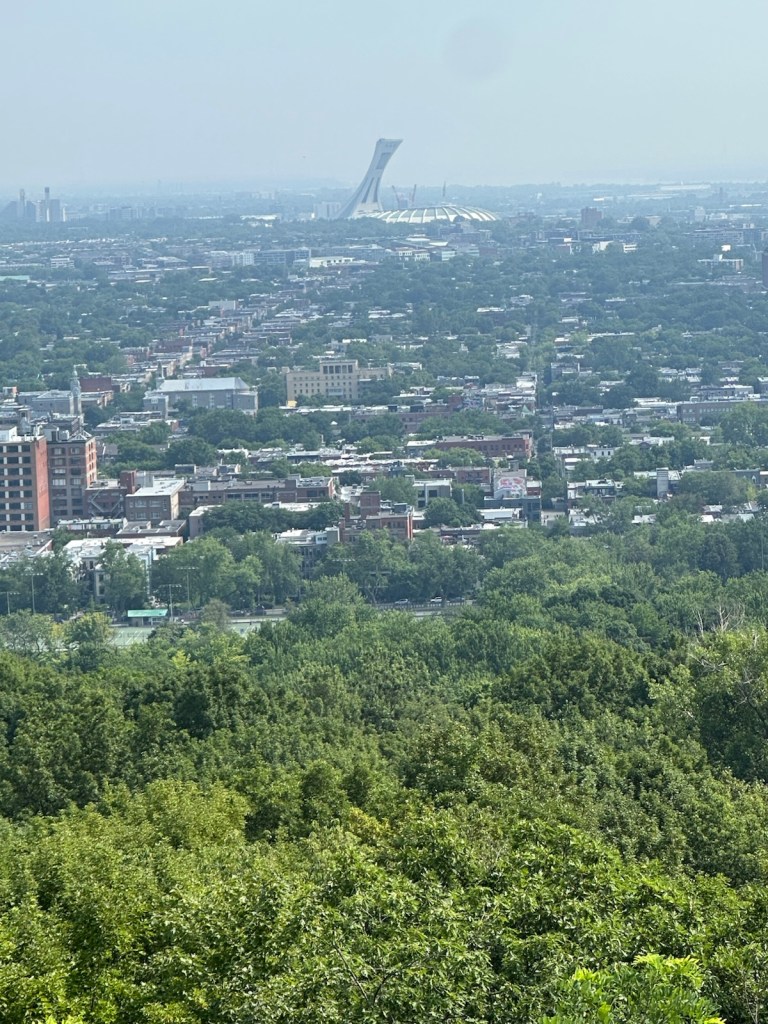
Before leaving town, we made a final stop at Mount Royal for a sweeping view of the city. In the background is Montreal’s Olympic Stadium which was built for the 1976 Summer Olympics. Though the skyline was softened by a haze of wildfire smoke, the vista still held its quiet charm.
 Jane in Spain