The drive from Montreal to Quebec City is about three hours. Halfway is a charming little town called Trois-Rivières — the perfect stopping point for stretching legs and coffee.
As the name suggests, the city sits at the mouth of the Saint‑Maurice River, which splits into three channels before joining the St. Lawrence, creating the “three rivers”. Founded in 1634, it is the second-oldest settlement in North America

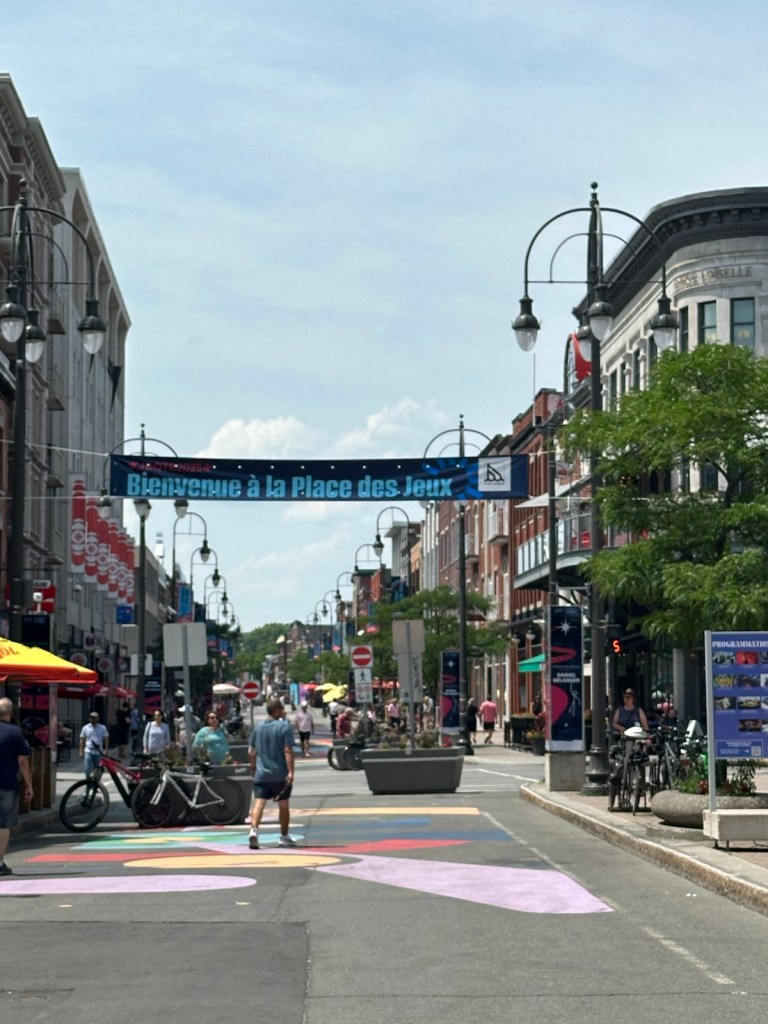
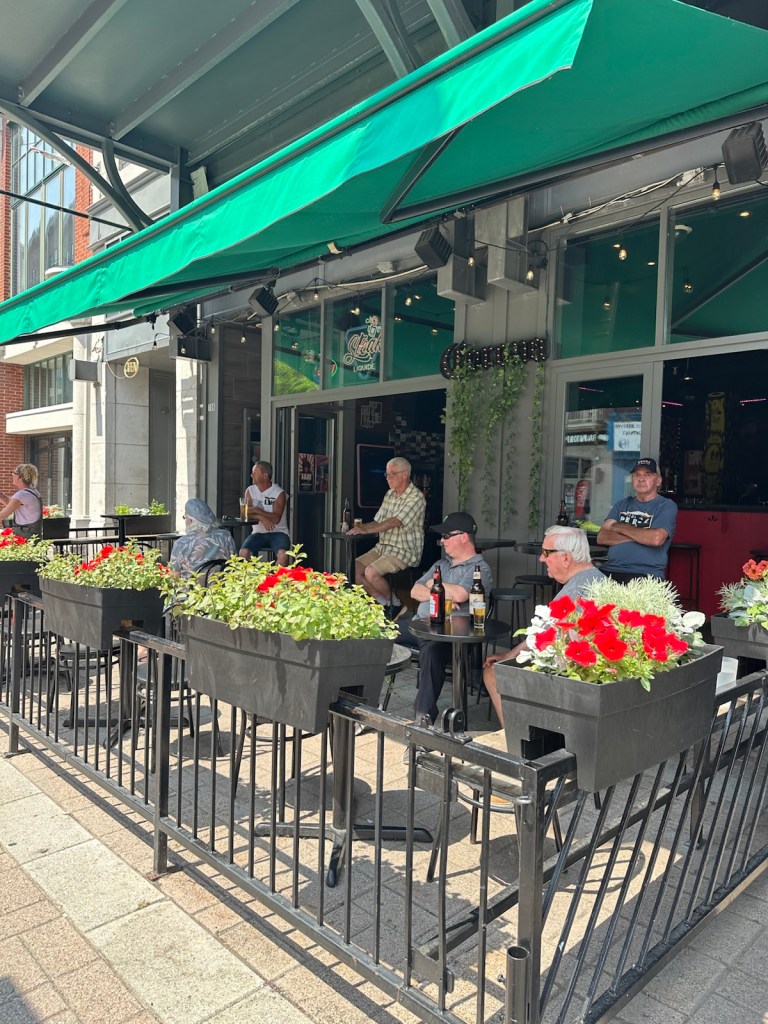
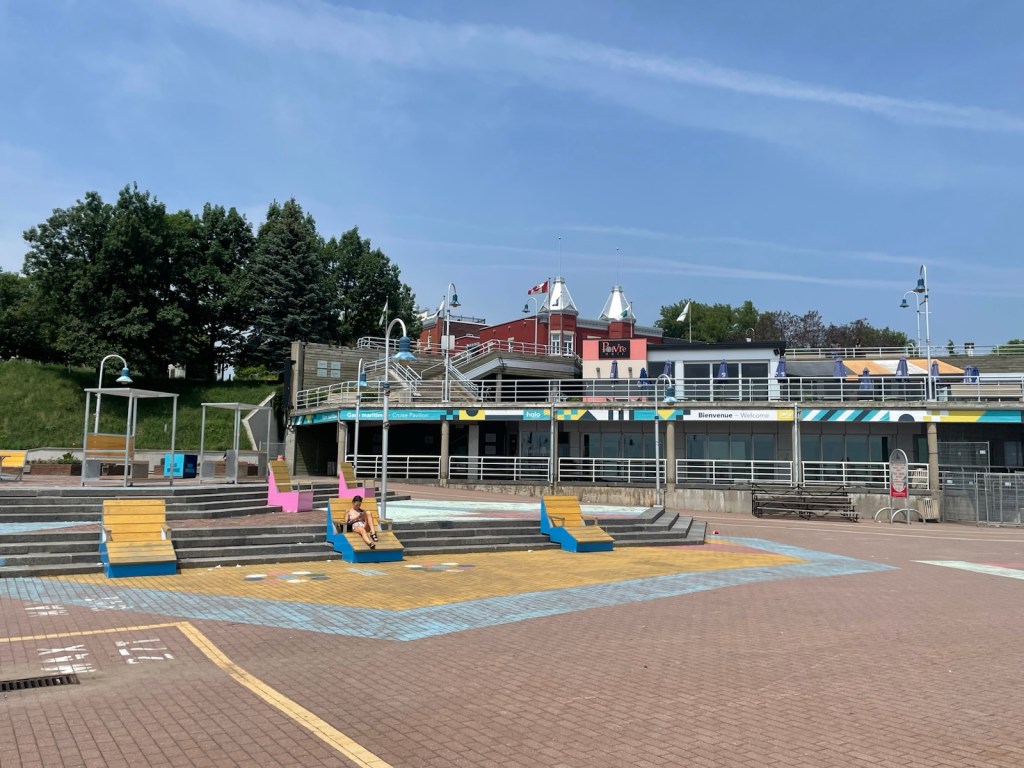
Parc Portuaire in Trois‑Rivières is a charming riverside park situated in the historic Old Town along the St. Lawrence River.
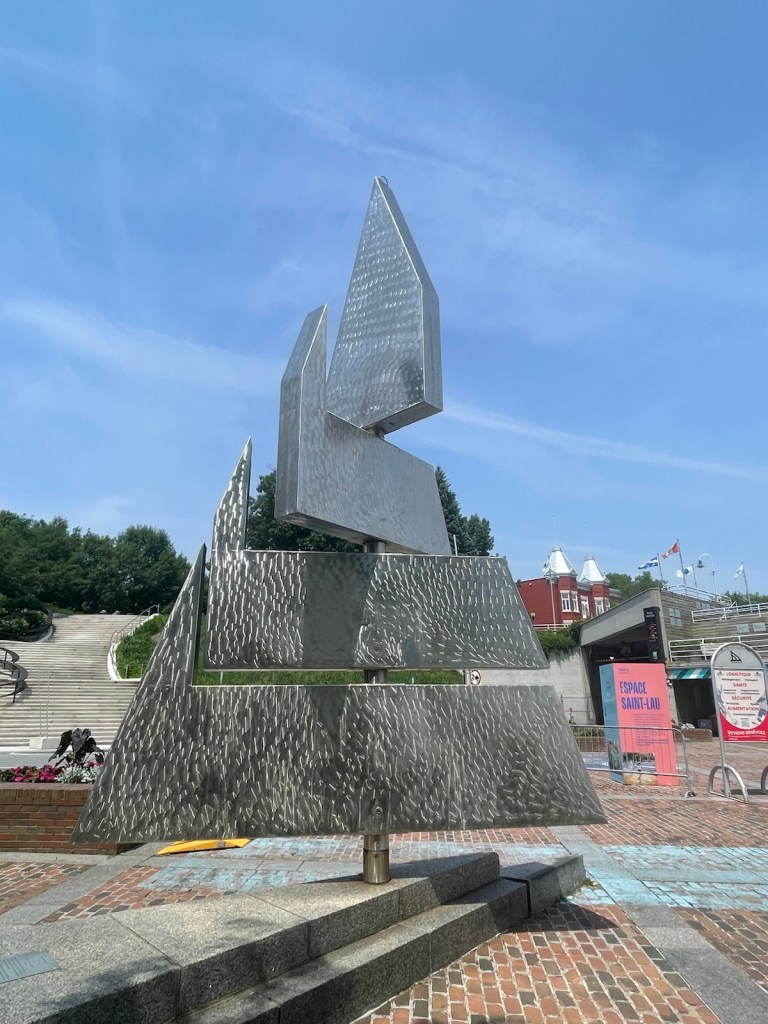
Dominating the riverside promenade, is a whimsical kinetic metal sculpture. Created in 1984 by Jean‑Jacques Besner, its rotating metal panels evoke both conifers and ship sails — reflecting the area’s forestry and maritime heritage.
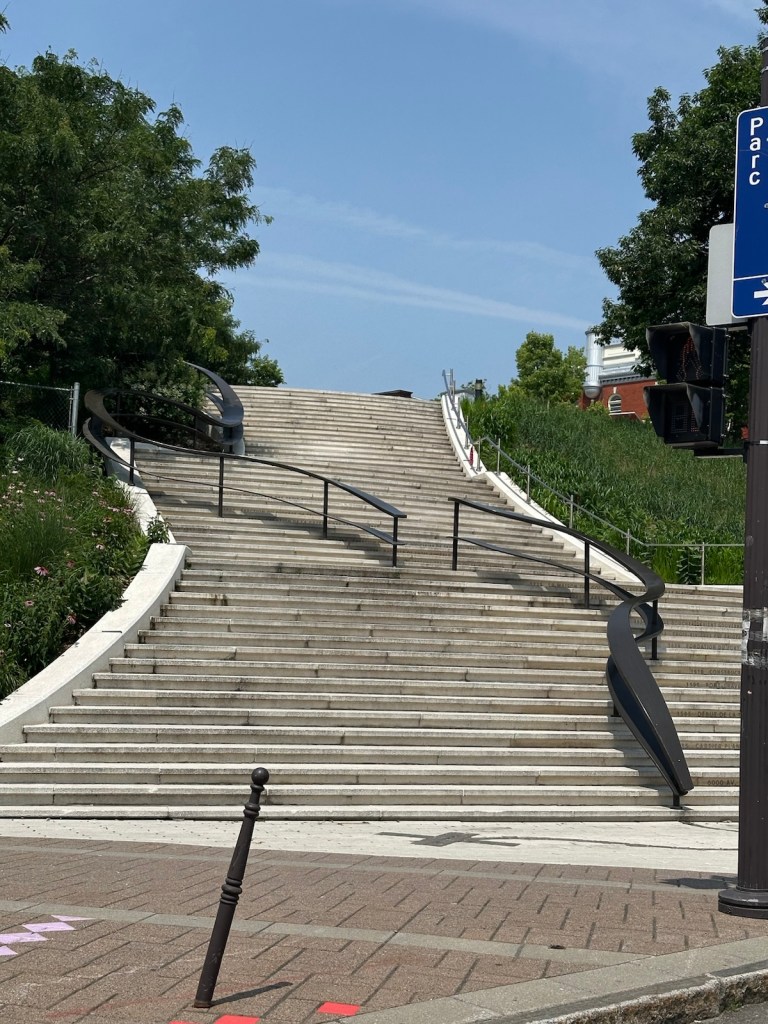
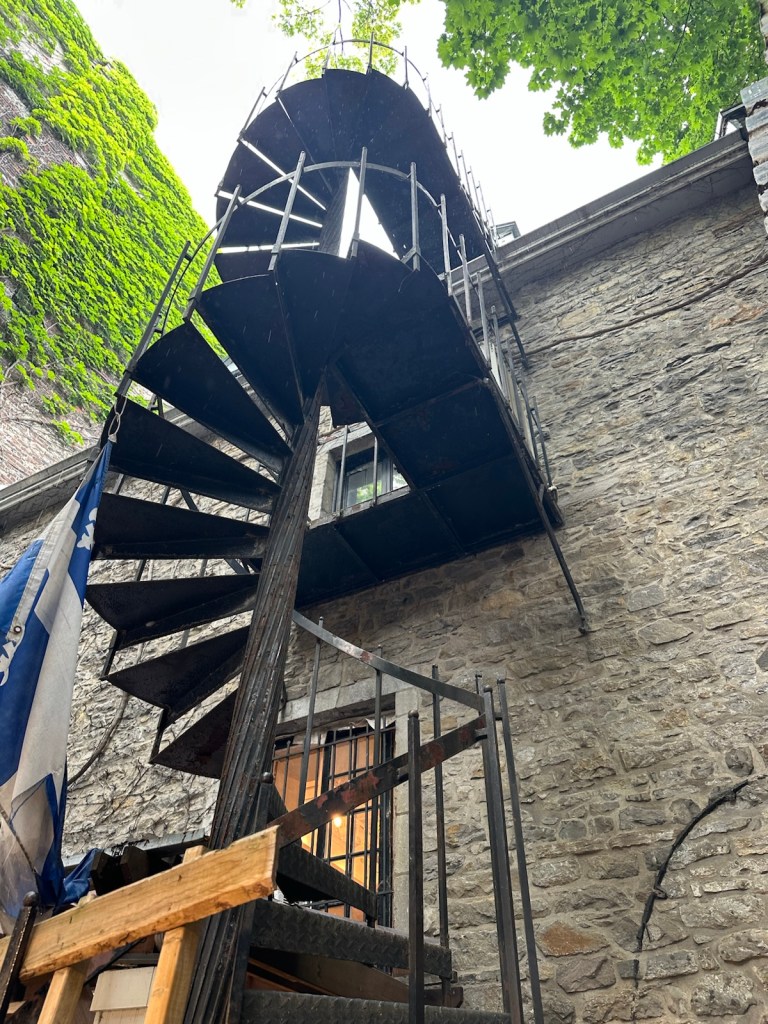
In the historic core of Trois‑Rivières, many stone and brick homes still showcase their original spiral staircases — elegant reminders of French colonial architecture adapting to Quebec’s evolving urban fabric.
These graceful spirals harken back to 19th century building trends across Québec, where exterior stairs were common. Yet when winter arrives, their elegant curves take on a more treacherous twist — locals jokingly refer to them as ‘slippery spirals,’ as ice transforms each graceful step into a cautious adventure.
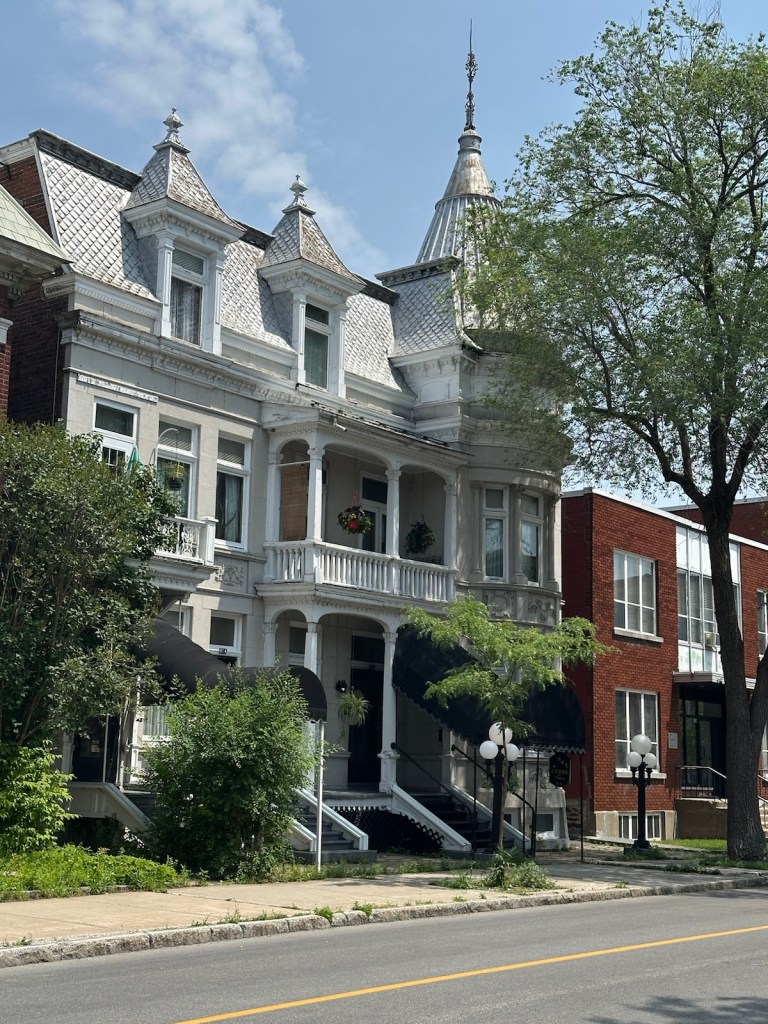
Three Rivers was an absolute gem — and now we’re ready to press on toward our next destination. Back on the road, we could feel our destination drawing nearer with every mile.
Quebec City is a very enchanting city where old-world charm, French culture, and modern Canadian life come together in a cobblestoned, castle-topped setting. As the capital of the province of Québec, it’s a cultural and historic treasure that feels like Europe.
Our accommodations were about a mile from old Quebec City in an apartment above Le 101 Restaurant de Quartiere, a family-owned French-inspired bistro.
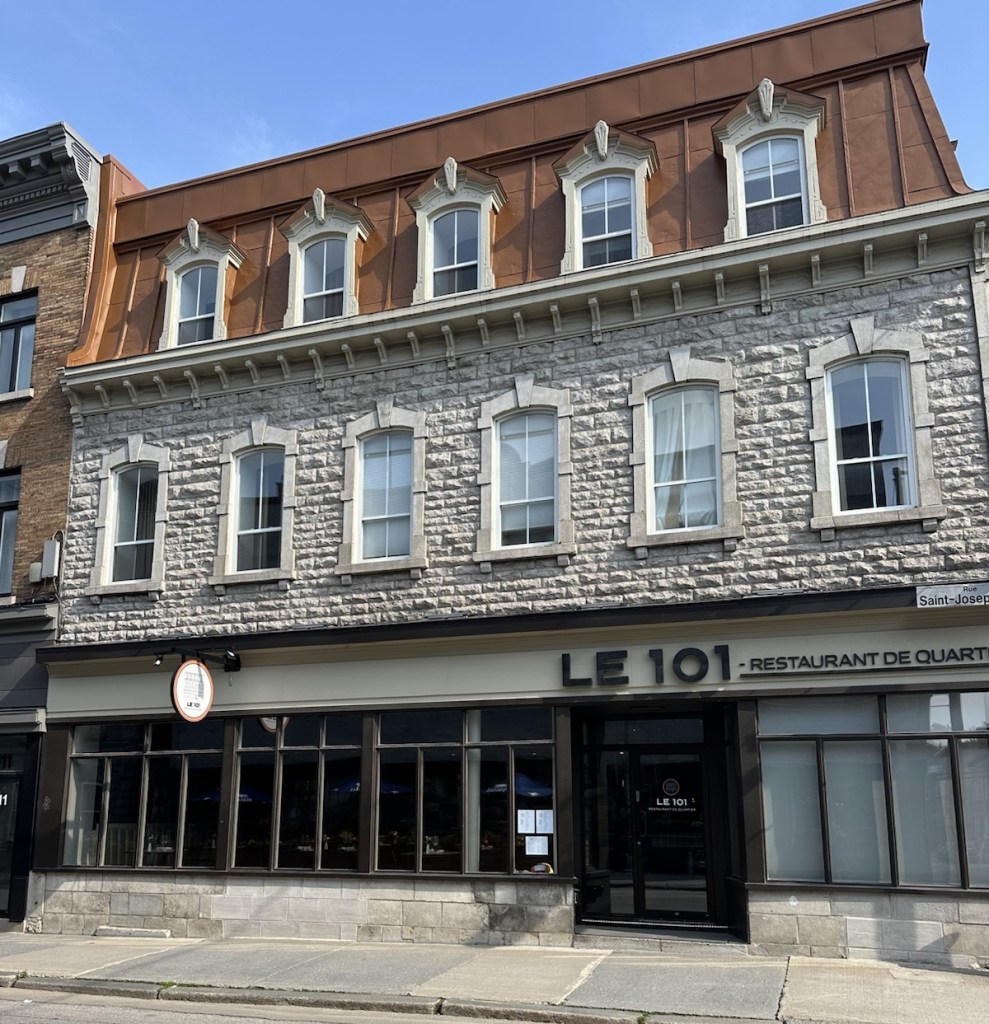
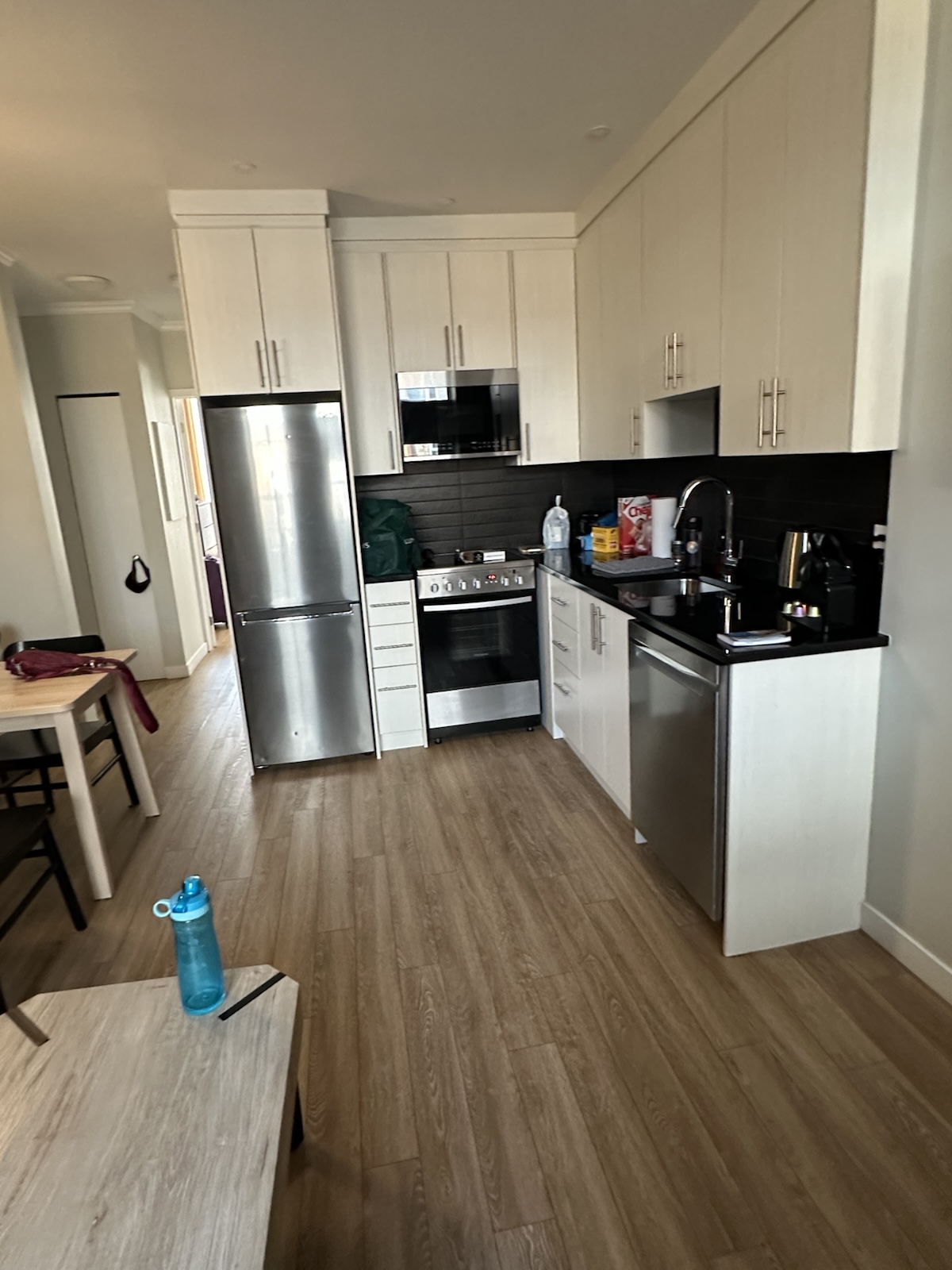
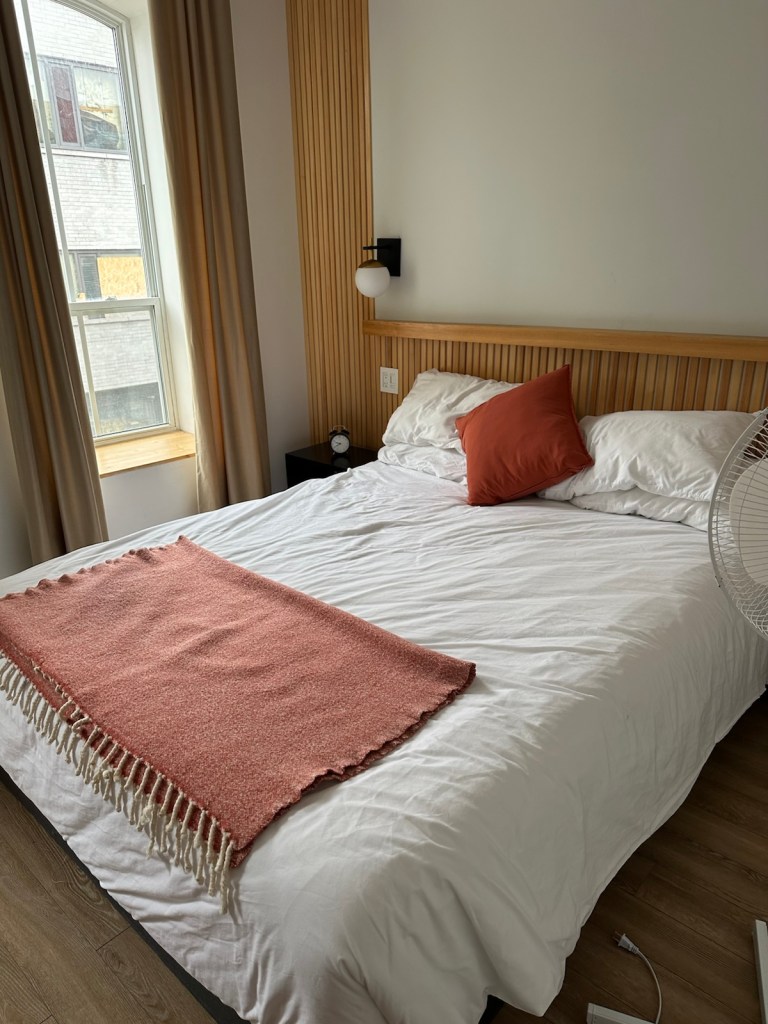
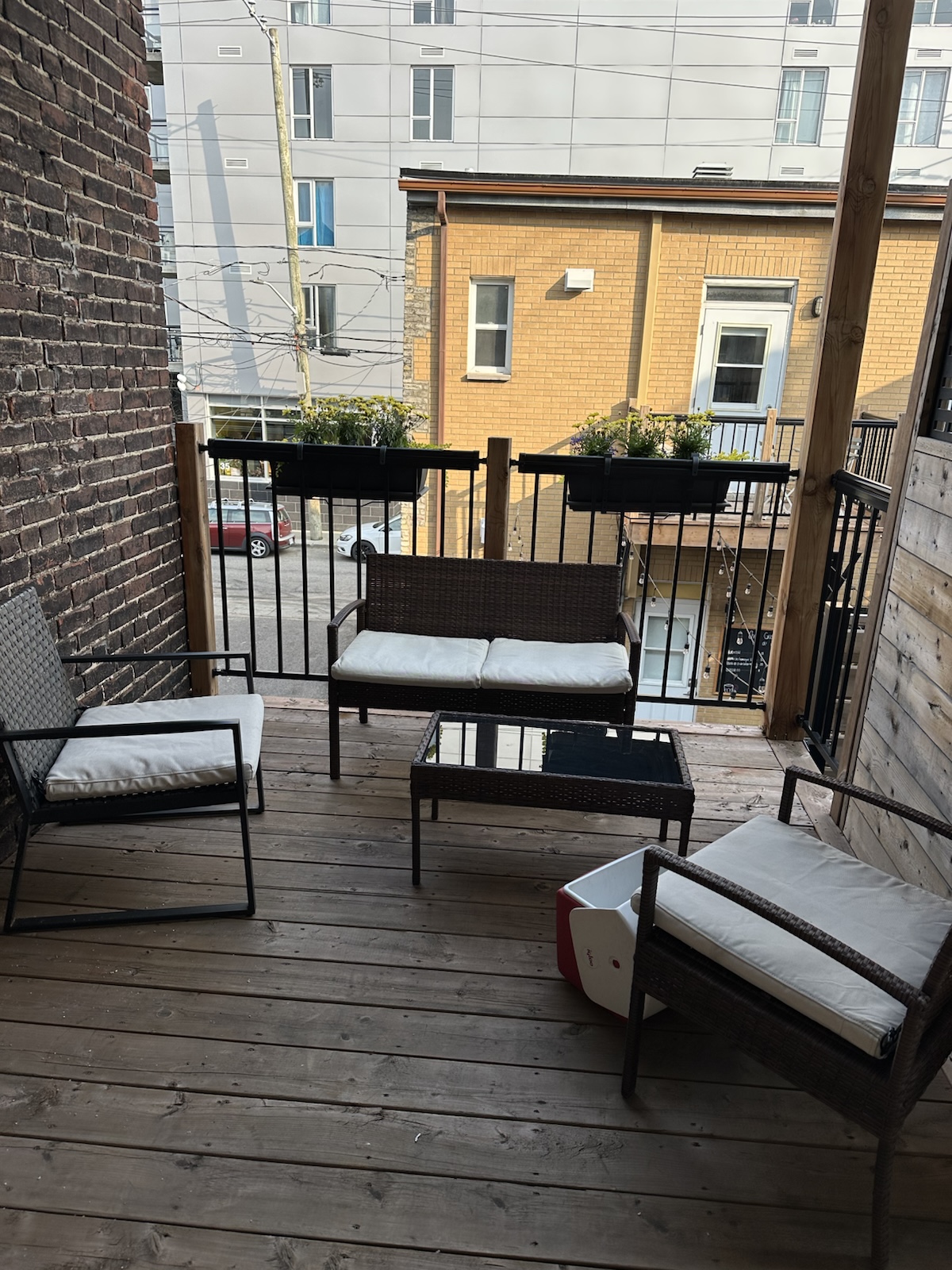
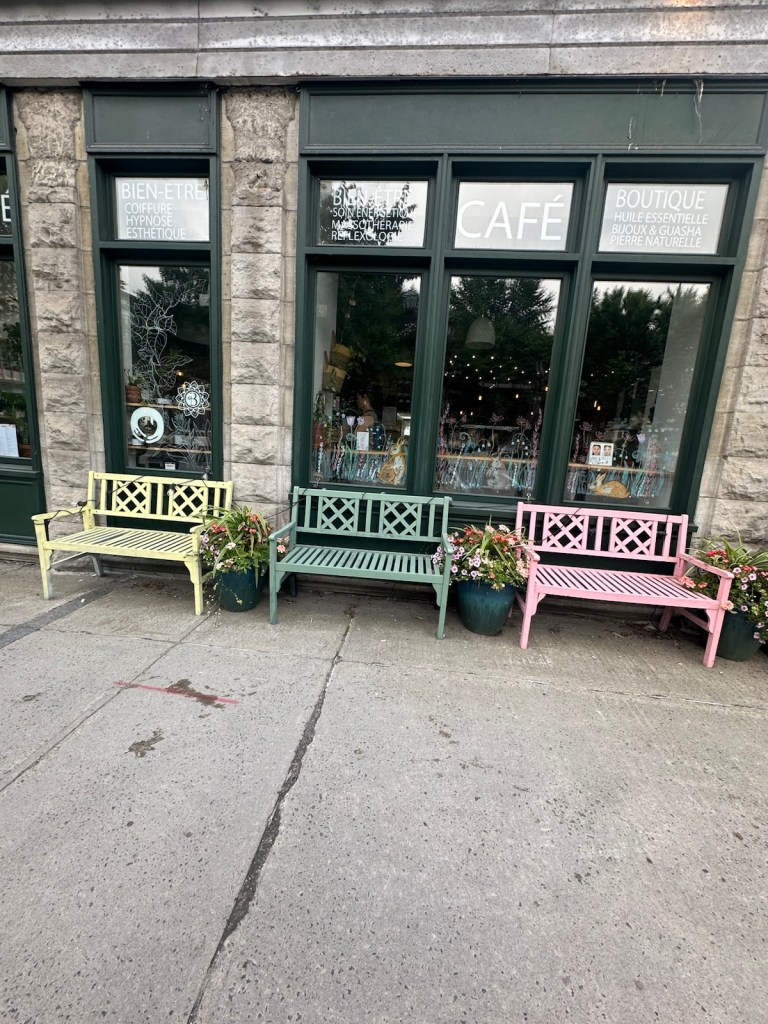
This working-class neighborhood has been reborn as the creative heart of Québec City. After years of decline the neighborhood rebounded dramatically beginning in the 1990s with adaptive reuse of old buildings that added new energy to the streetscape. Saint-Roch is now a creative crossroads where design studios, digital firms, galleries, and cafés coexist in refurbished heritage buildings.
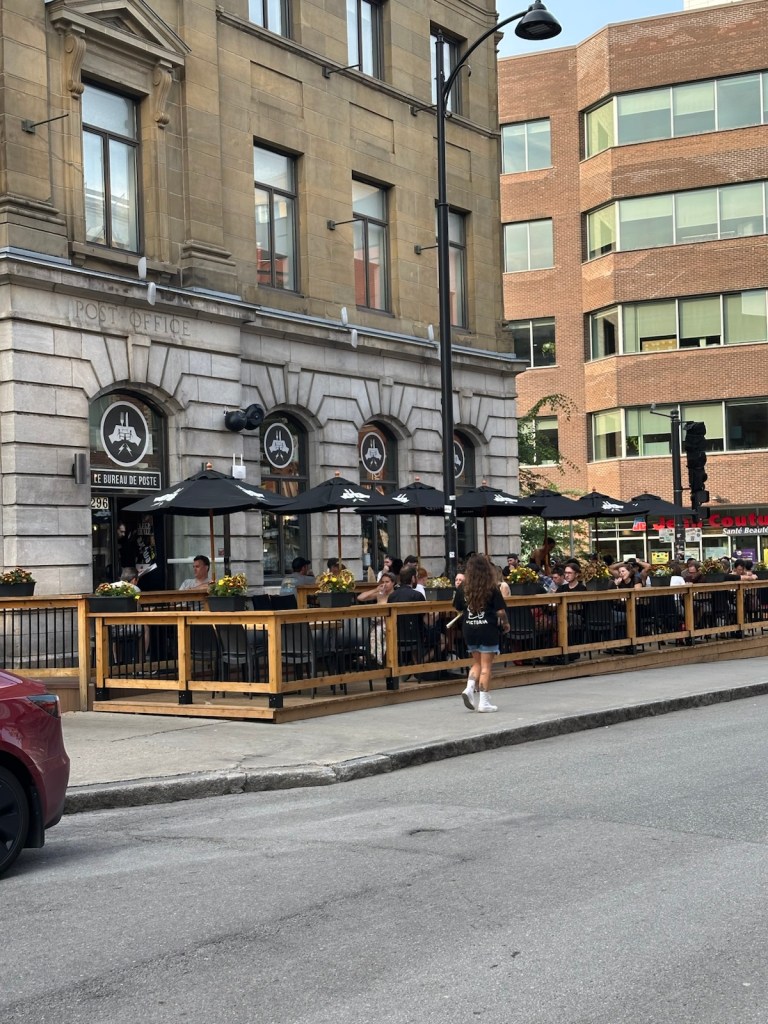
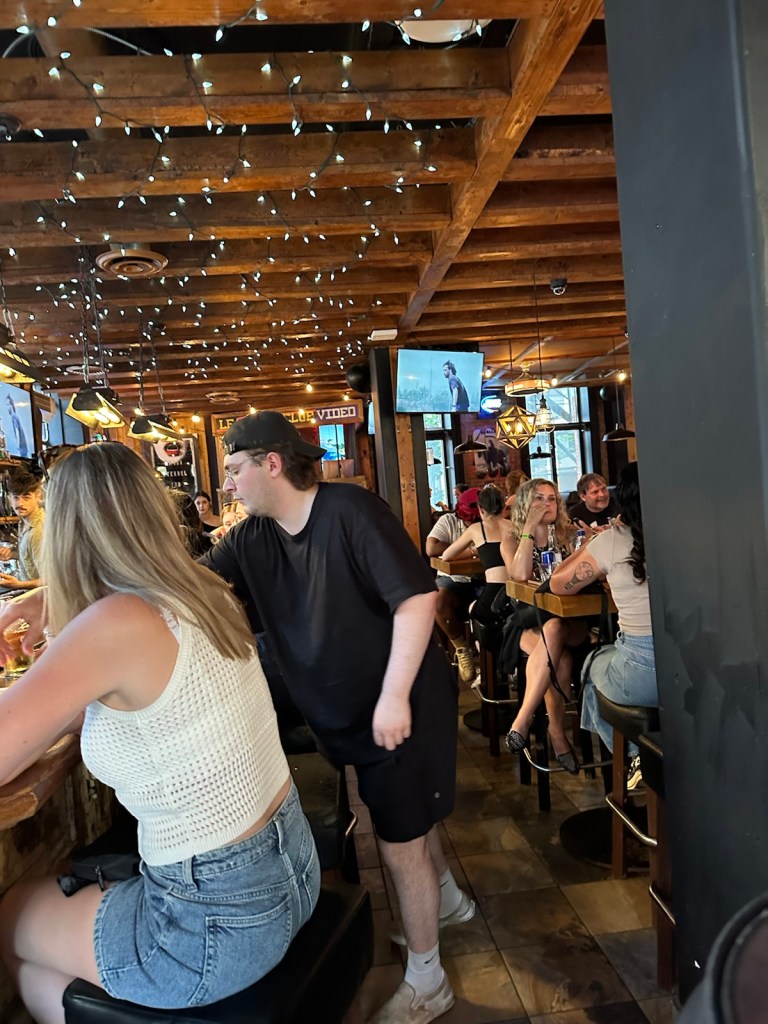
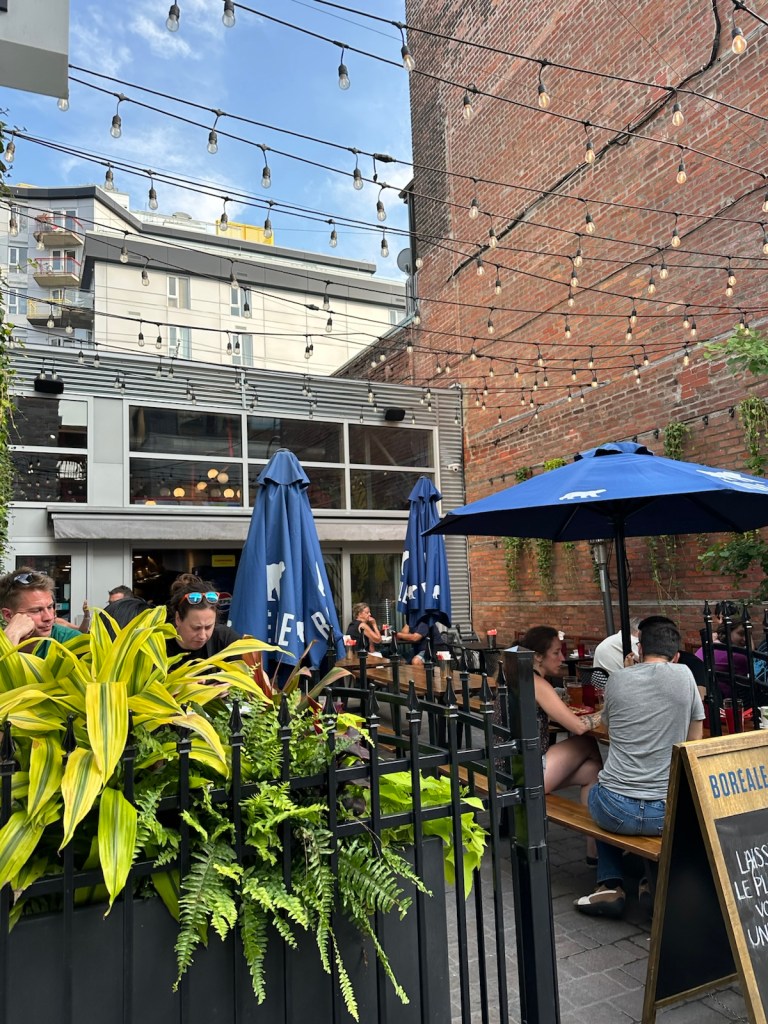
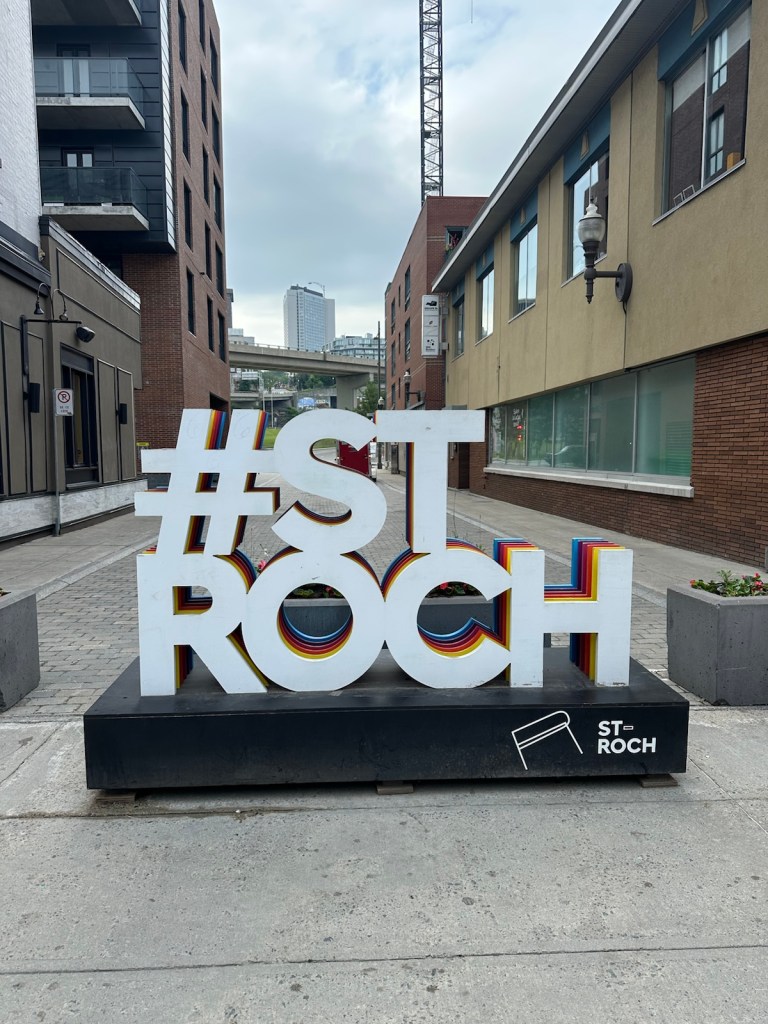
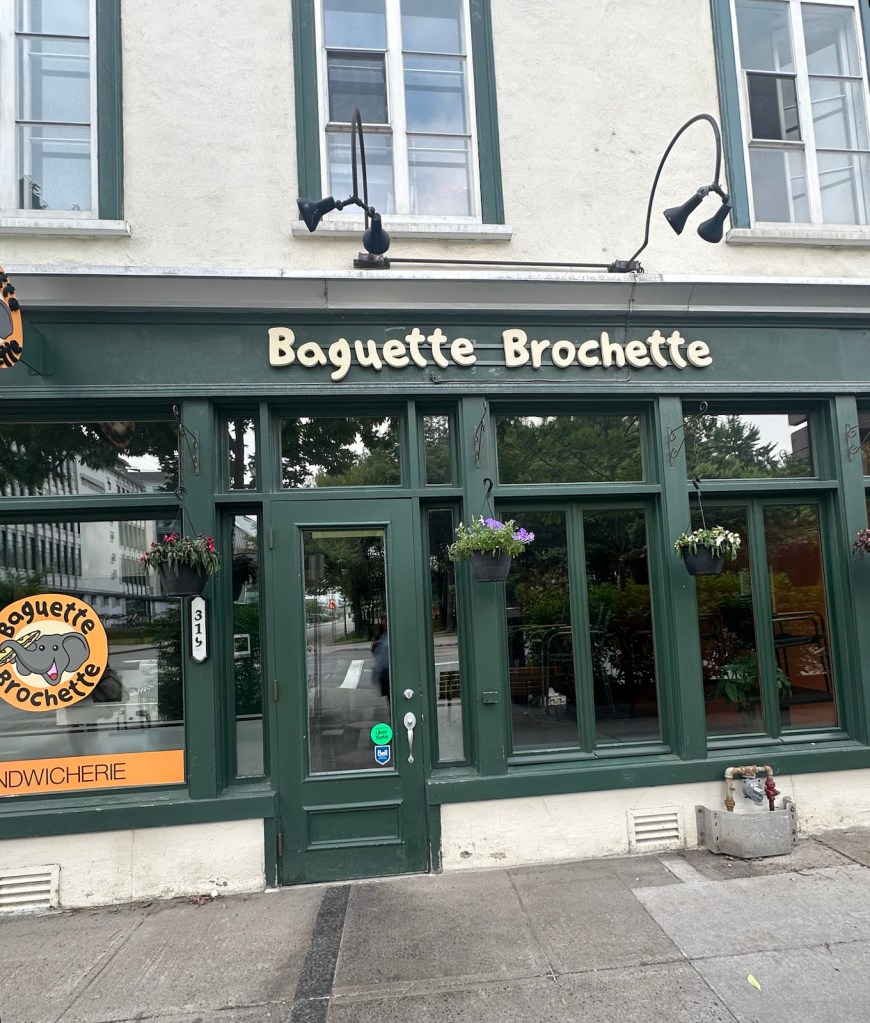
An eclectic mix of shops and local stores contribute to the creative energy of the area. While signs of hardship linger — an occasional person sleeping rough or struggling on the sidewalk — the neighborhood has come a long way in its revitalization. Today, it buzzes with a youthful vibe featuring appealing indie boutiques, microbreweries, and even a couple of Michelin-recognized restaurants.
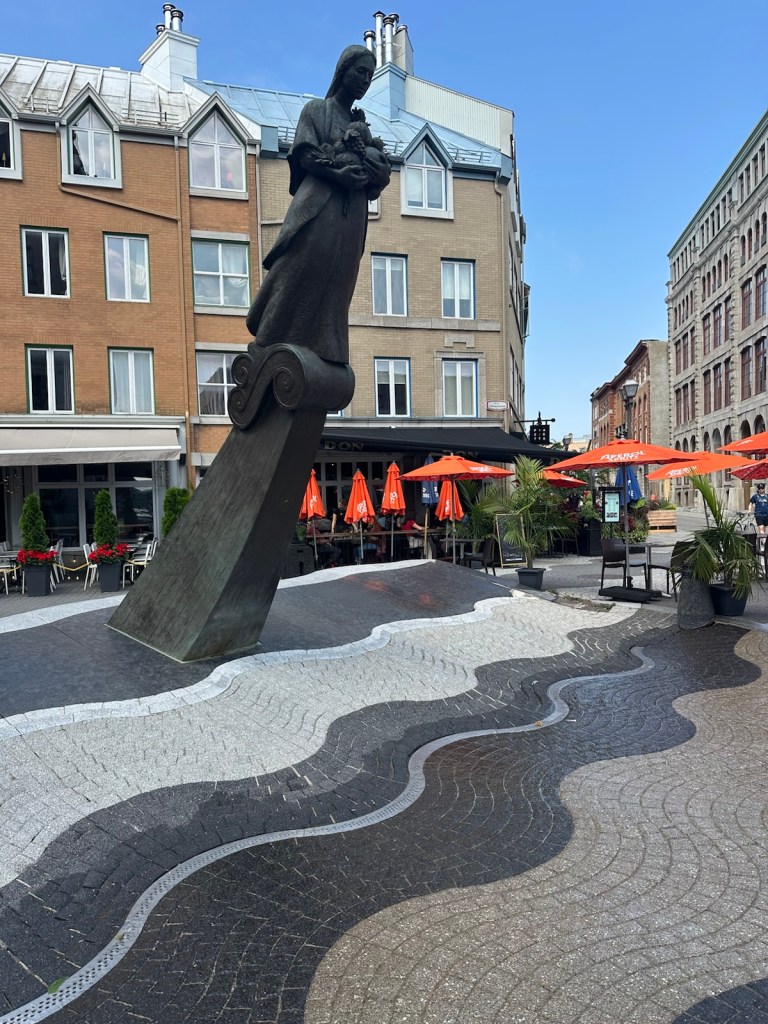
We joined a walking tour that began at the edge of the Saint-Roch district, where it meets Old Québec’s Lower Town. Nearby is a striking bronze statue called La Vivrière. Poised atop a pedestal, the woman cradles an armful of fruits and vegetables. Our guide explained that her graceful yet steadfast posture symbolizes both strength and serenity — as if she’s a guardian of nourishment. Modeled after a ship’s figurehead, the sculpture also pays tribute to Québec’s deep maritime roots.
Beneath the statue, the ground is tiled with wavy, flowing lines, giving the illusion of water. A small stream of real water flows through this feature, turning the space into a symbolic riverbank. At one time, the St. Lawrence River reached this very spot before land reclamation expanded the shoreline outward.
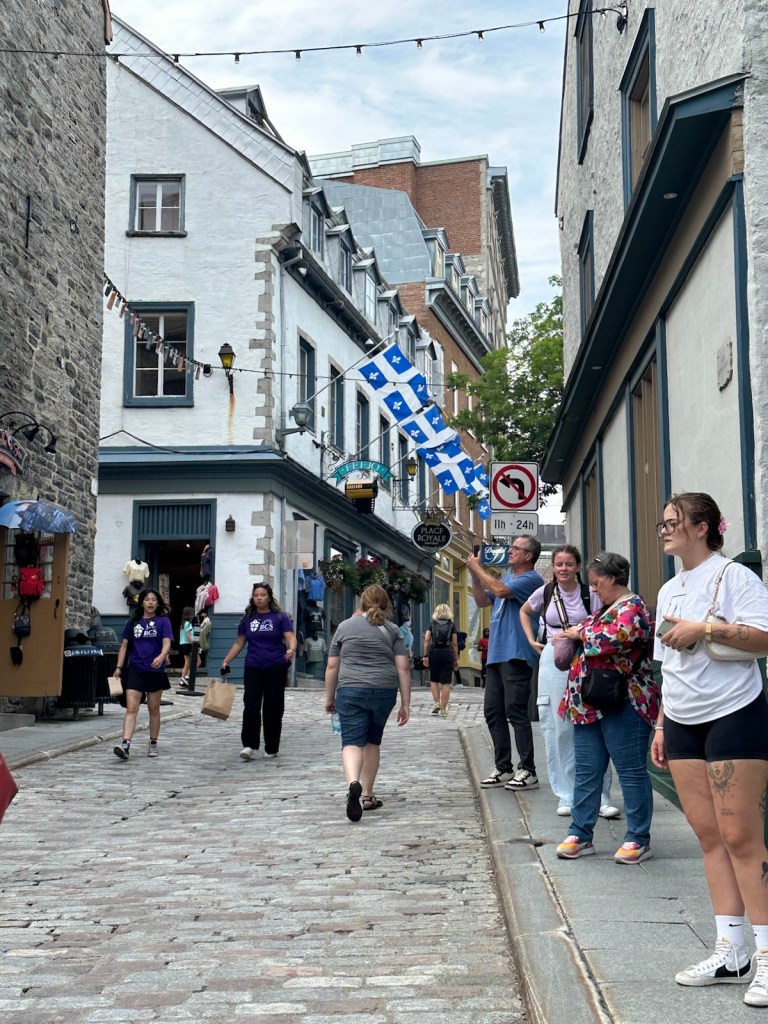
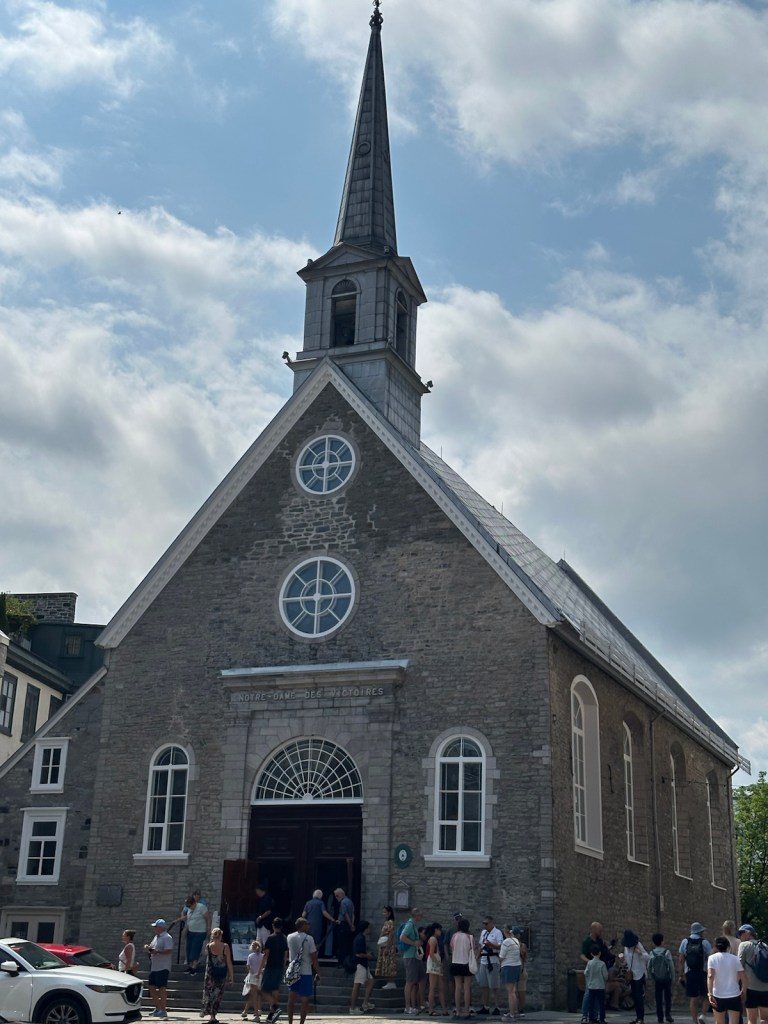
The tour wandered through the city’s historic heart. Our guide led us through a charming square called Place-Royale.
She told us about an outdoor art installation called Cement Eclipses. It features 45 miniature cement sculptures of urbanites often perched on ledges, tucked into wall corners, or along façades. These tiny figures blend so seamlessly that they’re hard to spot. It makes you want to look more closely at their surroundings.

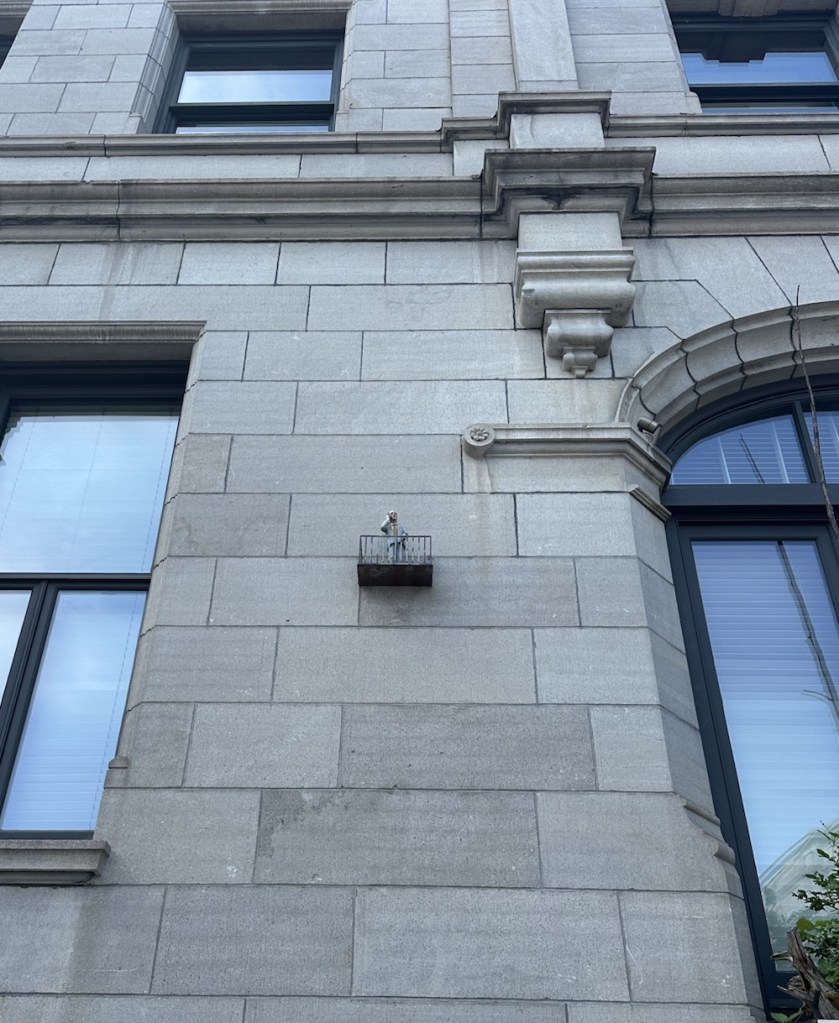
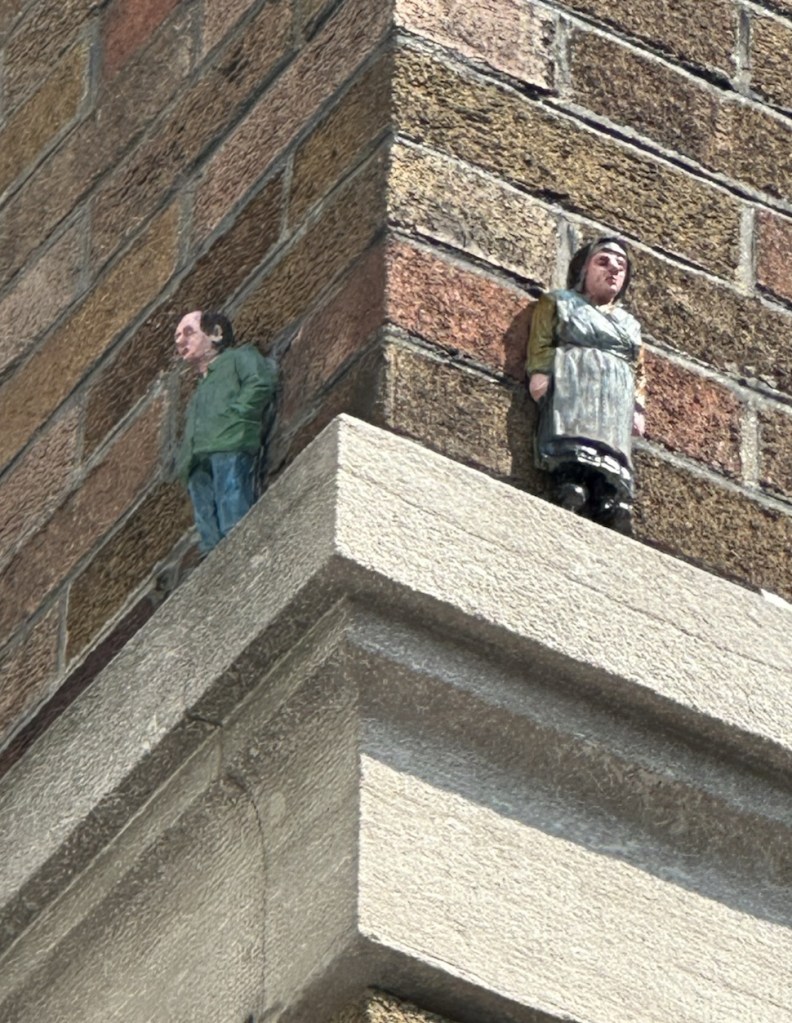
Hunting for the Cement Eclipse figures encourages a closer look at the forgotten corners and quiet details of Old Quebec’s historic buildings.
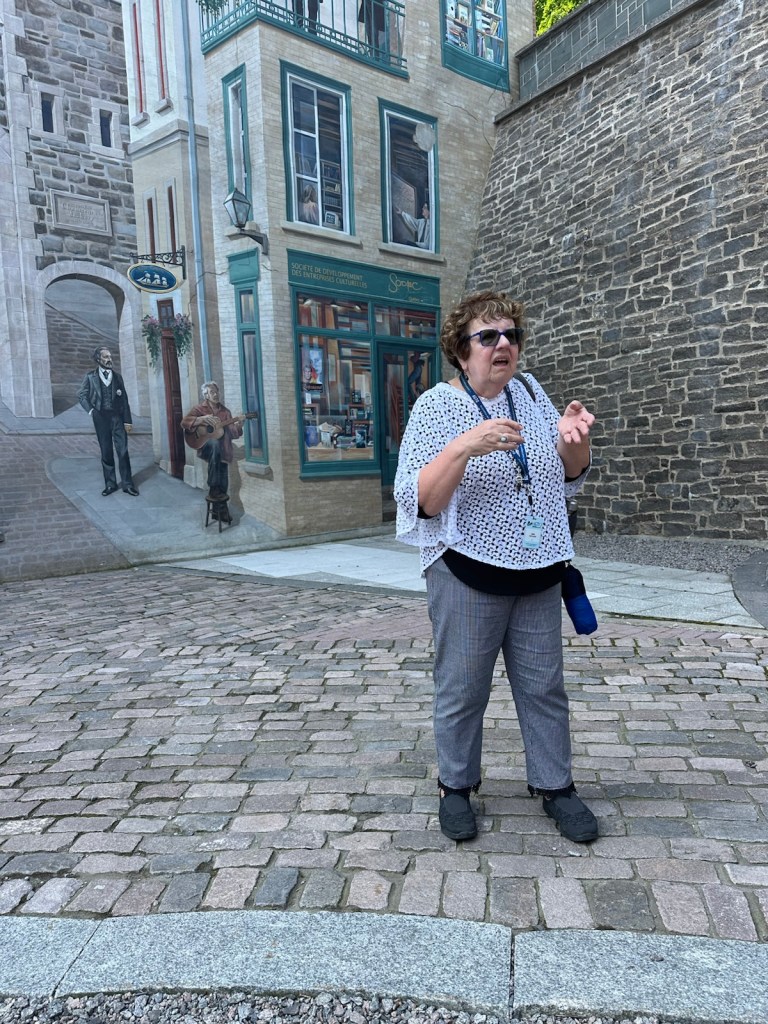
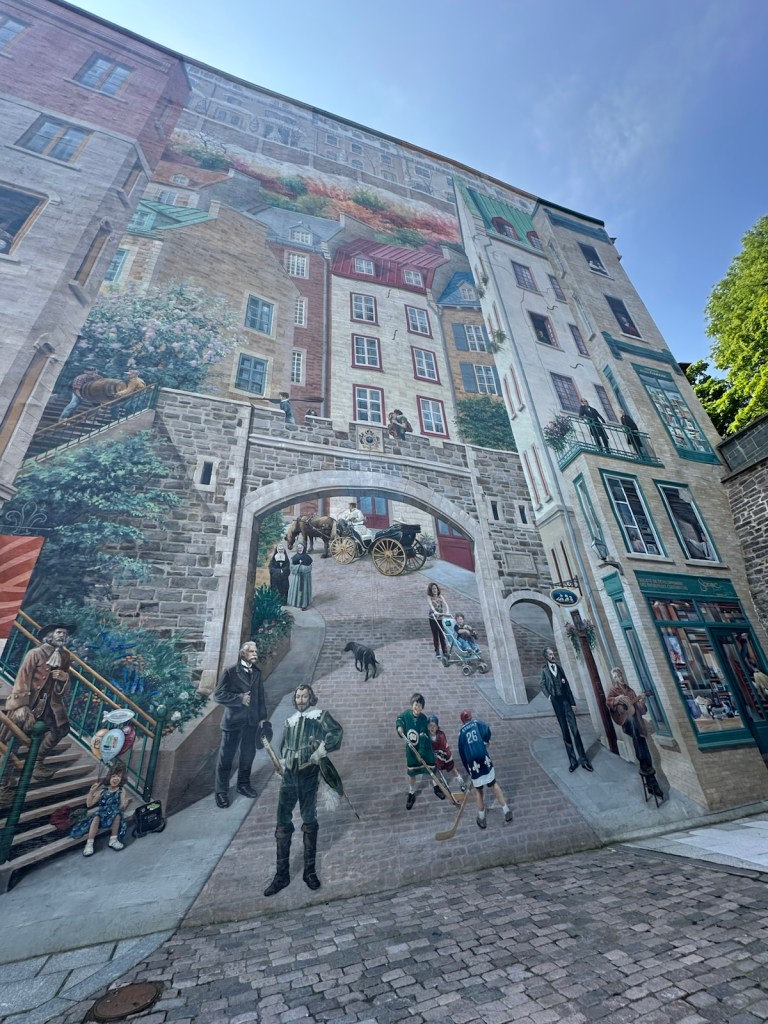
Our guide spent a bit of time telling us about La Fresque des Québécois, a stunning mural that stretches across the side of a three-story historic building. She pointed out its many intricate details — a vivid historical panorama capturing 400 years of Quebec City’s evolution, from its architecture and fortifications to scenes of daily life. It’s a captivating fusion of art, history, and illusion that draws you in the more closely you look.
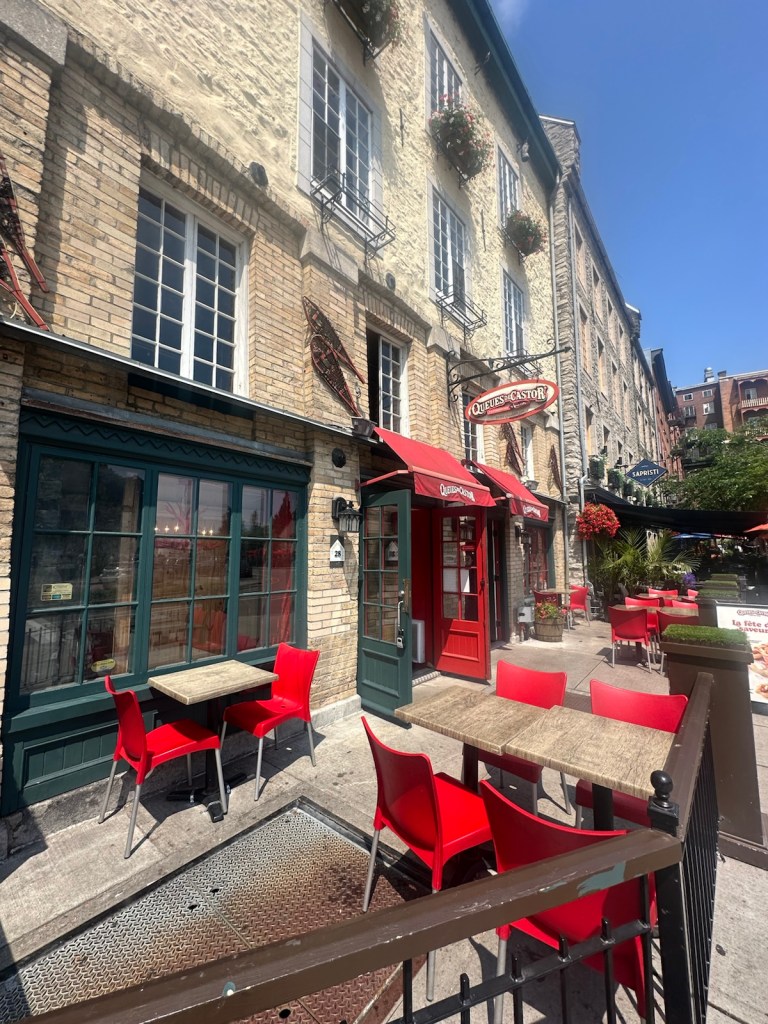
We strolled into the Lower Town area which is also called Basse-Ville which has a more intimate, storybook charm. Nestled along the riverbank, it features narrow alleys, stone warehouses, cozy cafés, and vibrant boutiques.

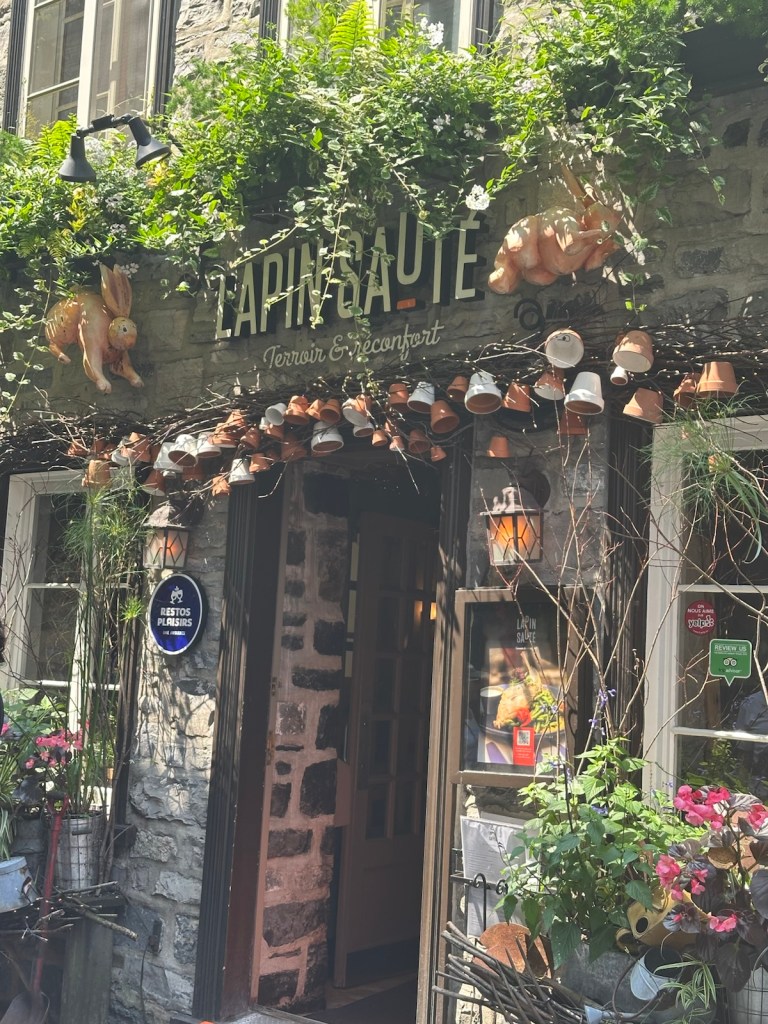
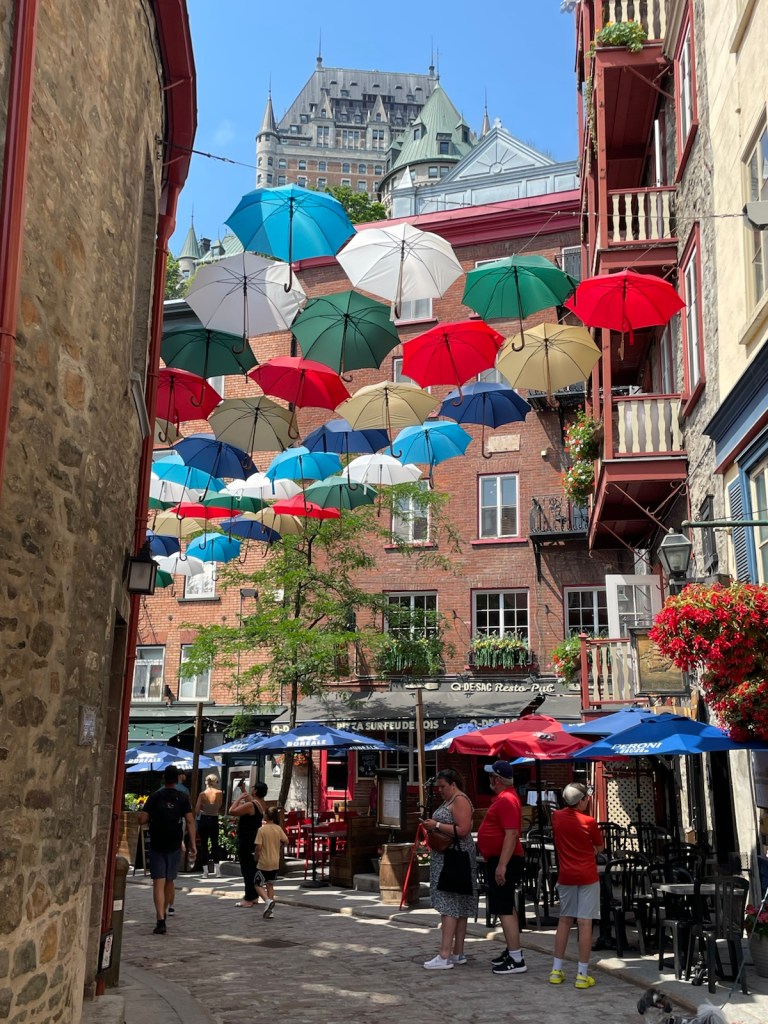
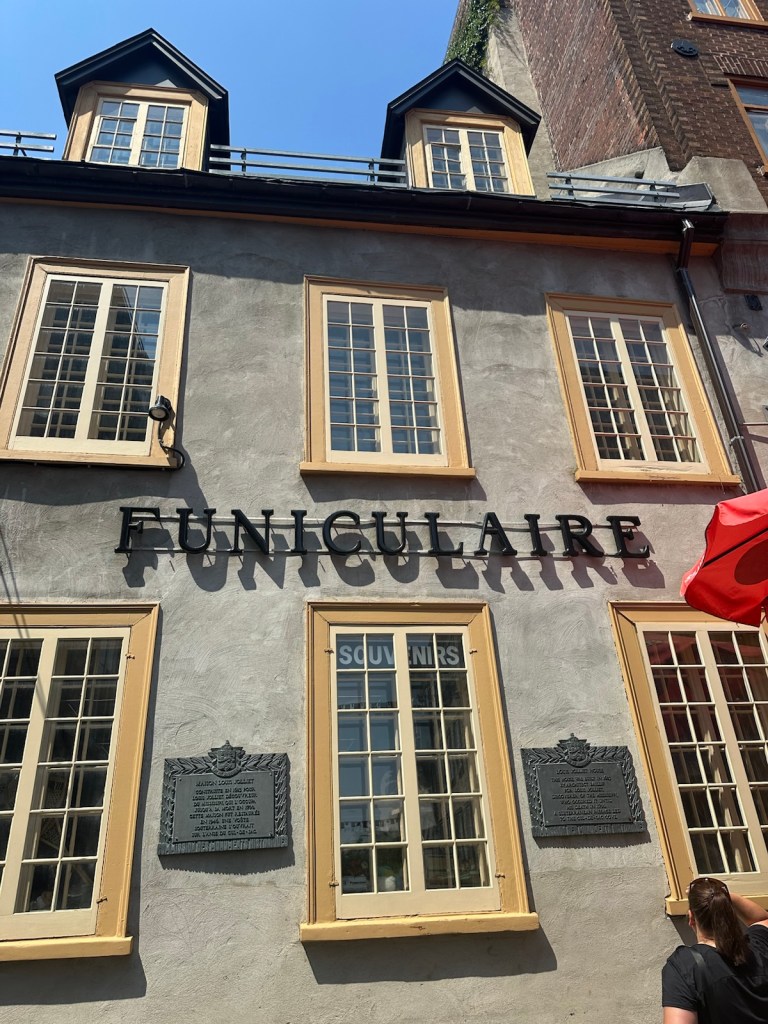
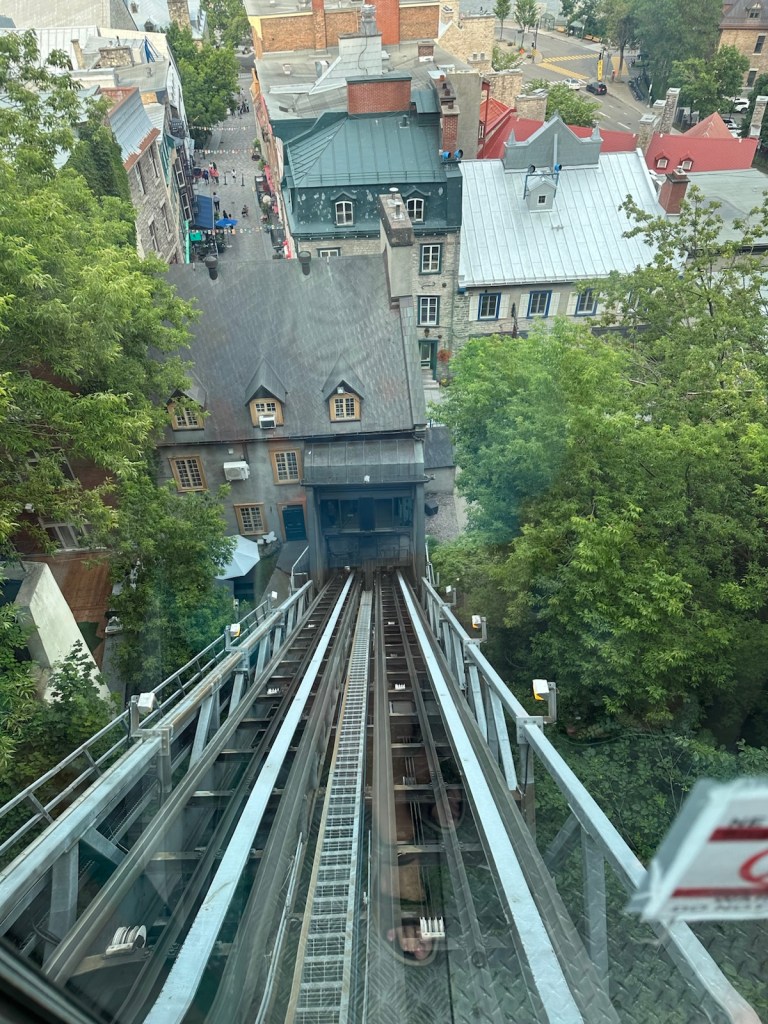
Next stop is Upper Town also known as Haute Ville. The two neighborhoods are linked by steep staircases and winding streets — they are also connected by the charming funicular — a short glass cabin ride that offers great views as it glides up the cliffside
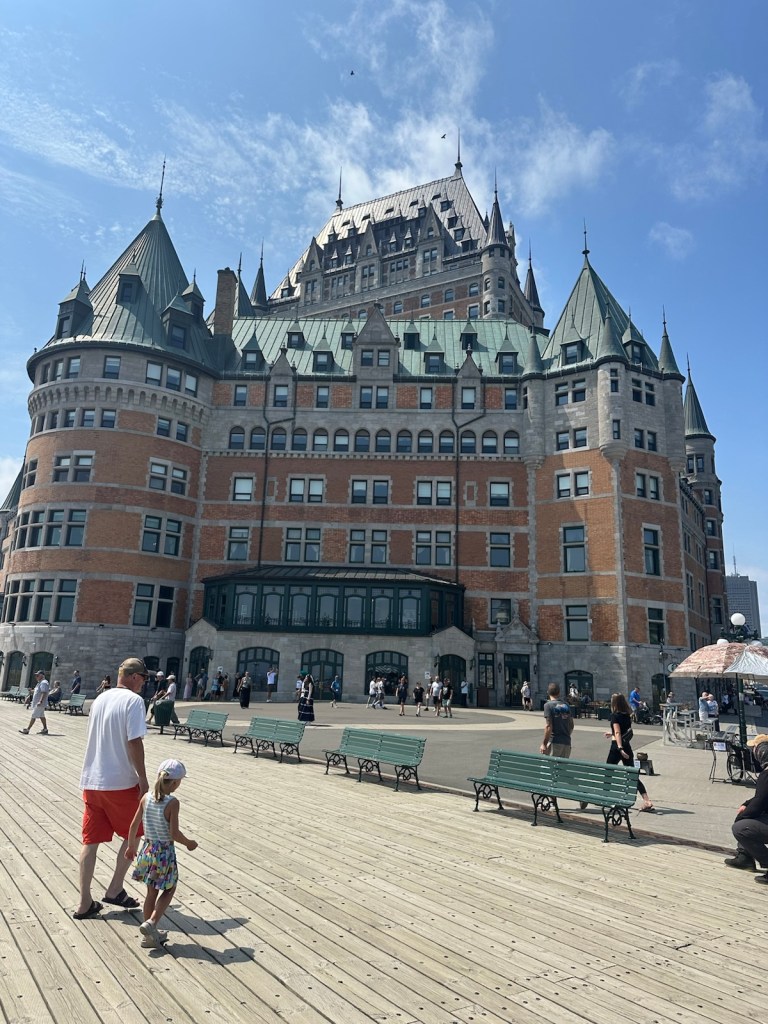
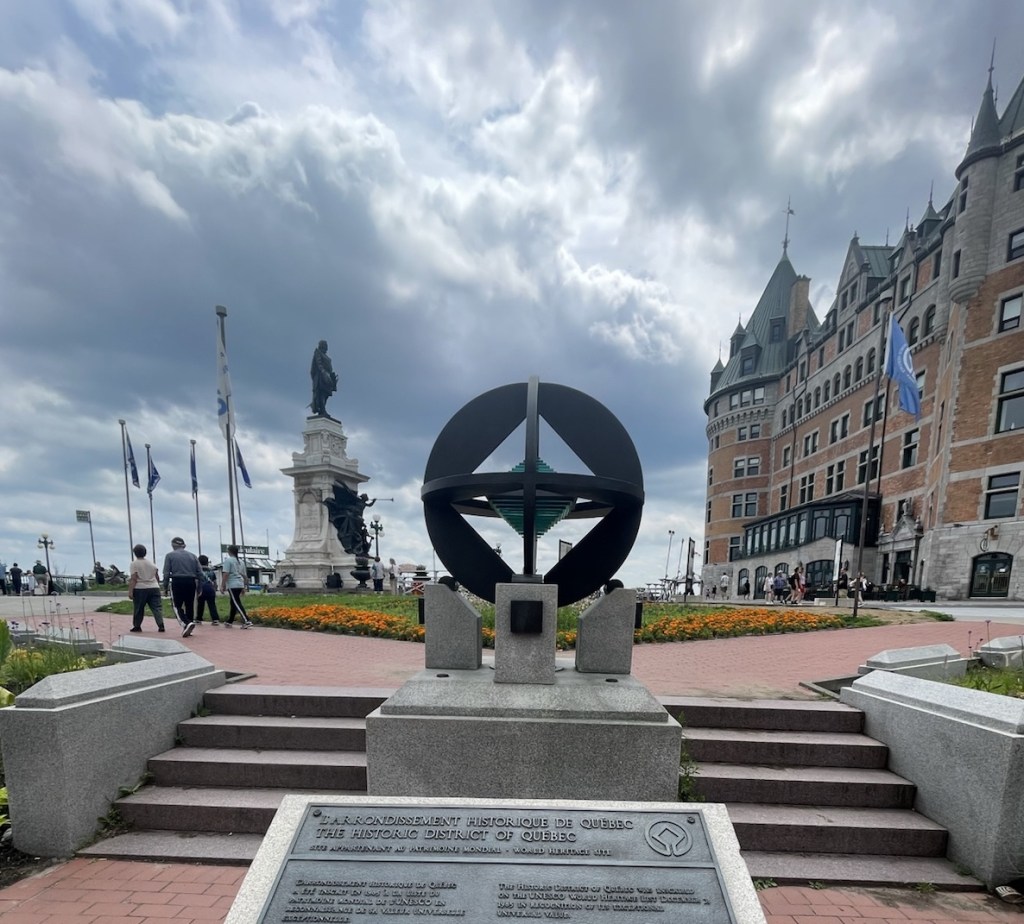
The most outstanding sight in upper town is Château Frontenac — a grand, castle-like hotel perched high above the St. Lawrence River. Opened in 1893, it’s the most photographed hotel in the world and a symbol of the city’s old-world charm.
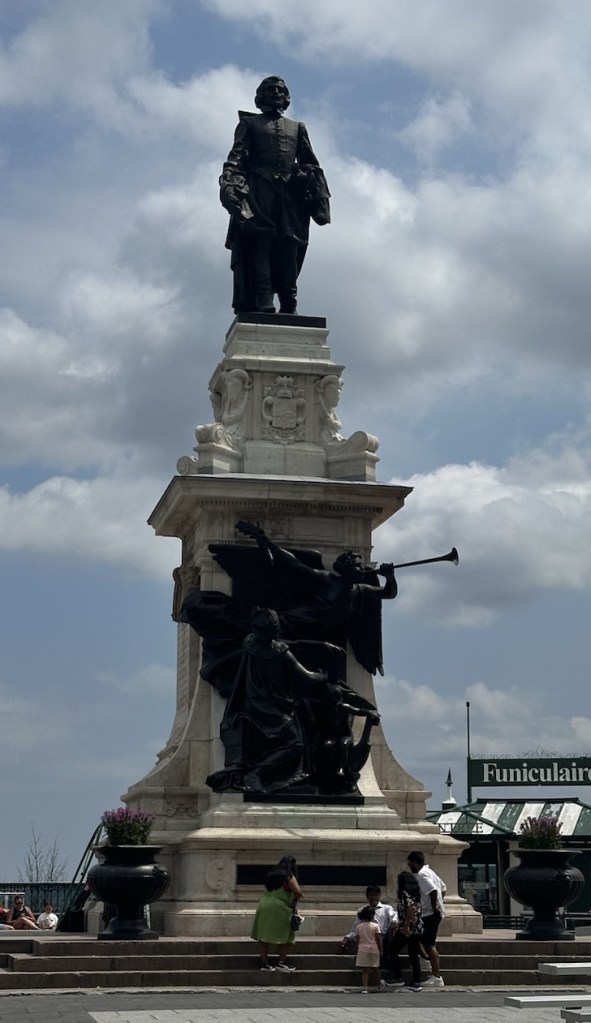
The statue of Samuel de Champlain stands proudly at the top of the funicular, offering a grand and symbolic welcome to Québec’s historic Upper Town. As the founder of the city, his presence here feels both fitting and timeless.
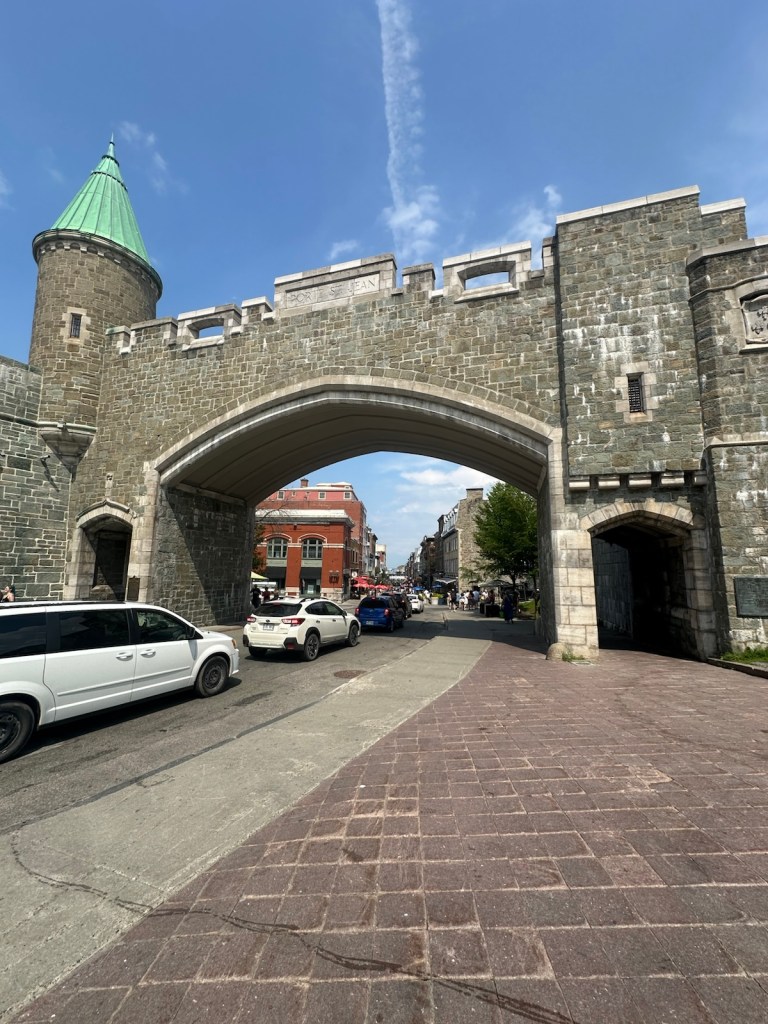
Encircling it all is the Fortified Wall, the only remaining city wall north of Mexico. Built by the French and expanded by the British, it still wraps around Old Québec — a UNESCO World Heritage treasure that makes the city feel like a European time capsule.
Just behind Château Frontenac atop the funicular is a striking round structure known as the UNESCO Monument, located in Parc des Gouverneurs. It is a commemorative tribute to Old Québec being designated a UNESCO World Heritage Site in 1985.
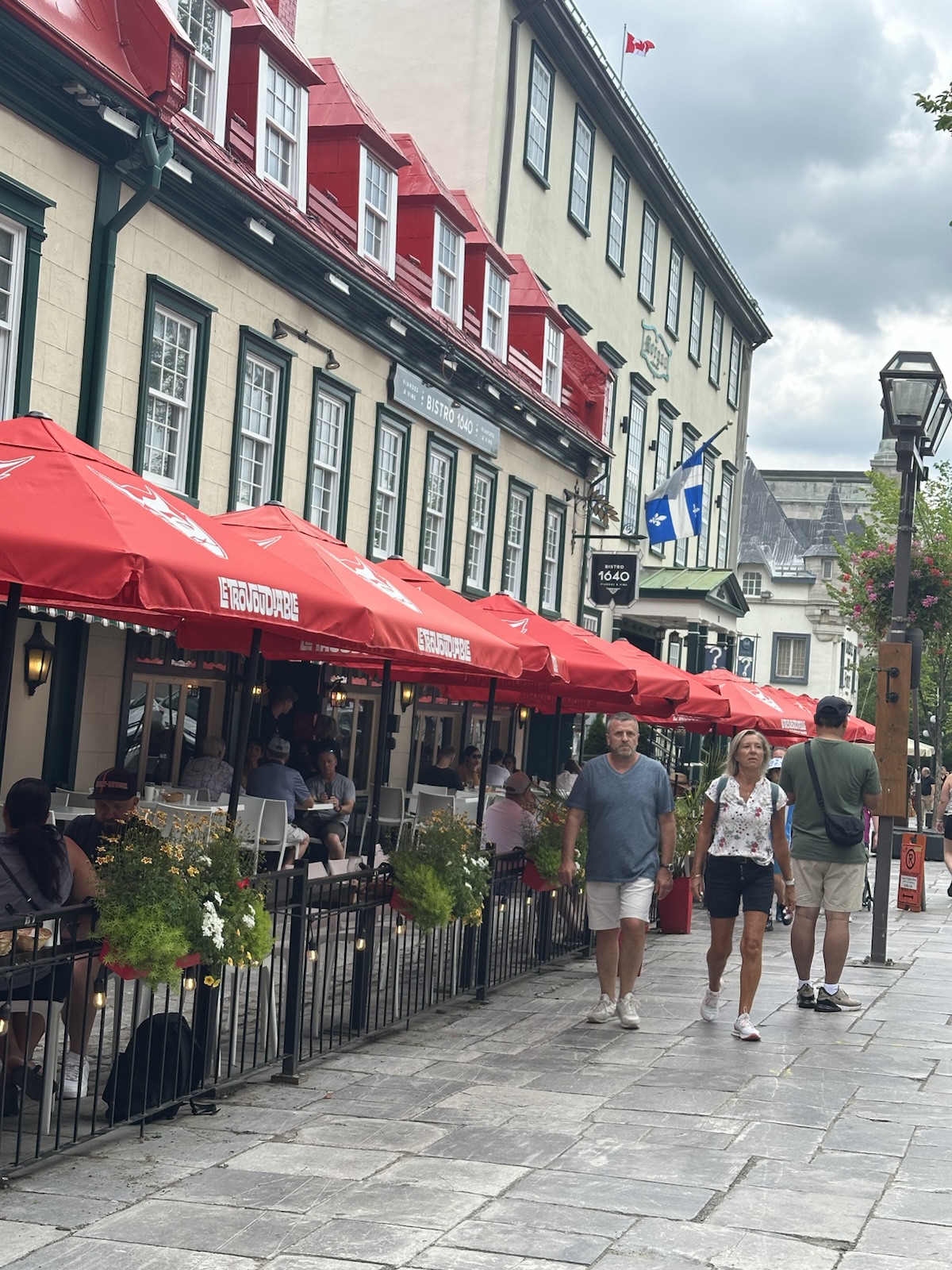
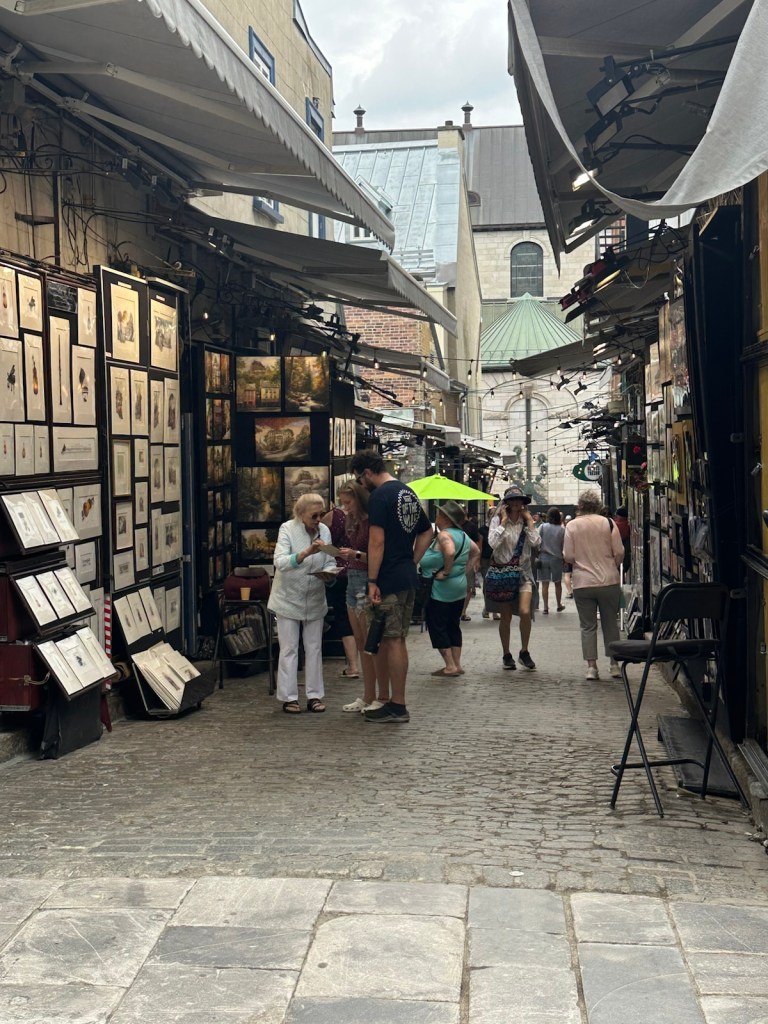
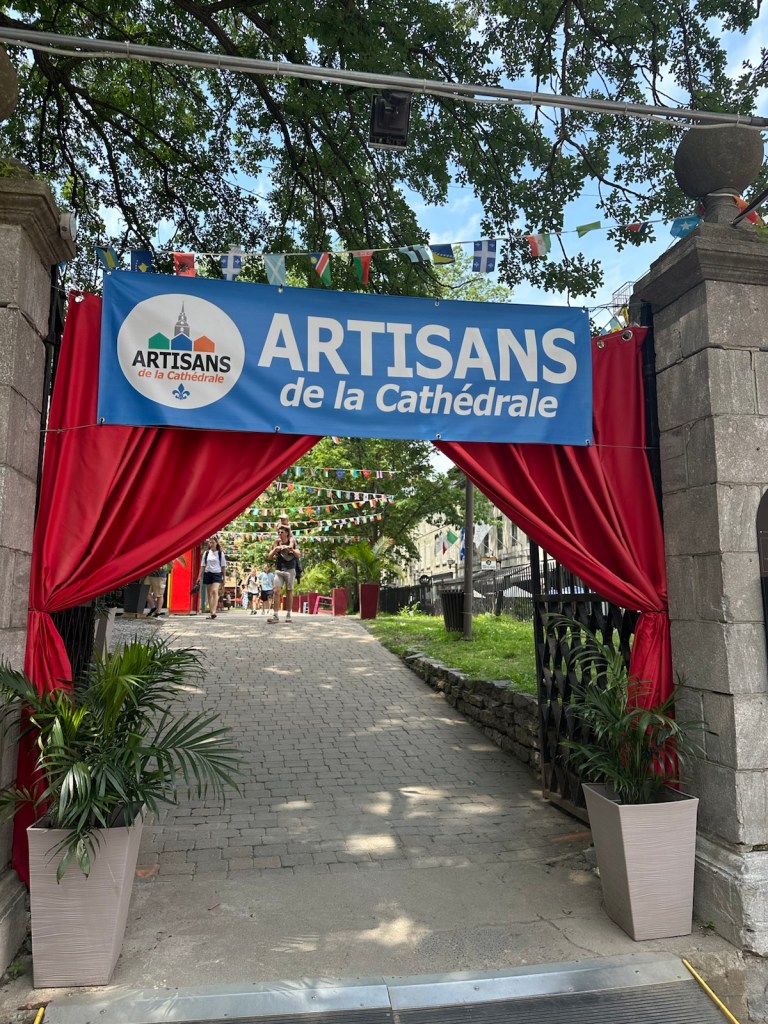
After passing the Château and the grand monuments that mark the entrance to Upper Town, you’ll find yourself surrounded by a vibrant mix of shops, cafés, and restaurants — perfect for wandering, browsing, and tasting your way through the city.
Quebec City has been full of charm, history, and surprises — and we’re just getting started! Stay tuned for more cobblestone adventures and unforgettable sites.
 Jane in Spain