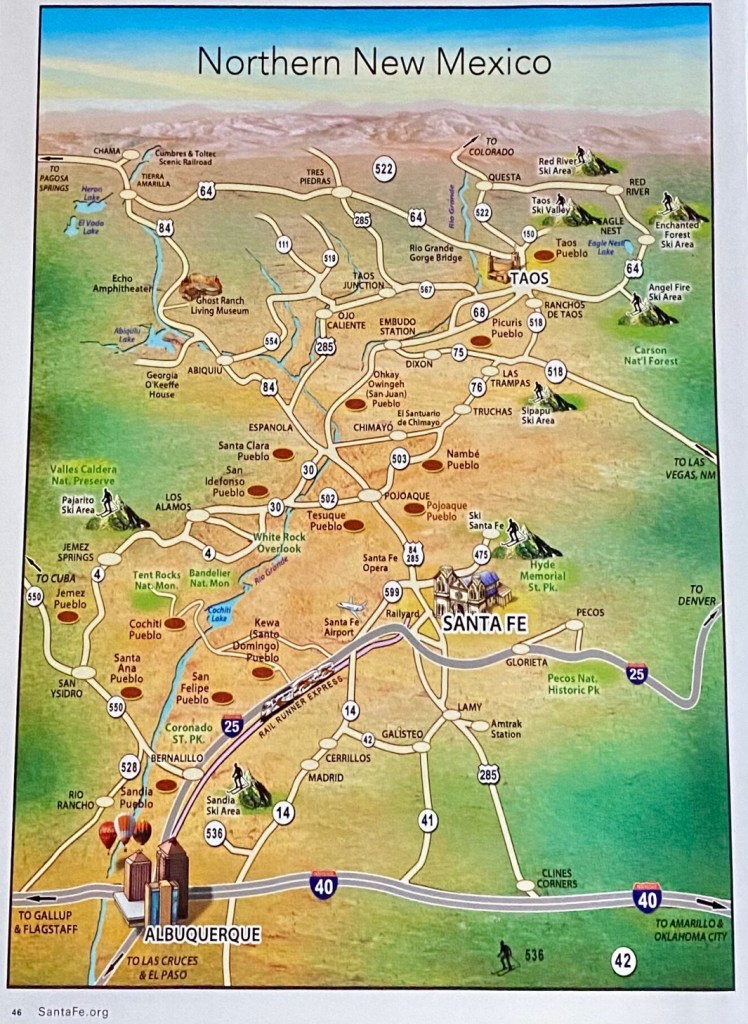
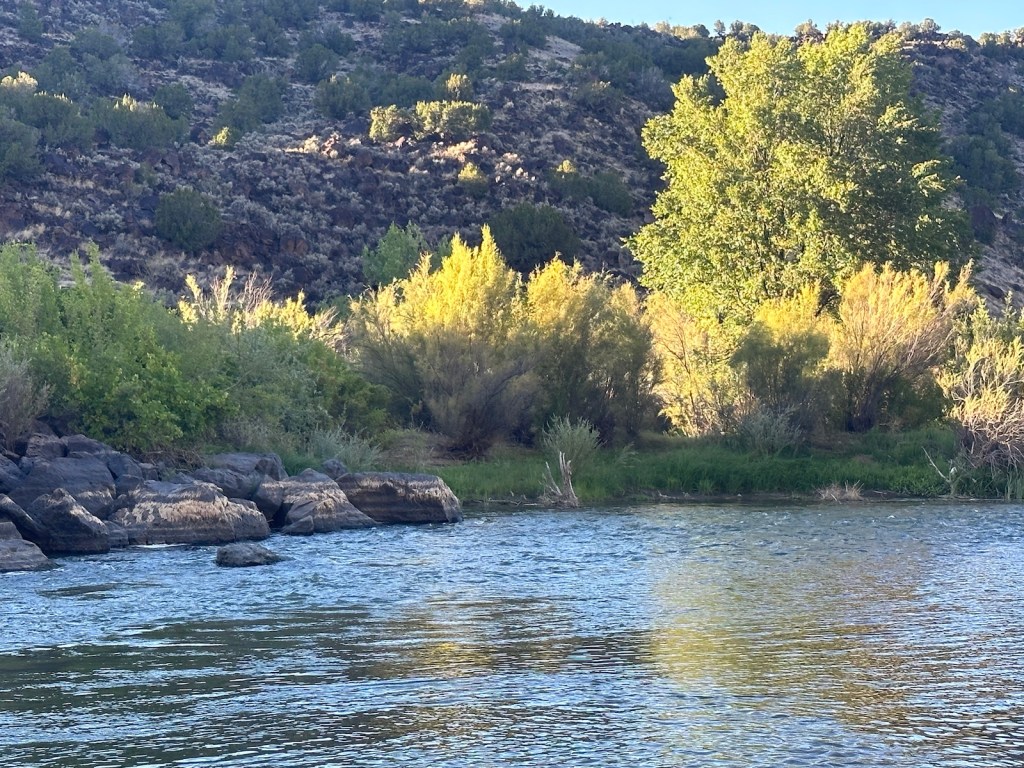
Today’s journey takes us to the spiritual haven of Chimayo on a 56-mile scenic byway called the ‘High Road to Taos.’ It winds through the Sangre de Christo Mountains between Santa Fe and Taos offering alpine views dotted with centuries-old Spanish villages. We returned on the ‘Low Road’ which is a beautiful drive through valleys as it follows along the Rio Grande.
Chimayo has a history that dates back hundreds of years. One of the well known legends is about dirt that comes with a claim of healing abilities. Whether you’re a believer or not, there’s something about the serenity of small churches that makes them inviting. With its thick adobe walls, two bell towers, and six-foot crucifix, the church is considered a prime example of Spanish colonial architecture. But it’s probably best known for the supposedly curative powers of the “holy dirt” that’s found in a side chapel.
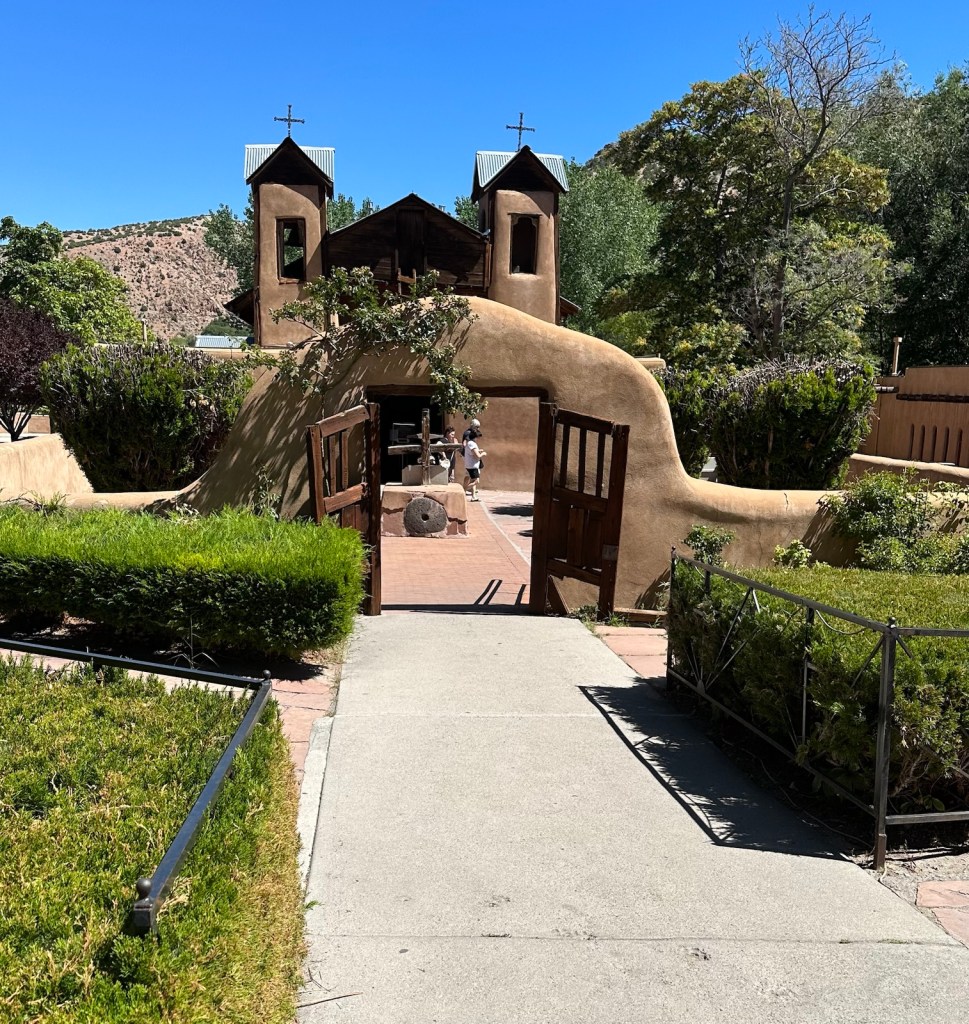
Chimayo legend has it that in 1810 a farmer witnessed light shining from a hillside which was coming from a cross buried in the dirt. After taking the crucifix to a neighboring town, on three separate occasions it went missing, only to be found again in its original location. A chapel was built on that spot and miraculous healings have been attributed to the dirt where the crucifix was found. Now, the church El Santuario de Chimayo is a National Historic Landmark with ‘Holy Dirt’ being sought by thousands of people each year making this site the “Lourdes of North America.”
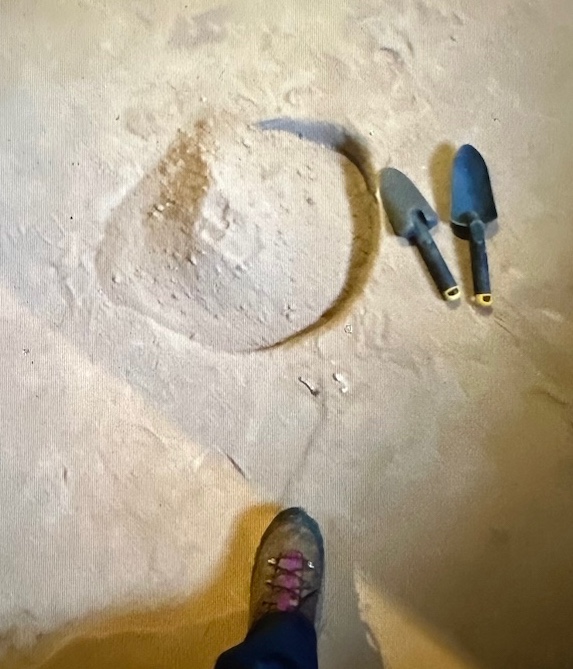
The Pueblo Indians have inhabited the Chimayo area since the 12th century — long before the initial Spanish conquest of New Mexico. The Pueblo Indians believed that they shared their land with supernatural beings. The natives thought the healing spirits were to be found in the form of hot springs, which ultimately dried up leaving the healing earth. The Pueblo and Tewa used the site of El Santuario de Chimayo for healing long before Spanish occupation.
Supposedly, the small pit of holy dirt is the spot where the crucifix was found and where an ancient pool of mud used by the Indians stored healing powers. Although both the crucifix and the mud have been lost to time, the hole is now filled with Chimayo dirt that has been blessed.
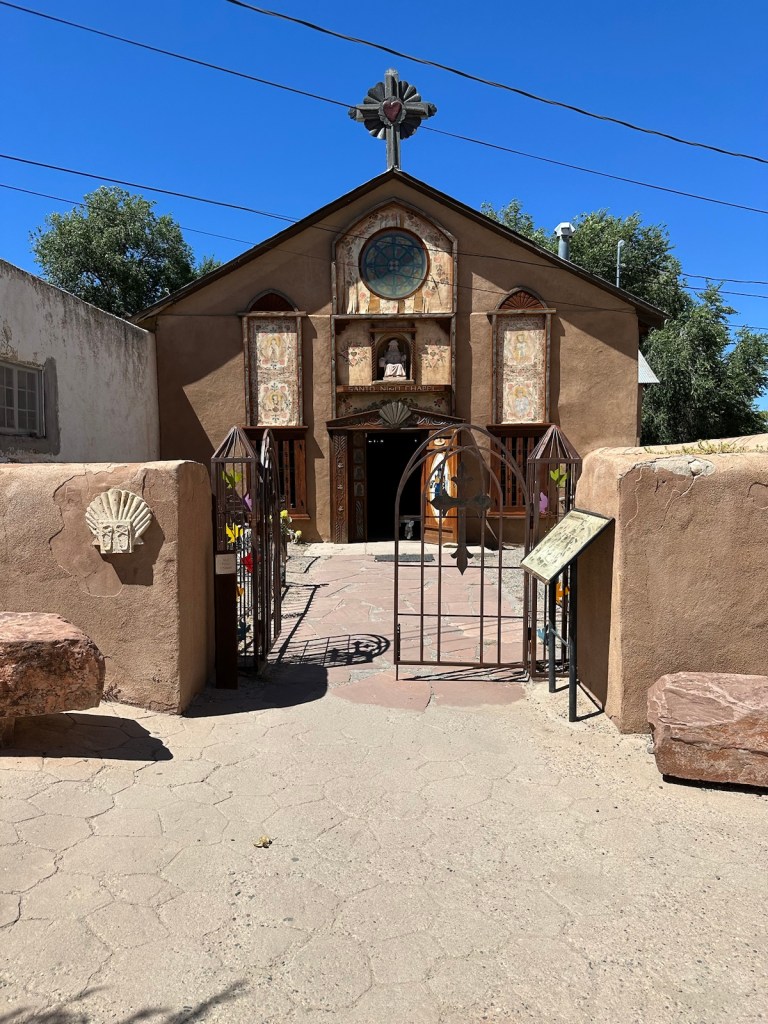
Just a short distance away is the Santo Niño (Holy Child) Chapel, The sign out front instructs you to enter with “the heart of a child” to fully appreciate the chapel. The Holy Child of Atocha is said to roam the hills and valleys, particularly at night, bringing aid and comfort to the needy, and thereby wearing out his shoes.

Photos are not allowed inside the quiet and peaceful chapel. The room down the hall from the chapel is mysterious and endearing at the same time with countless pictures of babies and hundreds of pairs of children’s shoes filling shelves and hanging from the ceiling. The shoes and other offerings have been left for Santo Niño, who is said to be in constant need of new shoes because of his long journeys on foot.
In 1945, US servicemen who survived the Bataan Death March began a tradition of walking to El Santuario to thank Santo Niño de Atocha for “delivering them from evil.” Over 900 New Mexicans from the 200th Coast Artillery died during the Bataan Death march. The tradition of pilgrimages has grown stronger over the years, and now many thousands of people begin or end pilgrimages at El Santuario.
One could spend quite a bit of time wandering the property of El Sanctuario de Chimayo. Pathways lead in various directions and some went down to a pleasant green space filled with beautiful gardens, shrines, grand old trees, a creek and view of the mountains. Over 300,000 people visit this National Historic Landmark each year, many are on pilgrimages.
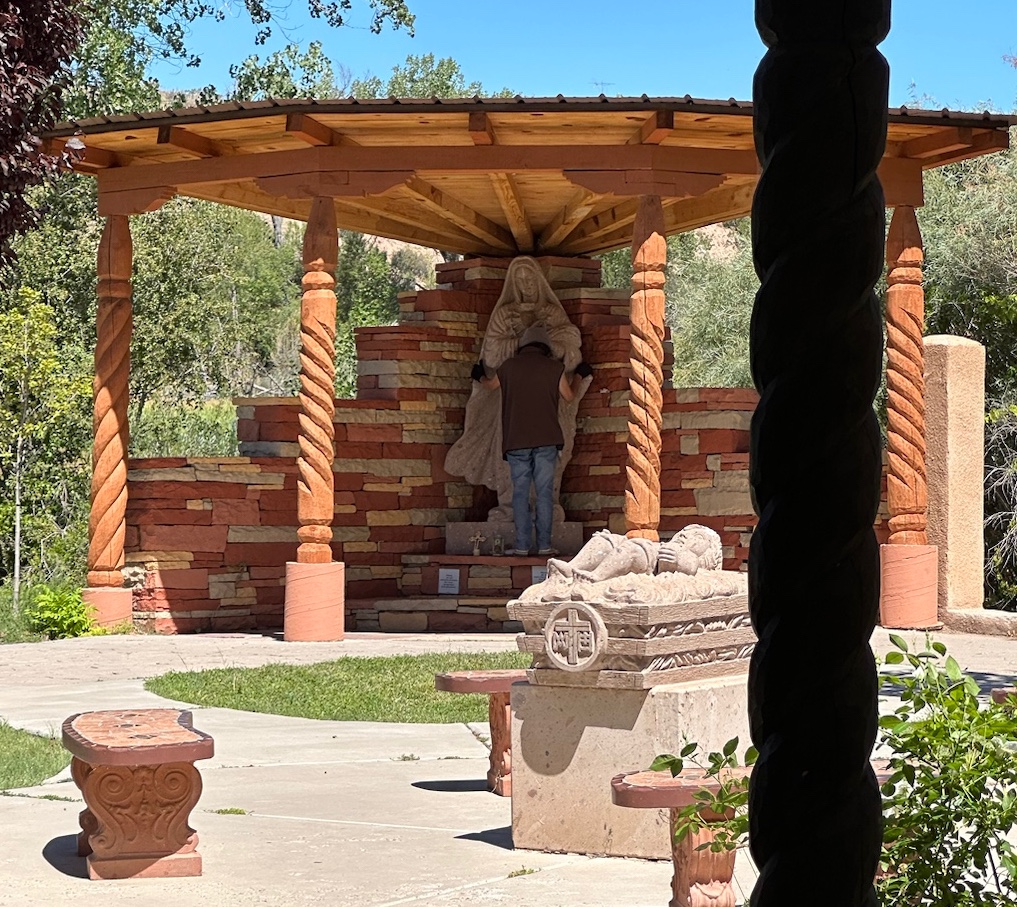

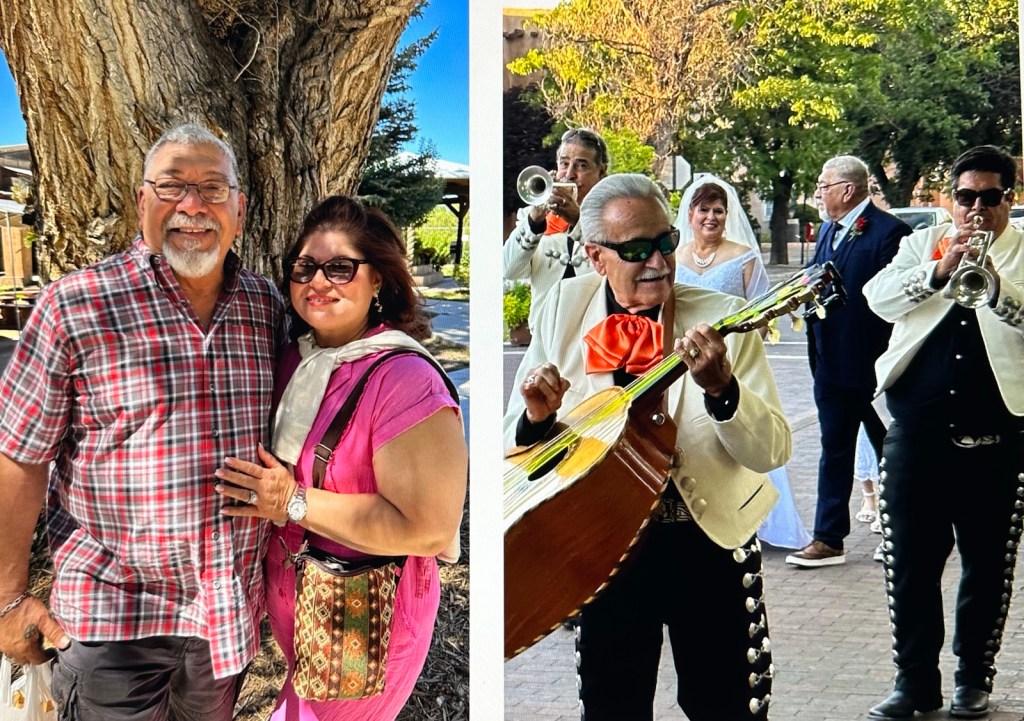
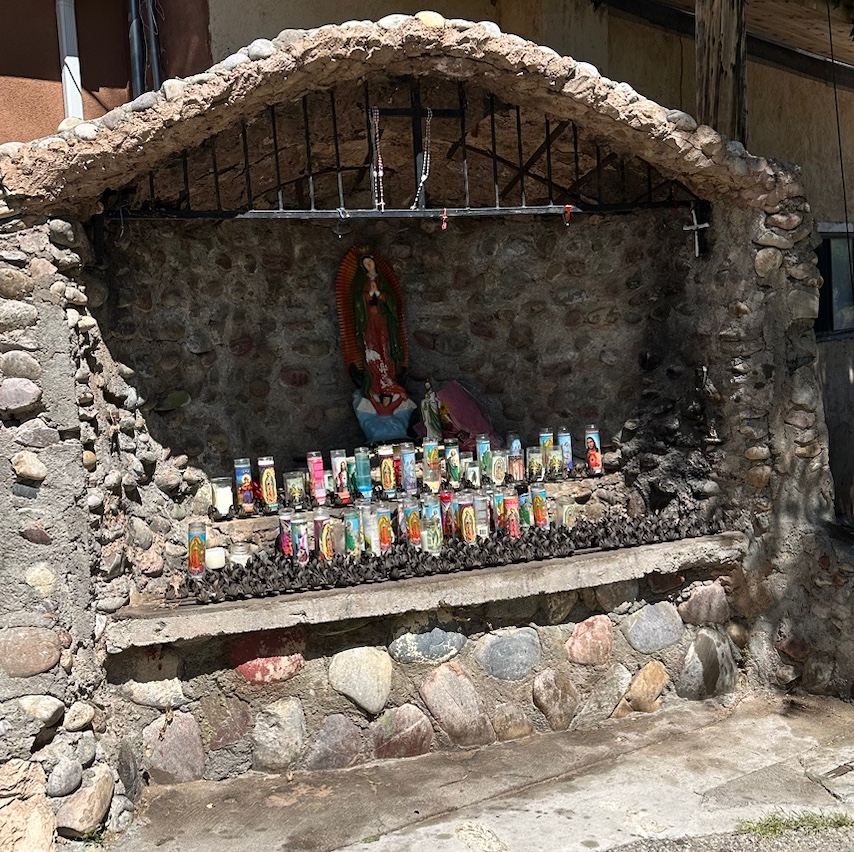
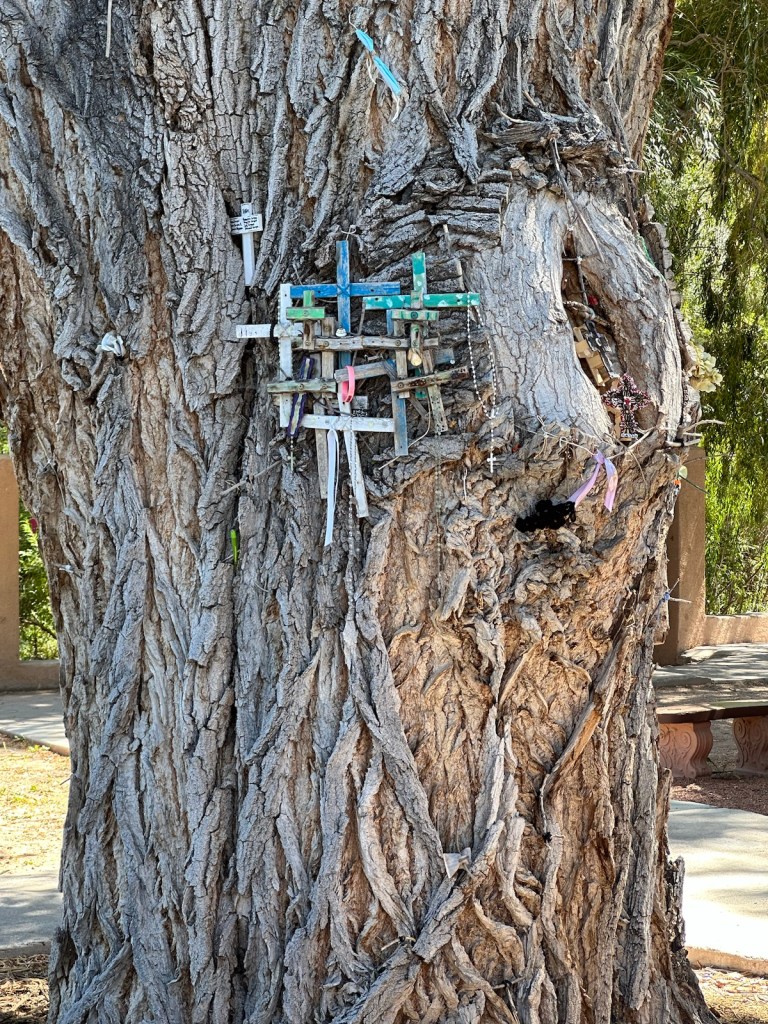
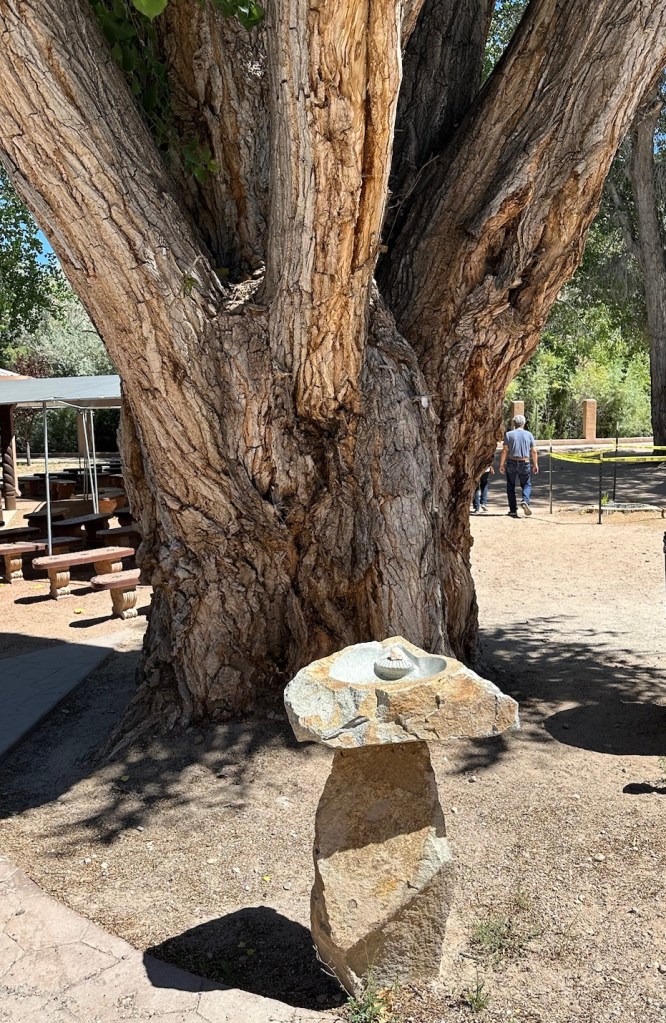
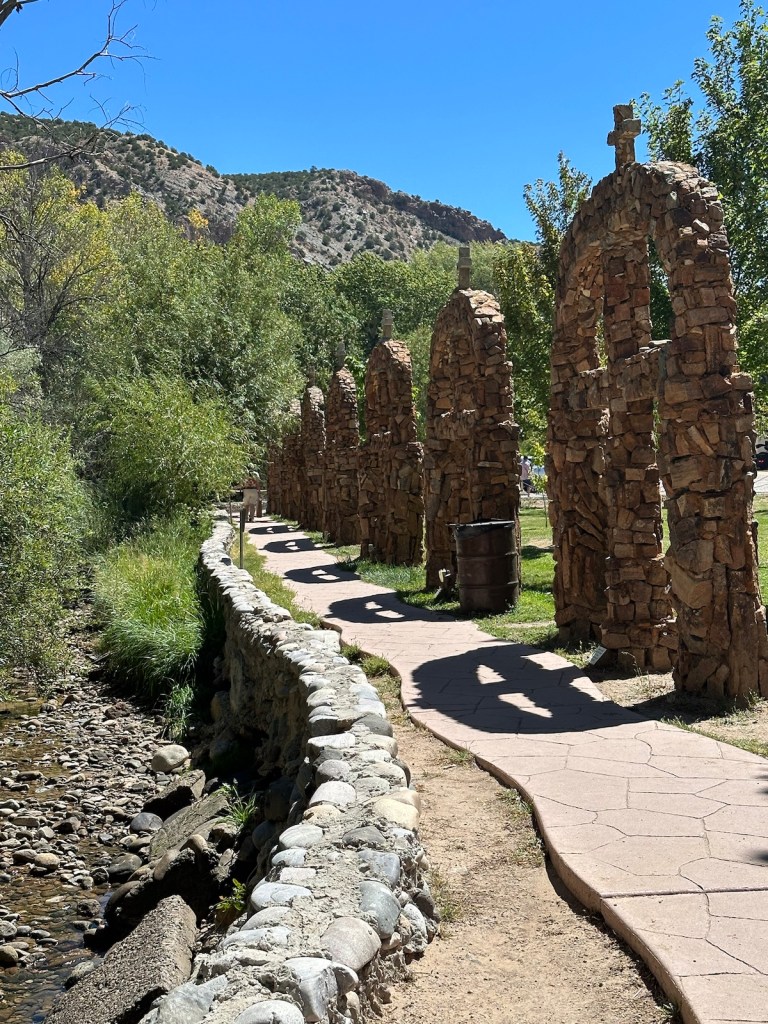
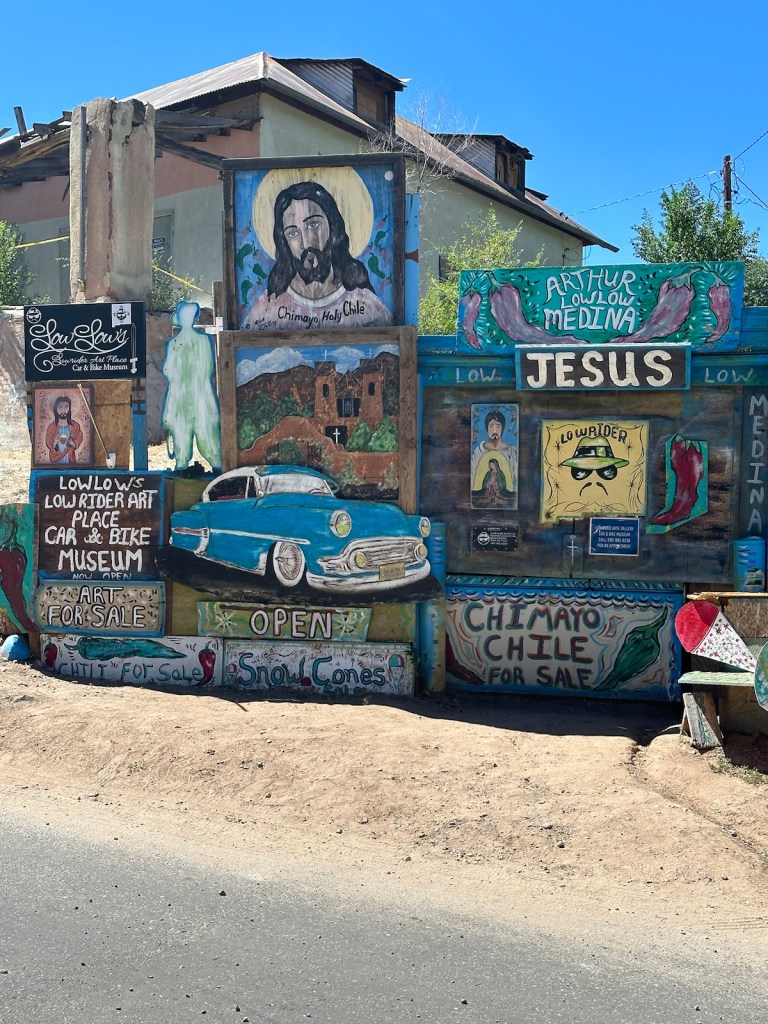
Perusing these two amazingly ornate adobe churches and their gift shops, could easily fill half a day on their own. But there’s even more to Chimayo, including art galleries, historic weaving shops and chile vendors.
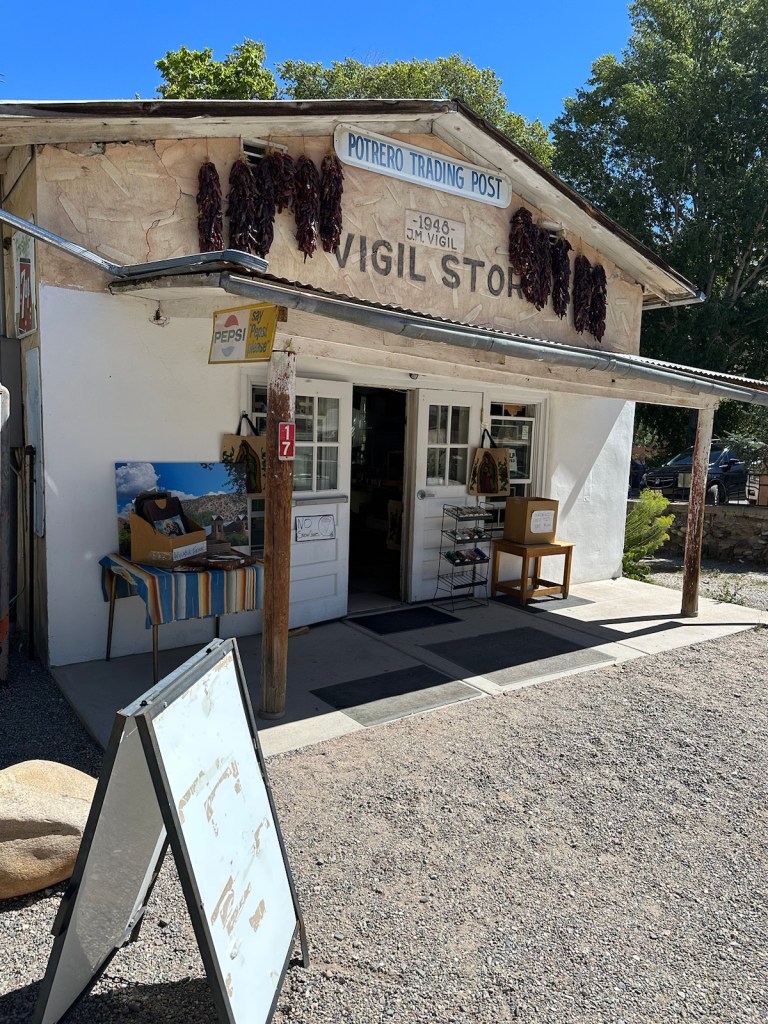
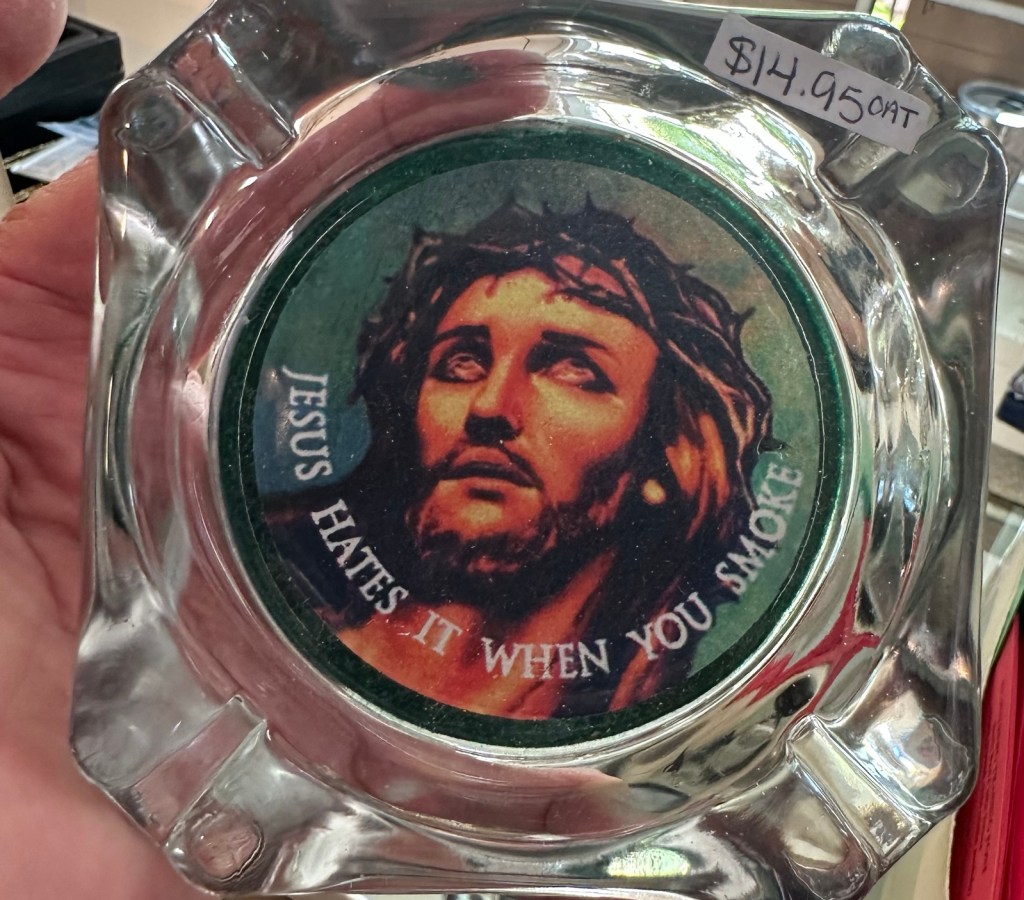
Another gem … just footsteps away from the churches is the El Potrero Trading Post, a family-owned business loaded with local treasures.
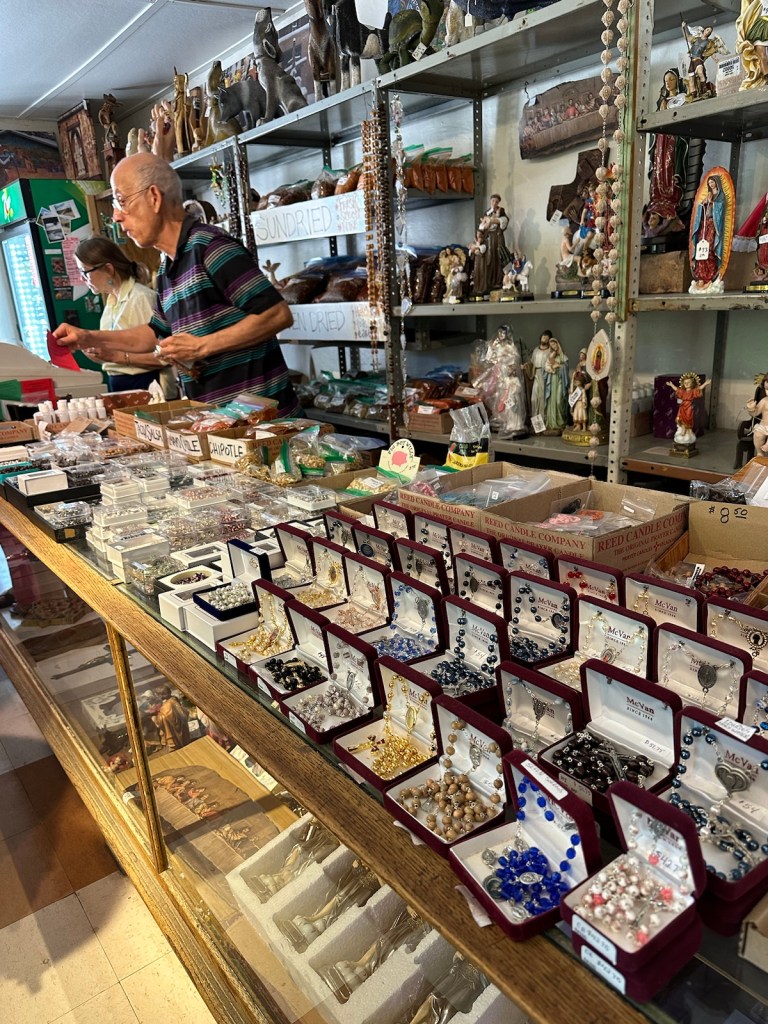
The trading post also features Milagros (miracles) small metal religious charms. These charms are often used as offerings and act as good luck charms for pilgrims.
Smells wafting through the post hint at an abundance of chile to choose from; ground, crushed, sundried, red, green, heritage and standard.
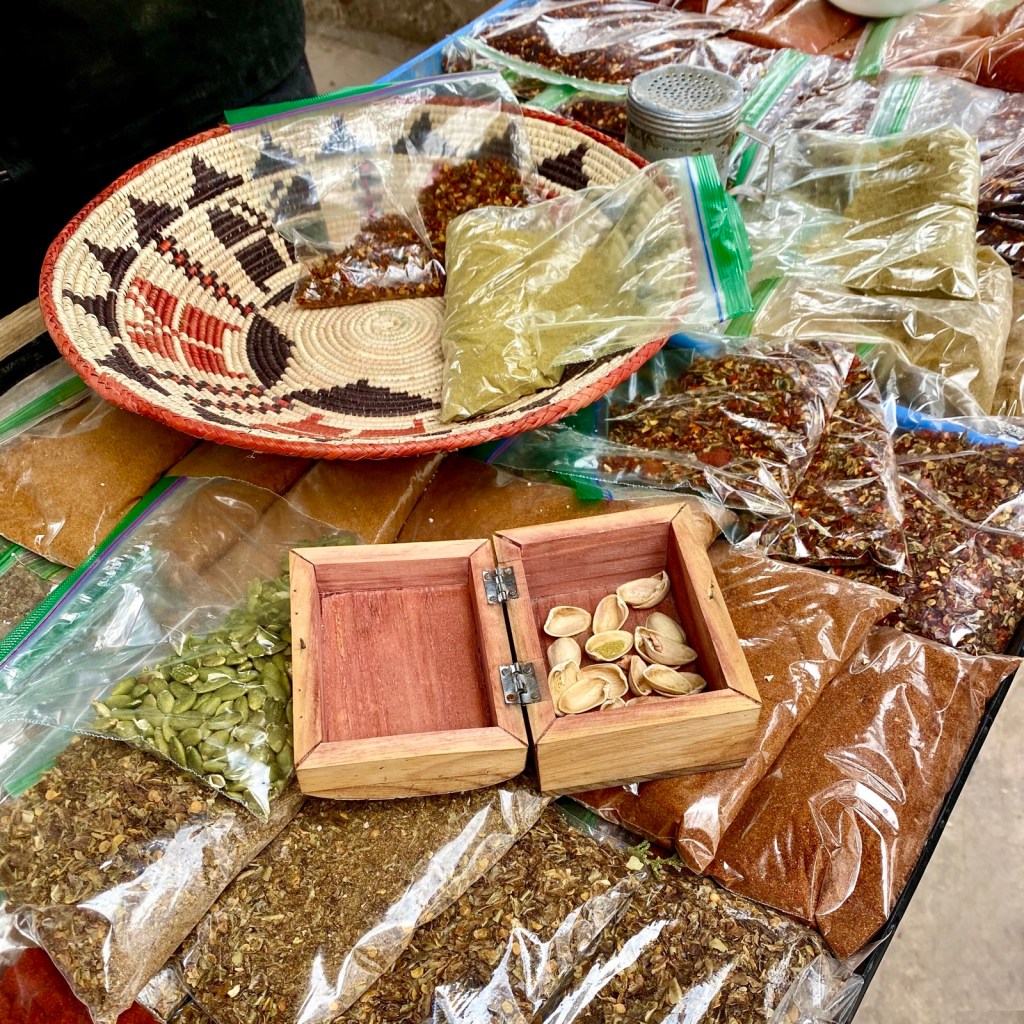
The Chimayo chile is sought after for its signature combination of spice and sweetness that is rare in chiles. It is accentuated by a deep richness that some describe as smoky. The demand for Chimayo chile is further boosted by over 300,000 tourists that are drawn to El Santuario de Chimayo each year.
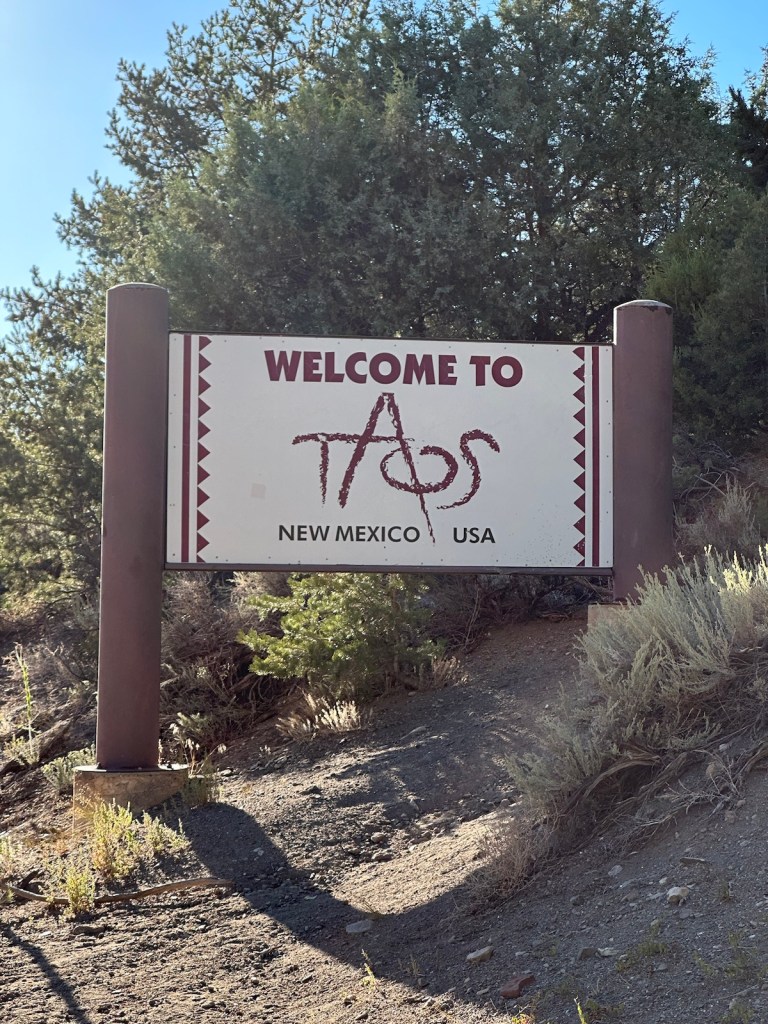
On the road again … After several hours in the Chimayo area, we hit the high road to Taos. Authentic old Spain is evident in the small villages we passed. There were many small galleries, shops and restaurants that appeared to be closed. We either hit the wrong day or the end of the season. Many pueblos and businesses had major festivities over Labor Day weekend which we just missed.

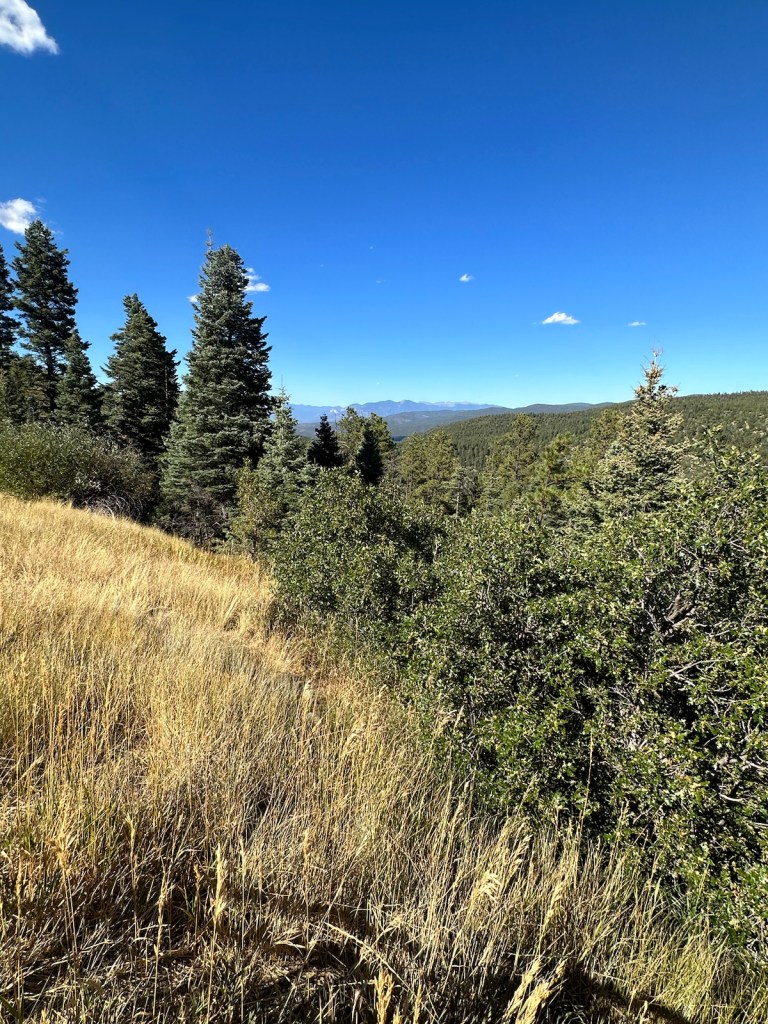
Along the remote areas, we saw signs warning of elk, deer and also cows. You can see hawks and eagles soaring above the mountains.
By mid-afternoon, we stumbled onto a roadside restaurant in the sleepy town of Peñasco. The ‘Sugar Nymphs ’ parking lot was full but starting to empty. At the time, we didn’t realize that most restaurants close at 3:00 pm and reopen around 5:00 pm. I think we were the very last of the lunch crowd.
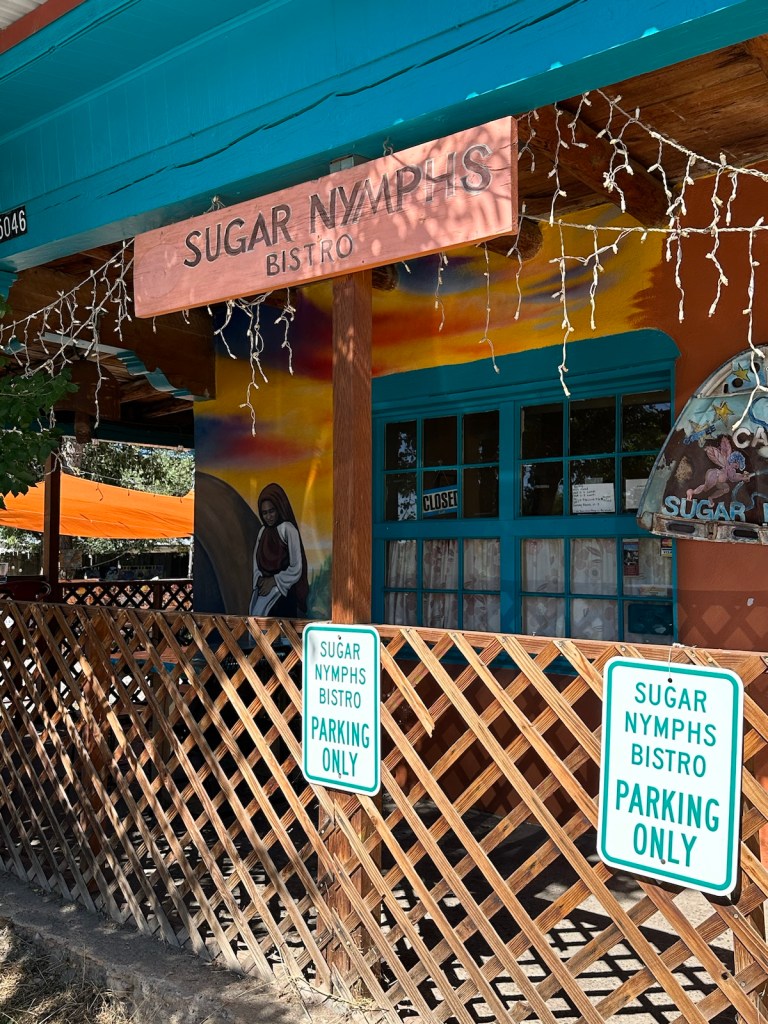
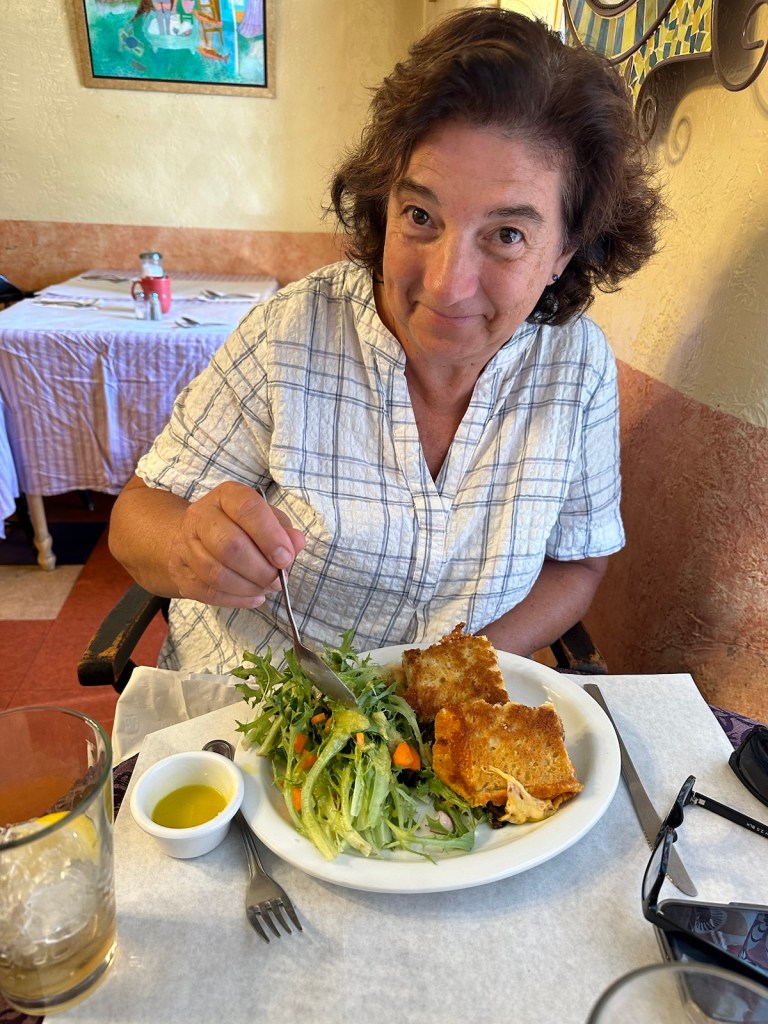
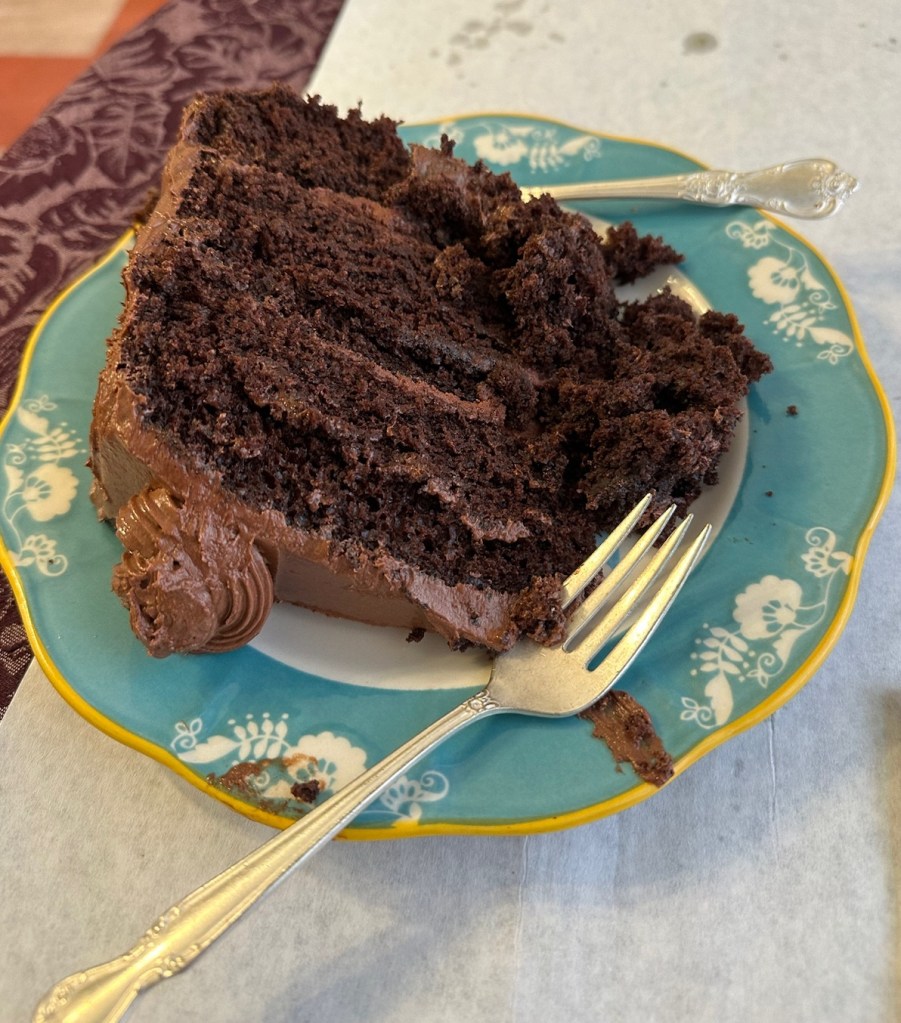
The Sugar Nymphs tagline is ‘country atmosphere, city cuisine’. Everything is farm-to-table fare and made from scratch.




Enroute back to our Santa Fe rental property, we stopped at Food King to forage for some type of frozen entree and a bag of salad for dinner. It had been a long day and we were ready to kick-back and enjoy a restful evening while digesting the day.
Information taken from, New Mexico by Moon, Zora O’Neill’ Official Visitors Guide, Sante Fe; nps.gov/chimayo; moretimetotravel.com; santafe.org; talesofatelecommuter.com; photosphere.com; slowfoodusa.com
 Jane in Spain