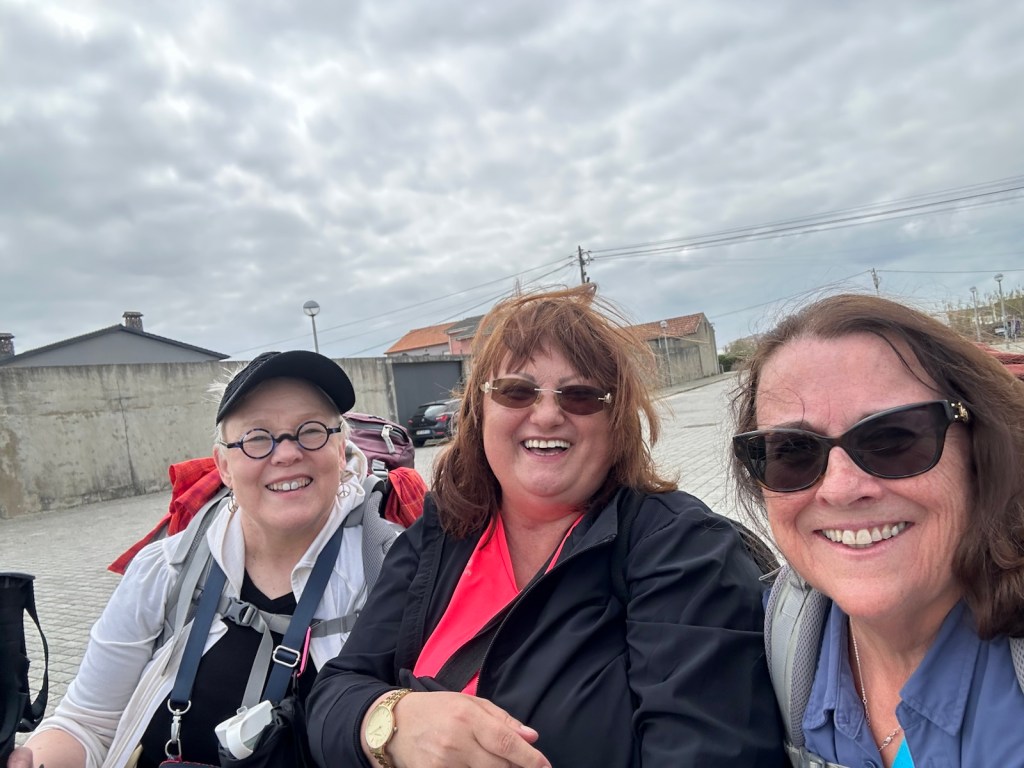
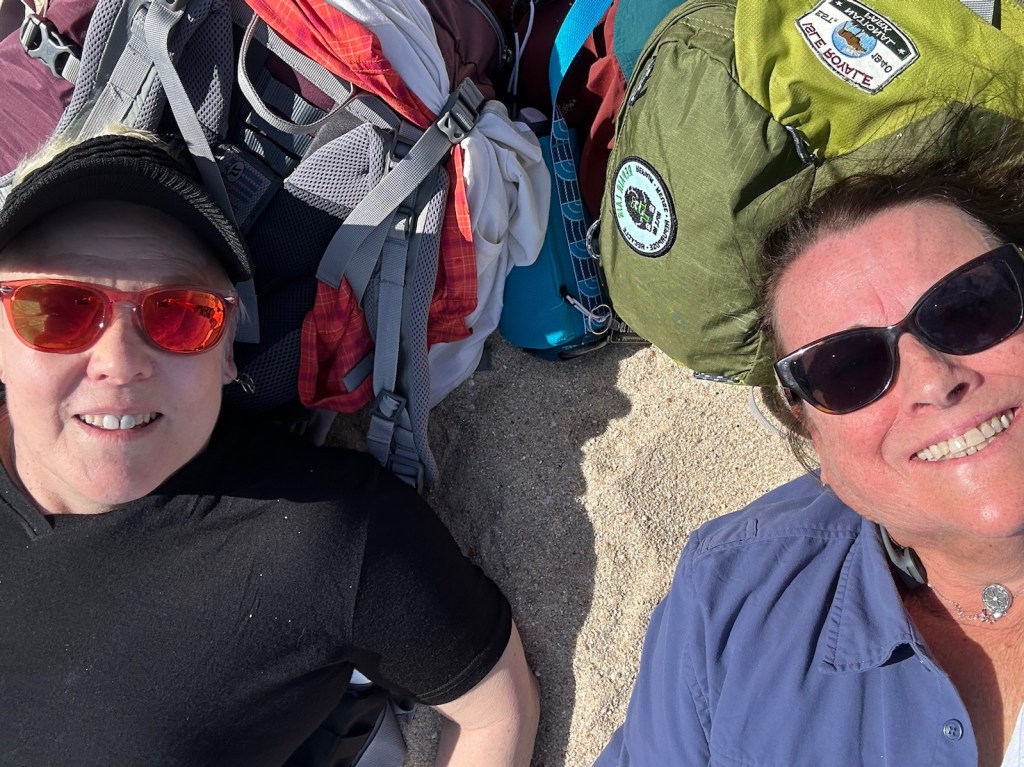
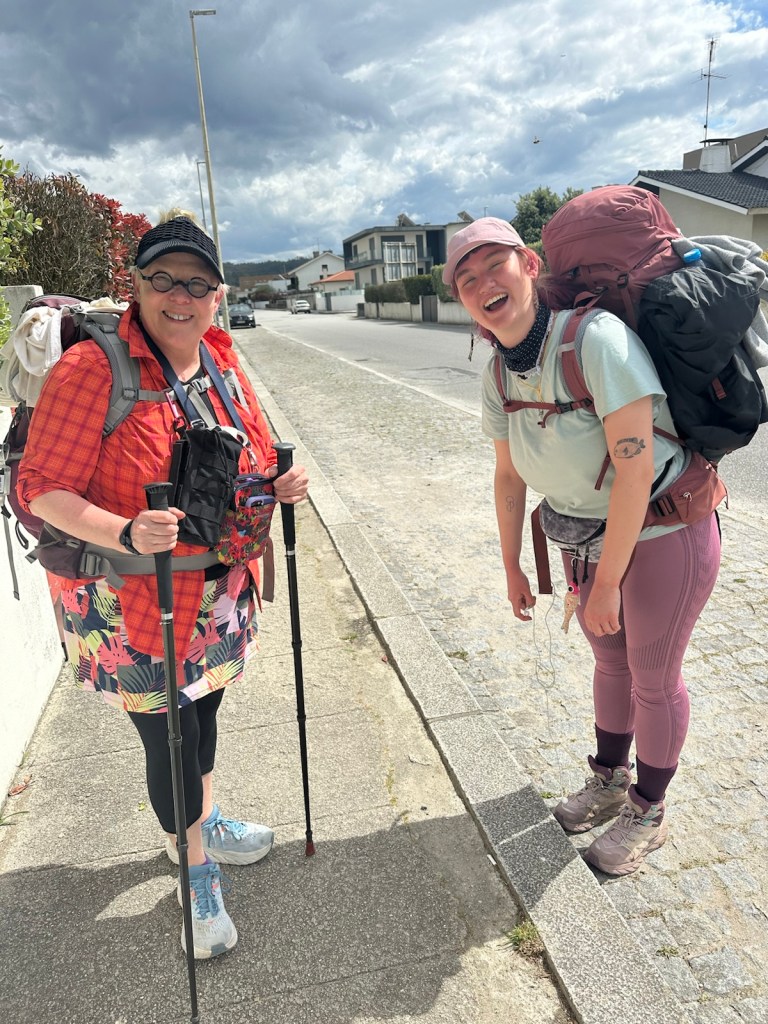
We kicked off our Camino along Portugal’s coast, just north of Porto. It took miles of pavement, warehouses, and city sprawl before we finally broke free — trading concrete for coastline.
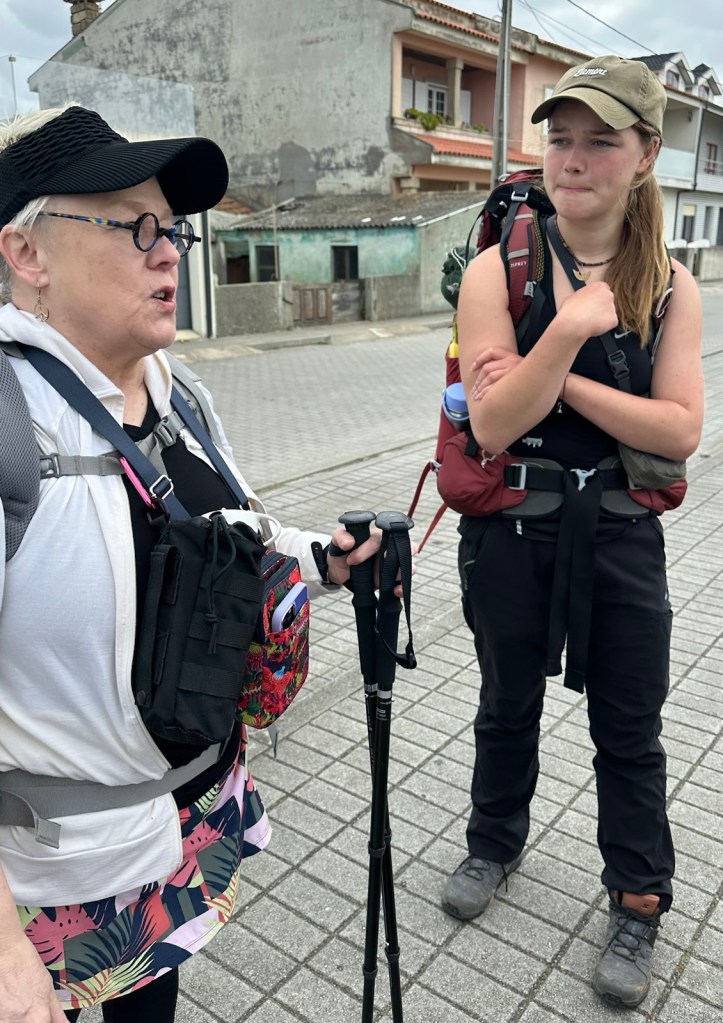
We designed this Camino to be as leisurely as the cool trade winds blowing off the Atlantic. With too many miles and too little time, we embraced a hybrid strategy: walking when we wanted to, cabbing when we needed to.
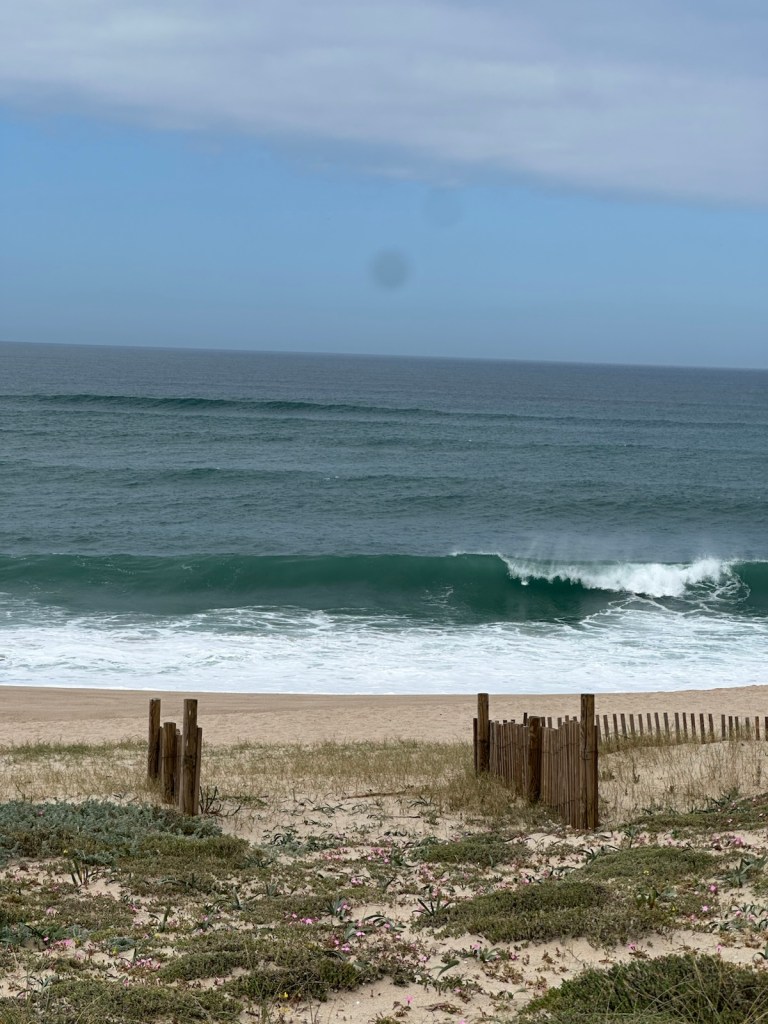
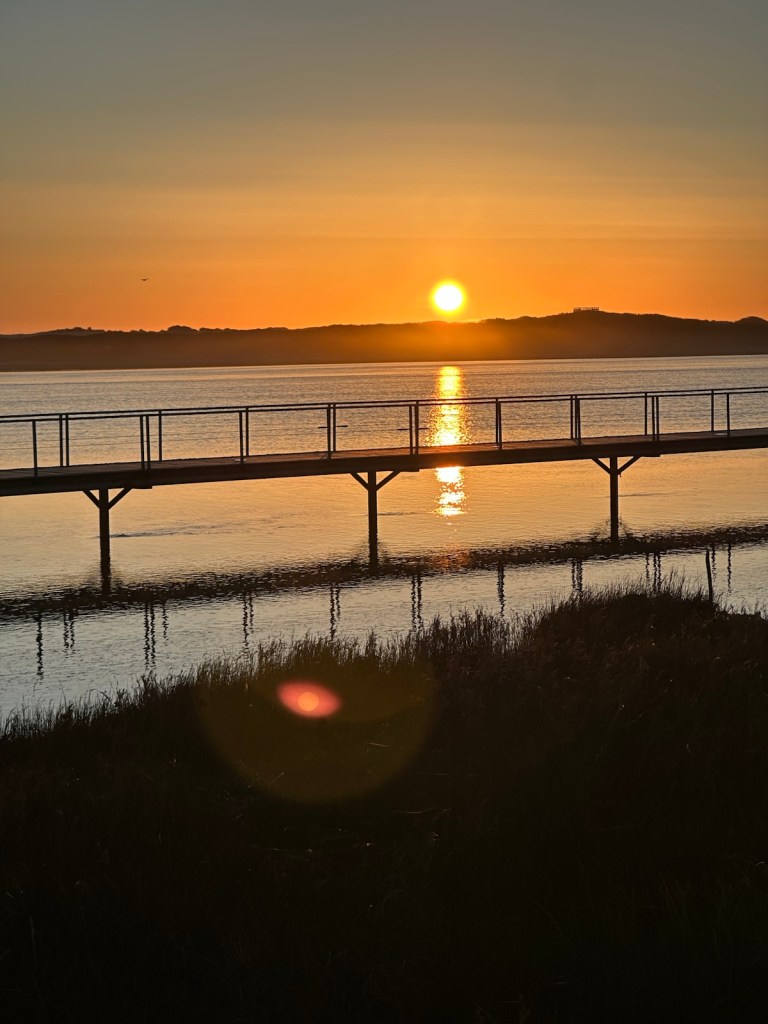
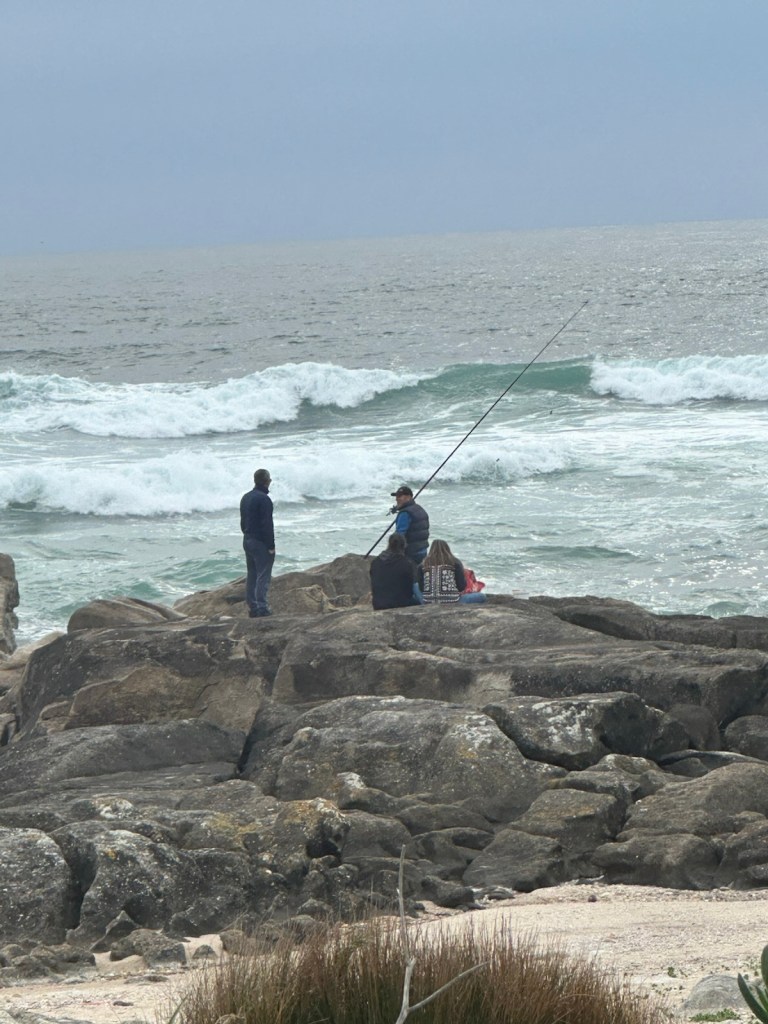
Once we hit the real Atlantic, it was magic: long stretches of sand, crashing waves, sea spray in the air, and the occasional hopeful fisherman casting into the surf.
We passed through a string of fishing villages — each with gifts of its own flavor, from quiet charm to faded bustle — on our slow, salty way toward Spain.


Provo de Varzim was our first overnight stop. This charming coastal city is about 15 miles north of Porto. It has a rich blend of history, beach culture, and local tradition. Fishing is central to its identity and for centuries it was one of Portugals most important fishing ports.
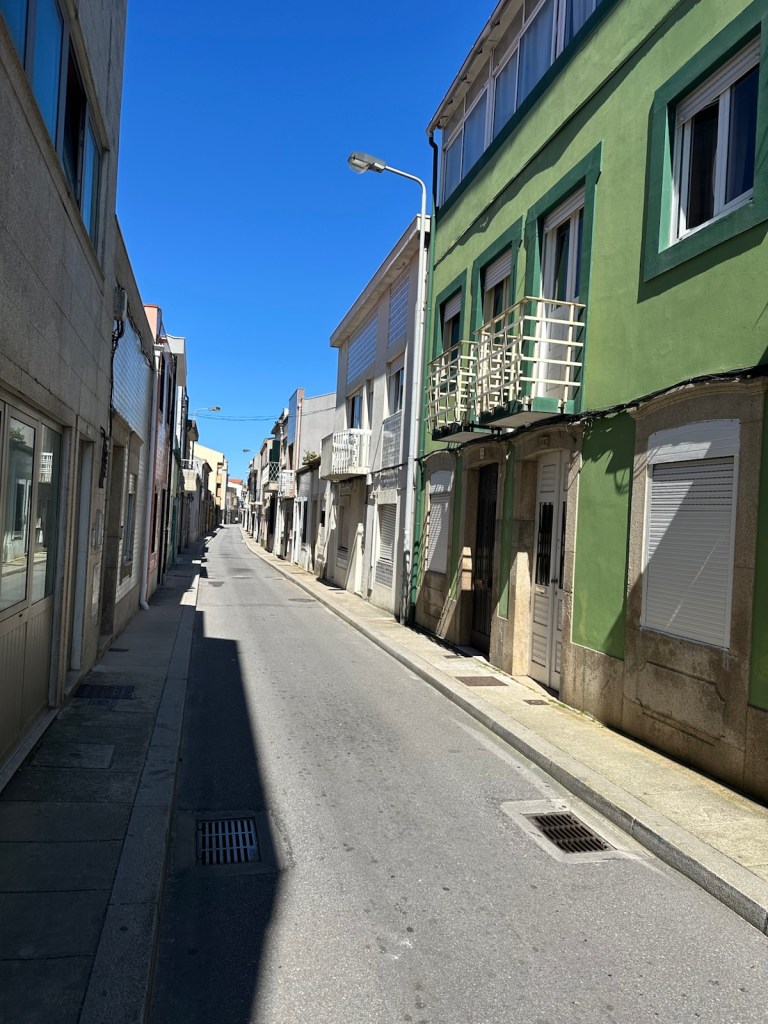
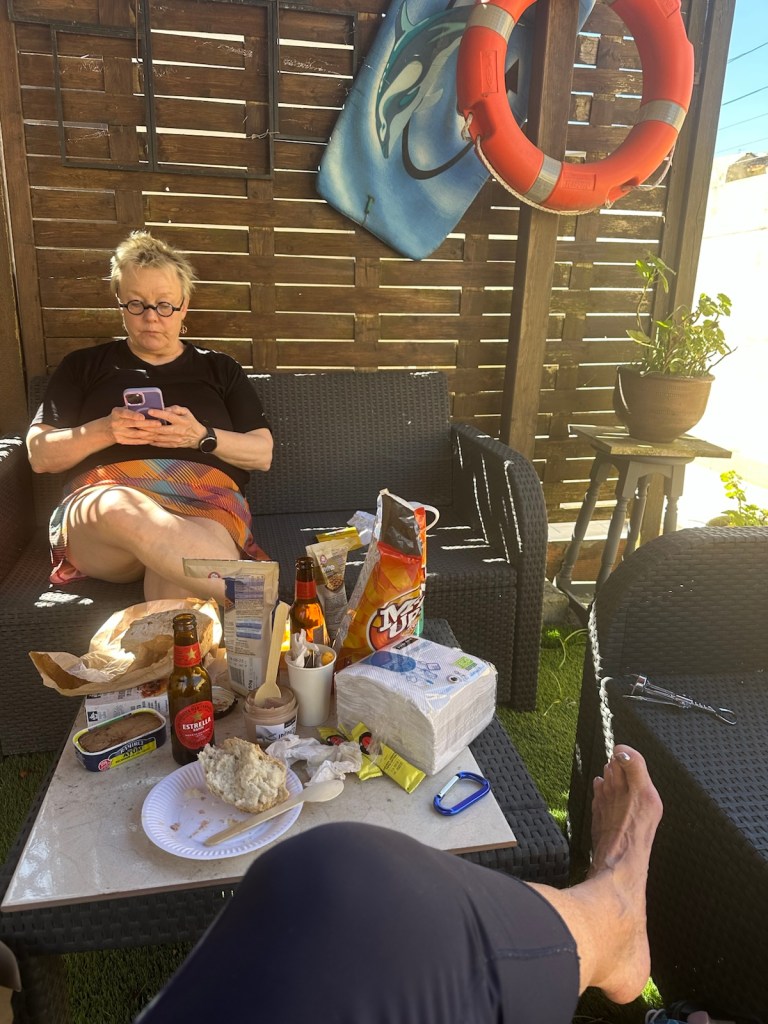
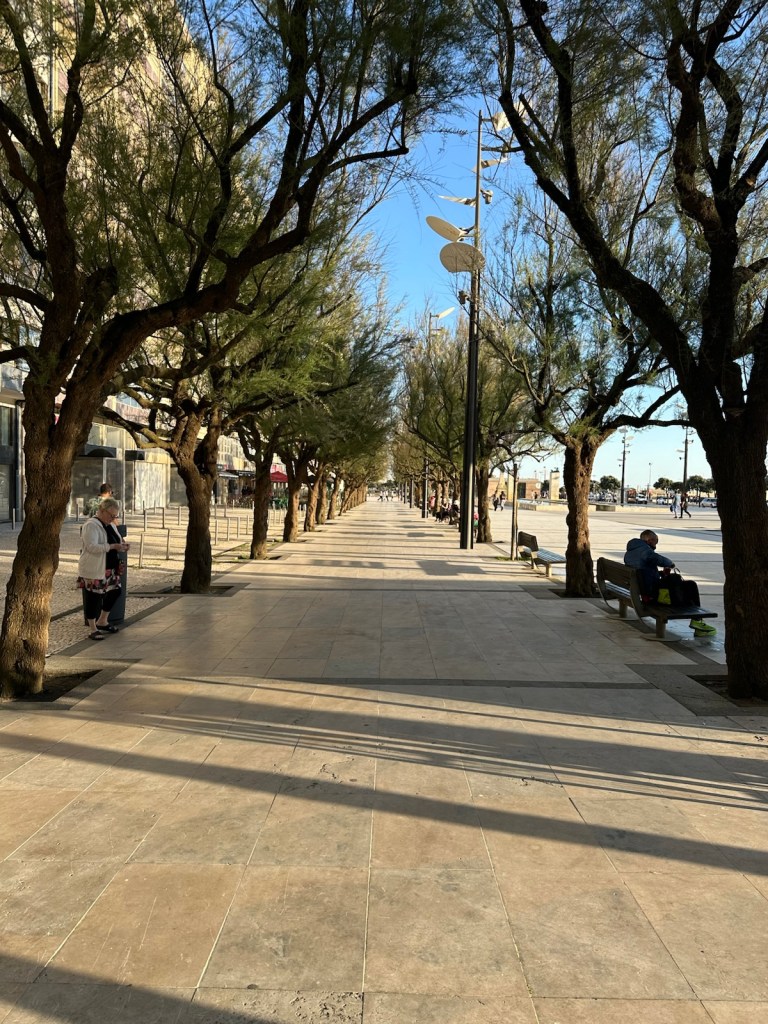
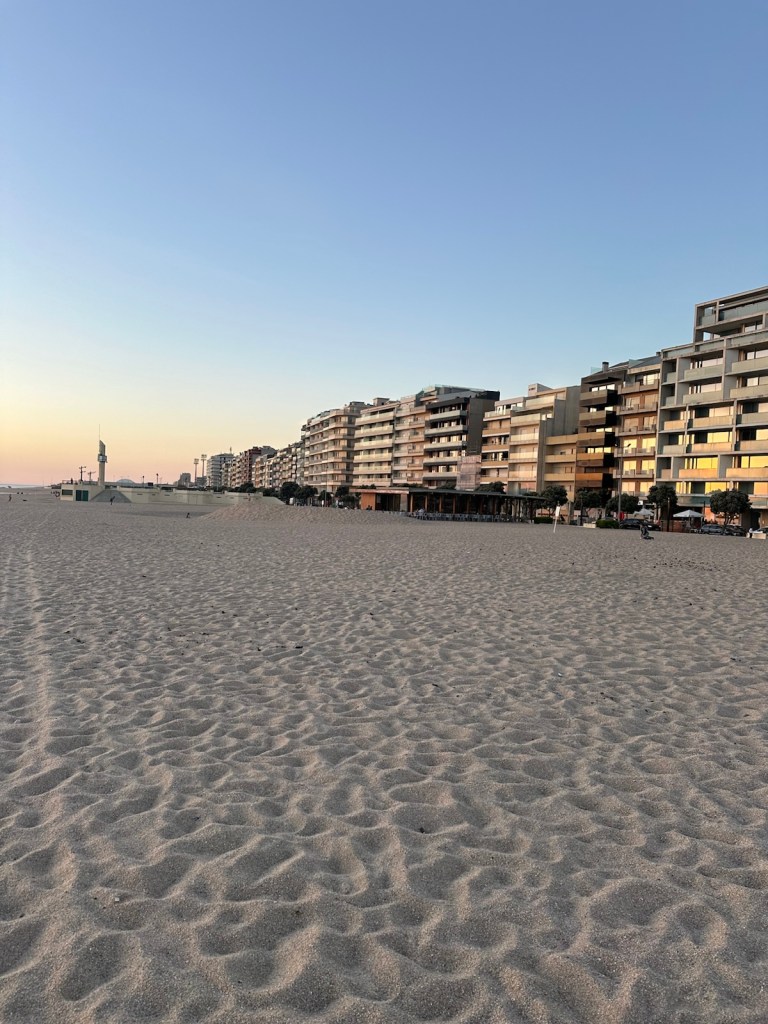
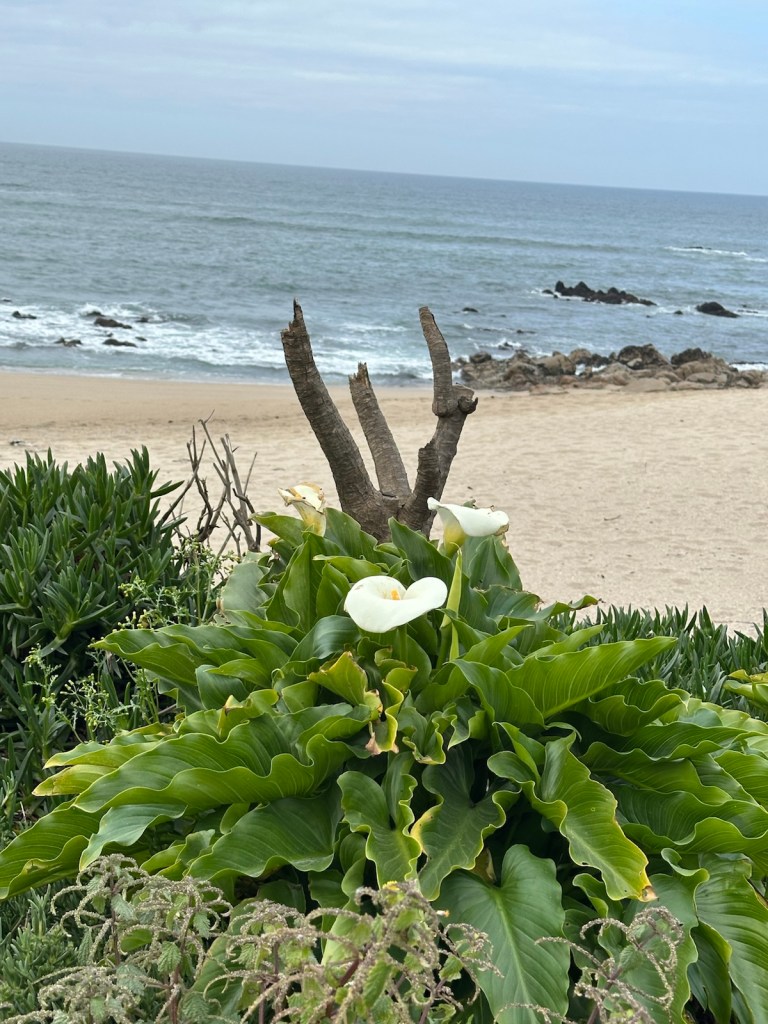
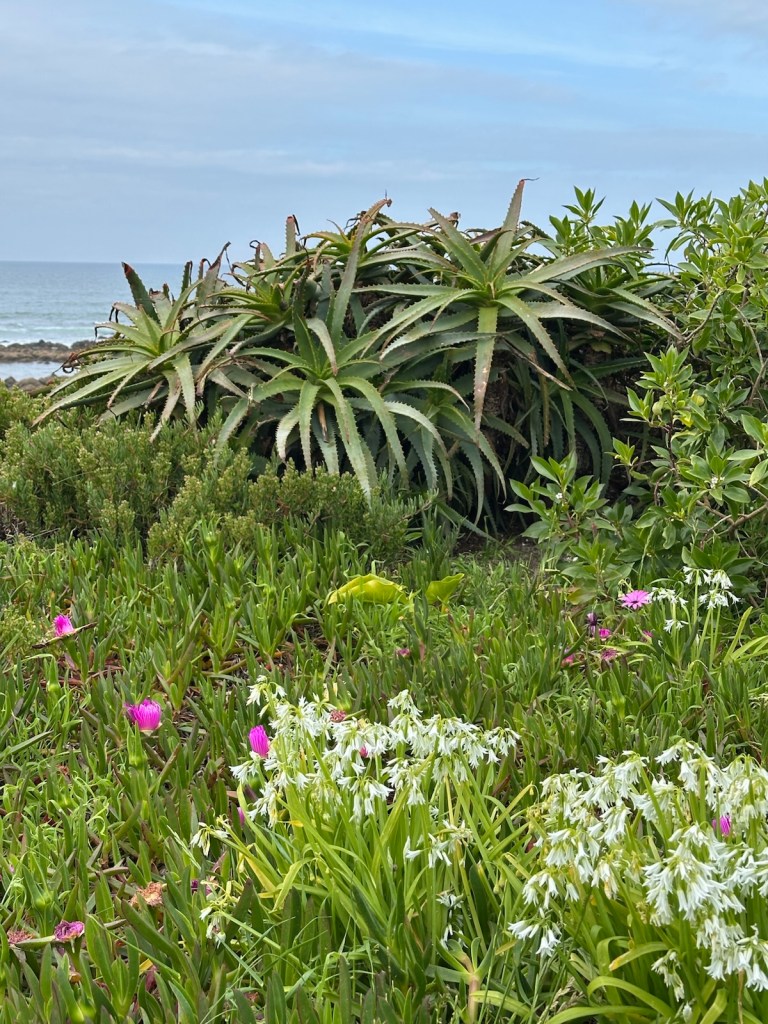
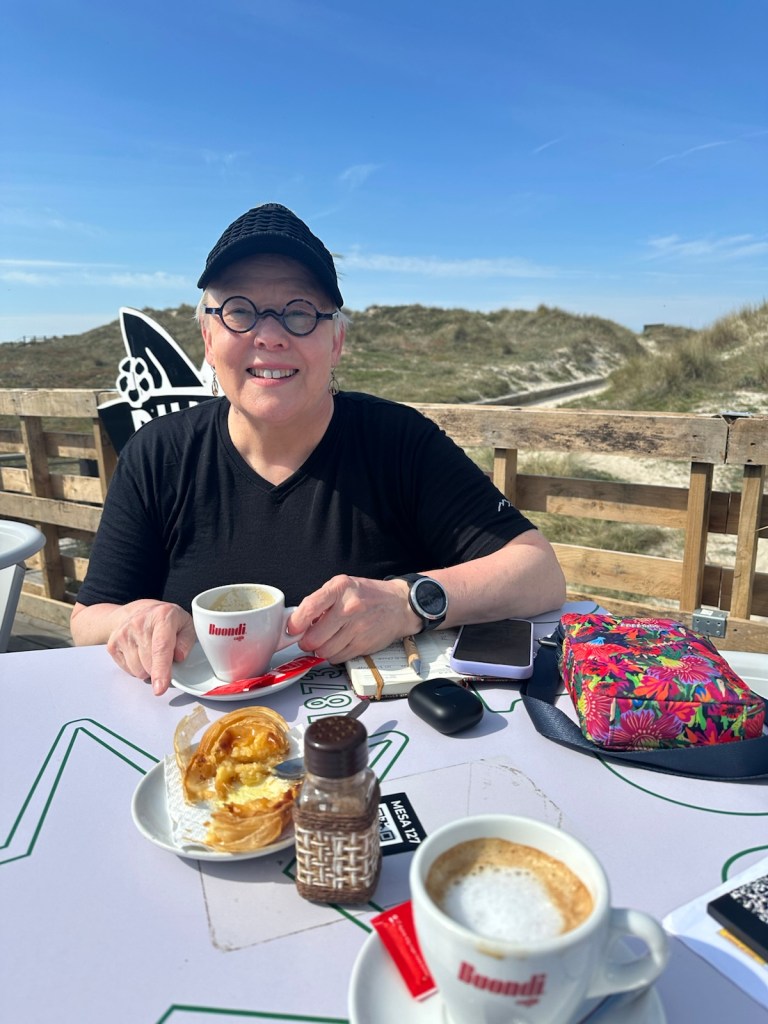
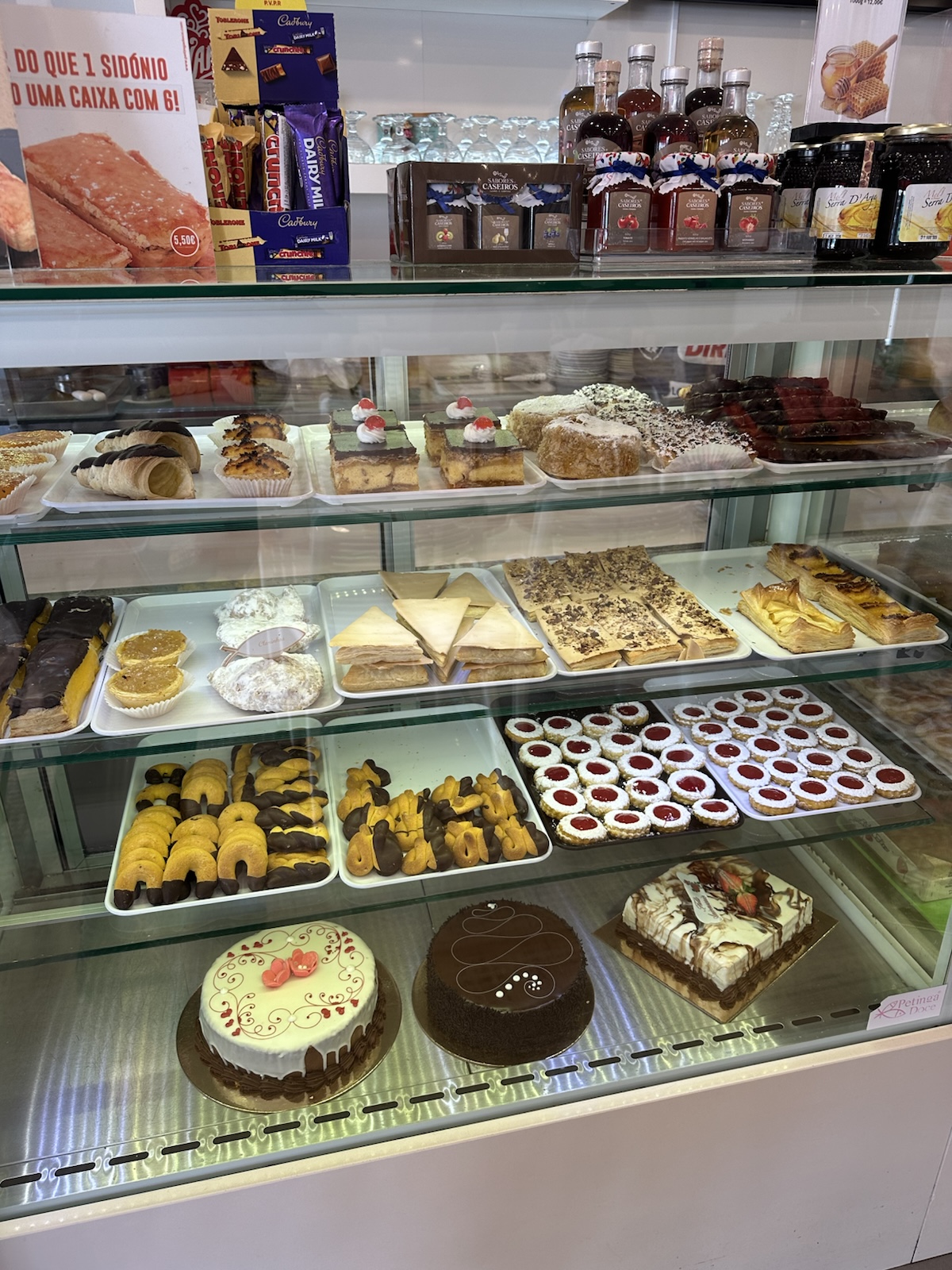
Esposende: It’s not flashy — just cozy cafés, local bakeries and friendly faces. It is nestled between the Atlantic Ocean and the Cávado River. It’s a paradise for nature lovers with its wild beaches, dunes and estuaries filled with birdlife.


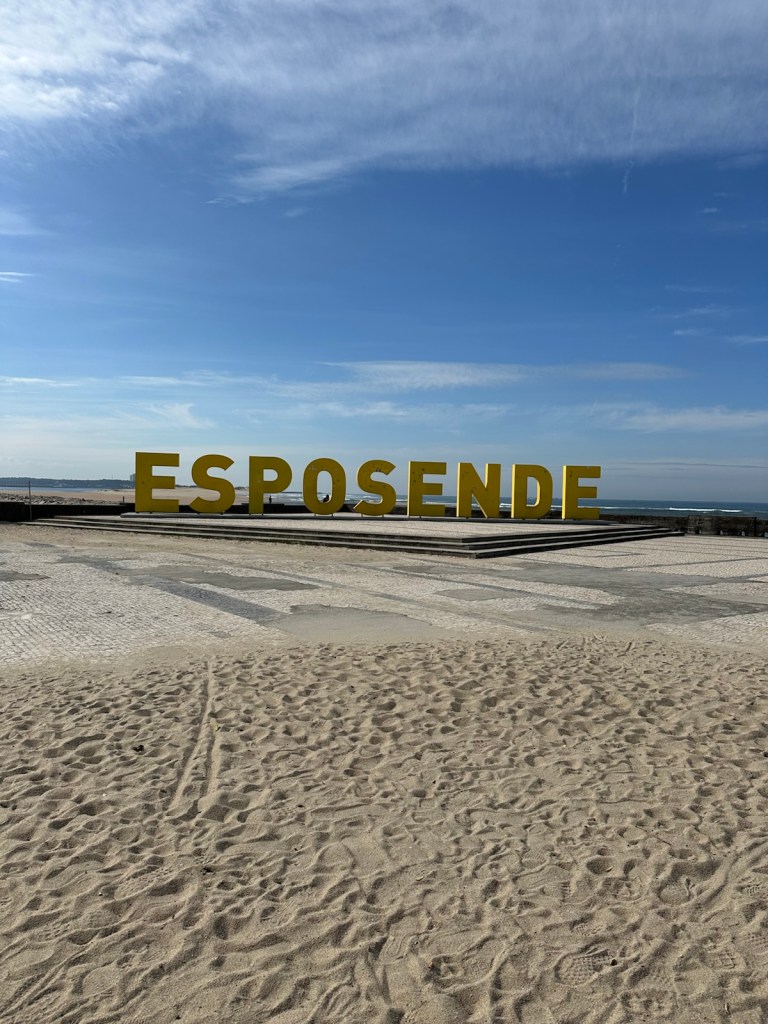

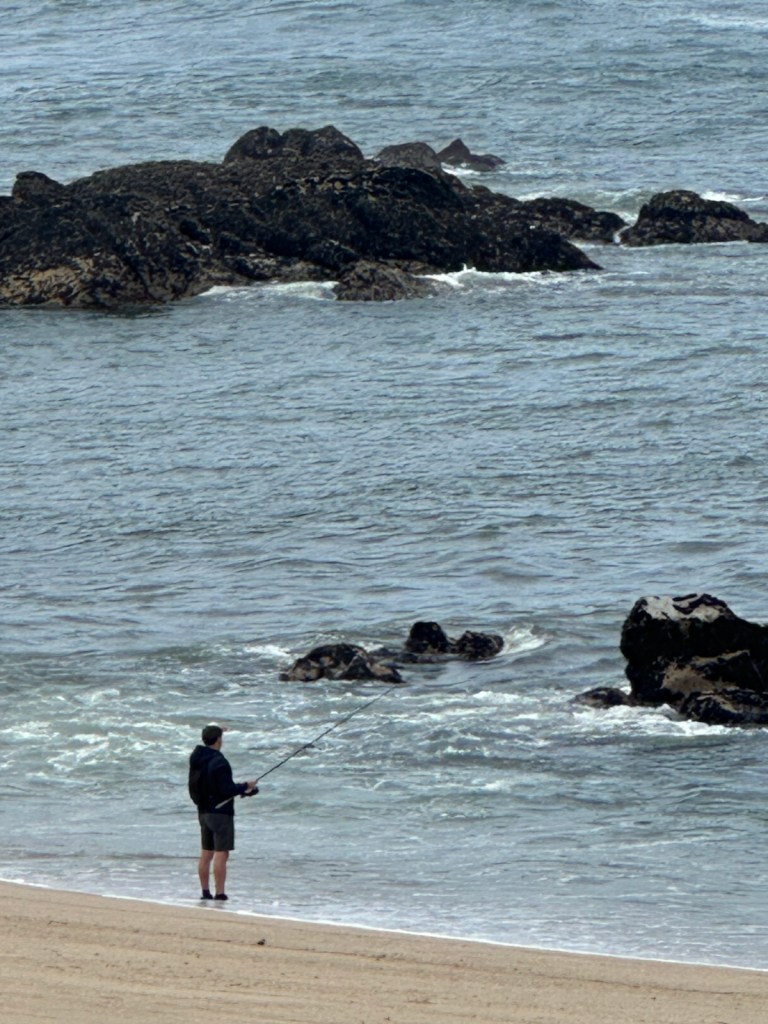
— was he chasing dinner or simply soaking in the rhythm of the waves.


Viano do Castillo was our next stop. This picturesque coastal city is located at the mouth of the Lima River. Known for its rich maritime history, stunning architecture, and beautiful beaches, it offers a blend of cultural heritage and natural beauty.
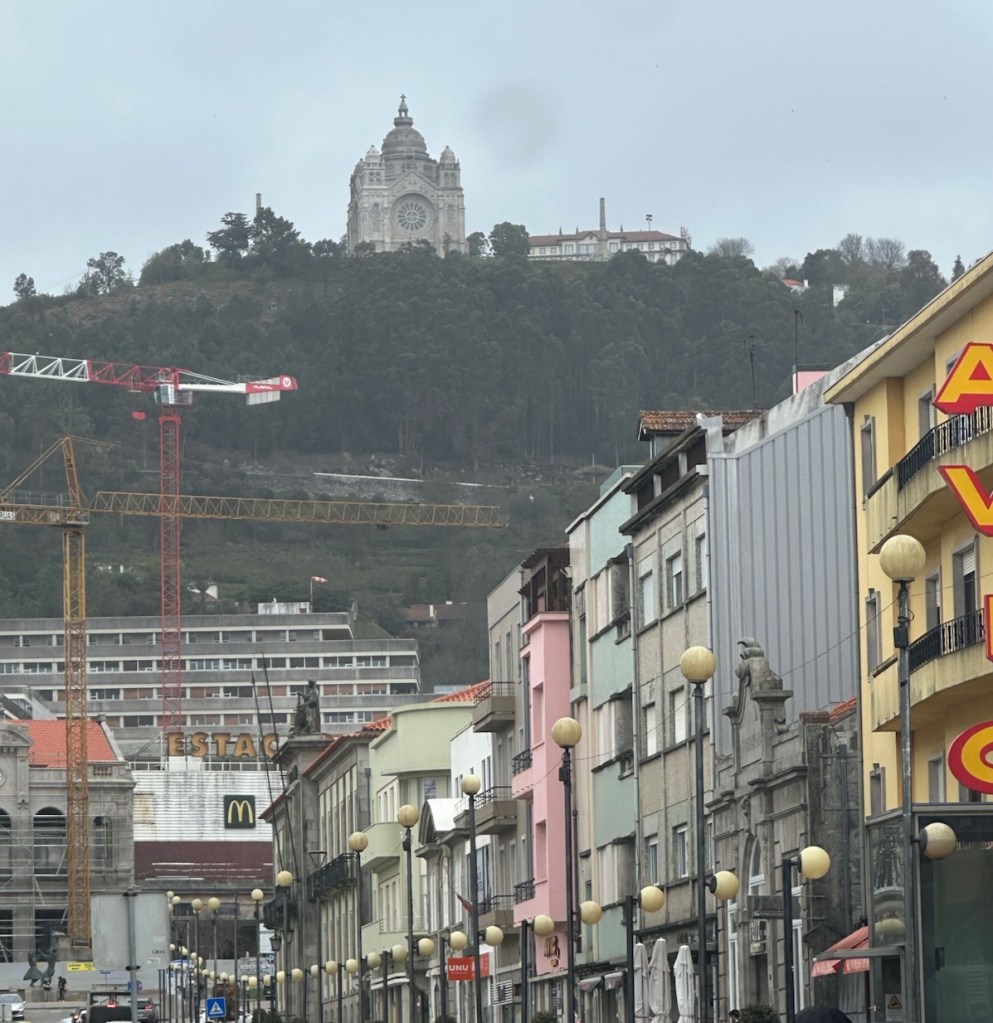
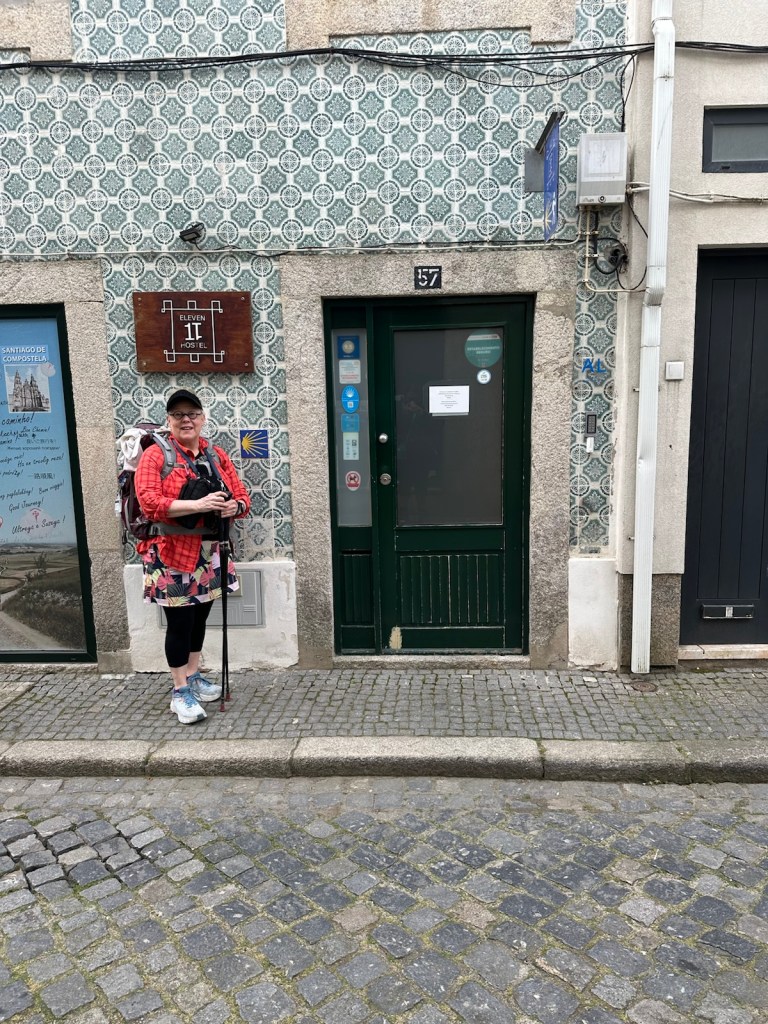
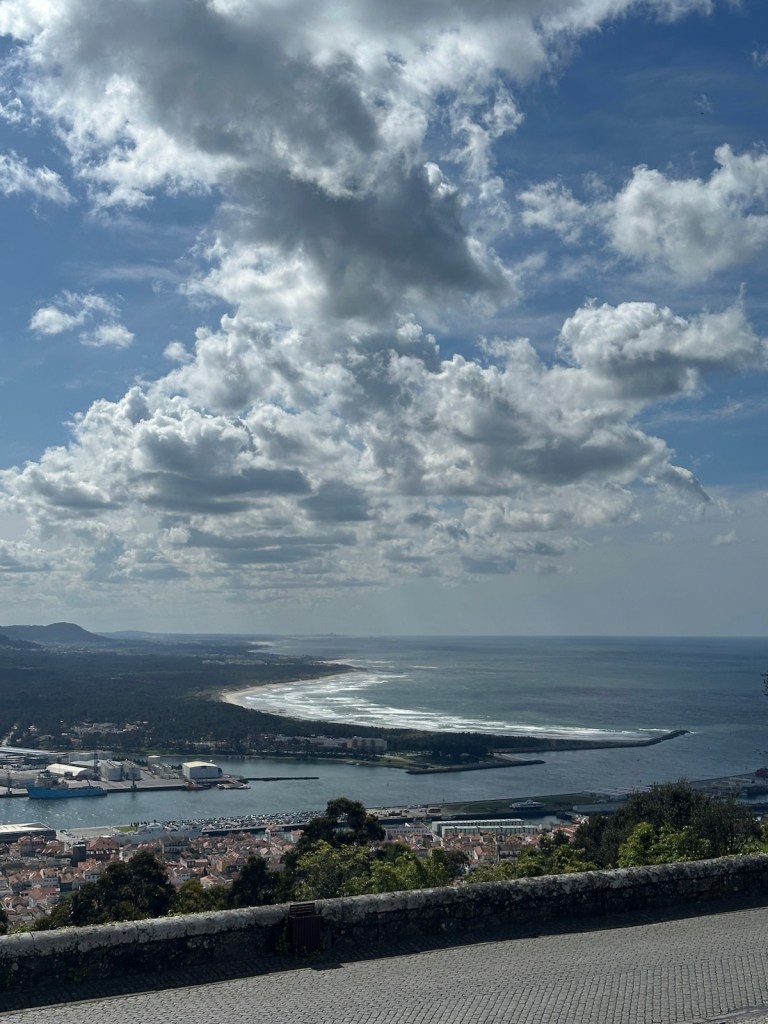
Viana do Castelo greeted us with a dramatic skyline — a cathedral perched high above the city like a sentinel. What we didn’t expect was a lodging mystery worthy of a scavenger hunt.
Unbeknownst to us, Booking.com had rerouted our stay due to a water issue at the original spot. Text messages started trickling in, sending us off to decode directions and hunt down a lockbox in an underground garage. Tired and confused but determined, we recruited a friendly waiter to help crack the case.
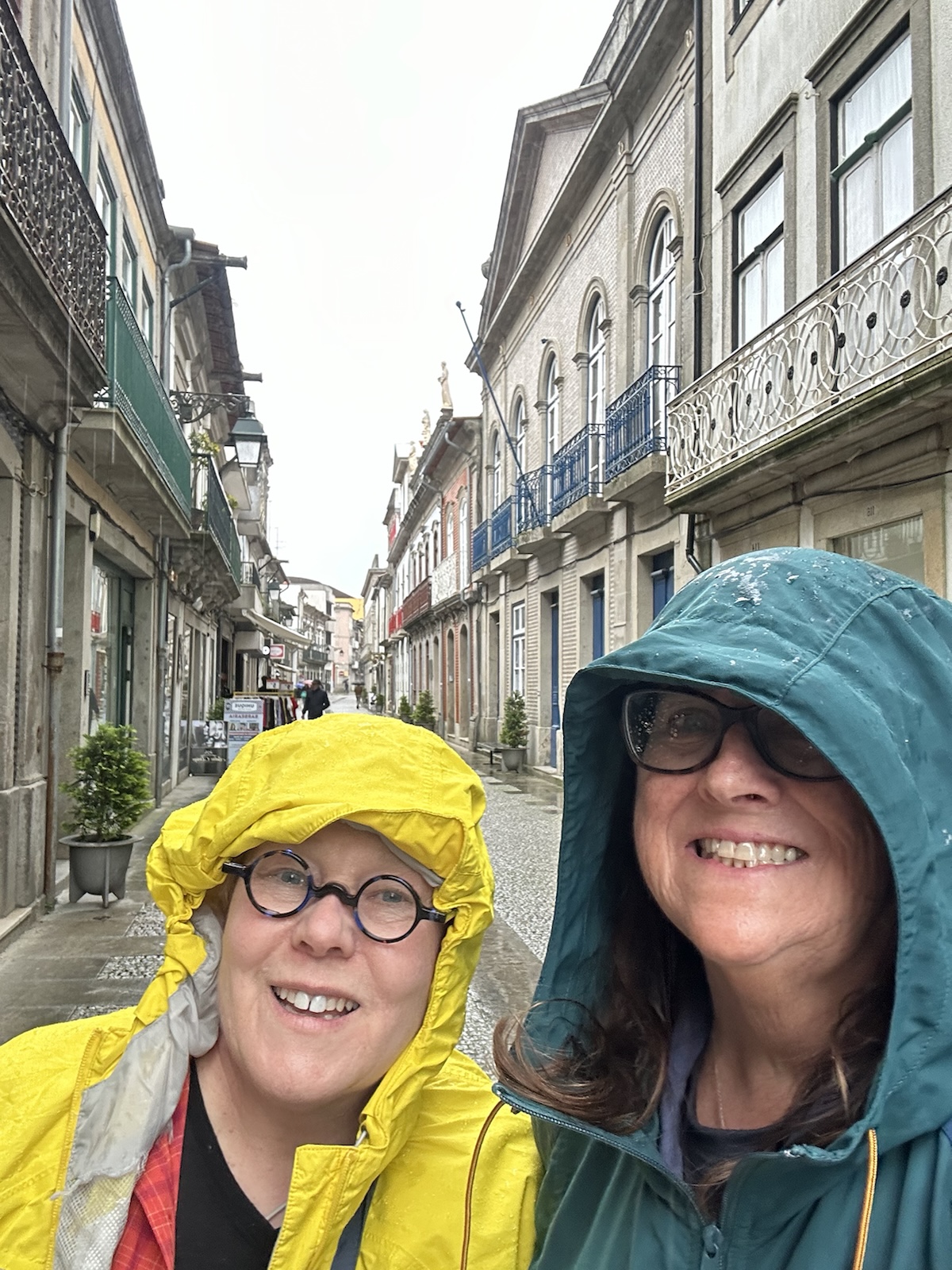
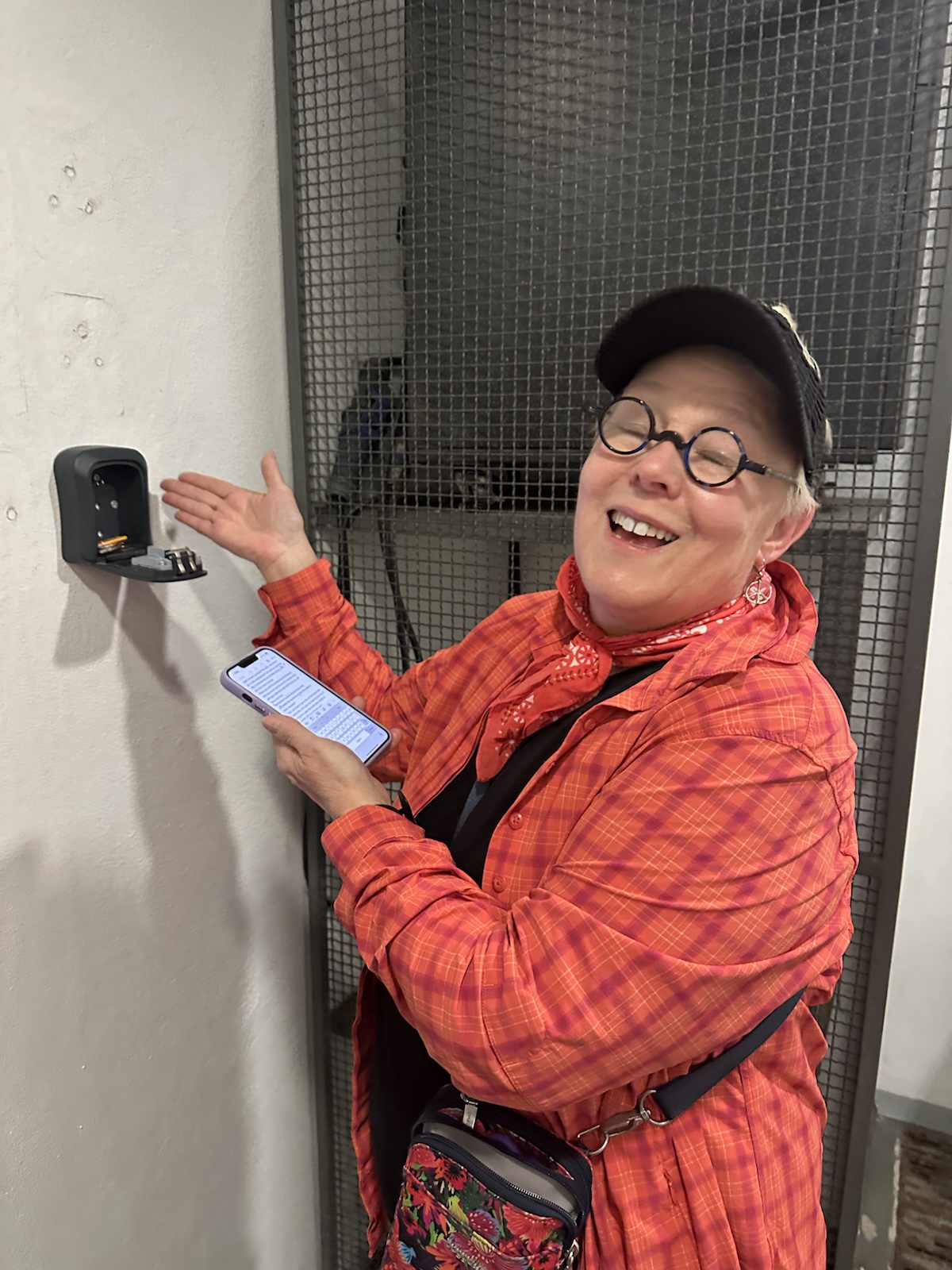
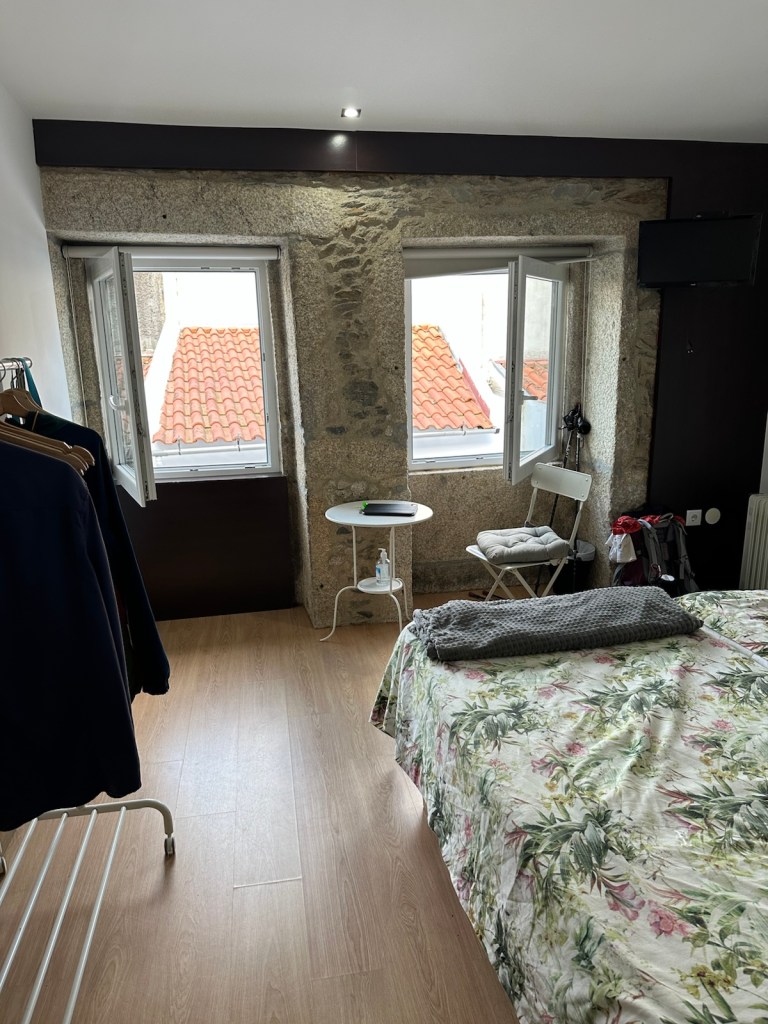
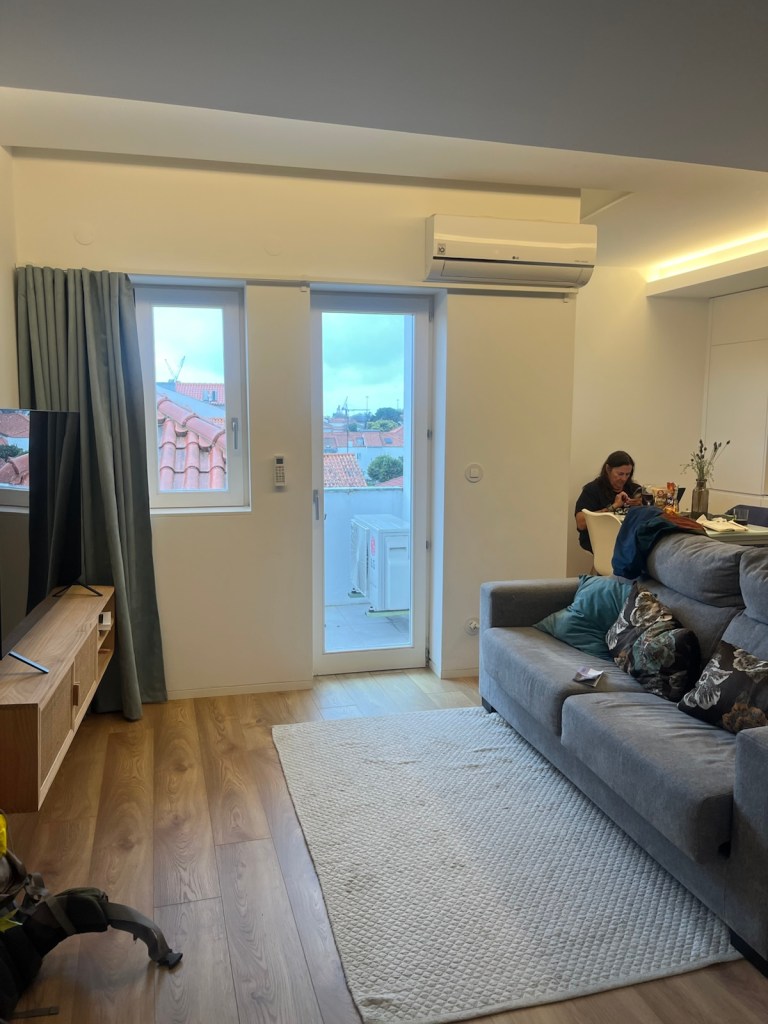
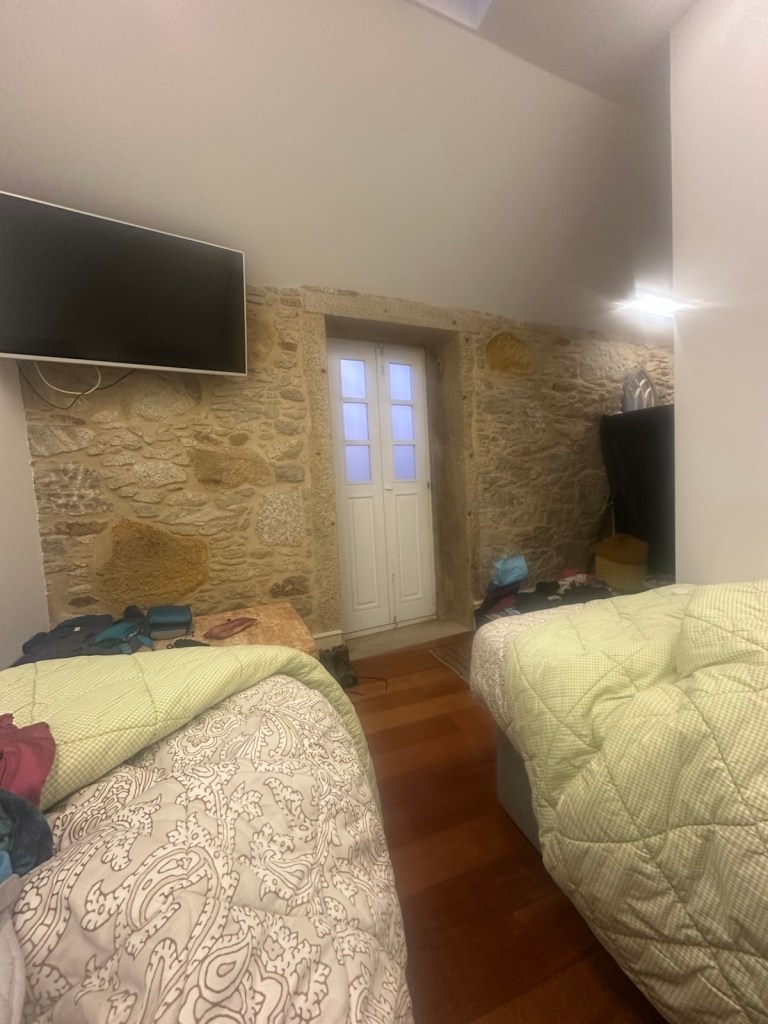
Our journey ended five stories up — no elevator — with a surprisingly lovely little apartment, complete with room to breathe and a private terrace under the open sky. The property manager was confused too. His information from Bookings.com was as minimal as ours and he assumed we had mistakenly double-booked … as if we’d choose to hike up and down five flights of stairs with backpacks. It all worked out and the bottom line … misadventure turned into an upgrade.

Today’s challenge: reach the hilltop church without climbing the hill. It turned into yet another treasure hunt — this time for the elusive funicular, cleverly camouflaged in the hillside brush.
Our digital map, ever the trickster, insisted we head to the top station instead of the bottom. Frustration brewed. But then, crossing a bridge, we spotted the tracks below — proof it actually existed.
A few wrong turns later, we finally cracked the code. Mission funicular: accomplished.
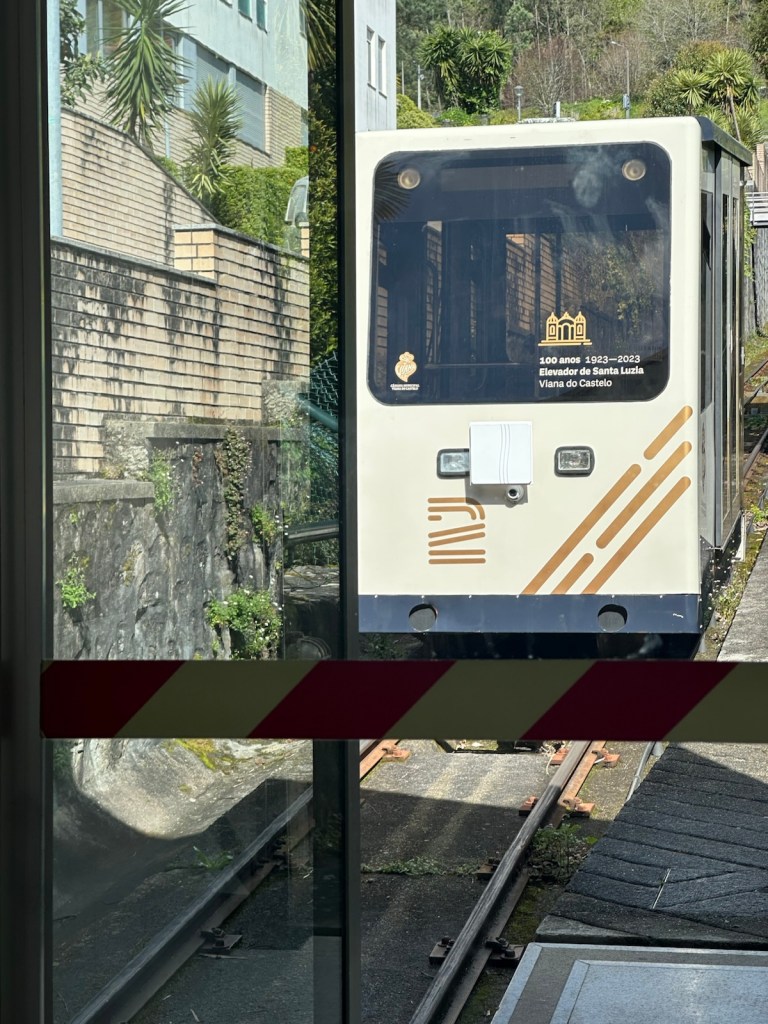
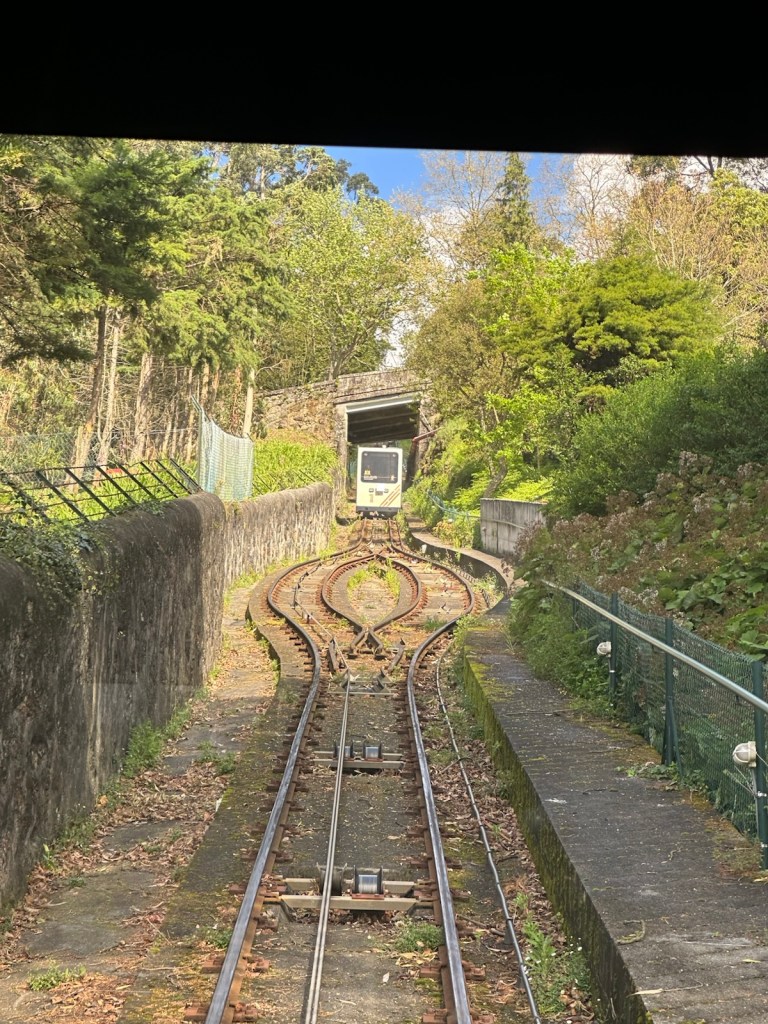
A funicular is a cable car for hills. It’s a rail-based system designed to carry passengers up and down steep slopes using two counter balanced cars connected by a cable — one goes up while the other comes down.
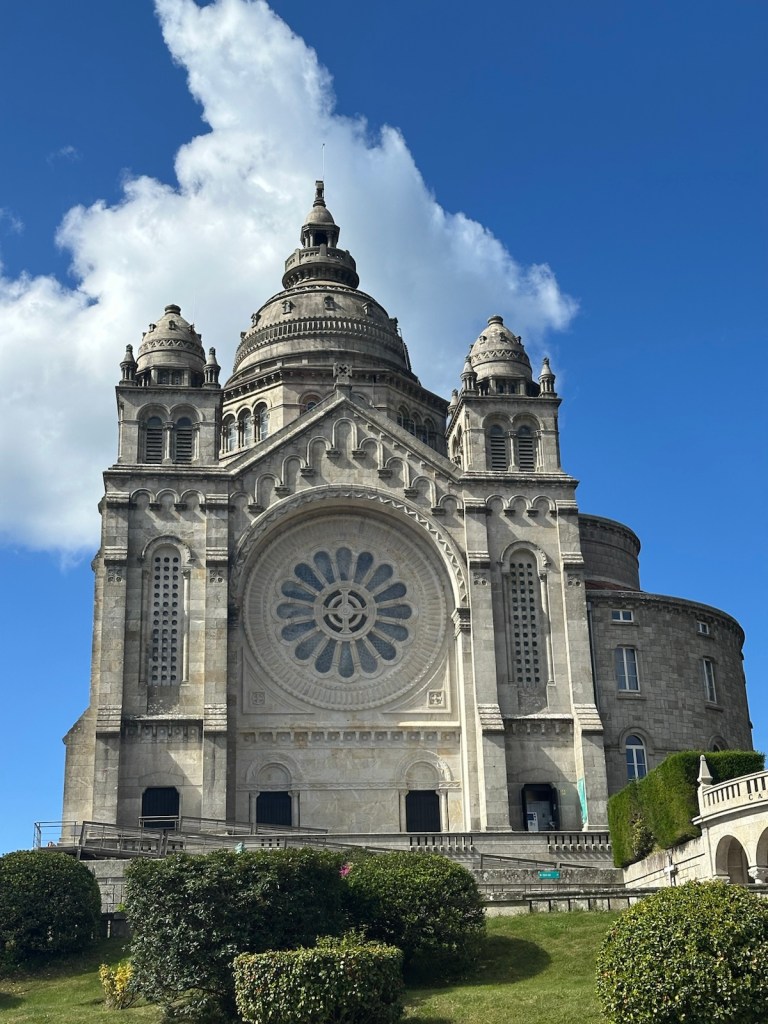
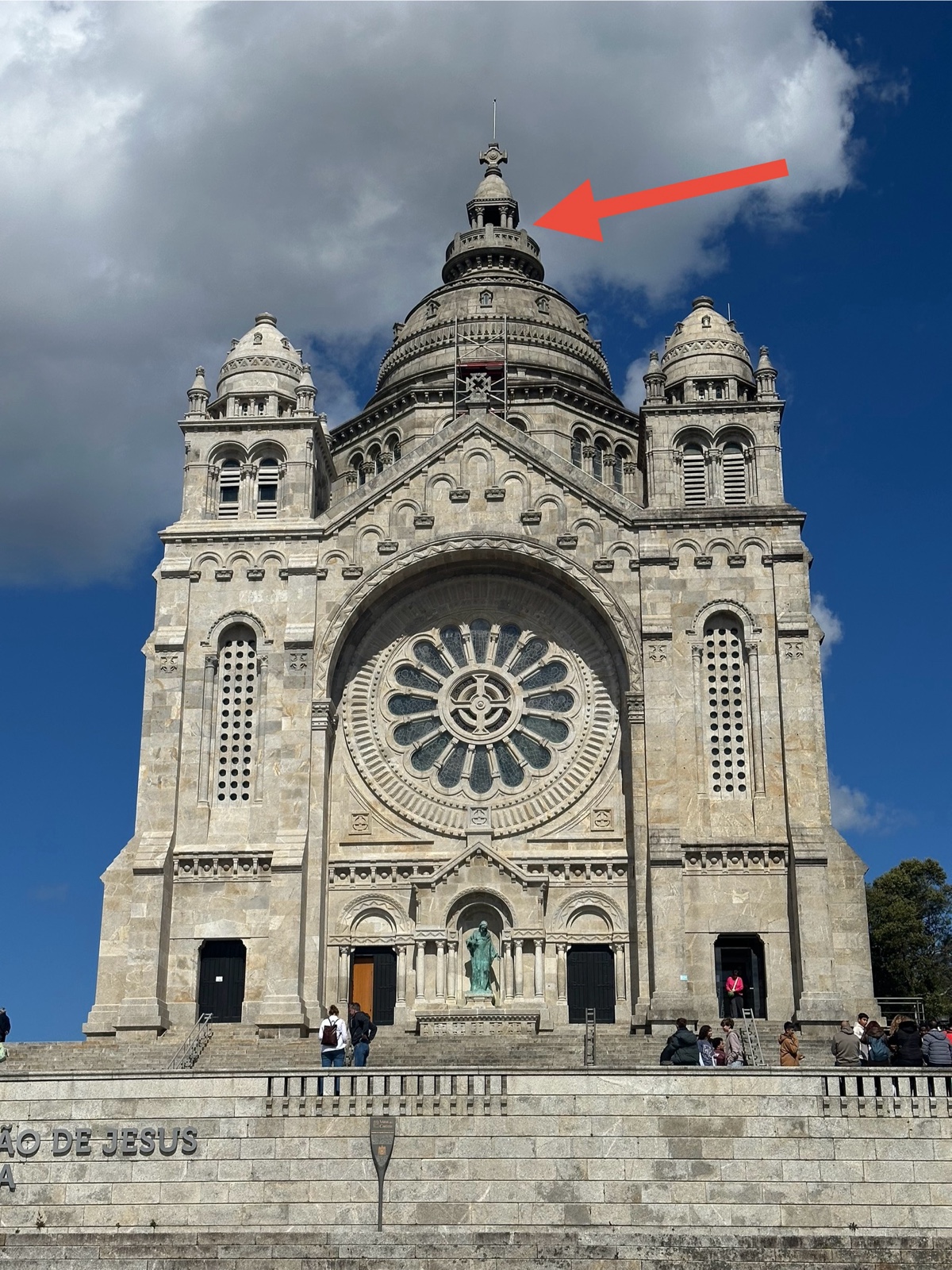
When we finally reached the church — mistakenly expecting a cathedral — we were surprised by how small the interior felt. Back home, our cathedral has a similar grand exterior and seats around 3,000. Ironically, the towering Santuário de Santa Luzia, with all its architectural drama, seemed like it might struggle to seat even a few hundred. A case of monumental on the outside, modest on the inside.
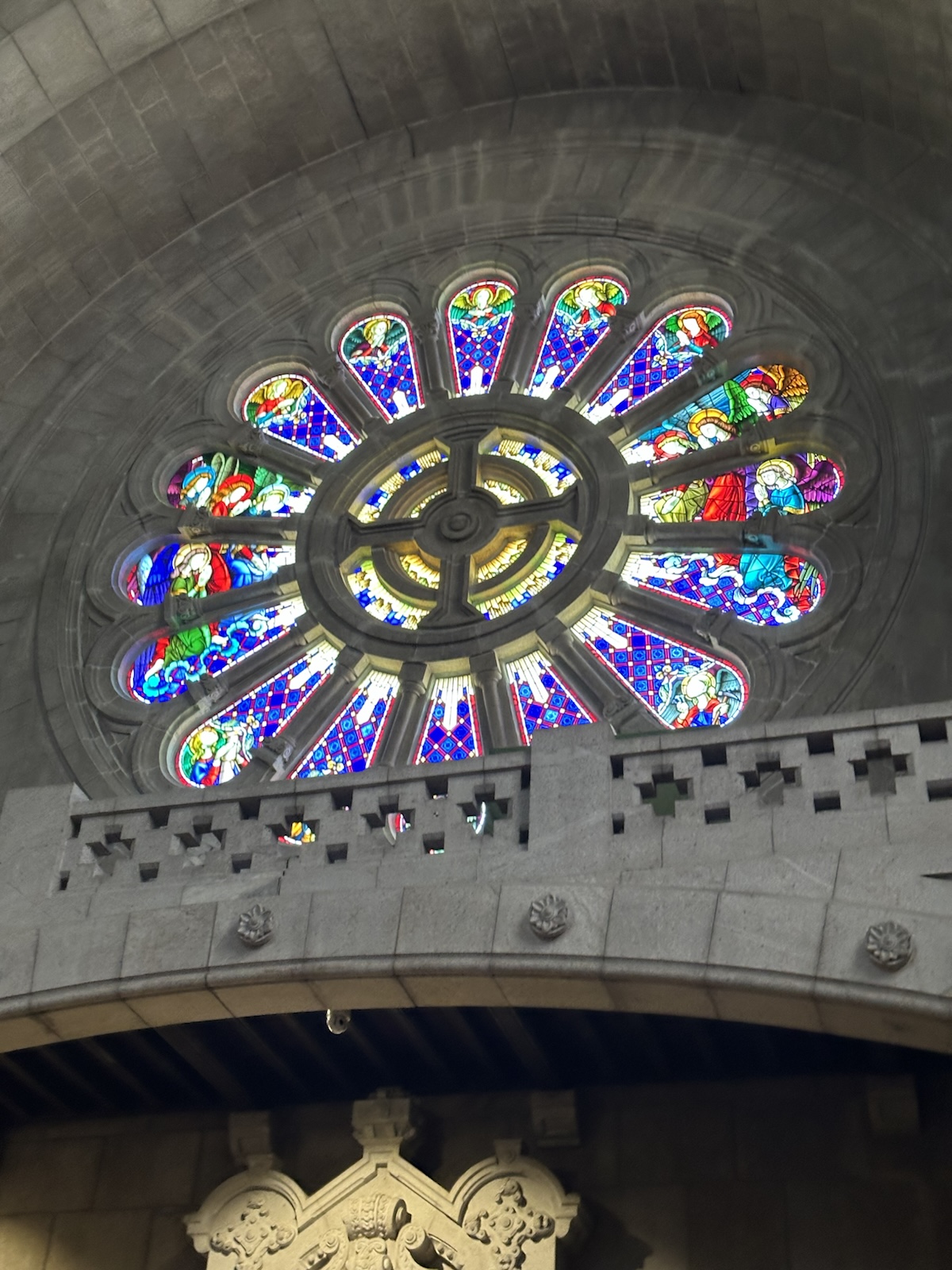
There was nothing modest about the decor, however. The interior is adorned with intricate frescoes and sculptures, highlighting the craftsmanship of the era. Its most striking features are the massive rose windows, considered the largest on the Iberian Peninsula.
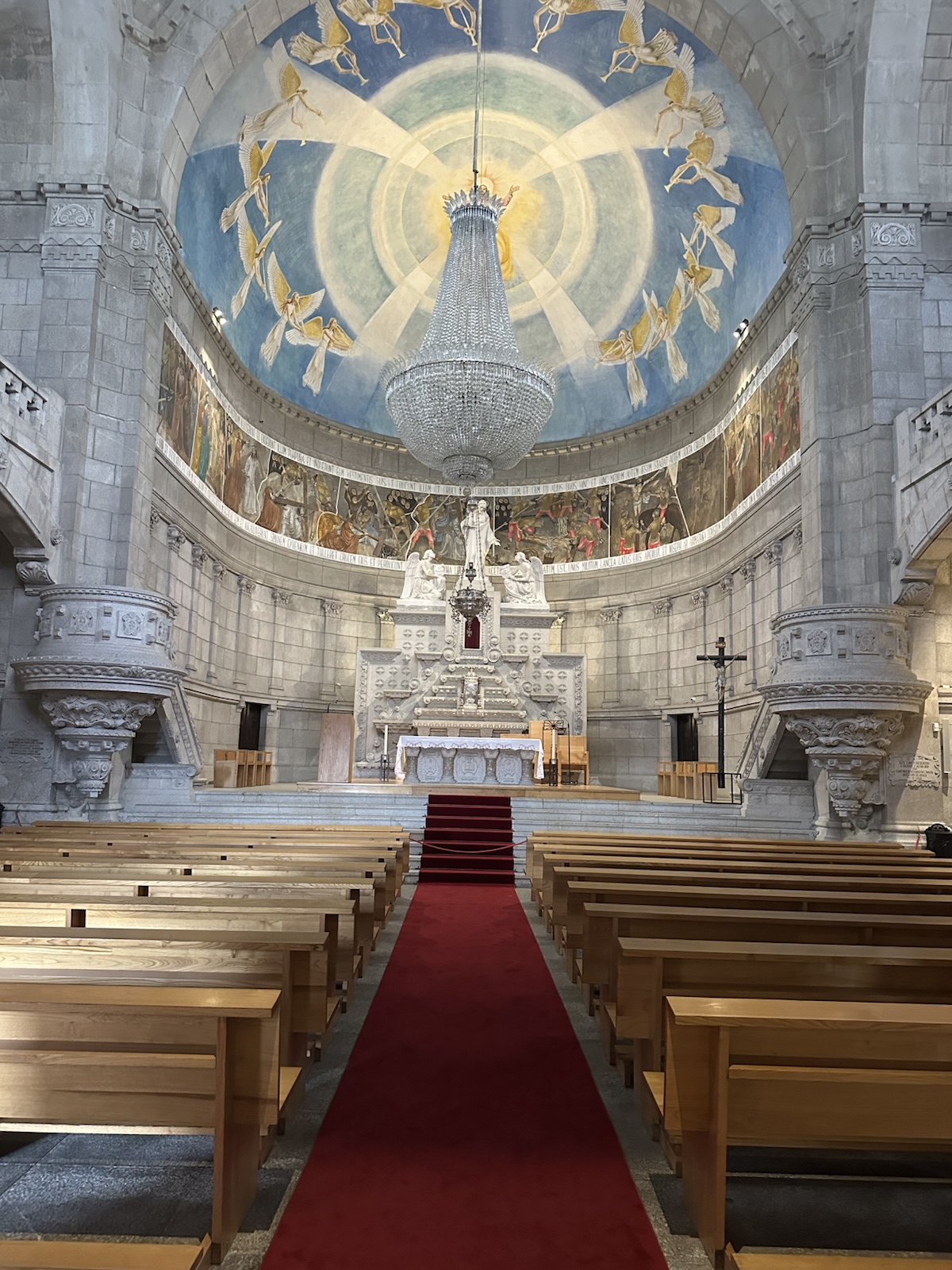
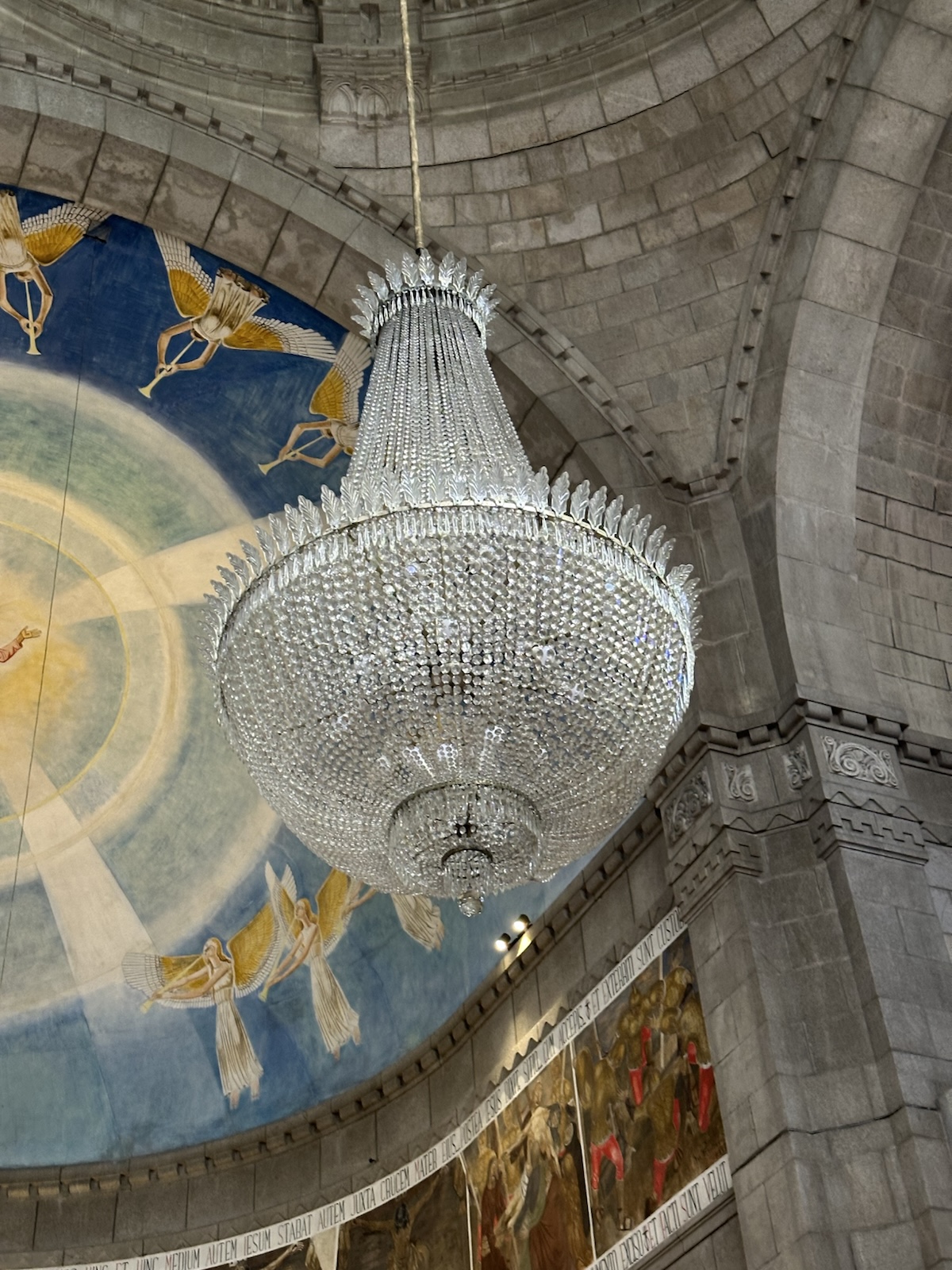
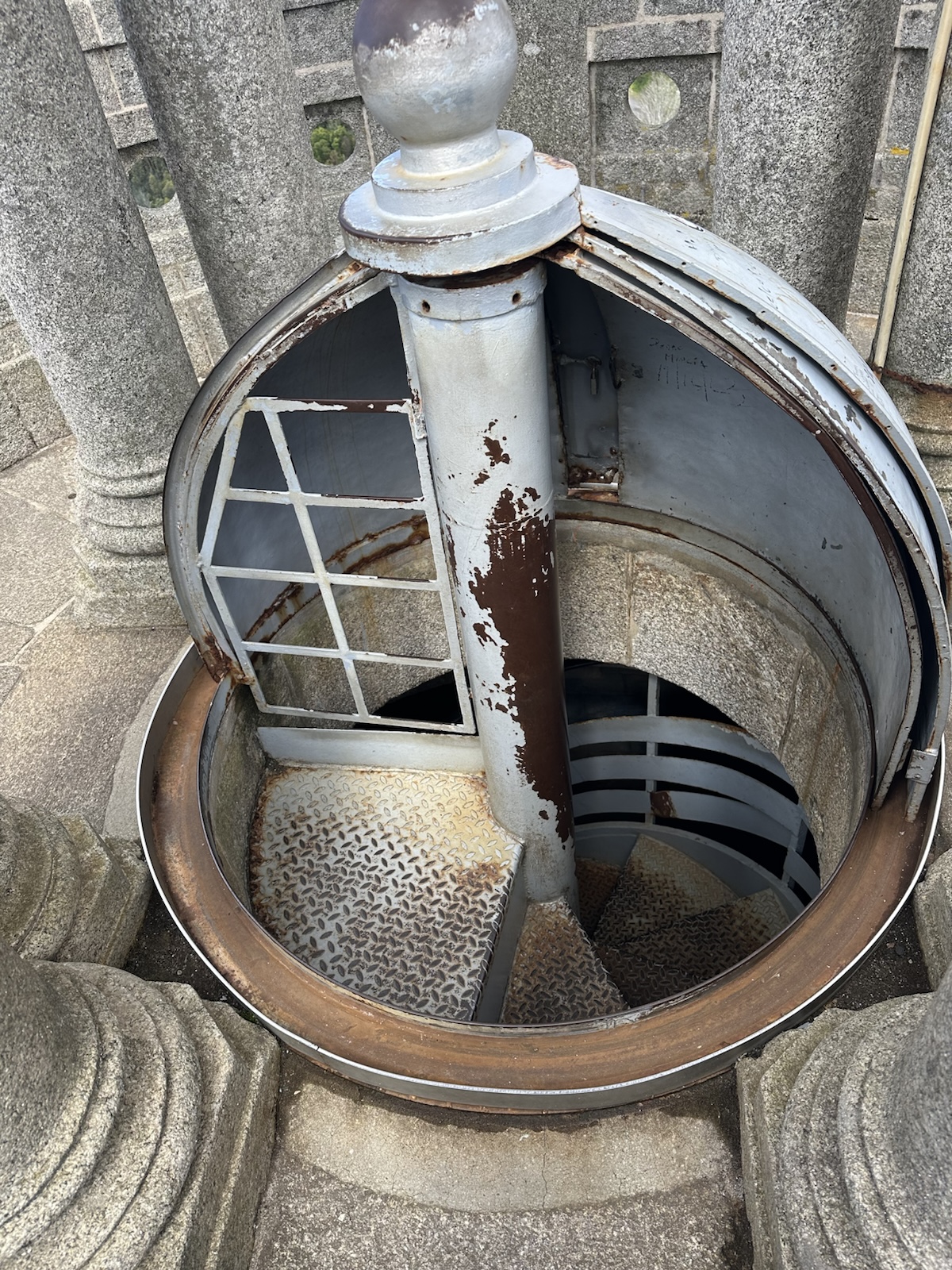
On the exterior of the Santuário, we discover an elevator that cost a euro — not sure where it led, we hopped in. It led us to the interior dome of the structure. We found a narrow stone passage. Theresa started up the narrow stone stairwell with her backpack on but quickly realized this was not her kind of adventure. She bailed, wisely.
This blind passage was managed by a red-green traffic light — because yes, it was that tight. Brave but not reckless, I waited for the green and followed two fellow adventurers into the gopher-hole-sized entry, ready to take on the mystery climb that lay ahead.
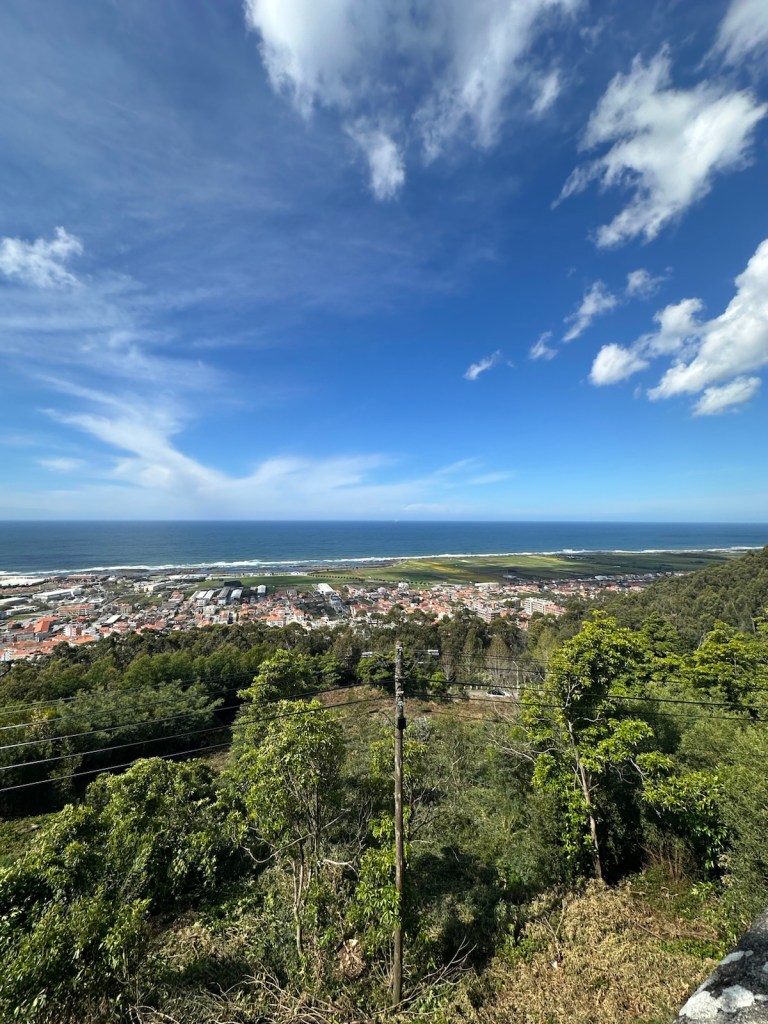
The blind passage opened to a small but cavernous landing with yet another spiral staircase — this time a metal staircase twisting higher still. At the top, we emerged like gophers from a hole — right into the dome, rewarded with frighteningly high, jaw-dropping, panoramic view of the world below.
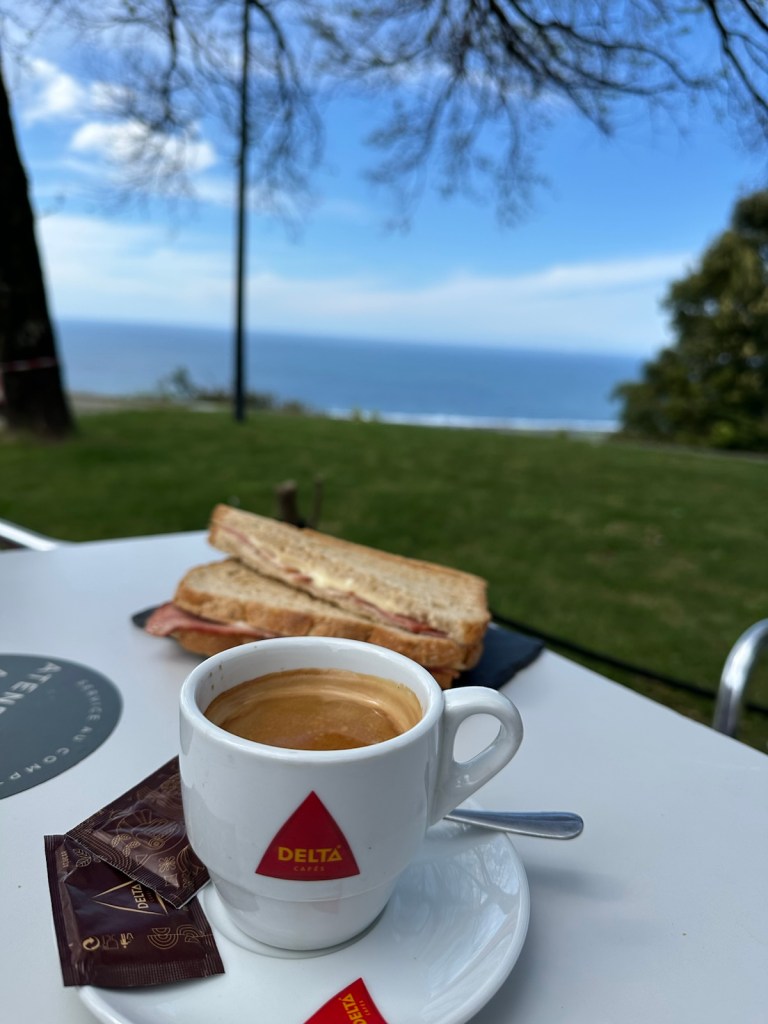
Behind the Sanctuário is a serene little park with a notable statue of Saint Lucy, the patron saint of sight. The statue stands as a tribute to her significance and offers visitors a place for reflection.

Adjacent to the Sanctuário are the ruins of the Citânia de Santa Luzia, an ancient pre-Roman hillfort settlement dating back to the Iron Age, offering additional historical intrigue to the site.
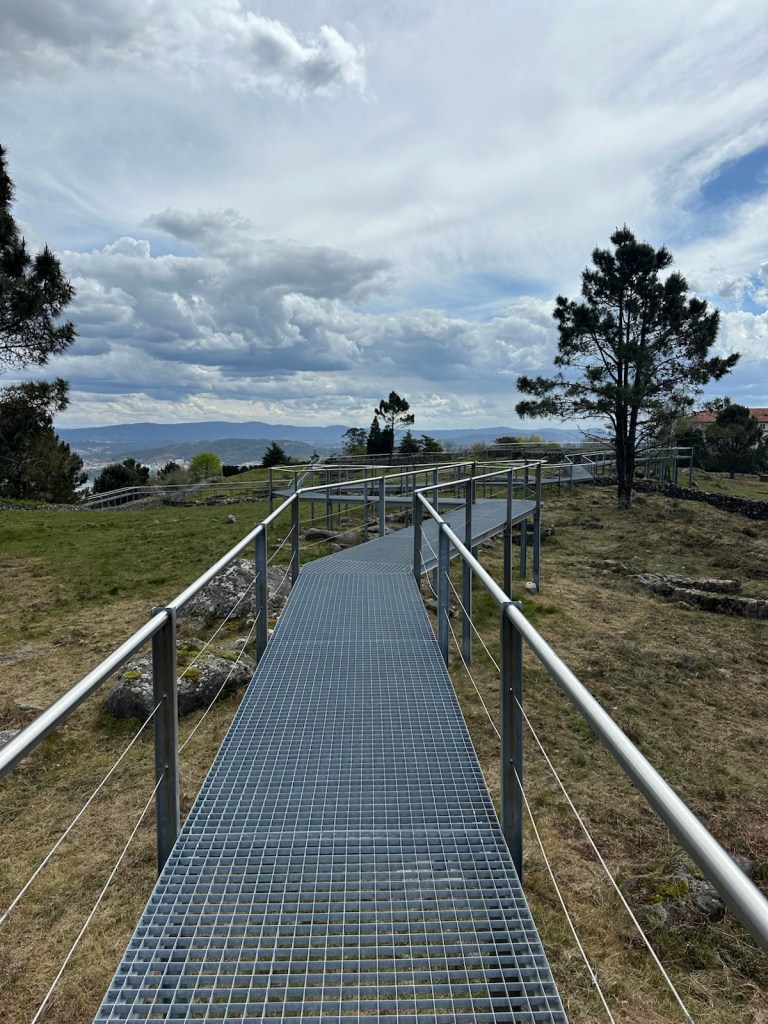
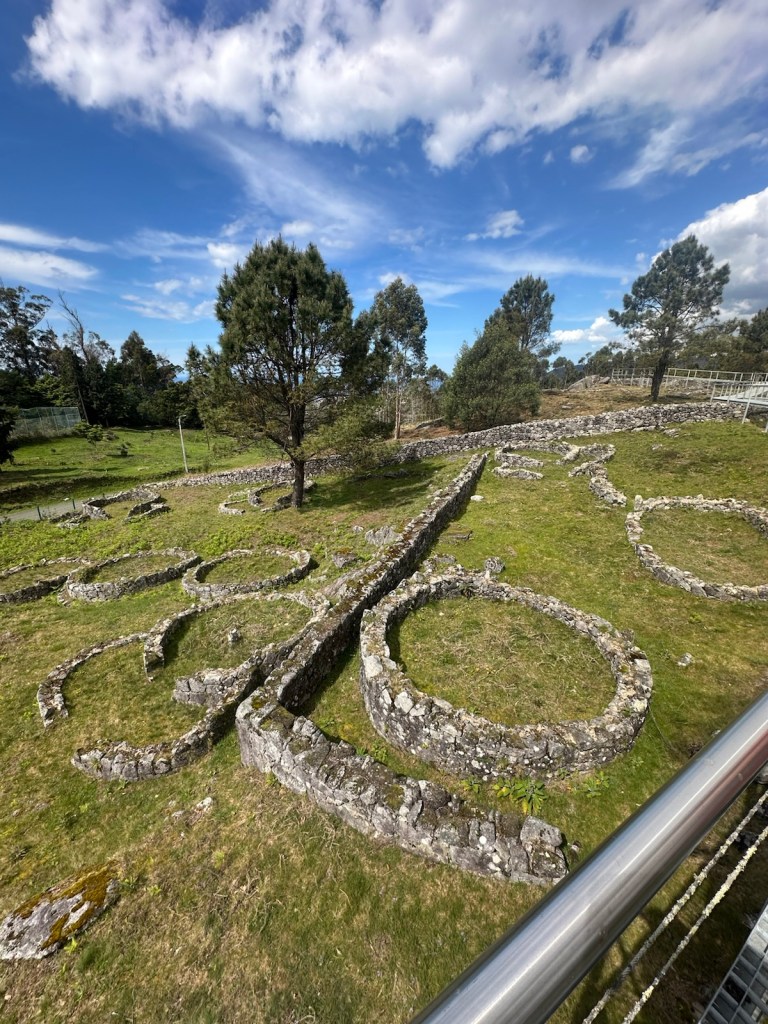
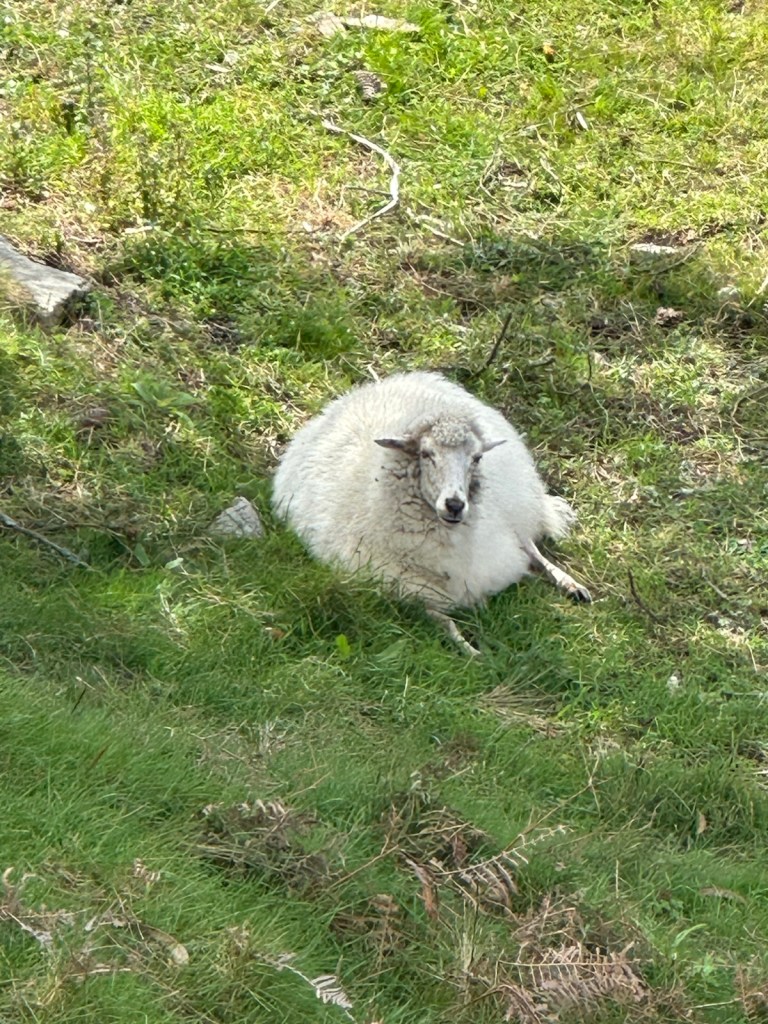
between the Sanctuário de Santa Luzia and the ruins.
One more fascinating discovery was made from our global view on top of Monte de Santa Luzia — we could see the WindFloat Atlantic project — a pioneering floating offshore wind farm situated approximately 12 miles off the coast.

commitment to renewable energy.
WindFloat Atlantic is the world’s first semi-submersible floating offshore wind farm, utilizing cutting-edge technology that allows wind turbines to be installed in deep waters previously inaccessible for such projects. Per WindFloat Atlantic, it supplies electricity to approximately 25,000 Portuguese households annually and helps avoid the emission of 33,000 tons of CO2 each year.
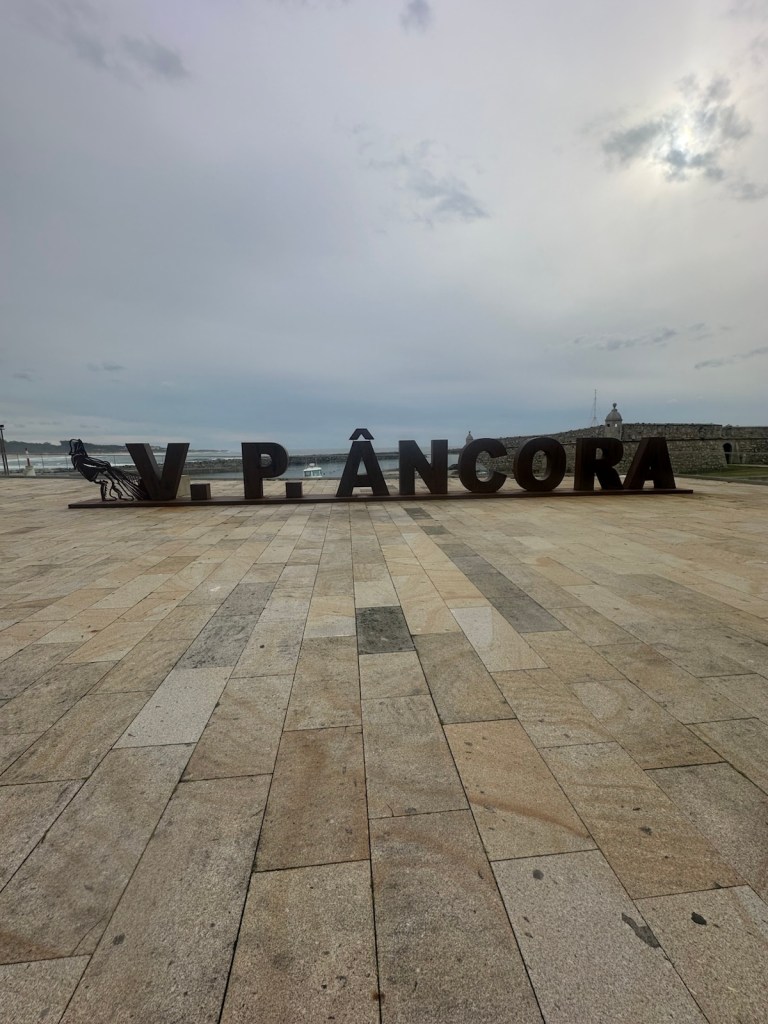
Vila Praia de Âncora is a small coastal town with a beautiful, laid-back beach. It’s where the Âncora River meets the Atlantic Ocean, creating a picturesque setting that blends golden sands, dunes and rugged coastline with a peaceful, small-town vibe.

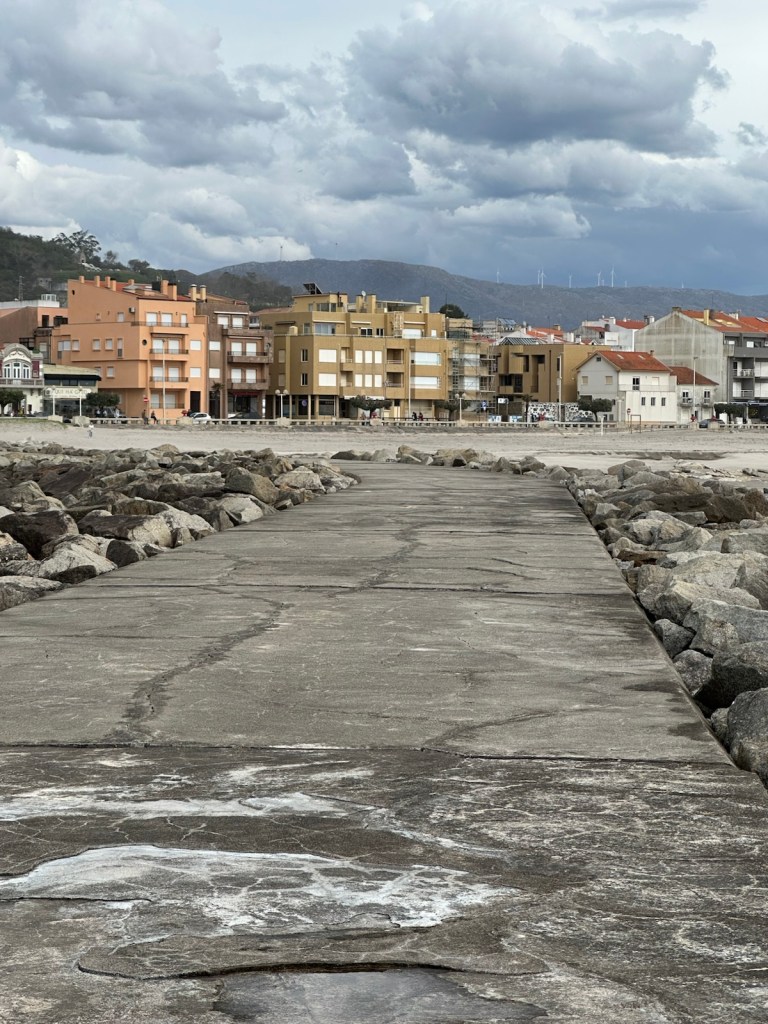
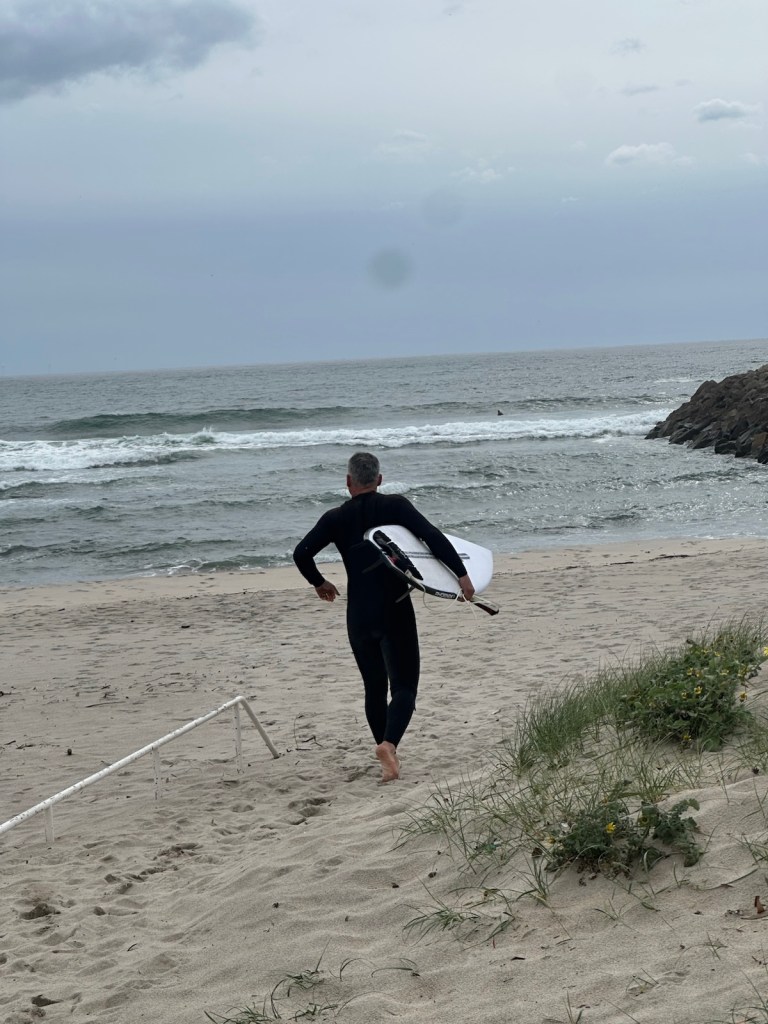
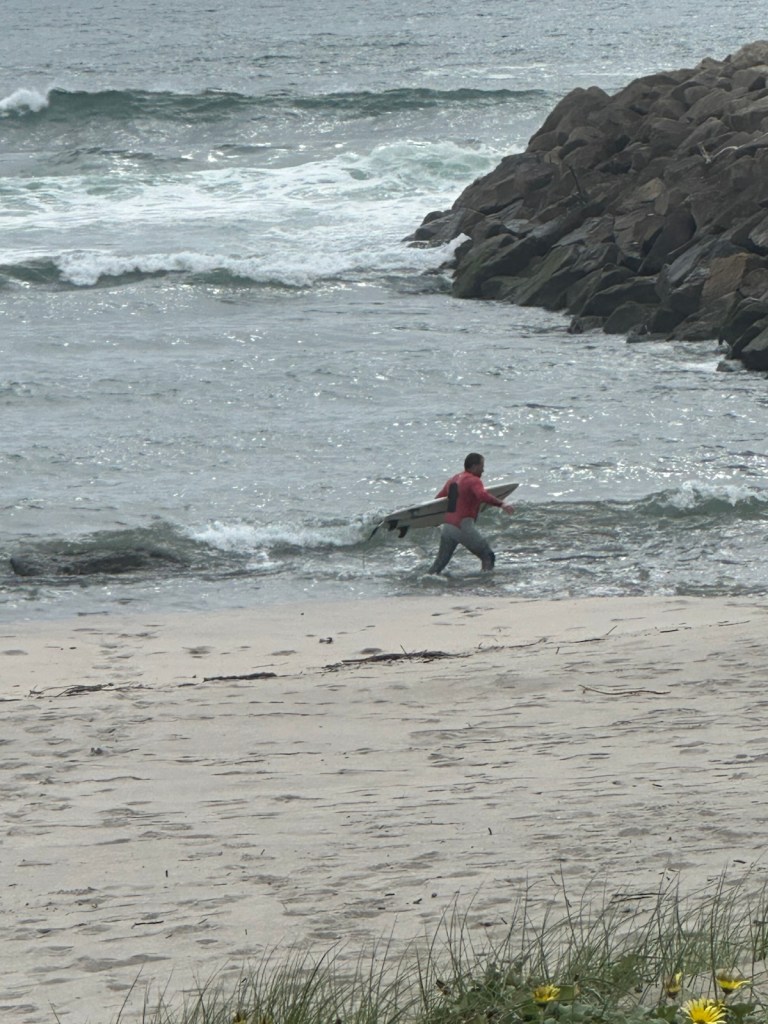

Our journey through Portugal is winding down, but there’s still one last adventure ahead before we enter Spain. Stay tuned for a memorable “ferry crossing” over the Rio Minho — a scene not unlike Washington crossing the Delaware, but with a Portuguese twist.
Ciao ciao from beautiful Âncora!
 Jane in Spain