Bayeux even has its own little tourist train that rattles through medieval streets, past the cathedral, historic landmarks and reminders of the city’s wartime past. We took a 45-minute spin through town and learned that Bayeux was the first French city liberated after D-Day. Unlike many Norman towns, it escaped major bombing and destruction, leaving much of its medieval character intact.
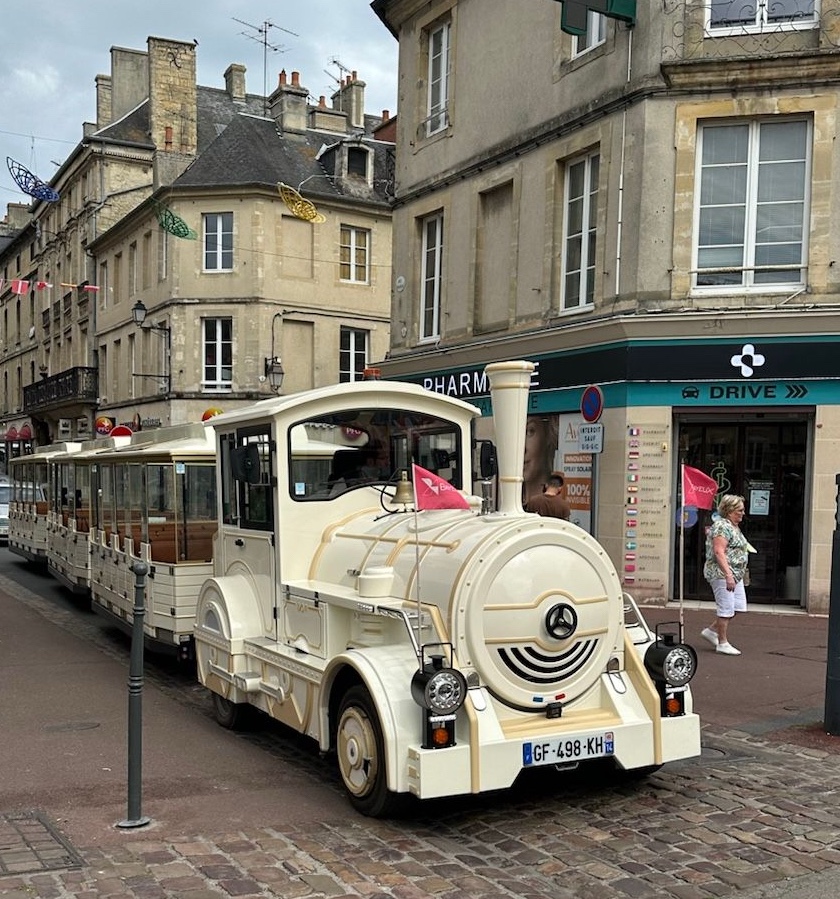
Along the route, we passed monuments honoring the Allied forces and the civilians whose lives were forever changed by the war. The train also travels by the Bayeux War Cemetery, the largest Commonwealth (British) cemetery in France, where more than 4,000 soldiers are buried. These memorials serve as a powerful reminder that the peace and charm visitors enjoy in Bayeux today came at a tremendous cost.
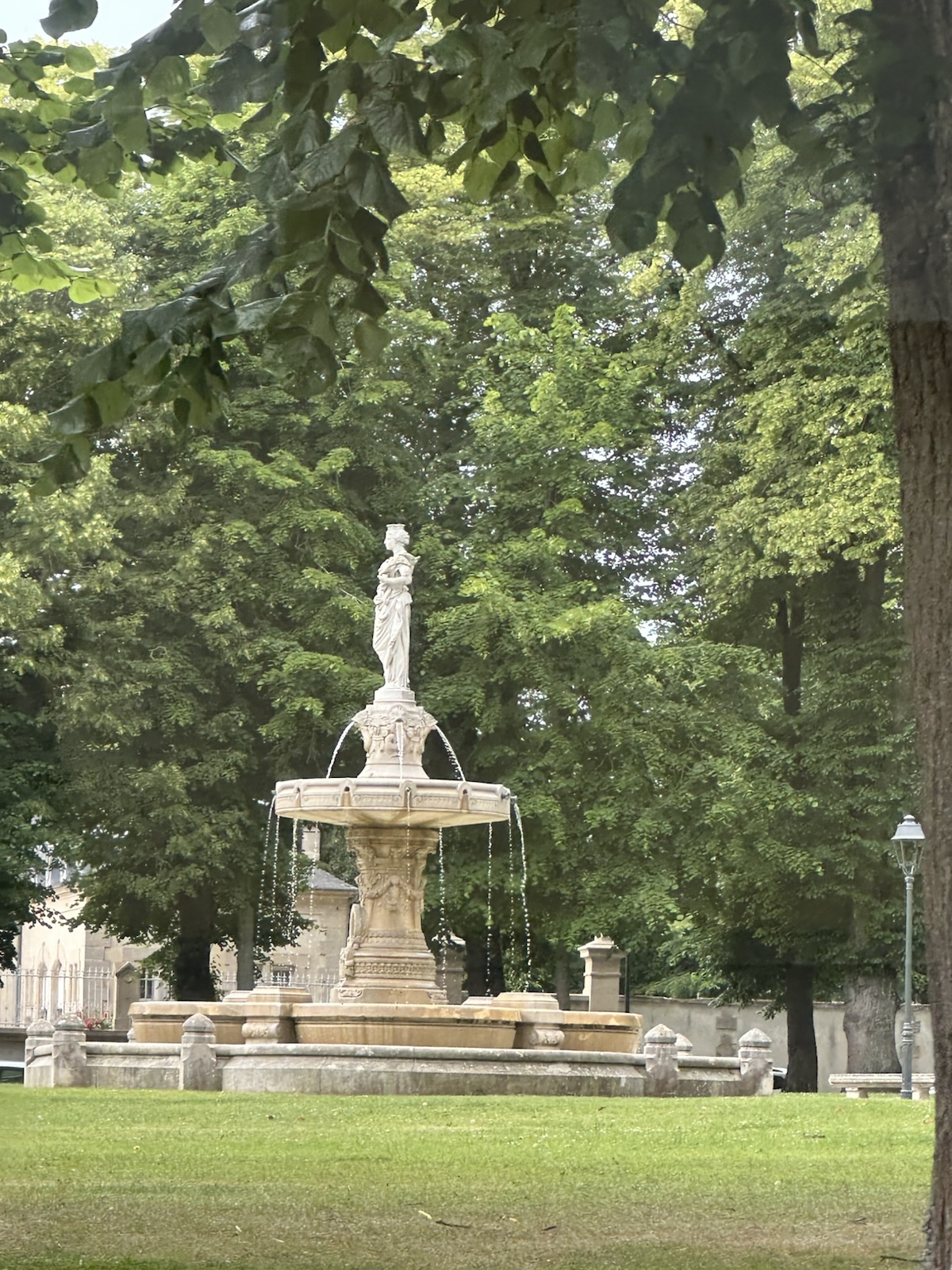
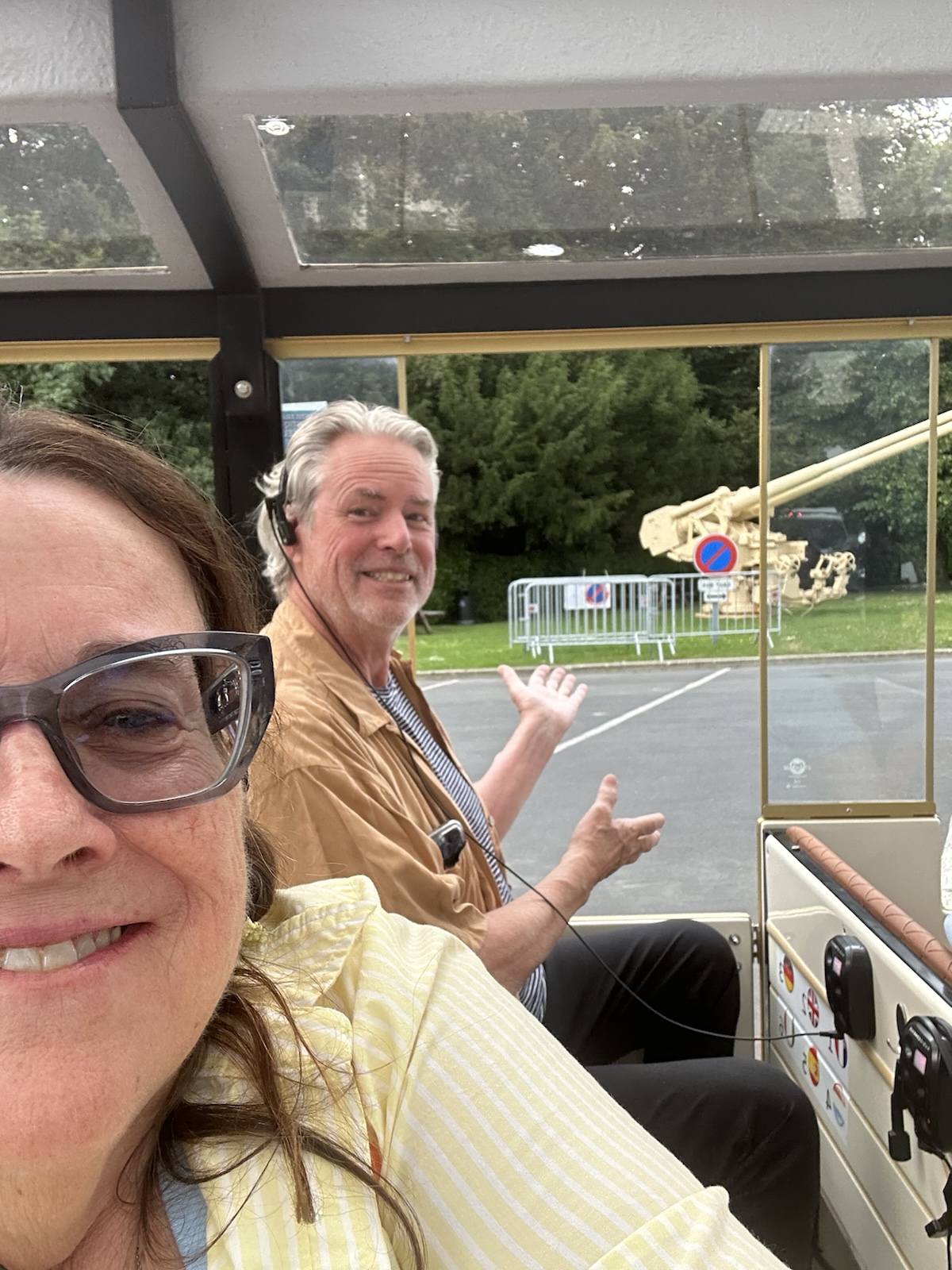
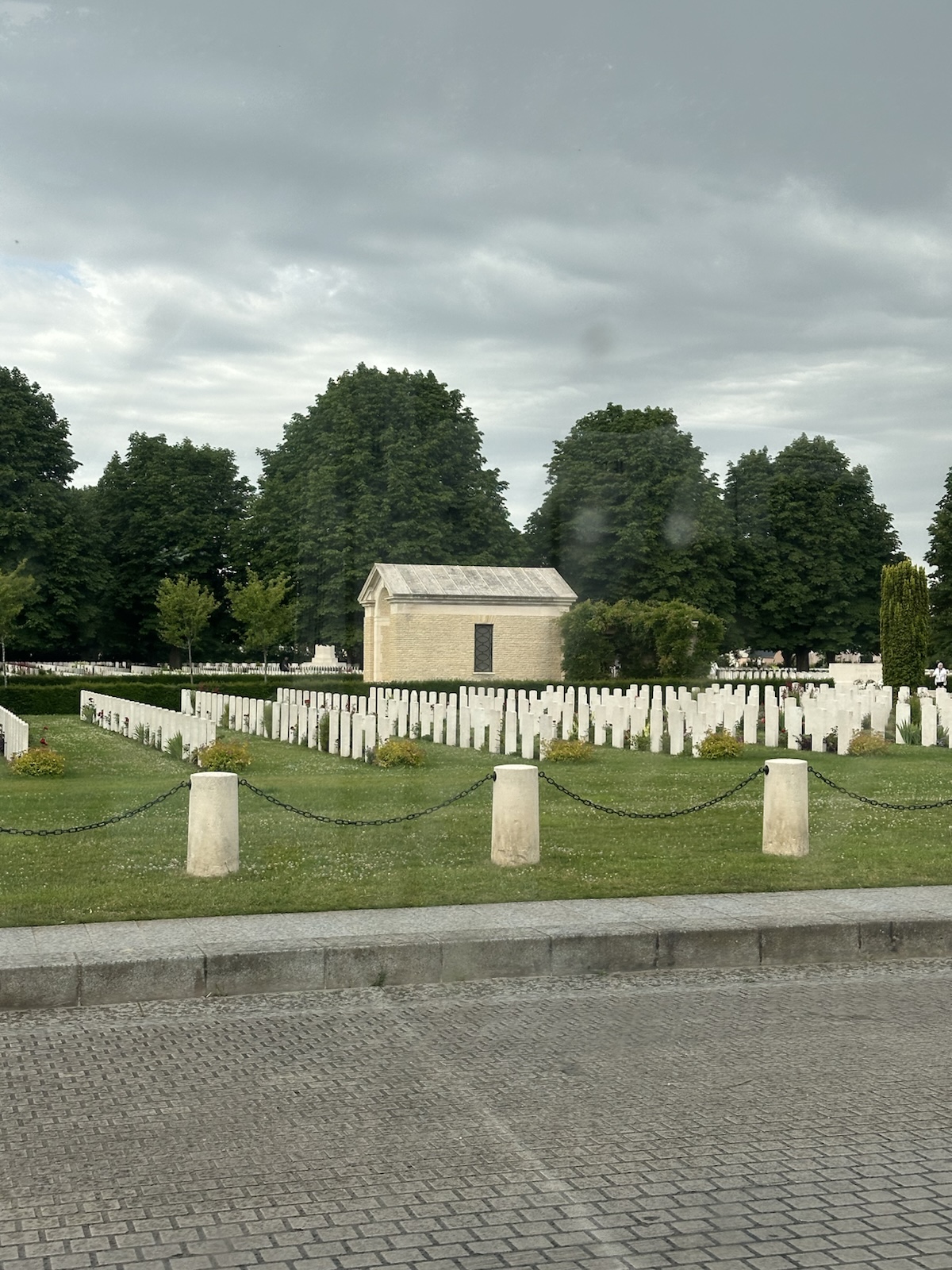
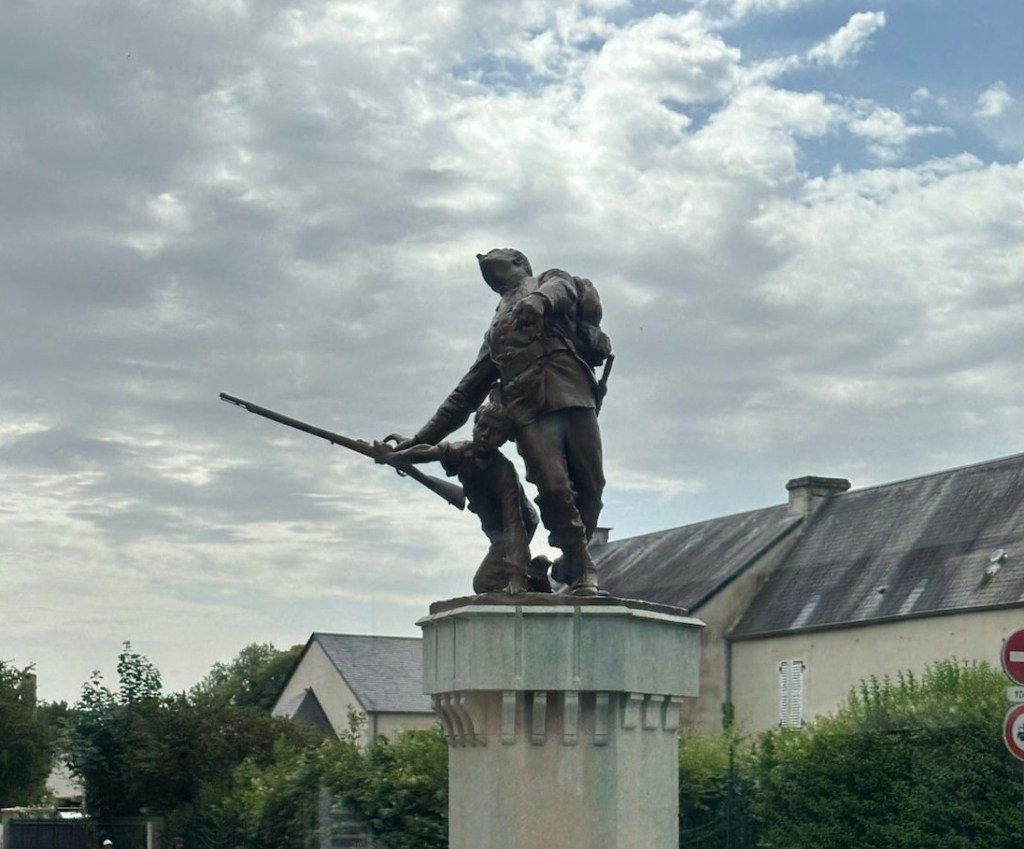
Our ride on Bayeux’s little tourist train was the perfect introduction to the city. As we rolled past historic landmarks, war memorials, and the Commonwealth (British) Cemetery, we gained a greater appreciation for Bayeux’s important role in World War II and the liberation of France.
After a two-week ramble through Scotland, Arne and Susan arrived in Bayeux ready for the next leg of the adventure. They flew from Glasgow to Paris the night before and made the drive to Normandy this morning. Once reunited, we spent some time doing what Bayeux does best — wandering.
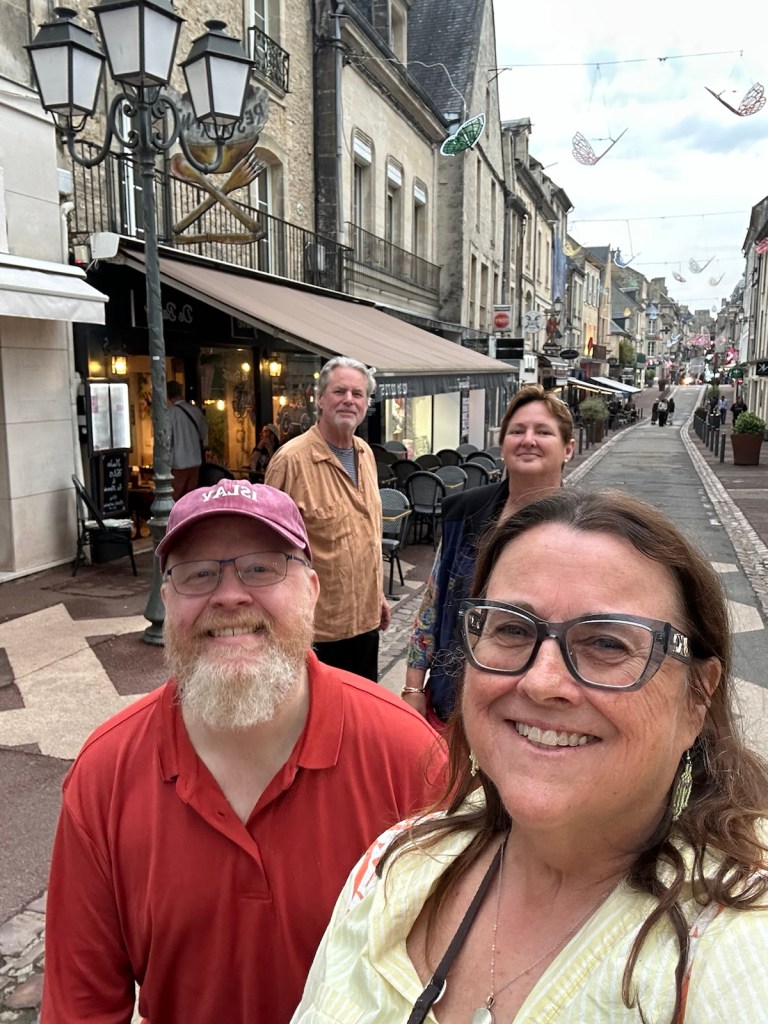
We meandered through the cobblestone streets, admired the half-timbered buildings, and introduced them to the charm of this historic town. It was the perfect way to help them get their bearings before diving into the history, beaches and stories that await us in Normandy.
Our Normandy adventures are being powered by a rental car called the Bigster, a roomy SUV built in Romania by Dacia. With plenty of space for four travelers, it’s proving to be a comfortable companion for exploring the French countryside.


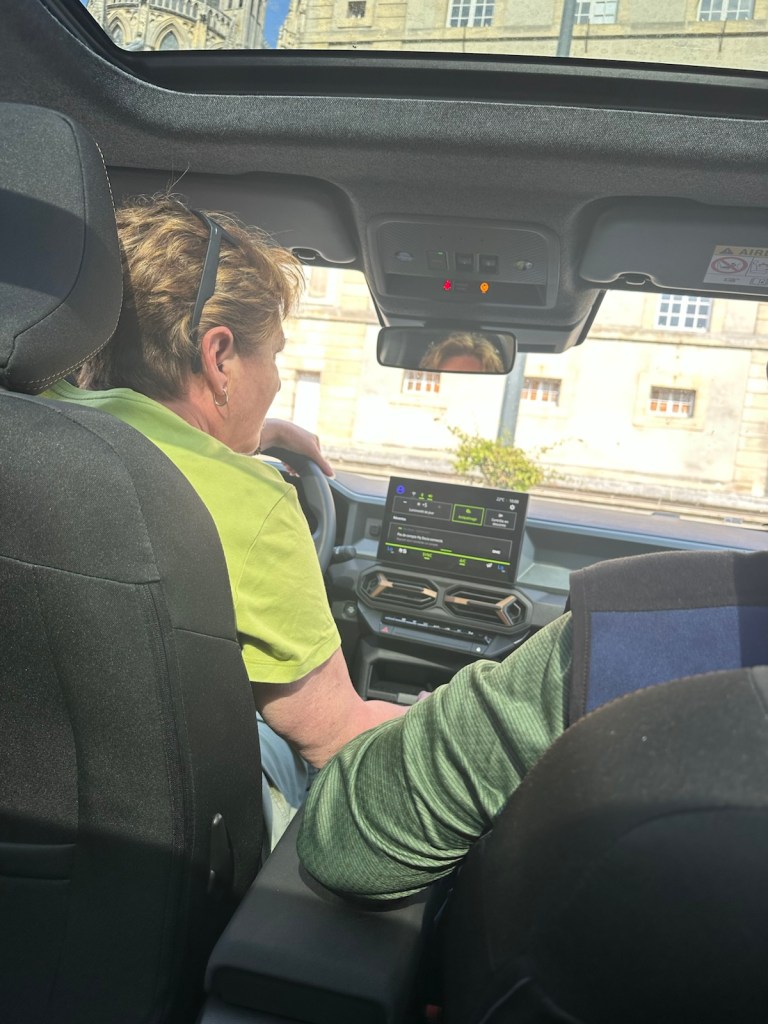
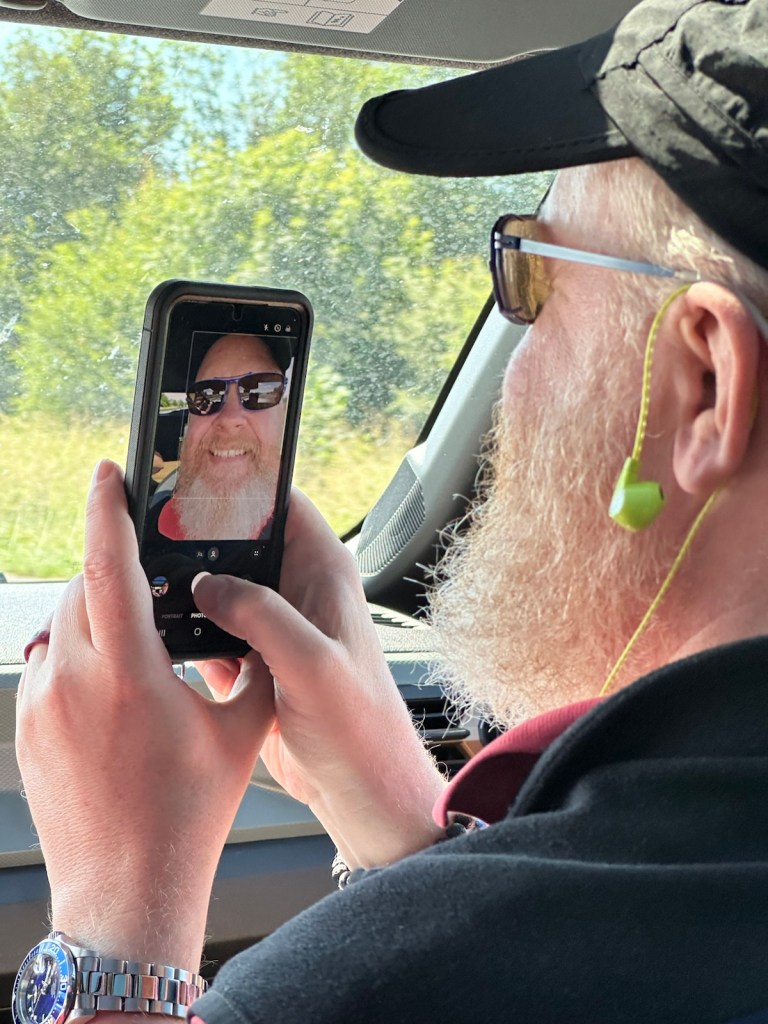
With Susan behind the wheel and Arne serving as chief navigator, we loaded up and pointed the Bigster toward the picturesque harbor village of Honfleur. As the Norman countryside rolled by outside the windows, we were off on another day of discovery.
Our first stop on the way to Honfleur was Père Magloire, one of Normandy’s best-known producers of Calvados, the region’s famous apple brandy. Normandy’s cool climate and abundant apple orchards make it the perfect place for producing cider and Calvados.
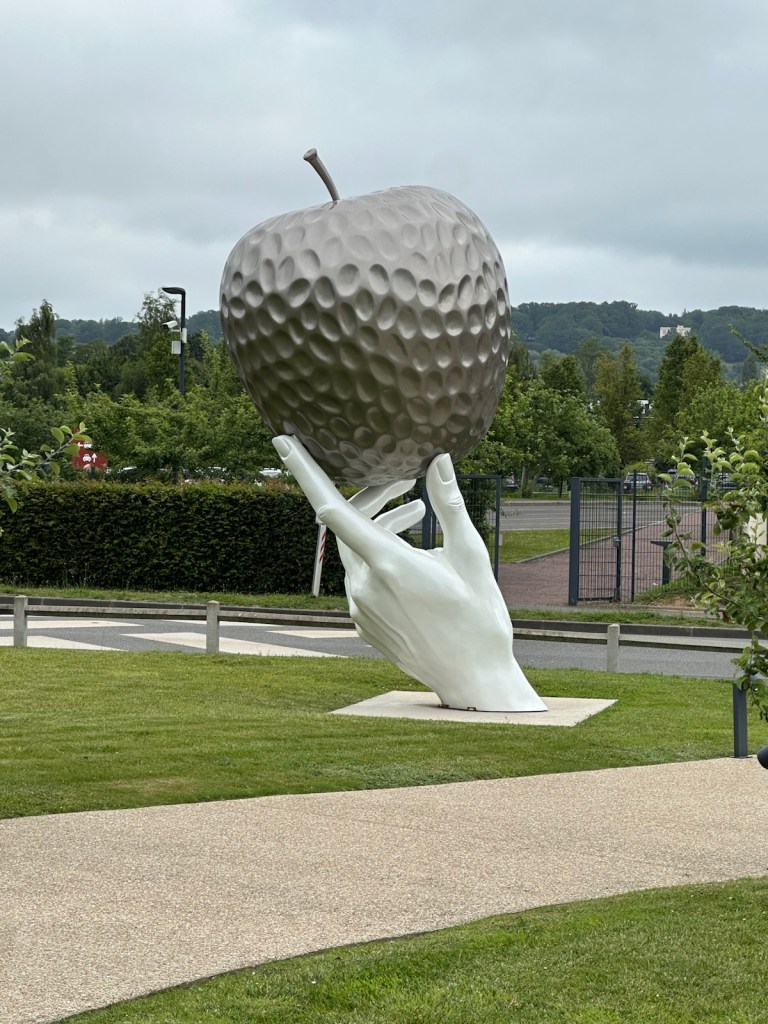
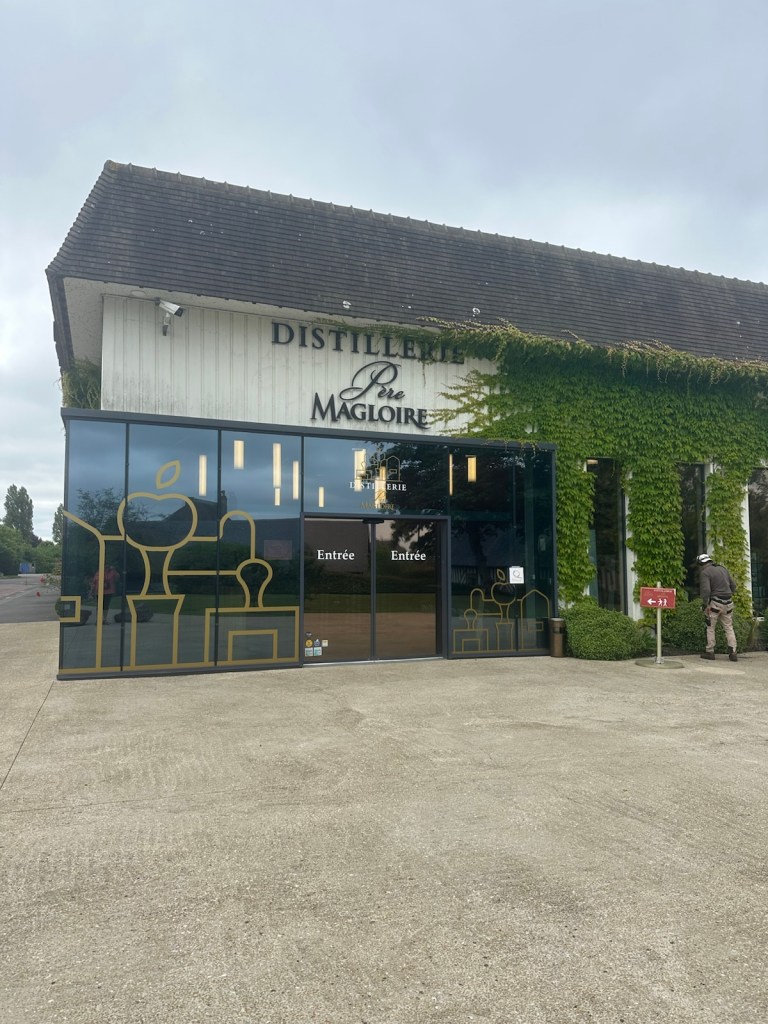
This was a surprisingly impressive tour. It was just the four of us, and the experience felt almost magical from the start. We were guided into a room with four chairs facing a giant screen where the story of Normandy’s apples began. When the short film ended, a door silently slid open, inviting us into the next chapter of the experience.
Each room featured a new setting and a different part of the story — from apple orchards and harvesting to fermentation and distillation. As each segment concluded, another set of doors seemed to magically open, leading us onward. The seamless transitions made it feel less like a tour and more like being carried through a living story.
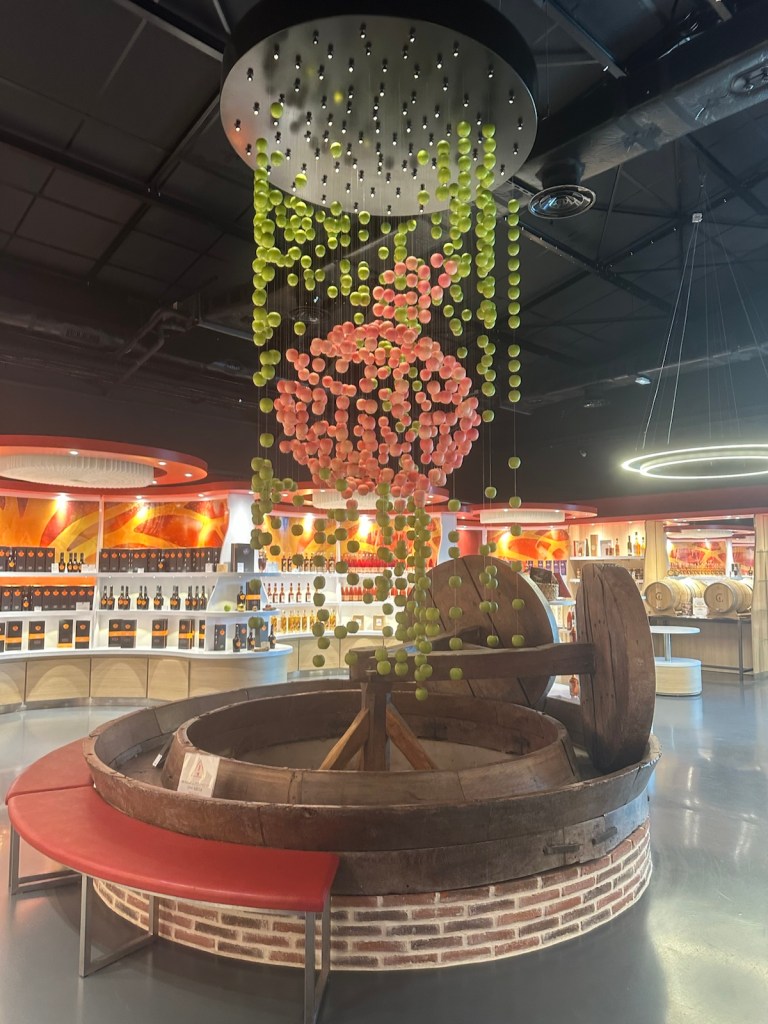
The immersive effects made the experience come alive. During a segment about the mechanical shakers used to harvest apples, a gentle breeze swept through the room and our chairs subtly vibrated as if we were right there in the orchard. Later, as the apples were being processed, the faint aroma of fresh apples filled the air. Each room seamlessly led to the next, combining video, sound, movement and scent to tell the story of Calvados production.
It was one of the most creative distillery tours we’ve experienced and, in many ways, reminded me of the immersive technology used at the Sphere in Las Vegas — on a much smaller scale, but every bit as memorable.
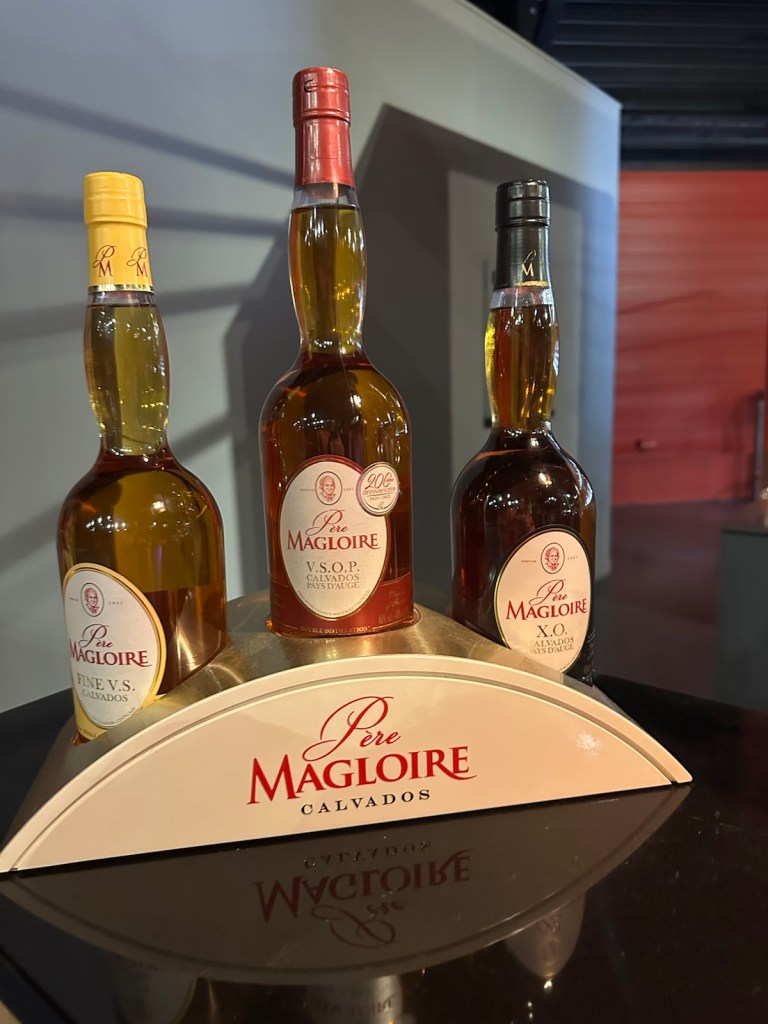
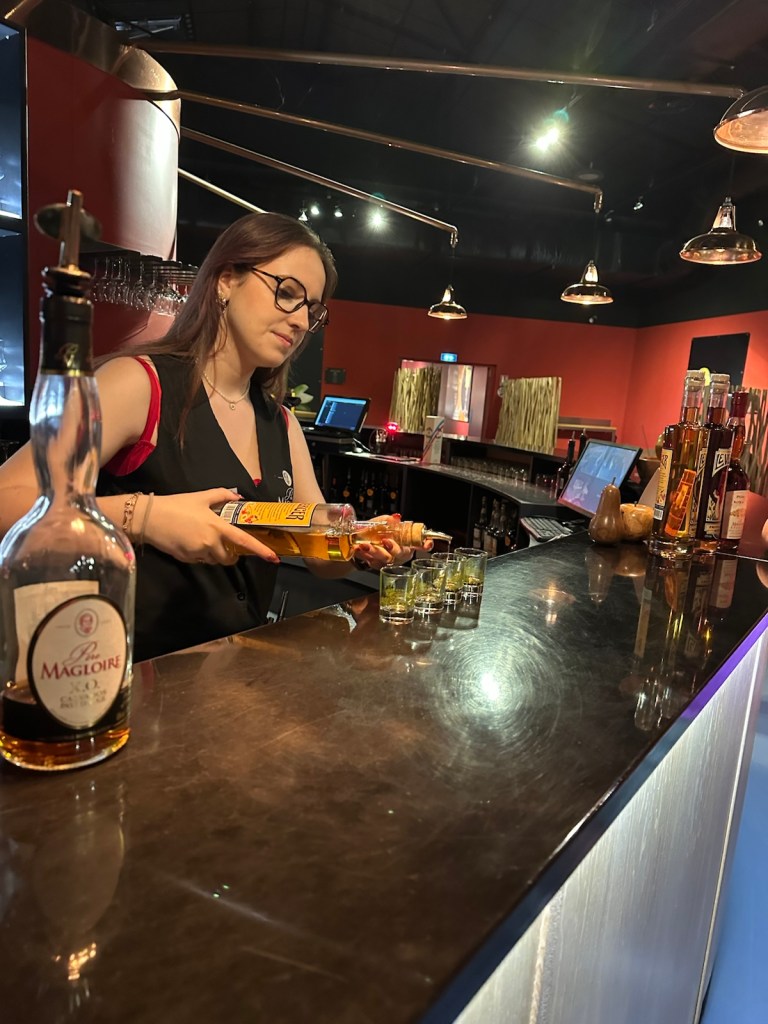
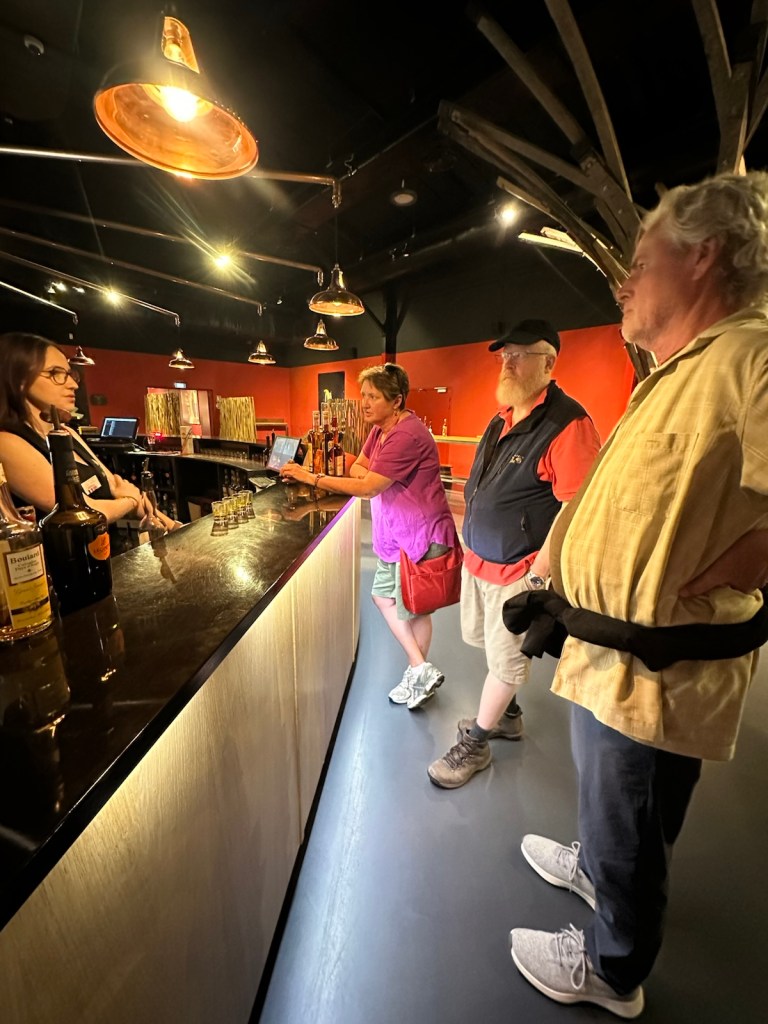
During our visit, we learned how apples are pressed, fermented into cider, distilled and then aged in oak barrels to develop the rich flavors that have made this spirit a symbol of Normandy for generations. Of course, the tour ended the way any good Calvados tour should — with a tasting.
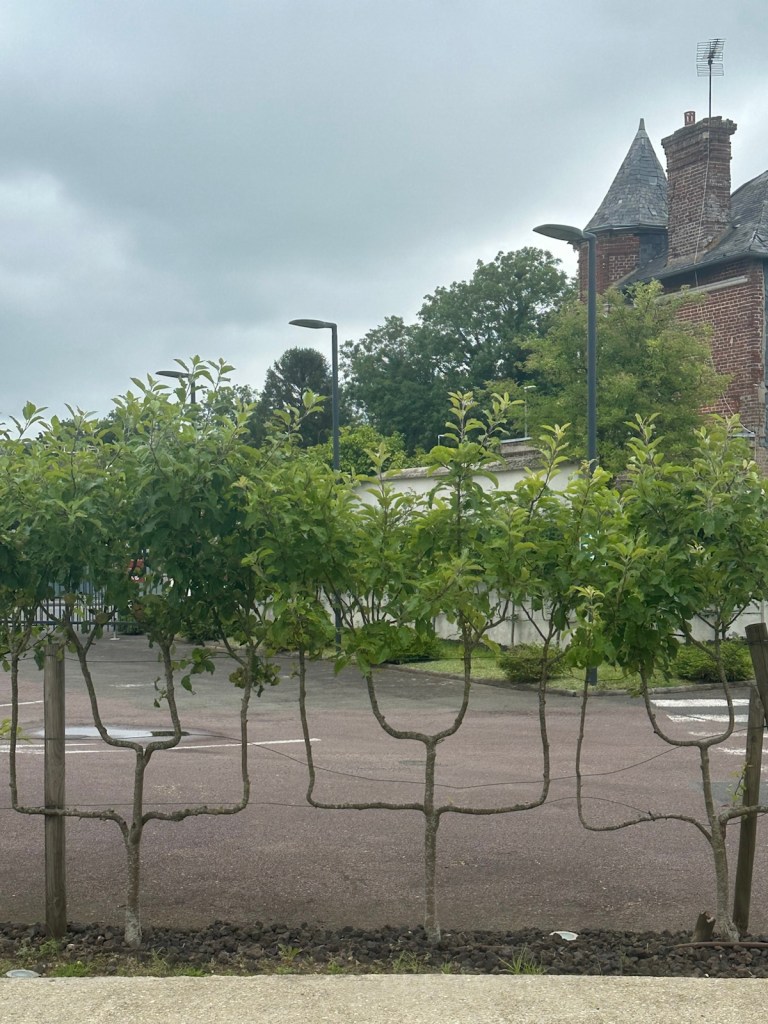
After being immersed in Normandy’s apple orchards, Calvados history, and a surprisingly high-tech distillery experience, it was time to trade apples for salt air. We climbed back into the Bigster and continued toward Honfleur, one of Normandy’s most picturesque harbor towns.
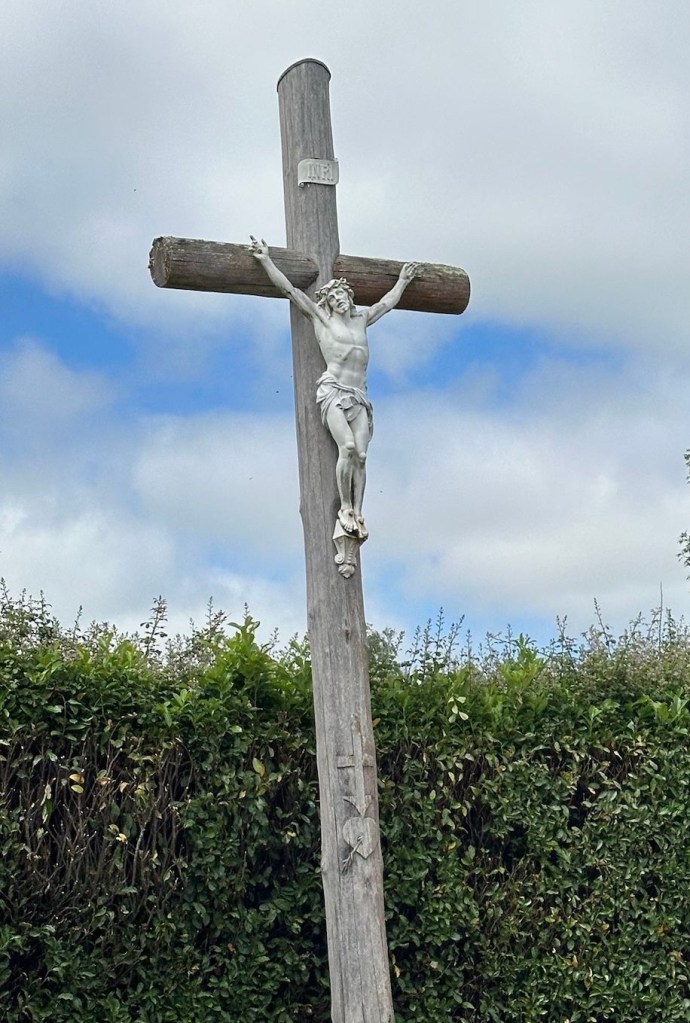
As we cruised through the Norman countryside, past rolling fields and grazing cattle, a larger-than-life crucifix suddenly appeared at the corner of a rural intersection. At first it seemed out of place, but these roadside crosses — known as calvaires — are a familiar part of the French landscape. Many have stood watch over villages, crossroads, and farm roads for generations, serving as symbols of faith, places for prayer, and landmarks for travelers. Seeing one standing quietly among the fields was a reminder that in France, history, faith, and daily life are often woven together in the most unexpected places.
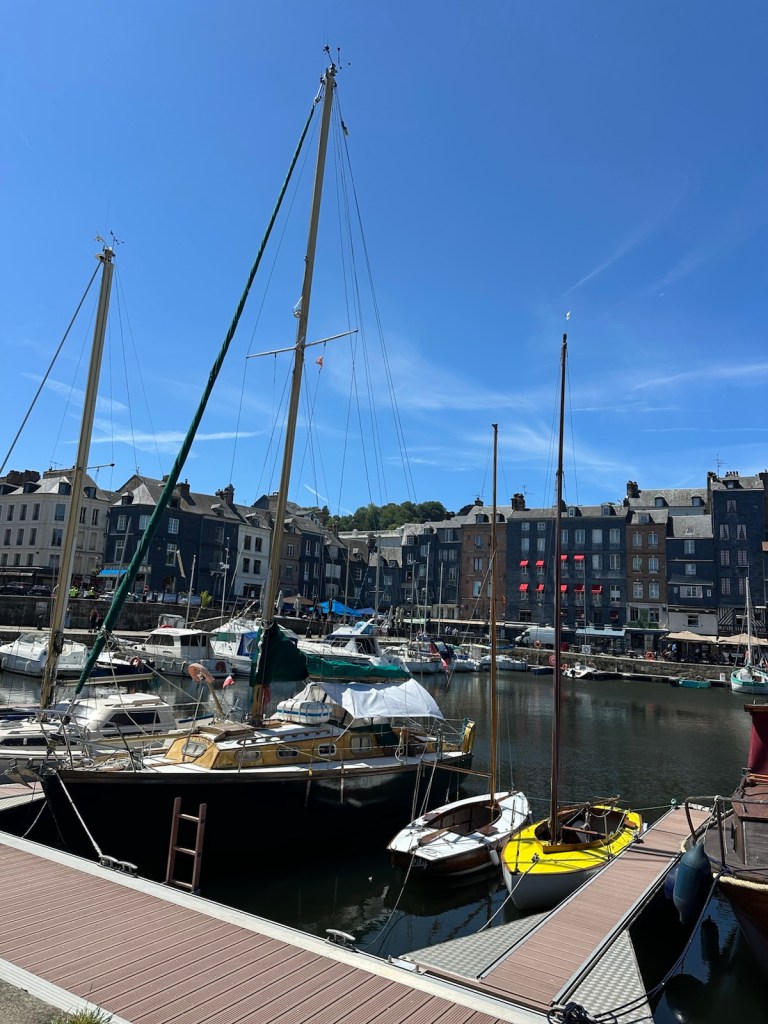
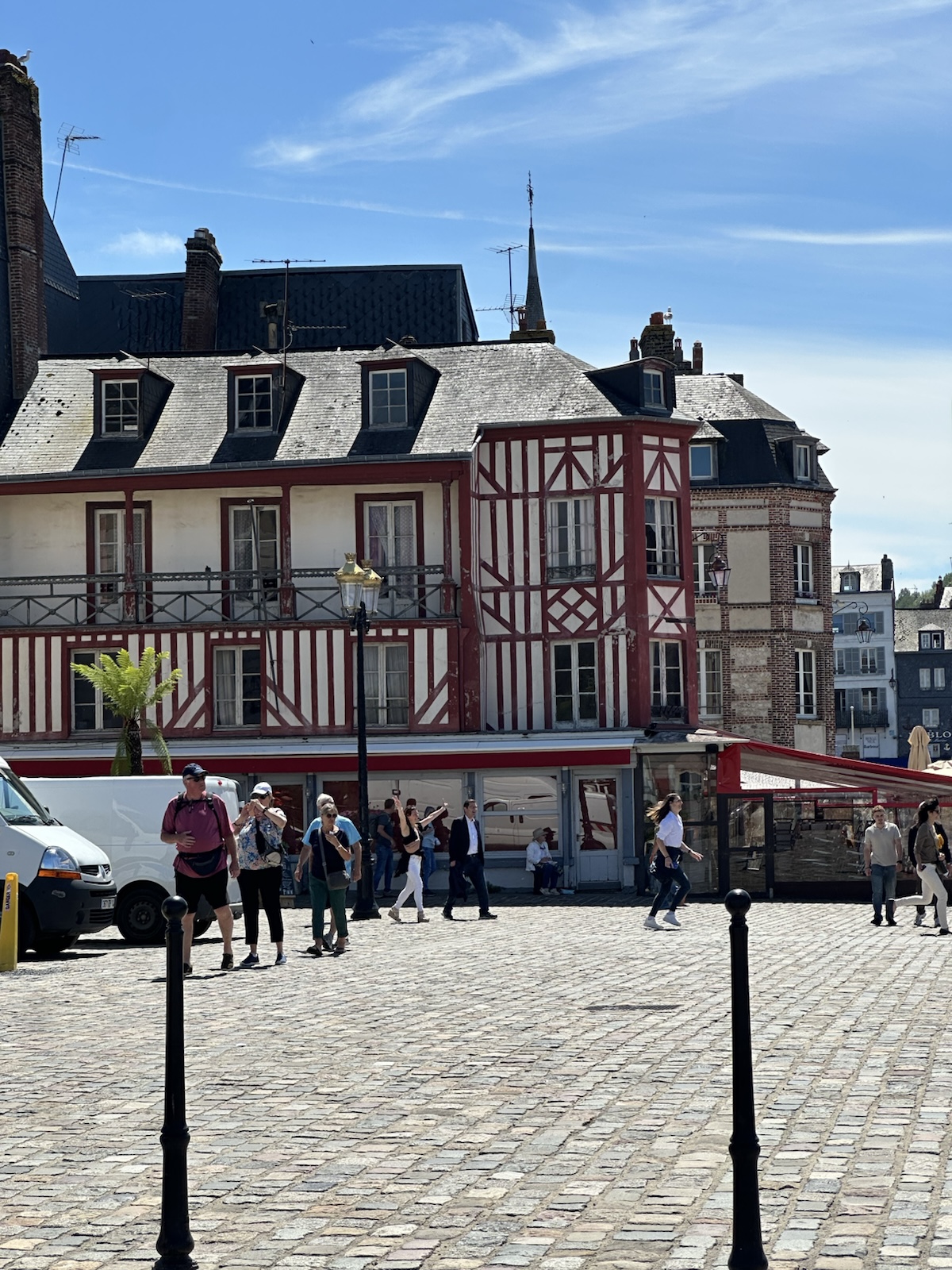
Today, Honfleur is known for its postcard-perfect harbor, colorful buildings, seafood restaurants, and thriving arts scene. During World War II, however, this charming Norman port found itself caught in the shadow of much larger events unfolding along the nearby coast. The town was occupied by German forces for four years and served as a strategic port at the mouth of the Seine Estuary.
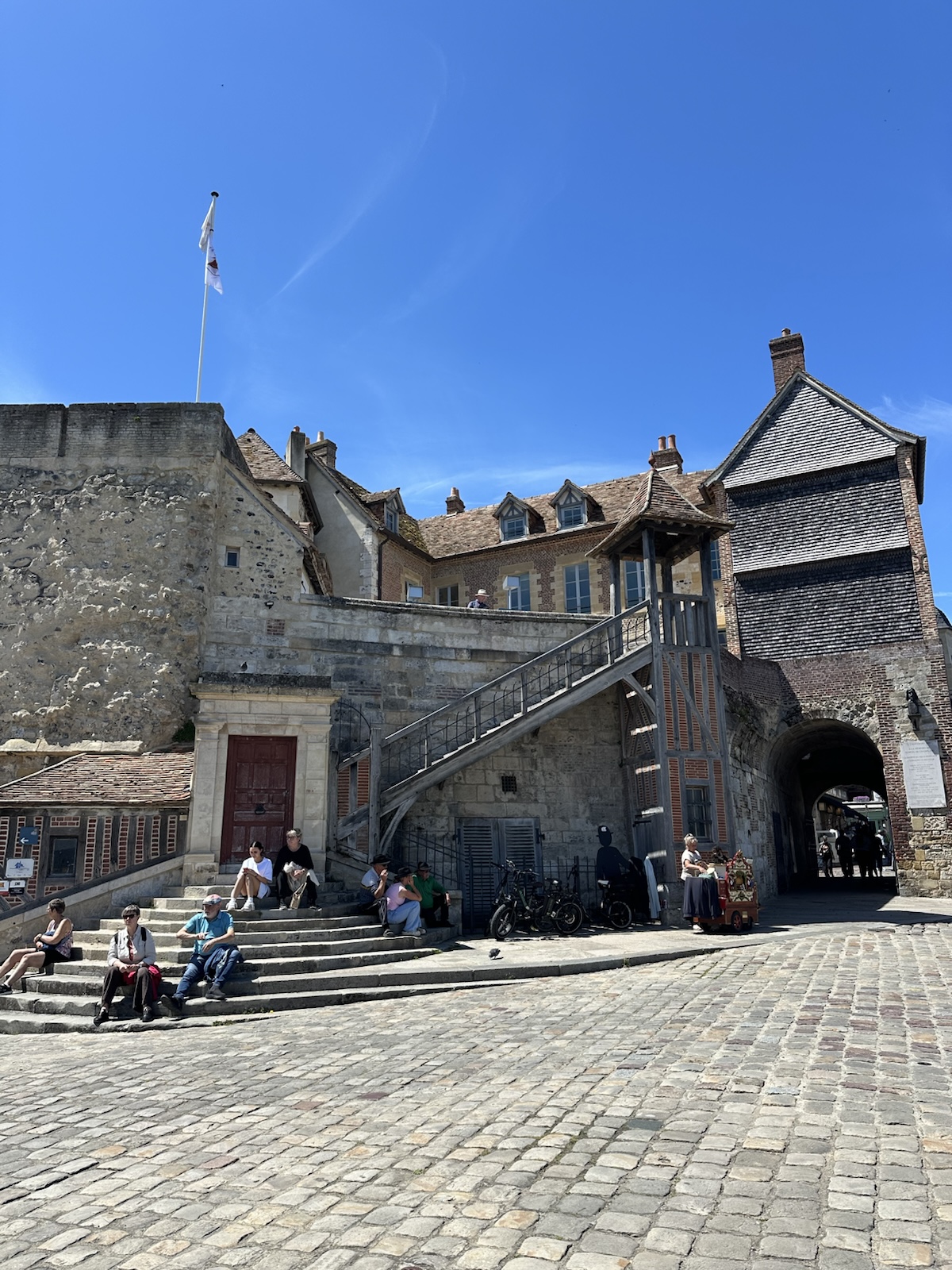
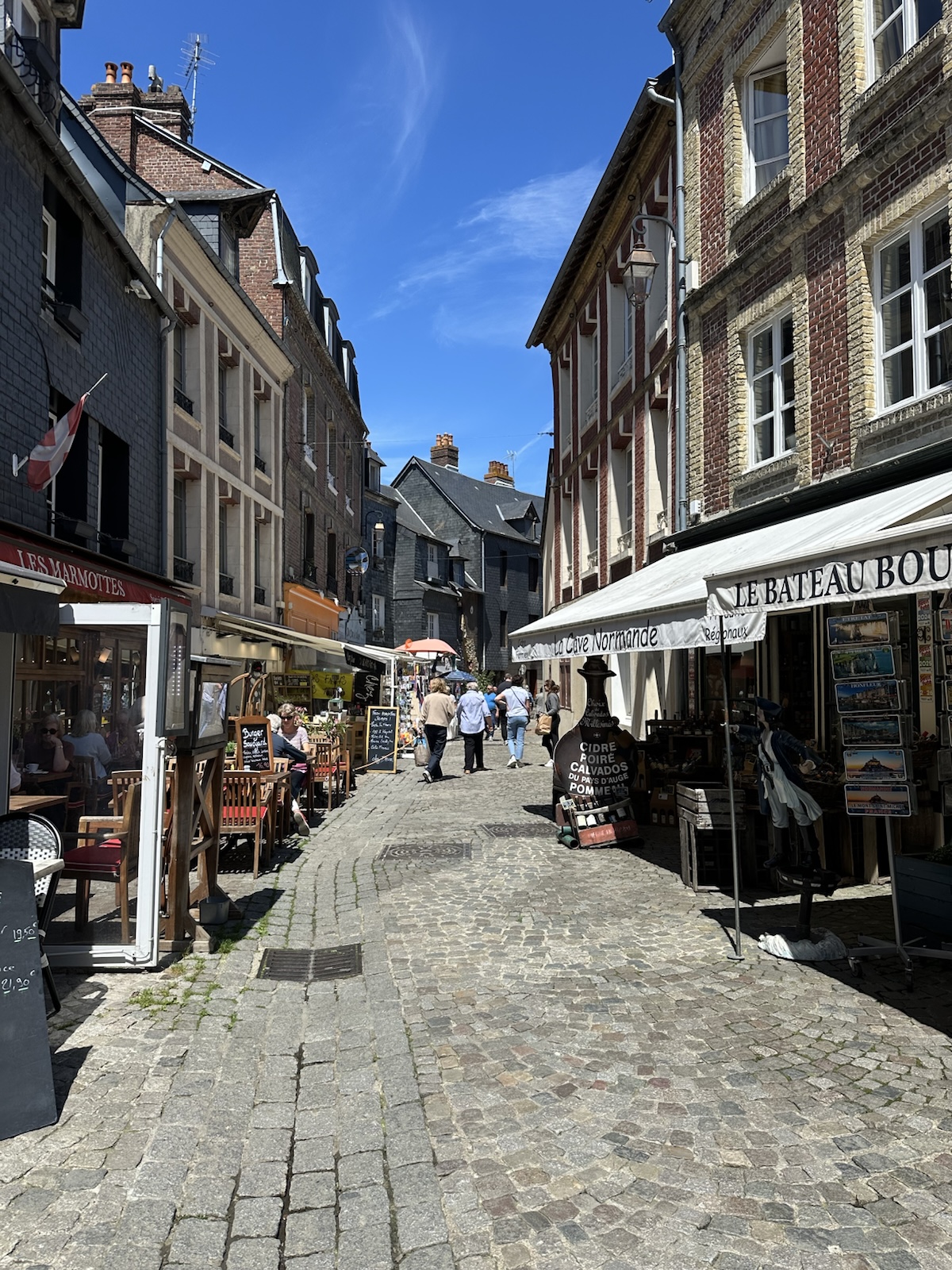
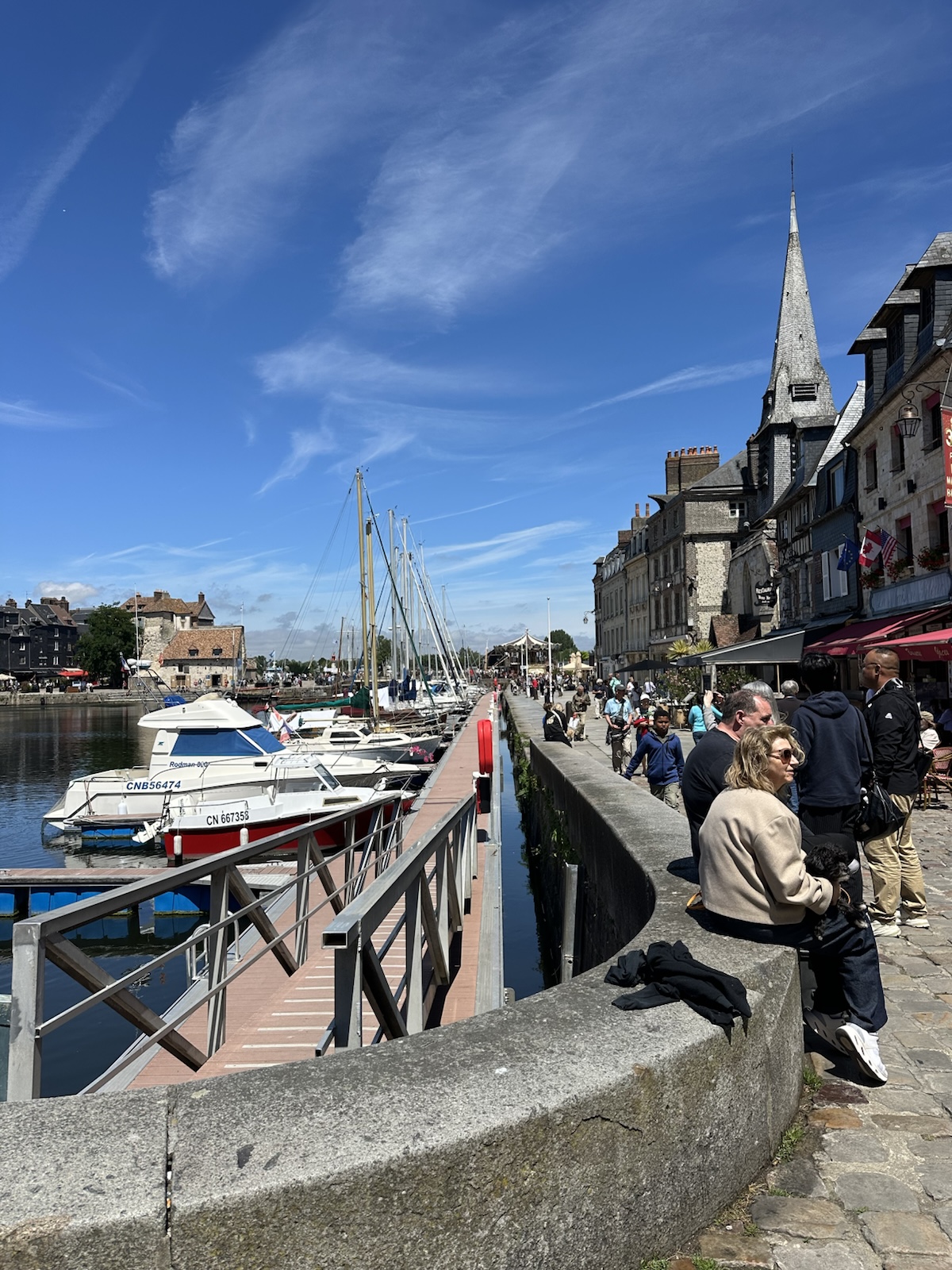
Unlike many towns in Normandy, Honfleur escaped the widespread destruction that followed the D-Day landings. As a result, its historic harbor, narrow streets, and centuries-old buildings remain remarkably well preserved. Walking through Honfleur today, it is easy to admire its beauty, but the memorials and plaques scattered throughout town serve as reminders of the occupation, liberation, and sacrifices that shaped this region. Like much of Normandy, Honfleur balances its rich maritime heritage with a deep respect for the events of World War II and the generations who lived through them.
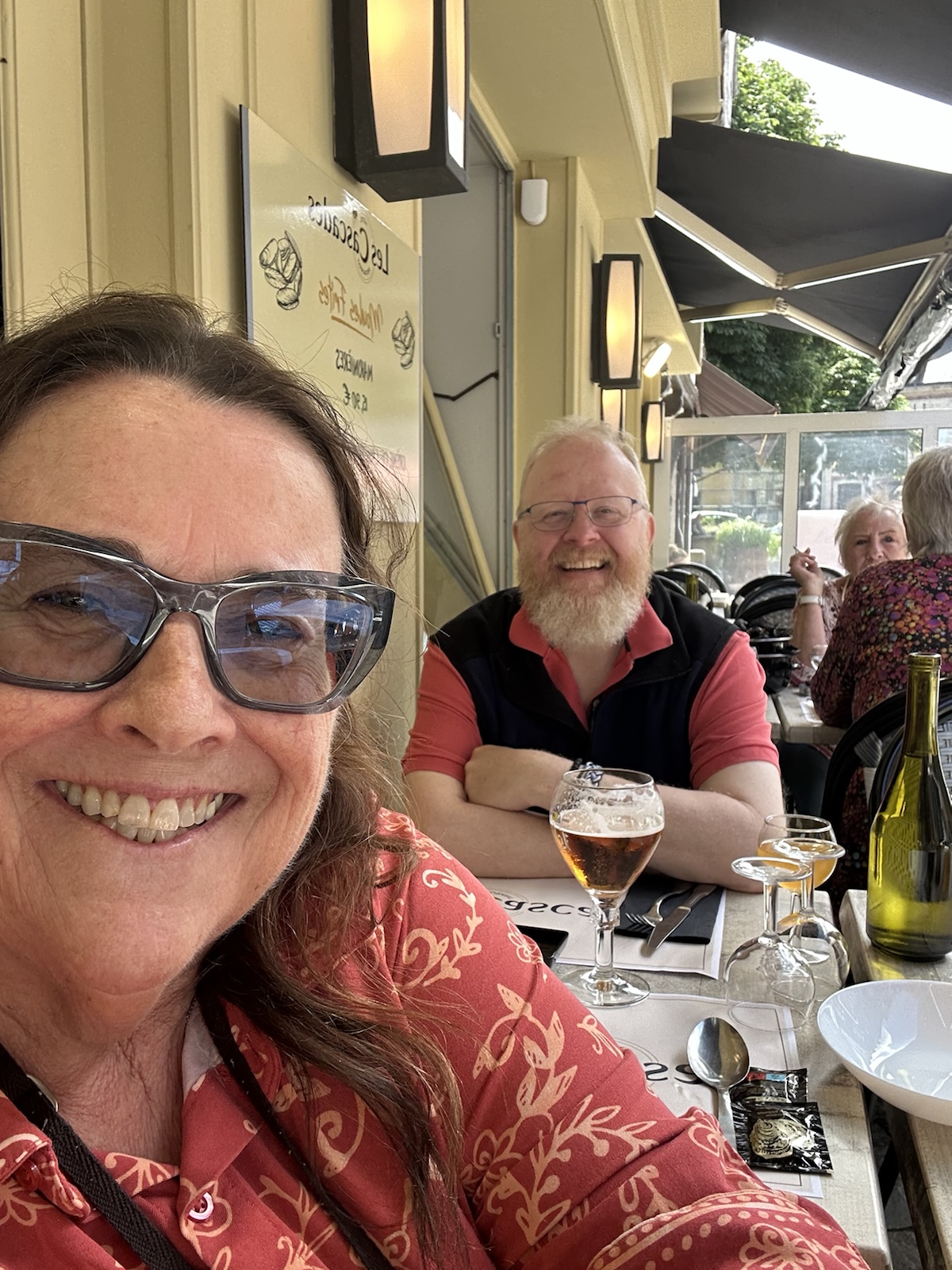
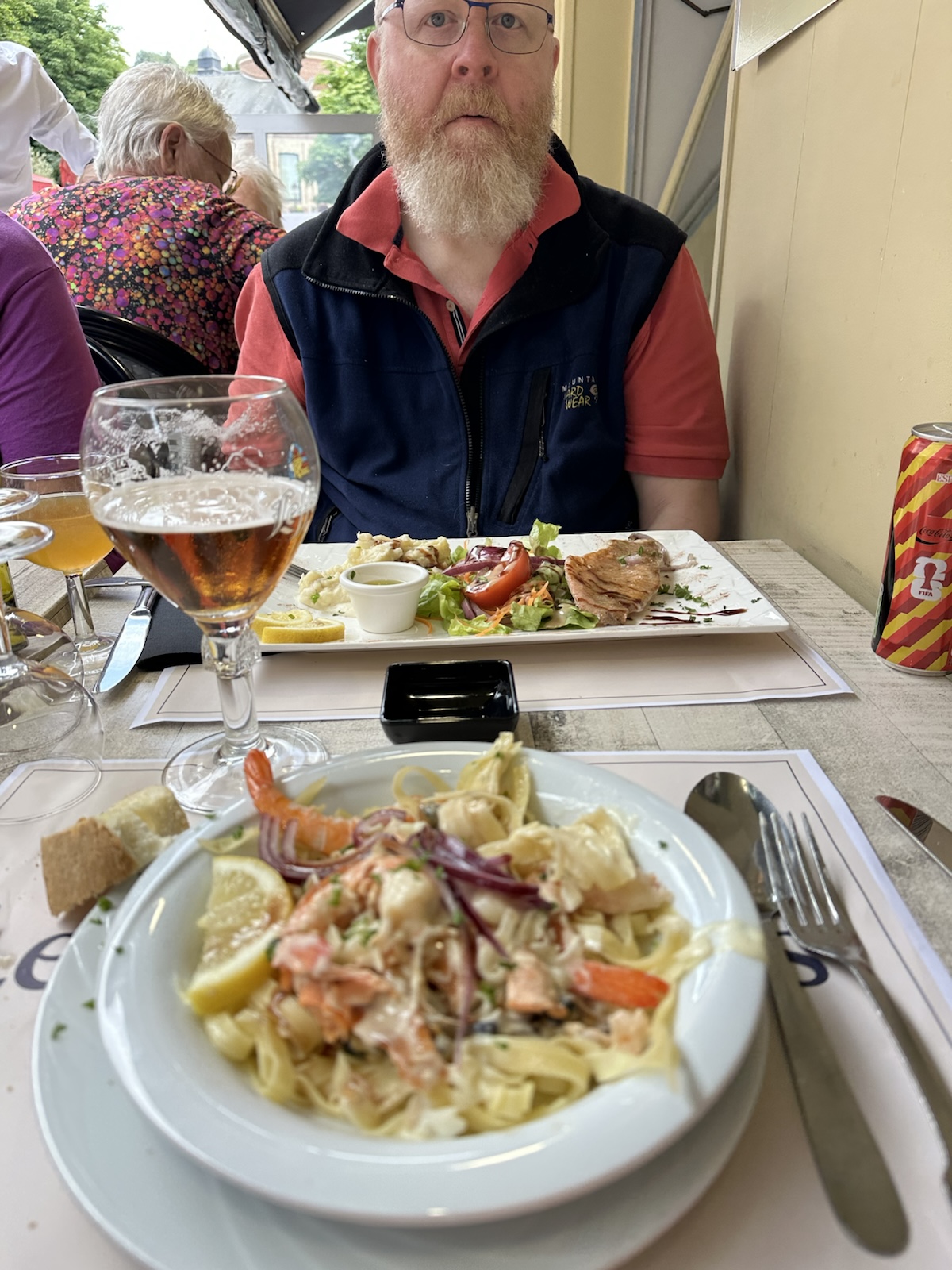
For lunch, we took our chances and randomly picked a restaurant near the harbor. Sometimes travel rewards spontaneity, and this was one of those times. The seafood pasta was outstanding, packed with fresh flavors from the nearby coast, but the real star of the meal was dessert.
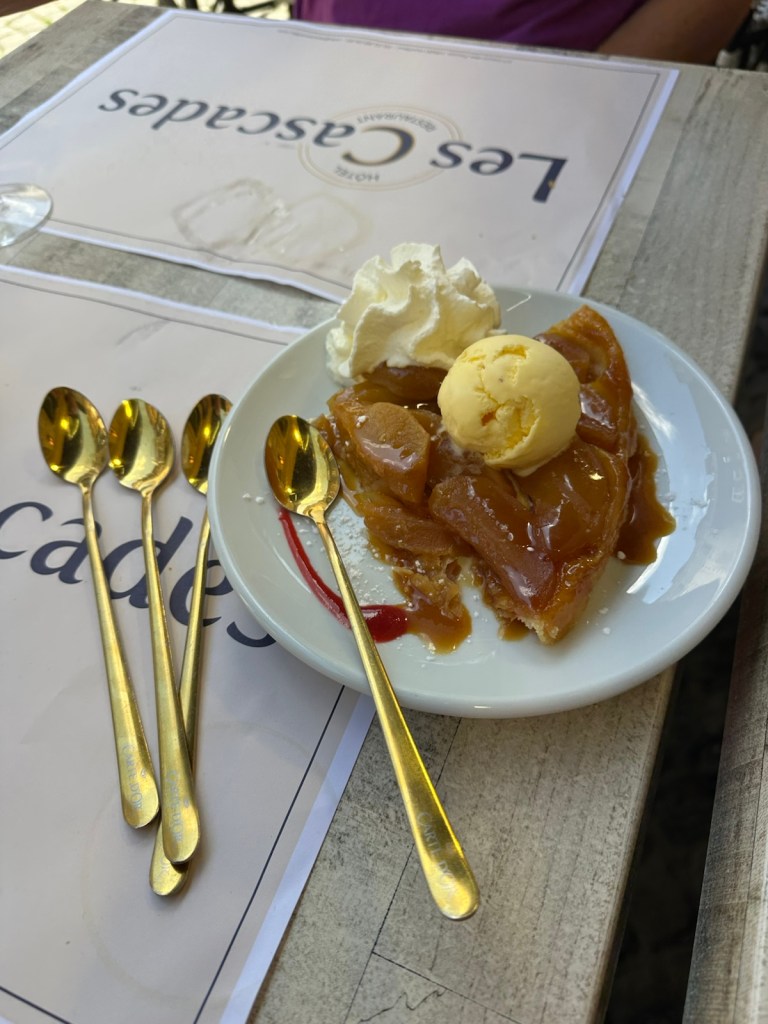
We shared an order of a Tarte Tatin, a classic French upside-down apple tart that originated in the late 1800s. According to legend, one of the Tatin sisters accidentally overcooked apples in butter and sugar, then placed the pastry on top and baked it anyway. The result was so delicious that it became one of France’s most beloved desserts. Served warm, with caramelized apples and a flaky crust, it was rich, buttery, and absolutely worth saving room for. In a region famous for apples, cider, and Calvados, enjoying a Tarte Tatin felt like the perfect Normandy dessert.
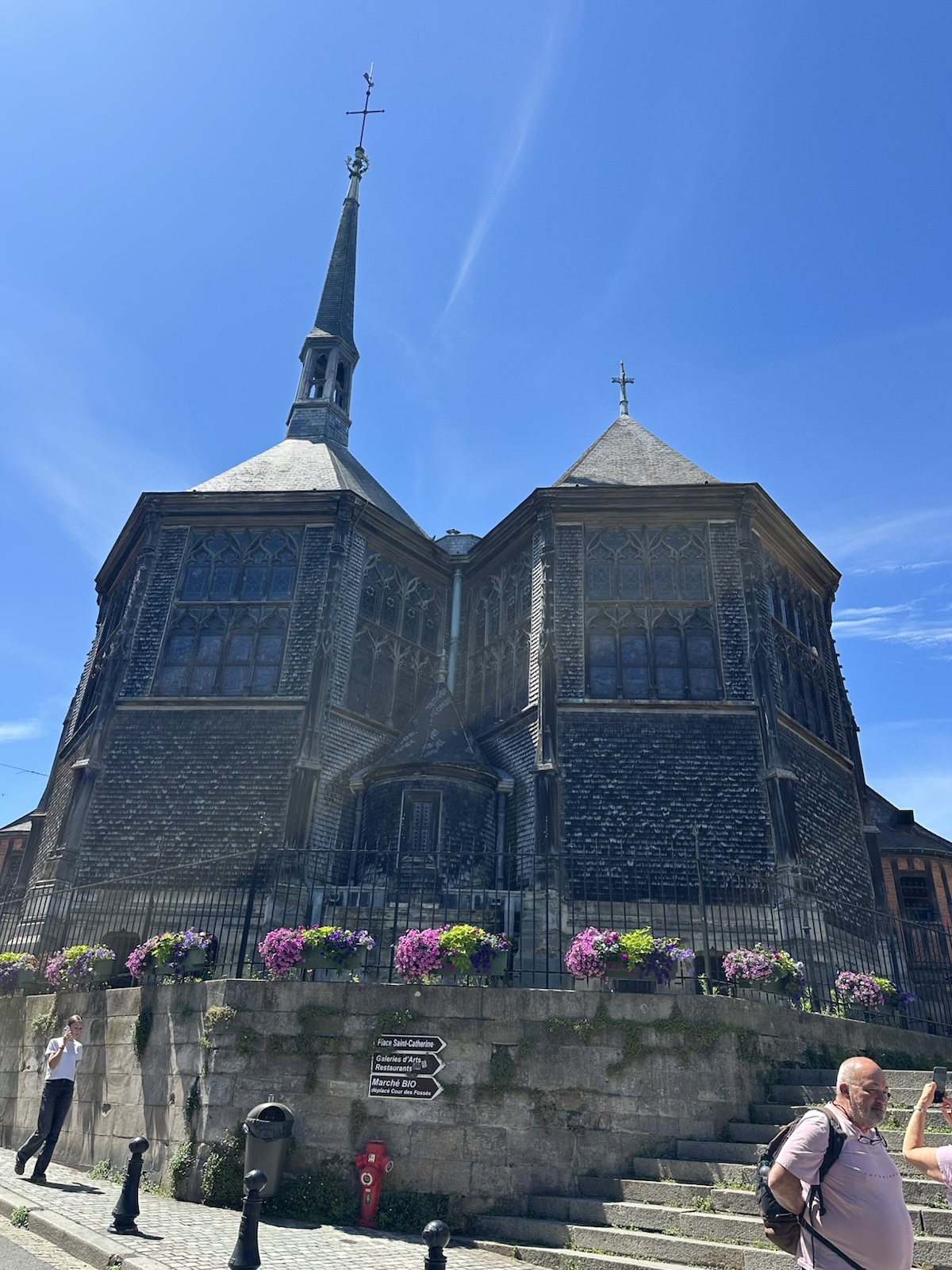
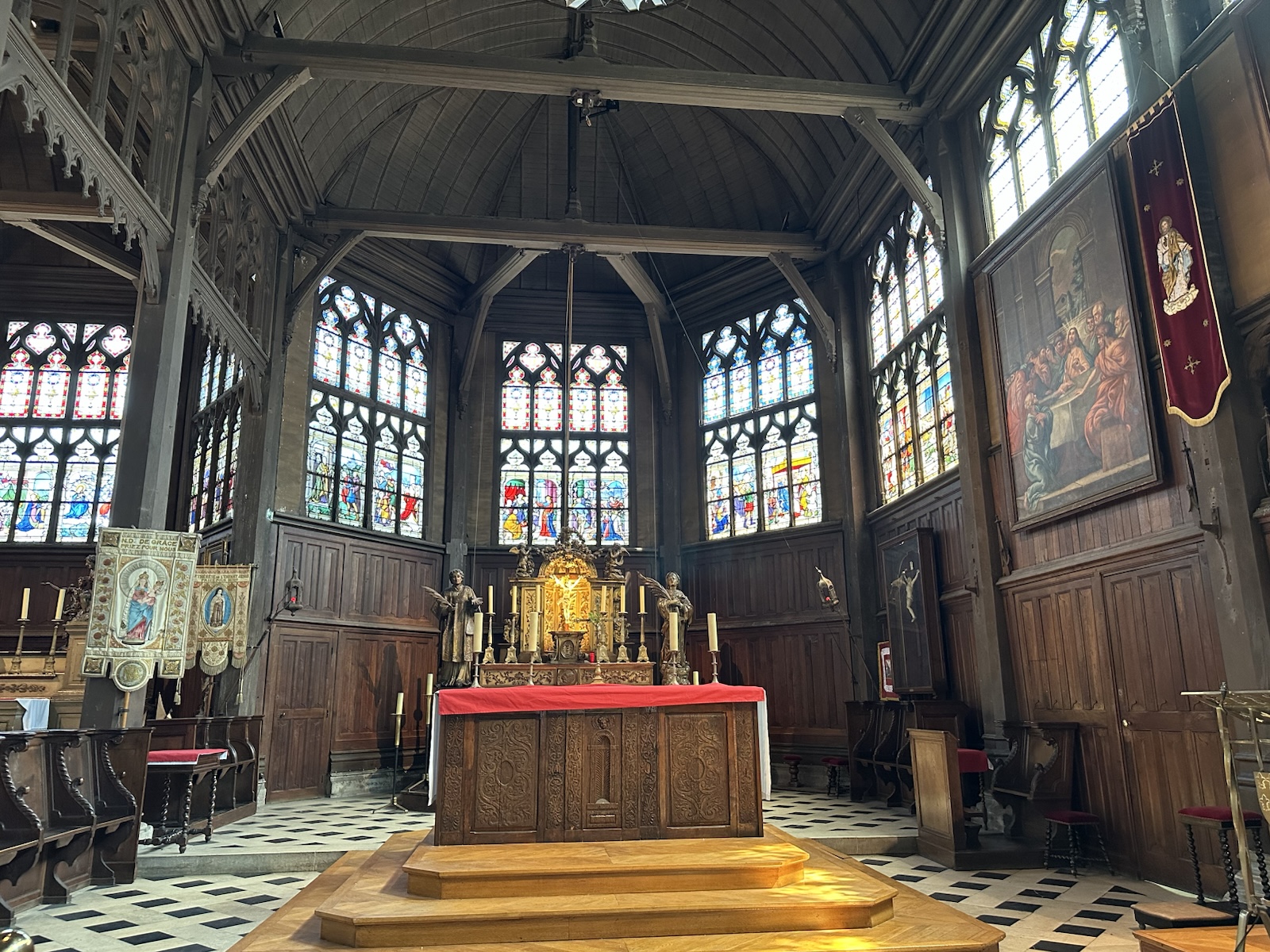
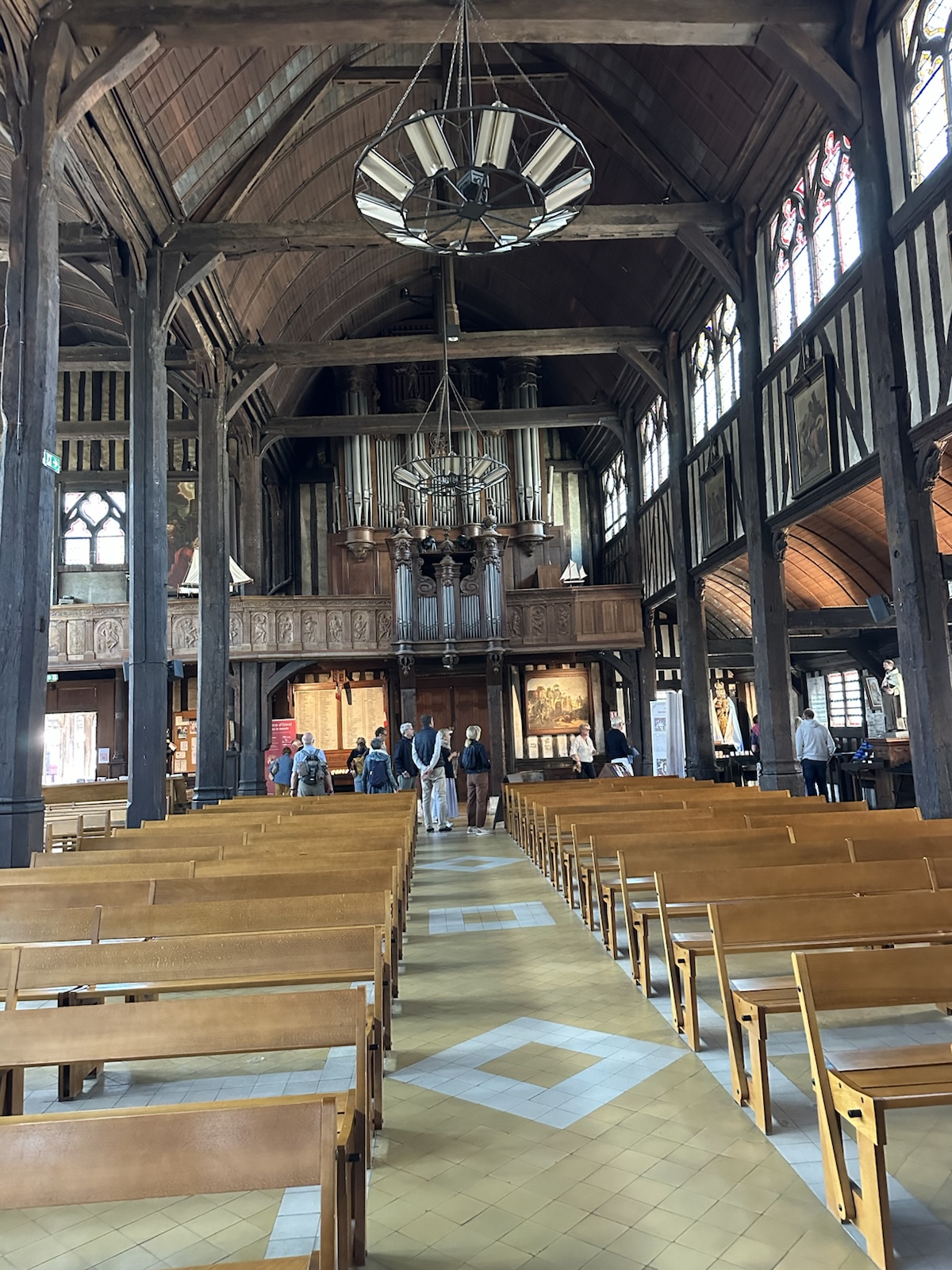
One of Honfleur’s most remarkable landmarks is Saint Catherine’s Church, and the moment you step inside, it’s easy to see why. Built entirely of wood by local shipbuilders in the 15th century, the church feels more like the inside of a ship than a place of worship. Looking up, the vaulted ceiling resembles the hull of an upside-down boat — a fitting design for a town whose history and livelihood were tied to the sea.
Near one of the side altars stood a striking black-and-white portrait of a young woman. It was Saint Thérèse of Lisieux, affectionately known as “The Little Flower,” one of France’s most cherished saints. Beneath the portrait was an encased relic, a tangible connection to her life and legacy.
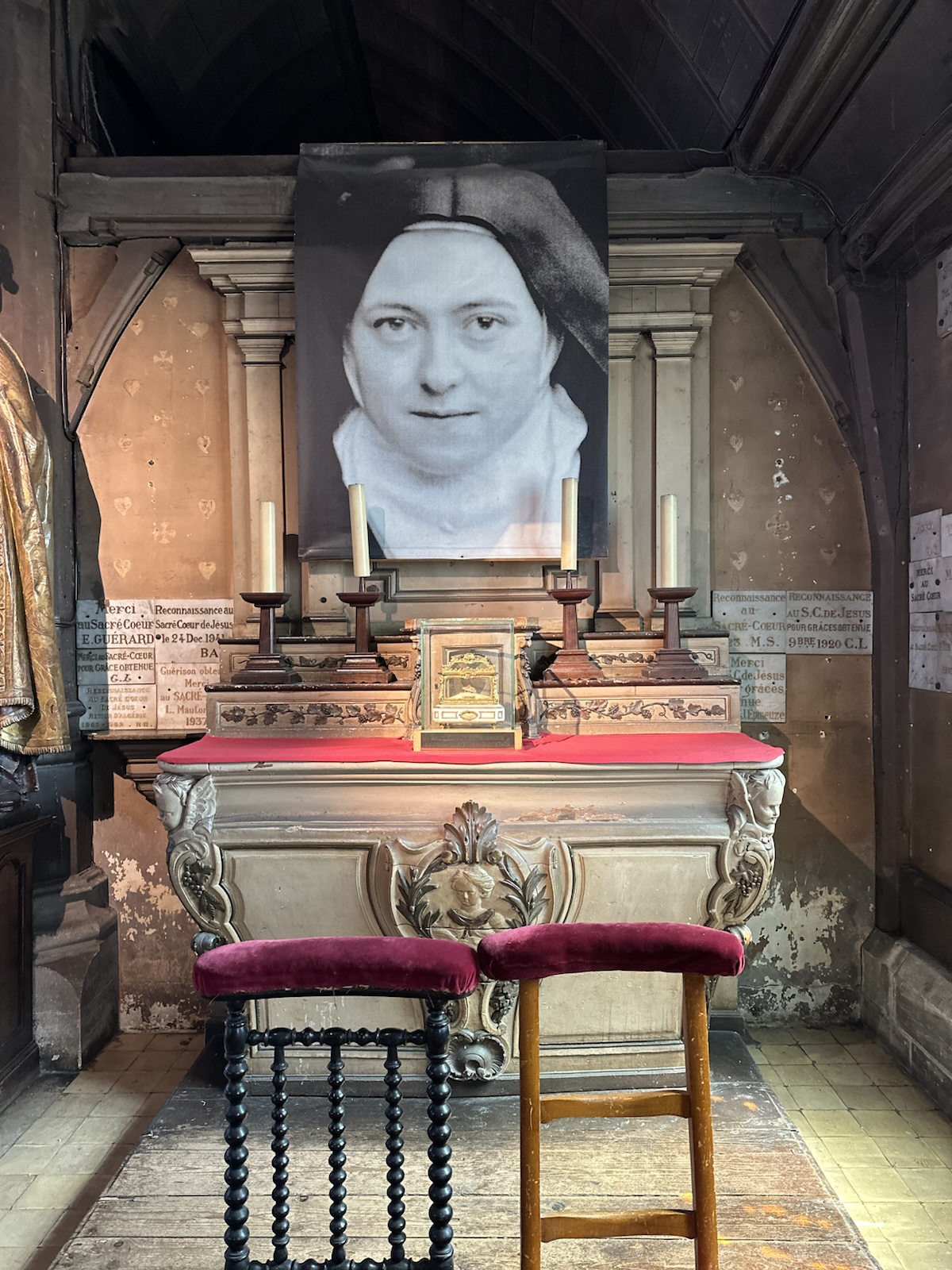
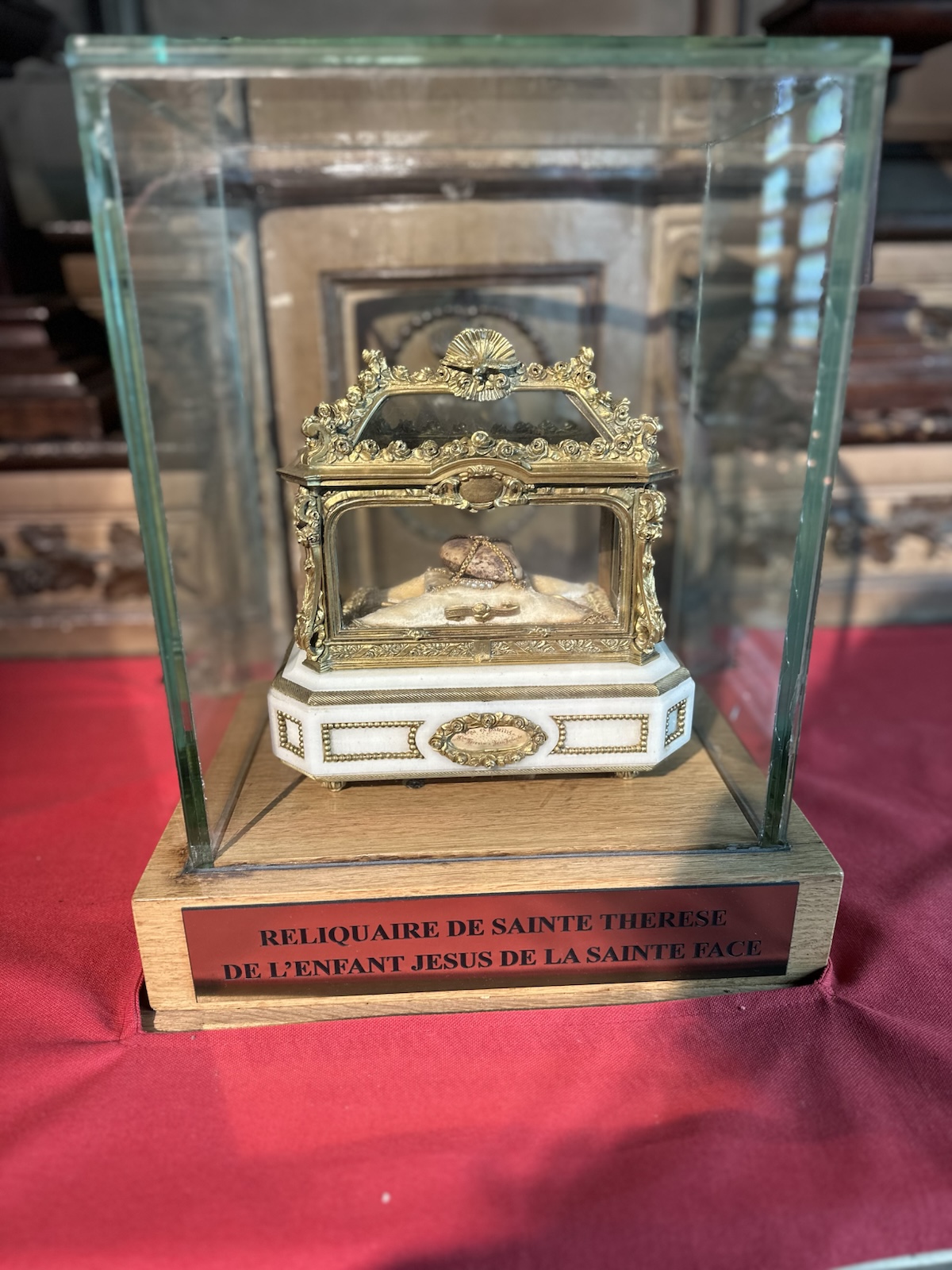
A shout-out to my Camino-walking travel partner, Theresa of St. Louis Park. I know how much you love church history, and if you had been standing next to me, we would have spent at least twenty minutes assigning some deep spiritual meaning to this relic. The inscription translates to “Reliquary of Saint Thérèse of the Child Jesus and the Holy Face,” While I can’t tell you exactly what the relic contains, I can tell you it inspired a moment of curiosity, reflection, and a reminder that every church seems to hold a story waiting to be discovered.
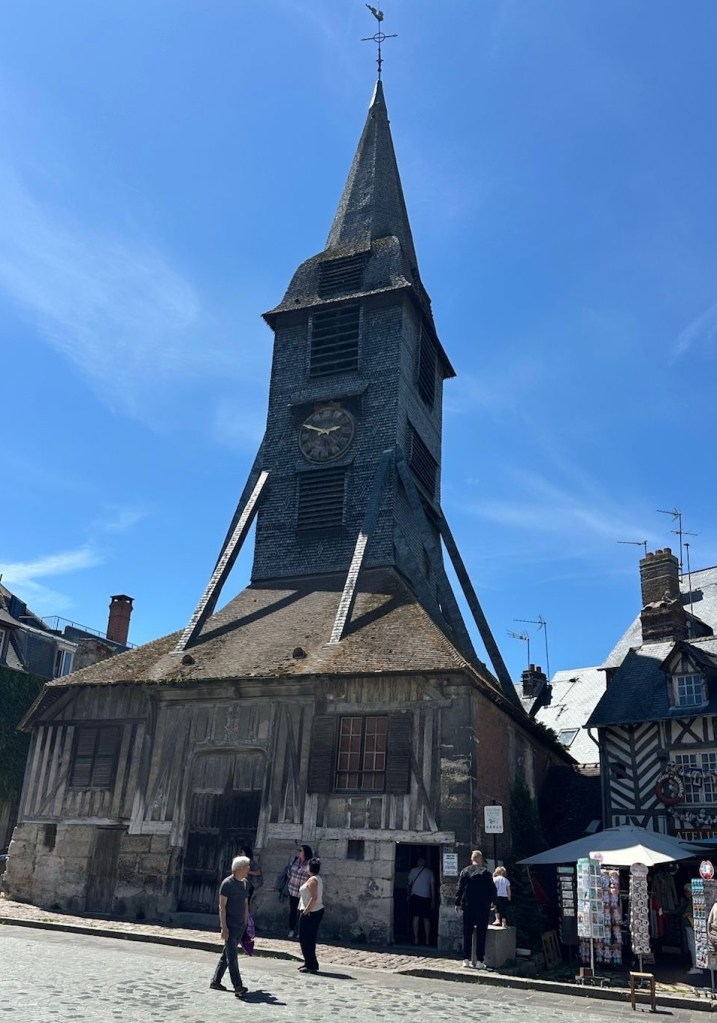
The church is considered the largest wooden church in France, and its separate bell tower was built apart from the main structure to reduce the risk of fire from lightning strikes. Standing beneath those massive timber beams, you can almost imagine the craftsmen using the same skills they employed to build the ships that once sailed from Honfleur’s harbor.
We had no particular agenda — just the simple pleasure of strolling, exploring, and seeing what we might discover around the next corner. In a town as beautiful as Honfleur, that turned out to be more than enough.
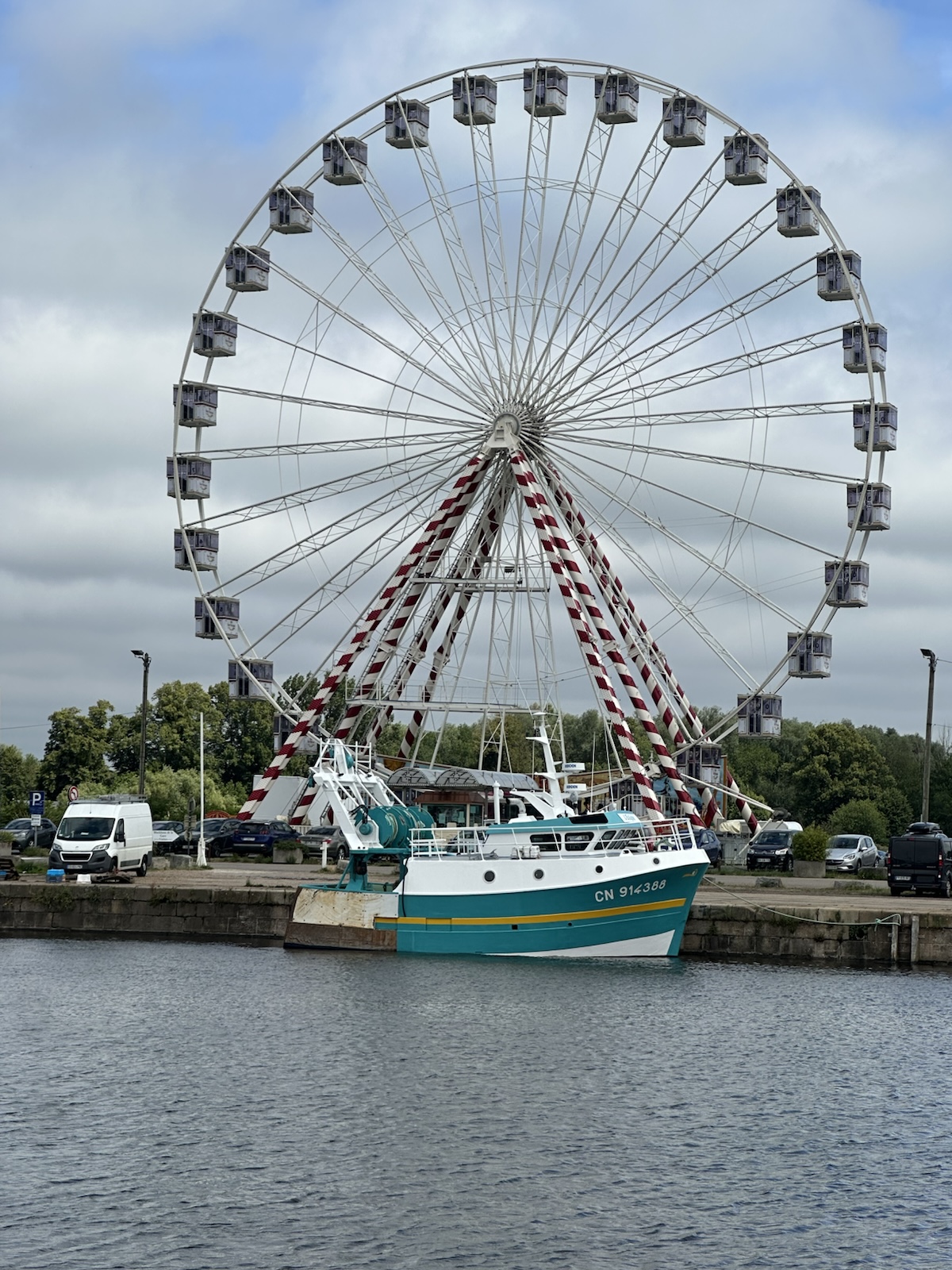
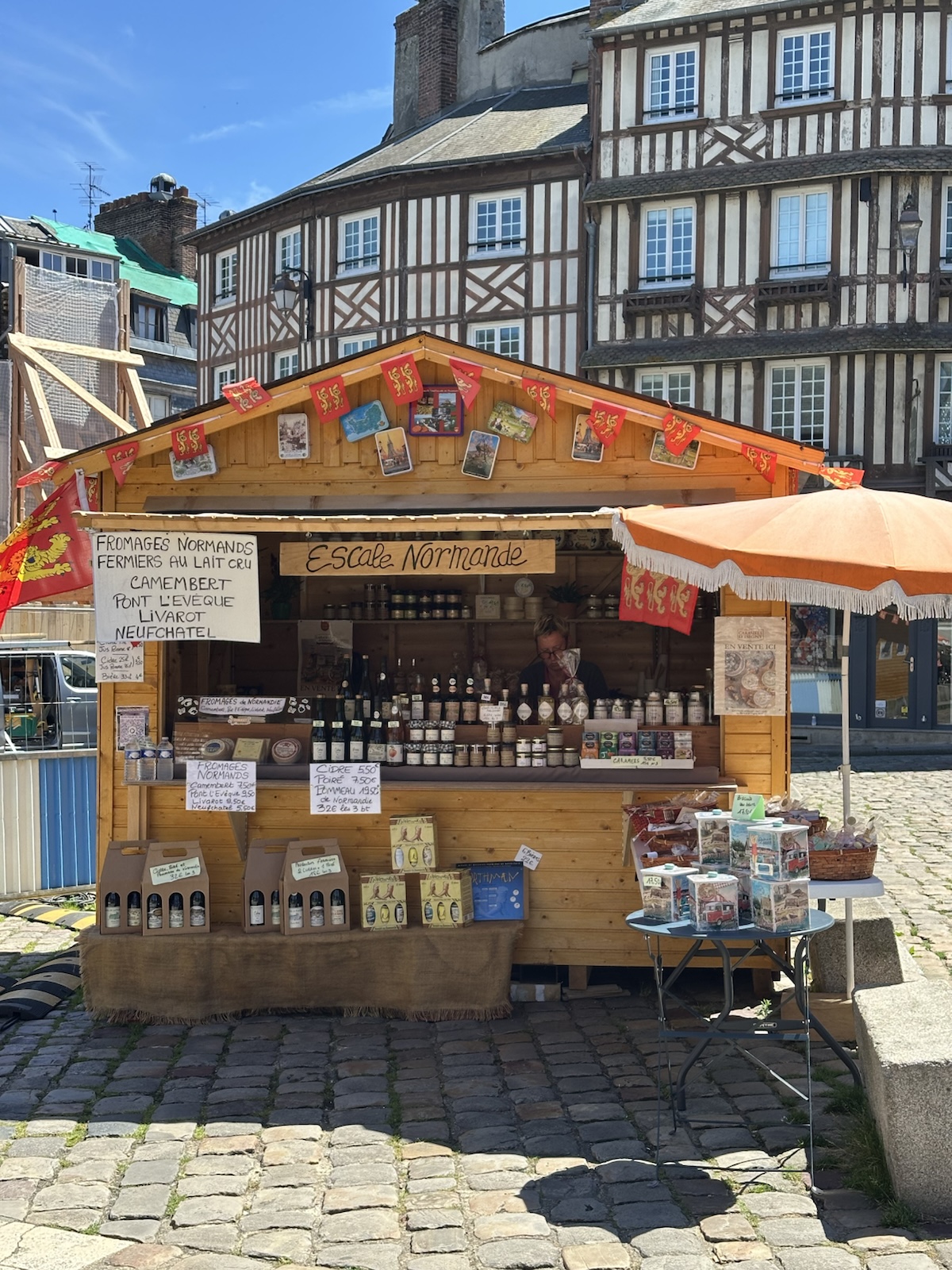
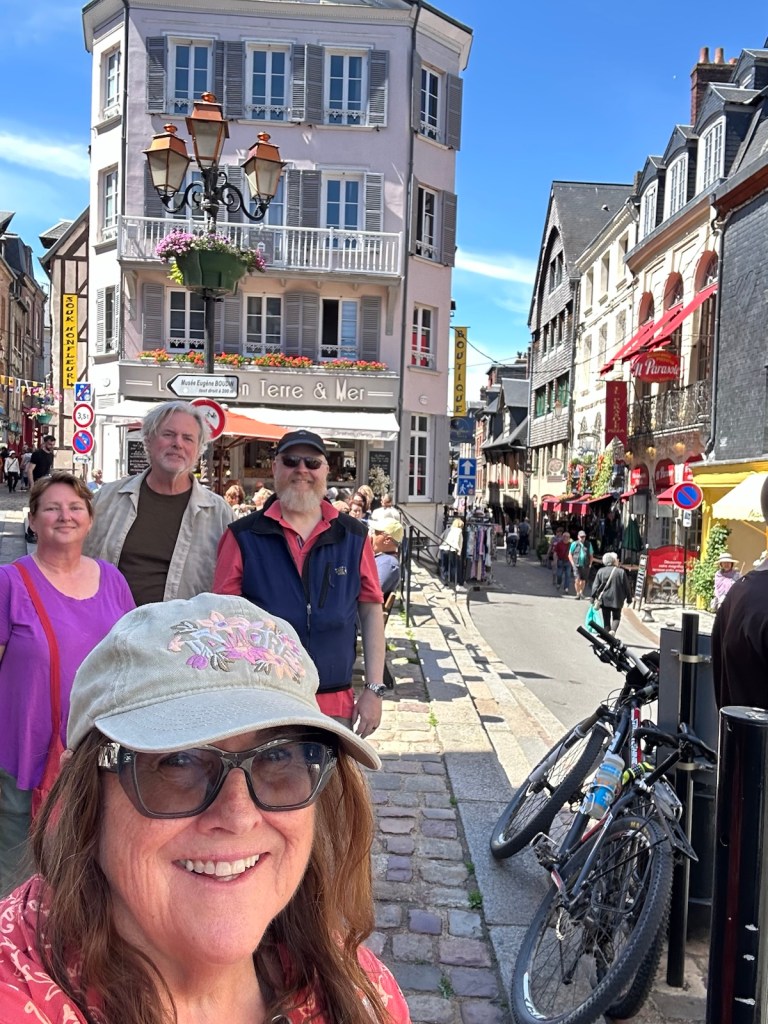
After a wonderful day exploring Honfleur’s harbor, historic streets, churches, and cafés, it was time to point the Bigster back toward Bayeux. The drive is about an hour through the heart of Normandy, passing rolling green fields, grazing cattle, apple orchards, and storybook villages.
Back in Bayeux, we took a little time to rest and recharge before heading out for dinner. Fortunately, our evening destination required almost no travel at all. The restaurant was located just across the street from our hotel and in the shadow of Bayeux’s magnificent cathedral.
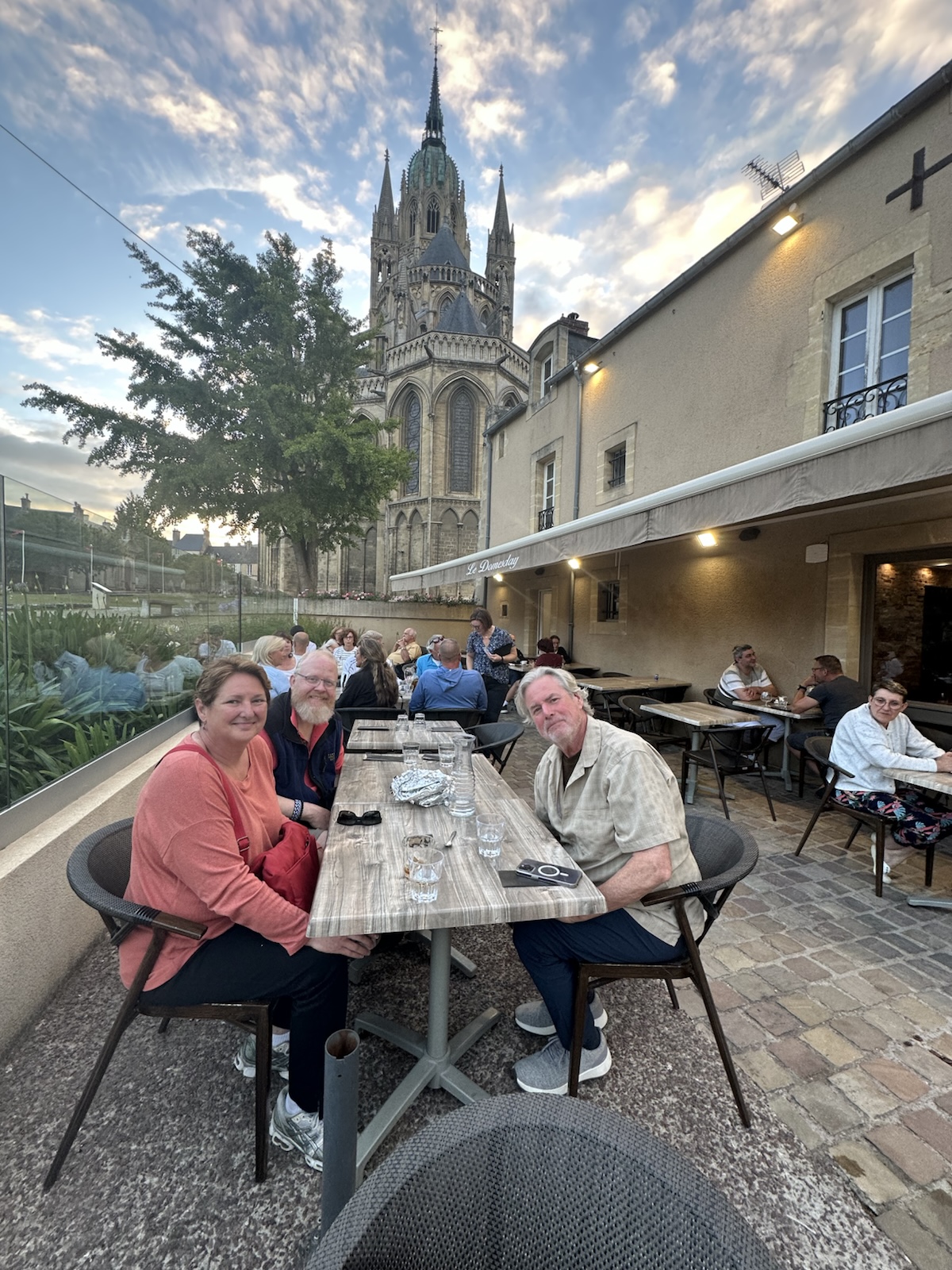
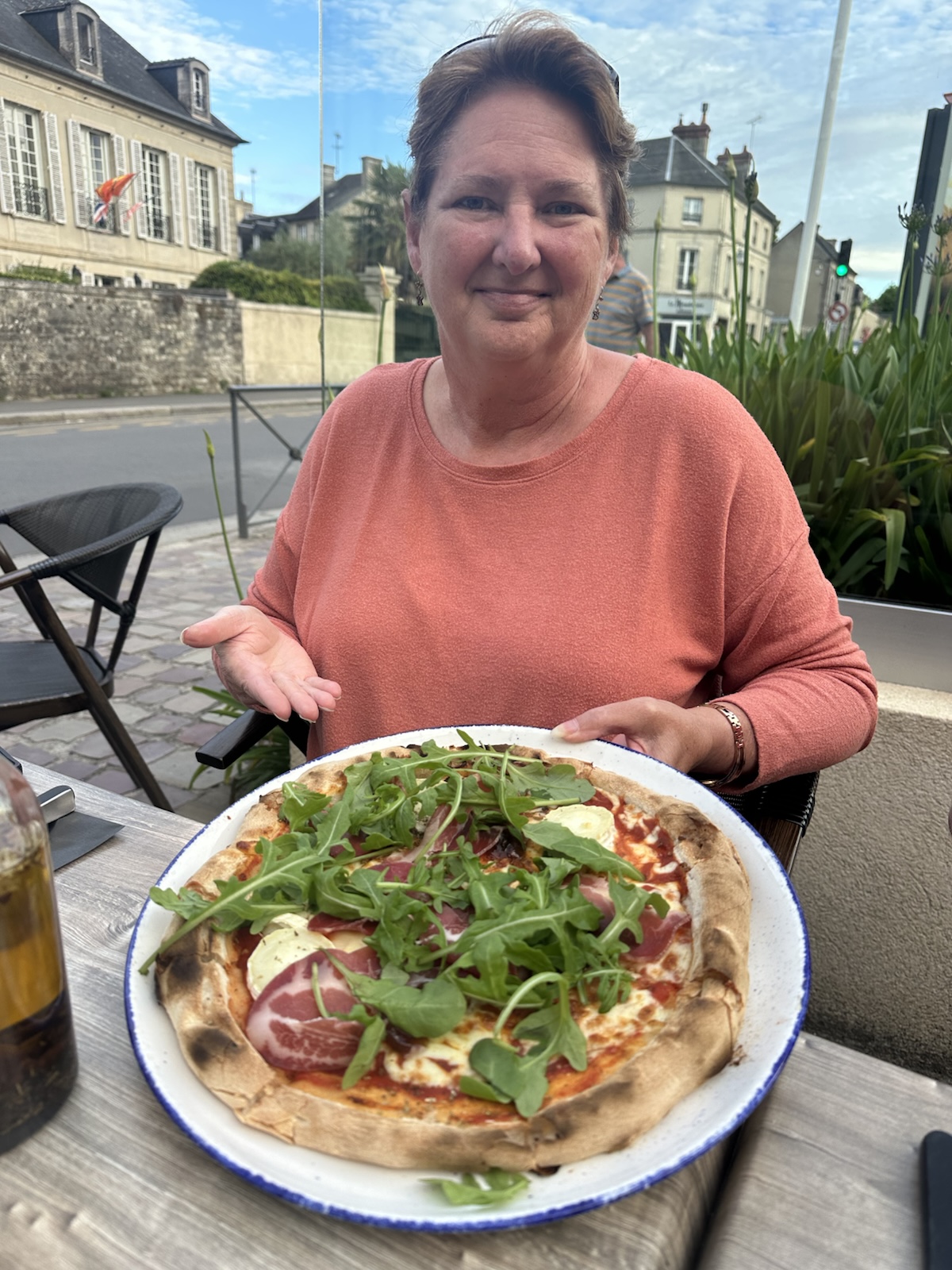
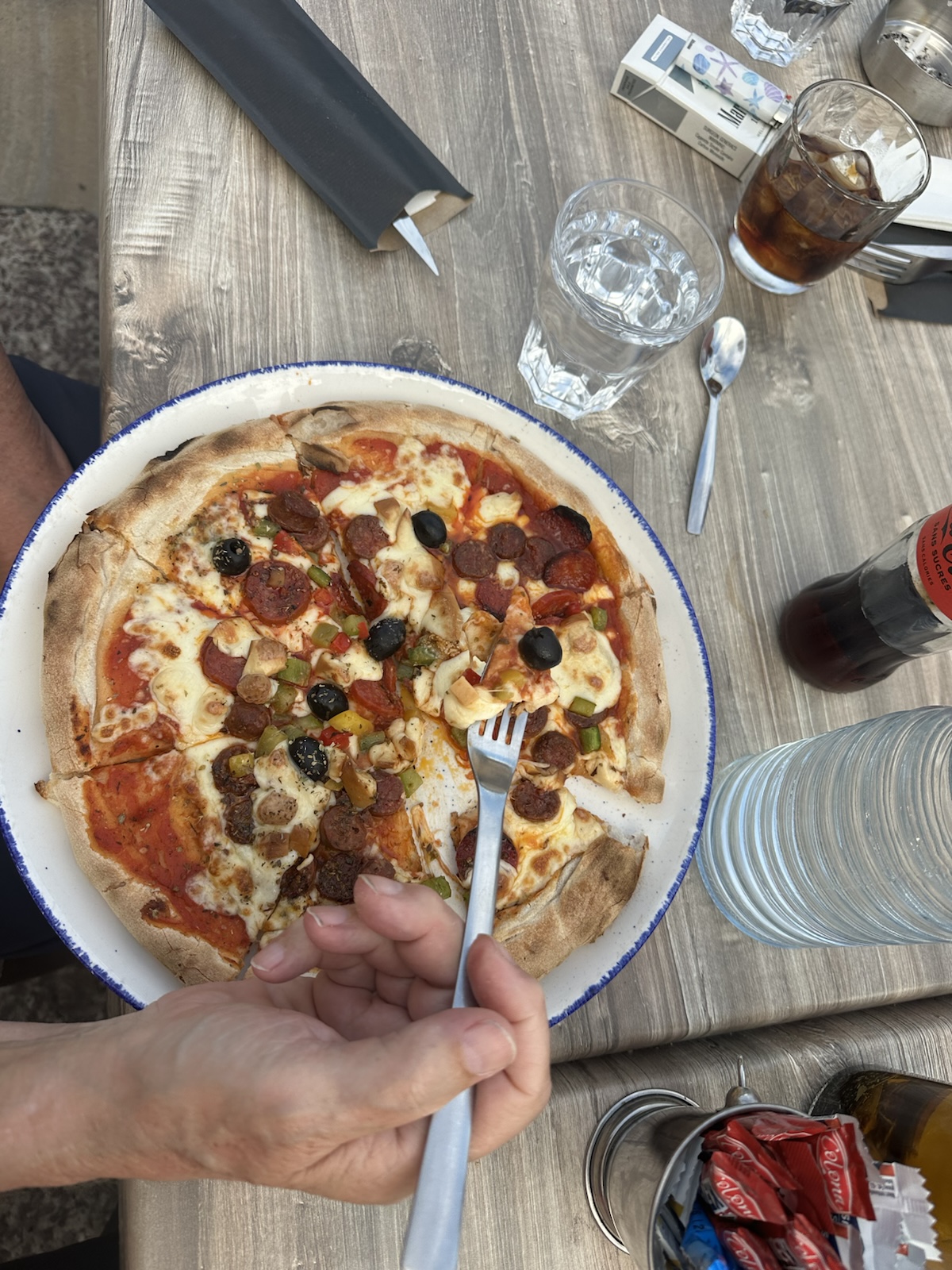
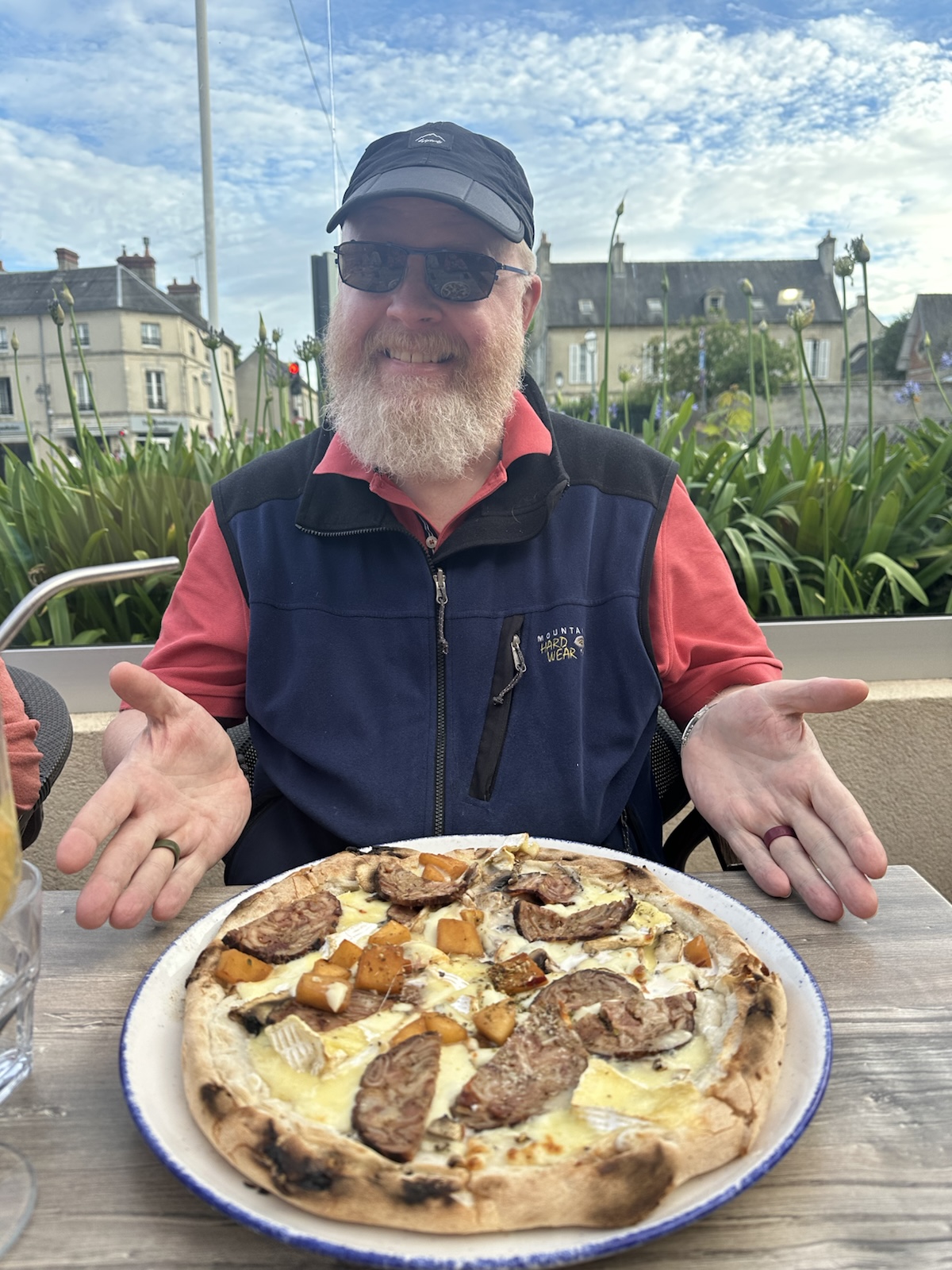
Most of the group wisely embraced the restaurant’s specialty and ordered pizza. But every travel group seems to have one oddball, and this time it was me.
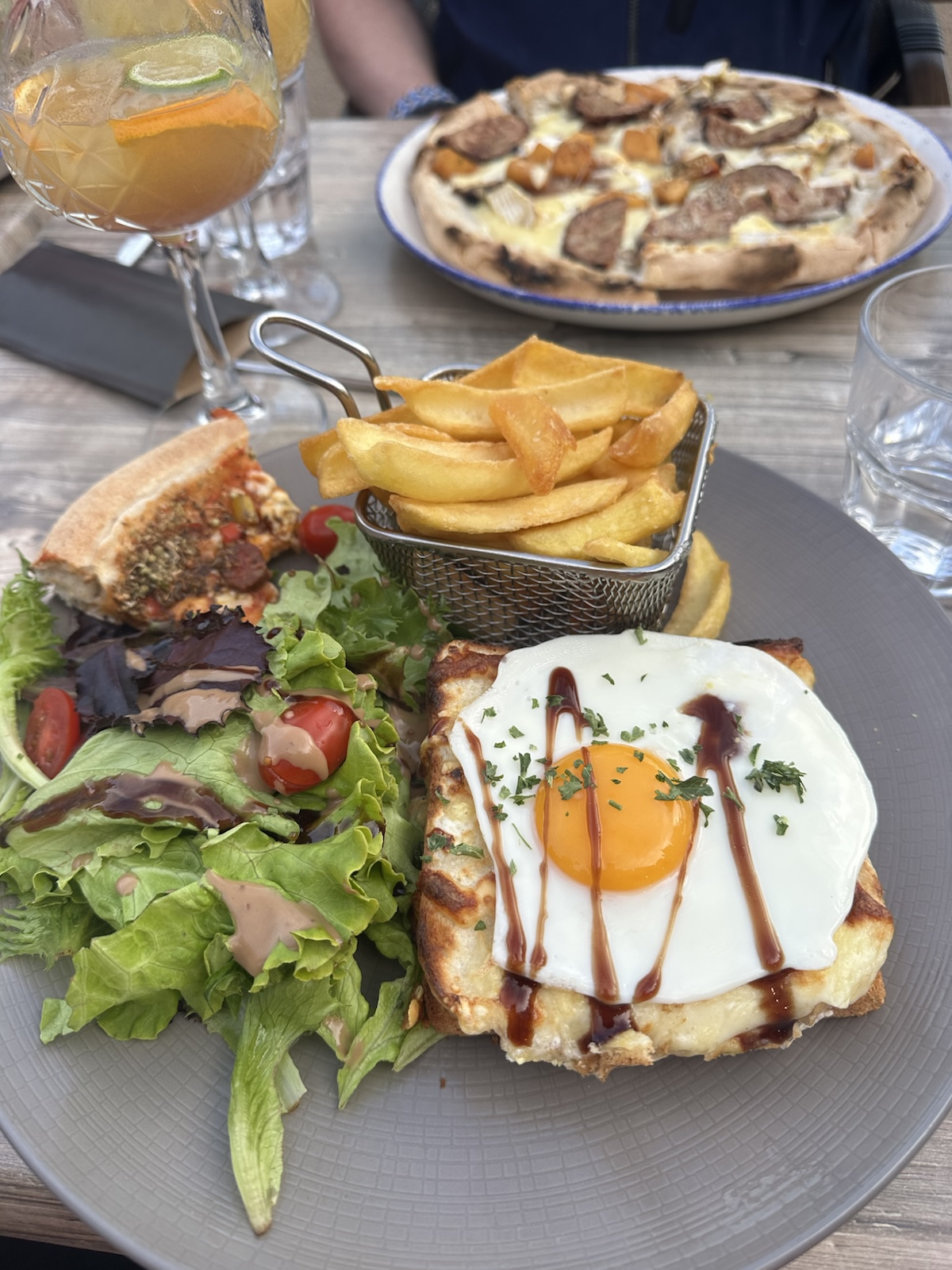
Instead of pizza, I ordered a Croque Madame, a classic French café favorite. Think of it as a dressed-up grilled ham and cheese sandwich made with crusty bread, ham, melted cheese, and a rich béchamel sauce, then topped with a fried egg. The egg is what transforms a Croque Monsieur into a Croque Madame. Warm, cheesy and wonderfully indulgent, it was comfort food at its finest — and a delicious reminder that in France, even a sandwich can be elevated to an art form.
Even though the sun doesn’t set in Normandy until after 10 pm, we were more than ready to call it a day. From our immersive Calvados tour and strolls through the picturesque streets of Honfleur to good food, great company and another beautiful drive through the French countryside, it had been a full day of discoveries. As we headed back to our rooms in Bayeux, we reflected on how fortunate we were to be sharing these experiences together.
Tomorrow promises more history, more adventures, and undoubtedly a few surprises, but for now, a good night’s sleep sounded perfect.
Bonsoir from Normandy!
 Jane in Spain