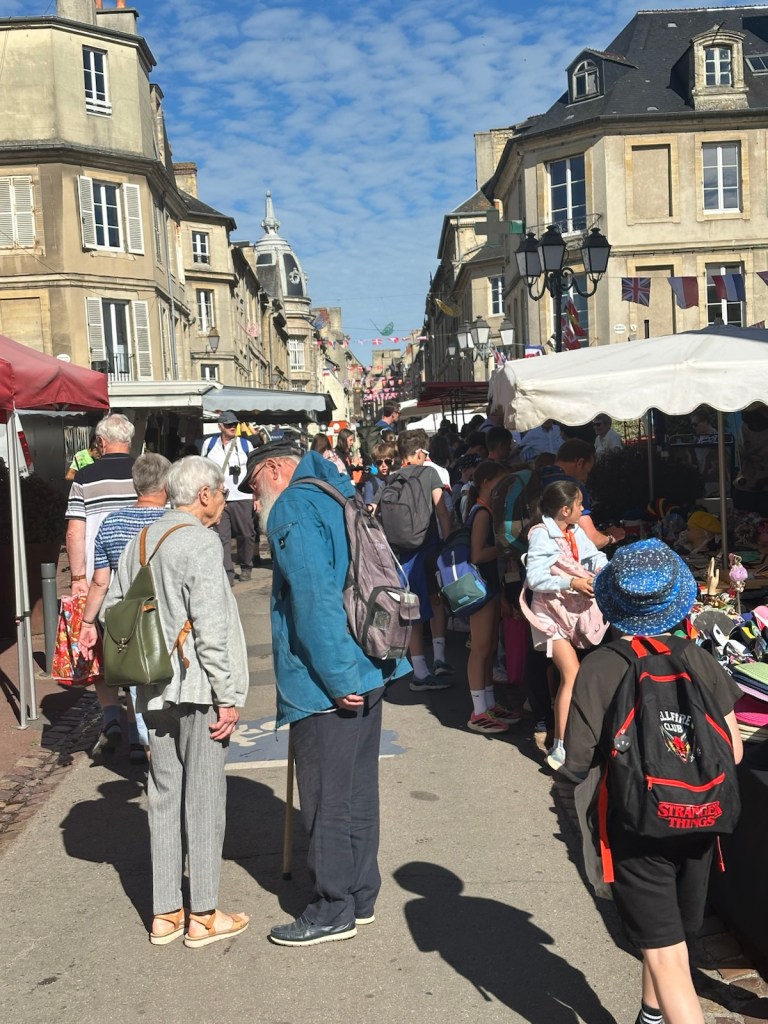
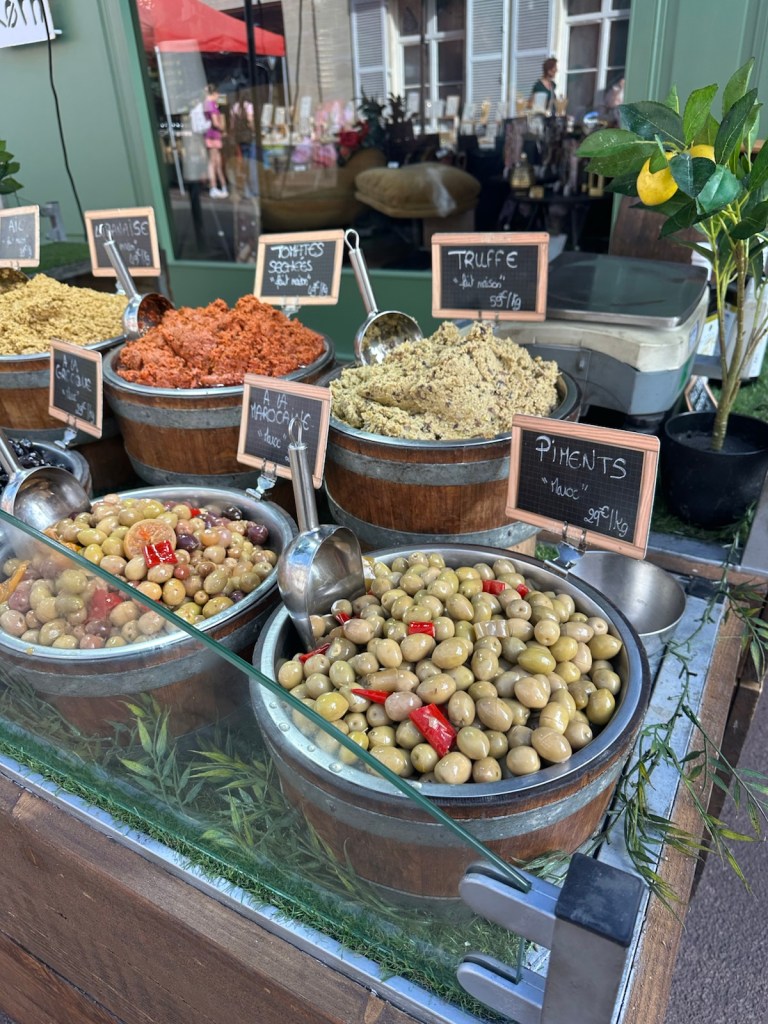
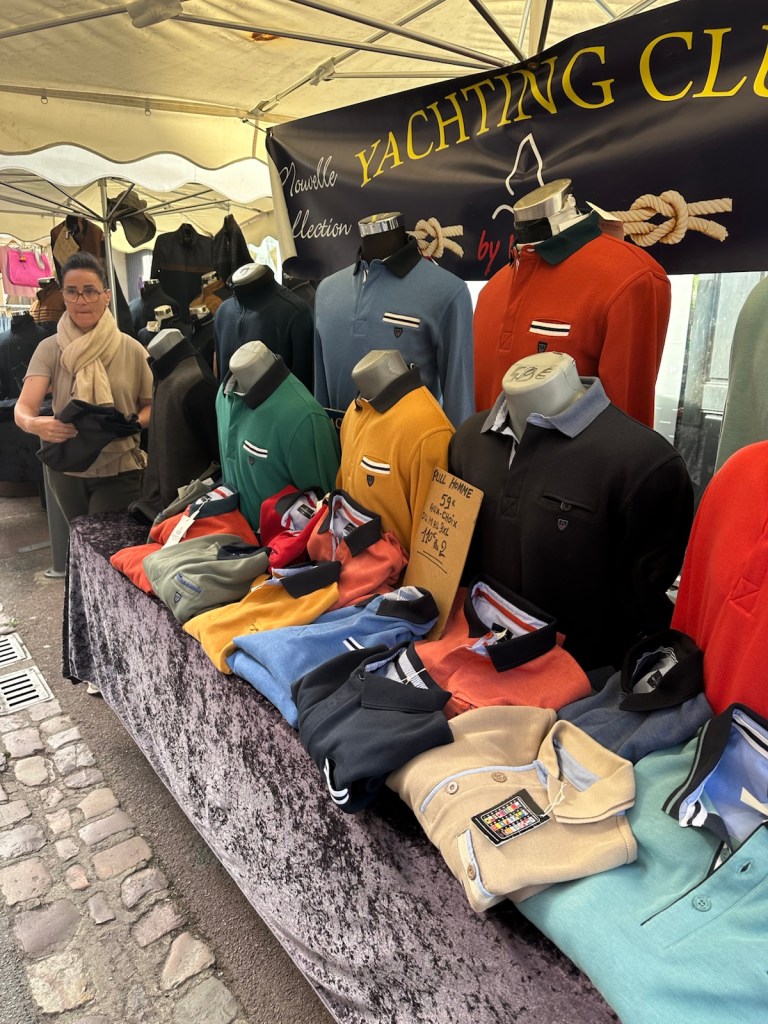
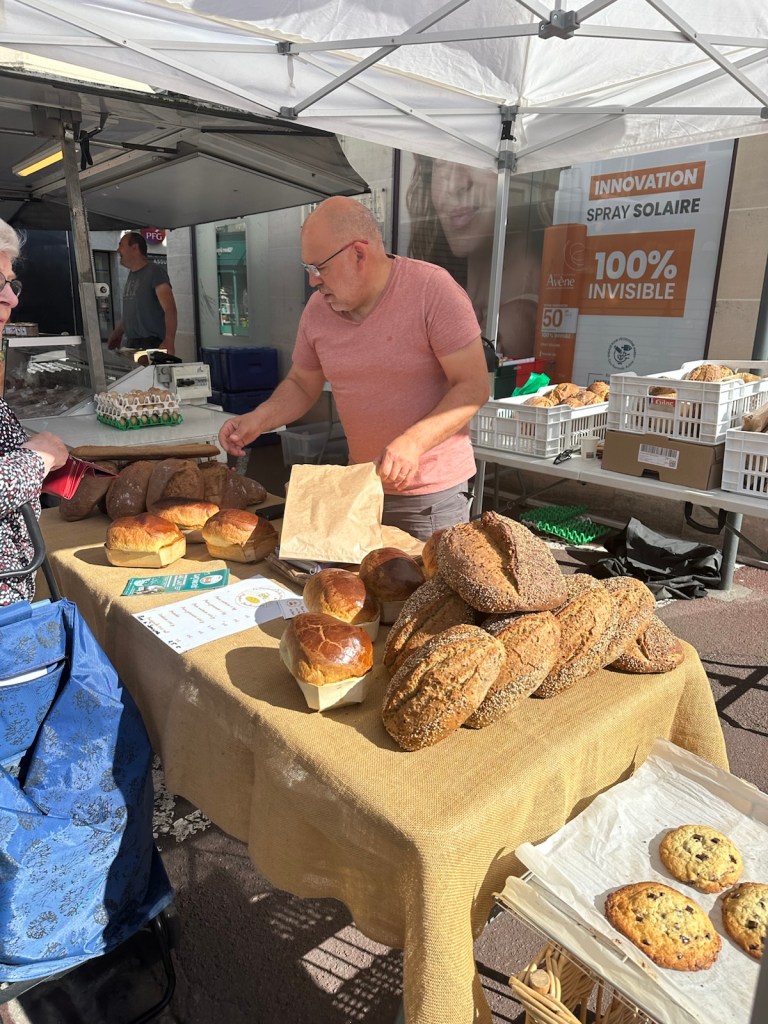
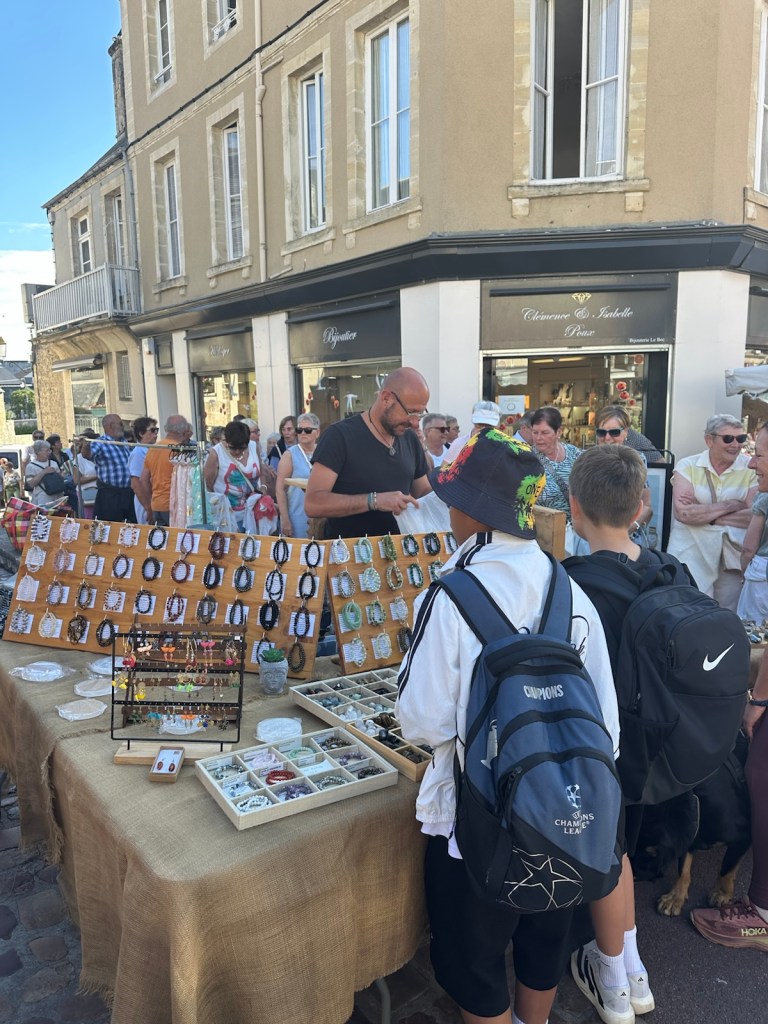
Wednesday morning is market day in Bayeux, and the pedestrian Rue Saint-Jean comes alive with the sights, sounds and aromas of Normandy. Locals browse stalls piled high with cheeses, fresh produce, breads, flowers and regional specialties while visitors mingle among them.
It’s more than a market — it’s a glimpse into everyday life in Normandy and one of the best ways to experience the town like a local.

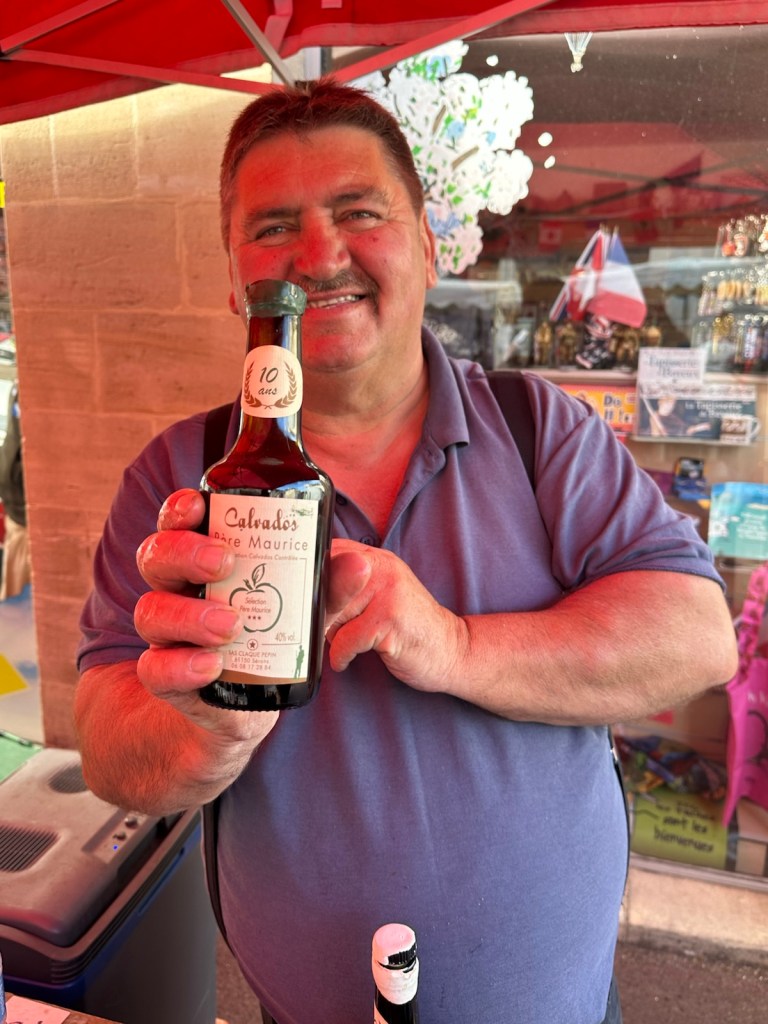
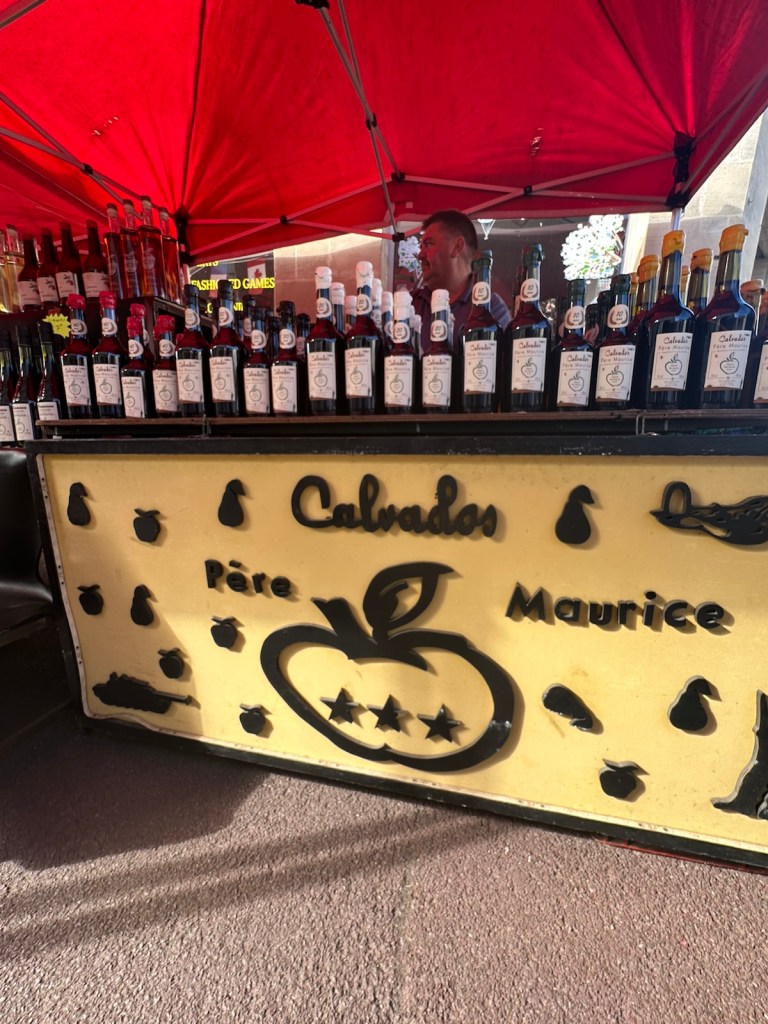
At the Wednesday market, I met Père Maurice — or at least his legacy. His family has been turning Normandy apples into Calvados for generations. It’s the local stuff … not one of the big export brands but something much closer to what a Norman family might keep in the cupboard and bring out after dinner.
Aged for a decade in oak barrels, it carries the flavors of Normandy itself: apples, caramel, spice, and a little bit of countryside magic.
After the market, we loaded into the Bigster and headed for Utah beach. The drive was every bit as memorable as the destination itself. It was hard to imagine that this peaceful landscape was once at the center of one of the most important military operations in history.
Today, the beach is wide, windswept, and remarkably serene. Standing on the sand, listening to the waves roll in, it is difficult to reconcile the tranquility of the scene with the courage and sacrifice it witnessed more than eighty years ago. It is a place that invites reflection — and gratitude.
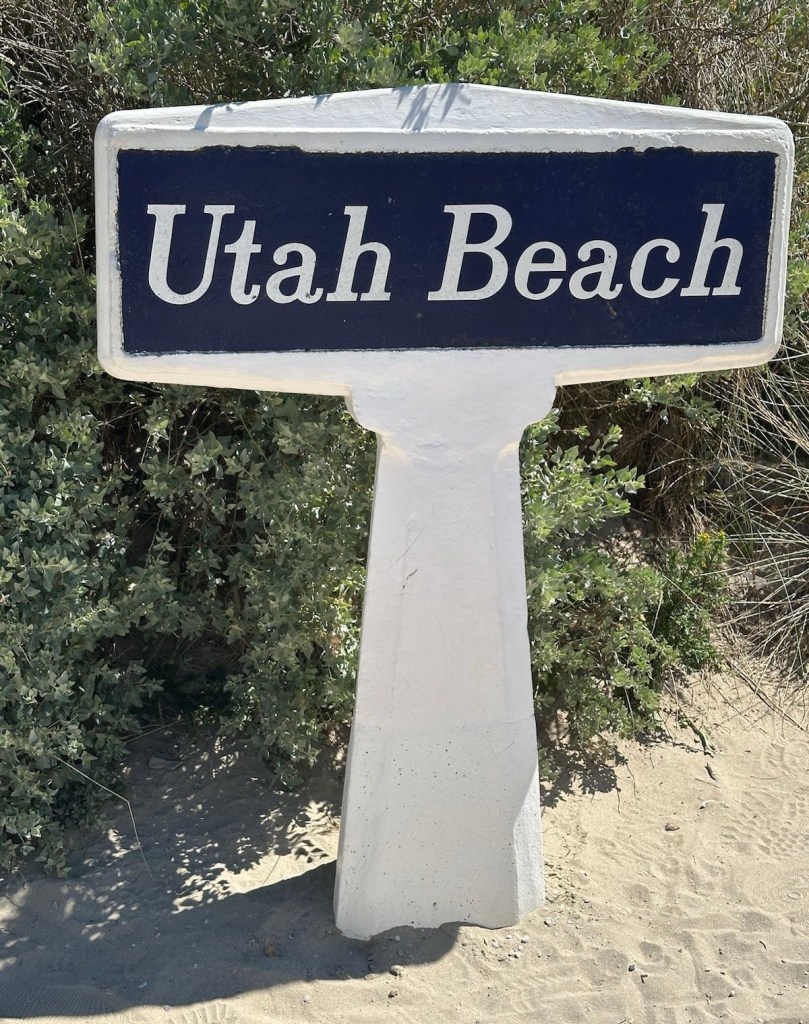
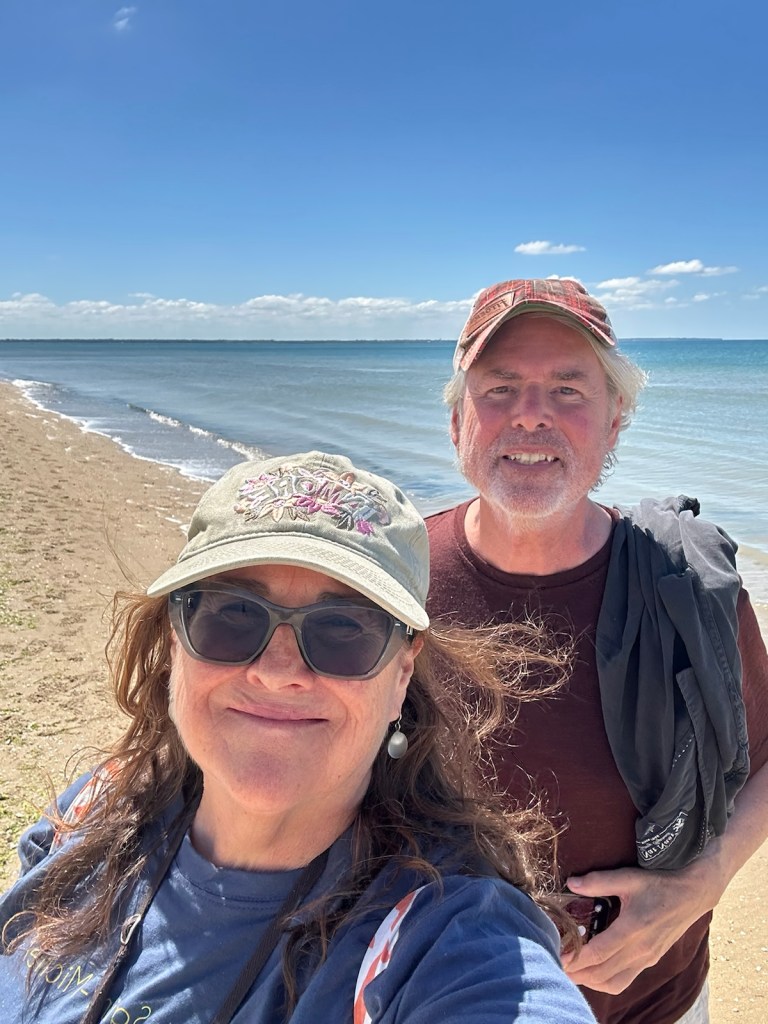
Utah Beach was one of five landing beaches on D-Day, June 6, 1944, when Allied forces began the liberation of France from Nazi occupation. Of all the American landing beaches, Utah Beach experienced the fewest casualties, thanks in part to a navigational error that brought troops ashore in a less heavily defended area. What could have been a disaster became a fortunate break for the invading forces.
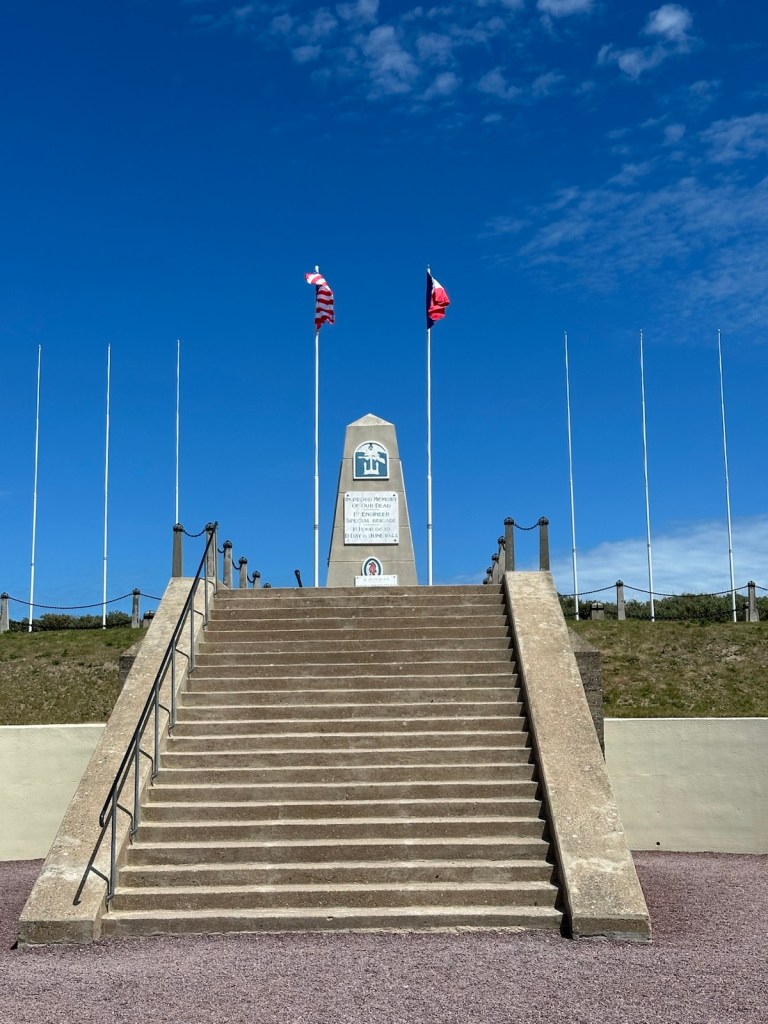
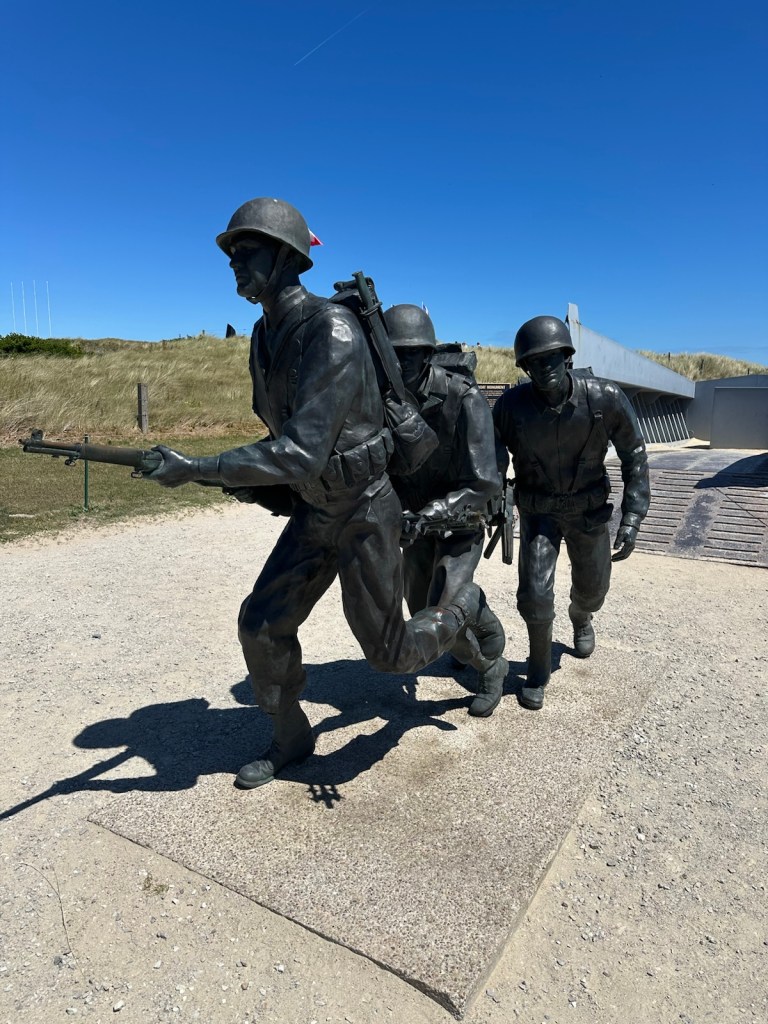
From Utah Beach, we set our sights on Pointe du Hoc, one of the most dramatic and significant sites of the Normandy invasion.
But travel doesn’t always go according to plan. When we arrived, the road into Pointe du Hoc was closed due to construction. Disappointed but undeterred, we adjusted our itinerary and continued west along the coast. In Normandy, history is never far away. Our next stop was Omaha Beach.
As we approached Omaha Beach, the first thing that caught my eye wasn’t its history — it was its beauty. The color palette of golden sand and blue water is one of my favorites. The contrast between the beach’s natural beauty and its tragic history is what makes Omaha Beach so unforgettable.
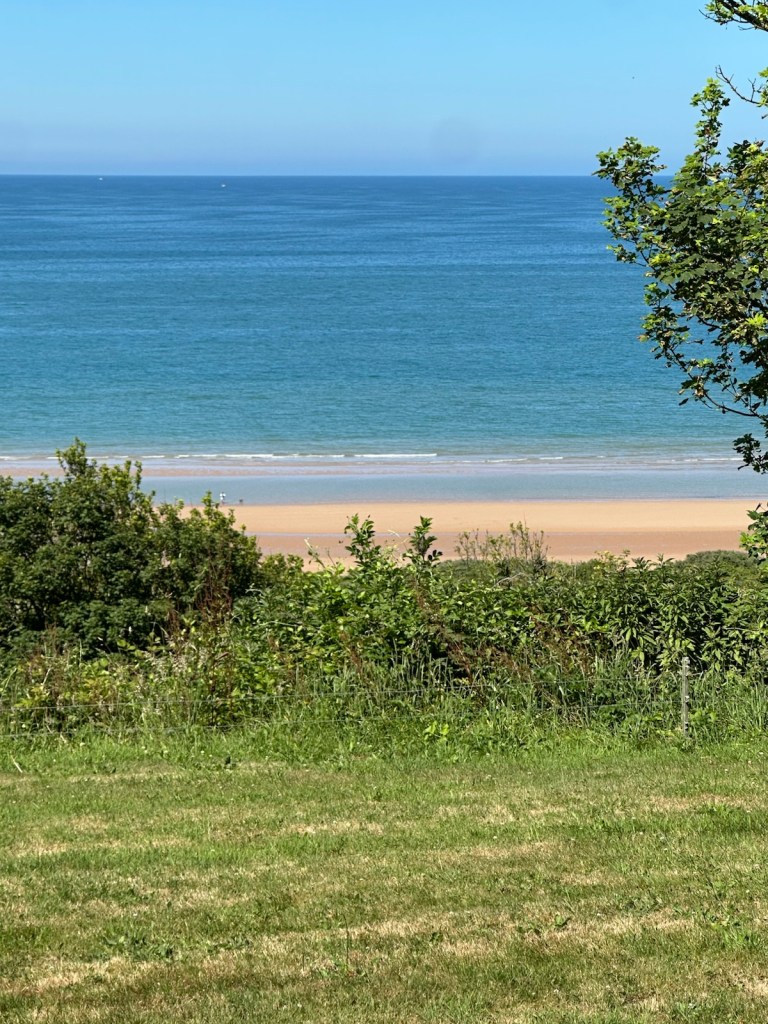
The plan called for troops to land at dawn, push inland and secure exits from the beach. But almost everything went wrong. Strong currents and rough seas scattered landing craft. As the first waves of American soldiers stepped off their landing craft, they faced machine-gun fire, artillery, and mortars.
Many soldiers never made it off the sand. Small groups of soldiers and officers eventually began climbing the bluffs, finding gaps in the defenses and attacking German positions from the rear. Their initiative and determination gradually broke the stalemate.
By the end of D-Day, the Americans had secured a foothold, but at a terrible cost. Approximately 2,400 American casualties — occurred at Omaha Beach alone, making it the most costly landing beach of the invasion.
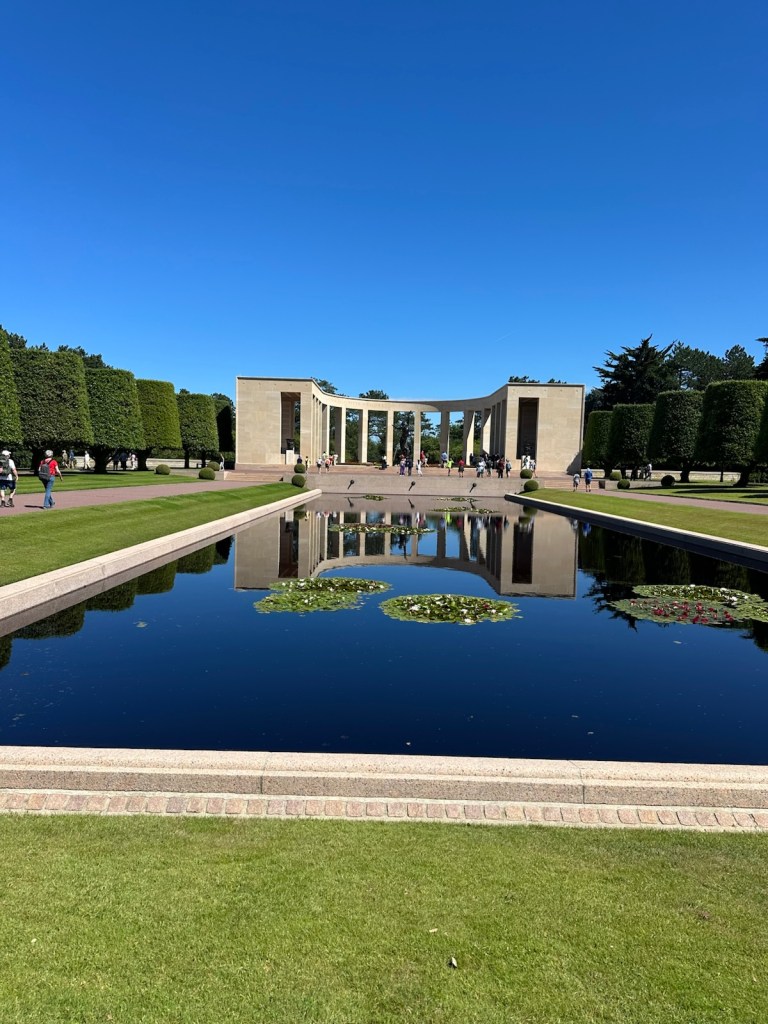
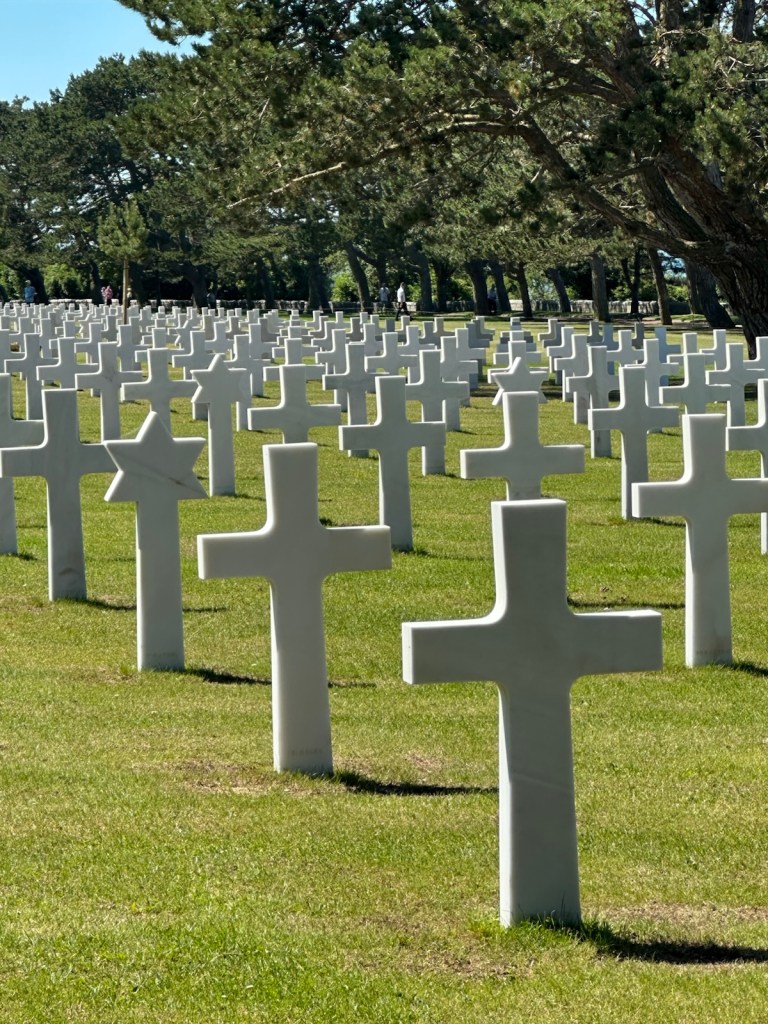
The Normandy American Cemetery sits on a bluff overlooking Omaha Beach. The cemetery contains the graves of over 9,000 American service members, most of whom died during the D-Day landings and the subsequent Battle of Normandy in the summer of 1944.
The cemetery was built on land granted to the United States by France in perpetuity. The land remains French territory, but France has given the US the right to administer and maintain the site forever as a memorial to those who fell in the liberation of Europe.
We returned to Bayeux tired but grateful, carrying with us not only images and memories, but a renewed sense of respect for those whose courage helped shape the world today.
While much of France was sweltering under an early summer heat wave, we enjoyed cool breezes and comfortable temperatures along the Normandy coast.

