Monday morning in Paris is when half the city seems to have taken the day off. Shop shutters stayed firmly closed, museums took a breather and even some cafés appeared to be sleeping in. One thing that definitely didn’t take the day off was the relentless heat.
While Arne was busy with choir rehearsal, Susan and I braved the heat and walk to the nearby Arc de Triomphe, the iconic monument commissioned by Napoleon to honor the French army and now home to the Tomb of the Unknown Soldier and its eternal flame.
The traffic circle around the Arc is legendary. With multiple lanes and no lane markings through much of the circle, it has to be one of Europe’s most chaotic roundabouts. There is an underground pedestrian passage that leads directly beneath the monument.
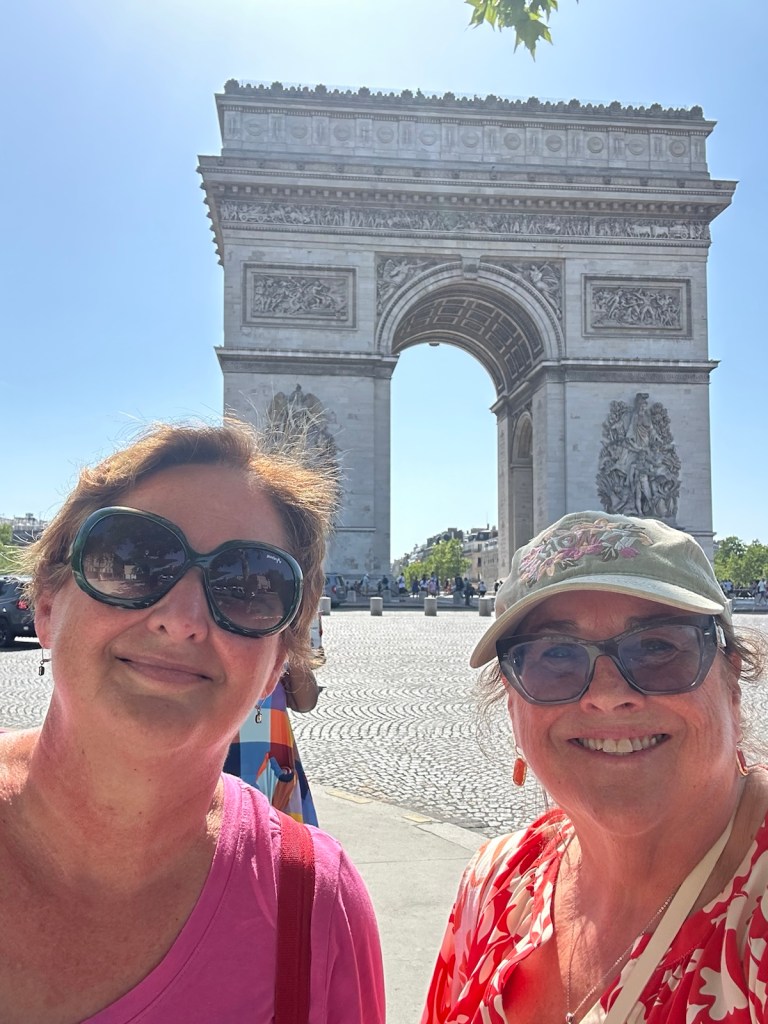
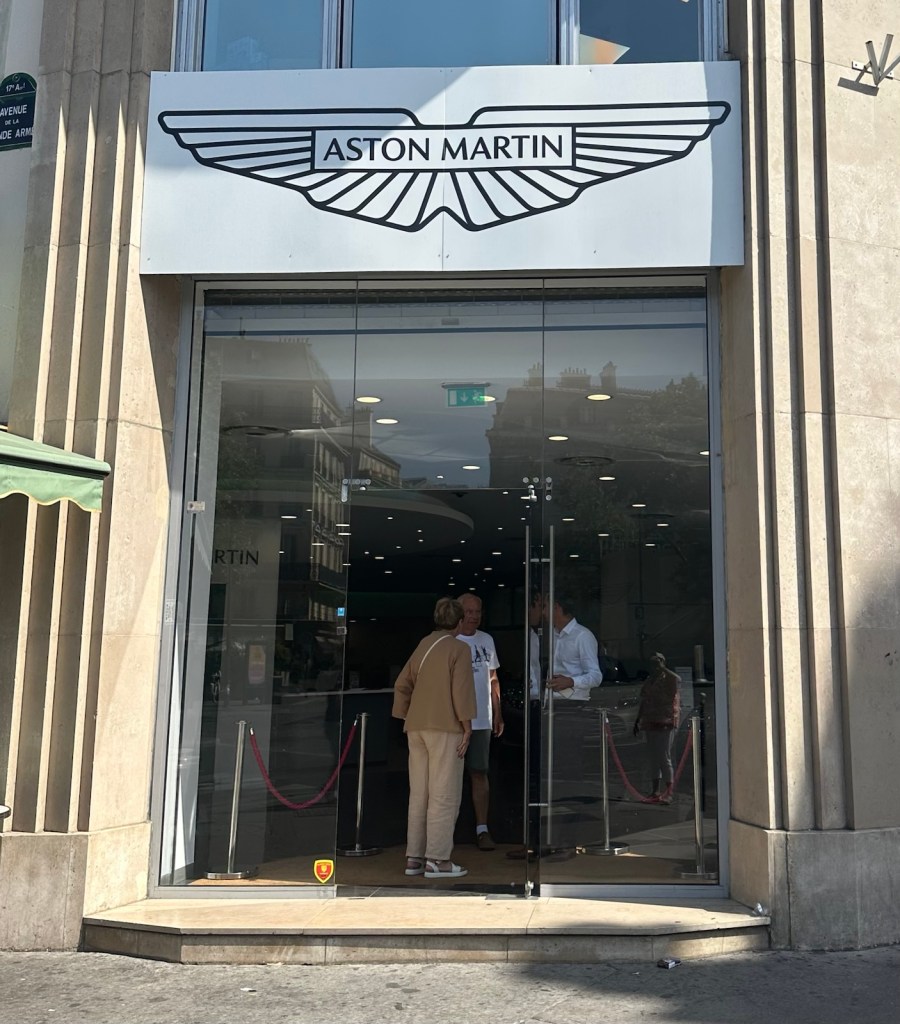
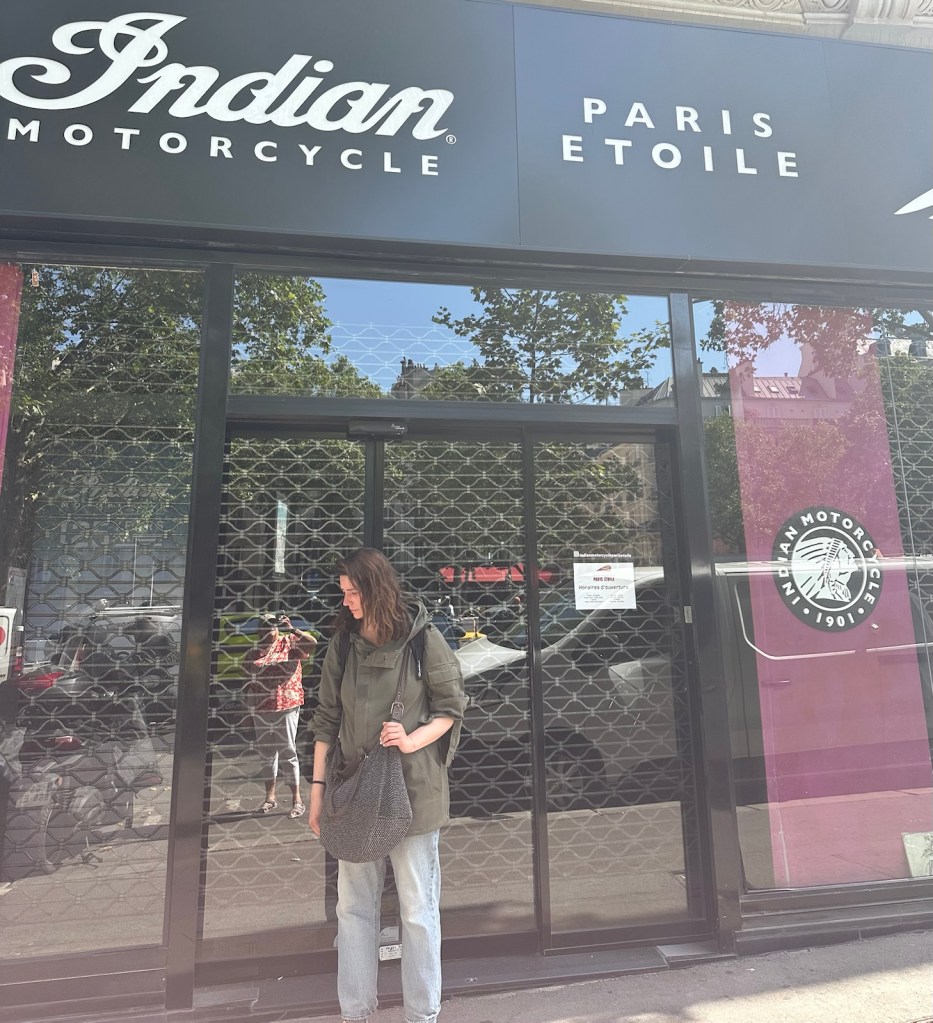
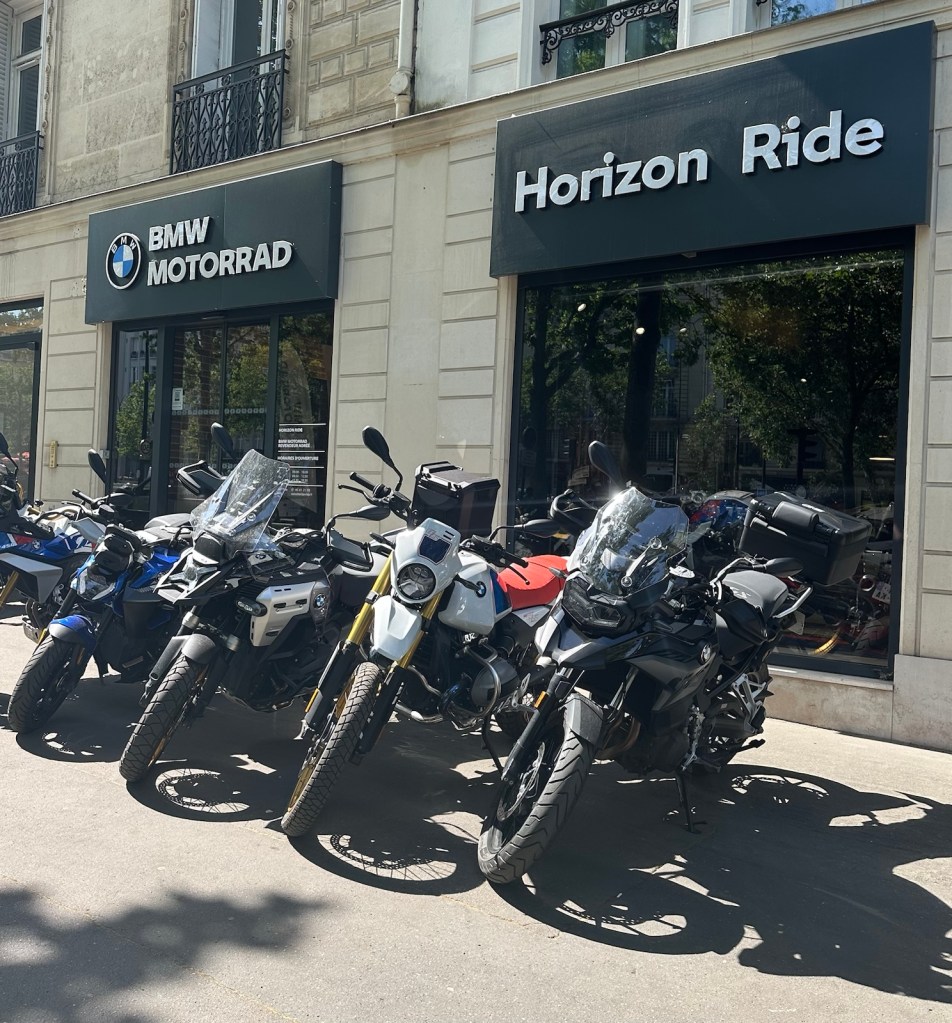
We couldn’t help noticing that the Champs-Élysées isn’t quite the fashion boulevard we remembered. Many of the high-fashion clothing stores have given way to luxury flagships and gleaming automotive showrooms. Soaring rents have pushed out many traditional retailers, leaving only brands with very deep pockets.
These days, the avenue feels less like a shopping street and more like a showroom for the world’s most luxurious cars and designer labels. Still, with the Arc de Triomphe anchoring one end and tree-lined sidewalks stretching into the distance, it’s hard to complain about the walk.
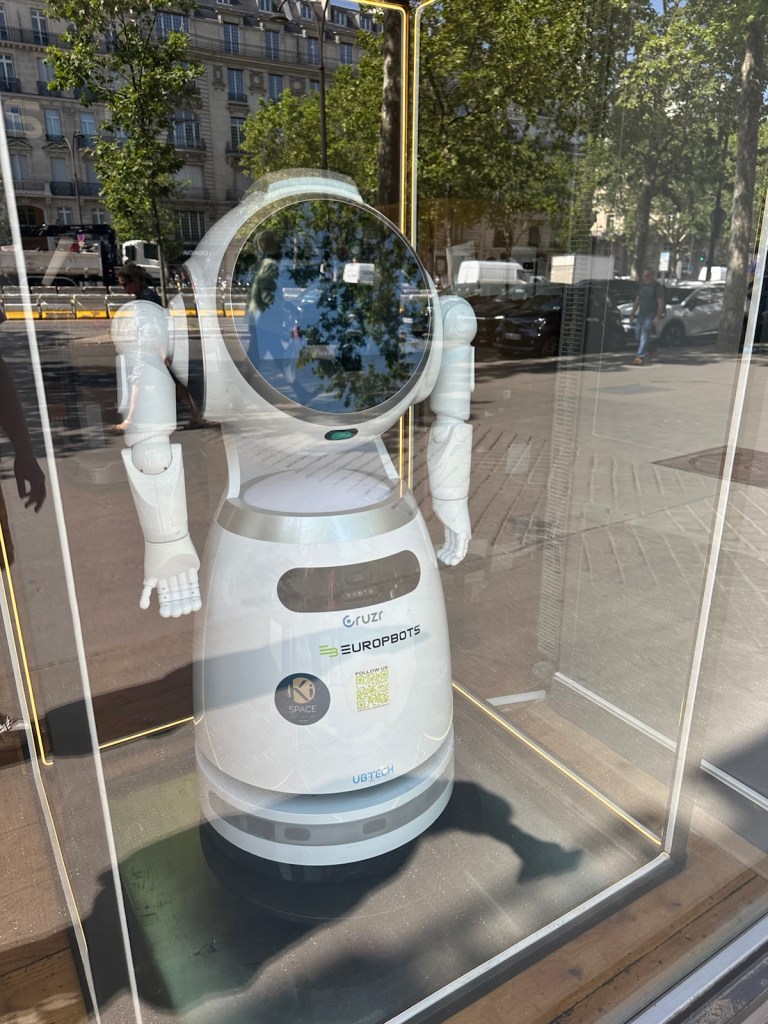
Just steps from the Arc de Triomphe, we stumbled upon one of the most unexpected storefronts on the avenue — a showroom filled with robots. Not toy robots or science-fiction props, but robots designed to greet hotel guests, deliver meals, clean floors and assist businesses. Champs-Élysées isn’t just showcasing luxury anymore — it’s giving visitors a glimpse of the future.

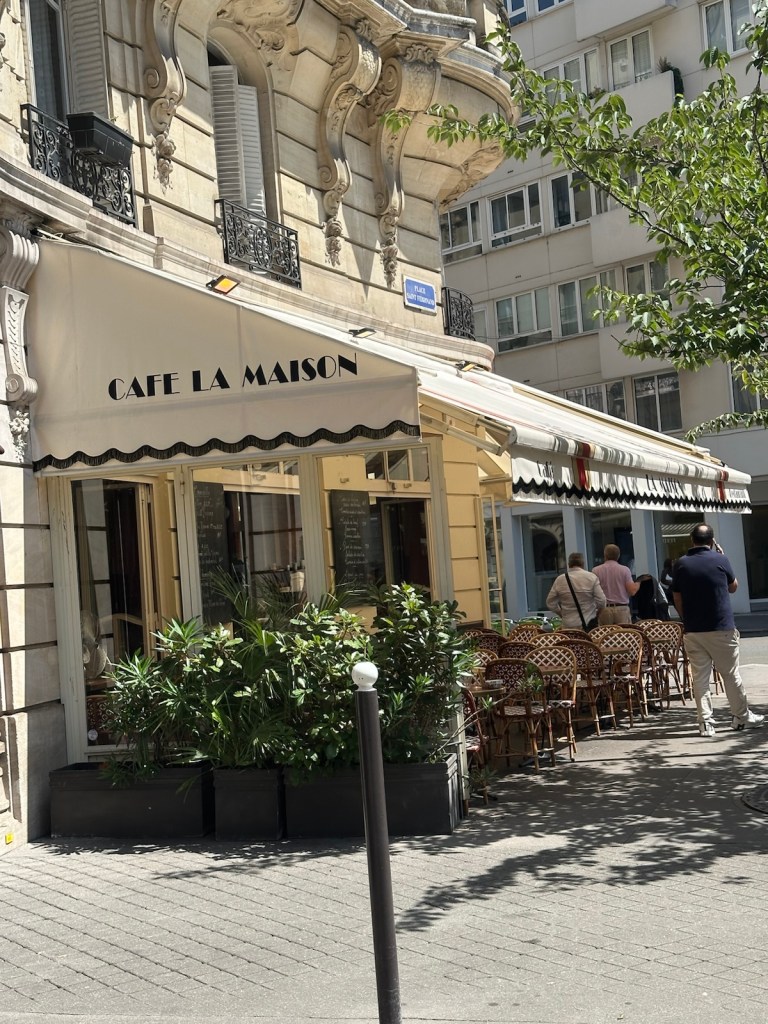
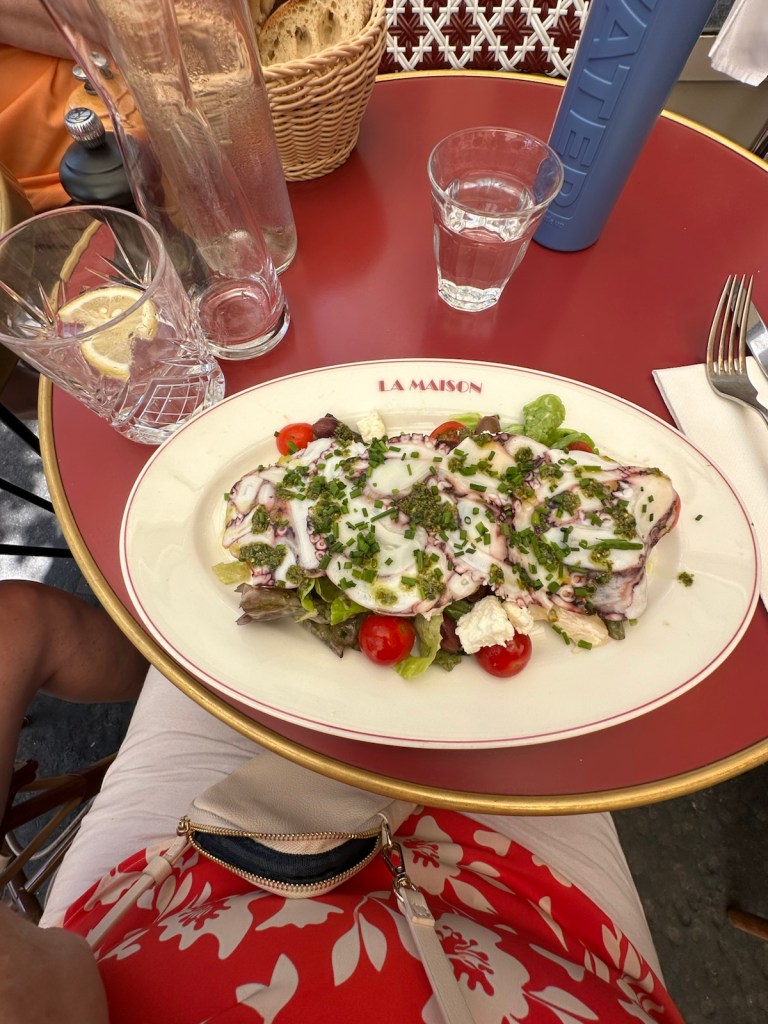
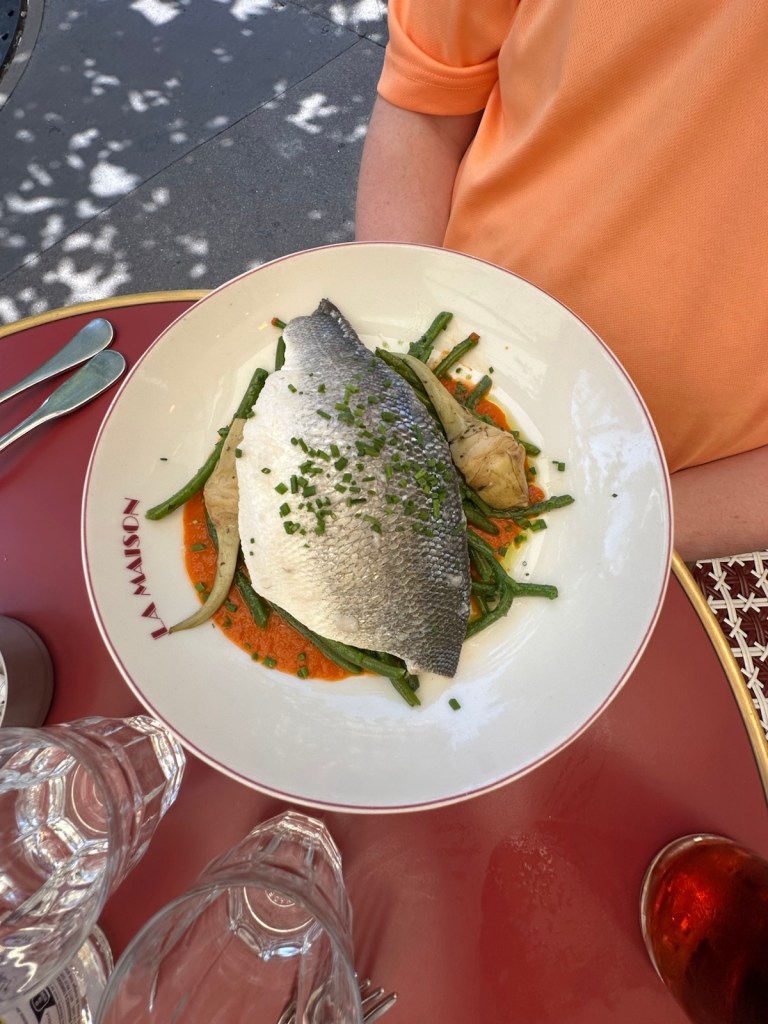
Once Arne was finally freed from choir rehearsal, the three of us enjoyed a leisurely French lunch before setting off to visit two of Paris’s most treasured landmarks — Sainte-Chapelle and Notre-Dame.
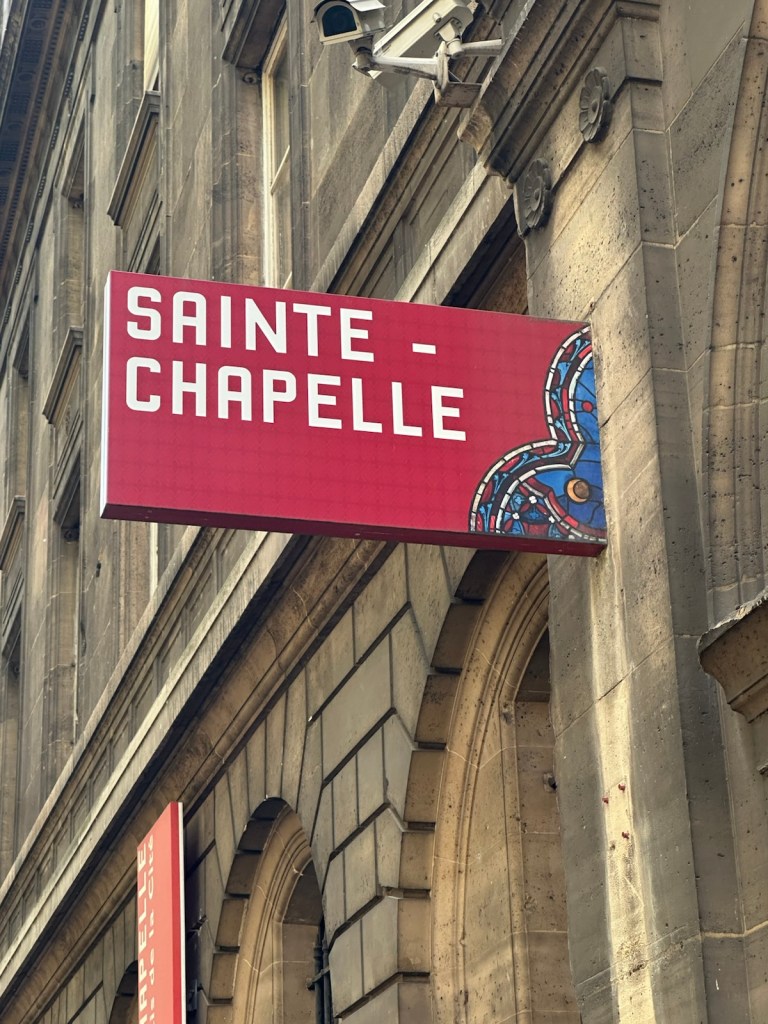
Tucked away on the Île de la Cité, Sainte-Chapelle is one of Paris’s true hidden gems. Built in the 13th century by King Louis IX to house sacred Christian relics — the Gothic chapel is world-famous for its breathtaking stained-glass windows. Fifteen soaring panels, containing more than 1,100 biblical scenes, bathe the chapel in a kaleidoscope of colorful light.
Needless to say, it was more than a little disappointing to arrive at Sainte-Chapelle only to discover they decided to close early that day. After braving the heat and making the trek, we were greeted not by its magnificent stained-glass windows, but by locked doors.
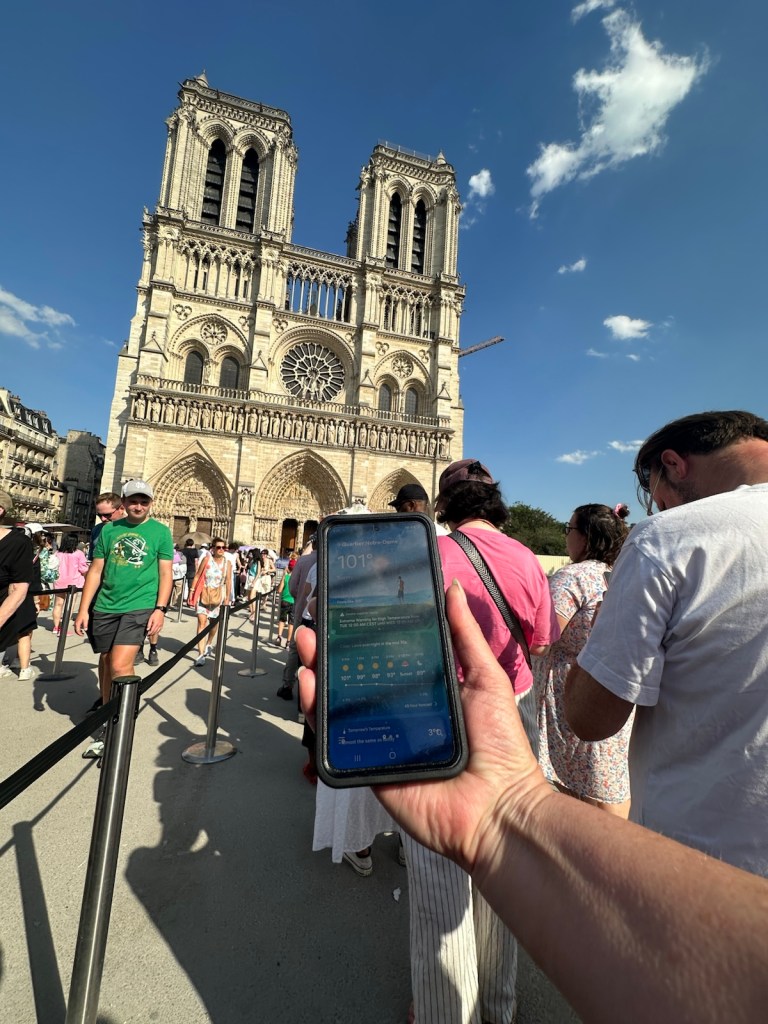
Undeterred, we headed to Notre Dame. By then it was mid-afternoon and the temperature had climbed to a sweltering 101 degrees. We joined the line to get in, hoping for better luck this time.
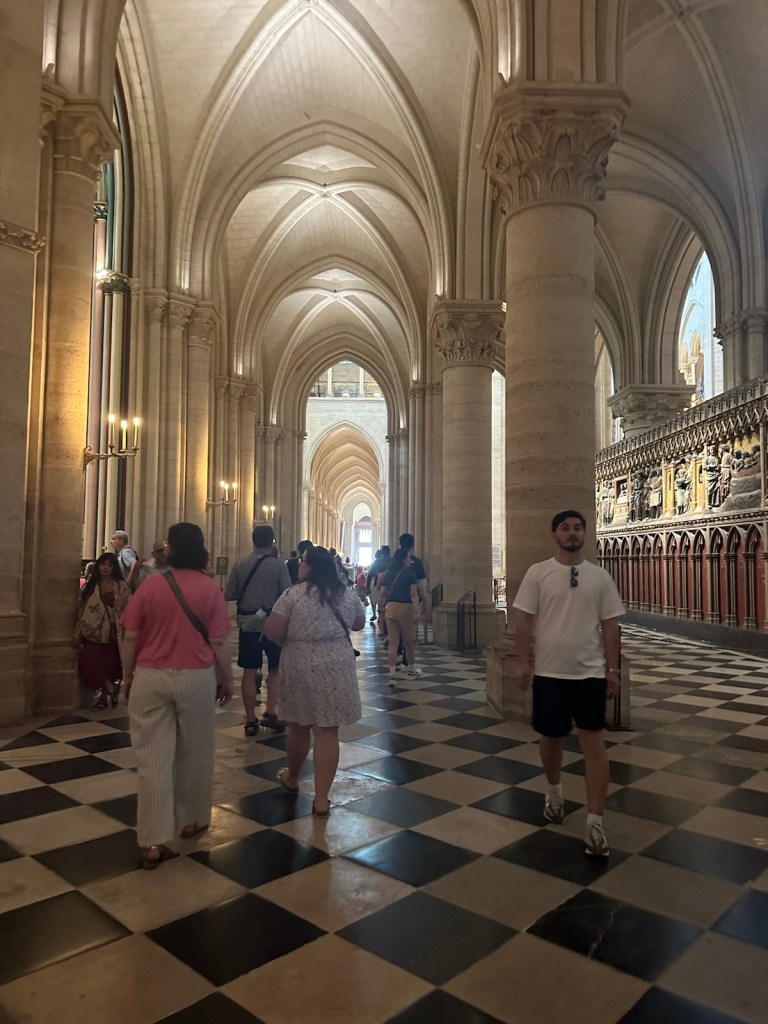
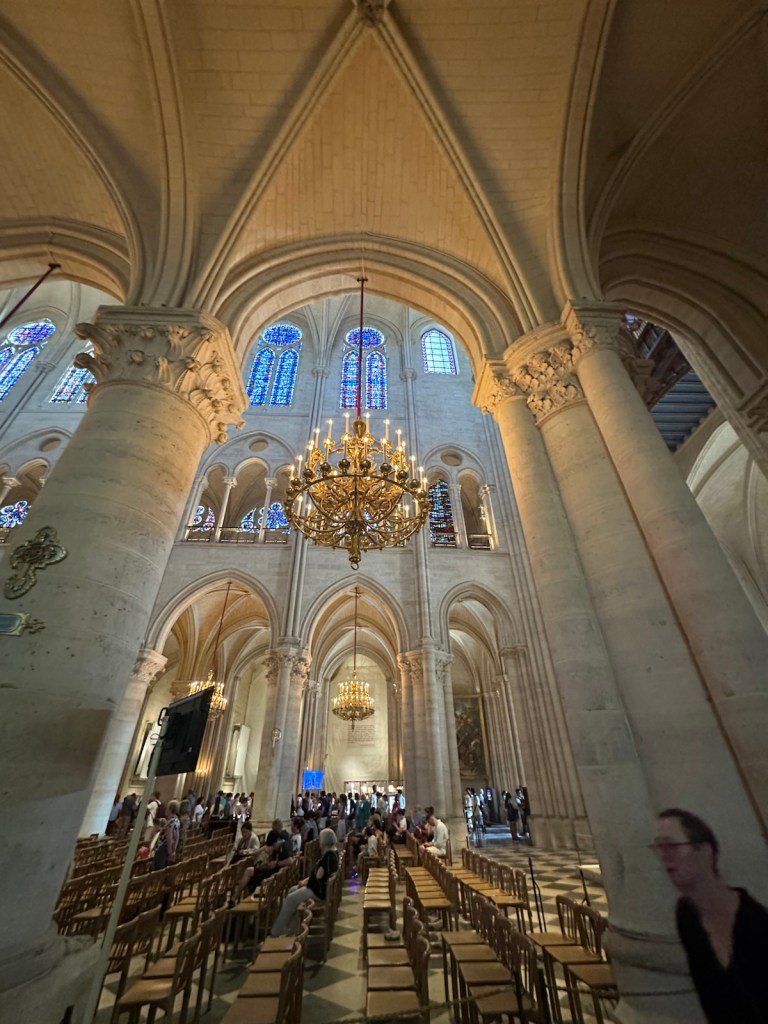
Eventually, we made our way into Notre-Dame, and it did not disappoint. Fresh from its remarkable restoration, the cathedral is every bit as breathtaking as its reputation suggests. One thing did strike me as unusual, however. A Mass was being celebrated at the main altar while hundreds of tourists quietly circled the nave, snapping photos and taking in the grandeur of the cathedral.
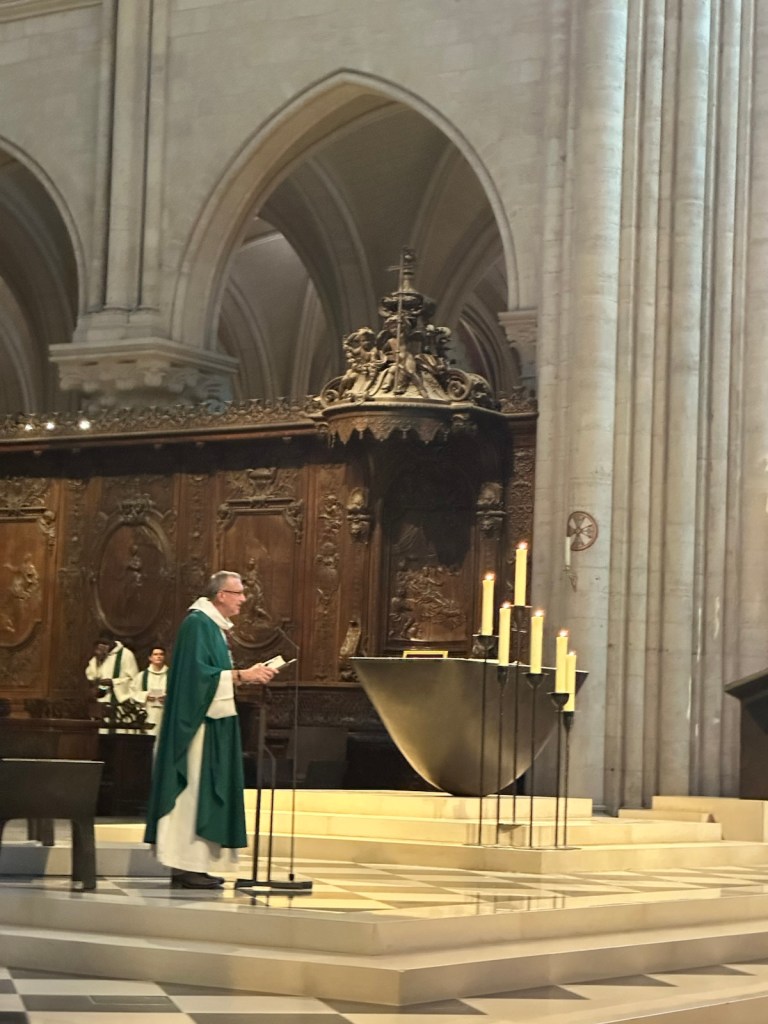
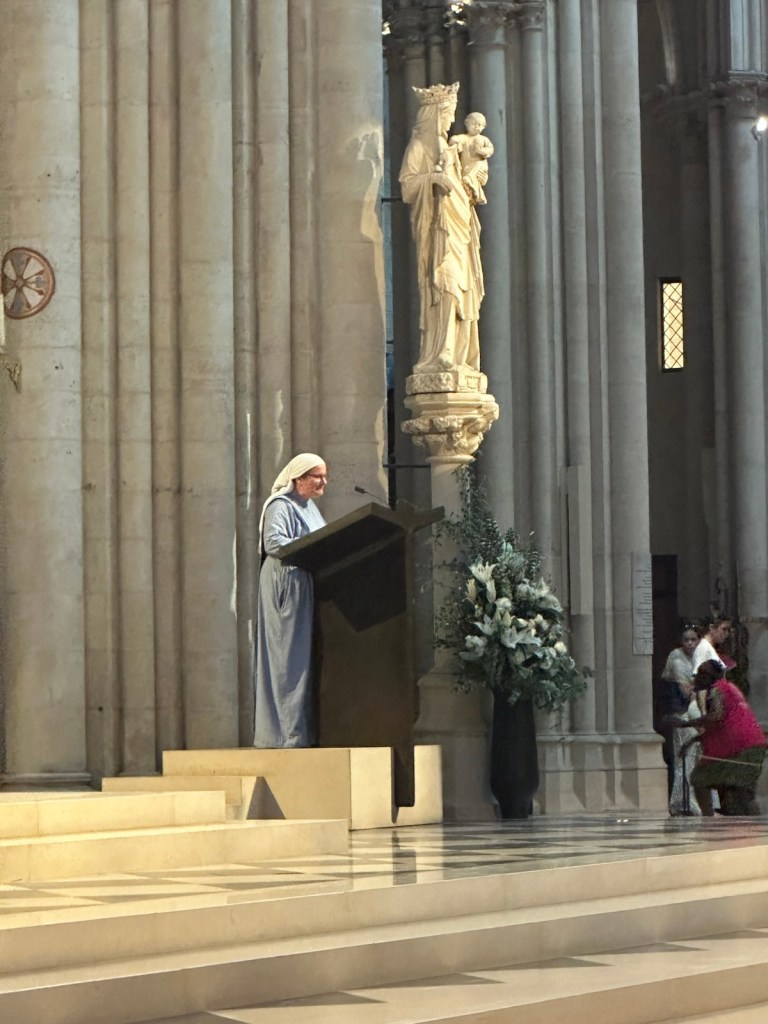
In my travels throughout Europe, I’ve often seen large cathedrals and basilicas hold regular Masses in a smaller chapel or side alcove, creating a more intimate setting for worship while allowing visitors to continue exploring the main sanctuary. Seeing both experiences unfold simultaneously at Notre-Dame felt a bit unexpected, though everyone seemed to respectfully share the space.
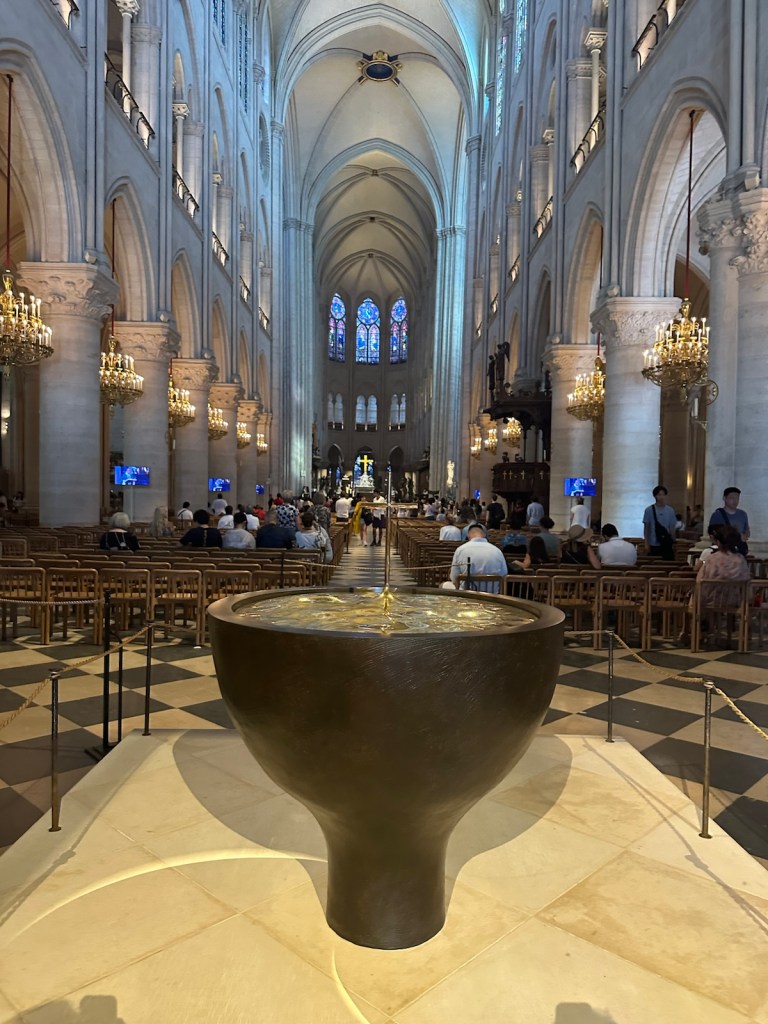
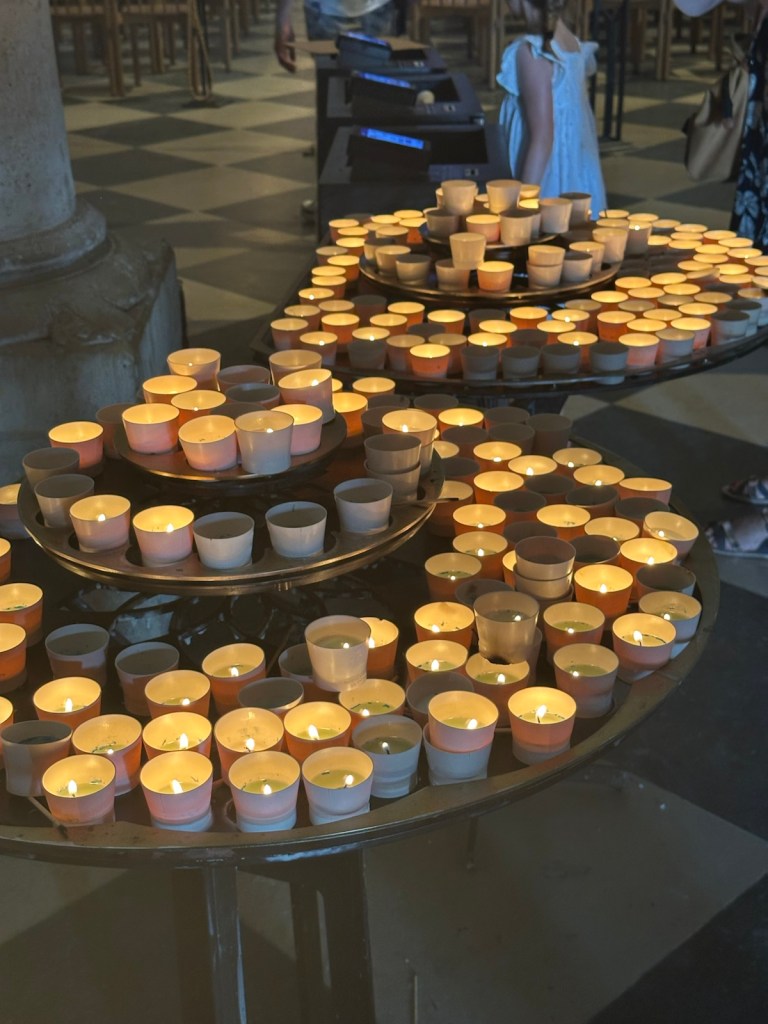
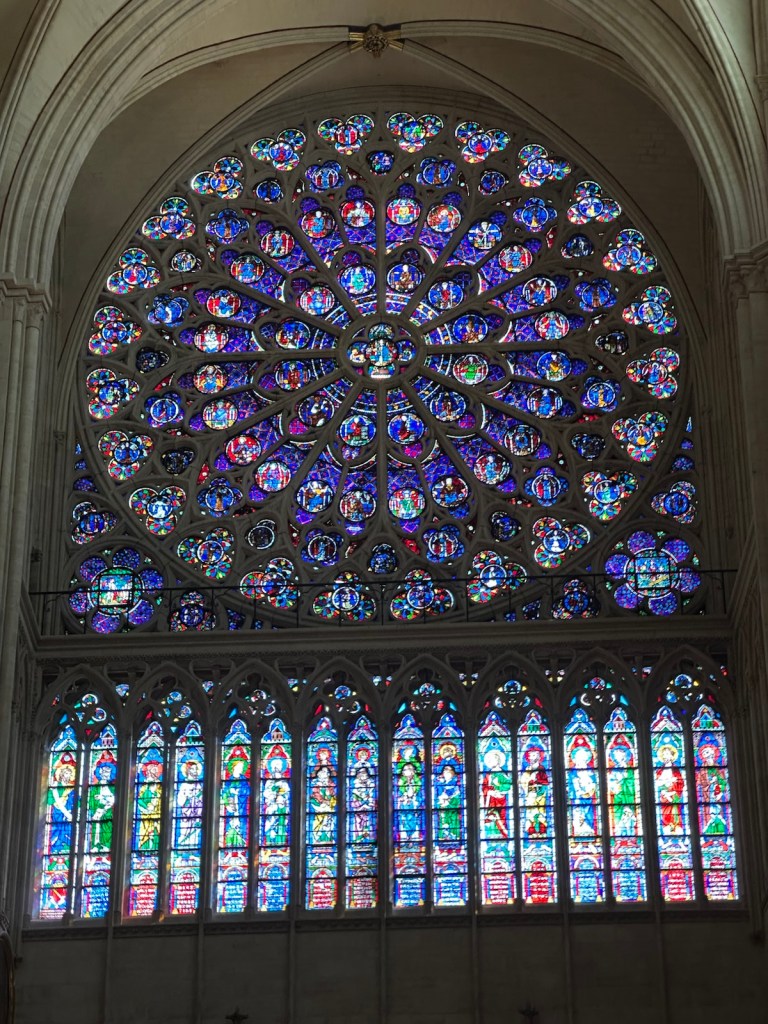
Stepping inside Notre-Dame is simply breathtaking. Sunlight streams through the magnificent rose windows, filling the cathedral with vibrant colors, while elegant chandeliers cast a warm glow beneath the soaring vaulted ceiling. I love the chandeliers and could stare at them endlessly. The beautifully restored stonework, graceful Gothic arches, and towering columns create a space that feels both majestic and peaceful — a masterpiece that more than lives up to its reputation.
Behind the main altar, in a quiet prayer chapel, stood one of the cathedral’s newest treasures. I found myself drawn to this magnificent golden sphere, not realizing it was actually the cathedral’s tabernacle. There was something mesmerizing about it — both beautiful and mysterious. It seemed like the perfect place to sit quietly and meditate.
At the time, I couldn’t quite figure out what I was looking at, but somehow that only made it more thought-provoking and captivating.
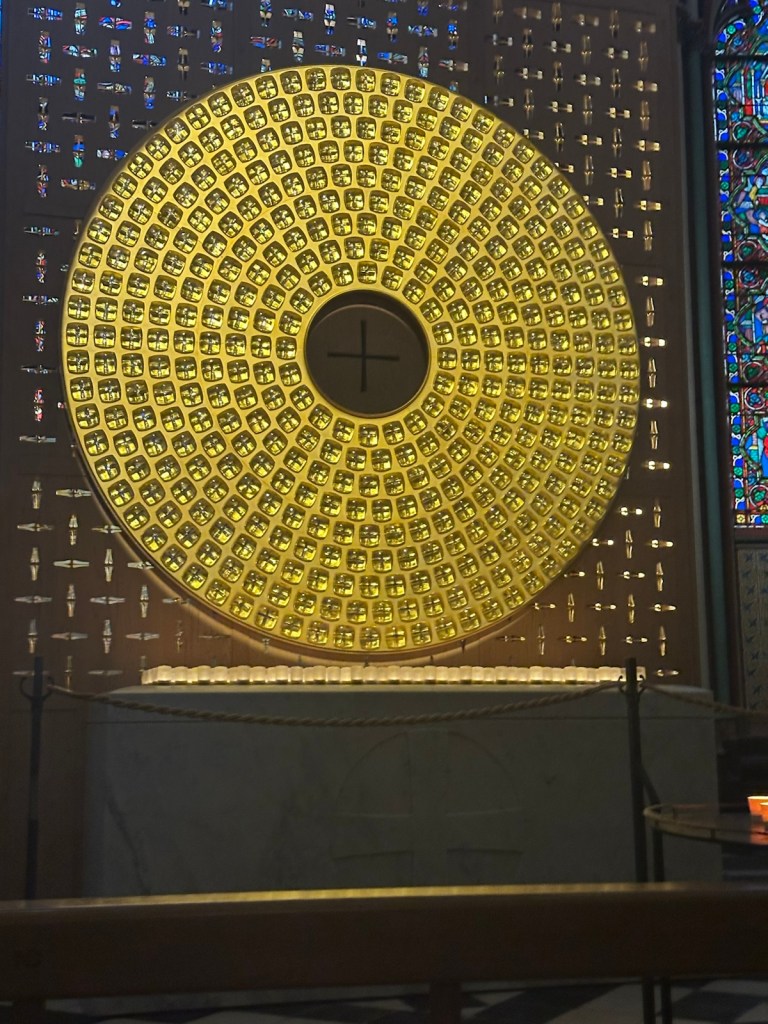
This stunning golden tabernacle was created during Notre-Dame’s restoration. Its about five feet in diameter with hundreds of shimmering bronze facets that seem to capture and reflect the light pouring through the stained-glass windows, giving it an almost heavenly glow. Modern in design yet deeply symbolic, it was a beautiful reminder that while Notre-Dame honors its 850-year history, it is also very much a living cathedral for the 21st century.
We were fortunate to experience Notre-Dame that evening. The very next day, the cathedral — and many other attractions across Paris —closed because of the extreme heat.
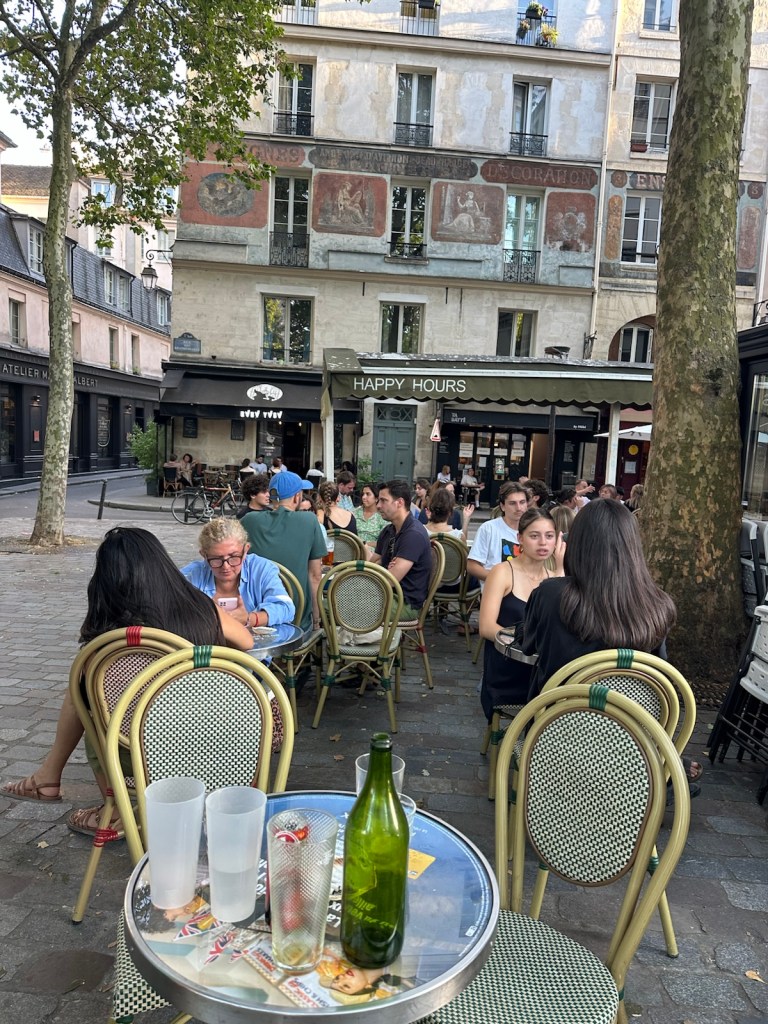
With much of Paris closed on Monday, we felt fortunate to get a dinner reservation — even if the earliest table wasn’t until 9:00 pm. That left us with plenty of time for a leisurely happy hour. In the relentless heat, a cold drink beneath the shade of a sidewalk café felt less like an indulgence and more like finding an oasis.
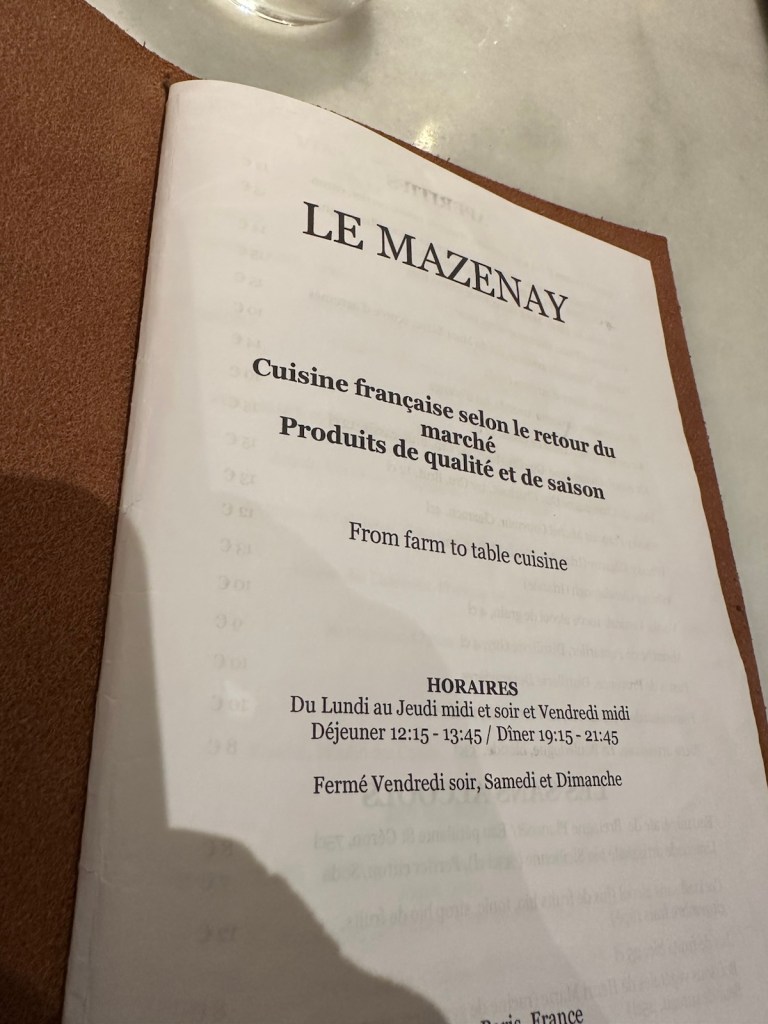
Hidden away on a quiet street in the Marais, Le Mazenay is the kind of restaurant you hope to stumble upon in Paris. The intimate dining room is warm and understated, allowing the beautifully prepared food to take center stage. Its chef focuses on seasonal, market-fresh ingredients and classic French cooking, letting quality and technique shine without unnecessary fuss. It’s a place for lingering over several courses, a fine bottle of wine and savoring the flavors of traditional French cuisine at its best. It has earned recognition in the Michelin Guide as one of Paris’s standout neighborhood restaurants.
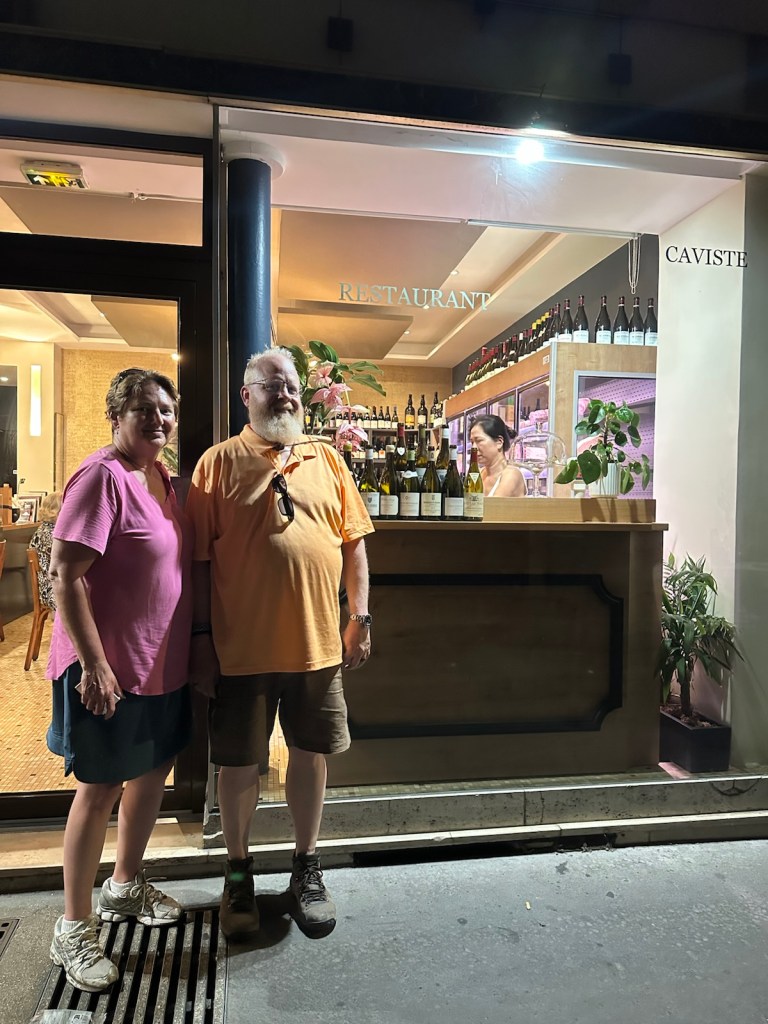
What made our evening at Le Mazenay especially memorable wasn’t just the exceptional food — it was Lan, the restaurant’s co-owner and hostess. Warm, gracious, and effortlessly attentive, her passion for great food, fine wine, and genuine hospitality was evident.
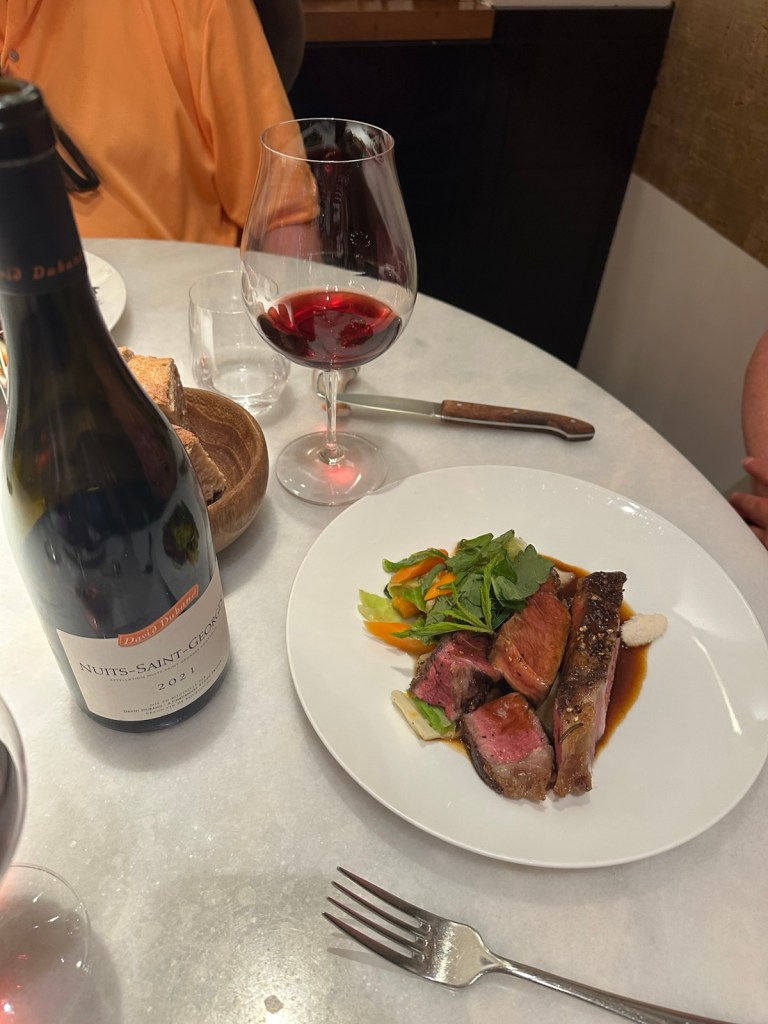
Dinner was another culinary highlight. We enjoyed the Aveyron Prime Rib of Beef, cooked to a perfect medium-rare and finished with aromatic Phu Quoc pepper. The beef, personally selected by Brice of La Table de Solange in Aveyron, was incredibly tender and flavorful.
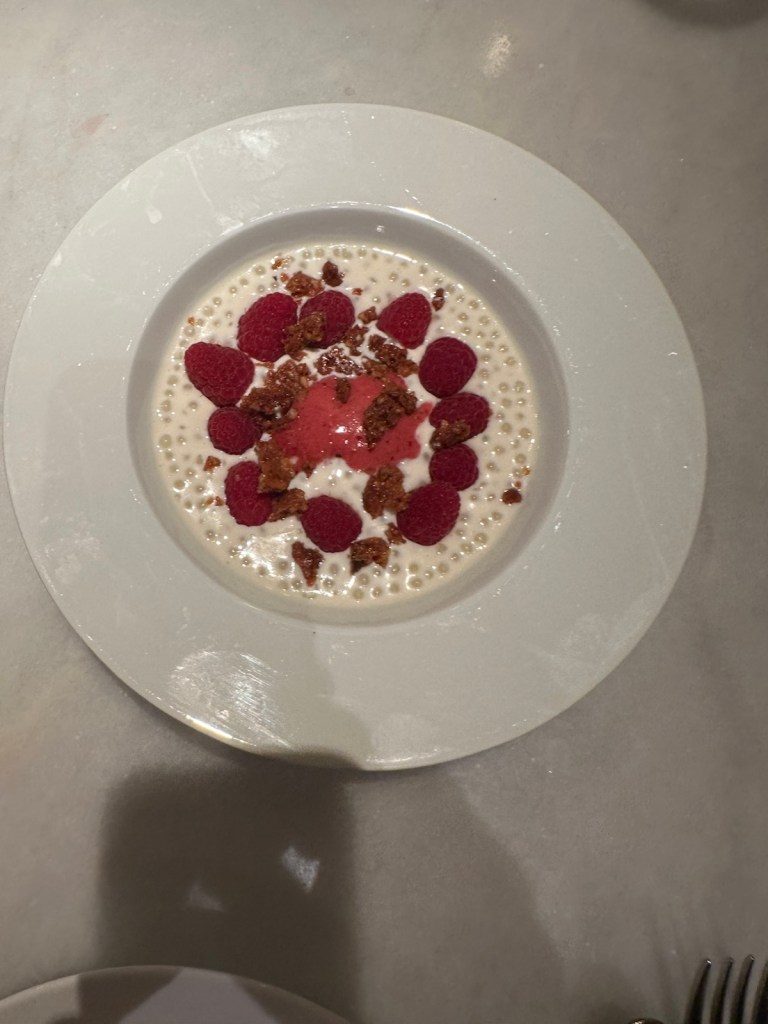
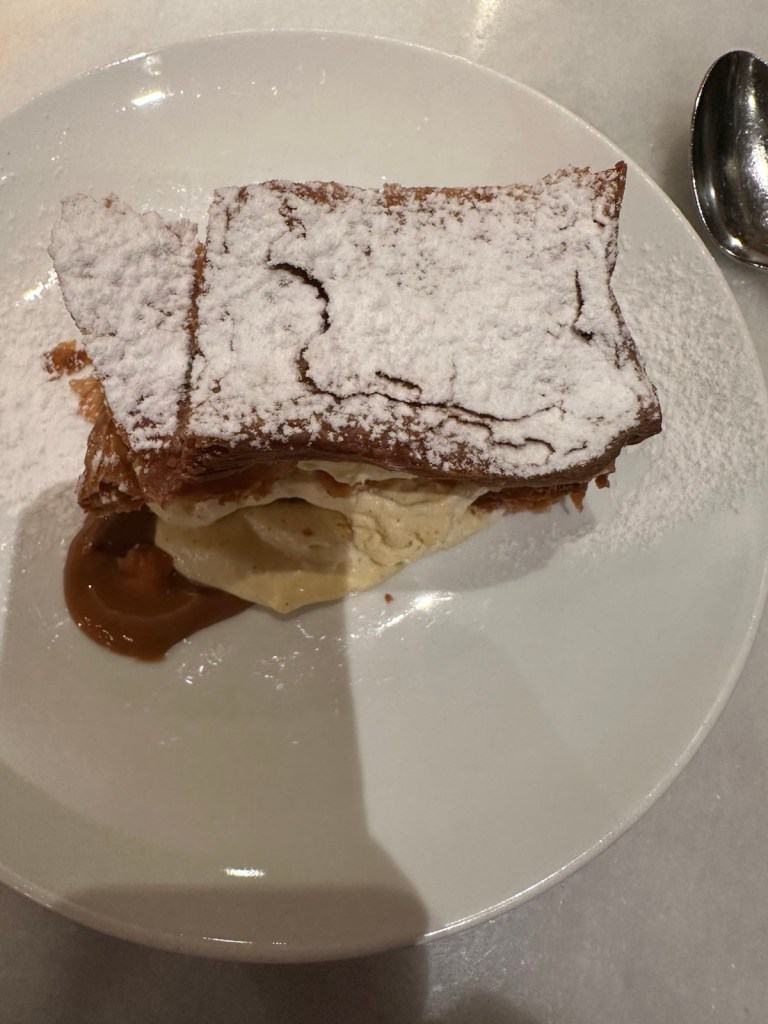
For dessert, we couldn’t resist sampling two specialties. The Millefeuille featured delicate handmade puff pastry layered with Madagascar vanilla cream, a hint of rum, and luscious Normandy milk jam. The tapioca pearls in coconut milk, topped with fresh raspberries from France’s Yonne region, provided a light, refreshing finish. Every bite reflected the French passion for exceptional ingredients and beautiful presentation.
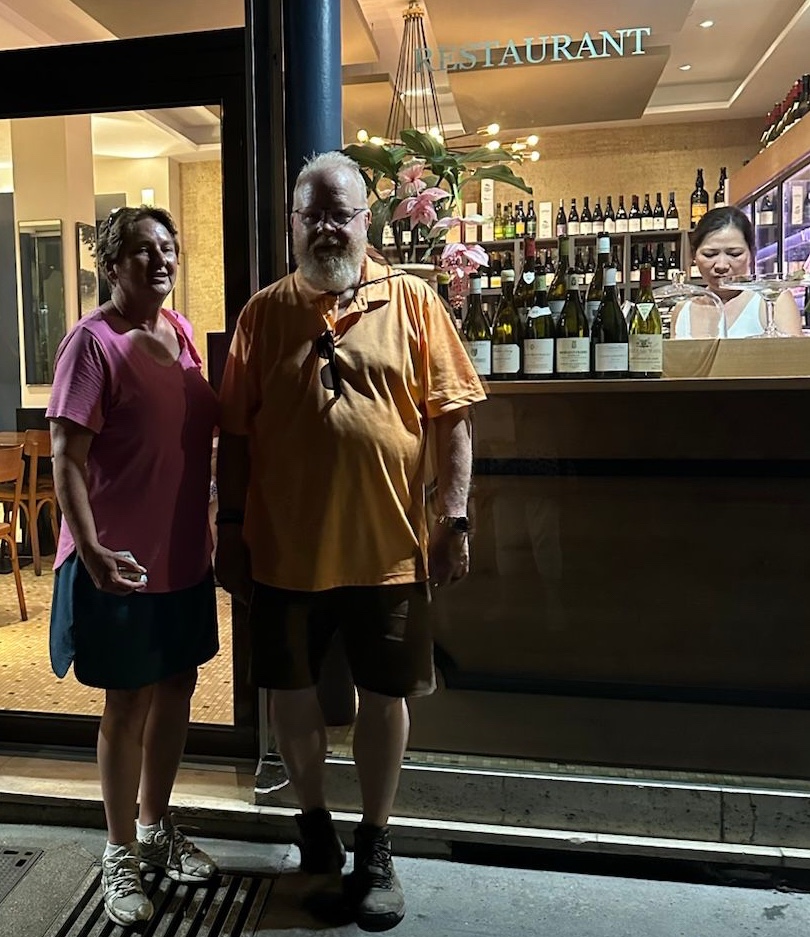
One charming tradition you’ll notice in many French restaurants is the display of the day’s empty wine bottles. Rather than clearing them away immediately, servers often line them up on a shelf, windowsill or near the bar as a quiet testament to the evening’s enjoyment.
I love the photo below because it shows Arne & Susan in front of this amazing restaurant, the empty wine bottles and on the right is Lan the hostess.
Another hot day in Paris was behind us, with just one day left. We were looking forward to more sightseeing with Susan, but the grand finale would be the choir concert — a perfect ending to an incredible trip.

