The final day of our Paris adventure arrived — and so did the hottest temperatures of the trip. The air was heavy with heat and everyone knew it would be another day of seeking shade, sipping cold drinks and moving a little more slowly.
Our local Minnetonka Chorale Society — the choir my late husband, David, sang with for more than ten years — would take the stage tonight alongside choirs from around the world for a gala concert. The evening celebrated the music of contemporary American composer Elaine Hagenberg, one of today’s most acclaimed choral composers, whose works are known for their beauty, power and emotional depth. Performing her music with a full orchestra in the magnificent Saint-Sulpice Church would be an unforgettable experience and the perfect grand finale to our journey through France.
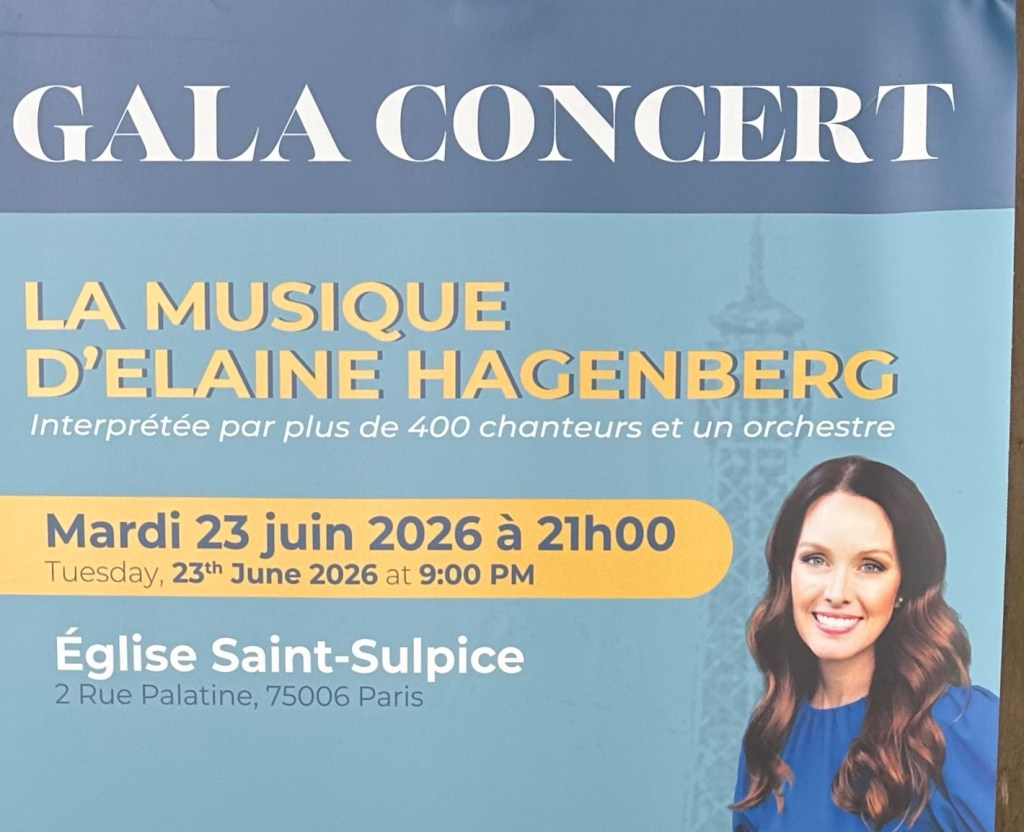
It was a full day for the choir members, beginning with a late-morning dress rehearsal and a full schedule of activities before taking the stage for the 9:00 pm concert.
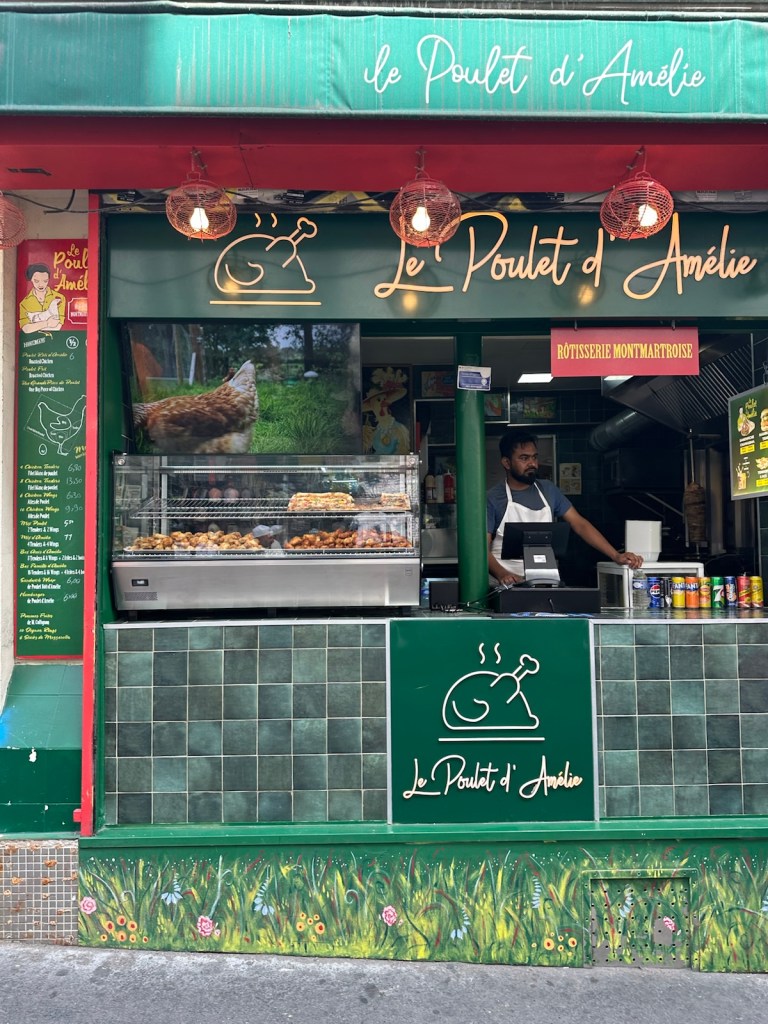
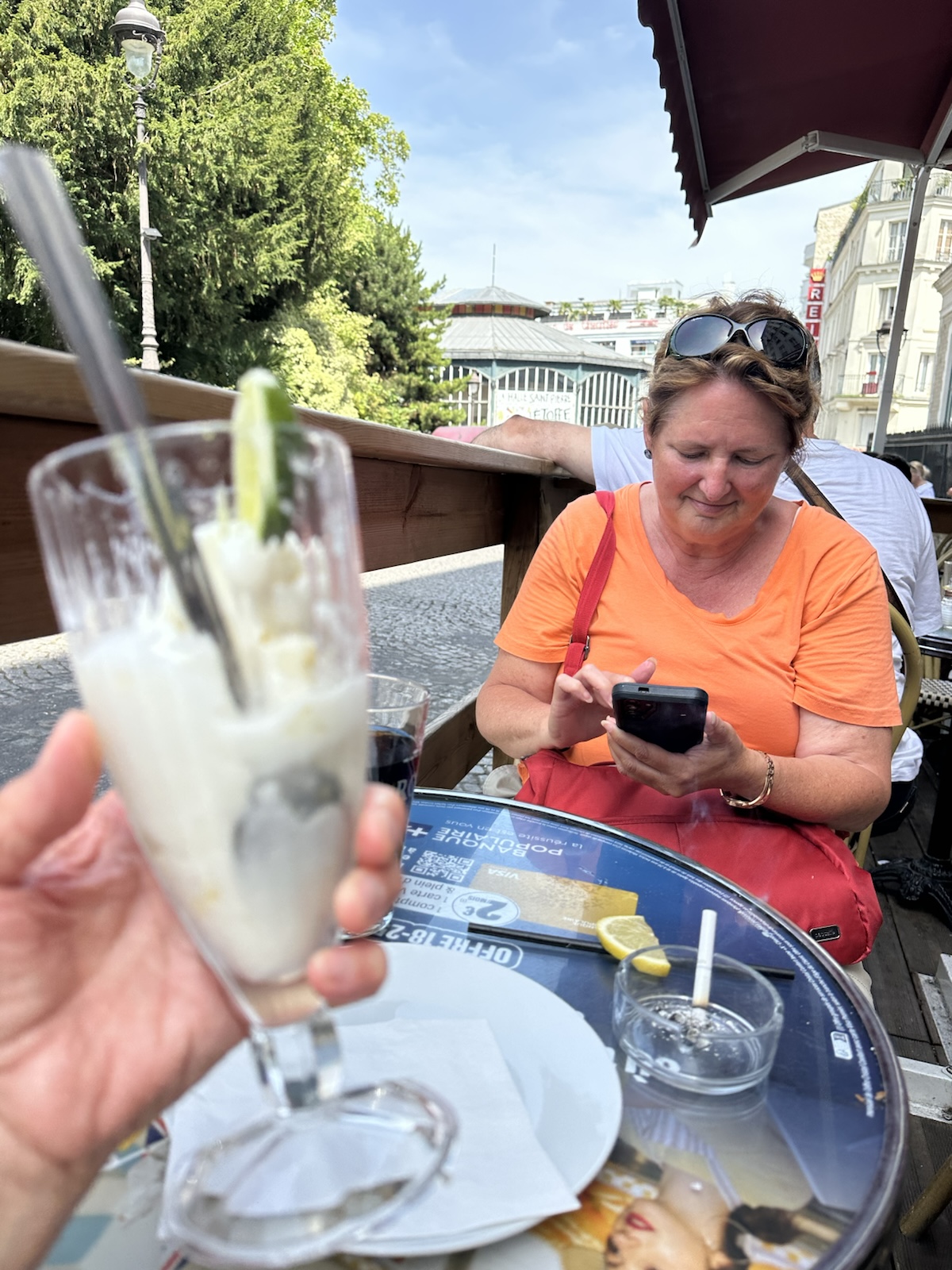
In the meantime, Susan and I decided to make our way to the Sacré-Cœur neighborhood. Once again, we took it slow, stopping often to escape the relentless heat and cool down. It was simply too hot to think about eating, but I discovered the perfect substitute: Le Colonel.
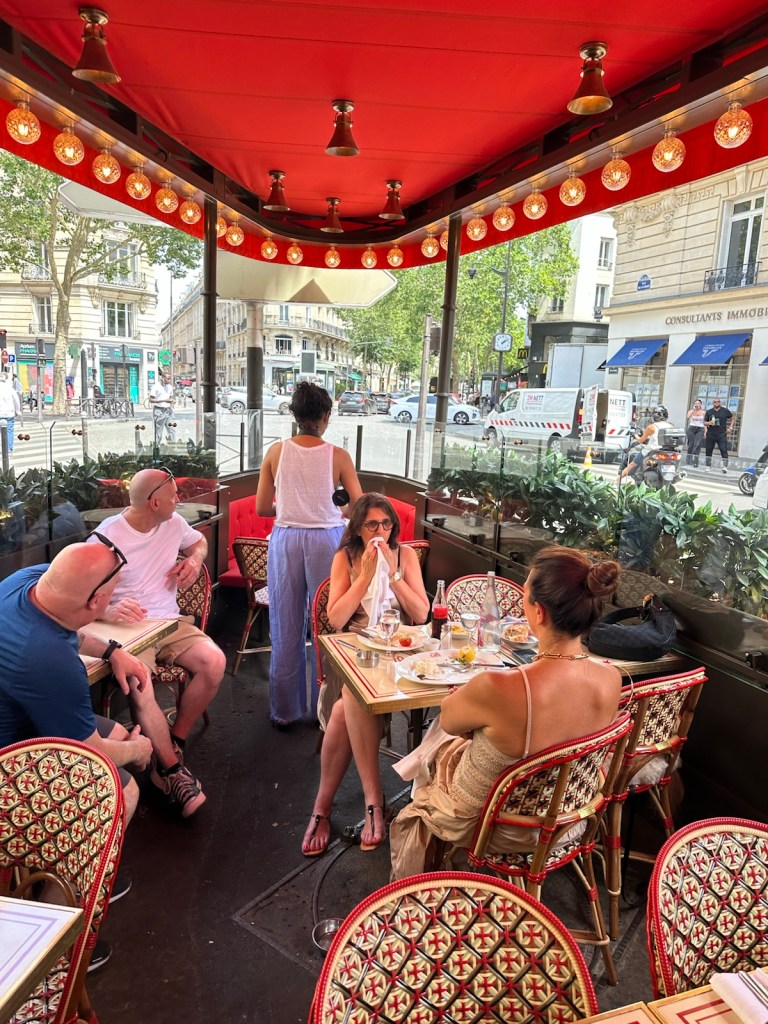
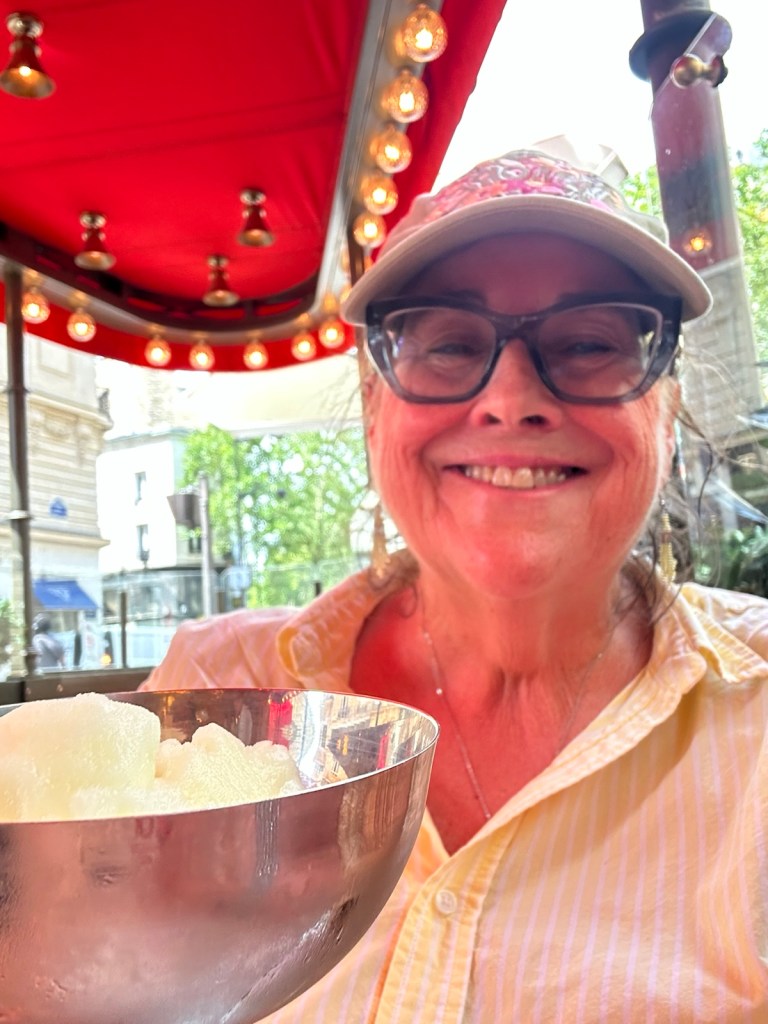
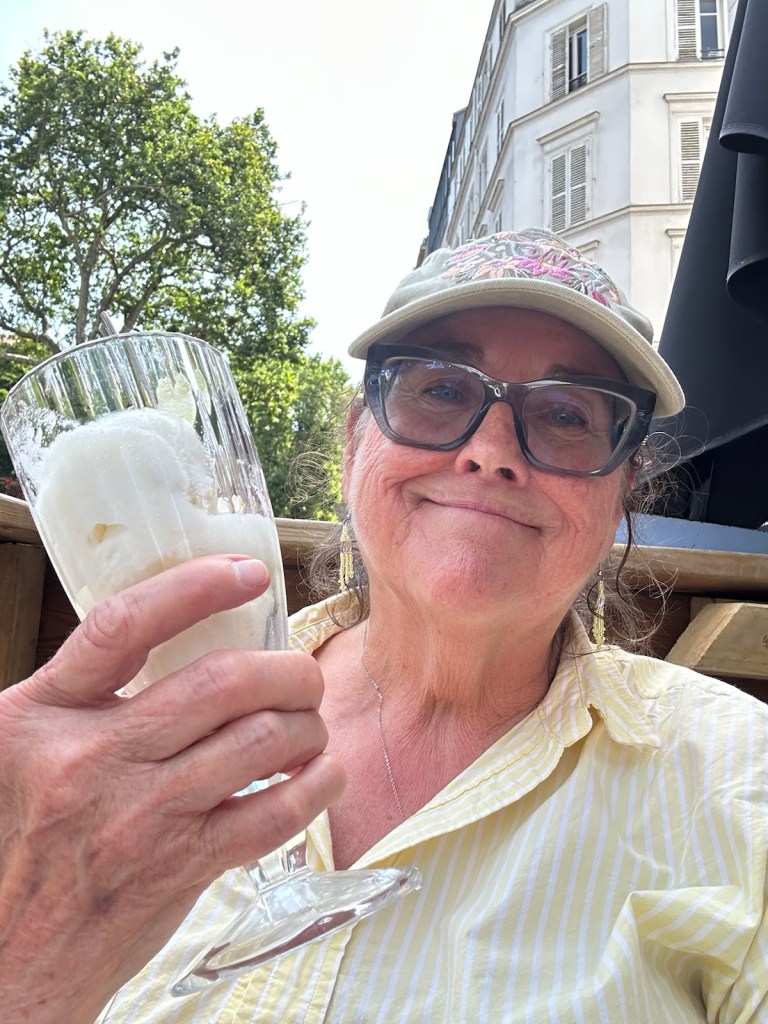
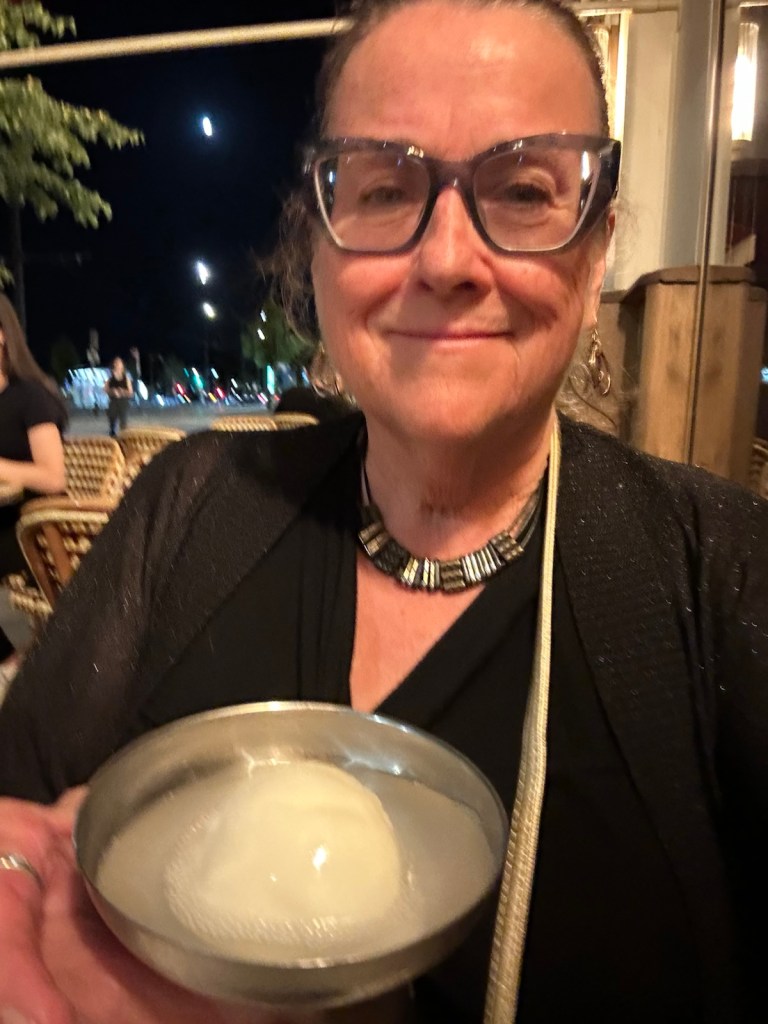
Every café seems to make it a little differently, but the classic version is wonderfully simple — bright lemon sorbet topped with a splash of French vodka. In France, many drinks are served with little or no ice and often aren’t especially cold. Le Colonel was the exception. It was icy, refreshing and exactly what I needed on another sweltering Paris afternoon.
Tucked into the bustling Abbesses neighborhood below Sacré-Cœur, Église Saint-Jean de Montmartre is one of Paris’s hidden architectural gems. Built at the turn of the 20th century, it was a daring experiment in reinforced concrete wrapped in beautiful Art Nouveau design. Stepping inside, the colorful stained glass and graceful arches provide a peaceful contrast to the lively streets just outside.
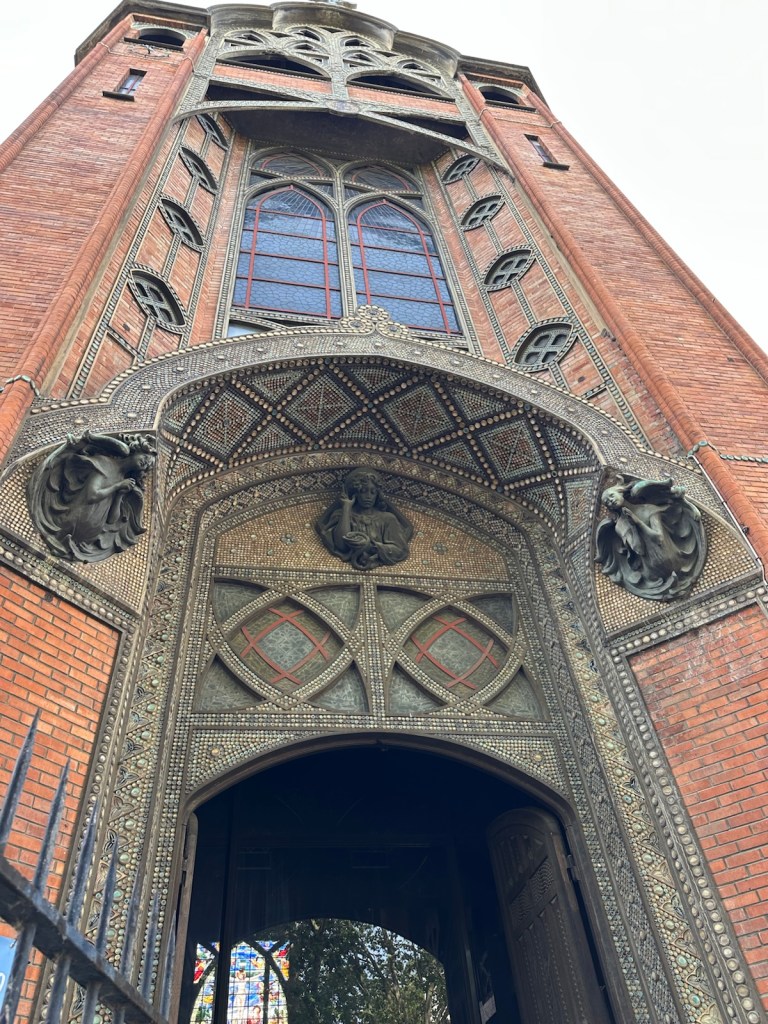
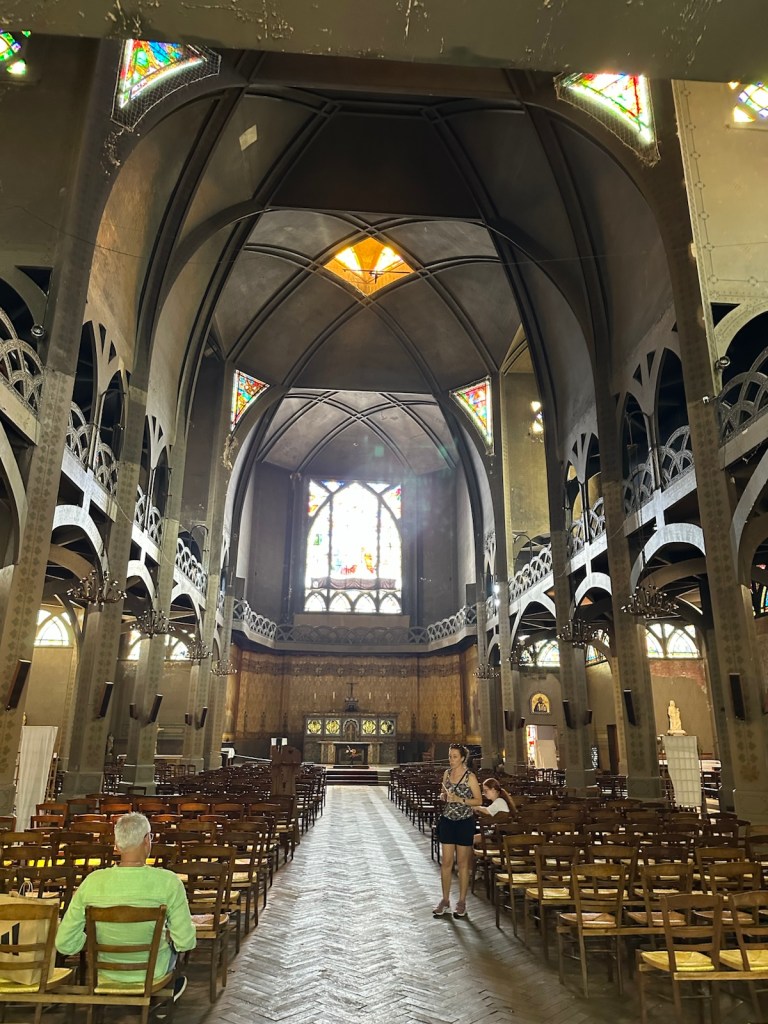
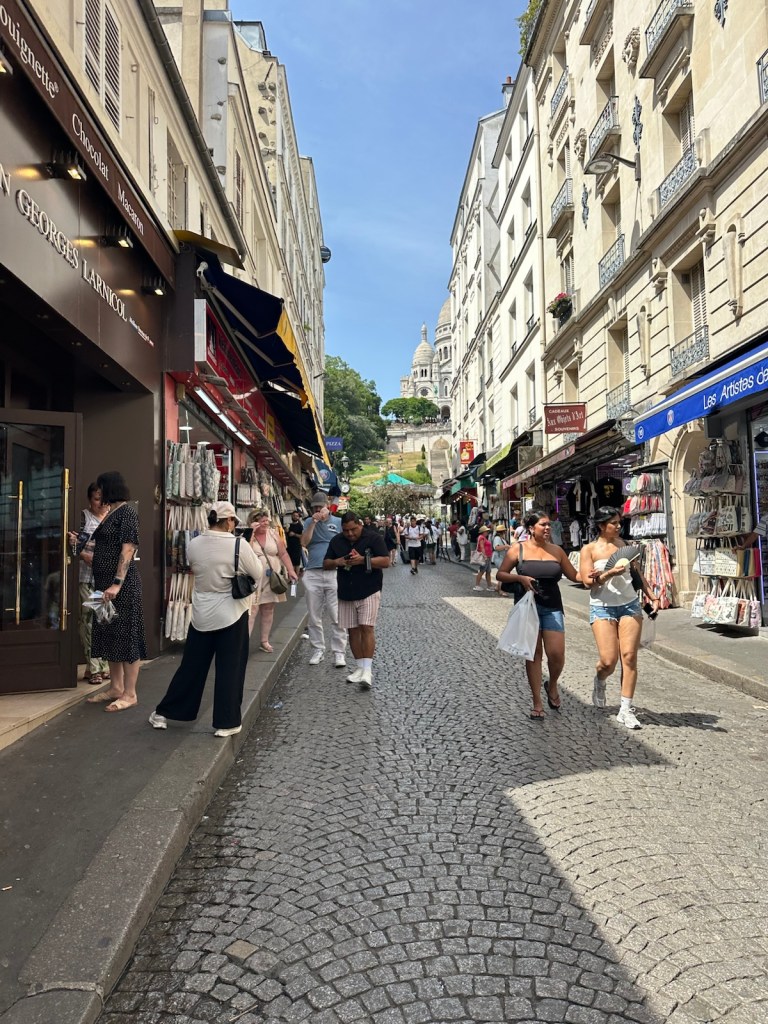
The neighborhood surrounding the basilica is just as captivating, with its narrow cobblestone streets, charming cafés, artists painting in the nearby squares and a bohemian spirit that has attracted creative minds for generations.
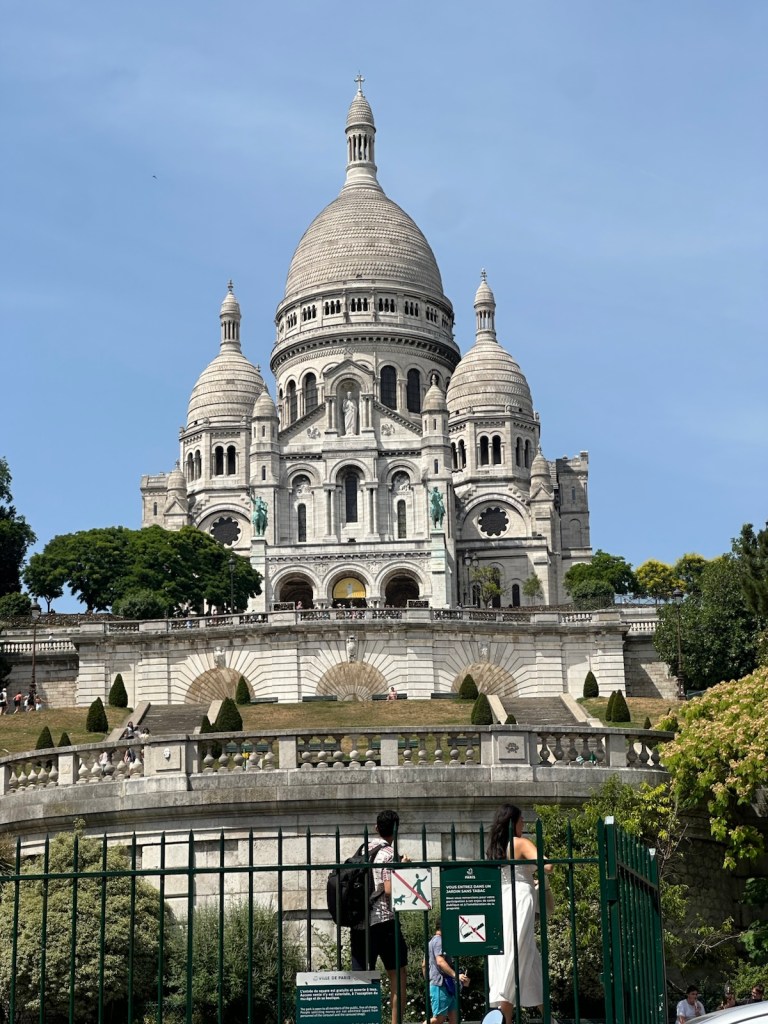
Sacré-Cœur is perched atop Montmartre, the highest hill in the city. Visible from many parts of Paris, its gleaming white domes have watched over the city since the basilica was completed in 1914.
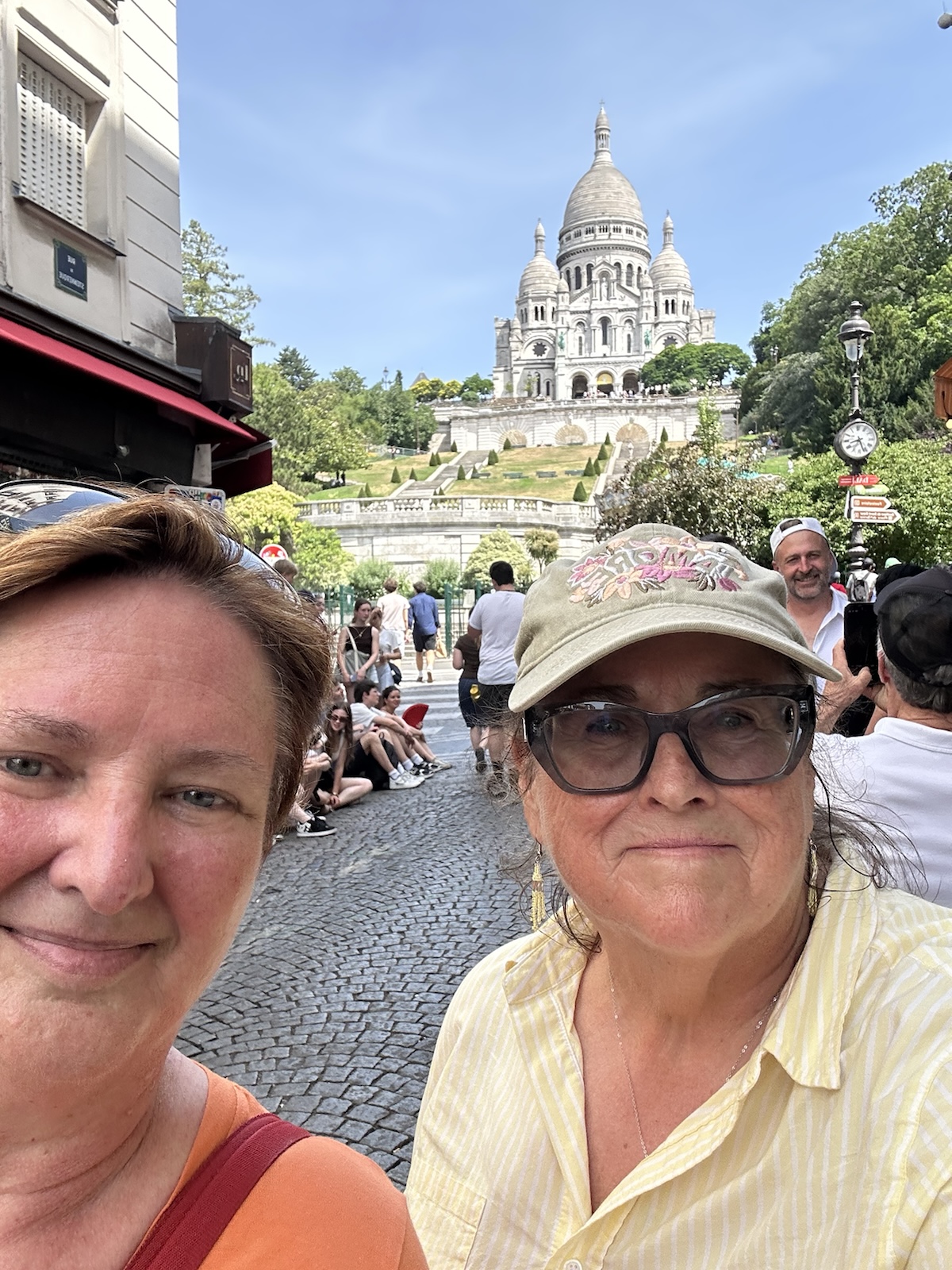
Melting in the Paris heat, we found a shady café in the shadow of Sacré-Cœur to cool down. One thing that surprised me was the price: a Le Colonel cost exactly the same as Coke Zero — about $10 each. I guess you’re paying for the view as much as the drink. Soft drinks are surprisingly expensive in France (and much of Europe), while Le Colonel is made with relatively inexpensive ingredients. Cafés simply charge what people are willing to pay. That made the decision easy for me — a frosty Le Colonel won every time.
As we sipped our drinks, we confidently declared that there was no way we were climbing the 200-plus steps to the top of Sacré-Cœur. We had a much better plan: take the little tourist train up the hill.
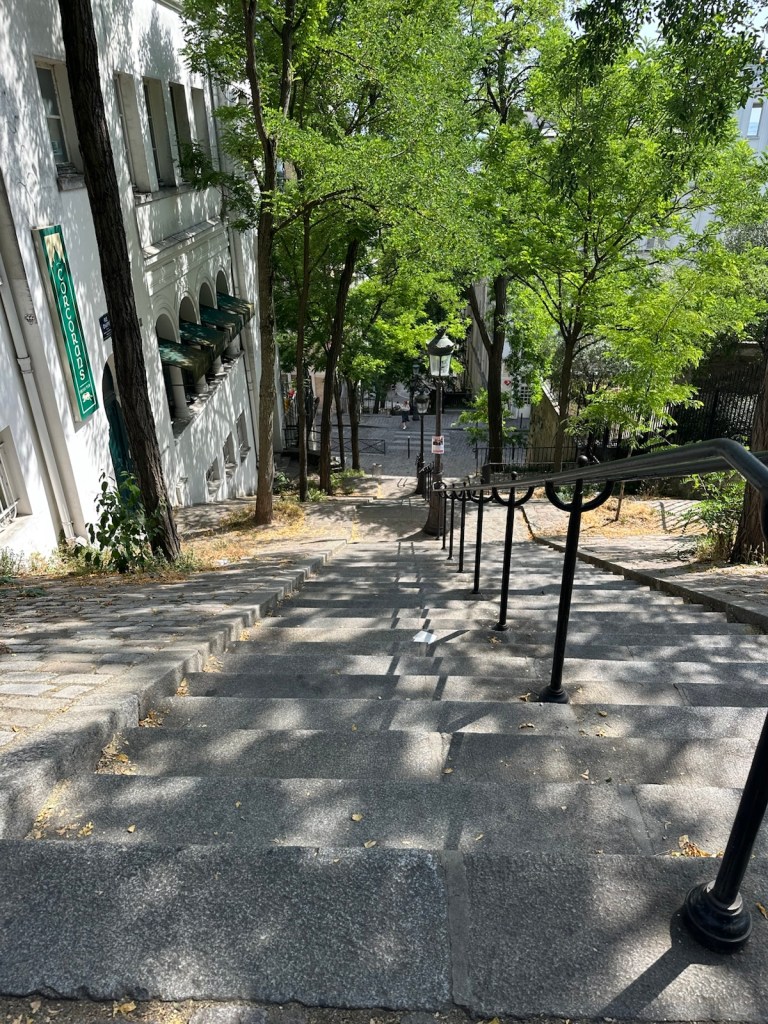
Then we started wandering, window shopping and enjoying Montmartre. Suddenly, the train rolled by. In a desperate attempt to catch it, we spotted what looked like a shortcut — a shaded flight of stairs. One flight became two. Two became three. Somewhere along the way, we stopped asking, “Are we still trying to catch the train?” and started asking, “How many stairs have we climbed?”
Before we knew it…we were at the top.
Turns out we didn’t need the train to get there after all. But we certainly needed it to get back down — and this time, we didn’t miss it.
By this point, we were completely sweated out. We’d had our fill of the crowds and touristy atmosphere, so it was time to head back to the neighborhood around our Le Méridien hotel. It felt good to leave the bustle behind, settle into familiar surroundings and find a place for a well-earned bite to eat.
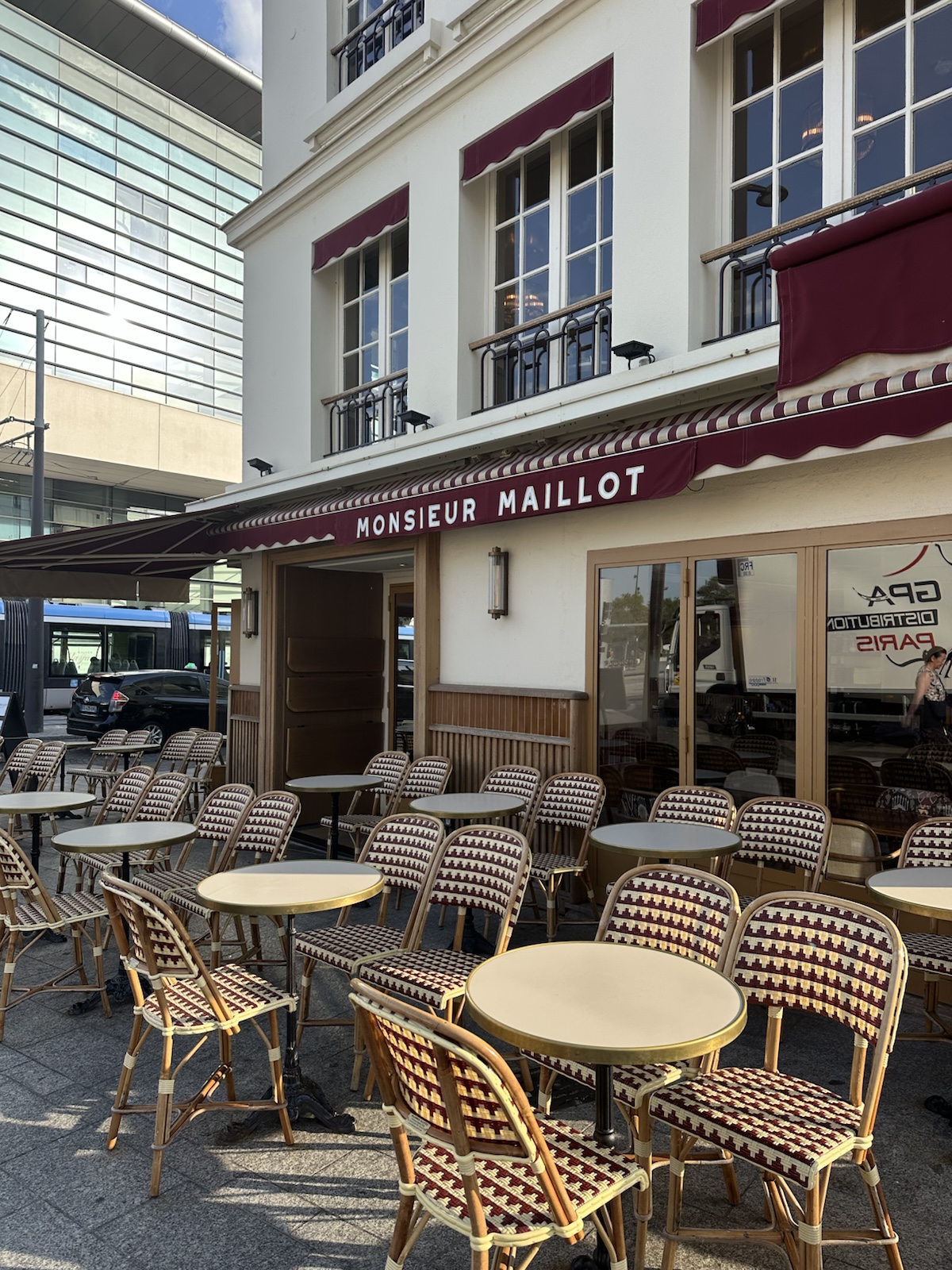
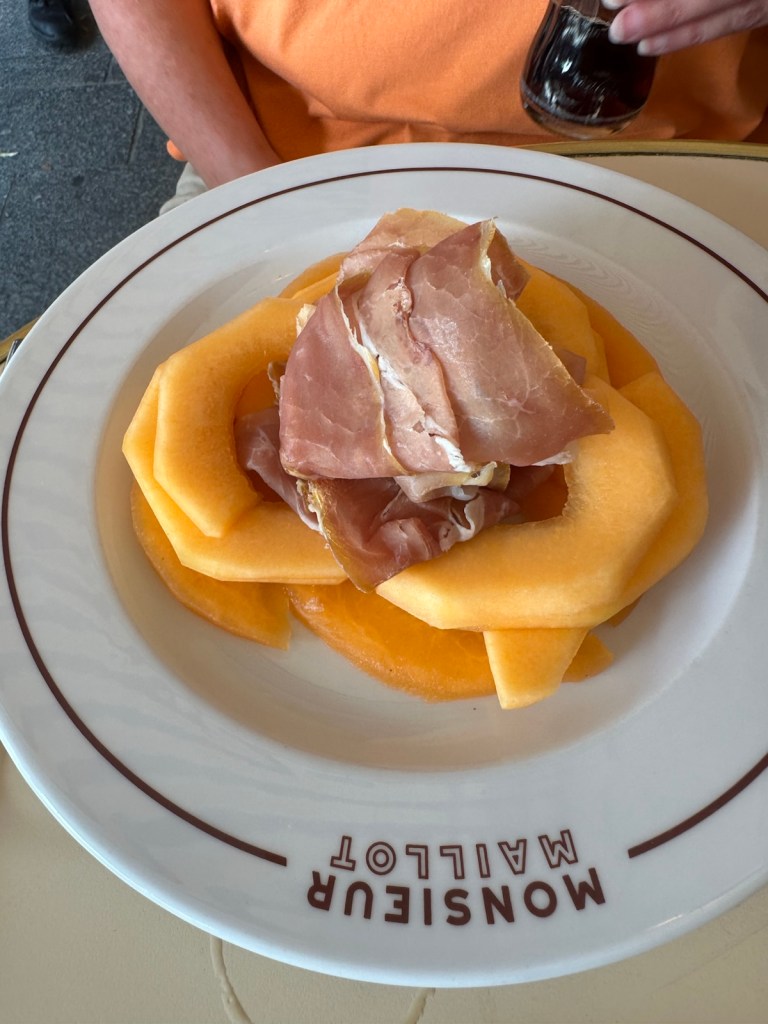
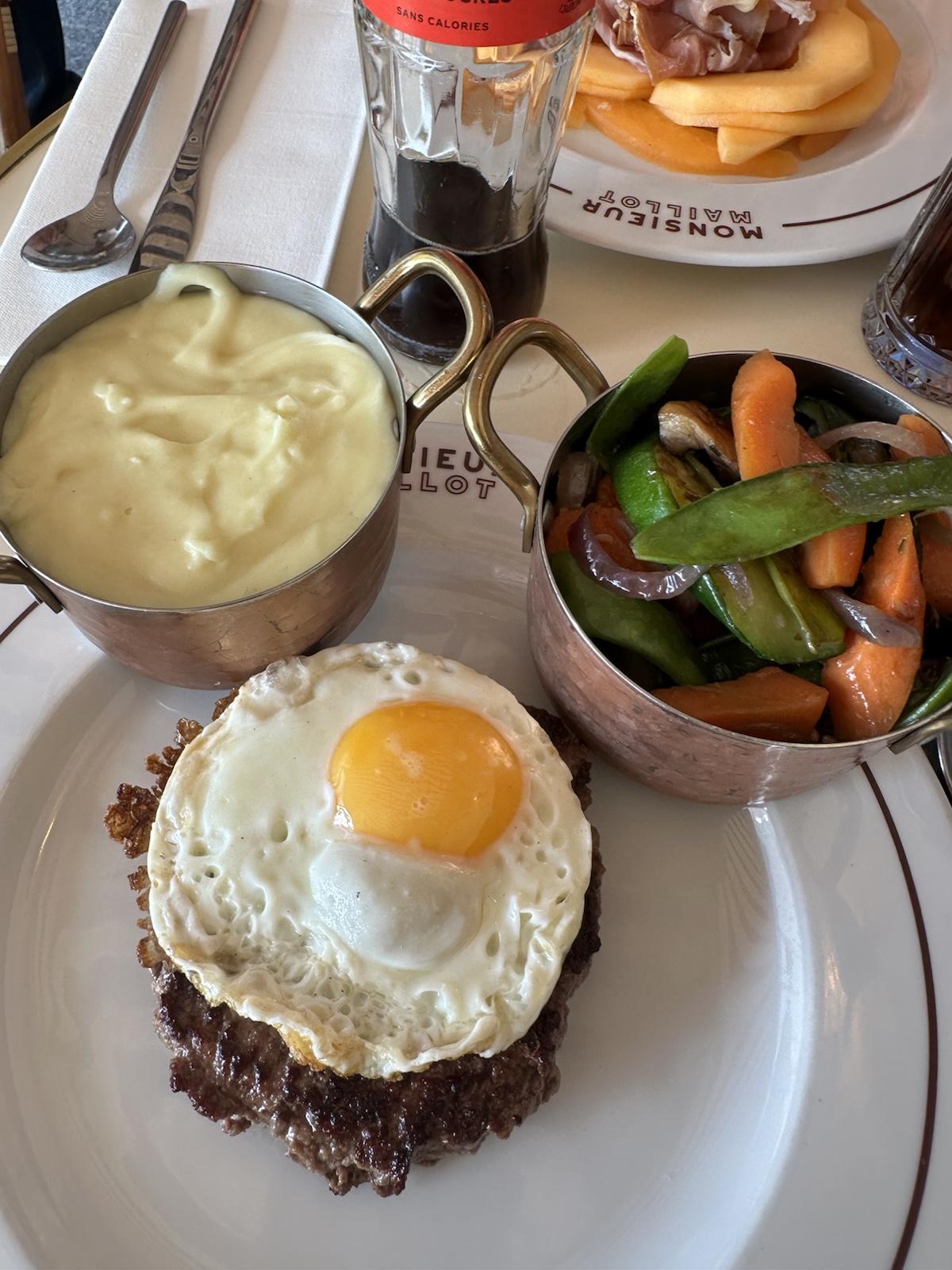
Perfect … we had a lite bite for dinner and still had plenty of time to relax at the hotel and get ready for the concert.
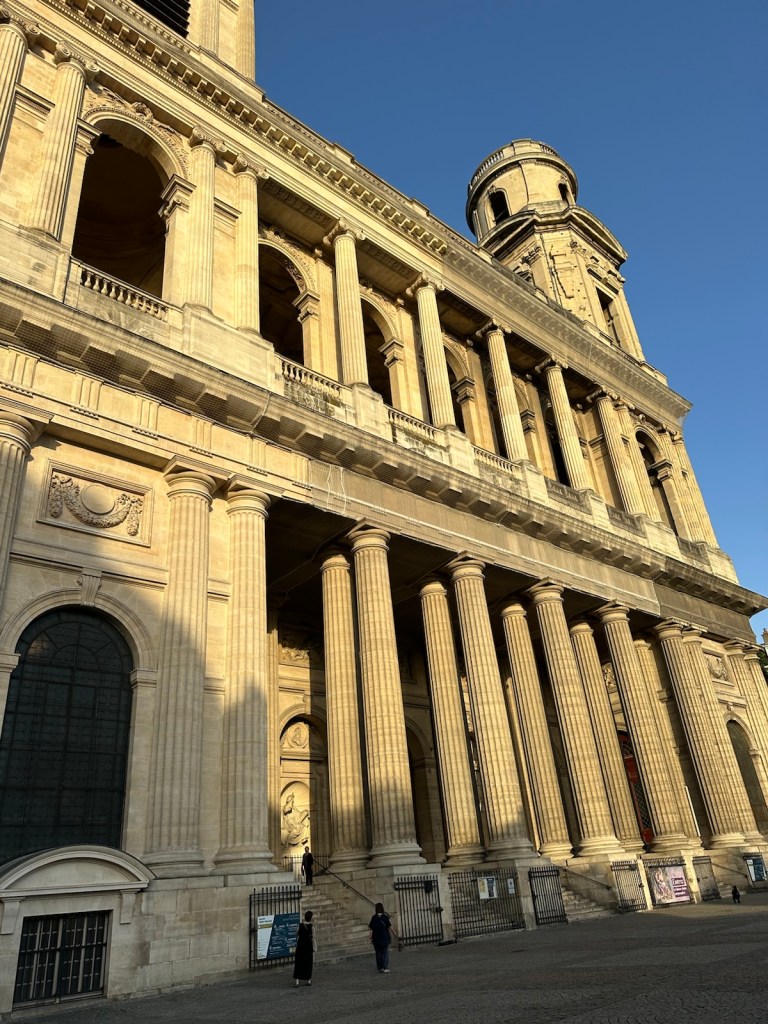
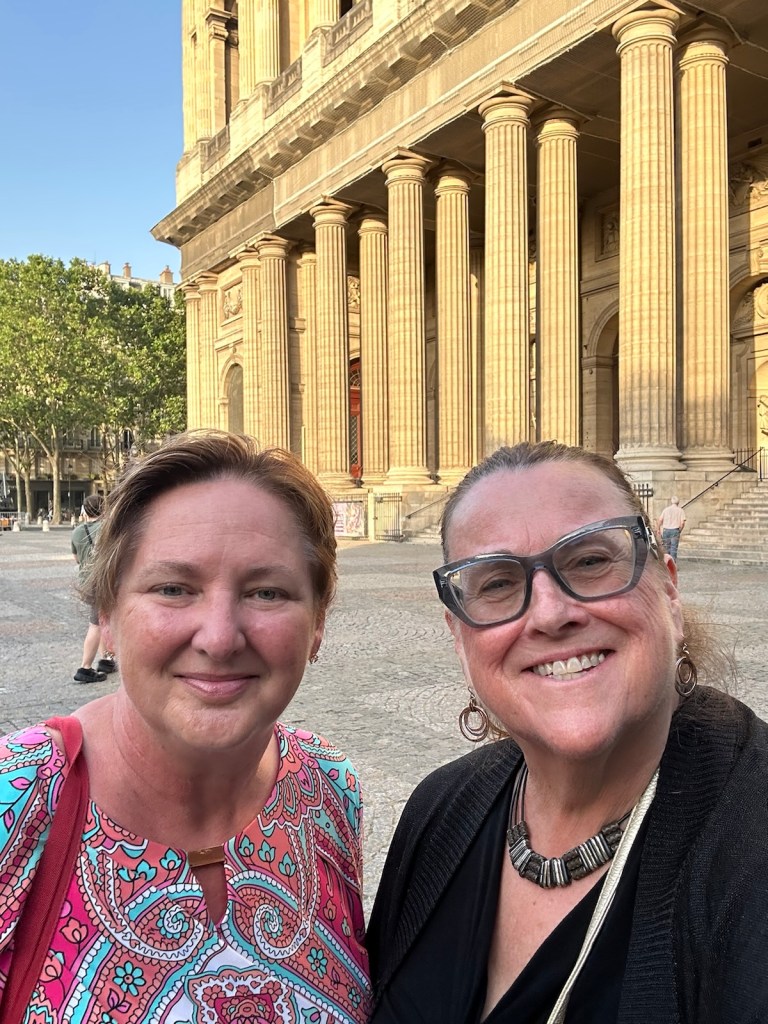
We took a cab to Saint Sulpice. The Saint-Sulpice neighborhood was elegant without feeling stuffy, it was filled with tree-lined squares, charming cafés, bookstores and quiet streets perfect for wandering. Unlike the city’s busiest tourist spots, Saint-Sulpice felt like a neighborhood where Parisians actually lived — a place to slow down, enjoy a meal on a café terrace and soak up the timeless charm of Paris.
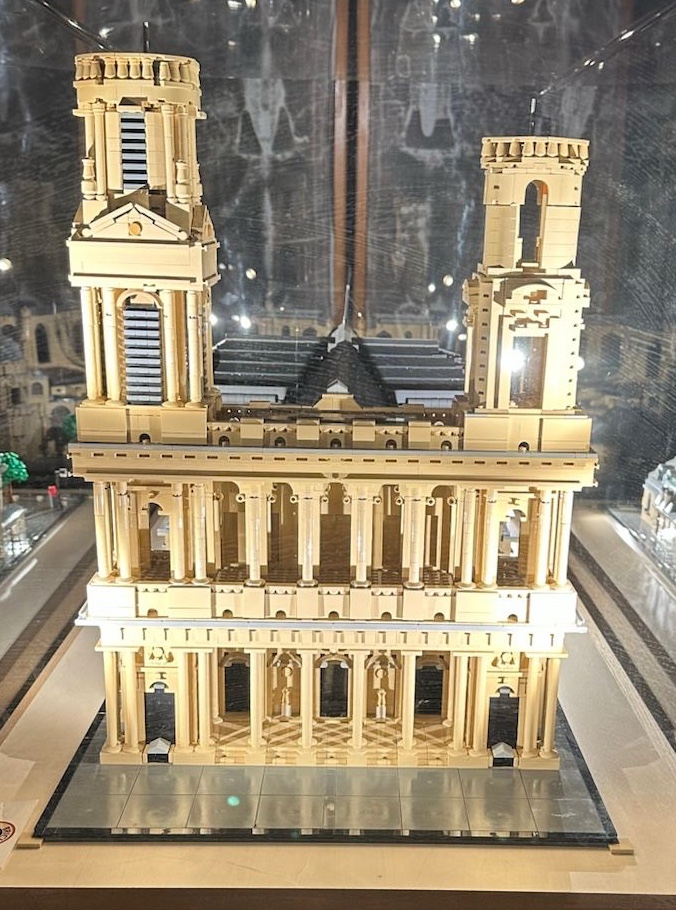
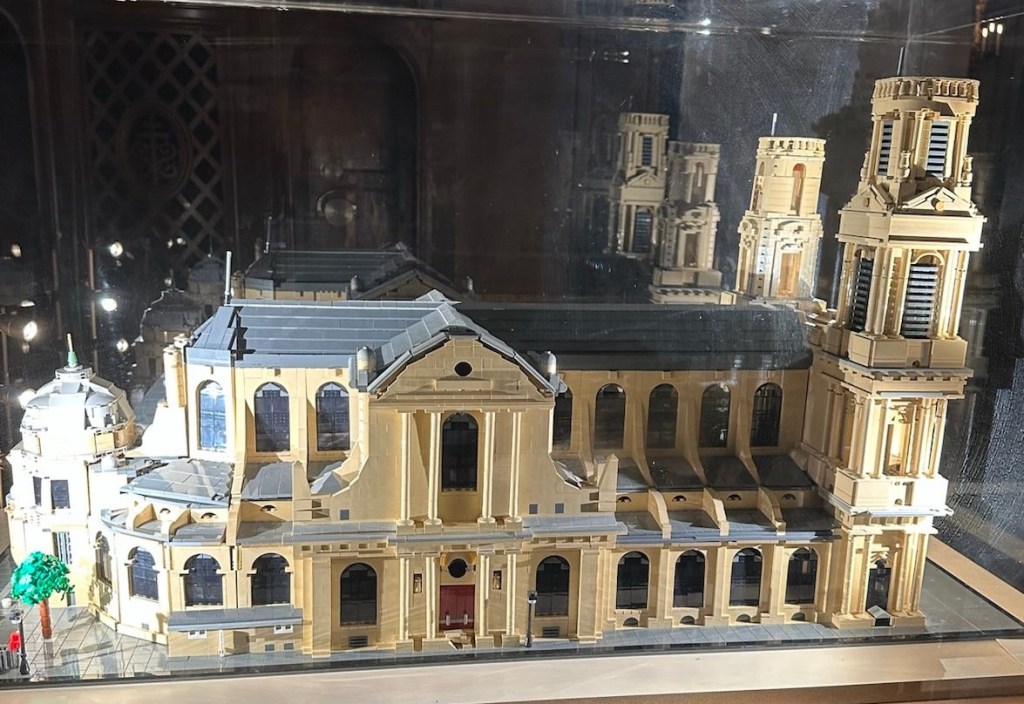
The Church of Saint-Sulpice is surprisingly difficult to photograph — not because it isn’t beautiful, but because it’s enormous and sits right in the middle of a bustling neighborhood. There simply isn’t enough room to step back far enough to capture the whole church in a single shot. Fortunately, inside they had scale models of the church, making it much easier to appreciate its impressive size and design. Saint-Sulpice is also recognizable from the opening scenes of The Da Vinci Code, where Dan Brown’s story unfolds within its historic walls.
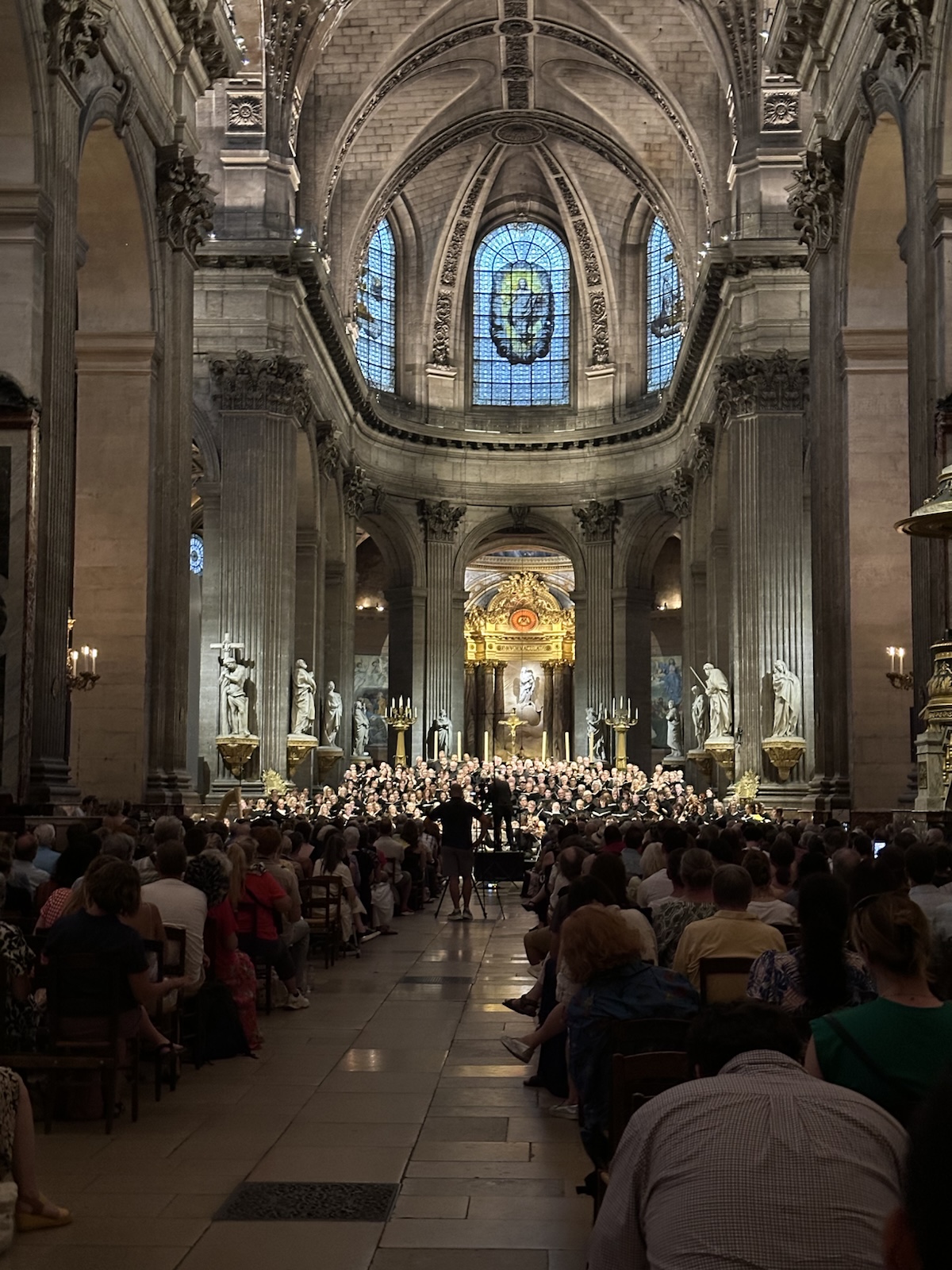
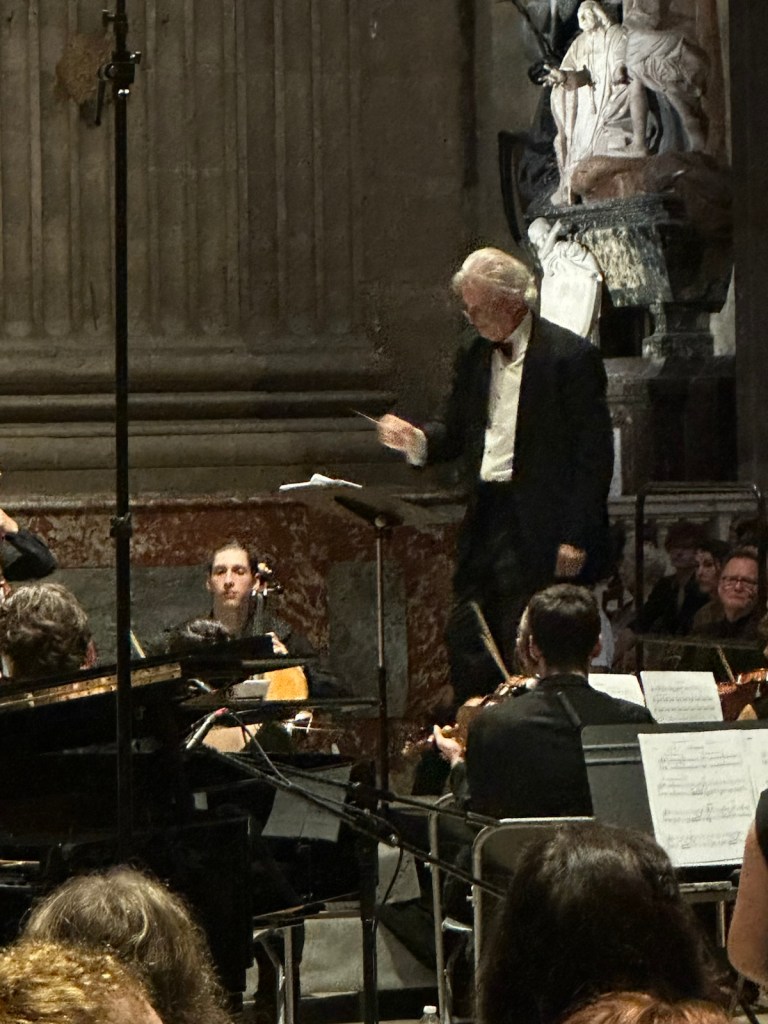
Needless to say, Saint-Sulpice wasn’t air-conditioned, but somehow it never felt sweltering. The church was filled to capacity as more than 450 voices joined a full orchestra, creating a breathtaking wall of sound that seemed to fill every corner of the magnificent sanctuary. It was magical, mystical, and simply amazing.
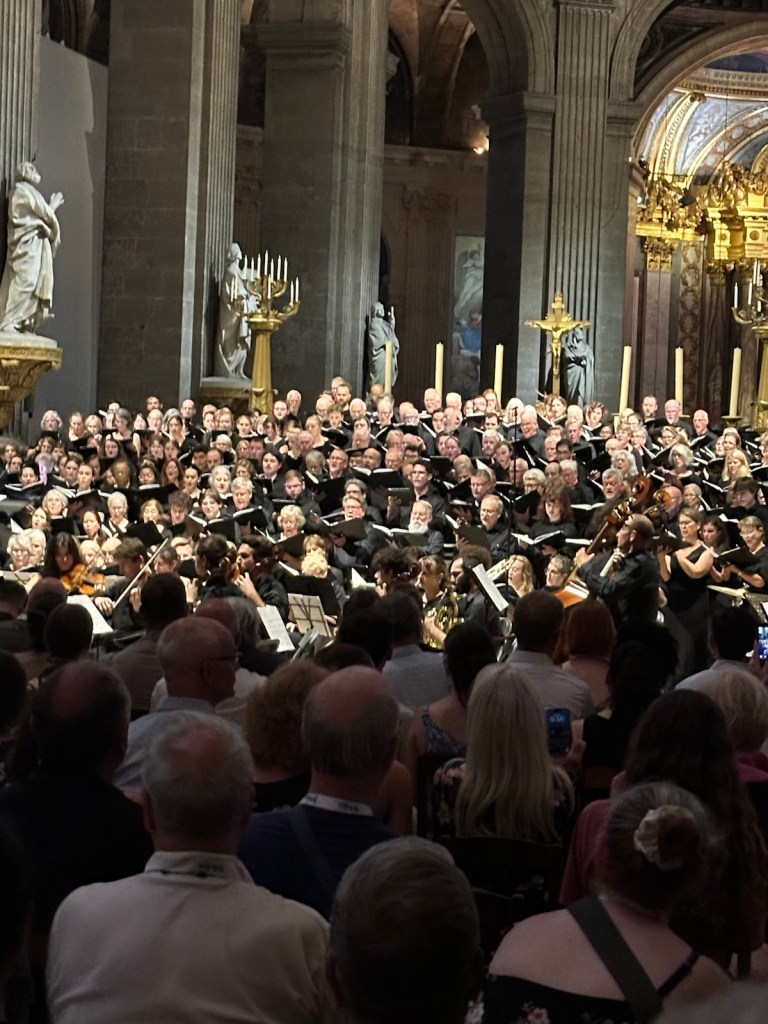
As the music soared, I felt drawn to wander quietly through the church with my camera. Walking the dimly lit curved passageway behind the altar, surrounded by the powerful voices and orchestra, was an almost otherworldly experience. For a few moments, I found myself completely alone in that sacred space, immersed in the music and the emotion it carried.
It also became a moment of quiet reflection. Standing there without David — knowing the choir had been such a meaningful part of his life for more than a decade — I felt both his absence and his presence. Before returning to my seat, I paused to light a candle in one of the apse alcoves, a simple but meaningful act of remembrance.
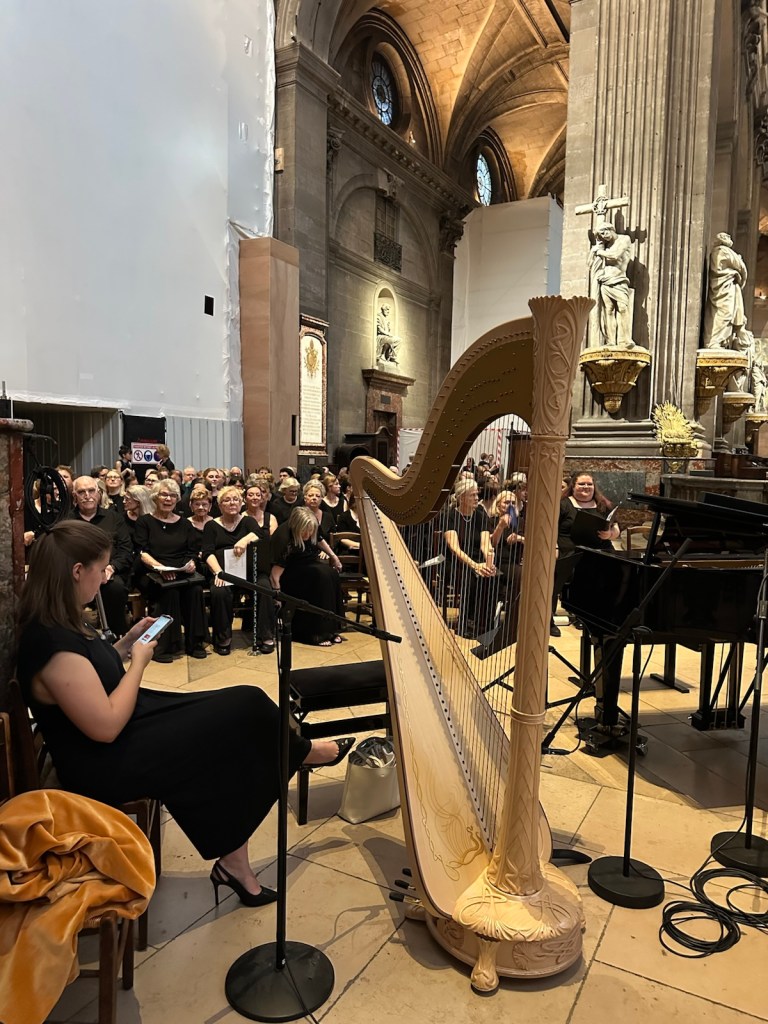
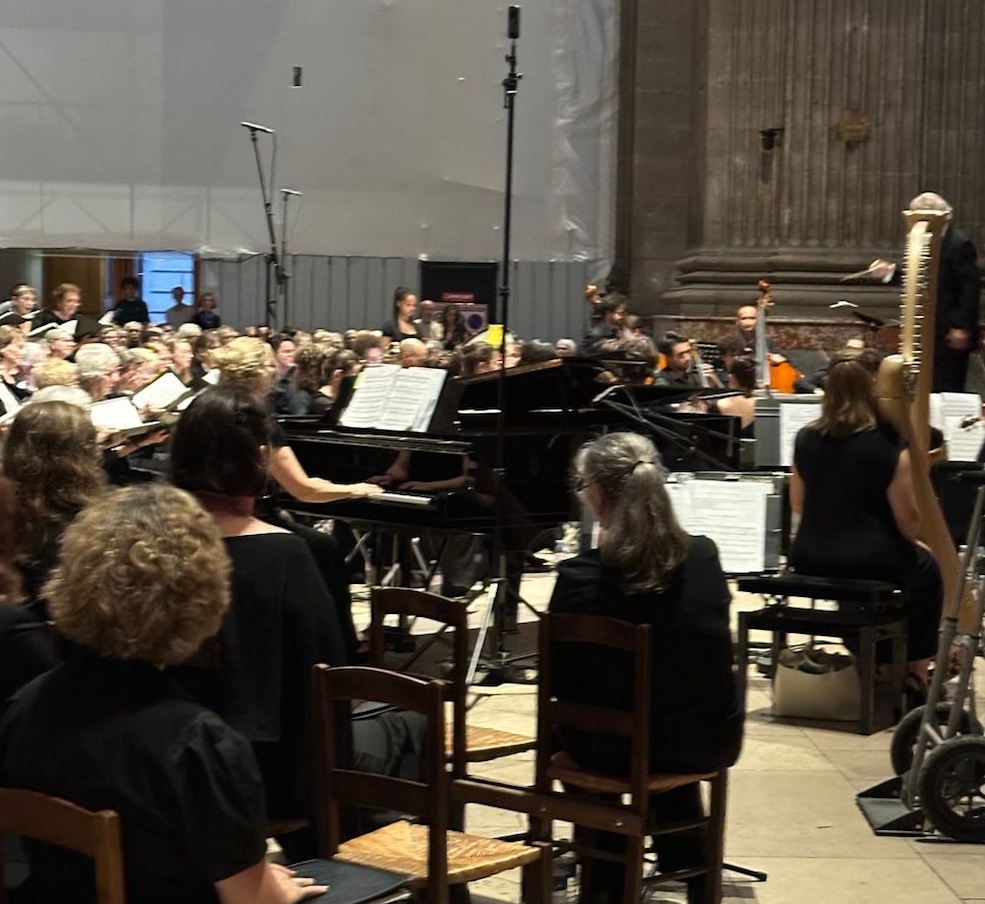
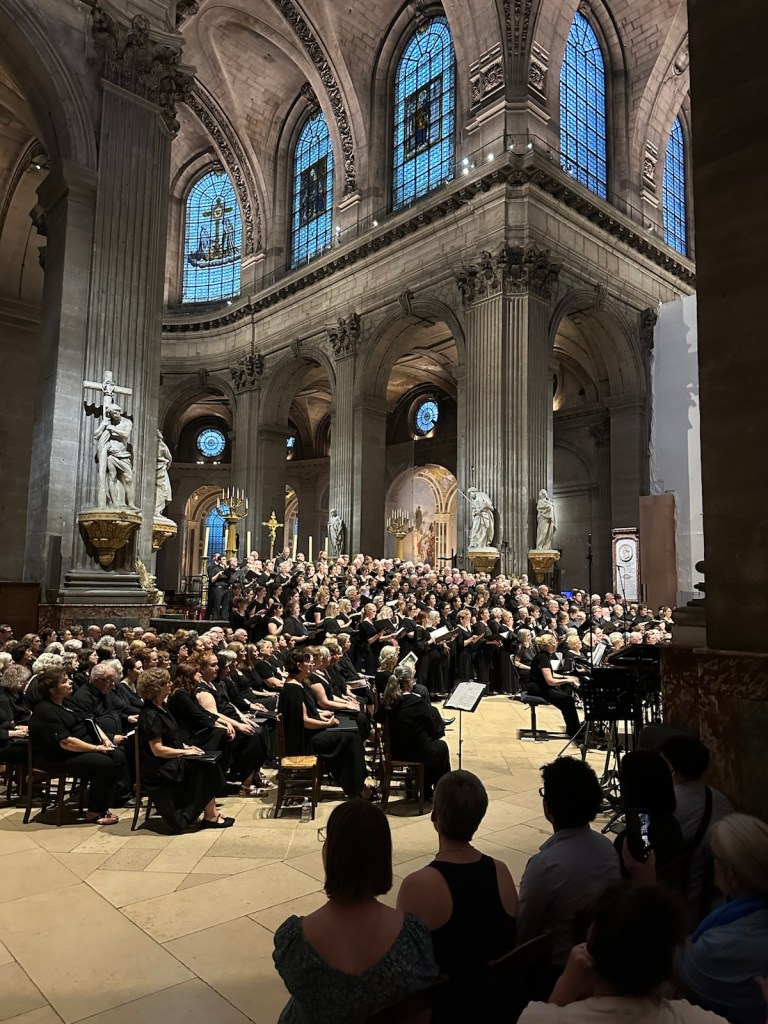
As the final notes echoed through the ancient stone walls of Saint-Sulpice, it was impossible not to be moved. The breathtaking power of more than 450 voices and a full orchestra, performed within one of Paris’s most magnificent churches, created an experience that was both awe-inspiring and deeply spiritual. It was one of those rare moments when the beauty of the music and the grandeur of the setting became inseparable — a performance none of us will ever forget.
As our adventure came to an end, it was impossible not to reflect on what an extraordinary journey it had been. From the Channel Islands and the beaches of Normandy to the villages, cathedrals, cafés and streets of Paris, every day brought something new to discover. We shared incredible meals, unforgettable music, plenty of laughs and memories that will stay with us for a lifetime.
Traveling with Richard, Arne and Susan made the experience even more special. Each of us brought something unique to the journey, and together we created an adventure that was richer than any of us could have experienced alone. Even the unexpected moments became part of the story.
For me, this trip was about much more than seeing beautiful places. It was about friendship, music, history, resilience and continuing to embrace life’s adventures. France exceeded every expectation, and I returned home with a camera full of photos, a heart full of gratitude and memories that will last forever.
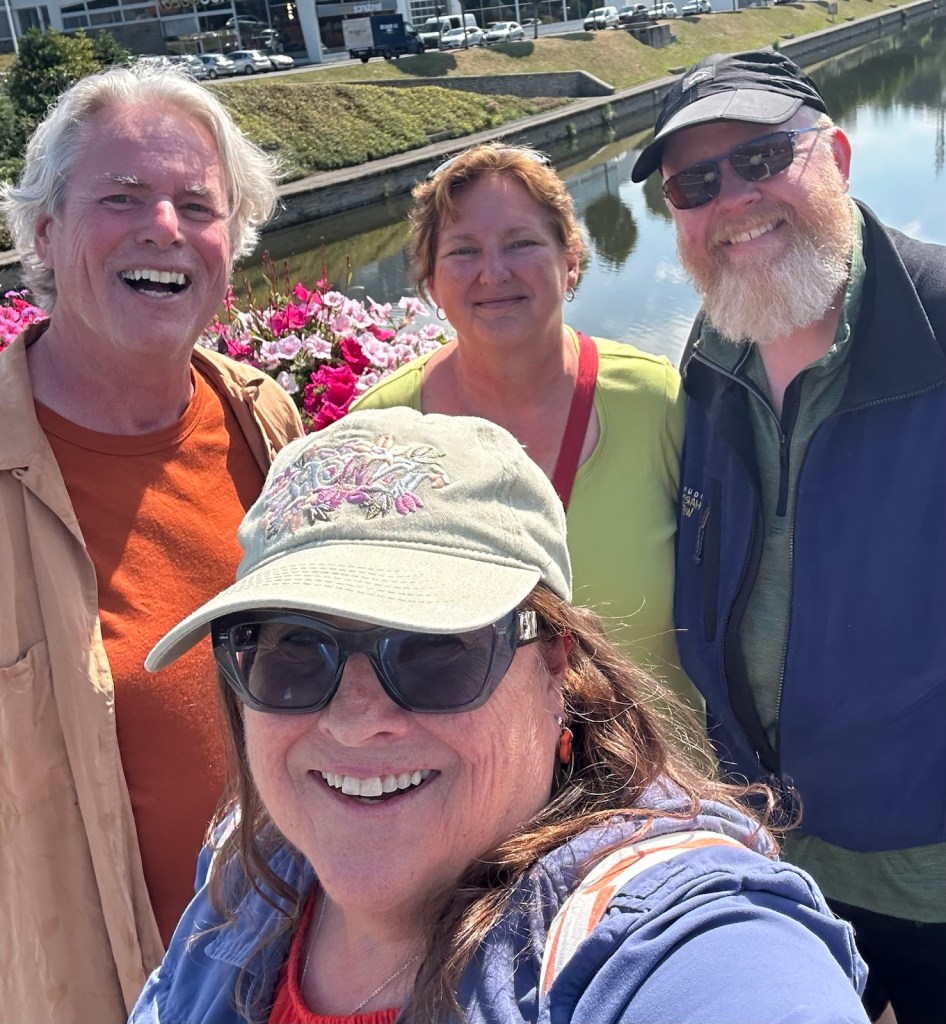
Until the next adventure … au revoir, France.

