A Hundred Thousand Welcomes!
After planes, airports and far too many hours of travel, we’ve officially landed in Dublin — where the Guinness is dark, the accents are delightful, the double-decker buses are everywhere and apparently driving on the other side of the road is now part of the adventure.
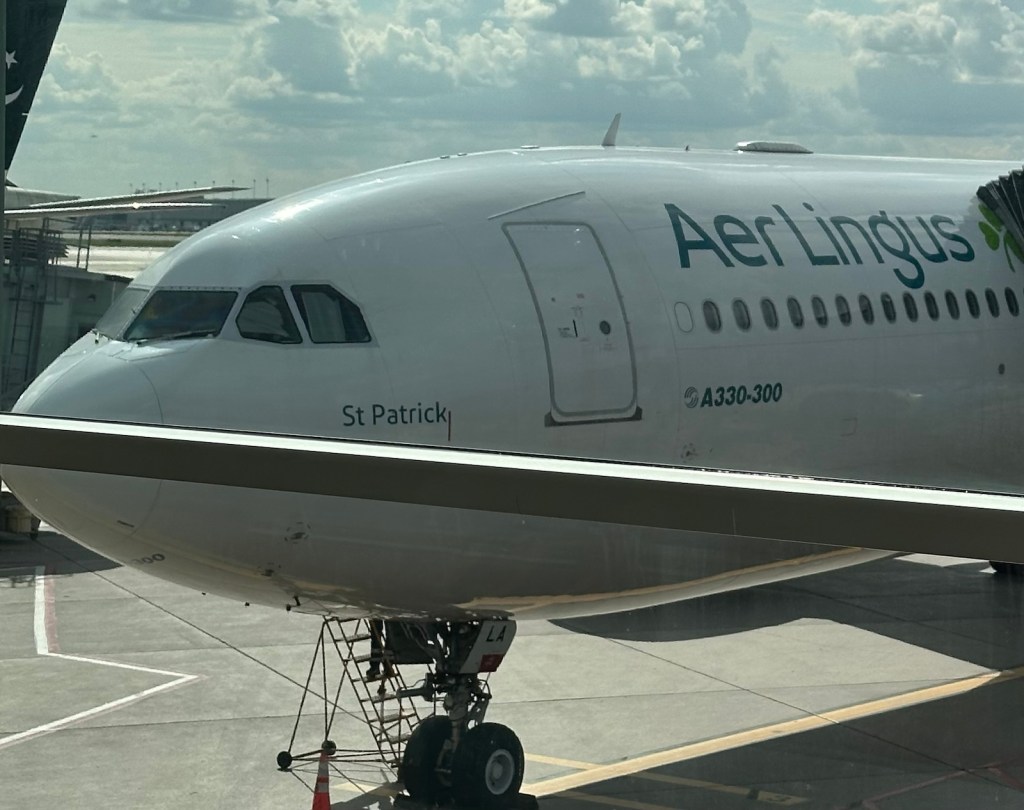
Even our airplane was unmistakably Irish. Our Aer Lingus flight across the Atlantic was aboard St. Patrick — and that wasn’t just a festive coincidence. Aer Lingus has a long tradition of naming its aircraft after Irish saints, a little piece of Irish history carried around the world on the side of its planes.
And somehow, for our flight into Dublin, we landed the big one — St. Patrick himself. Not a bad Irish welcome before we’d even touched the ground.
We left home around 5 am, and after a long day of travel — including a six-hour layover in Toronto — we finally landed in Dublin around 5:30 the following morning. By then, we’d been up for nearly 24 hours, but we knew the best way to beat jet lag was to keep moving and adjust to Ireland time as quickly as possible.
First on the agenda: pick up the rental car. And just like that, our Irish adventure was about to begin — on the “wrong” side of the road!
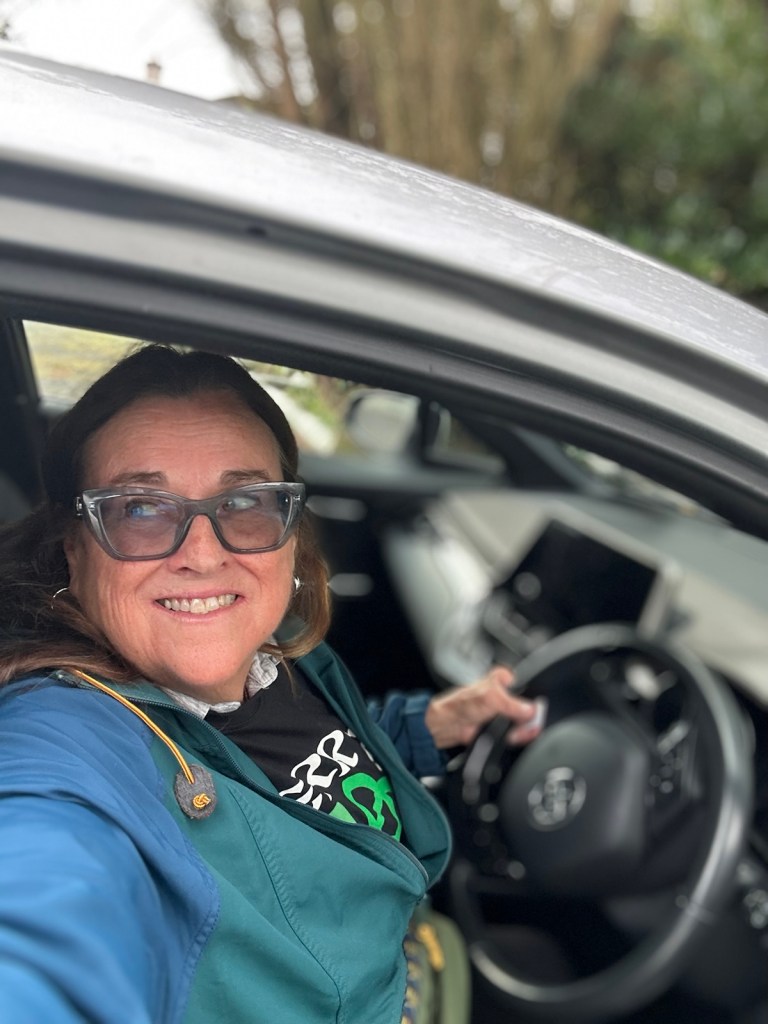
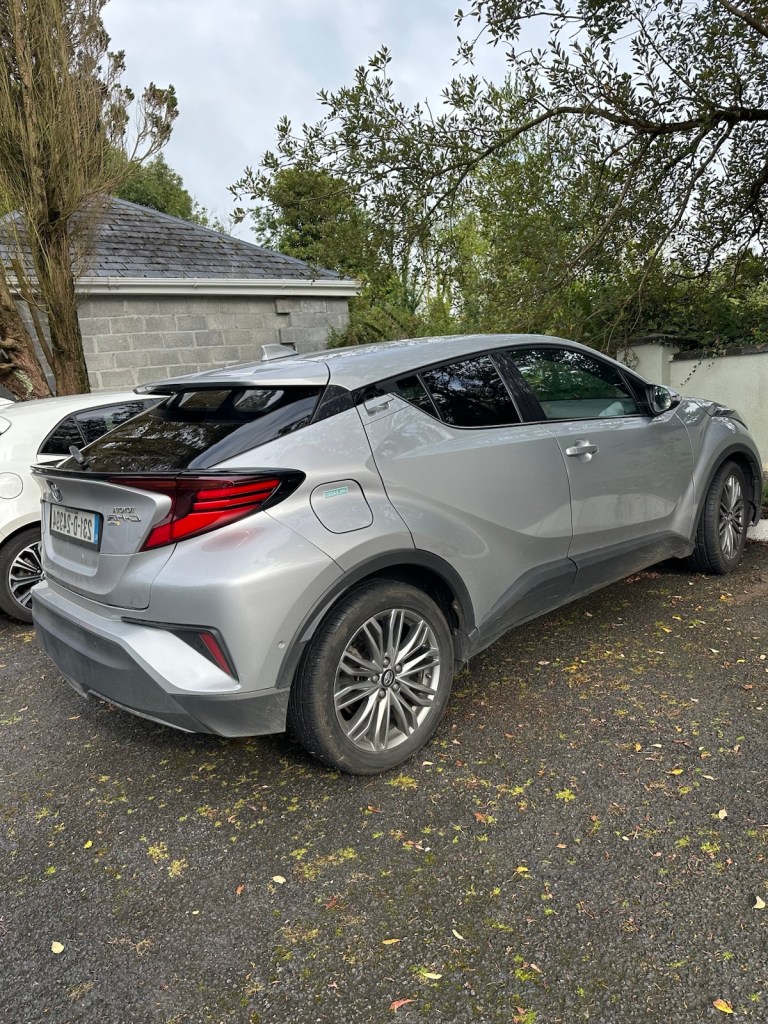
Our rental car is a Toyota Sol hybrid, and it took awhile to get the hang of driving from the “right” side of the car on the “wrong” side of the road! I’ve had a little practice on a few of my travels and thankfully, it comes back pretty quickly.
Parking in Dublin is an adventure all its own! City street parking is extremely limited, so we tucked the car into a parking garage just across the River Liffey. From there, Dublin was ours to explore on foot — which, honestly, is a much better way to see the city anyway!
We stayed in a lively riverside neighborhood in the heart of Dublin. Trinity College, Temple Bar, Dublin Castle, Christ Church Cathedral, and the Ha’penny Bridge were all conveniently close, making it an ideal base for exploring Dublin on foot.
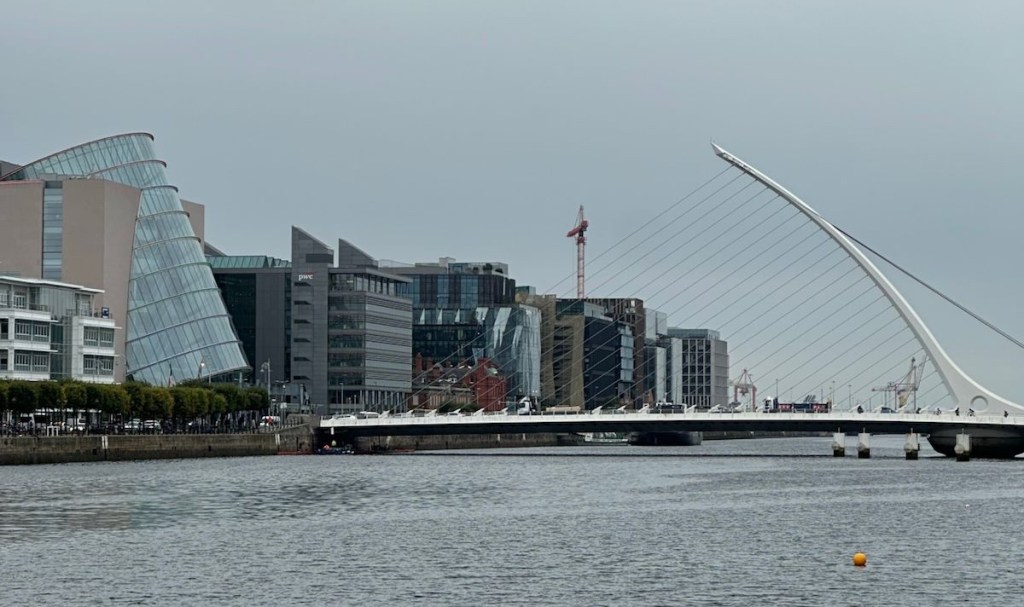
One of the most striking sights along Dublin’s River Liffey is the Samuel Beckett Bridge. Its sweeping white mast and cables were designed to resemble an Irish harp lying on its side — a fitting nod to Ireland’s national symbol. Even more impressive, the entire bridge can rotate 90 degrees to allow ships to pass along the river.
Just beyond the bridge is another Dublin landmark — the Convention Centre Dublin, with its enormous tilted glass cylinder overlooking the River Liffey. Opened in 2010, its striking modern design, paired with the harp-shaped Samuel Beckett Bridge, makes this stretch of the Docklands one of the most distinctive and recognizable views in Dublin.
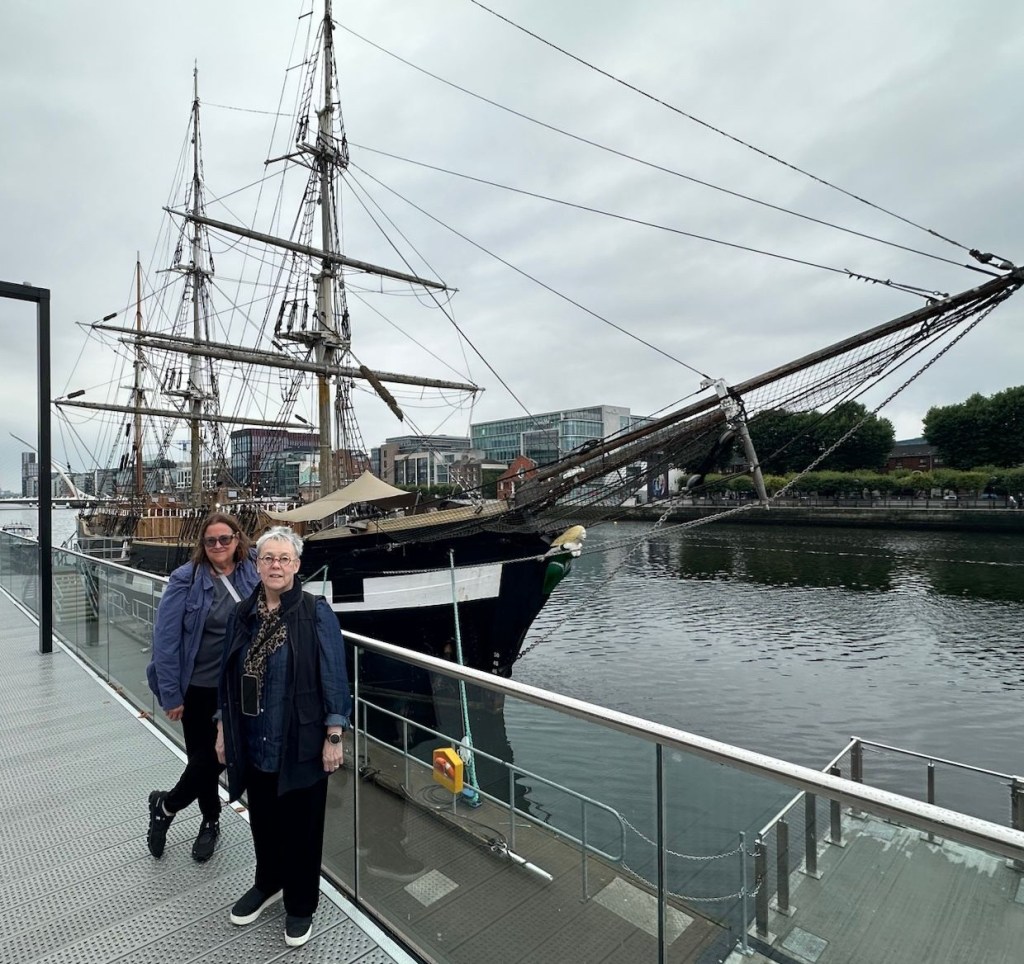
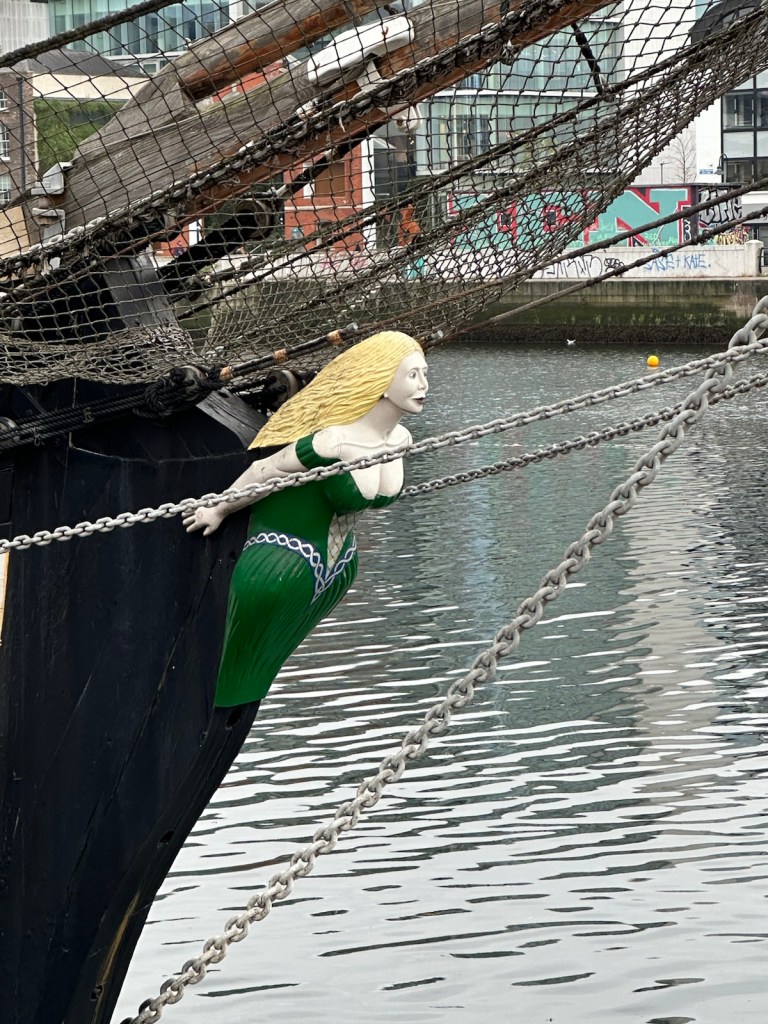
We walked along side the Jeanie Johnston tall ship which was moored along the River Liffey. Built in Quebec in 1847, she carried emigrants fleeing the Great Famine to North America, making numerous voyages without losing a single passenger. Today, the ship serves as a museum and memorial, sharing the stories of those who left Ireland in search of a better life.
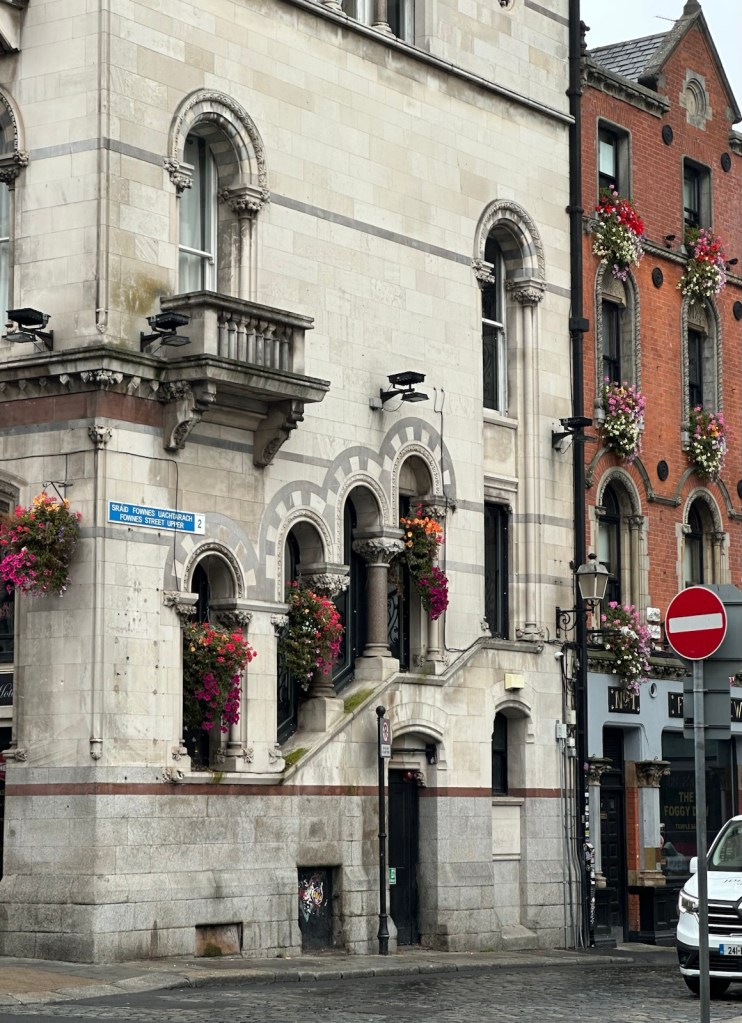
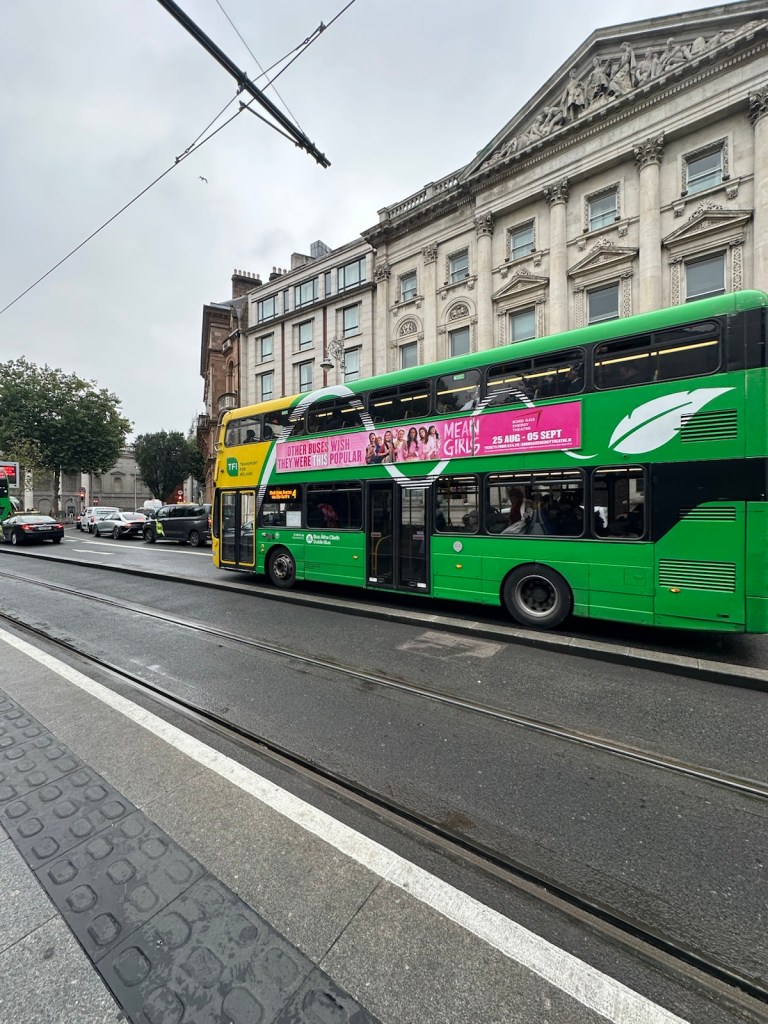
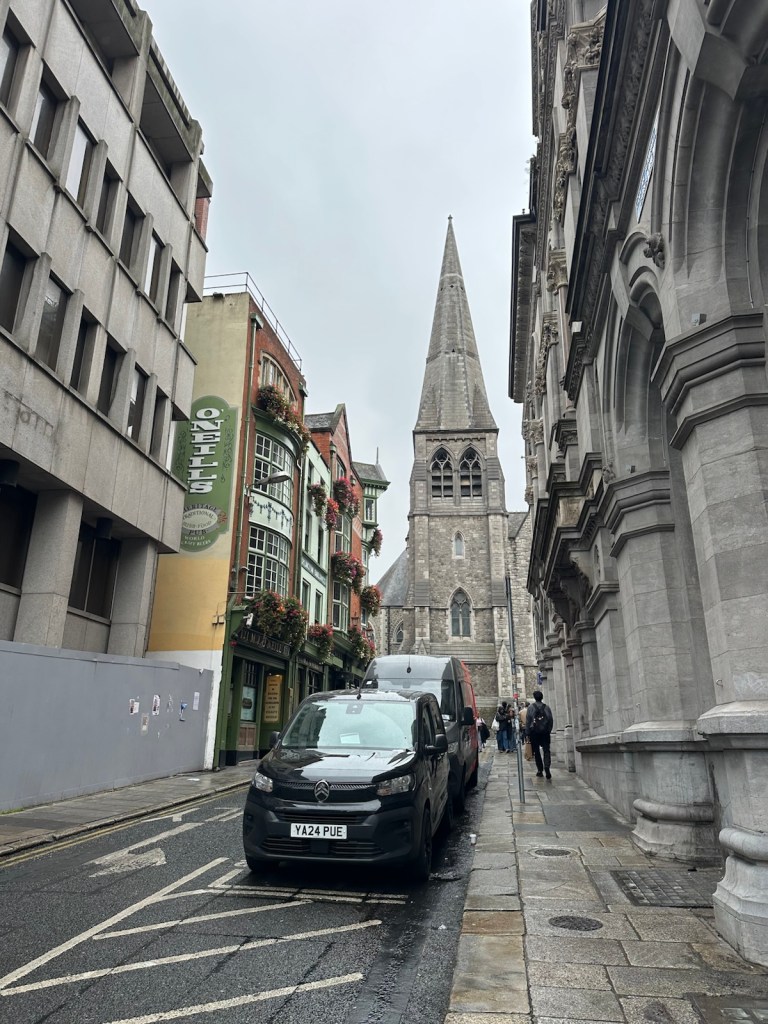
Dublin’s streets are remarkably clean and inviting, blending historic architecture with striking modern design. Double-decker buses move through the city, adding a familiar touch of Dublin character, while the lively streets and distinctive buildings make exploring the capital a memorable experience.
Temple Bar in Temple Bar … that’s not a spell check typo. The name refers to both a neighborhood and a famous pub within that neighborhood. ‘Temple’ most likely came from the name, “Sir William Temple”, a prominent 17th-century Dublin figure and ‘Bar’ refers to a riverside walkway or raised bank.
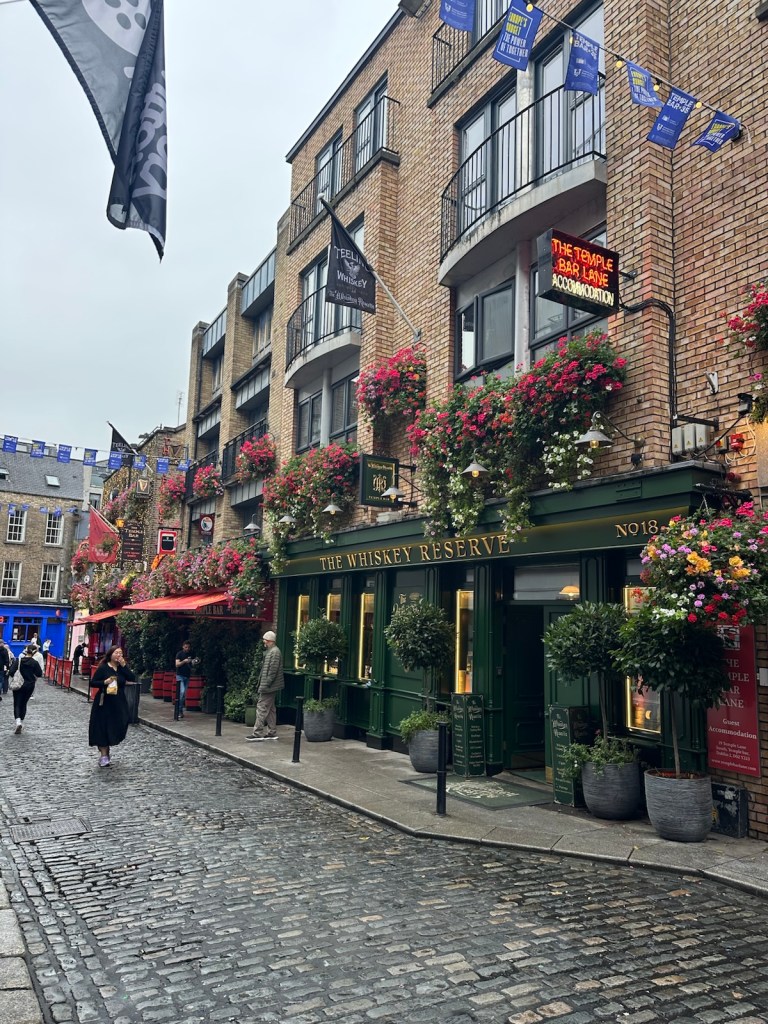
Temple Bar is Dublin’s historic cultural and entertainment district on the south bank of the River Liffey. It’s a maze of cobblestone streets filled with pubs, restaurants, shops, galleries and live music. Some buildings are centuries old, however, the district was deliberately revitalized in the 1990s and became one of Dublin’s biggest visitor destinations.
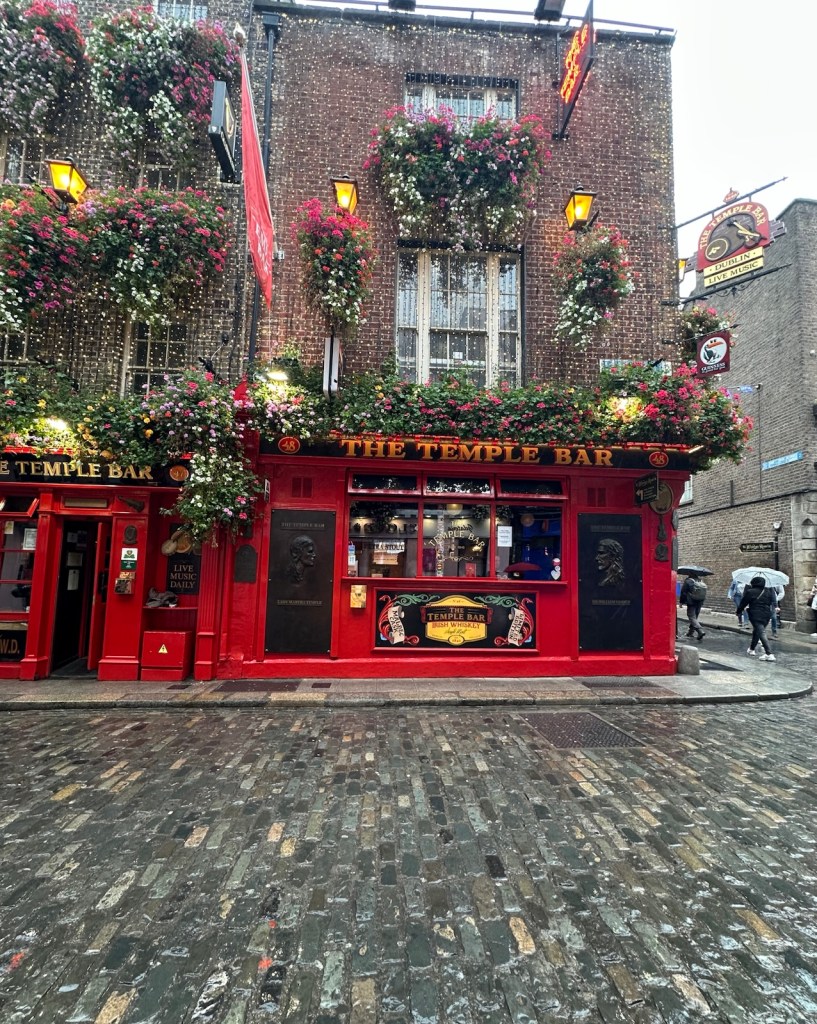
And then there’s The Temple Bar — the famous bright-red pub that shares its name with the neighborhood. Dating back to 1840, it has become a Dublin landmark in its own right, known for traditional Irish music, an enormous whiskey collection and a seemingly endless stream of visitors.
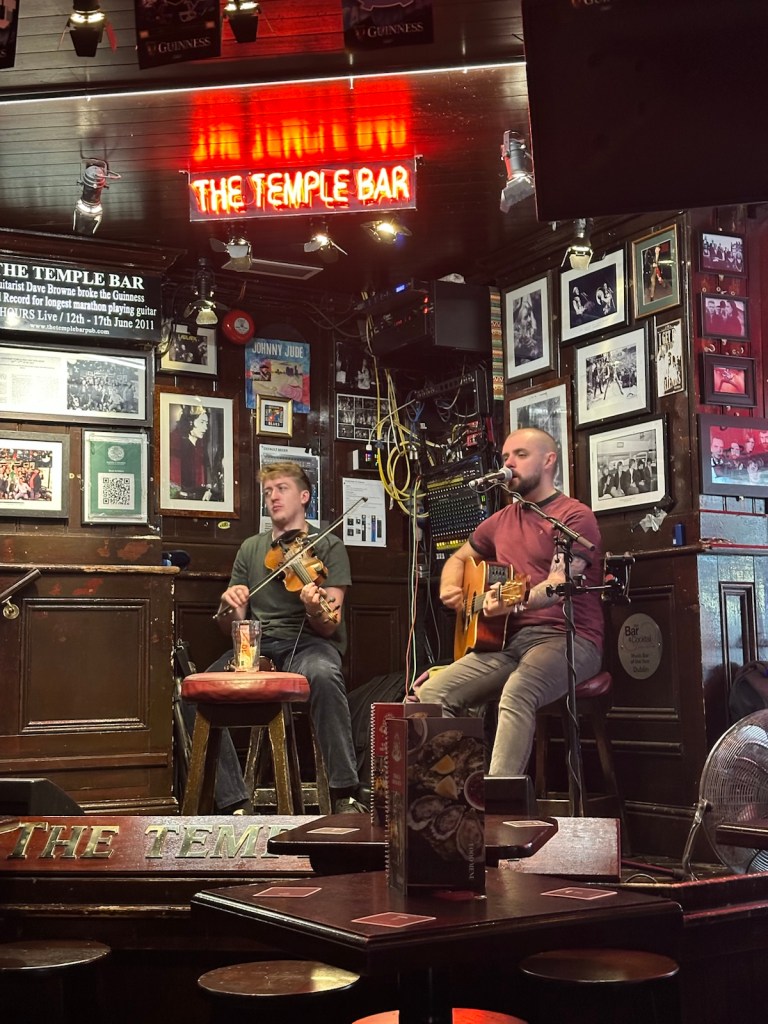
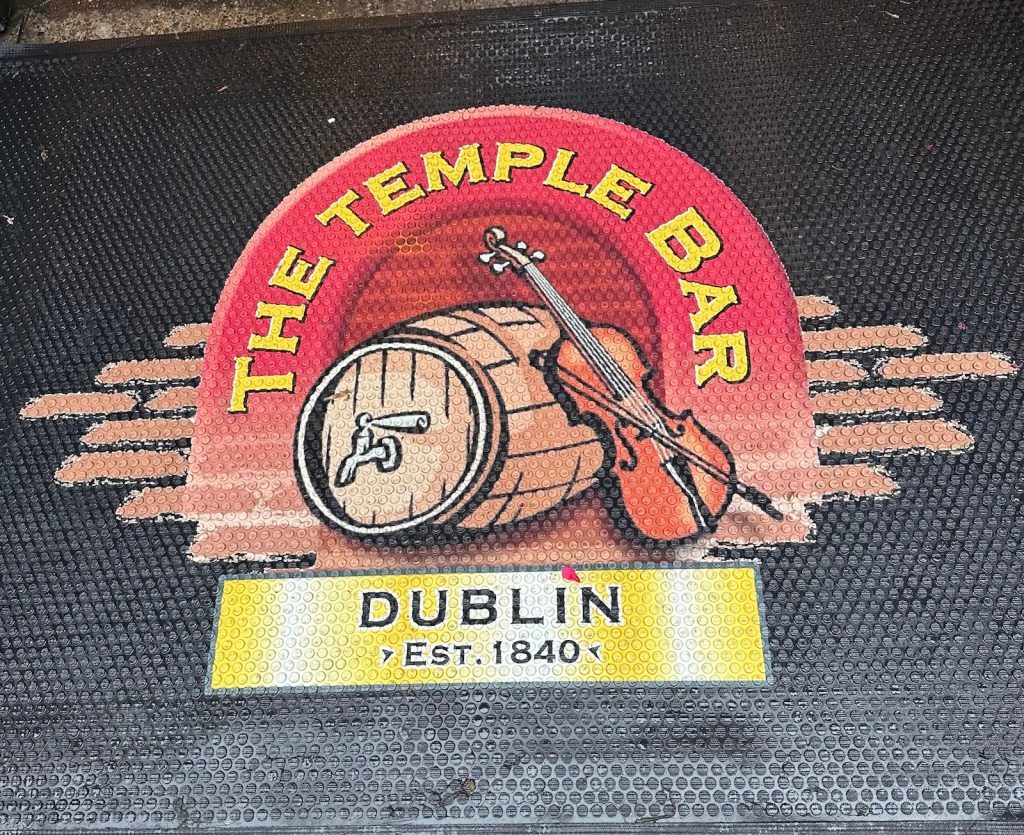
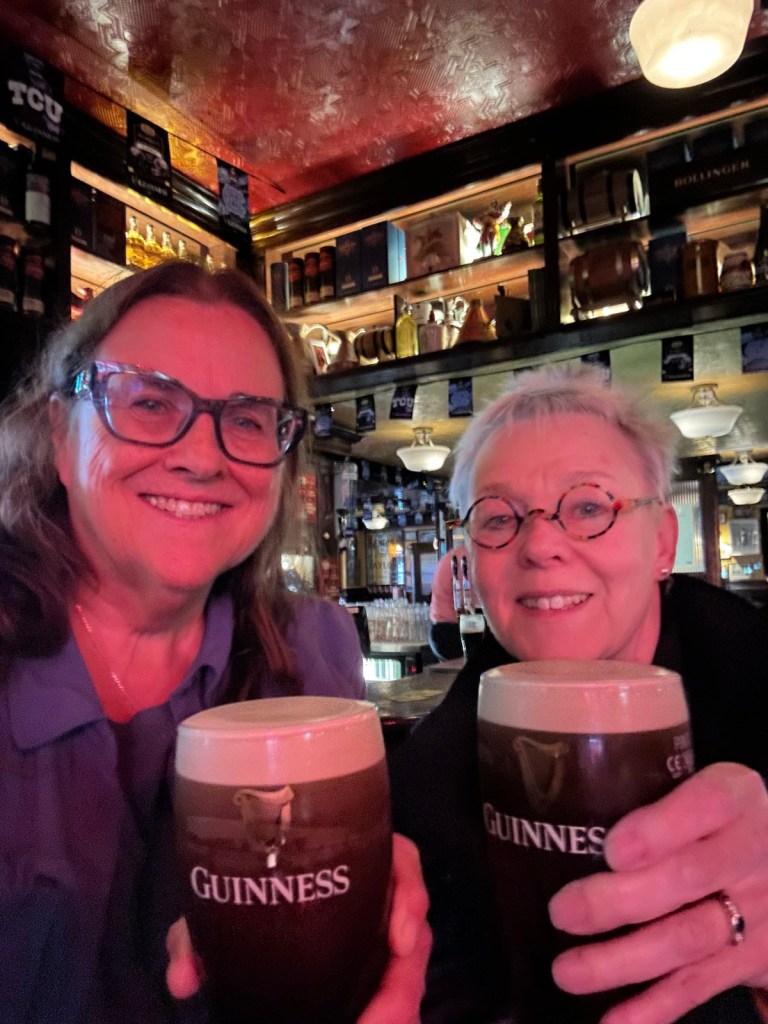
Apparently, it’s never too early for music — or Guinness — in Dublin. We walked in around 10:30 in the morning, the musicians were already playing, the pub was buzzing and we decided there was no better place for our first Guinness in Ireland. Sláinte!
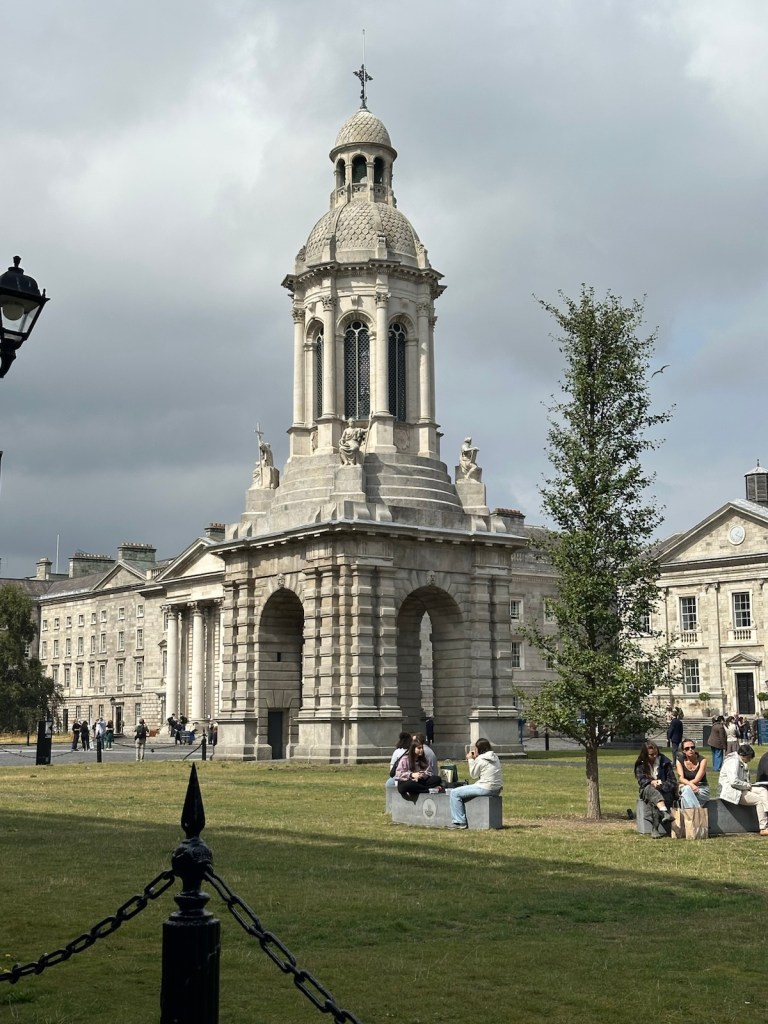
Trinity College is one of Dublin’s most important landmarks and a defining part of the city’s character. Founded in 1592, it is Ireland’s oldest university and has played a central role in the country’s academic, cultural, and literary life for centuries. Home to the famous Book of Kells, Trinity College attracts visitors from around the world while remaining a vibrant center of learning in the heart of Dublin.
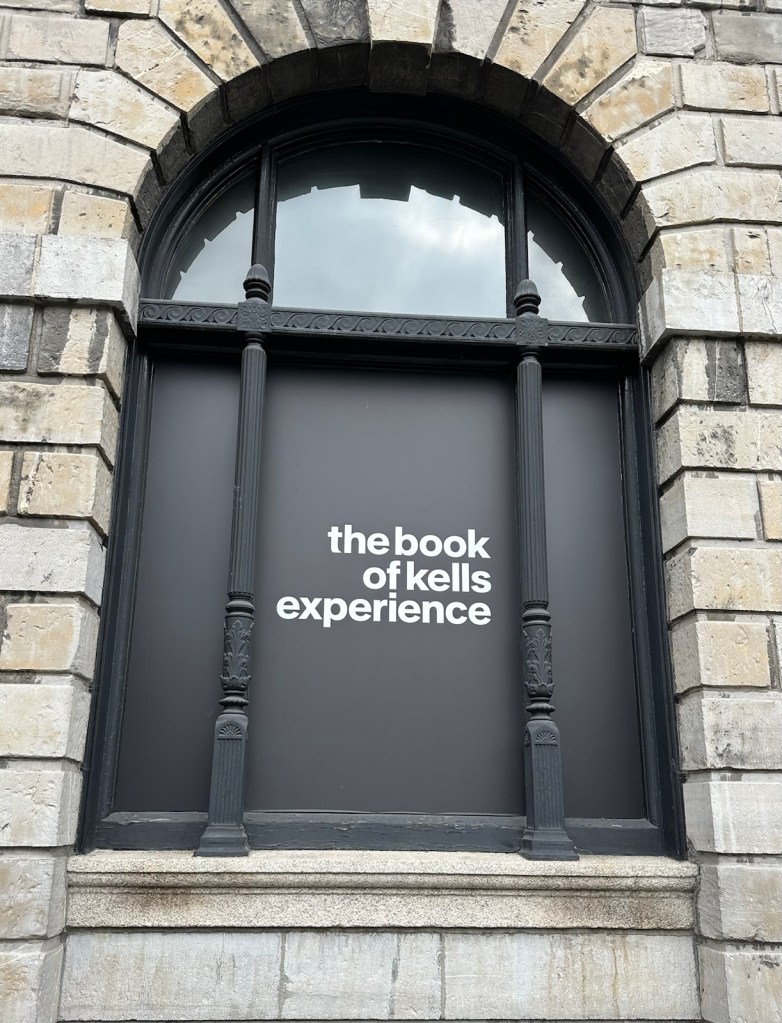
The Book of Kells Experience offers a fascinating look at one of Ireland’s greatest treasures — a beautifully illustrated manuscript created by Celtic monks more than 1,200 years ago. The book contains the four Gospels of the New Testament, but it’s the extraordinary artistry that makes it so remarkable: intricate Celtic patterns, brilliant colors, elaborate lettering, and tiny details that have survived for centuries.
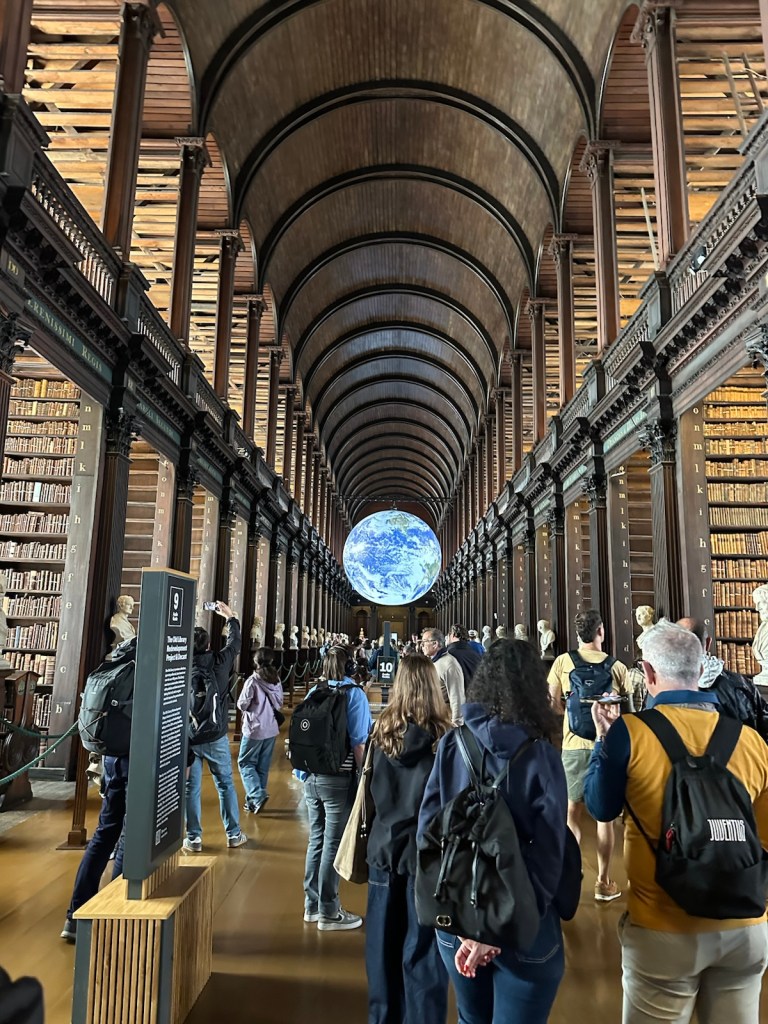
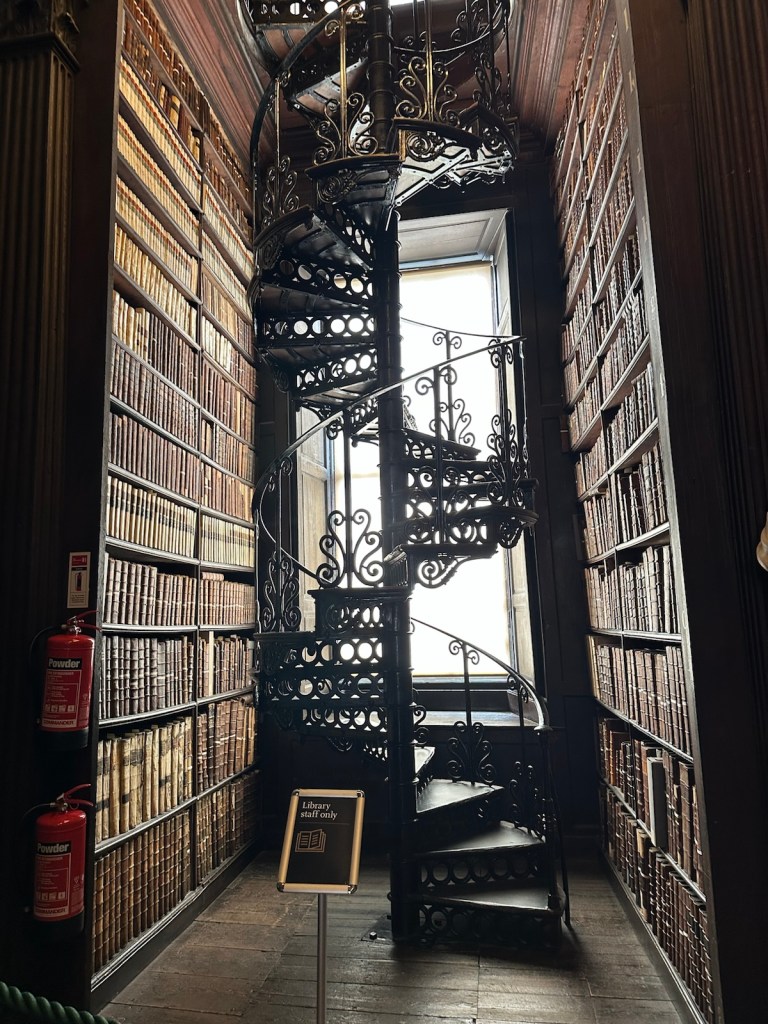
After seeing the Book of Kells, the experience continues into Trinity’s magnificent Long Room, the soaring, barrel-vaulted library lined with towering shelves of ancient books and marble busts of great writers and thinkers.
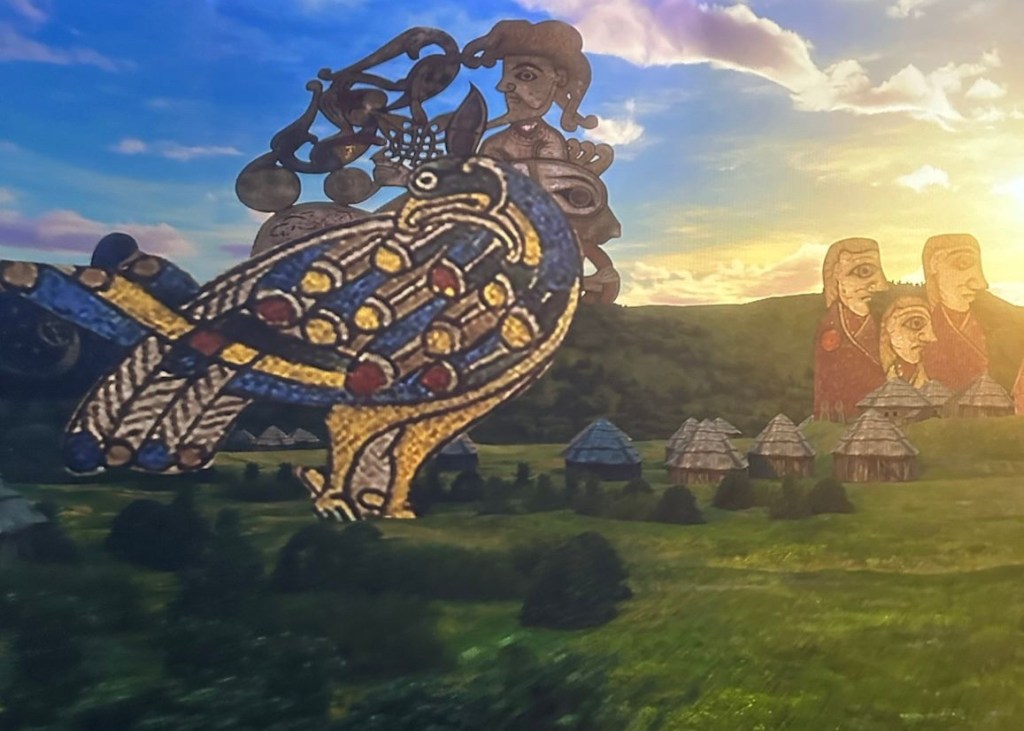
The newer immersive portion of the experience brings the story into the 21st century with dramatic digital displays that explore how the manuscript was created and preserved. Ancient monks, medieval artistry, one spectacular library — and a little modern technology thrown in for good measure.
Next stop on our jet-lag ramble, was the Irish Whiskey Museum.
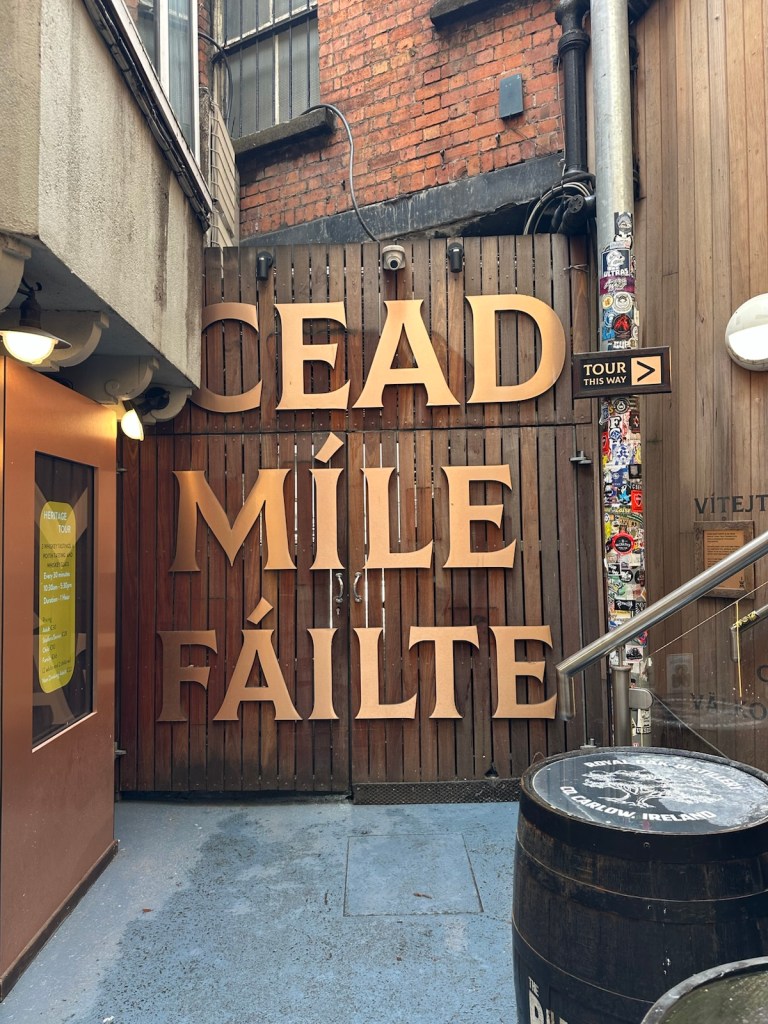
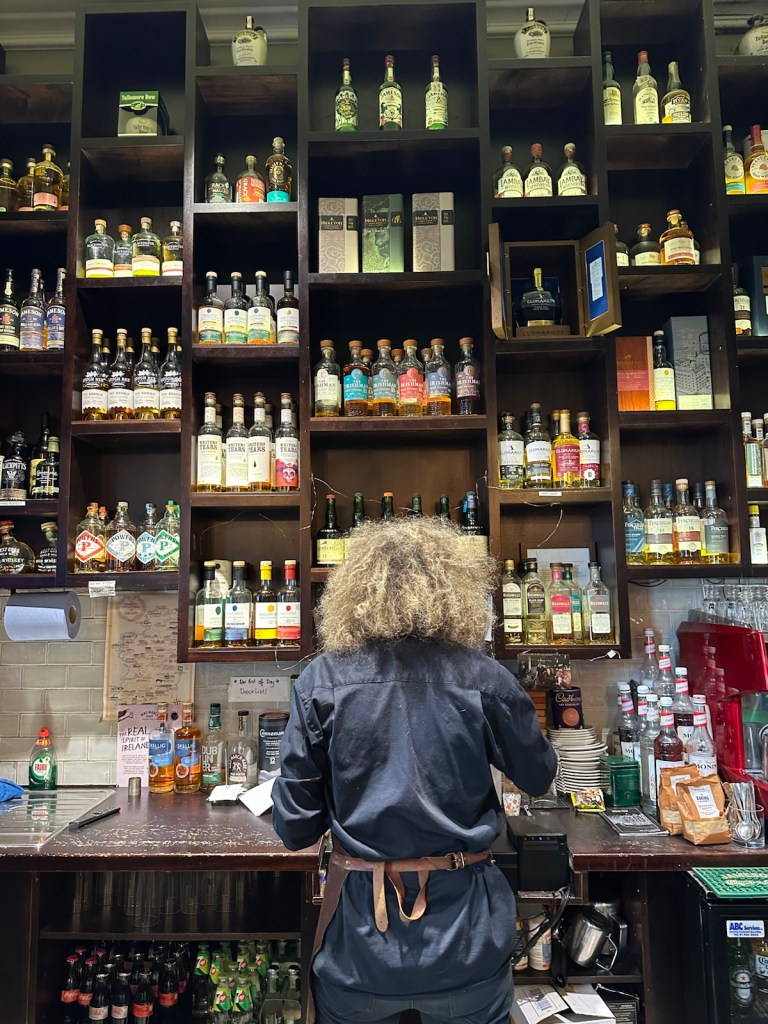
The museum offers an engaging look at the history and traditions of Irish whiskey, from its early origins to its modern revival. Our guided tour took us through the story of Ireland’s most famous spirit, with plenty of fascinating details about distilling, aging and the different styles of whiskey.
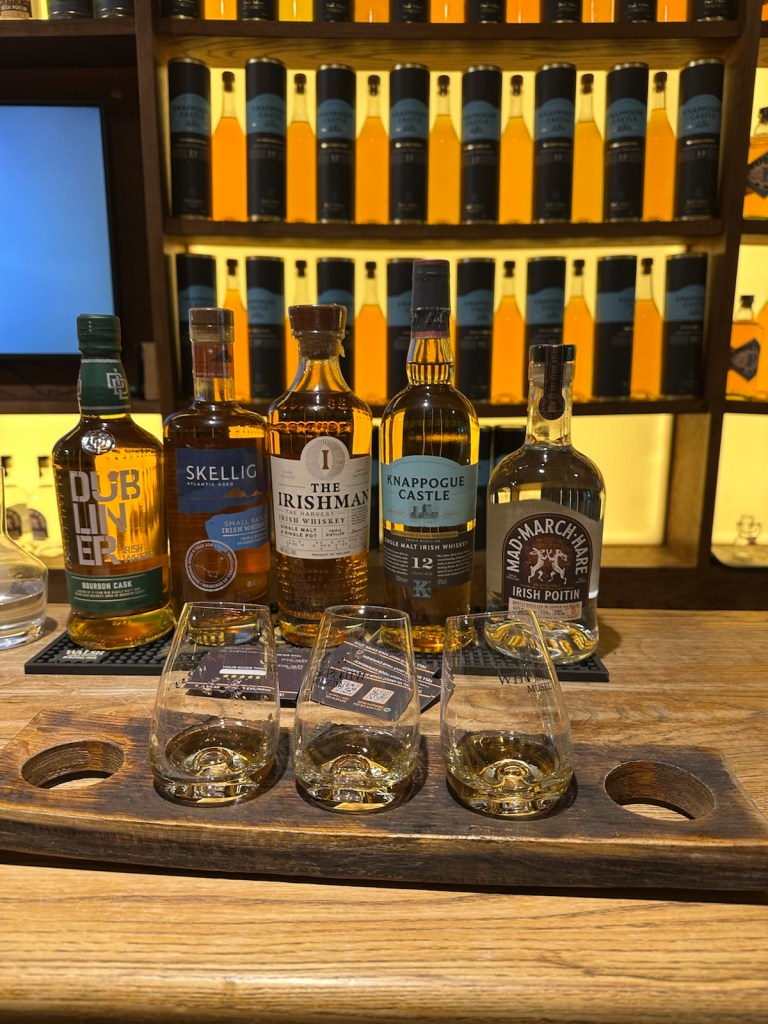
Of course, the visit ended with a tasting, giving us the chance to sample several Irish whiskeys and appreciate what makes each one unique.
By this point, it was late afternoon and we were officially walking zombies. After being awake for nearly 30 hours, we finally called it quits. Going out to a restaurant for dinner would have been a complete waste on us, so we stopped at a SPAR market on the way to the hotel and picked up dinner.
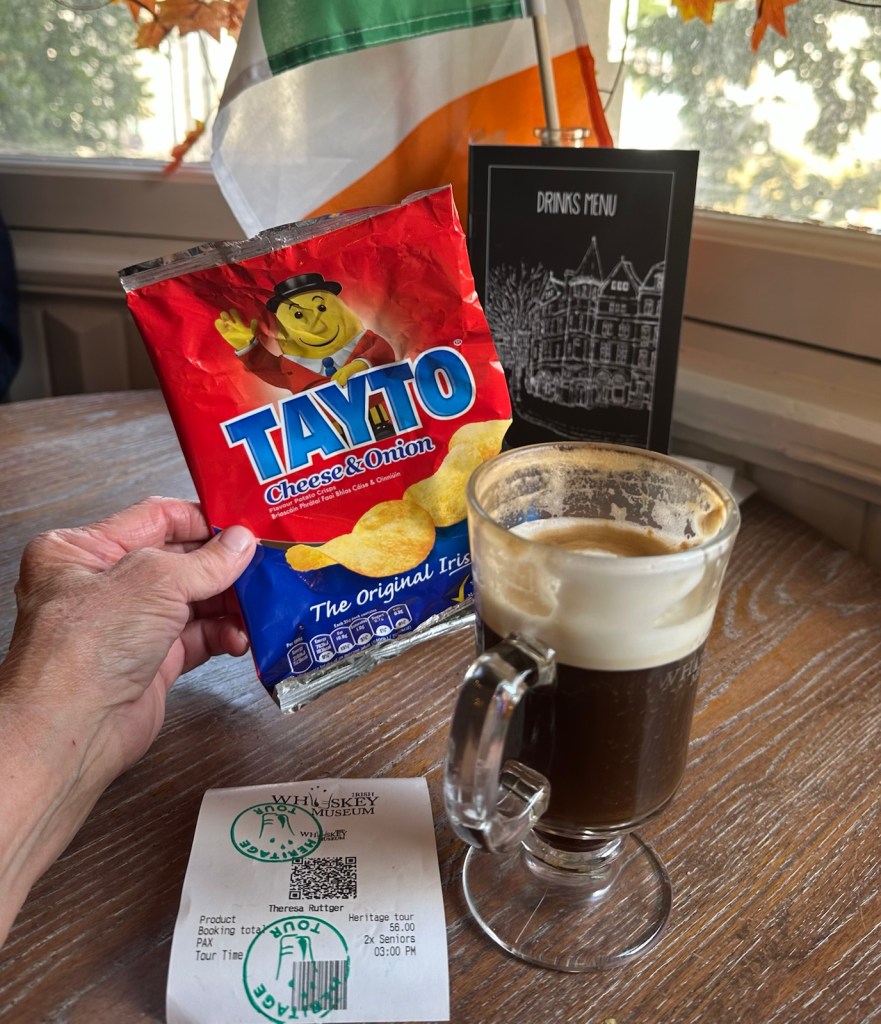
And you know what? Our sandwiches and Tayto crisps tasted pretty darn good. Sometimes simple is exactly what you need. It was time for this very long day to be done. I think we were sound asleep by 8 pm.
Oíche mhaith, Dublin. See you tomorrow!

