Today we’re heading north to Belfast, but first we wanted to make one very special stop along the way — Brú na Bóinne, just north of Dublin. This remarkable ancient landscape is home to some of Ireland’s most extraordinary prehistoric monuments, built thousands of years before the pyramids of Egypt.
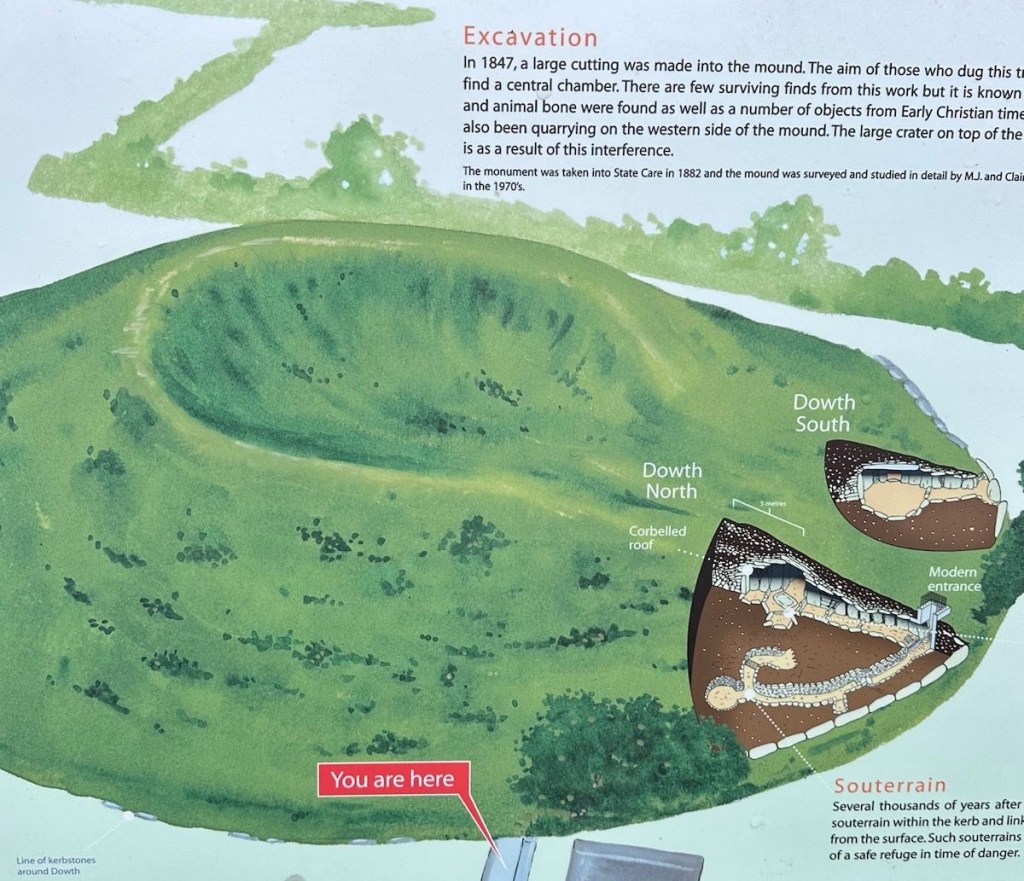
Brú na Bóinne is home to three great passage tombs—Newgrange, Knowth and Dowth—and contains the largest concentration of prehistoric megalithic art in Europe. Since reservations are required to visit Newgrange and Knowth — and we didn’t have them — we headed instead to the lesser-known Dowth, where no reservation was needed.
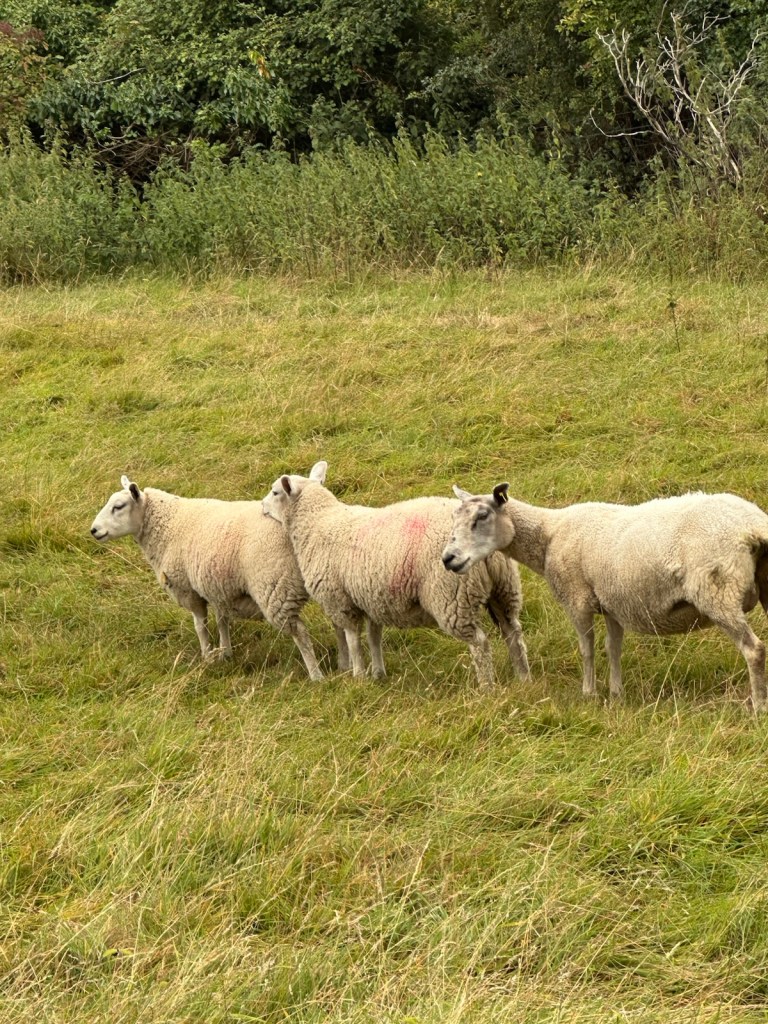
When we arrived, we weren’t even sure we were in the right place. It looked more like a sheep pasture than a 5,000-year-old monument. But there were no crowds, no tour buses — just us, Dowth and the sheep.
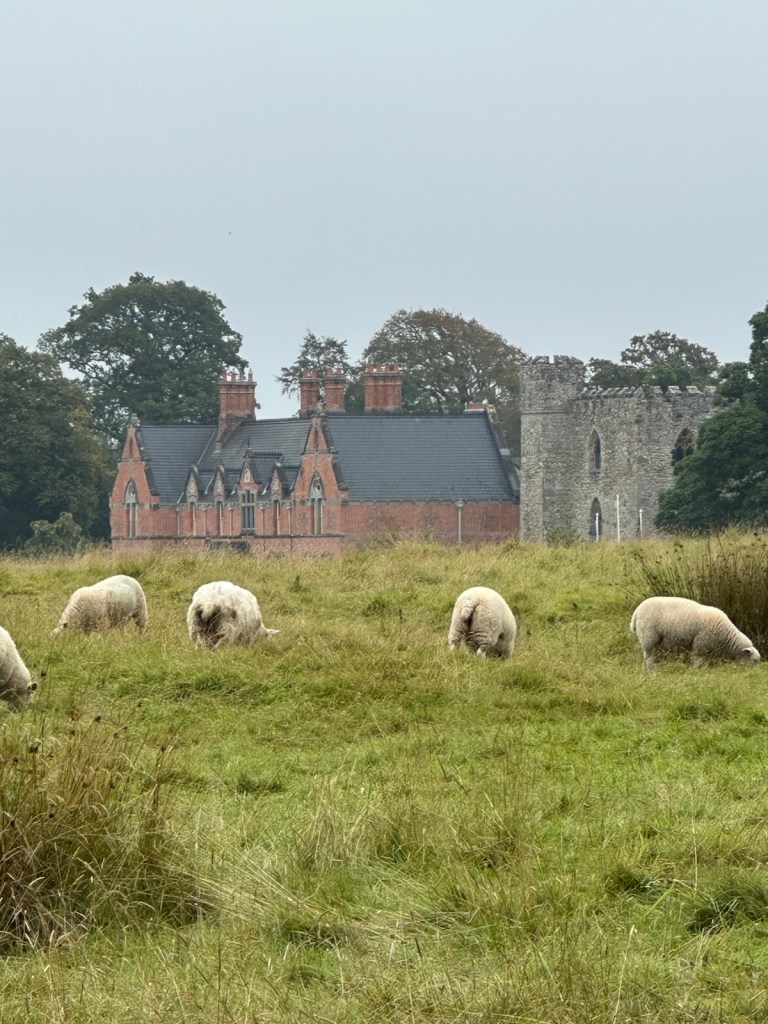
Once we figured out we really were in the right place, we followed the grassy path around the enormous mound. Ancient kerbstones still circle its base, some carved with mysterious spirals and other designs more than 5,000 years old. We wandered around, taking in the views across the Boyne Valley and marveling that we could simply walk through such an ancient place. No ropes, no crowds, no tour guide — just us, the stones and the sheep.
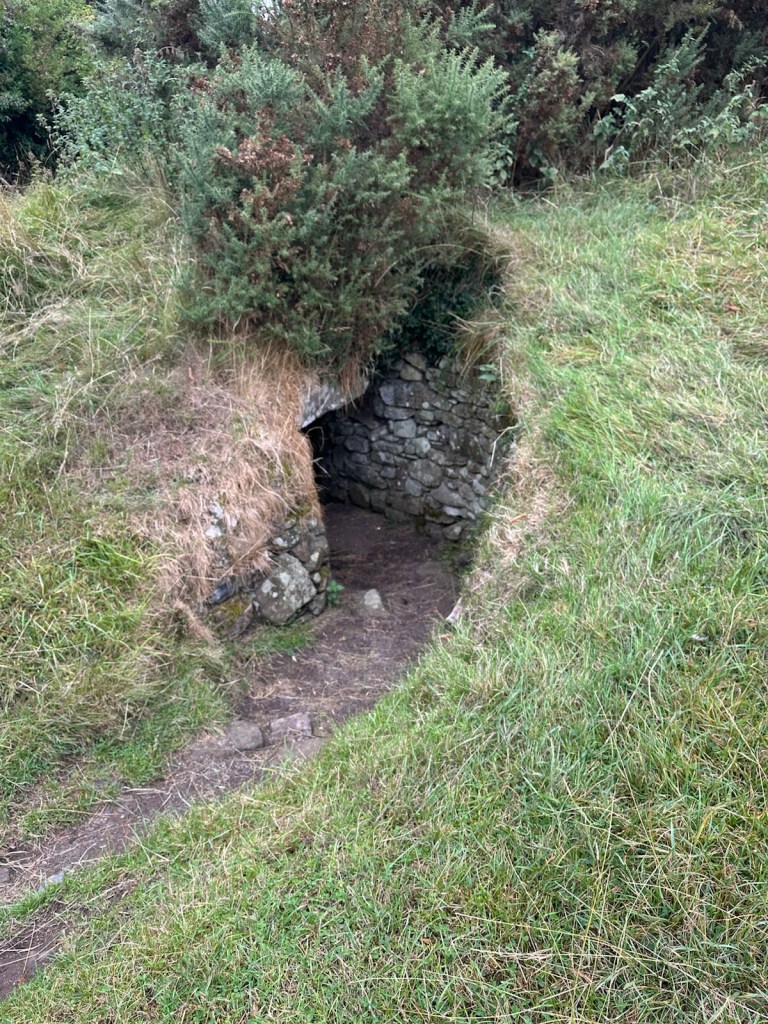
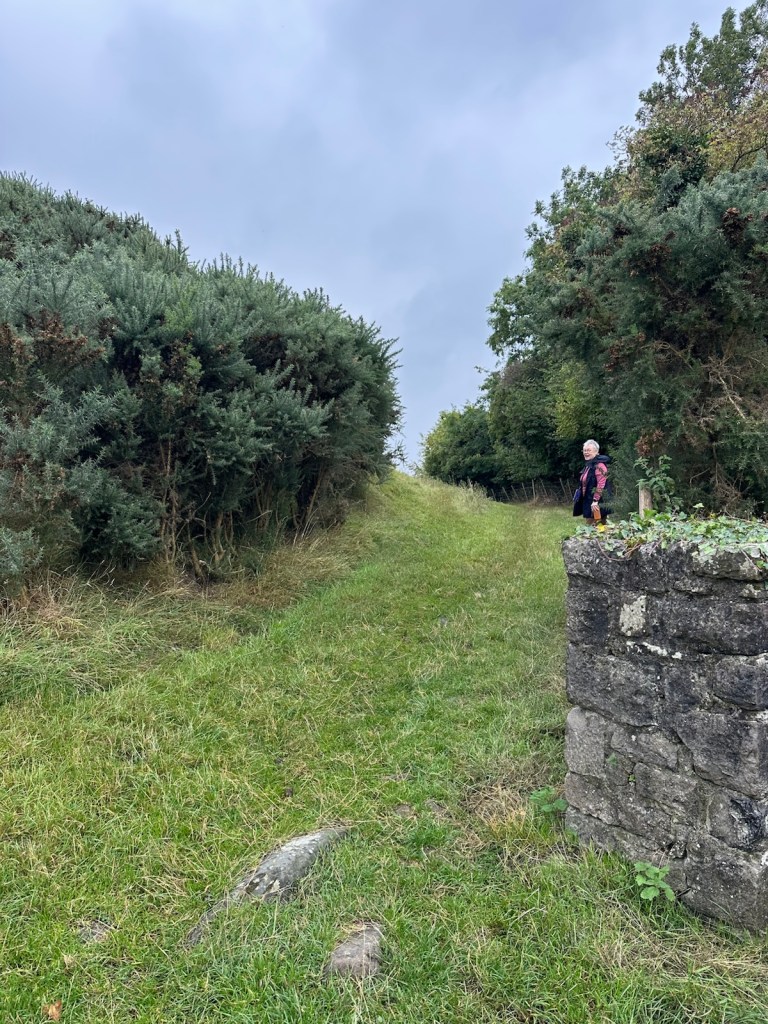
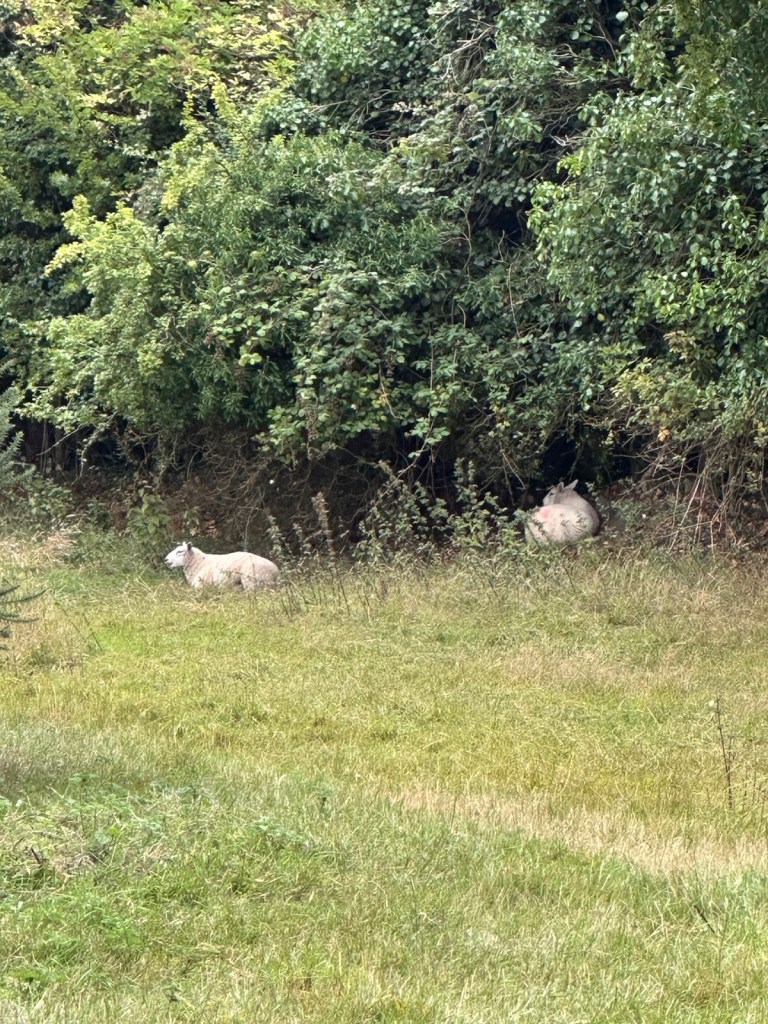
The sheep wandered freely around us, quietly grazing and occasionally stopping to give us a curious look. They were so gentle and peaceful that we hardly seemed to disturb them at all. Somehow, their quiet presence made this ancient place feel even more timeless — just green fields, old stones and sheep going about their day.
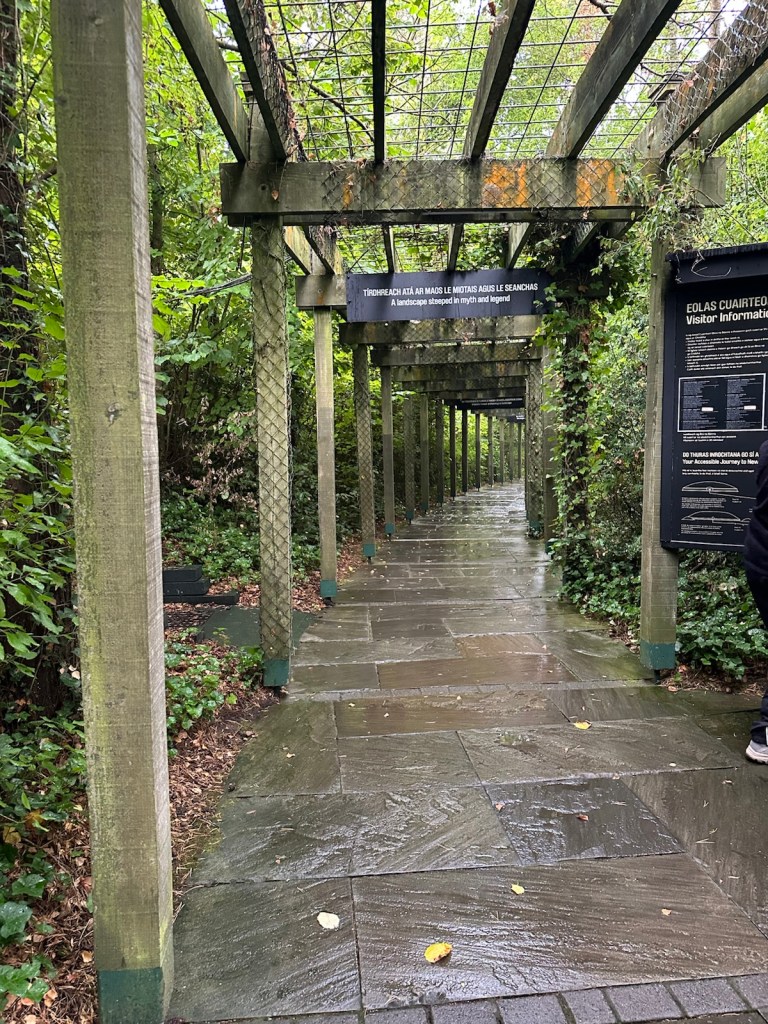
After Dowth, we stopped at the Brú na Bóinne Visitor Centre, which helped put everything we had just seen into perspective. Exhibits explain how Newgrange, Knowth and Dowth were built more than 5,000 years ago, along with the people who built them, their remarkable stone carvings and their connection to the movement of the sun. After wandering Dowth on our own, it was fascinating to finally understand just how significant that grassy mound really was.
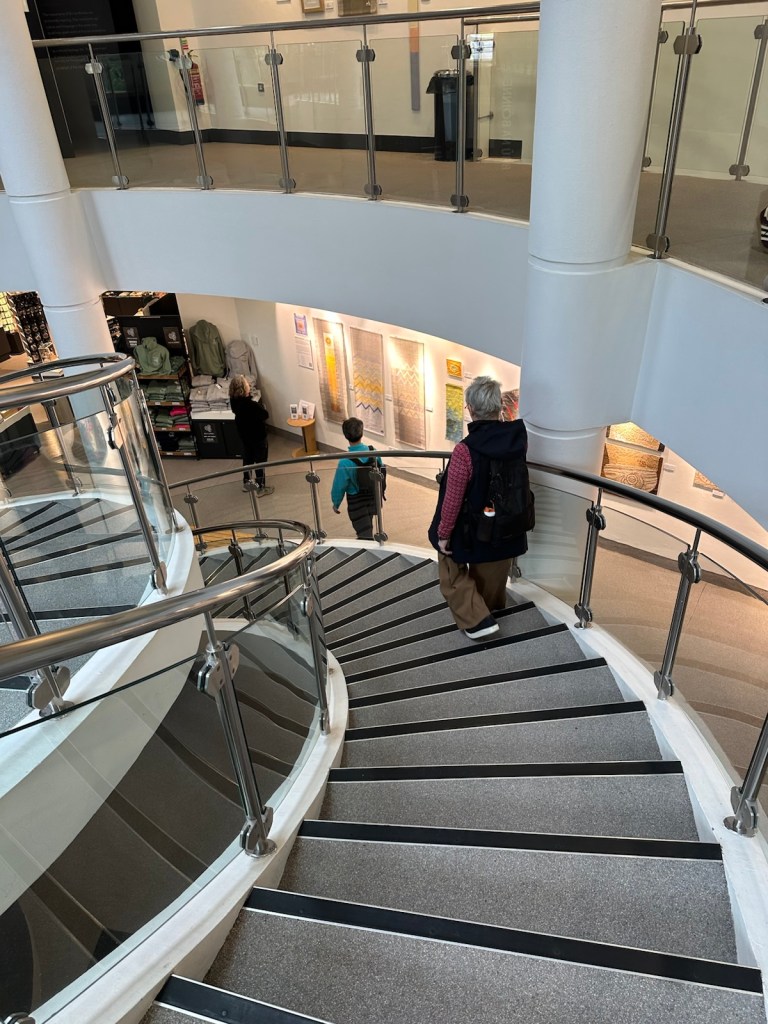
The Visitor Centre brings the ancient sites to life through contemporary, highly visual exhibits and engaging multimedia displays.
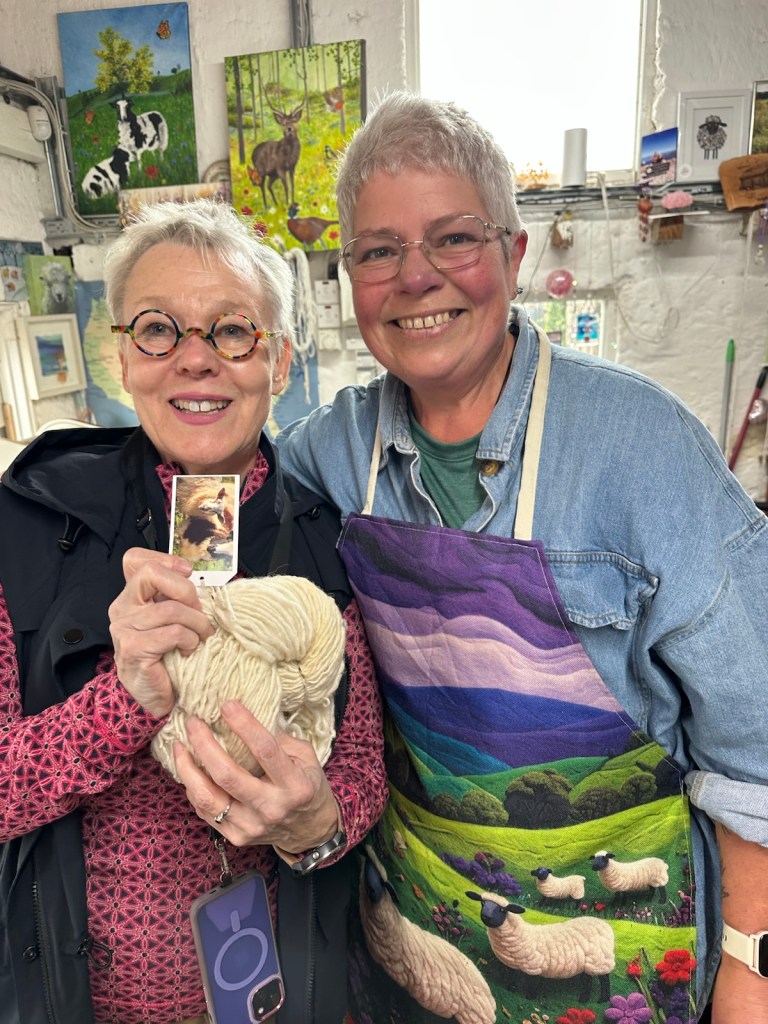
As we drove away from the visitor center, we happened upon a little craft shop where the woman inside was carding and spinning wool. She raises the sheep herself, shears them and then processes and spins the wool by hand.
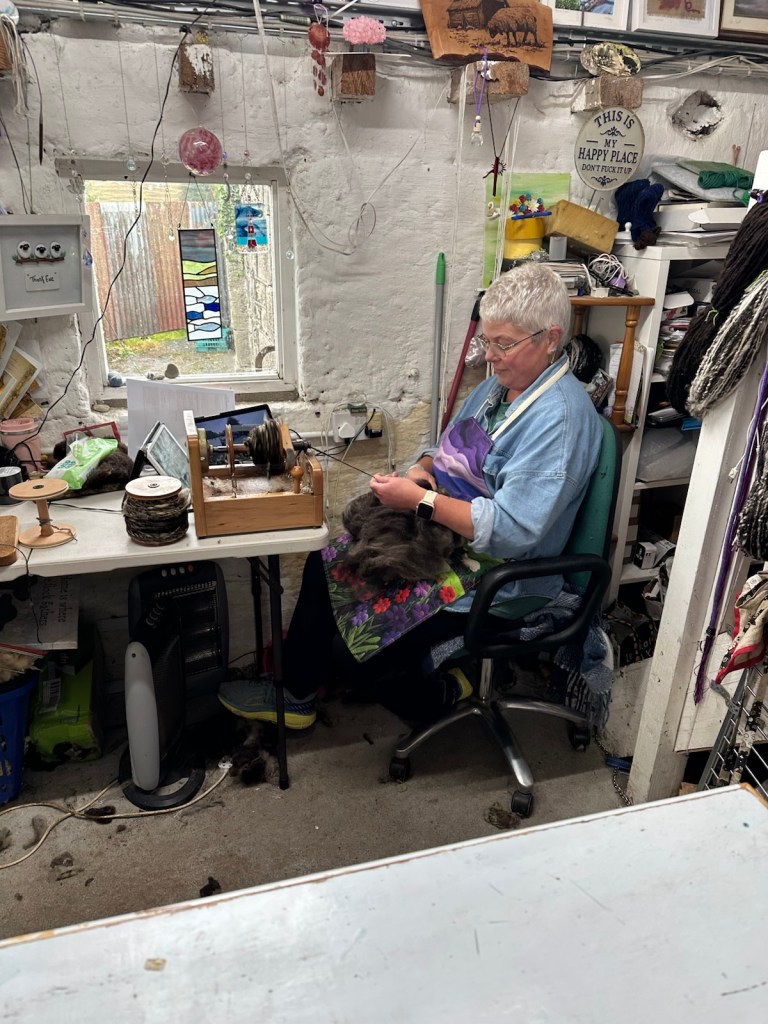
Theresa was delighted to buy some of her wool, knowing it had come directly from sheep this woman had raised and cared for herself — from the pasture, through shearing and spinning, to the finished skein.
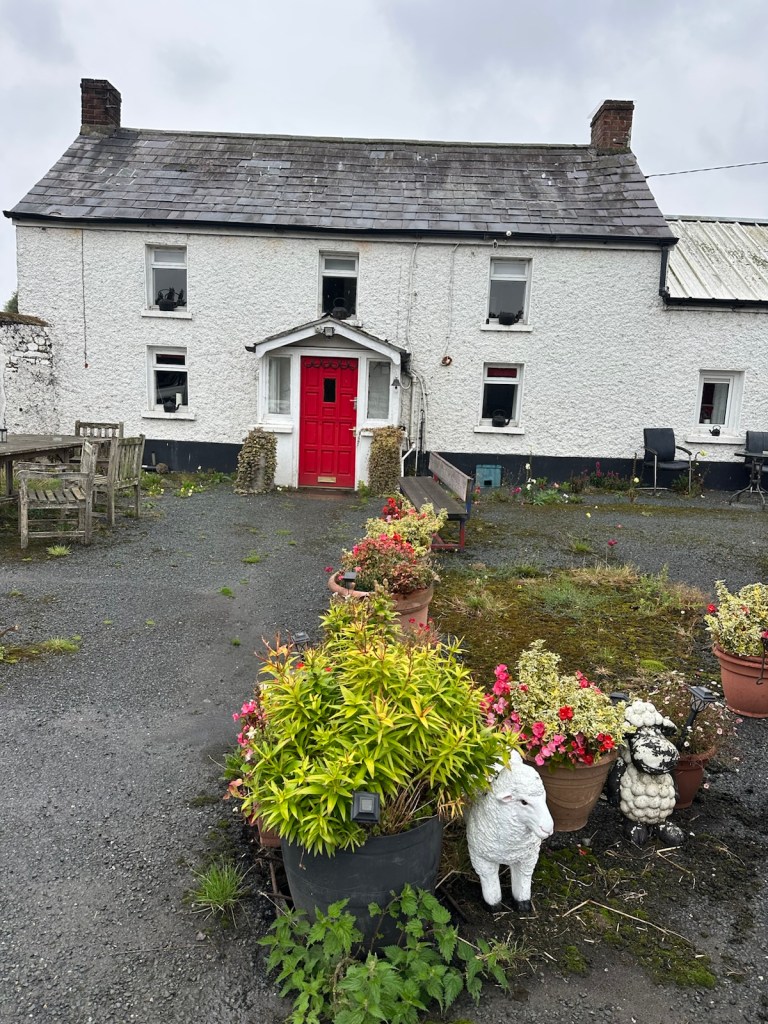
We had spent much more time exploring Brú na Bóinne than we had planned, and with Belfast still ahead of us, the clock was ticking.
My last visit to Belfast was in 1988, and it was a very different time. The Troubles were still very much a part of daily life, and I remember a heavy military presence, security checkpoints and barricades surrounding many buildings. As we entered Belfast, guards even used mirrors to search the underside of our vehicle for bombs. Our visit was brief and the tension of the city left a lasting impression.
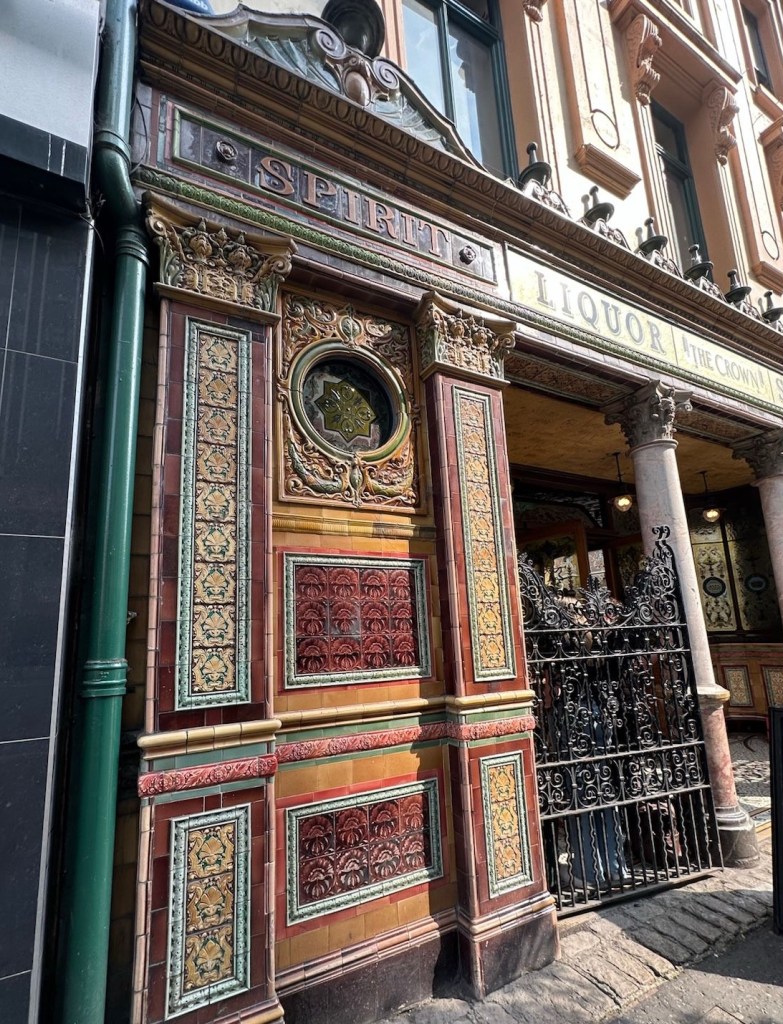
Returning nearly 40 years later, Belfast felt remarkably different. One place I remembered was the Crown Liquor Saloon, one of the city’s most famous pubs and a beautifully preserved Victorian gin palace.
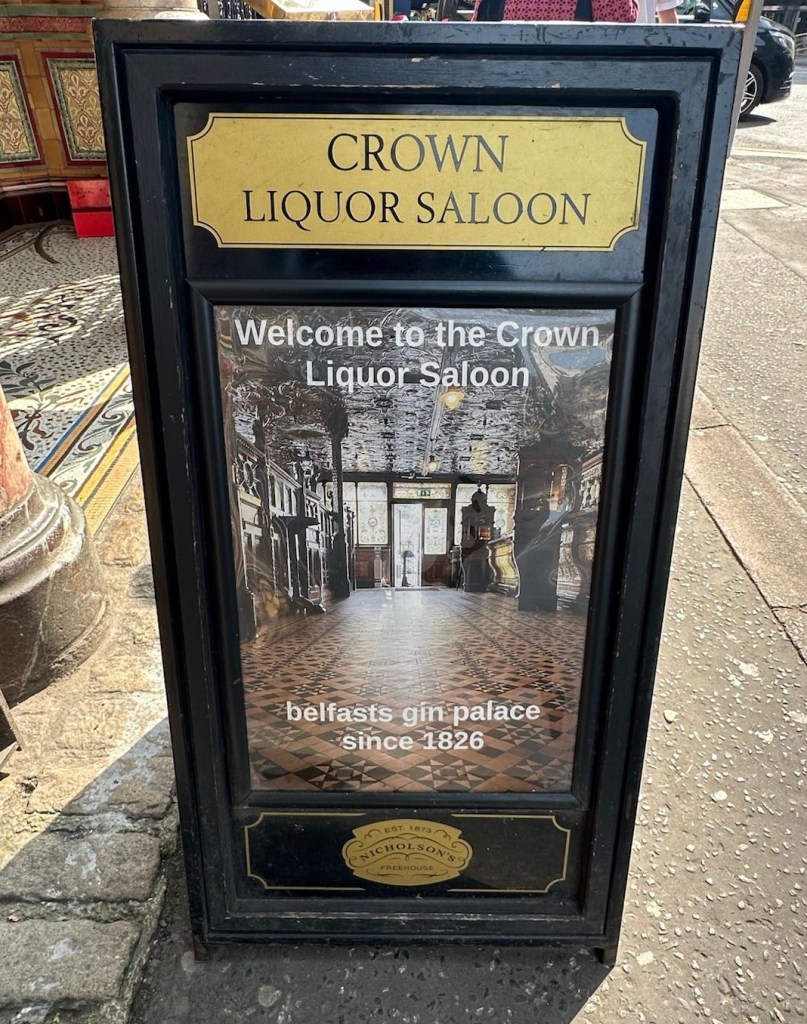
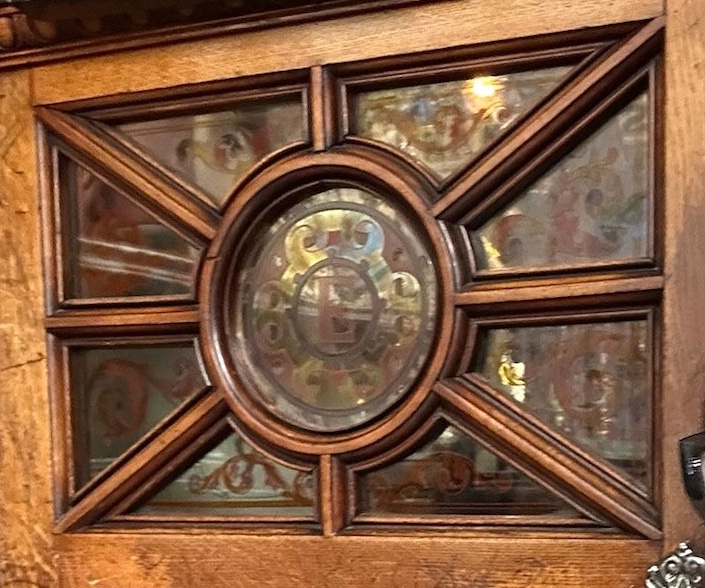
Dating back to the 1800s, the Crown is almost as much a historic landmark as it is a pub. The interior is over-the-top, with colorful tiles, stained and etched glass, carved woodwork, gas lighting and ten little private wooden “snugs,” each with its own bell for summoning the bartender. Now cared for by the National Trust, it is considered one of the finest surviving Victorian pubs in Britain and Ireland.
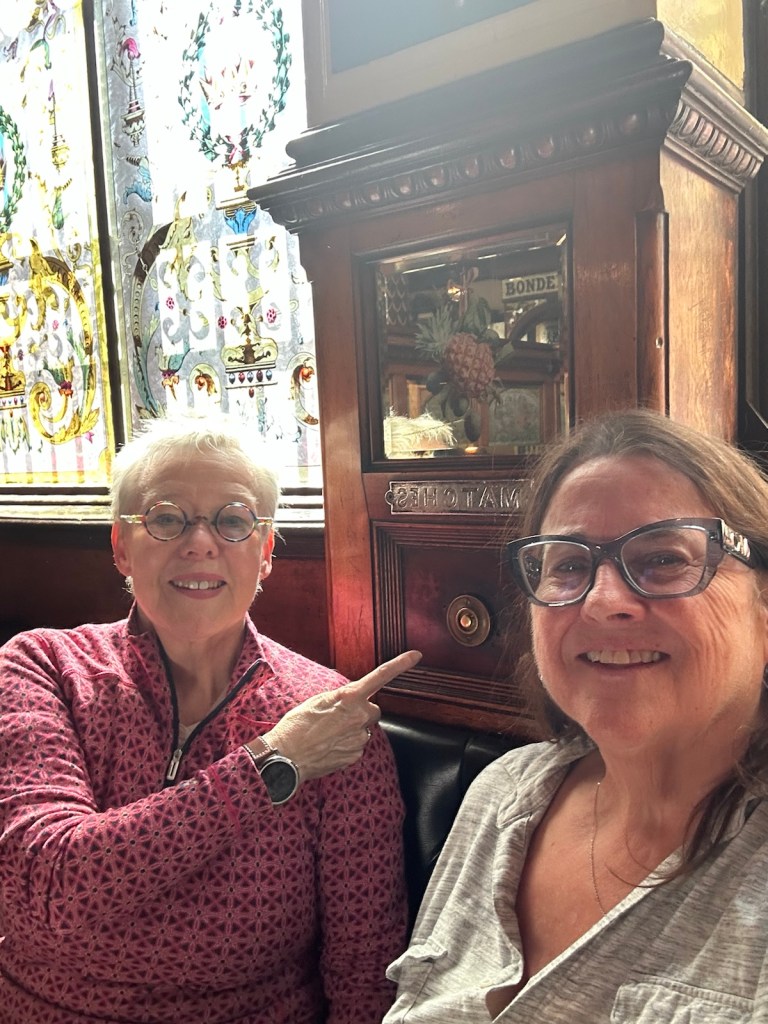
The bartender quickly informed us that this was not a cocktail bar, so we kept it simple and ordered a whiskey neat with a glass of water.
We couldn’t linger long because we had reserved a Belfast Black Cab Tour — a guided drive through the neighborhoods at the heart of the Troubles. Led by local drivers, the tours visit the famous political murals, the Peace Walls and both Catholic and Protestant neighborhoods, while sharing the history and personal stories of decades of conflict in Belfast.
The Troubles refers to roughly 30 years of conflict in Northern Ireland, from the late 1960s until the 1998 Good Friday Agreement. At its heart was the question of Northern Ireland’s future — whether it should remain part of the United Kingdom or become part of a united Ireland. The conflict divided communities, led to decades of violence and claimed more than 3,500 lives.
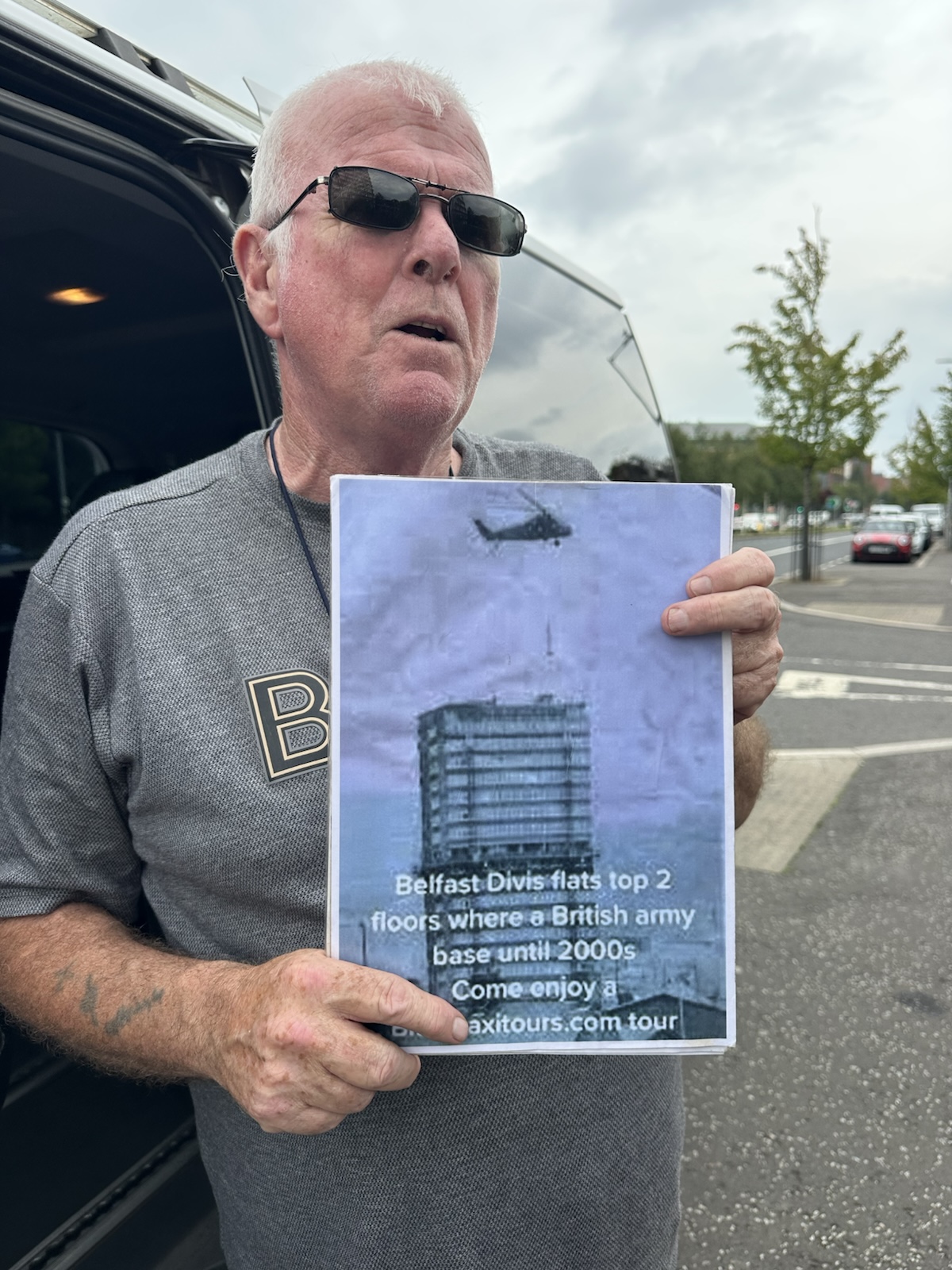
Our guide, Steven, was Catholic and had lived through the Troubles, so much of what he shared came from personal experience. He explained that where you went to school — and whether you were Catholic or Protestant — could shape the course of your life. In his experience, Protestant children often left school with better opportunities for good jobs and a comfortable future, while Catholic children faced discrimination and far fewer opportunities. The two communities rarely mixed, he said, creating a deep divide and a mistrust of one another that could begin in childhood and last a lifetime.
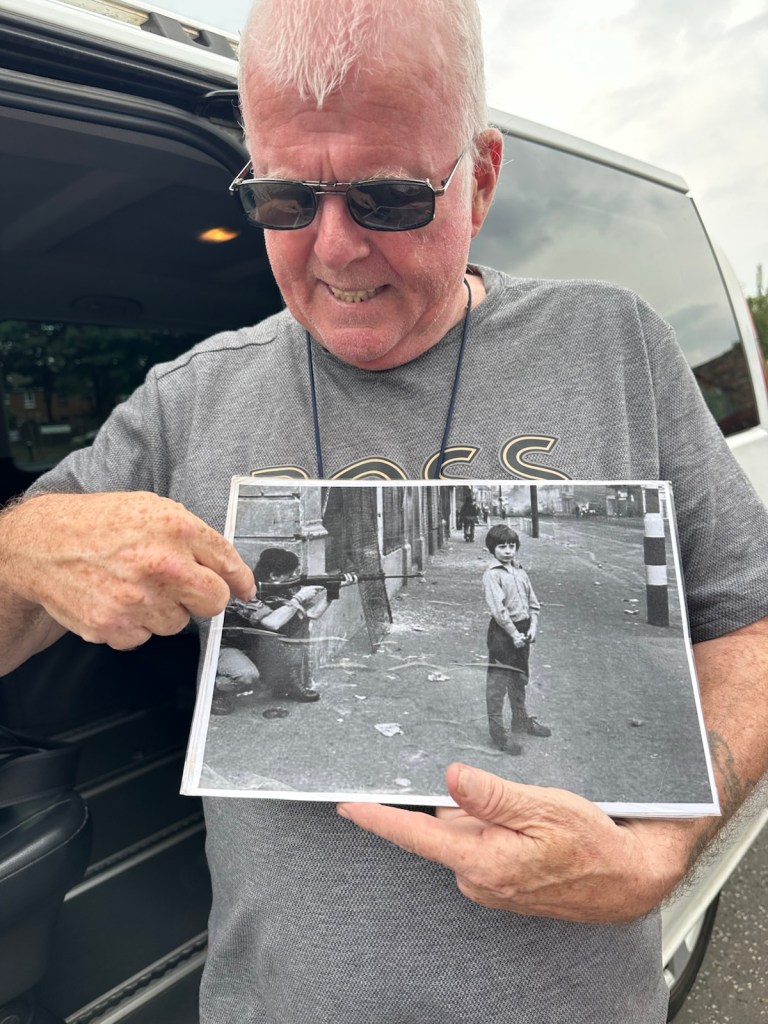
Steve told us that children were sometimes used as human shields, showing us a photograph that illustrated this disturbing reality.
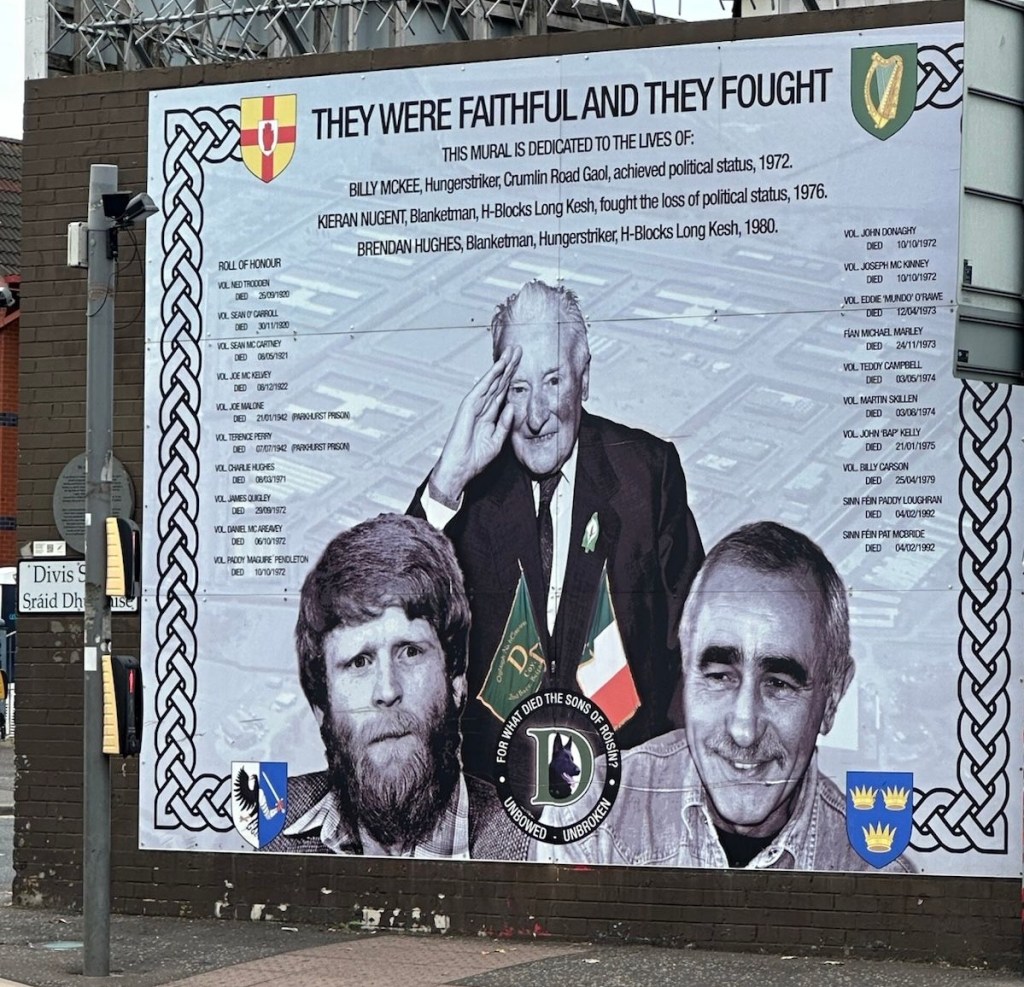
Our tour took us past Belfast’s famous political murals — outdoor history books painted on the walls of the neighborhoods that lived through the Troubles. This republican mural honors prisoners who fought to be recognized as political prisoners rather than ordinary criminals. It recalls the blanket protests and hunger strikes at the Maze Prison, events that became some of the most powerful and controversial symbols of the Troubles.
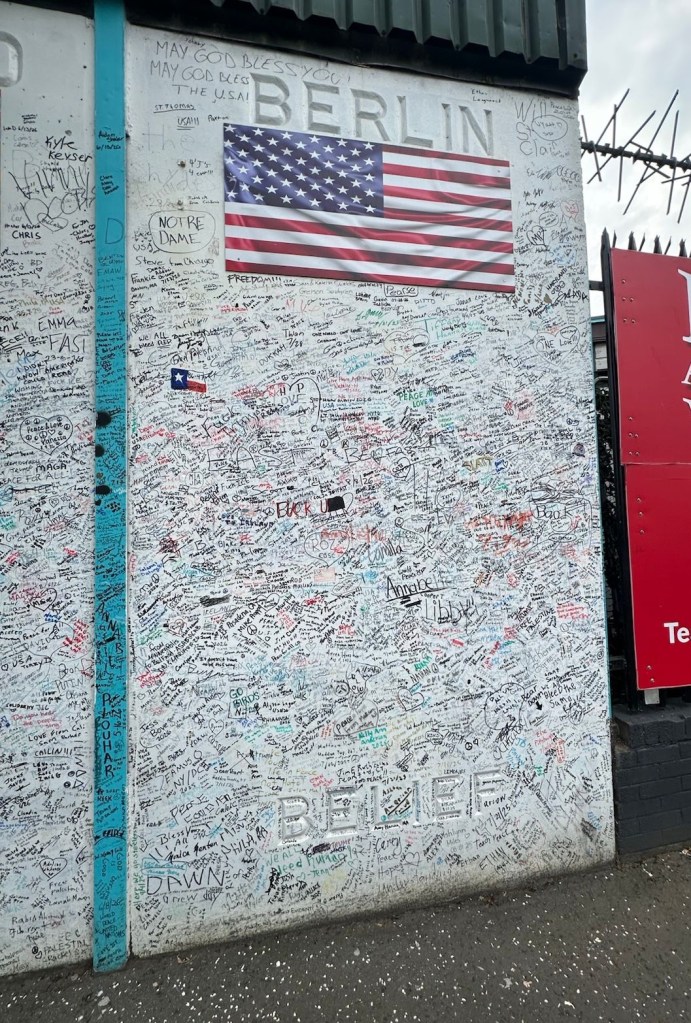
This section of Belfast’s International Wall has become a giant visitor message board. An American flag reflects the strong Irish-American connection and the important U.S. role in the Northern Ireland peace process. Over time, visitors from around the world have covered the wall with names, hometowns and messages of peace.
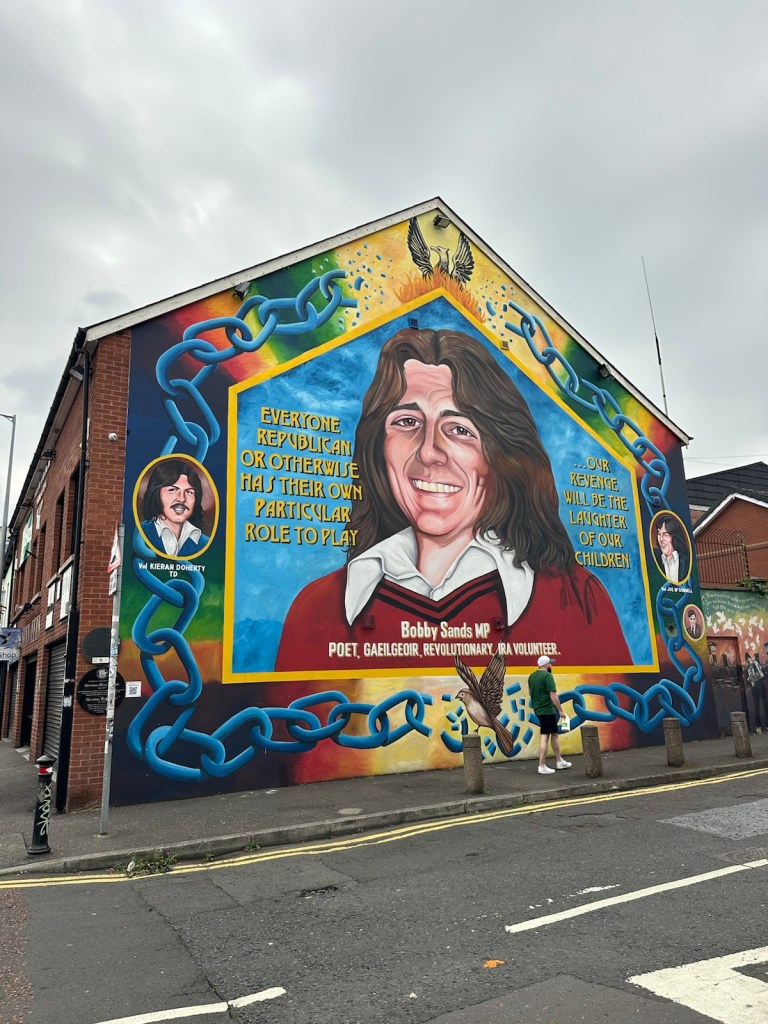
The Bobby Sands mural on Falls Road honors the IRA prisoner who died during the 1981 hunger strike after 66 days without food. The broken chains symbolize the republican struggle for freedom.
According to our guide — and as we saw for ourselves — walls and gates still separate some Belfast neighborhoods to this day, with certain gates closed each night. It was a striking reminder that the divisions of the Troubles have not completely disappeared.
Our Black Cab tour was not only fascinating, but powerful and emotional — a glimpse into a history that is still very much alive. It had been a long day, though, and it was time to head north to Ballymena and our hotel for the night.
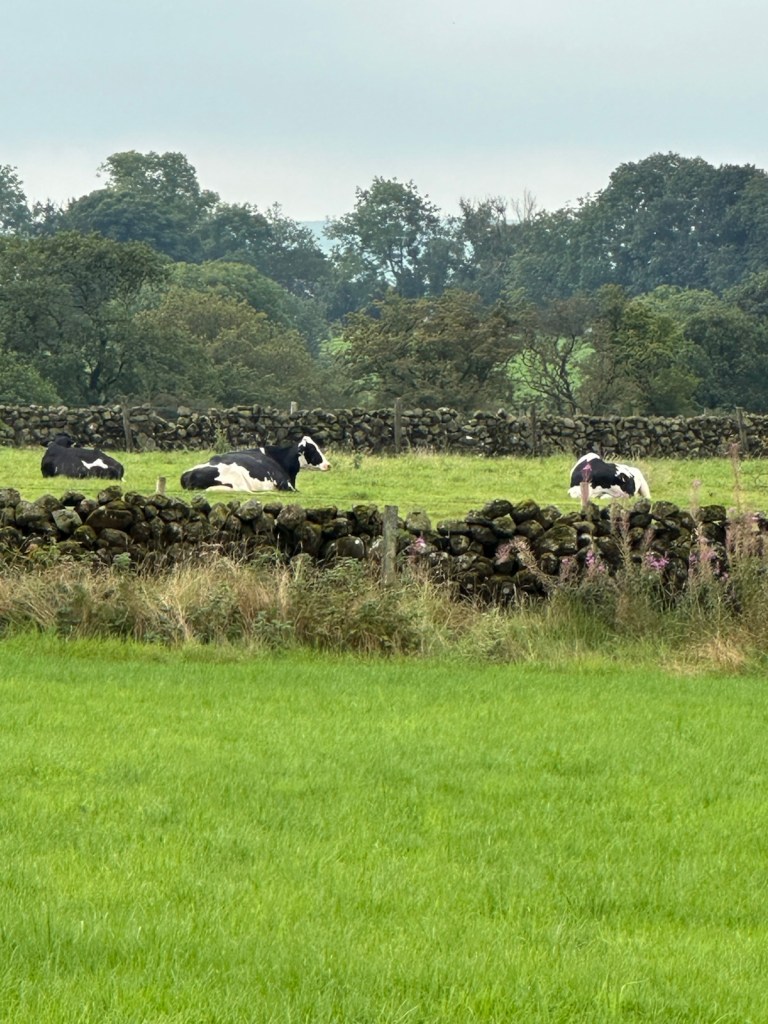
Our home for the night was The Slemish Barn, tucked into the countryside beneath Slemish Mountain. The property has been in the same farming family for six generations with an old farm barn being transformed into the welcoming hostel it is today.
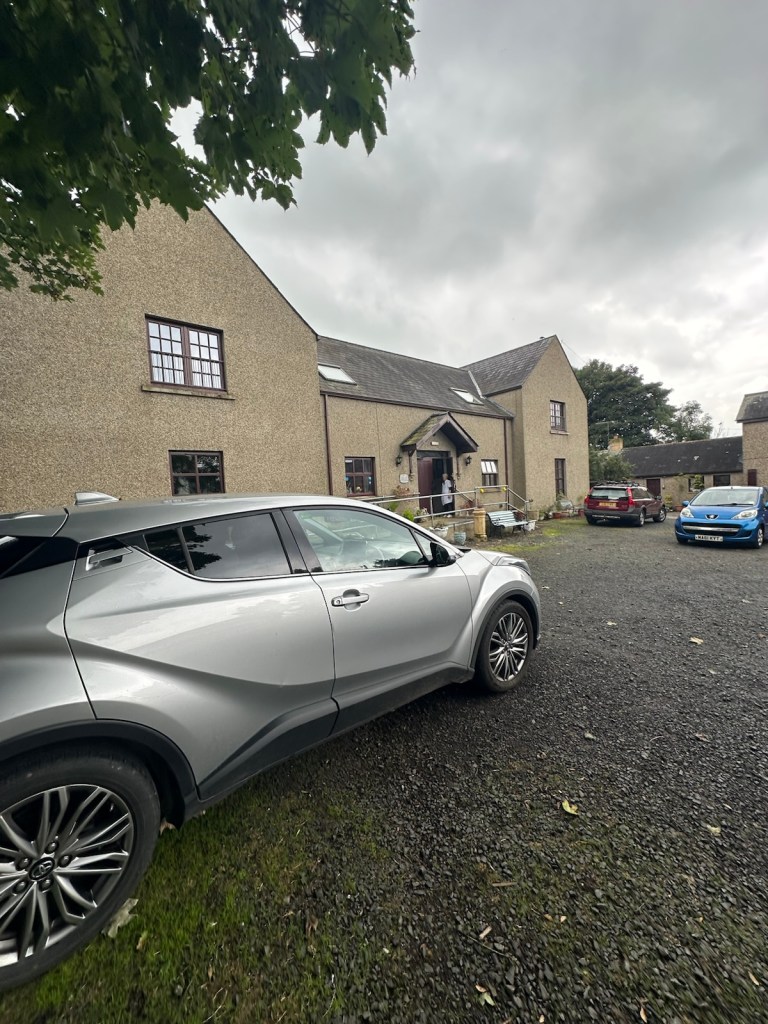
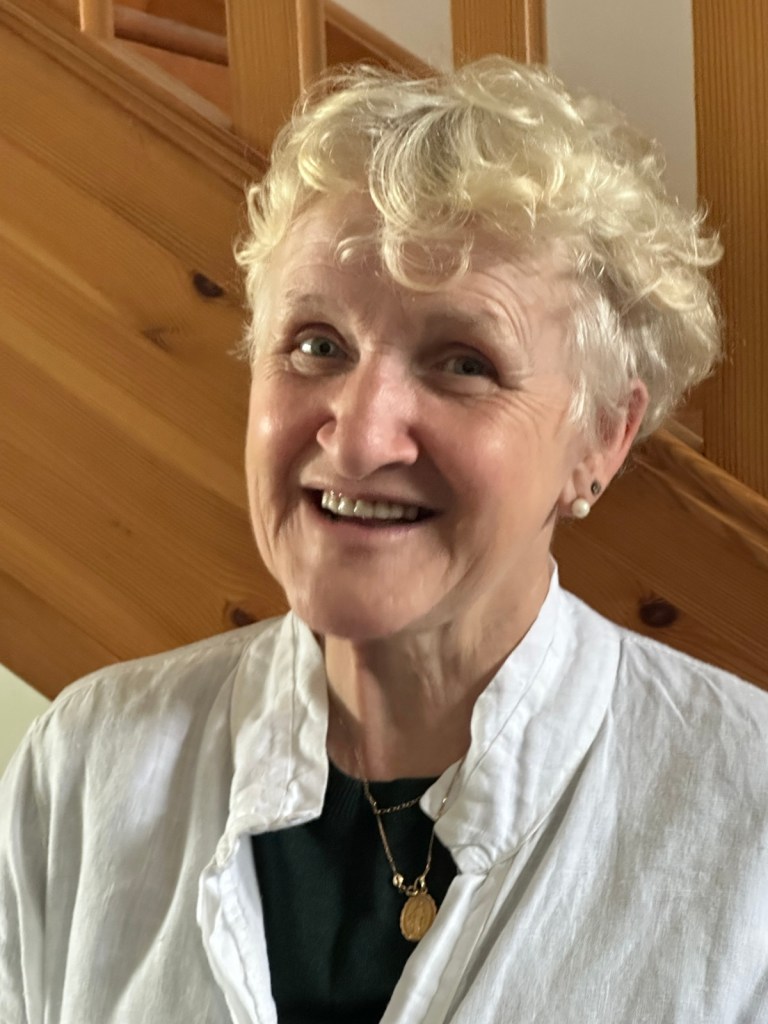
Our host, Maebh (pronounced “Mave”), was a delightful Irish woman who also shared her perspective on the Troubles. As a child, a teacher recognized her musical talent and encouraged her to attend a Protestant school, believing she would receive a better education there. I asked if it had been difficult or if her Protestant classmates had treated her differently. “Not at all,” she said. No one really cared—they were all just kids.
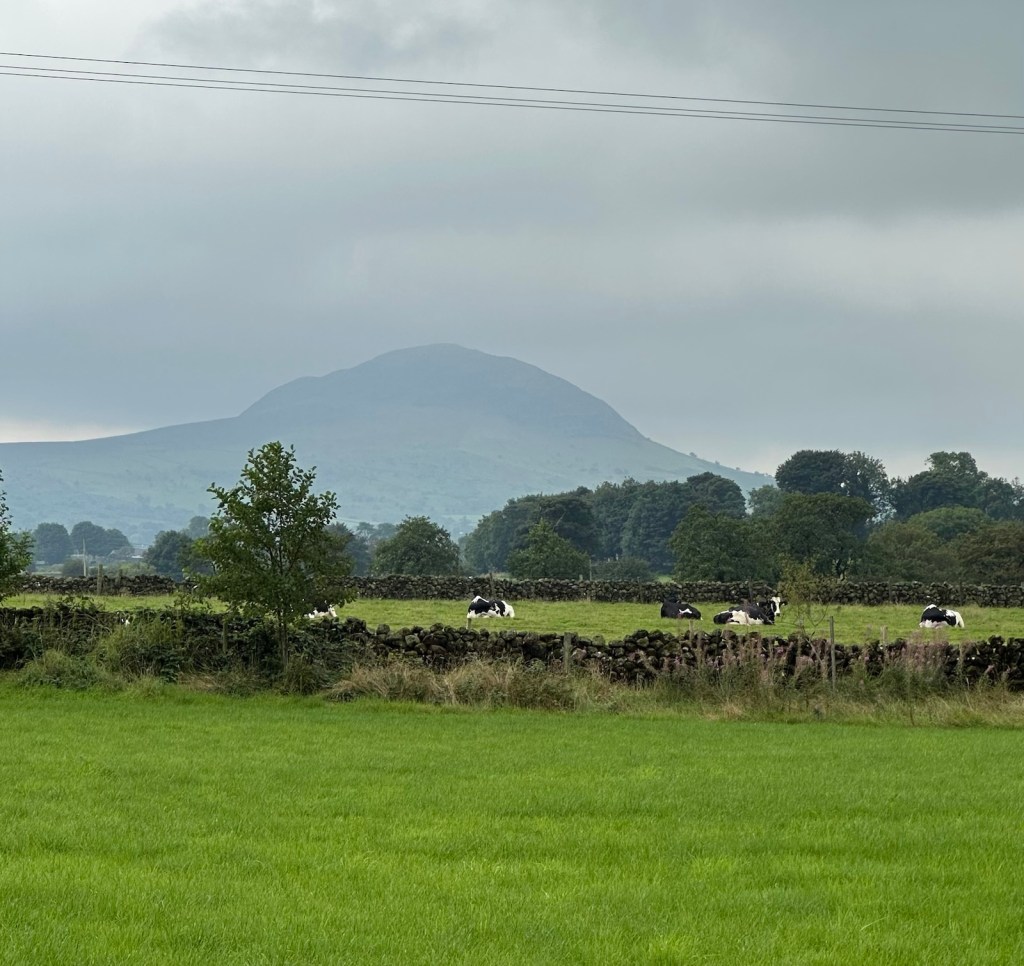
We had a view of the Slemish Mountain from our window. The landscape is steeped in history — according to tradition, St. Patrick spent six years here as an enslaved shepherd, tending animals on the slopes of Slemish, a period believed to have profoundly shaped his faith.
From ancient Ireland at Brú na Bóinne to the very recent history of Belfast, today took us across thousands of years of Irish history. Our Black Cab tour was a powerful reminder that some history isn’t really history yet — it is still being lived. We ended the day in the quiet countryside beneath Slemish Mountain, grateful for a peaceful place to rest after a day with so much to absorb.
Good night and sweet dreams from beneath Slemish Mountain. More Irish roads, stories and blessings tomorrow. Slán go fóill!

