We started the day with a late breakfast/lunch in Carnlough, at a cozy little spot overlooking the picturesque harbor. With the quiet charm of this seaside village all around us, it was the perfect place to fuel up for another day of exploring Northern Ireland.
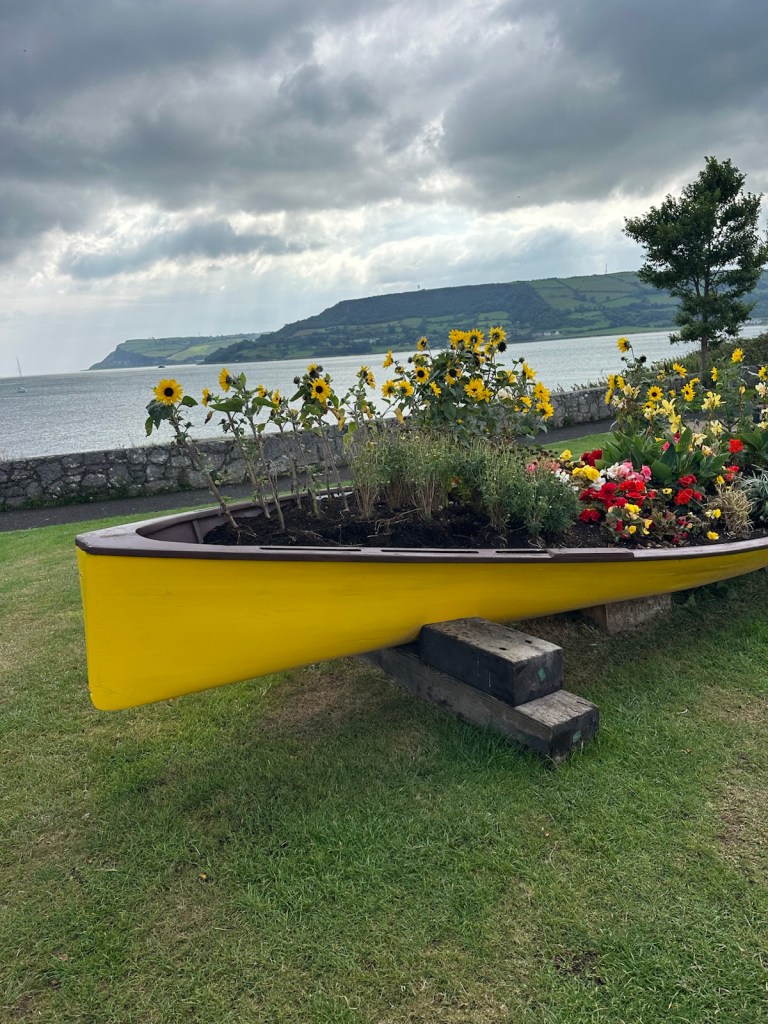
Good food, a lovely view and a little taste of local life — just the way we like to start a day on the road.
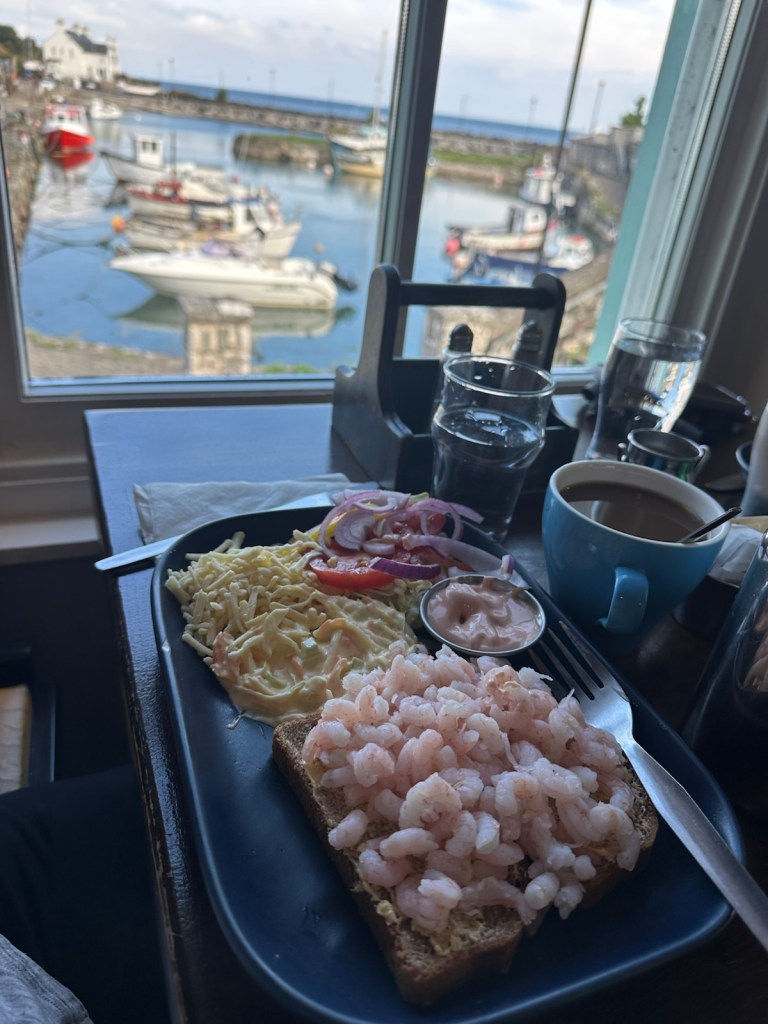
Prawns on toast — because lunch by the sea should taste like the sea!
The plan for the day was to visit Carrick-a-Rede and the Giant’s Causeway, but before reaching either, we made an unexpected detour. Our waitress at breakfast had recommended the ruins of Kinbane Castle, telling us that the road was so narrow tour buses couldn’t make it down — which meant very few tourists.
That was all the convincing we needed! We followed the little winding road toward the coast and discovered the dramatic ruins of Kinbane Castle perched above the sea. Sometimes the best stops are the ones that weren’t on the itinerary.
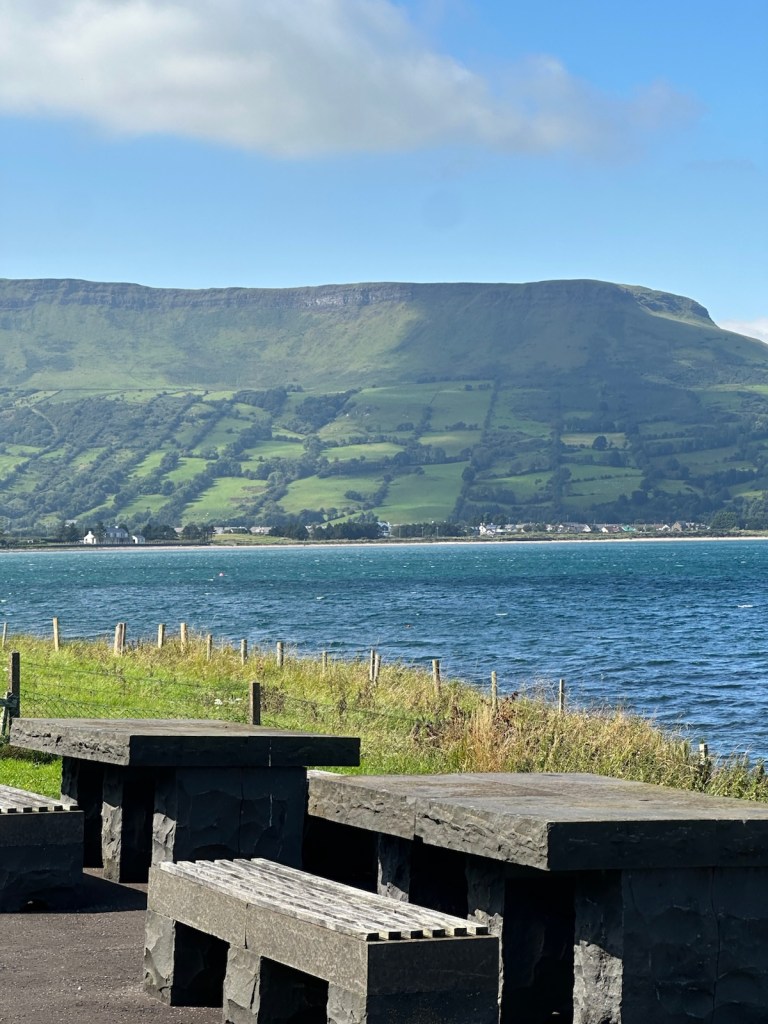
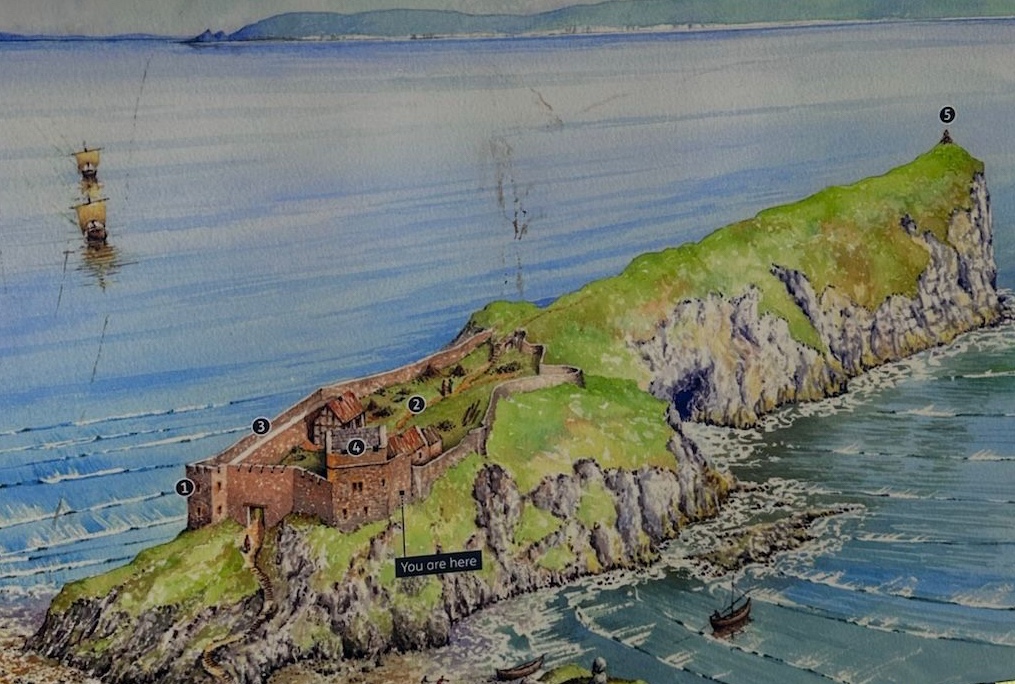
And what a location! Kinbane sits on a narrow limestone headland jutting into the sea, with crashing waves and spectacular views along the Antrim coast.
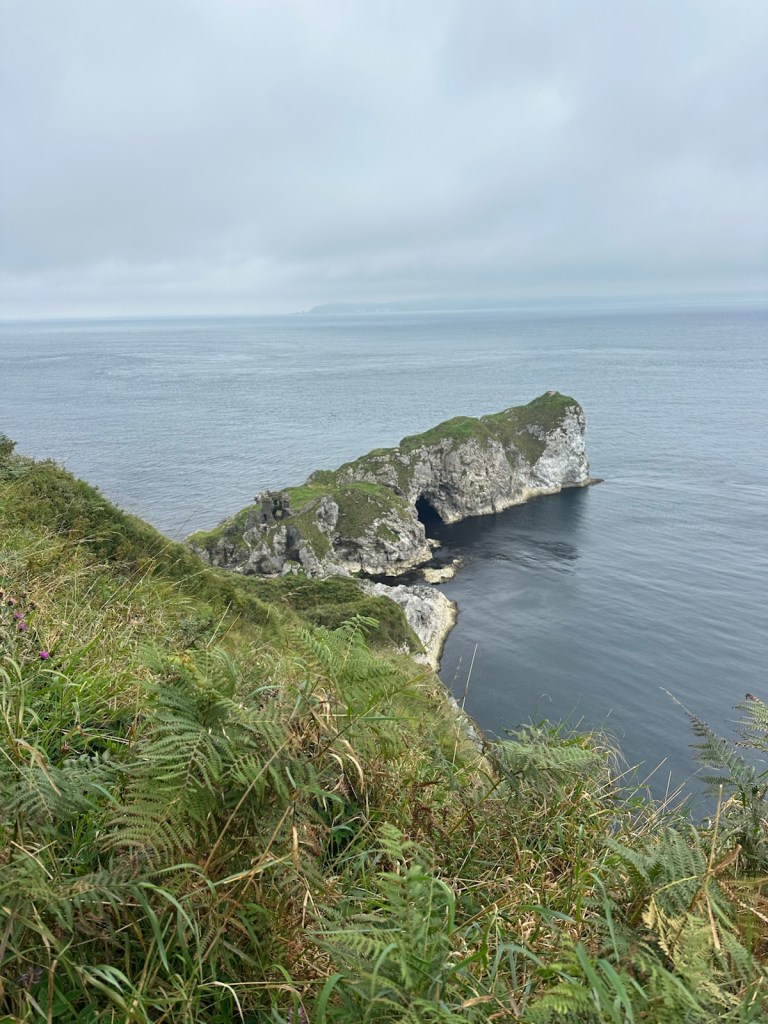
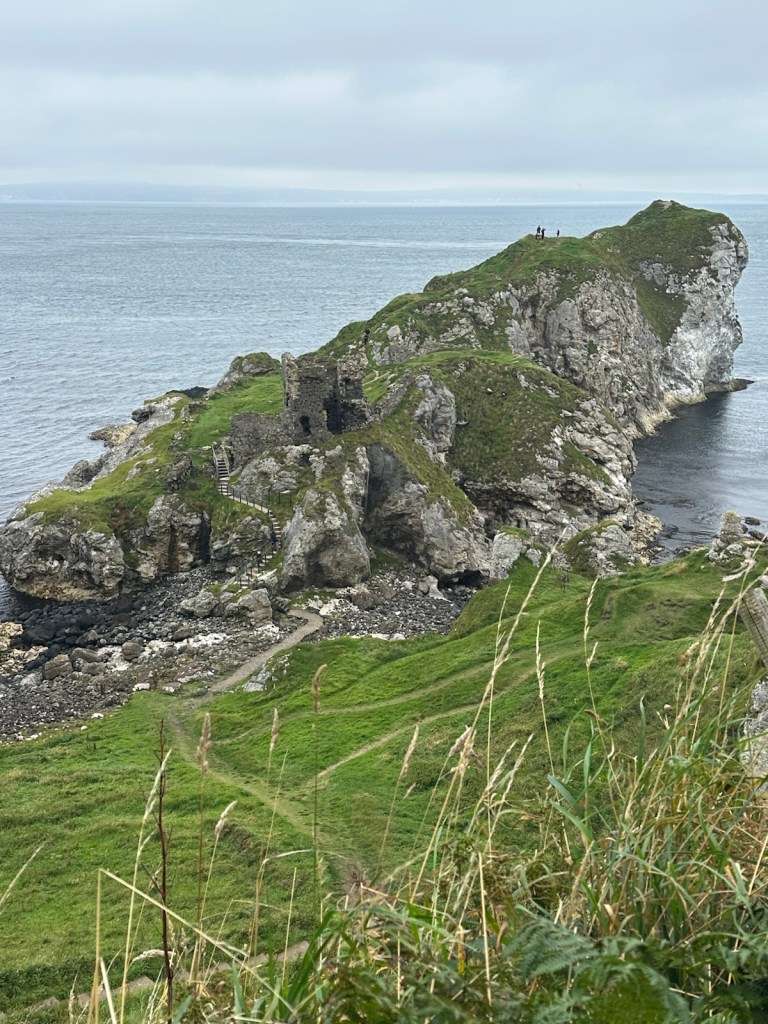
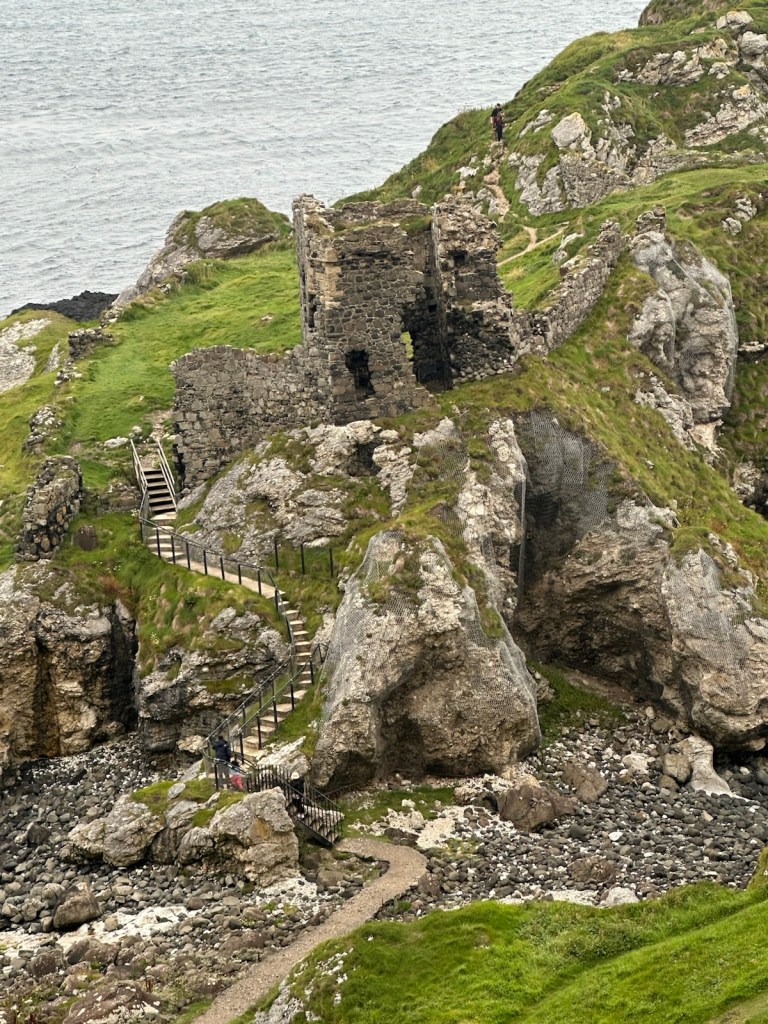
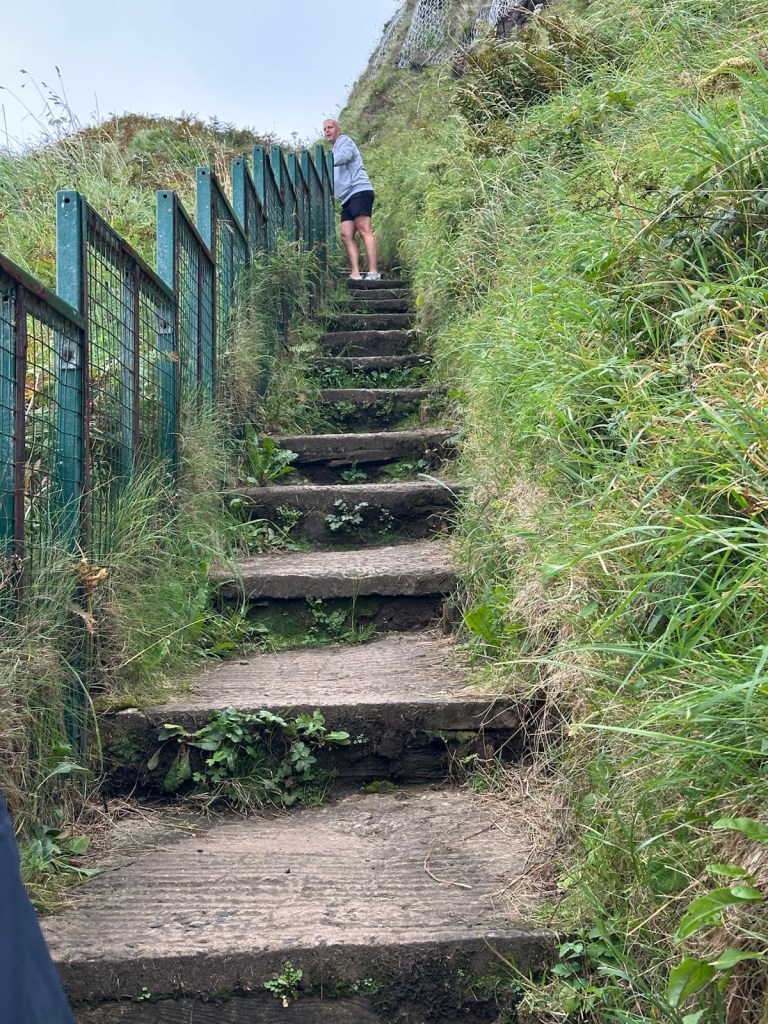
Getting to Kinbane Castle turned out to be an adventure in itself. We descended about 140 steep stone steps toward the sea.
There isn’t much of the original castle left, but that’s part of its charm. We could actually climb into and wander among the remains of the 16th-century castle, exploring portions of the stone walls and tower.
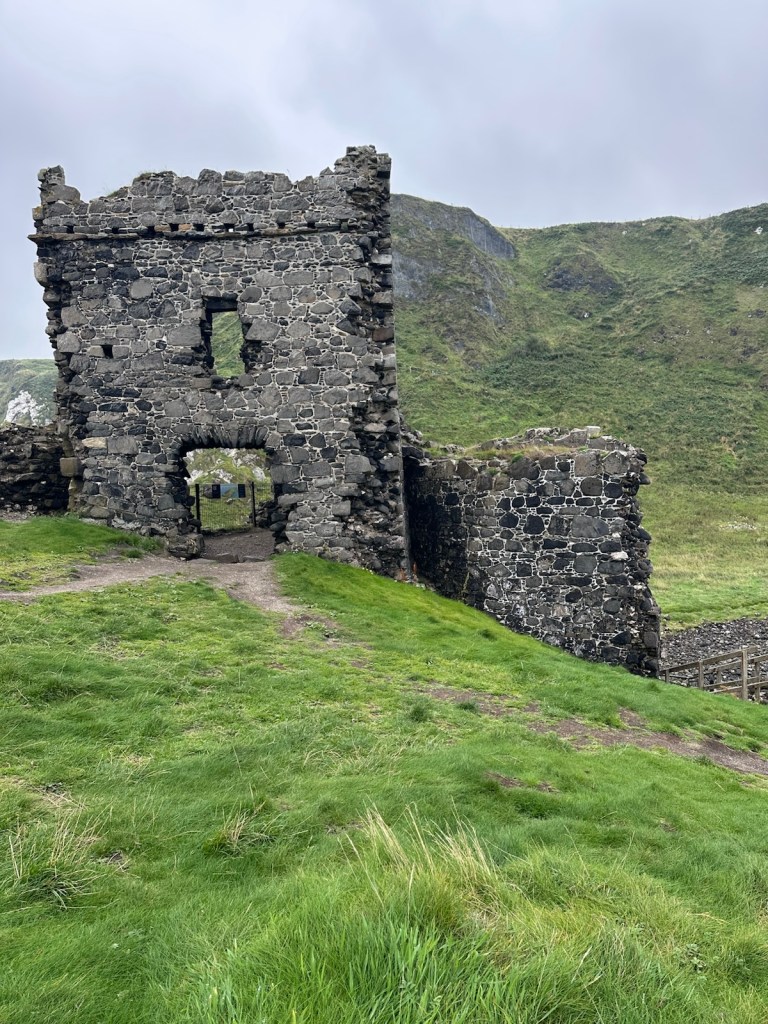
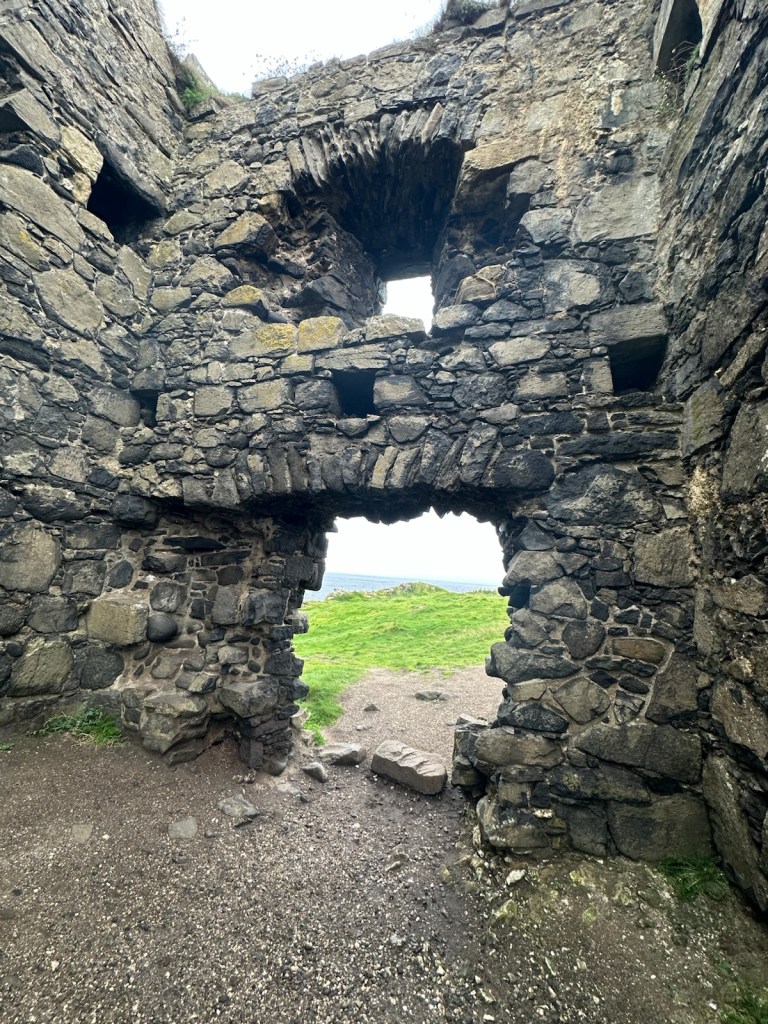
Signage provided a self-guided tour, explaining the different spaces and how they were once used.
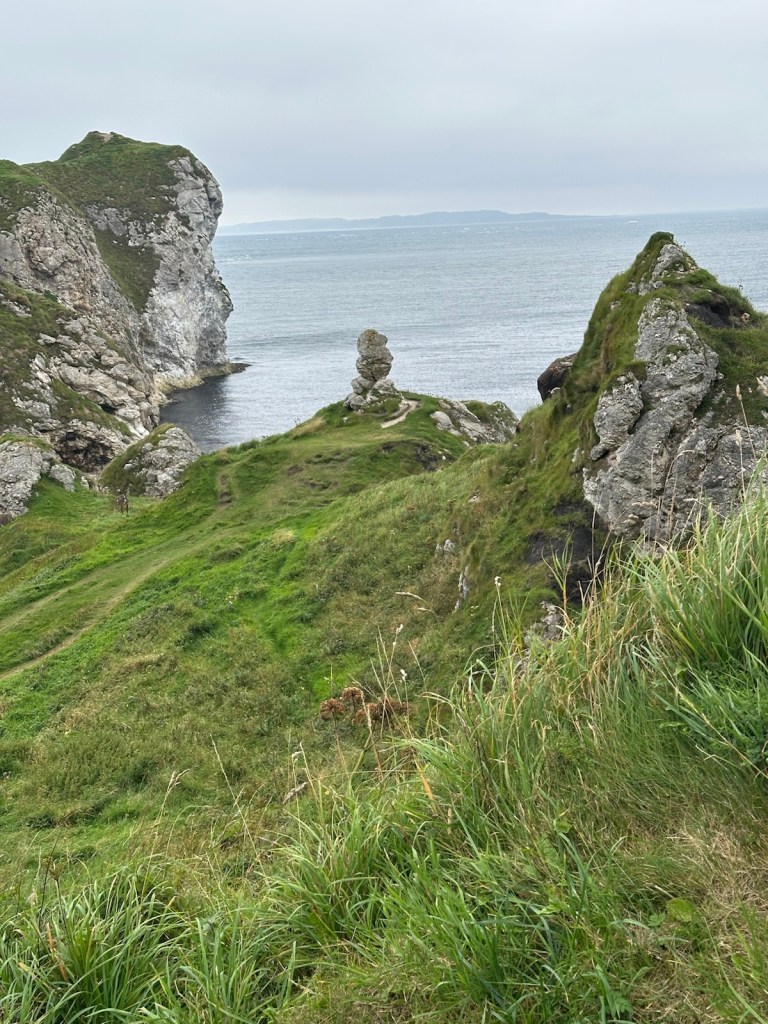
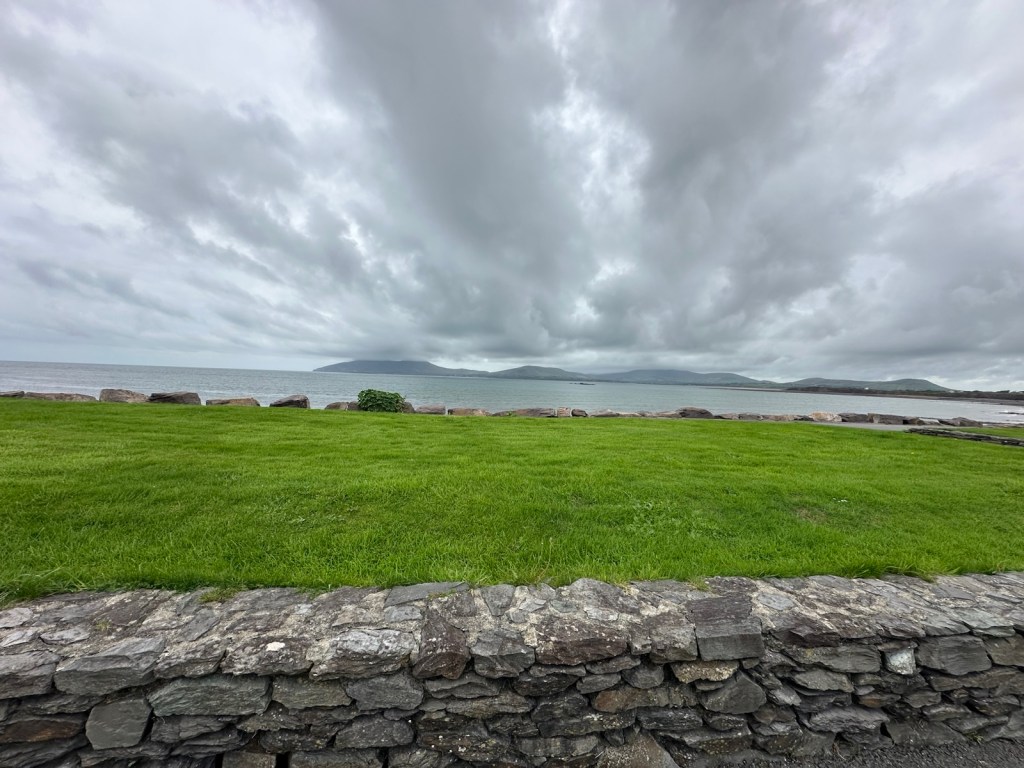
We spent a bit more time hiking than planned, but it was well worth it — even though it put us behind schedule for Carrick-a-Rede and the Giant’s Causeway.
We did eventually make it to both, but decided to pass on actually visiting. I was surprised by how much things had changed in the 40 years since I was last here. Back then, you simply drove up, parked the car, walked around the site and went on your way.
Today, it’s an “experience.” You pay an admission fee, park, and in some cases take a shuttle or make a longer walk to the site, with visitor facilities and substantial souvenir shops along the way. With the growth of tourism also comes the growth of infrastructure.
It was getting late, and we still had another destination ahead of us — so, once again, on we went!
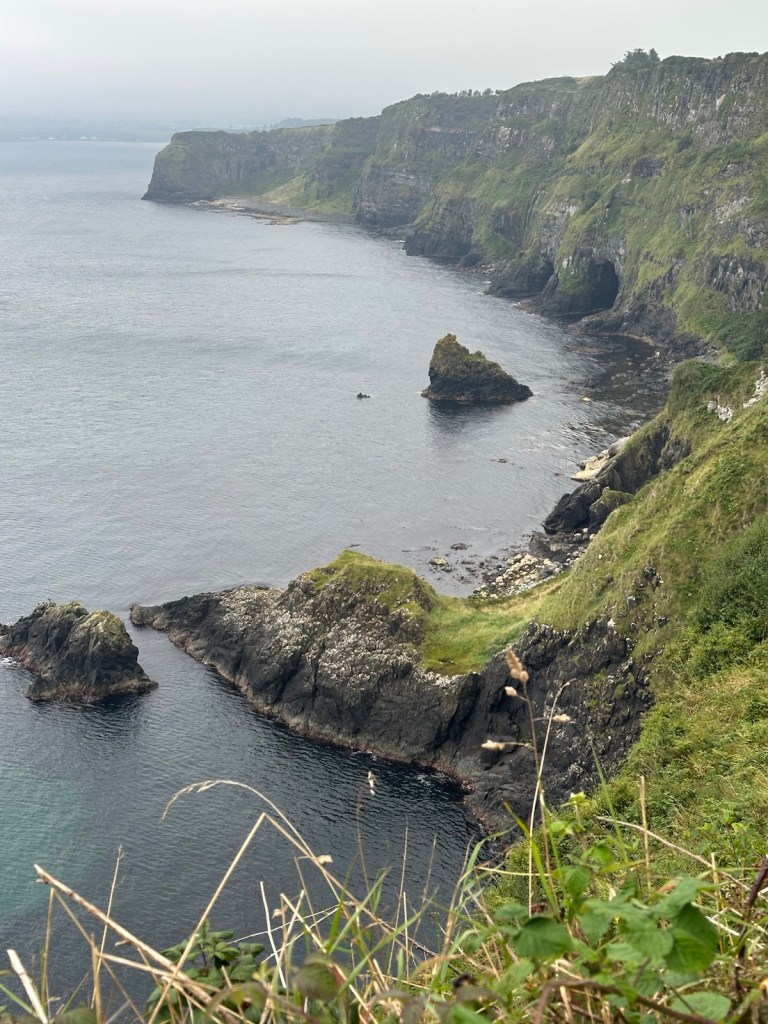
Our overnight stop in Derry changed an impression I’d carried since my visit in 1988. Back then, I remembered it as gray, gloomy and depressing. Nearly 40 years later, I found a city that felt vibrant, colorful and alive — Derry certainly changed my mind.
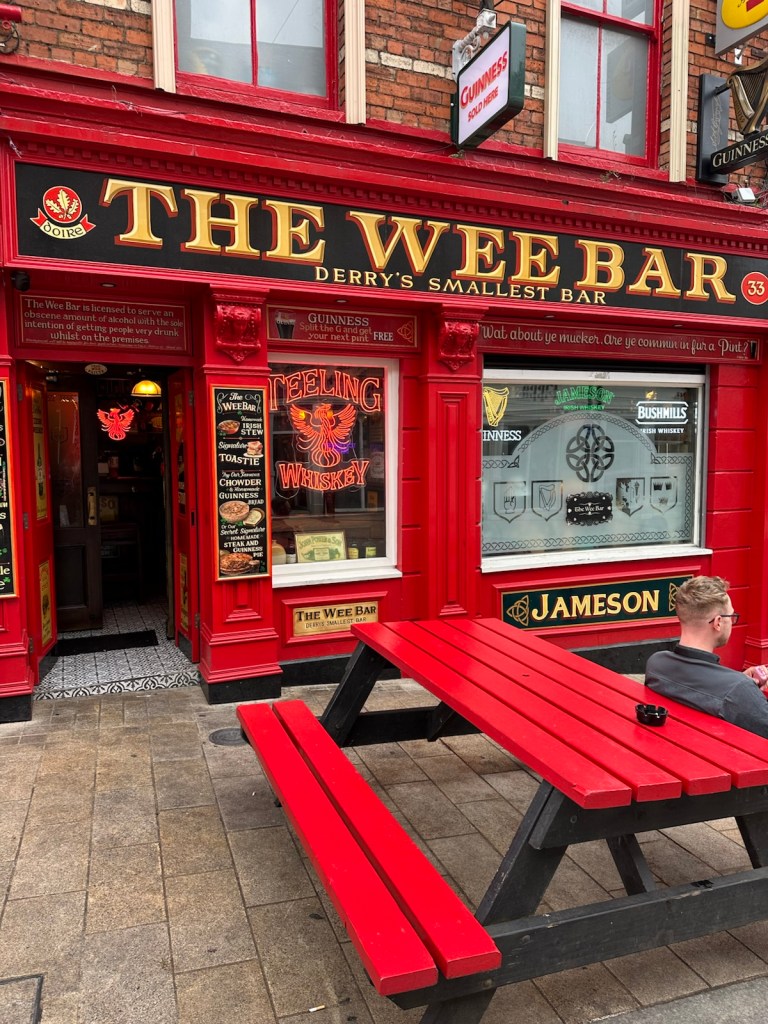
After getting settled in our hotel, we headed out to find something to eat. Intrigued by the Wee Bar, we stopped in for a drink. One thing led to another, and before we knew it, we were deep in conversations with the locals, listening to fascinating and very personal stories about their experiences during the Troubles.
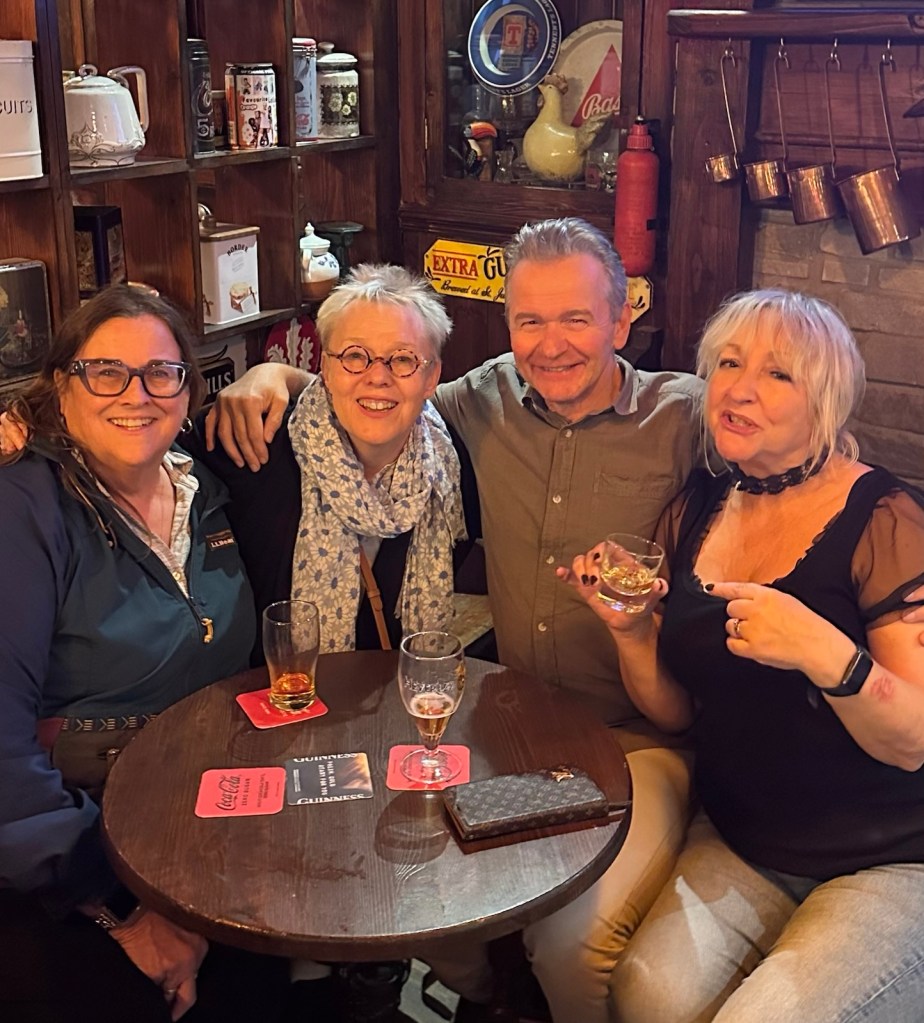
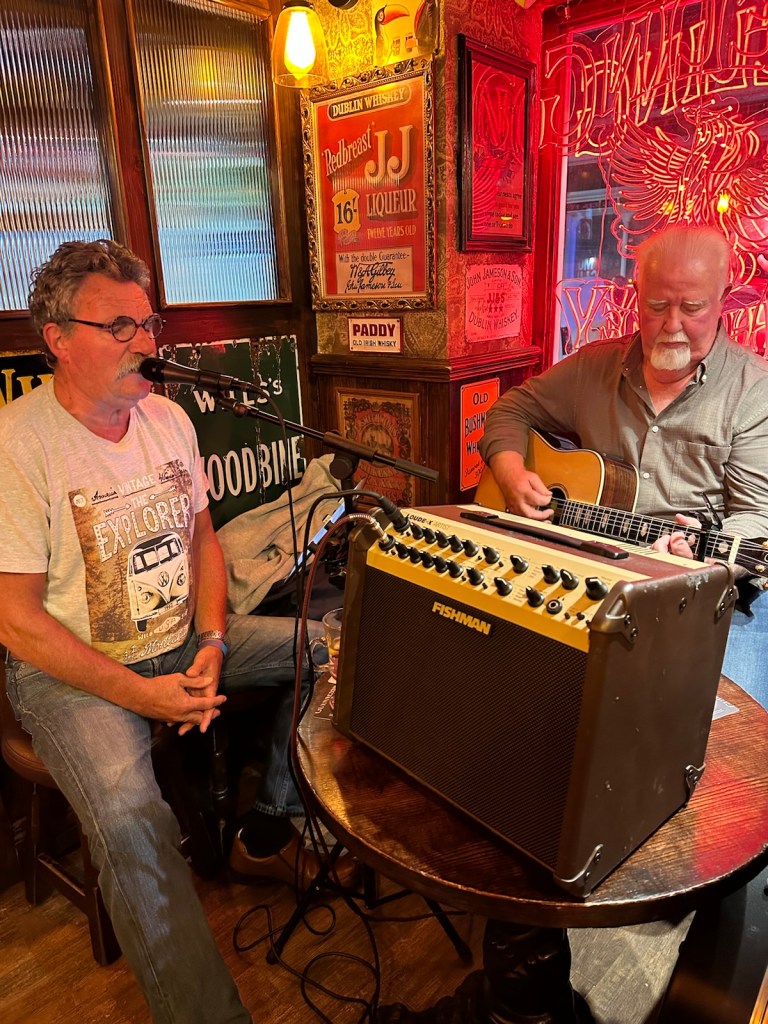
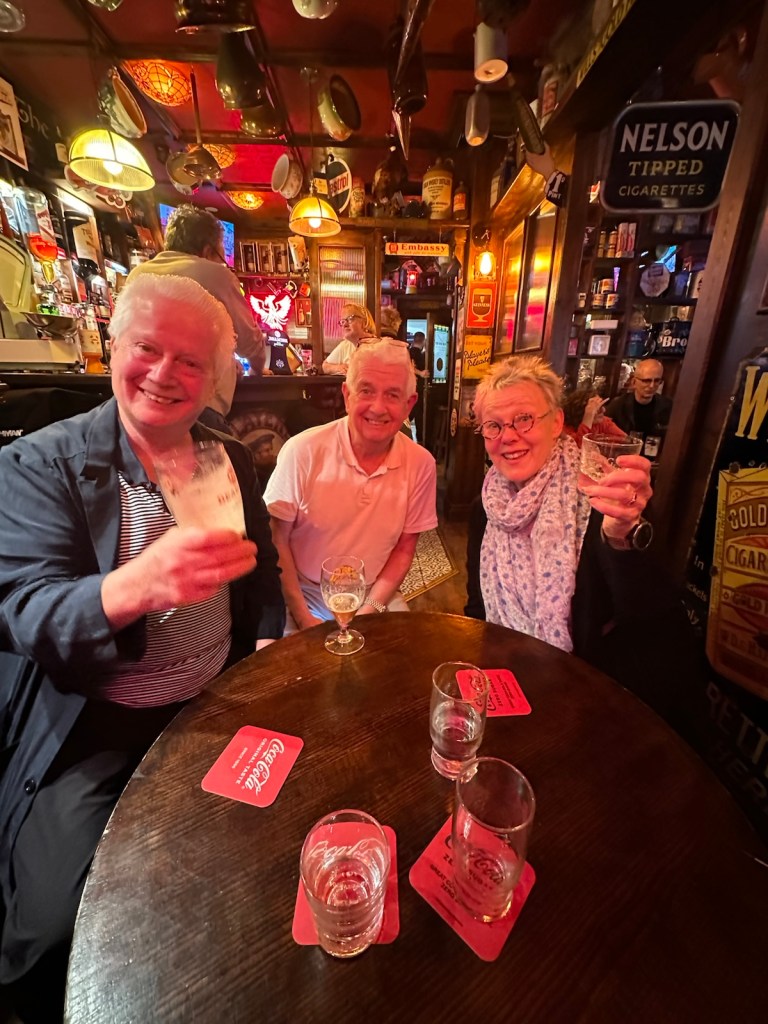
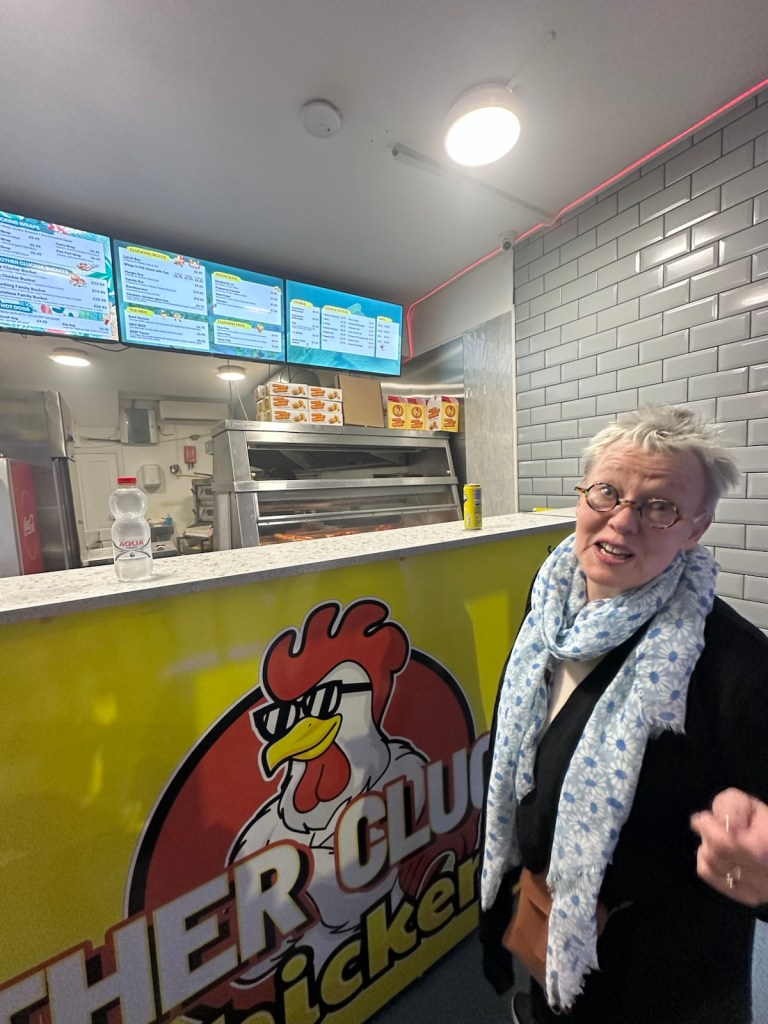
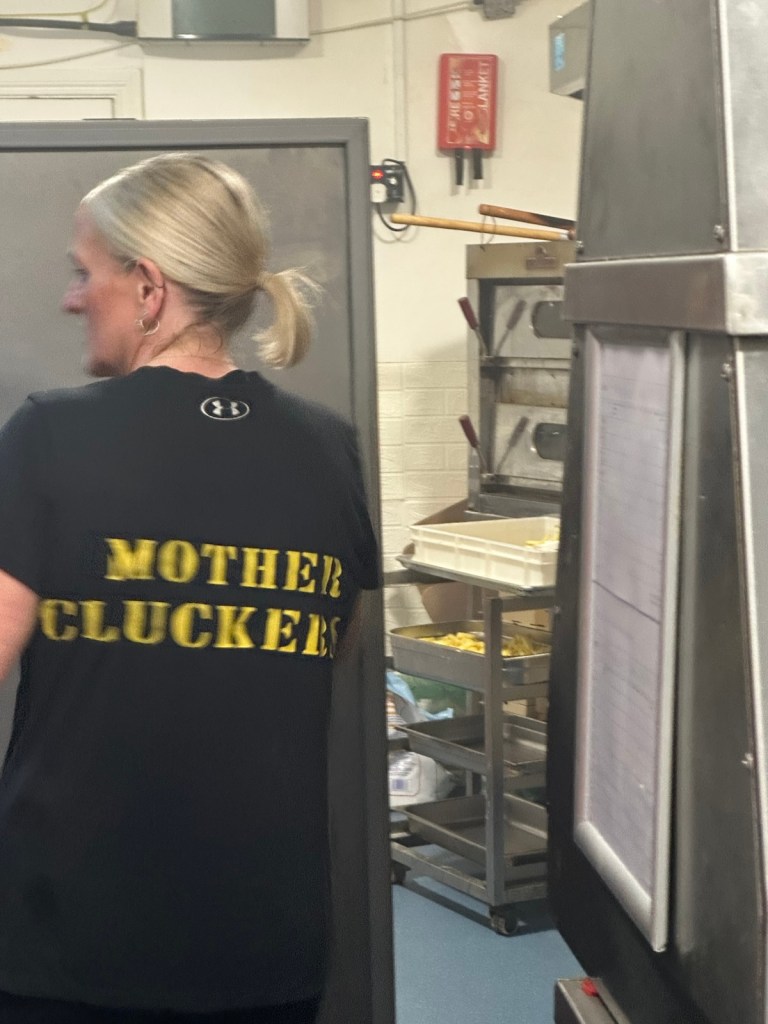
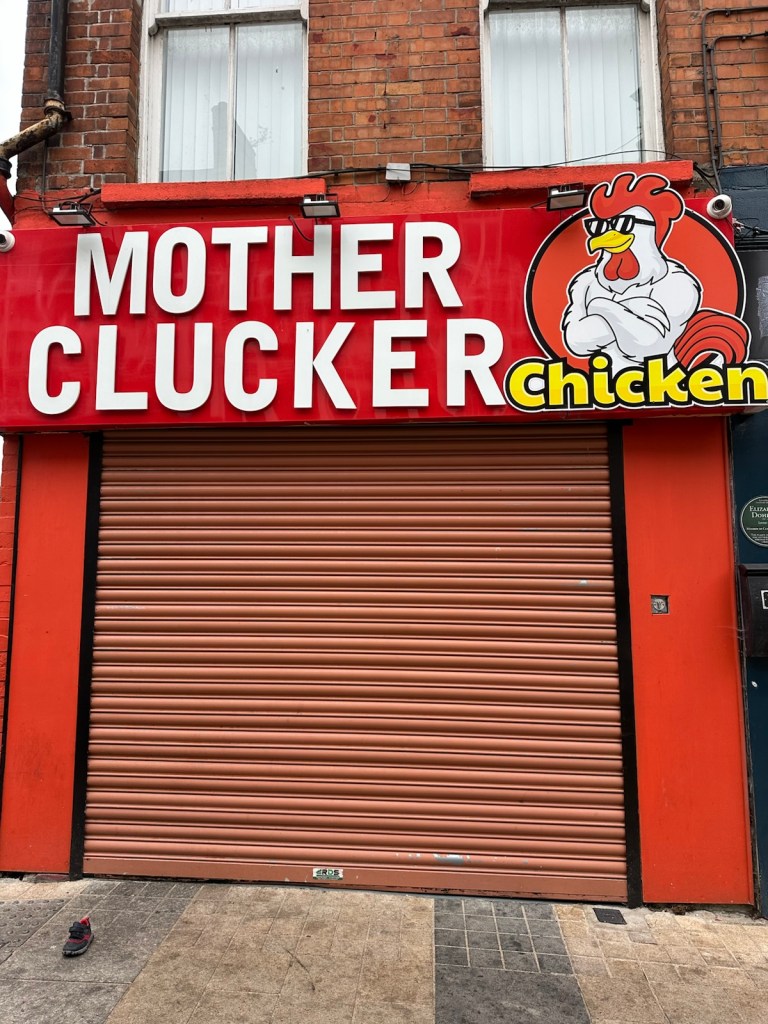
By the time we left the Wee Bar, our dining options had dwindled considerably. Mother Clucker’s chicken was about the only place still serving food to go — and, as it turned out, it was quite good!
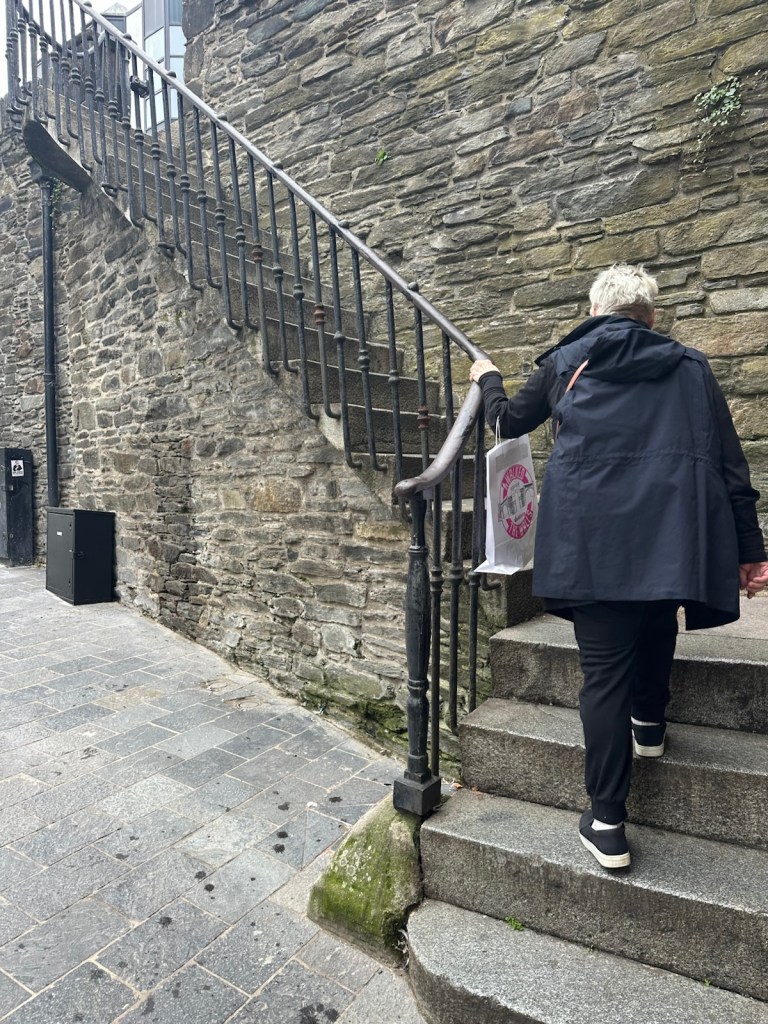
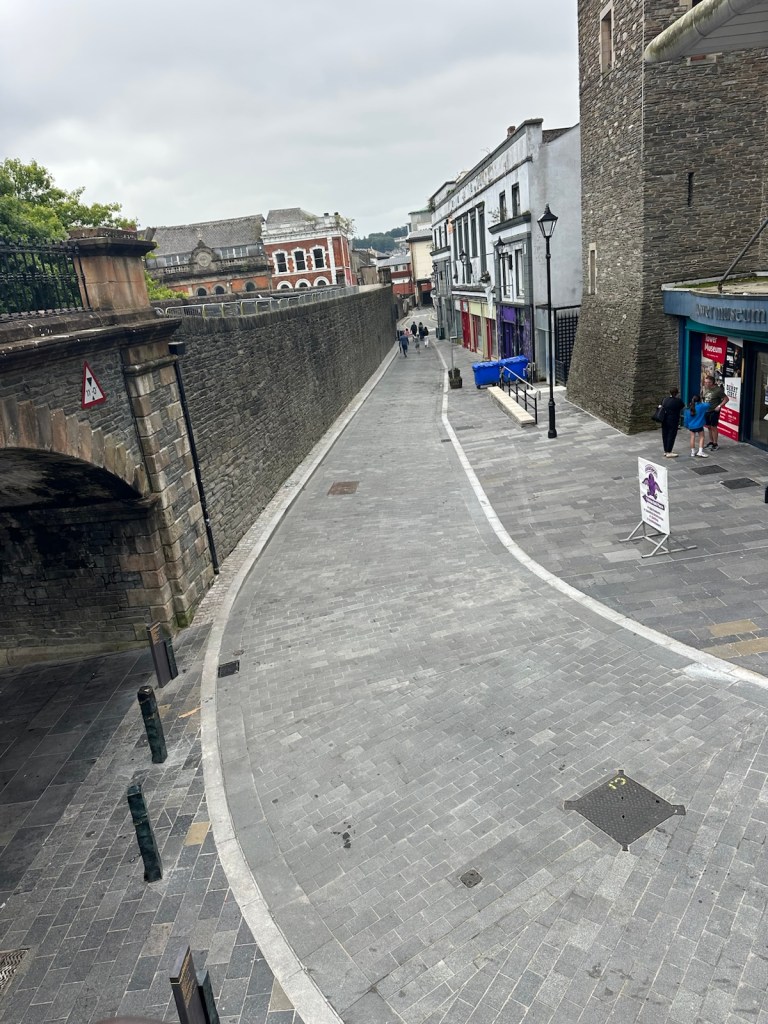
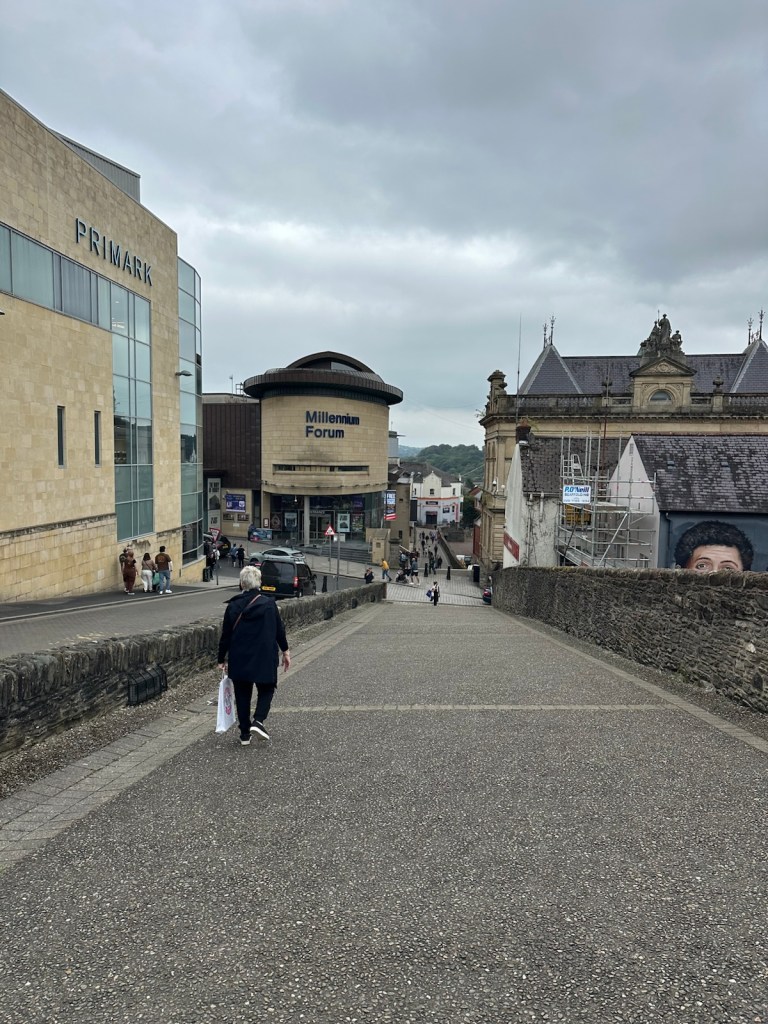
The next morning, with limited time before heading out, we walked Derry’s historic city walls. Built in the early 1600s to protect the newly settled city, the massive stone walls still completely encircle the old center of Derry. You can walk the entire mile-long circuit, with wonderful views of the city and reminders of its long and complicated history.
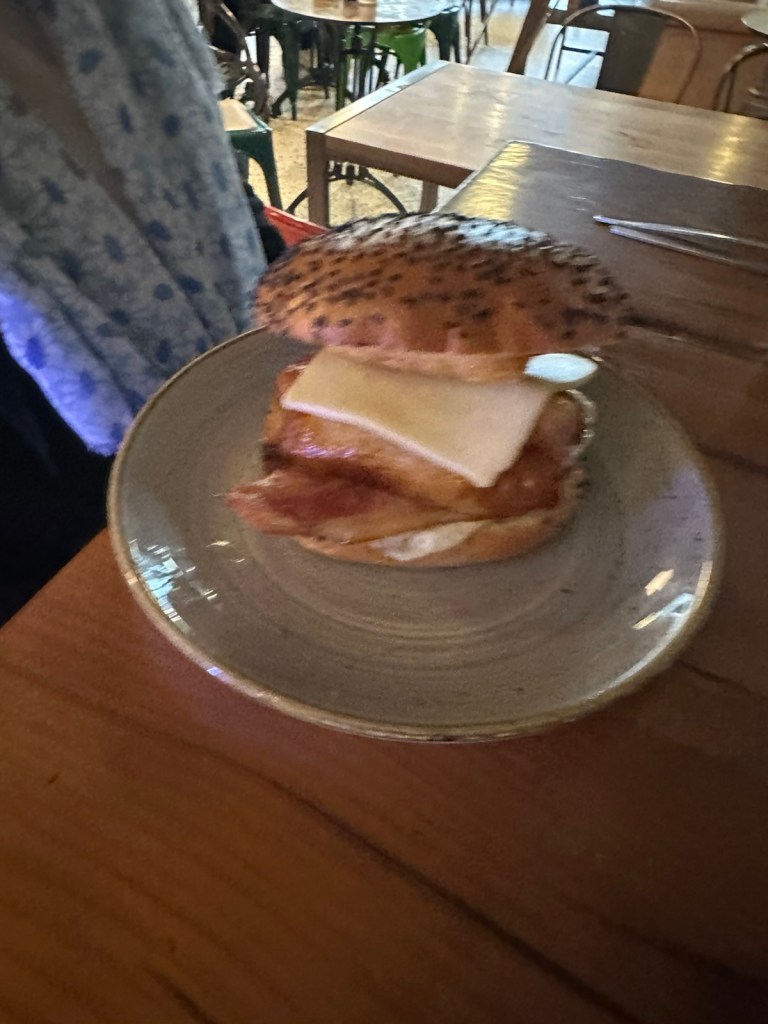
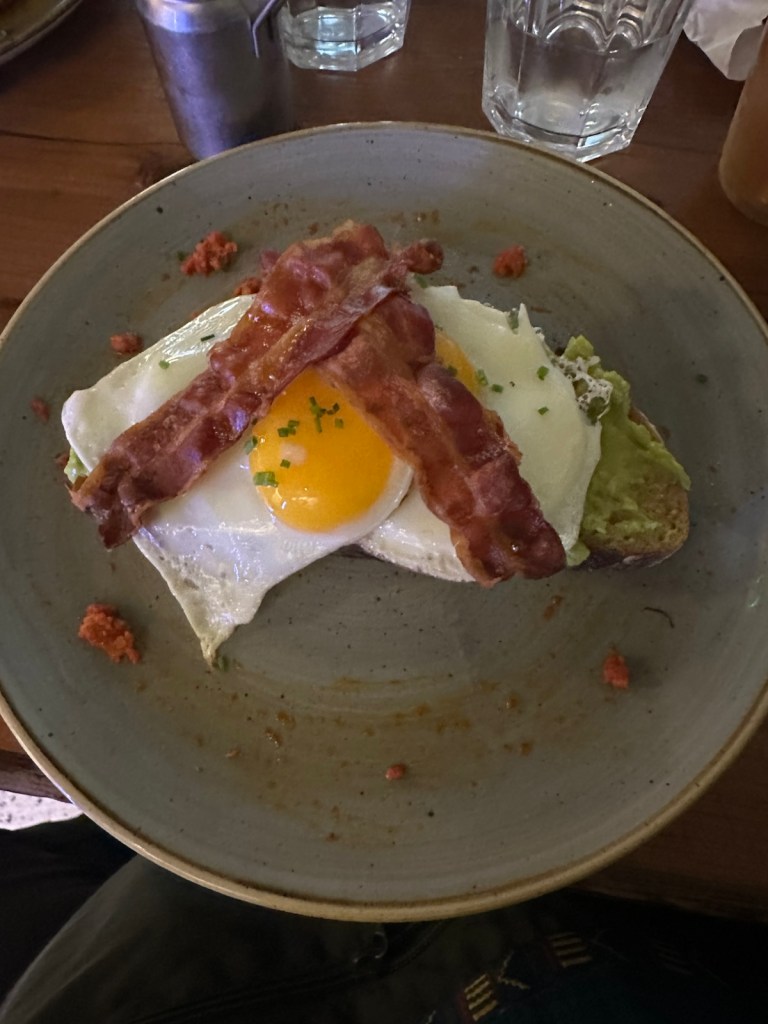
We did manage to sneak in a tasty breakfast — an Irish bap piled with fried egg, cheese, sausage and bacon, while I opted for avocado toast topped with an egg and bacon. A hearty start to the day!
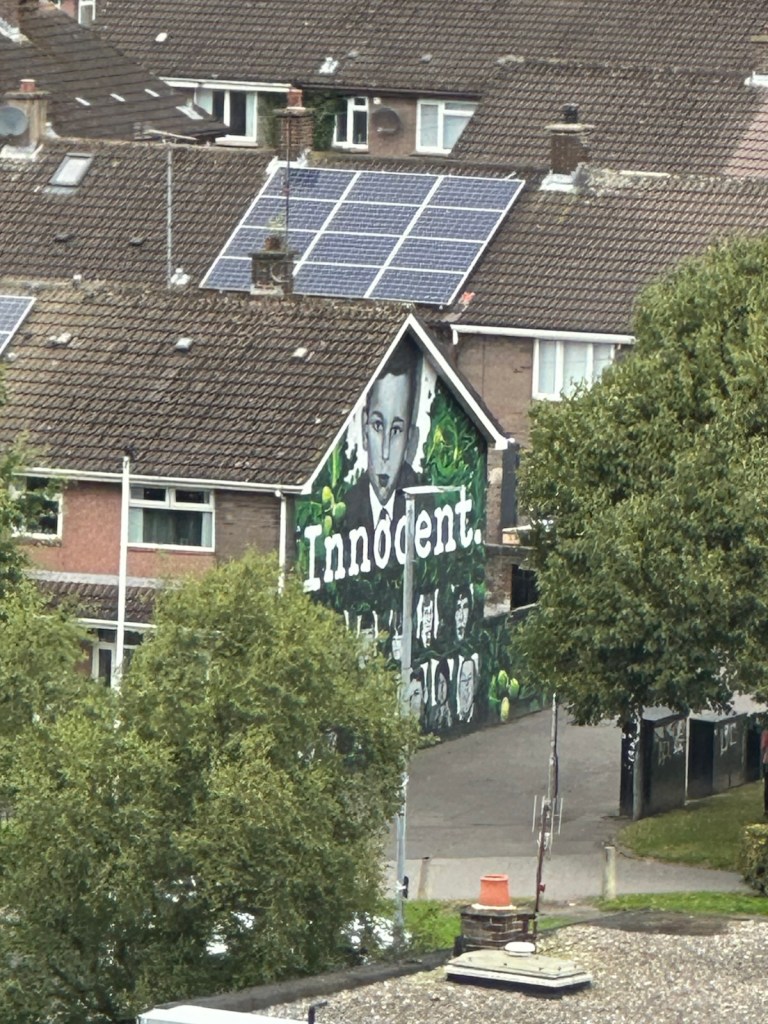
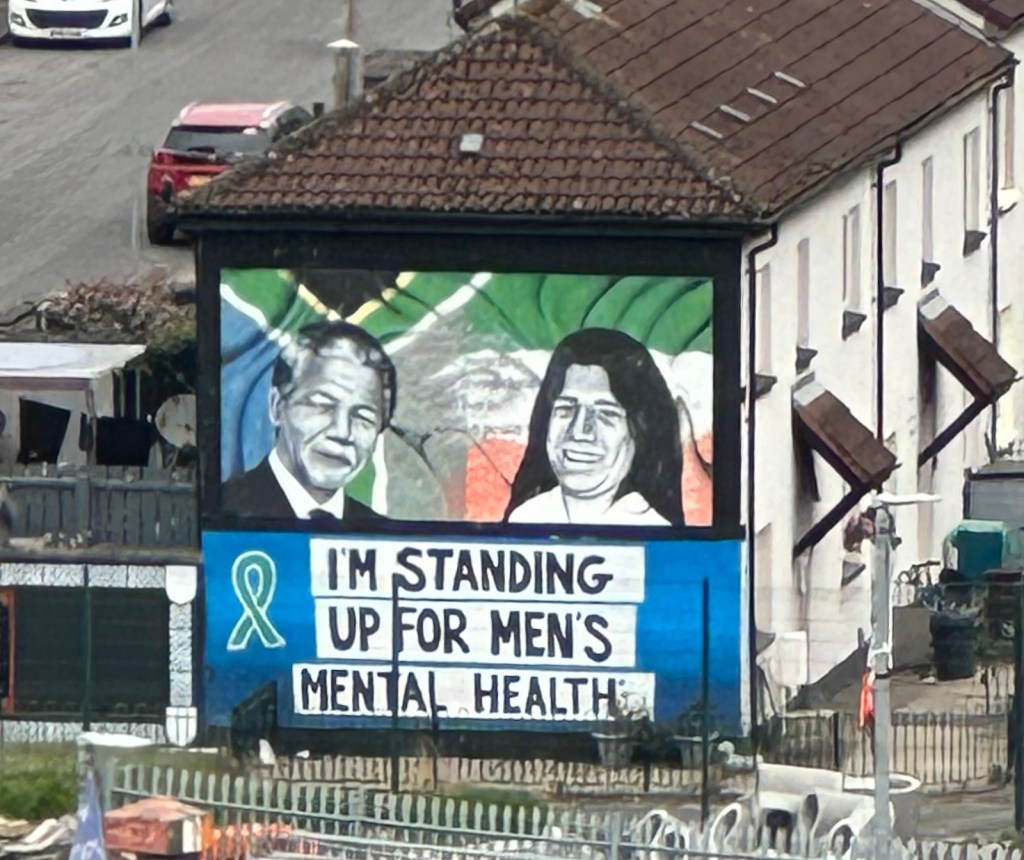
From the walls, you get a particularly interesting perspective on Derry’s history. You can see the Bogside below, including some of the city’s famous political murals. The area was at the center of many events during the Troubles, including Bloody Sunday in 1972. The murals, many painted on the ends of houses, tell stories of civil rights, conflict, loss and, more recently, peace and reconciliation.
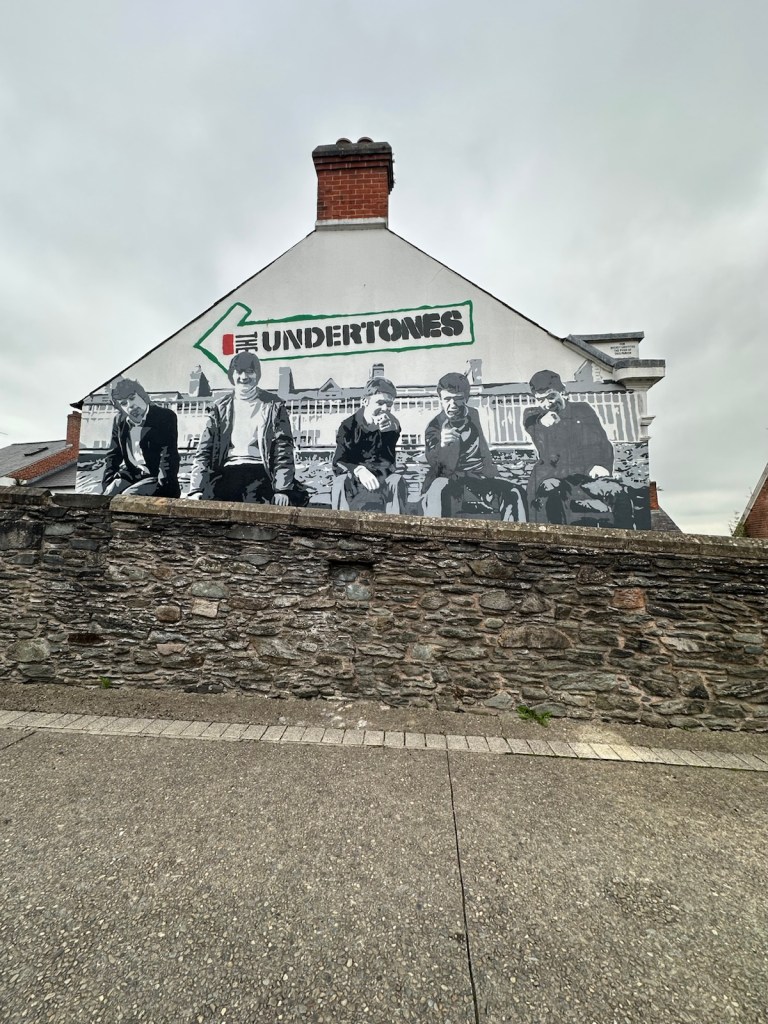
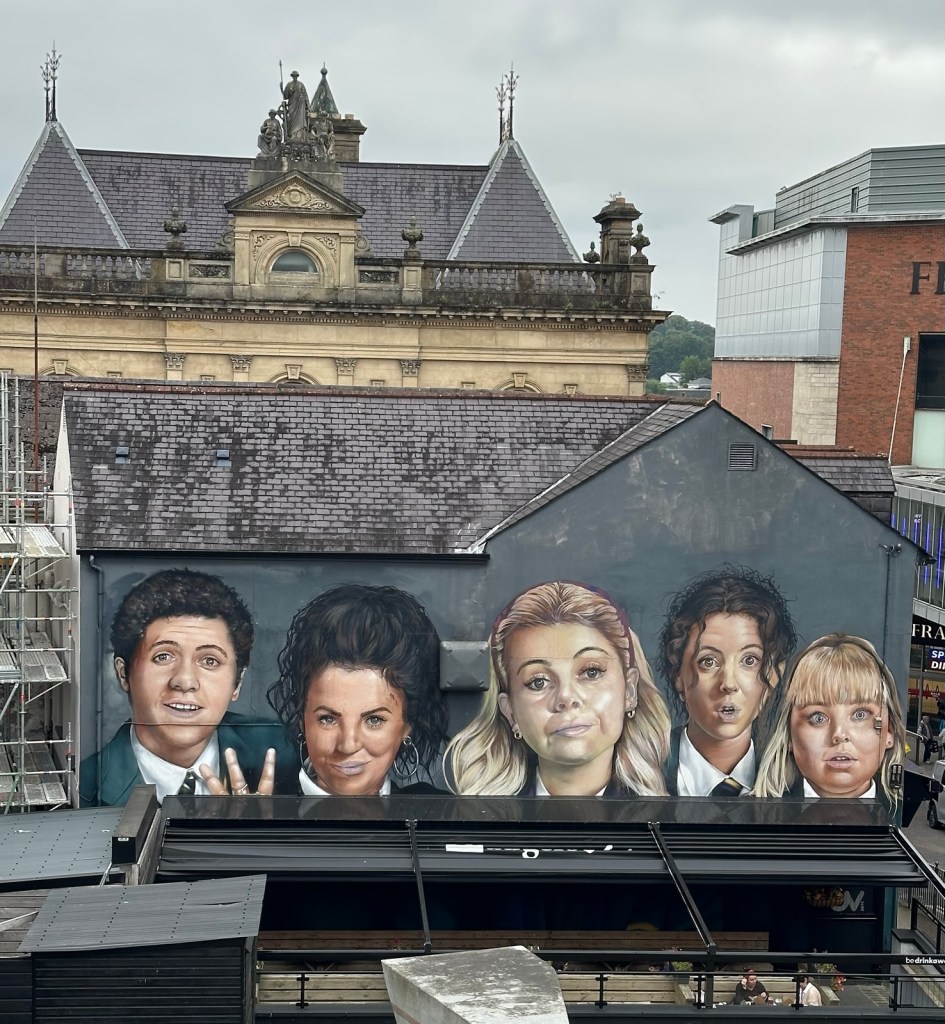
Not all of Derry’s murals tell stories of conflict. We also spotted colorful tributes to local cultural icons, including the rock band The Undertones and the beloved Derry Girls — a fun reminder that there’s much more to Derry’s story than the Troubles.
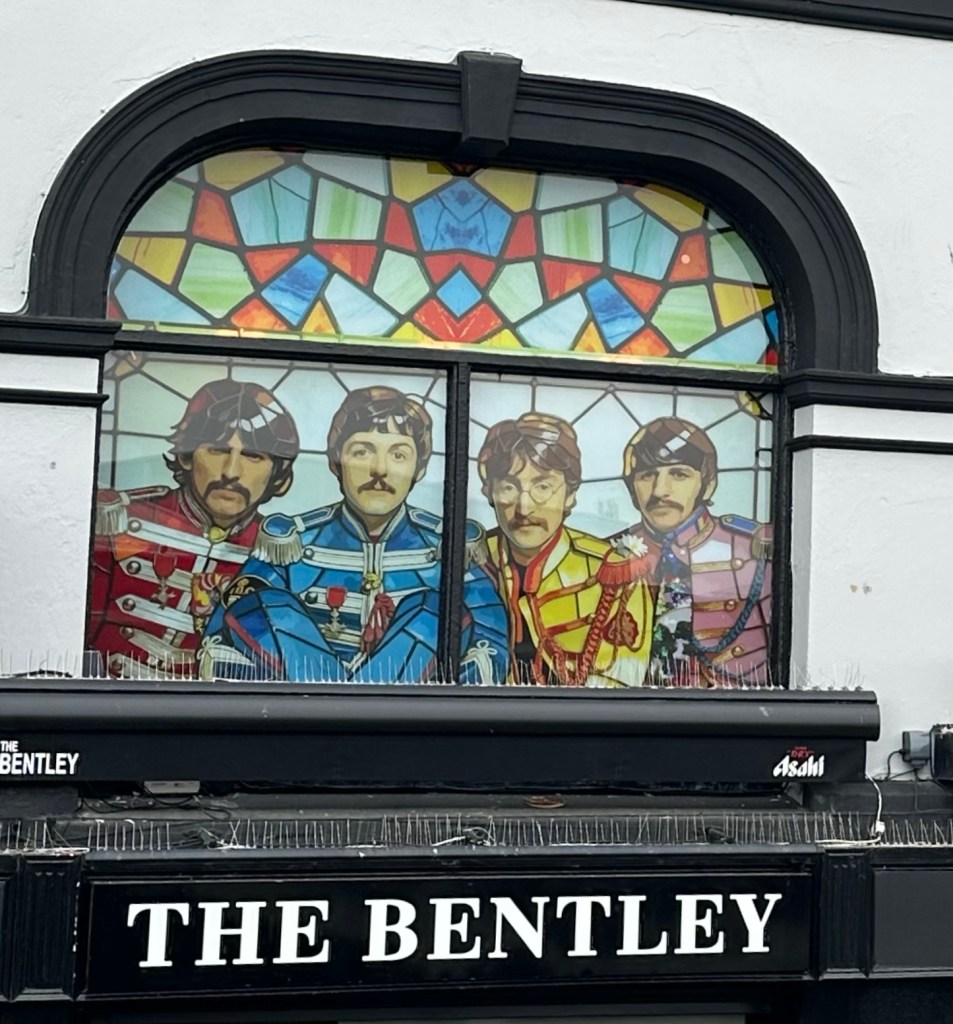
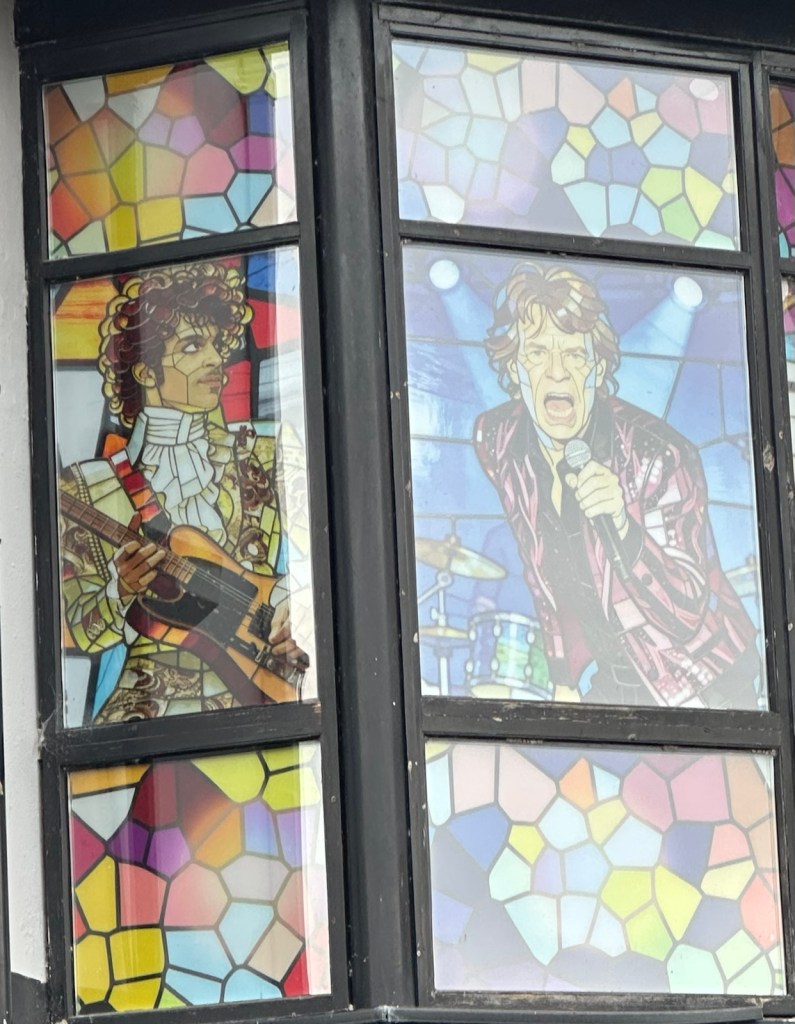
We also passed The Bentley, a popular Derry bar and restaurant known for its striking stained-glass windows. Instead of saints and biblical scenes, these colorful windows celebrate rock royalty — including The Beatles, Prince and Mick Jagger.
Tucked alongside Derry’s massive city walls is tiny St. Augustine’s Church, affectionately known as the “Wee Church on the Walls.” The present church dates to 1872, but the site is believed to have religious roots stretching back to the 6th century. With its small graveyard and peaceful setting, it was a charming and unexpected find along our walk.
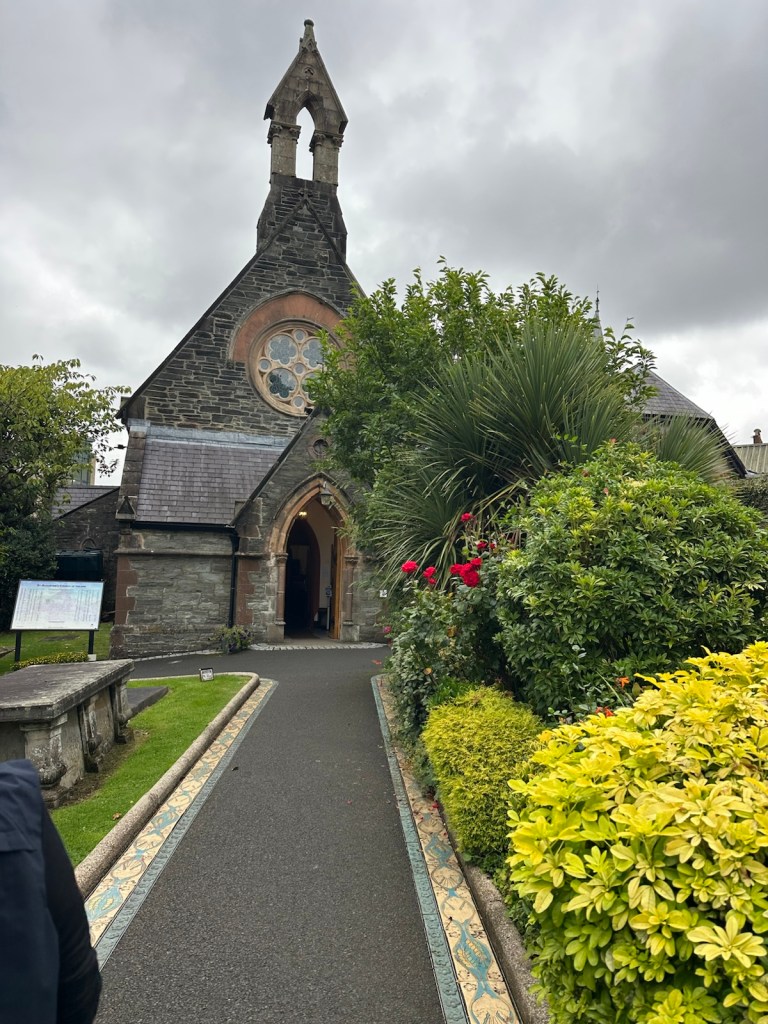
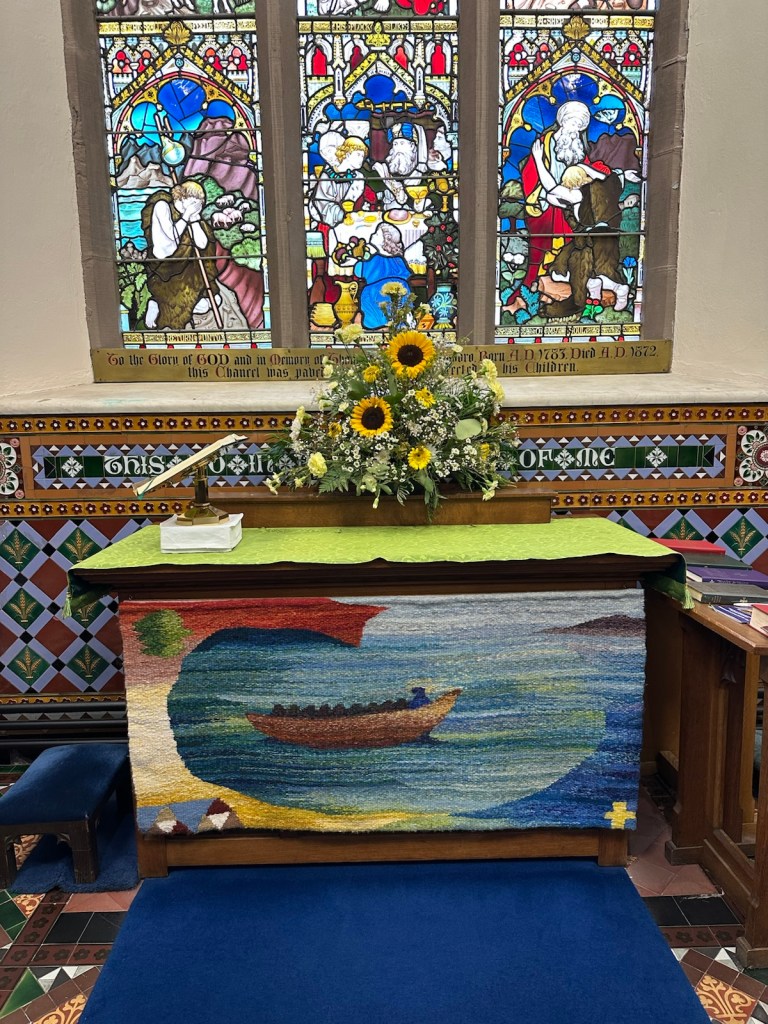
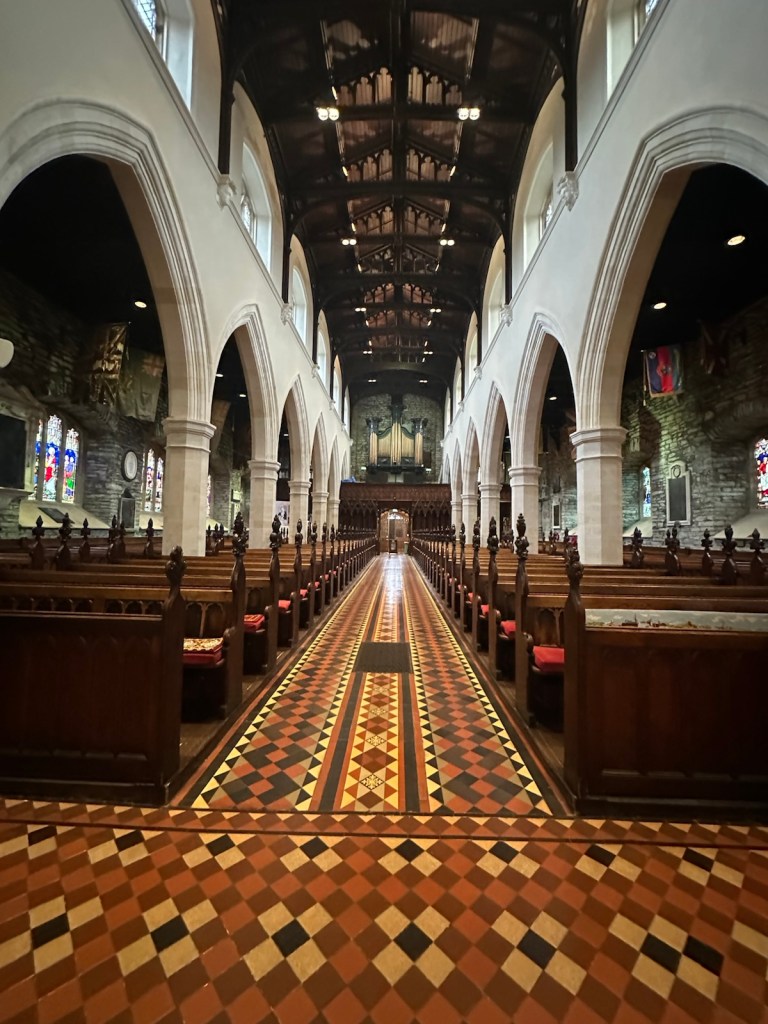
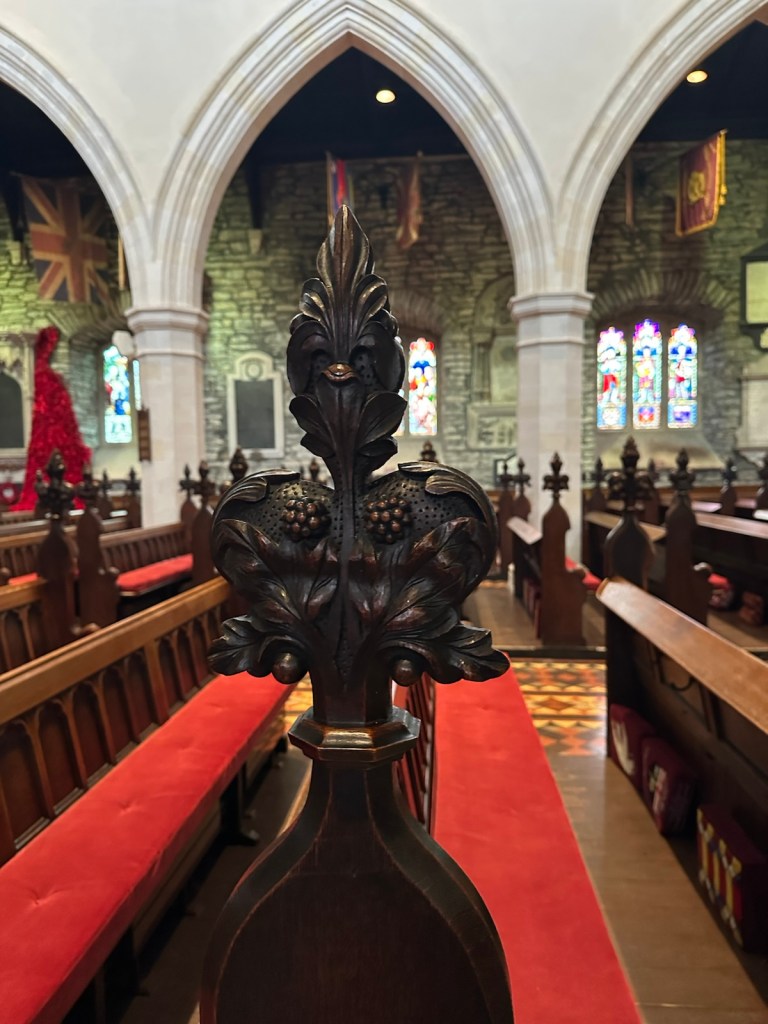
Along the walls, we came to St. Columb’s Cathedral. Built in the 1630s, it was the first Protestant cathedral constructed in the British Isles after the Reformation. Its tall stone tower and spire dominate the old walled city, while inside are artifacts and memorials that tell centuries of Derry’s history.
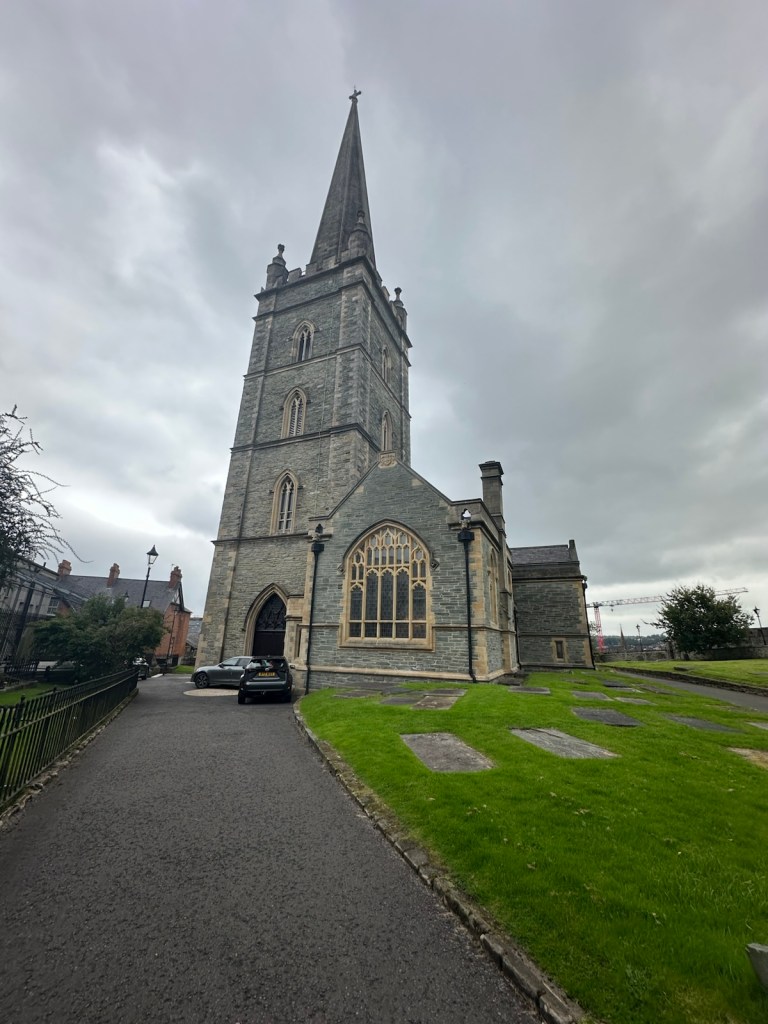
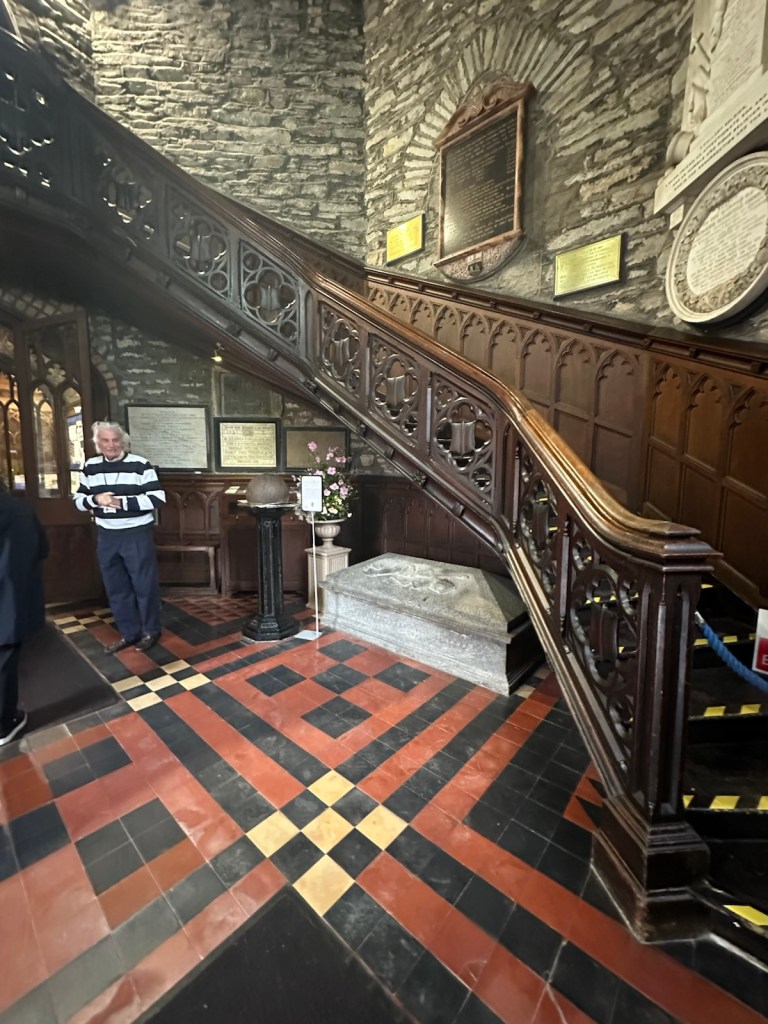
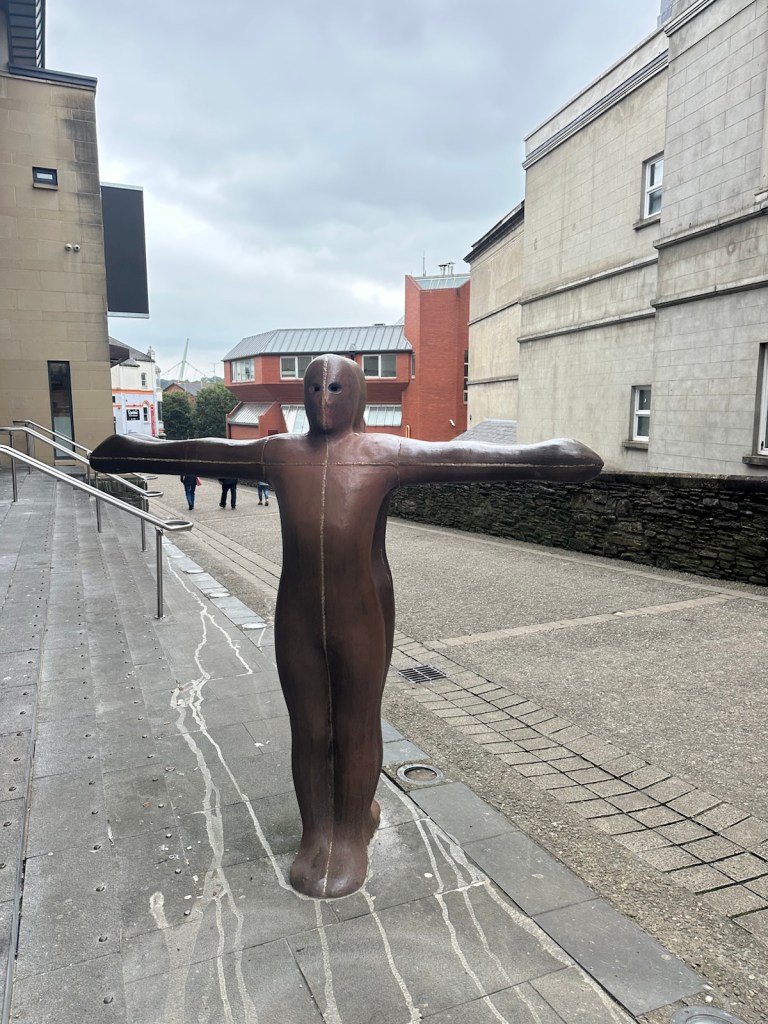
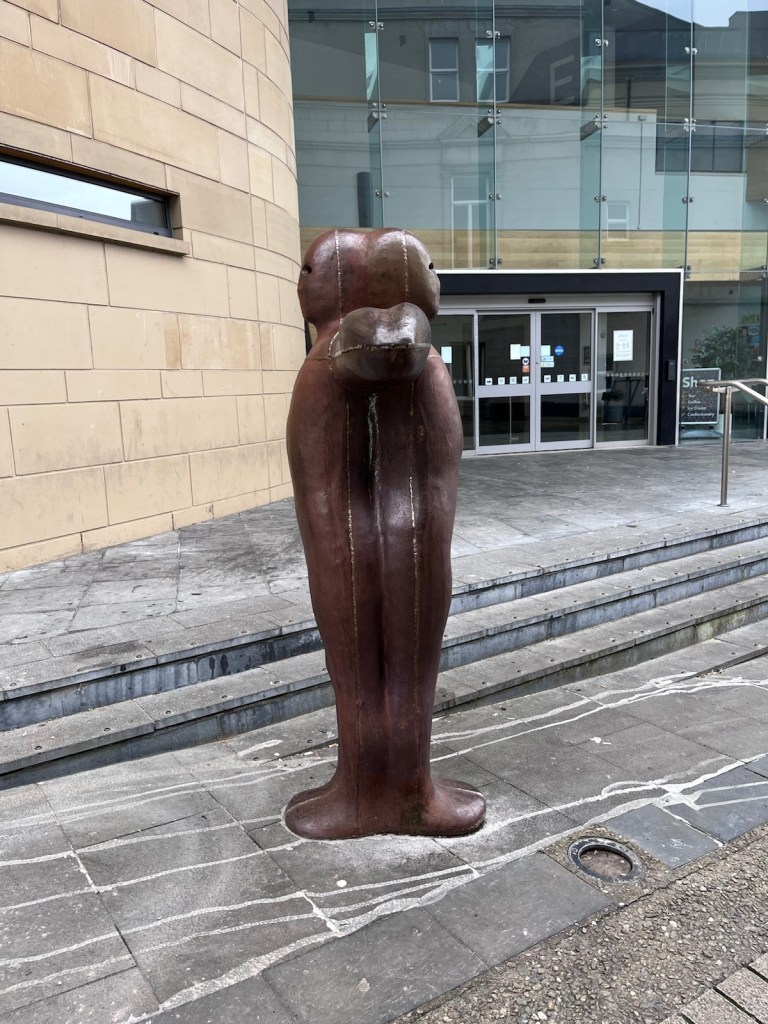
Along the walls we came across ‘Looking In, Looking Out’, a striking sculpture of two figures sitting back-to-back on the city wall — one looking inward toward the old city and the other outward toward the Bogside. It’s a simple but powerful symbol of Derry: two perspectives, two communities, and a city shaped by the way each side crucified the other, yet continuing to look both at its past and toward its future.
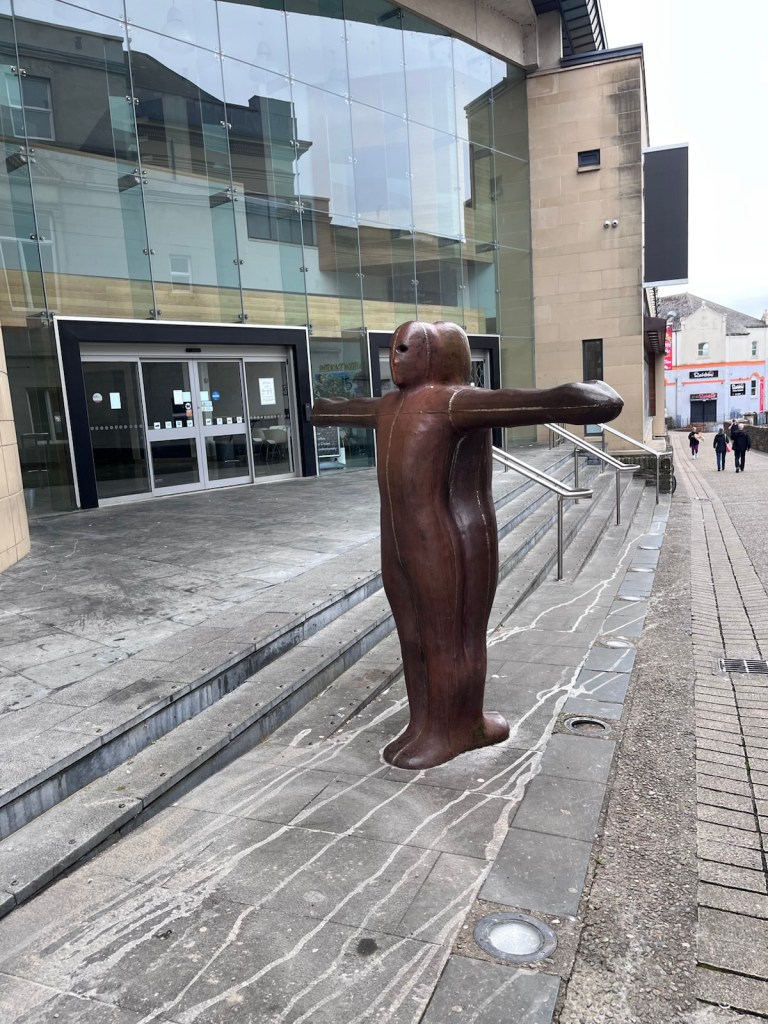
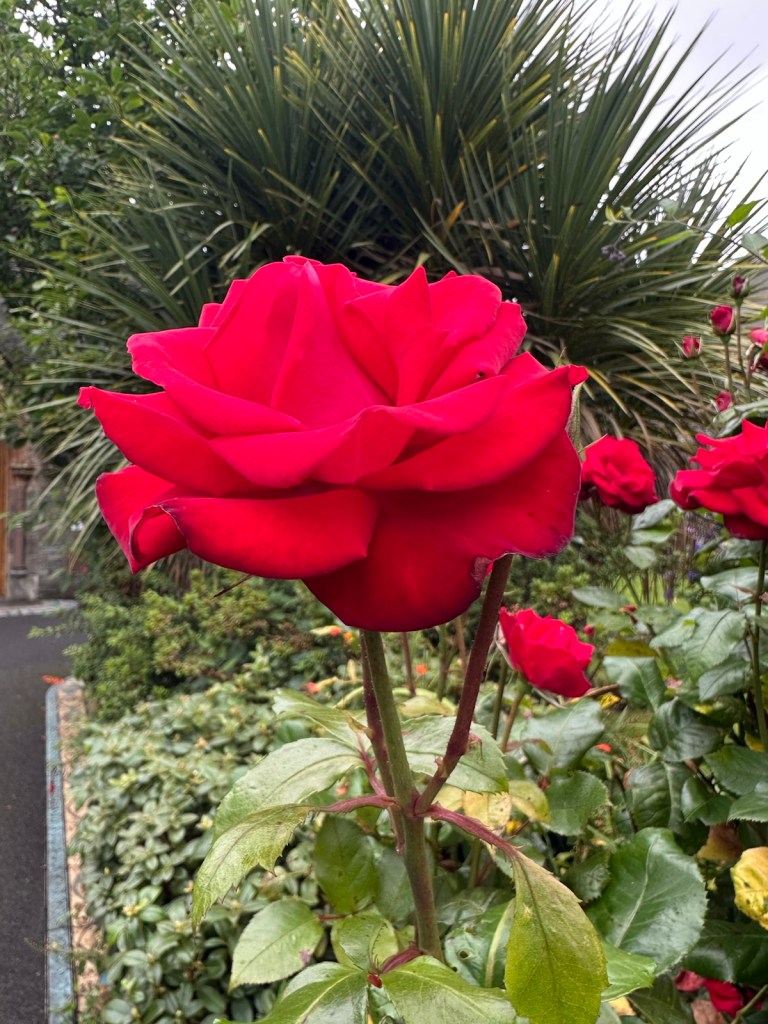
As we finished our walk, a beautiful rose at St. Augustine’s seemed a fitting farewell to Derry — a city that has weathered its thorns and continues to bloom.
Next stop: County Mayo, where Terry’s ancestors came from and where we’ll visit the Shrine of Knock. Until we meet again… Slán go fóill!

